Webinar- Slash the Cost of College While You Still Have Time
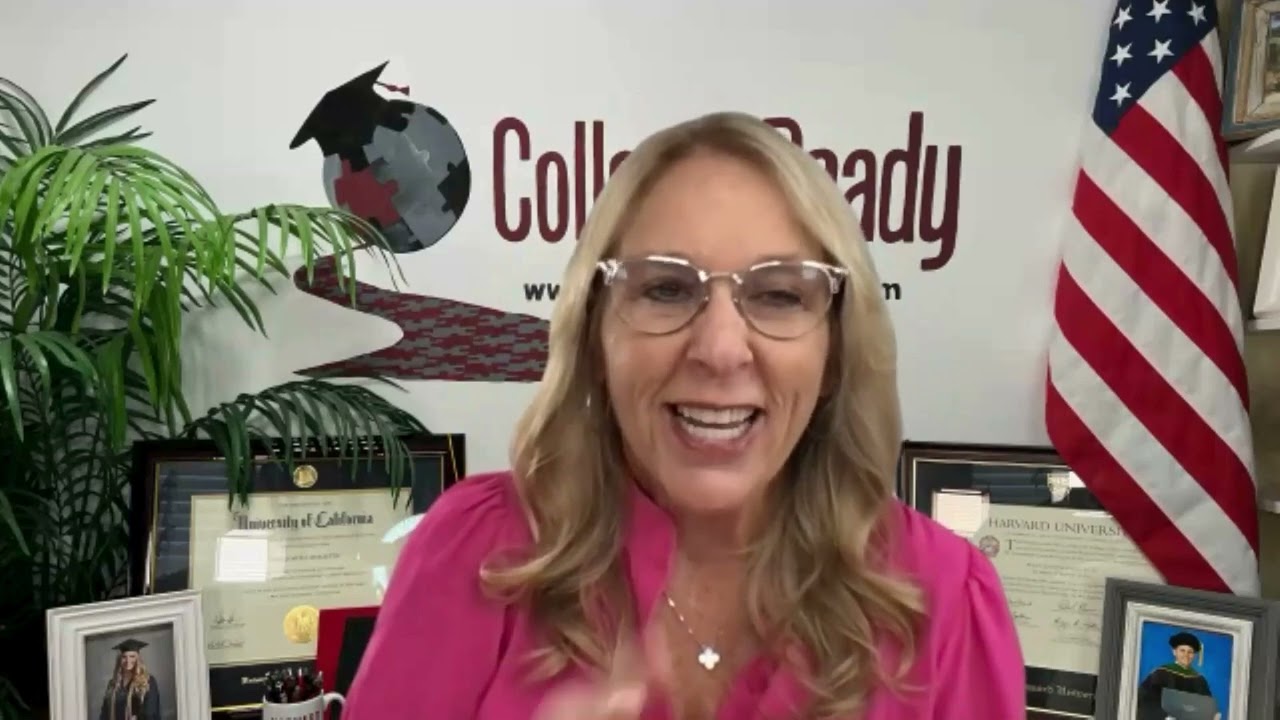
In this hour‑long YouTube webinar, College Ready founder and CEO Shellee Howard teams up with Dinner Table co‑founder Travis Adams to give parents a comprehensive, actionable roadmap for getting their children into college debt‑free and securing large scholarships. Shellee shares her personal family success stories—four children who earned full‑ride offers to Harvard, USC, University of Alabama, and a dual‑degree program in Prague—illustrating how a "standout strategy" built on positioning, academic rigor, test planning, leadership, extracurriculars, essays, and strategic college selection can turn modest GPAs and test scores into full‑ride awards. She outlines College Ready’s proprietary process, including early‑grade academic planning (AP/IB/dual enrollment), career assessments, test‑taking tactics (including PSAT leverage), leadership and award acquisition, recommender and essay strategies, and financial navigation (FAFSA, CSS Profile, SAI, negotiations with generous schools). Travis introduces the "Value Creation Cycle" and the "Home Economy" framework, teaching families how to give kids healthy struggles, build confidence and capability, and monetize household responsibilities through expectations, expenses, and extra‑pay gigs. He demonstrates the Dinner Table app (formerly GravyStack) and its coaching communities that foster financial competency, value creation, and harmony at home. The session also covers summer planning, IB vs AP considerations, private vs public schooling, handling low GPAs, and supporting adult children’s financial independence. Throughout, the presenters stress mission‑driven, data‑backed strategies, provide free resources (a bestselling book, the Vault portal, and free community links), and field live Q&A from parents.
Chapters
Welcome everyone, my name is Shellee Howard and I am the founder and CEO of College Ready, and today I have a wonderful guest to share with you, Mr. Travis Adams. Welcome!
Thanks for having me, good to see you.
Excellent. So if you're just joining us right now, um, please put where you're located and the ages of your children. It helps us so we know who to speak to. This is your valuable time, and we want to make sure that you get everything and more out of it. So we're going to go ahead and jump in. You can expect I'm going to talk a little bit about getting into college and getting big scholarships, and then Travis is going to help us to set up the family for that opportunity. Then we're going to do some Q&A. And then we're gonna wrap it up at 1 hour. So please know this is about you, and we're here to make you knowledgeable. So we're gonna go ahead and jump start. Come right on in. So let's start with the most important question in the room is, why are we here? I think it's important to understand that College is expensive. Let's just call the elephant in the room what it is, right? It's competitive and it's expensive, but it doesn't have to be, and it can actually be fun. We have been doing this for 18 years. We're going on our 18th application season, which most people probably think is crazy that I would want to do this 18 times. But I love it. It is truly my mission, my passion. Our goal at College Ready is to help a million families get into college and graduate debt-free. That is our goal. So in order to do that, I want to set you up for success. We're going to jump into how we do it, what are colleges looking for, but ultimately I want to share how my son got into Harvard and graduated debt-free. So if you thought you were just going to come here and get like a sales pitch, sorry to disappoint. We're here to give you a ton of information and to help you be successful. Backing up a little bit, I am a mother of 4, and my firstborn started this whole thing. He came home in 8th grade and said, Mom, I know exactly what I want to do. I want to be a brain surgeon and I want to go to one of those top college things. And I was like, okay. And I said, you realize I was the first to go to college and we have no doctors in our family. And he's like, yeah, I know, but will you help me? And I'm like, of course I'll help you. That's what we do as parents. So that started the whole process because what we did is we work together to put together a standout strategy. And you'll hear me say positioning and strategy a lot tonight. Those two words equal scholarships. So if everybody's looking for the big scholarships, it's not where you just research online, fill an application, and call it a day. That's called bait and switch. They get your information, they sell you a loan. That's not what we're here about. So I want you to write down— if you're brave enough, put it in the chat. If not, write it on a piece of paper. I want you to prioritize what is most important to you as parents: the academic fit, the social fit, or the financial fit of college. Okay, now I want you to write down what you think your child will say is their most important factor: the academic fit, the social fit, or the financial fit. Okay, if those two do not match, wait until you hear what Travis is going to share because he's going to save you a lot of headaches at the dinner table because he's going to help you to navigate that process. But before we jump in, I want you to know who you're listening to. So I am an independent certified college consultant. So I did my undergrad in San Diego, I did my graduate work in San Diego, I became a certified independent college consultant, and I started touring 25 colleges a semester. I actually leave for Portland next week to, to look at some, some new ones that are on the map. And so I want families to understand this is not Google. This is 18 years of intellectual property. And it all started with my firstborn. I'm not going to bore you with the details, even though most people would love his resume. But what I will tell you is He didn't have a perfect GPA, and he did not have a perfect test score. So what does that tell you? He had a standout strategy, and he had positioning. So that young man did exactly what I recommended. He has 7 full-ride offers, went to Harvard pre-med for free. That has nothing to do with me. He truly earned it. I did not buy it. I did not pay for it. None of that. He ended up getting a full ride to USC, and Harvard matched it. It is a strategic positioning proposition, and most people are like, I didn't even know you could do that. So College Ready is unique. We focus on return on investment of the education, and now I'm gonna show you how. But before I do, I have to tell you, I have 3 other children. So it wasn't like a one-hit wonder, right? So 4 years later, my second child, my first daughter, she comes home and says, I want to go to University of Alabama. I'm like, what is wrong with California? We have great schools. She goes, duh, mom, the football. And I'm like, oh, you're going to play football? And she did not find that funny at all. And she said, no, I want to go to a big sports school. I said, great, if you can go for free, I'm good on it. She said, will you help me? And of course I said yes, and she ended up going for free. So my firstborn just had his 30th birthday yesterday. He graduated from Harvard debt-free, went to UC San Diego Medical School, graduated with only $30,000 total in debt. He will graduate and be an orthopedic surgeon at 31 years old with $30,000 total in debt. So when you think of return on investment, guys, that's what I'm talking about. That makes total sense, right? The second child, she went to, uh, University of Alabama to become a registered nurse, graduated debt-free. At 25 years old, she was able to buy her first home in California. Okay, that's what debt-free gets you. My third is graduating in 2 weeks, a year early, because he had AP classes and dual enrollment classes that saved him a year of college tuition. New strategy. The third strategy, um, or sorry, I'm on child number 4. The fourth strategy, she says, well, he went to Harvard, she went to Alabama, they stayed in California. I am going to do something totally different because I want to do this my way. So she is studying international business, getting a dual US and European degree in the Czech Republic of Prague in 3 and a half years for $27,000 total, which means she can do that over the summer and will graduate debt-free. That is just my own family. We've helped hundreds, no, thousands of students do the same. In 2022-23, our students earned $23 million. That's 49 students, $23 million in scholarships. Okay, so why is that important? Because I want you to know it's possible. And now I'm going to jump in and show you the how we do it, because that's what everybody cares about. Stop talking about how we get scholarships, show me how we do it. So I'm gonna go ahead and share my screen, and you can feel free to follow along. Um, this is a sister company of College Ready that I created called crfuturenow.com. This program, or this website actually, is the beginning of how we're able to do this. We start students in 7th 8th, 9th, 10th, 11th, or 12th grade. We either gently do it over time, or we firehose it and hope, hope they're mature enough to hold on and make it happen. You cannot just do this for an hour and think you're going to go debt-free. It took me 30 hours on top of my full-time career just to support my son. I didn't even do the work. I did all of the research, all of the strategizing and the planning. So keep that in mind. Like, free is not easy or everybody would do it. So as you look through here, a couple of things I want you to see. The first one is I'm happy to send you a copy of my bestselling book for being on the webinar. How to Send Your Student to College Without Losing Your Mind or Your Money actually came from a bet with my firstborn. I told him if he walked across the stage of Harvard and he was debt-free, I would write a book. Little did I know I would be writing a book. So it was a bestseller in 24 hours because it's the foundation of the minimum you need to do. No longer just a GPA, no longer just a test score. I then talk about our approach is unique. We are focused on academic fit, social fit, financial fit, athletic fit. We want the whole thing. We are FAFSA, CSS Profile, and SAI specialists. All of that, again, is scholarship-driven. Nobody else does what we do. Here are my two whys. This is at my son's medical graduation. And our mission, our mission is to help students figure out their passion, their positioning, and their standout strategy. And we do it all while serving and building schools in Uganda and Oaxaca, Mexico. We're very mission-driven, and that is what gets big scholarships. So the first thing we hear is, my teen has no plan for their future. I don't even know what they want to do. Maybe we're just going to take a gap year. Maybe they're going to be an influencer. I don't know. They don't know. We're just going to see what happens. There's no scholarships, I promise. If that, if that's the case, because if you don't plan, you plan to fail. And so the first thing we do is we help them to decide, do I want a trade school? Do I want a— do I want to be an entrepreneur? Do I want to have a career? What major feeds into that career? How much college? What is that major going to provide financially when I graduate? I love to tell the story of the student who says, I want to go to Yale and be a botanist. That return on invest— that return on investment, probably not going to work out very well if that is the case. So first thing we do is we educate students, but we start with them. We don't talk at them. We actually have them talk to us. We, we help them to figure out who they are, what matters. How others see them, how they see themselves. Then we map out career options. Then we talk about return on investment and financial freedom. We put it all together and then we talk about what does this look like and how are we going to pay for it? The next thing we do is— the problem is I have no idea where to start, Shellee Howard, and I just want to be conscious of time. We're doing okay. So the first thing that we have to talk about is what needs to be done. This is it. You guys can screenshot it. You can look at it. You can— I'm going to record it. I want you to know it's not a mystery. The first thing is academic strategy. Your student needs to have an academic plan with rigor. That means AP, IB, dual enrollment, HP, honors, or CP. All of that's like another language. I get it. I speak it, but you need to understand it's important. Colleges are looking for students who want to challenge themselves, and they're willing to pay money for that. The next one is the Strength in Career Assessments. We help them to focus on their gifts, their talents, their advocacy, and then we help them to lead others to create that change. That is huge. That helps them figure out, what am I good at? Then test strategy. For all those people who thought test optional was gonna stay test optional, so sorry. I told our students from day one that was not gonna stick because then it's just a GPA and that's not enough. So we need testing to help them stand out, right? We help them to understand when to take it, where to take it, how to take it. But most importantly, I want you to take away The PSAT their junior year can earn them a free education. Okay, now you're learning. You're like, whoa, didn't know that. The next one is leadership. Colleges are looking for students to come and lead. They're not looking for students to come and sit at a desk, take an education, and walk away. They— you're their next marketing employ, right? Your tuition pays them. You wearing the letters, the diploma on the wall, that is what they're looking for. Extracurriculars— there's a, there's a rhyme and a rhythm for this. It goes international, national, regional, local, school. If your child's running around doing a zillion school things instead of one international thing, You're gonna burn your child out really, really quick, and it's not even the right thing to do. So we help our students get 8 national awards that are national and international and 4 leadership certifications. Why? It equals scholarships. The recommender strategy— who to ask, when to ask, where to ask, why— so critical. That is a very important piece to getting accepted. The essay strategy. Essays are now the third most important thing about the college application. Did you know that colleges spend about 10 minutes on your entire application and your essay? On the Common App, there are 10 activities, honors, and awards. On the UC app, there are 20. So you need a lot of things to write about. Essays are critical. Each college will have between 0 essays to get accepted up to 18 for one school. Why is that important? Because you need to have a different topic for each essay. That is going to get you scholarships. My son's essay got published in a book got him Student of the Month and Student of the Year. That got him on the board to getting scholarships. We meet with our students every week to help them with their standout strategy and their positioning. So just know it has to be ongoing and consistent. Then we help the, the family with the financial strategy. Remember, this, this is not about me. This is about you. These are things that you can do on your own. We're just here to support you and give you knowledge. Or if you're like, Shellee Howard, I have a full-time career. I don't want to know this. I don't know how to do this. I'm happy to pay you to do it. We can do that too. Maybe you just need a test strategist. Maybe you just want scholarships. Maybe you just need an essay editor. Maybe you just need to show how to demonstrate interest or FAFSA support. By now you're probably feeling a little overwhelmed. That is not our intention. So we built this custom portal called the Vault, and because time is, is tight, I want you to please go to crfuturenow.com, and it's 5 minutes, and it will show you the how we're able to help students get in and get scholarships, so I won't go ahead and go into the details of that. So this is it. This is really what it takes if you want scholarships. This is it. You need the academic rigor, the test strategy, the Passion with Purpose project, leadership, extracurriculars, recommenders, essays, and number one most important is picking the most generous colleges. That is where the big money is, you guys. It's not chasing all the little scholarships. It's really understanding how to do financial negotiations, reconsiderations, how to get off the waitlist. All of these are part of the strategy. It's not easy. I completely understand, but that's why not everybody gets the big scholarships. If you're just hoping for free resources, I want to give them to you. We're willing to give you your student aid index so you can see what colleges think you should be able to pay for college. Not, not a pretty picture. A copy of my bestselling book, and ultimately time with me. At the end, we're going to share how you can get free resources. So without further ado, I'm going to go ahead and pass it over to my friend Mr. Travis Adams, who is the co-founder of— they just changed the name, so I have to look it up— called Dinner Table. And he's a father of 4, so he'll tell you his why. But welcome, Travis. So, so happy to share the stage with you.
Yeah, absolutely. Sorry, there's lightning here. So if it's, if it's loud, I apologize. Yeah. Thanks for having me, Shellee Howard. This is really great. I'll share just a quick background. So my friend Scott Donald and I started back in, I guess it had been 2010, a company called Apex Leadership Co., where we went into elementary middle schools. We'd help them raise a lot more money than they're used to. Like traditional fundraisers. And, um, and then Scott, you know, continued and grew that. And we, you know, that company has served over 7 million kids. So we've been in the education, school, kid, and parent space. So then we, last year, we launched an app that was geared towards helping kids and families really create value. And so Scott and Lee released our bestselling book called Valuation Kid. It's Wall Street Journal and Amazon and all the bestsellers. And so really, once we launched the app, a lot of parents were just like, hey, can you help us implement this? Something we call the home economy is a big piece of that. And at the end— and so we started doing it and parents were like, wow, this is, this is great. We need more help. And so Dinner Table is really our— it's our new brand. You go to dinnertable.com. But really what we do is we help close the bank of mom and dad before or by 18. But more importantly, we double the connection you have with your kids because most of us— and you feel free to type this in the chat— but like, what was— if you described your upbringing around money, what's one word that would describe your upbringing? Okay, so like for me personally, my dad was an entrepreneur. We didn't talk about it. We didn't talk about money at all. Yeah, frugal. Thank you, Suzanne. Um, so, um, generally with most families, with parents in general, you know, it was either a negative thing, it caused divorce, it wasn't talked about. You have all these issues. And so a lot of parents are even afraid to say, I don't even know about money. So with the best-selling book, what we've done is really changed, and we said, we say, from kindergarten to college to Congress, we're boiling money that we don't have, you know., which is what, what, uh, you're all about, Shellee Howard. Um, but, uh, at the end of the day, we want to make, uh, money a connection. And then even before that, um, and I'm gonna, I'm gonna share my screen here in a second, and I really want to get y'all's, y'all's thoughts. Um, but really wanted to change the narrative on— we hear financial literacy, we actually say financial competency, because you can be financially, financially literate, but but also make really bad decisions with money. Um, so we, we say financial competency, but really when it comes to money in the home and families, um, you know, it's, it's actually before we even talk about money, it's really about value creation. So how do you create a home? How do you— parents and kids, doesn't matter if they're high school, college, you know, little kids— how do we create material value, how to create emotional value, and how do we create spiritual value. And what we've learned, because we're— the only thing that qualifies us is that we're doing this right. If I wasn't with Dinner Table, I would not be doing this as a parent. Um, so, uh, but if you don't have all three of those, you know, um, it's kind of like a three-legged stool. So you could, you could do a lot, you know, make a lot of money and create a lot of material value, but if you're not healthy emotionally or spiritually you know, something bigger than yourself, it can all really fall to, fall to pieces, or you can lose it. It can be gone overnight. So, um, I'm going to share something really just very fundamental, and I would love for y'all to type in the chat, um, just initial kind of where your kids are. But I'm going to show you all the Value Creation Cycle, um, and, and really my goal is just for you to kind of see a new lens, a perspective around money Um, and so I think I can share, Shellee, here. Can y'all see? Let's try this. Okay, can y'all see this? Can you see, Shellee?
Yes.
Okay, great. Okay, so this is the value creation cycle. So one of the things we're, we're discussing with our dinner table families, and really it's been, it's been a game changer for a lot of folks, is just The Value Creation Cycle, which is number one, our kids have to have healthy struggles. And we're not talking about like trauma or some other things, but like what are the healthy struggles that they need so that they can become capable, so that they can gain confidence, so that they can create value. And what happens is once they do this once, they're like, oh, I can, I can create value for myself or my neighbor or my grandma or whatever it was. Like, um, a great example was last week one of our Dinner Table Dads was like, oh, my homework's due tomorrow. Um, and, and the, the assignment was create either material with your kids, create material, emotional, spiritual value, post a video picture in our group. And so their grandma loved flowers, and this was like Wednesday night, they were at church, like, what can we do with our daughter? Their daughter's 4. And so there was this big bouquet of flowers, and so they got their grand— their daughter to sing this song to Grandma next to the flowers. And they, they texted that video to Grandma, and, and Joe's like, Travis, he was like, the response from— I don't know if his mother-in-law or his mom— he's like, there's one— I think it's his mother-in-law— my mother-in-law was worth every penny that we, we use. And it was amazing, right? And it wasn't even material value, just emotional value to Grandma. So Um, so this cycle really, um, what we help families do is like, all right, what are the healthy struggles? And so on the right-hand side is actually the matrix. So I'd love for you, if y'all just, just type, if you can write this down, or if you want to type in the chat, it'd be great to let us know where your kids fall. Um, so on the bottom is, is the confidence x-axis. So, you know, are they confident or not? And then the y-axis is capable, you know, capable or not. So Obviously we all want our kids in the value creation quadrant at the top right, which is high capability. They're also confident. If you've got a kid who is highly confident, but they're actually not capable, that's what we would call an entitled taker. If they're highly capable, but they don't have any confidence, that's an anxious self-doubter. And then obviously if they have neither, they'd be a lazy victim. And so, you know, it's been really, really cool to see how families are, um, this is kind of becoming part of their family culture and it's catching on with the kids. And, uh, there's so many stories I could tell, but if you could just, just think about where— maybe pick one kid and I'll kind of give you an example. So when we, we moved and we were playing football, my 8-year-old loves football and he was just super anxious when we moved here. And so he really fell into the, the anxious self-doubter category. And so, um, my wife and I were like, okay, well, what, what is the next healthy struggle that he, you know, needs to experience? So we decided, okay, we're gonna sign him up for basketball. Um, this time I'm actually going to coach, so I'm going to be a little more present so he feels more comfortable, and let's just see how it goes. That was the next healthy struggle. So of course, first practice, he jumps right in, right? Okay, this is good. And, um, he gained confidence. He's one of our best players. He was like one of our starting point guards. And then the last game of the season, he was one of our highest scorers on the whole team. He was actually one of the younger kids, so he was creating a lot of value for his team. But it was so cool to see how he moved from anxious self-doubter to value creator. And so this is for us, and I hope hopefully this helps for you not just to start thinking about like, okay, Where are my kids, um, and what is the next healthy struggle that they need? Um, and if that resonates, please— I, I can't see the chat, I need to pull the chat back. Oh, we got some. Okay, yeah, yeah, if that resonates, let me know. Yeah, entitled taker, there we go. Is it too late if, if I have a junior? No, Carrie, that's a great question. So the good news is it's never too late. Uh, we work with families that are 4-year-olds, newborns. We got some folks that are newborn parents, and then we have some kids that are in college, and then we even work with grandparents because we have a whole nother, like, legacy side of what we do. And, you know, how do you pass heritage or inheritance and the values, the healthy values in our family want to pass on? So, um, yeah, never too late, especially if they're still in your home too. There's plenty of time. Um, and this next thing I'm going to show real quick, if we have time, Shellee, You're good. Okay, so this will be helpful, um, Carrie. Uh, so the next thing I want to show is the home economy. So this is really the beautiful thing behind our app because it helps families integrate the home economy seamlessly. Um, but when you think about, you know, how do we actually close the bank of mom and dad and bring harmony into our home, because that's what's happening with families that are really kind of rolling their sleeves up and implementing this with us. But, um, the first one, I would just define it. So expectations— what are the things your kids are expected to do without pay? Okay, brush their teeth, they make their bed, clean the living room every day, um, maybe they unload the dishwasher. Then you have expenses. Expenses are the key to helping your kids learn value of a dollar. So if you got a 17-year-old at home, you're not paying for anything, one of the things you're going to want to do is start handing off expenses to them. And I would start very, very small. Um, and so, and that's a whole, you know, we call it the freedom talk. You know, let them know how freedom is attached to responsibility. Elon Musk has a lot of freedom, but he also has a lot of responsibility. Um, and you can use it as a positive conversation of like, hey, we want to give you more responsibility and more freedoms. Let's You know, let's have a conversation. Because if you ask any, especially teenagers, do you want more independence? The question— the answer will be yes. So it's actually fairly easy if you go about it the right way. And then we have extra pay, the 30, which is get what we call gigs. So that would be anything above and beyond that you would pay anybody else for— mowing your lawn, cleaning your house, um, washing your car, detailing your car. There's all kinds of things in that category. So, um, the beautiful thing is when you implement these, um, and it's, it's a never-ending thing, right? We, you know, we coach families and, you know, next year there'll be 11 and 12 and 13. There's always new things coming up. But I think, um, just a plug to Shellee and, and kind of what we do is what we found is if you have the community and you have the accountability to do it, it really does work. You know, I think it's like 3% of, 3% of online courses are, are completed. And so some of y'all seen, I don't have it with me. It's like the cone of learning, but it's like if you're practicing, because our whole thing when we started GravyStack, the app was it's gotta be fun. So kids learn through play and they also learn by doing. So we have to create a platform for, for kids. And now we have it for parents where they can have fun. But they're going to do real-world stuff, right? And they're going to have accountability because otherwise, like Joe, he's like, Travis, if we would have that homework, I wouldn't— that would have never happened and Grandma would have missed out, you know? So it's— this is the home economy. And then the last thing I would say is, you know, a great place to start with the home economy is just ask the question, where is the biggest— and if y'all can type this in the chat as well. What's the biggest conflict, uh, in the home right now? So, and it doesn't have to be money related. It could be, um, you know, I used an example today in one of our coaching sessions, like our, our kids would— we had this whole conflict about handing your tablet, your iPad over, right? And so, um, we actually implemented an expectation where, where literally when our kids are done and they only use it for school now, they hand us the iPad. There's no fights. So curfew is a big one. Yeah, social media stole kids away. Yeah, doing chores, too much screen time. Yeah, that's great. Yeah, any other conflicts in the home? Let me see. Phone addiction. Yeah. Um, let me share one more story and then I'll be done. Um, to the, to the phones and social media. So we actually had one of our, um, so we're going through Home Economy right now with my Dinner Table Dads group, and one of our dads over the last few weeks His daughter was, um, they finally handed over the phone bill to her because she didn't pay for hardly anything. And so he gave— he had the Freedom Talk. He really uses a positive opportunity. And so they, they had a, they had a header that said the Bank of Mom and Dad, and, and it said your loan has been approved, it's gonna be 2% interest, and you owe $70 by May 12th. If you don't, the collateral for your loan is your access to TikTok. So they are actually using, you know, the home economy to— it's not just money. It's like it's bringing harmony in the home. Yeah, Chantel, it's funny. It's hilarious. But there's lots of other stories I could share. That was one that just came in today. We have our group, our Dinner Table Dads group is tomorrow, so I'm excited to to talk to David and hear the whole story. But, um, the good news is, is it really, um, is doable to, um, you know, I think when we're going to be doing the home account on a calculator soon, when I ran it the first time for myself, we have 4 kids, I calculated $147,000 of savings for, for one kid. And that's, that's 8 to 18, but that's just one group. Um, and so, um, yeah, the Dinner Table Dads group. So real quick, so we do coaching. So we have like— I have like a value creation coaching group that anybody can join. I have a Dinner Table Dads group that's— I think it's dads.dinnertable.com if y'all want to check that out. But, um, we have different groups. We have new groups starting. We have like a single moms group starting. So if you're interested, just DM me and I can, I can get you more information. But all that to say, um, it is possible to bring harmony in your home. It is possible to save. I mean, if you do what Shellee Howard's doing, you're going to save way more money than that over the lifetime of the kids, especially, you know, if they're going to college. So, um, and then, uh, the, the link, I think— oh yeah, there it is. Is that, um, the last thing I'll say is if you want to join, we have a free community And if you want to join the free community, click on that link that Shellee posted. And that's just a way to kind of get into the community. We have a free home economy course in there you can have free access to because, yeah, like you said, Shellee, just like, how do you give away value? But that is— you can see all the stuff, you can see our videos. And then a couple of questions. And I know we're getting to Q&A, wondering about Canada. So it is coming to Canada soon. So be patient. We're hoping by the end of the month, Curtis. Um, in fact, it'll be international. Um, and we've had— we actually had some folks internationally that joined our coaching group today, um, from all over the world. And then the dollar equation, you said you saved with one child. So Christy, there's a calculator, um, and it— I can't go into all the details, like, it's— I just had to show you the spreadsheet, but it's a combination of expenses if you hand over normal expenses from kids ages 8 to 18. Obviously that's going to increase a little bit as they get older. So obviously if you've got a driver that's 16 and they're paying for gas, that's going to save you more money as they get older. Um, and then it also includes extra pay. So if, if you're— let's say you pay somebody to mow your lawn, but instead of paying a random person that does lawns, you're paying your kid, then that's extra money they have to pay for stuff you don't have to pay for anymore. So it's a combination of saving on expenses and then extra pay opportunities for them to earn money so that you don't have to pay for things like college or other cars or, you know, other big expenditures down the road. So hopefully that helps a little bit. But anyways, I know we're running out of time, so I want to— I want to leave time for Q&A. And, uh, but yeah, if you want to join our free group, just click on that link that Shellee Howard posted, um, and you'll see we do a Wednesday call, uh, just a family call. Anybody has questions We did one today, we'll do one next week, so you can, you can jump on that.
I love it, Travis, that was amazing. So, you know, the important thing to think about is how can you use this to have the conversations while they're young, because when they get older, those conversations become a little more loud, a little bit more conflict, but not if you start off having that round table. So Travis, do you want to speak maybe like, how do you even start having these table conversations? Like, not everybody's there.
Yeah, well, I think the thing, you know, the thing that we've learned, which we didn't really realize at the beginning, is You know, for parents, we're all exhausted, we're all tired, like, and it's got to be something that meets parents in the everyday life chaos of home, right? And so for most parents, um, it's really about the small wins, like the very small wins. Like, let's just make a— and in the app, you know, there's, you can, there's a printout where you can have all 3 E's for your kids. If you're a, if you're a no-tech family, you can post it on the fridge and you can just sit down and have a conversation like, hey guys, we, we want to give you more freedom and we also, and that comes with responsibility. And it's just like, all right, we're going to, you know, until like expectations, like one of the big things like we use at home is like, hey, until these things are done, one of the freedoms you get every day is like screen time. So guess how motivated they are to get their expectations done? Pretty motivated. Right. And some days they don't want to do it. Like, that's okay. You don't get that freedom, right? It's their choice. They need to learn to make decisions now. So, you know, I would say starting off, it's just— it's sitting down and saying, hey, here's one expectation: brush your teeth every day, right? Start small. Um, here's one expense. One of the best expenses you can hand off your kids, I don't care if they're 4 or 14, is birthday presents. That's one of the best things you can do because guess what happens? Not only do they buy the birthday present, I mean, there's a little bit of positive peer pressure, like, I don't want to not get them anything, but this is also my money. But that's probably going to save you $10 to $20 a month easy right there, depending on how social they are. And then, and then, you know, when they go to the party, what happens is that they care way more about that present. They don't just throw it on the table. There's way more gratitude, appreciation. And then when the kid that gets the present finds out they paid for it, It really— we have some really cool stories around birthday gifts and kids learning to, um, like share, right? Share their, share their money. So, um, anyways, that— but, and then, and then, and again, in the app you can— it's, it's, it's gravystack.com is the app. It will soon be changed to Dinner Table because we're gonna make everything Dinner Table. But, um, I would start with one, one of each, right? Just start there. Start with a simple conversation. And that would be my recommendation just to kind of get started.
I love it. Let me jump in now. There's a question in the Q&A. I'm trying to figure out junior year summer for my son before senior year. Such a critical time. Thinking mini internship or research experience, job or question mark. We have 2 weeks plus 3 weeks. So I'm just going to answer that live. Um, summers are critical, and let's even take a step back. So colleges do not look at before you promote from 8th grade. So the day you promote from 8th grade, it's game on. Everything counts at that moment. Everything before that is just preparation for success. So that summer between 8th and 9th grade, the most underutilized summer of them all. The kids have more time. They should be exploring. They should really be thinking, how, how can I get ahead? How, how can I test the water to see if I want to do engineering or medical or accounting, whatever? So that's that summer. Then you have the next summer, which would be from freshman year to sophomore year. That summer should be them creating a Passion with Purpose project. That should be test strategy. That should be working on their essay brainstorming. So now the question is, to whoever asked it, thank you, is what do I do now? Well, now you have to patch the holes in your boat. And because I don't know the holes in your boat, it's hard. I can't just give you a generic answer, but let me help you to see if you can figure out how to patch the holes in your boat, or you get on the link and I'm happy to give you 30 minutes of figuring that out. But what that looks like is academically, have they proven that they are a good student who wants to go into career or major A. Number 2, does their GPA and test scores match? Because if their test score is high and their GPA is low, they are a smart lazy kid. If their GPA is high and their test score is low, they either get easy A's at their school or have test anxiety. So the summer is a great time to start even that teeter-totter. The third thing is community service. So, um, the most important thing with community service is don't— I'm not going to say don't— I recommend that a parent not suggest what they enjoy doing for community service because the child is going to say no. That's it. It's a done deal. They think your idea is dumb. I mean, unless you have that very unique child. Um, my son refused to do community service until his summer going into his senior year because that was the hole in his boat. I said, everything looks great, honey, except you are missing a huge— you want to be a doctor, that's serving your community. Big problem. I said, what are you going to do? And he's like, Mom, I don't want to wash old people's feet. I'm like, what? He's like, yeah, I heard you tell your friend that you go and give them pedicures. I'm like, yes, that's what I do. You don't need to do that. And he's like, oh, well, what can I do? And huge failure as a parent moment because I obviously was not leaning into what they want to do. I was trying to get them to do something Be very careful there. It backfires every time. So our college-ready students from 7th grade all the way through college, we have— I mentor the students to lead other students. If you want to look it up, it's called empowereducation.world. It's where I teach students no cost It is completely free. I teach students how to find their passion, their advocacy, and change somebody's life. Because guess what? If our world, if every child did community service before they graduated high school, our world would be incredibly different, right? If everybody's leaning in, how can I help you? And they're not thinking about how can you help me, we would be in a lot less conflict. So that is my service. So feel free, um, if you have any questions, go to that website. But that's what's important. What are they missing? Are they missing leadership? Are they missing national honors and awards? Are they missing the ability to write a great essay without texting? Like little things that we haven't really talked about. But that's what the summer needs to be. Colleges have 10 minutes to figure out who they are, what matters, and are they doing anything about it? Because somebody else is, and that's really who's getting in. So I want to encourage everybody, not discourage. Our students had the best application season we've ever had. I had a student this year apply to every University of California school because they heard it was impossible to get in one of them. She got in all of them. So just to prove that it could be done. This generation is very, very much advocating. So just know if there's a desire for something, there's a plan and a strategy for it. That's what the summer should be. Long-winded, I'm sorry, but hopefully it explained. Are there any other questions? Let's see. Hi, thank you so much for your time in this webinar. I am a certified money coach and have had clients that are dealing with issues related to finances with their full-grown adult children not leaving the home, not taking responsibility for for their finances and even recognizing them. Can Dinner Table help with something like this? Wow, that's awesome. Powerful question.
Yeah, great. Do you want me to answer that, Shellee Howard?
Well, please, that's your, that's your wheelhouse.
So, um, the short answer is yes, we can. I mean, we, we've got some parents that have adult kids, and that is like a really, um, interesting point because we do like It's interesting to see how, especially after COVID, how kids— one kind of realization is they're afraid to do some things and they never leave the nest. So like kids apparently now are not like excited to get their driver's license. It's like they're still wanting mom and dad to drive them places. They don't— and they have phones. So they get their phones, they can text their friends, they can look at social media. There's not as much of a need to like drive. And so we, we were recently— one of our good friends who's in one of our groups was like, one of their expectations was for their daughter— she had her license, but she just was scared to drive. So they were having her drive. They— she was in charge of driving, um, certain things, right? And so the same thing with older kids. Um, yes. Um, and there's, you know, depending on the situation Um, but, but I would say even for adults, like, what we're learning is it's not just for the kids. Um, the— what we're doing with like coaching and stuff is really helping parents because there's so much value we can create as parents. Um, usually with our kids, you know, the, uh, the sad truth is it's, um, it's usually a sign of the trainer, which is us. And so we help families not— parents not feel bad about it. Like, it's— we don't know because we weren't taught, right? And giving parents a roadmap of like, if I have a 20-something-year-old at home, um, it's never too late and we can start, you know, especially if they're under a roof, there's a lot of stuff you can do, right? So yes, um, shoot me an email and, you know, happy to share more.
Um, I will, I will say I have promoted 4 of my children out of the home. And I always talked about it like that, like, this is a promotion, this is part of life, this is what we do. And so, uh, I think a lot of times, um, either they feel stuck or parents don't feel like they're ready. There's lots of situations. The hardest part is confidence plays a big part in this. And so if they're struggling with confidence to find a job, confidence to get a driver's license, whatever that may be, there are so many wonderful coaches for this. I just interviewed, uh, a lady, Ruth Klein, who does just that. She helps with the mindset of these children, young adults, to launch them. And so you don't have to just accept it. There are things you can do to support them without feeling like you're pushing them out because really their mindset is fragile. So how do you do it? It's give them the skills to actually do it. And that's why I love, you know, Dinner Table. You, you're giving life skills to these kids. We're going to jump back to college, and how does a low GPA disqualify getting into a good college? Um, like I mentioned before, the GPA and the test score are the two most critical factors to have, but they're not enough to get you in. So it's a benchmark. So if a student has a I don't know, 3.3 GPA, and they apply to Harvard and they're expecting to get in, that would not be a good fit because they haven't prepared to do that rigorous work. So it's really the college saying, we know what it's going to take to get here, and this is the, the GPA that we know that's been successful. So if the student doesn't meet the minimum GPA, which we could show you for any school in the world— don't look at Google because it's not real. Um, then they can see— the student can see, whoa, like, if I really want to go to that school, I better up my game. Like, I better get in motion because there's some awakening that's going on. And it's, it's a choice, just like you're saying. Everything's a choice. We tell a student, if your dream is School A, and this is the GPA you need and the test score you need. Now it's your choice. Do you want to go get it, or do you want to pick another school? It's really important for that student to have that ability to choose. So good question. All right, any— oh, did we get another question? Yes. Do you think the IB Diploma is still valuable? Do colleges view it similar to AP? What about private school? Such a great question. So, um, a few things to think about. It depends on the end. IB is really interesting because the high school is more pumped about it than anybody. We're an IB school, like it's a something something. Colleges don't They don't weigh it heavier, they don't weigh it less. They really weigh it, what is the student learning and what are they going to do with it? If a student wants to study internationally or international business or politics, it helps their mindset. The IB program is good, but there's a few things that nobody tells the parent. Number one is the AP test, if they get— a student gets a 4 or 5, may not have to take the college equivalency, which saves them time and money. They don't have that for IB. So that's a big— when you're looking at cost savings, return on investment, that's something we consider. The thing that kills most students about the IB program is the IB diploma. The reason is the student is writing the research paper the senior year, the same time they're writing 20 essays, 20 applications, and that student is like literally freaking out, stressed out. And without the IB diploma, colleges are like, wow, that's just like a normal class, not a big deal. So you really have to look at it student by student versus is IB better than AP. Um, And so then it comes down, what about private school? So I love this question. My firstborn who went to Harvard, he was the first in 25 years at his public high school to go Ivy, period. So is it necessary to go private? Nope. Are you paying the college tuition for them to go private? Maybe. Is it going to give them a better education? Depends on the private school. So I— my kids went both private and public, so I really can speak to both sides of it, and there are pros and cons to both. What I will tell you is way more important than all of that is who is the student, what matters, are they successful, and are they creating change they wish to see in the world? They can do it at a public school, a private school. They can do it at a big school, a small school. It can happen from any place. It's all about the student. So starting with the student, 100% the right thing. And it may be that they're a better candidate for one or the other. Last little bonus before we go, for those of you who are taking IB, You can still take the AP equivalent test, okay? And be able to do that. You don't have to take the IB class and the AP class to take it. Take the IB, take the AP equivalent, get a 3, 4, or 5. Do 3 of those, you're an AP Scholar. National award. All right. Anything else, Travis, that we left out that you wanted to mention?
No, I mean, the only thing I was thinking when you asked that question earlier about academic, social, or financial is, um, I was thinking of that through the value creation, like what's the value creation ROI of the value creation. So when you, um, prioritize it even for the kids, asking the kids like how— what's going to set you up to create the most value, you know. Academically, socially, financially? Um, that might be a good question to ask for kids, um, and let them think about that because they're smart and they can— it kind of reframes it, right? Because of course I'd want to go to the social place, but it's like, um, when you're, when you're, you know, creating value out of your, you know, uniqueness and talents and all those things, you're having the most fun. You're helping the most people, you know, all those, all the good stuff in life. So, right.
So if you would like to be a part of the Dinner Table World, Travis has left the link. If you have specific questions, I'm happy to help. Go ahead and click on my link. It's top of the hour, so we are going to let you all go. Uh, but please remember this: have the question often and early. What does college mean? What does moving out look like? How much will it cost for them to live on their own? And how are they going to get there? Food for thought: the number one thing students are saying they want to do right now is be an influencer. It terrifies me. So help them help themselves because they see I get to be on social media all day and people throw money at me. They don't understand. So I ask them, and you might want to ask them, have you written a business plan? And they're like, what? I don't know how to write a business plan. And you're like, and that is why we need to go get educated. So with that, thank you, Travis. Thank you all so much. Have a great evening. Bye for now. Bye.
More from Shellee




The 3 Questions Every Parent Should Help Their Teen Answer Before College | Featuring James McLamb

Helping Your Teen Stand Out for College Through Purpose & Impact | Featuring Aishani Sheth


From Robotics to Cornell: A Father-Son Blueprint for College Success with Aarav & Ritesh Kumar

The Hidden College Credit Strategy That Could Save Your Family Thousands with Josh See

The Truth About Financial Aid: Why Some Families Pay Less for College Than You Think with Jack Wang

Human Skills Every Teen Needs for College, Careers & an AI Future with Rob Heller
