FA21 Blockchain Fundamentals Lecture 11: Shuo Chen & Will O'Brien
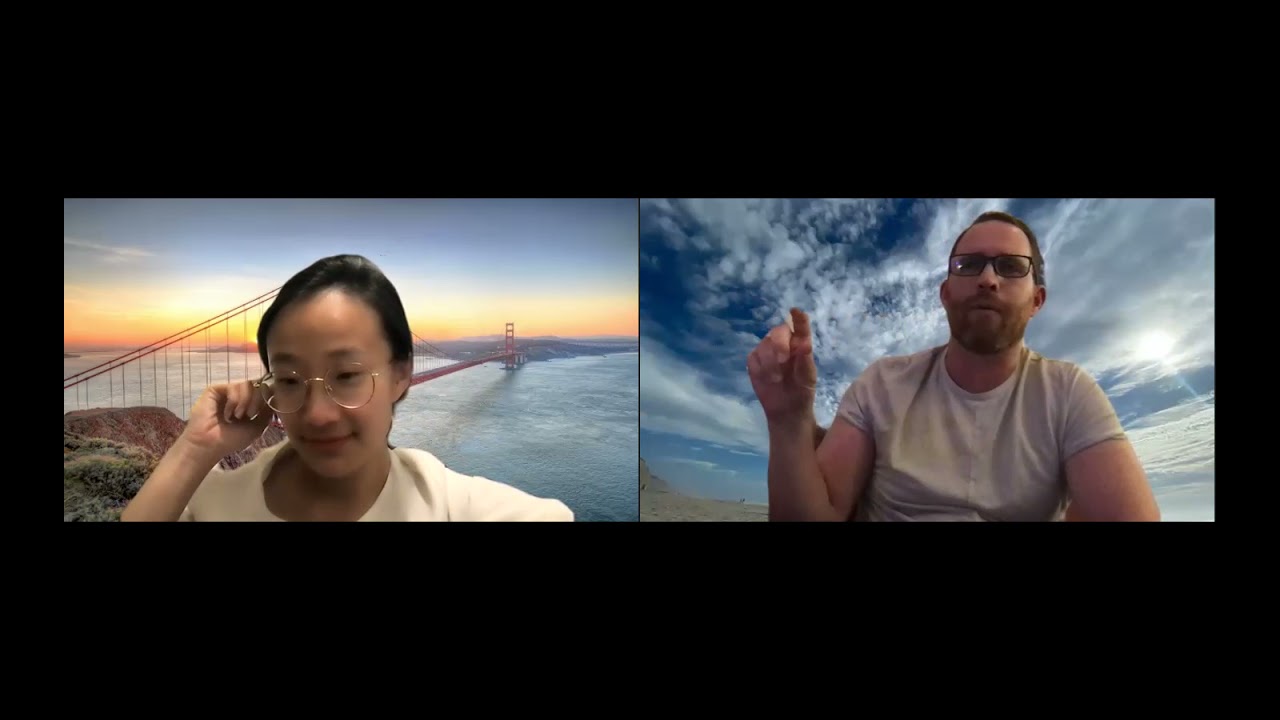
In this guest session, Will O'Brien shares a sweeping vision for a decentralized, creator‑centric metaverse built on a new "Provenance Standard" blockchain protocol. He explains how NFTs can evolve from speculative profile pictures to functional access licenses that power a "Metaverse‑as‑a‑Service" ecosystem, enabling creators, designers, and freelancers to monetize work while maintaining quality guardrails. O'Brien offers career advice for students, urging them to join fast‑growing companies, align with leadership priorities, and seek high‑impact projects. He discusses practical blockchain applications in education—trust, truth, transferability, and total accessibility—and predicts Bitcoin will become the global reserve currency, with existing payment networks acting as settlement layers. Using the U.S. interstate highway system as an infrastructure analogy, he argues that building foundational layers precedes their eventual value. He addresses geopolitical challenges, notably China’s CBDC crackdown, and argues that while authoritarian control can limit local adoption, a global movement remains resilient. The conversation moves to DeFi 2.0, examining protocol‑owned liquidity as a trade‑off between market stability and user empowerment, and to token‑based governance, highlighting risks of vote‑buying and immature DAO models. Finally, O'Brien evaluates creator coins and fan tokens, noting onboarding friction, on‑/off‑ramps, and the need to digitize high‑touch fan experiences. He concludes with a thesis that blockchain’s success will be measured when it becomes invisible, seamlessly integrated into everyday economic activity.
Chapters
All right, let's get started. So if you haven't seen the B-course announcement, which I'm assuming everyone has because you're on the Zoom link, we have a very special lecture for you all today. We have Will O'Brien here and Shuo Chen, who's actually the faculty sponsor for the—
Hi, Will.
Who's going to moderate today's lecture. So I will pass it off to Will to tell you a little about himself.
And before that, just quick, quick announcement. So I think some of you might have seen my announcement I sent, but pretty much some things about attendance. So be able to check that out. It just says that some ways to make up, like if you missed any quizzes, they can be exempt by coming to these lectures and participating. And then like that, that's a great way. Also, there are a lot of accelerator events coming up for the Berkeley Blockchain Accelerator. And so if you attend the demo day on the 22nd, that's another way when you can where you can make up some of those quizzes. So be on the lookout for those, and then we'll pass it off.
Yes, cameras on for extra credit too. We love to see your faces, and feel free to use the chat as well. Take it away.
Awesome, awesome. Will, please.
Uh, yeah, Shuo, do you want to— well, first of all, hi everybody, it's nice to meet you. My name is Will O'Brien. I've been in the Bitcoin blockchain space since 2012. That was when I first read the Bitcoin whitepaper and started buying some Bitcoin back then. Then I was the founder and CEO of a company called BitGo back in 2013 and started building a lot of the formative parts of the industry with my peers in the industry back then, 2013, '14, '15. I've been investing in the space Since then, as well as an investor in blockchain capital, investing directly in major projects. And now I'm running a company called NFT Oasis, which is kind of the future of the metaverse and NFTs and the creator economy. So I'm very happy to be here. I look forward to your guys' questions in the chat or verbal, and appreciate Shuo and Ava and Nate for the invitation. So Shuo, where do you want to kick it off? I'll turn it back to you.
Yeah, awesome. Hey guys, so as you guys probably already know, I'm the faculty sponsor for this class. Actually, a ton of familiar faces here. Either some of you are taking my other class, or I've worked with you in some capacity or another on some sort of— hey Nick— on some sort of existing project on campus. So always fun to have you guys all here to chat. I'm really excited to bring Will in today, actually, because we just had dinner together the other day, and we have so many interesting overlaps. And so I thought it would be fascinating to continue the conversation so you guys can all hear a little bit about all the cool stuff that he's working on. Similarly to Will, I've also been in the blockchain world for a number of years, a little bit after Will though. I started investing in the space end of 2015, though my business partner started in 2012. So he's even happier than I am with where things have turned out. So I think it would be really cool to chat through some of the interesting applications from what we've seen since the early days of blockchain and kind of chat through that experience. What do you think about that, Will?
Sounds good.
All right. So maybe let's start like way back in the day, back in 2012. My first memory of coming across blockchain crypto had actually been that my business partner is a math and stats major by training. And one day he came to me and he was like, I'm on this mailing chain that has been talking about cryptography. Back then, crypto didn't refer to cryptocurrencies, it was referring to cryptography. And he's like, I just learned this mathematically beautiful thing. And I was like, oh my God, that is the geek geekiest thing I have ever heard you say. You need to stop. And he showed me this thing that had all these sketchy BBS forums, anonymous people talking about this, and then it was like the early days of Bitcoin. So tell me about your earliest experience. How did you get into this world in 2012?
Well, it's actually— so you're right, there is a lot of overlap here, connection. So I went to undergrad at Harvard. I studied computer science. And so the very first part of my career in college was building out crazy algorithms and applications and designing new protocols. And then I went to work in fintech for about 4 years building real-time trading systems for the banks on the buy side. And so, I had a lot of experience in kind of the fintech side of things, the data side of things through 2006. I went back to business school at MIT for a couple of years, and I came out in the next phase of my career, I was in the video games industry. So, this is just the very beginning, 2009, of social games. I started building some of the first ways to monetize social games with virtual currency, looking over what Tencent and others were doing in the East and bringing those models here. And I was an executive at a company called Big Fish Games up in Seattle for a number of years where we went from casual games to social games to casino games to cloud gaming. And the games industry goes through cycles, but it's very interesting, the monetization models that stick. So, there was data and algorithms, fintech, then virtual currency. And so, in 2012, when I read Satoshi's whitepaper around cryptocurrency, it actually was a confluence of a lot of things that I had experienced before. And it immediately clicked with me that this was the opportunity for financial inclusion, financial freedom, and an entire new industry to be built, much bigger than anything we'd ever seen, probably bigger than the internet. And it's funny the way I found Bitcoin actually. Was through 3D printing. I'd always been interested and always gearing towards democratization of technologies, like 3D printing. I noticed that the patents on 3D printing were about to expire and I predicted there'd be this big boom of consumer 3D printing. I launched a website called On3DPrinting, became the largest traffic website in the world. This is like moonlighting while I'm an executive at a company somewhere. I'm running websites for some reason. But it was cool because I started to get all this flow of information and projects in the 3D printing space. And actually, there's a movie called Print the Legend on Netflix. That's actually me narrating the movie. I have this movie side thing. And there was this guy who was trying to 3D print a gun out of Texas, Cody Williams, I think his name was. And he couldn't have a bank account, so he started raising money in Bitcoin. And I said, what the heck is Bitcoin? He said, I read the white paper. So this crazy guy 3D printing a gun, which, you know, I'm not supportive of that idea per se, but I am supportive of democratization of technology. That's what pointed me to the Bitcoin whitepaper. And I just immediately saw that this was doing something different. You know, a lot of people don't really understand what the core value of Bitcoin is. And it's very simple. It is the first time in the history of mankind, history of human race, that we can have a transaction clearing without a central clearing party. It's the first time that 2 parties can actually transact directly. And the way that that was solved technically is that the Satoshi whitepaper used proof of work to solve what's called the Byzantine Generals' Problem. How do distributed groups actually agree on something? And that was what the blockchain innovation was. What's fascinating is that the Bitcoin whitepaper was written in 2008, right in the end of the financial crisis, as the financial crisis was happening. And the first block was mined in January 2009 by Satoshi. If you go look at that block, there's a little metadata in it, which is a quote from the London Times or UK Times newspaper that day, on that day of the mining, that says the UK Chancellor sponsors more bailouts for the banks. So what actually happened in 2008 was the banking system failed. And then Bitcoin was written and it came out and it came out almost like I call it kind of a historical accident, that it kind of came out at a time where the banking system was not paying attention for disruptive innovation and not looking out for those kind of threats. And so, over the next couple of years, '09, '10, '11, '12, while the value of Bitcoin was really small, penny or 2 growing up to $1, nobody cared about it. It was laughed at. It was just a crypto tech geek, tech anarchist kind of thing. But what happened was the mining, the design of the mining system allowed a geopolitical distribution of mining power. And so, you had miners in the Republic of Georgia and in China and in South America and the US. And basically wherever you could find cheap electricity, you could mine. And so by the time that Bitcoin started gaining in value in the 2013 run-up and the banking system started looking at it and regulators started looking at it, it was too late. Bitcoin had already achieved its escape velocity through the geo-distribution of mining power. And so that's when I saw that there was a great opportunity, started buying it, started trading on it. But I really wanted to use my experience as an entrepreneur to come in and shape this market and change this market. And so in 2013, I came in as CEO and co-founder of BitGo. 2014, Mt. Gox collapsed, and everyone said Bitcoin's dead. And 2 weeks later, I raised $12 million and launched BitGo to the public, to the market. And we were in The Wall Street Journal, New York Times, and Wired that very day. We had 2 people and some code and $12 million. And that was the start of that journey of moving towards the next phase of Bitcoin with venture-backed institutional companies.
There's so many pieces of gold in what you just shared. So I'll have to kind of go back in and dig through all of these different pieces. So of course, you brought up the point that there's not just decentralization of trust, but there's also this cryptography kind of security aspect of things. So especially because you just mentioned in this very last piece that, of course, Mt. Gox— can you tell us a little bit more about your experience and how you think about blockchain and the cybersecurity risks and opportunities associated?
Yeah, absolutely. Well, back at that time, security was very weak, right? Security— in fact, the first edition of the original Bitcoin was very simple. You have a— in cryptography, you have a private-public key pair, and so— and then you have a public address. So if I have your public address, I can send you Bitcoin and the ledger will record that transaction. And if I have your private key, I can send Bitcoin out of your wallet and the ledger will record that transaction. So wallet software is simply aggregating all these transactions in the ledger and saying, what are the current balances? And then— but there wasn't much security, right? If you have the key, you can steal it. So now you have people hunting through, you know, dump— what do you call it— dumpyards and, you know, like garbage landfills to find hard drives from back in 2009 where people just had Bitcoin with no security on a file somewhere. And so, as the value started increasing and as people were trading, and then you have hacks and you've got thefts, well, there's obviously a need for greater security. And like I mentioned, my experience before any of this was actually building real-time trading systems for the major financial institutions, Capital Group, Goldman, Lehman, Barclays. And so, I knew what the financial industry would want when cryptocurrency would get to scale like it is now. And so again, with a couple of people and some code, I said, let's go build institutional security. At that time, Coinbase had 7 people, right? And I went over there and was hanging out with Brian and Fred and looking at their security. And it was very scary, right? Very scary to think about that they were prioritizing user experience over security at the time. And so I said, let's build institutional security. Let's bring the right type of investors, the right team advisors, and really just plant the flag in the market that we are the security, the answer for security for Bitcoin, which was a story that resonated really well in the press. It resonated well with our partners, and it allowed us to really grow. And so, we've changed the market from a single-key security mechanism to a multisig. We were the first company to do multisig, where you need 2 of 3 signatures to release the Bitcoin. And then on top of that, starting layering on a lot of other security concepts that came from financial services, like audit trails, spending limits, fraud detection, things like that. So it was important that the industry itself mature, because if there was another Mt. Gox and more Mt. Goxes, the entire thing would have fallen apart. And so I felt like it was our opportunity to mature the market.
Absolutely. In fact, even just earlier this week, a couple of days ago, I think Robinhood had also seen another hack. And so it's not even just limited to specific platforms, but I think, Will, while you didn't explicitly say this, I think there's kind of an implied part of where blockchain actually is able to help make things more secure in some ways, but that's under the assumption that it is implemented correctly, right? And therefore, all the pieces that you talk about in terms of multisig, in terms of thinking about measures of how you can actually implement properly. So we can definitely come back to this idea a little bit more. But backtracking a little bit in terms of when you saw this and you saw that this can actually create an ecosystem that's bigger than the existing financial ecosystem, and you think it's bigger than the internet, tell us a little bit bit more about where your imagination was then in terms of realizing the huge potential here, and then where that might have shifted over the years as you've seen more things get built.
Yeah. Well, 2/3 of the world, I think is the stat or more, are unbanked or underbanked. Then you have hyperinflation, you have corrupt governments, you have corridors of trade that can't exist because of a lack of trust. You have overregulation. All of the things that libertarians believe is in one camp. And then the way the world really works is kind of the opposite of that. And so, Bitcoin was the promise to start to serve those, the rest of the world. People got confused in the early days of Bitcoin, like, oh, I can buy Starbucks with Bitcoin. You don't need Bitcoin for that. This is not a better way to buy Starbucks. You know, this is a better way to bring a billion people into a financial system, right? This is a better way for people to kind of elevate their communities. And and this is also a better way. What I saw, what I predicted at at that time was that Bitcoin would become the global reserve currency within twenty twenty twenty five years. That it would be that is as we progress, and a lot of this is coming true thanks to Brexit and Trump and and other dynamics in the political arena, that the the U.S. dollar would would not be ideal, that the euro would not be ideal, that RMB would not be ideal. And then now you're looking around, what's the global reserve currency? And it has to be one that's universal, that's secure, that can't be— you can't print money and that has a digital settlement network so that you can have machine-to-machine commerce and AI-based systems. So I immediately saw that that means, you know, if we look at Bitcoin at the time, that it's absolutely going to be a multi-trillion-dollar or more industry. whether it stays a digital gold or it becomes a settlement network. And that's, that's kind of where we are. So my imagination really was like, there's all this that can be done. But when I look around the ecosystem, everybody I see is not a professional. There's— there was no venture capital in it. You know, you look at how a lot of industry has been built since the '70s when Don Valentine, Sequoia, and others started. A lot of the disruption and, you know, the classic like Clay Christensen's models came through venture capital and came through entrepreneurship, not through top-down changes. So that's what I saw. So it was a great opportunity to like just kick that off and be a thought leader. And, and I was named CEO of the Year in 2014 in the space at the like Bitcoin Awards. And it was fun. It was a good, good time to be changing the world.
I have so many questions to ask you about your journey as a founder and of course, taking your company through such successful exits as well. But before even that, again, coming back to some of the earlier points, because you have so many different points, I want to make sure to flesh each of them out a little bit more. So on one of the early points that you had mentioned, you know, thinking about completely revamping the financial ecosystem as it exists. It's interesting because, um, back in 2013, I was actually at Goldman Sachs and had worked on one of our earliest enterprise-level adoptions of blockchain technology. And what we were doing at the time was looking at using infrastructure— blockchain as infrastructure technology for better detecting insider trading. And so we actually worked with all these major stock exchanges in New York and Australia and Hong Kong to try to figure out How can we actually leverage this technology to transact data more cheaply? But it was very, now in retrospect, limited still in terms of imagination, because we were thinking about how to work within the existing ecosystem rather than throwing everything away and kind of redoing things. So now that we know what we do know, when you look forward into the future, curious to hear what you think are some of the new applications that you didn't even imagine to be possible before, but now you think is very likely to become the future.
Yeah, well, it's a good question. One of the— another way to ask that same question is, is this idea a good use for blockchain? Like, why blockchain, right? And as I was in Korea a couple years ago, I do have like 9 companies in Korea, I have large partnerships there. And I was speaking to a group and somebody asked that question, like, what's a good use for blockchain? And I said on the fly, kind of came up with this idea, but I still like it. I said, well, here are 3 Ts. The first is truth, right? So when you have a system that is corruptible or government's corruptible or, you know, or issues, how do you know the truth? And so blockchain is giving you immutable truth, right? The security of a blockchain means that something can't be undone, can't be reversed, can't be fraudulent. That comes with the points you were making before, Shuo, about, well, then there's not the recourse if it gets stolen. There's not the recourse if, you know, if somebody hacks the application or the user layer or this social engineering layer. But at the core, blockchain is more trustworthy. Now, think about the value of that as a truth. We have— JP Morgan has 250,000 employees, a lot of which are just— and think about the title insurance industry and think about a lot of other industries and employment that's simply telling you how much is in your account or that a transaction took place. All the fraud, what you're talking about, insider trading fraud, all these kind of things is is human capital that I would say is much more wasteful to the environment than what people are complaining about with NFTs these days. So, the blockchain itself, while paradigm change, it's got to take time to be adopted, is a lot more efficient, a lot better for our systems, a lot better for the environment. That's truth. The next thing is trust. So, can you trust the accounting party that you're transacting with? And at an empirical level, Bitcoin figured that out, that I can transact with you, and I can trust that transaction is going to take place. So, extrapolate that, think about corridors of trade across the global system that some party wants to buy goods manufactured in Bangladesh or in China, and then they need to be delivered along this corridor. The trust that can come through the escrow mechanisms and payment mechanisms of blockchain are so much better than just trusting certain middlemen. And so, that's the second use for blockchain. The third, I say total accessibility, the third T, but really meaning the app economy, The AI economy, you know, the development, then opening up like Ethereum has done really well. Solana is now starting to the developer ecosystem so people can build and don't even have to work together. They can be in a DAO; they don't even have to know each other. The original people worked on Bitcoin; no one ever met Satoshi, and the others never even met each other. Hal Finney and Gavin Andresen—they never got together and whiteboarded something out like a corporate environment. They just worked. That's the open source movement. So trust. Truth, trust, and total accessibility is how you answer whether blockchain is appropriate for this use case. So therefore, when you're looking at a use case and you say, oh, I could put this on blockchain, ask yourself those 3 questions.
Though it's also true, if you think about it, what do you need to do in the world that doesn't need truth, trust, and total accessibility, right? Then that starts to raise the questions. Maybe it would be that we just are moving towards a direction where it would be applicable for all of these creative transactions that we never thought would be relevant before.
I'd say most of the things that causes anxiety in The Social Dilemma would fall under that category.
Exactly. So that would definitely be an alternative way to ask the question too. And so, given you are definitely one of the OGs of this industry, being around since the early days, do tell us what those early days were like in terms of culture. Because of course, a lot of the times, like you said, people were doing things in a very much distributed way. But I'm sure there were also interesting conversations that took place when you actually did get together in person. So what was that Of course, there's a ton of lessons that would be applicable now because of COVID where many times we can't be in person. So what was the culture like when you were versus were not in person?
Well, it was interesting. I think what made Bitcoin pretty successful was that the core developer community in Bitcoin was very comfortable being in kind of like an academic community, being in constant fighting mode, like constant skepticism and fighting and battling over ideas. The core developers that were really involved here were incredibly brilliant and great technologists and great economists and political strategists. And so, you really, to get an idea moving through in the Bitcoin Core, you really had to convince some of the most brilliant minds. And so, therefore, Bitcoin moved at like a snail's pace. It was really hard to make changes. But that also provided and added to the security. Everybody outside of the core developer was— it's kind of like, you know, the jocks at MIT or something. You know, it's just like they weren't considered as special, important as that. But then as the money started to flow in and businesses started to get in, the scale started to go, obviously the pendulum swung a little bit more towards the entrepreneurs. And I think so the culture moved from just really crypto-anarchist, kind of people privately doing this because they liked it, to then a seeking of value, which then shined a lot of light. So, as the FT and Wall Street Journal were talking about Bitcoin, people in the mainstream saying, well, who's the CEO of Bitcoin? So, the Bitcoin Foundation was established to kind of answer that question, almost be like a PR vehicle for Bitcoin, even though it wasn't exactly representative. And then from there, then you started to have like the CEOs and the and the investors step up. And we started getting together, you know, back in 2014 at this thing called the Satoshi Roundtable, which is a once-a-year meeting with the OGs where we go to some nondescript place and talk in an unconference format about the future of it. And some of the ideas that we're seeing today were ideas we were discussing 8 years ago, 7, 8 years ago, um, you know, NFTs and, uh, attribution around music licensing and You know, various DeFi and other things. These these are all ideas that were coming around. What needed to happen was the pop out, you know, the Ethereums, the the ICO market, these different things that really like brought a lot of energy and a lot more developers and a lot more creative, you know, students and professionals alike to to break down some of the just the stagnant beliefs that maybe the existing community had. And so I've seen I've seen a Number of reverberations, it usually coincides with price crashes, and then you get new blood, and then it goes up again. But it's been good. It's been a dynamic, changing market. And even with all the riffraff and scams out there, there's like really a lot of good, a lot of good things happening throughout.
Absolutely. And it definitely sounds like that there's been, despite the waves, there's been, it's generally kind of oscillating, but, you know, upwards. And so would love to hear kind of your thoughts on how this wave is different than the ones that we've seen before.
And by this wave, are you talking about DeFi, NFTs, or other—
I'm talking about DeFi, NFTs, and we're kind of starting to look into the future a little bit, and then we'll come back to talk about your entrepreneurial experiences. But I'm really talking about this particular wave. I have my arguments as to why I think this is different than ever before, but love to hear your thoughts.
Well, I think what's— what there is a generate— there's kind of a generational shift of folks who came out of, you know, the Berkeleys and MITs and didn't go into corporate environment first, but just went into open source and started building DeFi projects right away. And I think that coincided with a real acceptance and the right tools and technology from GitHub to Slack to others, so people could work together in that way a lot more efficiently. So, I think some of these projects that have really scaled in DeFi are benefiting from cultural change and tools changing. And then some of these ideas have come to age. There's been ideas around liquid holacracy and decentralized organizations for a long time, but now it's playbook. I mean, now it's recipe. Now you can spin up a DAO in 5 seconds, right? So, I think a lot of the underlying admin infrastructure makes available the faster rate of innovation, and that's helpful. And then I think with NFTs, you're seeing a whole new crop of not just technologists anymore, but obviously the creator economy. You know, how many people on Clubhouse in Q1 of this year learned what an NFT is? When I was in 2014, when I raised that capital, I— first thing I did is I funded 2 think tanks in D.C. and flew and flew to meet with Congress and Secret Service and try to convince them to not regulate or damage Bitcoin's chances of safe harbor and of growth. In NFTs, regulators are trying to catch up to DeFi and NFTs. But the creator economy, the creators, the people working on these are already way ahead. And they're educated, they're sharing secrets. So I think there's a critical mass change here that's happened and the projects are becoming more real, more palatable, more connected to art, more connected to, you know, more things to test out than just Bitcoin, right? More avenues to trade. So I think that's what's different. I'd say what's the same, though, is that— and this is maybe not something that's really well understood, but what's the same is that the things that are happening in DeFi and NFTs right now are actually building the next infrastructure for the future waves. So when you look at Satoshi, uh, proof of work, Byzantine Generals Problem, that led to Bitcoin mining. Bitcoin mining secures the blockchain so that you can have trust and truth, right? So Bitcoin mining is the mechanism to secure the blockchain. DeFi, which is basically just arbitrage trading, algorithmic trading, will actually secure upper layers of the financial ecosystem such as stablecoins. So, like, stablecoins will be secured by DeFi, right, rather than algorithmic stablecoins or US government stablecoins. Then when you have stablecoins that are secured by market arbitrage, now you can build the next layer of financial instruments. NFTs are going to be the mechanism for community, for AR, VR, for a lot of other future engagement aspects. So, I think what's the same that people don't realize is we're kind of like all this work we're doing is now like a Mechanical Turk for the future of the financial ecosystem.
Absolutely. And I think part of what you just shared, Will, is also this idea that we're really shifting from just kind of a creator economy where it's a distribution-focused model where, you know, people own the platforms that distribute. We're really realigning incentives across all the stakeholders in the ecosystem to empower individuals to actually be direct owners of that in many ways. In fact, on NFTs, I mean, there's been a ton of really interesting things that are happening on campus here. at Berkeley as well. So I think it is an exciting time to be around. But I did see that actually, well, as you were talking, I saw Cheyenne had put a question in the chat. So we'll definitely open up. So let's take this question and then feel free to ping any other questions into chat as well. And then of course, we'll open up to Q&A in kind of 10, 15 minutes just to make this as interactive as possible. So feel free to turn on camera, mic, and then introduce yourself and ask your question as well. But let me take this chat question first. What do you think about meme coins and other hype-based riffraff?
I think you described it well. I think I am. So I'm a little bit plagued by my own. I think everyone's plagued by their own experience. It's like going going to Harvard, MIT, working where I did is like a bit of a curse because I can't take these meme coins seriously. Like and and and I I don't really want to spend the mental energy. Picking the winners, where the winners are chosen entirely by market manipulation or lesser fool theory. And so, it's kind of like out of my flow state to really deal with it. But I obviously recognize that memes in general are driving society, just like narrative and storytelling drives society. And memes in general are driving society and value a lot. So, there's something to be said for understanding it. But it is effectively gambling and people have gotten really hurt. There's a short memory for the cycles in the past where people got super hurt. And right now, everything is up and to the right somehow. But I think it's just you got to pick and choose, assume that there'll be 99% losers and understand your liquidity horizon if you're going to invest and understand the durable value if you're going to invest your time. If you're going to be getting involved with something, what are you going to be proud of? Also, the regulators are lagging right now. They are going to come down on DeFi and NFTs in some shape or form, whether it's money transmission or whether it's some other issue. But they like to make examples. And they did that with Telegram, which I invested in. And they did that with EOS. And they did that with others. They're going to want to make examples. And so, don't disregard that. You know, what for me, what's always important is like, what is the core? What's the core value? What's the durable value? What's the like intrinsic? What's the intrinsic value of whatever you're working on? And I mean, I'm working on a company right now to launch the Abundant Creator Economy and to be the antidote to Facebook and Ready Player One. And so that's meaningful to me, right? So if puppy coins are meaningful to you, then go for it. If they're not, Then look within.
Oh, and fun fact that I didn't even share at the beginning, Will, you ran the first virtual Burning Man, right? That's a cool story that we can totally talk about.
Yeah, I did. So I went to Burning Man for 5 years. And then—
By the way, this is a very different generation. I just want a sanity check. Who knows what Burning Man is? Okay, I'm just sanity checking. I have to constantly remind myself.
I think you'd have to transfer out of Berkeley if you didn't know what Burning Man is.
Okay, cool. Sorry, Will, back to you.
Oh, I just— I went to Burning Man for 5 years and it was an amazing experience and it's part of the Galaxia Temple crew in 2018 and other things. And when it got canceled, I found a guy who was building Burning Man in VR, so I joined as his and we, you know, we had a team and we built this thing out and we enabled 200 virtual worlds to be created by the community. We had 90,000 VR sessions over the week and 3,500 hours of programming and DJs and lots of great stuff. So it was a really awesome way to, you know, continue that going on while we were all in COVID.
Absolutely. I'm sure there are people who either because they're freshmen, super new, they have no idea what Burning Man is, they haven't been in person. Briefly explain for us what Burning Man is and what the culture is.
Well, Burning Man is a festival that takes place once a year around Labor Day in the Nevada desert, a place called Black Rock City. It started off in the '90s on Baker Beach in San Francisco where a couple people got together and had a bonfire of an effigy of a man and they would hang out and dance under the moon. And then that festival got bigger, you know, experience got bigger every year until they got kicked off the beach in San Francisco and found this land that's public land in the desert. And by the time it got to peak scales, about 80,000 people would arrive every year, and you'd have to buy a ticket, and you'd arrive, and there'd be a city that pops up, exists for a week, and then burns down and disappears, and there's no trace left. So it's kind of a version of what could utopia be if we had no money, if we had entirely just a gift economy, if we had radical inclusion, radical self-expression. If we had the principle of immediacy, you know, just going and experiencing this. So you have artists come from all over the world. Some of the most amazing art is installed there. 60 feet tall steel woman sculpture, pyramids that get burned. There's temples every year. And people ride around on bikes or these art cars, which are like really fun decorated cars made out of, you know, look, they look like spaceships or pirate ships or dragons. And, and people camp out or RV and they allocate themselves into camps. Take care of all their food, bathroom, everything, and they take everything out. And you have some of the best music in the world. And, and so what happens is people just have this experience of unplugging from the pressures of society, seeing something new, understanding something new, and revitalizing their own psyche. Folks like the Google founders went in the early days and, you know, developed a lot of their ideas around the development of Google by being there for a week and bringing that culture back. So it's a really, it's a really awesome thing and recommend going.
And by the way, when Will said no money, he actually means no money. There's no money being used. And then everybody brings everything they need during that period of time, right? So really unique experience. I see Tara saying, gotta host Burning Man 2022 in Roblox next year. Awesome. I know that Dustin has a question. Dustin, do you want to just turn on camera and unmute yourself and ask that question?
Yeah, thanks, Will, for coming and talking to us. I actually founded a gaming guild that's structured as a DAO, and we were fortunate, fortunate enough to just simply exist early enough to the point where now we are irrationally long gaming tokens. What do you see happening when these AAA gaming companies do adopt not only NFT gaming but the play-to-earn genre specifically?
Yeah, well, I think the guilds and the play-to-earn model is really coming in vogue. I mean, there's Axie, YGG, others, right? There's This is happening. Gamers are always willing to adopt new models, and gaming always leads on innovation. And then when you add abilities to earn, I mean, it's just on fire. So, good job spotting a trend before it was a trend. And you're right to ask that question because historically in the gaming world, games is a hits-driven business, which leads to publisher consolidation of power. Whether that's a marketplace like Apple or that's a publisher like Epic, or just a single hit like Rovio or Supercell. So, there's a lot of the mid-tier games disappear through lifecycle or console generation of platform. And so, I think what guilding is doing potentially is putting what we talked about before, democratization, is putting more power into the players. Because obviously Microsoft and Epic and others want to have players. And so that's the way I would think about it is your power is in potentially having the loyalty, the history, the connections, the off-game communication in Discord or the metaverse or what have you, so that these players want to continue to guild together and that the publishers are going to have to buy them out, right? And that gives you kind of some hedge factor. It's like my favorite courses in MIT Sloan Business School was industrial economics. And there's a term called judo economics. And judo economics can be explained by example with Ryanair out of Ireland. So at the time Ryanair launched, BA was a monopoly. Right, and British Airways and government-sponsored monopoly. And so Ryanair knew that if they tried to compete with BA, they get crushed. Whether that's ethical or not, it would happen. So they spent all of their capital to buy planes that could not go transatlantic and to only do short flights. And then they did long-term leases with shitty airports like Gatwick and and another airport out of Ireland. And then they started selling flights for one pound to go across between UK and Ireland. And so BA just laughed at them, right? It's kind of like Bitcoin was a penny or dollar. Goldman's laughing at them. They don't care. No offense, but you know, so BA is laughing at them because they spent all their capital. They can't compete with us. We don't care. But what happened was there's this loyalty that built up within their customer base and this culture that got built up. And so once they had that, then they could go raise the capital to buy the big planes and they can compete with BA. The duodeconomics is to get in there. and have an asset that can't be built by an incumbent because nobody likes the incumbents. And so the publishers have already demonstrated that they're litigious, that they're greedy. And so if you can build a revolution to off with their head, then you can win at the right time if you have scale.
Hey, thank you.
There was actually a much earlier question from Carlos. Thoughts on Olympus? Its aim is to become a stable crypto-native currency.
What are your thoughts, Carlos?
Carlos, come on, come on the line. Unmute yourself.
Sure.
I really don't know much about Olympus.
I know that unlike the other stablecoins, it's not pegged to the US dollar.
It's actually backed by 1DAI, I think.
So I was just asking your thoughts on this.
Well, I haven't done a ton of research in that one in particular. I think what I'll say about stablecoins is that a few years ago in the ICO boom, there were like 42 stablecoins being pitched. Right. And I don't know if any of them succeeded other than Tether. Tether has been successful because it really helps with the trading corridors. Right. Making trading more efficient across the crypto exchanges. But but I think a lot of the others, to me, it was like watching a science fair, right? It was like okay, we're a stablecoin that's a going to be a basket of you know real currencies that's algorithmically balanced. We're a stablecoin that's based on this that these were all ideas that were not baked in any kind of classic economic theory. You know and and. If you think about like, talk about global reserve currency before, right? That the global reserve currency changes like every 150 years or something, right? And if you look at history, and so there's, there's this problem people have this like really narrow aperture when they, in terms of understanding the history of the world, understanding the history of the financial markets and where power is derived from. So to me, all those stablecoins and, and just at a cursory level, If Olympus is pegged to DAI, is pegged to— these are all really brittle when it comes to the major powers. And the stablecoin directly competes with the US dollar and the Fed. And the Fed's very powerful. And also, obviously, with China, with RMB, these countries' first priority is capital control and governance through capital. That's why they can print money or charge taxes and everything else. And so, stablecoins have to In my opinion, the only ones that will be successful are ones like I described before that have the distribution so that there's no one throat to choke. Like mining is distributed, so you can't stop Bitcoin. In the early days, they could have stopped Ethereum because it was just a couple of people, but they didn't. And nowadays, a lot of projects can be stopped just by putting the founder in jail or some other action. And so, if there's going to be something as big as a stablecoin, it has to be censorship-resistant, it has to be durable from an economic theory perspective, and it has to be resistant to corrupt powers doing bad things.
We also have a question from Sean. What do you think the future holds for NFT marketplaces? Do you think OpenSea will continue to dominate?
Well, yeah, this is a spot that I'm operating in very closely. I think that OpenSea has done a great job, and, and most of the action is there, right? Most of the action is on Ethereum, most of the action is on OpenSea. Polygon is coming up in, you know, on OpenSea, and there's, there's others. Um, but, you know, in the NFT market, if you're seeking, if you're seeking investment trading capability and gain, you need to go where there are a lot of buyers and there's ease of use. And so, uh, what's the counter What's the counter signal for OpenSea and Ethereum obviously is the gas fees, where if it costs you $100 to buy an NFT, that's tough, right? That's gonna, that's gonna, that's gonna keep— that's gonna be a pressure on the market. So I think there's an opportunity. What we're seeing in the market as well is kind of a, you know, industry by industry or segment sector by sector there to be somebody that's kind of the dominant marketplace. Like maybe OneOf is the dominant NFT marketplace for music, right? Palm.io is the marketplace for design. I don't know. I'm not calling these shots. I'm just saying, I think that there will be a benefit to having more of a tailored approach depending on the dynamics of the market, right? Certain things are sold at Sotheby's. Certain things are sold at garage sales. Certain things are sold on OpenSea, right? So, you don't sell everything in one place except for Amazon.com. So, I think OpenSea has a good run ahead of them. They got money, they got a good team, they built some great things, but there will be chances to shift. There will be chances for new entrants. And I think when you pair NFTs with metaverse and communities and gilding and all these other things, then obviously you're going beyond the scope and OpenSea kind of becomes like a PayPal or a Stripe, right? Where it's like the transaction layer, but not necessarily the discovery layer or the community layer.
And also a question from actually Daniel. Any recommendations on books, classes, anything to catch up on things like the history of markets and power, as you mentioned earlier?
Yeah, great. So there's one called The Mystery of Capital by— let me look it up here. Mystery of Capital by Hernando de Soto. He's a Peruvian economist. He'll probably win the Nobel Prize at some point. He was actually at one point the vice president candidate for both parties in Peru. And so that book is a really interesting look at how the land title is such a critical component to financial markets. So he studies Peru, Egypt, all these countries throughout. And in countries where you can't establish and maintain land title, you can't develop all the other financial markets on top. But if you could establish land title through provenance of documents followed by a blockchain system, you could establish all those financial markets. So, that's his big push is to kind of take this technology and get things on steady footing where you can have lending, you can have taxation, you can have other types of markets. That one's a good one. I also liked— was it— I'm trying to think of— Shuo probably has some good examples in monetary theory. What was that yellow book that was called Pricing or something?
I know what you're talking about.
The book, right? Is it Price?
Good one. Let me try to remember.
A little yellow book. And it's like the best thing if you want to understand options and everything else. It's like the best book on it. It's a yellow— it's a little yellow book. It's called like Pricing Theory or something.
I don't know.
Um, Price Theory. Maybe it's Price Theory.
I don't know.
It is Price Theory by, uh, Milton Friedman.
Milton Friedman, is that the one? Yeah, there's a yellow cover that I have downstairs in my— I don't know if that's the right one, but yeah, that one's, that one's a very good one for understanding like how the markets that you know, where Shuo and others worked and how those, how those work and those evolve and how, you know, black shoals and options kind of came to become something from open outcry and orders. Those are, those are 2 good ones. And then I think when you're looking ahead at the future of what we're dealing with now, there's, there's one called The Age of Surveillance Capitalism that just came out. And that's really good to understand where we're headed with you know, Cambridge Analytica and Snowden's leak, like what our risks are with this technological boom. And then there's another one called Why Nations Fail, which is, I think, a good way to look at it. So not to be all doom and gloom, there's another great one called How the Irish Saved Civilization, and it's by Thomas Cahill. And the story goes that in the Dark Ages and Crusades, when the Vikings were coming in and you know, just tearing all of Europe down, they didn't want to go over to Ireland because it was just like nasty weather and who cares. And the Irish monks up there just stayed in and started— they were a copy machine. They just copied scrolls and manuscripts after manuscripts and basically saved the history of knowledge so that when it came out of the Dark Ages, that medieval Europe could actually start from where it left off. And so it's kind of a fun little-known corner of history. I think all these like fun pieces of history are You don't have to be a historian or expert, but just to recognize that history repeats and rhymes, and we're in a cycle now that every cycle is faster and faster, and we're in a cycle now that's faster and has different types of threats, but it's all the same kind of human beings causing those threats.
Absolutely. I actually, since that last question, we've literally gotten an explosion of questions from all these different folks. So I would love to give students a chance to ask these questions directly instead of me just asking you these questions. So for everyone who's sent in questions, I would encourage you to turn on your camera, unmute yourself and ask those questions directly. Before I let you do that, while you're getting ready to be on camera, Will, I'll ask you one last question, which I promised to ask earlier but never had a chance to because we got so many enthusiastic students with questions for you. So I want to ask you a little bit more about your entrepreneurial experiences. Was that experience different being an entrepreneur in the blockchain crypto space as opposed to other startups that you could have otherwise been involved in? And then what was that process like, especially because you've had now multiple successful acquisitions under your belt?
Yeah, I think, I think every— everything is different. Entrepreneurship is hard, but it's also super fun. It's a creative pursuit, right? I'm a, I'm a musician. I play piano. I write music every day. Released an album during COVID solo piano album, right? I used to be a computer programmer. Like, these are all creative pursuits. And so building a business can be a creative pursuit too. And being an entrepreneur, being an owner is the greatest of that. I also did some, you could call it intrapreneurship, joining a company at a certain scale and bringing them to a much bigger scale because their incumbent business was going to fail and we needed new growth avenues. And it's a coordination. Entrepreneurship is like a coordination of knowing when to focus on product, when to focus on capital markets and fundraising or corp dev, when to focus on You know, marketing, when to go in, when to go out. It's this constant dance, but you have to set a strategy that you can adjust the marketing, you can adjust the data, but the strategy can't oscillate, can't be ambivalent, can't fluctuate by the wind. Olympic swimmers that win medals, they don't look over to the next lane. They just win, right? And so, but they train a lot, so they know when they're going to swim, what they're going to do. And so those are the learnings through entrepreneurship are some of the hardest and best lessons. And at this point, I just started my most recent company in March, raised $4.4 million in July from 32 investors, and then just added Tony Robbins as an investor. And I've launched the company and everything's going crazy and it's fun, but I'm— all the things that I know how to do now in the legal, in the finance, in you know, in everything that needs to happen in running the company. I know because I had to learn it, and I learned it through experience. Um, whatever you learn in school is great, but then you really learn it through experience when, when shit hits the fan. So I, I've, I've found it, it's really a rewarding experience, but it's really exhausting, and you got to take care of yourself. I, I, I've had a couple of successful exits in the kind of billion-dollar category. I've invested in companies around the world, about 70 companies around the world that I've invested or advised, and I help those entrepreneurs. And it's important to always have a network of people that you can, or mentors that you can ask questions to, and to really know yourself, be self-aware of what you're capable of now. So anyway, I'll pause there because there's lots of good questions. I look forward to hearing questions directly.
One last quick follow-up to that, Will, because you mentioned, of course, your role as an entrepreneur, but also you've been investing in crypto companies. Um, I've been running a venture fund for the last 8 years, and I've noticed that investing in blockchain startups really is a very different experience than investing in traditional companies. So maybe as this one last piece, just tell us a little bit more about your role as an investor too, because I'm sure we have plenty of aspiring entrepreneurs here who are hoping to build their startups. Um, what are you looking for? What does it take to have you as an investor?
Yeah, well, I invest really early. Like, I'll usually be like seed capital, right, even before Sequoia or somebody comes in. And I look for entrepreneurs that understand what they're doing. Like, if their products or their engineering, they really understand, but they need some help in areas that they don't really get. Like, where they don't know how— they don't know really how to raise money, or they don't know what to do when somebody calls that wants to buy their company, or they need— they're going to need help to get their first major customer or to build a relationship with Apple or Google or something. And because of my experience, my network, you know, one phone call or text message by me can advance a company a year, you know, or 2 years because it's— so that's where I like to partner with people who I believe that they're going to be able to go somewhere, but they're going to need a little help along the way and not just see them and their passion die on the vine, but like help them accelerate. So, you know, I ask 2— I usually ask 2 questions. I say, What is your origin story? And what does it look like when you're at scale? And these questions evoke a very, very telling response because if somebody's working on something and their origin story is like, that looked like a good idea, but they haven't experienced the pain, they haven't been in the trenches of that idea, they're not gonna succeed. You can't just look from as a spectator and then go be the quarterback. You actually have to have been in some kind of experience of the trenches and the pain. And then the scale, what does it look like when you're at scale? What's your vision? I don't put like the metric on that because I want to understand how somebody thinks about their metric. Are they— do they think of scale as dollars, as market share? You know, are they looking at a sense of competition or abundance? You know, do they even understand how to get to scale? So, so those two, if there's not a nice tie line between the two, then I won't invest or get involved. But if there's an— if it's— if somebody really gets it and they see a vision, especially if that vision is a different vision than the current trajectory the world's on, then it's fun to get involved with them.
Awesome frameworks to leave folks with. And then I want to just completely open up to questions. I can see, I think Jake's hand went up first, and then Sean is up next after that. And then we have a few more questions in chat. Just a heads up, my internet is a little bit blotchy, so I'm going to reset it now. Jake and Sean, go ahead to ask your questions in order, and then I will be back in no time.
Thank you very much, Shuo, and thank you, Will, for the time tonight. A question I had was that as we see the growth in usage of blockchain technology, how much do you see the fact that some of the biggest legacy blockchains, and by that I mean Bitcoin and Ethereum, and the fact that they grow linearly, how much do you see that as a barrier to usage of that technology? And I guess the reason why I ask is because I've just read or recently found out about something called the Mina Protocol, which claims to keep its blockchain constant-sized so that the tools used to verify the blockchain and basically the barriers to being part of that blockchain are very low. I guess I wanted to know how much you thought that would be a barrier to using that kind of technology? And if you see the Mina protocol and the fact that it's constant-sized as something that would be super advantageous as this space grows?
Yeah.
Well, I think that it's really application-specific. And what I mean by that is that the Bitcoin blockchain size growing over time, And therefore running a full node eventually becomes a very data-intensive, difficult thing. Just suggests that not everybody is going to run a full node, not everybody needs to run a full node. So then you get to layer 2 technologies or substitutes for different applications. There are things that obviously Ethereum can do better than Bitcoin. So you don't look at— there was a time when people were trying to modify Bitcoin and use some of the op— whatever it's called— some of those fields in there to try to do colored coins, and then just turns out Ethereum is better at that. So as you get to applications, that's when I think blockchains— different blockchains will emerge as winners. And it's different from the speculation on like which ones will emerge as winners and everyone's, you know, making a ton of money on something. I really think that to date, the blockchain ecosystem has only had a few applications, killer apps. One is store value with Bitcoin. 2 is ICOs with Ethereum, which then kind of is now being revised to other things. 3 is DeFi. 4 is NFTs. That's it. No other use of blockchain in the history of blockchain is really durable and scalable. And you could argue with me, but I think it's true. And so, look at Mina or others that are trying to be small. It's kind of like the IoT movement, right? For the IoT movement to take off, what happened to happen is that you needed to get system-on-a-chip designs more powerful than custom chip designs and cheaper. And so the system-on-a-chip is like when you can run something more powerful than the Apollo 11 mission on something very small that has broad use. And that's why you can put chips in doorbells and chips in smart homes and doing lots of things. So the IoT movement was enabled based on Moore's Law and You know, manufacturing for engineering to get to this point. You see now with you know full self-driving cars and and AI, we're getting to the point where GPT three or you know Tesla's full self-driving might get to a point where it's a platform for the rest of the ecosystem to grow on. So if you have if you have an underserved part of the ecosystem that a blockchain is specifically used for, which some have claimed to be Algorand claims for finance and you know such and such. these guys claim, but I think there needs to be the usage and adoption application where people are willing to do this, like they're bending over backwards to use blockchain for this application, and you can bring a better, faster, tinier thing to it, then it's going to grow really well. The bringing the better, faster, tinier thing, more transactions per second, and hoping people use it is a field of dreams, build and they will come, and I've never really liked those types of Thank you so much.
Yeah, perfect. That provides a lot of clarification.
And by the way, I'll say I may be wrong because I, you know, I've been wrong about like, like Vitalik pitched me to buy Ethereum like under $5 and, and I didn't. I said, I asked him, I want you to name 3 banks on Wall Street and he couldn't. And so I thought he's not going to be able to figure out the, you know, the, the environment, but I was wrong. And, and I was wrong because The Ethereum developer approach worked out really well, and then ConsenSys did a lot of things and other people did a lot of things to grow that. So I'm not saying I'm right, I'm just saying that's my model.
Thank you.
Hey, Will, thanks for coming on today. Following up on my question about— asked about marketplaces and OpenSea, do you anticipate a future where there could be sort of a Bertrand trap Whereas more marketplaces are introduced in the industry, these, I guess, transaction costs will tend towards zero to the point where, you know, if that does happen, also, I guess, a secondary question, how can marketplaces monetize off of their platforms? Yeah, I think there's always that risk. I experienced that in social games where I was, you know, I launched the first monetization business on Facebook Gaming and then I had a new competitor every week that was charging 0% margins or negative margins to try to buy the business. And so what I had to do to overcome that and win the business out there, like the major companies as my clients, is say that it's not just about price, but it's about what happens after transaction. What about fraud? What about customer support? What about the quality of service here? And so that was like a way that I competed in a B2B area against a war of attrition or price competition. I think the, the new— this new market of NFTs and whatnot is there's some like, there's some natural filtering factors, right? Naturally, there's going to be this just glut and bloat of supply of generation of NFTs, people NFTing everything on their Instagram, everything that their kid does, and those things have no value. So over time, there will be the trough of disillusionment and those things will kind of disappear. And the marketplaces that are bloated with nonsense, zero-value NFTs will be looked at as failures, and they'll kind of disappear. So, the flight to quality always happens when there's the burden thing that you just got, dilemma that you're talking about. There's also other elements. We talked about community with gilding. I look at metaverse as the new place for people to create and discover. NFTs in there, you know, and build community. In fact, it might be a good time to run that video after this question. So I think it's a very dynamic problem. It's a good question. But any time that there's just price competition, unless you have other— like in China, in other parts, you know, other parts of the world, there's like state sponsorship, right? In the Republic of Georgia, industrial miners don't have to pay for electricity, right? In China, there's like state sponsorship around certain activities. And so when you have that, then it's unfair competition. But in a free market, if it's just price competition, I think that you can elevate and the market will endure. The market won't disappear, just the players will disappear. Shuo, do you want to run that video?
Yeah, that sounds like a great idea. Do you want me to— my internet's a little bit blotchy, so maybe you could run it on your end and share your screen. That might be easier. Yeah, I'll do that. Awesome, thanks.
I could also paste it and everybody could watch it on their own side so that it's high quality. You want to do that?
That sounds great.
Okay, let's do that. So I'm going to post in the chat, guys. This is a video. It's a 2 and a half minute video. My new company, NFT Oasis, also Provenance Inc., is— well, I won't describe the company. I'll just share what this video, which is What Is the Metaverse? We put this out recently and I think this will be illuminating for the rest of the questions. So why don't everybody click on that link? Watch it, come back in 2 and a half minutes, and we'll keep going.
Um, so I can actually— why don't I share it just so that everyone who's watching the recording can be on the same page as us? So I'm gonna go—
Yeah, that sounds great. That's a great idea.
Um, one second.
Uh, where is this? Okay.
Okay. Sorry, one second.
Make sure the sound goes through.
Play.
What is the metaverse?
Can everybody hear this?
How will we know when it has arrived?
Yep, sounds good.
Sweet.
The metaverse is already here, and it's expanding like a living ecosystem. Virtual reality, augmented reality, Web 3.0, NFTs. The metaverse is simply a layer above humanity that will encompass all of our digital lives. In the NFT Oasis, You can already experience vast worlds and infinite possibilities, where the only limit is your imagination. Experience music in environments that were previously impossible, and immerse yourself in art like never before. Touchscreen allows you to transcend everyday reality, but remain emotionally connected. Free yourself from limitations, but retain your humanity. Here, where you can push your creativity to the furthest reaches of the universe. The NFT Oasis is built on economics of abundance, where creators are compensated fairly and honored for their contributions. NFTs are the economic engine of the metaverse, providing new ways for creators, world builders, and freelancers to earn a living. Everyone will need a home in the metaverse, your digital space for your digital self, where you can express yourself with collections and creations. Owners of the Genesis Penthouse will be founding Architects of the metaverse, with a front row seat to private events. Future NFT drops will incentivize the community to build the metaverse together, and the ecosystem will grow abundantly. We're standing at the edge of the unknown, a quantum field of infinite potential. NFT Oasis is your key to a future that is limitless.
Cool, that's good. So, uh, yeah, so that's really the vision video, and everything you see there is live. We've already built it, it's been running, um, and, you know, the key elements are launching a decentralized gig economy for everybody to participate in some way, for having a creator-centric metaverse, and that's founded by artists, it's operated by artists, so that creators can come in and participate and move away from just merch and ads and move into real value building, find community, find collectors, find buyers. And then it's a storytelling platform. We're a storytelling species. We're driven by narratives. We remember narratives as oral tradition, which is how we remember history. And so, this is the time, the moment, the opportunity when we've all been in COVID to come out and kind of reclaim— allow artists to reclaim their value in society and to create accessibility across the globe. So, I'm bringing in space, high-end fashion, design, every ecosystem, art, music, K-pop, everything, so that people can have access to it and empowering them to build it and go forward. I'm launching a blockchain standard called Provenance Standard underneath which is going to be the definition of the future of the creator economy and the permissions and rules and governance and economics that are there. So it's really fun and exciting. I won't share more unless there's a question about it, but I just want you guys to kind of look at that because a lot of your questions are really great, really great questions. And, you know, but a lot of my life experience and a lot of my business experience has led me to this point where I really think it's time for a fundamental change in humanity. Someone called this, what we're doing is the protocol for humans 2.0. And I think that's where we can be. And so a lot of the work that you guys will do will add to that, right? This is an open— we're now an open-source humanity, and it'll add to that. So I'll pause, go back to questions, but I just wanna share that with you as you think about NFTs and metaverse and seeing all the stories. I wanna share this vision with you.
Thanks so much for sharing that. Well, in fact, I know as folks are gearing up for questions and ready to hopefully turn on video and mute themselves so they can ask you that directly, I want to follow up and actually ask you, well, what do you feel like are the biggest opportunities in the near term, particularly as we have a ton of not just undergrad but also grad students really ready to head into the industry? What are some of the most exciting opportunities that they could be working on and be a part of?
Well, my advice from that lens and career advice is to just go find a company that is about to be a rocket ship and just join and just get involved and don't worry about your ego or your self-worth or anything else. Just get on a rocket ship before it takes off and enjoy the ride and contribute to the ride. And the best way to contribute to the ride is to try to find what is the beating heart of the company. Like whether it's the CEO or the executive team, what do they really care about? Try to tap into those motivations and those goals and add value all the time. When I was in— when I tell business school students when they want to get into venture capital what to do, I say go volunteer 8 hours a week at a local venture capital firm that you respect and just get involved in deal flow and bring them deals whether or not they're good. That's going to give you the best way to be in the meetings, you know, like Aaron was— Aaron Burr Hamilton— like be in the room when it happened, right? Like this, you want to be there. And there are companies out there that are, you know, like Coinbase 3 years ago or something, right? Where it's, it's gonna become a $60 billion company potentially if things go right. And you could be there along the way and use that as a launch pad for the next part of your career. Um, when I was, when I was in business school, I did my summer internship in investment banking in London at Merrill Lynch. And when you're in business school, you're called a summer associate. And so all the summer associates are supposed to work for principals, and they're just basically doing busy work. And I said, no thanks, I'm not going to do that. And I went and met with 5 different managing directors, and I said, what's your highest priority that's not being served right now? And I just took those on and did that work. So I got to develop my own path but doing something that was important to the more— to the people who are kind of running the strategy of the firm. So if you look at a company, you should align on culture, see if you can get close to the beating heart of the company. And it really doesn't matter what the company's doing, or within this industry, there are so many companies that are at scale right now, that are scaling right now. Just being with an ethical company with good leadership and adding value is gonna do well for your career.
I love what you just shared, Will, because one of the things, even though you didn't directly say it, you've actually said everything to describe it, which is in addition to kind of early in your career, figure out how you can add the most value you possibly can, right? And it's by doing that that you can really maximize your own personal and professional growth. So when you as a summer associate, you know, went directly to the managing directors and said, hey, what's your highest priority, you're actually giving yourself maximized exposure to work on the most exciting projects possible, but not necessarily expecting a short-term return of any sort, right? But going up to someone and saying, hey, I will volunteer my time and help, and I'll just do all this stuff and invest in this time to build a relationship with you, and then to maximize learning in that experience. I think that's one of the best things you could possibly do. So I love that advice.
By the way, an example that was great from that year was that after the dot-com crash, Merrill's had kind of really minimized its TMT practice, tech, media, and telecom. And they said, we want to get back into it. You're from Silicon Valley, so can you help us analyze it? I said, great, give me 2 summer associates, 2 summer analysts, and, you know, a couple of weeks and we'll figure it out. So I went out and profiled 180 companies across 13 different tech verticals and presented back to the, you know, to the management team, like, this is where you could do trade sale, this is where you could do IPOs, these are some of the targets in the UK. Continental Europe just is really copying the things coming out of Silicon Valley, translating them to Polish and German. Like, this is the landscape. But by doing that work, you know, I didn't get shares in Merrill Lynch or whatever. By doing that work, I knew when I went back to business school and I went and started a company the next year, I knew what to look for. I knew what industries. I, I got paid to do the groundwork and the fieldwork for my own future.
I love that. So if there are folks that you come across that you think are really Inspiring, then find a way to work with them. In fact, even if it's an unpaid internship, in fact, the time that you spend doing that work, exactly like Will said, that's you investing in your own future and figuring out what you do. So I think that's wonderful, very practical advice too. If anyone wants to unmute and turn on video and ask questions, please feel free to use the raise hand function so I can figure out who to call on. But in the meantime, we could also take some of the remaining questions in chat that we haven't had a chance to get to yet. So I know there's a question from, I think, Ge Yuan, who asked, do you think cryptocurrency can compete with CBDC? If not, what will its place be in the economy? And Nick, we'll come back to you right away.
So, Ge Yuan, can you elaborate on your question a little bit?
As we're waiting for him or her, so Graham, please feel free to unmute anytime if you're ready.
Oh, sorry, sorry to interrupt. Just one quick thing, just while everyone's here, just wanted to quickly send out the attendance code for this week so that everyone who is tuning in can be sure to type that in and get credit for attendance for this week. So we'll send it in chat, but it is NFT Oasis, capital NFT, capital O. So feel—
don't forget, you will— That means I get, I get class credit for this?
Yes, you do.
Make sure of that.
There you go.
Exactly. So yeah, so please feel free to stick around, um, if you have more questions, but we just wanted to make sure that everyone who was here received the attendance code.
All right, so we will maybe take Bill's question first then because it's NFT related. He says, I feel like NFTs are mostly profile pictures right now. How long do you think we can see NFTs have more utilities and maybe become part of 3A games? Since 3A games always take years to make, do you think it will also take years?
Yeah, Bill, so I like this question because, and you saw in the video, some allusion to what we're doing. So for example, right now we're selling NFTs that are access to Uh, luxury penthouses in— I'll just place a link just so you guys can see the context— luxury penthouses in the metaverse. And so we're not selling profile pics, we're not selling the Unity models. We're actually, um, if you remember when Salesforce started, right, everyone was using downloadable CRM software and their logo was a no smoking sign with the word software in it. And they started this category called SaaS, and, and now SaaS is a massive category. So, we're looking at metaverse as a service, or MAS, and NFTs as the access or the seat license to get access to the metaverse. So, we're starting out with this luxury penthouse. We're launching a marketplace for designers and freelancers to sell their work or their time, and those will all be codified as NFTs. So, I believe NFTs are— we're going to pioneer part of this, but other people are looking at this as well, as NFTs as utility, as access, as membership, Um, and so forth. And so that change will be really nice because it'll go away from the cash grab that it is today, and, and we'll start to see NFTs as a really interesting engine. There was a number— there was years where, you know, the ICOs and the creator coins and other things that, um, people are trying to say, we're gonna use NFTs for, you know, carbon emissions, we're gonna use NFTs for music licensing, what all these things Or not NFTs, we're going to use coins for this and a coin for this. And at Blockchain Capital, we started using the term friction coin, because the problem is if you have a coin for everything, you need exchange activity for everything, whether it's decentralized or centralized exchange. And it's very hard to do that, which led to a lot of pay-to-play schemes with some of the exchanges. And basically, it's worse. It's worse for the user. It's harder to get. It's more, you know, and then you have volatile pricing. So, a lot of those models didn't make sense. The nice thing about NFTs is an NFT has liquidity. OpenSea has liquidity. You can buy and sell NFTs. So, if I have an NFT at Bored Ape and I get these benefits, I don't like it anymore, I can sell it to somebody else and there's always liquidity. If I'm buying an NFT that represents a unit of work in a marketplace, then I can sell it or redeem it. And it's just a really— I think it's a really good use of utility go forward. And we'll see that change. And I'm sure there will be more. There'll be more. But you got to start somewhere. AAA games. Question on AAA games, I think, is not necessarily the right thing to watch. AAA games are— their best profits are when they're completely controlled. Right. And so they might want to follow and use some kind of crypto mechanisms or blockchain mechanisms for the purpose of optics and to try to win over the gamer crowd. But it's actually not in their best interest. It's kind of divergent from their best interest.
So, Nick, I promise I'm going to come right back to you. I noticed that there's 2 questions in chat from kind of a little over half an hour ago that are quite directly relevant to this line we're on right now. So from Juan and Grace, Juan's original question on Harvard grads, and then Grace's question is very interesting: NFTs more accessible to everyday consumers.
Okay, so Juan said, how do we make blockchain crypto understandable to the common non-techie Harvard graduate? Right, so how do you make something complex simple? Right, you guys understand things that are very complicated, but there are simple access points to it, simple uses of So that's really a user experience question. Coinbase made buying and selling Bitcoin and cryptos easy. What you didn't know when you're using Coinbase is what their security is, like we talked about at the beginning of this. You didn't know other elements of that flow. So user experience, if something's going to go mainstream or something's going to go to the common non-techie, there has to be—
Yeah.
combination of user experience changes to make things easy, and then people look to social proof and adoption, right? And whether that's celebrity adoption or whether that's common adoption or peer adoption. But one of the things back at MIT that one of my mentees, Dan Ellitzer and Jeremy Rubin, did, they wanted to give every student, I think it was $500 in Bitcoin back in 2010. was it 2011 or something like that? I can't remember the date, or 2014. And just to give— to start to put things in people's hands, right? And this course as well, right? To start to put things in people's hands and let people experiment is what breeds that familiarity so that you can actually start to innovate. So I actually don't think Harvard people are any better at learning, understanding blockchain. I think that the best people are those that like to experiment and like to take apart remote control cars or like to look at things a different way. So that's the answer to that one. I hope that helps. How can we make the purchase of NFTs more accessible to everyday consumers? That's a tricky one. There are definitely platforms that are adding credit card gateways so you can purchase NFTs with credit cards. But I worry a little bit about this question in general because there is a big motivation for people to just say, NFTs are hot, let's make NFTs easy, make everybody buy them. The problem with that is there's like a moral hazard there that if everybody can buy NFTs, that means that people without the best intentions can sell NFTs to everyday people. And this is like the penny stocks getting sold to the grandmother, which is what led to the 1933 securities laws changes and led to a lot of other things to prevent accredited venture legislation, things like that, to prevent people from getting scammed. So the price of NFTs along with the unknown certainty of the value makes me concerned to think about making them more accessible. In fact, I think that a bit of friction is a good way to keep people from getting hurt.
Super helpful. And Nick, as promised, over to you.
Thank you, Shuo.
Yeah, Will, thank you for talking to us about that, about all of this. Really, really awesome perspective. So I was just wondering, like, where do you see blockchain areas blockchain could be leveraged in education? And then I also had 2 other unrelated questions, but that was my— that's my first and main question.
And by education, give me a sense of what areas of education do you want to be improved by blockchain, hypothetically?
Yeah, I mean, so there's a lot of areas personally I see. I'm in Shuo's other entrepreneurship class that she mentioned earlier. And so I see blockchain possibly being leveraged in college apps. But I think, you know, there's like a wide variety of scenarios where it could be applicable, but I don't know, I really don't know where it would fit best. And so I was wondering your take, you know, when you think of like our traditional education model, where do you see, I guess, blockchain technology bridging gaps or improving the way we do things?
Right. Well, remember I mentioned the 3 Ts, trust, truth, and total accessibility.
Right.
So I think that's one lens, but I would say within education specifically, I could add a 4th T, which is transferability. And by that, I mean, like, what is the purpose of education, right? Historically, like Oxford, Harvard in the 1600s, it's like, okay, let's train, you know, the most elite young men to be scholars of all this thing, right? And then over time, education was industrialism and, you know, and growing nationalism and growing the country. And now I think education is on the precipice of being table stakes for people to have the chance for equality and growth and to grow their own communities. And so in that case, I would say that blockchain in the sense of truth could be where the results, the success, and the work, the efforts of your education are stored so that that can be transferable to other buyers of you as labor or as an or as a worker, as a contributor to something, right? That there's— you can go take OpenCourseWare from anywhere in the world, and then what do you do? Show a PDF somewhere? Well, if the results of your education, the work of your education could be on blockchain, then trust in a trustworthy, truthful sense, there could be an entire app economy that that harvests that data with like homomorphic encryption and whatnot to basically find people and give them new chances for opportunity. This is analogous to— I had a lunch with the CTO of Apple a couple years ago. He asked me to like, Apple is looking at healthcare and blockchain, what should we do?
Right?
Kind of same question. I said, well, or why should we use blockchain? I said, well, let's look at it this way. So Apple is a massive vault of data. It's been pretty secure. People trust the vault, mostly, unlike JP Morgan or Home Depot or other repositories of data that are honeypots of data, Facebook. It's pretty good. And then now Apple's increasing its biometric sensors and other tracking capabilities so that your health data is increasingly in this vault of data. So, what you could do is use blockchain to basically store that data securely, and create an app economy so that healthcare app developers could use that data without knowing that data. And so, by having the data stored on blockchain, the user knows that even though I'm giving this data to Apple, ultimately, it's ending up in a repository where I can own it, own your own data, and that the app economy can build on top of a secure mechanism and a trustworthy mechanism, and you can increase the potential for health advances. I would use the same model for education too. And if people really want to fulfill on the promise of education, it's not just going to student debt and then go to get a job, but you go, you have education somewhere and there's, there's people seeking you out because of what you did. That creates an incentive for you to do well during your education.
Okay.
Wow.
That, that, that's, um, it's all very interesting. So if, if I'm understanding correctly, like, uh, so my friend, this reminds me of something my friend actually told me about that he's working on. Um, he's actually in this class. Um, but with healthcare, I guess it, it has to do with health records and how, you know, when you go from doctor to doctor, it's, it's really hard to get your records. So having like, uh, your own platform, I guess, that you would take with you that is really transferable, is that kind of maybe what you're talking about?
Yeah, that's the, that's the starting point of it, right?
Is it really—
own your own data version? Yeah, the very simplified version is own your own data that, that you Like on Facebook, if you upload a photo or a video, they own it. They have the rights to use it, right? So for example, we see what happened with Cambridge Analytica and others. We use these platforms even though they're exploitative because they're convenient. But there's a lot of movement, a lot of interest in moving towards using these technologies so that you own your own platform. And when you decide to give another participant in the ecosystem the right to use your data, that right is scoped. And audited, managed by blockchain or AI or smart contracts, and they can be revoked. And so, it's putting the power back in the user and saying, well, let's have the participants of this data and not just get the whole honeypot, but have a purpose for it and even a pricing mechanism. I was an investor in a company called Civic, Vinny Lingham's company, a while back, and their idea was just that. Like, your identity, your data can be stored with very strong client-side encryption in like a mobile device. And if somebody wants to get your identity for a purpose of a transaction, they can buy it from you. They can actually pay a market price for the use of that because they want to take you on as a customer. So, I think as we evolve, we can switch these models and take the power away from the ivory towers and pillars of power and put it back into the decentralized hands and then create market mechanisms for that data to be distributed.
Okay, thank you again. So 2 quick questions, just where do you see blockchain technology going 10 years down the line, and what is the biggest problem with blockchain technology right now?
Well, you know, every new technology wave is studied in kind of the same curious way, right? Like, the internet was weird and scary, and people didn't know what an@ sign was for an email address, and everybody's afraid about stalking and things like that. And same thing happened with location-based service, same thing happened with social, same thing happened with mobile, now blockchain, now metaverse. And but if you now think about like, where's the internet going in 10 years, that's not even a question anybody asked because now every company is an internet company. And everybody is internet connected. Everybody is mobile connected. In fact, you know, in many parts of the world, they skipped over landline and went right to mobile, right? And now people are social connected. So, I think every company will be a blockchain company. Every company will be a metaverse company. And in some cases, metaverse first or blockchain first. And what blockchain does is it just destroys and wipes away the traditional costs of doing business. Blockchain is kind of like— it's a second-party question. Blockchain is costly. Gas is too expensive for Ethereum. There's too few transactions per second for Bitcoin for it to replace the major pillars of our financial economy right now. But that doesn't mean we can't get there. It can get there. It can evolve to get there. But once it is there, once it gets to that point of scale, It dramatically, like, tectonically shifts the way we're gonna think about business, right? And that's awesome, right? It's like you get rid of the filing cabinet, you get rid of the filer, you get rid of the manager who manages the filer, you know, you get rid of the office where the managers and the filers sit, and you have blockchain, right? And then go from there, keep extrapolating that.
And then biggest problem right now? That you see?
I, I'd say that the, the biggest problem is this. I think it's just an unstable environment of hype, um, ignorance, greed, and, uh, and, and unreasonable, irrational returns. I don't mean to be Alan Greenspan over here, but I think just like the The parameters of that imbalance means that more people would rather hodl, speculate, degen, and all these other things than actually build. And so that's the problem is like the builders are not— not all the builders are building because, you know, I mean, some of the greatest times in American history were when in innovation were when we were in areas of constraint, you know, whether it was a war or is it a recession or something. That's when some of the greatest things have been built. And so now we're in an environment of like, you know, COVID and social and political and civil difficulties. But like the fucking stock market's up and the crypto's up and Shiba Inu billionaires and these things just, they don't engender the right type of attitudes. And so I think we're probably losing out on a bunch of opportunity for people to be builders rather than— I don't know. I won't label the opposite, but I think that's the challenge.
Thank you so much. That's really interesting. And I just want to add something. One of the things I found most interesting about what you were talking about tonight was the idea of like a global currency, I guess, a globally— I can't remember the words you used, but like a global—
Reserve currency.
Reserve currency.
Thank you. Thank you. Yeah, I just think that's really interesting also. Thanks so much for answering my questions.
On that last point, what I predicted in like 2013 was that Bitcoin would be the global reserve currency in 20 to 25 years, that Visa and other payment networks would be like the intermediate settlement, and that we would be paying with brands. We'd pay with Apple, we'd pay with Facebook, we'd pay with Samsung. And so wherever our consumer touchpoint is, We're just going to like pay through that. And you see this in Korea, you see this in other places like NFC, etc. But that then if we're in a global economy, there needs to be from that layer down to the, you know, interstitial layer, which is, you know, replacing SWIFT and ACH with Visa and Stripe. And then to settle, everything needs to settle at some point and it needs to settle on some common currency. And that would be Bitcoin.
Again, thank you.
Welcome.
Well, I really appreciate your point on times of constraint being actually opportunities for real building to take place, because we've definitely seen very much a correlation. Whenever you see an economic downturn, actually, those tend to be the times when some of the best companies and innovative companies are founded. When you look at the times when, say, like Google is founded, Apple is founded, they oftentimes to be right after an economic downturn where partly it's also because the founder is doing this because they are really passionate about doing it, right? Going back to your very early point, the question that you ask all the founders that you invest in is, what's your story of why you're doing this, right? So most of them had to struggle to get to there, and that makes a huge impact. So I'm really glad that you share that. And in fact, building on your point on Apple leveraging blockchain to track healthcare data, they've actually since filed for a few patents in this space. I have the fortune of sitting on a nonprofit called Decode, and one of the other board members is the Chief Privacy Officer at Google. To actually quote his exact words, he said that during the pandemic, they've been working with their frenemies at Apple. He actually used that word himself, and he was like, we were working on one of the largest healthcare projects to basically track across all iPhones and Android phones For contact tracing purposes. And it is more so important than ever before to not just think about data security, but also about data privacy, to make sure it's not being misappropriated. So super, super relevant time for us to be having this conversation.
By the way, Shuo, one more, one more point to that, that thing about constraints. So here's a, here's a, here's a question, see who can get the answer. But why was the interstate highway system built in the United States? And by whom? And when? The highways that go across, you know, I-5, I-90, all this stuff. When was it built and why? There we go, Holden's got it. For wartime readiness by Eisenhower is correct. It's not Cold War. So Eisenhower decided to do it because, um, you know, with kind of Pearl Harbor and other concepts, he thought, what if we need to start landing planes in the US because the war comes here. So we're going to build, we're going to use government money to build all this highway system. The highway system is no different from the internet, right? It's just a set of tubes. It's no different from the blockchain. It's no system, you know, no different from a set of APIs that are interconnected. So, so the highway system was built in response to a threat. The threat didn't materialize. The system prevails. And now that system has allowed for busing and trucking and all of like the economic growth through the '50s leading through the Cold War. So we think about why we build things, it's not what the eventual value will be used, but just building them is good.
I love it, the importance of infrastructure. And actually lots of folks in the class put in chat actually, well, 2 folks I think are very, very close. They pretty much got it. And I know that Goyan is back. So Goyan, over to you.
Oh, I'm sorry, I was in the library so I couldn't speak. I've gone to a place that I can speak. So, uh, so I guess I'm— I rephrase my question. So my question is more about the government crackdown about all the— on the cryptocurrency in China. And you said that it can be a challenge to a corrupt government or dictatorial government controlling people's money. But with the introduction of the CBDC in China, which equals to greater amount of government control. Do you see cryptocurrency be able to thrive under this type of government that can control public narrative if the government decides to crack down?
Yeah, it's a very important question. I'm sure there are people here and definitely at the university that Are better on China than me. My my my my my view from afar is that I think China is a very hard market to do really you know anything long term in entrepreneurship. You know, look at Jack Ma. Look at you know look at billionaires that disappear. It's difficult. So the the thing about Bitcoin or some cryptocurrencies that are not originated in China, that are, you know, that have a global movement, is that China can outlaw the use on the mainland, but they can't stop the rest of the global movement. Nobody can stop the rest of the global movement if it is a global movement. And so I think it's about, again, picking, understanding your location, the powers that be in that location and how far you should push the envelope. CBDC, any kind of central banking concepts, I think they are very powerful. And along with what you said, which is important, which is to control the public narrative, very difficult. So it will take— I think I've alluded to this before, but it'll take some time for Bitcoin or any cryptocurrency to be Fully relevant, fully mainstream, where you can overcome and flip that. And maybe the avenue now is NFTs in the creator economy, right? Maybe the avenue is the emergence of DeFi and Robinhood and other things. I don't know. It's definitely not, we're going to build a central— we're going to build a currency to compete with the central bank because ours is better. That's a one-way ticket to jail or worse. So I don't know if that answers your question, but I think, I guess I'm always long-term, I'm always a better seller, meaning I don't believe in centralized mechanisms. But short-term, I don't bet my own company or my own life on trying to compete with them.
That was good. Thank you so much.
Well said. Dustin had also raised his hand. Dustin, to you.
Thank you. Yeah, I like the NFT Oasis project. That looks really interesting. Um, uh, is it— are you going to be able to like, uh, build on top of it? Like, is there going to be an SDK maybe, or—
Yeah.
Um, well, so what we're— what we're building is, uh, we're starting with building these beautiful templates that are like mass blank canvases of a map, starting with a masterpiece. And we're building the methodologies and infrastructure so that creators can come in and start to activate immediately. And we're also launching a marketplace for designers to earn and to build what creators want to build within certain guardrails. So, when you look at, like, you know, I've had— I've operated games or purchased games that have been, you know, tens or hundreds of millions of dollars kind of, you know, scale games. And so I've seen a lot, and what typically happens in gaming is, and in virtual environments, is that you have this trade-off between customizability and performance, right? And then within, as you see in customizability, you have a whole bunch of risks about kids and about people doing dirty things and illegal things and whatnot. My opinion is that you need to set the tone, you need to set the culture, and the guard.
That's what's going on. Let me hit record on my end.
You record, yeah.
Okay.
So yeah, thank you. I, I, I, we are going to allow a lot of activation, entrepreneurship, design, but it's going to be within a particular guide of quality and experience that works with the evolving community. Another way to say this is we're starting with a centralized approach, inviting marketplace dynamics, establishing a blockchain standard for it, and then going to be decentralizing all the components of it so it eventually has a life of its own and every metaverse can build to the Provenance Standard. and compete with the NFT Oasis, which is great. I want to engender competition on the metaverse level, and I want the provenance standard to be the, you know, the operating principles of this future.
Yeah, thank you. That sounds exciting.
Thank you.
Awesome. And I see Eric's hand is up.
Hey, um, so one thing that I've kind of gotten into recently is looking at some of the new protocols in DeFi 2.0, and a term I see a lot is protocol-owned liquidity. And I see the benefits of it for the protocol, but I kind of feel like it takes away some power from the user, and I wanted to know your opinion on it.
Well, can you elaborate a little more? What kind of things are you looking at that you worry about?
More so like, well, one of the real reasons that they're saying they're creating it is basically to create more stable markets and to not allow people— like, people put in their, uh, put in currencies to liquidity pools, and then they see another liquidity pool is offering, uh, better rewards and immediately pull it out and stake it somewhere else. And it creates, like, volatile markets, but at the same time, those volatile markets are creating wealth for, like, lower, uh, like, not whales, but just, like, lower, uh, capital individuals, whereas now they're going to the protocol. And now, yeah, the protocol can control it and create like a stable market, but you kind of eliminated the market of shifting those LP tokens around.
Yeah. So let's see. So this is like— is this more about Olympus or in general?
Just in general. Like, you see, like, Olympus has the bond market now where they offer like 15% return on a 7-day investment. where they gift you the tokens in return. And the way I'm looking at it, it's like you're screwing over your original investors because now you're inflating your currency, minting all these new ones to make these bonds. You're controlling your own liquidity, which creates a more stable market. But in doing so, you had to create a bottle market. And at the same time, it's just big dogs controlling it once again.
Yeah, I think that's a fair analysis. And It's a fair analysis. And from the lens of like, is it— is there a counterparty risk? Is there regulatory risk? I think that's good. I think sometimes the— sometimes these, I guess, protocol liquidity can kind of be analogous to what I just said about a partially centralized service. It's like, you know, stewarding a future vision. And the question is, do you trust the ethics and morals of the people running it? Or is it transparent enough? Is the governance transparent enough? I think that Tether was an interesting example, right? Like, people don't trust Tether and haven't trusted Tether, and there's all these claims about it. Like, I know the people who built Tether. They asked me to be CEO early days. Like, I, they, I know them. I believe them. I trust them. But it's really hard when there's so much FUD about something, what to do. So I think sounds to me, and your analysis sounds fair, which is Someone's getting screwed in that, in that short-term optimization. And if those people who are getting screwed are also getting hyped up, and then that's a scam, and it could be Ponzi even at some point, like, you know, some of these mining clubs and things like that. So I'd say your, your analysis is apropos. That's it.
Do you think they're here to stay?
I don't know. I don't know if I have an opinion about that. I think it's too new to know.
Thanks.
Sure.
And Will, I actually got a direct message. So Dustin, I'll come to you right away. So we also have a quick question kind of as a follow-up to Eric's point. Right now we see this really interesting trend with obviously the crypto space where it's not just ownership that is being transferred. Sometimes you also have voting rights that's attached to ownership in content, et cetera, that you actually have say, a direct vote on the direction of a community. And so curious to hear your thinking about how those pieces might fit in, because there's a value of a vote, but so some people are buying and selling around, you know, the time when people are doing votes. So this question is mainly just around, can you share with us a little bit more your opinion on kind of the different rights that's attached to holding tokens in terms of actual ownership versus Yeah, I think that's a really interesting question about the timing of market activity.
It's a metronome that's different than the timing of voting, right? Like, voting happens at a predicted— I guess the point is, like, there's an opportunity for games here. There's an opportunity for games that are counterproductive to the gaming that's counterproductive to the intention, the original intention, right? The original intention is to decentralize voting, but then you have people colluding and to move the vote, and there's a pricing mechanism around there, then you kind of screwed the original intention. So, I would say the critique I have about decentralized everything and decentralized voting and DAOs is that it hasn't really considered these types of risks risks yet. And so, I would start small. I'd start actually, honestly, with more trusted networks or where incentives are more aligned. What Satoshi did great is that the incentives, the geopolitical incentives of all the miners are not aligned. They don't agree on things. But proof of work and Bitcoin protocol took care of that, that there was a counter incentive to collude. Because if because of the 51% attack threat. So, if 51% of miners colluded, the price would go to zero. And so, I think there are mechanisms to build in to protect against this. But if protocols are spinning up every day, and new models of governance are spinning up every day, and aren't reading books like Why Nations Fail and understanding how these things break, or Enron, or Long-Term Capital Management, or other examples, then These things are destined to be risky, and I just don't think it's mature yet. I also think there's a naivete in or ignorance in a lot of these mechanisms. For example, we were one of the first to pioneer multisig, and then the next couple folks that were pioneering multisig, they're doing multisig, were talking about like board of directors voting via multisig. And if you've ever been on a board or experienced a board, you know They sure as hell don't want to log into a blockchain wallet to vote. They want to show up for an hour, listen, ask some questions, then vote unanimously and leave. So the whole idea of multisig for board of directors is stupid. It just is not appropriate. And so where you apply governance, if you have that decentralized governance, if you're building something again, do you have that origin story? Did you experience pain? Is that pain something that you've seen more than just yourself that you could experience many others doing because you were working somewhere where you saw that happening? Across the entire massive constituency, like Google AdSense, AdWords has had a massive problem with click fraud. So, if you worked at Google during that time, you might have some ideas about how to use blockchain to combat ad fraud, click fraud. But if you just kind of read one article about it, and then you create a business, you're probably not going to be successful. So, I think the governments and decentralized governance models are— they're early, they're young, they work well, among wealthy investors that are pooling together to try to buy into markets like NFT and DeFi and have some connection of incentives, but they're risky if you try to apply them broadly, especially with the points you made.
Love it. I love everyone's enthusiasm with all these different questions and also really appreciate Will for answering these questions. It is a real treat to have him with us for so long. Dustin, we will take your question last, last but not least.
All right, that's fine. Thanks again, Will. And I just wanted to see if I could, if you could talk a little bit about like fan tokens or the creator economy aspect, like side of it. And I noticed that in your, in the Oasis, there's like a marketplace for like the creators creative side. So, um, but yeah, I've seen a lot of different, uh, deals for, for maybe like esports teams that have, uh, so that they have like meet and greets or, you know, gaming, uh, events where they can game with the, you know, the fan token holders and all that. Maybe you can speak on that.
Yeah, so I have a couple points of view on that question. One is that I think the creator coin Big clout kind of models are challenging, and they're challenging because in order to have a creator coin that is successful, there needs to be really good on-ramps and off-ramps for purchase, which means exchange listing. And then you have that user experience question, right? That if somebody has a lot of fans, but those fans don't know how to use crypto or don't know how to secure crypto or don't know or don't trust it, then that that fan experience is not going to come online, right? Um, so then you have to have proxies or layer 2s or other kind of things. So I think that's a challenge, and that's going to be a challenge in trying to have a proliferation of, you know, Gary Vee coin and this coin and that. Like, for everybody to have their own coin, those challenges exist. And for some people it'll work, and for others it won't. Um, but then on the other side, like the— what you talked— the meet and greets, the fan meetings, that's a perfect application of NFTs or fan coins, the idea of staking and buying into some crypto assets so that you can get access. Imagine Mark Cuban from Shark Tank. If he was— you couldn't pay $100,000 or $10,000 to spend 10 minutes with him. He would not accept the money. But if he had an ecosystem of coins that if you had 100 Mark Cuban coins, you could get 10 minutes with him, he might do that because that's building kind of repeat behavior of training his fans, his community to buy into his vision, which has a network effect, which has a lasting effect. So I see both sides of it, and I think people will get it right. We're working on some things in that area, but there will be ways to get it right. And I always would look at what are fans, what are customers bending over backwards to do, and just digitize that experience. So, people are renting out the hotel room across the street from K-pop stars just to get a glimpse of them. There's obviously an appetite for them to onboard into a metaverse-based crypto experience so they can spend time with them rather than renting out and stalking them. Look at where people are doing something at scale, en masse, and then digitize that experience and capture it.
Great, thank you.
Amazing. I saw Carlos's last question streamed in. What's your ultimate crypto thesis? If you want to answer that quickly, sorry for running over time.
I think crypto and blockchain is successful when it becomes invisible, and that when it works, when we don't talk about it anymore, and we're gonna stop talking about it When it takes down the existing corrupt powers in different areas and it's a better system. If you look in the animal kingdom, trophic ecosystems like the lions or the wolves, they don't need senators in Congress and regulators, and they don't build border walls, and they don't build vaults and dig trenches and have guns to stop people from stealing their money. Everything has its place. It's a natural nature-based prosperity, but not everybody is the lion, not everybody is the wolf, not everybody is the apex predator, but everything is prosperous. And I think blockchain and AI, when they become invisible, it means that we have calibrated them to the human economy. And that's where we're headed in the next 20 or 50 years.
And I don't think we could have chosen a more perfect place To wrap up our session for today, a huge round of applause to Will. Thank you so, so much for sharing with us so much over the last 2 hours. I'm sure there's lots of virtual claps that are going on as well. With that, huge thank you to Will as well as to everyone who stayed here for the full 2 hours, and I will pass it back to Ava and Nate.
That was fantastic. Thank you so much, both of you, for sharing your insights. It was really good to hear from both of you. I know everyone had a great job. Yeah, I had a great job. Great time.
More from Shuo

Ep 666: Shuo Chen — Fractional Founders, Frontier Firms and Why Enterprise Data Is AI's Gold


75. Shuo Chen - Boards and the future: going plural, encouraging innovation, adding value to entr...


Exploring the Future of Work with Shuo Chen: IOVC Partner & UC Berkeley Faculty | Podcast Episode

IOVC General Partner Shuo Chen on Investing and Richard Branson's Island | Seed to Harvest S1 Ep1


New Instructor Spotlight: 5 Questions with Shuo Chen on the Future of Education and Technology

Validating Ideas with Shuo Chen - UC Berkeley's Silicon Valley Startup Success