Woolf Fireside Chat series | Shuo Chen, General Partner at IOVC | 25 OCT

In this Woolf Fireside Chat, host Joshua interviews Shuo Chen, a General Partner at Innovation Overflow (IOVC) and a Berkeley entrepreneurship instructor. Shuo recounts her path from an international student in Vancouver who founded Cashify—a personal‑finance curriculum and software startup that sold to major banks—to a stint at Goldman Sachs covering large tech deals, and finally to venture capital. She explains IOVC’s investment thesis centered on the future of work, broken into four pillars: digital transformation of legacy enterprise software, automation’s impact on talent, hybrid work models, and workforce diversity/age dynamics. Shuo describes how the fund’s pick‑making process evolved from first‑principles and pattern‑matching, emphasizing a repeatable, filter‑based VC model. She illustrates the thesis with a deep dive into Rescale, a high‑performance computing platform that grew from a Boeing engineer’s inefficiency insight to a multi‑industry SaaS leader. The conversation moves to IOVC’s early bet on Wolf, a global collegiate university platform that digitizes accreditation and learning records, and Shuo’s excitement about its massive TAM. Shuo also shares her teaching philosophy at Berkeley—progressing from storytelling to frameworks to de‑risking entrepreneurship as a side‑hustle—and her views on first‑principles versus skill‑based training for a rapidly changing job market. Finally, she reveals a recent investment in Storytel.ai, an AI‑driven meeting‑summary tool that repurposes internal video content into reusable knowledge assets. Throughout, Shuo emphasizes the importance of continuous learning, diverse perspectives, and building software layers to solve inefficiencies in both enterprises and education.
Chapters
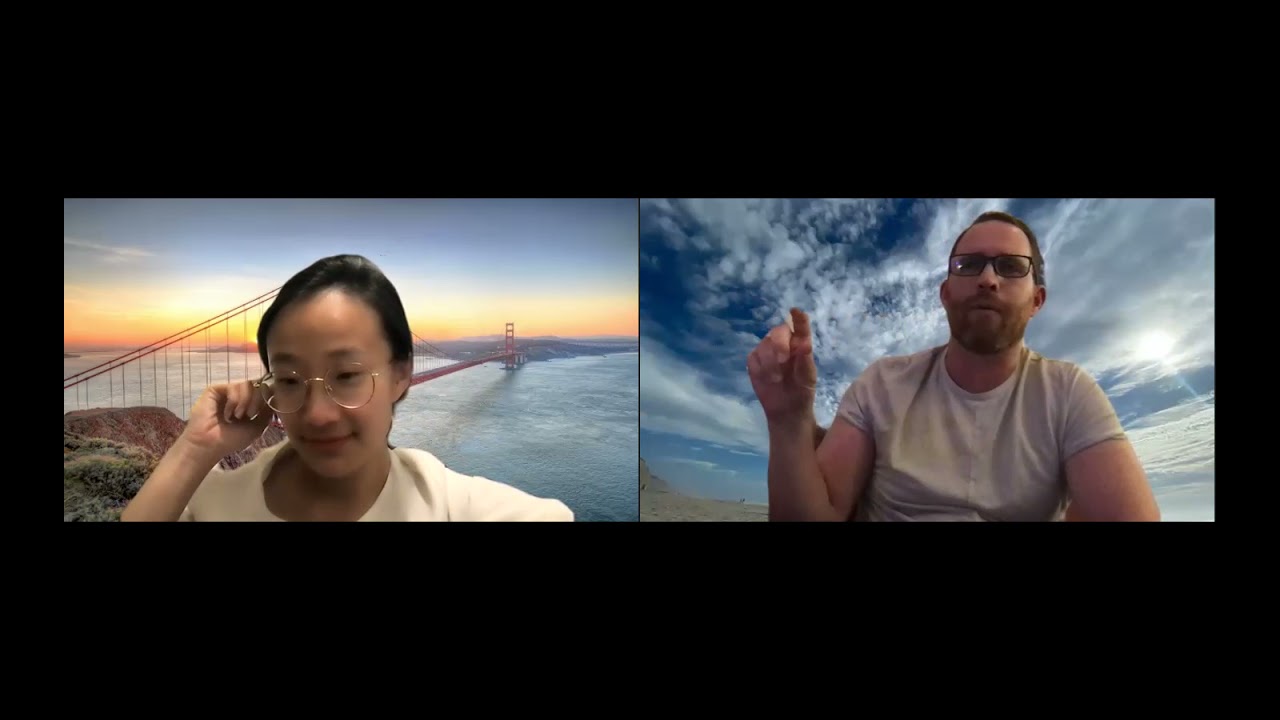
Cool. So I am really delighted, Shuo, that you're here. As a brief bio, Shuo Chen is a general partner at IOVC, Innovation Overflow, where she invests in early-stage startups in Silicon Valley. Mostly those with a focus on the future of work and enterprise or SaaS. But she's also on faculty at Berkeley, where she teaches entrepreneurship and has just an impressive roster of other accomplishments, including completing a JD while she was at Goldman Sachs, being appointed by the governor of California to a small panel which helps to oversee $2.6 billion in funding for mental health issues in the state of California, And she has invested in companies that have exited to Ford, Caterpillar, Finance, and Dialpad, as well as invested in well-known unicorns such as Boom, Checkr, and Instacart. Shuo, it's a real pleasure to have you.
Really appreciate that kind intro and for hosting this conversation as well, Joshua.
I know that you were a founder yourself. What was your founder journey? I know that you were an international student coming from Vancouver, Canada. and attending Berkeley, what was the kind of thing that led to you starting the company Cashify?
Yeah, thanks for asking. So I was absolutely an international student from Vancouver. I used to joke with friends a lot that even though Vancouver is closer than say Chicago, I am paying 10x the tuition than anyone else who's coming in from within the US. And so I remember working 7, 8 different part-time jobs during undergrad to just make ends meet. paying for tuition, paying for room and board, and all of that good stuff. And so the first startup I stumbled into really by accident, not really by plan. I had no idea what entrepreneurship was, didn't even know that there were classes that were available or information online. It was really just that I had personally experienced challenges firsthand, learned a lot of lessons about how to better manage my own money, think about personal finances, met friends who also had experienced similar challenges. And we said, hey, is there any way that we could come together, share these best practices and lessons that we wish we had known back in the day, and that turned into a startup. We actually started by teaching the very first financial literacy class that was ever offered at Berkeley. Hard to believe that we never had a college-level course for personal finance. We just thought that we learned so much from firsthand experience that we wanted to develop that into proper curriculum. We ended up working with a professor in finance at the time who helped underwrite the course. The 3 of us co-taught the course together. And without any sort of marketing, we had 700 applications come in for the class. And even after we emailed everyone saying we only had like a 35-person classroom, we had almost 200 people show up on the first day trying to get in. So I guess that's early testing for product market fit from a startup language perspective.
Yeah, my goodness. And you've been You've been lecturing at Berkeley for many years now. I know you're now teaching entrepreneurship, which doesn't seem like such a distant cousin of teaching personal finance and starting your own company while doing it. But you actually became a venture capitalist. And so, like, what's your high-level view, I'm curious, of venture capital? What role does it play in the innovation economy? What gets you excited about being a venture capitalist?
Absolutely. If I could connect the dots a little bit of how things even strung together. So stumbled into entrepreneurship by accident, ran this company. We built curriculum as well as software that sold into a lot of the largest banks, like Goldman Sachs was one of our clients. Bank of America, Wells Fargo all said yes. At the time, I honestly didn't understand why. In fact, many people also said no. And we were just trying to understand how enterprise sales worked. So from that experience, I ended up joining Goldman Sachs in investment banking where I was covering some of the largest technology clients, worked on some of the largest transactions from Google's $12.5 billion acquisition of Motorola to Alibaba's IPO, still the largest IPO in US history. Learned a lot about these large transactions, but incredibly missed working with startups. So I had this experience of running a startup, trying to do enterprise sales, not understanding how to do that. Picking up that piece at Goldman and wanting to come back and help out other founders who are similar to where I was when I was an entrepreneur. So the way that I always explain to people how this very eclectic collection of experiences fit together is I'm a former entrepreneur who's now investing in entrepreneurs and teaching entrepreneurship. So I've continued to teach throughout the startup experience because I taught personal finance. I was asked by faculty members to come back and continue to just share my experiences. So I always did that as a part-time initiative. I now somewhat selfishly teach classes on Fridays, 2 to 6 PM. It is a 4-hour-long class on a Friday afternoon. So there's definitely some sort of self-selection bias there where only the serious students who really want to pursue entrepreneurship are taking this class. And full-time transitioned into venture capital about 8 years ago. So this is really where I think about my role as enabling growth in others. So it's not like the days when I was running the show when I'm experiencing all the highs and lows firsthand, but rather trying to share the lessons I've learned along the way with many others who have gone through my shoes. So when I think about what we do on the venture side, a lot of it is thinking about, well, what has existed, what should exist, what does the future of the world look like, and really putting our money where our mouth is.
Josh Kopelman at First Round, which is a Wolf investor, has this article called The Pick, and he talks about how you start a startup and the first really high-leverage decision is the pick. What domain are you going to go into? Is it going to be a meaningful startup or a non-meaningful startup? Is it going to be in a large total addressable market or not? There's a similar problem that's repeated on the venture capital side, not just on the entrepreneurship side, where you pick something and you actually put your money where your mouth is and make a bet and put the money in. Then comes all the work, right? And some of your selections have just proved to be enormously successful. I'm curious how you think about the differentiation between that selection. Can you get better at making the pick over time just because you've seen more in your pattern matching, or is the innovation so high that you end up always having to reinvent how you make the decision around the pick?
It's a really good question. So I think luck is definitely an important component to all of this. I think you can have a robust process, and that is absolutely the VC process, right? There's got to be some sort of repeatable model of success that you set up these filters. There are going to be bad things that go through, there are going to be good things that don't go through, but hopefully with this stable process, at the end of the day, there's enough good stuff that goes through that it is scalable. So I can definitely tell you a little bit more about how we built up this process over time, the good things that we missed out on, and all of that kind of juicy details. But I think to answer the high-level question that you have here, I think it first comes with going back to first principles somewhat, taking a step back. So when we had started this fund about 8 years ago, micro VC was not yet a thing. I think now there's a lot of competition in the micro VC market. But back then, it was not a normal thing to have done a startup and then go into later stage finance. And it also was not a thing to go from later stage finance to venture capital, mainly because venture capital was working with significantly smaller companies. And so you're really looking at managing significantly less capital. The cool thing back then was to go into private equity or go into hedge funds. Hedge funds are less cool now. Private equity is probably still cool. Um, so I think the first thing was that my business partner and I had both been a founder before. Yeah. And so we wanted to leverage the learnings that we have from these big companies that would apply to smaller companies. That was the first thing. The second thing was that in our experience going from being a founder to working at a large company, there were just a lot of crazy inefficiencies that we noticed. And I think it is the exact same story that most of the founders that we've invested in have told, where they always thought going into the real world, working at a big company, at a Fortune 100 company, is going to be a great experience. And then they show up on the job and they realize throughout this process that there's a lot of inefficiencies or some sort of industry-specific insight that gets them excited to then go start a startup that fixes that problem. So the way that we thought about this venture is absolutely the same where we were like, we were showing up at work and working with like Windows XP and these very old enterprise software in large banks. And we just didn't really understand why that was still the case. So when we had started this fund, it was a lot of clients that we had covered myself in banking, my business partner in private equity, who were looking to us to say, hey, you guys were both founders, you must have network and connections in this space. Are there better software and tools that would just make our work lives that much more efficient and pleasant? So that was the starting thesis of Fund 1, and that evolved over time into Fund 2 when we had started this in 2017 to say, how do we define what the future of work looks like? This is when we started to break it down into 4 specific pillars where in Fund 2 we said we were specifically looking at number 1, digital transformation, bridging these legacy organization software to where things stand now. 2, thinking about where automation fits in and what happens to human and talent when automation takes over. 3, we started thinking about hybridization of workplace. We had not predicted COVID by any stretch. No. But when we had thought about hybridization back in 2017, it was like making investments into companies like Transcriptic. That was all about how do you outsource bio experiments to labs where they were underutilized when you're based in a geographic region where you just don't have the physical capacity to run the critical bio labs that you need to actually run. So we were thinking about hybrid work in that kind of capacity, and I guess it took off in, in a similar but 10x bigger way. And then the 4th pillar we were looking at in Fund 2 was really thinking about diversity of the workforce, which is— Yeah. What do we do when we have an aging population and we have younger people coming into the workforce, more experienced than ever before? So if you just fundamentally have a much bigger age gap, you have underrepresented populations coming in, it means that we need to have different leadership and management styles. What software that we can leverage there to provide better coaching experiences, to provide better employee training experiences, to provide better learning experiences for very different people. So those were kind of the 4 things that we had looked at in Fund 2. And going to Fund 3, I think we're going to focus a lot more on the software enablement piece. So this is a long-winded way of answering your question on the pick, which is you don't really start with one very specific narrow area and— Yeah. You know that that's what the future is going to look like and every single investment is going to fall under there. But I think it's an evolving thesis over time. In fact, I'm sure Josh would agree with that as well. He talks a lot about on a regular basis how, of course, you can predict what the future might be, but you have to be open-minded to learning from the entrepreneurs and also seeing how that thesis evolves over time. So hopefully that started to answer your question on how we started to build this process.
So some of the companies that you have picked, right, including Boom, Checkr, GrubMarket, Instacart, Rescale, like when they started, it was not obvious that the world was going to look a certain way. So can you walk us through like an example of one of those where you made the decision to invest and it ended up proving to be something that would really grow?
Absolutely. So I can give you examples for each one, but I think Rescale is a great example because the founder, Urist, actually had a very similar personal experience as mine. So when we had connected, he was still working at Boeing as a hardware engineer on the 787, specifically on the wing design at the time. And it's a classic story of, you know, you're working in a role, you see a lot of inefficiencies, and you try to do something about it. So he just noticed that the process that they follow for designing these hardware planes is extremely inefficient, where basically Within the wing department, they would draw up designs, send it off to manufacturing, have the hardware components back, test it in a physical setting, collect all the data, make changes, and then this whole iterative process starts all over again where they have to redo design and redo testing and all of this stuff. And so he ended up building the software that ended up saving just his department $180 million and 3 months in R&D time. And it was all focused around how do we test for this hardware in a virtual environment without having to send it off. for physical manufacturing. So he also built the software in a way that allowed them to deploy easily on the cloud so they didn't have to rely on local data servers that weren't as easily scalable with demand. Yeah. So of course he got excited. He was like, look, I have my cost savings proved, I have my time savings proved, let's try to get this implemented. And his most ambitious plan really was to get this applied to all the different teams working on the 787 and heck, even have this apply to all the plane models that were being designed. And so with that, he kind of launched forward with this conversation with C-suite, lots of back and forths. 6 months later, C-suite comes back to him and gives him a really surprising answer of no. So all he managed to kind of ask was, why? I just proved how it works. Yeah. Why is it that we're not going to do this? And C-suite had a very simple answer for him. C-suite said, it's because we're not a software company. I mean, at the time, it didn't really make sense, which is why he left and started Reskill. Fast forward now, you know, 10 years into his entrepreneurship journey, he looks back and it makes a lot of sense because everyone has to stay really focused on what they're good at. So he had left Rescale, now the largest startup in the high-performance computing space, 10x larger than the second runner-up. And he also hired his boss from Boeing to work for him as a CTO. So the classic American underdog story. But I think when we had met him, there were a couple of things. Number one, His story resonated.
And how early was this that you met Freescale?
This was very early. This was during his seed stage. So this was back when pre-seed did not exist. That's the thing. Pre-seed is a relatively new phenomenon for the last couple of years. So this was in the very early stages. So one, his personal story resonated, which is you show up in the workplace, you thought you had all the relevant tools, you're ambitious, ready to get a lot of stuff done. And then you realize that there's just inefficiencies in how things are done and you kind of can't fall asleep at night thinking that there's this problem that you need to solve. And 2, what really resonated was the ability to do scalable computation. I honestly didn't think as big as I do now, having seen everything that Rescale has done. But what made a lot of sense is that there was going to be more hybridization between hardware and software interfaces.
Mm-hmm.
So of course, Rescale has gone way beyond that. They've not only served companies in the aviation sector, they've also gone into aerospace. space, like NASA, SpaceX are clients. They've gone into financial services, like Morgan Stanley is a client. They've gone into research with Harvard, MIT, and all these academic institutions using them. And what was a surprising use is that since right before COVID actually, um, bio— public biotech companies said, hey, actually, we can use your platform to simulate drug testing processes.
Yep.
So we don't have to test everything in a physical lab. We can actually test virtually, identify the most promising iterations, and only test for those in a physical lab to expedite R&D time for vaccines. And of course, that came in handy for COVID.
But does it mean that for you, like, TAM is less relevant? Because a company that does really well is going to be able to take their generic solution and start reproducing it into all kinds of unanticipated verticals, verticals that might not even exist right now, right? So it's like, Jobs that don't exist today that you're training for. The company is preparing a product for a whole bunch of problems that don't even exist yet.
Absolutely. So the TAM does matter, but I think for the really strong companies that we've invested in, those are classic scenarios where how they managed to grow actually well exceeded the TAM that was imagined at the time. And of course, you see companies like these grow, you'll see that they'll redefine their TAM and every single time, redefine it to a much larger target space. So what we liked was that, and the third component I wanted to briefly mention is also software infrastructure playing a huge role. So generally when you have an inefficient process, if there is a scalable process whereby you can solve the problem with some sort of software layer, it makes a lot of sense from an enterprise perspective. Yeah. It's actually also why I got really excited when we spoke because Told your story.
We should tell that story. So like, I should acknowledge, one, IOVC is a, is a Wolfe investor. And of course, at a high level, what Wolfe does, we're the first global collegiate university that allows other education organizations to join as member colleges. We're roughly structured in kind of 3 layers. We have colleges that are full members of the university system in the same way that Berkeley is a member of the University of California. And then we track all of their educational activities and software. So like every learning event is streamed into a recordkeeping system to show whether or not a student or a teacher or a governance approval committee did something. And then we match those approvals to licenses that we have. And so we check, you know, this student is doing all these things in a Wolf College in Nigeria, and we have a license for a bachelor's degree. And so that student is doing something that matches our license and poof. the student is actually earning an accredited bachelor's degree. So it's taking an industry that's kind of very paper-based, it's kind of very fragmented, and really building a layer to create a source of truth around what's happening from an information flow inside of universities and provide accreditation. Absolutely. So like when I met you, we're pretty early in.
Yeah.
And you guys invested very early and made a bet on Wolf. And so like what got you excited enough to make that decision?
Yeah. So we had invested, I think, well before first round had come in, a couple months later. And we were really excited when we had connected because I felt like you actually told a story very similar to my personal story, to the story we just shared of Reskill. Because if I were to think back to those early days, I mean, the way that you approach things was precisely, you had been teaching yourself for a long time. You had experienced these inefficiencies, seen the paper trails. Yeah. firsthand and saw that it just didn't make sense. Of course, you were at Oxford at the time, based out in the UK, and then you came back to the US for this startup opportunity. But there's a lot of experience pieces that rhyme, right, in these stories that we've just shared. So experiencing these issues firsthand, too paper intensive, how do we automate things better with software? And how do we also solve a practical problem, which is precisely what we look at, which is the fact that the evolution of jobs is going faster than higher ed is capable of responding to. Yeah. So a lot of our investments into future of work is directly in the space where, I mean, some of the latest data suggests that by 2030, 85% of the jobs then weren't even invented just 5 years ago, right? So how do we successfully prepare people for these future careers and future jobs if schools are not effectively teaching them? So that's what got me really excited about Wolf. And, and so I guess to respond to your question, I think at this particular point in time, we're seeing the TAM tackling the whole world of higher ed. But is there way more that we can do in terms of corporate learning, in terms of going younger, in terms of changing the way that we think about continued education as professionals continue in the rest of their careers, not as defined to a certain age and a certain point in time?
Yeah.
Right. So I think the way that we're currently thinking about TAM is probably way smaller than what it could be.
Yeah. You teach at Berkeley, and one of the things that you teach is entrepreneurship. I know in one of your programs, you have people actually create a company during the program, which is really exciting. And, you know, America has somehow got the right mix, and the Bay Area in particular, for teaching people to take risks. And to do things that might fail, but also to do it in a really judicious way. And I'm curious, how do you do that knowing that the sort of future of jobs is going to change so much? Do you prepare people by just technical skills of the skills of today? Is it about teaching first principles? How do you think about building companies in an environment where things change so fast?
Yeah, Joshua, that's a really, really good question because I think a lot of the way in which we think about evolving our entrepreneurship program over time— I've been now teaching entrepreneurship for a little over a decade. And I have noticed that how we thought about entrepreneurship from 10 years ago is very different than how we think about it now. So if I can tell you kind of the phases that we've gone through, I think at the beginning, it was a lot of, how do we throw a lot of founder stories at students until they can start to identify patterns? And then the second phase was, OK, we've started to identify frameworks for things that work and things that simply don't. And we've started to put language to practices. Things like MVP, right? We understand concepts around minimal viable products and how to build that. How do you run user interviews? And then I think the third phase is, okay, great, but you can't really start a startup until there's some sort of unique insight. So this equation we've started to draw, if I can really simplify it this far, is what makes for a successful founder. There's kind of 3 pieces here where you have to have the skills, you have to have the confidence, and you have to have a specific insight. Yeah. So oftentimes there's one piece that's missing from here. So if you work at a large company, you're really well accomplished, it probably means that you have the skills and you have insights from the industry, but you don't have the confidence to say, hey, I'm actually gonna leave and start my own startup. And vice versa. What I see in a lot of college undergrads is there's some skills, no insight, but a lot of confidence that they're gonna start something, right? So it's a matter of how do we balance entrepreneurship education in different ways so they get all 3 pieces. The latest iteration of how we do that is really thinking about entrepreneurship as de-risking any sort of career move that you might have. If you want to start a startup, it's the same as if you were working in a corporate job and wanted to explore something different. So you wouldn't really start thinking about jobs as, hey, you know what, I'm just all of a sudden going to quit school, quit my full-time job, and like jump right into this thing. So it's a matter of how do you design for levels of validation? So the latest iteration of how we're starting to teach about it in our class is to start thinking about startups as your side hustle. How do you start this as a side project? Test out the hypothesis. I mean, every single startup is a hypothesis to be tested, right? Yep. How do you test it out? How do you design this process so you have the right money, time, resources to effectively run this experiment? And then if it works out well, great. If it doesn't, it doesn't impact your full-time role as a student or potential future role as a full-time employee. And if it does work out, then you have an opportunity to turn your side hustle into your main hustle. So a lot of what we're getting students to do now is, hey, you don't have to pitch like the startup idea as if you're so confident that you're going to pitch to VCs, but think about what you're curious about exploring more and think about this as an iterative process.
It seems like a, a method to give people tools to navigate a highly changing environment all by itself, right? So like Is a startup a career? And what are the kind of methods that people are learning to run a startup successfully? Well, if the job market is going to be changing a lot, if you know how to run experiments from a career perspective, it actually makes you much more resilient to those changes, which seems like a set of practices or first principles that are very powerful. What's your impression on the trade-off between teaching first principles and teaching skills? Many people think about like, future of work training as being going to a boot camp and they're learning something that might be outdated in 5 years versus, you know, fuddy-duddy, I'm going to learn computer science and it's all this sort of basic formulas and so on. But actually those are really enduring first principles that you can use across a lot of changing technologies. How do you make that trade? Is it that people just are going to learn skills more often so they go back to boot camps every 5 years? Or is it that they're going to really need to get the first principles or they're always going to retrain?
Yeah, there's a couple pieces here. I think the first thing is, what do we imagine these future jobs to even look like? And is work limited to jobs? I think what people would start to argue is that when we talk about future of work, it's not just limited to jobs, because we start to see roles where it's not considered as a traditional job, but actually it does create outputs of value. A good example of that is, I mean, recently there's a game that's developed out of Stanford where people are playing these puzzle games. But in doing so, what they're actually doing is helping scientists solve protein folding problems.
Yep.
That help us figure out how to develop vaccines for like the HIV enzyme. So that's not work nor a job. Like the best 3 global players for this particular puzzle are people who have had never any sort of scientific training whatsoever, right? The number 1 player is a long-haul truck driver. The number 2 player is an assistant. The number 3 player is a barista, right? So how do we think about future of work as defined much more broadly than just jobs? And then of course comes down to the jobs piece, which is there's a lot of work that we would do in what we consider as a fully employed role. And is it the actual skills or is it the know-how? I think most people would argue that college or the value of college is everything you remember after you forget everything else, right? So there's so many classes that we take in college that we can't possibly remember a single lecture from, but we somehow remember the how to do things or how to run a specific process. And I think that's a more valuable piece. Even in computer science, I think it's generally acknowledged now that whatever you're learning in undergrad, by the time you're graduating, it's probably no longer in use or relevant because higher ed just has a hard time even keeping up with the pace of change in industry. So I, if I were to answer your question, it would really be that it's the processes that matter. And when we think about how differently jobs are now, if we were to limit it to a job. Yeah. space. I think people go into work expecting to continue to learn. In the past, like, we were always a student, and then we transitioned to become an employee, and we work full-time, and that's it. But now I think most employees, based on LinkedIn's latest data, I think it's more than half of employees actually want to continue to learn on the job. And for them, that's a core and important aspect of the job. If they don't learn, they'll leave, they'll go do something else where they'll continue to learn and grow. Yeah. So people no longer see learning as a one-time activity. And I'm sure I'm preaching to the choir here because you don't need to be convinced of the importance of ongoing learning here. So it's not so much that I go back to a boot camp every 5 years. A lot of people around me now are just constantly involved or enrolled in some sort of educational program.
Yeah.
And it all helps add to them becoming more effective individuals and professionals.
Yeah, one of the things that excites me about Wolf and building the company is that universities have become so slow in their ability to keep up that you do see this hugely growing kind of gray market of information, some of which is very low quality and trains people the wrong way, some of which is very high quality, but it's all very unclear. And it's mostly just because you can't create learning at that pace within a university given the current tools. One of our hopes, of course, at WOLF is that we make it so fast to create provably accredited content that is of a really high quality that it can capture all of that learning in a way that would be more effective. What do you think the future of kind of startups at universities looks like? Is it going to be more common for people to be creating startups as they leave university?
Absolutely. In fact, I think it's going to be more common that they're currently creating startups before they even leave university. And that goes directly to your point about this gray market of information, right? So how do we separate what is high-quality information from low-quality information? And this is where, of course, accreditation is going to become more important over time. And this is really all credit to a lot of the work that you do day to day, right? So in the past, say like 10 years ago when I taught entrepreneurship, most of the people in class have never heard of entrepreneurship. Fast forward 10 years later, 95% plus of all of my students have not only are well-versed in entrepreneurship language. They have interned at a startup, worked at a startup, started their own startup. Some have even sold their startup. I have a student in my class right now who has an online slime business where she creates videos on TikTok of her creating slime, and then she sells the slime that she makes, and it brings in $4 million a month. So
it's
incredible to think about software and all these digital tools and technology enabling People who are younger than ever before become really successful entrepreneurs. And if we're saying that we live in a world where entrepreneurs—
TikTok slime creator was not one of the sort of predicted job outcomes. Yeah, exactly. 5 or 10 years ago.
Absolutely. So if jobs are changing so quickly, then what do we do with this kind of plethora of information? I was recently at a conference where this really fascinating conversation came up where if you think about it this way, all education is media because it's content, but not all media and content is education. Education has to be carefully curated and designed. There is curriculum, there are learning objectives and outcomes. And so if there is just an explosion of information, what do we do around better curation and how do we respond to it fast enough? So to answer your question around kind of, do I imagine more students becoming entrepreneurs? Yes. If I just see younger people more capable and running these side businesses more so than ever before, then I think it speaks to even more how we need to adapt education quickly to that, to keep up with that pace. Because if we're seeing students in their late teens already running these extremely lucrative businesses and having little access to information except maybe Googling around and searching for YouTube videos, that's not a great way that we're preparing them for success in the future.
Yeah, really interesting. What's one thing that somebody has done for you that's helped you advance your career? Somebody that's just provided you a leg up at some moment in time that helped you get to the next stage?
So, so many people. I mean, I've had— I have an infinite list of people that I need to thank for everything that was possible. I think back, I mean, I can go all the way back to, you know, my senior year.
Just one. Just one.
If I have to name one person, then I probably need to thank my business partner the most because he's the one who I work with the most on a day-to-day basis. And I think it's so helpful to work with someone whose skills, experience, life experiences, and perspectives are so different than yours. I think, well, you've met Jeff. He is very different. He's very much kind of an engineer's mind.
Yeah.
Math and stats, very technical. Definitely complementary skill sets, but it also means that he brings such a different perspective. So if a lot of the questions I ask startups are around, okay, let's think about operational executional success, like how are you going to do sales? What's your sales channel? What are the funnels? How do you do that? Chef comes a lot more from a technical first principles perspective, which is going back to a lot of the things that we talked about. Is there a market? What is the thesis here? What are we testing for? And so I think it's incredibly helpful to always have someone in your life who thinks differently than you do to check your senses. Because I mean, we all have our biases, right?
Yeah.
It's a matter of how do you find the right balance to your perspectives?
Fantastic. Shuo, it's been such a pleasure. I really appreciate you taking the time. What's, as a last question, a recent investment you made that you can make public and what got you excited very briefly?
Yeah, actually, one of the most recent investments we did is in a founder that we had invested in in the past. He had sold prior to this startup 3 companies in 10 years. This is his 4th startup in the last 10 years. He is a first-generation immigrant entrepreneur here in the US. In fact, there was an Oxford PhD written about his first fundraise ever, where he did like 200+ meetings and didn't manage to raise all that much money. So the PhD was focused on how difficult it was to raise funding for a first-time founder. But of course, fast forward 10 years, he's now on his 4th startup. His 3rd startup we had invested in, it's called Armory. Post-Series B, he is now still the chairman but has found another CEO to take over his role. Armory was really focused on code deployment. So for Fortune 100 non-tech companies, if you're not used to deploying code on your website, you write code, you deploy it, your website's broken, someone fixes it. So how do you deploy code more easily? So he had built a company like that that sold into Home Depot, Apple, you know, the typical suspects. And his 4th startup is super interesting. It's starting to think about work in a very different way. So his startup now is called Storytel. It's storytel.ai. I'm going to tell a horrible version of, I'm sure, what is a much more elegant pitch he'll tell you. But what they really focus on is for interactions like ours. In fact, we could actually try it out. What they do is they don't do any of the video capture piece. But with all these video and digital assets, he puts all of this through his AI algorithm. His co-founder came out from Google Brain and tries to summarize a meeting into story tiles where you can actually identify specific pieces that you say, hey, this part of the conversation was really interesting, I want to share with my employees, or this other part can turn into a customer, uh, testimonial that the rest of my dev team should see. Or actually, this other piece could even turn into a public thing that we want to share to potential customers that we want to close now. In fact, these are snippets from our internal team meetings that we want to share for hiring purposes. So he's really thinking about how do you turn the work that we already currently generate just in our day-to-day roles into valuable pieces that we could reuse elsewhere. And I think it has a lot to do with some of the learning pieces that we're talking about here, because none of this content is institutionalized into a proper curriculum or course. No. But you'd imagine a lot of valuable insights come from, say, teaching some junior person how to do sales or teaching another dev person on how things are actually built. And these digital video assets have a lot of potential to be turned into things like future courses with more curation, et cetera. Of course, he doesn't do that last piece, so he doesn't touch the video capture, doesn't touch the what happens to this content. He does the middle part, which is analysis, summary. Yeah. of this content?
Well, classification is the first step for curation. And in a world where we have 80 years of YouTube content produced every day, I think curation matters more than ever in deciding what we're going to consume from a media perspective. Shuo, it's really exciting to see what you're doing and the way you're pushing innovation forward. Thanks for taking the time. Really appreciate it.
Thank you so much, Joshua.
Yep. Bye-bye.
More from Shuo

Ep 666: Shuo Chen — Fractional Founders, Frontier Firms and Why Enterprise Data Is AI's Gold


75. Shuo Chen - Boards and the future: going plural, encouraging innovation, adding value to entr...

Exploring the Future of Work with Shuo Chen: IOVC Partner & UC Berkeley Faculty | Podcast Episode


IOVC General Partner Shuo Chen on Investing and Richard Branson's Island | Seed to Harvest S1 Ep1


New Instructor Spotlight: 5 Questions with Shuo Chen on the Future of Education and Technology

Validating Ideas with Shuo Chen - UC Berkeley's Silicon Valley Startup Success