Fortifying Next Generation Sustainable Leaders | Forbes Under 30 Africa
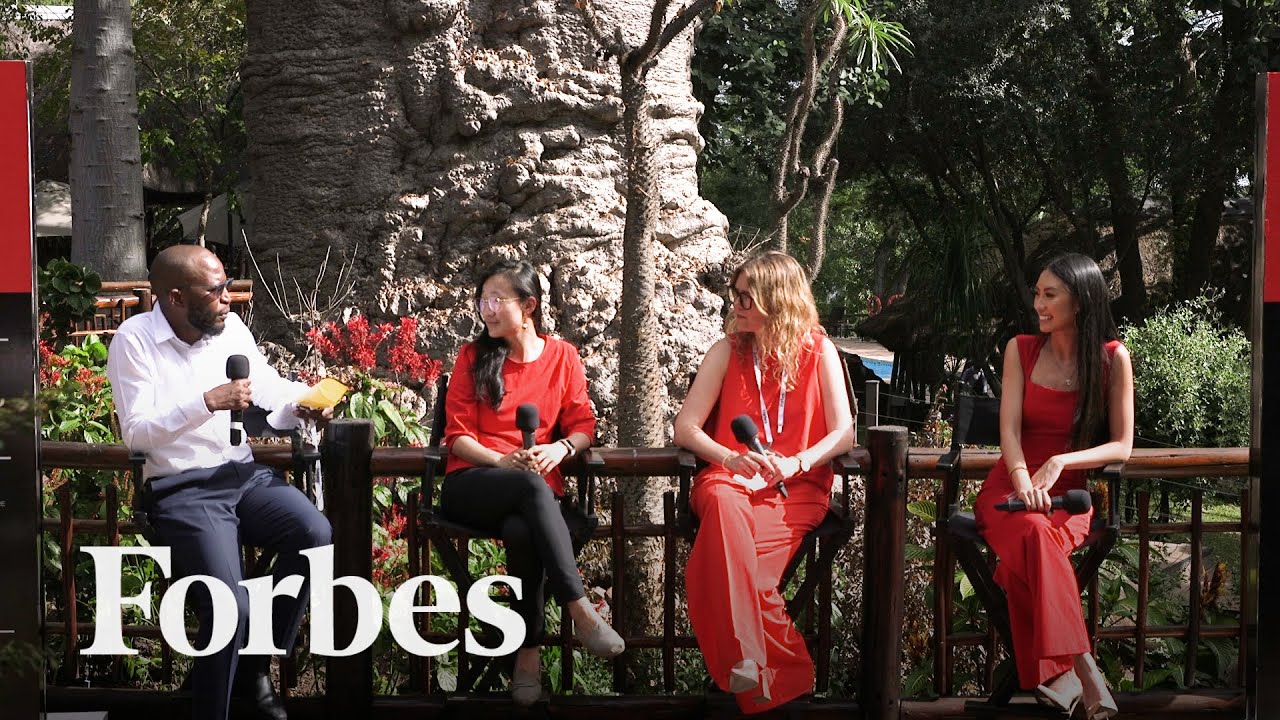
The YouTube panel, moderated by Knight, brings together three young founders—Marta Krupinska (Google for Startups UK & former fintech founder), Annie (CEO of H2OK Innovations, an IoT‑enabled industrial fluid analytics startup), and Shuo Chen (venture‑capitalist, former Goldman Sachs technologist, and entrepreneurship professor). The conversation centers on building and scaling businesses in Africa, especially Botswana, and on how global resources can be accessed by under‑represented founders. Marta explains the Google Black Founders Fund Africa, its $100k seed investment plus six months of Google mentorship, and stresses the need for partnerships between government, corporates, and NGOs. Annie shares how authenticity and embracing her identity helped her raise an oversubscribed round, and stresses humility, relentless execution, and role‑modeling for future African founders. Shuo outlines three core criteria he looks for in startups—ability to raise capital, generate revenue, and hire a team—while also highlighting the importance of education, professional experience, and capital access as pillars of an entrepreneurial ecosystem. The panel discusses Botswana’s new Ministry of Entrepreneurship, the power of collaborations with NGOs like Youth Business International and Decode, and practical advice for African founders: focus on strong teams, large market opportunities, clear product vision, bootstrapping efficiency, and developing an iterative habit that compounds over time. The discussion repeatedly underscores authenticity, resilience, and the democratizing effect of leveraging one’s unique background to solve real problems.
Chapters
Good afternoon, everyone. I'm really excited. We have brought 3 founders who are doing incredible work across the world. I would like them to start by introducing themselves. We'll start with you, Marta. Can you please go ahead?
Thank you. Thank you so much, Maite, and thank you so much for having me. My name is Marta Krupinska, and I spent most of my career being the youngest one in the room, and I just feel incredibly old here. Because all of you are so brilliant and under 30, and I was on the 2017 list, and that was notably 5 years ago. My, my journey— I've been a founder 3 times. I come from Poland, which is this country that perhaps not very fortunately for it is sort of nestled between Germany and Russia. And when you think about geopolitics of Europe, that's quite tricky. I started my first business there. It failed miserably. I learned a lot from it and I moved out of Poland. First to New York and then to London, where I was trying to solve my own problem of having to send money back to my mother that was unbelievably expensive. And I'm sure that if I look around the room, there are people here that have experiences with remittances and how unbelievably expensive they are. So I built a business called Azumo that does low-cost money transfers. We got to 5 million users in Europe, saving hundreds of millions of pounds to hardworking migrant families that I'm really, really proud of. And it was an incredibly difficult experience at the intersection of fintech and IT in 2012. There really haven't been very many women. So if anything, I'm so delighted to see so many incredible entrepreneurs here today. Since then, I started another business and I realized that throughout my journey I'd had 7 co-founders and they were all white men of a particular pedigree, which perhaps made me particularly open to joining Google when they knocked on my door and said, would you want to lead our work in startups in the UK? There are 3 theses and 3 things that I really focus on. One is working with founders that are solving real problems with technology. So respectfully, if you're building a high-frequency trading platform, I think you probably don't need my help. Somebody else is going to help you out. And the second one is working with underrepresented founders, which we understand predominantly as women and founders of color. And the third one is thinking about what would happen if we gave the resources of places like London, its big corporates, its investors, and brought these, brought these resources to emerging markets in Europe, Middle East, and Africa. And this actually is what brings me to Botswana, because over the past 3 years, some of the most interesting work I had the pleasure of doing was, was with exceptional Black founders and African founders. So I look forward to sharing a little bit more about that later. But again, thank you so much for having me on the panel.
Thank you. Annie?
Excellent. Thank you so much, Knight, and super excited to be here. Thank you, Forbes, for hosting this incredible conference today. My name is Annie. I'm the co-founder and CEO of H2OK Innovations. We are an IoT-enabled analytics platform focused on providing data-driven optimization of industrial liquid and fluid systems for manufacturing and supply chain. So what we really believe in is how do we unlock previously untapped data for our customers that comprise society's most fundamental sectors to now enable them to gain a competitive advantage in the way that they operate, both becoming more sustainable but also more efficient. And a little bit about my personal background, I studied economics and computer science at Harvard, where I actually left school 2 years in, into college, to work full-time with my incredible co-founder David right there, who's Also recording me, but being a female founder, a young female founder of color in an industry that I'm oftentimes the only person who looks like me in rooms of hundreds of people, I think something that is really important to me and I'm passionate about is supporting other female founders and founders of color and young founders as well, working in industries that may oftentimes seem more unsexy or more antiquated, but are really, really ripe for disruption. And we believe that manufacturing is itself something that is an incredible opportunity and so ripe for innovation, even in Africa, for instance, in kind of seeing this manufacturing renaissance in Africa. And in Botswana, with beef processing being something that is so critical to the industry, why I'm kind of here is we want to make Botswana the most innovative and most cutting-edge manufacturing country in even just beef processing, diamond mining in the world. And I'm really excited to connect with other entrepreneurs and people in the industry, in government, in manufacturing, and excited to be here. Thank you so much for your time.
Yes, sure. Tell us about you.
Thank you so much, Knight, and to the whole Forbes team as well as everyone for being here. I'm also really appreciating that brief moment of shade that settled in. But as you can all see, the panelists here, we have a lot of similarities. In addition to our common founder backgrounds, we all have excellent taste in color. So we are very much color coordinated. But I have a similar experience to both of them here. Also started my career as a founder where we sold into some of the largest banks and universities in the US. And then joined Goldman Sachs to cover some of the largest technology companies in the world, including worked on Google's $12.5 billion acquisition of Motorola, worked on a lot of emerging economy deals. Happy to chat a little bit more about why I find opportunities here in Africa so exciting. And then for the past 8 years, I've been running a venture capital fund focused on very early-stage startups in B2B and software that really power the future of work, and also been teaching entrepreneurship at UC Berkeley on the faculty. The first time I came to Africa was actually more than 15 years ago to do work around developing entrepreneurship curriculum with the United Nations. And the last time I was here was just a couple years ago, right before COVID with TechCrunch's very first conference here in Africa. So it's really exciting to be back here and see how every single time I'm here, how much exponential change has taken place and how much more innovation and entrepreneurial spirit and so many more startups emerging. So I'm excited to learn more from all of your stories as well.
Thank you. So, Martha, I just wanted to— we've got a lot of founders here today, and I just wanted to find out how can they work with Google for Startups? Hey, you as the head of Google Startups, how are you engaging African entrepreneurs, and how can they work with you? Most of the times, these Big names like Google. Most of us don't really know how can we access those doors, open those doors. So how can you? What what can you say about it?
Lovely. Thank you. Thank you so much, Knight. So I would like to start with giving a big shout out to my wonderful colleague Folarin Aigbosi, the really tall dude in in was that purple? Again, great great taste in colors. We've all got something in common. Folarin is our head of Google for startups in Africa. Um, last year at Google, we announced Google Black Founders Fund Africa. Black Founders Fund is a project that we've been running for the past 2 years. It started in the US, uh, initially founded by my incredible colleague Jewel Burks. We invested in 76 Black-led startups in the US. We then opened the fund in Brazil. We then brought it to Europe, and Black Founders Fund Europe is the fund that I co-lead. And then last year we brought it to Africa, and Folarin and his team have been working tirelessly on investing in 50 companies from across the continent. I think we've got nine countries represented, but no one from Botswana. So I think we might have to do it again just to include more founders from Botswana. But I would say if you're a founder, yes, that's our commitment. Okay, it's it's it's it's I mean it's it's recorded, so now we have to do it. So if you're if if you're a founder working on a scalable tech solution that is both brilliant, has a global mindset, but also recognizes that, you know, sometimes personal excellence is a great start, but it needs to be coupled with money and some mentorship and some support, access to resources. Last year, I believe $5 billion were invested on the continent into tech startups. That's, I believe, less than 10% of what goes to the UK alone. One country versus 54. So I think we have a bit of a responsibility as a global community, including the investment community, to look at the talent here. So the way the Black Founders Fund works, we invest a small amount of money, up to $100,000— well, small depending on where you are— up to $100,000. And then that's paired with 6 months of support from the best of Google, which is our people, our products, and our best practices. So I can't wait to see the other founders and meet the other founders that we'd be able to support and back. And again, follow Aaron, meet the guy, get the free Google money.
So these are funds and opportunities that are there now for African entrepreneurs and globally? Yes. Well done. Let's clap for that, guys. And I'm going to come to you. You are— You're a founder in a very male-dominated industry. For the female founders who are here, what has been guiding you to grow your business and to have that tenacity not to give up? Earlier when we spoke, you said many rooms you have entered, people didn't look like you, but you managed to make an impact globally. How can the female founders here— go on from here with practical skills that you have benefited from here?
Absolutely. So it's all about authenticity, and I can share with you actually an experience in our last round that we raised. So one of my mentors told me, Annie, you can either choose to present yourself as more masculine to appeal to investors, because venture capital is traditionally a very male-dominated industry, or you can stay exactly who you are and your team stays exactly who you are, because the people that you have to change yourself for or change your team for are the people you don't even want on your team anyway. ways. And so really took that advice to heart and had an incredible fundraise where we actually were oversubscribed and closed it in 2 weeks. And I think this lesson of being authentically yourself and unapologetically yourself, and your team being unapologetically themselves, even if they are different in an industry where, you know, you might be the only people who look like you, is so empowering. Turning that systemic almost bias against you as something that is an advantage. I think that chip on our shoulder is something our team at H2OK Innovations really turns and fuels our own fire, that we have this mindset that we will do anything it takes. And I think that that's something you can turn into self-empowerment, this negativity. I think the mindset of, you know, the only thing that is stopping you between finding or creating your own startup scalable startup is yourself. And that, um, having this mindset, I can do this, that as long as we put our minds together, we will solve any problem, that nothing is too difficult. Um, and taking this creativity to solving major problems, world problems, and real problems for real people is incredibly important. And so never being complacent, always knowing that you can improve. I think humility is something really important in founders as well, that yes, you are very successful, and it's incredible seeing the work that you've done, but always having this mindset of, I know I can always be better. And I know that we can always build a better product and always sell more or always build a better business. And I think that is something that fuels us at H2OK Innovations and something that is the advice that I would give you all.
OK. Thank you so much.
If it's OK to build on what Annie's saying, I think it's such an important point here. We were chatting even over lunch before on this as well. I think it's true for everyone in the audience today that I think there is the official story of what people read in our bios, but then there's also the day-to-day struggles that we deal with every day. I think not just necessarily being underrepresented in one way, but oftentimes in many others. I think what people don't oftentimes see, at least from my personal background, is my father grew up in a rural village with no running water. When I first moved to the U.S., I didn't even know how to pronounce the alphabet. And obviously when I was going to school and trying to build my first startup, I was working 7, 8 different part-time jobs to just try to make enough money to cover tuition, room, and board. And I think there's a lot of these steps along the way that we all take that I think is true across everyone sitting here today. I think we all had to have overcome significant difficulties to be here, and I think authenticity is something that I'm still very bad at. It's really hard to talk about the things that are challenging to us, but hopefully this at least is the start of a conversation. I would love to learn all of your stories better, and hopefully we'll have a chance to get to know each other better throughout the rest of our time here.
Okay, thank you. Earlier on, we discussed that Botswana is not— I think this question will come straight right back to you. Botswana government recently announced that there'll be a Ministry of Entrepreneurship. I know this is an area that really excites you to train the entrepreneur and to have focused on entrepreneurs. What is your thoughts on Botswana having a full ministry dedicated to entrepreneurship and the education that is required around that area?
Yeah, that's such a great question. So as a former entrepreneur who now invests in entrepreneurs and teach entrepreneurship, this is such an exciting development to see because I think oftentimes people have somewhat of a misconception of what entrepreneurship is all about. Oftentimes when we think of entrepreneurship, that term, even Marta, Enya, and I were talking over lunch that it's been somewhat co-opted by tech. startups, but really entrepreneurship refers to well beyond that. And so when I think about entrepreneurship, I really think about the most efficient way to solve a problem. So you could absolutely be building a very small local business, but be wonderful at that and be an absolutely incredible entrepreneur. So I think when I think about having systems of support and a ministry to support that, I think it's incredible. I think there's 3 main ingredients to any successful entrepreneurial ecosystem, and certainly it's true for Silicon Valley where I'm based out of. I think number one is Starting with education and access to quality education. So having a ministry that focuses on that is absolutely the starting point. The second piece is having access to great professional experiences to continue to build on what you learn in school. And then the third piece is access to capital, which is what Marta is talking about. So once you've developed all of your skills in an environment and in a professional context, how do we then access capital in order to continue to build upon that? So I think the ministry will be great for really putting in all those 3 foundational pillars to foster more entrepreneurs here in Botswana.
And if I can just quickly build on that, I completely agree with everything you just said. And the only thing I would add is I think the power of partnerships. So not only taking the government resources, but also partnering with big corporates, but also partnering with the third sector. Outside of my Google work, I also chair a global charity called Youth Business International, and we have 50 members around the world that focus on entrepreneurship support, and we really think about entrepreneurship as, you know, ultimately, you know, whether you're an artisan or you're running a taxi company or a small accountancy shop, this is the major driver for jobs. And in many countries, especially in emerging economies, entrepreneurship is an antidote to unemployment. You can't get a job, so you go create it for yourself. And just on Monday, I met with Young Africa Botswana. They're based in Gaborone, and I was learning from them about, again, how there is an aspiration for local NGOs to partner with government so that when there are funds available, that this— that the points that you raise on then providing long-term support and saying, okay, this is how you spend this money best, this is how you work on your cash flow, this is how you build relationships. I think if, as an ecosystem, there's more collaboration, I think this is going to be a hugely successful ministry.
Thank you.
And I'd love to add to what Marta and Shuo, you mentioned. I think part of it also is building a pipeline of entrepreneurs entrepreneurs in a way that now other young founders or prospective founders see, like, you know, these are people who look like me, who come from backgrounds similar to me, who have similar stories, and look at where they are now. And that inspires me that, okay, this is something I know I can do as well, where entrepreneurship now is an option that's viable for people to pursue, and especially young African entrepreneurs to pursue. I think that— and this goes back to what I was talking about in terms of mindset and relentlessness, in terms of being empowered that this is an opportunity for me. And even if you encounter problems and challenges like cash flow, for instance, or lack of cash flow, or lack of funding, that we can think through, okay, these are things I can tweak in my sales process, these are things I can tweak in my product, these are things I can tweak in my team in which I can be able to create or like land this next contract or this next sale, or be able to close this next employee, for instance, or build this aspect of my product. And I think that that entire part of role model and creating that pipeline is something that will be incredible in Botswana.
In fact, I hope this is the start of a community of peers who can help each other, right? I am excited to learn from all of you. I think what's been most beneficial to me in the past has always been learning from people who were just a step ahead of me. Not necessarily, you know, mentors we look up to, but they're like 10 years ahead of us. They're really hopeful and inspiring, inspiring, but they're not gonna help us solve our immediate problems. So I think it's having folks who've just gone through what you're about to go through who can be really helpful to what you're doing now. Similarly, I've also been involved in a nonprofit called Decode. I have the fortune of sitting on the board of this nonprofit alongside folks like the Chief Privacy Officer at Google, the CTO of Microsoft US. They're wonderful mentors and friends to look up to, but they're 30 years into their career, and they're amazing to work with, but it's all about how do you build a local network. In fact, for this nonprofit called Decode, It's the largest technology and entrepreneurship community that's co-hosted between Berkeley and Stanford. And most of their content is open source on YouTube, online. So for anyone sitting here that wants to tap into Silicon Valley and wants to learn more about what's going on, I certainly encourage you to look into all of these free and openly available resources in these different innovation hubs. I know Annie's in Boston, Marta is out in London, I'm based out of San Francisco Bay Area. But there's all of these different resources that you can look into even if you're based here locally. where you can learn best practices from peers around the world.
Okay, so now I just want to— we have a lot of founders here, a lot of entrepreneurs. You have worked— the 3 of you have got great experience in seeing companies being founded, growing into to become big, big companies. How— what are the key teachings or key lessons you can give to African entrepreneurs so that we can be able to build businesses that attract global funding, that are scalable, so that we don't fall in the trap of building small businesses that will be small business for 15 years, 20 years, right? How can we scale up the business? What are the tools and what are your organizations doing? For example, on your side, What— when you look at businesses to fund or invest in in Africa, what are the— how should young entrepreneurs build their business to be attracted— to be attractive for an international investor to partner and to fund?
I'm so glad you asked that question. I'm happy to kind of kick off. I'd love to hear both of your thoughts. So whenever I look at startups, I try to cut away all the different buzzwords and just look back to the fundamental business. I think it's really exciting to look at a startup that calls them an AI startup or a blockchain startup, and you have something that's really popular and top of mind now. But I think there's kind of 3 fundamental things that I look for at the core. You can have fancy patents, IP, and all of that, but it doesn't solve these fundamental issues. So what I look for is really, one, can the founder raise money? Number 2, can their business actually make money? And 3, do they have the capacity to hire people to make money? So can you raise money, make money, hire people to make money? That's at the core of any business, whether or not you're a tech startup. And there's kind of complications that then go into each of these pieces, because being able to navigate the chaotic environment to even figure out how you can raise capital, that's a totally different set of skills. And then whether or not you can figure out core unit economics to be making more money than you're spending on acquiring users, that's a whole other thing to sort out. And then whether or not you can inspire and hire a team to work with you, that hopefully then you get to learn from in return. That's also a really hard thing to do. So there's plenty of each of these pieces, but really at the core, I look for these 3 main things.
Amazing. If I, if I, if I, if I can add, and I think it's really interesting, the point that you make on raising money, because if I try— I completely agree. And I think in relation to being able to raise money, the way, the way that I've looked at it as a founder and now in, in the capacity of also investing It's also about 3 things, but it was definitely about the team. Ultimately, at the earliest stages, you don't really have a product. You barely have a business. It's yourself and the people you're able to gather around this idea and solve the problem together. Then the second thing is market size. And I think this is something that's really, really key for African founders, because first of all, like, what, 70% of Africa is really young? It's such a huge, you know, it's such a huge opportunity. These markets are getting bigger. There's more and more money on the continent. So that means— and nobody understands these markets and these opportunities better than you. I'd build that further. I think not only should we be building for big and prosperous Africa, but also I very much believe in African founders building global solutions for global markets. And I think about people like the founder of— of course, this is happening to me right now— the Nigerian founder who sold his money— his company to Stripe. Last year, the biggest exit that an African founder paysack. Thank you. Thanks again, Full Aaron. What a dude! You should be here, man. You know, he built a he built a global business. He built a business that was acquired by one of the most successful technology companies. So I think when it comes to that ambition, it should be the ambition that goes beyond just building for your country or for your continent. Ultimately, then, in the order of team market size, then the third thing is the product. Obviously, the product is really important, but in the early stages. to me at least, it often is about the vision for the product rather than necessarily the whole thing done. Because hey, I mean, you need to get that money from somewhere to be able to build it. The, the thing I would finish on is when I look at— and again, I have the huge privilege of looking at and comparing the performance of some founders in the US, in Europe, in Africa— the ability of African founders to bootstrap is just incredible. And if I may, I look at founders in the US who you know, build a deck and get $5 million. Doesn't happen every day, but it's possible. And here, the frugality and the resilience and the efficiency of African founders is incredible. So, you know, when we look at the return on the money, you put in $100,000 and these founders are coming back with that in revenue. I don't think this is happening in developing— in developed markets as much. And I think this is something you really need to back yourselves for because the ability to burn— to build revenue That's the real success, really. We glorify fundraising, but ultimately it's giving away a part of your business and giving away some control of your business. If you're able to just get a lot of money from your users and keep that control, that's amazing, and more equity for you and your team.
Absolutely. And touching upon exactly what Marta and Shuo was mentioning earlier, being a visionary is incredibly important. Seeing, okay, what is my 7-year chess game? What is my 10-year chess game? How am I going to be the category definer in this industry I'm working in? And I think that it's so exciting in Africa that there is no such thing as legacy. There's no such thing as old, because it's a blank slate for adopting and developing the most cutting-edge and the most innovative technologies in all aspects of industry. I mentioned earlier, whether in Botswana, for example, 3 different industries that kind of dominate the economy here is beef processing, or beef, diamonds and tourism. Even example in Botswana, how do we be the most innovative and cutting-edge beef processor in the entire world? How do we be the most innovative and cutting-edge diamond mining— or yeah, diamond mining company or country in the entire world? There's no such thing as old. And I think that working in a lot of the work that we do in H2OK Innovations is working with big players in manufacturing and industrials in developing countries— or sorry, in developed countries and developed markets and things are old, things are legacy. We believe a lot in retrofitting technologies to, you know, work in the, the current workflows. But there is no such thing as old here, and it's only new, and it's only opportunity. And so being able to take advantage of that and innovate in whether creating a new industry or even innovating in the industries that exist here is an exciting opportunity. It's something that we at H2OK Innovations would love to explore further as well.
Thank you so much. Our time is up, so what I just want to do is I want you to, for all the founders that are here, just give them your— how you guys— give them an idea of how you guys managed to tackle the challenges. We talked about cash flow, we talked about different issues, right? But things that you they should— that could help them in this process? Because sometimes we could talk about different stuff, but if we can give examples of how, as female founders, what are the challenges you actually had to, to go over?
Awesome. So I mentioned this earlier, but turning the disadvantage— every disadvantage is an advantage. And so taking what you think is I can't do this because of certain things, or I can't do this because I'm a female, or I'm from Africa, or there's no one who looks like me in this space. That is an advantage because you bring a fresh perspective and are able to innovate and create creative solutions to solving major world problems and major problems that plague real people and real customers. You have this opportunity and this edge because of who you are, and it's ultimately up to you to decide if you wanna do this or not. And every hardship, It's up to you to decide if you want to overcome it or not. And I think instead of having a perspective of, I can't do this because I don't have enough cash flow, or I can't do this because I just come from this area, that no, there's no such thing as that. It's up to you to decide if you wanna move forward or not. And that relentlessness and that drive and that resilience and that I will do anything it takes to build this is something that continues to fuel you no matter if you're precede or pre-equity all the way to Series B.
And so I'd maybe like to focus rather than on gender, I'd like to focus on academic qualifications. So I'm very, I'm very lucky in that I have a master's degree, frankly, from a university nobody ever heard about, because who heard much about Poland, sadly? But, you know, I'm sitting here between these, you know, I've met so many people here who went to Harvard or who went to Oxford, and, and And I think I spent a lot of time feeling inadequate because I felt that there was this, this, this generation or this class of founders that had access to knowledge and insights that I didn't have access to for a number of reasons. And I look back and one of my favorite quotes, the sort of, you know, this thing that you listen to as good advice, is that first-class strategy paired with second-class execution will always lose to second-class strategy and first-class execution. What I mean by that is maybe I or other founders wouldn't always have access to the best quality data, will have the most prestigious advisors on their board who would give them access to, to, to that insight. But if you understand your customer, if you spend enough time understanding what is the proof, what is the, the pain point that you're trying to solve, and if you just relentlessly execute I think this is incredibly powerful, and this is also something that democratizes entrepreneurship because we don't all come from the same backgrounds. We come from different walks of life. We have different levels of access, but we're able to learn from our users and build products exactly for them, and that everybody can do.
That's perfect. Given we've talked about gender and academic qualifications, I thought maybe I would tie it back to our under-30 theme, given that this This is the focus of our conference. Actually, when I look at some of the latest data coming out of Silicon Valley now, I'm constantly inspired. So if we're looking at data 10 years ago, the most successful entrepreneurs raising great seed rounds and onwards, really the average age we're looking between 40s and 50s. But now if you look at the latest data from the last 3 years or so, actually the median age of successful entrepreneurs raising great seed rounds and onwards, the median age is between 29 and 31. So I think it's a really exciting change that we see and really inspires me as to what all of you here are working on today. So I think where that really tells us is don't let any particular characteristic be a limiting factor. One thing that I've seen consistently across some of the best entrepreneurs I've worked with is that they tend to focus on one iterative habit. So not trying to tackle everything at the same time, but there is just this one thing that they work on getting better at over time, and they keep on iterating away at this one habit. So it could be writing. It could be being better at posting on social media. It could be that they just wanna focus on exercise and having a healthy body. And it's this one thing they do on a periodic basis, and they repeat this over and over again. So I've had former students in my class who started with writing a blog and now has written a blog for more than 6 years. And that blog has given him the appointment to be head of product at a unicorn. And so I think it's just focusing on this one thing that you would like to improve on, even if it's something that you think you're horrible at, and then repeating that over time. It doesn't have to be that you're writing every day or even every week. Maybe it's something that you do every month or every quarter. I think the power of this iterative practice is, is extremely powerful when you really compound on it over time. And of course, I would love to be a resource and be helpful to anyone here. So if there's anything that I can be helpful with or intros that I can help make, please feel free to reach out. I realize I never told you how to pronounce my name. It's a very confusing one. It's Shuo. You can think of it shushing someone and saying, whoa, she's awesome, Shuo. So hopefully that helps you find me and call out my name next time you see me wandering around. And looking forward to getting to know all of you better. Thank you.
Thank you, ladies. That is our time. Thank you very much for your patience.
More from Shuo

Ep 666: Shuo Chen — Fractional Founders, Frontier Firms and Why Enterprise Data Is AI's Gold


75. Shuo Chen - Boards and the future: going plural, encouraging innovation, adding value to entr...


Exploring the Future of Work with Shuo Chen: IOVC Partner & UC Berkeley Faculty | Podcast Episode

IOVC General Partner Shuo Chen on Investing and Richard Branson's Island | Seed to Harvest S1 Ep1

New Instructor Spotlight: 5 Questions with Shuo Chen on the Future of Education and Technology

Validating Ideas with Shuo Chen - UC Berkeley's Silicon Valley Startup Success