Validating Ideas with Shuo Chen - UC Berkeley's Silicon Valley Startup Success

In this UC Berkeley DeCal session, Shuo Chen, a VC partner and lecturer, guides students through the fundamentals of entrepreneurship and startup building. He emphasizes the critical role of networking during college, defines startups as companies aiming for rapid, exponential scaling (distinguishing them from small‑medium businesses), and outlines the realistic, non‑linear lifecycle of a startup—from initial launch, through the "trough of sorrow" and team conflicts, to product‑market fit and growth. Chen argues that the only sustainable motivation to start a company is an inner compulsion to do it, illustrated by a Boeing engineer who turned a costly internal inefficiency into a successful software startup. He stresses surrounding oneself with doers and builders, leveraging Berkeley’s resources, and continuously learning from both successes and failures, citing examples like Upkeep’s humble product origins, Justin Kan’s Atrium collapse, and the value of studying peers who are one step ahead. The session includes an interactive product‑discovery exercise, practical next steps (Clubhouse office hours, a LinkedIn economist roundtable), and advice on reaching out to speakers and building relationships. Throughout, Chen blends personal anecdotes, industry case studies, and actionable recommendations to equip students for the challenges of founding and scaling startups.
Chapters
Awesome. So it's a minute after Berkeley time. So Grace, would you like to get us going?
Yeah. So hello everyone. Welcome to our first week of DECO Silicon Valley Startup Success. So we will begin now. So this week we'll be mainly centering on building up the startup idea.
Awesome. So I would like to introduce all of ourselves. So my name is Siri, just like the Apple application, and I'm one of the lead course instructors for this decal.
So my name is Grace, and I'm also one of the lead instructors for this course.
Hi guys, my name is Serena, and I'm also one of the student facilitators for this class.
Hi everyone, my name is Rex. I'm also one of the student facilitators for this class.
So some important logistics. So this may seem familiar to some of you guys who has already signed up for the course. But for those who haven't signed up yet, so make sure you enter our class number 28419 on CalCentral, and then enter the permission code I send out to you guys individually. And then once you're being registered automatically on bCourses, Just remember to join our Facebook group. So I posted the link to our Facebook group on the front page of the bCourses, so you should find it. So important thing to note about— so attendance policy for this semester is mandatory, so which means you're only allowed for 2 maximum absences. So if you exceed that limit, you will automatically get a non-pass. So we monitor the attendance through a Google Form. So it works like this. We will choose a random time every course to release the form, and on a Google Form you will be asked to enter a passcode. The passcode will change every class, so make sure you listen carefully. Serena or Rax, they will put the passcode in the chat box. So for today, you can fill out the Google Form by scanning the QR code here. Each week we send out the Google Form, there will be a deadline following, so it is usually 20 minutes after we release that form. So the deadline for today is 6:40 PM. So make sure you fill out the Google Form by then. And the passcode for today is venture. So there's no capitalized letter. Awesome. So one thing to— important thing is to email us at decodeSV if you have any other questions or concerns about the course.
Awesome. I'll pause here for like a couple of minutes just so that everyone can take attendance.
Okay.
All right. We will move on, but hopefully, hopefully the link is in the chat.
Mm-hmm.
Yeah. Yeah, don't worry. We'll be flexible on the deadline today since This is like new for all of us. So yeah, let's move on to the next slide.
So some policy to go over. So make sure to turn your camera on and also fill out the attendance form before— for every class. And also, if you want to ask questions for the speaker, either private message one of our facilitators in the chat or private message the speaker. And if you want to unmute yourself, make sure to raise your hand. So we have 2 assignments due by this Sunday. So one is for Homework 1. So you will be basically asked to watch a 30-minute video by Tesla— by Tesla board— wait, sorry, by SpaceX board member Steve Jurvetson, and then you will answer the questions. And then for the second part of the homework, you will be asked to do the project assignment. So for a project assignment, there are mainly 2 parts to it. So the first part, you will be asked to finalize an idea and find your project group. I believe Rex has already posted the link to the spreadsheet yesterday in our B courses. So on that spreadsheet, if you have any ideas, make sure to put down your ideas and indicating how many members you want. And if you don't have any idea, it's totally fine. Just find out a group you want to join. You can either work in a group with maximum of 6 people or work individually. It's up to you. And the second part of the project assignment is after your team is formed, make sure your team answers the 3 questions on bCourses and submit them. So the agenda of the day. First, Siri will go over the topic overview, and then Shuo, our speaker, will present, followed by a short Q&A session. And at the end, we will have discussion in the assigned breakout rooms.
Awesome. Thank you so much, Grace. So today's week, we'll be focusing on validating ideas. So I thought it would be interesting to start off with introductions for various startups in different industries. So first off, we have Brex, which falls under the financial technology bucket. The problem that they were trying to address was the fact that startup founders have a very low limit credit card. So this solution, it ensures that business owners, they have 10 times the amount of credit limit on their credit card. And a huge plus is that the setup only takes 5 minutes. So this company is huge and it has raised over $300 million since June 2019. And it's one of the youngest unicorns in the San Francisco Bay Area. And it's backed by many investors like Peter Thiel. So Henrique is one of our founders of Brex, and he actually came to the DeCal a couple of semesters ago. So it's quite fun. And the next one is Neuralink, and it falls under the biotechnology category. So the problem is that the interface between our brains and robots it's quite slow. The solution is to connect them using neurosurgery. Basically what this means is that just by thinking about something, you can influence a device or a computer or a keyboard, which is so interesting because you don't even require physical touch. You might be wondering, well, how does this work? This involves a surgery where you have to put threads inside of your brain, specifically the part that controls movement. And there's actually a diagram. But before that, I would like people in the chat to guess who one of the co-founders of this company is. It's quite interesting and he has been on the news lately. So if people could guess. Let's see. All right, perfect. Yes, I see a lot of correct answers. All right, let's see our big reveal. Elon Musk. So not only has he founded SpaceX and The Boring Company, which is that tunnel company, he's also founded Neuralink. And here's the diagram that I was referring to. Quite interesting. We have our electrodes, we have our threads, and it's being injected inside the brain. Perfect. So the next one is PulseQA. And the problem is that many CIOs, or Chief Information Officers, feel there's a lack of information on the internet. So what PulseQA provides is a platform for CIOs to connect with each other and to use each other as a sounding board and exchange best practices. And PulseQA is being used at many companies like Netflix or Toyota or Oracle. So this one is in the apps and community industry. And the last one is Flexport, which is in the freight forwarder industry. And believe it or not, it's a $2 trillion market. So it's really huge. It has a really huge potential market. But the problem is that the traditional system is very messy and it's really, you know, there's a lack of coordination. So Flexport, it provides a platform that relies heavily on technology. And there are so many pros for it. It delivers transparency. It's associated with having low supply chain costs. And it has faster transit times, which is so amazing. And it just secured a $1 billion funding led by SoftBank Vision. So these are just a couple of startups that I chose, but there are many startups and a startup doesn't necessarily have to be in the tech industry. It could be in any industry and it has huge potential. So where do I begin? The first step is to identify a problem. Is there a problem that you face or that your family faces that you're super passionate about? So once you develop that idea, you want to get some friends on board and you want to, you know, talk it out. And I feel like networking is like a huge impact on determining a good startup idea. It's all about taking inputs from other people. And the last step is to build a minimum viable product. viable product, which is MVP. More on that next week, so stay tuned. But basically what that means is that it's the most simplistic product with not full functionality, but it's good enough for the user to use. And here we have a picture of Michael Seibel, who has led Y Combinator, and he has been to last semester's DeCal. All right, and I think this is one of my favorite slides because it's about Facebook. So maybe some of you don't really know about how, you know, Mark Zuckerberg got his big name. He started off with Facemash, which was his very first company, and the idea is quite interesting. It was a website where we have 2 pictures of 2 women. And you would rate someone based on their attractiveness. So you would choose either one. And that's the predecessor for Facebook, which was founded in 2004. And Facebook started off at Harvard and it became a social messaging app, but now it's being used worldwide and it's home to, I don't know, maybe Berkeley's meme page, which is 10 out of 10 awesome. All right, so I gave you a tour of some of the cool startups in 2021, and here are just a few more tips. So A is to realize that great startups start with small problems. They don't necessarily have to be huge. B is that, is this what people really want? Are there people who are willing to invest their time and their money for this product? C is, is my product 10 times better than the status quo? Right? You wouldn't want to create an identical product that has the same value propositions as something that's already in the market. You need to find this distinct factor that just stands out to people. So this diagram is kind of like where we're at and where you will go at the end of this course, hopefully. So we're over here, we're determining our vision, our ideas. And next week we will be covering MVP, Minimum Viable Product. And before we give it off to our guest, Shuo, I thought I would compile a few questions which I found really helpful. So the first one is, what problems are you trying to solve? Right? You want to find a pain point in your life. The next one is, how big is the problem? Is there a potential market? Is there a large enough target audience? And the next one is, why do you want to solve it? I know a friend whose mom passed away due to cancer, and he started a company that provides cancer solutions, and they're doing a lot of research, and it's just such a meaningful vision. The next one is, how are you going to solve it? So this is more about the functionality, like how are you going to build the software, the hardware? or implement the service? The next one is, why are you the one to solve it? There are many founders out there, especially in Silicon Valley, but what do you know that no one else does? So what's your advantage? And lastly, what important truth do very few people agree with you on? And this is from Peter Thiel's Zero to One book, 10 out of 10 recommend. And it seems very straightforward actually, but It takes a lot of thought. And this is one of the questions that will be on your homework assignment this week. And on that note, I'm so excited to bring on Shuo Chen, one of the sweetest people I've ever met. And she's a general partner at Innovation Overflow Venture Capital, which essentially provides early startup investments. And she's also the CEO at Shenect, which is based in Silicon Valley. And it's a community of over 5,000 engineers who are all interested in technology. And she is a lecturer at UC Berkeley and has taught many, many Haas courses. And she previously worked at Goldman Sachs, where she led the IPO of Alibaba, which was around $20 billion— or $20 billion. So I'm so excited because she has a lot of insights on startups as well as corporations. Hello, Shuo. Welcome.
Hi, Siri. Thanks so much for having me. And also thanks to Grace, Rex, and Serena for hosting this year. So really excited to be here with you all this year. Happy 2021. I still can't believe it's '21 already so quickly. Maybe I'll start with a brief background, and then I'll switch to my slides. So Siri, if you don't mind, switching. I guess I will share my screen. And we'll go from that way. So a little bit about my background. I am a Cal alum myself. I started my career actually running a fintech startup. We were mainly providing financial education programs to universities, including Berkeley and Stanford. And that's actually how I started teaching part-time. And we also sold financial education programs into large financial institutions, including including Bank of America, Wells Fargo, Goldman Sachs, among other companies. And after we were acquihired, I ended up joining Goldman full-time, where I mainly covered technology companies. And there I met my business partner, who was running a private equity fund at the time. We both had ran our own startups and then joined the dark side on investing. And we really missed working with early-stage founders. So we decided to get together and started this venture fund about 6 years ago. We're fully invested out of Fund 1, currently investing out of Fund 2. So what that typically means is Fund 1 is where you have one structure that is investing in one set of deals, and then once you're fully invested out of that, you're kind of on to the second fund. So that typically just tells you in terms of where in the lifecycle of funds it currently stands. I know you guys might not be as familiar with kind of the different types of investors as well. Like, what is the difference between angels versus VCs versus corporate investors? We can definitely go into that later as well if anyone's interested. Let me start my screen share so you can see. So since we started this company, we've mainly invested into very early-stage startups. But particularly within B2B. So what that means is when most people are thinking about making consumers' lives better— so for example, a lot of the examples that Siri gave earlier, like Facebook, are day-to-day apps that you would be using as a consumer— we're actually spending time about thinking about how to make your experience at work just as good as kind of the software interactions that you would have in your personal lives. So if you're on your phone and you're looking at whether it's Instagram or Facebook or Snapchat, you expect that to be a really smooth experience. But unfortunately, that's not quite the same thing when you actually start working full-time, because a lot of the software and hardware that you use is quite antiquated. So actually, that's where we spend a lot of time thinking about what kind of startups that are going to be essentially bought by companies like Google, like Apple, that are going to improve the lives of their employees day to day. So that's a little bit about my background. I'm happy to share anything from what it's like to be a founder, to what it's like to work for a large company in finance, to any stories about startups that we work with. So feel free to ping your questions into chat anytime, and I will look through. But before we actually get into the core of what we're talking about today, which is really around entrepreneurship, I want to start with a quick game. So in this game, I will be starting with giving you 5 facts. So I will make 5 statements and raise your hand if you think that this statement is false. So I can give you all the statements first. And then I will go through them one by one, and let's see a raise of hand which one you think is false. So 5 statements, there's going to be one that is false. So the first statement is Y Combinator has a 1.5% acceptance rate. So Y Combinator, for those of you who haven't heard of them, they're the best accelerator in the world, or globally acknowledged to be the best accelerator for helping startups grow. So they're usually the first check. very first check into a startup and helping these companies grow. So that's the first statement. Second statement is why Y Combinator startups have 2.5% success rate, as in only 2.5% of the companies are actually going to be built successfully, have a successful exit, whereas the remaining companies either kind of continue to function but not really grow, grow or they will die. Statement number 3, successful startups take a median of 11 years to exit, whether that is going public or being acquired or any other forms of exit. Statement 4 is most startups exit by acquisition, so not by going public, by being bought out by a competitor or by another company. And statement number 5 is with a $60 million exit. So if you read in the headlines, startup has been acquired by, say, Amazon for $60 million. The founder himself will actually only receive $10 million of the $60 million that is used to acquire. So these are the 5 facts. I will go back through. Who thinks that the first statement is false? Some hands. Quite a number of hands. Okay, great. Who thinks that the second statement is false? A lot more hands, actually. A lot more hands thinking that the second statement is false. Okay, how about statement number 3? Who thinks that the third statement is false? That startups don't take that long to exit? A few hands. A lot more. Okay. Who thinks that the 4th statement is false, that most startups exit by acquisition is false? A lot fewer hands. Okay, perfect. And then what about this last statement? Who thinks that for a $60 million acquisition, The founder is able to receive $10 million is false. So a few hands. Okay, perfect. So from the hands raised, I can see that most people think that the false statement is within the first 3 statements. Most people think that the 4th statement is true. And then most people think— or fewer people think that the last statement is false. Okay, so time to reveal the answers. So people who think that Y Combinator has a 1.5% acceptance rate, before I reveal the answer, let me give you some quick context. So if you're looking at top college acceptance rates, this is ranked by schools that have essentially the lowest acceptance rate. Our neighbor down in South Bay actually has the lowest acceptance rate in the country, has about 4.8%. Partly due to the fact that it's a smaller school. But you can see here actually where Berkeley ranks. We are right about here. I don't know if you can see my mouse, but we're actually sitting at about 16% acceptance rate. It sounds higher than what it actually feels like, partly because we have a larger student body and we're also a public school. But it's actually already very tough to get into Berkeley because it's only a 16% acceptance rate. And then for context, to get into a large financial institution like Goldman Sachs, it has about roughly a 4% acceptance rate. And for a large technology player like Google, this kind of ranges, but right now it's hovering at about 3.75%, so closer to 4%, also around a 4% acceptance rate. So in context of all of that, for how hard it is already to get into a great school and then to get into a great company in comparison, YC only has a 1.5% acceptance rate. So people who raised their hand, I think you might be surprised that this is actually true. So it is very, very difficult to get into Y Combinator. About 200 companies get into a Y Combinator batch right now. And so you can imagine how many applications they get around the world of all founders who are really passionate about what they're building and want to get support. So— This is actually a very low rate. So second statement, a lot of people thought that this was false, that Y Combinator startups have a 2.5% success rate. And that's understandable because it's already really hard to get into YC in the first place, right? YC only has a 1.5% acceptance rate. So you would assume that for the 200 startups that were selected, that have spent time with amazing alumni and YC partners in the space with all this training, that they would have a higher success rate. And actually, if you look at data, particularly in this right column, in terms of batches by fate, all that red stuff is all the YC startups that have died. And for the ones that have relatively less red, it's essentially because they're more recent batches, and startups haven't had the time to die yet. And so also, if we look at this chart of data that's gathered from 2008 to 2010, the reason why we look a little bit far back is because It does take a little bit more time for startups to grow, so we have to look at slightly older data. So if we're looking at this, you can actually see that for all the seed stage tech companies, aka very early stage companies that are being funded, just the second round, very few percent of the companies actually survive. And once you get past the second round of funding, the third round, all the way down to the sixth round, only about 3% of startups are left. And what that also means is, in terms of the 3% of companies that are left, only about kind of at the very, very end, only 1% of the companies actually exit in terms of some form of exit. And you can actually also see in this chart at the bottom right on exit value. So most of the startups exit over $50 million, and then only a very, very, very small portion of the startups actually exit for over a billion. And so this third statement is actually true, that YC startups only have about 2.5% success rate, which is actually higher than the industry average, but still sitting only at 2.5%. And to contextualize that, Elon Musk, who is now the richest person on planet Earth, actually, despite literally years of hard work into Tesla, he was just about a month away from bankruptcy when he was ramping up production of Model 3. So that tells you just how difficult really success in the startup world is. Despite being a successfully serial entrepreneur, and obviously now richest person on Earth, even when he was building Tesla, and it was already very mature, it was only about a month away from bankruptcy. So that tells you how difficult it is. And I wanted to give you another quick example of a portfolio company that we actually invested in. Chariot also came out of Y Combinator. And they actually were acquired by Ford, which in that scheme of things is already a very low probability event. It fell into the 2.5% of successful startups. So usually there, you would look at that as a very happy story and kind of the end of that. Obviously, for the founders and for investors, it was great to be able to get that exit and have that capital returned. But fast forward, they were acquired in 2016. And fast forward to 2019, Ford actually ended up shutting down Chariot services. So I think this is something really important to keep in mind that even if you end up being that 2.5% of successful startups where you get a really successful exit, it doesn't necessarily mean that your company or that your service will naturally continue forever. So obviously, as a founder, something that you need to think about is what is your realistic expectations? expectation for how long you're committed to a startup for, what you're doing in this space, instead of expecting it to be, you know, if this is what I'm doing, it obviously by default will be a lifetime pursuit. And so with that in context, statement 1 is true, statement 2 is true. So successful startups take a median of 11 years. We also had a significant chunk of the class that didn't think And if you look at some of the latest data that is published out there, Crunchbase, for those of you who don't know, is one of the largest databases for tracking startups and their funding. And obviously different sectors have different time to exit. So sometimes for software startups, it is a little bit faster to exit as opposed to if you're a hardware startup. But unfortunately, this statement is also true in that the median is 11 years. It takes on average 11 years for a startup to exit. For startups to exit, and that is longer than the average American marriage. So if you're thinking about doing a startup and you have co-founders in mind, you better be more certain about who you're going to start a company with than the person that you will be considering marrying, because your startup is going to take longer, so you're going to have to work with them longer. So something to keep in mind. So 4th statement is that most startups exit by acquisition. And most people thought that was true, and you guys are right. So most startups do exit by acquisition. It's very hard to get specific data because some of the exits aren't public information. But if we look at this latest survey that was conducted in 2019, you actually see that the realistic long-term goal for all founders that are significantly backed by capital, that are growing, is that actually predominantly by far, almost 60%, will expect that long-term their exit strategy is going to be IPO— is going to be acquisition, and only about 18% to be IPO, and then a smaller percent of them just staying private. So something to keep in mind is that this is the founder's expectation. So founders obviously have a more optimistic skew because they obviously want the best scenario possible. And so it actually, in reality, probably means that a significantly smaller chunk of them end up going public and going the IPO route than even what this survey indicates. So if the first 4 statements were all true, then that means that this last statement must be false. So if YC already has a very low acceptance rate, significantly lower than college acceptance rates, company acceptance rates. And startups that get into YC already have a very low success rate, and it takes on medium or average kind of 11 years to exit. And that means they don't even go public, and a lot of them get acquired. Okay. In the case that all of these very low probability events happen, and you have a really successful exit, What happens? So in this case, I'm actually referring specifically to Michael Seibel, the CEO of Y Combinator, who had his startup acquired by Autodesk. So he built a company that was acquired for $60 million. And a really interesting detail that he actually revealed in our class last semester— you can actually go back to watch that Michael Seibel video. is that in headlines you read about all of these, you know, $60 million acquisition or $60 million exit. But how much money actually ends up in the pocket of entrepreneurs, of the founder himself? So you would think that for a $60 million acquisition, ending up with $10 million is already very small. But in fact, Michael actually only ended up post-tax with $10 million. So that is the actual fact. So $10 million was actually overestimating. He actually only received $5 million post-taxed. So if you think about those numbers, I think the image that all of these quick facts present to you is that this is an extremely low probability event. And even in the case where you end up being in that very, very low probability event, where you do have a very successful exit, the numbers that you read about in the news is severely off from what actual cash compensation you end up receiving. And all the while, in the, say, on median 11 years, which means that you could be taking significantly longer than that, in the 11 years that you're working really hard on this company, everyone else around you could be working at a really comfortable job, whether it is in technology, like working at a job at Google or Facebook or They could be working in traditional finance and earning a significantly higher annual salary. So all of this essentially means that if you're starting a company, in some sort of way, you have to be crazy. You have to be crazy enough to believe that you can somehow be selected by an acceptance rate that is lower than anything else that you've ever been through in life, and that even among that successful group of people that are going to receive support from investors and partners, that you're still going to succeed, and that you have the motivation to keep on doing this for 11 years, if not plus. And that you're satisfied that after all of this hard work, that you can be acquired and for a significantly smaller amount of cash payback than what is reported in the news and be happy and feel really satisfied and fulfilled by this entire experience. So the reason why I start with this quick game is that I want to get a sense of how much you guys know about the startup space and what you know about the stats. And I also wanted to paint a realistic image of what entrepreneurship really looks like. And so that obviously, in order to be in this space, in some sort of way, not only are you crazy, but you're also crazily optimistic, you're crazily hardworking, You will crazily persevere and continue doing this so when most other people won't. So I think this is the right way to really approach entrepreneurship rather than, you know, I have an idea and I would like to work on it part-time, see if it works out. It's in reality a very different image. So with this quick game, where we're actually going to be spending time today is I will be talking a little bit more about what exactly entrepreneurship is, why you should or should not be doing this, and if you decide that entrepreneurship is right for you and that you have the right motivations, how you can set yourself up for success. So before I launch into the meat of our conversation together today, I want to get to know you a little bit better as well. How many of you in the room now are currently Freshmen, if you can raise your hand. I see quite a few hands going up. Awesome. Well, kudos to you for being here because you are learning about entrepreneurship really early on, so you're already going to be way ahead of other freshmen. How about sophomores? A lot more sophomores. Awesome. So you guys probably had some exposure to tech or startups and you're interested and you're starting to explore more into this space, which is great. How about juniors? Juniors in the room now? Actually, more juniors. Great. So you guys are starting to consider, for example, your upcoming summer internship and thinking about Your upcoming job. Perfect. And then how about seniors in the class? Who is currently a senior? Oh wow, actually we have a lot more seniors. Okay, great. So you guys are really thinking about starting full-time very soon. And potentially even joining a startup or starting your own company and starting to think about that very seriously. Okay, perfect. Great. So wherever you are throughout this process, some of you might be starting at the very, very early stages. You might not even know the basics of, you know, what different categories of investors mean. That's okay. We're happy to walk through that kind of later in Q&A. And then a lot of you are kind of— had exposure, are serious about this space, and thinking about what to do as next steps. So with that, I am going to cover the what, why, and how of entrepreneurship today. And I will kind of go through this and leave us enough time so we can really have a conversation and chat through the topics that you're really interested in, especially with any personal— personalized questions that you guys might have. So let's start with what. So what is entrepreneurship? I like to define entrepreneurship as the most efficient way of solving a problem. It's not really about the idea. It's not really about just the solution. It's actually about being the most efficient way of solving a problem. And what that also means is that entrepreneurship isn't limited to startups. It's not limited to if you run a startup. You could also be an entrepreneur within a large company if you were building something that is the most efficient way to solve a problem, even if you're working within a large company. And what this also means is that entrepreneurship isn't necessarily about the lofty aspirations of changing the world, but it's really about being in kind of down nitty-gritty stuff of actually solving a problem. And so, as I mentioned, it's not about ideas. If you look at Google, Facebook, or Amazon, Google is the 7th search engine. Facebook is by no means the first social media network. And Amazon is certainly not the first idea to try to sell things online. So it's not really about what idea you have. It's really about the execution. It's really about problems. So Siri mentioned earlier that she has a friend who is doing work in cancer research. And this is actually a company that we invested in that I wanted to give you a quick example on. This is a company called Notable Labs. What they do is actually focusing on solving cancer treatment. So the founder himself, his father had unfortunately also been diagnosed with cancer. And he himself is a data scientist by training and had worked in traditional finance, has no medical background whatsoever. But he came across this problem where he realized that cancer treatment is very, very difficult to be able to compare across different medical institutions. And so he was trying to figure out, okay, well, if I currently have no way of curing cancer, can I potentially find a more effective way To cure cancer. So what he started to build was Notable Labs, which essentially is personalized cancer treatment. They do this in 5 steps. So number one, they actually collect a sample of your tumor. They send off that tumor sample into labs for a diagnosis. In the lab, they run this tumor sample against a set of all of the FDA-approved drugs that's been shown to be effective for treating that particular type of cancer. They generate a report that are specific recommendations, and they send off that report to the doctor that is overseeing cancer treatment to essentially provide them more data and more analysis and more information on perhaps or potentially more effective forms of treating that specific cancer. So while he hasn't discovered a new cure to cancer, the way that he has approached this has essentially given the patient as well as a doctor that's overseeing treatment way more options to consider, even against FDA drugs that they might not have considered before or might not have heard of because it is newly approved. And so this is a way for him to focus on solving the problem of, well, how do I potentially work on treating cancer more effectively? And it is also relevant to actually look at the evolution of their website. This is a current screenshot, but you can actually look up online archives of what their website used to look like in earlier iterations, and you'll able to see the startup grow over time. But the current iteration is obviously focusing on oncology, the treatment of cancer, and facilitating better outcomes, not just through personalized treatment, but also through predictive research. Another example that I wanted to give you is a startup that we are currently working with. The founder of Ralph is actually also a Cal alum. And what is really interesting about this space is that it's also tackling a really fascinating problem. So one of the most frequent pitches or most common areas of pitches that I get from college students is anything related to recruiting, because obviously recruiting is at top of mind for students. So whether it's better connecting with industry experts or professionals, or it's how can I build better mentorship relationships, or how can I potentially have a better way of applying to jobs, All of those are some of the most common pitches that I get. And what really differentiates the good founders from people who are just starting to think about this space is people who actually really do the work and figure out what is a specific problem that I'm solving, because recruiting or just hiring overall is so big. And what's really interesting about Ralph is that this is very, very focused on one specific thing. So what Ralph does is they focus specifically specifically on people who already have offers negotiate with companies. So they will coach you through the process of working better with companies. So let's say that you've gotten offers from Google, Facebook, and all of these other companies. And you want to consider what potentially could be a better team to join as information. And you also want to know what should really be the right rate that you're offered as salary and bonus package. This is really where Ralph can walk you through the entire process of coaching you through. This is how you would write an email to HR. This is how you would have a phone conversation. This is how you would kind of negotiate with them, not just on numbers, but also on timeline that they have to give you to respond. So this is a very different approach because this is a very specific cut-in angle as opposed to just recruiting overall. So recruiting can have a bunch of elements, and if you're interested in the space, you could obviously focus on just one specific element. For example, the very early stages, or in this case, you know, the very late stages of recruiting. And what is fascinating about this is that actually one of our previous interns who interned at our fund, she just graduated from her Stanford PhD and joined Google as a data scientist full-time, and through using RALPH, she was actually able to increase her annual salary by almost $100K per year in terms of her overall package. So this is very significant when you're thinking about what it can do, right? So from a founder's perspective, when you're looking at building a company, it is about what you want to deliver as value to your end user. So you want it to be so great as a solution that this is at least 10x better than any other solution that they have out there. And this is a problem where currently if you have received a job offer, the standard or the default is that you accept that job offer and you go, and that's really it. So this is solving a problem that is currently out there, that companies have negotiating power, whereas individuals don't have anyone to coach them through this process. And it's really focused on tackling that problem. The last thing that I wanted to mention in this space is that as a founder, when you're looking to build build. There is the practical of what your business model looks like. You want to make sure to be delivering value to your users and build a robust business model that way. But there is also that element of mission and vision, right? What kind of company, what kind of corporate cultures, what kind of values do you want to instill? So in Ralph's case, they really focus on empowering minorities and women through the negotiation process, because obviously, as any of you, especially for juniors and seniors who have taken school business classes, I'm sure you've seen stats that have come out that in this latest quarter, of all the jobs lost during COVID actually, I think it said the latest Department of Labor stats were saying about 400K jobs lost. But it was actually a 100K job gain for men in the workplace and a 500K job loss for women in the workplace, causing a net of $400K job loss. So I think it's important to think about as a company, what are some of the values that you might want to stand for? There's not necessarily one right answer. It's a matter of manifesting your own values into the world and into the company that you're building. So with that, we talked about how it's not about ideas, it's about problems, and it's about 100x— it's about 10x, 100x, even more better solutions. So I talked about how, you know, the most common pitches that we get from students is recruiting related, because of course that is central to where you're spending time thinking about. But one really good way for you to learn fast from best practices is YC startups already have a very low acceptance rate, as we've seen, 1.5% acceptance rate. So you know that for startups that have applied to YC and gotten in, there is a certain level of research and work that they've already spent. So if you have a particular idea, the first thing that you can do other than Googling about this idea is actually go onto YC's website, look at their directory, search at the keywords that you're considering, or kind of scroll down at their industry and look at the particular industry that you're interested in. Let's say you're interested in education, then you can click into education and look at all the YC startups that are in education. And take a look at the way that they've tackled this. So that is one of the first things that you can do to get yourself up to speed on what is the latest interesting things that are happening in this space. And then within a specific sector as well, you can then dig in to see, well, has there been anyone who has come before me that have thought of similar ideas? What has caused them to succeed? What has caused them to fail? So those are some of the ways in which at least you can learn best practices for what 10x better solutions look like. Another way is to look at these industry mappings. So if you just Google, you can find plenty of industry mappings like this that literally lay out for you everything that is in HR tech related. In fact, there's multiple kind of maps that you can get. That was one of the maps. This is another one of the maps. So for anything in kind of human resources recruiting related, you can see there's hundreds of startups that's broken into from like career development to candidate tracking to screening to HR automation to college-specific hiring to background checks. So it can span really across a very broad variety of things. So if there's a particular problem that you're passionate about solving that you're starting to think about building a 10x better solution for, then something that you would definitely need to get yourself up to speed on is within this particular overall industry, within this particular subsector, what are some of the other interesting companies doing? What are some of the best companies doing in this space? What are best practices? What are pitfalls to avoid? So with that, the last thing is leverage best practices, right? If you look at Y Combinator startups that have come out, literally just clicking through all of their different websites, like this is one website, this is another website. This is another website. You'll see a very similar pattern. Like, all of these companies have very similar layouts for their pages, right? They all have their logo on the top left. They have a few key kind of bullet points at top with pricing information, more about the company. And then there's a banner in the middle telling you what they do and an action step to tell you to get started. And then at the bottom right, there's a little button there that looks like a little chat box. That's Intercom. That's providing the same service for essentially all YC startups. It will reach out to you and provide real-time, you know, customer service if you have any questions. So you'll see that actually there's existing best practices out there. A lot of people, when they first start a company, they want to design the best-looking website, they want to design the best user onboarding experience, etc. But oftentimes you can actually just leverage best practices that's already out there. If you're building something, say, in the recruiting space, then it is that specific thing that you need to add value on. Having the best website design is not necessarily going to add to the experience of the specific recruiting problem that you're trying to solve. So leveraging best practices as much as possible and leveraging existing tools. If you don't know how to code, there's a bunch of website platforms out there like Wix and Strikingly. If you want to build a mobile app, there is Canva that allows you to drag and drop buttons and have a minimum viable product. So like a very bare bones product out there and working. And if you want to learn more about whether it is AI or about other emerging technologies in the space that you think might be a good solution to the problem that you're trying to tackle, there's a bunch of platforms like Coursera, like TensorFlow. There's obviously this class here as well. You can reach out to the facilitators and ask them for connections to, say, previous alumni from this class who have gone on to work at different companies, work at different startups, and really learn more about what's happening in this space. I've come in to lecture for this class before as well, and I've been a course faculty advisor from a professional perspective. And I think from my perspective, the more practical the classes that you take while you're at school is, the more helpful it is for you to actually consider the transition from school into the real world, especially if you want to build startups. So a number of the previous course facilitators have reached out to me and really built relationships over time where they've joined companies that we've invested in. They've joined companies where I made the intro. One of the earliest facilitators for this course, he actually ended up getting to know the chief operating officer of the company he's at now through a lunch that we had hosted, and he is now the head product person for this company in the US. And so I think it's really important to think about the relationships that you want to build. And so definitely reach out to your facilitators, reach out to the speakers that come in, reach out to each other and have these conversations. As Michael Seibel, the CEO of YC, says, that I actually really resonate with, he says, you know, you're never really going to have another time in your life again, like now during school where you have so much time on your hands and not that much to do. So the worst case in school is that you don't get that great of a grade. But once you start working full time, from a certain time in the morning to a certain time at night, your time is committed. And by the end of the day, you're probably tired. And there's other things that you want to do from exercise to hang out with friends to spending time with family, etc. So really, college is actually your best chunk of time where You have a lot of time. You're surrounded by really, really intelligent people with exciting ideas for changing the world and making the world a better place. So what better time than now to actually think about what are things that you could do? The last thing in this section that I wanted to mention is kind of the definition for startups. So we talked about entrepreneurship being the most efficient way of solving a problem. But startups are kind of used interchangeably sometimes to mean everything, but really, In the case of Silicon Valley, when you talk about startups, we're really referring to companies that are concerned or that want to focus on rapid scaling. So we're not really talking about something that just wants to build a small services company, keep it small and steady growth over time, or even just consistent business. That's not really considered a startup. That is considered a company. It's a small-medium-sized business. It's an SMB, but it's not necessarily considered a startup. So in order to be considered a startup, you're really thinking about exponentially scaling. You're thinking about fast growth. And this is where I wanted to mention this piece of thinking. So I am also on the faculty of Singularity University, which is really kind of the force behind pushing this thinking. So Singularity University is affiliated with NASA. It's actually based in NASA's Research Center down in Mountain View. And the way that they frame exponential thinking is that incremental thinking allows you to take steady steps forward, whereas exponential thinking might appear to be slow upfront. But as you build over time, you actually have this exponential growth curve where you're able to continually scale and grow in the long term. And so Really, the right way to think about startups is really companies where they care about scaling and growing fast. And another thing that I wanted to mention, just as a realistic anchor, is that most people think the curve is just exponential, up and to the right, and that's it. But really, the process looks something like this, right? That you have some sort of launch. If you have some sort of social media feature or even media feature, You know, you get this bump of growth, and then things kind of wear off. And then you really get into this place where it is the trough of sorrow, right? Where things are really, really tough. Not much is happening. There's crashes. You have co-founder conflicts. You run out of money. You have then some wiggles of false hope. And then you realize, well, things maybe still don't work. And then eventually, over time, as you persist in all of the years that are happening you know, in this process, then you start to get to all of the different steps that you would go through in a normal lifecycle of a startup. You get product-market fit, you get growth, you then have more people coming in backing your company, then you start really scaling. So the realistic process is not a smooth one. It does take a lot of time and hard work. And I think the way that we read about startups in the news as well is oftentimes very positive biased, because you tend to see headlines of how Elon Musk is through doing startups and through entrepreneurship, he has become the richest person on earth, that it is the successful story. I think it's really thinking and listening to all the struggles throughout the process as well, right? All the times when he built this company, has raised significant capital, and that his company might go into bankruptcy, and that everything he has built might go to nothing. It is continued to— it will continue to be a struggle regardless of at what stage you are, even for someone of Elon Musk's stature. So I think that's something to keep in mind. So to quickly recap what we talked about in this what section, we defined what entrepreneurship is. It's the most efficient solution for a problem. It's not about the idea. It's not about just the solution, but it's about 10x better solutions. You can leverage best practices and tools, and startups at the end of the day are about scaling. So before I go into the why section about why you would do a startup or what your motivations might be, any questions about our what section? What entrepreneurship is, what startups are, any questions? If anyone has any questions, feel free to raise your hand. So I'm scrolling through the comments as well, and there were questions like, why does the founder end up only with $5 million? There is about half of your proceeds that actually end up going to tax. It's going to be a little bit less than that, but about half of your proceeds go to tax. And then before then, remember, you're also raising funding in the company, so you're giving out shares to other investors, to early employees in your company. And to anyone else that adds significant value that you then get involved in the company. So you actually end up giving up equity to the company. So giving up equity is not necessarily a bad thing though, because you would rather work with co-founders that you can give equity to, and then together grow the company into a $60 million worth company than if you were just doing this by yourself and you can't even grow it to be a $1 million business, right? So this is where giving away equity makes sense. I think if no other questions in this section, we'll move on to talking a little bit about why. As we've seen in the very beginning, the odds are so low and entrepreneurship is so hard. I mean, what it is, it's fundamentally against the odds. So why would anybody want to do this? Well, a lot of people like to quote this actually to say that if you don't build your dream, then someone else will hire you to build theirs as a reason why you should be an entrepreneur and start your own company. I actually don't necessarily agree with this. I think this is the wrong reason because sometimes even if you don't build your dream, it might be good to find the right people to build your dream with. And it might be good to find the right people to work with that will make that dream happen because it doesn't necessarily mean that you're the right person to do that particular thing. So a really good example of that is actually Google Maps. Google Maps has about the same monthly active user as Facebook does, has about 2 billion users. And in many ways, it's arguably created more social benefit or has created more good in the world than, say, Facebook has. And Google Maps was invented by employee 1,500 at Google. So if you were trying to build a company from scratch and your goal is to build a dream and to make a positive impact in the world, you don't necessarily have to be the founder of a company. You don't necessarily have to start your own startup to make that a reality. You could be a part of something bigger and have the platform to better distribute the thing that you're building. If you were trying to do Google Maps from scratch, it will probably take significantly longer, or you would not get anywhere close to the 2 billion users. that now you would be otherwise impacting, right? And in many ways, Google Maps, back when— back before the pandemic, I would probably use more frequently on a day-to-day basis than I would check Facebook. Because when I get places, or when I'm looking up restaurant reviews, and all of these different things that can be done through Google Maps, right? So if it's just about building a dream, that's not necessarily the right reason or the way to go. I think the real reason why you should be doing a startup is that you just can't not do it. If you can't not do it, that's probably the only reason that you should, that you feel like there is nothing else that you would rather do, that this is the thing that you just have to do. Because as we talked about at the beginning, the odds are extremely low, and it could be that after you work on this for 10 years, you still don't get to exit. So if you feel like this is something that you must do, then at least while you're struggling through these 10 years, and even if you work on this for 10 years and it fails, you still feel like, well, I did what I had to do. That's probably the only way that you're going to feel good about your use of time building something. So a story that I wanted to share is from a company that we actually invested in. The founder was working as an engineer at Boeing, working on the wing design of Boeing 787. And he essentially realized this problem within the company where component designs were done separately and then manufactured, and then all the different departments come together in the hangar to assemble an entire model. And then they would figure out in this assembly where some of the issues are, where efficiencies can be improved, where design can be improved, and then they all go back to their respective teams and then redo design, manufacture, assemble again, and then do flight testing, and then iterate over and over again. And he just felt like there was a more time and cost efficient way to do this. So he essentially started to build software that would allow everyone to essentially run the simulation process in the cloud and As a result of the software that he had built, he ended up saving Boeing $180 million and 3 months of R&D time. So he took this project to the C-suite and said, hey, look, like, this is obviously great. That's why we saved so much money and so much time. So can we not just do this within my department, but can we push this to all departments so we can all have access to this? And after deliberating for a long time, C-suite eventually came back to him and and said, sorry, we can't do this. He was extremely baffled. He was like, well, it obviously saves money, obviously saves time. Why aren't we doing this? And the C-suite's answer was very straightforward. It's because we're not a software company. So while that seems kind of insane for us to think about, it's actually very sensible for a company like Boeing. Their core competency is building planes. It's not necessarily in the software. They could easily end up paying outside companies to do this work for them, right? And also for companies, especially those that are public, they have regular reporting metrics that they need to be held responsible to for their shareholders and for their stakeholders. So they have these regular alternative areas of focus. So while for us from externally, this is a lot of money and a lot of time, from internal to the company, they have a different set of priorities that are more important to focus on. And so a lot of times it's not that these large companies don't see innovation and disruption coming. It's oftentimes that they knew, but that because they're such a large company, they're not structured in a way to be able to appropriately or effectively and quickly adapt to new technologies and new innovation coming into the market. And so what ended up happening was that this engineer ended up leaving Boeing. He found himself business partners and ended up starting his own software company that actually now is providing software solutions to not just Boeing, but other companies alike. And he actually ended up hiring his boss from Boeing. So the moral of the story isn't necessarily just to hire your boss and build a company that is good enough to do that, but to also think about the fact that oftentimes it's these moments where you feel like, I have a particularly unique insight. If I don't leave and do this, no one else will, and this thing will never exist. It's that feeling of, I just can't not do this, that I'm uniquely the right person to do this. And that is rare to come by. Oftentimes you're not necessarily the best person to do that. And in that case, you would want to work with the people who are the best people to work on that with. So with that, quick recap, why? Really the only reason why you should be doing a startup, or really the Motivation that will get you through all the tough years is that you can't not do it. So the last section that I want to talk a little bit about is now that we know what entrepreneurship is, and that startups are really intended to scale, and why you should be pursuing it, or all the reasons why you should not be pursuing it, like money, because you really don't get the same kind of financial returns that people imagine, that you all of a sudden you know, have a $100 million sale, and then all of a sudden you make all this money. So now that we've talked through all of that, and you still decide that entrepreneurship is right for you, or that at least one day down the line you want to pursue entrepreneurship and startups, how? So I think there's mainly 2 things. It's all about people and knowledge. So starting with people. I think it's important to focus on doers and builders, so people who don't mind getting their hands dirty and actually doing something, regardless of what that thing might be. Especially now that you are taking classes remotely, you really have the opportunity to meet people and chat about interesting problems that you might be tackling in each other's lives. Whether or not that's the thing that you decide to go for, whether or not that's the thing People who are really good at tinkering around and starting to build things, who, you know, after you have a conversation with them, they actually then follow up and actually do something with— those are the top people that you definitely want to surround yourself with, especially from an entrepreneurship perspective. Obviously, from a social perspective, that's very different. Who you want to hang out with or who you want to spend time with is very different than the people that you need to surround yourself with from an entrepreneurship perspective. So a story that I will share is a company that we invested in, also a Cal alum. This company— this is actually a screenshot from what their app looks like now. This company is called Upkeep. I believe they've come into the DeCal to actually speak before as well. I'm sure the facilitators can link a video or give reference to you that way. So if you're interested in finding out more, you can hear from his perspective. But Upkeep is focused on providing software for maintenance management without any sort of paid marketing or outside funding. They were able to acquire customers like McDonald's, Mercedes-Benz, and Unilever. And you would think that, you know, wow, they must have like looked great or built a great product and did a lot. But actually, this is what their product looked like when they got all those clients. And when their product looked like this, they actually were ranked as the best productivity app on the App Store. And so it's surprising because oftentimes people think that when you build a product or build a solution, it has to immediately look like the best thing out there. But actually, when they started, it was literally just very simple work orders, just providing software that allowed for blue factory collared— blue collar factory workers to have access to this and be able to track things as simple as I need to wipe down floors in this particular apartment. I need to change water filters, or I need to change light bulbs, and have them be able to coordinate with each other to see, oh, have light bulbs been ordered? Okay, new light bulbs have come in, and I'm okay with repairing now. Just basic stuff like this. And because this was 10x better than the existing solution, they were able to really take off and eventually grow and develop into the app that you see on the right-hand side. So I think what this tells you is that don't be afraid to actually do and build whatever it is that you might be thinking about tackling, just having the courage to put something out there and then iterate on that over time instead of trying to take one step and immediately get to where you want to be in the long run. I think that's important. So on people, surrounding yourself with doers and builders. And then on knowledge, I think the really advantage, the biggest advantage that you have now is that within the Berkeley ecosystem, you have so many resources to tap into, to expose yourself to all these sources of knowledge, right? Outside of the Berkeley network, there's so much information that's available online as well. And the reason why I want to talk about the importance of knowledge is that oftentimes we look at success cases and try to learn from that, but oftentimes successes were a success with that particular time frame because of not just the founder's perseverance and the team's hard work, and they were solving a real problem, providing real value and a 10x better solution, but also there is that stroke of luck. So sometimes your most valuable sources of knowledge is not just from success cases. So Justin Kan had sold his startup Twitch to Amazon for $1 billion. This is literally years ago when $1 billion was worth a lot more than in our current terms. And he had a very, very successful exit. And post that, he started a new company called Atrium that was trying to automate a lot more things within the legal space. So essentially trying to replace lawyers. And in 2018, they had raised a lot of money from famous investors. They were valued really high. And fast forward to last year of March, they actually had just decided to shut down, lay off all of their employees. And this particular experience for the founder, having gone through literally from nothing to building one of the most successful startups, to then starting his own company and then having that shut down, it is those lessons, especially in those cases of failure, that you really need to listen to, right? So I think it was really brave of him to actually— he unleashed this whole tweetstorm where he wrote down about all the lessons that he had learned through the process. Process. And he also did an AMA on Reddit, you can actually see here, where he answered people's questions about lessons that he had learned and just things in general. And just as a fun side note, I thought it was really funny that in this photo he looks very different than what he looked like in his previous photos, partly because of pandemic and no haircuts and being locked down. But for a point in time, actually, their startup Atrium was based in the same office as ours. We had invested in a coworking space, and they were based out in the same working space. So we actually saw them come in on a regular basis, and we would have these conversations about what they're building. And I think it's really not necessarily just looking at cases of success, right? Oftentimes, there are mistakes or more lessons to be made, to be learned from mistakes than there are to be just from successes. Another thing that I wanted to mention here is that in addition to learning from failures or learning from mistakes, I think another thing is to learn from people who are just one step ahead of you. Because when you're looking at Elon Musk, he is so far ahead that he has forgotten what the early days were like, right? Because you often remember the things that you were just struggling with way more, and you can contextualize them than, you know, 10 years back, looking back at those challenges where you don't feel like they were even challenges anymore. I'm sure if now you were to reflect back to elementary school days, or even when you were early in high school, things that you thought were really important and were really big, now in retrospect, didn't even feel like challenges. So it's important if you're building something to think about people who are just one step ahead of you. If you're looking at raising funding, talking to people who just finished raising funding. If you're looking at building a product or just launching something new, talk to people who just launched a product. If you're looking at building something in a particular industry, talk to people who have tried to build in this industry and failed, right? Those are some of the best people that you can learn from. And in comparison, actually, Cognition IP came out from the same YC batch as Atrium, as Justin Kan's startup. Justin Kan obviously has celebrity status as a star founder who has had a very successful exit before. And he was really looking at replacing lawyers completely with AI. And Cognition IP, who was in the same batch of YC at the time, relatively, when they're compared side by side, when they're all in legal tech, it seems just like it pales in comparison. But Cognition IP now is still doing well, growing with steady recurring revenue. Instead of trying to replace lawyers period, they were actually just trying to tackle the patent space. So anything to do with patent filing, they want to do so with better technology. So they have lawyers in-house that then leverage their own technology to do patent filing better. So I think what this also tells us is that sometimes instead of trying to tackle everything all at the same time, perhaps especially in certain scenarios, it is better to have a very focused area instead of trying to say, I'm trying to do recruiting and I will do this and this and this and everything, that you have just one very core area of focus and you steady grow. Um, given that we talked about how median years to exit is about 11, I think it's really important to think about the fact that throughout this decade of your productive working life, as you're working to build on this, If something doesn't work, you want to know that it doesn't work earlier than later. Because had you not found out about your mistakes early on, then you could be doing the wrong thing or building the wrong company that was never going to work for 10 years, right? So I think this is also the logic as to why it's important to actually talk to as many people around you as possible. Some people are really concerned, what if someone else steals my idea? If they do, that's a great thing, because if they can take your idea, first of all, that means that they think it's a great idea. Second of all, if they take your idea and they build something with it, then you can see how that looks. And third of all, like we talked about, it's not about ideas, it's about execution. If this person has taken your idea and started executing, that might be someone that you should bring on board as a co-founder, or maybe you should work for them, right? That's something that's really important to think about. There's really no new ideas out there. Because as long as you look at even beyond Googling, if you just look at YC's directory, you can pretty much see anything and everything that spans everything. All of them are very clever models. So I think really thinking about talking to people, getting really critical feedback, looking at who can actually build, talking to as many people as possible, not about ideas, but about actually doing and about building and executing. is going to be really important. And so a quick recap, we talked about if you've decided that entrepreneurship is still right for you, that startups is still right for you, despite all odds, that there is a particular problem you're so passionate about solving, and that you have the right set of skills or ability to build a solution, that you want to go for it, and that you have the right motivations, that you want to do this for the long run, That how you would be able to position yourself for success is really from an entrepreneurship perspective, surrounding yourself with doers and builders, with the right people who can actually help you execute and bring things into reality and build 10x better solutions. And also fortifying yourself with the right knowledge of things, right? Not just about the problem that you're tackling and about the solutions that are out there, but about lessons that could be learned from failures. from people who are just one step ahead of you, or from people who come before you, any knowledge that would help. And so I wanted to also leave you with some specific concrete next steps as well that really combine people and knowledge. So I think one practice that you can get into is evaluating favorite new products. So in chat, feel free to send any new products that you've experimented recently. This could be Software, hardware, an app, a website, a food item that you tried, a new kind of shopping experience that you found, anything, a new product that you've really enjoyed recently. Feel free to raise your hand and directly speak, or you can, if you want, you can also type in chat. TikTok. How new of an experience is that for you, Michelle?
I think I made a TikTok a few months ago. I started using it like in September.
Great.
I spend like 20 hours a week on it. It's amazing.
Awesome. I see a lot of other kind of product discoveries. Nice. I see Sleepbuds. I see Notion, Honey. So actually, for anyone who has sent in answers, do tell me what has really stood out to you about this favorite new product. What were some of the elements that you really, really liked about this that were just life-changing? I see an app that allows me to play jazz with. So actually, Victor, why don't you talk about that? Because you didn't share a name of this app. So tell us, what do you like so much about this app?
It's called iReal Pro. Well, it's like when I want to play a song, a jazz song, I have to go to YouTube and find a backtrack. But on that app, it allows me to control like the bass, the piano, melody. It just allows me to control so many things that I would not be able to do on a YouTube video. Like, yeah. Something correlates to what you talked about, like solving a problem, but the interface is not that pretty. Like, I think it's How I can practice by myself. So I just really like the product.
That's great. Not just trying out a new product, but also noticing, you know, areas where they can improve. I think that's great. What about in terms of how you guys discovered these products? Do you actively look for them, or did a friend refer this to you? Did you somehow stumble across it? For everyone who's kind of sent these new favorite products in chat. How did you guys discover these products in the first place? I see Natural AI, Cash App, a bunch of things actually. A sibling's recommendation. What else? So William said Figma. So William, tell us, how did you find Figma?
Right, so Figma is a tool, for those who are not familiar, it's a tool to help UX designers and engineering collaborate on prototypes. So the way we used to do this kind of design was we would draw it out on some kind of paper and then we'd show it on a PowerPoint, but then the problem was if we wanted revisions, which engineering-wise we always wanted, you know, maybe a feature was just so ambitious that maybe engineering couldn't achieve it feasibly by deadline, we would ask for revisions and design could do it in real time in front of our eyes. And like magic, we have a new revision of the design. And I think there's just like a— it's like a Google Doc also. So every— like, you have multiple people looking at the same document. And, you know, I think overall it's also a very seamless experience. So it's a great collaboration tool.
Yeah. And how did you find Sigma, or Figma rather?
I wasn't aware of Figma actually like ever before, and I wouldn't have used it unless I— I've worked on a mobile application and I worked on a few of them. Even it doesn't have to be mobile applications, it could be actually like a web application. And it's just like the designers that I was working with just Felt like it was necessary for us to adopt Figma as part of our design workflow.
Perfect. I also see that David said any and all CRMs. Which CRMs have you tried, David?
Yeah, so I recently started using Streak and PersistIQ has also been on my radar.
So how is your discovery method? Are you just constantly looking out for different CRMs? Like every once in a while, just, you'll just kind of go out and—
Yeah.
I do feel like there's a lot of incongruency between, between uses of CRMs and the CRMs themselves. They're usually not too intuitive, so it involves a lot of time to figure it out. But I found these CRMs through other individuals that are, you know, working in the same industries, subjects that I'm taking right now.
Yeah. What are some of the channels in which you discover CRM tools? Do you go on like Twitter and see what people are talking about, or do you just Google search, or do you go on App Store? What do you usually do?
Yeah, so, um, I got a lot of recommendations from friends, from other individuals that, um, that I, I know, um, and I saw that, you know, advertisement algorithms started tracking that. So I did get a lot of ads for a lot of different CRMs, basically along all social media and different types of, you know, corporate and educational social media as well.
Perfect. Um, I see Ali also posted Natural.AI. How did you stumble across Natural.AI? If Ali is still around, if not, we can come back to this. But you know, this is a really good exercise to get together among a group of really good friends and just talk about what are some favorite new stuff that you've tried recently. It could be hardware, it could be software, it could be anything, and actually debate through what do you like about it, what's some of the design rationale that you otherwise might not have noticed? What are some of the features that make it 10x better than anything else that is out there? And also asking people how they discovered it is actually a really good way from a founder's perspective for you to think about how you can get your product in front of people, right? So whether it's through Google search, or I saw a lot of people say referrals, so word of mouth is extremely powerful. Also ads, right? If you're picked up by Google, or if you're picked up by YouTube ads. So thinking about what your target audience looks like, and within that target audience, where they get exposure to new products is extremely important from a founder's perspective of figuring out what you do. Product Hunt absolutely is a great place to find new products. And you can kind of get regular exposure to new things that are coming out. And actually a really good way to also keep kind of startups in perspective is that if you look further back on Product Hunt, you'll actually see that plenty of the projects that were launched were essentially like doers and builders who actually have full-time jobs or full-time students and doing other things, they decide to put this product out there and get people's feedback. Most of them actually end up going away and don't necessarily take off, but a lot of them also do really well, right? So being able to see successes and mistakes, and learn from those lessons, that's a really good way to go as well. In fact, Product Hunt in the early days, instead of having their own platform and their own website, they were just a mailing list where the founder Ryan would just regularly email everyone about the coolest products that he was discovering. So also speaks to the importance of, you know, doing and building and getting it out there. So I think that this is a really good exercise that you can regularly get into because at least it gives you exposure to what are some of the people, or rather, what are some of the smartest people out there already building and interesting things to look at. So even if you're looking at YC startups, checking out which startups might be relevant to you, downloading those apps or going onto those websites, checking out to see what you like, what you don't like, and even writing product reviews, anything that gets you into a habit of getting regular exposure to effective and efficient solutions to problems. So one of the applications that I will mention as one of my favorite new products is this app called Clubhouse. How many people have heard of Clubhouse here? Any hands? Yep. So I have a yep from David. Anyone else? Hands up or yeses in the group chat? Okay, a few people. Awesome. So obviously Clubhouse has been around for a while. It was launched in April of last year. And the most recent news that came out literally this week is that they are now rumored to be valued at $1 billion in valuation. For those of you who haven't heard of it before, it essentially looks like this. This is just a screenshot from my page where you can go on it for audio for audio group chats, essentially. So if you read their App Store description, so if you go onto the App Store, you can actually just search for Clubhouse, and the first one that comes up should be it. It's called Clubhouse Drop-In Audio Chat. It essentially is a combination of audio group chat plus livestream to some sort of way. And what's really interesting is that on this app, they have a bunch of celebrities that really drove people to the platform. Like Oprah, like the founders of Andreessen Horowitz, so Marc Andreessen, Ben Horowitz, to tech executives at all of these different tech companies. And actually on the screenshot, you can see Ryan Hoover, second last to the bottom. So that's the founder of Product Hunt. We were just talking about Product Hunt. So he was in this virtual dinner party. So it's essentially a platform that allows you to either listen in on conversations and/or speak on stage on topics that you're really passionate about. And this has been a really interesting experience. It has evolved significantly over time from when the app was first launched. But it has been a really good experience to just kind of try out new apps, see its evolution over time, where it's growing, what it looks like. And so this section that we started was the how, right? Combining people and knowledge. So finding places where not only are there really smart and interesting people that you can learn from, but also making sure that you're talking about topics that are directly related to building your knowledge base. So regularly chatting with each other about new products, trying out new products for yourself. And while we're talking about this, I wanted to offer as, as a specific thing that you guys can do afterwards on Clubhouse, I am happy to be hosting office hours, um, on Saturday evening at 8:00 PM PST, Pacific time. Um, so hopefully that is similar to our class time. It will be a really casual 30-minute, um, casual hangout for anyone in this class who wants to ask me any questions or have conversations about products that they find interesting or ask me about the news or talk about your views, um, on anything. I will be hosting office hours on Clubhouse. on Saturday. So for those of you who are not on Clubhouse, you might have— or people who have heard about Clubhouse but aren't on it, you do need an invitation. I am happy to invite anyone who reaches out to me to join Clubhouse as a platform. So you can not only get on the platform to join potential office hours with me, but also to listen in on some of the other conversations that take place. So for anyone who is interested in getting an invite, to Clubhouse, feel free to ping me directly afterwards. And if you join and you want to do office hours, I will be available Saturday, um, so this upcoming Saturday at 8 PM. And if people find that helpful, I'm happy to do that on a recurring basis as well, where we just hang out for 30 minutes on a Saturday evening and chat a little bit about your thoughts on products, tech news, etc. So, um, I saw Kenza asked in group, uh, the timing, so Saturday at 8 PM. So that's the first specific thing you can do. And the second specific thing is this Wednesday, I will actually be hosting a small roundtable with the chief economist at LinkedIn. I saw Leo is asking, how do you get the invitation? Ping me. I will share my email with you guys on the slide right after this one. So for anyone who is interested in getting an invite to Clubhouse, feel free to email me afterwards. So this Wednesday, I will be hosting a small roundtable session with the chief economist at LinkedIn. She'll be talking a little bit about what we expect ahead, not just from an economic perspective, but from a talent and people development perspective. So in terms of looking at all the talent that's currently on their platform, which companies are hiring, what the future of remote work is, really kind of gathering their data from all of their users, from all of their jobs. And so we'll be getting into some of those conversations this Wednesday. That's going to be this Wednesday from 6 to 7. For anyone who's interested in joining the roundtable, there is an application process. So I just put the link up here. If you guys can't see the link, I can also forward the link to the decal facilitators afterwards. So you guys can check with the course facilitator afterwards to get the application link. But if you're interested in joining this small roundtable session, it's a rare opportunity that we get to sit down with her. She used to spend time— actually, she was at the Fed during the financial crisis and has worked at a variety of companies. So I think she'll really be able to provide insights from traditional finance all the way to emerging tech to talent trends and what to do in this crazy time when it comes to job hunting and professional development and everything that comes along with that. So for anyone who wants to join this small roundtable and want the opportunity to speak with her directly, definitely apply. So with that, hopefully you guys now have a clearer sense of what entrepreneurship is, why you should or should not pursue that as a career path, and how you might be able to be better set up for success. And also have these 2 specific action steps that you can take away. You can join me on office hours on Clubhouse or join me for this roundtable with the chief economist at LinkedIn. And with that, thank you for having me. And I just left my email up here on the slides for you guys. It is shuo@iovc.io. Thank you. So even outside of the 2 specific things that we talked about, if you guys have any questions about startups, entrepreneurship, venture capital, anything that you want to reach out to me afterwards, I definitely encourage you to do so. I always encourage people to do so, but the actual percentage of people who reach out to me is extremely small, especially for people who, you know, then follow up. So it's true, just not just for me, but for really any other speaker. So I think the top thing that you can do to really start building relationships is for any speaker that come in, definitely feel free to reach out, introduce yourself. And if there's something that they're working on that you're interested in, find a way to get yourself involved and engaged and learn through that. So with that, thank you, and I'm happy to take any questions. Questions? You can raise your hand. Is— I see Thomas has his hand raised. Thomas, did you want to ask a question? Thomas has gone away. Any questions? I don't know if there's been any questions that got sent to the facilitator.
Yeah, I just had a general question just sort of about your career path and everything. Obviously, you've been at startup and at sort of big financial services. What would you say is sort of the most difficult part of your journey, and which is like your favorite?
Great question. The most difficult, definitely anything directly related to startups is always the most difficult because you're building Because something from scratch. within a large organization, for example, at Goldman, the worst case scenario, even if I'm working on the most important deal ever, the worst case scenario is that that deal falls through and there's other deals and there's other clients and there's other things that will happen. Whereas in the case of a startup, there is no shortcut whatsoever, right? It's not like in school you could get used to, for example, you don't necessarily have to be 100% paying attention while you're in class. In fact, you don't even have to be attending class. You could technically skip all your classes, study really, really hard for finals, and then still get a decent grade, right? Whereas in startup world, there are no shortcuts whatsoever. If you don't put in the hard work day to day, if you're not doing well, then you just don't exist. If you are doing well, then competitors are going to copy exactly what you're doing. And if they do it better than you, then you have nothing else to do, right? So not only do you have to work hard, but you're continually pushed by everyone else around you to work even harder. So obviously, I think people do talk about this concept of work-life balance. Other than keeping yourself healthy, not just physically but mentally, when you're working on a startup, you're not really going to get balance. Like, balance is kind of a big misconception. Obviously, I still do think it's extremely important to stay healthy, both physically and mentally. But imagining that you would have the same kind of balance as if you were working at a large company is nonexistent. So anything that is relating to startups is obviously the hardest. And specific to me, my most difficult experience— many, especially because the fund that we're running now, we also very much see it as a startup, right? So I think for some investors, they'll see investors as, you know, just investing spare capital. But the way that we're running this is very much like a startup. So we want to invest differently. We wanna be as helpful to our founders as possible. And if we're doing the right things, and hopefully more people in the industry will start doing so, and if we're doing the wrong things, then that's going to shine through pretty quickly. And so, I think to be very specific about things that are difficult, things like if you invest in a company and they have 2 team leads within a startup that don't get along. So the founder and the co-founders are very strong, and you have them leading 2 different teams, one in sales and one in marketing, where the head of sales and the head of marketing don't really like each other. They're respectively running their teams really well. And they're all doing a very good job, but it's really hard to get them to work with each other. In that case, what do you do? Right? In startups, it's about solving these really difficult to standardize questions and working in the nitty-gritties to figure out, okay, practically, how can we actually get around and continue to build the company? And this is also where having more knowledge of the industry is helpful, right? Because the more best practices or people that you talk to, the more best practices you get exposed to, the more creative ideas that you might have. So for example, one of the things that we tried for one of the startups that we were advising is that if this continues to be a deeper entrenched problem over a long term, obviously if you have an immediate deadline, there's nothing you can do. All you can do is replace personnel to immediately get to a specific KPI. But if you had the luxury of a little bit more time instead of an immediate deadline, one of the more creative practices that we've tried, because this is something that we had previously had exposure to, is you could do this thing where you get these 2 heads of marketing and sales to switch jobs. You have the head of marketing to go become head of sales. You have the head of sales go and become head of marketing. Then immediately, that's the best way for them to see which perspective they're coming from. Obviously, when you first tell them about the idea, they absolutely despise the idea and they're like, well, right now we don't really get along, so why would we go to the opposing side's team, right? But if you actually get them to switch positions, they could be in a place where they better understand where the other person's coming from, where the challenges are, where the opportunities are, how to do things better, and get them to work closely together, right? That's just one small example. And this is actually something that if you read the book by Ben Horowitz, Hard Thing About Hard Things, he actually also talks about. He had also implemented this at the company that he was running prior to starting the fund. And that was one of the places where we got this inspiration as a practice that we could try, right? So that is the most difficult thing, really getting down into the nitty-gritty. And then in terms of what I've enjoyed the most, It's when you overcome those challenges, right? When you are faced with those and you're able to build a team that is stronger working together than ever before. But I do have to say that when you're running a startup, most days are tough. So I think there is a certain element of motivation and optimism that you really need to have that, you know, out of a year, probably 100— like 364 days you're getting beaten up, but that one day where it's a win, that's enough to carry you through for another year of being beaten up and working against the odds, right? Um, so I see questions from Solomon and George. So maybe Solomon, you can go first, and then George, you can ask your question after Solomon, please.
Thank you. Um, yeah, thank you for, uh, talking and sharing your experience. Really appreciate it.
I was just gonna, um, ask, like, throughout all your time, um, I'm curious if there was ever a like an aha moment that you knew you wanted to go into VC and in the startup space and transition away from your previous, like, more financial experience?
Yeah, so I realized as soon as I went into Goldman that I preferred working with startups, and it's— it can come down to an experience as simple as this. I mean, I still remember At Goldman, a lot of the templates that we would be using to update market data is not fully automated, especially different models are not necessarily connected to each other. So it's just an extreme use of time to get individuals to go back in and actually manually update a lot of the numbers. And I knew some basic programming, nothing complicated, but I had written some basic code to just get kind of these different programs to automatically update. And I remember getting a call from compliance right away saying that I can't be tinkering around with automation. And I was like, well, look, you can actually see all of my code. I'm not doing anything that is a potential compliance violation. This is just a straightforward automation, so we don't have to spend man-hours on this. And basically, I got a pretty strict no, I can't use that automation series. Obviously, they have their own reasons, right? From a compliance perspective, they need to make sure that everything is done according to strict regulatory requirements. And that part of it absolutely makes sense. At the same time, you know, I then submitted my code to the tech department. And I'm like, look, I have this stuff written, can you just implement it? And they're like, we're really sorry, we can't, because we already have this backlog of all different features that we already have. And so in order to even get your stuff through, not only do we to put people actually on this, but we need to have, you know, our own tech division review. We need to have compliance reviews, and it's a whole process. So this is actually why startups even have a chance at surviving, right? If companies were already 100% efficient and great at what they do, startups would never have a chance, right? So oftentimes it's this competing dynamic between whether or not the company gets to innovation and kind of leaner, quicker operations first, or startups get to distribution first, right? The advantage that bigger companies have is that they already have this broad platform for distribution. But startups have the benefit of being very scrappy and being at least 10x better at one specific thing that the corporate is not doing well. So if anything, that was kind of an aha moment for me to say, you know, I did really enjoy all of my time working with clients, with teammates. But ultimately, I still really like being in that kind of scrappy environment where I'm working with startups where you can really leverage just 1 or 2 people or very few people, but really like hit at things that are like 100x out of your range, right? Um, and to give you a little bit more context, my role at Goldman was also not very traditional. So I started in more— in very traditional investment banking, just covering equity. And then kind of a year into that role, I was pulled into a role that actually hadn't been done for kind of the last 10 years since I was there. We were doing product revamping around the convertible bonds group. So Goldman Sachs split its group into industry coverage, so like tech and real estate and healthcare, and then into product coverage, which is split into equity, like IPOs and any equity products. into debt, into derivatives. And convertible bonds is kind of in this space where it's equity-linked, where it's half equity and half debt. And we were looking to revamp the group, and literally it was just the head of— our co-head of investment banking, or the head of convertible bonds, and then myself. That was just the two of us. So it very much felt like a startup within the overall organization of Goldman Sachs. And so that was a great experience for me as well. And it was really post that experience of having, you know, grown that group and feeling like I was at a point in time where I had trained interns, trained new analysts, and I felt satisfied and fulfilled with all the work that we had done, that I felt really ready to go back to working with startups again. And my business partner was very much the same case. He had ran his own startup, went into private equity, running a private equity fund that was the first check into a lot of the large tech companies And decided he really wanted to come back and add more value to early-stage startups again. So I guess the aha moment for me within large organizations was this moment of realizing how startups can hit 100x, if not even 1,000x, out of their weight, because they just have that flexibility to run faster and be more agile than traditional corporations can. And Now, even as I look at having conversations with the founders that we invest in, we constantly ask them to not be afraid of what big companies are doing, even if there are direct competitors in the space, because they do have a unique advantage. And George? I mentioned in the text, it's the same question that I had. So thank you. Yeah. Which question was it that you had on text?
It was what made you like go to startup, and you just answered it, so thank you so
much. Yeah, yeah.
Sorry, thank you, Shuo, for the amazing speech, and I think we're running out of time. Perfect. Yeah.
Awesome. Thank you everyone for having me. My email is up here, as you guys can see, shuo@iovc.io, so if you guys have any questions, feel free to reach out or connect on LinkedIn. So you don't have to reach out now if you don't have any questions. You can always reach out to me at a later point in time, you know, and just say you were in this class. I actually just had a student reach out earlier this week who was in the class 2 years ago that joined a startup and reached out and we had a great conversation. So yeah, absolutely feel free to stay in touch. And if there's anything I can be helpful with, feel free to ping me. And good luck. Thank you. Have fun.
Thank you.
Take care, guys. Bye.
Thank you. Bye-bye.
Thank you. Thank you. Thank you.
Thank you. Thank you.
More from Shuo

Ep 666: Shuo Chen — Fractional Founders, Frontier Firms and Why Enterprise Data Is AI's Gold


75. Shuo Chen - Boards and the future: going plural, encouraging innovation, adding value to entr...


Exploring the Future of Work with Shuo Chen: IOVC Partner & UC Berkeley Faculty | Podcast Episode


IOVC General Partner Shuo Chen on Investing and Richard Branson's Island | Seed to Harvest S1 Ep1

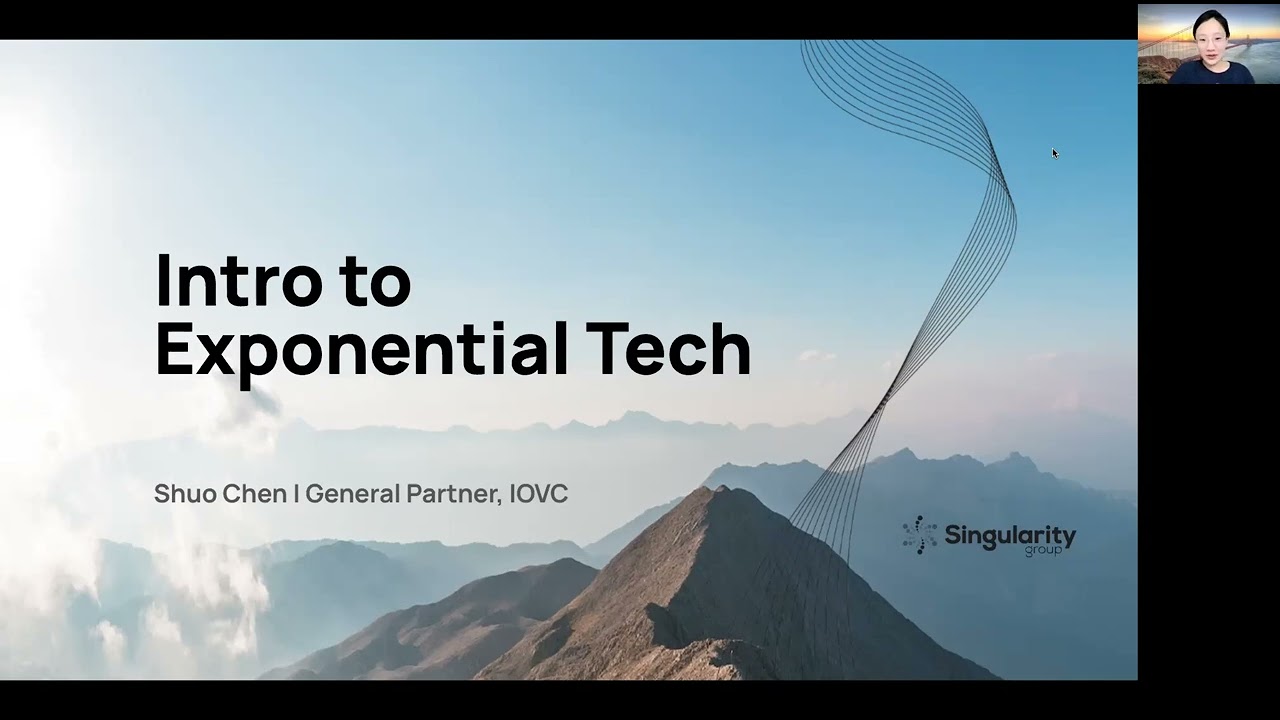


New Instructor Spotlight: 5 Questions with Shuo Chen on the Future of Education and Technology