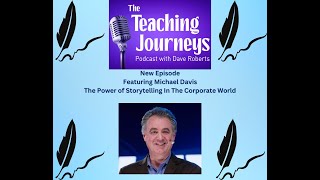
Become a Confident and Influential Presenter with Michael Davis
Michael Davis explains why most speakers fail: the curse of knowledge makes them assume audiences understand what they do. He advocates early rehearsal feedback, authentic storytelling with a clear arc, and ignoring the camera in hybrid presentations, which disconnects remote viewers.
Chapters
Hello and welcome. My name is Stephen Goldberg of Optimus Performance, bringing you practical tips on leadership, team development, and employee performance in the workplace. And as you can see, I have a special guest, Michael Davis, who is a professional speaker and trainer. Let me just introduce Michael. Michael helps professionals attract more clients, create efficient teams, and increase their influence with improved speaking skills. His passion for his work was born when he was threatened with a job loss because of his poor speaking skills. With the help of thought leaders and industry experts, he discovered how to become an impactful speaker, trainer and coach. Michael has helped speakers on five continents and written seven storytelling books. He's a speaker trainer and the founder of Speaking cpr. Love that name. He lives in Ohio with his partner Linda. And the overlords of the house, sky and Riley, the super Chihuahuas. Is that how you pronounce it? Chihuahuas?
They are Chihuahua.
Yes. Okay.
They will scold me if I don't pronounce it correctly.
So welcome, Michael. Thank you for being here. And let's talk about the benefits, really, of improving your speaking skills. And know I can relate to some of the things I just read in your. In your bio. When I was very young, I was extremely shy. If, you know, the teacher called me in class to speak, I, you know, turned beet red light under my desk. But here I am today, you know, learned to speak publicly, got over that fear, discovered I can be a great speaker, and if I could do it, anybody could do it. So let's talk about who you typically work with.
Typically work with company CEOs, C suite executives and their teams. And what we're attempting to do is help them make sure that their communication is crystal clear. I know, Stephen, you've heard this in your work. I hear this frequently. Well, I get up and I speak and I give them my information, and I'm being clear with them. According to whom. Each of us suffers from a malady called the curse of knowledge. We know our topics so well that we forget what it's like not to know it. And the biggest source of miscommunication and problems in business and our personal lives is the assumption that what we're saying is what they're hearing. And where that gap is, is where all the problems lie.
So let's. Let's break that down a little bit. I find that interesting. How do you know that? I guess. Well, first of all, you have to know if you're speaking to a group, whether it's online or in person. We'll get into that as well a little bit. But how do you know if the message you want to communicate is actually being absorbed or being understood by your audience?
I know this sounds simplistic, but I try to ask as much as possible. Okay, now, I know in a group setting, people are reluctant to raise their hands for fear of looking dumb. I get it. I've been in that audience. I've been that person. It's like, I don't understand what this means. So if you're waiting until you get in front of the audience, it's too late. Where you discover if you're being clear is in your practice and your rehearsals, whether you're working with a coach, trainer, or a group of people. I mean, some people go to Toastmasters, for example. Whoever your audience is, ask them in your practice, what part of this is not clear? What's not making sense? What references am I making? Acronyms, terms that you don't understand. So waiting until the event is kind of like in sports. And I know that especially men. We overuse sports analogies. So think of it. Sports, plays, acting, whatever. If you wait till the day of the event, be it a play, a sporting event, to get feedback, it's too late.
So planning and preparation is really key. Key. Knowing the message, what that you want to deliver and what you want people to get out of it, and then practicing and verifying with your audience in your practice, if they're getting that message, if it's coming through, yes, absolutely.
We have to. And it's okay. When you're asking people for feedback, to structure the feedback that you want. I ask people what resonated with you, what inspired you, what confused you? Where did you get lost?
I remember listening to an interview with, I think it was Chris Rock, the comedian, and about what he goes through to prepare for his big shows, because he has a huge audience now, and he goes back to really small venues to practice to lead up to those big events. And he adjusts himself along the way based on the feedback he gets from his audience, which is, of course, laughter is your best measure.
Right.
If you're a comedian. So that's very interesting. So what are some of the problems that happens when leaders or speakers are not prepared and not able to deliver the message that they want? What are some of the pitfalls that result from that?
The number one pitfall is there's a gap in the communication. The speaker believes that what he or she says is clearly understood by the audience. And it's like the proverbial snowball at the top of the mountain. It starts out small, but then One issue leads to another and it becomes a bigger and bigger problem as you get deeper into the communication and the audience is sitting there not knowing what you're talking about. So every reference after that, to that first point becomes a problem. So not knowing it is number one. Secondly, when you don't prepare, and I hear this from people who are overconfident speakers, oh, I just get up there and wing it. If you do that, the moment you get derailed by an unexpected question, something unexpected happens in the room. A fire alarm goes off. Without a structure, your audience is going to be lost. It's like getting in your car to get ready to go on vacation. I'm in Cincinnati, Ohio. So let's say I want to drive to New York City for a week. Well, I don't put anything in the gps. I just start driving in whatever direction I feel like. Now, I eventually may get to New York, but it's going to be a lot more hazardous. It's going to be a lot longer, more stressful and difficult. Then if I have a plan of action laid out and if I have to make a detour, I know how to get back on the road as quickly as possible with that GPS or whatever item I'm using. But without a plan, you're just asking to be derailed.
So we're going back to that really importance of planning and preparation for your delivery and for the messaging. You know, I watched that video on your website and you talk about how things have changed because of. Obviously we went through a pandemic. We been communicating online. Now we're going back to more in person or a combination of both. So how has that impacted the ability of people to communicate well and present themselves? Well, this hybrid model that we're actually still in in some ways.
Yeah. Well, you said the key word there, Stephen, and that is the hybrid model. We've gone through an evolution. Up to 2020, we were accustomed to standing in front of an audience giving a presentation. A limited number of us had been using this device called the online meeting before 2020. And then when that hit, everybody panicked and said, I've got to get good on camera. And, well, that was a new skill set we had to develop. There's a third skill set. As we get back into in person meetings, we have to be recognized that there is a camera in the room more often than not. Now what I'm seeing people doing in in person events is they're ignoring the camera. They think they're talking to the people in the room because they'll look back at the big screen at the back of the wall every so often and wave to the computer screen. But the people never feel connected because they're not look, the speakers aren't looking at the camera. Now, this was an issue before the pandemic. And when I would go to large events where there were big screens on, on either side of the stage for speakers, I would watch the audience. And the audience rarely was looking at the speaker on stage. They were looking at the screens. Because that's what each of us is conditioned to do. Or since we're little kids, our generation, we were raised on tv, My son was raised on computer screens. And kids today are raised on phones. All of them are screens. And we're conditioned to look at them. So if we're not acknowledging that people are looking at the screen and ignoring the camera, we're missing an opportunity to connect with the audience at a deeper level.
Interesting. So you mentioned, we talked about the importance of planning and preparation. You're talking about connecting with people, looking at them. What other tips can you provide? Quick, good tips for delivering your message. And I know one of the things that I remarked when I visited your website, you talk about storytelling. So maybe you could also talk about that as an important tip as well.
Yeah, storytelling is the heart of what I do. Let me address your question about delivery, because this is one of the most important issues I see. And there's a word that my fellow coaches and I have banned from our coaching. It's the word gestures. We do not like gestures. And people say, well, when you tell stories, people think I'm contradictory because when I say tell a story, you want to relive that story as much as possible. Become the character if you can. But I never use the word gesture. Now, let me, to avoid creating my own curse of knowledge situation, when I say gesture, I mean a pre planned, pre rehearsed, pre practice movement, which you and I see frequently with speakers. And they don't look authentic. Notice the person who comes out and says, with all my heart, and they put their hands over their hearts, or they point out and they dreamily look to the horizon as they talk about their goals. And my only question to them is, do you talk that way in everyday conversation? No, they don't. If they do, fine, keep doing it. But I rarely meet the person who does that. You got to be authentic. What does that mean? In order to be authentic, you have to practice and rehearse your talk so much that it's second nature. You don't have to Think about the words, understand the flow. Don't memorize your speeches, by the way, or your stories. Memorization is a death nail because you're stuck in your head and the moment you forget a word, you're done. You're emotionally going to disconnect from your audience. Just know the flow of the talk. Whatever comes out, comes out. But that enables you to be more conversational. And that's what audiences today want. They want the real person, warts and all.
I guess the more you practice, and this is what I found, the more you can trust yourself and your knowledge of the. The topic and you know it. That enables you to recall it during the presentation and be that authentic person. Because you do know your subject matter and because you've prepared and gone over it, you. You can now just focus on connecting with the audience and telling your story. Does that make sense?
Oh, that's a terrific point, Stephen. That's the essence of it right there. And the more you practice, you will internalize it. And I'm constantly coaching my clients who get caught up in memorizing every word. Stop doing that the first time you go through it. It's going to feel uncomfortable. A lot of people come to me with their written version. Well, what we want this speech or story to do is evolve over time to where it sounds different than the first version each time you give it. You should be aiming to speak more in your natural voice. That means you're going to replace certain words or phrases from the written version to the conversational. So the 10th version should sound better and more conversational than the first. Not as good or as conversational as the 20th. And every time you go through, it should sound a little different because it's evolving. We're not actors doing Shakespeare who have to say every word and at the same intonation every time. That's Shakespeare's work. We can't mess with that when we're giving our own speeches and stories, we can change them however we want to see fit to help get the message across.
You know, when you were talking about the authenticity and you know, the gesture, it reminded me of this fellow I would meet at these networking breakfasts who would come and do a little speech. And he was a student of one of those, I forget Toastmasters, I think it was. And I couldn't stand listening to him because that's what I saw was just these planned gestures which took away from the authenticity and just looked and felt so pre programmed, I just couldn't stand it. And you know, as you were telling about that. His image just came up in my mind. So it shows you what a powerful impact or negative, in my case, it could have when it lacks that authenticity and just comes across as so fake. So maybe just elaborate a little bit more on the importance of storytelling.
Sure, sure.
Especially like, you know, I think it's really. Today we're seeing storytelling a lot more. Like, I just noticed some ads on television from indeed the hiring platform.
Yeah, I've seen.
And they were putting ads when this business show, like Sharks Tank in Canada, we have Dragons Den. And the ads were stories about their clients and how they had grown their business. So, like profiling. And I found that a very smart approach. You're seeing it more and more, you know, using a story to emotionally connect with the brand, with the advertiser. And I think it's also really important for leaders to use storytelling to connect with their employees and through that, share their values. So maybe you could talk a little bit from your expertise and experience about that.
There are many types of stories in business that you can use. My two favorite are the origin story and the successful client story. Both follow the same arc where we follow a character, a main character, who goes through some type of transformation. This individual is living his or her everyday, ordinary life, and then an inciting incident pushes that person out of the ordinary life. So instantly they want to get back to the comfortable ordinary, and they don't know how to solve the problem, so they try to fix it. And the problem gets worse and eventually reaches a low point where they feel like they're helpless. They're never going to solve the problem. And enter at that point, enter the guide. This is the individual or the company that has the solution to this person's problem. After some initial difficulty with adjusting to this solution to the problem, they start to have some success. And that success builds until it reaches that moment where they overcome the problem, and then they're living a new and better life. They're not. They haven't returned to the original life because they've changed by this. They've been changed by this journey, this ordeal. They're living a better life, and now they can share their message of hope to the world. So that's the classic story arc that goes back thousands of years in human history. It's in books, it's in movies, it's in speeches and stories. It's interesting you mentioned being afraid to speak in school where you turn beet red. In my introduction, you mentioned that my journey to where I am today started in my. When I Got threatened with a job loss. It actually started on a desk in first grade when I was humiliated in front of my first grade class. I was being punished. I wasn't under the desk, Steven. I was on top of mine. That was how my teacher chose to punish me. And it was so humiliating that it impacted me for years where I didn't want to stand in front of groups because I was terrified of being laughed at. And it wasn't until I was threatened with a job loss that I had to face this fear and manage it, deal with it. And that sent me down a whole new path. But that story of struggle, of strife and setback which leads to eventual success is what audiences are drawn to. Because when they hear. And this is important for leaders. I work with a lot of leaders who are reluctant to share their failures or their struggles because they feel like it shows them as weak. This is not a storytelling insight. This is a human insight. We are drawn to people who are like us. And if we are leaders and our. In our team members, the people who work under us want to feel a bond with us, we've got to be like them in the sense that we're human, we're fallible. We make mistakes. And what can you teach them from your mistakes? You and I? And if you're watching or listening this, you've heard the speaker who gets in front of a room or in front of the camera and starts telling you about the amazing life this person has had. They've never really had any problems. They're wealthy beyond their wildest dreams, and they've got the most beautiful family in the world, and they've got houses on both coasts of the country and all this. And we're like, no, I'm not buying it. There's no story there. It's just somebody thumping their chest and saying, look at me. I don't know many people who like that kind of speaker versus the one who stands up there and says, yep, here's where I've made this mistake, this mistake, this mistake. Here's what I learned. Here's what I learned. Here's how my life got better. You can do it, too.
Yeah, I agree a little more dramatically.
Than what I just said. It's that story arc that draws us in. We're wired that way. I mean, study after study shows the neurotransmitters that are released in our body, be it cortisol, oxytocin, dopamine, endorphins, they all get released when we listen to a sensory, rich, and emotional story. And we're drawn in because, as one of my coaching friends says, our stories are about us, but they're for the audience. And when we structure it the right way and tell it in authentic way, it becomes autobiographical for the audience because they feel like, oh, you're telling my story. And that's where the bond comes in.
Makes sense. So if somebody that's listening resonates with what we're talking about and says, I could use Michael's help, what does that look like? What is the process to go through to work with you to become a better speaker? What do you do to help people?
Well, we have several ways. We have some complimentary resources. We've got online courses, one to one, and group coaching. The general arc that I follow, whether I'm working with you individually or as a group, is, first of all, we talk about your mindset. What are some of those messages in your head that are keeping you from being more effective as a presenter? I discovered about three years ago, Stephen, I would do all the technical work and help people structure the presentations. And one day a lady said to me, I just don't believe that I should be on stage. This is after we'd done all the technical work, and I'm like, here's a story to share with your audience. My mistake is I wasn't working on the headspace first. You can be all technically oriented, but if you don't believe you can do it, it doesn't matter. So we work on that. What kind of messages are in there? There are ex. We give you mental exercises and physical right before you speak. That can help you manage the nerves. By the way, you never want to get rid of speaking nerves. You want to manage them but not get rid of them. It's good to have that energy. Once we have that, then we work on the structure. What is the message you're trying to get across? How are we going to support that message? Is it going to be stories, research, metaphors, audience engagement? How do we reinforce the message? How do you open it to grab people's attention? How do you close it so that people are inspired to take action? And then the last part we work on is the delivery. There are some coaches who are big believers that speaking is all about delivery, which to me goes back to what you and I were talking about. That's inauthentic. If you're up there trying to be a performer, your message is not going to stick. Have an important message, have something to say, and then we'll work on delivering in a way after you've internalized the message so that you can deliver it in your natural voice.
Yeah, I like your process very much, especially looking at the internal barriers to becoming a good speaker. I think that's something that's probably overlooked by many people and don't consider that. But it's a big obstacle. And unless you address that, you cannot actually work on the delivery because there's always that recording inside your head that's holding you back.
But what you get if you don't work in the mindset, you get the inauthentic delivery.
Right.
I will tell you, I learned this from my own experience my first seven years. I started in Toastmasters back in 1994 because I was threatened with a job loss, right? I joined thinking, I'm going to come in here for six months, figure this out, and move on. Well, seven years into my speaking, I look back now and I see this. Seven years. I was incredibly insecure. So what would I would do is I would make sure that I memorized every speech word for word. And when I spoke, I had perfectly combed hair, suit was perfectly pressed, shoes were shined. I mean, the exterior was perfect. And Steven, it was a badge of honor to me when somebody came up to me and said, michael, you are so polished. And I thought, I know I am, aren't I? And I felt so good about that. And then one day I was in my office, and I just happened to be polishing the office furniture. So I've got the rag and the furniture polished, and I've got this can, looks like this. And I looked at the can for a moment and I thought, huh, Nothing sticks to polish. My message is not sticking with the audience.
That's it.
They remember what I look like. They don't remember my message, which means I'm not a good speaker.
It's a big aha moment.
It was huge. Because from that day forward, it took a while, but I very slowly started to work on the message and not worry about the exterior. Now, I'm not going to dress like a slob, but at the same time, if I've got a button unbuttoned or there's maybe a small.