Overcoming the Fear of Public Speaking with Michael Davis
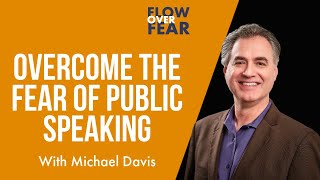
In this October 2023 interview, host Adam Hill talks with professional speaker and trainer Michael Davis about the root causes of public‑speaking anxiety, how to shift from fear of humiliation to serving the audience, and practical methods for becoming an authentic, memorable presenter. Davis explains that the fear stems from a primal dread of social ostracism, not the act of speaking itself, and recommends awareness, thorough preparation, and embracing inevitable stumbles. He stresses the power of storytelling to give hope and generate emotion, outlines a step‑by‑step framework for crafting talks (core message, big promise, chunked rehearsal, never memorizing, and evolving each delivery), and shares how to handle feedback, avoid trying to please everyone, and target leaders/entrepreneurs who need impact‑driven communication. The conversation also covers the role of humor, the importance of self‑recording, and Davis’s own transformation from a “polished” but forgettable speaker to an authentic storyteller who uses a weekly 52‑storytelling‑insight newsletter to help others.
Chapters
If you're trying to please everybody, who you're really trying to please is yourself. You have this need to please everybody. You have to take a hard look at yourself and say, why am I speaking? When I ask people, why do you want to get up there and share a message? Oh, I just love to speak. It's like, nope, that's not a good reason. It is not a good reason. That is so egocentric. Look, I'm speaking from experience. When I first started it, yeah, I went into it because I had to save my job, but I discovered, oh, I like the attention and spotlight. Nobody cares that that's what you want. And they will. Today's audiences are so sophisticated, they can smell the egocentric speaker a mile away and they will not like it. And you will not be asked to speak other places because word gets around, especially if you're in the professional world. Meeting planners talk. And if you're that worried about yourself and you're hard to work with, word will spread. If you're there to serve your people and you're not worried about how many people signed up for my newsletter or did I sell my books out, just let all that go. Those are side benefits and those will take care of themselves. If you're giving a message that people can act on and walk away thinking, wow, if you did it, I can too, then you're going to have an impact.
Hello, everyone, and welcome to the Flow Over Fear podcast where it is our mission to help you to rise above fear and realize your ultimate potential in leadership and life. I'm your host, Adam Hill, and it is my goal to share with you the human side of high performance. My guests share their experience with fear, anger, anxiety, struggle, challenge, and most importantly, despite all of it, how they rose above it to achieve incredible results. So if you're ready to rise up, let's get started. Hey, everyone. Welcome to Flow Over Fear. Thank you so much for being here today. I have a great guest today. You know, one of the fears that commonly shows up for people most often is the fear of public speaking. And according to the National Institute of mental health, 75% of people rank public speaking as their number one fear. And this fear can also show up in large audiences or one on one, all sorts of things like that. My guest today, Michael Davis, works with business leaders and entrepreneurs to attract more clients, create efficient teams, and increase their influence through improved speaking skills. His passion for his work was born when he was threatened with a job loss because of his poor speaking skills. With the help of elite professional Speakers. He discovered how to become an influential presenter. And Michael has trained speakers on five continents and written seven storytelling books. He's a speaker, a trainer, and the founder of Speaking cpr. And he lives in Ohio with his partner Linda, and the overlords of their house, sky and Riley, his super chihuahuas. Welcome, Michael.
And they are the Overlords.
It's amazing with pets that it's almost. Almost like the smaller they are, the more energy and the more. The larger the personality. Am I wrong about that?
Oh, you're. You're right. And sometimes I look at Linda and say, the women in my life, my partner, my late mother, they could ask me to do things. And at times I'd say, no. My two dogs, I do whatever they want. I just don't get it.
Yeah, yeah.
They get away with anything they do with murder. What a great life it would be to be just a small dog.
My mother was so much. She wanted to come back as a German shepherd in a very wealthy house, because that's about as good as it gets.
That's about right.
That sounds good.
So we all know what we're striving for in our next lives. But thank you so much for joining me today, and I really want to dig into a lot of your story because I know you have a background with challenges with speaking and learning how to do it. So you went through your own thing, now you train people to do it. So one of the things I think of when I think of this, this fear of speaking, of getting on stage, is there was just this theme in the 80s, like 80s sitcoms where everybody who had a fear of public speaking was supposed to picture everybody in their underwear. Is there any legitimacy to that or any spark of truth to that?
I just have to ask. Let's just get that one out of the way. And also let's address what you open up with was a well known statistic. I'm not going to disagree with the statistic, but what's the statistic under the statistic? It's not public speaking we're afraid of. What we're afraid of is public humiliation.
Oh, wow.
Okay.
We also have a fear of walking into a room full of people we don't know. So what is public speaking is the potential to be humiliated in front of a bunch of people we don't know. I think that taps into our earliest ancestors, who being separated or ostracized from the group meant death still in our subconscious. And that's why we think we're afraid of speech. We speak every Day it's the underlying fear we have to be aware of.
That's interesting and I'm glad you pointed that out. The fear of public humiliation. And what, what greater fear would there be than an entire group of room that seems to be entire group of people that seems to be judging you? So, yeah, I guess the question is, is what? What can we do to get beyond that?
Number one, is be aware of it. Number one, it's not the speaking you're afraid of. Secondly, and I say this half in jest, nobody has ever died because they gave a speech. There are some politicians in history who have died while giving a speech, but it wasn't the speech that got him killed. Let's get that one out of the way. You're not going to die. You're going to feel these nerves. But the best way to handle it, number one, is to prepare and be ready and know your material so well that you're not thinking about yourself. You're not thinking about, am I going to stumble, have problems, embarrass myself? Guess what, you're going to say something, you're going to stumble, you're going to make mistakes. And that's actually good. Yeah, it's not good if you do it every 30 seconds. But an occasional stumble, misstep, or even looking at the audience and saying, you know what? I completely forgot what I was going to say. Can you help me out? That humanizes you. It lets them know that you're there to serve them and not impress them. But preparation by far, just rehearse, get feedback, make adjustments. Don't memorize. Never memorize. That's interesting because people who memorize look and sound memorized. Yeah, it's not authentic.
That's interesting. So, and I like kind of a couple of things you said there, that the don't memorizing part, I want to put a pin in that. And then, and also, you know, talk about that, you know, you know, that, that factor, what makes you human is that stumbling aspect. I. So it's, it's, it sounds to me that, that you almost, you know, you almost want to, in order to be authentic, you want to kind of have those stumbles a little bit, but not as often as you're saying. Is that sound accurate?
I wouldn't say you want them, you just don't want to be afraid of them. They're going to happen. Just roll with it. Now, I have seen speakers who actually build in a mistake. And it was as a speaker trainer, it was so obvious to me what they were doing. They lost all credibility with me.
I see.
I've seen some speakers who cry the exact same way at the exact same point in their story. Every time they tell it, it's like, no, you're not fooling us. It doesn't feel real, but just don't be afraid of it. Just. Look, you and I talking here, we're. I know I've made some mistakes already. Don't sweat it. It's real.
Sure.
The difference between the memorable speaker and the forgettable speaker is the forgettable speaker is focused on what do they think of me.
Yeah.
The unforgettable speaker is thinking, what impression, what impact did I have on them?
So it sounds like we are. So.
We. We.
So ultimately, what some of the nature of our fear, it sounds like, can be due to the fact that we're just focused on ourselves and what they're thinking of us instead of delivering the message the best way we can serve the audience. Does that sound fair?
Absolutely fair. My first seven years of speaking, when I was. I got involved in this, as you mentioned in the introduction, back in 1994, I was a young financial advisor. I was given the task of giving workshops to attract new clients into our firm. And Adam, they were bad. I could still see the evaluations my boss thrust into my hands. And at the end of that meeting that day, he said, you're a lousy speaker, your stories suck, and you've got 90 days to turn this around. That's when I discovered Toastmasters. And I started to understand that speaking is a learnable skill. What it took me seven years to figure out, though, is that I had a lot of fear, insecurity, self esteem issues. And I focused. For those first seven years, every time I spoke, it was, how's this? How's the hair? How's the suit? Oh, my gosh, there's a hair there. Shoes gotta be polished. And I took it as a badge of honor when somebody would come up to me and say, michael, you are so polished. Oh, you're so polished up there. One day I'm in my office and I'm cleaning out my office and I'm dusting my desk, and I look at the can of polish, and I realized something. Nothing sticks to polish. Oh, my God, my message isn't sticking. They remember how I look. They don't remember what I said. I wasn't a very good speaker. So even seven years of going through a basic training like Toastmasters will give you, that's when I knew I had to deal with my insecurities. And Say, okay, you have to be willing to get up there and not worry about what people think of you. Focus on the message you're giving them. That changed everything.
So even after, even after getting into Toastmasters, you still had that insecurity and you were. Still had a lot to work through. So you were. There was a learning process. So what, what was the. What was the big, I guess the secondary transformation, because you had the first transformation of, of realizing that you weren't a great speaker. You had that kind of moment where your boss told you you got to fix it or you're fired kind of thing. But later on, how did you transform into something that delivered a message that stuck?
Well, that Polish, what I call it, and now call it the End Dust moment, which was a can of End Dust polish. I just so happened to go to a Toastmasters meeting one day and I wasn't scheduled to speak. If you know anything about Toastmasters, you go in. They have scheduled speakers each day. Well, all the speakers that day didn't show up. And the person who was in charge of the meeting was panicked. She said, michael, we need a speaker today. Could you please do it? Please, Please. You're one of our more experienced members. And my first thought was, no way, I'm not ready. I didn't dress right. All that went through my head. And then I remembered the Polish incident. I thought, okay, maybe this is the universe testing me out. So I stood up, gave this story, sat down, immediately started berating myself. Oh, my God, I can't believe you said that. That was so stupid. How could. You weren't prepared. That was awful. This is going to be the worst evaluation ever. In Toastmasters, you get an evaluation.
Yeah.
My person, my friend Chris stood up and said, you are different today. I've never seen you be more authentic than what you did today. You didn't sound rehearsed, practice, or polished. Keep doing what you just did. I had to experience getting the inside is one issue got great. Nothing sticks to polish. Then I had to go up and prove to myself in a high stress moment for me, because I wasn't prepared. It was completely contradictory to everything I had been taught to that point that it's okay. And once I realized that through experience, it got easier and easier to get up there and stop worrying about me and focus on them.
Wow, that's so. And with that in mind, how do you approach preparedness? I mean, so there's this fine line it sounds like with regard to, you don't want to memorize what you're going to talk about. But you want to know the content so well. So how do you present it in such a way that you are being authentic and really putting yourself out there in terms of getting the content that the audience needs?
I want to make sure when I create the presentation, this doesn't matter if it's 5, 25 or 55 minute. Talk is. I want to get the flow down. I always start with what is the main message. I want people to walk away with what's one sentence that captures my talk. And I want to weave that throughout the presentation. Everything that goes into the talk has to support that message. My stories, my statistics, my facts, my research, case studies, doesn't matter. It has to support that or else it goes. Once I have that body in place, then I figure out how am I going to open this to orient the audience to the message. I also have what's called a big promise at the opening. What are you going to get as an audience from this? And then I conclude it. So I develop it in a different order than I create it. But once I've got that created and it's in its order, I then practice in chunks and I never memorize. Two reasons we don't memorize. Number one is you sound memorized, you just don't sound real. Secondly, what we write is different than how we converse. So each practice should actually be a little different than the previous version. Because the more you internalize, which is what we aim for, internalize the flow. Each practice should be more and more how you speak conversationally, just like you and I are doing now.
Yeah, yeah.
But we write differently than we sound in conversation. So a lot of people say to me, well, I can't remember what I was supposed to say. Good, because that's your subconscious telling you this is how you say it. Okay, a great practice tip. If you're ever getting stuck in a certain part and you're rehearsing and you're going over it, if you can't get past that point and it keeps happening in the same spot, to me that's an indication that you are not. It's not written the way you speak. So what you do is if you're with a friend, you just have a conversation, or you can just turn on a recording device and say, what am I trying to say here? Forget the fancy written version. What am I trying to say? Whatever comes out of your mouth is typically how you should change that part of the script.
I gotcha. So really, instead of starting with a full on written out script, as I'm understanding, you want to get the flow. You want to know what your key points are. And then as you're rehearsing that, you're just rehearsing it kind of. You're rehearsing it essentially speaking it. Not. Not reading off of a draft and trying to. Trying to do that. So. So it's knowing those key topics that's. That's fascinating. And. Yeah, go ahead.
I was gonna say rehearse in chunks, which. And I'm gonna give you an example. Let's say we got a 25 minute talk, break it into five minute chunks. And here's why we wanna do this. Most people, when they pre, they're practicing, they will start rehearsing. And as life often does, three or four minutes into the rehearsal, guess what? Phone rings.
Yeah.
Dog starts barking, baby starts crying. We go take care of that. When we come back and start the rehearsal again, where do we typically start?
Yeah, Right.
Beginning.
Right.
So we get really good at that first five minutes, but the rest of it doesn't get the attention. So when I say break it in chunks, what you do is you do a five minute portion.
Yeah.
Next time you rehearse, do the next five minutes, then the next five. And if you got 10 minutes, do whatever, but constantly give each part of the presentation equal attention.
I gotcha.
Yeah.
Okay.
And that makes sure that from start to finish, you're compelling and you're authentic.
Yeah.
That's interesting. And I know you have a lot as far as where you train people, and you have this great 52 storytelling insights that you send out every week to people for free. And it's great. I've been a subscriber for a little while now since I met you, and. And so storytelling is a big part of what you do. Can you kind of tell us and expand on what the importance of storytelling is to a lot of what we're speaking on and what we're preparing?
Yes, it's an excellent question because it is such a popular topic today. Here's what. And again, one person's opinion. I believe we tell stories for two main reasons. Number one is to give other people hope.
Yeah.
Your talk, for example, about how you came from where you were years ago to being a triathlete, a world class triathlete. If you were just to stand up there and tell us you're a triathlete, people, that's good for you. But when you bring in that early part of your life when you were struggling with all these issues, and then you got to this now it's relatable. You've given us hope. The other part of storytelling is to generate emotion, because ultimately, when we're telling stories in business, it's to let people know that you can solve a problem for them. Well, they're not going to listen to you unless you generate some type of emotion. You know, I encourage, if you're watching this, do not make the mistake that I did for years in the National Speakers Association. For years, I would hear this phrase, if you want to make money in speaking and you want to connect with an audience, you got to get them laughing one minute and crying the next. I have a problem with that advice. I typically can get a lot of laughs in the speech. I'm not the kind of speaker that gets people crying. So for years, I believed I could not be a professional speaker because that's not my style.
Right.
I tried it for about six months, and all the feedback I always got was, this sounds canned. It sounds rehearsed. Michael, I feel like you're trying to manipulate me. And I was, because that's what I had heard. Well, then I heard a speaker one day, world champion speaker, say there are six common emotions. Happiness, anger, sadness, surprise, disgust, and fear. His name was David Brooks, and he said, if you tap into at least one of those or a combination, you will generate emotion in your audience. And once I heard that, it was like the seas parted and like, oh, my gosh, I can do this. Because I have plenty of stories with sadness, fear, surprise, disgust, happiness, anger. I got those right. And that's when it started to change for me as far as the impact of the stories. But that's the main reason. It's to let people know. In business, we tell stories like, I'm a presentation skills trainer. I go to people who tell me I'm really struggling because I stand up in front of my team at work and I'm getting no response. I'm not having an impact. They're not afraid of speaking, but they're frustrated. One of the emotions that they're not getting the results they should be. The chairman of the board, the CEO stands up and gives a talk, and the troops are uninspired. And. And they're like, why am I doing this? They have to speak. Well, you don't have to not have an impact. You gotta learn how to tap into those emotions. And the way we do that is through our stories. And I'm gonna go back to yours for a moment. Such an inspirational story of being at these low points in your life, dealing with all the issues you did, which are universal and through a series of actions, taking new steps, a new perspective. It doesn't matter that you're a triathlete now and the rest of the world is. Most of the rest of the world isn't. That's not the important part of your story. It is that you overcame that hurdle. And that's what we want to know is how did you do that?
Right, Right.
Or as I like to call it, the When Harry Met Sally moment. When the audience says, I'll have what she's having. For those of you that don't know that, just look it up on YouTube. It's a very funny clip.
Great.
I love that. I love the fact that. Totally unrehearsed in and of itself, actually. So it demonstrates your point.
Yes, it was.
Well, yeah. So, so, and, and so, yeah, at the beginning there, you. You talked about, you know, how you'd heard in nsa, which is National Speakers association, not National Security Administration. I got that one confused when I first got into this thing. But that, that, you know, you're told that you want to make people laugh one minute and cry the next. Is that still our goal? We just want to do it authentically?
Yes. If you could get people to laugh, it makes a huge difference. I was just at the. And you bring up a good point. We have to watch our acronyms. We get caught up in our language. I should have known better than to say just nsa. I was at the National Speakers Association Conference just this past weekend, and I noticed that the hall of Fame speakers all had a common trait. They make us laugh. That right on the back end of the laughter is a valuable point.
Ah, okay.
Yeah.
Making people laugh opens their brains up to being ready to hear the message. But a lot of speakers who aren't at that level force humor. This is, again, one person's opinion, Adam. Do not tell jokes in speeches. The old rule of thumb in speaking was it wasn't the underwear. It was open with a joke. Worst thing you can do for a couple of reasons. Number one, what if it isn't funny jokes? Today, you got to be so careful because you might offend people. Number three, it might leave people thinking, what does that have to do with the topic? And the fourth is because of technology, we've got YouTube, we've got TikTok. We can get all the humor we want there. Now. That's not to say, don't be funny. It's to say, do not tell jokes for jokes sake. Our lives are full of humor. If we're willing to look at them in a funny lens. The humor is in our stories.
Got it.
Okay.
That's so helpful. And to me, somebody who, you know who. I think I'm funny. Right. And maybe it doesn't always come across that way, but certainly my audience here probably knows better than I do on that. But I. But yeah, the idea of forcing humor, I almost think to myself, the only way that I can be entertaining is to make sure that I'm adding humor in there. But what I'm hearing here is just make it more intentional. Make it so that it's part of the story to keep that entertainment going. But don't. Don't force it. Don't just tell a joke to say, hey, you know, why did the chicken cross the road? You know, it has nothing to do with it. So that makes a lot of sense. And is that true for all of the emotions? Like, if we're trying to invoke something sad, obviously we don't want to just tell a sad story and make people upset and sad for sadness sake. But if we tell it about a story that's relevant, that's sad, to evoke an emotion and then bring a point home, does that work in the same way? Is that something we can use similar.
Yeah, we have to be very careful with sadness, though, because if we bring sadness into a story and we don't bring the audience up out of that, we're going to leave them down. And that's not a good result we want from the film. That's not to say that all of our stories have to end like Disney.
Right.
In fact, sometimes they don't. I think the best stories and the best speeches do not necessarily leave us feeling on an up note in the sense that we've answered all their questions. I think the best speakers actually disturb us. Disturb us in the sense that if you're going to go listen to a speaker and you walk out the same person you are at the end that you were at the beginning speaker didn't do a very good job. Because a speaker's job is to get people disturbed enough to want to change something.
Yeah, right.
Because we don't change unless we're disturbed. If we're 100% comfortable, life is just great. How likely are we to change anything?
Right.
The greatest moments of achievement in our lives come out of something that is a problem, a real challenge we didn't think we could overcome. And that's what the best speakers do. In fact, they leave you with more questions than answers.
Hmm.
That's Interesting.
Yeah.
So, and I guess when those questions come up, then our job as speakers then is to answer those in terms of, give them an opportunity, give them an opening to find more about those answers. In other words, that's where you get in touch with you or get in touch with the speaker, or get in touch with. Or if you're giving a presentation, that's where we make the investment or call or get additional information. And so you're, and your primary. So talk to us a little bit about who your target is. You're looking at like leaders, executives, people like that, that want to improve their presentation style. What is that person before you talk with them and what are you hoping to make them after you talk with them?
It's usually CEOs, company leaders, entrepreneurs who have to stand up and give presentations on a pretty consistent basis. It could be to the, the board of directors, potential investors, prospective hirees. They have to stand up and give those presentations. They do it. They're not afraid of it. They may not love it, but they're not. They're not afraid of it, but they're not getting the results. Their ideas are not getting pushed through. They're not getting buy in, they're not attracting more clients. They're not getting the right people on board. And they don't know why. Typically it's because their message suffers from what we call sameness. There's nothing compelling about it that taps into that hope or all those emotions to let people know, hey, we do have a solution for you. We can help you overcome that problem. Again, whether you're the board of directors, your prospective clients, your potential hirees, they all have their reasons for looking to you. The speech should answer that. Yes. And by the way, a speech, especially a keynote, should not tell them how that's done. It should show them this is possible. Because that's not the place to get into the mechanics of how you do that. It's to give them the big picture hope.
I see. That's, that's, that's, that's a, that sounds, that's an important point because there's a lot of breakout groups, you know, in, in all of these conferences where we hear a lot of how tos, like here are the mechanics of how to create the right kind of process for this individual thing, blah, blah, blah. And that, I mean, that seems to attract a person that's looking to, I need to create a process on this specific thing right now. But it's not transformational. And we tend to hear the transformational talks on the keynote stage where people are speaking or in the boardroom where people are pitching and all that kind of stuff. So what is the key difference there? I mean, is the difference that we're telling a story that gives hope and we're invoking that emotion and that. Is that the primary difference we're looking at there?
It's both of those, Adam. Plus it shows what's possible.
Shows what's possible.
Here's where we are today. Here's where we could be. Now. The gap is the how to. That's not the point of that. That big speech. Yeah, the how to. The gap is filled in the follow up breakout sessions, the trainings, the one on one coaching.
Gotcha.
Okay.
None of it. No speaker on this planet. Even Les Brown, who was thrilling to see this week and sit five feet from.
Oh, that's amazing.
That was kind of cool. Rory was there. Rory Vaden.
Oh, very cool.
As great as they are, they're not going to change lives in 45 minutes. They're there to show you what's possible. And I'm paraphrasing this. Rory has this phrase that my coaches often quote, is that you are uniquely qualified to help the person you used to be. I'm paraphrasing what Rory said, but that's powerful. And that person you used to be can be similar to everybody sitting in that audience in front of you to say, here's what's possible. Then they've got to take the next steps.
Yeah, yeah.
And that's one of my favorite quotes, by the way, that comes out of Rory Vaden's mouth. My favorite. Just the fact, because when he said that, that's the moment, really, I signed up for Brand Builders Group, which is the group that Rory Vaden runs, that we're part of, because that ultimately solidified who the audience is that I wanted to help, why I wanted to start this program. And in that way, that simple statement, that simple message, which doesn't give you a how to, but it's transformational. I mean, it transformed the way it shaped my business. And so.
But doesn't it also make you see yourself very differently? It's like, wait a minute, I have come a long way.
Yeah, yeah, absolutely.
It is so easy. It's so powerful.
Yeah.
Oh, no, no, please.
In today's world where everybody's a critic. And I was just talking with a friend of mine this morning. She's a dynamite leader in helping companies develop trust. She pointed out that narrative we tell ourselves that is usually pretty negative. We need to occasionally Step back and say, wow, look where I was, here's where I am. And there are many people on this planet, if you're a speaker or a leader, who are where you used to be, the old you, and they need the current you to show you how you got here. And you can do it. Save them a lot of steps.
Yeah.
Here are the landmines that I wish I would have avoided. And hopefully, if they're open minded enough, they'll listen to you. Don't do it with your kids because, dad, you're stupid. Just. You don't know nothing.
I get that a lot.
Yeah. Yeah.
If you want to get good practice with critics, have kids. That's the way to work it out.
Yeah.
Or Chihuahuas. I mean, you know, the Chihuahuas do it too.
Oh, yeah, Chihuahuas. Well, they do wag their tail sometimes when I practice the speech.
That's right.
That's the best feedback.
Oh, man. Yeah.
If only all the audience had tails. That would be just the perfect audience.
That'd be great. You just know right away they like it. They like it. Or no tails between the legs, man, I got work to do.
And that brings up an interesting point. I mean, how do we. We have this fear of critics where it's like, well, we'll give the critic 10 times more of our attention than we will the people that like us. So how do we deal with that mindset? And how do we deal with the critics in general so that we can keep pushing our message forward and make sure that we're being as attentive as possible? Is there a way to discern between if that feedback is useful or if it's not? How do we look at that?
That's a terrific question. Because feedback can be so damaging if we're not careful. Keep in mind people who give you feedback, unless they're just total jerks. Yes, they are. Out there, there are many people who are well intended. As I learned a long time ago. Adam, there are two types of people who can give you feedback. One is the person who has emotions, which is everyone. Everybody can tell you how your speech or story made them feel. Second is the people who are highly qualified to tell you how to improve. That's a much smaller number of people. And keep this in mind, if you're watching this, there is no one way to be a great speaker or fabulous storyteller. And anybody who tells you there is run. It struck me this weekend at the National Speakers association, there were five hall of Fame inductees, five very different styles. And throughout the whole weekend you could watch different styles appeal to different parts of the people in the audience. But they're all highly successful people.
Sure.
And this is. It's important with your question is you gotta be comfortable with who you are, and that takes a long time. It took me over seven years just to start to deal with insecurity and fear. So shorten that process. Number one, remember, when you're getting feedback, that's all it is. It's an opinion. Number two, think like a politician. What that means is. And with some exceptions to this rule, if you get 50.1% of the population to vote for you, typically that'll get you elected. What does that mean? 49.9% of the people may not like you at all. So remember this just based on the way you look, because whether we like it or not, human beings at our base level, we will make snap judgments on people based on the way you look. Some people might immediately not like you if you're there authentically, with an authentic heart that says I'm here to give you value, to serve you. The people who can't see that, they're not your audience and they're sitting out there in every group you will ever talk to. And I meet people and I typically don't work well with these folks who are there because they want the love and they want the acceptance. I've learned I've become a little. I just turned 60 this year, so my skin is thicker. I get it. If you don't like me, it's nothing personal. It's just sometimes personalities. I don't want to sound like I'm on a soapbox, but I kind of am. Is. I'm trying to tell you this. Not just you, Adam, but you're watching this. There are people who aren't going to like you for whatever reason. It's their stuff, not yours. Be authentic. Give your message. The people that need to hear it will hear it. The rest of them, either it's not the right time, or they just weren't the people for you. Let them go. I like that a lot of people out there. You will impact.
Yeah, I like. I like that a lot. And would. Would you say that it's fair to even really is. So then is it about just focusing on the audience? Focusing on the. The audience that you want to serve, not pleasing everybody? Is. Is it. Is that a true statement that. That if you're trying to please everybody, you're pleasing nobody?
Yes. I think if you're trying to please everybody who you're really trying to please is yourself. You have this need to please everybody. You have to take a hard look at yourself and say, why am I speaking? When I ask people, why do you want to get up there and share a message? Oh, I just love to speak. It's like, nope, that's not a good reason. It is not a good reason. That is so egocentric. Look, I'm speaking from experience. When I first started it, yeah, I went into it because I had to save my job. But I discovered, oh, I like the attention and spotlight. Nobody cares if that's what you want. And they will. Today's audiences are so sophisticated, they can smell the egocentric speaker a mile away and they will not like it. And you will not be asked to speak other places because word gets around. Especially if you're in the professional world. Meeting planners talk. And if you're that worried about yourself and you're hard to work with, word will spread. If you're there to serve your people and you're not worried about how many people signed up for my newsletter or did I sell my books out, just let all that go. Those are side benefits and those will take care of themselves. If you're giving a message that people can act on and walk away thinking, wow, if you did it, I can too, then you're going to have an impact.
Yeah, I love that. That's so helpful. And specifically the part where, you know, you're saying that if you're out, if you're trying to please everyone, you're only trying to please yourself. That's such a great, great spin on it because it makes absolute sense. And so getting into your process on how you're training people, what kind of, what do you tend to walk people through? If you could describe how you work with your clients, what do you walk them through?
Well, first we do is we do look at the mindset. And now that might be a five minute conversation because I could tell fairly quickly if somebody has issues. And typically the folks who hire me, that's not the problem. However, with that said, we do give them some physical and mental exercises to go through before they speak. We show them how to prepare. And I don't have scientific research on this, Adam. I'm just making the number up. But I believe 75% of managing nerves is preparation. If you go through that speech over and over again, make adjustments, and it gets conversational, by the time you hit that speaking platform, you're going to be okay. Whatever anxiety is there is that that you're going to manage and massage and make work for you to give you that energy that you need when you're speaking in front of. So that's the first part. Second is to get clarity on the message. What is it you want people to walk away with? And what is that one either thought, feeling, or action you want them to take?
I'll say, and I'm sorry to interrupt, that. That part is so, so hard too, that getting clarity. You think it's easy. You think you know what your message is and then you start digging in and you're just like, wow. At least for me, it's like, wow. I'm in so many different directions here. I really need to focus on this through line. But yeah, it feels so difficult sometimes. So that's a hard process.
You're not kidding. And that is the hardest part of it. However, once you get that in place, everything else falls in line.
Yeah, yeah.
We use this concept called the foundational phrase. And I'll use an example. I have one presentation. It's Sell more with stories. Pretty clear outcome. If you want to sell more, tell stories now. There's a lot to that. Every sub point that I make in there has to support the idea of sell more with stories. My story about my boss telling me, you're fired if you don't do doesn't go into that presentation because that's not a storytelling. I've got a whole different story about the night I discovered the power of story that goes in there. Wow. My opening sets up that point. My research sets it, and my conclusion all ties around that one idea. Sell more with stories, huh?
Yeah.
And so the idea of not including one of your core stories, which is that transformational moment that you had, doesn't even go in there. It's almost. I mean, that's like an example of we have to kill our darling sometime to make sure that the message resonates.
Or put them in another basket.
Yeah.
Or bassinet, let that baby go over there and don't get rid of it. In fact, I was having a conversation with the woman I mentioned earlier, and she reminded me of a story I haven't told in a long time. About the first time I ever thought about being a speaker. And I wasn't ready because I talked myself out of it. So I was 25 years old and I didn't have the self confidence, the self esteem to be able to do it. And that's one of the few regrets I have in life, is I wish I had the strength of character to listen to that voice that doesn't go into that presentation. It doesn't fit there. It goes into another speech.
Yeah, that's.
And that's. And did finding that confidence, finding that self confidence that just come with, with reps, did it come with Toastmasters?
Community, repetition, repetition. Toastmasters was a great start. I eventually got into the National Speakers association and it's just standing up in front of audiences and discovering what works, what doesn't. The line that you thought was funny and that story doesn't go over, the audience is telling you something. Don't think, oh my gosh, I'm terrible. I'm not funny. No, it just didn't work.
Yeah.
And you test and you keep in mind also that what once worked may not work anymore. Stories and speeches are evolution, but it's constantly being willing to get up there. Here's a great tip for you. If you're up there and you're presenting, ask yourself this question. When you're done speaking, first question should be, what did I do? Well, not, why did I screw that up? Oh, how can I be so stupid? Not good questions to ask. I'm not saying don't evaluate yourself, but the reason you do this, it isn't just a touchy feely activity, by the way, it is to take away, to bring down some of that emotion. If you've made some mistakes or you've forgotten, you'll get to those. Let's start with what did I do? Well, yeah, it might be I didn't pass out. Great. Give yourself a check on that. I followed my format. Excellent. I didn't fall off stage, whatever it is. I'm only being half serious here, but find everything you can. Enlist it as soon as you can. Then when you go to. Now, this is very careful wording. What could I do better next time? Not, what did I screw up? Why am I so stupid? Why did I do that? Because these are questions I've heard people ask themselves and I asked myself years ago. Those are not effective questions. What could I do better next time? When you ask that first question, it takes the emotional temperature down. You're not as harsh on yourself.
That's great.
Yes, every speech. No speech should ever sound the exact same way two times in a row. I don't believe. I believe every time you give it, it becomes more and more part of you, which means more of you. The conversational you comes out. Plus every time you give it, you've had new life experiences that are going to change your perspective. They may be very slight, they may be big, but it should Be a different speech each time because it's evolving just like you are.
Yeah, I love that, that, that it's an evolving. It's an evolving thing. It's constantly getting better. If it's the same speech over and over again, it's really not, not getting better. And the goal is to get better and to improve that message for everybody. And I love the questions that you asked there because we are our own worst critics. I mean, we can take ourselves off the stage more quickly than any other critic that might be out there in the peanut gallery.
Oh, absolutely.
Yeah.
Two follow up ideas for you there too. Number one is when people come up to you and they're well meaning and they say, adam, that was great, great job. It feels good for about a split second. And then there's a follow up question. What about it was great.
Yeah.
We need to ask those questions. And it's not, again, just to make us feel good. They're giving you on the spot audience feedback. They're giving you research, but you got to ask the right questions what specifically made it great. And if they can tell you, then you're getting valuable research. If they can't tell you, they were just being nice.
Yeah, yeah.
But we want to know because here's the challenge we all have as presenters. Whether it's speeches, internal meetings, or sales presentations, we think we know the most powerful part of our talk because it's important to us. But when we're willing to ask them for feedback, they may give us answers we didn't expect. And if we don't know that, we're missing the boat on the next time we present. So listen carefully. One of the best suggestions I ever got because I audio record all my presentations is leave the microphone on after the speech. Capture those words that people say to you because then you get that speaker's high. Afterwards you're feeling good, people are coming up. And if you don't get those responses captured, you might forget half of what people said, but leave the microphone on.
Oh, wow.
Interesting.
Okay.
See what they're saying to you.
Yeah.
The other big suggestion is record yourself and watch it.
Man, that's hard.
Yeah.
Well, what do you think? Most people tell me when I suggest that to them?
No way.
No way. And I asked them why? And they usually say, because I don't like the sound of my own voice and I don't like how I look. And I said, well, I understand that sentiment, but let me tell you what my first coach told me. I said to him, darren, God, I just, I Hate that. I don't like to look at myself. I don't like to hear myself. And he said, oh, really? That's too bad. Guess what? We had to watch you, right?
Yeah.
Okay, point taken. And he brings. I mean, it's funny. He's a comedian. Originally, he said, if you're not willing to watch yourself, how can you dare ask other people to watch it?
Yeah. Yeah.
Pretty good points.
It's like, yeah, it really isn't. And I would. I. You know, I've gone through that, having done this podcast for well over 100 episodes now, and. And. And I first many episodes I did not watch or listen to back because I was like, oh, I just don't want to listen to myself. It's kind of a weird thing to watch your own show or listen to your own show. But the reality is, when I started doing that, a couple things happened.
A.
You know, I learned a few things. Obviously, I learned some of the things I can improve upon. The better ways I could ask questions or the better things. And the second thing was that I actually learned to like the sound of my voice. And I know that sounds kind of creepy and weird, but.
No, it's not at all. You have to be comfortable with yourself.
Absolutely. And you start to become that way when you start to give yourself a little more grace and understand that we're right. Going right back to where we were at the beginning, where it's being comfortable making. Being human, making some of those mistakes. That that's okay. And that.
That.
That makes the show compelling and worthwhile, and we can actually do that. And I feel like I really resonate with what you're saying there on the speaking front, because I think it could make us better speakers, too, and I value that opinion.
Well, what you said is so important. You have to be willing to say after you listen to or watch yourself, you know, I look pretty good there. Yeah, that's not. There's nothing wrong with it. What's wrong is if you were to listen to your own voice and say, hey, that guy, man, that's the best voice I've ever heard.
He's got it going on.
Oh, my gosh, he's untouchable. We have to be willing to look at ourselves and say, you know, that person that I'm watching is actually pretty good.
Yeah. Yeah.
And here's how that person can improve. You got to look at it almost like you're sitting in the third row of the audience and ask yourself those questions. If I was in the audience and I didn't know this, which is hard to do because you got to turn your own brain off for what you know. But would I want to continue to listen to this person? Would I be intrigued? Would I buy into what they're selling? Whatever idea that is, that takes time. But you will get over that hump. And I promise you, if you get past that, that's the fastest road to growth. Because when you start to get feedback after that, you can go watch. Oh, that's what they meant.
Yeah.
Well, that's such a great, powerful point, because now when we're opening ourselves up to giving ourselves caring and graceful feedback, we're actually opening ourselves up to other people as well. And I think in that case, we're closing down our ego, and it feels, at least in that aspect, that's shutting us down from getting the right kind of feedback on both sides.
Well, it is. It's also showing grace to others and giving them respect because they're taking the time to give you feedback. Don't discount it by saying, oh, oh, I'm not that good. You're actually insulting them.
Yeah, yeah.
One of my favorite examples from giving feedback with video is I'll say to somebody, say, you and I are working together. I'd say, adam, that was a great point. However, you didn't give us enough time to think about it. And most people's initial thought is, well, yeah, I did. I paused a long time. Because a pause on stage feels about a hundred times longer than it is in reality. So I'll say, look, I'm not going to argue with you. We're going to put this video on. We're going to put it on 1x. All right. We're not doing 2x here. I'm going to show you how long you paused, and it's usually like a split second. And I'll be like, oh, my gosh, I didn't. When you can see it with the feedback or hear it, you correct it so much faster.
Wow.
Yeah, that's so true. Yeah. When you're on stage and yeah, I've looked at so many of my videos where I'm like, man, I rushed through that so. So quickly. Yeah, so, so true. So you. So you're. So your process with. With working with people, you start with their mindset, and then. Because. And then you get into kind of that clarity of the message. You work through the clarity of the message. And then. And then how do you kind of. Anything else you do on.
On.
Yeah, we do. Once we get clear on the message and how we're going to support it. Then we work on the stories, which are the memorable parts, which creates the entertainment, but the message has to be behind it. And then the last part, we work. I tend. I found over the years that I'm in the minority when it comes to this. I believe you have to work on message first. I think there's a misconception out there that so much of speaking is delivery. I've watched people on YouTube with their YouTube channels with lots of viewers who get on there and say it's mostly about the delivery. I disagree. If you want a message that sticks and leads people to make change, you better have a message. They're both equally important. But I've seen far too many speakers who get up there and wow you with their delivery. And I couldn't tell you an hour later what they said. Yeah, I'd rather have somebody who's a little more subdued that has a message that makes me think, you know, there's this thing in speaking where people love the standing ovation. It's the most overrated part of speaking. To me, the ideal conclusion to a speech would be if I get up there, I give my talk, and when I walk off, you can't hear a sound in that audience because I left people thinking and considering the implication of my message to their lives. That, to me would be the ultimate, far more than any standing ovation.
Wow.
Does the standing ovation. Yeah, I know some people say it's about the audience. I do believe it's more about the speaker, especially if I want to get standing ovations. Well, then you're thinking about yourself.
Sure. Yeah.
Yeah.
I've had some people argue with me on that. So you're not going to change my opinion on that if that's your goal. You're too self focused.
Yeah, yeah.
It's got to be about what's that impact we're leaving on them.
Yeah, I love that. I mean, I love that idea. Because how great would it be, taking Rory Vaden's example, is if you could. If you could see people starting their career, starting their path, serving the people that they once were. Because you once said from stage one sentence that stuck with them.
Yeah.
So powerful.
Yeah.
Yeah, that's it.
Well, yeah. Thank you so much for. For delivering all of that message today. And you have 52 storytelling insights that you deliver on your newsletter, which people can sign up for. Can they sign up for that on your website?
Yeah, it's just. You do that. Go to speakingcpr.com you can sign up on the homepage. Or you can just go to52thetellingtips.com and what happens is you get a five minute weekly audio. Comes right to your email inbox. Got a PDF trans transcription. And also in the tips. It's not just information I'm sharing. It's also links to other resources in the storytelling field. People I've followed over the years. Terrific insights that you can get from them. But it's a way to slowly add one new skill on top of another rather than shooting a fire hose of information at you.
That's amazing and it is really great. I am a subscriber to that. It's such valuable information to get once a week. I mean, so I highly suggest, highly suggest it. And people, if they want to reach out to you for coaching or anything like that, just go to your website. Is that right?
You can do that or you can just contact me, Mike.
Mike@Speakingcpr.Com well, I was so fortunate to meet you at a recent speaking event and see you backstage and talk with you and learn more about you. I'm excited to see where your journey goes from here because you're helping so many people with something that a lot of people struggle with. And I know that I've gone through it myself. So thank you.
Well, and I have the same feeling because I got to go before you, so I got to watch your presentation and I loved how you just lit up the stage and you've got such a compelling story. Again, your challenges. Not everybody has the same challenges you have, but what you went through underneath those challenges and overcoming those internal obstacles, again, the fact that you're a triathlete. Is it triathlete or ironman? I can. I always mix those two. It's both.
Yeah.
They're the same thing.
Yeah.
All right. I'm not doing that. But I've got my own version of that and every person does. And that's your inspiration. Hope so. Thank you for having me on here today. Keep doing this podcast. You're helping a lot of folks keep getting that message out there because we need it.
Thank you. You likewise. And I appreciate it. Is there and anything you want to leave the audience with today on anything that they can do and take action on.
One of the most important lessons my late mother left me was. And she didn't realize it, that we all have a story to tell that can give people hope and inspiration. Like everyone, you and I are too close to our own experiences. We don't see the value because we went through it and we survived. It. So we're thinking, okay, I did that. There's so much gold in our stories that we don't realize, and that's why it's important to get help from other people to find it and pull it out. But share your experiences of hope that created all that emotion, and you will have a lasting impact on others.
That's such a great message to leave everybody with because I wholeheartedly believe that too. And thank you for pulling that out of people and teaching people how to deliver that message in a compelling way. Thank you for being here, Michael.
Thanks.
I'm grateful for it. And to everyone out there, thank you for joining us today. We'll see you next time. Hey everyone, thanks for tuning in to the Flow Over Fear podcast. If you'd like to learn more about getting into Flow and learn the foundations of flow, I have a free video series on my website at www. @adamcliffordhill.com called the Foundations of Flow. Feel free to go there and download it and start your journey to rising above fear and achieving greater flow in your life. If you like this episode, and I'm guessing you did, if you stuck around for this long, then please do me a favor and hit the subscribe button and you will receive notifications when I have new interviews, new recaps, and new trainings that pop up on YouTube. Thanks again for joining us.