The Power of Storytelling in The Corporate World|The Teaching Journeys Podcast
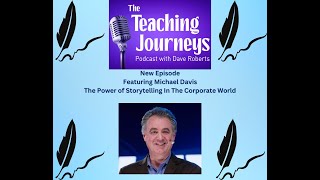
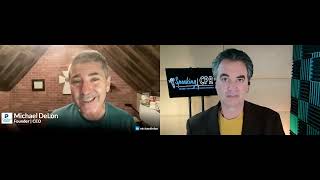
This is a YouTube video titled "The Power of Storytelling in The Corporate World|The Teaching Journeys Podcast" recorded in 2025. It features a conversational interview between host Dave Roberts and guest Michael Davis, founder of Speaking CPR LLC. They discuss the importance of storytelling in business and leadership, sharing personal experiences and insights on overcoming fear of public speaking, building trust, and tailoring stories for different audiences. The conversation also touches on mindset, communication challenges in modern society, and practical advice for speakers and leaders to engage and inspire their audiences effectively.
Chapters
Welcome to the Teaching Journeys podcast hosted by Dave Roberts. Humanity possesses a unique skill, the ability to pass knowledge from one generation to the next.
This podcast embraces that ability, offering learning.
Opportunities through conversations with extraordinary guests. Dave aims to leave a positive mark on individuals around the world.
So before you dive into today's episode, please share this podcast with your network, including friends, family and colleagues.
And please consider leaving a rating or review. Your support makes all the difference.
Hi everyone and welcome to another episode of the Teaching Journeys podcast. I'm your host, Dave Roberts, and today it is my pleasure to have as my guest Michael Davis. Michael is the founder of Speaking CPR llc. He helps professionals attract more clients, create efficient teams, and increase their influence through improved speaking skills. Michael has worked with business leaders, sales professionals, and speakers on five continents. He's helped TEDx speakers create and develop talks that have achieved over 5 million views. He's written seven books about business storytelling, including the book on storytelling and online courses focused on improving your presentation skills. In his spare time, he loves to spend time with his longtime partner Linda and the overlords of their house, Chihuahua, sky and Riley. He loves exercise, IndyCar racing, watching movies, visiting beaches, and consuming stories in every format. He's also a long suffering fan of the Cincinnati Reds and Bengals, although the last couple of years have given him hope that the times they are changing. And I will say, Michael, even though I am not a Bengals or a Reds fan, the Bengals had a run of bad luck this year and the Reds have a great young four of young, young players. And I think the future is bright on both counts.
So yeah, it is. I do have a very good friend, Dave, who's from Cleveland. He just texted me this morning. One of their key players got hurt for getting ready for the playoff game and we have this saying between us, God hates Ohio football. There's always something going wrong right up to the last minute.
They might have said the same thing about the Indians too. For a while.
Yeah, you know. Yes, they did for a.
For a while. But hey, I've been through, I've been to Cleveland a couple times. It's a, it's a great city and, and I know Iowa is a great state and I'm just very excited to have you on the podcast today, Michael. I know we've talked about this for a bit. Great. So I'm ready whenever you are.
Let's dive in.
All right, let's do it. And by the way, for our viewers and for our listeners, the topic is going to be really around the power of storytelling. Which is one of Michael's fortes in the work that he does. So we're going to be taking a deep dive into that today. But first of all, please tell our listeners about the experiences or events that have shaped your life path.
I am six years old, 1969. I'm six years old. I'm in first grade. And Mrs. North's first grade class lights are off. You can hear the rain pelting steel roof, and all the kids in the class are asleep. It's nap time. Well, one kid isn't. He's standing on top of his desk because he broke a class rule earlier that day and that he would be me. And I was on that desk for 40 minutes during that time. And as my teacher had said to me, well, Michael, since you love getting so much attention, I'm going to let you stand on your desk during nap time. And that's why I'm up there. It was the most humiliating experience of my young life. My friends were making fun of me. They're pointing and laughing and silently, of course, because they didn't get trouble. But when I stepped off that desk, Dave, I told myself, I will never stand in front of people again. That was awful. And for the next 25 years, I didn't feel it because anytime I was in a situation where I would have to stand in front of people, I didn't always flash back to that moment, but it was in my nervous system. My brain was saying, oh, no, you're in danger. Do not do that. There's a common belief that public speaking is the number one fear not. The number one fear is public humiliation. You know, for our earliest ancestors, that meant you got kicked out of the tribe, which meant you probably got eaten by some predator. So modern human beings. I did not want to be humiliated and ostracized from any group by being humiliated in front of them. So I just didn't stand in front of groups for 25 years until I was forced to, as a financial planner, start giving workshops and seminars to attract new clients to our firm. And that led to the second incident, which is when my boss sat me down about two months after getting hired for that position and being told, michael, you're a really bad speaker and you're a terrible salesperson. So we're going to give you 30 days to turn the situation around and fix it, or else you're going to be out of here real touchy feely kind of guy. So out of desperation, I went and found the organization Toastmasters. And that set me down A whole new path, Dave. I went there to save my job. I thought I'd go a few times, solve the problem. Now I'm still a member 30 years later and I'm part of the National Speakers Association. I've got the best mentors, coaches, trainers in the world at my disposal and they have given me so much insight into this craft. And the reason I do this today is I know the pain of regret, the pain of fear, of standing in front of people, missing opportunities. And very careful with this world, especially with what's going on in the world right now. World right now. There's no bigger business tragedy to me than people who have ideas, who don't get them out into the world because they're afraid to stand up and speak.
And you know, I think one of the things you touched on is it isn't so much the fear of public speaking, it's the fear of public humiliation. And especially when a child is humiliated at a young age, they carry that humiliation with them. It's like it's inextricably woven into their DNA and into their, to their, their entire fabric of how they relate to the world. And if it isn't addressed or the narrative isn't changed sooner, it's going to follow them throughout life and affect the interactions that they have with individuals in the world.
Yeah, it really hurts their confidence. It did me. I didn't realize how low my confidence and self esteem were until I got into get I was started getting trained and coached on effective speaking. And as I gained more confidence now I had context. It's like, oh, I feel I have no problem standing in front of people now, but I remember what it was like to be afraid and we all need that context and contrast. And as painful as that was, I wouldn't trade going through it because I can relate. When people come to me and say, michael, I'm really scared. You have to work on the mindset first before we ever get into techniques and how to become a better speaker.
Yeah, and I think mindset is everything. And you need to understand the past experiences of anybody that you work with in order to be able to craft a plan, whether it's around improving their public speaking, improving any other type of platform, skills that they may need to improve upon. You need to be able to understand their mindset and history because we bring that with us everywhere we go.
Oh, there's no doubt. And it's a really good point you bring up because two years ago I was working with a client and by this time I built My business, and I'm really good on the technical side of speech. And I'd taken her through all the frameworks, and I was very impressed with my work. Then she said in a meeting, michael, this all makes sense, but I just don't think I'm afraid, and I just don't think I deserve to be on stage. Well, it's not in really good for me as a coach to figure out early on, instead of taking her down this path of education, being so impressed with my technical knowledge, I blew it. So from that point forward, I mean, we worked on her mind. We put everything aside, said, all right, we got to get your mind right. And from that day forward, I worked on mindset first with people. Now, a lot of times people hire me today. They don't need much work there. I might give them a couple mental and physical exercises to do. But being gripped by fear does not affect most of the people I work with. But I'm ready to help those people who are because they've got messages. But, man, you talk about a learning lesson, and then just yesterday, I was on a call with a friend, and I had another one of those epiphany moments of where I blew it. I should have been doing this sooner. You know, storytelling is very popular today. You and I talked about that. And it's almost become cliche in some ways, which concerns me because a lot of folks don't understand exactly what a business story could be or how a personal story can apply to business. So my friend and I are talking, and we both have these situations come up with. People say, well, I just don't have any stories, first of all. Yes, you do. If you're alive, you have stories. But what we both realized as we kept talking was it's not stories we want people to pull up. What we want is people to bring up memories and moments. What are the key moments in your life? Because in that moment, we'll build a story around it. We just need to take you back in time and say, what was going on, what happened, who was involved? We can do the story. We need the moment. And there's a reason you and I remember the moments we remember. And if we can pull out of that a life lesson that's helped you, now we've got universality. What I would encourage, if you're watching this, is don't worry so much about, oh, I don't have a story. I'm not a good storyteller. You've got moments. You get somebody who's qualified to work with you, they can build the story with you from your experience.
What are the elements of an effective story? What have you found to be most effective in that area?
We have to talk about what is the purpose of a story. And there are different opinions on this. I believe that it's twofold. Number one is to generate emotion, to get an emotional response. And I'm not talking about crying and breaking down in tears. That's not what I mean by emotion. Touching any emotion that humans have, because we all have six common emotions. So when we touch the emotions, we've got people emotionally engaged, and they start to think about their own experiences. Now we're starting to get a connection. But ultimately the. The reason we tell stories in business is to give other people hope. When I was a financial advisor, I would meet people who were struggling. They didn't think they could retire, get their kids educated, pay lower taxes, whatever. It was, when I could share with them the stories of other people who'd had the same feelings. But then with the work we did together, they solved that problem. They had hope. When I work with people, business executives today, who are struggling as speakers and presenters, but then I share stories of other people, they realize, oh, I can do this too. So the key elements of storytelling, effective storytelling, actually go back 4,000 years or more. The first recorded book that we have, or the one that survived, is the Epic of Gilgamesh. And it followed a format which has passed through 4,000 years. And that is, we have a main character who's living an ordinary life that has an aspiration, wants to live a better life, but there is an obstacle to that, and they cannot overcome that obstacle on their own. They need the help of a guide, a sage, to put it in modern terminology, a yoda, someone who can provide wisdom and insight that that main character doesn't have. And once they start to implement it, slowly but surely they start to make progress until they overcome the obstacle and they achieve the new life. And that new life is where we say the sale is made, because your listener, that's also the same new life, aspirational life that they want. You just laid out a roadmap through a story that says, you can do this too. It doesn't matter if you're a financial salesperson, you're a speech coach, it doesn't matter what you do. That format will work and attract people to your business.
Well, the other thing, if you can present a narrative that has the theme of hope, that there is hope for a better life, there's hope for a better future. That we can transcend challenge. Whether it's in business or in life, people are going to align with that. They're going to be inspired by that, and they're going to follow you regardless of technical expertise. I mean, you know, they're going to. Because that's what we want to align with. Without hope, there really isn't much to shoot for.
You're right about that. And one of the biggest issues I see with speakers, sales professionals and leaders, Dave, is they try to impress people and earn their business or earn their loyalty. If it's a team at a company, try to earn that through my technical knowledge. The mistake I was making with the woman I mentioned earlier, I was very impressed with my technical knowledge, but I was missing the mark on a human level. And what I've discovered in the years since then is that when we meet people selling situations, speakers to audiences, leaders working with team, people have seven questions in their minds. They may never ask us, but they're in there. And if we can't answer those seven questions fairly quickly, we're not going to earn their trust. And I'm a firm believer that everything we do in speaking, selling, and leadership boils down to nothing else matters except in the light of earning people's trust, which is harder than ever to do today. But those seven questions people have, again, subconsciously, maybe they'll verbalize them, is, who are you? What are you? About what kind of person are you? Number two, do I like you? Or a spinoff question of that is, are you like me? Are we similar? Which leads to the third question of do you understand my situation? And those first three lead to the question, can I trust you? Can I begin to lower my defenses and trust you? But trust isn't enough. They have to also feel like you're an expert in your field. Which is the fifth question. Do you have an expertise? Six, can you solve my specific problem? That's the six. And number seven is, do you have a plan to solve my problem? The quickest way to start to answer those questions is with a good story.
Yeah, because people align with stories. They have their own unique narrative. And I think if we can share our stories with. With other individuals, it's going to give them permission, I think, an empowerment to share theirs. And we need to be able to model that because like you said, people don't think they have really a meaningful story in them. But as long as we're alive and as long as we're moving it, as long as we're having experiences in the world that's our narrative. Those experiences shape our stories. They shape how we see the world. And to me, a story that isn't able to be told or isn't supported is a tragedy.
Yeah, I'm always careful with that word. But yeah, from a business and communication standpoint, it is a tragedy because how many life altering, life changing ideas have not been brought out to market because somebody was intimidated or afraid to speak? One of my early mentors said the wealthiest place on the planet is the graveyard. Ideas never shared, ideas never developed, ideas never brought out.
You also mentioned something about difficulty with trust. And you see that, you see that in your daily work. Given the state of affairs today, why do you think trust is such a difficult commodity to, to embellish, to embrace?
Because we've gone tribal and what I mean by that. I have a friend who is, he's actually in the communication storytelling world now. He is a retired Green Beret. He taught me so much about how America is unique in world history and we're a very individualistic society. That's just how we were formed. And it really hasn't gone away. Maybe slightly changing, but when I say tribalistic is. A lot of cultures around the world have very different rules of engagement and they start off with if you're not a member of my tribe, I can't trust you because you're a threat. Our earliest ancestors went through this. We'd be very careful about how we, who we let into our circle because they might be trying to take our, our women, I mean that's was male dominated obviously thousands of years ago. Might be trying to women our children, our, our property. So we have to be very careful and somehow we have circled back in our society now to where we are going more tribal. I mean the most obvious to me example that is politics. Oh, you're blue, I'm red, we can't talk. In fact, I have to beat you down. I don't. It's insane to me. And social media adds to the fire because they've got these algorithms that feed you more and more of the stories that you, that support your beliefs. So I don't know how we get off this from that standpoint, but I, I have a firm belief that if we all had five minutes with each other and could share each of our stories, it would lower the temperature a lot.
How are we even going to be able to develop critical thinking skills if we don't sit down with somebody who has beliefs that are, are different than ours?
Oh, absolutely. No, go ahead, go ahead.
But instead of Attacking each other for our beliefs. What we need to be able to do is sit down and try to understand where the other person's coming from. Ask them, how did you come to that perspective? What resources, what influences allows you to come to that perspective and then empower each other to say, okay, I may not believe everything that you're professing to me, but there are some elements that I can resonate with and I can add that to my core belief system and vice versa. And this way it creates an atmosphere of understanding. It creates an understanding of the communication, of the importance of inclusivity and active listening. All skills that are necessary, I think, to honor and to be able to create atmospheres that will allow us to effectively tell our stories.
Oh, couldn't agree with you more. In my introduction you mentioned I've worked with people on five continents and lots of TEDx talks. And I tell you what I'm proud of about that. It's not the numbers. I have gained more from coaching people all over the world than they'll ever get from me. Different perspectives, different points of view. And that has been invaluable to me. I, I cannot put a price on just gaining new perspectives on family and religion and culture. I'm much wiser at this point in my life, not because of me, but because of them.
Well, if you look at it, we're all students and teachers and so that. Which is the mantra of this podcast. So let's learn from each other.
I agree with that, Dave. If we're willing to be a student and a teacher and I see too many people who. I see this in speaking, I'm the teacher, you listen. I think of myself more. Yeah. I'll tell you, professional speaker, I really believe I'm a professional facilitator. I'm going to get up and share ideas. But let's. You can dialogue as a speaker, you can involve your audience. And here's the thing that's fascinating, I think is being lost. It's okay to disagree and still be friendly or friends. We gotta get back to that.
And we do. And I think we also have to get away, I think, from the guru mentality. If you follow my path, this is gonna allow you to achieve your goals. What if that path doesn't resonate with me? Or what if some aspects of that path only resonate with me? Do I still follow you? That's why I don't have a guru in my support circle. I have individuals who are like minded. I have individuals who are willing to allow me to Learn from them and to learn from me, where it's just give and take. It's constructive dialogue where we agree to disagree very respectfully and with the belief and with the. The norm that we've established that we will disagree to disagree so that we can better understand where the other person's coming from.
That's so powerful, what you said. And it makes me wonder. And I've been listening to a podcast. I love the podcast Freakonomics. I think that they just give such good insight into the world. And it was. I was listening to one recently about the media, and I know it's easy to beat up on the media, but specifically what they tend to do is cast such a narrow light on such a small group of people that we think that's how everybody thinks. I rarely meet someone who's combative. It doesn't matter what background they are, what religion, what race, what gender does none of that matters. We can have discussions all the time. We know we're different and we might disagree, but more often than not, I find myself saying, I hadn't thought of that. Now, I may ultimately still not agree with that person, but I'm not going to attack them. And this is where storytelling becomes so powerful, because I think the key to storytelling is the commonality it presents. I mean, ultimately, we're all human beings who want the best for ourselves, our family. We want a safe place to live. We want healthy living conditions and just have a chance. I think that's the human condition. And stories will do that. Especially when we share stories of struggle, strife, and setback. Like when I told my story about being in first grade. Did you at all have a moment where you thought about a situation you had when you were a kid in school?
Oh, absolutely. Then I could tell you where I went. Tell us. You got it. Well, I remember there was a time when I was about 7 or 8 years old and I was having trouble. I was in my backyard of my apartment, or my. Not my apartment, but my. Where my mother and I were living at the time, which was an apartment. And I was trying to put together a sawhorse. And I had a very, let's say, sadistic relative who's no longer a part of my circle of family or friends, who was literally making fun of me because I couldn't put it together. And it was also encouraging other kids in the neighborhood who were there to make fun of me. I never forgot that moment. I was. When I was 7 or 8 years old, and for the longest time I had difficulty finding my own voice. My self esteem had been compromised. When you were telling your story about being on top of that desk, I was struggling with the sawhorse.
That's the purpose of a story, is not to, hey, look at me. Yeah, you're gonna hear my story. But if you do it well, as one of my friends and mentors says, it's about you, but it's for the audience. That's right. And if you're watching this or listening to this interview, you've heard two stories now, I almost guarantee that you've thought about something in your life where it was humiliating. And I'm curious, Dave, because of that experience, and yes, it was buried. It affected your nervous system for a long time. Do you feel that had some kind of impact on your choice of career, of helping others?
I think that was part of it. And I think also in terms of developing the value system of treating individuals with respect, with dignity, respecting their strengths, as opposed to undermining their limitations. So that, that, that played a big role in that, among other factors. But that, that was certainly that event. I can go back to now and say, yeah, that was a springboard for me to say, this is how I now want to treat people.
Yeah. And when we first met on Dr. Robbins interview podcast, it immediately struck me that you're a very caring, compassionate person who, it does treat people with respect. So my teacher, your relative who's no longer in your life, they did us a favor at the time. It wasn't, but they did us a favor.
Well, and everything good or bad has something to teach us. Everything good or bad has benefit to our growth. It's just a matter. You talked about mindsets. It's a matter of adjusting our mindset. To look at that there is, there is bad within the good and there's good within the bad. You know, it's just, it's the yin and the yang. We look, we look at both sides of that.
Yeah. One of my friends is a terrific coach. She may be one of the best speech coaches in the world. I learned so much from her. One question she always asks people, especially when they're talking about a very difficult time in their lives, is she'll say, what good came from this? What good came from this story, this experience? And sometimes they struggle, but she does not let up until they say, oh, this. And then she gets them to kind of lay out the string. It's probably why I ask you the question. She's always in my head now, okay, you had this experience, but how did it help you down the road. And it's. It's helped make you who you are today.
Yeah. What we think are the most humiliating moments in our life ends up to be the most empowering moments in our life because of how we choose to transcend those moments.
Yes. My worst speaking moment occurred in 2010, three in front of 400, 425 people. I was in a speech contest. And if I had won that contest, I would have gone on and competed for the world championship of public speaking. I get in front of the. The audience, and about 90 seconds into the talk, I go, boy, I cannot remember which version of the speech in which I. I'm done. And it's a time contest. So I stood there long enough, and I know the audience could pick up. Okay, he's forgotten. Everything in me said, run off stage. But I couldn't do that because then I thought about all the people that helped me. It's like, I. I'm gonna do something. So I just turned it into some impromptu. And it was so, at the time, so devastating. Cause I put all this work in for six months, and I was this close to. But it took about a week. And I realized what happened. And this was the lesson. And I share this with everyone now. So this was the benefit of the bad experience was in preparing for that competition, I was still pretty insecure. My confidence was low, and I listened to every person who had any piece of advice. So it became this convoluted jigsaw puzzle. And it's no wonder I forgot this. How could I? There was. I mean, there were dozens of versions running through my head at one time. I had no idea what just to say at that point. So the lesson was, number one, always be careful who gives you feedback. Everybody's qualified to tell you how your presentation made them feel, because we're all human. Not everybody's qualified on how to tell you how to fix it, make it better. That was number one. And number two is you gotta learn to trust your gut when you get some feedback. Hey, thank you for sharing that. Not to be rude, but it's like, no, that's not for me.
Yeah. I mean, ultimately, we are the decision makers. You know, we're the conductor, we're the. We're the singers, we're the instrument players. Ultimately, it is up to us to decide what feedback is relevant for us, which feedback we're going to incorporate in our ongoing narrative and how our story ends up coming out to a particular audience. And I'm a firm believer that stories could be modified depending on the audience.
Oh, yeah. The stories are what you said goes back to trust. We talk about earning people. We got to trust ourselves. That's the biggest sale. And until we get enough experience speaking and presenting and sharing our story, we're not going to trust ourselves because we just don't have the experience. It's like the first a few months you drove a car. It was terrifying until you got used to it. Same thing here. You will learn to trust your own voice and say, you know, that works for me. That doesn't. Thanks for the feedback and the whole point about stories. Yes, stories have multiple messages or can have multiple messages for many different audiences. The key is every story should just have one message for that audience. There's a saying that a confused mind says no. A clear mind says go. If you want to inspire people to take action, you got to give them one next step and one message.
Exactly. Just getting back to storytelling in the corporate world for a minute. Are there differences between how stories manifest or are told in the corporate world? And are they different from individuals? Personal stories, do they overlap? What has been your experience with that, Michael?
Yes.
And what's that? That's a wrap.
That's a wrap. Thanks, everybody. Thanks for coming.
Thanks for coming out.
Now, stories have multiple potential. So if I'm speaking to the board of directors or CEOs, who tend to be rather type A, I gotta take my three to five minute story and cut it down. At least until they say, tell me more. It's almost like I don't like this term, but I haven't come up with a better one yet. The elevator pitch. Give me the 32nd version of your story. All right, now they say, okay, well, tell me more about that versus if I'm talking to a group of, let's say, middle managers and I need to sell an idea more deeply, I might go to the three to five minute version. I might even have a longer version for prospective clients or prospective employees to my firm. So a story can be, by the way, people say, what is the. The, like the optimal length for a story? As long as it needs to be and no more. You only learn that by trial and error. So you might have a story that's five to seven minutes long. And there are some really good stories that long, but it's contextual. When do I use the 5 to 7 minute? When do I use the 3 minute version? When do I use the 60 second?
So I'm sure part of your work with individuals who, in the corporate world or want to be better Speakers is to understand which version of the story, how long, and how to tailor that for the particular audience that they're dealing with by helping them understand, you know, what's the background of this audience? What message is going to resonate with them? What are they looking for? What is their organization mission? Does my story. Is my story going to align with that? Is it going to inspire movement towards that mission? So I imagine you do a lot of very individualized work to help individuals come up with the right approach.
Yes. Ask a lot of questions, which is what the best coaches do is get a clear understanding. Who's the audience? Why are they bringing you in? What are their expectations? What is the personality type of the people in the audience, or even the age range. As a general rule, your older audiences tend to have a little more patient than younger. And it's not a knock on either one. It's the younger generations have grown up with technology and they. They see the world faster, they process it faster, and we've got to adjust to them. One of the biggest challenges I see with presenters, Dave, is that many of them are still stuck in presenting facts, figures and information. There's nothing I can't get on this device right here that you can get. I can get it faster than you. People don't need information. What they need is our perspective on the information, how it applies. Which also leads to this other issue I've talked about people about. Now, that's part of my keynote. Now I ask people, we all have a shorter attention span today, don't we? They said, yeah. And I said, are you sure? I got. Curiosity is part of being a good presenter. I said, you know, we all heard about the goldfish a few years ago. First of all, we have to discount that Forbes wrote an article or printed an article last year that completely discounted the whole goldfish theory. That was not a study that was done. It was an observation back in 2008 of. They had 25 people in their browsing habits. Somebody noticed they were clicking every eight seconds and somehow made this quantum leap that, oh, that must mean we have the attention span of goldfish. No, we don't wait much longer. But I. I don't have a lot of research, but what I do is have is observation. And what I have is three GIFs that I put up on the screen. I show goldfish swimming around and they're very distracting. Then I asked the audience, have you ever seen a kid engrossed in a video game? Yeah, that kid have an attention problem. And then I show this short gif of a kid on a video game, he ain't moving, just his fingers are moving. He got no attention bro. And then I show a young guy sitting on a couch binge watching Netflix. Not an attention bro. And this isn't research, but it is an observation of Hollywood, which is the greatest storytelling machine on the planet. You would think if we have an attention problem, movies would be getting shorter, right? Top 10 movies of 1993. The average length of the movie was two hours and one minute long. That doesn't include the two and a half hours of trailer.
When you look at Oppenheimer, that was a three hour movie. And look at all the awards that that movie garnered this year.
Yes, you're exactly right. In last year, the top 10 movies, 2 hours and 23 minutes, they're getting longer by 17%. It's not an attention problem, it's a material and delivery problem. We have. The audience has changed and we have it in general as presenters. We're still presenting old school information and I know we're doing an interview here, but if you're doing a virtual presentation, the biggest mistake you can make is go all talking head or all slides. That's not engaging people. We gotta constantly be shifting between talking head, slide, chat box. Oh, here's a poll. Here's a question. Hey, go to breakout rooms. It's a big production now, but it's worth it because you're going to get people's attention and more likely inspire them to take new action.
Well, the other thing is that people learn very differently. I have students that are visual learners. I have students that learn better through interaction. I have students that are auditory processing. That's where their strengths are. So it's a matter of trying to provide a curriculum that appeals to everybody, that appeals to all of their individuals learn. And I imagine it's the same way for you when you're dealing with the art of storytelling, corporate world. That's the other part of it is what's going to best engage them to your story.
Now, with that said, storytelling will still trump a lot of those other modes because a good story is sensory rich and emotional and people will put their phones down. However, back to the point, we can't just tell all stories, we've got to impart wisdom. How long have you been teaching?
Over 20 years.
Okay, this is a hard question to answer because we all have recency bias, but would you say it's much more difficult and time intensive to put together lessons today than it was 20 years ago?
Yes, I think it is because each class that I have is different and I have to model my approach based on how that class learns, not on how I teach, but how they best learn.
That's it. Making sure you have an auditory component for them, the visual component, the kinesthetic for people who need to write or be touching. Yet we have to put so much more work into this as presenters. And that's why some presenters during the pandemic, even experienced professionals who were well paid, they quit. Yep.
What is your approach to teaching leaders how to incorporate the art of storytelling in their leadership style? And how does storytelling promote effective leadership in the corporate world and help organizations reach their mission? I know that's probably like a three part question, but I wanted to throw it all out there and you just go wherever you want to go with it.
First part is what we talked about earlier, this idea that recently came up with my friend and me of moments helping people realize that those moments are the goal in their presentations. That's where you humanize yourself. And too many leaders think I have to put on a perfect face because if my, my team sees me and my mistakes, I'm going to lose credibility. That's the first thing I have to work on them with, is, no, your team does not want a robot. We're not perfect. So we don't want you to be perfect. We want you to be candid, share your mistakes. Now, we don't want to hear about all your mistakes because then we're going to think, okay, why is this person in that position? But share a mistake, but share what you learn from it. All my keynotes, all my presentations, I talk about my first grade incident and being told when I was 30 years old, you're a lousy speaker. Because there are lessons in those. And I love to say that my long road to figuring all this out can be somebody's detour to success. They don't have to take the long road. I did all the heavy lifting for you. The mistakes and the frustration and the pain. Here's how you can shorten the process. So as leaders, that's what we do, is be vulnerable enough to say, here's a mistake I made, but here's the lesson I got that can help you.
And wisdom is garnered most from learning from other people's mistakes.
Yeah. And I know you're a parent, I'm a parent. We wish our kids would listen to us when we say, don't do that. I went through eight years of this to learn the mistake. I'm trying to save you eight years. They don't listen to us. Probably listen to you more as an instructor than their own parents.
Where when they raise their own kids, they say, that's what mom and dad were talking about. Now I get it.
And you know what? They're not as dumb as I thought.
That's right. Yeah. Really. And I always told my kids, everybody else's parents is a lot smarter than your own. So that's, that's the way it always goes.
And as far as leadership. Yeah. Just don't overlook the, the everyday experiences. And this is a big challenge we see, Dave. And working with leaders is, well, I didn't crime climb Everest. I'm not the CEO, I'm not this, I'm not that. They don't want that. What they want is someone who demonstrates, going back to those seven questions, do you get me? Do you understand me in my situation? Your story will shortcut that, breaking down that trust to say, yeah, I do get you. And it's not because I say, you know, Dave, I get you and I understand and I've got a perfect plan. It's no, here's what I went through similar to what you experienced. Now we've created a tighter connection and a tighter bond.
And I think the ability of leaders to understand the personal journeys of their employees is going to be key to them being successful with them in the supervisory capacity. I've always been a firm believer that get to know the people that you're working with on a personal level because what's going on personally can affect their performance in the workplace and also, you know, shape their narrative as far as how they see work and their story around that.
No, absolutely. And I think since the pandemic and the lockdown, I never really believed before that you could separate work and personal life. I just don't think it's possible because it's. You're going to be at work and maybe have family challenges. You're going to think about your family at work, vice versa. You may be working on a project, it's 11 o' clock at night. You're sitting there with your partner, but it's there. You cannot, we can't compartmentalize that. Well, no, just embrace it. And those stories, those experiences, those personal experiences also show in the workplace. Hey, I'm just like you. It's the same challenge as you do.
Give our audience one or two takeaways from your own experiences that can help them in whatever journey they are embarking on at this particular moment in their lives.
Trust those moments in Your life that you remember and that had a lesson that could be universal for everyone. You remember it for a reason. Ask yourself, how can I use this to help others? How's my life better because of that? And secondly, just get out there and start sharing your message. Biggest challenge I see, Dave, with most folks is, well, I'm about to get my story or my speech ready and then I'll bring it to you. No, that's, no, because you're never going to do it. That's the perfectionist syndrome. Take what you got and start sharing it over the lunch table with your family at night. Take it to service clubs, whatever. Just get it out there and start working on it. One of my mentors is a Hollywood script writing consultant. Been doing it for 40 years. His father in law was an Academy Award winning scriptwriter. And the first thing he ever taught Mike, my mentor Michael, is get it written. Get it written. Because once you get it written, then you can fix it. But you can't fix a blank page.
Yeah, it's like, I think Ann Lamont to great writer, talked about doing a sloppy first draft with any type of piece of writing. Just get whatever's in your head out on paper, even if it doesn't make sense and you can go back. It's out there. You can go back then and now rework it.
Yeah. Stephen King, he wrote a book, I think it was called On Writing and he talks about that. You go through, write the first draft and by the time you go back to the beginning, it's like you see the beginning very differently.
Yep, absolutely.
Because the rest of the story played out in your mind. You got it on paper and that's okay. Dory's speeches, presentations never do get finished. One of my favorite sayings from the world of cinema came from George Lucas. He said, you never really finish your movie. There just comes a day when the theaters need it because they got to start selling tickets. And same here. Give the. Whatever version you have. Go give it today. What did you do well, figure out what I did well, what do I need to improve on and go out and make it better next time? Just get the momentum going.
And he also mentioned trusting your intuition and trust that what was meant to come out with that particular audience, as far as your story was meant to come out at that particular time, for another audience, it might be different. But intuition will always guide what comes out and what doesn't come out. And we need to be able to trust that.
Right. And so we talked about before, intuition comes from experience. Experience comes from getting out there, giving that first version and having that feeling like, well, that could be better. But at least you got up and you shared it. You got it and you started the process.
Michael, if people want to get in touch with you, find out more about your services contract with you, what's the best way for them to do that?
Best way is to just send me an email michael@speaking cpr.com and you can go to my website, speaking cpr.com but talking about being vulnerable and open, Dave informed me this morning that my calendar links are working on my website for some reason. Now, by the time you listen to this, they better be fixed. But if you go to my website and for some reason that doesn't work, feel free to email me mike@speakingcpr.com thank you, Mike.
And I know for sure you'll get those links fixed.
He certainly will.
Now, Michael, thank you so much for being taking time out of your day to be a guest on the podcast. I so enjoyed our conversation today.
I did too. And Dave, I've been on several podcasts and I really enjoy your style because some podcasters just go off a list, which is okay. It just felt very engaging to me and we kind of fed off each other. It was very enjoyable.
Thank you. And I, one of the things I've been been trying to evolve into as a conversational format, I love having a plan, but I like having flexibility within that plan.
You definitely did. So this is great.
Well, thank you. And hopefully we could do this again.
Absolutely.
And with that, that is a wrap on another episode of the Teaching Journeys podcast. I am your host, Dave Roberts, wishing you peace.