Best Books for Entrepreneurs – 9 Figure Marketer Shares His Top Picks
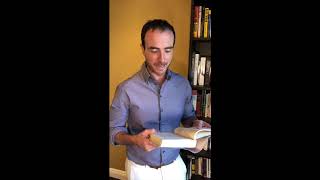
A first-person YouTube video by Stefan Georgi giving a guided tour of his personal bookshelf and explaining books that influenced him. Georgi highlights business, marketing, leadership, strategy, mindset, history and philosophy titles (e.g., Persuasion, The Big Leap, Scaling Up, Seven Habits, Lean Startup, Start With Why, Principles, Antifragile), mixes recommendations with personal anecdotes (poker history, meeting his wife, business outcomes), and ends with viewer engagement prompts (like, comment, subscribe).
Chapters
Hey, it's Stefan Georgi here and I'm inside my office in Las Vegas. You can see it, the sweeping view of it. And I figured it'd be fun to make a video about my bookshelf and what's on there and books that have been influential to me or that I recommend or that I think are cool and I want to share with others. So if you kind of start from the top up here, I've got actually a bunch of more random and miscellaneous books, stuff on poker because I used to play a ton of poker, especially in high school. Some of those stories that I met my now wife at a poker table in Las Vegas. But even when I was a senior in high school, I would ditch class and go play poker at the Indian casinos because you only had to be 18. So I studied poker a ton during that time. So a lot of these books I've had since back then. And there's a bit of like a random assortment of other books that just are put up here because of their size or whatever it is. You've got little Dan Kennedy, no bs Wealth Attraction in the New Economy. I've actually never read that book. I've heard great things and you too. I'll be honest with you, as we're going through this, whether or not I've read the book or not, then we get down to a bit more of like business type stuff. So we've got Persuasion by Robert Cialdini. I don't know how you say his name, Cialdini. I think it's Cialdini. But Persuasion. He has another book called Influence, which I've actually never read. I've read Persuasion, which is really good. The Big Leap is a book I recommend to like a lot of people. It's about kind of with mindset, getting out of your own way and how essentially reaching this upper limit problem where you start to get into like a zone of genius and you self sabotage and you bring yourself back down and the reasons why we do that, how you can stop doing that. So when you look at if there are patterns in your life that are causing you to sort of have these ups and downs which you get into a place of effectiveness and happiness and things like that, but then you find a way to screw it up. You should read the Big Leap. So many people I've kind of mentored or talked to have said this book was absolutely life changing for them and I would agree with that. And then right next to that book we have a really cool one called Confessions of a Pricey or Confessions of the Pricing Man. So Dane Alexander, who used to be the CEO of Athletic Greens, gifted me this book after we met. The first mastermind I ever attended. And as you may kind of conclude from the title, it's all about pricing. This guy's like this German pricing expert and this whole thing is about how we don't take pricing seriously enough and we don't like work that to our models and how like little pricing increments and different things we do with how we price our products and services can make a huge difference in our income, revenue, profit, things like that. So this book is awesome. Honestly, just holding it. I kind of want to read it again pretty soon, so I might Deep Work by Calum Newport if you follow me or know much about me, you probably know that I've talked about deep work a lot and essentially for me that's just blocking off time to focus on my biggest needle mover and putting in that deep work that like non distracted but really focused work. This whole. There's a lot of stuff in this row that I won't stop and talk about, every single one. But there are. This is really almost one of the sweet spot kind of here and here. And then there's some more stuff down here that we'll get to. The 8020 Principle by Richard Koch. If you don't know Richard Koch, really smart dude, wrote another book called the Star Principle and you may have heard of 80:20 sales and marketing by Perry Marshall. Perry Marshall was influenced by Richard Koch and Richard Koch didn't come up with the 8020 principle, but he's got a great book about it, hugely influential for me, all about the idea that you can achieve 80% of the results or 20% of the effort, or that 80% of results come from 20% of the effort or 20% of people or, or different resources. So it's all about kind of leverage really, is what the 8020 principle is all about. Another really good one if you haven't read this before. Scaling up by Vern Harnish. Scaling up is like a blueprint of how to scale a business. It is a textbook. I've read it. But I'll be honest with you, when I read it, I thought to myself, to fully benefit from this book, I would need to take like a year and only work on this book and only implement the stuff on this book because it's extremely tactical and in depth and it really gives you a ton of systems and processes. So I think this is like a bible. It's incredible. But you really would need to commit yourself to this book if you're gonna read it over some of the other ones. So before I'm not gonna go through every one, but there's a couple more I really wanna talk about. Seven Habits of a Highly Effective Person, or the Seven Habits of Highly Effective People by Stephen Covey is a classic book on effectiveness, time management and things like that. Stephen Covey was as good as it gets with that stuff. And one thing that I took from this book was maybe two things, actually. One is the idea that personal, private victories precede public victories. So basically, in order to be effective in a larger sphere or public sphere, you need to first be effective in your own life or a personal sphere. And these small wins kind of add up. So little things like making your bed in the morning, brushing your teeth, working out when you're at work to work out those things kind of create momentum for you, and the more momentum you have, then you can carry that on into, like, the public sphere as well. Another thing I love from Stephen Covey, and I can't remember if it's in the Seven Habits or in another book, which I'm looking to see if I have it up here, and I think I do, so I'll probably see it in a minute. But another book he wrote is called Principle Centered Leadership. Oh, it's right here. And the idea of the Law of the Harvest as well, which is that basically, if you don't plant the seeds in the spring, you can't have your harvest in the fall. And that comes back to doing the work, investing in things in your business, in your life, and doing it, like now, if you want to reap the rewards later on. So it's a really simple kind of concept, but to be completely honest with you, I actually like Principle Centered Leadership more than the Seven Habits of Highly Effective People. But they're both really good. So I'm gonna put these back and then keep going on our tour here for a minute. And by the way, if you're enjoying this, hopefully you are, make sure to give this video a. Like, give a comment, Tell me about these books, if you've read them or not. You know, make sure you're gonna subscribe. I mention that at the end, but I'd love to see in the comments whether, you know, you agree that these books are cool, if you've read them, what you think of them. If I'm missing books, I'd love to hear about that. So please do comment. So I'm gonna skip through some now, bunch of Cool stuff here though. Let's go to, you know, Built to Last by Jim Collins is a classic. I'm not gonna go into that. Lean Startup is really cool. A lot of people have heard of the lean Startup. If you haven't, it's really the whole idea of lean testing and lean implementation being that if you're starting up a company, getting a minimal viable product, bringing it to market and then iterating from there to have a more robust product or offering or service. And so this is a really good blueprint for how to start a business or even an offering and do it in a cost effective time effective way. So Lean Startup is an awesome book for that. Start with why by Simon Sinek. If you've never read this one, it's a classic as well. Really good idea of we talk about our how or the what, but fewer people talk about the why behind what they do. So what's your why? So for me, my why is really to show people a better way. I challenge the status quo, but I want to show people who feel stuck in their lives because they're in a job they don't like or they have a business that's not successful or whatever it is. I want to show them there's a better, easier way to to achieve success financially, but also mental, financial, spiritual, emotional success. That's what really motivates me. That's my why. And I know that because of this book. So it really helps you when you know your why. It reinvigorates. You wake up in the morning out of bed and you get out of bed in the morning. You wake up, you're excited to crush the day because you have a why. You have a real purpose and goes deeper than make money or get followers or whatever it is. So highly recommend looking at your why if you've never done that. More great books here. I'm gonna skip through the Hard Thing About Hard Things by Ben Horowitz. This is a good one. I will kind of swoop over here to a 20 sales and marketing by Perry Marshall. So again, I showed you the 8020 principle by Richard Koch. And then this is more specific and tactical for marketers and especially online marketers and Internet marketing. This one to me is as I it's probably marked up. I just marked up now, but you can see a fold here which is on page 143, which is just recently. I started rereading this six months ago, but I'll reread this book every couple years. I think this book is extremely powerful. Okay. Once we come down here, we get a little bit more into, like, strategy, a little bit of political stuff, things like that, and leadership. So I have some books on game theory, which I've read. I'm still not like a game theory master, but it's cool. Clausewitz on War. Clausewitz was considered one of the best war strategists. Most famous. He was like a Prussian general who wrote On War. It's considered one of the most classic books on strategy ever written. I'm trying to remember some of the main stuff, honestly. He talks about the fog of war and some other things like that. And basically this idea of you have incomplete information and you're making decisions with incomplete information, but there's almost a set of principles for how you do make those decisions. It's not an easy read. And frankly, the first two or three kind of chapters of it are really. You get most of the main stuff from that. That's cool. But I have a lot of stuff on grand strategy by. What's his name, John Lewis Gaddis, I've actually really enjoyed. He's like a Yale professor and he does, like, a kind of historical survey of strategy and kind of military strategy over time. So going back to. I think it even starts in the Bible. And then I know if it doesn't start in the Bible, it goes. It starts in ancient Greece and goes through the medieval period and all the way up to the modern times. But this is a really. If you enjoy history, this book I liked because it was kind of a blend of history and strategy. And so I really enjoyed it. And actually, I know. I'm pretty sure I highlighted it where he mentions his definition of strategy. So if I can find it quickly without making it awkward that I'm looking through this and you're waiting. I want to. And no, I haven't. Come on. There we go. Yeah. Grand strategy is basically for him the alignment of potentially unlimited aspirations with necessarily limited capabilities, which I think is actually really cool. Cool definition. So basically, we all have unlimited aspirations, whether, you know, you talk about war, but even in business or winning at life or whatever it is, right? We have these unlimited aspirations, but there's limited capabilities, limited means, whether those are financial resources or our own time and hours and bandwidth, the people who we have available to us, all these sorts of things that limit them. So how do you maximize your ends when you have limited means, basically? And that's what this book answers. So it's really cool. Ray Dalio's Principles is a classic book. I can tell you that whenever I read this, if you know Ray Dalio is God, what do you start? Like, whatever. He's like a billionaire. Bridgewater. Yeah, that's it. But he basically, like, these are his principles for both his personal life and business that he goes by. He's very analytical. He talks about radical transparency and everything you do. Every time I read like a couple years ago, like bitcoin was at. Was booming and it was that bubble and it was at like $20,000 plus. And I put this post on Facebook, which you can look up, and I basically predicted that bitcoin would be cut in half and that the bubble wasn't gonna last. But I actually predicted the price of bitcoin within like a really, really small margin. Like I got within $100. And it's not that I'm like some genius financial guru, whatever. I just like thought really critically about it and I happened to make these assumptions and a prediction, but it was after reading Principles. Cause it really had me thinking this really analytical, unique way. And every time I read this book, I go back to feeling that way. I did a post recently about stuff with the election and how to hedge against that, and I got those reading principles and it made me think. So this book always makes me think differently. So for that reason, I really love it. One more I gotta share on, Here is the 21 irrefutable laws of Leadership by John C. Maxwell. I'm actually always surprised when I bring this up to people and they haven't heard of it because to me it's like everyone knows who John. John C. Maxwell was. He was one of the kind of. Or is. I think he's still alive if John C. Maxwell oversees this. And I, you know, sorry if I thought you were dead, John, but you know, it's one of the best books on leadership ever written. And there's just 21 different laws. And. And I think the thing with this book that is important is you need to really, you come up with it, come into it with an open mind. Because at first it can seem kind of like simple or basic. When you put these principles into practice, you get really exponential results. So I learned this with my first self supplement company. And I felt like I wasn't a good leader and our team was struggling. And I started reading through the book and had these realizations and implemented several of them into my business and my leadership style and my people. And we went from $1 million in revenue the first year to $23 million in revenue the second year. And. And you know, it Was for a lot of reasons. But I don't think it would have been possible if I had not studied leadership and read this book specifically. See here. More Leadership. More Leadership. Some books on money over here. A little bit of kind of political, jaded political stuff. Books about money, the History of Money, the Automatic Millionaire, which is a good book. Things like that coming down to here. These are getting away from business now to more science and things like that. But I'm gonna see if there's any I really want to point out. And again, I'm trying to look at the ones that I really have had an impact on. You know, Joseph Campbell or I've had an impact on that has had an impact on me. So like Joseph Campbell, the hero with 4,000 or with a thousand Faces. To be honest with you, I haven't read this entire book. But basically, Joseph Campbell is a scholar of ancient Greek literature who came up with the idea of the Hero's Journey, which is something that is. It's essential to all great storytelling. So whether it's like a Hollywood movie or a sales letter or a book, all stories, almost all great stories, follow this hero's journey that he identified. And if you follow and use the Hero's Journey in your sales copy, it'll make your sales copy dramatically better. So if you don't know about the Hero's Journey, I always say to watch Moana, funnily enough, I think Moana has got one of the most clear cut examples of the different phases of the hero's journey. And you can also just Google Hero's Journey and you'll see what it's about. But cool book, kind of technical, but you should know about the Hero's Journey if you don't already. Let's see. So some books on consulting. Because I was starting to do some consulting a while back, honestly, I meh about it, you know, I don't know. I feel like the books on consulting were like kind of whatever. I really enjoyed Bob Iger's the Ride of a Lifetime. He's like the CEO of Disney and presided over some of their most tremendous growth. What I like about this one is it's sort of autobiographical, but at the same time he actually gives a lot of really valuable leadership advice and advice about being a CEO and having hard discussions and making hard decisions and. And he really. There's less fluff in this. I think he's very authentic. And so I really like this book. I actually ordered a bunch of copies. I have some of my other bookshelf which I'LL kind of briefly point out in a second because I want to gift it to more people because I think it's a really valuable book. Coming down here we've got sort of more of a philosophical section. So I love. There's actually a couple of things I really love here. You actually skipped over that there. But Sapiens by Yuval Noah Harari is another book I love. It's basically all about human history, but from a. But it's a really objective look at humans and our. Like our. Our evolution and our. And our sociological development over an extended period of time and how that. That impacts who we are today. And then he also wrote one about the future called Homo Deuce then. I really love Nassim Taleb. He's probably one of my intellectual heroes and icons. You know, Antifragile was the first book I read by him. It's the idea that there is no good antonym or opposite of the word of. There's no good definition of fragile, basically, right? If we look at fragile, we look at it as an antonym or an opposite of like we're like, oh, well, something that's not durable or robust. And you're like, okay, well that's not true because you have something that is fragile. So there's no antonym or opposite of fragile or fragility, right? Cause like, something that's fragile doesn't just mean it breaks. It should be something that this fragile loses from chaos and disorder. So if I put a vase on my desk here and I sweep the vase off and it shatters, right? The vase was fragile and it loses from the chaos and disorder of me just knocking this vase off my desk. But if something's anti fragile, then it should win. It should gain from chaos and disorder. So he's like, well, what are principles? What are examples of things that actually gain from chaos and disorder? You know, that's this idea of anti fragility. And if you can implement that into your life and make it so that you're not fragile or vulnerable and that even in chaos and disorder, in an uncertain world, you're able to gain no matter what's going on there and be more anti fragile, you can come out very far ahead. So that's the way I've incorporated the concept of antifragility. Skin in the game's about basically having skin in the game, in life and in business and things like that. That if you don't have any kind of downside to your actions, then you make bad decisions. So you should have skin in The Game. So it's another book by Taleb. I really like. Gosh. I mean, I like a lot of these books here, so I want to kind of move it along. But from there we get to Greek history and things like that. I really love Plutarch's Cullens from Plutarch. Let me see if I can find the one I'm looking for here. Oh, the Fall of the Roman Empire. It's really just these biographies of different Roman emperors and sort of during the time leading up to the fall of the Roman Empire. But I love this book because it really reads like a fiction, like a novel, and yet it was written. I forget what it was. Plutarch was born in AD 46, so it was written, you know, more than 2,000 years ago. But. Well, not more than. But almost 2,000 years. Yeah, almost 2,000 years ago. But it's. It's like, you know, Crassus Sulla. I mean, History of Solid is really interesting. Pompey, Caesar, you know, Cicero. It goes through all these people who are instrumental during the. The dying days of the Roman Empire. And it's just fascinating. And there's lessons that, you know, are eerily reminiscent of today. So I've got a bunch of stuff from Plutarch here, including some more stuff of his lives, some other kind of classical things that some other business books kind of sneak their way in. And if we come down here, I've got a little bit of philosophy, because I'm a philosophy major. Kierkegaard, who I really like. And we kind of go into more biography stuff here. Some of these have happened a really long time. Like, frankly, I don't really. Like. I don't. Bill Clinton's not like a hero of mine or anything like that. I've just had this book since it came out back in the day. Same thing with Rudy Giuliani. But, you know, then we go into, like, sort of more historical stuff and biographies and things of that nature. And honestly, I spend most of my time reading history and biographies today, to be honest with you. So that's sort of it. I don't want to make this video go on for too long. I will say, if you're curious about, like, why I don't have any fiction, there's two things to that. I do have a little bit of fiction on my other bookcase. We can kind of quickly show it over here. And there's sort of some other random stuff going on here. I'm not going to kind of give you the full tour on that, but this is kind of like a catch all at this point. And then back in the day, I had basically another bookcase worth of stuff and a ton of fiction, poetry, things like that. And then it got lost in the move. I shipped it to the US Postal Service and they lost probably 500 books of mine. And it was like, seriously one of the great tragedies of my life. Because there's all these books I love and I still read fiction every now and then, but I really prefer biographies and history. But yeah, so that's my bookcase. Hopefully you found it interesting. There's a ton of books I wish I could have talked about, but I didn't. But, you know, again, please comment, let me know any of the books if you've read any of these books I mentioned, if you like them. If I missed any book recommendations, I'd love to hear them. And then, you know, besides that, make sure you subscribe to my channel if you like talking about business books, philosophy, copywriting, making money, mindset. Anything else, because I'd love to have you as a subscriber. So click the subscribe button too, and I'll see you next time.
More from Stefan











Why Understanding Product-Market Awareness Is More Important Than Ever in 2025