Best Copywriting Habits From The Top Copywriters In The World - Strategies and Daily Productivity ⏰
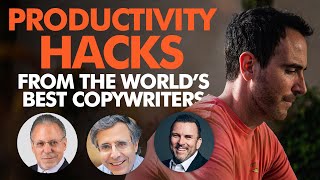
Perry Belcher, David Deutsch, Jay Abraham, and other top copywriters share their daily writing habits. Perry writes in focused 5-6am sessions, Stefan uses 25-minute bursts, and David works in 22-minute sprints. They rely on Otter AI, Hemingway App, and Natural Readers to draft and refine copy faster.
Questions this video answers
About 5:00 AM
Spending about 5–6 AM in a bathtub, using the time to make notes
Otter AI (and he also mentions Google Docs voice typing)
Hemingway App (aiming for ~4th–5th grade level) and Natural Readers (text-to-speech)
22-minute writing bursts with 8-minute breaks (pomodoro-style)
Chapters
Basically, the only question I want to know is the day in the life of David Deutch or Perry Bell, basically your day. What does the day of a top copywriter look like? You know, I know everybody has different. Different procedures on how they do their research, your different writing procedures, but really just kind of curious about the day in the life of. I started doing this when I was an athlete. First person I ever did this with was Al Order. He was a neighbor of mine. He was an Olympian, the Olympic discus thrower. And I was aiming for the Olympics. But then I carried into my real estate career with Trump and Barbara Corporate. All friends of mine today, and let's not discuss Trump, but they're all friends of mine today. And so what I found is when I asked people what they thought I needed to do to be successful, they would give me great tips. But when I asked to see their daytimer, this is before computers, when I asked to see their daytimer, I got to see what was important to them, how they spent their time. That's kind of basically what I want to do, Just kind of see what's important to you guys. How do you spend your time on a workday? Does that make sense? Yeah, sure.
And you're pretty curious specifically around, like, copywriting, because I know a lot of us also do entrepreneurial projects and stuff like that, too.
But we're all entrepreneurs.
We all have our own businesses. But all you guys are. Not me, but you guys are some of the top copywriters in the world. So I just wanted to, like, you know, I'm picking Sean's brain all the time. David was over for dinner not long ago. I'm always picking his brain. Stefan, I'm in your group. I pick Perry's brain when I can get a hold of him. And so all of you guys are mentors to me. So I thought it would be nice to have everybody on a call and just see what the average workday in a legendary copywriter's life is like.
I can go first and then just listen because mine's going to be super brief and probably the least helpful. So seriously, it really probably is. I'm a person of little discipline, so the only thing that I do consistently every day is take a bath for about an hour as soon as I get up. And I'm not kidding, seriously. And I've got a pad like this one that I carry with me, and I've got one by the. By the tub, and. And I listen to the news in the morning and hear the news of the day. And if something pops up that's interesting, I. And I started making notes of whatever pops into my head while I'm sitting there quietly before my wife wakes up. Because when she wakes up, you know, everything goes to shit because it's all about her.
So what time do you normally get up, Barry?
Five. Okay. Yeah, I get up around 5am So I spend from 5 to 6 most mornings in a bathtub with, you know, soap and hot water glistening off my naked body. Can you feel that? You get a picture?
I think we want to get the rest of these guys off this call, maybe.
I'm telling you. Yeah, I do that. And I. And I really, really. I just make notes of whatever I'm. You know, what I'm thinking about. And. And then when I start my day, man, it's a freaking grind now because I don't get to write. I really don't get to write a lot. If I write at all, it's on the weekends. You know, I really. Because I've got, you know, five. Five primary business units that I'm overseeing, and then I'm a minority investor in six more. So I'm talking to those guys all day long. They're calling me. Ask me this, ask me that. And I know I denote things along the day that are interesting that I see or a trend or, you know, what? Something that, you know, new language that's entering the common vernacular that wasn't there, you know, before. I read women's magazines, weirdly enough. I buy. I find this. This magazine called Women's First. I don't know if you guys have seen that or not. Supermarket shelves just. It's a headline treasure trove. That thing had a bunch of them. Best headlines on anything on that magazine right now. I think it's the best headline writers I've seen. So I grab headlines off there and headline ideas off there and headline frameworks off there. And I watch daytime TV some because I like the stories. I've got a story. I wrote a survival story off of a product off of a story that I saw in Ellen DeGeneres about a guy. This woman was in the flood in Nashville and her house flooded, and her neighbor came to eventually, it's a long story, but her neighbor finally came to get her on a Jet Ski, and she was on her roof, and she hopped from her roof to a Jet Ski. And when they got about 40ft from the house, the whole thing exploded from a gas explosion.
Holy shit.
And. And it made a killer story for my. For my survival space. And I just borrowed the story from Ellen DeGeneres, you know, so. Yeah, so you know what I do to be a great copywriter? I don't know that I am a great copywriter anymore. I'm an okay copywriter now. I used to write some really great copy, I think copy. I'd love to hear from you guys. Like, do you guys go through. I'm sure you go through spurts where it's harder and you know, somebody like, you know that it's been doing this a long time. I find that I wrote my best stuff about 10 years ago. I don't think what I write today is as good as what I wrote 10 years ago. So do you guys have that same, you know, issue? And if so, have you went through it and how did you circle back around if you did? I'd be curious of that, but that's kind of my day.
Well, when you write, when you write on the weekends, you get up. Do you have anything in particular to get? Like, I've heard John Carlton has his.
Favorite pair of sweats and a T shirt or something that he wears. Any, any, any rituals that you have.
That you get that get you prepared.
For writing or you just get right into it?
No, I write with a border hype at all. I just talk. So. And I usually write. I've got a really weird way of doing it. You know, I write my head in my lead first and then I write all my sub headlines. And then when I'm done with the subs, when I'm done with my sub headlines, you know, I usually go write the offer next and then I go fill in the body. And I don't do as, you know, I used to do it very formulaically with like, I had my 21 step sales letter formula that I used for a long time. I used it and I sold it and I gave it to people and it was effective. Now I just write the head and lead, tell a story and make an offer. And the hardest part for me is not the hardest part, but the part that probably takes the most time now is the story. What's the story going to be about? I've got to find some interesting material because I'm not my market in the survival space particularly. I'm not even a conservative. I'm pretty much a liberal. Middle of the road to liberal, right? I don't own a gun, but I'm the American Gun association, you know, so I'm not writing my own market, which I kind of like, you know, because I think I don't have that bias toward what I think is, you know, what I prefer, what I don't prefer. And I write to the women's market. I write to makeup, and I write to home decor and crafts and stuff like that. So I'm writing to pretty much all markets that I don't participate in, you know, but I do usually slant them toward business, which I like, and towards biz op. So, no, I just. I sit down with a recorder and I. You find, dig and find a story. Hopefully I've heard some story in the last couple of weeks and I'll kind of sit down and figure out how I can tell that story and spin a yarn at the end to get people interested in whatever it is that I'm selling. And, yeah, I spent most of my time writing the, you know, the call out, the grabber. Grabbers are harder. Headline promise. Headlines are easier for me now. I love finding a great grabber, you know, at the top of the letter. And those are hard to come by and everything else for me. I kind of do it formulaically now. But, yeah, that's me.
Yeah.
I think you told me once, I.
Think we were in Mexico and you.
Said you're not good at many things.
You became rich because you know how to tell a good story.
Yeah.
And I'm. You know, the thing about me and copier, I'm fast. I'm really fast. So, like, I'll write a whole letter in, you know, three hours, top to bottom. Yeah. With a blank piece of paper, and then I'll let it lay for a night. And then the next day I'll come edit it and I'll let it lay for a night, and then I'll come back in and tweak it maybe one more time, and it's good to go. So when I do write, I can write a lot. I don't write, you know. I know a lot of people are methodical and spend a whole lot of time, weeks at a time on a letter or whatever. I don't know. I don't know if anybody that's even really true or not. I think that most people say they spend three weeks on letter, spend two weeks and six days fucking off, and then they write the letter. That's me. If I say it's gonna take three weeks, that's what I'm gonna do. I promise you.
And Perry, how do you. What do you feel is key to doing that quicker? The concentration of time, the not caring about whether what you write is perfect or not, what enables that?
Yeah, I don't care. Perfect at all. And, and usually what happens is I end up with something really, really, really long, you know, because I'm writing with a, I'm writing with voice recorder and I write with a voice recorder. I can type just about as fast as I can do the voice recorder. By the way, if you're using Google, Google Docs, their voice recorder is so much better. And now I use, I'm using a thing called Otter AI and I love Otter's. Fantastic because they've got AI that goes in and kind of corrects after the fact what they feel your intent was of what you were writing. So they're so I think that I just, just because I'm talking, if I'm in the right mood, I can walk around and talk and tell the story and, and then when I'm done that, you know, I'll quit. And then the next day I'll come. Usually sometimes I'll have to rearrange the parts of the story because I was, you know, rambling on and I got out of sequence. And I'll rearrange the parts and try to do one thing that I do do that, that I don't think a lot of people do. I don't know if they do or not. But when I'm completely done, I take the story and I put it into. I do two things. I put it into Hemingway app and I'd let Hemingway. I try to get it down to where it scores at a fourth grade level which is not hard for me because my vocabulary is just about there to start with because I'm from. I went to public school in Kentucky, so know limited to a lot of y' alls and ain't and. But I do that and I try to get to fifth, fifth to fourth grade level in Hemingway app and then when I'm completely done and I think it's all perfect, I put into something called Natural Readers. And Natural Readers is a, an app, it's free. Or these, both of those apps are free. Or you can buy a $20 paid version. I have the paid version and it reads the letter back to me like, and, and I'll probably do three more edits after that because there'll be so much stuff in there that just sounds dumb when it's read back to me. You know, you'll get that, you know, such as. And all that bullshit out of the way. You, you won't. You know it on paper, you know, after two or three edits it looks right, but when you hear it read back to you, it doesn't sound right. So I'll go pause it then and.
Just make your edits as you're listening to it. Is that what you do, Perry?
I don't even pause it. I can make them kind of read in real time, and then I'm typing, you know, but I'm making my edits in real time. I. Positive I have to. But generally speaking, I'm running that on a. I'm usually running that on an iPad, and then I'm doing my typing on another computer. So. But if I have to, I can pause. You know, you can obviously pause it, but. But that. To me, those last two things have probably made my copy.
What.
I think my copy now is not as good as it used to be, but I think what I'm writing now is better because of those two things. Does that make sense?
Yeah. And, guys, anybody who wants to ask questions to whoever's up, do it.
I'm.
I'm just here to listen.
But that's kind of it for me. I don't do anything else that's special or different. I don't put on, you know, pink hello Kitty socks like John Benson does. I think the whole time. The rest of the time we should spend talking shit about John Benson, since he's not here. What do you think?
I'll make sure I get him this recording. Yeah, he wanted to be here, too. He was very disappointed. He's got something with his accountant today.
No worries. I'm just messing with you.
Anybody have any other questions for Perry?
No. I make a comment, though, on him talking about how, you know, he used to write great copy. I don't know if it's that or the changes in the market, Perry, depending on, you know, what niche you're in. Obviously, I'm in health, so it's a little bit different. But I look back at the pages I wrote 2010, 2011, and I'm just.
Like, gosh, this is freaking terrible. How does this fricking convert?
So I think that your copy gets more sophisticated, but so does the market. So I think the copy has to be better because I think it's harder to convert people. That's just my opinion, as I've seen my copywriting evolve over time. I just don't. I look back, I'm like, man, I got 12,000 customers from this little tripwire offer, and the copy is absolutely horrendous. Well, if we sent that out today, it wouldn't convert worth a shit.
So, yeah, I'm kind of the opposite. The stuff that we send out today that I wrote 10 years ago kills. And the stuff that I wrote today, I don't know if it kills or not because I typically just hit delete and say screw it because to me it sounds like shit. So maybe, maybe it's not as bad as it sounds. I'm just more of a critic now.
We're our own worst critic, right?
Yeah. I got a quick question for you, Perry. When you write your copy, you kind of just write it the way you talk, which is what John Carlton's always told me to do. He told me to do what you do. Record it into the thing. Because I've been in sales my whole life. Or do you try to like really get, like, do you really put a lot of effort into getting fancy and finding these hooks that they can't Google and things like that?
My, my very best. I think when I'm in the right mood to write copy, I'm in a good mood, a positive mood. And my copy is funny, okay? Like, I write, I write pretty good copy drunk. You know, I really, I can drink if I want to sit if I'm drinking. Sometimes we'll have people over the house or whatever and we'll drink some wine or whatever. If I'm feeling really good, I go down the basement, I'll write some copy because I, you know, I found that I, you know, if you read like I've got a letter somewhere, you can probably find it called. It's an offer creation masterclass that I did. If you Google it, it's like Perry Belcher, offer creation something. Offer creation Mastery or offer creation whatever. And I wrote that sales letter after hanging a bunch of buddies drinking all night. I started writing at like 10. And I wrote it until like 2am and it's funny as hell, you know, And I think those are the things for me, especially in biz op, like my old hot dog cart offer. It was hilarious. You know, told the. It told, you know, a story about a guy named Sal. You know, all this. It was really awesome and. But it was funny. And I found that that's the best copy for me. And I know in health, maybe you can't be so funny or, you know, people think you can't be funny and financial. I disagree. I think you can be. I did. I wrote a letter one time for shit, what's his name? Hubert Sinners, called the Trash Can Trader. And he learned how to trade sitting on an upside down trash can in the back of a oil change garage. And he's a big Old redneck, and he's hilarious. So I wrote it, like, from him. I kind of wrote it the way that Hubert would talk, you know, if he was just hanging out with you, talking. And it was a great success. And then I wrote one for John Carter, his partner who's an Oxford scholar, and all that I had to do. It was a totally different, super dry style. And I hated writing that letter. I enjoyed writing Hubert's letter a lot.
Do you write mainly your own stuff or do you hire out?
I haven't written anything for anybody in 10 or 12 years. I just.
Who would like to go next? Okay, I'll pick on people. David.
All right. I spend less and less time actually writing and more time training people and, you know, working with people, kind of creative directing, helping other copywriters. The time that I do write, my biggest challenge is productivity. And so I'm always looking for ways to be more productive because I also write better when I'm more productive. I write better when I'm. When I write in a concentrated burst, rather than letting it take, you know, two months to write something. So one of the things that I've started doing is it's kind of pomodoro method, but it's basically, I'll write for 22 minutes, I'll do something for 22 minutes or writing, and then I'll break for eight minutes. And I find that whatever level of ADD or whatever it is that I have, that's like, perfect for me, a half hour is a little too much. An hour is way too much of doing any one thing. 22 minutes, I can get through that. I can see the end in sight. So I kind of tend to do it in 22 minute bursts. So getting up early helps a lot. I think Perry said he gets up at 5. I've been trying to get up at like 5:30. I find that that just sets a whole different tone with my day, I think. Stephen, also.
Do you write first thing or do you, like, exercise or do something else?
Yeah, I do other stuff first thing. I probably should write first thing. Yeah, I'm sure that would be helpful. That's something that Craig Ballantyne, I think, talks a lot about in his course. The other thing that I find interesting too is Stefan. Do you remember when I think it was Jason Moffat wrote on your Facebook thing about numbers, how it was a numbers game kind of a thing about you and your relationship to numbers?
Oh, yeah. Talking about, like with poker, I played poker professionally back in the day. Yeah.
I think to a certain extent and what fascinates me about, like, you do, like, two sales letters a month, right? I do, like, one sales letter every two months. So it kind of interests me that. And I think part of that, in addition to you having some really good systems and, you know, templates and things, I think part of that is you've kind of figured the odds are the more stuff I get out, the more success I will have. Yeah. So I may ultimately, like, my letter may have a 80, 90% chance of winning. Your letter has an 80% chance of winning, but you get out four of them in the time that I get out one. So you've got four letters that have an 80% chance of winning to my one. So I've been trying to get a little more conscious of how perfect do I really want to make? Because I will. I can polish something to eternity. How perfect do I really need to make it? Where is the sweet spot? Where is the law of diminishing returns? How can I get, you know, something out faster? I think a lot of that has to do with even establishing deadlines, Right. If I give myself a week to do it, it'll take a week. If I give myself a month to do it, it'll take a month. Just basically basic Parkinson's Law kind of thing. But I do find that the more I can concentrate my effort, like, It'll take me 100 hours to write something. If it takes me a month or two months to do it, I can probably do it in 50 hours if I do it in one month. And if I did it in, like, two weeks, it would probably take me 25 hours if I could concentrate it into that two weeks.
That's a good insight, David.
Yeah, I think they actually. There's actually a study that they did of software programmers, and they found something very similar, which was that if they took a certain amount of time after they had written a program, if they debugged it right away, there was a certain, you know, it would take them like 10 hours. They debugged it like, a month later, it would take them 100 hours because they had kind of forgotten all the stuff that they had put in there, and they had to go back and look things up. And what did I do here? It's the same thing with writing, right? Right after you write it, you can go back, you can edit it, you can improve it. But a month, you know, if it's a month between you and you wrote the opening, and when you get to the ending, who remembers any more? Kind of like what's in there?
Yeah.
Not at your fingertips anymore. Even the research isn't at your fingertips anymore.
Do you have a particular way of. This is a little bit off topic, but, like, when you're doing research on a project, I know most of you guys work on multiple projects at a time. Do you save things like in Google Apps, all the links and everything else that goes on with it, or how do you organize yourself when you're writing?
I basically, I put it in a document.
Okay.
I'll save links and stuff in a document. A lot of times that'll be an outline of the actual promotion itself. So I'll get a piece of research. Oh, this goes here. The link to this goes. You know, in this section.
I'm sorry, I'm not distracted. I'm getting texts from Michelle, his secretary.
Whoops.
Jay just texted me. Desiree has me at 3 o' clock tomorrow Pacific Time. Like, no, it's today Eastern time. Let me ask you. Can you jump on for two minutes, question mark? Sorry about this.
Sure.
While you're asking, I'll jump in. I mean, dude. Well, just because I think. Dave, one thing that I do definitely play the spread a little bit more. I mean, of course I want every piece to be, you know, a winner. And I put effort, care into it. Part of that's because the first people who were hiring me, the Lions Publishing guys in Romania Back in 20, I guess, 13, 14, they were the first ones to hire me, I think, but they were the first ones where I started making good money. And they were trying to do this blockbuster model, which took that approach, which was essentially, you know, I got paid. If I could do 12 sales letters in a month, I got paid, like, $80,000. And if I did four sales letters in a month, I Got paid $4,000. So there's this huge discrepancy, but I had to write really fast and that it made, like, you know, perfection, kind of the enemy. But they also had this blockbuster mentality. Their whole thing was like, hey, we're just gonna throw out as much stuff as we can. And some of them will be home runs, and some of them will be okay, and some of them will bomb. But I think the other way I look at that philosophically is. And this is probably a huge advantage for me, having only done, like, you know, digital, like, VSLs and sales letters online and never, like, direct mail stuff is. I kind of look at it as a really iterative process, too, where I think, you know, as long as I'm following my methodology and processes and Things like that that I'm going to. You know, it's gonna be usually a pretty good letter that does well, but I can always go in and, you know, tweak from there. If the big idea is right, if the, you know, hook is right, all that stuff is right, then it's usually just messing with the headline and the lead. And so, like, at that point, like, I kind of don't. That helps me to, like, let go of it a little bit. Like, I just did it for Mike Geary and Ed Scow and offer for them. That was like a beat your control. And I did. And it beat their control by, like, Right. Like, about. It's about 12% better than their control right now. Right. Which is. Okay, cool. You know, 12%. Thank God it beat it. Because from an ego perspective, you want to always win. But they're like, oh, we kind of were hoping for more, but I'm like, all right, I can, you know, like, let me give you some different headlines. Let me give you an alternative leader to. To test. And, you know, doing that, I'm sure I can get to, like, 30 or 40% better than, like, the control, which is where they would be happy. So the thing I run into trouble with is if I don't tell the client that I have that approach sometimes. Cause then they're like, you know, it drives me crazy when it's like six months later and they're. Every single word. They're pouring it over, and you just launched a damn thing like it's going to make sales. And we can always tweak and optimize from there.
So that's kind of my baseball analogy is just get on base. Yeah, get on base. Then we'll worry about scoring. Yeah. Yeah, that's a great point. I mean, the other point is I don't think. One thing I think that I've learned, the longer I'm in this, the more I realize it's impossible to tell certain things. To a large extent, you don't know whether something's. That's going to. You know, who would have known a drunken guy on a trash can is going to work? Who would have known Jim Rutz's Read this or Die is going to work? Who would have known? You know, there's so much in what we do that we don't know. So you might as well just get it out there and see if it's got, you know, traction.
I agree 1000% with that. That's, you know, it's like the music business to me. You Know they do. They put 10 songs on an album for a reason. You don't know which song's gonna be a hit. If you only put out one song on an album, your odds of a hit have been reduced by 90%.
Yeah, and look at that. Look at how many people thought, you know, Bohemian Rhapsody would never be a hit. And look at how many people thought movies like Ishtar would be a hit. You know, it's. You just never know.
Just quickly touch. I see a library behind you, which we all have. Do you also make sure you read on a regular basis? Like every day? Do you have a good habit of reading?
Yeah, I read a lot. Some of it's just for enjoyment. More and more I find that what I need to do is to study, not to read, not to. Because I love reading. I love to collect information. And it's just a collection, but it's much more beneficial if I really take something and really, like apply it. Like, for instance, to take Eugene Schwartz's Breakthrough Advertising and really go through it and study it and understand it on a deeper level and figure out how to apply it more would be much more valuable than reading, like three more books about copywriting.
Yeah, it makes a lot of sense. David, do you have anything else you wanted to share?
No, I've been using Rome. Did anybody use Roam or hear of it?
What is it?
It's a note taking app that enables you to cross reference things. So it's. Anyone ever use Workflowy?
Yeah, we do.
Yeah. It's like worth Chloe on steroids. It's like if you bracket something on roam, it will go to the page where that is. Like, if you bracket. If you're writing about something and it includes the word meditation, if you bracket it, it goes to the meditation page. So when you call up your meditation page, it pulls from the notes that you took about this book that maybe wasn't about meditation, but had something interesting on meditation. And it pulls it out and shows it to you there. So you've got this thing on meditation which has stuff pulled from all these different things that you've had meditation in. So it's kind of. Instead of being like a hierarchical, okay, I read this book. I read this book. Here's my notes from this book. Here's my notes from this book. You're able to pull from all the books that you've read the stuff about meditation or the stuff about leads or the stuff about whatever it is that you may want to, you know, pull from. So it becomes this web, this interconnected web. Instead of, you know, just this list or, you know, flat hierarchy and, you know, people. I know it's probably doesn't sound like much, but people who have used it have been, you know, like the first. First users, whatever. What do they call that? First innovators. People that have been using it have been like, this is like a game changer. This has changed my life in terms of taking notes.
What's the name of it again, David?
Roam. Roam. And it's from Roam Research.
Yeah, I'm signing up for it right now. Looks pretty cool. You can get that out of Otter too, which is interesting. In Otter, it you can search. Once you've done your note on Otter, it turns everything to text, and then that text is searchable. And you can go back and read the text with search. And then when you click on the text, it'll actually play you the audio under the text. Yeah, that's pretty cool.
Yeah, there's. There's a lot to be said for capture. You're really smart to do that for capturing everything. You know, you never know when you need a phone call, when you can use a phone call.
David, hi.
Yeah, hey, Jay, how are you? I'm great. How you doing?
I'm good. Excuse me one, but I'm also discombobulated because we thought it was a different time. Hold one second, please.
Jay, thanks for jumping on. I appreciate it.
John, how are you?
How are you?
I'm good. Older.
Shorter, fatter, just better looking.
Yeah.
David, I have a question before we start.
I have a memory, Jay, of the first time I talked to you on the phone when I was thinking of buying your marketing genius at work. And I called the office and they transferred me to you because you. The sales pitch. And I said, how are you? And it was the same sort of thing. I was so struck by. You went, well, my sinuses are acting up. And you had some, like, little witticisms and clever things. And it's like the same thing now. It just reminded me of that. I was so struck by it.
I want to address John. Thank you. See if you can do something for me. I have a new, new, new ad that I've been working and it's about 3500 words and it needs to be reduced down to 1800. And it's a David Ogilvy type that just. It just enumerates realizations people don't have, that is variability, price differences, all kinds of things that I'm good at with a very little reference to me. But I need somebody great I can pay to turn it into a meaningful Wall Street Journal ad. Can you recommend somebody that isn't going to do down and dirty sort of biz op type stuff for me later? I mean, but I didn't know you. But I'm looking for one. I asked Brian and I haven't heard back from him.
Yeah, I'll think about it. Any of you guys know anybody like that?
I've tried people and they end up making it want to be a biz op. I mean a lower market and it's not what I want.
But you're not looking for a copywriter. What are you looking for? Just somebody to edit your copy?
Well, it could be a copy editor, but not a copywriter can be a copywriter. But I've already got more copy than. I've got too much dense copy with a little bit of hyperbole. But it's very, it's very informative, very interesting. Again, it's interesting to somebody doesn't know it. My whole pardon my voice. My premise when I came to fame in the public sector was that I taught people fundamental doctor stuff that non doctor people didn't know. But I've been exposed to so much variability and alternative realities in my life that I have an interesting construct now. And I've been trying ads. David, John, everybody who's on the phone that are a little bit more about me. I'm not as great a copywriter as I once was. David has written for me. I never did your ad. I should probably do your ad. David, maybe we should dust it off for the 87th time. I get motivated, I try. Shit doesn't work. I go back and retreat to status quo. But I'm really interested in playing with this approach and I need somebody to take it and wrestle it to the ground.
You know, a lot of times people who edit books, who edit newspaper, you know, newspaper editor type people, journalism editor people have a really good ability to.
Edit and that might be good. I have asked, but I've learned in my life to not. This is going to sound maybe covert, surreptitious. It is not. I will normally ask three people to do it, all three of whom seem to have the perspective of the market and see what comes in. I've got a book editor, the guy that did three of my books, I mean he's a ghostwriter working on it. But I want to have two other alternatives just so one might work. So. Yeah, but you're right. But David, you look good. Okay, John, what do we, what do we need from Me while I've got time. I've got 20 minutes.
Okay, let me get that in a second.
I'm asking. I apologize.
I'm going to do an email introduction to Ron Tarosian. He owns five WPR Manhattan, probably the most successful PR company in the country right now. He might be able to help you with what you. What you're working on right now.
Thank you.
And John, you're looking rough.
Thank you. It's all fat these days, though.
Jay, are you having to work out?
Yeah, I'm starting to get back into it now. It's been a rough couple of years, as you know.
I do.
How's your health right now?
Getting there. I had all my teeth removed in the last month. They were thinking that might be causing issues. Yeah.
You have temps right now.
Right now I got dentures and then implants will go in in six months.
Implants are pretty cool. I've had a lot of implant dentists I've helped. It's amazing what they can do now.
It is amazing. Just taking it out. My teeth were so bad because I had all caps on them for 40 years. They basically, I went in for oral surgery and they said most of the surgery was done just cleaning up the disease in my mouth. My teeth fell out.
I mean, it's very hard. We all mean. There's something I'll tell you, and you know this. I'm sort of trying to dodge all kinds of bullets as I get older. But whatever tries to get us, hopefully doesn't get us yet, is never what we expect. It's always going to be, I guess you could call it surprise, not funny. But you got to laugh at it because you could prepare. You can prepare for this, you can prepare for that, and then something else that something. You know, people get lung cancer that don't smoke. You know, people get, you know, you exercise like mad. So it's just very ironic and fascinating if you can stand back and look at it clinically and not take it personally and go and say the world's unfair. I've long ago come to the belief that whatever happens, people have short term empathy, but their own lives are so complex that they don't have a lot of time to. They care, but they can't really be that. That supportive care. So we have to say, okay, well, if the world doesn't really care, we might as well not worry about it ourselves and just bounce back into the ring as best we can.
That's true. Well, let me honor your time and.
Everybody else's as well. This call is about a day in the life of.
So in the day in the life of Jay Abraham. Now, everybody on here is a legendary copywriter. We all have not made, but we all have our own businesses and just.
Want to kind of see what, like.
What does your day look like? What do you get up and do when you're writing? What does that look like?
You want me to just freeform it?
Yeah, just freeform it. Well, you would feel much more comfortable if you heard Perry's.
Perry right there. Hi, Perry. Perry, are you there?
Yeah. How you doing, man?
Good.
It's good talking to you. So first of all, let me disclaim. I think there was. Did you ever see the movie Lucky Slevin? It's a great movie with Josh Hask. I can't remember his name is. And Bruce Willis, but he talks. He sees this older woman who's sort of decrepit, sitting in a wheelchair, and he says, there was a time. There was a time when she was hot and vibrant. There was a time, I think I was very good copywriter. I would not acknowledge that now for many reasons, but I will tell you what my day is and I'll tell you what my day used to be like at such a time when I was. I have good or bad. I want to say evolve, but it might be devolved. But I'm more of a strategist and a masterful thinking partner today. Vis a vis. When I was younger and wrote a lot of very impressive copy. When I wrote copy, I had studied a lot, I had ingrained myself. I had a reflective discipline. I would iterate about 30 times if I was writing something. And I got to a point. This is when very long copy. A long copy, I guess is still relevant online. But when long copy was really at its peak, 1622 page letters. If I came to a stopping point, I would not try to fix it. I would go right back to the beginning and start over again. Handwriting on yellow pads. Because I figured that something was wrong with the flow. And I would spend weeks on something. I would go and usually hang out in the back bedroom and not. I would bathe, but I wouldn't shave and I would eat intermittently. And I could never use a computer or a typewriter, so I'd always do it on the floor with a pillow. Writing and handwriting and writing and handwriting. But I did a lot of very successful things today. I don't really do that. I think about things a lot. I will review things that I think are really interesting. Not looking for copy. To emulate, but looking for concept to emulate. I like concept more. I've always thought that a concept will trend. A good concept, great concept will. Will transcend a bad copy. But great copy won't transcend a shitty concept. So if I have to default not being as great a copywriter anymore, I want to have a great concept. John, that's just me. So I used to write something 30, 40 times before I release it today. Very honestly, if I do it more than twice, it's a rarity. So my stuff is. Is macro inspired and micro crap. I mean, you know, I, for example, if I send you what I'm talking about, it's eight pages, 36 or 3200 words and there's really cool concepts here and I probably revisit them again in the end and they're not in the right order. And I basically today, because it's not what I really want to do. I have an email list. It's not that big because we, we didn't ask for opt ins for years. We just gave stuff away. I'm more interested in real businesses. And so I only sell stuff for one of two reasons. One, because I have seven, eight people and I don't want to subsidize it. So I'll sell stuff to our very meager list. We're doing something right now which is very cool. Have you guys seen what we're doing?
Yeah. The summit with you and Tony and.
Yeah, yeah.
So that's pretty cool. And it's a fun. But it's a concept play. You know, it basically it's a concept is. It's a marathon. No one's ever done anything like that. And I used footage that I own of Tony and I together for his 85 and $150,000 clientele. And it's really great footage, but it's a great story. I don't think anymore of writing great copy. I think of having great concept and, and strategy behind it. And I don't know that that's true for my own account. I've done very well for clients. I find what I do in. I mean I'm a conflicted soul. I do a lot of stuff for other people. We'll do stuff to our email list. What you saw was an inspirational sort of thing. I've been thinking about it for a long time and thought it'd be sort of fun. Cause I owned all this footage I never used. And I thought, well, I'm going to take it all together and turn it into something and re Articulate it in a different way. And again, I wrote the copy over a weekend, one and a half times, so it can be improved massively. But it's pulling 7 to 1. And we're getting a 36 or so percent conversion, which I don't know anything online they said that's good.
It sounds really good to me, I think.
Jay and we're. It's a really interesting. I've already conceptualized four or five or seven different elements of it that are very unique. I'm more interested in strategy plays than copy. But how I do things. My typical day, John, is mostly. Is mostly consequential critical, strategic thinking for others. So I would typically have, in a busy day, not today, but in a busy day, I would have seven consults. I would have to write something. I would try to write something to send out to our list. I go back and forth, try to sometimes sell, sometimes just do, you know, fun things nobody else would do. At Christmas time, we sent out a collection of Christmas music and Christmas videos and movies, and we just did something. We just sent a collection of some of the greatest commencement speeches right before the first to get people to think differently about the future. And I do things like that, and I'll write it. You know, sometimes my brain will take over and it's inspired. Most of the time it's adequate, but it's usually always conceptually strong and strategically strong. But it's probably copy weak. I had started again, which is interesting. David will appreciate this. When I was younger and I was really good, I read Claude Hopkins, David Ogilvie, Albert Lasker, George Hotchkiss, John Caples over and over and over and over and over again, maybe 100 times. And I hadn't read them for years. I read Scientific Advertising, my Life in Advertising, for the first time in maybe two years. A couple of months ago, I'm reading the Robert Collier letter book again. I'm reading Rudolph Flesch because I want to be a better communicator, not just a greater strategic and conceptualist, because I think it's important. I personally, I'm uninspired with Facebook. The kind of people that I want to reach, we don't reach very effectively. We just did 20 or $30,000 worth of experimentation on Facebook. And 90% of the people we got were all wannabes and low. And they're very nice men and women, but it's not the market I target. I'm very good at doing certain things. I will read a newspaper and I will highlight phraseology. I like and at the end of reading that paper or that magazine, I will take all those phrases and try to make it say something. It doesn't matter to me. It's just an exercise I will spend time going through. I really like phraseology that depict really great mental imagery. So sometimes as a therapeutic release from the insanity of the day in our life, I will look up the top book reviews or movie reviews or any kind of review where you see very interesting. And I'll separate flowery words from very descriptive graphic imagery that is really powerful just to see what ways I can expand my ability to communicate dimensionally. But I used to be very disciplined. I'm really totally undisciplined. I have 16,000 emails on my one email account. I still pay $29 stupidly for an AOL account. I never learned how to organize them. I have boxes and boxes. In the middle of the night I'll get up and write copy and I won't write it down. I'll just mentally do it and forget it in the morning. And I've got pads and pads of ads I've written and mailing pieces I've written that I've. For concepts that I never use and I can't read anyhow because I have double carpal tunnel. But it's sort of intellectually trying to keep at my age my intellectual prowess and my mental majesty sort of. It's not honed, at least lubricated a bit. So I mean, I don't know that I'm at a day of Jay. I get up, I have a half a pot of coffee.
What time do you normally get up, Jay?
It varies. Sometimes I get up at 6:30, sometimes I get up at 8:30. It depends on what I did the night before. Normally I go to sleep around 10 o', clock, but sometimes I'll work. I used to drink a lot. I don't drink much anymore. I like scotch and bourbon, but not very much. I am obsessed with the human condition. I'm fascinated. I love trying to explore the spectrum of humankind. That's really interesting to me anytime I get a chance. For example, I did an interview, a private interview a couple of like a year or so ago with Werner Earhart and with somebody. And I was reviewing that because I love to see how many different ways different people see life who are really interesting. I always try to have a lot of. We try to always look for deal flow and I spend more time talking to people and reflecting on what they say, how they say it, what their. What their worldviews. Are how that reconciles or doesn't with mine. Stuff that I don't know that everybody else does. But I've become hopelessly curious. I was thinking this morning about how most people benefit by learning logistics because logistics is really the connection of how things flow. And most people don't even think about that. And when you understand it, it gives your mind more connectivity, if that makes sense. But I go into really weird, weird chasms. Chasms, whatever. I don't know that I don't have much discipline anymore. I got lots of shit to do, and I do it. Today, I did. You know, I've got three or four groups that I counsel for two or three hours a month. I got clients, I do. And then I have stacks and stacks of things I need to do, and I'll do them intermittently. But I'm probably the antithesis of everybody else here. Not with pride, probably with my add. And my undisciplined mad scientist has taken over my structural capabilities. So I don't know that I would be a good person to want to emulate if I'd be a terrible one, because I'm totally undisciplined now. I'm just lucky I have enough residual value in my brain to get by. But I would not recommend you wanting to share. Jay. A typical day in Jay's life. But it's fun. It's. I mean, my life is experientially fascinating because I don't deal very much anymore with the probably the normal. The normal sort of category of activities that many of these people do. Not that. I mean, I so wish I had stayed sometimes in the advisory information business because there was a time I was very strong in it and I sort of abandoned it. But now I just deal with the most diverse spectrum of operating businesses around the world. And few of them are information marketers, few of them are influencers. Most of them are just product service companies, all kinds. And I find it very stimulating. I don't know is that good or bad? John?
It's good. We'll get into. We're getting to see what's important to Jay, and that's the important thing. The reason I do this is I started. I mentioned this in the beginning, but I started doing this as an athlete when I was a teenager. Then I brought it into my. My adult career. When I went, my first career was really Manhattan real estate. And I wanted to interview Donald Trump and Barbara Corcoran and the whole group and see what was important to them. And I asked him three questions. The last question was always give me the day in the life of. Let me see a calendar. Let me. Because if I could find out what's important, then I know, you know, basically what I can implement into my life.
Hey, John, this is Perry. I've got a bug out. I've got a three o' clock hard stop. But I'd love to hear the rest. I'd love to see the recordings when you're done. But guys, good to talk to you. I've got a. I got to run.
And do a thing. We'll send this out. Perry, thanks. Thanks for being on, Perry.
My pleasure. Take care, guys. See you.
Appreciate it, brother. Talk to you soon.
And John, I'm going to have to be rude as well, because I wasn't playing. I have one, but I'll be happy to spend some more. But I don't know. I mean, I'm so delighted to be as transparent to all of you, but I don't know that I would want to emulate me today as far as discipline. I would want to emulate, you know, the world that I've been able to sort of habitate. Because it's very interesting and very stimulating and very. It's dimensionally very, very rich with a broad spectrum of perspectives and realizations. And it's, you know, you're traveling through all kinds of different domains all the time. So it's very fun. But I don't do it the way I would fire myself if I were my own client.
Let me ask you one more question, then we'll let you go. Yes, sir.
If you were talking to a budding.
Copywriter, how would you tell him to spend his day? I would tell him it depends on what he was trying to do. If he's trying to master his work. I would say depending on what you're trying to focus on, you got to learn the real market. I don't think many copywriters really have an empathic. They don't examine, appreciate, understand the realities, the values, the definitions of the market. I'd learned to travel into the minds of different markets they wanted to really be focused on. I'd want them to know that their job is not to really represent the client. Their job is to represent the prospect. Cause a very different distinction. I would tell them to really master a lot of the old books. I'm sure there's a lot of new methodology that I should probably learn myself. But I don't think the old masters had the luxury of technology or graphics or sexuality. They had to understand how human Nature functions. And I think that's immutable. I would tell them to, you know, to really, to try to study not the, the, the, the things people say in ads that are successful, but the, the elements that are really driving them because it's a very different thing. And I think it's, it's, it's. Ask a lot of questions and listen and then reflect. I don't think a lot of, you know, I, I've been fascinated and shocked by copywriters not really having any clue of the real depth of meaning that their target audience has to whatever the product or service is. I don't think, I think that, that the worst thing that ever happened with online marketing. It's just my opinion is that it. A lot of buzzwords for many years were able to be used with a lot of bullets and it's sold. And I don't think most copywriters have a clue what connection to the market that they're trying to reach really is all about. And I think you can't really empathize or celebrate or advocate or really represent that market if you don't appreciate it. I was always fascinated. I had a client years ago who was a very successful litigation attorney that did personal injury. And he only did. You'll relate to this. Johnny did. Not that you had a problem dental malpractice. But he wouldn't take a client if he didn't live in their home over a weekend because he wanted to know firsthand what they were, what they're suffering, what their pain, what their, you know, what it was like to be them in their life. And he didn't believe he could advocate. I had a, A criminal attorney one time. I said, how can you represent rapists and murderers? He said, I have to first of all find something genuine about them that is admirable. Maybe they were a good son or, you know, they went to church and it's something.
And I think that we, as.
I don't consider myself a meaningful copywriter, but copywriters have to be connected to the market at a deeper level than they are now. And I'd say you gotta connect, but you have to know, you know, there.
Are, there's, there's methodology and, and, and.
That'S good to know, but there's, there's. I mean, I think you, I mean.
I, I was reading a lot of.
David Ogilvy and, and David will.
Will probably appreciate this and I was.
Thinking a lot about the big idea.
That I don't think a lot of copywriters really Focus anymore on the Big Idea. And the Big idea can be a.
Very disarmingly simple concept, but it's still a big idea if it's properly revered and advocated and dimensionalized. I don't know if that helps.
It does.
It does. I know you gotta go, Jay, I really appreciate it.
No, I'm sorry for the time confusion. And hopefully this helps. And everybody, thank you, and I appreciate it. I'm glad you're feeling better and you can show your new teeth to me next time we see each other. When will they get those in?
I'll have the implants hopefully in by April. And Jeff Moore is going to be bringing me out for one of their masterminds, and he's hoping that you and I could be together at it.
Absolutely.
By the way, I think that one.
Of the greatest under appreciated skills is the ability to listen and hear.
I agree.
Okay, thank you.
Hey, Jay, let me introduce my wife real quick because you walked me through my divorce. I forget to meet my.
Hi, how are you?
I'm great, Jay. How are you?
I am very well. Where are you living these days, John?
In North Carolina.
And is that. Is that real? I like the brick behind you. Is that real brick?
No.
We just moved into this house a.
Couple of months ago and my office.
Is a mess, so it's kind of like a screensaver type. It looks really impressive. I like your background. Oh, yeah, it's real unfortunate. Let you and I touch base in a couple of weeks. Let's touch base in a few weeks. I want to hear what you're up to as well.
All right.
Thank you.
Goodbye, everybody.
Thank you, brother.
Appreciate it.
All right. With dwindling, well, I was figuring I would save Stephan for last because he's got to stay on because he's recording.
That's true. I have no choice.
So you can't go anywhere you have held hostage, Sean. Now, Sean, I know what he does on a daily basis because I pick Sean's brain about every third day. But how do you spend your day, Sean?
Well, first, I just kind of like wanted to piggyback off something Jay mentioned. I think I was reading this. I think it was like the Boron letters or something like that where it talks about how you shouldn't pay attention to what your market says they buy. You should pay attention to what they buy. And then he used the National Enquirer versus the Bible as an example. So, like, if you surveyed your customer list, right, to get an idea of what product you should create next, they're not going to necessarily tell you the truth. Like if you ask them if they read the Bible, they're more likely to say yes and lie to you. If you ask them if they read the Inquirer, they're more likely to say no and lie to me. So anyway, I just that brought that up when he was talking about that stuff. And I think it's something we always got to remember as copywriters. And of course, I'm not just a copywriter. I'm doing all kinds of stuff. So I mean that's really my day is what hat am I wearing? So I like. I do like Dan Sullivan set up kind of like focus on a focus day, a buffer day and a recreation day. So I kind of look, yeah, I look at my days like that. Like today's a total buffer day every Tuesday because I'm on the phone, I'm almost all day, right. So it's totally a buffer day. Went and got an oil change today when I had a break. So that's the type of stuff I'll do where yesterday was a focus day. So I think the number one thing to look at for me personally, and this is like, I think coming from the school of Craig Ballantyne, is my day doesn't start in the morning. My day starts the night before. And if I just plan and I pack my stuff ahead of time for the gym and look at what I'm going to eat for my first meal, and I script out my day and I fill up my water bottle and I lay out my gym clothes, like literally. And I sleep eight hours without exception, eight to nine hours every day. I just operate better that way. I've tried to wake up early. Shit. And all I want to do is sleep all afternoon. So that's just me personally. I think you need to find what works for you.
What time do you get up, Sean?
Usually 6:30 to 7:30. Okay, I wake up. But one of the things that for, from a psychology perspective, your brain is in theta mode when you wake up, which means your subconscious will absorb the information that you put into it when you first wake up. So it's garbage in, garbage out. So about four or five days of the week, I make sure that when I wake up within the first 15 to 20 minutes that I'm absorbing something or reading something that's going to put me in the right spot. So I have a mind movie that I'll watch about four or five days of the week. Week. Sometimes it's my goal cards, other times it's a devotional As a Christian, but I think, you know, starting your day like that is how you're going to live your day. So if you start going down rabbit holes on Facebook and Instagram, which I removed all social media apps from my phone now except for YouTube. And I find that makes a huge difference because you're not just, you know, subconsciously tapping away on that, but that garbage in, garbage out, right? If you wake up and you're exposing yourself to that shit, then you're going to be distracted. You're not going to be able to hone down on your copy. So it depends on the deadlines for me. So if there's hard deadlines that I have to have copy or certain aspects of a funnel ready, then I'm waking up in the morning, I'm taking that 10 minutes to get that information in my brain. Then I'm jumping around the computer and I'm going to knock out at least two to three hours. And I'm going to use not a pomodero method. I think Stephan's a fan of that too. I like 45 minute blocks of working, 15 minute break. I try to do three of those before noon on my focus days. And I find if I do that, I'll get more done in that before noon than I would the whole day. If I don't start my day that way now, when there's not deadlines in place and I'm not in a hurry, sometimes I'll carry out that theta mode right into like an hour power where I'll work out and then I think also, you know, doing things that increase your creativity. So I try, I get in the sauna at least five or six days of the week for a half hour. No technology unless I'm watching my mind movie. And I'll read books and do what I need to do to increase my creativity. And the other thing I'll do is like I'm an overwriter. I write slow and I'm an overwriter. So my shit converts and I do a very good job. Just takes me a long time to write it. And I usually overwrite, like Perry was mentioning. And then I hack out the unessential. So on days that if there's a deadline, John, I mean, I'll be, you know, I'll do those three sessions. I'll go wash it all off at the gym, get a workout and sweat, go to the sound, do my hour of power and then I'll do another night sess session. That's not so structured, right? If I have a deadline Like, I mean, when I have deadlines, I'll write copy till midnight. And sometimes, you know, I'm like, Perry, like, you know, I'll get drinking. I'm like, man, I'm in the zone. You know what I mean? So sometimes the creativity lights up in the morning for me and sometimes I hit blocks. And if I hit blocks, you know, I'll try to push through for a little bit. But sometimes I think just taking a break away from the copy. And I'm talking like at least 24 to 48 hours, maybe even longer sometimes after you've been working on something. So, for example, and I don't necessarily consider myself even a copywriter as much as I do just like a marketing funnel expert. Because this last VSL that I wrote, it literally took less than five days to write the script. But it took two and a half months after that to build it out. So I did, you know, I'm filming B roll with my wife and you know, we were, you know, working back and forth with the designer, getting it locked down. You know, you got music and you got all the video and the imagery. And so all that, you know, took a one week copywriting project and turned it into three months. Now with that being said, this was after I wrote the original one that kind of bombed. I think it would have probably did good a couple years ago, which goes back to Perry's point about copy then versus now. I think it would have did really well. But it didn't do that good this year. So I also finished that up in like 14 days.
Okay.
So to me, I invested three months in this new one and it's fricking crushing it. We're gonna try to take it to number one on Clickbank. And so is that three months time gonna be worth it? Well, absolutely, because I spent a two week time on the first one and we didn't get anywhere with it. So it just depends. Like, I know Staphon's really fast, so. Yeah, I mean, those are my days, John. I mean, you know, my focus days are structured like that. And then of course, of course the buffer days are like today. And then the recreation days is just be present with my kids and my grandkids and shut off the, shut off the phone and you know, get that break. But taking a break away from copy after you've been, you get googly eyed after a while, you're looking at it over and over every day, every day, every day. And I think those breaks are super important. So yeah, that's really all I Got guys.
I mean, what time do you go.
To the gym usually, Sean?
Typically I usually go between like noon and 2 o'. Clock. Now there's also something that I'll do when I get up and I do my little ritual. Sometimes I'll just get the fuck out of here. Because I'm less likely to interrupt myself at a coffee shop or even sitting at the gym at a table with headphones in working than I am here at home. I mean, it's always something. There's a noise in the basement, there's an Amazon delivery at the front fucking door. You know, it's. It's always something that even if it doesn't interrupt you, you can interrupt yourself because you're at home. You'll get thinking of something in the back of your mind at home. I got to go check on that. Not even thinking about it. And then you just broke your focus. So I think that timer really helps because when I set that timer, there's something psychologically about it that if I hear something or I'm going to get, nope, my timer's on. I can't go do that until this is done. And then I stay focused on the task at hand. So. Stupid little psychs. Psychological trigger. But it does work.
Well, I think it's like Dan Sullivan's time system. You know, he calls it his entrepreneurial time system. It creates a sense of urgency. So when you set that 45 minute timer or hour timer, it's urgent. If you don't get it done, it's over.
When.
When the buzzer goes off, it's over. So you got to get it done.
Yep.
Now, you used to work out early in the morning like I did, right? Like I do, right?
Yeah. I mean, you know, it's January, so I'm stepping it up a little bit. So I'm trying to do like a 15, 20 minute cardio session when I read my goal cards and watch my mind movie when I wake up right now. But I'm immediately going right to work.
I mean, what is the mind movie?
Sessions before noon.
What's the mind movie?
You know? You know, I haven't heard of the. My movie crew. I'm sure, Stefan, you heard of my movie crew.
What do you just Google? My movie crew.
My movies.
I don't heard the crew specifically, but I kind of know what they are.
Yeah, I can't remember the lady who ran it when it first took off, like about 10 years ago. And then I met the guy who actually bought her out. But basically you just take Each area of your lives you could do like the five Fs. So like, you know, faith, family, fitness, finances, future. And you just take those areas of your life and then you create slides, PowerPoint slides weaved in with picture and video that basically just. It's like a 10 year vision on what you want to achieve. So I started that in 2008 and I've had to remake two or three different ones now because I just crushed all the goals on them. So when I first started making them, like I remember I put, I made a slide that said, you know, we'll make 100k a month. And I mean, at that point in time I was broke, living out of my car, almost divorced. So I thought there was no way in hell I could ever achieve that. And then of course, two years later, we blew that off the map and I just got rid of that slide. So, you know, I guess you got to find what works for you. For me, that's just planting those seeds in my head. And I think we're living in a world especially like with COVID you know, and all this stuff. It's very easy to get distracted. So you really have to be in control of your environment. I think a great book for you, John, would be Willpower Doesn't Work by Benjamin Hardy. Fantastic. He talks about forcing functions and it kind of piggybacks on, you know, this whole timer system, the whole timer and environment. Like if I put myself in the gym, at a table with my clock, my timer, there's no interruptions. I've controlled my environment and now I know I'm going to be productive, where if I'm at home doing that, my chances of being interrupted, not being productive are a lot higher. So tons of psychology about the environments that we surround ourselves with and obviously that applies to people as well. But I really appreciate you having me on. It was funny when I saw this list, I was telling my wife, I was like, oh man, John's got like, you know, all these badass millionaires and legends in our industry. And then there's me.
And me.
I don't know if you remember what.
You and I, when you and I.
First met, you told me. And I was dead broke at the time. I had lost everything.
I had a successful business previous to that.
But you had told me, now that you're doing this, you'll be a millionaire within a year.
Remember that?
At the Biltmore?
No, I don't.
But it stuck with me and you were right.
Good stuff, man. So, yeah, I mean, I mean, guess you could have Stefan close it out, man. That's pretty much all I got.
All right, you're up.
All right. Yeah. I feel like I'll anchor the ship here. But first of all, it's actually been a lot of fun just listening to everybody and sharing their habits and things like that. It's got me thinking about a lot of different stuff. But, yeah, so right now, for me, I wake up early. I wake up like 5 to 5:30 when I'm really in the zone. It's like 4 or 4:30, which I enjoy. I struggle with the trade off of having a young daughter who doesn't go to bed until like 8 or 8:30. When I'm waking up at 4:30 in the morning, it means like, I'm basically put her to bed. Then I get in bed and read for a half an hour. And then I go to sleep like 9, like 9:15. And you know, that's. That's fine. I enjoy that because I get all this magical morning time. I literally call my morning time the magic morning time, Stefan's magic morning time. Because my daughter's not up, my wife's not up. My daughter doesn't get up until like 8 right now. My wife doesn't get up until like 8. So, you know, if I'm up at 4:30 or 5, it's like three plus hours of just completely uninterrupted, deep work time. And that's definitely when I'm the best at, you know, writing copy and the most productive. I more recently, like, I had a coach named Monique Linder who told me to kind of like, just. Just wake up and start doing whatever your biggest, like, needle mover is like, which is often writing copy, and do that first, like, first thing, like don't check email, don't go on Facebook. And for the longest time, I kind of ignored that and still pretty productive. But then maybe a few months back, really, I started just doing that. Most of the time I'm not perfect. But a lot of the time, and especially if I have like a letter that I really need to write or a copy I really need to write. And so that was. That's actually been a huge game changer because I wake up at, let's say, five, I make myself coffee. I have one cup of coffee, just one of a Keurig. Like, I don't overdo it on coffee personally, but. And then if I, you know, say I'm writing from at 5:15 and I go to like 7:30 or 7:45, even an hour and 15 minutes, an hour and a half of, like, just really focused, like, deep work on writing copy. I just am always amazed by how much I get done. You know, this is different. When I was younger, I mean, I know. I think I'm, like, the youngest guy on this call. I know Sean's pretty young, too, but, you know, like, I mean, Shaun just looks young. I think Shaun just looks young. Sean just looks young.
He was a grandpa, too.
Yeah. Yeah, that's right. Sean is a grandpa. I remember that. Cause I remember from Copy Starter.
So.
Yeah.
And, like, I'm 35, right. So I know it's funny when I'm like, oh, when I was younger, but, yeah, I would spend, like, all day writing now with having other businesses and a lot of other stuff going on. I have, like, phone calls, I have meetings. I have all this other kind of stuff.
So.
But I never. I try to always schedule that stuff for the middle of the day. Like, you know, like 10 at the earliest. Ideally in the afternoon, like, and a couple good hours a day of writing copy for me, like, it just can still really move the needle a lot. And I write pretty fast, too, so that's my biggest thing. And then, like, just like Sean said. No, like, yeah, not looking at Facebook, not looking at social media, not checking email, not really looking at my phone, not even. Like, I used to read the news. Like, I read, like, I have, like, digital subscriptions, so I read Wall Street Journal, and I'd go to the Las Vegas Review Journal, and I'd go to the Union Tribune or the LA Times. I have, like, subscriptions, all those papers, so I'd read the news because, you know, but even then, it's like, so much stimulation because you're clicking on all this stuff and you're going to all these articles and there's all these ideas flooding into your head. And so I even just stopped doing that. And I found that it made a huge difference for me. So, you know, that's my biggest thing. I can talk about more of my habits, but I don't know.
Well, no, it's important. One of the reasons I wanted to do this is I kind of relate to what Jay is saying. He's not disciplined anymore. I was highly disciplined until I had my open heart surgery. And the last two years have kind of thrown me off. So it's really. It's really helping me out, hearing what's important to people. So basically, you get up, you get right to. You get right to work. How long do you typically write for? 2 or 3 hours. And then you'll take a break?
Yeah, I'd say an hour and a half to two hours, sometimes up to three. And I.
Do you?
Not always, but I'll often use Pomodoro's, like, similar to what David does. And Sean, like, especially if. Especially I'm not feeling motivated because I do 25 minutes of writing, five minutes off, and I set a timer on my phone. And, you know, because mentally for me, it's like, all right, I can do 25 minutes even if I'm not feeling motivated at all. It's like, it's 25 minutes. I can do that. And generally the first pomodoro, I kind of drag ass a bit. And maybe towards the final five or seven minutes, like, I'm starting to actually get somewhere and getting excited or warmed up or tuned, like in. And then the alarm goes off. I'm a little annoyed, but I'm like, all right, take a five minute break. And then by the next one, I'm really. And by the third pomodoro, I'm like, in the heat of it, and I'm like, really pissed when the timer goes.
Off because I'm googling pomodoro.
What is that?
It's really just a time method. It's exactly that. It's basically like 25 minutes or whatever period of like kind of straight work, uninterrupted, no distractions. And then five minute break. And then in the five minute break, you're supposed to like, go take a walk or like drink water or do things like that, like not go on Facebook. But I'm not perfect about that, you know, all the time. But it's just a way of tricking your mind because again, you're like, all right, I can do 25 minutes, right? If I say. Because if I sit down and I'm like, I'm gonna write for the next three hours or four hours, but I, like, had one too many tequilas the night before, or I'm just not in the mood or whatever it is. Then, yeah, you're like, yeah, I don't really want to run Facebook. I'm going to do this. Like, you just find ways to distract yourself. And it's amazing how fast the time flies by. And suddenly it's like 7:30 or 8 or 9 and you got calls and then you feel pissed off because you didn't actually get any writing done that day, and you're kind of mad at yourself and you're scatterbrained because, like Sean said, garbage in, garbage out. Like, it really I've noticed that too. I mean, there's studies about how Facebook and you know, like, it totally screws up your dopamine. Right. It's like a slot machine because you're getting notifications and like buttons and you're. The endless scrolling is like a constant jackpot. It's like just totally screws up your brain. So. But, you know, if I just sort of, again, if I can just jump in for 25 minutes and then that's easy to do a couple chunks of that. So it makes it all much more manageable.
I like that. You guys have any questions for Staphon or for each other?
Pretty typical. Eat your big frog right? In the morning, man. I mean, that's. I think that's the overlying theme here with everything, you know, And Stefan, that's been a. That's forcing function has been a game changer for me. I have it, right? Like, I have this win, I have this man up checklist of things that I need to accomplish every day. And then I rate myself on a discipline score and a productivity score. At the end of the day, the very first thing is no email or social media until afternoon.
Yeah.
So once noon hits, I can go check my email. Now, there's exceptions to that because I'll have to dig in. Like, if I need my designer to finish up a graphic or something, I'm gonna have to go email him. But I make it a point to get the fuck in and get the hell out. Right. Because otherwise you're going down a rabbit hole and it's 30 emails and 30 minutes later now you've totally used up all your juices. So. Yeah, and I think that's the key, man, is do as much as you can before noon, and then the rest of the day's gravy.
Yeah, I totally agree. I think another lesson I've learned too about that is like, you know, I'll schedule calls. I have a call at like 3 today with like, my accounting people, my time, and like, you know, I'll do whatever. I'll do shit in the afternoon if I have to. But it's also like, if you get those big needle movers done, you don't need to just sit at your computer or your desk and try to fill the rest of the hours, you know, because then that's kind of not motivating either. If you're like, you know, you get your big. You slay the beast, you get the big thing done, and then you kind of like don't have anything in that afternoon. And you could go enjoy time for your family or work out or exercise, but you sort of make yourself feel guilty. Like, no, I need to sit here at the desk and find activities and, you know, so I don't know. That just has been helpful for me. And then it makes it more. If you have fewer hours in your workday, then you're way more motivated to actually get stuff done because you're like, fuck, I have to get this done. If I don't get it done, I'm going. I'm leaving that too. Like, I literally start. I schedule tomorrow and Friday, 10:30 to 12:30, I'm taking my dog to the playground. So like two hour blocks for Wednesday and Friday of this week. And so I'm like, why? I'm writing a letter that I really want to finish this week. And I wrote, you know, maybe 1500, 2000 words. I wrote some this morning. So it's like as long as I wake up early and write for an hour and a half, two hours, like, I will, you know, I'll finish the letter on Friday, even doing that stuff. But I feel like it's more urgency versus, like, if it just sort of spills into the rest of the day and, well, I could Write it at 10.
10.
Oh, shit. So 11, I can write it at 11. And again, it's only the day is gone, so it's just so much better. And the momentum, the little wins, that gives you so much more confidence in your day too.
Plus, you're not stealing time away from your daughter.
Yeah, that's true too.
It's a little bit of accountability for you.
Like, she deserves my time, so gives you accountability to get the shit done.
As probably the oldest guy on this call, Staphon, do not pass up that time with your daughter.
Yeah.
You know, my oldest son is actually older than you, Jimmy. He's two years older than you. You're 35, right? Yeah, he's 37. And I got a great relationship with him and all of my kids. But I do have regrets. I worked way too hard when I was young. I sacrificed way too much of my time unnecessarily, you know, but you're in a business, you're in a good business, in a good position now. You don't need to do that. But I, you know, basically my habit has always been up at four bed by 10 or 11 at the earliest, and I've kind of got off of that. But now the habit I'm trying to break is working at it very early in the morning because I think you're right. I get home, I go to the gym, I come back and I'm distracted and I don't really. I'm not as productive as I could be. As if I just hit it right off the right, off the right out of the gate.
Like you guys are doing something that just. Quick story about this morning I got up and started writing.
I'm working on a tripwire offer for.
Joel and I got. I got a creative block, you know, and on the lead I just didn't. I had like two or three different leads and I'm like, I don't like any of them. And I'm so. I was like, you know what? It's a buffer day. So I'm gonna not even feel guilty about this. I'm just gonna go to the gym and frickin sure enough, I was halfway through my workout and frickin whole idea about the lead hit me. Yeah, I jumped off the treadmill and started taking notes. So there is something to be said for changing your environment when you have a writing block, right? And getting out of that element. I mean, sometimes just picking up your computer and going to a different fucking room in your house can make a huge difference. And Benjamin Harry talks about this a lot in that book. Willpower doesn't work, so. All right, guys, what else you got? David, you got anything to add, oh, wise one?
I sent you guys a link to something called Action Machine. It's really cool. It's basically pomodoro method, but it gives you like, let's say a grid of 12 squares. And each square can be a pomodoro setting. So you set it for 22 minutes, let's say in my case or Stefan, it would be like 25 minutes. And so you can actually do a whole series of them and keep track of. Okay, this one's for this client, this one's for that client. This is to do that so at the end of the day you could see what you did. You can kind of plan out your day like that. It's just a really cool way to do it, even if you just use it as a timer.
All the upsells on this program worth getting?
I don't know. Probably not. I'm not sure you could even get the program. Okay, if you have trouble, some of you guys might know Abraham, but if you have trouble with it, let me know. I'll see if I can get you my Execute file. I don't really know exactly how to do that, but it seems to be kind of out of print because it's had that under construction thing for a while. But it's. It's really worth, you know, getting.
Okay, well, I'm going to look into it and I'll let you know. Guys, I really appreciate. Unless you have something else, we'll end it. We've been on a little longer than I hoped. But I really do appreciate everybody's time. I know it's all valuable and I can't thank you enough for being on guys.
Yeah. You know, John, I think it's a matter of finding what works for you because everything is so different for, you know, each person.
Yeah, I agree.
You know, you're a very driven person and a very person with good willpower. I have, like, no willpower, so everything that I do is to set up willpower in advance, like to force myself into situations where I must do what I must do, you know?
Know.
Yeah, well, willpower is a finite resource, you know, it is. It depletes as you. As the day goes on. So it's just like people all the time.
What's. What's your secret to motivation?
Because, you know, the way I have my gym habits going, there isn't one.
Just right, do it. So there's no secret.
That's the motivation. Just doing it.
All right, guys, I'm going to bail out here.
All right, good to talk to you guys.
And Stefan, when you get a chance.
Can you email us out to everybody.
Or to me like a forward?
Yeah, I'll put it in Google Drive.
And I'll send you the link pretty much right after we finish here.
Thanks, guys. And guys, I really appreciate everybody's time.
Happy New Year.
Awesome.
Happy New Year, guys. Thank you.
Happy New Year.
Bye. Bye.
Bye.
More from Stefan











Why Understanding Product-Market Awareness Is More Important Than Ever in 2025