How Democracies Die - My Feelings on the Trump Conviction
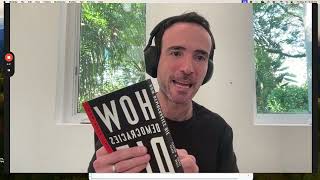
Stefan Georgi (YouTube, May 31, 2024) summarizes and critiques the 2018 book How Democracies Die (Stephen Levitsky & Daniel Ziblatt). He outlines the book's four criteria for identifying authoritarian behavior (rejection of democratic rules, denial of opponents' legitimacy, toleration/encouragement of violence, readiness to curtail civil liberties), explains the authors' gatekeeping thesis (party elites should block authoritarians), and argues the book itself promotes undemocratic, elitist remedies. Georgi then applies these ideas to contemporary U.S. politics—Trump's conviction, election scenarios, COVID-era policies—and closes with personal reflections of anger and a call to speak out.
Chapters
All right, so I don't think nearly enough people have heard of this book. It's called How Democracies Die. It's this blueprint for basically how to handle somebody like Donald Trump. And it's actually incredibly undemocratic, which you're going to see in a moment here. So who was this book written by? It was written by Stephen Levitsky and Daniel Zablatt, who are professors of government at Harvard University, at least they were at the time of this publication, which was 2018. The book got tons of plaudits, of course. New York Times bestseller. You've got one of the 50 best books of the year so far. From Newsweek in 2018, a New York Times Book Review Editor's Choice, the defining political book so far of 2018. From the Philadelphia Inquirer, the Washington Post says, you know, this is an incredibly important, dispassionate look at the current state of affairs. Just goes on on Vox, you know, as you're Klein from vox, Fareed Zakaria, USA Today, the Wall Street Journal, Sunday Times, basically the entire establishment saying, like, oh, this is just, you know, such an important and great book. So what happens in this book? A couple of things. First of all, the two authors give you this criteria for identifying indicators of authoritarian behavior. There's four of them. Number one is rejection of or weak commitment to democratic rules of the game. Do they reject the Constitution or express a willingness to violate it? Do they suggest a need for undemocratic measures, such as canceling elections, violating or suspending the Constitution, banning certain organizations, or restricting basic civil or political rights? Do they seek to use or endorse use of extra constitutional means to change the government, such as military coups, violent insurrections, or mass protests aimed at forcing a change in the government? Do they attempt to undermine the legitimacy of elections, for example, by. By refusing to accept credible electoral results? And by the way, as I before I go to number 2, 3, and 4, numbers 2, 3, and 4, just to be very, very clear, this is about Trump, right? The very first thing on the back of the book, right? Donald Trump's presidency has raised a question that many of us never thought we'd be asking. Is there democracy in danger? Harvard professors Stephen Levitsky and Daniel Zblot have spent more than 20 years studying the breakdown of democracies in Europe and Latin America, and they believe the answer is yes. Okay, so this will make very clear what they're talking about here. Number two, denial of legitimacy of political opponents. Do they describe their rivals as subversive or opposed to the existing constitutional order? Do they claim that their rivals constitute an existential threat either to national security or to the prevailing way of life? Do they baselessly describe their partisan rivals as criminals whose supposed violation of the law or potential to do so disqualifies them from full participation in the political arena? Do they basically baselessly suggest that their rivals are foreign agents and that they are secretly working in alliance with or the employ of a foreign government, usually an enemy? 1. So, number one was rejection of democratic rules of the game? Number two, denial of the legitimacy of political opponents. Number three, toleration or encouragement of violence. Do they have any ties to armed gangs, paramilitary forces, militias, guerrillas, other organizations that engage in illicit violence? And then it says, have they tacitly endorsed violence by their supporters by refusing to unambiguously condemn it and punish it? Number four, readiness to curtail civil liberties of opponents, including media? Have they supported laws or policies that restrict civil liberties, such as expanded libel or defamation laws or laws restricting protests, criticisms of the government or certain civic or political organizations? Have they threatened to take legal or other punitive action against critics and rival parties, Civilization, civil society, or the media? Have they praised repressive measures taken by other governments, either in the past or elsewhere in the world? So, obviously, if you go right here, I think it's really interesting and important you hear this often, but people on the opposing side of a view will often publish the blueprint of what they plan to do, what they're thinking, what they believe, but they'll do it with some kind of crazy cognitive dissonance where they don't seem to realize that they're describing what they're actually doing themselves. Obviously, if you go to undermining the legitimacy of elections, a charge that's been thrown at Trump a bunch of times, we'll get into all the different election interference type of stuff in a minute. But denial of the legitimacy of political opponents, do they basically suggest that the rivals are foreign agents? Well, that was the entire Russian collusion thing, which was levied as a charge against Trump multiple times investigated, and yet they never found that he actually colluded with Russia on anything. But he was sort of identified as being this Russian agent as a way to try to disqualify him from participating in the democratic process. The same thing. Number two of do they basically describe their partisan rivals as criminals? Well, yeah. I mean, Trump literally got convicted as a criminal, he's now a convicted criminal. And, you know, people can say, oh, it wasn't baseless, but it was because Most he descended should have been a misdemeanor, if that. No one even really understands what the actual charges of what he was found guilty of really were. You know, the judge even said he doesn't need. You know, there's four different things that you could kind of find him guilty of. They kept referring to this election interference and yet they couldn't actually point to what the election interference was. So I would argue it's pretty baseless toleration or encouragement of violence. For example, tacitly endorsed violence by their supporters by refusing to unambiguously condemn condemn it and punish it. Well, all the riots in the summer of 2020, the BML riots, things of that nature. Right. That those were just. But also stay inside social distance, mass mandate, but go have violent riots on the street. That's okay because it's going to help us to make Trump look bad and make him look like the country's out of control, that we need to return to normalcy and we should elect Joe Biden and Iran is to curtail civil liberties of opponents, including the media. I think we saw that throughout Covid. Obviously we with the censoring and deplatforming canceling of people. We're still seeing it now where conservative news and media won't get shown very often and anywhere from like Apple News to you know, Google search results, things of that nature. I want to go a little bit deeper into this book because there's more to talk about for sure. Right. The authors say the responsibility for filtering out authoritarians lies not with the people. That's my brackets, not the people, but rather with political parties and party leaders, democracies, gatekeepers and. And this idea of democracy's gatekeepers is actually very important throughout the whole book. It's kind of their main big idea. They go on to talk about a concept called distancing. Let's say pro democratic parties may engage in distancing in several ways. First, they can keep will be authoritarians off party ballots at election time. This requires that they resist the temptation to nominate those extremists for higher office even when they can potentially deliver votes. And again they're talking about Donald Trump explicitly in this book which has been plotted by the entire mainstream media are plotted, you know by and plotted works too. But entire master media intelligista, whatever you want to call it. Right. And they talk about systematically isolating those types of candidates. They say finally, whenever extremists emerge as a serious electoral contenders. Whenever they emerge as serious electoral contenders, mainstream parties must forge a United front to defeat them. They then go on to make all these comparisons between Trump and Hitler and side of Nazi Germany in the 1930s, which is very interesting. I remember writing an email during COVID which I'll share later in this video, where I kind of talked about comparisons to Nazi Germany inside the early 1930s. And I had some people who were, you know, of the Jewish faith, who I'm friends with go, I'm so offended. You can't talk about. The Holocaust was different. This isn't, you know, comparable. But just so we're aware, you know, it's fine if it's about Trump, right? Apparently, then it gets even much more extraordinary. So chapter two is called Gatekeeping in America. So going back to the idea of a gatekeeper. And a couple of really interesting things. First of all, they really seem to kind of condone assassination to political opponents. And again, these are two Harvard School of Government professors and representing many people of the intelligisa. So they talk about Louisiana Governor and Senator Huey Long, right, and say how Roosevelt viewed Long as a serious threat, but was spared spared when Long was assassinated in September 1935. Now, I don't know much about Huey Long, to be honest with you. I've studied a good amount of history. I don't know, a ton. You know, maybe he was kind of a demagogue, maybe he was dangerous, I don't know. But let's just make it clear that they're like, pretty happy he was assassinated. Then they talk about Governor Wallace in Alabama, right? When Wallace's campaign was derailed by an assassination attempt in May 1972, he was leading George McGovern by more than a million votes in the primaries. And so the argument there being like, well, we got lucky, right, with that assassination attempt. Again, if we judge people by what they're actually saying and telling us, that's pretty concerning, by the way, regardless of Wallace and if he was a segregationist, a racist, what they're like, thank God, you know, fortunately, assassination attempt derailed his campaign. And they say here the real protection against would be authoritarians has not been Americans firm commitment to democracy, but rather the gatekeepers our political party. So just how elitist is this already? And how undemocratic does it seem? But it keeps going. They then argue that really the best way to do this is through backroom politics and deal making that subverts the actual popular democratic process in America. But backroom candidate selection had a virtue that is often forgotten today. It served a gatekeeping function, keeping demonstrably unfit figures off the ballot and out of office. And then they actually go on to say smoke filled back rooms, therefore served as a screening mechanism, helping to keep out the kind of demagogues and extremists who derailed democracy elsewhere in the world. So again, this idea of like a special elite vanguard, people in the know being the gatekeepers of democracy by making the democratic process less democratic. And then if you really want to see it super explicitly, when they go to turn and talk to binding primaries, which they do later on the Same chapter, page 51, some political scientists worried about the new system. Binding primaries were certainly more democratic, but might they be too democratic? And so we're worried about things being too democratic for the rise of authoritarians, quote, unquote, like Trump. Okay. And it's pretty remarkable. I mean, I could go on with this book, but actually I'll move to a couple other points that I want to make inside of this video. So the next one, there's basically three parts. In addition to how democracy dies, part one of this is going to be about how they're all bad outcomes. Okay, so let's look at what kind of happens after this criminal charge for Trump. Right? Okay. Say that Trump doesn't go to jail and he's elected. Well, well, now we still have half the country believing he's this grave threat to democracy. There's going to be potential attacks on his life from the left. The deep state will be in hyperdrive to try to get him out of office or, you know, back in jail or whatever. The media will go into insanity mode, stoking division and trying to make anything that happens into a crisis, just like we saw with the, you know, George Floyd and other kind of racially motivated things. And in fact, I put here stoking racial tensions, encouraging violent protests and riots. There's no way that doesn't happen from my mind. Right. We already saw it. Republicans will also begin to weaponize the judicial system against political opponents, which means more division and conflict, more tax dollars spent on investigations and committees, endless lawfare for the next several years, at least, maybe decades. And the country continued to be more divided than ever. And on the half the country thing, I mean, it's basically the same thing we saw during COVID right, where you had half the country that was in favor of putting the unvaccinated dying, telling on your neighbors for having gatherings, for forcing mandates on people, including small children, for those children not being allowed in school, for having the unvaccinated be in camps or, you know, have like to essentially be Identified for vaccine, passports, for limiting their travel and restricting their movement, all these sorts of things. And there's receipts for all of that. These aren't just conspiracy things. Right. That's what happens, you know, kind of in a way, a best case if there's no jail and Trump gets elected right now, if there's no jail and Trump loses, well, what happens here? A lot of people already had a hard time accepting the results of the 2020 election. There's the Hunter Biden laptop suppression story, where a ton of different members of the intelligence agency went to Twitter and believe it was the New Yorker, the New York, wherever it was, a bunch of different places, and basically say, hey, this is a, you know, a fake story. This is propaganda from Russia. You know, don't publish this. It's not real. Right. And then, of course, it turns out it was real. But that undoubtedly swayed the election in Biden's favor. How'd that come out? Is a good argument to be made that Trump would have won from that alone. There's also going back to the Russian inclusion thing in 2016 that was sort of reported on repeatedly as being like a fact by CNN and msnbc, places like that, that, you know, if we go back to how democracy dies and the argument of foreign agents. So I had a check stuck to the back of this book, but it's not related to this. It's for commissions, for merchant processing anyway. And I would argue COVID 19 as well. Right. I mean, if you go back, I don't know how many of you remember the death tickers that were on CNN and msnbc, Right? Sort of like by the second death count of how many people had died. And do you remember when Biden came into office, how quickly those disappeared? Right. COVID 19 was used as a way, like, it may have been a real virus and pandemic. It certainly wasn't as dangerous as it was made out to be, but it was used as a way to continuously attack Trump and make it look like the country was spinning out chaos, that he was incompetent, all these sorts of things. And even if you go to the vaccine, which I'm certainly not a COVID vaccine supporter at large, especially for many of the healthy, not at risk groups of people who never needed it. But, you know, when Trump was talking about the vaccine, they were all going on about how well this is. There's quotes. It's amazing. I think Fauci even has one of like, you know, well, look, look, let's not rush it. You know, you need to do a lot of research. This is sort of not saying we can just roll out overnight. Biden comes into office, oh my God, the vaccine works. It's safe. Everybody take it. If you don't take it, you're gonna lose your job and have your civil liberties curtailed. Right. And that's not even getting into immigration and other sort of things like, you know, that are also worth talking about, frankly. Right. And so, you know, given all that, if Trump loses in 2024, I don't think there's any chance that people don't go on a war path. And I think you can see, expect to see acts of violence targeted towards the state and elected officials. And there's nothing but dangerous outcomes here. You know, I think the kind of leftist, deep state labels, right wing politics, politics and politicians, leaders, commentators, podcasts, etc, as extremists, domestic terrorists. There's more deplatforming, censorship, and potentially jail time for both the small percentage who might deserve it under the law, meaning that maybe they actually did take violent actions, but also for numerous individuals whose only crime is being part of the opposition. You know, breaking up political groups like Turning Point investigations, raids on publications like the Daily Wire, complete weaponization of not just a judicial, judicial system, but, but the entire state to suppress opposition. And finally, what if, you know, Trump does go to jail pre election? Well, in that case, I always see something like similar outcomes that if Trump loses, but it's a faster timeline. There's probably acts of domestic terrorism from people who see this as treason. Maybe there's some CIA people kind of doing things and their own little Reichstag fire to make it look like it's more widespread. You know, it leads to the curbing of liberties, targeting of individuals and groups who are identified as potential domestic terrorists. I think that's where the highest probability of a civil war breaking out happens. And now I know when, as soon as I say civil war, people go chill, man, like, this is good for Trump, right? Like he's going to get elected. There's no like, this is, you know, it's fine. And to them, that's where the next part of this comes in, which is normalcy bias. Right? What is normalcy bias? It's the cognitive bias which leads people to disbelieve or minimize threat warnings. So those people who are saying this is a gift for Trump and insurance will be elected are suffering from this normalcy bias. And frankly, it's the same normalcy bias that they suffered from during COVID And you have to wonder about the Slippery slope thing of like, how much does it take for somebody to wake up and realize that this is not normal? Right. Like people during COVID of whatever, like, I'm just gonna stay in my lane. I'm just gonna, you know, it's all fine. It's like, yeah, it's all fine until your 5 year old has to get a vaccine that they don't need against myocarditis, or until young athletes drop dead on a playing field, or until they're restricting your movements and they're deplatforming and censoring people and ruining their livelihoods because they have a dissenting opinion or because they just want to discuss the science right now, look, it's definitely possible that Trump doesn't go to jail and that he does become president. It's also possible that any conviction is overturned during these appeals process, especially if it goes to the Supreme Court. But if that happens, things will never be normal again. That's what I think some people aren't understanding. I think a lot of people do understand it too, but a lot of people don't. At a very minimum, the judicial system has now been weaponized and will be used for political purposes and political persecution by both parties moving forward. And at a maximum, it's what I described above re violence in a potential civil war. And like I mentioned before, this is really just a continuation of COVID It's another way to divide us. You have 50% of the population who want to tell our neighbors, tell our neighbors and force them strangers to get vaccines and retreating when the unvaccinated die and all that kind of stuff. Right. I think COVID 19 was a coup attempt and it probably succeeded. And this is just the next move in that same attempt. It's actually something I wrote about back in 2021, which I'll show you really quickly just to kind of, I guess create credibility that this is something I've been paying attention to for a long time. So this was September 19, 2021. It was a controversial email. I did kind of put in context of comparing it to Germany and the Nazi seizing power, which when I did it again, some people were really triggered and upset and outraged that I would make a comparison. Obviously, when it gets made by two Harvard government professors, then it's totally fine. Right. But essentially, what if Covid is our generation's British sacrifice that's been co opted for political purposes, including the consolidation of power and suspension of civil liberties and dissent? And I kind of, you know, put some evidence for that here. Right. Including this war with the other and all that kind of stuff. And so, you know, the ultimate thing here, you can talk about how this could lead to a coup, right? But Anyway, that's what iCaping. Now, here's the final part, which is sort of the feelings of rage. And they're my feelings of rage. Right. I want to talk about this because, like, last night I was laying in bed and I felt sick to my stomach. And this feeling that I had not had, I had not had since COVID 19, there was this feeling of rage. And it wasn't rage against Joe Biden or any one specific person in general. It was a rage against the deep State and those who are weaponizing the judicial system and attempting to carry out this coup. And the source of my rage, it wasn't just about what they're doing to America. I mean, that was a big part of it. But it's honestly a personal rage, too, that because of this fuckery, I can't just spend my time living my life, enjoying liberty, pursuing happiness. And it's like that Godfather trope of just when I thought I was out, they pull me back in. You know, I'm running a bunch of businesses that are scaling and growing. I put a thing on yesterday in my email list that I'm hiring for seven different positions, paying anywhere from a couple thousand to $12,000 plus per month for one of my companies. And that's what I want to be doing. I want to be building businesses, creating jobs, creating things, spending time with my family, being a father, being a husband, doing all those sorts of things. And I will continue to do those things too. But now I've also got a fight, which for me means utilizing my skills as one of the world's best marketers, making viral videos, videos like this one, which probably won't get watched that much, to be honest with you. But it's still. I feel like I need to speak and I want to speak. Writing about this stuff, trying to wake people up again, just like I did it during COVID I made viral videos for airline pilots to help them fight mandates. I worked with anti mandate people running for office to help them get elected or raise money. There's no choice. But I'm pissed about it because I wish they would just leave us alone. Right, maybe you feel that way too. But they keep pushing and prodding us towards the edge of a cliff. And I'm pissed that once again, I have to experience these things, these feelings, these sleepless nights. I'm worried about the toll that this will take on my marriage because during COVID frankly, I was. It was hard not to feel like there was a black cloud hanging over me a lot of the time. And I know this will probably ruin more friendships and relationships. Just like during COVID I lost, you know, a lot of friends during COVID people. It hasn't recovered. Folks who were like, just get the, you know, mandate, family, all these things, and I'm just mad about it. But there's no option. Like, we have to fight, right? And so I have this rage, but there's no other choice. I don't see a choice besides fighting and speaking out and seeing where it goes from there, to be completely honest with you. Right. Because like I said, there is a slippery slope argument, but slippery slope is just a slippery slope until you fall off the edge of a cliff. So those are my thoughts I want to share. And if you agree, you know, give me a comment, retweet this, whatever. If it's on X I might put on YouTube. I'll probably just get deplatformed if I do, but, you know, that's it.
More from Stefan











Why Understanding Product-Market Awareness Is More Important Than Ever in 2025