[RTB:E18] "How to Create An Unfair Advantage” (w/Jen Gottlieb)" - The Road to a Billion
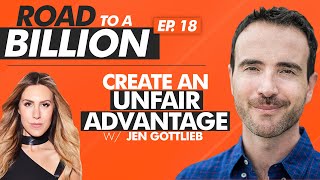
Jen Gottlieb of Super Connector Media explains how PR and media placements build credibility and business growth. She covers practical pitching tactics like news hooks and topic-first pitches, how to track PR ROI through opt-ins and conversions, and why warm introductions from your network matter more than cold outreach.
Questions this video answers
Five days (the cohort runs about eight days with extras); all calls are recorded and posted to the Facebook group.
$55 (promo/early price mentioned during the session).
Created October 9, 2020; last edited January 8, 2026 (per provided metadata).
Chapters
Hey, you're listening to the Road to a Billion podcast. I'm your host Stefan Georgi and I'm glad to have you with me here today. The Road to a Billion is a call in radio show style podcast where you can ask me questions about freelancing, copywriting, entrepreneurship, mindset scaling, businesses, relationships, money and more. The reason for the name the Road to a Billion is because I am going to be hitting a billion dollars in sales this year for both my own products and products for my clients that have been the copy for or started businesses that have sold that stuff. And I want to make an impact in the lives of a billion people across the world, whether that is emotional, financial, mental, what have you. So we'll start taking calls in about five minutes from now. And again, the way that works is you'll just put your questions into the Q and A section in Zoom and then Ed Ray will go through review questions and feed them to myself and my guest, Jen Gottlieb, who I will introduce in a moment here. Before I introduce Jen, Ed, do you want to go ahead and say hi to everybody and kind of share who you are and what you do?
For sure. Hey, I'm Ed Ray. I love breakdancing and I'm the Facebook compliance guy. So I help people scale fast and furiously on Facebook, supercharge their copywriting skill and completely avoid and navigate the treacherous waters of Facebook so they don't get hit by Facebook. Span Hammer.
That's me. So awesome. Perfect intro. So today we are joined by Jen Gottlieb. I'm very excited for this. Jen is the co founder and chief Mindset Officer for Super Connector Media, which is a awesome PR company. I use them. If you've seen that. I've been featured in forbes, Business Insider, CNBC's Grow, two features there, Buzzfeed, one on the Harmon Brothers Podcast. A bunch of other cool opportunities that I've gotten to have and, and it's all thanks to Jen and Chris Winfield, her partner and their team. So really excited to have Jen on here. She's a former VH1 host and a Broadway actress and then she transitioned into the world of pr. We'll kind of get into that story here, but she also co hosts Super Connector Media's Unfair Advantage Live, which is the world's premier publicity event connecting entrepreneurs to the media. That's actually amazing what you all do with that. So I wanna talk about that. Uh, and Jen herself has been featured in numerous top podcasts as well as in Forbes, Business Insider, Shape, Woman's Health well plus Good CPS, CBS, Good Morning America, PBS. And in Goop is one of the top 11 professionals helping people define satisfying, successful careers. So, Jen, it is awesome to have you with us today.
Oh, my gosh, I'm so excited to be here. Stefan, I am like one of your number one fans. So this is super, super fun. I was geeking out yesterday when we planned this the last minute. This is such an exciting day.
That's awesome. Well, yeah, I'm thrilled to have you here. I always love. I'll never get tired of looking at that backdrop that you have there, too. It's super legit. I need to up my back. I've been thinking about this. I've got these diplomas that don't even really mean that much to me. My wife put them up and it's, like, nice that she did, but I need some cool art or something. But I feel like the backdrop of the New York skyline is. Yes, very, very solid. Good framing right there.
It is. It is good. It's catch 22, though, because everybody thinks it's fake. Everyone thinks it's a zoom background because it kind of looks like one. And I have to say no. I swear to God. This is really our window. It just has, like, a shade in front of it, so we're really lucky. It's a beautiful day in New York City.
Yeah. That's awesome. I know. I honestly, for a minute thought it was fake, too. And I remember that I've talked to you before when you moved around, and I was like, oh, yeah, it is.
I swear it's real.
Oh, man, that's awesome. So, Jen, like, I guess let's start with kind of what you do today with super connector media. And then from there, let's kind of work backwards a little bit. I'd love to hear the journey from even starting with the VH1 kind of stuff and sort of how that journey, because it's sort of a unique kind of road you've taken to what you're doing today. And now here you and Chris are at the top level, doing incredible things in the world of PR and connecting people. So I'd just love to hear about where you are today and kind of the journey to get there.
It's a wild story. We love the quote. You can't connect the dots looking forwards. You can only connect them looking backwards. Because in my life, if you would have told me years ago that this is what I would be doing, I would be, like, batshit crazy. No way in hell. So it's A pretty cool story. And I think that it's really super inspiring to people that have a big dream or even just a dream that they're not even clear of. And just by taking baby steps, getting to where I am. But for right now, if we want to work backwards, me and Chris Winfield, my partner, are co founders of Super Connected Media. So like you said, the PR agency that represents people like Stefan, really amazing, amazing entrepreneurs, small business owners, personal brands, companies like cauliflower foods or chili pads, or tech companies as well that are doing really amazing things in the world, the majority of the people that we represent are game changing and really have an amazing message to share. We've repped people like Les Brown, one of the biggest motivational speakers in the world, Amy Porterfield. Like I said, companies like Cauliflower foods that are bringing cauliflower pizza to the world. And we also have a portion of our company, our tagline is PR done differently. And I talk to a lot of people every day that come to me and say, jen, I was burned by a PR agency or I had a really bad experience with a PR agency. If you guys are in the chat, if you're watching and you've heard someone else say I've been burned by a PR agency or you personally been burned by a PR agency, let me know because I'm seeing some yeps. It's definitely a common thing. And we wanted to come in and completely disrupt this industry and make it something that works. Because at the end of the day, if we can help people with amazing messages, share those messages with the mainstream media where the majority of the people are listening, watching, reading, then we can help more people. So a couple of the things that we do differently is we really focus on the mindset piece and getting out of your own way to get yourself out there in the media. Because a lot of the times people, entrepreneurs especially, there's that imposter syndrome thing that happens. And that's why my title company is Chief Mindset Officer. So we really, really, really incorporate how to get over that fear, how to remember that it's your responsibility to be visible and we do things like you said, Unfair Advantage Live is our big event that we do, which has changed drastically due to Covid. And then we also have our Be on TV bootcamp which is coming up, which we'll talk about, I'm sure, where we teach for five days how to pitch and book your first TV segment. So we do everything from the big agency side with high level premium clients to then teaching people that are Just getting started, really, how to get their first TV segment and how to get into media.
Let me ask you, Jen, when, for people who are sort of a little bit shy or afraid or they're not sure if, like, PR or doing kind of media efforts is right for them, who is a good fit? When you're generally working with these types of people and especially, what would you say to people who are maybe a little bit timid or afraid to put themselves out there?
Yeah, I love that question. Because the majority of the people that we work with would call themselves introverts. The majority of the people that we work with have never done a Facebook Live before, have never done an Instagram Live before, are actually really, really, really scared and nervous to put themselves out there. But they have this calling deep inside of them that says to them every day, whenever they see somebody else that does something similar to them that's in the media or that's on TV or that's getting pressed, they feel this thing in their gut that's like, oh, my God, that should be me. But then when they go to do it, they feel really scared or they feel shy or they feel like they don't want to be braggy or they don't want to. They don't like marketing themselves or talking about themselves, or they have that imposter syndrome that's like, oh, one day people are going to realize that I don't really know what I'm talking about, so I may as well not say a word, right? And it's so common. And like I said, we really work on that piece the most out of anything in our bootcamp and at our event. Because if you can get through that, you know, we're never going to get over that fear. I mean, I've been performing my entire life. You say, I was on Broadway, I did television, and you would think that I'm, like, the most confident person ever, right? If that's what I do, and that's what I've done for a living. But I'm not. And I have to work really, really, really hard every single day to feel. I feel that fear, and I do it anyway. So we teach a lot of tools and tactics, how to do it with fear on your back, how to understand that it's going to be scary, but if you flip it around and we really focus on thinking about the person on the other side that needs your help. So hop one person every day, if your message, if what you're going to say with the media and in the media, on television, In a publication, even on a Facebook live, even in a post, anywhere, something that can be visible to somebody else, if that's going to help somebody, it's your responsibility to be visible and to show up. Because every day that you don't, they're going to go follow someone else or buy something from someone else that's not as good as you or doesn't care as much simply because they're visible and you're not. So if you flip it around and think about the person that you're helping on the other side of the screen, it takes the fear out of it. It takes the ego out of it, because it's not about you anymore. It's about the people that you can help with what you're saying.
I love that. That's an awesome reframe and a really cool way of looking at it from a mindset perspective. It's funny because I feel the same way with sales, right. When you talk to people about selling, it's like, if you have a really good product and you're like, you almost have a responsibility to sell people on it if it's going to really help them, right? And it sounds cliche, but it's true. And I think if you have a crappy product and you don't feel good selling it, then go find a different product transition. But in a way, PR is. It's selling. The one thing I think about as a copywriter is we're selling all the time. That doesn't need to be a cynical, jaded thing, right? It's like you're selling yourself. You're selling your message, you're selling, you know, a mindset shift. You're selling a product. Whatever it is, we're always kind of selling. And so PR is the same thing. But again, when you do that, it's not about you. It's always like, the viewer is always asking, what's in it for me? And whether that's because they're trying to buy a solution as a product or they're trying to just learn something new that you're sharing, it's like that's what they're asking. So if you focus on them, then it removes your ego, like you said. So I think that's really kind of a really cool advice. Jen, a question I guess I have too, is for kind of like product owners and offer owners, because I'm in the world of direct response a lot. And I know, like, I introduced you to your team to Steve Gunn. I'm not sure if you guys are moving Forward or not, but he's got this cool CBD product with Tommy Chong as a spokesperson and doing well. But I think a lot of people in direct response who have really cool businesses and brands aren't using or leveraging PR really at all right now. And I think maybe they're afraid to. Maybe they don't know if they'll get an roi, maybe they don't know why they should. But I would be curious to hear what are some reasons that someone with like a kind of a direct to consumer brand would want to leverage and amplify their PR presence?
Oh yeah. Well, this is so fun because we do talk to a lot of people that are in direct response marketing and like, we love amazing email copy, we love Facebook ads. We're all about it, we're all about the marketing. But what PR is and what it does is it. I like to call it like magical fairy dust that you sprinkle on top of all of your marketing efforts. Because at the end of the day, people want that third party verification. They want. It's a weird thing when you see Stephen, Georgi and Forbes next to each other, suddenly you have more credibility than anybody else on the Internet. So if somebody is like going to buy your product, let's say they get an amazing email and they're like, this looks dope. But then they go Google and they're like, let me see if I can get it for a better price or get something else, right? And they go, and they start Googling. But then they of this media and all of this mainstream press, like you know, today's show, Good Morning America, Forbes, even the local news, even if you just see like the product on tv, it's this weird thing that happens to somebody's brain and they will always choose you over the competitor. Every time, every time. It's also an amazing way to communicate with your buyers, getting mainstream media. And I know that you, you use it in an incredible way, putting it in your emails, right? And just to show that credibility in that social group, you. It's an amazing way to follow up with sales. I love having sales conversations with somebody and then being able to have the follow up instead of the follow up being, you know, just bubbling up this to the top of your email or, you know, just wanted to follow up here. I just say, hey, I wanted to show you an amazing piece that I was talking about something on TV that we were speaking about in our last conversation. And what that does is it just makes that person think, oh, wow, this is legit. And so with direct response marketing and people that have a direct to consumer product, that person is always most likely going to go do. A lot of the time sometimes people are just, they'll just buy, but they're going to go do their research and they're going to Google and they're going to see who has the most media and then they're going to go buy for that reason. And also if you can leverage not just you saying that your product is the shit, but shape health, like let's say you have a health product, let's say you have a fitness product, like all these big health publications says that your product is the shit. And you put that in your email and you say, hey, health magazine just said that this product is blah, blah, blah, blah, blah, blah, blah. Check it out, someone's going to buy it just because health magazine said they gave it their check mark.
It's like a magical fairy dust that makes perfect sense. And I think even for people who are like for speaking from stage or if you want to be able to like, because I think some people have a cool message and have a cool story and I think one thing is that people underestimate how many kind of newsworthy things they have going on in their lives. Even just a lot of the folks who join me on the road to a billion or who are gonna watch the replay on YouTube or listen on itunes, it's like by virtue of you being a successful freelancer right now in 2020 during COVID and you're making money that's actually very newsworthy and you could probably get a lot of press about it. Same thing with entrepreneurs, right? I mean, how many businesses or small businesses are tragically closing down because of COVID But then at the same time, like, there's a bunch of business owners that are thriving and it's like just to get that sort of. I think people get afraid of doing pr. I know I was this way because of an ego thing, right? It's like, am I just doing this as an ego play? Am I just sort of trying to like stoke my own ego and you know. But to your point, what. And this kind of ties in, me putting myself out there in general is like, I have a lot of cool things to share and if that helps other people, then I owe it to them to share that stuff. And I say pretty much everyone, you know, in my universe, whether you're on my email list or, you know, again, someone who just watches this content, whatever it is, like, you probably have something cool to share too. So I want to challenge people to kind of to think beyond just like a simple digital funnel or even just Facebook groups. I think that stuff's awesome, but I really think that PR can be a really cool avenue that's not being utilized right now. And I think there's a huge opportunity. It sounds funny because it's pr. It's been going on forever, but in the road of direct response and even E comm and freelance, all these things, people are just kind of like, you know, I don't know. But it's a huge. Again, the Forbes thing, like you said, that does help me if I want to go try and get a client for consulting and I can mention that like, oh yeah. Well, it's funny you asked about that because Forbes wrote up this article or CNBC keeps doing features about me. It's this crazy built in proof and credibility. So there's really a lot of reasons to consider it. I wanted to kind of expand my audience's minds about this stuff. So glad to have you be sharing this with me 100%.
It's the best time.
Yeah. That's awesome. So we're going to get to questions in a few minutes. I do want to know two things I want to talk about. I do want to talk about your guys beyond TV challenge you have coming up. Before I get to that, I am curious real quick with you and Chris. I mean you don't have to share raw numbers, whatever you're comfortable with. But at the end of the day it's like, let's not lose sight of the fact that you've built a seven figure agency and you've done it pretty quickly. I'm not sure exactly what the time horizon is, but I know it's been a few years and I would love to hear some of the keys that have enabled you to get to where you are. Why have you guys had so much success? And you know what are maybe some, a few mistakes you've made along the way too, where you learned lessons. I'd love to hear that.
Yeah, a lot of lessons along the way. And yeah, it hasn't been that long. So Chris became partners, I want to say less than two and a half years ago. So maybe two, two years ago we became business partners. He was already doing Unfair Advantage Live. So he was connecting entrepreneurs to the media with this event and that there was no business attached to it. It was just this amazing event that he did. He was like, I don't really have an offer. I'm just doing this incredible event. And we, my Expertise has always been in. I was a mindset coach, wellness coach, and then also my entertainment background. So my dream and my vision was always to be able to combine everything that I love. And I say, literally, this was my vision. I wanted to be like Britney Spears plus Tony Robbins plus Jay Z and Beyonce in a power couple. That was always before I met Chris. That was my manifestation. That was what I wanted. I really am a true believer in getting super clear on what you want and visualizing it in detail. Not because it'll magically come to if I visualize it, but because when I do that, the opportunities become way more prevalent. Like, there's neon lights. Oh, this is what you're supposed to do. Here it is. Here it is. Here it is. And when Chris was doing these events, we were like, holy crap. This is a way for me to be able to be on stage, perform, help people. And then also, I knew a lot about media and PR because that's how I built my business. It was the only thing that I knew to build my business because of my entertainment background. So we came together and we built Super Connector Media. And it just started out of a need. And this is a really amazing reminder to anybody starting a business. It was not going to be an agency. It was going to be group programs. And someone came up to me at an Unfair Advantage Live event and said, I'm not going to do a group program. Let me pay you to do this for me, please. Please let me pay you to do this for me, please. And we're like, oh, crap. I guess people need this. So we took one client. We did one client, and then, oh, God, okay, we're crushing it for this client. Somebody else heard about it and they wanted to do it. And we took another client and then another client. So it almost happened on accident, out of a need. And we just kept growing and growing and growing from there. Now, you know, coronavirus Covid happened, and we made a lot of. Actually a lot of mistakes prior to Covid in the year of 2019, I would say, so people can learn from our mistakes. Our business grew really, really quickly. And we decided that we were like, okay, we can just hire a COO and let go of the reins and go travel and speak everywhere and let this run and we can go be the face. And I think we did that a little too quickly, and we stepped out a little too fast. And I think many people make this mistake. So I really want to share it, because I want to prevent somebody else from making this mistake. And we got A little far away. And we let other people take control of our vision. And. And it's really easy to do that because, like, yeah, this is what you're supposed to do in order to scale. You're supposed to let go of control. But we step back too far. And then we realized, you know, oh, that was a mistake. And things started, you know, a lot of bad hires were made and the culture started to shift. And then, you know, coronavirus happened. And then everything kind of just shit has to happen for the shift to happen, right? It all kind of like, when now, what do we do? So we're like, what an amazing excuse to lean out, step back in, in a big way, remember what our vision is and change things up and really get back to what we want here. Like me and Chris and like, our chief publicity officer, Angela, instead of, like, looking at all the big shiny objects and trying to get too big for our bridges. So we leaned out and we decided to create this Beyond TV bootcamp. At the time, it was the Beyond TV Challenge. Because the majority of our revenue came from this live event from Unfair Advantage Live. We would do a couple a year and we would make seven figures an event. And that was like, how other than our agency, we were making a lot of money with those events. We couldn't do them anymore. We had to cancel our event. So we're like, what are we going to do? We had to pivot fast. And when you decide to pivot, you can't think about it. You have to just take action and you have to just go. And so immediately, all right, we're going to do this challenge model. We didn't know what we were going to sell on the back end. We had no idea. We were like, we're just going to do it. Just like we had no idea what we were doing. When we started the agency, we just took action. And then it grew and morphed and became what it did as we went. So we did this first Be on TV challenge. We learned everything that we needed to know about challenges within, like a week and launched it. And then while we were in it, we decided what we were going to sell. And we created an eight week accelerator program. And we built that eight week accelerator program as we went week to week to week recording the content. And it did amazingly. And we felt amazing doing it. Which, Stephan, that's the most important piece. So if you don't feel good in doing what you're doing, don't do it. We felt amazing. It was like, this is our thing. And Then we did it again and again and again. And now we've really found our sweet spot. We changed it and made it better. We call it the Beyond TV Bootcamp and the Be Seen accelerators on the back end. And the agency is thriving because we lean down. Our culture is amazing. As you know, you get to talk to our publicists all the time. But we had a moment there where it was a little freak out moment and we came back to our core. We came back to who we are and to our heart. And now we're really on a roll.
Yeah, that's awesome to hear. And I know I was just nodding my head, like when you're talking about the COO thing, it's something I've been, I've seen so many times and given advice on recently as well, because it's what I've learned. And then for my own personal brand and what I'm doing, the RNBC method, I'm kind of taking ownership of the role of CEO, which I hadn't before. I was kind of being more passive and I'm like, no, I need to be more active. And it's a totally different ball game. So then I'm going back to reading about leadership and team building and all of these things. But as I thought back to the first time I was a CEO of my first self settlement company that went from a million to 23 million in a single year, which is a big leap. But I learned so many lessons and the first year sucked. And one of them was that whole thing of, I think a lot of entrepreneurs think, oh, I hire a CEO, that means operations. That means I can focus on the thing I love to do. And I have to put any focus into this at all because they're going to handle it all. But what happens, right, as you guys learned, is the COO still needs direction, still needs oversight, still needs guidance. There still need to be led by you. And over time, you can let go of the reins more and let the COO take on more autonomy, but I think a lot of us entrepreneurs make that mistake of sort of abdicating, right? We hire the CEO and we say, all right, you got this. And then you come back like a couple months later, a month later, whatever, and you're like, wait, why do things suck?
Why did it happen?
Why is this not going good? Right? And they get crap. Like, so, yeah, it's comforting hearing that you guys made that mistake too, because I think we've all made it. Anyone who's really ever grown a business. So, Jen. Yeah. I do want to. I wanted you to share about the beyond tv, the bootcamp that you're doing. And that's one of the big reasons I wanted to have you on, so you could tell my listeners and viewers about it. And I do have a link where. So this is not a secret webinar, but I do have a link to it that you can check out and it is an affiliate link. So if you do do it, I will get a commission. Be super clear and straightforward about that. However, obviously I'm paying you guys whatever I pay you, like 6,000 plus a month or something like that, 10,000. I don't know what it is. So clearly I believe in what they're doing and hence why I wanted to share it with my audience as well. So Jen, you want to kind of walk everyone through what that is. And after that we'll move to the Q and A section.
After that, be on TV Bootcamp. Oh my God, you guys, it is five day bootcamp actually. I'll let you know on a secret. It goes for about eight days because we over deliver like a beast and we give all these extra calls, but it is. We teach you everything that you need to know to be able to pitch and book and totally like crush your first or next TV segment. And it is. And you may be thinking, oh my God, Jen, but like I've never even done a Facebook live before. How am I going to be on tv? Or I'm petrified to even press go live or press record and post it on social media. What we do is we create an unbelievably safe space and a banging community where we all practice messily right and imperfectly. And we can have this bubble in this space where we can practice being on TV and we can being on TV practice being on camera. And by the fifth day, you have absolutely everything that you need to know to be able to write a pitch in the best way. The way that we write Stefan's pitches, that's what we teach. How to write a pitch, how to get your messaging tight. So if you're having trouble with messaging, we'll tell you how to get that messaging tight and write how to introduce yourself, how to write that pitch, then how to have the confidence to be on camera. We do a lot of stuff with the mindset work, but most importantly, the community that we bring together for this Beyond TV bootcamp is so frickin rocking. The people that do this are amazing and the transformations that happen mindset wise. Because I'm going to let you in on a secret. Stefan, I don't know if you know this, but we're really a personal development company, and we use media as the gateway to personal development, because once you start to put yourself out there and actually feed that calling that you have deep down to be seen, something magical happens, and you start doing it a little more and doing it a little more, and then you believe that you're the expert, and then you do it a little more, and then you help more people, and then it feels better and better and better, and there's just so much momentous growth by the end of just five days. We also bring on a producer from one of the biggest shows. I'll let you guys know, just your listeners from Good Morning America. A producer comes in and does Q and A with our challenge members. So you guys sign up. It's dope. It starts on Tuesday. And if you're someone from Stefan's community, we want to know you. You are our community or our family will take extra good care of you.
That's awesome. And I'm going to put the link in again for those who want to sign up. But again, I do. I do think it's really dope. I love it. And, yeah, the Good Morning America thing alone is so cool. Ed was messaging me while you were talking. I know Ed had a few questions. And, Ed, I'd love for you to hop in and ask Jen your questions for sure.
So who.
Who do you think gets the best use out of pr? Like, if someone, like, say, if someone's totally starting out in, like, online freelancing and they, you know, they want to get started pr, Would you say that that's a good idea for them?
Yeah, I think it's a good idea for absolutely everybody. If you have an experience everybody needs. This is my personal opinion. I think that absolutely everybody needs to have a personal brand right now. And Stefan knows the power of that. You know, like, he's. He's a copywriter and one of the great. The greatest copywriter in the world, but he's building this really powerful personal brand. Because here's the thing. You're. You're in this for the long run. Like, you may have a company right now that may morph and change and be a totally different company. You sell a company, buy a company, whatever. You may have something completely different ten years from now, but the one thing that you will always have is your personal brand and who you are. And so if people love you, right, they're going to buy from you whatever you are selling. Forever and ever and ever. It doesn't matter. So you want to build that footprint, that really beautiful footprint online and it doesn't matter. People think like, oh, you know, I've gotten PR before for something else that I did ages ago and it's totally different from what I do now. So can I still use that and leverage that? Does that even make sense? Yes. So I leverage the fact that I was on VH1, even though that has absolutely nothing to do with what I do now. I leverage it every single day of my life because that gives me credibility. Right. And so if you were on. So Chris, my partner, he was in the New York times for his SEO company ages ago. This may have been 10 years ago. He can always say for the rest of his life, as seen in the New York Times. Right. If you can have those little media logos at the bottom of your website for the rest of your life. Because media doesn't die, it doesn't go away. Right. As seen on gma, Forbes or First Stephan, he's got a beautiful little media logos at the bottom of his website. We use that as it's examples when we do presentations. That's there forever. And then if someone is ever googling and they're debating if they want to work with Stefan and his company and whatever he's doing or buy from him or somebody else that does the same thing with the same prices, he has all these beautiful little media logos under his name. The other person doesn't. Who are they going to choose?
Yeah.
One thing I want to add to that, Ed and Jen is honestly, like, I wish I had started doing more stuff. I put myself out there more earlier on because it's really just been. I started last like late November. December, actually. It was. I think it was December.
Yeah.
Yeah. So it's been less than a year and it's, you know, cool. Like my email list is a little over 3000 people. I've got whatever about like 1500 YouTube subscribers. You know, Justin, the stuff and talk copy that Facebook group has 5,000 people. You know, I do this show and I've got the podcast and this really rewarding because again, my whole why is showing people a better way and that they don't need to settle for the status quo. Whether that's within a corporate job or their current freelancing environment or with their company and struggling. That's what just gets me out of bed in the morning. So reaching people and interacting with people is energizing and fulfilling. But I just think about, I've been freelancing since 2012. But it's like, what if I had started then? I mean, I could have an email list of 25, 30, 40,000 people. And even on the email list, I'm very transparent about it. Almost everyone on this call right now or the show is on my list. But basically the average subscriber on my list is worth at least $500 per year. And it keeps going up because it's been less than a year. So I've got 3,000 people. So it's like, that's 1.5 million a year that I can kind of expect to generate from my list. But it's like, man, imagine if I had a 20,000 person list or a 30,000 person or a 50,000. And if I had been doing this for the last eight years, I could have had that. And so I just, again, this is not like a pitch to everyone that, you know, if the PR is not for you right now, that's totally cool. But I do, I am passionate about this and wanted to share it because for me personally, like, as a mentor or guide, I'm like, this is something that I wish I had been doing earlier. And, you know, I just wanted to share that. Ed, do you have another. I think. Do you have any other questions on that?
Yeah, yeah. Like, is to someone like me, PR seems like this kind of scary, expensive, foreign idea that's, like, reserved only for celebrities and people who have, like, really something crazy to share. Like, is it really that pricey to get started? And like, like, what does it look like?
Yeah. I love this question so much, Ed. Thank you for asking. This is actually very, very, very important because, yes, I do have a premium agency. Right. But you don't need to hire a premium agency to get started with PR. We help people that are just getting started for $55 in this Beyond TV bootcamp. And I can tell you some of the stories of the people. 55 bucks. They come into this Beyond TV bootcamp and they leave getting national television places. So. And then they leave knowing how to write a pitch so you can easily pitch yourself. We also, we have an accelerator where we teach people. So you don't need to pay an arm and a leg to hire someone if you're not ready. Now, if you have a big company, you know, like Stefan, and you've got a lot going on and you just want to pay someone to do it for you. Yeah, you're going to want. When you're there, you're going to want to hire an agency like ours, and that's when you're there, but when you're here right now, this is something I could tell you. Can I tell you guys a quick story of an amazing thing that happened in the Beyond TV bootcamp? Okay. So there was a woman, incredible African American woman. She went through the boot camp. This woman's awesome. I didn't really know much of her story. At the end of the boot camp, she comes on to zoom, and she's like. She's like, I need to tell my story. And she says, the day before I found this be on TV boot camp, I called the suicide hotline. I was going to kill myself. Former Marine suffering with severe ptsd. And she's like, I just couldn't take it anymore. And the person on the other side of the phone said to me, don't do it. Wait one day and do something else. So she's like. So I waited one day, and I saw this ad for this Beyond TV challenge, and I clicked on it, and I signed up, and she started doing what we told her to do, and she started doing some Facebook lives and putting herself out there and writing some pitches. She got on the second day, a message from this woman who said to her, thank you so much for the message that you shared today. So she did, like, a live or something like that, you know, for the first time, because of the message that you shared today, I got out of bed and fed my kids for the first time in four months because my child committed suicide, and I haven't been out of bed. So Brenda is. Is the woman in the challenge. That was her name. She was like, holy shit. My message matters. Holy shit, My message matters. And so she found meaning in that. So because of the meaning that she found for that, she was like, I'm in this. She's a completely different person. She has her own TV show now. She's writing a book, and she's been in several media placements because she's just on a roll. It just takes that one reminder that your message, even yours, every single person's, could help somebody out there in such a big way. And you don't need to spend hundreds of thousands of dollars to do it. You just need to take action. So join our challenge. It's 55 bucks, dude.
Yeah, I. Honestly, Jen, I kind of forgot it was $55. And now I'm, like, really fighting myself to not turn this into, like, a. Like, a pitch thing, because I'm like, it's effing $55. Like, I feel like everybody, like, I'm Like, I'm gonna do it even though I'm paying you guys for the premium level. Cause I'm like, it's like 50. Like, that's. That's actually a crazy price point, so.
It's insane. It's insane.
It's insane. It's insane. I'm putting the link one more time. I may mention again at the end of the show, but I'm not gonna hammer you all with it. But, yeah, $55 is crazy. I feel like that's. That's. Yeah, I don't know. I said I want to do it. I'm not even close to right. Maya, I feel like you are. You actually are someone who is kind of close to it. I mean, you've been. Think about when you and I started together, Malaya, you were borderline homeless. I hired you for a customer service job for, like, $15, or I don't know if it was even $15 an hour. You know, you went from there to, like, a manager to now you've run multiple companies for me. You've put on virtual events. You're like a leader. You're doing this while having, you know, you've got three young kids. Like, I think, Megan, my God, I love you. Malai's worked for me since 2015 in different companies, but to me, you've got crazy amounts of stories to share. I mean, your elevation is incredible. She said, I'm not crying. You're crying. But seriously, my. I actually think you should do it.
Yes. We want you in it. Come join. I'm telling you, we have all different types of people in there, people that have never done a TV anything in their life before, but they just feel like, oh, you know, like, I want to be part of an amazing community, and I want to start to share my message, whatever that looks like.
Yeah, I think I'm doing seriously Malay. Like, do it. You should do it. And then. Yeah. And. Okay, last thing I'm gonna say, then we're gonna. Q and A's is just, again, going back to, like, for the freelancers who are in here who are always asking about trying to get more clients, right? And then I share strategies, but, like, one of those is you're gonna learn a bunch of really good outreach strategies that get the attention of people. And whether you apply that to the media or you could apply these same things to prospective clients, and as you get PR coverage, again, that helps you to get more clients because you have more credibility. So I would really think about that, too, for the freelancers as, like, an opportunity to get more, you know, to grow yourself and your brand and kind of leapfrog the developmental journey. I will answer girl. And she said, if I understand this right, the program is for people that want to share their message somehow via media, even if they don't know how. Is that a fair question?
That's beautiful messaging. I should use that. That's great.
Yes. Pretty good. And Molly said, will there be a repeat session if we can't make it next week?
Yeah. Well, here's the thing. If you can't make it next week, you can just be in there because all the calls are recording and streamline to the Facebook group. So you can watch the calls whenever you want to, even if you can't make them live, which is pretty cool. The next one, though, we're skipping November. It won't be till December. So I would highly, highly recommend that you be in this one, especially because this one is. The Facebook group is already happening and popping right now. There's people in there. It's off the chain. So if you just feel like you might miss the calls, don't worry about it. They're being recorded and you can watch them whenever you want.
Swear to God. Last thing I'm going to say. I swear, I keep saying it, but because my mind's just working is like, okay, again, for the freelancers and copywriters, it's like, then you're going to be in a Facebook group with a bunch of people who are trying to get their message out. So do you think that could be an opportunity where you're investing $55, but then you potentially are going to be able to get all kinds of gigs from people who are hiring you to write, you know, their copy. Like, if you're like, hey, I'm a copywriter, I'll just do a post, right? I'm a copywriter. I'm like an expert messaging. But I'm excited to learn how to do this messaging for pr. I've had a lot of success with clients already, blah, blah, blah. But, you know, I'm just can't wait. I wouldn't, I wouldn't, you know, don't pitch people in the Facebook group, but you share your message. You're a writer, you're good at messaging. I mean, I feel like how would that not probably get you some clients? Right? I actually think that's a really good client generation strategy too.
150% for $55. Yes. All of you guys, I'm telling you, this community right now, I think there's almost 400 people in the Facebook group and they are all entrepreneurs trying or you know, somebody with a message trying to get it out there. Your ideal clients. There's about 400 people in there right now and not only will they could they be your clients if you, you know, say you're a copywriter, but there are people you just want to know and like really interesting human beings. And you can all refer people. Really magical stuff happens with the connections that are made in that group. Forget the content. The content's amazing. But yes, you are a hundred percent right.
Yeah, that's, that's, that just makes me, I mean, the price point. But then that to me makes it a no brainer because again, and I, you know, for all everyone here. And then people who watch replays, like, I think you can see that, like, yes, I'm, I'm, I'm, I'm telling you to do it because I think. But I'm new because I think you'll get a ton of value from it and in multiple ways. But even as a marketer and as a freelancer, I'm like, oh, shit. Like that literally was not premeditated, but I'm talking to you and I'm like, yeah, there's a Facebook group of 400 plus entrepreneurs in this community that you get to be a part of. So seems like a no brainer. Okay, awesome. Well, we may mention it again at the end here, but I'm glad we got to share the challenge. I know some people, yeah, shove and take my money. Sold. I see some people who are definitely hopping on board, which is awesome. And I really, again, I personally use Jen and Chris and can't say enough good things about them. So with that being said, what we're doing now, Jen, is we're going to move to the Q and A portion where we're going to look at questions. Ed will kind of go through and share those and then we'll bring the people on live. They'll kind of ask the full question and then whether it's addressed to you or myself, one of us will kind of answer it and walk through it with whoever's on here. And I always say that we may not have a perfect answer, but we'll do our best to just sort of help people get clarity or whatever it may be.
Love it. Let's do it. I can't wait to meet you guys.
Yeah. Awesome. So, Ed, you want to go ahead and kick us off here? Make sure if you have a question put in the Q and A about whatever it is you Want to talk about freelancing clients, Crafting an offer, PR specific, anything. Pop it into the Q and A. Awesome. Cool. Ed, go ahead.
This one's a pretty straightforward question. I can't summarize it more than it's already summarized. So do you want us to have the guy on?
Yeah, just put him on and we'll.
Okay, cool. All right. All right, Luffy, ask your ROI question on here. Oh, man. 20 co host?
Are you not co host? Oh, my gosh. Oh, my gosh. All right, wait for it. Wait for it. Naughty boy.
Naughty boy. We should all shame Steph with the naughty boy.
By the way, I'm seeing a bunch of people saying that they signed up Molly Girleen, I think. Girl, I'm not sure. So Matt Flores. Yeah, I saw some of my people earlier too, but yeah, girly, not you, but girl. And you'll get there. You know, you just quietly keep writing really good copy. We'll get you there eventually. But. Or do it now. But. Okay, Ed, go ahead.
All right, let's. Let's ask your ROI question.
Hello, can you hear me? Yeah, I can hear you. Welcome on. Hey.
Hi.
Hi, Jen. Hi, Stefan.
Hi, Ed. Hi.
Yeah, so just basically the question I have is, how do you track ROI or results from a PR campaign?
Yeah, great question. So there's different ways that you can track. I mean, we always say that there are like, there's really no guarantee with pr, which I think is kind of fun because you never really know what's going on with the news cycle. So we could have our clients booked on Good Morning America segment, which could be the biggest national segment of all time for their career. And then all of a sudden, like, Trump gets coronavirus, and then they get, you know, like, they don't get to be on Good Morning America anymore. Like, they're bumped. So there's a lot of uncertainty when it comes to being able to track, like, specifics and to track specific amount of money that came in. But there are, I'm sure, Stefan, you probably do really cool things with backlinks with your articles. So you can see like a lot of the times when you're writing, when you're doing print publications or like online editorial stuff, you can put links to your email lists, right? And so you've been able to build your email list. You can put links to your opt ins. You can also use them in your Facebook ads. So. So let's say you're selling a product using Facebook ads and you use your media hit as your credibility marker in your Facebook Ad, which we've done before, a lot of our clients have done before. And then you can see exactly how many sales come in from that specific ad. So that's like not direct ROI from the media, but we call it indirect roi. And the indirect ROI that happens is unbelievable. You will get clients that reach out to you. I've had it in my career many times. I saw you on this show and I would love to hire you. Right? That's direct roi and you'll be able to track that specifically. But the indirect, like signups for your email list, when they buy your product after like four or five emails, when you get them in your funnel from the article or the Facebook ad with the image of the media hit, and then they click through and then they buy. Right? That's all indirect roi. That's trackable. So the best way we do it at Super Connector Media is we create spreadsheets and we just say, you know, how many views each, you know, you can see how many views each of your articles had, how many shares they had, how many clickbacks they had in order to get to your email list. There's a lot of different ways to do it. But just remember that there's two different types. There's indirect ROI and then there's direct roi. That answered the question.
Yeah, thanks, I understand. Cool. Yeah. And Luffy, one thing I'll say, and Luffy does, he helps me on my team of some things. He actually writes the fascination bullets for the YouTube videos, including this one. So he'll be writing that. He does an awesome job. But Luffy, a couple of things I've noticed doing the PR stuff is one is just direct opt in some email lists, people come in, they're like, oh, I read this, I read about you in Forbes or I saw you on CNBC Grow or whatever it is. And again, if I know that the average subscriber to my list is worth over $500 per year and I get 15 or 20 new opt ins, it's like, oh, hey, that's probably another whatever it is, like 7,500, $10,000 and you know, revenue that I probably generate from this one media placement. And if I'm paying, in my case, I'm paying. Like, whatever I'm paying, I paid an upfront thing and I think it's like 6,000amonth. But you know, if I get enough opt ins there, it's like, oh, cool, great, well, I'll pay for it for this month. You know, so it doesn't happen instantly because I'm not selling a product. If I was selling more products and more trans. Not like just more up. Like I sell RBC method. But I'm not. Like it's not like my thing. Like it's important. I could probably honestly monetize it better. And then another strategy we've been talking about that I really want to implement is actually running promoted Facebook ads and posts like to the media. Right. Like to the articles and then just retarget people. So people who click to those articles then get retargeted on Facebook to opt in pages for my email list, I could get retargeted for the freelancing stuff rnbc. So I think that that's a really good strategy too, is promoting that media and then just retargeting to the different pages for the people who click on it.
Yep. And the journalists will love it when you do that too.
Yeah. It's just more for them, right? Yeah. So I think that that's a win win too. Awesome.
Cool.
Luffy. Well, that helped. Yeah. Yeah. Thanks. Sweet. Ed, who we got next?
Next up we got Justin Lucas.
Nice.
Well, you can ask your question on here, Justin. Let's go.
What's up, Justin?
Hi, Justin.
Hey, what's up, everyone?
Can you hear me, man? Yep.
Yeah. So, Jen, really random question. What was it like being on the show Billions?
Do your research. I love that. Wow. Billions was really interesting because it's a reminder. Like, I'll tell you a little bit back. So I was on Billions and I had two lines on Billions. Okay, you guys, like, let's be real. But I did, I think six auditions to get those two lines. I got called that. It was insane. Like, you guys need to know that it just to get two lines on a show like that, you have to audition your face off. So I like talking about that when it comes to media because a lot of the times in order to get one article or one broadcast segment, you have to follow up time after time after time after time after time. And so I auditioned for Billions again and again and again and again. And didn't get it. Didn't get it. Didn't get it. And then finally got my two line big moment. And Justin's talking about when I played the personal trainer for Axe. And it was really fun. Something really interesting happened actually, because I got. I was really, really nervous on that set because I watched the show and I was a big fan of the show. And it's like a boys club there, very much. And they're all joking and we're all on set. And all the boys are like, you know, having fun, joking together. And I kind of, like, wanted to get in on the joke with the guys. So they were, like, making fun of the character ax. Like, he was very much in character in the moment. I think this is why he did this, because he was in character the whole time, even when we weren't shooting. And they were, like, telling him he was starting. He was, like, working out in the gym. And he's like, I don't want to jump up on that box because he was doing box jumps. And I'm like, you can jump up on that box because I was playing with the boys. And he looks at me and he goes, who are you to tell me what I can and can't do? Oh, and you guys, I was so nervous because, you know, and, like. Because this was my first time. And, like, imagine what that would do to you. And I was just. I shut up. And obviously afterwards, I realized he was in character. Duh. Of course, he was mean to me because he was lovely after that. But I was, like, almost crying, and it was so scary and not a great moment. So it's really cool sometimes to hear the backstories when you see something and then you know, what happened, really behind the scenes. It was an interesting day.
That's so cool.
Thanks, Justin. Thanks for asking that question.
Of course. Thanks, Justin. Yeah, man, that would be so terrifying. I'd be like, oh, my God. Like, I don't, like. Good for you for kind of having the inner strength, though, to kind of release that and continue on. Right. Not being, like, running off the set or something. Because, I mean, I feel like that could have been a temptation for sure.
Oh, yeah. My body, my mind and my soul wanted to leave my body there, but I was like, breathe. It's okay. Just do it. And I stayed and I did it. And now I've got a great story to tell. So we always say, you know, lean into those messy moments of your life. Like, that's a cool, interesting story that you could tell in the media, that you could tell in your copy that you could tell on a Facebook live. Like, remember? So now anytime I'm in, like, a shitty situation or when I feel scared or whatever, I just remember this is going to be a really great story one day. And I think that's important. I'm sure, Stephan, you use that for copywriting as well, right?
Yeah, 100%. And then just being the vulnerability and authenticity is something I really strive for. And sharing stories that were maybe a little bit embarrassing or things like that. I mean, even that, I think is a powerful tool when you communicate with people. And I think back to Marcus Lee and the guy from the profit, and he's like the CEO. Yeah. And he came. I know you're part of the 100 million mastermind, and I know you were at the first. I don't know if you were there. Did you see him talk when he. When he talked that day?
No, I was at the first dinner, and then I had to leave for Unfair Advantage Live. But I did get to be on a call with him for 100 million. So I didn't hear him talk when speak at the event.
Yeah, when he spoke me, his whole thing is like, I'm nervous. I'm afraid. I feel like you guys know all these things that I don't know. I'm worried of, like, you know, that I'm like a dinosaur. Like, it was just all this stuff about how we're so great and he's so afraid to be in front of us. And it's like, you wanna talk about disarming an audience when the successful person comes up and then is like, you know, oh, I hope I can learn some stuff from you. And you're like, suddenly empowers the audience so much. So I think even just from that perspective, storytelling is. And being vulnerable and telling uncomfortable stories is if you can own those and turn them into assets, they can be extremely powerful assets.
Extremely. People are attracted to real people. Right. People don't like to buy from perfect. So the more that you can be you, the more you're going to soar.
100%. Awesome. Ed, who do we have next here for our Q and A's?
Next up, we got the man, the myth, the legend, Marcus Ortiz. Marcus, can you ask your question on media pitching?
What's up, Marcus?
Oh, yes.
He'S close. 4:30am Airtable group. Marcus, see you at work.
There we go.
What's up?
Hey, nice, Jen. I wanted to ask just what are your tips for writing a killer media pitch, you know, that stands out from the rest?
Yeah, great question.
It's a great question. So in Beyond TV Bootcamp, we actually take apart all of the important elements of the pitch. So do the bootcamp, because you're going to learn exactly how to write a pitch. But I will tell you right now a couple of tips. You want to make sure that there is a timely news hook. Okay? So people, unfortunately, the journalists, the producers. I'm so sorry. They don't give a poop about you. All they care about Is their audience, right? And what does their audience care about? Their audience cares about what's going on right now. That's why they're tuning in. So whatever it is that you do, whether it is you're a copywriter or you sell a product or. Or you are a coach, whatever you are, how can you tie in what you do to what's going on in the news right now? So is it. And that could be something as big as coronavirus, Covid, quarantine, the election, those big things that are going on, or something happened to a celebrity recently. We like to tie things into that, right? Or something as simple as there's a lot of national holidays. Like national, you know, there's National Donut Day, right? Or there's like National Mindset Week or month, or International Dog Day, you know, whatever. There's so many different national days a month. And you can Google those and look them up. And if you can tie your pitch into something that's timely, that's happening right now, and it all is about that, then you will most likely, your pitch will most likely get picked up. Another tip that you want to make sure that you do is still on that kind of in that realm of the producer, the journalist only care about their viewers or their readers or their listeners. So you want to pitch the topic first and then yourself second. So you always want to open up the pitch with maybe an amazing statistic of what's going on in the world right now and why your pitch matters. Don't even talk about you because they don't care about you. And then after you've done a little bit of your pitch, you hooked them in. They love stats, facts and figures. So numbers, if you can say 60% of women right now, we have, like, this is a great pitch example for a fertility doctor, right? 60% of women are having trouble getting pregnant during coronavirus or something, Something like that, right? And then this is alarming because blah, blah, blah, blah, blah, write a little bit more about it and more about it. And then after you're done with that, Dr. Cho can come in and talk about, you know, ways to increase your fertility during quarantine. So pitch the topic first and yourself second. Very important. And then the other piece that you want to make sure that you have is talking points. So you want to make it super, super, super easy. And this is specifically for broadcast, but you could also do this for pitching. You want to write out exactly what your segment or what your article will be about in talking points. So usually that's like Three to four to five specific talking points on what are the topics that you want to hit in your segment. Map it out for them perfectly so that they don't have to do any work. Okay. So you want to make it timely, timely news hook. So it ties into something that's going on in the news right now. You want to pitch the topic first and yourself second. And you want to make sure you've got some talking points in there. And there's a couple other amazing elements that you want to have where we go over that in detail in the Beyond TV Bootcamp. And by the time you're done, you'll be able to write a perfect pitch. So if you're not signed up, go sign up.
Awesome. Cool. Is that helpful, Marcus?
Yes, that was super helpful. Yeah. Especially using the calendar to generate ideas for pitches. Like, every month you could approach TV shows with.
Yeah, that's right.
Yeah, exactly. I mean, right now, for me, I just was on. I did a podcast interview yesterday that Jen's team got with called Faster Than Normal, and it's like the number one ADHD podcast on itunes. I don't know how big of a category ADHD is on itunes, but, you know, all these things also add up, and the guy was awesome, and it was great. But, you know, part of that, too, is I think it's like, adhd, like, month or something like that in October. And it's also National Bullying Prevention Month. And so obviously, I've got adhd, so we're speaking to that. But then in addition to that, I've got the story of how I was kind of like the chubby kid when I was in middle school, and I got bullied and overcame it. And so then it's like, okay, great. There's, you know, these are things that we can talk to. So there's always, like. It's always something month, you know, every month. And you probably can relate to a lot of those things here. Instead, I've always been ripped, but. No, no, that's not true. I'm still not ripped. But I did do yoga this morning, so I'm feeling. Feeling good.
I read your email. I love that yoga.
It was great, man. I mean, I'm a little. I'm, like, light, but I'm, like, definitely a little sore. But it's okay. I'm have her come, like, twice a week from now on.
That's good.
Yeah. I do want to point out something for everybody, and Luffy kind of mentioned it in here as well, but a lot of what Jen just said really does note that there's similarities between that and writing good sales copy and especially email creatives, like topical emails, like, with subject lines are almost always going to get really, like, a higher open rate because people want to hear things that are topical. And that's the same thing when pitching people about pr. But it's also the same thing when. Yeah, when selling. And then the kind of what's in it for me type of thing you're answering. In this case, you're answering that for the producer or, you know, whoever the person is that you're pitching on the media. But same thing when you write to, like, a prospect with, like, a cold email or a Facebook ad or anything. Right. We want to do the what's going for me stuff first. Stats and figures. You know, with copy, like, we're leading with emotion more, because we can get away with that more. But, you know, using stats later on works. And then the talking points is just really important because I've noticed that with Mackenzie, who's my main kind of rep, so I'm hearing a little sound feedback on. If it's. You guys hear the sound feedback too, or is it just me?
I heard it for a second, but now you're good.
Okay, cool. So, yeah, even, like, you know, what are three actionable items? What are five actionable things? And, like, providing that to the media. Have noticed has been really, really valuable, too, when you're like, here's five ways that you can make more money as a freelancer. Right. They want, like, five. They want those bolded, numbered lists. So I've noticed that that's a really big thing, too.
Yep. They all love that. If you can be like, yeah, the five top things for blah, four top ways to whatever, and make those your talking points. So good, they eat it up.
Yeah. That's awesome. Cool. Ed, who do we have next here?
Actually, Marcus has another good question about figuring out who to pitch at a TV show.
Marcus. What? Look, we already got you here, so we'll stick with the legend. Marcus, what is. What's question number two here? If you're still available, you have to unmute yourself. He may have walked away. You know, he's like, I got a question.
Still here.
Yeah. There you are.
Yeah. So actually, the other question we see, I think I wrote, like, three, but one I'd like to be is like, how do you figure out who to pitch at a TV show? And how do you find their contact information?
Yep. Yeah. So, okay. We really are firm believers, actually. And yes, you can find all the Contacts for people at the different stations. You can go to stationindex.com and you can find all the websites for all your local news stations. Like there's ways to Google and find people's contact information. But here's the thing, if you do that and you cold pitch somebody that you don't know, just send them an email. Your email is going to be one of thousands. These journalists, these producers, they get thousands of emails on their inbox every single day. Why are they going to open your email if they don't know you? So we always say that you want to make personal relationships or have personal relationships and go for the lowest hanging fruit. What's the lowest hanging fruit? It's usually your connection. And you may think like, jen, I don't know anybody in the media. I guarantee you that you know somebody that knows somebody that's in the media and you just need to get that one media hit to start the momentum. So they always say, like, when's the best time to get a sale? It's right after you made one sale. When's the best time to get, you know, win a pitch is right after you won a pitch. So media begets media, begets media, begets media. And what we always tell people to do and what we do in our BNTV bootcamp is we actually teach you this unbelievable tool that helps you to leverage your own network first to be able to get contacts to pitch so that you're not a cold pitcher, you're actually pitching somebody that wants to hear from you so that you can get that first hit and get the ball running, because it's the low hanging fruit. So what I would do if I were you, Marcus, is before I even look up anybody's email, is I would try to make a list of people in your life that you know that could possibly connect you to somebody in the media and really get creative. Like, who is it that you know that's maybe in the same industry as you that's gotten media before? Where have they been? Who's written about them? Do they know that person? Can you reach out and ask, oh, hey, do you know the journalist that wrote about you? Can I, you know, can you introduce me? It's all about getting really creative with using your network, your immediate network instead of just cold pitching. And Lufty said, jen, can you connect us to somebody in the media? Join the Beyond TV bootcamp. There's a lot of opportunity in there.
Yeah, that is really good advice though, because I know a girl I went to high school with and she's a local tv, like, newscaster now. And like, you know, she's one of the anchors. And then another woman I know is an anchor on T. I think she's moved back to San Diego. But, like, yeah, you'd be surprised even if you look at. Oh, my. Dr. Farrow I did a video with. He owns this thing called Better Health. It's a health company, but his wife is an anchor in North Carolina. And it's like, you know, it's like, it's almost random, but over time you realize that, like, you know, you've got these connections. And so, yeah, I think that's really cool. Really good advice. And I'll say, because even with the road to a billion, which is, you know, not hugely viewed, but it's like, you know, the YouTube video will get to, you know, between 1 and 2,000 views so far. I mean, over time, they'll probably get to 5, 10,000, whatever. But. And then the Facebook lives, which we couldn't do today, but you get to 500 to 1500 views and over time, more. And then the, you know, so it's not getting a huge, like, audience, but I'm getting cold pitch now from people who are emailing me about, like, you should have this person on, and they're sending their bio and things like that. But, you know, even for that, I'm not like, I'm small potatoes. But if I don't know the person, I'm not super motivated. Cause I'm like, I don't really know this person. Are they going to be a good fit versus I'm reaching out to people in my network. Or if, like, John Caprani was like, oh, have Ron lynch on. Ron lynch is like a infomercial legend, all this cool stuff. And then I'm like, oh, that's a good idea. And then I messaged him myself. But. But yeah, having like a warm connection is just. Is just like with getting clients, just anything. It's so much better to have a warm introduction or a warm connection to somebody.
Relationships make everything easier.
Yeah, I'll mention that comment to that. Awesome, Ed. Okay, who else we got here?
Beautiful. All right, next up, we have Everett Fung.
Everett, what's up?
Hi, Everett.
Hey, Good. Hey, how's it going? Stephanie, Jen, how's it going? Ed, how's it going? My question was just on mindset. You mentioned mindset is pretty big in your business. And I was just curious about your mindset going through your career transitions and if you experienced imposter syndrome, if at all. I think a lot of people, maybe including myself, are kind of going through possibly some transitions with their careers and trying to make a transition to a full time copy as well. And just would love to hear what your experiences are. Have you ever like fluctuated back to ever going back to entertainment or even just dabbling in that? Or is it more just, you know, I'm just curious about your perspective about like what kind of stayed with you or maybe what kind of grew with you in terms of your experience with mindset and all that.
Thank you so much for asking that question. I love this question. Yeah, I have imposter syndrome every day of my life. I don't think that that's something that really goes away. But Chris and I always say we work really hard to make our life easy. So every single day I put in work on my mindset and there's things that I do every single day that help me get in peak state. So that those things like imposter syndrome and perfectionism and comparison and all that stuff, all that fear stuff that keeps us stuck and keeps us from taking action, I have the tools to combat them. And I also have the community around me to hold me accountable to not getting, you know, letting it suck me in. But so just so you know, Everett, like I feel it all the time, right? Like I'm a human being every day. And during, especially, you know, during my transition of my career and I was leading a company when I had never led a company before in my life. I was an actress, I was a personal trainer, I was, you know, I had my own business where it was just me. And then suddenly I'm leading this team and you better believe that I had imposter syndrome. Like one day these people are going to realize that I don't know what the hell I'm doing, right? And all these fears, like, who am I to be doing this? It's normal. And fear is this really crazy thing that comes in because, you know, it wants to keep us safe, right? Fear wants to keep us at the same level because as long as we're safe, then there's like no lion or tiger chasing us, right? So it's always going to keep us from make excuses in order for us to not take action and to not step into the greatest version of ourself. So it can come in as imposter syndrome, it can come in as perfectionism, it can come in as comparing yourself to other people. It can come in as analysis paralysis, like not being able to make a decision. So you just don't move. And if you can, for me, it's always acknowledging that fear and saying, like, hey, Fear, what's up? I see you. Like, I'll talk to Fear sometimes. So whenever I'm, like, gonna go make a really big, scary decision or maybe even, like, go speak at an event or just even do a team meeting and leave my team, right? Or do something scary, I'll be like, okay, Fear. I get it. I get you're trying to keep me safe. And I'll say, you know, we're in the car, and I'm gonna put you in the passenger seat, and you can be here with me. You can be in the passenger seat of the car, but I am driving the car, and you can't even touch the radio. So you acknowledge the fear is there, and it's going to be there with you, but you're going to do it anyway. And here's what happens for me, Everett, is that every single time, I feel that fear, but I still do the thing anyway, and I still take action, and I do it, and I realize I didn't die and nothing bad happened, and I was actually better off after than I was before. Then I put. It's like another coin in the confidence bank. Then I get more confident for the next time, and all of those moments add up. So what I would say to you is, as you go into your transformation and transforming into the leader that you're going to be in your new career, getting into copywriting and everything like that, every time you're scared to take that action because you feel like maybe you're not good enough, acknowledge the fear and be like, I get you, but I'm gonna still just do this anyway, because no growth happens without discomfort. So lean into it. Do it anyway. It's gonna suck. It's gonna hurt. Like, working out, it sucks. Like, Stefan just did yoga. He probably feels a little bit sore. It sucks. But he's going to still do it anyway because he knows that there's growth on the other side. So every single time you do it anyway, you're going to get serotonin and dopamine in your brain, and your brain is going to be like, oh, I didn't die. That was amazing. And next time, it's going to be easier. And that is how my mindset works every day of my life. I hope that helped.
Yeah. That's awesome.
Yeah.
Acknowledging it and really just kind of jumping into it really got a lot of value out of that. Thanks so much.
Awesome. Yeah. Jen, that was. That was great. That was one of the highlights for me of just. I love the mindset stuff, and I love just acknowledging fear. And then kind of everything you said was good. It was getting me amped up. I'm like, I'm going to put fear in the passenger seat too, you know? But you're right. And it is that adrenaline. I mean, I think about all. It goes back to, like, whenever we do hard stuff. Even, like, I was talking about the seven habits of highly effective people when I did a video yesterday about what was on my bookcase and how private victories precede public victories. Because even when you do little things in the morning, like, you work out when you don't want to, or you make your bed or whatever it is, you have that little confidence boost and then going to something even bigger, like putting yourself out there, being on TV or whatever these things. Like, once you do that, that adrenaline and the feeling of accomplishment, you become so much more powerful. So I just. Yeah, that's awesome advice. I mean, it's like skydiving. Did you ever go skydiving?
No. And Chris makes fun of me because I say that I never want to do it now. Like, oh, shit. Now I got to put fear in the past.
Do it. Yeah, I did it one time. I'm not. And for me, that's all I wanted. I'm not like, you know, I wasn't like, oh, I want to keep doing, but. And I did that thing. I had a complete surrender and, like, acceptance. Like, we were going up in the plane and, you know, you do tandem, obviously, especially the. The first time. And the guy next to me was like, are you okay, man? Like, you're being really quiet, but I was actually, like, serene. I was like, monk. Like, you know, I had just full acceptance that I was going to do. It was going to be fine. Um, but that once we, like, landed back on the ground, that. That you have, like, a high for like an hour and a half or two hours where you're just, um, you know, and that's an extreme example, but it's the same thing of just putting yourself out there or doing something big, taking a risk, all those things. I mean, thinking about that. That high you get afterwards and how good that is, I think that's something that can help to motivate you to go through the pain, to get to the pleasure that comes afterwards.
Hell, yeah.
Awesome.
One thing I always think about that's actually really motivated me in times when I didn't want to do something. I remember I was at the West Edmonton mall, which Is like the most famous mall in Canada. And there was this huge water slide with a loop de loop. And I was so scared to go on it because I was like, fuck that. That's a, that's a loop de loop and it's a water slide. That's a no go for me. And then, and all my friends were going, I was the only one who didn't do it. And then one of my friends said this one thing, he said like, dude, how are you gonna feel if you don't do it? And I was like, shit. So it's not like, what happens if you do do it? What happens if you don't do it?
Can I take a step further, Ed? I love that so much. Here we go. This is going deep, you guys. So sometimes if I really got to get myself in check, I will imagine the end of my life. Ok? And I will imagine that at the end of my life, one of the rules is that I have to meet the Jen that did every action step. Even if she wasn't, even if she was scared, she did it all. I have to come face to face with her and I have to meet her and I have to see her and, and see everything that she accomplished. And I always think, I don't wanna meet that girl. I do not wanna. I wanna be that girl. Right? I do not wanna frickin see her. So the fear of like at the end of my life, having to meet the girl that did all the things I was too scared to do and not be that person, that puts the fear of God in me. So that's just like going a little one step further from that. Ed.
So good. That's so cool.
Yeah. Ed.
Awesome.
Yeah.
I think we've got two more questions I think here. Yeah, but people are like, you got saying, oh, damn. Whoa. Love it. Mind is blown. That's deep. But in a good way.
Yeah. If you really need to do something and you really know in your heart and you got to force yourself to do it, just imagine meeting the girl who did it on the other side. Or the guy. Do I have a book? One day I will.
I feel like you might be able to get some good kind of press coverage for it. Maybe. Maybe you'll go up here maybe.
Yeah. Yeah, maybe.
We have another question here from Luffy. So we're going to bring him back on.
Hey, it's kind of funny because sometimes on our, on these calls we don't get to like hardly any of the questions. But then, you know, here we're going to get to pretty much everyone, I think, which is awesome.
This is so fun.
Awesome. Glad you're enjoying it. Yeah. What's up? So my question is, like, in this day and age where new online brands keep popping up, especially in E commerce, when's, like, the best time for our business to start considering pr? And what are the tips for businesses to cut through the noise, especially with so many new competitors entering an already saturated market?
Yeah, yesterday was the best time to start with pr. You heard Stefan say. He's like, I wish I started sooner. So PR is actually. It's the secret weapon because most people are focusing on social media. They're focusing on, you know, like, direct response marketing and all that stuff, which it works and it's great. But if you start with PR in the very beginning, holy crap. Because it's all about momentum with PR and media. And one thing about TV I wanted to mention, this is, like, really cool. So I did an Instagram Live with Dave Meltzer. You know Dave Meltzer, right? Stephanie's from our 100 million. And we were talking on Instagram, and he's like, jen, I doubled down on tv. I just got a new show on Bloomberg. And he's like, people think I'm crazy because, like, what's mainstream media anymore? But he said, you want to know something? More money watches tv. And I'm like, amen. More money watches tv. So you may, you know, it might be like, fancier and cooler and trendier and more millennial or whatever to, like, do all the online stuff and the influencer marketing and stuff, but money is watching TV and reading these publications. More people are watching TV now than ever before in the history of time. Because we're sitting at home and we're looking for content to consume, and we're looking for answers. We're looking for products that are going to make our life easier. We're looking for mentors that are going to tell us to help us feel more certain during this time. So if your company can be the one that comes and is visible in the places where people are looking, reading, watching, listening to. And I'm not just talking about the TV on your wall, I'm talking about TV on your phone, right? Like YouTube, all of the people are getting their news from somewhere. So if your company is that person that is answering the need of the client, where they are during a time when they need you most, they will be a client forever. They will be a follower forever. This is long game shit. So the answer to your first question is, when should we start Amping up pr. It's yesterday, so it's now. Now, now, now, now. And it is always valuable. That's like a misconception that people think they need to be ready to get PR as being a human or a business or a product just in existence. You are ready to have pr.
Yeah. Okay. Because I was like wondering, like, do you need to hit a certain revenue.
Before you start doing PR? No. My bootcamp's $55. Come do it. And everyone. So many people in my $55 bootcamp ended up getting national media coverage and local media coverage. It's amazing. And they spent $55.
So the link back in there again. Fuck. I had a good point, but now I can't remember it. So it'll come back to me in a second, I'm sure. I'm sorry. No, Luffy is fine.
Damn.
What was it? I don't know. But Luffy, that answers your question.
Yeah.
Then the second part was about how to cut through the noise with so many competitors in a saturated market.
Yeah.
Oh, wait. Time out. Time out. I remember my answer when I was getting my point. I was gonna say really quickly that one thing I really am a big admin person on is like, basically when everybody zigzag, zag, right? So, like, when everybody is doing, like, if everyone's focused on whatever social media platform or whatever kind of mode of selling, I'm not a contrarian who's like, don't use that stuff. Use that stuff too. But everybody's over here. I like to come back over here. And you see that in direct response all the time. Where I've had friends create seven, eight figure companies from newspaper advertorials because they're like, nobody advertises in the newspaper anymore. And they're like, perfect. So it's cheap, but it's still got great distribution. And my market's here. And then they create these newspaper advertorial businesses and create multimillion dollar companies. People go like a few years back, email's dead. Email's dead. And it's like, all right, cool. People who I know who doubled down on email made 10, 20, $30 million. Direct mail is the same thing, like phone sales and the same thing with TV and PR and traditional media. It's like, if everyone's ignoring it, that just is. And not everyone is. There's a lot of smart people who are utilizing it and a lot of people in your world. But yeah, it's like, I just think that that's like a total in the name of Your live event, unfair advantage. But it's like a total unfair adv because you're coming in and doing things in a way smarter way than everyone else is. So I just wanted to make that point. And then, Luffy, please feel free to go on with your second question there. I guess he answered. He asked it.
So, Jennifer, the noise.
Yeah.
When I was on the call with Marcus Lemon, it's 100 million call. It's so funny, those calls. Like, only two people join them every time. So it's like you get to talk to people like Marcus, like, one on one. And he was like, you know, if I worked for your PR company, Jen, if I was one of your publicists, and what would you tell me is, like, the most important thing, the most important tip to remember? And I was like, I don't know. I'm so nervous. I was like, I don't know what I would tell you. And I was, like, fumbling around. He's like, I'll tell you, it's stand for something. Stand for something. And that is how you cut through the noise. Don't be all things to all people. Don't try to impress all people. And when you're pitching, too, you want to make sure that you stand for something. So instead of, like, trying to, you know, say, you know, well, some people feel this way, and some people struggle with this problem, but some people know, stand for something. People are fucking scared right now. People are stressed out right now. Right. If that's your opinion, then you need to say that and stand for it. And whatever your product is or whatever your company is, or whatever your mission statement and your value prop and all of that, stand for it fully and completely for it all the time, no matter what. And be in that lane always. And you will cut through this noise and also be you. Be you, because there's only one you. So we always say, you know, and Stephanie, we were talking about this earlier, like, lean into what makes you different and what makes, like, the messes of you and the realness and the authenticity, because that's. There's only one you with all those messy stories and with, like, the realness that you are. So that will make you cut through the noise really easily because there is literally nobody else with your story.
Yeah. That's awesome. That's so good. Luffy, is that the answer to your question? Yeah. Thanks so much. Awesome. And then, Ed, I think we just have one more, and we're gonna. We're gonna do this really nicely because, you know, we ended at 11:30 my time. So in seven minutes from now and one question and we're nailing it. I think this is great. So what's our. Who's our. The honor of our final question here. Is it Marcus again? Yeah, Marcus is getting the one on one consult right now. Welcome back.
Sup, Marcus?
So my question for Jen is, hey, what's up? My question is, how do you mention your website or product or whatever you want to promote on the air so you can drive the traffic but also balance that with, like, not pissing off like, the producers so that you still get invited back again?
Yeah. So there's all different ways to do that. We always, like, we do media training in our company and usually on for broadcast. They will not, most of the time, give you that honor of saying, where can people find you? You know, if you're on a podcast a lot of time, they'll give you the opinion. They'll say, where can people find you? So what we like to do is we like to just tie it in there in any way, in any question that they ask you. Tie in your product, tie in your website. So if somebody says, like, oh, what's the best tip to write great copy? You can say, well, in my copywriting course@copywritingcourse.com I talk about the best tip is number one, number two, and number three. Right. And if the next question that they ask you is, so what's, you know, what would you say is the biggest mistake that copywriters make when they first start out? You can say, well, the biggest mistake. We saw this, actually, one of our members of my copywritingcourse.com, they made this mistake. Right. So tying it in without them having to give you the opportunity to say that is always the best way to do it. It like the offering value at the same time, if that makes sense.
Does that make sense, Marcus?
Yeah, that makes sense.
Yeah.
Thank you. We've been into the content. Yeah.
Awesome, man. Cool. Glad we were able to help. So sweet. All right, awesome. Well, we will wrap it up here. It's going to conclude. So let me put the link one more time to the Beyond TV bootcamp, which is right in the chat. And then of course, it will put in the YouTube show notes in the description, stuff like that. So for those of you who watch on YouTube, check it out if you are Jen, I know this one because the next one after this is. You said in December, you're skipping November. Right. So I guess for people who this may not come out on itunes for a while, but we'll still put a. If we still put a link, people may be able to join one of the future ones as well. Is that how that works?
Yeah. Yes. Yes. Chris just gave me a thumbs up. He's listening in the background.
Yes. All right, Sweet. Awesome. So we'll put that in there too. And, Jen, thank you so much. Any last words of wisdom or anything you want to share before we wrap up here?
This was so much fun. I love this. I will come back anytime. You guys are the bomb. I hope to see you all in the Be on TV bootcamp. And you know what? Just, like, the biggest reminder that I can give you guys before I leave is to just know, always to be as you as possible and that you are enough to be on TV or be in the media just as you are right now. And that's actually going to be your secret weapon. And I'm sure that Stefan says that all the time when it comes to copywriting as well. It's the exact same thing for the media.
Absolutely. Awesome. Jen, thank you so much. Thank you, everybody who was here at this live recording, everyone in the chat. Love you guys. And girls, Ed, Ray, thank you, as always, for being an amazing co host. You're the man. And we'll see everybody next week. So thank you, everybody, so much.
Yay. Thank you so much, guys. Bye.
More from Stefan











Why Understanding Product-Market Awareness Is More Important Than Ever in 2025