[RTB:E20] “Lessons From $4.5BN in Sales” (w/ Ron Lynch)” - The Road to a Billion with Stefan Georgi
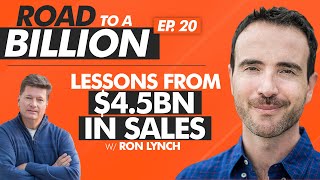
Podcast episode of "The Road to a Billion" (episode RTB:E20) featuring host Stefan Georgi, co-host Ed Ray, and guest Ron Lynch. The conversation covers Ron Lynch’s career (helped launch GoPro; produced 400+ TV commercials representing ~$4.5B in sales), his nonprofit IntelliHelp (501c3; $100 feeds a family of 3–4 for two weeks; >2M meals supplied), infomercial and direct-response strategy (long-form 28:30 vs spots; need ~5–6x margin; examples: GoPro, AeroGarden, OxiClean), creative strategy (use of top-funnel TV 'bally' ads of 15s–1min to drive viral attention + pixel retargeting), strategic/creative brief methodology (identify core problem, USP, 3–5 avatars, 3 benefits per avatar), storytelling and audience segmentation, product examples and failures, current projects (Backstrong chair, in-development handheld device/computer controller for AR/VR/home education), and practical advice (learn to say “no” to preserve options; set five objectives per week; never confuse effort with results). The episode includes live Q&A with listeners and references to resources/links shared in chat (IntelliHelp donation link; Ron’s course/Big Baby Agency).
Questions this video answers
Over 400 television commercials representing $4.5 billion in sales.
$100 feeds a family of three or four for two weeks.
Over 2 million meals (private-donation funded).
A 28:30 (half-hour) creative is considered long-form infomercial.
A 5x to 6x margin (e.g., landed cost $20, sell for $99–$120).
Chapters
Hey, you are listening to the Road to a Billion podcast. I'm your host, Stefan Georgi and I'm glad to have you with me here today. The Road to a Billion is a call in radio show. Well, a call in radio show style podcast where you can ask me questions about freelancing, copywriting, entrepreneurship, mindset scaling, funnels, relationships, money, pretty much anything. And the reason for the name is the products that I have written for will hit a billion dollars in sales this year. And I want to make a direct impact in lives of a billion people over the next 10 years, whether that is emotional, mental, financial, what have you. We'll start taking calls or questions in about 30 minutes. Before we do that, we're going to be talking to my amazing guest who I'll introduce in a moment. But the way we answer your questions is to have you put them into the Q and A section of Zoom. And then my friend Ed Ray will go through, review those questions and feed them to my guests and myself. Ed, do you want to quickly say hello and tell everybody who you are?
Yeah, for sure. Hey, I'm Ed Ray. I'm a young, budding 20 year old copywriter and I like breakdancing. That's all I got for you today.
That's great. That works. And in addition to Ed, I have my amazing guest today who is the one and only Ron Lynch. If you don't know Ron, he helped to launch something called GoPro, which you've probably heard of unless you have been kind of living under a rock. He's been a creative strategist for over 70 other major brands including Rug Doctor, Orange Glow and Oxiclean, Samsung, Johnson and Johnson and more. Ron holds several patents. He's had a hand in over a dozen films. He's produced over 400 television commercials representing $4.5 billion in sales. So I'm really excited. And Ron, I'm really thankful that you're here. Thanks for joining us today.
Thanks for having me. This is exciting. You're an individual that I admire as well as your partner Justin, who's a very good friend of mine. So this is fun. I appreciate it.
Awesome. Well, one of the things I want to lead off on, I kind of left this out of the Facebook live posts and other stuff, but I know you're involved with Intelli Help, which is a nonprofit that's helping to basically feed like kids who are, who are hungry and at risk. Is that correct?
I am. I'm actually the founder of it. It started with a Facebook post on March 14th and I kind of had the foresight that there was going to be folks losing jobs that had never been on unemployment and relationships that might break up due to the stress of the situation, and elderly folks at home that couldn't probably get to the store that were at risk. And we thought, hey, how are we going to feed those guys and get them medicine? And it really just blossomed. And there's some folks that are here, like Matthew Shubrook has helped us a ton in Intellihelp and blossomed into 10 countries. And we have Intellihelp pets. And we just were awarded a 501c3 status. We just were awarded Amazon Smile. So when you shop on Amazon, donations can go to us. And we're feeding hungry people, hungry families today. I think that's the unique thing is that most nonprofits, there's some life cycle to it. Like you donate and then something happens. This, you can actually go in and pick a family or you can donate money and that gets spent and utilized and feed somebody tonight.
Yeah, that's awesome. I was going to ask, I mean, how much if someone donates like, you know, $10 or $100, I mean, you know, how much of an impact can that have when they make those donations?
So what our metric is $100 feeds a family of three or four for two weeks. So we've given. We have supplied over 2 million meals at this point. And it's all been private donation folks like you guys for the most part. A couple companies have stepped in, but mostly folks like you. So we make it go amazingly far. And, and part of the strategy is people who live at the economic south end of our world tend to not eat one healthy or economically. And we help teach them how to get calories and proteins and stuff packed into their. Into a nutritious diet in a very affordable way.
Awesome. Yeah. So, I mean, you may not know this, but I talked with Matt Shubrook about this, who's on the earlier our show today, and how he did something where I think he was trying to raise $5,000 a little while ago and I told him I would help to match donations. So he and I got together. He actually created a page which I'm going to share right now. So basically for anyone who's on the show, if you or who's attending in Zoom and I'll put in the Facebook Live as well, the link to it if you do donate to IntelliHelp to help feed these hungry families that are at risk and that need right now. Uh, Matthew and I combined are going to match up to $15,000 in donations. So we're putting up $7,500 each. So if you put up, you know, 15,000, it means $30,000 and you heard what $100 can do and how far $100 can go. Um, so I've been wanting to promote it and then I thought, honestly, A, had some weird stuff happen earlier in this week and I didn't want to like, tie that to that. But then B, I was like, I'm going to have Ron on the show as well. And by doing that, we're able to, to do it. So for anyone who wants to visit that page and make a donation to help these families, it's an amazingly good cause and your donation will be matched. So you put $100, Matt and I will combine another hundred dollars all the way up to $15,000. So highly recommend you do that. Put the link in the Facebook live as well. And really excited about that.
Thank you. And I'll thank you guys in advance for any donations you give through this. And it's, um, it's critically important. I think I'll just say one more thing about it and then we can go on to the next thing. But it's, it's important that people know that this is not a stagnant program, that people come back to the well over and over and over again. They can only come back four or five times. We're encouraging people to get back up on their feet. This truly is an emergency feeding program. You can imagine there's a lot of people that could lose their job today that have never been on unemployment in their life. They don't even know how to go through that process. And they just paid their rent and they just paid their car and they just paid their insurance and their phone and they're like out of money and there's no next paycheck and they're in sheer panic and they got two or three kids sitting at the kitchen table tonight. And that's really the kind of true emergency help that we're offering people, that you're offering people. And it really is life saving and it's emotionally saving for people because they don't. You get to dial down the stress in their home, which is going to let them think through and make better decisions. So please help.
Yeah, that's awesome. Thank you for sharing that, Ron. And again, I put that link in there and I'll link to it again a bit later in the show and I'll be emailing out to my list and putting in the YouTube show notes and all that kind of stuff as well.
Yeah, you're awesome. Thank you.
Oh, of course. Now switching gears from. From that to like, let's talk about, I don't know, the GoPro. Should we start there? It's the most famous thing. I mean, you've done a ton of amazing stuff. Like you want to do this. I'm curious of all the projects you've worked on and you're kind of storied career, which. What's actually your favorite? What was the most fun project that you were involved with out of. I know you've done like 400 plus. I know it's kind of a tough question. And are one of the top ones that you just really loved working on and why.
Boy, that's. There's almost a terrible way to answer a question, but there's so many to choose from. A GoPro is a favorite one because my gut instinct about the product was correct. My gut instinct about the top of market for that product was way off because I thought we were going to get that thing to maybe 60 million, $100 million and we got it to $660 million and it was extremely simple to do. And I think that was one of the biggest lessons is I've worked really hard on things that have failed or been mediocre, but the stuff that just works, just works and it doesn't actually take that much effort.
So what was your gut instinct on the product, Ron?
I thought, you know, it's one we knew that we had the beginning of Facebook and YouTube in existence that we could leverage. And we knew we had of narcissism associated with cameras. What normally a person or a company would do in GoPro situation is they would blast an ad about the camera and the features. And we created a multiplicity of campaigns that I'd learned to do on the Internet actually prior to that with a company called AeroGarden, where we made 12 or 13 commercials specifically targeted at specific uses for the camera, be it skiing or motocross or race car driving or dogs and bunnies and ATV use. And we placed those on specific media channels on television. So we created a top funnel, which people weren't really creating top funnels for online on tv then that was kind of the first top funnel on tv. So we had all of these creatives that drove to the same webpage and the call to action was enter to win a free GoPro. Every day we give a free suite of our products away. So you go to the page and you get this interrupt, put your data in to win the contest and say, hey, you saw the contest, congratulations, come on in. They put their data in and then they'd be exposed to all the other creatives and channels and their intellect would take over and go, oh my God, I'm never going to win this contest. How much are these things?
Right.
And once you found out there were 300, 400 bucks, it was a no brainer. We guessed all of the parts. Right. We just didn't really realize. And I think that that was the way because it was about the time the iPhone came out, we didn't realize the acceleration that YouTube, Facebook and the iPhone combined would be able to drive this immense amount of sales.
Yeah, 100%. That makes sense. And that's really interesting. Yeah, the whole idea of like a top of funnel on tv, because I think you hear people talking about that in context of obviously online funnels and things of that nature. Had you thought like that previously then? Or is this sort of like the first time thinking about it and breaking it down in that sort of like mentality of like a top of funnel, middle of funnel, bottom of funnel type approach to things?
No. We had had somebody approach us a few years earlier. A friend of mine, Randy Sephrin from Colorado, brought us a product that he was a. He's a CMO of the company and it was called AeroGarden. It was a hydroponic garden that sat on your tabletop and they had already shot a half hour infomercial before they got a hold of us. And we walked through their infomercial and their research and we realized there were very disparate audiences that were buying this. That a half hour infomercial was actually not the most efficient way to sell this Right. Spot media placed in those channels for pampered chef type moms and people that wanted to grow flowers and online people that wanted to subscribe to High Times magazine. There was a variety of people buying this. And so parsing that was really my lesson because prior to that I was really of the mind. That choice caused confusion because I came from the world of long form and short form infomercials. So you really had to hit everybody. But what transformed between 2000 and 2010 was this explosion of channels. So all of these channels occurred and suddenly you could vertically isolate different types of media and creatives. So it was organic. But that's where I learned it was definitely on AeroGarden.
Got you. And when another question I'd have, Ron would be like, when do you. When Is an infomercial the right move versus when is it not? I mean, not that there's, I'm sure a perfect answer for that, but you know, is there sort of a criteria for a product where you're like, oh, an infomercial makes a lot of sense and kind of. Do you have a way of evaluating that?
Sure. One is offer and cash flow. I mean, when I first worked with Billy Mays and I did a lot of work with him and he taught me a ton, the two questions he'd ask you is what's it do? And what's the offer? Like, what's the magic of it? And what's the offer? So you kind of have to think of it in those terms. So when you utilize the, when you use the word infomercial, that means, that means different things to different people.
Right.
So it's infomercial is to me is specifically a 28:30 creative, a half hour creative. Now then we have spots that are 1 minute, 2 minute, 5 minute. So first I have to bifurcate it there and say spots are more supportive of a little bit lower revenue product. Particularly if you can build an offer on the back end. Once you obtain the call or the click, a half hour is. You tend to need a more expensive product, but Both need a 5x to 6x margin to work. You have to have landed cost of goods of $20 and be able to sell it for $99 to $120 to make that work. Now that's not radically different than the rest of the business world, by the way.
Right?
Because if you're going to wholesale to Walmart, you're going to lose 50% of your retail by wholesaling to Walmart. So you still have to have another 50% left. Right. So it's, it's very similar to all business mechanics, but it. For a long form, you need to have demonstrated demonstrations and multi verticals. So I need to have 3, 4, 5 verticals in a long form that I'm representing and I get to tell those individual stories for those people. And I tell three benefits per vertical because people only buy the benefits that apply to them. If it's a female show, I can scramble the show any way I want because women are way better at sorting stuff. If it's a male show, it has to be A, B, C, D, Pythagorean and which makes them challenging when it's both.
Right, Interesting. How do you do that when it's both? How do you usually try to approach that when it's Both because I literally.
Try to integrate it that way. Cooking products I'd really love to do. Because you can make them about the food and recipes, and you find a bunch of food and recipes that are uniquely made to the device that you're selling. But there's people that have things that I think are just challenging as hell. They make infomercials and they're successful. And I go, how do they do that? Like, Keurig has run infomercials forever. How can you make an instant coffee maker interesting? And I think that in their particular case, that what they're doing is they're creating advertising and buying the discounted doctor rates and selling retail because they already have distribution challenge in place.
They're not trying to establish it makes sense. So they don't care about the sale through the infomercial as much as it's like another advertising medium or platform for them. Right? Yeah.
If they can even. Like we have had when OxiClean got big. When OxiClean first started, our MERs, our ratios were probably for every buck we spent on TV. We sold $4 with OxiClean. And then we got to a point where it went under a dollar that it was 75 cents every time we spent a buck. But we had such major retail distribution by that point, it became cheap advertising. Right.
It's interesting. That makes a lot of sense, though. Another question I have, Ron, would be, is there a. Can you think of a product in an infomercial that it could be actually either a spot or an infomercial, but where you thought, oh, this is going to absolutely crush it, and you were kind of like super confident about it, and then it just totally bombed. And if so, maybe like a lesson or two learned from that. I'm always curious to hear those sorts of stories.
There's times when you get a product and we call them proto craps from an inventor or a manufacturer, and you step into it knowing that the mechanics work like the financial mechanics are in place, and you get halfway into it and they go, oh, by the way, the cost of goods just tripled. And I mean, that's happened to me a bunch of times. So that is one way it typically happens. Other thing like, and there's been companies that have struggled trying to figure out the infomercial path that eventually succeeded, that spent zillions before they did. Lifelocks is one of those. Lifelock had done creative after creative, and I was even going, like, how do you guys monetize this?
Right?
Like, it's like selling fire extinguishers it's very difficult to sell prevention on tv. There is. So that makes me think of a specific example. Once upon a time, you remember the bars that people put in their car? The red bar that stopped the wheel from their car.
It was called the something lockrider or something like. Yeah, the club. The club.
The club. Okay. So somebody manufactured a club for the. For the home. And it was called the Strong Arm. And they got Robert Conrad, who is a 70s television star, to replay it. And we thought, well, the club works so well. This should work. Well, this is the late 90s, early 2000s. And so shot the infomercial. It looked good, put it on tv, couldn't sell it. Well, why couldn't we sell it? Because the I. The idea of seeing the club in a car is a crime deterrent right away, right? This thing sat on this inside your door, in your house. It was just over the creative line for the consumer. It's implicating, implying someone's going to break in your house, which is a violent crime you don't want to think about. And it's like, that's why I immediately said, hey, it's like fire alarms or fire extinguishers. Most fire extinguishers and fire alarms are bought the day after the fire.
Right, yeah, that makes sense. I mean, with home alarm systems, usually it's like people will wait until something sketchy happens. Not that, you know, sure if there's a break in, but even just they see someone suspicious in their neighborhood or there was like a robbery, the neighbors got broken into. Exactly right. And if you've ever done that, like when we've talked with like, you know, an ADT rep or whatever, of course, that's what their first thing is always like. They're friendly, but they're like, oh, yeah, I get it. Cause there's been just a lot of robberies around your area lately. And it's like, no matter. It doesn't matter where you live. You could live in like a desert island and be a lot of robberies going on.
You know, get you get your head going.
It's pretty interesting. That's really cool. Let me ask, are you. What are you actively working on right now, Ron?
So I generally do not give up that information because I have to sign NDAs to do things. Fair enough. They're under there 10. They tend to be under wraps. But there's a couple. We have a chair company that we started out as advertisers for that we obtain investors for that. We love a lot called Backstrong. And so the Backstrong chair is something that we continually create new content for on an ongoing basis. And I do a lot of consulting for people that are in the midst of build a product and then we have some products that we're in the midst of build of that we own. And I don't mind saying one of them is a, is a digital device, a computer that replaces the existing computer that you have. And it's utilizable throughout the house on every screen. And it's handheld. So if you can imagine taking a PC and putting it in something the size of a softball and being able to go to any screen in the world and use any screen as your screen and it's got a camera, it does absolutely everything your PC does. But it also is a game controller and the best game controller you've ever used.
Wow.
And it works in AR and VR. It's a pretty cutting edge technology and it's something that we invented and wholly own and so we're actively working in that area as well.
That's amazing.
Yeah, we've kind of moved from the widget world to the end gadget world to higher end. Samsung Robotics is a client of mine, has been forever.
So yeah, it's really interesting. I was actually reading, I think it was just this morning about how it was in the Wall Street Journal, but industry is looking at trends and how with gaming that that's kind of going to be the next big social network type thing. This is like, you know, speculative, it's just an article. But how, whether it's social media like Facebook, things like that, but now as gaming gets more advanced and these platforms get more advanced, like people are going to do more of their networking through gaming devices. And I've thought that way about virtual reality to your point about VR for quite a while. I think as that evolves and becomes more immersive and the capacity or capabilities increase, like people loved Second life back in the day and all these other things like they're going to be doing. You know, I think it's going to lead to a lot of really interesting opportunities, both from a kind of community standpoint, but also a advertising standpoint. Because imagine if your experience of Amazon was you go in, you can like say you look at like shirts as an example, right. Then like you see a bunch up here and you can take like the augmented little controller and hold the shirt, turn around, look at it. I really think we're going to go there. It may take a while, but if I had to bet money. That's where I think things will go. So I think, like, the point reason I bring that up is because even with what you're talking about, moving more towards technology and things that are, that can be used for. As a controller for gaming that integrates with AR and VR, to me, like, I think that's. Yeah, it sounds like a really fascinating product. Is that out yet or is it still in development?
No, it's in development. But I'll tell you, one of the guys on our development team, like, fortunately, I have really nice friends in Austin and I get to work with a lot of great people. But Hrish Lakhtar, who comes in and out of Austin, is the founder of Superworld as well. And I don't know if you're familiar with Superworld, but it's a crypto exchange plus a VR world that's laid on top of Google Earth. And it has exactly what you're talking about. Basically, you put on VR glasses or use your phone and I could say, hey, Steph, go the. I left you a gift. You'll get a message. I left you a gift down at Starbucks on second at City Hall. And so you could, you would go there and you'd see on your screen in the air there, like your gift card and you could find out, hey, I bought you coffee there and I bought you dinner at Bob's Chop House or something. And it's literally, you have to go there to get it. So that's kind of interesting. The other piece that you touched on is where we feel the acceleration is going to be is in home education. The longer this pandemic goes on and we look at it globally, we go, hey, how could we get, say, from the plains of Africa through India, all kids in the world, give them a fair break by giving them proper education. That we could use this device in a distribution model where it's kind of like cable television, the devices are cheap and you can afford to hand them to everybody that, let's face it, none of these parents that are homeschooling right now want to be homeschooling, and none of them are good at it. We have an educational disaster on our hands at the moment, along with a bunch of other Covid disasters. But it's exposing a problem that we can solve as a society. And I think it is a proper device and software solution to teach standardized classes. And if you think about, if someone has a device where they can really accelerate their learning and you're getting a data feedback loop on every student, this Teaching to the test thing could be two, three hours a day. And we can open up two, three hours a day to music, creativity and the things that actually wire young people's brains together and get them thinking, like really thinking and being creative. And you could tap into their individual abilities and aptitudes. So you may not have grades one through 12, you may have levels one through 12. Kind of like turn school into a video game. Right. So go at your pace. But because of the data feedback loop, we could find out what your aptitudes and interests were so we can educate you into a field you would actually be good at and love.
Yeah, that's amazing. I totally see that and I think it's easy. Sometimes I kind of feel like we've almost been in a. From a consumer perspective in a lull where it's like we've got social Media, sure. Like TikTok came on, you've got that stuff going on. But it doesn't feel like there's been this huge breakthrough yet. But that doesn't mean it's not coming. And whether that's with AR VR, better technology, obviously 5G playing a role. There's so many things that I think if you look at really microscopic view, it feels like we're sort of stationary. But I think AI, by the way, too. Right. So the next five to 10 years, I think where we're going to go is going to blow people's minds and it's better to be prepared and a part of it now versus kind of being, especially for an entrepreneur.
Right.
It's like I want to be at the crest of that, not sort of surprised and reactionary and at the end of it. So it's really. I kind of love it. I think going too crazy. Futurism can be weird. If you want to talk about what's going to go on in like, you know, 2150, that's kind of, who knows? But in the next five or 10 years, I think you're going to see some remarkable stuff happen. Yeah.
Aubrey de Grey will be held here to tell us. But I won't be here. Ed will be here. There's things like TikTok and I look at those and I go, they're amusing, but they're really iterations of things that exist. They're not moving the species or the intellect. There's no problem that it's really solving. It's just another version of entertainment. Oh, it's Instagram plus this. It's someone else figuring out how to make a buck and build a Network off the audience.
Right.
The things that advance our culture are Gutenberg type things and cotton gin type things is what are things that we can do that actually move mankind forward. And the ability to interact and learn on a global level in an efficient way would massively change mankind.
Yeah, it's incredible. And it's such a huge problem to solve. And from an entrepreneurial capitalist perspective, it's like tons of money to be made. Right. I mean there's so many billion dollar, trillion dollar companies that can be created helping to do this. And whether it's that or it's a public private partnership, I don't generally like trust the government to kind of figure it all out on their own. I think you really need to have private stakeholders.
SpaceX is proving that.
Yeah, right. And amazingly, I'm sure it was built.
On all of the technology NASA developed, no doubt about it. But private enterprise has a way of cutting through the clutter and to your point of making. And it makes a lot of money. I think that's exactly the right order to ethically put it in. If you go solve a problem in the world, eventually the money will come. And if you solve a big enough money, then more money will come. One of the things that we're running into as a society, and I think that you're seeing that in elections and in consternation in societies, there's a layer of technocrats out there that are sucking cash out of society and not reinvesting and they're starting to hoard cash. And that's what people get really upset about, is the guy that's worth 100 to $200 billion, that they don't see the reinvestment and they seem to be violating some core moral principle on our half on behalf of us. You know what I mean?
Yeah, I do.
I think that's why Musk actually does a pretty good job, is because he takes one company and he leverages the hell out of it to the next, to the next, to the next. And so people like that and like him, even though he's a little diabolical.
Sure, yeah, he's a little diabolical. And Ed Ray had asked, what's a technocrat? I can. Yeah, my definition of it is sort of somebody who has very specific skills, very specialized in a certain place and sort of is kind of an elitist connotation of they are a gatekeeper or hold, like kind of hold power over others because they have like this special sort of specialized knowledge or capabilities or assets that others don't have. And then there's this idea that they know better than the average person and that they can control things. That's the way I would kind of define it. I don't know if that's a fair definition, Ron, or if you mean things.
I think that there's an element to it, too, that there's a perception that they're using an advantage in technology to extract profit margins that are exorbitant. And so they're taking more from the marketplace than they're actually offering the marketplace at a certain point. And then they speak to the crowd kind of down their nose. And it would be kind of like if you inherited the perfect AI and suddenly you were the guy that had the company with the AI. And then from that, assuming you had the moral and ethical high ground on planet Earth while you were extracting wealth from everybody, it's like, no, no, that's not exactly the way this is supposed to work. Right?
Yeah. One thing to Elon Musk, too. I mean, two things about him is. One is it's going back to the rockets or anything like that. I mean, they basically looked at the cost to build all this stuff, and they were like. People were like, oh, super expensive because you have to do this and that and that. And then they're just like, why do we have to do it that way? And they found a way to cut the cost, like, tremendously, right when they're building these rockets through. So I think that's a good example of where private industry can really help. But then the other thing about Elon Musk is the concept of. I know he talks about wanting people to build more things, build more products, build more interesting products. I do think there's going back to even the Technocracy type stuff. There's. And I think I'm guilty. I thought about this too, right? It was like, I'm selling information and you know, even just like little like. Like supplements or whatever I'm selling, like, it's kind of like, I don't. I don't follow it, right? I'm not gonna be one of those guys who makes a bunch of money and then. And then shits on what made him a bunch of money, right? Cause I kind of. That drives me crazy. It's like, you know, thankful for that and it's a path forward. But then as I think about what I can do in my life, it's like, man, like, trying to actually solve big problems by building real solutions, real processing, I think you're doing. And it's really admirable so just some thoughts I would share on that. But yeah.
I think that's a really good framework to look at it from.
Yeah, for sure. So cool. So we'll start answering questions in just a second. Pop them in the Q and A if you have one. Before we do that, Ed, do you have any questions that you want to ask Ron, as our co host? You get the chance to get your first questions.
Yeah, actually, I would love to. And by the way, all this is really, really fascinating and this is actually opening up a lot of doors in my mind to where I can potentially expand my business in the future. So thank you. But the one thing I really want to know is, like, where do you, where do you kind of see marketing and direct response going in the next five, 10 years? I'm really curious about that.
That's a great question.
What I see is more people moving to direct response, which I've been saying for 20 years and has happened is you when you spend money, you want to see it come back. What you're going to experience is a out the old guard of the Wharton Business School, folks that are wonderful people, but have done it in a certain way where they've lavished corporate dollars, Pepsi type dollars into the marketplace to make ridiculous ads and have no metric on what they got back from that ad is going to be supplanted by folks like yourselves because the CFOs of these companies and CEOs will realize, oh, wait a minute, we can actually make a return on our investment in advertising based on technology. And we need to see what that is. And the more that happens, the more that happens. The rest of it is storytelling, man. And the great news is that gives the brand advertiser a place to move to. Like, the things that we like in advertising are always clever and enlightening to us and connecting disparate points in our mind as the viewer, which gives us the explosion of serotonin and oxytocin and all of that stuff that makes us feel good that go, oh, yeah, I'm interested in that. They're solving my problem. They're talking to me.
Yeah. One interesting thing, I love the storytelling part because, you know, one thing, there's a backlash right now in the direct response and hardcore direct response community to these sort of video sales letters. Sales letters that are like really outlandish stories of, you know, oh, my wife lost 67 pounds in 14 days after finding this pill that was buried in like the Amazon. And you know, now, right. And you get it. And I had that Kind of come up this week for some personal stuff of my own and then. Which, again, I've been transparent about the fact that, like, oh, I would kind of do that. But what's interesting is I read your post on that.
It was really. Actually, I thought it was really wise and kind of you to expose yourself that way. I think it's smart.
Yeah. Well, thank you. And what's cool is, honestly, I'm talking with the guy who did the video. Now we're actually having a whole email dialogue, and we're going to probably do a video together where we go through sort of problematic funnels and look at ways that. I'm gonna suggest ways that I would change it, but then use him as, like, the arbiter of, like, the gut check. Like, is that enough or is it not enough? So we're actually gonna, like, collaborate together and. Cause again, I think at first, I want to be defensive for people who don't know what I'm talking about. Basically, there was a video that came out from someone named Coffeezilla. He's like a person on YouTube. And it kind of says it's delusions of a $700 million copywriter. And, you know, and at first, there's the ego and the emotion and the adrenaline of feeling like you're attacked. And he used a snippet from something I wrote in, like, 2013, which is like this, you know, kind of like aggressive bs, like, reverse Alzheimer's type offer wasn't. I didn't own the offer, but I wrote the copy for it. And obviously, again, I've been transparent about being involved in that kind of stuff and then getting better and trying to help other people get better. But as I thought about it, I'm like, there's still lots of things where I'm not that I'm kind of like, there's gray areas that I'm playing in and sort of like rationalizing it, you know, and it was like, so rather than just sort of take it personal and go on to be this guy, I'm like, why don't I actually look at what I'm doing and see how I can be more of a force for change and how I can help people? And one of the thoughts I have. Cause somebody messaged me about my RNBC method course today and was kind of like, oh, you know, if I buy it, is it all about just, like, you know, using fake stories and blah? And I was like, no. I'm like. And a lot of what, you know, a lot of the examples are most of them aren't using fake stories in that course. But I was like, because, like, okay, because like, you know, I don't want to use stories and be unethical. And I was like. But I was like, whoa, whoa, whoa. Like you, you can, oh my God. Like we've been storytelling since before the written word. We've been, you know, like, using stories is incredible. That's how humans communicate, right? Like it's storytelling. So I was like, it's not about like, yes, if you do a crazy made up story, it can be unethical, but it's like you can tell stories about the product. You know, you can tell stories about how the mechanism behind the product was discovered. You can share stories of other people who have been in situations and not like say that they then miraculously solved everything. But I just want to make that point, I guess publicly while we're doing this call too, because I don't want people to think that storytelling is bad. I get storytelling is beautiful thing. It's just, you know, corrupting it and perverting it for sort of, you know, nefarious purposes is bad. So sorry to go on a tangent.
About that, but it triggered the first decision that you have to make as a marketer is what's in it for the customer.
Yeah.
And that, that solves the ethics problem. If the product is actually real and it's good and it's useful and it's being sold at a reasonable price, then it's ethical, you know, as long as you're not damaging anybody and it's actually providing benefits. It's when you get to the things that, where you're going, oh, there's 18 people selling the same thing. How do I get to the front of this caterpillar hill? That's when it becomes problematic when you're starting to elbow everybody. Like, go to a, go to something that has an actual USP. Don't fight over the same USP with 40 people. Like, go find something unique. Because when you find something unique that truly changes people's lives. In my particular instance, I'm like, yeah, I'll work with you. And I'd like some stock in the company. I'm going to build something that's going to go on forever 100%. And that's how you build wealth. That's like getting rich and making a buck is dumb. It's so short lived. And we all know the stories of the people that have done that, who reached massive peaks and then they drop off and then, oh, three years later. Yeah, he killed himself in a room in Hawaii because he couldn't take it any longer. He couldn't live with himself. Like, really? That's how you want.
Yeah, it's, it's. I totally agree. And so it's like, it's almost like searching for that fix too, right? Sort of like the junkie going around for the next high and you get it and then you come down and. And then you make increasingly irrational or poor decisions because, like, you're getting more and more desperate for your next, like, fix or high, you know?
So it's the difference between selling posters and painting paintings. Anybody can sell someone else's poster and say, oh, yeah, print it off a thousand times. But for an artist, an artist is someone who sees a problem in the world, makes a communication and an emotional attachment to an audience member that's true and ethical and moral, and the audience feels it and they take an action and you've moved and changed their life because of it. And there's often a financial transaction in that, and that's a fine transaction.
100% completely agree. I love that. Ed, do you have any other questions you want to ask for Ron before we open it up to our Q and A?
Dude, there's. There's just a lot like, dude, Ron, such a smart guy. What the heck? Shoot.
I don't know.
I think we should let some of the people on here ask some questions. So we'll go into that.
Let's do it. So, Ron, the way it works is Ed will. He'll kind of give us a gist of what the question's about. Then the person will be brought on, will unmute them. They can kind of ask their full question. So it's like that radio call and radio show tape format. And then we'll answer as best we can.
Excellent.
All right, so John Caprani has a question here about persuading clients.
Sweet.
John's question.
And John's one, by the way. Ron, can you hear me?
I can hear you, John. Good to hear your voice.
Yeah, Real quick. I was just gonna say, Ron, John's the one who obviously, like, you and I have like a digital relationship. We need to make it more of an in person relationship. We're gonna make that happen soon. But he was the one who usually is like, have Ron lynch on Road to. I was like, oh, my God. I get that's a no brainer. So I'm glad John's the first one to get to ask.
Oh, that's great. Yeah, awesome. Thanks, Stefan. So, Ron. Yeah. What I Wanted to ask, do you ever get yourself in situations where you need to persuade the client that, like, a direct marketing approach is the right way to go? And if that's yes, is your answer, how do you go about doing that? I'm not sure that I have to persuade them. Most people come to me knowing that what I do and there's an element of it, or they've had a history of success in it, and they say, you know, I've gone down the direct response road with other people, or I have somebody who comes to me with an invention and the invention is brilliant and will go, let's go down the direct response road of funding you. Which is how I've ended up doing a few Kickstarters along the way. But I still have to persuade clients per se, who've already decided to do advertising that this is the right way to do it. And so generally. And I'll pimp my own mercenary course for a minute, because there's folks on the call and you're aware of it. John, as well. I teach the method of creating a creative brief and strategic brief for a client. And that's most everything that I do in my business and the way that I conduct myself is Socratic. So I already know where we're going. So I know the question to ask. And the question to ask a client is, do you have a substantial creative brief and strategic brief for your product? And they go, what? I think so. Well, we have the colors and the logos, and I say, okay, you're talking about a brand deck, and we're going to use your brand deck. But are you aware of what the problem is you really have, what the solution is, what the USP is? Who are the five customers, the five avatars, what their particular needs are, what benefits and features they have, which one of those needs, which benefit? And then already you can already hear them going, whoa, whoa, whoa, I don't have that. How do I get that? And I simply go, let me come in and work with you for a day or two and we'll develop that. And then you can either take it and go on with your life and go hire somebody else, or once we get to know each other, you can say, yeah, I think I trust you to be our mountain guide here. And that generally does the trick. And it generally works. And I don't mean works from me, getting them to say yes to me, because I do have people actually that go and do it themselves, is it gets them the right information, it gets them in the right direction, and probably Two thirds of the time, they end up hiring us to do the actual content work, or they are in a sales situation where they don't have the money to do that type of marketing yet, and they execute to get to that level. And six months later they call me. And that happens a lot.
Nice, John, does that help you? Okay.
Awesome. Thank you very much.
Sweet.
Yeah, that was awesome. Thanks, Stefan. Thanks, Ron. Cheers.
Thanks, Ed as well. Poor Ed, the forgotten child.
I'm here to do my duty, bro. I don't need you. Thanks.
You're doing great, man. Well, you do get.
One of the things that's great about talking to a client about their product and not your service is it's their baby pictures. If you guys are familiar with Sears or Macy's or Marshall Fields or any of the great department stores from the 40s and 50s and 60s, the way that they built business is they had a photographic department in every department store. And you can remember this from Santa Pictures. But they all used to take family photos, and they all had deals on family photos. And that whole department existed to get your family into their store seasonally to make. Make Macy's or make Sears your family store where your family got their pictures taken. And that was a huge thing for boomers to do with their Gen X kids. And it drove a business model. And that goes all the way back to the movie Miracle on 34th Street. It's actually. It was a merchandising tool, so there's nothing better than selling your potential client baby pictures of their company.
That's amazing. I love that as a. Kind of like a metaphor, but then not really because it actually happened. I sound like Ben Stiller and dodgeball. It's a metaphor, but it actually happened. But that makes sense. I remember as a kid in the late 80s, early 90s, going family photos at Sears and then walking through and you see all the toys, or you'd see hardware or you see whatever and makes sense. I never knew that. That's awesome.
Yeah. It's essentially. It's the free needle.
Yeah, totally.
I hate to say it out loud, but the drug dealer model works in every business. Yeah.
What do we got for our next question here?
Next up, we got Michael McGovern asking about human psychology.
Nice. What's up, Michael?
What's up, guys? Hey, Ron. Hey, Michael. How are you? Good. You? Fantastic. Good. Yes. My question is pretty straightforward. What is the most surprising thing you've learned about human psychology and all your experience in sales? Probably things that are not politically correct to say. So I'LL give you the one. And first. Actually, that's probably is the first one is that human psychology is not politically correct. So if you find yourself getting sucked into political correctness in your craft in this art, I would reflect on the music industry and realize that not all music appeals to all people. That there is a variety of music that appeals to every sub segment of human being on the planet Earth, and you need to find the music that. That is their tune. And in line with that, you have to deal with metrics that are statistically relevant. And it probably aggravates some people to hear this, but statistical relevance does happen between men and women separately. Male brains statistically work differently than female brains statistically. And I can relate that to engines. Going back to metaphors, you can put diesel fuel in an unleaded fuel car and it will not run. And you can put unleaded fuel in a diesel engine and it will not run. Women's brains have an extreme amount of estrogen flowing through them compared to yours. And male brains have an extreme amount of testosterone compared to women's. I think a woman has about 2 to 4% testosterone flowing through her system in the relationship of all of the makeup of those. And it causes the brain to think very, very differently. And the proof of that concept has been very often in. I have a few friends that are, in this particular case of people who have sex changes and they go through hormone therapy and they are the first ones to tell you, holy shit. When they started pumping those chemicals into me to make me a woman or make me a man, biologically, my brain changed radically. The way I thought about sexuality, the way I thought about the world, the way I see things. I feel like it's a completely different software program. Wow.
It's fascinating. I wish if I could. If I could have a woman's brain for like a week and then come back to my brain just because I'm, you know, I like. I like my brain too. Probably get to that point at some point, you know what I mean?
So.
Talk about empathy, though. Could, like, half the divorces in America could end, you know what I mean? Just by having more empathy and understanding.
Most of the people who are really good in that space, like the Alison Armstrong's and John Grays of the world, are people who do like, hey, figure out that the other person thinks differently than you do.
Yeah.
And feels differently. We have this illusion because we have. Most of us have two arms and two legs and a head, that we're just the same kind of doll with different parts. And I think that's one of nature's great tricks, is that we're two different species that coexist.
Awesome. Thanks, Ron.
Cool.
And I know you put a follow up question in the chat, but if you could just put in the Q and A, that would be awesome.
Beat me to the punchline stuff.
What was that?
I said you beat me to the punchline.
Oh, yeah, you know, it's cool. This is great. I'm loving this episode. And I know some people have already said they are as well, and this has been already a great conversation. So, Ed, who do we have next?
Next up, we have a question here from Molly about her two best ever questions.
What's up, Molly? Doctor. Doctor Molly Livett.
Hey there.
How are you?
Good, how you doing?
This is so much fun, Ron. Thank you so much for being here. Stefan, thanks for putting this together.
Yeah.
When I'm in front of someone as accomplished as you, I'd like to ask, you know, what was the best advice you ever got and what was the best surprise you ever got? So a couple best ever questions there I'd love to hear.
All right, well, we're going to go off the professional script. I'm going to answer that question truthfully. They both happen in the same moment. I flew to Los Angeles. I was afraid of flying. I was about 22 or 23 years old and I had about four vodkas at the Sea Tac airport and I landed at LAX and had a few more vodkas on the plane. And I know that I was not in good shape because if you've landed at lax, you know, there's a big long escalator down to baggage claim. And I decided I needed to ride the aluminum slide between the escalators. I rode the aluminum slide and my friends greeted me with shame at the bottom. And this was obviously pre 911 in the late 80s. And we went to. My friend worked at the Marriott lax and we got a room there for a couple nights just to have fun. So it was a little vacation. And we were. It was a weird night. I think that Mark Gastineau and Brigitte Nielsen got in a fight in the gift shop that night. Like a real legitimate fist fight, if you remember who they were. New York Giants linebacker, I think, and this kind of super tall, supermodely movie star gal. And at midnight, we decided to go for a swim. I went for a swim and cracked my head open in the pool, soaking. Went in boxer shorts, bleeding wet head. And we went upstairs and I had ice on my head. And I'd taken the ice from the drinking bucket. So we needed more ice. And I was the one who caused the problem. So I volunteered to go get the ice. So I went to the ice room. The ice machine was down. I was smart. I went up one floor to the next ice room. And when I opened the door, I hit somebody. There was somebody in the ice room. And I heard this. Oh, it was an older guy. And I walked in and said, I'm really, really sorry. And I looked up and there were three of them. And there's one guy, but due to my condition, there were three of them. They're triplets. So I talked to the one in the middle. I said, I'm really sorry. He goes, it's no problem. It was Henry Kissinger. Wow. And so here I am in my underwear, dripping wet. He's in his underwear. I fill his ice bucket. He fills my ice bucket. And I'm trying to process this and sober up as this is all happening. And the room's small. So I put my hands up, set my bucket down. I put my hands up on the wall and I said, you are on my list of 3 people I'd like to have dinner with. I am pretty sure that is not going to happen now. Can you give me any advice? I'm a young guy. I'm 22 years old. I'm just starting life. And he looked at me and Henry Kissinger said, no. I said, really? He's like, no. My advice is no. If you can say no, you can say yes later. But if you say yes, you cannot say no. And I've used that piece of advice in pretty much every negotiation in my life. And it has made me tons of money, tons of good decisions, put me in the catbird seat for an awful lot of things in life. And it was shocking. And it was the exact piece of advice I needed as a 22 year old. And it made me wise up and mature in so many ways because it gave me my power as a young person. You don't feel like you have the power to say no. And the minute he told me that, it was like getting a superhero badge. That.
Molly, I'm really glad you asked that question because that was an amazing story.
That was absolutely incredible. I got to tell you, I'm willing to bet it's resonating with everybody who's listening, because I could just. I could feel it in my gut when you were. When you finished that story. That's incredible. That's really incredible.
Thanks. Yeah, it was worth the Whole drinking part of it, wasn't it? Absolutely true. It's absolutely true. And it was literally a sobering moment in life.
That's incredible.
Yeah, for sure. For sure. That was incredible. I never expected that. That was amazing. Thank you for that. Thank you.
Thank you for the question.
Awesome. Thank you, Molly. And hey, Ed, Ray and the other people who are young on this call. If you don't know who Henry Kissinger.
Is, isn't he the United States Secretary.
Or something like that? He was a secretary of State in 1972. The guy is still alive. When this story happened to me, he was like 100. I have no idea how this dude is still alive, because looking at him, his career was 20 years over at that point and he's still kicking. Amazing.
Yeah. He's.
A really fascinating guy that's ever lived.
Yeah, definitely of the 20th century. Probably one of the two or three most important American statesmen and very influential. His thinking and guiding American policy and all that stuff. Actually reading an interesting book about him called the Inevitability of Tragedy, I think it's called, and I'm about halfway through it. But he has a lot of people hate him. He wants him as polarizing.
There's people who have as many haters as he has lovers.
Yeah. So they'll think he's a war criminal. Some people think he's like, the most brilliant statesman of all time. It's really interesting, us. That's a wild story.
So one of the things I tend to think about people that are really polarizing, like that people write a book or people say, oh, I don't like that political candidate, or I don't like that religion. I'm like, hey, if the devil wrote a book, wouldn't you read it?
Yeah.
Like, you need to examine your enemies very, very closely or the people that think disparately from you. And that's one of the things that's happening in this country is because, because of digital technology, we only listen to what we like and what reinforces our beliefs, which is super dangerous. We have to listen to our enemies and really get to know them because they're the ones that are going to shape the architecture of the other side of your life.
Yeah, that's honestly some of the most important advice that's been given in this entire episode. Because, like, this idea of wanting to shut off to things that are different or uncomfortable or that you don't agree with is just so dangerous and negative. It's like, you know, understanding and researching and looking at both sides of any Picture, you know, even if you're not, it's not to change your mind, but like to just know you just to have a complete picture. Who doesn't want a complete picture? Right? Like you. Like, why do I want to have half of like a puzzle? I want the full thing. So. That's awesome, dude. This is great. So. Okay, cool, Ed. And by the way, Peter Feikna on the Facebook live mentioned that Henry Kissinger is 97 now. So we have an official age for Kissinger because his family, he was like a Holocaust survivor. Yeah. That's crazy. He's a really interesting person. You should. People should look him up and research him a bit.
Yeah, you really should. Cool.
Ed, who do we. Who do we have next?
Next up we've got Charvad. Charvad's asking about persuading people to join an educational system.
Nice.
What's up, Charvad? How are you?
Hey, Stefan. I'm good, how are you?
Good, man, thank you.
Good to hear from you.
It's awesome being on the show. Hey, Ron.
Hey.
Hey, Ed. So, yeah, my question, early on in the episode you mentioned new kind of E learning, kind of social media, where you actually problem solving and helping society move forward. So I'm really curious because I have a bit of a startup in the edtech space, and I'm just wondering how you would go about persuading people to join an educational system like that where your data can be used in this feedback loop to actually help you find your aptitude and your interest.
Okay. It's a great question. And one of the challenges you're going to have, and it's the kind of the question behind the question, is it sounds to me like what you're doing solves an awful lot of things for an awful lot of people. Is that correct?
Yeah, that's correct.
Okay, so that's the challenge, is how do you specify. And so the process that I go through and the process that I teach is exactly what I've utilized for the last 20 years. And it's a process of going, what is the core problem? What is the core solution? Then what's the core usp? Then who are the five or six avatars, three avatars that might need this? What type of a person really needs it now, not like everybody needs it, is not an answer. That's like saying everybody needs an oven. Yeah, everybody has an oven. But what do you need it for? Some people only ever turn on their broiler. Some people bake. Some people cook for a family. Some people just Reheat food. Some people don't use their oven. You have to figure out who the individuals are. Then you list out all of your features and every benefit for that feature, and that should be a pretty long list. Then you go back to your avatar and go, what three benefits from that list does my avatar in that vertical want sell them? Three benefits only people. When you start to overwhelm them with benefits, you're going to then overwhelm them with features. Sadly, most people start by selling their features and never even, oh, and by the way, we invented this thing that's so awesome with features A through Z. If you use it, you can get benefits 1 through 400. And it's just like, oh, thank you for barfing on me.
I'm out.
I can't even understand that because you're making content then about you. So your word persuade is the key word there. How did the snake persuade Eve? He didn't give her the vision of all that they could do. The snake simply said, would you like to have the power to create? God gave you all this stuff to tend, but. But the reason he didn't want you to eat from the tree of knowledge is because if you have knowledge, then you can create because he made you in his image. That's the piece he didn't tell you is, you can create. And Eve went, I can create. And she looked around her and she saw all of creation, and she went, oh, hell yeah, I want to create. And then the serpent cut the apple in half and held it up and said, look inside. You see this shape? Those are ovaries, and they're seed inside the ovaries that create. You have those in you. I do, yeah, right there. Do you see how I'm persuading Eve now? I see. I see. Very simple. Persuasion is very simple. And if you can refine your persuasion to simplicity, you are going to persuade groups of people 30 million at a time, but it's groups of people that are avatars that are similar.
That's incredible. Sharva, does that help you?
Yeah, that is really helpful. Thank you so much, Ron.
You're welcome. Dude.
Ron is next level. What the.
I know. I just put in the chat. I feel like every episode of Road to Billion, I'm like, this is my favorite episode. But I definitely feel that way about this one. I'm like, man, this is just so enjoyable and so good.
I appreciate being here. It's fun. You guys are asking great questions, too. And I'm old, so. And I've made every mistake you can make. And that's like, that's where this comes from. It's not like, oh, I'm sagely because I'm. It's because I effed everything up along the way at least five times, man. That's where learning comes from.
So valuable. Joe Logabo on Facebook Live said, I'm going to be watching this on replay several times for the next couple of days just to soak this all in. And I think I saw few people in chat saying the same thing. People are already talking about the replay.
So I'm glad It's useful.
Oh, 100% it is. And you know, you're. That's what I'm not to go on a tangent, but mistakes are amazing, right? Like, I love making mistakes because I'm like, that's again, I like making the same mistake twice or three times because then it starts to get really annoying. But making mistakes like the first time and learning from it the best.
Yeah. That's how you. That's how you get from layman to journeyman and then from journeyman to expert, and then eventually you get to master is you don't get to master without making the mistakes, but you get from layman to journeyman by making the mistakes and identifying them and identifying some of the mistakes you make are actually innovation. And so you'll do some things that. And then you realize, oh, that was a mistake. But it actually was an iteration that improved my results. So was it really a mistake? It's just. I wouldn't do it intentionally.
Yeah.
That's awesome. Cool.
Ed, who we got next?
Next up, we have Carl asking about creating the strategic brief.
Nice. What's up, Carl?
Hey, Stefan. Hey, Ron. This is a great interview. I'm really enjoying it.
Awesome.
Thank you.
So, yeah, so I'm actually quite new to copywriting, and I'm just. I used to work in branding. And I just know when you're working with a client or a company, they might have problems with their product, might have problems with the connection to the audience. All different problems. And so obviously with this day, you sit down with your clients. Sounds fascinating to me. I just really curious what specifically you're doing there. So one of the things, and you use the keyword there is audience. There's no such thing. There's audiences, there's. In my course, I kind of go a roundabout way of proving this, which is kind of fun in the middle of it is I challenge the students to write a particular type of copy, and in it, I say, I'm going To write a piece of copy. And I'm going to give myself a harder assignment than I gave you. I'm going to write a tampon commercial for men, and I'll have it done by next week. And I can see your face. You're like, what? Your eyebrow just shot up. Like, did you just say a tampon commercial for men? But the reason why is to specify what these audiences are now. When people come back and read this tampon curve commercial for men, they're like, oh, my God, you nailed that. Because it can be done. But if you know who you're talking to and you know what the audience is, and inside any product, generally there's three to five. And if you get more specific about that avatar and you're speaking to them about their life, they're in. Yeah. So it's really the baby picture thing is we take their product and their service apart and deconstruct it into all of its pieces and go, what part of this are we selling to? Who we know that men and women buy cars. And even the questions that we ask them when they buy cars or the commentary we make is different. We talk to men about horsepower and speed and torque and tires and, you know, how cool they look. Essentially, we appeal to the lowest base part of men, which is very caveman. When we talk to women and we sell them cars and they're on the car lot, we ask them about their family and where they're going to go and do they have cargo. And we ask them gatherer questions, not hunter questions. You don't sell. And it's just common sense. But we don't stop and think that it is common sense that you just generally do not sell the same way to every audience member, of course.
Awesome.
Excellent. Thank you.
Very cool. And I did have folks drop a link to your course into the chat here, which in the chat, I'm like, I'm going to buy it right now, too. And I saw it was like 5,000. Like, well, I'm going to buy it, but not at this exact moment, but I will. It's probably worth it. I think it'll be fun to go through a very worthwhile investment, I'm sure.
Well, if you want, I can give your audience a particular link that. Because, again, I recognize a lot of names in here. A lot of people that are showing up are people I'm connected to that will give a substantial discount. I'll give you a scholarship for just for people in this stream.
Yeah, that'd be awesome. If you want to pull that up or share it at the end or whatever it is. That'd be. That'd be really cool because I got to see the tampon thing too. So it's like I'm doing it, I'm coming in, you know, no matter what.
Yeah, yeah, yeah. The regular. The course generally sells between 5,000 and $9,000, depending upon who and what their licenses are at the end of it. But there's another way into it that is a friends and family.
Awesome. Well, we definitely appreciate that. It's actually. That's really generous of you. God love it.
Okay, cool.
Ed, who do we have next?
Let's do it. Next up we have Robert Wittstock asking about stories.
Cool. What's up, Robert?
Hey, Stefan. Hello, Ron.
Hey, Ed.
Robert, nice to meet you.
Nice to meet you also.
So your.
My questions about your story telling process and kind of do you walk around and kind of gather stories in your own personal library from just life experiences and then try to, you know, fit those to your avatars and. Or do you go the other way, you know, thoroughly researching the avatar and seeing what's gonna make them click and as you said before, you know, you know, what's gonna make them, what's gonna make their serotonin and oxytocin jump and then go backwards from that and create a story that's going to do that. And maybe one of them works better than the other from your experience.
Yeah, it depends on where you are in the process and what research and data you have access to. So I'll give you, for instance, if I go work, do a project at Johnson and Johnson, they typically have so much data, I feel like I owe them 50 or 60 grand for an education by the time I'm done reading it. It's like a. That's one of my favorite super hacks. I feel like I got 10 PhDs from these companies because they give me their research for free to sell their product. So in that particular case, they're downloading a bunch of stuff to me and most of their other advertising agencies won't read the five to 800 pages, but I'll read every stitch of it because it tells me how their consumer thinks. And then I can come back to them. And again, I've gone home and looked at their baby pictures and I know all the kids names, right? So it's not just flattery to them though, it's learning to understand them. Now I have people that are smaller say, I have someone who's got a skincare business and they've Only been doing it for a year or two in kind of a mom and pop fashion. I want to talk to their customers, who's buying this? What are the avatars? And I'll start to break the avatars down, and I'll start the process with video interviewing people who've had success with the product that love it because there'll be some recurring themes in there. And that's. That's the maximum amount of research that they can afford. And we can utilize those assets later for marketing anyways. So that's a very efficient way to do it. Then the third way is I've been alive for 54 years living, and obviously I have tons of stories. I'll give you an example. I have a friend, and I just did this just as a. A friendship thing, who is in the process of selling a baking product via email. And I'm an ex grocer. I cook. I mean, some of you guys have seen my pizza video. You realize that's a real thing. And I'm a bit of a. I'm a bit of a girl boy. Like, I do work on my own cars and I race car person, but I also bake my own bread and have my own garden. And so I pick up on those things. This person had this story, and I figured out that their avatar was actually older than me, that it was generally people 55 to 75, so really hardcore baby boomers. And I wrote a story for them that was a true story that I just made about their product. But it was about my grandfather and how he used to make pancakes in the morning when I was a little boy. But I had all of the emotional triggers that you could have. Now, this probably will go over the head of some of the viewers here, but the stories were about the songs that were on the radio. What was on the radio, Paul Harvey being on the radio, who was a talk show morning person in the 70s, and what my grandfather was wearing and what kind of refrigerator we had, like all of the color schemes. So I painted this picture that was a very accurate depiction of like 1972 that had enough detail in it that would trigger all of those memories for anybody who lived through that era. And then I just translated the product to the love and nostalgia of that person. And that person loved me and made pancakes. Therefore, this pancake you might consider buying. And if you want your grandkids to love you, that's great. Yeah.
While listening to Glenn Campbell, right?
You got it. You got it.
Okay, great. Hey, that's a great way to break it down. I appreciate that.
Yeah, thank you. Awesome.
Yeah. So good. Yeah, go ahead, Ed. Keep it rolling. We got about 15 minutes left here. Ron is being so gracious of his time. Yeah. So appreciative.
Okay, so Anand is here three times. So this is gonna allow all of them to talk, see what happens.
Oh.
Asking about ballsy ads.
Cool. Hello.
Hello, Ron. It's so good to see you again, my friend.
It's good to hear from a mercenary graduate.
Yes, sir. My question was not about ballsy ads, though we can get there. It's about bally ads.
Oh, that was a typo.
Those are kind of the same thing in a way.
Right. So what I was wondering is, whenever you're putting together the strategy for bally ads, what tells you that you're on the right track and should pull the trigger versus that you need to stay at the drawing board and keep on refining your message.
To me, bally ads are not very difficult because they're generally go into them in a low budget mindset.
Hey, Ron, real quick, before we go to that, will you also just explain what ballet ads are for our audience?
Sure, sure. I apologize. So for those who haven't, I would recommend to kind of get through this portion of this video that at some point you go to the big baby agency Facebook page and there's a picture of my wife and I on the deck with a glass of wine. And there's a video that's kind of famously known as the pizza video. And watch that because it'll explain this process and give physical examples of creatives that I've shot that follow the process. But this is really essentially top funnel is a bally ad is a short ad of 15 seconds to one minute that gets your audience's attention, because that's the first process in a sales process is to get the attention of the person and it gives them an idea of the problem. May not give them idea of the solution. Sometimes it does, but it drives curiosity. And a bally ad should be attractive enough and salacious enough that they want to reshare it. So it's something that has a chance at virality and is short. Then that gives me a second place to go with the pixel to retarget to get them into the second ad, which is generally an animation ad and an explanation of what the actual product is. The value of a bally ad is that if you do it correctly and one hits and back to point, I'll do four or five that are cheap to produce and I'll shoot them all. In the same day or write them all, or do an animation for all of them, or put different vocal tracks on an animation and I shoot that ad out there. Cheap media I can find out test really quickly which one of my six bally ads works the best to get to the largest segment of the audience. And I do not reveal what the product or the solution to the problem is until halfway through that ad so that later in metrics I can go. If a person didn't watch the entirety of the ad, they don't get served the second ad because they don't know what the product is. But if they did watch the ad at all, they've helped me propagate the media just by watching, clicking, or commenting. So you put out a bally ad and let's just say it's 60 seconds and I reveal what the product is at second 35. If someone watched 50% or less of the ad, I fire them from the audience and I keep moving on my media channel with the rest of the. With the next creatives with that second half of the audience. So my bally ads, I tend to a valley ad. And good creative is essentially the center of humor. All good ads really are. Have some revelation in the ad that makes that serotonin and oxytocin fire. We're making somebody think of something they haven't seen before. We connecting two dots. Like I'll write one right now. There's a. It's an ad for car wax and I'm completely making up the product. It's a girl, a cute skirt sitting on the hood of the car. And I pour wax on the car and she slides off the hood of the car on the wax. She's Little Red Riding Hood. I'll connect two things that. What's Little Red Riding Hood to us is this. Oh, riding a hood. Got it. And make the thing red. And like I can make up an ad that take something that already exists in your mind and Twist it just 30 degrees that everybody just chuckled. Because what I just did was I connected two dots in your mind that had not previously been connected. And when that neurological connection fired, when that neuron hit that neuron, it went new idea and new idea feels good and makes you giggle, which makes it memorable, which makes it shareable, which makes, which makes it unique, which makes it unforgettable. And that's what a bally ad should do, is you should be able to just take something that are that you know, exists in the zeitgeist of everybody's mind and just Bing. Ring that bell for them.
Amazing. Amazing. And, Ron, I did have a follow up question. I just want to see. May I. Stefan, may I ask?
Go ahead, man.
Awesome. Thank you.
So I want to know, how do.
You navigate the waters of PC culture? When you're looking at the different channels like Facebook or YouTube, I know you're pretty open and directly, but when it comes to advertising, what is your approach?
I will break the PC culture because breaking the PC culture rings that bell. I mean, you're familiar, I know you are. Personally, a lot of people in the audience probably familiar with the Breath Rocks campaign that we did, and we went right after Black Lives Matter in it. Now, that was not in June of this year. It was in June of the prior year. But we made an ad entitled it Breath Lives Matter. And the title of that ad was so salacious that people clicked on the ad one because the title pissed them off. But I wanted to, because once they clicked on it and they saw it was a joke and it was a funny ad, they loved the brand and shared the ad. So good advertising does bear some risks with it, but it also bears your intelligence. If you're going to piss somebody off, make damn sure you reward them with something wonderful.
It's also a great product, by the way. I remember Peter Hewlett gave me some when I was in Austin, and I was like, what is this? And I used it.
And I was like, oh, yeah, Brilliant.
Thank you, Ron. I appreciate your time. Yeah.
Love you, man.
You too, brother.
Cool.
Damn.
All right, if I get to maybe two more, maybe three, we'll see. But let's just keep on rocking your power it up.
It takes time to disable all the anons. There you go. Question here from Jamal Griffith about mindset shifts.
Jamal, what's cracking?
Hey, what's going on, guys? Thank you for a great show. I've learned so much just listening here. Question I had for you, Ron. What was the most significant mindset shift that allowed you to do so much work? You know, all the great work that you've done. Like, you know what, I remember the. You just mentioned the Kissinger story, but is there another moment where you had a shift?
Yeah.
Fortunately, I've always found good mentors and did not question why they told me to do what to do. I just followed their directions when they gave me a direction, like, blindly, which got me to the top of a lot of hills really quickly. A couple of those guys were in the grocery business. So I'll give you a couple of, like, fortune cookie statements that are mind shifts that were mind shifts for me earlier. One is that you can't be in control and out of control at the same time. And you can spend a two weeks thinking about that. That's that and it's, it's quite accurate. And there's a bit of samurai in that.
Right.
So like what are you going to be every day you get to choose who to invent yourself as and when. The minute you feel yourself getting out of control, you have to question that. The second one is with risk comes reward. I am a big risk taker and have been statistically over the years and that's one of the reasons that I have had the career that I've had is I've simply taken more at bats than other people. I've taken more chances and more risks and I'm not afraid to make a fool out of myself because I learn something every time I do. And the older you get, your foolish mistakes become grander, but you make fewer of them. So those I think were fairly useful. And the second, the second batch are all around the idea of limitations. I don't believe that there's anything I cannot do. So I paint, I cook, I fix cars. I have built really deep Excel spreadsheet programs for P. Ls like I, I've done carpentry. Like I'm not afraid to venture into something as an amateur so that later on I can hire a professional and know what to expect of them. So I don't do every job in my companies, but I learned how to do enough of the job to understand it so that I know what I'm asking someone of. And then the final and last shift that was the most important was learning what money equaled and what money did not equal. And I'm going to leave that as an open loop for another day because that's an hour and a half long conversation that everybody deserves to have and hear. But it's more of a thought exercise that's pretty deep to get through. Thank you very much.
Yeah, awesome. It's a great open loop.
Money does not equal happiness. Money does not equal a tool. Money does not equal freedom. Money does not equal choices. And all of that shit that you've been told about it is absolutely untrue. That's all social programming and typically it's a person's the answer to that question. When you say what does money equal? And a person says choices, it's because they feel like they currently have a lack of choices in their life, which is really a lack of perspective.
Damn. So good. Yeah, I said damn as Sam Novak typed in damn in the chat at the same time.
Here's the next question that everyone's wondering. It's from Idia, but I'll ask on behalf. Where can people learn more from you, Ron? Because people are asking for a part two. I think people have been asking for part two more with.
With.
I don't think anybody's asked for a part two from your guest.
So this is. This is big.
I mean, like, I don't know. It hasn't been this much, I don't think.
I'm not gonna put Ron on the spot for a part two yet. But as far as where we can hear from, I'm. I'm not gonna lie, because Peter Hewlett, I don't know if you saw Ron in the chat, was like, come out to Austin and hang out. But, like, during this conversation, I was like, I'm down. So I'm actually gonna ask my. Like, my wife when I'm allowed to go to Austin for a day or two in November and come try and hang out with you and Peter, because.
You'Re welcome to the Swiss consulate here. We'll sit on the deck and look at the sunset, and that'd be amazing.
That's amazing. I'm gonna take you up on that for sure. But to the questions of, like, you know, where to get more of you, I mean, if you have that discounted link to the scholarship for your program and you'll put in the chat or share it, that'd be amazing. But then also, in general, what are the best ways for people to get ahold of you and engage with you?
Well, yeah, I mean, you can get ahold of me on Facebook, or you can get ahold of me at Big Baby Agency. Run it. Big Baby Agency. I'll tell you. I'll give you a twist and a pitch for mercenary. And the reason why is if you listen to me speak, what you actually are hearing is you're hearing someone who tells you the truth, that knows how to think. I don't know what to think. I know how to think. I know how to examine the world. But I also know how to teach people how to think. Like, you can hear me talk about politics. I'm not going to tell you what to believe in in politics. I'll tell you the perspective, how to look at politics, and to evaluate the people that are involved in it. I can tell you how to look at a company, a product, or yourself or your own character or money to start. Because what's useful is not someone giving you the answers in life. What's useful is someone giving you the mental algorithms to get through life so that when you come up to the experiences that I haven't even had yet, you will have the toolkit to go, oh, I know what I need here and go plug that in. Because there's no such thing as a job on the planet Earth. People get lied to and they get told that there's thing as a job. There's not. There's a toolbox and there's a place where you gather tools and you go from camp to camp and gather tools and then you become a craftsman eventually and you're out on your own with the tools that you collected from these places and you go from craftsman to journeyman to master. And that's my hope for you guys, is that there's nothing that great about my story and there's nothing particularly talented about me. I was just extremely aggressive about learning and failing. And I'm very open about telling those stories and what the algorithms of thinking are around them.
That's amazing. So, and I'm going to do one more plug for Intelli help as well. I put that link back in there into the chat. So again, if you want to help with families that are struggling and that are wondering where the next meal is going to come from, if you want to give them more security and peace of mind and the ability to think clearly and make the right decisions so that they don't stay in a place of suffering and struggling, but they're able to get back on their feet and move into a new phase in their life and to be armed with what they need to do that moving forward. We'd love if you could make any donation of any amount to Intelli help, which Ron again is the founder of. And as the link I put into the chat again with Matt Shubrook and I, we're matching up to $15,000 in donations that can feed a ton of people for a long period of time and give them the tools they need. So, yeah, please feel free to share that link on Facebook. The more people see it, the better. Like, I've never been as excited to give away money. You know, it's not giving away, it's.
Pointing, you know, where it's going. I think that's one of the nice things is, you know, right where it's going and, you know, the person that's helping. It's not like someone's, you know, sending me some BS photograph of somebody on the other side of the world that they're sending to 28 people, you know, like, you know, it's legit. Yeah.
Yeah, it's awesome. So if you appreciate kind of Ron and his time, what he's given to everybody, then it's a way that you can give back if you're able to. So link there. Robert Woodstock said, donation complete. We appreciate that so much, Robert.
Thank you. Thanks, Robert.
This is awesome. And besides that, Ron, any final parting words of wisdom or advice that you want to share?
We all have moments where we feel defeated, powerless, and a victim. And sometimes we are. Those are real feelings. And we have those real moments. Sometimes our past comes up to bite us in the ass. And those are real moments as well. But your life starts right now, this moment, always. And you actually have the power inside yourself to do whatever you want to accomplish. And accomplish is a scary word for people because they tend to think of the word goals. I do not believe in goals. I think goals are like chasing the setting sun. The thing always moves. But I do believe in objectives. So if you can put down five objectives a week and crank through those five objectives in a year, if you do that for a week, every week for a year, you will have passed so many of the goals that you had, you will shock yourself. Five objectives is all you need in a week. You don't need 25. You don't need to kill yourself. Five things that are doable between Monday and Friday that you can actually do and then do them.
That's amazing and so true. I think people try and do whatever. I'm not going. I'm not going to.
People tend to hang out stuff that they know they can't accomplish, and then they egoically beat themselves up. I'm a failure because I can't. Like, doesn't make sense. Just what can you do? Go do it.
Or they feel like they need to have like a thousand things on their plate and then be like. Like in Stanley, someone who talks about this too, where it's like, people talk about how busy they are as like this, like, badge of pride. Like, oh, I'm really busy. I'm really busy. And it's like, like, okay, should you be that busy or should you be, like, in control of your time and kind of, you know, like, you have your things, you're doing them, but, like, is this idea that you can never breathe because there's this whirlwind going around you.
Right.
That's not something we should be talking about as this, like, thing of pride and honor. It's like, that's. I mean, you need to figure some stuff out. And so simplifying to five objectives, like you mentioned, is just a really cool process.
Ian's a very good friend of mine, and we've hung out for many years now, and he's dead right. And the way that I look, this is one of those other things that I learned from a mentor, is never confuse efforts with results. And there's a lot of people that fill their life with efforts, and they'll tell you, but I did that. But I tried. I did, I tried. I don't give a shit what did you complete. Let's just do not try. You know, there's some Yoda in the world, and we have, we have. My generation has done the disservice of the. To the younger generation of saying effort is enough. You tried, baby. Well, that's fine if you're, you know, if you got to live with somebody in chair, sleeping bag. But for the rest of the world, the rest of the world counts results, and so you got to produce some results. So make yourself some simple objectives and produce results.
That's awesome, Ron. Thank you so much. Really appreciate it. This was amazing, everybody. Thank you for joining and watching. And of course, I'll get the replay up on YouTube and later it'll come on to itunes. If you watch this on YouTube, make sure to subscribe, leave a comment, share thoughts about this episode, your biggest takeaways and everything like that. I'll reach out to you, too, Ron, to get that. That kind of scholarship link and I can maybe email it to get that.
Yeah, and we have an Amazon Smile link for intelli Help. We have some things that we talked about today that will get you guys in an efficient way. Ed, come to Austin as well if you'd like.
Yeah, we'd love to have you.
I'm actually planning about going to the US In November or December, so. For sure.
Well, okay. Yeah, we are going to be here in November. We're not sure if we're going to be here in December, but we're trying.
I'll message you.
No, I mean the US As a whole.
Maybe end of November if everything is still, you know, if the buildings are still intact.
Right. All right, you guys, thanks a lot. That was a lot. It was a lot of fun. I really enjoyed it.
Thank you so much, Ron. Thank you, really.
And thank you as well, Ed.
More from Stefan











Why Understanding Product-Market Awareness Is More Important Than Ever in 2025