[RTB:E21] "How One Good Client Can Change Your Life” (w/ Alex Cattoni)" - The Road to a Billion
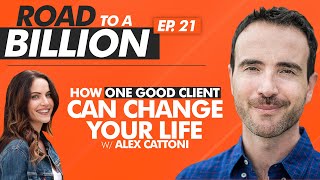
Alex Cattoni went from Mindvalley intern to independent copywriter by landing one major client, Numerologist.com, whose VSL generated millions. She breaks down how to find high-value clients, position yourself in copywriting, and why one good project can reshape your entire career.
Chapters
Hey, you're listening to the Road to a Billion podcast. I'm your host, Stefan Georgi and I'm glad to have you with me here today. The Road to a Billion is a call in radio show style podcast where you can ask me questions about freelancing, copywriting, entrepreneurship, mindset scaling, funnels, relationships, money and more. The reason for the name the Road to a Billion is twofold. One is because the different kind of copy or products ever in copy for will hit a billion dollars in sales almost certainly this year, if not the very beginning of 2021. And also because I want to make a direct impact in the lives of a billion people over the next 10 years. So we'll start taking calls in about five minutes from now. And like I mentioned, the way that works is you'll just put your questions into the Q and A section in Zoom. If you're on Facebook live, you cannot do that. But like I can give you the Zoom link I'll do in a second. And then today our special guest host, Andy Jeffs is going to be reviewing questions and feeding them to my guests myself. And I'll introduce my guests in just a moment as well. Before we go into that, Andy, do you want to go ahead and say hi to everybody and introduce yourself?
Yeah, absolutely. Guys. So what's up? I'm Andy. I'm basically Ed Ray in a British kind of, you know, body bag as it were. But yeah, I am a copywriter for the upgraded man, which is a men's dating coach company. And I also just launched a YouTube channel about how I'm traveling around America searching for music collaborations. So super excited for Alex's talk. Also in Copy accelerator full and I'm seeing lots of familiar faces on the dashboard and I miss you all. So there you go. Good to see you.
Perfect. Awesome. Thank you. So yeah, that's Andy. We're thrilled that he stepped in. Ed Ray will be back. Don't worry, he's on a. Andy's gonna do an amazing job too, of course, but Ed is just doing some Ed time, which is awesome. I wish I had the self awareness to take a retreat when I was 20 or whatever. However, old Ed is like 14 secretly.
Yeah, that's awesome.
So today our guest who will be joining us, I'm super excited is Alex Catoni. If you don't know about Alex. Alex. Am I saying your last name right? I always assume I am.
You are. Yes, you are.
All right, perfect. So yeah, if you don't know about Alex, she started out as an intern at Mindvalley. And long before long, she was basically their head marketer. She helped them launch one of their hottest personal growth brands ever. And even I know I took this from your bio or from the testimonial you got, Alex. But one kind of design tweak you did for them for one of the funnels, increase landing page conversions by close to 120%, which is amazing. And I know that the founder of Mindvalley called you a genius in his testimonial, which I don't disagree with. But since then you've done high profile campaigns for all kinds of amazing companies and people from numerologists.com to a lot of the most well respected personal growth and development brands. You have an awesome YouTube channel that has I think over 60,000 subscribers. It was over 6,100 when I left last night. And where Alex is teaching and sharing all kinds of amazing stuff about copywriting, freelancing, things of that nature. She also has the copy posse, which I'll let her talk about. And she's the co founder of the flight club Mastermind, which is happening in San Diego actually the seventh through the ninth I believe, right?
Yes. But I can't go because I'm in Canada. So I'm going to be like the co host on the screen, which I'm so bummed about. But yes, it is happening. Coming right up.
That's so fun because I was going to say because I'm going because we're in San Diego.
Ask me how upset I am about this.
So bummed. Oh my gosh. I was like, oh, finally you get to go to one and you've invited me. I know, I'll go to the one in March as well. But yeah, so basically just I'm thrilled and I will say I've teased this a little bit before. Alex wrote one of the. One of my favorite sales letters, video sales letters of all time. Former numerologists. So we're gonna talk about that as well. But Alex, it is awesome to have you here with us. Thank you for joining.
Thank you so much. Stefan. I've been obviously following what you've been up to for a while and I love your copywriting group and I kind of like lurk in there and see everything that's going on. And I'm so, just so honored to be here and with all of your amazing members.
Awesome. That's fantastic. So yeah, like I said, we're pretty informal. I'm just going to. We'll chat a little bit about you and your career for the first half an hour. And then from there we'll move into answering questions. So I don't think I see any in the Q and A yet. Does nobody has questions for Alex yet? You guys are crazy. If not. But I imagine some will start coming in.
But everyone's telling me to jump the border. I'm like, yeah, I should, right?
Yeah, that's really like, what's like I was saying to my Australian friends, I'm like, this is like they get in like, suitcase thing and like, then you're in like the cargo hole. Is that not a thing that works.
Or what bad could happen? Like, nothing bad could happen, right? It's totally fine.
Yo, I read a story and I'm not trying to. I'm right into questions. But someone who did do that, like, this is like, it was on like a I survived type TV show. And the guy. Cause he went unconscious. Cause like, there's no pressurization. Was so cold. And he like, lost. Like, he basically like blacked out for hours. Cause he was in the hall of this airplane. But then somehow when he like when they land and woke up, like, he was completely fine and like, didn't have any like, brain death or like anything like that. And they like, it's like an unsolved medical mystery.
Now he'll live forever. And he's found the secret to immortality.
Yeah, he's basically like. Like Bruce Willis. And unbreakable is probably what it actually is.
No one try that at home, please.
Yeah, please. Yeah, exactly. So, Alex. Well, first question I'd have is, I mean, just how. Tell me a little bit about your background. How did you kind of first discover the crazy world of copywriting and digital marketing and everything? Like, how did that happen? Oh, man.
Okay, so first of all, I feel like so many of everyone probably listening, like, when you discover this world, you're just like, what? You know, my brother who's a doctor is always like, I don't know what you do, but you pull money out of the sky. And I'm like, you're right. That is what we do is as copywriters and online entrepreneurs. But I, like many students, I graduated high school, I was gonna be a lawyer. Like, that was my goal. Power suit all the way. Wanted to be like just this badass high power lawyer. Thank God that never happened. But I went to university, studied business law, had a minor in marketing, always loved marketing, and then decided for my last year of my education to go abroad. Lived in Austria for a while, came back, and that really kind of gave Me, the travel bug. And I was studying to write the LSAT to apply to law school and just had this kind of aha moment that I really did not want to go to law school just yet. I hadn't quite managed to muster up the bravery to say, no, I'm not doing it, but I really wanted to travel more but needed money. And so that led me on this sort of journey of looking for companies overseas that I could work for. And through an organization that I was a member of in university called Isaac, I found Mindvalley. I knew nothing about marketing. I was 22. I just thought it looked cool. And I applied and luckily they happened to open up their jobs inbox right around the time I was applying and got an interview. And I remember saying on the call, I know I don't have any experience in this, but I'll clean the toilets if you'll pay me to do it. But that was that. Basically, I guess a few weeks after that call, I told my parents, hey, I'm selling my car and I am moving to Malaysia. And I did, and I made $800 a month and worked as an intern. And that is when I discovered Mindvalley. Internet marketing, personal development, copywriting, like all at the same time. And my like little tiny brain just exploded wide open. And I like, found like, oh my God, this is what I want to do.
What was it about this whole world of copywriting, digital marketing, all that, that really excited you when you discovered it?
I think it just was so like, you know, I know nowadays, I'm sure in school they talk more about e commerce and digital marketing and stuff, but when I was in, you know, high school and university, like, nobody talked about that. Like, you had, you had like this list of 10 things that you could be if you were like, really smart, you could be like a doctor. You know, if you were really good at math, you would be an accountant. Like, we all have these like, preconceived notions of like, what it is that we want to do. And I think I just, you know, as a, as a young, as a young person didn't had no idea about this online marketing world. And so jumping into mindvalley and finding out about marketing, it was like the creativity and how you could just like brainstorm something in a group, then go create it on the Internet and like reach hundreds of thousands of people. It just really excited me. And I just was able to dive into it and study and learn. And the more I did, the more I loved about it and it spoke to that Sort of innate love that I've always had for marketing that never really. I always thought again, like, I think when a lot of people think of copywriting or marketing, immediately they go to, like, Mad Men World, and they think, oh, the only marketing jobs out there. It's like, I have to be an ad exec and, like, come up with taglines for, like, super bowl commercials, you know, and only, like, really smart people get to do that. And so I had no idea that marketing was actually so necessary in businesses everywhere.
Yeah, 100%. And it is funny. I. After I took the LSAT, my senior year of college, and I even got into the University of Miami Law School, I got, like, I think one or two other, but Miami was the only one that was actually half decent. It was, like, in the top, like, 65, 60, whatever. And I accepted, and I was gonna go. And then I had this existential crisis after early summer where I was like, I'm only doing this because of the money. You know, I was like, the only reason I'm doing this is because, like, to your point of, like. Like, so I could sound impressive to people. Like, oh, I'm a lawyer and I make money. But, yeah, but I looked at all these people I knew who were lawyers, and they were all kind of, like, alcoholics and miserable, and I was like, yeah, maybe not.
It's so funny you say that. First of all, I had no idea how similar our stories were. Like, that's crazy. But, yeah, I was doing it for that reason and because, like, my parents never put pressure on me. But, like, I remember feeling like, I can't. I have to do this. Like I said, my brother's now a doctor, so he was, like, going into premed. And I was like, well, he's my twin, so I mean, there's that, like, competitive thing there where I'm like, well, I have to be, like, the other really good profession, which must be being a lawyer, right? But my stepdad, actually, one morning, I remember I was bartending, so I had a university education, and I was bartending while I was studying for the lsat. And I woke up and I was heading to my shift, and he just handed me a newspaper that was kind of folded to this one article, and he didn't say a word. He just handed it to me, and the headline was, female attorneys have Highest Depression rate amongst all professions. Or something like that. And that was, like, the subtle permission that I'm like, is he telling me I don't need to do this? And that's kind of When I was like, all right, fuck it, I'm going to travel. I don't know what that looks like, but I'm just going to go travel. And that's how I found mindvalley. So it's crazy how those little kind of events unfold, 100%.
But good for you for listening to that voice in your head. I mean, I think intuition is so important, and it sounds like you had an intuition of knowing that you were looking down the wrong path and to be able to have the awareness of stepping back and even changing course. Right. Because if people. If you're telling people, oh, I'm going to be a lawyer, I'm going to take the lsat, I'm studying for it. And then you have to do an about face and be like, oh, actually, I'm not. There's like a. Especially when you're young, like, I think there's a feeling of like, are you disappointing people? Does it mean that you're sort of like, you know, phony and. But so it's really cool that you're able to.
Oh, thank you.
Yeah, absolutely. So, okay, so you're at mindvalley. You started, though, as an intern, right? You offered to clean toilets and everything.
I never did, by the way. I never did clean toilets.
Yeah. To their credit. They were like, man, you probably. You seem sharp. Maybe there's better, you know, but how did you go from that to kind of running the marketing for them in such a short period of time? What was that kind of journey like?
Yeah, I mean, I think what's so cool about mindvalley is that it really, back then especially, I can't speak to it now. I mean, I left in 2011, so. You know anyone. I saw a couple comments before. It's like, oh, I was there in 2018 or 15 or whatever, and I'm like, oh, yeah, I was like, old, old school. So, I mean, I was somewhere between, like, employee 10 and 15. Like, it was a really small team. And I mean, that startup environment, like, anybody who's ever been in it, it's like you hustle and you just kind of do, like, you don't ask for permission, you just kind of see what needs to get done and you go for it. And mindvalley really rewarded that attitude. And I am luckily very, like, very much have that attitude of, like, all right, like, I'm doing customer support over here because that's what I started doing, customer service. But I see a need over here. And I just started studying. I remember reading or studying Frank Kern's math control and learning about, like, his death grip email sequence. And I'm like, I'm just gonna write one and like, see if it. If it works. And I remember, like, sitting there just writing email sequences and then passing them over to, like, kind of the team. And then, oh, yeah, hey, let's send these out. And we, because of that, started doing more regular list promotions. And it was just sort of, you know, right. Right place at the right time. The company was growing really fast and they, they needed people to fulfill roles. And, you know, I don't think by any means I was like, the best in the world. But hey, I was there. And they were like, here, go for it. And they basically, you know, gave me a business unit, which in Mindvalley speak back then was like, okay, you work with one author that they're publishing, and then they have a variety of different web properties. And so basically, as a business manager or a manager of one of their business units, we did everything. We did customer service, project management, copywriting, until the team got big enough, where all of a sudden all of those specialties started becoming their own little teams. But in the beginning, it was really kind of like, you just get in there and do what you have to do. And that's. That's sort of how it all started. And I dabbled in, like, pay per click advertising. I did customer service. Like I said, I did some copywriting. And then by the time I left, I was the creative director, which really was sort of the marketing manager of all launches and projects at Mindvalley. And it was just sort of this really exciting growth and learning experience through the three and a half years that I was there.
Yeah, that's amazing. And I do think for a lot of people who are young copywriters and even people want to be entrepreneurs in general, like, or just freelancers in general, I really think having that holistic view is probably so valuable because it's one thing to know how to write copy, and that's awesome and lucrative. Amazing career. And both you and I are part of our. I think both of our passions are bringing people into our world of copywriting and freelancing. But to get a more holistic view of how a business operates and the different things and moving pieces, it then makes you way more valuable when you transition away and move on to do your own thing. And I'm guessing that was the experience you had as well. So I do want to move away. I don't want to spend too much time talking about Mindvalley the last Question I'll just have is, in those first three, three and a half years there, what was maybe the biggest lesson that you learned during that time?
Oh, that's such a good question. You know what? I think for me, I think the biggest lesson was to just sort of go for it. You know, I think that we. It's so easy to step back and second guess ourselves and not move forward with something. And while I was at mindvalley, I mean, I was so blessed to be surrounded by all these really inspiring people who, like, forced me to kind of level up. And I remember leaving mindvalley, one of the things I struggled with the most was I left this environment of being around super motivated, positive, encouraging people to, like, being by myself in like a tiny little bedroom in Vancouver, sleeping on an air mat mattress. And I think what I learned and what kind of got brought me through that sort of dark time of starting my own business was to just go for it, you know, and like, there's times where I wish I would have done things sooner, but you don't know until you try and you'll try things and they'll fail. And I think that that's what mindvalley really rewarded. It was like, hey, you're gonna do something and it's not gonna work, but that's okay. At least you're doing it. And to have the ability and the playground to do that in, it's like, oh my gosh, what an amazing gift that was back then. I didn't realize it at the time, but now it's like, wow.
Yeah, it's amazing. And so once you did go out and start your own business and go out on your own, did you. How did you. Did you have a plan? Did you have. Did you have some clients already? Did you kind of like, you know, how did you start kind of.
Oh, yeah, going. I didn't have any clients. I was 26, 26 or 25, and just full of piss and vinegar, you know, Like, I was like, I'm the best. Like, I feel like everyone goes through that, like, very humbling experience starting their business. It's like you go out the gate, like, super strong, and then you're like, wow, this is really freaking hard. And yeah, I had no clients. I had savings. That was sort of the good thing about living in a cheaper country. And by the time I left, I was obviously making more than $800 a month. So I managed to have a pretty good amount of savings set aside. And I think for about six months, I just lived off the Savings. And then I just started really putting rubber to the road, networking like crazy. And then it was at a Joe Polish event. I love marketing. Back in, oh, man, 2012, I guess that I met Blair Gorman, the founder of numerologist.com and he became my first client. Is still my client. And so, you know, just goes to show that, you know, you make the right relationships and you align with people that, you know, that you work well with, and it can be a really great, lucrative kind of business opportunity. But, yeah, that's how I made my first client, and that's how I really started getting to be able to sink my teeth into copywriting. But what's interesting is I never wanted to call myself a copywriter. I had this, like. I think it's because I learned from, like, the greats, you know, like Frank Kern and John Carlton and Gary Halpert and all of these incredible copywriters that when I left Mindvalley, I was like, oh, no, no, no. Like, I do copywriting, but I'm not a copywriter. Like, it took me a long time to own that title. And that's just like, mad respect to copywriters, you know? Like, I truly think that that back then, the people that I considered to be copywriters were sort of like, these. These greats. And so when I started working with clients, I was like a marketing consultant. And then they would be like, do you know anyone who can do copy? And I was like, well, I can, but, like, I'm not that good. And then it was like, I never wanted to say I did it because I was afraid that I would let people down. But it always kind of worked in my favor because, you know, set low expectations and then come in hot, you know? But that's sort of how I got into actually, like, calling myself a copywriter was through practice and resist, like, resistance to it.
That's super interesting. I. It's funny because I've struggled with that, too. Although I think with me, it's definitely an ego thing for me as well, where it's like. But I can do more than that. Like, I've. I've run businesses, and I can help to optimize and, you know, but it's funny because every time it's like, just owning that copywriter title is, like, super lucrative and powerful, and there's so many people who can benefit from learning copy. So that's actually interesting for me to hear somebody else kind of say they've gone through the same thing, maybe for different reasons, but, like, still, I feel.
That too, though, like. Because now that I have built businesses and done all that, when people call me a copywriter, I'm like, I'm more than a copywriter. But you know what I realize is everybody's a strategist. Everybody. So many people use that term, and it's like, that could mean anything. And what I find is people remember things like, oh, you are a killer copywriter. And then that's what actually keeps you memorable in people's mind because you're, like, this freaking gangster at this one skill. And, yeah, of course you do all these other things because you can't be a killer copywriter if you're not a genius marketer. But, you know, it's. I totally get that. It's funny, all the labels and how we. And how we kind of.
Yeah, it is. It's funny, too. Cause, like, I'm just. I just thought of this. I had, like, a party at our house in Vegas a few weeks back, and it was like, just like a, you know, informal get together.
I saw that. I was.
Yeah. And I know. I know. We'll get you. We'll get you down south. But, you know, like, there's a bunch of people there. But one people came with Perry Belcher. He was in Vegas, and he was talking to me about how he kind of was like, yeah, you know, I feel like I just don't always have the motivation to write, like, a lot of copy right now, like, or these days and blah, blah, blah. I was like, well, I'm like, you know, maybe it's not the best use of your time anymore anyway. And he was like. Looked at me, like, really? Seriously. And he was like, I can't really think of anything that'd be a better use of my time than writing copy. And I was like, oh, shit. Because, like, you know, he's looking for, like, a copywriter. And I was like, damn. All right. Like, that's a good reminder. I mean, even with someone like Perry, who's. Who's started all these businesses and done all this cool stuff, and then for him to just be like, oh, no. Like, copywriting is my. Like, that's my strength, right? And you're like, damn, okay. He really owns it. And it was kind of cool just to see that.
And he's actually someone. I remember thinking this one time when he was speaking at my mastermind, and he's like, oh, like, the sales page that I wrote, and he's showing us the sales page he wrote, and I'm like, that's so cool. Like, it's Perry Belcher. He's got a million businesses on the go, but that's the one thing that he still does himself.
Yeah.
You know, because it is so important. And he's good at it. He enjoys it, obviously. You know what I mean? So, yeah, it's like validation. It's like. That's right.
I met everyone at that party but Perry Belcher. I was like, perry Belcher was here.
Like, how do you not meet that guy?
Yeah, no, I met everyone at the party but Perry. And I was like, God damn it, that sucks. But fair enough.
You're in Vegas. He's in Vegas. I'm sure you can reach out and have those opportunities, Andy, for sure. But, yeah. Alex, one more. One about. One more. But another question. Just because I want to transition into the numerologist, which is you help. It was perfect. Because that's the way the kind of story goes, right? Then you started working with them, and you still are. So I do want to get into that numerologist vsl, you know, the one I'm talking about. And it's funny because even when I referenced it, some other people were like, oh, the one that everybody knows. But do you want to just kind of briefly describe the kind of structure of that VSL for people who don't know about it? And then from there, I just love to hear some of your thought process as you were creating it and why you think it was so successful.
Yeah. I can't take full credit for it because the technology behind it is, like, gold. Right. And that's part of why love working with Blair so much is because he is, like, this innovator, and he's this tech wizard. And I just picture him like, he lives in New Zealand, but I just picture him at his computer like mad scientist, like, typing on the computer, you know? And he came up with this idea of doing this personalized video sales letter. And so we call it the Me Sl because it's all about me, the person watching the vsl. And I think the thing that's the coolest about it is, and this is sort of my belief with copywriting and marketing in general is I'm so over, you know, like, the super inauthentic kind of douchey marketing tactics that, you know, used to work 10 years ago. I'm all about making copywriting and marketing valuable in and of itself right now. So if someone comes and reads a sales page or watches my video sales letter, I want them to be like, that was entertaining. Or, that was interesting. Or, I at least Got one nugget of value out of that. And Blair is the exact. And so with this concept of the. Of the mesl, the structure of it is essentially you go to the site, you enter in just your first name and your date of birth, and then you get a life path reading. And if anyone follows numerology, it's basically like astrology, but it's the science of numbers. And so on the fly, it pulls a reading that is 100% personalized and custom to you based on your life path number. Then after your life path reading, it asks for your full name and email address. So after you've already given them crazy value, that's when we ask for the lead and then their full name, because your full name is how you calculate expression and sol urge number. And then it transitions to the close, which is to get your full numerology report. So what's kind of insane about it is you think, okay, when you watch it as a. As a viewer, the whole thing is maybe 15 minutes long, right? But maybe 20. But all that had to go in behind the scenes. Like, you think there's 11 different life path numbers, 11 different soul urge numbers, and 11 different expression numbers. And then having to write the transitionary copy, that puts the readings together seamlessly.
And.
And then, of course, the clothes at the end, which is more just a traditional style of ESL clothes. But it was a really fun project to work on. But it's like, I mean, my Google Docs with, like, links everywhere and figuring out, okay, how are these readings all gonna flow together? And I think what the coolest thing about it to me is, like, not that it works well, not that people love it and not that, you know, it's making money. Those are all good things. But it's just the experience that people have watching it. And the comments we get, like, who comments on a video sales letter saying, oh, holy f balls, this is amazing. I cannot believe, like, how accurate this is. Or, you know, and, like, what I sort of had to study to really be able to write those readings in a powerful way. Like, I think a lot of copywriters, I'm super interested in psychology and, you know, Darren Brown and like, all of this, these different modalities that kind of went into creating readings that really felt like a super personal experience and are, you know, they are a personal experience. It's not manipulation. It's actually taking the time to be able to speak to the viewer in a way that resonates. That to me was like, that's like copywriting. Crack right there.
Yeah. No, so. And anecdotally, and I think I told you this the first time we met, but it's one of the only VSOs where I remember exactly where I was and what I was doing the first time I saw it, because I was.
Like, the best compliment ever. Thank you.
Yeah, I was with Laura, and she at the time, was at grad school, Brooklyn College. And I was back and forth between Vegas and New York, and we had a place in, like, Williamsburg, and we were driving, leaving Williamsburg to. I don't remember where we were going, but we were in the car. I remember we were on, like, the Brooklyn Expressway. Brooklyn Queens Expressway. And, like, of course there was traffic, and she was driving, and someone had said to me, and I kind of was like, this house is kind of cool. And I put my name in, and she's driving, and then I'm like, what? Like, wow, this is, like, really personalized. And then, like, you know, I'm going through. And then Laura's, like, looking over while she's driving in New York traffic, you know, And I'm like, oh, my God.
That's actually really accurate.
You know, it's like, I'm like. And like, I. Honestly, when people send me VSLs, I'll look for the first minute or two, check out the lead, right? And click away. And it was, like, 20 minutes later, and I'd gone through the whole thing, and I'm, like, sitting there like, should I get my life? Do I need the full report? And I'm like, what is happening right now? But to your point, it was like, entertainment. I mean, it was so, like, it was fun to do and just personalized. And the technology is amazing, too, but just, like, from. Yeah, I love that. It was really cool.
Thank you.
How long did it take you to write it then?
Probably, like, two weeks. Obviously. Not, like, you know, full time, but probably like, a good two weeks to sit down and write it and really figuring out the process, too, right? Because this is so funny. Like, now that I, you know, I've been, you know, partners with a numerology business, I'm, like, kind of a pseudo numerologist. And so I know, like, everyone who's a different life path number, and I'm a life path, too, so that's always the easiest for me to write to because it's me. So I'm like, okay. I sat down and I wrote all the readings for a two, and then I think, okay, who's a three in my life? And I'd be like, that person's a three. And I truly write. It's like the rule number copywriting101, like, have a customer avatar in mind. So I would just really think of, okay, who in my life, like, one of my best friends is a nine, Another one of my best friends is a five. And I would just write to them. And that, I find was a really helpful part of the experience. And then what's cool is we're actually now, like, upgrading it because when it was first written, it was pretty limiting and there wasn't like, it was very cisgender man with women. When we talk about the relationship readings. And now we're taking it to the whole next level of making it even more inclusive, which means more readings. And it's just cool. And I'm proud to be part of that. Of like, okay, let's make sure we're not alienating anybody in this marketing and making sure it's a really powerful experience for everybody watching. And so it's just this. And I mean, kudos to Blair because so many business owners would be like, now that sounds like too much work. It's too much money. When literally we can just write a VSL and like, get a voiceover and like, click next on the slides while I read it. Like, shoot me in the head now. So boring. So kudos to Blair that, like, he really truly is like, no, no, we're going to make this epic. And that's exactly the word he would use. And to be able to, like, work on something like that and bring that vision to life is so exciting.
Yeah, super exciting. And it's awesome that. Yeah, it's awesome you guys are doing that. By the way, I'm pretty sure Laura and I are both twos as well. And then our daughter is, I'm pretty sure one. I think one is because we're basically, like, creative. But you also have business savvy, right? And like, our daughter was like, super creative. Like, doesn't really care about money. If has it, we'll just give it away, like, blah, blah. And I'm like, that's great. But I'm like, oh, crap, I'm gonna have to, like, put a trust fund that she can't touch until she's like, it's all.
Cause she's a one. Yeah, it's like, it's all that number one energy.
I think. I'm like, oh, gosh, she's a one. But it's so funny.
Ones are like, quick start, right? They like, just. It's all ideas and inspiration and go. Whereas Twos are a lot more kind of collaborative, a little bit more. They work really well in partnership. I mean, it's a number two, right? So it's interesting. Maybe we'll do a numerology.
It would be fun to see. It'd be fun to see how many copywriters, like, you know, because it's interesting that you're a two. Laura's a two, I'm a two. And I wonder how many other people who are, you know, kind of especially the copywriters who are also entrepreneurs are.
So empathy is huge for twos, right? Because it's all about, like, not just your experience, but it's all about that partnership and so really putting yourself in other people's shoes. So maybe I would be so curious to see.
Yeah, me too. Some people are putting in the chat what they are. So Sam Novak said, Andy just says he thinks he's a two. Sam said she's a five. Adam Nasser's. We got some sixes, some nine. Scott Mills is the one. Yeah. It's so fun. It's also fun how many people actually know, right? Because you think, oh, numerology, like, it's kind of like, you know, is it just, like, really New Agey? But it's like you just talk to, like, all kinds of from, you know, people from, like, teenagers to, like, super burly bros on motorcycles. And they're like, I'm a five, bro. And you're like, oh, you know what I mean? Like, it's kind of fun how many people actually do enjoy that?
People, really. It's like astrology, right? Like, I'm a Leo, and I'll tell everybody that I'm a Leo because I'm a Leo, you know? But numerology, I think, is less known, but it's kind of cool. Everyone's curious to know about themselves again, like another copywriting 101. It's like what makes numerology so powerful is it's like you're literally going through a video sales letter that's talking all about you. How can you not love that?
It's the best, right? And you get something. You get rewarded. You get, like, you get your number. Like, how exciting.
How exciting.
Cool. So we'll get to questions in just a couple minutes here. Now, of course, we got 16. The Q& A. People. People stepped up. But before we get to that, so beyond working@numerologist.com or numerology.com.
Numerologist.
Numerologist. Got right the first time. Perfect. I know you're doing a lot of Stuff like there's flight club, there's copy posse, you're teaching. I'd love to just kind of have you run me through, like what, like in a typical week, you know, these days, like, what does that week look like? What are you, like, what are you doing? And then why are you doing those things?
Right, yeah. I mean, maybe I'll start with the why. Because one thing that I think is so important and not a lot of entrepreneurs talk about this is the apportment, the importment, the importance of having a value aligned business. And I was a copywriter, freelance copywriter consultant from 2011 to 2019. That is all I did. And I freaking loved it. Because my biggest value at the time was freedom. So I love that I didn't have my face on the Internet. I loved that nobody knew who I was. I love that I didn't have to create content regularly and that I had a handful of like, really awesome clients who paid me really well. And I would go spend every summer in Italy. Right? Like, that's the dream. And then sometime around like 2018, I was like, okay. And people would say to me too, like, you know, I run this mastermind, so I'm on stage a lot and I'd speak at events and stuff and everyone would be like, why are you so behind the scenes in businesses? And that was me. I was like, behind the scene, McGee. And I didn't ever really do anything to put myself out there. And then in 2018, I was like, you know what? I feel like I have a lot to say about copywriting. And I feel like women's voices aren't very heard in this space. And I've been doing this for like almost a decade now, so I think I have something to say about it. And I started my YouTube channel and to be honest, like, I didn't start it with this like, idea that I was going to scale this whole other part of my business and launch programs and do courses. For me, it was like, if I, if people, if anyone watches my video and finds value out of it, like, I'll be happy. And you know, it took me like, everyone's always like, wow, you grew so fast and in such a, like, niche, niche, you know, and that's true. If you like just cut off the first six months, like it took me six months to get to a thousand subscribers. But I wasn't doing it for like the, you know, the, as a direct response marketer to be like, I want to scale this, like, traffic funnel. And you know, whatever it was, it was purely a personal. I want to put myself out there. And I was freaking terrified to do it. Like, I think a lot of copywriters can relate to this. Like, we're drawn to copywriting because you can be behind the scenes. And so it's so crazy how many of my followers are introverts. And I am too. I'm an outgoing introvert. I say. And so it was really scary for me to like, put myself out there on the Internet to be like, judged and to have people be like, oh, stupid bitch doesn't know what she's talking about. You know, and that's just what happens when you put yourself out there on the. On the Internet. But that is what started this whole kind of journey into the copy posse and realizing that so many people out there are looking to get into copywriting or looking to write better copy for their own business. And yeah, and that's sort of. That was sort of that. And so it's been a natural progression with scaling my team on the agency side so that I can still serve clients because I'm a big believer in being in integrity and if I'm teaching copywriting to still be actually doing it. And so scaling my team on the agency side so that I can still provide copywriting services, but then also building a team on sort of the B2C side, if you will, to help me manage my personal brand and the copy posse. And so I would say my day is probably split pretty 50, 50 between both sides of my business and getting obviously the support to help with all of that.
Do you have any. Are you. Do you have like, habits, like. Or do you wake up at a certain time consistently and sort of spend like certain windows of the day where you do more deep work? Or do you have any kind of like, routines or habits or things like that?
Yeah, so I'm pretty, like pretty religiously wake up at around 6 o' clock every morning. I'm a. I'm a morning person. Like, I'm like, I. The other night I was in bed at 8, like 30, and I texted my friends, I'm like, I'm in bed. And they were like, LOL. Me too. I'm like, OK, good. But I tend to wake up at 6. I try to work out Monday, Wednesday, Fridays, and then my mornings as much as possible. I devote to any creative work that I have to do. So whether it be preparing video scripts for YouTube, client copy, reviewing copy, anything that really requires me to be in that creative space. And then I try to keep my afternoons to calls Admin work, emails, you know, dinking around with social media, that sort of stuff. Because I'm, you know, my, my creative energy is kind of fried, but I can like go through the motions and get shit done. So that's, that's how I, that's how I tend to break up my day.
Yeah, that's great. It's funny. It's, it's. I feel like we're secretly twins because like, not only are both twos and almost both lawyers, but yeah, pretty much the exact same way. I am curious. This is a personal question. And then. Well, not personal. It's a selfish question. And then we're gonna go into Q and A's. But for creating content, like when you're doing your YouTube videos. Cause I'm obviously creating more content myself. I'm. One thing I'm wrestling with is like, does that fit better in like the morning? Because for me it's like the creative, deep work, write, copy. That kind of stuff is in the mornings. And then I'm like, well, in the afternoons I can shoot a video, but I'm kind of fatigued or frazzled or whatever right at 1:00 clock or leave that afternoon dip. I'm curious, when do you generally kind of shoot videos and create content?
I do it in the afternoons. I do. Because for me, unless I'm doing an off the cuff style style video where I really do need my brain functioning, then I'll probably try to record in the morning when I'm fresher. But if I'm just reading a script, then it's like I'm just reading a script. I'm just a robot. Not really, but yeah. And I get a lot of help with my scripts too. So I have an amazing team that what they do is I'm really good. Like if I could write copy verbally all day long, I will. And so I have a call with my team and she a girl on my team, and she'll interview me on a topic and I'll just kind of like brain, like brain dump and say, okay, here are the five things that I think I'd want to talk about and the points under each one. And then she kind of finesses it into a loose script and then I go through and kind of finalize it.
Nice. Probably gonna swipe that from you. That sounds like a pretty good process.
Yeah, it's great. Yeah. Honestly. Cause I'm a. If it was up to myself, I would literally do it the morning of having to record and then therefore I would not have a YouTube channel, so it's way easier to have someone who's like, he. Hey, you need a video? I'm gonna. Let's have a call so I can interview you on the next four topics and then it helps me stay ahead. My dog's chewing on something that she shouldn't be. One second.
No problem. Yeah, no problem. Yeah. As you do dog mom duties, Andy, we're gonna turn it over to Q&As from our audience here. But because you are our co host, Andy, you get the privilege of asking if you have any questions you wanna ask or we go to the Q and A, feel free to ask.
That's awesome. I was going to leave mine to the end, but I am just like sitting here like, this is the exact person I need to talk to right now. This is so awesome. And I'm also from Vancouver as well, so that's. Yeah, yeah.
Are you here now?
I'm in Vegas right now, so I actually got over the border to the Austin event. Like, no problem. Well, not no problems. I got into like a second interrogation, but I managed to get over and Ed Ray texted me was like, how.
The did you get into mandatory quarantine coming back? That's a real bitch.
Yeah, I'm not going to come back. I've decided I'm just going to travel around America. It's kind of ties into my YouTube channel, you know, I love it.
That's. Go for it.
Yeah. But yeah, the question, I guess I started my YouTube channel, I launched it, people have been following me. I think I got like 50 subscribers now and I posted up my first video. I've got like 10 video ideas. I'm currently just finishing up one now. So. Yeah, I mean, I just, I think I'm kind of getting an idea of who my niche is. It's basically just entrepreneurs who are also creatives as well, you know, and I can show them what I'm getting up to. And it also kind of has like secondary bonuses of like, you know, dating, because obviously I'm in the men's dating, you know, health world and then health and fitness because I've got some kind of contrarian, like perspectives on that as well. But yeah, I guess, like, what's the best way to grow the YouTube channel?
I mean, everyone ought to know.
Yeah, I mean, it's pretty much the standard question, you know, nothing. Yeah.
I think the most important thing is, and I think in retrospect, like looking back at how like at my channel and what I did is it's easier to answer this Than. Than if I was just starting. But Tater, no, she's got like this shoe thing that's not for you, but the first thing. And it's like, again, it's like going back to the rules of marketing, right? It's like, know who you're speaking to. Cause it sounds. It sounds to me like you have a lot of topics you want to talk about, which is fine, but then have like a cohesive hook that hooks them all together so that people are like, do you know, do you watch the guy who does this? Right? It's like when you're writing copy and everyone's always like, how do you niche? I'm like, well, if you're not going to niche your audience and you're not going to niche the benefit that you deliver, then have like a really unique technology or mechanism or something, because there needs to be. There needs to be a hook, right? And so if you want to talk about all those different things, then get really clear on, like, who exactly you're talking to. And maybe it is sort of like the, like the young man, digital nomad or what have you. And so, you know, have a really strong audience. And of course you'll attract people who aren't those people. But if you're speaking to them, then they're going to find you and they're going to refer you and they're going to keep coming back for more. And then, yeah, have like a shtick. I mean, if you're the guy who's traveling around America, you know, make that. Make that the part. Part of your hook that, like, you're on, like, this mission to, you know, uncover the secrets of whatever. Like, just, you know, make it something that's unique and different and memorable. And then the biggest tip of all I can give with YouTube is like, fuck SEO. Sorry, I don't know if I can swear on your.
You can swear, it's fine.
And what I mean by that is, yes, it's important. But, like, I was so down the SEO train with my videos. And it's important in the beginning to see Taylor just, she's like hopping up, wondering what's going on. You don't even want see what my office looks like right now. She destroyed a piece of paper. But people are always, like, so gung ho about the SEO. And that's important in the beginning when you have just like a few hundred subscribers. And the only way that you can get more people is through that search traffic on YouTube. But make sure you're like, copywriting, right? Make sure Your topics sound exciting. I'll give you this example. I was like all down the SEO train and I almost gave up because I, like, there was no passion anymore because I'm like, oh, customer avatar exercise is a keyword. Okay, I have to do a video on customer avatar exercise. So I like, named my video, like, customer Avatar exercise. And the video was like, really good. Like, I was talking about, like, Eugene Schwartz's, like, levels of market sophistication. And like, the content was great. And I was like, no, but I need a keyword in there. And then I ran into a friend of mine, Sarah Crisp, who you probably know, Stefan at Mimosa Mastermind. And she's like, no, don't worry about it, Just make it sound more exciting. And I changed the title of that video to something like the number one reason why you suck at selling, which was obviously like, you don't know who you're speaking to, AKA customer Avatar. And like, you can see my graph on YouTube. It's like, boring. Nobody likes it. And then it was like, ooh, people are liking this all of a sudden. So use your copywriter brain, you know, like, come up with good hooks first or come up with a topic and then come up with like, okay, how do I make that sound sexy? And like, what's the hook? Then map out the content so that, yes, you're still on the topic, but you're satisfying the hook because obviously you want to make sure you're giving people what they came for.
Definitely. Yeah, that's super helpful. I mean, you know, the big thing is like, I'm just online marketer, musician, looking for kind of like minded people, like people that are like me to collaborate music with. And then I guess like, the big kind of like, value I'm giving is like, I've got it in my description here. Like, if you're interested in creating a life with more freedom, following your passions and sharing it with people you love, then this could be for you. So that's kind of the thing. It's like freedom, passions, sharing it with people that you're excited about kind of things. It's all kind of based around that.
One thing you could do, Andy. And I'm not. You know, obviously maybe you don't like this idea at all, but as you're. And it's kind of related to what Matt Murphy said, the Foo Fighter thing in the chat here. But basically the idea of as you go different places, if you looked at, you know, bands that are from those different cities or, you know, that kind of Called them home, and then maybe pick one of their songs that's like a really. Like, a really successful song. And kind of talk about why. Like, right. What were they saying? What was the messaging? How are they speaking to people? Why did it connect with people? And sort of. Then you're talking about, like. And you also mentioned the, you know, the front person or whoever, if the singer, songwriter, Right. And, like, how did they embody those values of freedom? And then so you're looking at, like, them kind of a bit of, like a biographical component. So you're sharing information about that, which is interesting. Then you're kind of talking about the messaging from the song and you're breaking it down, kind of explicating it. And you can tie all that back to, like, direct response copy and how you can apply that to direct response copy. Like, that could be really cool.
No, that's exactly. Yeah, that's exactly where my head's at. And also just taking a look at, like, why some musicians, like, everyone is, like, super crazy and everyone knows who they are. And then some musicians who are, like, actually better than those musicians. Like, for instance, you got Tommy Lee from Motley Crue, who's, like, a very average drummer, but everyone knows who he is and he's super cool. Like, everyone's like, oh, Tommy Lee. And then you get guys in this, like, kind of nerdy drummer world where they're basically just followed by lots of other drummers. No one knows who they are. They've got better chops, for sure. Like, they're, like, really technically skilled. But it's like, you look at them and it's like, there's no emotion there. It's just like, they're just really good. They're not cool. So it's like kind of breaking that down and tying it in with, like, you say copywriting and, you know, like, even, like, for instance, with copywriting, Stefan, you've got. The first line of copy needs to, like, really grab attention. Like, it's got to be interesting, like, the first three seconds of your song. If it's not interesting, like, people are just going to click skip, you know, so just like.
Well, and the parallels between, like, songwriting and storytelling. And I really love. I think John just commented. Sounds like what Bourdain did with local food. Like, I think what's cool about what Anthony Bourdain did was that, like, he would feature the city so strongly that it would, like, evoke that sense of pride in the people that live there and then the people who didn't Live there were like, I hope he comes to my city, you know, so you could like kind of feature the city in a way that's really unique as well.
Yeah, awesome.
Exactly. Cool, cool.
Sweet.
I'm excited. I'll go subscribe like all that stuff.
Well, I'm definitely gonna follow you so I can get some swipe all your ideas.
So go for it.
Love it. All right, let's get this party started, guys. So just from the top down, I'm guessing.
Yeah, that's the only thing, yeah, I didn't go through. I mean, obviously if there's a question that is randomly just sucks, then don't ask it. But yeah, I'm sure none do.
I was asking you like where your shirt's from or something like that. I'm like, come on, listen. Yeah, that's all good.
It's all good.
But yeah, I do want to know that. So I am a new copywriter. This is from Whitney Give us by the.
Give us like the gist of it and then go ahead and answer live so when you can come on and she can ask the question. Radio show.
Cool.
Yeah, yeah. Okay. Okay, this is good. Say I'm a new copywriter. And I've noticed that being female puts you in a minority. Do you have any advice for female copywriters trying to make a name in what has been called a boys club?
Let me. I'm gonna hit quote. Did you have co host capabilities already, Andy?
Yeah, I just answered live. So is that okay?
I think it's like go into chat, honestly. Cause Ed is usually one who does this. But I think I should go into chat, find Whitney and then like let her allow to talk. But it's alphabetical. It's good news. I'm gonna do it. I found her. I'm allowed to talk.
Okay, sounds good.
All right.
Okay.
What's up? Whitney? Yes.
Can you hear me? All right, so.
So I am a brand new copywriter. I've actually worked with one you, some of you may be familiar with. Her name is Laura Georgi. I work on her company. But now I'm really branching out and I've noticed a lot of the groups I'm in, a lot of what I'm learning is heavily male. So I was just wondering as a female copywriter if you have any advice to sort of help me find my way within this quote unquote boys club.
Yeah, I love that. By the way, congrats on being a little baby new copywriter.
Thank you.
I feel you. I mean, and like, to be honest, that was one of the things that inspired me to start my YouTube channel. Like, I typed copywriting into YouTube, and I was like, dude, dude, dude, dude, dude. And, like, I love a lot of them. I know a lot of them. Um, and I think the first thing is, like, like, just kind of remove that from your belief system that, like, yes, there is more men in the industry. But my experience, and in fact, this is what I find really interesting, is that a lot of the best copywriters I know who are behind the scenes, who aren't, like, out there, you know, teaching copywriting, are women. And so I think a lot of business owners actually know that and that there. I mean, there's so many incredible female copywriters that you just don't know about because they're just like, you know, they're just behind the scenes. And that was me. And I could say that because that was me for, like, however many years. So I would say, you know, just. Just keep moving forward. Put your. Put yourself out there. I truly believe that, you know, smart business owners, who you actually want as clients aren't gonna give a damn if you're a man or a woman. They're gonna care about the results. And I think, too, like, naturally, you'll find that certain niches will have more female copywriters, like personal development, for example. But I would just say, yes, there's more men in the industry. However, there are so many entrepreneurs out there, men and women, who would happily hire just whoever could nail it the best. And so just keep on keeping on and just be confident in what you know you can do really well.
Cool.
Wendy, does that. Does that help?
Yeah, I think it's. It's a good point to look at. Maybe they're just more comfortable behind the scenes and not branding themselves as much. So it's nice to hear about you, Alex, and have just another person that I can follow that is a closer resemblance to my own growth and path.
So I think that puts you ahead, too. Like, if you are wanting to really brand yourself and step out there is. That. Is that kind of gives you an edge, because there are a lot of times where, like, for example, a friend of mine owns a really big, like, women's shapewear company, and he contacted me because he was looking for female copywriters because, you know, not saying men don't know what it's like to wear shapewear, but unless you're, like, a drag queen or something, I don't think you would really know. And so, you know, it depends on what is your niche what niche do you write in?
Well, right now, I do a lot of skincare cosmetics just based on my working with Laura, but I'm really looking to branch out and see what works really well for me. I'm very into, like, mindset and things like that, so I'd like to do some work on that end, but right now, I'm taking what I can get.
Yeah, absolutely. I get that. I totally get that. I guess it's more of, like, kind of which direction you want to head in. I think being female gives you an edge in certain niches, like skin care. Not saying men don't care about their skin. They do, but when you look at the predominant market of who's buying skincare products. So I would say don't have that as a belief in your head that it's a reason why you can't move forward. Just keep going and stay in your lane and do it well, and you'll get there for sure.
Thank you.
You're welcome.
Awesome. Cool. Thanks for asking that question, Whitney, and thanks for that awesome answer, Alex. And, yeah, I do agree one thing. It's funny, too. I was looking at some of his weight loss offers, like, that were on a clickbank a while back, and you see, like, I guess always the same story of, like, this guy whose wife is, like, overweight, and he finds, like, the, like, you know, magical, like, weight loss pill or whatever. But the cop, even the language there. It's like when my wife fell pregnant. And it's like, I'm like, I don't think women really talk about, like, fall. You. You. You fall sick, right? You don't, like, fall pregnant. And I was like, you immediately know, like, okay, like, this is for sure written by a dude. And, like, yeah, fell. Yeah, fell pregnant. And, like, and there's just, like, things like that where to your point? For women copywriters out there, I think stressing, like, hey, I really understand this, you know, niche because, like, you know, it's personal to me or, like, I'm going through it, but I don't have a ton more to add to that. But I agree. I mean, something I'm thinking, like, we had Marcel Allison as our kind of guest presenter on our copy accelerator call on Tuesday, and it's, like, just crushing it. So good. Carlene, you. It's like there are so many amazing woman copywriters out there, and I'm just excited. I'm happy to see more people like you taking a leadership role and sort of, you know, kind of, I think, inspiring a whole generation of women. So it's really cool what you're doing, Alex.
Thank you. Yeah, that's my goal. So hopefully. Hopefully that's happening.
Yeah, I think it is. I mean, absolutely. So cool. Andy, who do we. Who do we have next? Nice.
Yeah. So this one, I think kind of already been answered, but it says, what are your daily routines to keep your skill levels up and growing? Alex. Cool.
And who's this from? And then let's go ahead and Adam Nassau.
So, yeah, I'm just. If I answer it live and then I have to actually click on that.
Yeah, if you go into, like, the participants, like, I can do it right now, but just. I see my. I'm clicking. Allow to talk. And now Adam appears.
Oh, I don't have.
What's up?
Hi, Alex. Hi, Stefan. Hi, Andy.
Thanks so much. Appreciate it.
Awesome. So, yeah, thanks for the great content. I love it so far. Thank you. So for which question am I up? Because I asked two. I'm not sure which one I'm allowed to ask.
Just ask whichever one's coming to you.
So what I would love to know is, like, I really love copywriting, and I write since I'm six, and I have always buried that because, yeah, there were so much other things going on. And then I learned copywriting also from you, Stefan. Like, I have the rmc, which is awesome, and I always had it on a back burner because I was full with closing opportunities and leadership. And now recently, the first webinar I ever wrote, I did it, like, on the side. Made like 50k in three days. And that, like, triggered something in me. And so I decided to go full blown copywriter. I said, okay, you know what? I'm quitting. Every closing and quitting. All my other jobs are quitting. My hypnosis business even, which I did since, like, years now, and I want to go full copywriter. So what would be your advice? To keep up this momentum. Because it was a strong emotional, like, trigger that got me there. So is there anything that I might overlook? Something that could be, like, an emotional backlash? Or, for example, what I did to prevent, like, to prepare, I opened a Fiverr account just to get some stuff in. I have two clients already, three by now. I got one client during the session. Thank you. So I just want to make sure that I have everything in mind that I don't forget anything. I want to make sure. Like, what do I not see? What don't I know?
Okay, so here's what I'll tell you. I mean, first of all, your first webinar you ever wrote as a copywriter makes 50k in three days. Like, kudos, Good job. And there will be times where that doesn't happen, and don't let that derail you, because we all have our wins and we like to talk about our wins all the time. However, there are still times where I write copy that just doesn't really work, and I think that that's something you have to remember. Copywriting is, after all, kind of an art form. Yes, it's like science based in a lot of ways, but there will be times where you write something that you are so emotionally attached to and you're like, this is the best thing since that 50k webinar, and it might not work. So just stay focused on your end goal, which ultimately is learning and improving and taking every single win and failure as a great learning lesson to get better and just to keep going. Because, you know, you're starting off on this high and like any business, there's going to be some lows. So stay focused on, like, kind of that end goal of that, you know, that freedom and that passion that you have to get you through those moments.
Awesome.
Thank you so much. I will definitely keep that in mind.
You're welcome. Stefan, do you have anything to add?
Honestly, the only thing I have to add is that Adam's energy is incredible. I saw a bunch of people in the chat just, like, feeling happy. It just. It comes through. So just don't, don't lose that, Adam. Because I think, honestly, people, we're all just attracted to people who have energy, who make us feel good, who make us feel happy and excited. And just, like, hearing you talk, like, makes me like. I'm like, man, I really like Adam. Right. And I don't even know you that well, you know, and you could be a serial killer. And we're just like, totally, no, not Adam. Like, you could be holding the bloody knife. I'm like, I don't believe it. That guy's too nice. Keep that, Adam. I think that's gonna serve you really well in your career as a copywriter as well.
Yeah. And I think what I really love is, like, just to that point is, like, in any business, people want to work with people who they feel great about. And so many times, like, I get messages from people that, like, people want me to hire them or people are like, they're like, so desperate to get those clients that they, like, lose their entire personality. And it's just. It's like an immediate push away. And I love that Adam you're just focusing on, like, the passion. And, like, your question wasn't like, how do I get more clients? Because it's so hard to answer. It's like, it's so hard to answer that, like, how you get more clients is by being who you are and, you know, continuing to kind of push through and do it because you love it, and it's obviously working well for you. The fact that you just got your third client, like, on this call, that's amazing.
Yeah, absolutely. Cool. Thanks, Adam.
Nice. So next up, we have Scott Mills.
Scott, you better bring that energy, bro. You better bring that energy after Adam, so you can't be that let down.
Yeah, you better be exciting.
Well, I was going to bring my dogs on, but, you know, right now they're sleeping and my camera's off, so I can't rely on my dogs to bring me energy, too.
So. Yeah, I mean, I know Andy didn't really get to do the setup, but, Scott, like, why don't you just go and tell us? What's your question?
Yeah. So obviously, research is always important and essential in the writing process. And I always struggle just, like, doing enough versus doing too much, because it can definitely be a rabbit hole that slows everything down. So I was just curious, kind of what your research process looks like. How do you kind of know when you've done enough? Yeah, so just your research process is like.
Yeah, so my research process is like, a lot of. It's a lot of Googling. But what I'm really looking for is when I'm writing for an offer, I look to see what else is out there and what is great about it and what sucks about it. Because I think what a lot of people forget to do in writing copy in general is really like hammering home the usp. Like, you can talk all day about how great something is, but if there's something else out there that does the exact same thing, and it's cheaper, it's different, whatever. It's hard to really make yourself sound like the best. And so I'll do a lot of research on sort of the competitors and what's great and what's not great about them. Of course, I never call that out in my copy. But you can say things like, you know, there's not a lot of resources out there that do this, and you can pretty confidently know that you're solving a unique problem. And so I do a lot of that sort of just Googling for competition. And then I'll also do one of my favorite, like, research hacks And I know a lot of people know this, but I feel like a lot of every time I say it, a lot of people don't, is I go look at what, what well known kind of competitor brands are doing in their Facebook ad library. So if you guys don't know, you can go to like any fan page, go to the ad library and see the last 90 days of active ads. And for me, I mean, obviously, just because someone's running ads doesn't necessarily mean there, doesn't necessarily mean they're killing it by any means. But I'm always curious to see the evolution of their ads because if they have multiple ads that they keep recreating, it's because it's working. And I'll go look at like, what is the hook that they're using there? Because obviously it's working if they keep recreating and rerunning this ad. So I'm like big on the like Facebook ad library sleuthing.
Yeah, that's cool, Scott, does that help you?
Yeah, I think that's great. I think also just kind of like internally, when do you kind of know you've got enough?
I. That's. I mean, it's so subjective. But normally it'll come to me as I'm writing the copy where I'll like hit a stopping point and be like, shit, there's like something here that I need that's really gonna help me build up this argument, whether it's authority, whether it's science, whether it's something that's gonna make this point stronger. And so I tend to sort of research to the point of like, having enough to. To start with like a great hook and like a lead in. And then as I'm writing, sometimes I'll even in like my rough drafts, I'll be like. And then I'll be writing the copy and then I'll write, find an interesting stat that proves, and then I'll keep writing. Then I go back and like fill in the gaps, if that makes sense. And Stefan, I would love to hear your thoughts on that as well.
Yeah, for sure. So. And yes, Scott's in Copy Accelerator. And so I do with rnbc. The reason I have that methodology is to try to make it so that once you start writing, you don't have to like, stop and go look for more stuff. But that being said, like, I do. You know, it's all fluid process. So to your point, there are times where if I'm. Especially if I really have a lot of it mapped out in my head, And I've got that great big idea and I've got like a killer lead and I'm writing. I won't let, like, missing information necessarily, like, hold me back. I would do the same thing where I'll like, at all, like, highlight in yellow and be like, you know, come back, add fascination about this or like, you know, add stats. So I will do the same thing. And Scott, maybe that's something you could try as well, where, you know, once you feel like you've spent however much time on research that you're like, I just don't want to do more research and I feel good about it. Like, you'll move on in the process. And then as you're writing, if you feel like something's weak or missing, you can always go back and find some kind of specific research to like to bolster your argument. And then researching the pain points. For me, I don't think it takes that. Yeah, I want to uncover the stuff. But after an hour or two of going, I go through forums a lot and also one star and five star reviews. But a lot of times on forums and after going through a 40 page thread in a forum about the problem, it's like you pretty much have everything. It's like there's usually not. I do like to go deep because there are random things can come out. But, you know, once I just see the same thing again and again and it's like, yeah, they're saying it in different ways and that's kind of interesting. But at a certain point you're like, all right, like, they're just saying the same thing over and over again. And that's where for me, I know, like, okay, I'm gonna stop. I'm good on pain points. You know, let me move on to like the next part of the process. So that's kind of how I approach it.
Yeah. And to never let. Never let that, like, oh my God, do I have enough. That mentality to stop you from just starting to write? Because sometimes, like, you'll notice when you just start slowing down and when you start seeing a lot of repetitive and redundant stuff that you've already kind of taken in at that point, it's like, just start writing.
Yeah, exactly. Yeah, once. Once you have, you have that. And so, yeah, for sure. Scott, does it make sense?
Yeah, absolutely.
That's actually something I did. Somebody just drove up, they like it, so they want to be outside slobbering all over our visitor at the moment. But yeah, I actually did that today. Just, you know, put in Brackets come back to this because enough at the moment to dive into it. But yeah, I appreciate both your answer, Stefan, and your answer, Alex.
Appreciate it.
Awesome. All right, thanks, Scott. Cool. Hey, let's keep rolling. Who we got? Who's next?
Party trainer. Rolling. So Gregory, a question about how to break into Mindvalley because that's the number one client he wants to work with. So.
What'S up, Greg? Hey, how you doing?
Good.
Yeah, I've been watching some of Alex's YouTube videos for last few weeks, so I was really happy to be here. But mindvalley has been on the top of my list for a while now. That's, that's the kind of area I want to write in. But particularly mindvalley. I've taken some of their courses. I noticed they don't have good email follow up sequences, but I wouldn't even know where to start in terms of contacting them. I thought, well, Alex is maybe she's the perfect.
Perfect.
Here's Mission's email address. No, I'm just kidding.
Everybody get a pen. Yeah.
Okay. I'll give you a tip, Gregory, because my top copywriter used to write at mindvalley and I asked her because I feel like how I got there, it was kind of like this fluky fluke. Like I was a 22 year old who had, you know, it wasn't like now where everyone knows of mindvalley. Right? Not saying I didn't get get the job on my own merit, but you know what I mean. So my current top copywriter, head copywriter, she actually rewrote one of mindvalley sales pages without being paid for it. And I know there's like debate around like, oh, I value my time, should I do it for free? But like if Mindvalley is at the top of your list, like do whatever it takes, don't freaking worry about an email address. You could probably pick anything@mindvalley.com and it's going to get to somebody. Right. I would focus on how you can add crazy value. And if you notice that they don't have good follow up sequences, write a damn follow up sequence and then send it to every single MindValley address you can think of. And someone's gonna see it and just lead with value and say, I'd love to do this for more of your offers. That's personally what I would do. I see a couple people saying, oh, Hunter IO is amazing for finding emails. I have never heard of that, but that's really cool. But rather than focus on like, oh, the obstacle is not knowing how to get in contact. Like, what are you gonna. Like, you know, like, the obstacle actually should be like, how can I add so much value that, like, they're just like, holy. Who's this Gregory dude? Why are we. Have we not heard of him before? We need to get in contact with him to do this for all of our offers.
Okay.
That's my advice.
I think that's all I really need to hear.
Well, kick in the ass. That's what you needed.
Yeah. Yeah, that's what I needed. Thank you. Awesome.
Yeah, but I love it. I think, you know, I love that you're aiming high and it's like, go for it.
I would say, too. I mean, and just this is related to that advice. I mean, even, like, go to LinkedIn, find people on LinkedIn who are from Mindvalley, like, premium, message them and send them like, hey, here's a link. I rewrote something, right? Like, here's some copy. Check it out. Like, it's gonna inbox if you do the premium, like, sponsored message thing and like, do that to like three or four people or five people or however many. Right? Like, somebody's gonna see it and then if it's good, like, they're probably gonna respond to it. So just a specific tactical thing. Yeah, I've never used Hunter IO either, but a bunch of people have statistic. Amazing. So either way, if you can do a direct email, awesome. But if you can't find direct email addresses for some reason, then use LinkedIn.
But yeah, don't message the copywriters because they're all gonna be like, oh, this guy coming. Don't message the copywriters. Yeah.
Okay.
Thank you so much.
I heard of a badass client getting strategy if you want to share or we can move on either way.
Well, if it's quick, let's do it. I do want to get like 22 more questions in the Q and A. So I do want to make sure we get as many as we can.
No, it's just real quick. I think it's like a Dan Kennedy one where basically he got together loads of gifts for the person that he wanted to work for and like, even gifts for their dogs, like little treats for their dogs and stuff for their family and stuff like that. Put it in a box and then put like printed out email kind of swipes for them to use, like saying that they want to work with them and how much they appreciate them. Like a big heartfelt letter. And then like, it's. Apparently it's Pretty easy to get someone's address. So you know that's the bottom of.
Everybody'S emails, if they're sending emails to their list. Yeah, yeah.
That's the thing, right? And then you just send them that and it's like, that's gonna stand out.
Bribery goes a long way. I'll accept gifts all day long, but I'm not promising I'll hire you.
Yeah, I'm thinking of trying the first time, but anyway, we'll keep the.
That is a good point. Yeah. Even. Honestly, real quick on that. Even Jimmy Parent, when he sent me a copy of that Oren Kloff's book that. Cause he was working with that guy for a while, but he included like a Chris $50 bill in it. And this is before I knew Jimmy at all. And like immediately, like, I mean, it sounds like money. I'm not saying to just send people money, but I'm just even that you think, oh, maybe money's like tacky. But I was like, oh, fuck. Like this is great. Like, wow. Like that Jimmy guy is like a really. I like Jimmy Perrin a lot. And then like, you know, a month later he's at my office together and like we're talking and like, you know, we're good friends. But then Jimmy's great on his own right now. That like, I don't even know why he did it, honestly. But like it was super memorable. I'm like, I'm never gonna, you know, like I'm always going to think about that when I think of Jimmy and like him because of it.
Totally. Like you and Laura had like a date night on Jimmy. Well, they have a date night on Jimmy.
Exactly.
Yeah.
Got a buzz on. Thanks. Thanks to doing it.
Right. So the next question is really cool. I think both of you will have some good points on this. But Ben Sim. What are your best hacks for writing hard hitting, direct response copy without coming off too strong or sleepy.
Nice. What's up, Ben?
Hi, Ben. Speaking of.
Hey, Alex.
Hi.
How are you?
Doing well.
Doing well.
So yeah, I really wanted to ask this question because this is one of those things where I think a lot of us who really love Mindvalley love it because they are so good at soft selling. So I'm very curious to know, how did you deliberately practice this skill?
Yeah, I mean. So. Okay, that's a really good question. And I think the simplest way to answer that is so often I see copy that goes right from problem to product. It's like, hey, you're overweight. Buy my product. Hey, you have wrinkles. Buy my product. Hey, whatever it is, right? And that's when people, like, rely just on, like, the tactics of, like, buy my product and wait, hold up. You'll get these bonuses and I'm gonna slash the price. And it's like all of this stuff, right? But I actually teach something called the wheel of persuasion. And it's six P's. And to me, it's like, if you do this right, you get to the point of introducing the product, and people want it so bad that all you have to say is, like, oh, and by the way, I have this way to make this easier for you. And if you're interested, you can check it out, right? And then, of course, you can still use some of the marketing tactics that sell and that work, but it's not like you're making it only about that, which is what turns people off. And so the wheel of persuasion goes like this problem. So you identify the problem first, then it's pain, right? So speak to the pain. Empathize. Like, make people believe that you can truly help them, that you understand what they're going through. You're building rapport. You're creating trust, right? Then after you introduce the pain, you introduce the prescription or the solution, which is product agnostic. You're not saying, oh, and by the way, buy my product. You're saying the solution to help you get over this problem is xyz, which could be like meditation. It could be like, I'm thinking mindvalley, right? It could be like, whatever this technique or practice or mindset is, get people to actually believe that that is what they need. Then you pivot and position your product as the faster, easier, better, simpler way to get that solution. And so, for me, I think the biggest thing and the biggest mistake that a lot of copywriters make is they just forget that whole indoctrination part, and they go right to, like, selling the product. And then they wonder why their copy seems kind of, like, sleazy. Or it's turning people off, and it's because they're just, like, going through a checklist of, like, I need scarcity. I need to slash the price. I need to be like, I'm not gonna charge $5,000 or $4,000 or $3,000, and, like, I still do that shit. But it's like getting them to the point where they know, like, and trust you first, and then presenting a solution that they actually believe can help them before you then. So Reginald says, I only counted four P's, okay? It's Problematic pain prescription, pivot positioning product. I guess I'll need to do a YouTube video on this. But it's kind of what gets people to be like, oh, okay. It's like creating believability. Not a lot of people talk about believability in copy. The number one reason why people don't buy is they just don't believe you. They don't believe that you can help them. They don't believe that your product is the solution they need. And so it's getting them there. And then once you layer on all of the very simple conversion triggers, all the stuff that people salivate over, which is actually just such a tiny part of copywriting, then you kind of have an irresistible offer. If that answered your question, hopefully.
Does that help, Ben? Yes, most definitely. I would love to know your opinion as well, Stephan. Sure. I mean, I think Alex nailed it. I just think a couple of things I think about. People want to have their. I try to always speak to somebody's, like, heart first and their mind second. Right. So, which is why I like making an emotional connection with my prospect and my copy. And then again, that you don't need to make, like, outlandish or sleazy claims to do that. You can tell your own personal story of struggle and ask them, you know, if they can relate to that. But really, it's building this authentic emotional connection, because when they feel connected to you, you know, they're more likely to want to buy from you. To Alex's point, what happens is some writers will be good at that, but they pivot and transition so fast to the product where they're, like, you know, telling the story, and it's like. And that's why I created. And you're like, whoa, whoa, whoa. Like, what? You know what I mean? So I think, like, nobody likes to be, like, pitched ever. Maybe hardcore salespeople. I consider myself, like, a sales guy, too, right. I think I'm a really good salesman. So I do appreciate when a good salesman is selling to me, but it's because they're not being blunt and, like, sort of like trying to beat me over the head with something. But they're. They're taking me on this journey, and then it's almost like seduction, right? It's like, take me on this journey. And, like, I know I'm being seduced, but I'm okay with it because, like, I like what's, like, where it's going. It's kind of. It's a little unknown, exciting, you know, adventurous, and I think applying Those same principles to your copy as well. And then, you know, I have a lot about the mechanism of the problem, the solution, which is. Goes back to, like, an education component, but it's like, really helping them understand, like, hey, this is a real reason why you have struggled to get the outcome that you want to get, you know, up until now, Right. So you've been told xyz and all those things can play a part. But there's this one thing that you haven't been told, the one missing piece. And once you understand, like, that that's the real root of the problem, the solution becomes very logical. And usually, again, to Alex's point, it is more agnostic at first. You're like, so if this is the problem, then this is the solution. But. But you can't just go buy the solution on Amazon or just pull it out of a box instead. It's more intricate than that. And you had to create the best way to get the solution to you. So I labored over that, worked hard at it, and finally, I'm really proud to introduce you to product. Product is the best of its class for providing the solution. Here's what you get. Imagine life with it. I can tell you from my heart of hearts that this is the best. I really believe this will change your life. And so just kind of going through that whole, like, you know, that whole journey. Yeah, Just taking more. And I guess another thing is why I like longer copy, because I'd rather take more time. Because if they're connected, they don't, you know, they don't mind. But you can do the same thing with a Facebook ad or anything like that, too. But, like, if we're talking about on a landing page, I'd rather take more time to really build a relationship and then kind of like lead them on a logical journey that ends up at your product. And then for them, it's like, oh, it makes a lot of sense. Like, why would I not try it out at this point?
Yeah, it's like you're selling. It's so much easier to sell the solution and get them to believe the solution. And then when you introduce your product, you're like, oh. And I. And that's why I created this, which is just a really faster, easier, better, simpler, whatever the word is solution or sorry, way to get that solution. So it's like you're putting most of your, like, firepower into, like Stefan said, building the rapport and the relationship and selling the solution. And then you just kind of, like, come in the back with Like a easier way to get there. And that's when they're like, oh my God, thank you. Now I don't have to go search for this because this guy's done all the hard work for me and he's made it super easy. And here it is. I just have to click this one button by. Wow, this is great.
Yeah, exactly. Cool. Ben. Good. Yes. So good. So good. Thank you so much, Stefan. Thank you so much, Alex.
You're welcome.
Our pleasure. All right, Andy, let's keep rocking. We only got about 10 minutes left. I want to get to as many questions as we can, but yep, let's keep rocking.
So Lucky. He's actually with a neuro numerology client right now and he's wondering how to sound, not sound, woohoo, woo woo. And pick a specific benefit to choose on. So how do you any. Any tips on the direction he should take to make it?
Yeah, I'm deeply familiar with the word woo woo.
Hi, Alex. Hi, Stefan. Hey.
Hi.
What's up?
Yeah, so just to add a bit of context, I actually just closed the numerology client recently. So the thing that I'm struggling with is, you know, like, how to make it less like fluffy or less woo woo. And choosing which benefit to focus on. Because there's so many different benefits to numerology, like improving relationships, finding out, like, what career you want to work in. So I'm feeling a bit like, lost on which benefit I should focus on.
I know. Well, that's the problem with personal development, right? Like personal development. Like, you could argue that anything in personal development will make everything better. Because when you have more self enlightenment, when you're on this path of self discovery, when like, you can have your life is just better. And obviously that's like a really weak benefit. Right. So my first question would be really identify who the audience is. Like, are they numerology fanatics who know all about numerology and now they're just looking to like improve the use of this modality in their life? Are they like complete newbies who have never heard of numerology and they're just like deeply interested in like learning their life path number, you know? Because the thing that I have found is getting really aware on your customers. Obviously level of awareness is so important. But with numerology, you're either talking to people who are like fully bought in and now they just want to know how to use it to improve their life, or you're talking to skeptics who are like, okay, I'll find out my life path number, but I'm not going to spend $18 or whatever on a report. And so it's like really figuring out who you are speaking to. So when I'm writing copy in the numerology space, when it's to cold leads, there's a lot of that talk of like, hey, this is actually like a 4000 year old science and it's like super interesting. And I kind of make parallels to astrology because astrology is something that a lot of people bought into. So I kind of am lending authority from the astrology space and say, look, this is the ancient story of numerology where it was weird numbers and grids were found on the back of a tortoise shell on this bank of a river in China and use a lot of mystery and intrigue to really draw people in. And then I overcome the skepticism of like, I know it might seem crazy, but numbers are around us all the time. We see numbers popping up literally all the time. You see 11, 11 everywhere. Have you ever wondered why really speaking to that mass kind of audience, if you're speaking to people who are like coaches and they more the cultural creatives as we call them, that's from a book, I think it's called the Culture Code. The more kind of enlightened, like I'm looking to just add this modality into my life, then you can speak a little bit more to like, hey, use this as another practice in your daily life. Here's how. And it's a little bit more of that like you know, aspirational kind of just betterment. Whereas like the new people are like, the numbers will tell you what career choices you have to make. Decode your telephone number and it'll tell you like anything you need to know about a person. You know, it's a little bit more of that like intrigue and specific benefits. Whereas if you're speaking to someone who's more of like a coach or creative or someone who already does numerology readings, you're obviously going to speak to them in a very different way. And then I think if you're speed, if you're speaking on a general level, you can still share, right? Because numerology is a unique enough mechanism and approach that like you don't only want to write a sales page talking about relationships or career, you can have a broader benefit spectrum because numerology is like the specific modality. And so I think that that's fine, but it also creates an opportunity to do future offers that are more specific. Like the Numerology, career decoder, whatever. You know, something like that.
Yeah.
Just for this client. It's actually like a webinar funnel. So I'm, like, trying to think of how to write the registration page as well as the ads. So that's one of the things I'm trying to work on.
What's the main hook of the webinar? Like, what do you learn on the webinar?
So it's about achieving clarity and having better direction in your life. So it's, like, quite generic.
Right. Is it about decoding your own numbers or decoding, like, the yearly numbers or. Because there's different types of numerology. Right. There's the forecasting, which is like, oh, we're in a six universal month in November, in case anyone cares. That's a number of love and harmony, which is great because we can all use a little bit of that, I think, right now. But then your personal numbers will be different. And so I would just get really clear on asking your client, okay, what is this about? Is this about forecasting and predictions, or is this about your own personal numerology? And then the hook is easy. It's either learn more about yourself or here are some predictions for the year ahead. Both are really strong.
Yeah, it's about modern personal numerology based on the date of birth.
Perfect. So it's like, here's how you. Here's how you get to intimately know yourself. You know, similar hook to why someone wants to know their zodiac. Go read a lot of astrology. Copy. That'll give you a pretty clear direction, I think.
Okay. Thank you so much for the tips.
Welcome.
Thanks, Luffy. Andy. So I know we're going up against time here. I want to get to John Kim's because. Which was the next one anyway, but. Because he asked about some of the elements of design, because. I agree. That's one thing I didn't bring up. Alex. Like your. I was going back through your. I think it was the copy Posse site. Maybe it was your personal one. But, like, every time, your design is just so on point. And so, John, I'll let you. Sorry, not to steal your thunder, but John has two questions, right? One about kind of your video about writer's block and how you apply that to writing sales letters. Alex. And then he also says that, you know, talks about the design and is graphic design important, you know, or as important as copy? So, John, anything you want to add before I let Alex hop in there?
Yeah.
Hi, John.
Thank you.
First of all. Hi, Alex.
Hi, Stefan. I'VE been following Alex for about a year now and I think you guys are super awesome. I think you guys are like the Wonder Woman collaborating with Iron Man. So.
Can I be Black Widow, though?
Black Widow, yes.
Speaks to my soul a little bit more, you know.
Okay, so I guess the second part of my question, since we're pressed on time here, Most of the sales letters that I study have very basic design. Like it's clear that they're focused on is copy first, design second, and they just take good copy and slap it on some free template. But I noticed with your copy posse landing page, it's totally next level. Like it looks like website, which is awesome.
And you know, do you feel like.
Design is just as important as good copy? And is design something you test as well?
Great question. So no, I don't think design is as good as copy. I think that great design can make copy better in the sense that like, I'm a huge branding nerd. Like, I love branding and I love being like anything that I put out there, I want it to look like frickin sexy. Because that's just. I like pretty things. I like it's. Nowadays nobody has an excuse. Like it's so easy to build pretty stuff online. So I don't think it's as important as I don't think it's as important as copy. I mean, copy is king or queen, however you want to look at it. But I'm a big fan of great design. So if I'm working with a client who I know values design, I get even more excited. Because think of it this way, like if you're a copywriter and you want to showcase your work, it's so much more fun to showcase your work on like a sexy looking landing page than it is to like send them like a white long form sales page with like a red headline that looks so direct response Y And so I as a copywriter have naturally just really started visualizing my copy and how I want it to look. And so when I am writing copy, whether for myself or for a client, I leave a lot of design notes in the Google Doc. So I'll be like, note to designer. I envision this looking like this. I envision this looking like this. And so I have a lot of say in the design only because as the writer of this page, I want my work to be showcased in the best possible way. And with that being said, I'm no design expert, so I'm always kind of looking to see sort of the way other people format copy And I think first and foremost, you never want design to hinder copy. So never make your design so fancy that it's not easy to follow. So yeah, I mean, I hope that answers your question. I think in this day and age too, I think people, they trust sites that look a bit more branded and direct response, marketing style, long form sales pages still work for sure. But I think having a brand behind it and design behind it just can only help if it doesn't hinder the copy. But then you can have beautifully designed websites with crap copy and obviously design is not going to convert people, so it's definitely an added thing.
True.
Thank you so much.
Yeah, you're welcome.
Awesome. Cool. So for everyone whose question we didn't get to, I'm terribly sorry there was so many more good ones, but I want to be respectful of everyone's time here. Alex, thank you so much for coming on and joining and sharing. Just so many amazing insights. Such a great story of you and you're so inspiring and just really appreciate it. A couple questions. What's the best way for people who are here now or who listen on itunes or watch the replay on YouTube to get, you know, a hold of you? I put your website in, which I'll do and I would say also, I'm sure go subscribe to Alex's YouTube channel if you haven't already. But what else can people be doing to kind of interact with you? Where should they go follow you?
Yeah, that's great. And I apologize, my dog just started barking. She was so good the whole time. But yeah, you can check out my website, alexcatoni.com that's where you can like link and navigate through to like all of my different stuff. Definitely, you know, check me out on YouTube, I publish a video every week. I know John mentioned my last video on writer's block. I actually specifically it's writer's block for copywriters writing sales pages. So that should give you some insight. And then Instagram is Copyposse and you can definitely DM me there. I'm in there all the time and I'm super active on Instagram.
Awesome. Fantastic. Well, thank you again so much. Really appreciate it. And thank you everybody who attended and asked questions and interacted. Love all of you. And make sure for, for you who listen on itunes, make sure you subscribe to the podcast. If you watch on YouTube, make sure you subscribe to my channel and also go subscribe to Alex's channel. And other than that, I'll see everybody next week. So thank you everybody thanks, guys.
Bye.
More from Stefan











Why Understanding Product-Market Awareness Is More Important Than Ever in 2025