[RTB:E22] Hollywood to 8-Figure Entrepreneur (w/ Rob Wiser) - Road to a Billion Podcast
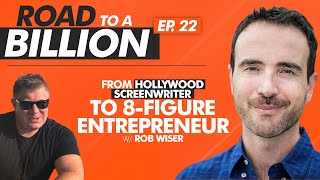
Rob Wiser went from screenwriting in Hollywood to building 50+ sales letters and multiple 7-figure launches in direct response marketing. He shares copywriting tactics from film, why he models proven offers in health and men's niches, and how he built affiliate networks by giving value first before asking for anything.
Chapters
Hey, you're listening to the Road to a Billion podcast. I'm your host, Stefan Georgi and I'm glad to have you with me here today. The Road to a Billion is a call and radio show style podcast where you can ask me and my guests questions about freelancing, copywriting, entrepreneurship, mindset scaling, funnels, relationships, money and more. The reason for the name the Road to a Billion is twofold. One is because I will hit a billion dollars in sales either by the end of this year or start of next year, probably end of this year. I haven't really updated the math lately for basic products that I've sold or that I've helped clients to sell through my copy. And then I also want to make a direct impact in the lives of a billion people over the next 10 years, whether that is emotional, mental, spiritual, physical, financial, all that kind of stuff. We'll start taking calls in about 30 minutes from now. And the way that works is that you will put questions into the Q and A section in Zoom here and then my good friend Ed Ray will go through, review those questions, feed them to me and you'll come on and we'll answer them live. And you can interact with myself and my guests who I wanted to do in a moment as well. Before I do that, Ed, do you want to go ahead and say hello and tell everybody who you are and what you do?
Hey, my name is Ed Ray. I am a 20 year old copywriter marketer and spoke on stage at copy started 2019 as Rob talked about. And I specialize in a lot of the more cutting edge marketing for like Facebook and focusing. Yeah, I'm 20 now. Can you believe it, Lisa? And I know, dude, I feel like I'm over the hill at this point. Honestly, I just feel like my entire career is just like downhill from here. But yeah, that's it about me.
Sweet. That's a great intro there by. For those who are watching on Facebook Live, I'm going to put a link to Zoom here. Zoom link. Okay. And then let me talk about my special guest. So today we are joined by Rob Weiser. If you don't know Rob, Rob, you've done so many things that I'm going to kind of give a really incomplete biography and then we'll sort of fill it all in. But Rob started his career as a writer in the early 20s, a screenwriter in Hollywood rewriting and adapting screenplays for production companies. He got his big break when one of his original scripts got made into a theatrical release. It was a crime Thriller called Snipes. And he had the rapper Nelly playing the role of the rap star in the film. And Zoe Saldana, then an unknown and now at the time an unknown actress. Now she's one of the second highest grossing actresses as a female lead. In addition to that, Rob got a book deal for major US publisher. He had two books published. He's written for many different popular magazines, including Casino Player, which is the number one publication for the casino industry. He has some great stories about that time in Vegas and the people that he kind of rubbed elbows with and knew. In 2008, Rob came across direct response marketing and traded his Hollywood rockstar dream for a massive success career as an offer owner and copywriter. And since then, Rob has written over 50 sales letters and VSOs for his own products. Many of them have grossed over seven figures. He has owned several successful offers in the men's health space, Travels the road as an expat digital marketer. He lives in Thailand and mentors entrepreneurs on choosing the right digital product idea and bringing it to market. So Rob has done a bunch of amazing stuff. We are so thrilled to have him here with us. And Rob, thank you for joining us.
Glad to be here, Stefan. Thrilled. It's 1:00am over here, man, but I'm ready to rock and roll, so fire away.
Excellent, man. Well, yeah, so the way this works is it's always pretty informal and I kind of just ask questions and we chat and it's wide ranging. But I guess let's just talk about the beginning of your sort of journey and going from a screenwriter to a journalist to direct response copy and to be more specific, I guess the first pivot from screenwriting to journalism. Why did that kind of come about? Why did that happen?
Well, in between there, there were books that I'd written. I've got to backtrack a bit to really explain how I got to that point. I've always wanted to be a writer since I was a little kid. And so over my career I've experimented with different mediums, different forms of writing, screenwriting, journalism, mainstream books. And I was able to achieve quite a bit of success in all those mediums. And in a way, they all led me towards copy and made me a stronger copywriter. They all prepared me in a way and gave me tools. So initially I went to film school in New York University. At that time, screenwriting was my big obsession. And I had all these guest professors back then like Oliver Stone and Scorsese and Spike Lee. It was a very exciting time to be at nyu, in the heart of Manhattan. When I graduated, I was picked up by an agency. And at a very young age, I was not quite at Ed Ray age, but a very young age, early 20s. I was making money. I was living in LA, shuttling back and forth to New York and actually making a living as a screenwriter, which is like a million to one long shot. And so I had some success. I was hired for a number of jobs, rewriting screenplays, adapting screenplays, which involves a producer handing me a 300 page novel and saying, turn this into a 90 page screenplay, which in itself is sort of a great preparation for writing copy as far as. We'll talk about that more. But as far as how to trim the fat, get concise, and tell a story at a quick moving pace that is extremely compelling. That was what I sort of specialized in with adapting books for a while. One of my films did get made into that crime thriller, Snipes. And as fate would have it, you know, then an unknown actress who was then a good friend of mine, Zoe Saldana, was cast as the lead. At the time, Nelly was the biggest rap star in the world. He hasn't done a whole lot since, but at the time he was. He had sold about 15 million albums, like my Country Grammar album. You're a hip hop fan, Stephan, So you know, you remember this?
I know Country Grammar.
Oh, yeah, sure, of course, of course. And Zoe was an unknown. Now at this point, she is the second highest grossing actress in the world. I mean, she's done Avatar, Star Trek, Avengers. You know, you look her up, she's in every blockbuster out there, it seems so. But however, that was a great feather in my cap. It was very, very exciting to be a part of that project and to see it get made. But the nature of the screenwriting business is very tough. It's like feast or famine. You sell one project and then you're back to making the rounds. Your agent is sending you around to pitch meetings. You're going to these Hollywood studios all on your own dime. And I was flying back and forth and I was pitching my latest screenplays, trying to get my next deal. And it was very hard to make a consistent income. And it was even harder to see my words in my scripts get realized on screen. I started meeting writers who've been out there in LA for many years. They had beautiful homes, they had families, they had a nice income from adapting scripts and doing rewrite jobs and selling scripts, but they had no credits on screen. And for me, that was what it was all about. I Want to write stuff prolifically, get it out there and get it up out to the public. And hopefully make good money consistently. And screenwriting proved to be pretty frustrating in that regard. So I was out in Las Vegas for a period. I got a job to make money writing for Casino Player magazine. I interviewed tons of celebrities and, you know, various characters out in Vegas and in casino moguls. I accumulated a lot of great stories. Still running screenplays, going back and forth for the pitch meetings. One night at the Hard Rock Casino, I ended up. I was looking at my wounds. I'd gotten dumped. I was miserable hanging out at the Center Bar on the Hard Rock, if you've been there. And I met this guy who was the most charismatic dude I'd ever met in my life. He was surrounded by beautiful women and had this amazing charisma and energy about him. We ended up talking, becoming friends. And I decided to pitch a book to my agent about this guy. He was actually the youngest hostage negotiator on the Vegas police force. And his amazing way with women and his charisma and his verbal skills, his persuasion skills were off the charts that it was due to his training as a negotiator. So my agent was calling me up and saying, rob, where's your next script? You know, you're blowing all your deadlines. And I went to her and I said, I got the book idea. We're gonna do a book about this guy and my relationship with him, about me, this struggling newbie on the scene in Vegas being taken under the wing of this amazing character who shows me the ropes as far as how to become more confident, how to talk to women. And this was right before that book, the Game, came out. So this entire men's dating industry had not yet exploded. And my book that I wrote with him was really one of the first ones out there to go into bookstores and to get some attention. And that book ended up getting optioned. At one point, I believe it was going to be optioned. They had Jack Black scheduled to play me at one point in the book adaptation version. And the Rock would play my friend. This was years ago, before the rock made 50 million bucks a movie. But there was a lot of meetings about this whole thing. So during this time, again, having a book go into stores, again, a great lot of prestige. My mother was very proud. Her son's book was in Borders and Barnes and Nobles. But again, the money just wasn't coming in. I got paid a nice advance. And then to make royalties, you've got to sell it like a million copies. The way it's like getting a record deal. They pay you a bunch of money up front and then pennies after that. So I then discovered one one day while surfing the Internet, a website by a guy named David d', Angelo, AKA Eben Pagan, who a lot of us now know as a great massive Internet marketing guru. But back then, he was a guy selling men's dating advice on the Internet. And it was the first time I'd ever seen somebody doing this, having this one of those 3D graphics with the CDs and the discs and the ebooks, and selling his package double your dating for $97. And here I was making pennies on my prestigious bookstore book. So I decided to take my. My work, all this men's dating info, and repackage it as an ebook and add some audio recordings and a few videos or whatever, and soon I was selling it myself through my own crappy Homemade website for 47 bucks, whatever it was, with a simple PayPal link. And I'll tell you, each sale that I made with that 47 bucks going into my pocket gave me more gratification than selling 100 copies of my book that was in stores. And that was the beginning of my journey as an Internet marketer. Back then, there were no courses, really, no gurus to teach this. I had to figure out a lot of this myself. And that led me into the world of discovering upsells and email marketing and the whole back end and recurring payments and memberships. And I was fortunate to attend a conference by ClickBank back in, I think, 2008. And I sent you over a picture a minute ago, Stephan, if you have.
It in your Facebook, I can share it. I'll share my screen for a second for everyone watching here on Zoom.
Oh, there it is. Yeah, this picture is so. It brings back so many memories. So there I am on the left, I'm holding an iPad one. It weighed about 30 pounds. And you know, this is old because I'm on a Windows computer I have never used since. Next to me is Brad Howard, the man behind research on ClickBank. At the time, he was just a regular dude, probably making a couple hundred bucks a day selling men's Fitness products on ClickBank. Then you have over next to him, Josh Pelissier, creator of Dao of Badass, which was a monster hit, really the first mega hit in the men's dating industry in this niche. And then next to him, Dave Miz. Next to him, Vin DiCarlo, who was making a fortune at the Time with his men's dating offer. And then Heather Haven would. Then, you know, our friend Chris Hadad there he is, making a strong point. And Dan Rose, Six Pack Shortcuts. Then Susan and Tim Bratton. So that room. And my friend Josh Rosenberg was there as well, but he was. He was off camera. But I mean, talk about a murderer's row of marketers. I mean, unbelievable what these people all went on to do. And we just started out as a bunch of young people just getting together in New York City and kind of helping each other figure this whole thing out. And we all became affiliates for each other in one way or another. And we'll discuss that more later, probably. But I was very fortunate to meet these people and to become a part of this community. And it was amazing how, as a screenwriter and as a novelist, it was such a lonely profession in a lot of ways. And now I was brought into this community of people, a bunch of rebels, Strange people from strange backgrounds, often with very little education, but a lot of street smarts and a lot of balls and a lot of creativity. And we all rose up through this together.
Yeah. That's awesome.
So that's where. That's how my career really began. Since then, I began writing a lot of products, writing tons of my own stuff, writing my own copy for all my stuff. There was one point where I was cranking out health offers, but there was this damn guy somewhere. I heard he was in Romania, but I wasn't sure. Some dude was cranking out health offers so quick, I couldn't keep up because he had a formula called rnbc. And that man is you, of course. And I had no idea who you were. And all these years later, we became friends.
Yeah, absolutely. That's an amazing. That's one of the first things you told me is you're like, I was trying to compete, but you just kept putting out these damn offers. And I was like, yeah, I wasn't in Romania, but the people were in Romania. Luffy said, Stefan was in Romania. I mean, but. Yeah, to visit them. But, yeah, they weren't.
They were based in Romania. Yeah. But I was thinking, on top of it all, this guy's not even a native English speaker, and he's cranking these things out. I thought you were Romanian. Like, this is unbelievable.
Yeah. Basically mentored by like. Like the Romanian mafia, essentially. But, you know, in a good way. Those guys are very. Yeah, this very. Yeah.
Yeah. I should point out that I'm no longer really that active in the men's dating stuff. That was How I got into the business. I still have products, but primarily I'm doing men's health stuff now. Yeah.
And then you did do a. That woman's, like, dating thing with Brian too, right?
It was a woman's Brian casting.
It's called rewind your romance.
Yeah, yeah. Yep.
That is. That's very active. We were doing great. We were doing really well on Facebook traffic for a long time. And then with the elections, everything went crazy with the ads, the costs. So we're hoping to relaunch it on Facebook in the next week or so.
Oh, nice. Yeah. Hopefully it'll be better. Cool.
Yeah. I transitioned into the women's space after the men's space, and now I'm back with the men's space, but in health.
What is it about the men's space that you like?
Well, it's an easy entry point for a lot of marketers. I found, you know, a lot of guys that are now doing other stuff began in that niche. And I think it's because we were able to relate to it. We were young single guys and, you know, our area of expertise was really nothing. There was nothing really to base a product around. It was an easy entry point. We all were interested in this topic of how to become more confident and cool and get a girlfriend and find a wife. So those kinds of products made sense. And then as I matured, I realized that you don't need to necessarily be an authority on a topic or have a personal passion for a topic to create a successful product around it. In fact, many of the top offers now that we see are people who are just straight up marketers and they are bringing in an expert or an authority to help create the product. But the marketing really is what. Is what sells it ultimately.
Yeah, it makes sense. Let me. I do have to. I have to ask because, like, I, you know, I had a last few weeks or whatever. It's been, you know, it's been a reflective period for me because I've written a lot of, like, really aggressive copy back in the day and sensational copy and things like that. And then mostly I'm writing more for, like, branded stuff these days. But I still will, you know, like, I wrote like a research killer. Right. Which hasn't gone live yet. And obviously Brad has research and you look at that and you're like, oh, good for you, Brad. And every time I've interacted with Brad Howard, he's been the nicest guy. But I get there's a criticism there of these offers, especially I think, with Research doing so well. You may hear some jingling behind me. I had done like $70 million in revenue after six months or something like that, I think. And Brad kind of made the mistake of saying that kind of publicly and then everyone jumped on the board, the train of that. But it's. And that one is a real person, like. Right. So I think John Barberen is the spokesperson who's a real person and he does mostly talk about his own journey, but it just, you know, it is sensational. And then there's all these other offers that come on with like my wife lost like 75 pounds in like three weeks eating this one berry from like the rainforest. Right. And it's like an on demand supplement. And again, I'm not, I'm not being a holier than thou guy because I've totally been in that space a ton. Right. But then I'm like, maybe I can try marketing in different ways. So I am just curious, what's your take on kind of where the industry's at with clickbank offers and sort of the more sensational stuff? Do you personally feel like it's a problem or there's any kind of moral issue with it or do you feel like it's more contextual than that? I would just love to get your take on this.
Well, there are certainly lines that I wouldn't cross. I think when somebody is suffering from a real serious ailment, a disease, you don't want to promise a cure. It's more ethically wrong, of course. So I have not been in any niches where, where that's really been the case.
Right.
The, the, the miracle cure stuff, I, I've avoided that intentionally.
Yeah.
In the stuff that I do, I try, you know, I make aggressive claims, of course, but I feel that my product can live up to many of them. Of course, the caveat being, which I explain in the product, that you've got to lead a healthier lifestyle. You know, this is, this, this pill will not solve your problems. This pill alone will not send your testosterone through the roof. You've got to also adopt certain clean eating habits and so forth as well. So I try to build that into my products for that reason. I also, I've been accused, of course, teaching this to people, teaching people how to build products. People can't wrap their heads around it. How people buy these digital products, they think, scam, scam. Well, One thing about ClickBank, you people must always remember is, is There's a mandatory 60 day money back guarantee and people are very welcome to Send an email to Clickbait, they're refunded immediately. There's none of this bullshit with, with holding onto their money and not honoring your refund policy. Right, so I'm with you on that. I think that right now it's especially interesting because clickbank is now allowing the sale of supplements. They didn't do that a few years ago. So of course I'm on that wagon now as well. And it's really, it's really a matter of staying competitive because you know, for example, I had the number one men's health offer for a while. All of a sudden a new offer called VitaFlow comes out of nowhere and takes my spot. Their average order value is about $120 or something. And mine was like 33 because I'm selling an info product and they're selling a supplement with back end supplements. So how do I hold on to affiliates when there's that offer to draw them? So now it's becoming, it's becoming a supplement race in a way. And it's a different era I think. You know, it can be very profitable if you do it correctly. Certainly people now, due to Covid, and I know Brad Howard has said this too, you know, people are adopting this mindset of buying online a lot faster. This, this pandemic has sort of pushed things forward where it might take five or 10 years to get to that point. Now it's been condensed into like a six month span where people are buying stuff online, especially health products, no questions asked if they like, like how it looks they're buying and they feel safe and comfortable buying online like never before.
Right.
So that's where I see things at at the moment. But I do think there are lines that should not be crossed. And I, you know, you've got to walk that line between being a storyteller, being an aggressive marketer and you know, not doing harm. Certainly.
Yeah, 100%. No, it's interesting, I think. And that's something I've been talking about lately too. It's because even then I was like, hey, you know, I've been, I've been aggressive stuff back in the day and like, you know, whatever. And then people were kind of like, why? And I write this up on another call too, or another road to billion episode. But people then have come to me and been like, like, oh, I wanna, you know, how can I write copy without telling any stories? Because I don't want to be unethical. And it's like, you can tell stories and be ethical. There's Nothing wrong. Like, literally, like, storytelling has been going on forever. It's like, you know, it's like the story that turns to like. And then like, she, like, her cancer disappeared, or like, and then she lost like a thousand hundred pounds in, like, two weeks, like, doing nothing, not changing her diet or exercise at all. And, like, you know what I mean? I think storytelling is great. I mean, storytelling is all of advertising and marketing, and there's entire books about it for, like, the big corporations read about storytelling. Right. So I just kind of continue to think that that's an important distinction to make. I do think it's interesting. Go ahead.
I thought you made a point. Actually, I was reading some of your material you'd written in response to this whole thing. Didn't you mention how commercials use storytelling in a sense?
Yeah.
When you see a woman using a feminine hygiene product and then she's running through a field with her husband, is that an actual woman who used that product or is that a story being told? You. I mean, you know, where does that line exist?
Yeah. I've been thinking about the thing that what I'm at right now is like, is there a reasonable chance that if somebody, Like a highly reasonable chance that if somebody were to buy your product based on the claims that you made and they use your product correctly, that they could get, you know, similar results to what you've told them that they could get when making those claims? If that makes sense. Right. Because if you say that like, like, I think that's sort of like the. For me, like, if, like, you know, if you. If you were to. If my product is like, you know, you can lose 20 pounds taking, like, this supplement that's gonna help suppress your appetite, plus, like, diet and exercise and things like that. But I think the thing is still saying, like, it is tough because, I mean, like, you will lose 20 pounds is like, to, like. I get where that's problematic kind of. Right. Cause some people won't. But it's like, you can lose 20 pounds if you use this product and you do diet, exercise. It is possible to do that. And here's what we're going to give you the chance to do. And then if your guide is like, or your product or something, whatever it is, if there's the resources there for him to achieve that. To me, then I think that that is doable. I mean, I go back to Coca Cola, where it's like, open happiness and stuff like that. And it's like, okay, yeah, and diabetes and sugar water and like an early death and Obesity and cavities. And it's like, you know, like, why is Coca Cola like okay to like kind of hold up as a good example, right? Or like even Apple, I mean I use Apple products, but it's like the nets, like the nets of people can't jump out the windows of like the Foxconn sweatshops. And it's like, oh, there, you know. So I think there's two sides to it for sure. But for me, I think the best thing that I found so far in thinking about this has been again, like, you know, based on your claims, if people buys a product and they follow the use it the way it's supposed to be made, like, do they have a highly reasonable chance of achieving the outcome that they were expecting based on your claims and promises and not their implied one? Right. I've done that all the time where I'm like, hey, you know, like I don't know, whatever it is, like people can buy RNBC Method and be like, I'm not a millionaire yet. And you're like, well, I just. That's gonna happen. Like, you know, it's like this will help you. So people do overhype themselves sometimes. But I don't know, do you like that kind of, that kind of criteria? Because it's something I'm.
Yeah. And also, yeah, also of course the wealth building niche, that's the other big one where people are oftentimes that's where I see people getting called out a lot more and people getting disappointed in their results because of the nature of it, the promises of the get rich quick programs and so forth. You know, my course teaches a very step by step blueprint for creating your own digital product, getting on clickbank, marketing it, handling the copy and selling it. RNBC Method is a fantastic course that is helping people, you know, and I think it was Dan Kennedy who said that. Dan Kennedy, I believe was the one who said if you really stand by your product and the claims and you know what will help people, you have an ethical responsibility to market the hell out of it because you want to get this into people's hands to help them. So that's one way to look at it as well.
I agree with that and I think the same thing I made my friend Glenn Dawson, who maybe you'll see the replay, but he does called reset you and it's like health, like coaching, like virtual training, weight loss and he gets amazing results for mostly women and you can go on their page and there's always crazy before and afters and stories and things. But he said the same thing to me. It was like he used to be a personal trainer at a gym and he'd have to sell training, but then he hated selling and he realized the same thing. He's like, I'm literally trying to get people. It's like, I have a responsibility. If they come in and they work with me and they like, you know, lose weight and their cholesterol goes down and their blood sugar gets better and, and it's like I'm, you know, making a direct impact in their lives. And same way he's doing now, he's like, so I have like a duty to try to get people to do this who need it because otherwise they're, you know, like, like, I'm, I'm. I'm just.
I'm.
I'm just. I'm doing them a disservice if not. Cause I'm giving. I'm not given the opportunity to make like, improve their lives and potentially live longer and all that kind of stuff. And so I think that totally makes sense. And what Dan Kenny said as well.
Well, it's cool to reflect on it, man. I. I know. I think it's an interesting topic for sure.
I think so. I just think it's a time where, like, we're in a time now where, honestly, with ClickBank doing supplements and with there being like, you know, more scrutiny on clickbank as well and on some of these offers, I mean, I think it's something where we have to like, have those conversations, like, I'm not out there again to be like, you know, I'm not. I'm not like, I'm not be holier than thou. I'm not holier than thou. I'm not judging people or anything like that. But like, I just think it's, you know, this stuff needs to be addressed. And then I think, you know, for, for me, I'm kind of trying to change some stuff, like. But. But I just think it's has to be acknowledged. And of course, I mean, I think you gave a great answer and, you know, it's awesome. By the way, we're gonna start taking questions in just a couple minutes here, so if you have questions, pop them in the Q and A. I see four so far, but I'm sure we. This is how it was like last week, and then by the time we ended, There was like 25 questions and we didn't get to them all.
I'm happy to. I love answering questions.
Yeah, so. And so, Rob. I mean, like, we're you know what? Give us one really good Vegas story. And then I want to go into the Q and A's, if that's okay.
Oh, Vegas stories.
One good Vegas story.
Well, there was one night. I remember there was a night where there was a night when I had a. I'm terrible with time zones, man. I've been over in asia for over 10 years and I'm awful with time zones. And there have been times when I would stagger home from a bar at 4:30 in the morning with company sometimes, if you know what I mean. And my phone rings and it's. It's, you know, a billionaire casino mogul ready for our interview, which was set up a month ago. One time it was Slash from Guns N Roses, one of my personal heroes. I get home and I'm crashed out and I'm laying the bed and my phone is drinking. I said, who the fuck is this? Hey, it's Slash. Holy shit, Slash. All right, so I jump out of bed, you know, fire down some coffee or whatever, and I, on the spot, improvise, you know, a one hour interview with Slash just based on my knowledge of gnr. And he loved it. We had an amazing chat and I got a bunch of inside snoops on the Guns N Roses reunion and the possibilities of it happening. That was very cool. But one of my favorites actually, was one of my favorites. One of my favorite actors growing up was James Kahn, you know him from the Godfather. So I ended up palling around with one of the top VIP hosts in Vegas who then worked for Mandalay Bay. And he was the guy who would escort the high rollers around the whales and take care of their every need. So he had the big in at the strip clubs, of course. He would bring his VIP gamblers to one of the biggest strip clubs in town. I guess I should probably not name the club, but they were under suspicion for a lot of heavy mob activity. So my friend brings me there one night, the VIP host. He offered to bring me over there because I'd written some amazing stories about him. You know, the king of Vegas, the king of the backstage pass. The king. And he loved my writing. So one night to thank me, brings me to the strip club through this back alley, and there's this iron door that he brought me through. He introduces me to the head of the club who was like a Tony Soprano figure sitting in this dark back room with his entourage of goons and this guy here. I heard you read a lot of good things about my friend. I want to give you something Kid. And he gives me this velvet box and open it, and it's a golden key to the back door. And in this back area, there were celebrities galore with all the girls. And they were doing. I mean, anything goes in that back area, you know what I mean? So I didn't have the balls to try the key for a long, long time. I didn't even know if it would work. But then one night, my buddies from New York flot for a bachelor party. And we get the limo and I'm trying to be Mr. Vegas and show off and bring him around to the different clubs. And one of the guys says, rob, what about that key you got you told us about? And I said, oh, it's in my closet somewhere. I said, get the key, get the key. So go to my place. I get the key, we get in the limo, go back to the strip club down the back alley. The limo in front of us, door opens, and then James Caan steps out with his son Scott Kahn, who's also an actor. And James Caan is struggling with his key in the door. And my friends are in the limo saying, holy shit, it's fucking James Caan. So I calmly stepped out of the limo, took my key out. I said, Mr. Khan, allow me. Brushed him aside, put the key in, popped it open, we proceeded into the club. James Kahn was very grateful. We all hung out. My friends were flabbergasted. So that was just one of those many, many nights.
That's an amazing story, though. It's so crazy that there is this golden key and then it actually works and it brings you to this magic. That's the thing out of a legend, right? So I mean, that's.
Yeah, yeah. Stranger than fiction. And I had access to a lot of those back rooms and underground spots, late night, after hours places in Vegas. That was a great era. That was when Vegas was really on fire. It was the hottest city in the world. Everyone wanted to be in Vegas. I loved it. I still love it.
Yeah, Yeah. I still love Vegas. I'm in San Diego right now, but I can't kick my Vegas addiction. We saw the house there. We were back there for six weeks, and then we just came back like a week and a half ago. And I like the weather in San Diego and I like my office. But I mean, I don't know, I just really like Vegas a lot. Such a fun.
I started. I started to enjoy blackjack a bit too much. You know, it happens. You know, it's just. You go into a nightclub and then you can duck out and just, it's right. It's like 10 steps away, you run over the table, throw down 300 bucks, and you can pay for your whole night in 30 seconds, you know, but then you lose 300 bucks and you put down a lunch and then, you know, you know how that goes.
I do, I do, yeah. Especially moving to Vegas. I mean, a lot of people who moved to Vegas in the first year, they realize that they just can't go casually gamble as often as. Because one thing, when you're like, you know, come for a weekend and you're kind of like expecting that, okay, I'm going to gamble. This money is fine. Once you live there and you start doing it regularly, you're like, oh, this can really add up. It turns out when you're gambling a lot. Robbie, I'll ask you one more question before we get to the Q and A's. And we do have, we have 10 now. So it did increase. And so you've been in Thailand for 10 years now. Like, what, what made you. Why did you make that move? What facilitated you being an expat and making the move over to Thailand?
Well, originally I meant I made the move from Vegas to the Philippines.
Right.
And I've always loved traveling. I just enjoyed the lifestyle over there. The cost of living was unbelievable. You know, renting mansions with, with a, with a live in maid, a cook, whatever I wanted a driver for. Unbelievably cheap. And I also started to hire a lot of locals to work for me on my Internet marketing projects. Back then, SEO was a big deal. I could rent out an entire office or Internet cafe and have 50 Filipinos just hitting likes on dig and stumbleupon the social sharing sites back in the day or building crappy backlinks. So that originally got me over there and then it just became home. It just became home. I would fly back and see my family and just everything that I could do here in the States, I could do over there. And then eventually I made the move to Thailand because this is just a lot more first world. I love the Philippines people. You know, my girlfriend is Filipino. But, but, but Thailand is a much more comfortable first world lifestyle. There's no electricity, brownouts. Everything I need is here, you know, and it's also been an amazing. I've also been very, very blessed to be here during COVID It's done a really good job. There's been almost no impact on my lifestyle at all here, which has been, which has been amazing.
That is amazing for sure.
So I was just gonna say that when I first. When I first approached you about maybe. Maybe being on your. On your podcast, at one point we both agreed that now is a very strange time in world history where I think a lot of people are thinking, well, what about the possibility of living abroad? You know, for many reasons. So if anybody has any questions on that aspect, I'm happy to answer them, you know.
Yeah, for sure. That's a great, great topic. I'm sure there are some people who are interested in being. Living the expat lifestyle. And it's tempting to me. I mean, I went to Medellin, Colombia twice. But like in 2017, one time like by myself and then one time with watch by stuff. And then Laura came out and then beginning of a friend. But even there was like my like being in. Who's it? Andrew Contreras. Who. He's a copywriter. Nice kid. I don't know if, you know, around my age, probably. But like, I remember there, even their apartment, it was like a high rise, like right near like an El Pablano, which is like the, like, you know, kind of the where you want to be. Right. Especially as an expat. And it's like he's like, hi. Like one of the high stories in the building had like a gym and security and like a steam room in a sauna and like a clubhouse. And they. And they had like four bedrooms and every window had like a balcony and a view of like magine and like the valley and like all this crazy stuff. And it was like just this like, you know, sweeping, beautiful place. And I'm like, what are you guys, like, paying for rent? And it was like $700 a month. And this was like a penthouse, you know, And I was like.
I was going to say 650.
Yeah, yeah.
I was contemplating moving to Medellin for a while. I'll just say it's really bad to lose your passport down there when you speak four words of Spanish. That's what happened to me. It was a month of absolute hell with embassies. Oh, my God. It was one thing I will say, if you think these US Embassies are going to really help us, think again, man. It's. It's getting line, you know. It took me a month to sort it out and get the hell out of there.
That's so.
It's an awesome place. But Thailand, for me, it's for my speed.
Yeah, no, makes. Makes perfect sense. Cool. So with that, we're going to move into questions. Ed Ray, do you as Our wonderful co host. Do you have any questions for Rob before we turn it over to our viewers or do you want to go right to questions?
Yeah, yeah. So when choosing a place to expat to, what's your criteria?
Well, the first thing you got to be aware of is the visa situation. A lot of these people in the US they talk on social media. I've seen a lot of celebrities in Hollywood. If so and so wins, I'm out of here. I'm moving to Canada. I'm moving to Australia. The reality is a lot of these countries are tough to move to full time. They're very stringent requirements. And unfortunately the reality right now is the American passport is especially weak because of the COVID problem. But normally the first thing you want to do is go on a trip there for sure. Don't even think about moving some more until you get there and spent a few months, you know, really soaking it up and then inquire among the other expats, the expats about the visa situation and find out how possible it is. Thailand is tough. It's tough, but I was able to purchase a special visa here. So they're trying to. They seem to be trying to get rid of a lot of the backpacker types and the digital nomad types and trying to, you know, have a. I don't want to say a higher class of people, but certain countries are more open to that. They're more open to the, to the digital nomad backpackers who are coming out and living on a thousand bucks a month. You know, Thailand is. They're phasing that out unfortunately, I guess Colombia, I got a lot of friends there, but it's a country by country thing. But just never make the assumption that because you're an American you can just show up in any country you want and pay money and live there. It often isn't that simple.
Yeah, I heard with Columbia too. I talked to a friend who, the same friend I went to visit and he's actually in. Where is he? Like somewhere in like the Caribbean basically or the US Virgin Isles or whatever and apparently doing great, loving life. But he said one thing with Meijin is like, because of the promise of Venezuela, like Maduro and all that, they're just having such a huge flood of people trying to escape Venezuela and they're coming to Colombia. So that, you know, he still said managing was like he's friends there and it's like, you know, it's fine, but that he felt like it was getting kind of worse and a Bit more like sort of sketchy and things of that nature, too. So it is. That is a challenge sometimes as things can shift and somewhere. That's great. You know, one year can become terrible the next year based on, like, a geopolitical situation, things like that as well.
Totally true. Totally true.
Yeah, for sure. Okay, Cool, Ed, so if you don't have any other questions, let's move into questions from our attendees.
All right, let's do it. So first question here is from Isaac on writing and storytelling.
What's up, Isaac? How's it going? Give Isaac a second here. Oh, there you go. Never been the first question before. Sorry. Yeah, go ahead, man.
Cool. So, yeah, just.
As someone who's also kind of started with, like, novel writing, and I've.
I've written some scripts, but never successful.
With it or anything. I've found that some things about copywriting are easier. But I've also found that there are other things where, like, my stories, I would. I would entertain somebody, but then it wouldn't really go anywhere.
So I guess my question was just.
You know, how did you find the writing process changed for you once you transitioned from more of, like, the entertainment end of writing to copywriting and such?
Well, there are a few things about screenwriting that I felt. I felt carry over into my copywriting. One of them, which I mentioned earlier, was learning how to be very concise with your words, making every word count. Because with a screenplay, each page equals one minute of screen time. So you gotta keep things moving, you know, so. And then at the same time, you also, of course, trying to grab their attention right from the beginning and carry them from. From page to page in your screenplay. Because when I wrote a script and then it got passed along to a producer to read, they have a stack of scripts on their desk that is this high, and they might only give my script 30 seconds or a minute of their time. Just like a prospect arrives on your website and sees your BSL and will either keep watching or leave in the first 30 seconds. So the importance of a great lead is the same principle applies to a screenplay or a sales letter. The lead is critical. You grab them, pull them in, take them on a journey. And I also think that I write with a fair amount of humor. And I don't see a lot of. We're being used by a lot of. By a lot of copywriters these days. You know, it all feels. It all feels quite serious, you know, serious. So I try to inject quite a bit of humor, as I always did with my with my screenplays because, you know, I love writers. You know, I mean, like, of course, we all have Quentin Tarantino, who writes extremely violent films punctuated with great humor, which is what we call a pattern interrupt in the copywriting business. So there are many parallels between the two, I think.
Yeah, definitely. It's the certain places, like, with humor.
As me as well. I really like using that.
But a lot of the voices that.
I've had to write for, it's like, ah, it's like this person never stands. I'm like, oh, fine, but I'm using it and something else. Yeah, yeah, but I mean, the lead. The lead is so critical. I use a lot of. I used to use a lot of cold opens in my screenplays. And that's when. When. When the movie opens right in the middle of an action scene. And we've all loved these movies. All the James Bond movies do it. Mission Impossible, Raiders of the Lost Ark, Star Wars, a lot of Tarantino's movies. Standing. Private Ryan, one of my favorites, opens up plunging you right in the middle of an action scene. And so in my. In my sales letters, I'll often start at a critical rock bottom moment of the story and then begin the sales letter. And then in my story section later on, I'll circle back to that rock bottom moment and pick up the story from there.
Yeah, starting in the action, then giving that backstory later on.
Right, yeah. Whatever you can do to hook them, you know.
Cool.
Well, thanks.
Really appreciate it.
Anytime, my friend.
Awesome. Thanks, Isaac.
Beautiful. We have a question here from John about screenplay writing.
Nice. What's up, John?
Hello. Hey, Stefan. How's it going?
Good, good.
Hey, John.
Hey, Rob. Thank you for taking my question. My question was actually the same as Isaac, but as you were answering, I changed the question up a little bit. Since you come from the screenplay world and then you became a copywriter, a lot of us have entered the world of writing as a copywriter. First, do you feel like there's any benefit for us to learn screenplay writing to help our copy become better or.
Yes, there's a great book I picked up the other day and reread a story by Robert McKee. And Robert McKee is a legend in Hollywood. He leads these massive seminars for teaching screenplay writing and teaching storytelling, and I think a lot of it is really applicable to what we're doing with copy. And actually, on a side note, I told Stephan this a while ago. I think it's amazing to me how, you know, when I was starting out in this business with screenwriting and everyone wanted to write the great American novel, or everyone wanted to become a screenwriter and be the next Tarantino. And now there's this whole movement of young people who are really into copywriting, which. Which wasn't the case, you know, five, 10 years ago. And I think that you've been responsible for this in a lot, in a big way, which is really interesting.
Helped. I've helped. Can't take all the credit, but help.
No, but, I mean, you're. But, you know, it's coming from somewhere. I never was. Was aware of this industry back in the day, and it's become a very popular thing. It's a. It's sort of a rock star thing now. Becoming a badass, highly paid copywriter.
Yeah, I think. I think. I mean, well, for me, it like, really just changed my. Changed my life so much. Right. I mean, that's the thing. And understanding, like, the same way you kind of feel a screenwriting, but it's like, oh, my God, like, people will just pay me to write and to be creative, you know, to me, that's like the best feeling. Even yesterday, I talked with a client I'm doing something for. It's a skincare product, and it's really cool. We've got this, like, super badass celebrity doctor who. She's, like, done TED Talks and all this stuff. And then we've got an actress who. She was like a child actress, but she's been on, you know, famous TV shows and, like. But we're like, well, how do we use both of them together? And then, like, I was talking through it with the client and kind of came up with this whole, like, really unique kind of, like, clothes where it's. I don't want to give away too much of a kind of infomercial style, but not like. So, like, you know, infomercial styles where it's like, can people get this product today? Like, they can't. You know, I mean, not like, I don't want to kind of go like that. Like, want to be more authentic. But I basically came with this whole, like, really cool thing that hasn't even been done in vsl. And then I got, like, super excited. And so I just. The idea that I can. I was telling Laura, it's like, man, for all the stuff I do, just still, when I get to be really creative and come up with something unique, but that I think will work and get paid for it, like, that's still just one of the best feelings in the world, you know? And I think that's Why? A lot of people get attracted to copyright as well. I think it's income, but it's also like, a huge part of it is just like, the idea that you can get paid to be creative. I mean, that's an amazing thing, Right? It's hard to find jobs that pay well for creativity.
I love the gratification of seeing it done online and being enjoyed by people. You know, I started writing for magazines, you know, years ago, partially because I could crank out magazine stories and have them in print and on shelves on the racks, you know, a week later and see my name on the byline. And I got off on that. I loved it, you know, of course.
Yeah, it's awesome.
Yeah. Who doesn't, you know? John. John, did that answer your question? I kind of went on a spin on a tangent. No, that was awesome. Actually, one more before I go.
Do you have any books?
Sure.
Other than the Rob McKee book, which I'll certainly pick up.
That's the main one that I would recommend. I would also recommend going on Amazon. And a lot of these great filmmakers, there are. Their screenplays are published, and there's compendiums like the great scripts of Woody Allen or the great scripts of Quentin Tarantino. You can buy them in screenplay format and read them, and you will learn a lot about how to write very crisp, concise language to tell a story, which I think is so important. You know, I think Stephane has popularized to a lot of people the ellipses. You know, every line is its own paragraph of the ellipses. And the way when it's done well, it's super effective. But I do see a lot of younger copywriters kind of abusing it, and they think because they're using the ellipses on every line that they're telling a concise story. But the thing goes on forever. You know, it doesn't go anywhere. It's like, tell the story, man. You know, use. They're overly long, you know, in screenplays. Chop that all down.
Awesome. Thank you very much. Cool.
No problem, John.
Appreciate it. Thanks, John. Yeah. Rob, you know, the funny thing with ellipses is. Exactly. It doesn't give you permission to tell a boring story.
Exactly, exactly.
And there's like a rhythm and a meter to it, too, because, like, I use ellipses, but there's a period. So it's basically like every. Like, you know, it's like almost like a sentence. I'm breaking up the sentence for, like, flow. And I'm also. Or I'm, you know, continuing on, like, an idea or especially there's more than one idea in a sentence type thing, then you have to pause. But if you see script source just ellipses, and then there's never like a period at the end of it, and you're like, well, now if I'm just reading this continuously, then I'm, like, getting mentally exhausted. Cause I'm not able to take a break and pause. And then my favorite is people put ellipses in the middle of, like, sentences, though, that don't make sense. So it'll be like, you know, the dog was at the window. And like, you know, and then I went to. And I'm like, wait, you know, you don't need to like. Like, I feel like they just don't know how to use them, so they just put them into random sentences and they're like, I think I'm supposed to do this.
I'm a copywriter also, you said the word rhythm. You've got to have short sentences followed by a longer sentence. Vary the length of the sentences, not just each line is 25 words, you know? Yeah, that is so boring to read.
Yeah, exactly. And some of my best copies always been those short, punchy sentences. And so I think the dog. I was laughing at the dog thing. But yeah, I think. Yeah, that's cool. Awesome. All right, who do we have next?
Except we got a question from Lisa about copywriters who are afraid to pick a niche.
Nice. Hey, Lisa.
Hey, Lisa. That is such a great question.
Well, I want to ask you real quick, Rob. I love to have.
Okay, I'm sorry, I thought it was a question how to pick a niche.
It kind of is, but I still. Just from like, the format standpoint, I like people to come on and give any context and stuff. Stuff like that.
Oh, please. Yeah, yeah, yeah.
So I'm doing copy for about a year now. And like, in this first year, I said yes to everything. And I feel like it's time to pick a niche or specialization or anything, but at the same time, it's giving me FOMO because I want to do everything.
Yeah.
Makes sense where I'm at.
So you're wondering what niche you should pick, what kind of criteria.
What's your advice to battle this kind of FOMO of picking something, and then, like, maybe you realize later that you want to do something else, and then you feel like you can't switch anymore. Yeah, that's kind of. Yeah.
Well, ideally, you want to choose a topic that you feel some personal passion and interest in. You know, think about Topics where if you were at a bar or a dinner party and you met a stranger and you shared that interest with that stranger stranger, you would enjoy talking to them for an hour. You know, you're going to need that interest in order to do this over the long term, otherwise you'll get bored. I mean, you can make a lot of money selling a foot fungus product, but I don't know if you want to spend the next five years writing about foot fungus or whether you'd rather devote your efforts to something you enjoy writing and talking about and sharing about on camera. Because if you're willing to be on camera, it's so much easier to create content. So one thing I would say is that a mistake that I made early on was that I avoided some of the big niches because I felt they were too competitive. And then as time went on, I realized that the big niches, health, wealth and relationships, they are so big that if you use your copywriting abilities that you're learning, you already have a big built in advantage. And when you go into that niche, you've got a lot of affiliates in those niches who can promote your product. And if you just get a fraction of one slice of that pie, you can become wealthy. So never be intimidated. Like a lot of my students that buy my course, they go to the clickbait marketplace to do research and they'll say, there's no one in this niche that I've thought of, so this must be great. It's virgin territory. I'm going to jump in there and dominate this idea. And it's the totally wrong attitude because if there's no one else in that niche selling a big product, it's not a good niche. Good marketers would have already been in there selling something on that topic. So you want to have other affiliates, other product owners, if you are doing the ClickBank product so that when your product is out there in the marketplace, you have affiliates to promote you and people to network with and cross promote with. So if you can combine a personal interest or a hobby or a passion with a topic that has other products on ClickBank that are already selling well, you should be all set.
That's amazing. Thank you.
You're welcome.
Awesome.
Nice.
Good advice, Rob. Right there especially. And I like the, the fungus thing is so, so true. And then, and then, yeah, the whole idea of like, it's really rare that we just happen to stumble into like, you know, a patch of like virgin forest that's never been cut down before and like, you know, our Night. Like a huge virgin forest. It's like, usually, like you said, the reason nobody's playing over here is because it's like, it sucks. They're scorpions. You know what I mean? Like, the reason no one's in the sandbox is scorpions. Not because, like, you know, it's just like an undiscovered sandbox. So it's like, we'd rather be in the sandbox with, like, 10 other kids or adults in this case. But yeah.
And you also have great offers that you could model because you never want to reinvent the wheel. Another massive mistake that people make is trying to just go their own way and create their own version of sales copy rather than modeling what's already working out there.
Yeah, exactly. 100%. Cool. And who we got next?
So next up, we have a question from Molly. See if she's on about creativity.
Nice.
Hey, Molly.
Hi, Molly.
Hey there. Thanks for coming on today. It's been really interesting listening to you.
Thank you.
I am. I'm new to copywriting. I'm a newbie. I'm learning. I signed up with one of the best guys in the business, I feel. But I'm curious. You've had so much experience with the creative process and thinking creatively and all of that, and I'd love to hear what you think was the best advice you got about creativity along your path.
Well, a lot of it is. I think a lot of it comes down to discipline. In a lot of cases, especially in my case, living, you know, when you live totally on your own schedule, especially living overseas, you've got to discipline yourself to write every day and practice this as a discipline, I think.
Yeah.
You know, that advice on creativity now, of course, I think a lot of it. I think a lot of the great writers are born with a certain talent, but copy is definitely something that can be learned. Because I've seen so many people come into this with no writing background whatsoever and become millionaires by learning structure. I didn't have any structure when I was starting out because nobody taught this. If I had known about Stephan and the idea that there is a step by step structure to follow with these sales letters, I would have made progress a lot faster, I think. So you are in the right hands. And I would write as much as possible every day.
And so when you're new and writing is a new thing, because, sure, I can sit down and write, but how do I know? How do I know it's any good? It's like, how do you. You know, how do. How do you do that? How do you write every day and become better without anybody saying, huh, you need to fix that over there, or, you know, this looks like you could use improvement over here. That's not making any sense. You know what I mean? Is that clear?
It's very clear. I'm guessing when you say you have the right coach, you mean Staphon. You don't mean somebody else.
He does mean me. But she's in Light. Yeah, the one. The one thing I mean, Copy Star Light is like, we don't give feedback. I mean, we do. We created a thing now where, like, Saba, who is, like, kind of the head copywriter for Rudy Mahler, and she's written stuff for Tai Lopez and that whole crew. She's doing these, like, weekly calls with the Copy Starlight members now to provide feedback. But that is actually. It's a good question for Molly because it's something we're running into with Copy Starlight is for people who are really new and early on. It's like, you know, like, they want and need feedback. And it's like, part of the problem, you know, comicstar, we have the full version where you get feedback, right? But it's very time consuming. With Light, you get everything but feedback. So now we're gonna do some stuff to actually create more opportunities for feedback for the writers. But at the same time, I say you're not on copy seller light and you're new and early on, or, you know, even if you are at this moment, like, how do you get, like, you know, what is the best way to get feedback? I mean, the one thing I think about, right, is that, like, was it confusing? Unbelievable boring, right? Cub, is that. Is it cut unbelievable, boring or confusing? I always forget. I think it's confusing.
Using unbelievable boring, right?
You give it to, like, a friend or a family. It doesn't have to be someone who even knows, like, a lot about copy. We have them go through and you're like, you know, put a C anytime something's confusing, a U anytime something's unbelievable, and a B anytime something is boring. And even just having them do that, like, I think is one way to, like, you know, help you out. Because if you share your copy of you just, like, lay people, right? Who it's almost better in respect because they don't know what they don't know. So they're not looking at it purely from, like, a tactical standpoint, but they're gonna help you understand if, like, it's what you wrote is resonating or not. That's one piece of advice, but I would be curious. Rob, you know what else you have as well?
What about if one of your students takes some of the initiative and sets up a Facebook group for fellow students to do this back and forth critique?
We do have one. The one issue they run into there is if it's a bunch of newer people. And Lightning is not all new people. It's a mix, but a lot of ones looking for feedback. It is kind of like a lot of people earlier on. So I think the concern is like, is this advice actually good or not? You what? I mean, like, I think. But maybe if we taught the right methodology, like, again, using CUB and some other stuff, we could help them to be better critiquers and maybe that's something we should do.
What about the idea of having a copy buddy? Like, you find somebody in your. In the program and you become copy buddies and then you have. You help each other with critiques so you have somebody who can always be there to read your stuff.
Yeah, I think that is definitely an important one. And finding that person, Frankly, I wouldn't.
Really care to hear critiques from 20 strangers. And I have no idea what their level of experience is. But if I could identify somebody in the group who was at my level and I think they're pretty sharp, I would love to have that one on one Facebook relationship with them where we just. We have our own little thing going on on the side, each other. That's one idea.
No, I think it's a good idea. In fact, actually it's funny because Lisa and Isaac Hyde said how they are basically hitting each other up with like, asking for critiques all the time. And then some other people said the same thing, like Sam Novak, I think, talked about it, and some other people too. But so, yeah, is that idea too mod? Is that partner.
Somebody gives a partner, the copy partner, you know, cool idea.
Yeah, 100%. Does that. Does that get your wheels turning, Molly?
Yeah, for sure it does. That was actually good advice. I appreciate that. And yeah, I think perhaps I'll reach out to somebody on Light and see if maybe we can't get something going here. Because, you know, I'm just thinking out loud here. It'd be nice to have somebody inexperienced paired up with somebody experienced. Because even if you're inexperienced, you can still help the other person. Like if the more experienced person is writing copy, but it's either, you know, confusing, unbelievable, or boring or something, you know, whatever isn't quite clicking, they can get feedback, but. It's definitely Something I'm bumping into. So I appreciate all the suggestions. Thanks for that.
Sure. I've seen in groups, people offering their letters for critiques, and I see scripts that are 60 pages long and who wants. I have no idea who this person is. You know, people don't have time to read these things and offer critiques. And then I'll see somebody offer some feedback and the person who wrote the sales letter will go, well, f you. You know, your ideas are bullshit. This is what you know. What do you know? So why did, why did you offer this for a critique? So Molly, I would say if this idea appeals to you, finding like a copy partner, you know, you find somebody who you gel with and you respect each other and you don't be too thin skinned and you take their criticism and then they take yours.
Yeah. Sam Novak, I saw that you replied to her. She put it in the chat that she would be happy to. Look at yourself. Sam's a very good copywriter and super smart and so there you go. Look at that. You got a copy critique buddy on this call.
Molly.
I love it. I love it. Sam, I'll hit you up.
Yeah, that's, that's awesome. Yeah, and great point too because like, I like, even for my executive Assistant, Julia is 22, 23 and doesn't knew nothing about direct response marketing or copywriting. But I'm already when I write stuff now, I give it to her right away and I'm like, read through this and just tell me, you know, what you think. And then like, would you like. I'm like, you need to be brutally honest. Would after, you know, if I can make a lead, I'm like, if you read this or saw in a video, would you then be like, I need to keep going because I want to know more. Right. Or would you be kind of like, meh, this doesn't really seem like it's speaking to me. I mean obviously, especially if it's like a demo, like I'm ran towards a female demographic. But even that's been really cool. I mean, I did like a whole gut thing for the guys at G Plans and like, which she really liked it. But then she had questions about stuff that to me were so obvious. But I'm like, if she has that question after one read, then like other people have that question too. You know, it's just like little things like about what's in the product or like, you know, like the packaging or just all these like little things. So just sharing it with people who don't know about direct response or who it is. Super valuable as well. Cool. So, Molly, we good? Molly?
Yep, we're great. Thank you.
Excellent. Awesome.
Great.
Sweet. Ed, who we got next?
Next up we have Gurlene asking about Thailand.
Nice.
What's up, Girlen?
Hey, how's it going?
Going great.
Hey, girl.
Hi. Let me just pull up my question. I don't remember exactly what I asked. Oh, I was asking, so what's Thailand like now? Like, after Covid? Like, how's the, how's the expat community doing? Like, I'm not like, are things going? I can't say normal, but I guess that's just the general question. How are things now after Covid and are people are like, is Thailand still quote, unquote, accepting expats?
Well, the borders have been locked down since I think March, so no one's getting in. And it's been devastating to the local businesses. Unfortunately. I'm seeing, you know, bars and restaurants that I love, they're closing down weekly. But there's a pretty strong expat community who are enough to keep a lot of these places going. Thailand has taken a pretty dramatic approach to it. They've reported no cases in a very in a long time, I believe, and there's no real fear of it here. So in some ways it's great. But it's very tough on the locals for sure. And there's no end in sight right now. They have not announced any plans to reopen the borders. They just want, they want their goal. Their goal here is zero, Covid. Zero.
Yeah. Yeah. I was just asking because I was supposed to go to Vietnam, but Vietnam's the exact same at the moment and the borders are closed. And even if you apply for a visa, someone I knew did, it's just kind of like, it's like you're applying, but not really because it's going to be rejected.
Yep, Yep. It's a wait and see situation. It really is.
Okay. And also out of curiosity, if you were to like, like you or any other expat were to fly out, are you allowed to come back in or no?
I believe that I am because I bought this elite visa, which gives me five years and apparently that's, that's one of the exemptions. If I fly to the US to see my family, I can get back in. However, I've heard people are getting rejected too. And if I do come back, I got to do, I got to do a 14 day quarantine at a government picked hotel which, which is not appealing. And you're in your room for 23 hours a day.
Yeah, true.
I have no plans to go anywhere. And I pray to God that my mother and father remain healthy because if I have to go back, that's going to turn my life upside down. I don't know if I can get back in here. And this is where my life is, you know?
Yeah. And last question is, are you allowed to travel within the country? Because I believe in Vietnam now. They are. But again, just out of curiosity, yes.
You'Re allowed to travel in the country. They're already beginning to open up some flights to the Chinese. And I think what might happen if I had to predict it is they're going to slowly start opening up travel among Southeast Asian countries with low Covid rates like Taiwan and maybe other countries in this region. But right now there are thousands of Europeans and Americans that are chomping at the bit to get back in here. They have. They even have wives here and kids and property and they can't get back in. But because those countries have high Covid rates, Thailand has no plans at this time to allow them back in here.
Okay. Okay, thank you. I was just wondering.
Yeah, no, I get questions about that every day.
Believe me.
There's a lot of people trying to get in here and I don't know what to tell them.
Yeah. All right, thanks. Thanks so much.
Sure, sure.
Thanks, Caroline. Yeah, I was finding the government picked hotels. I think this was in Thailand, I heard Rob. Not sure, but where I know, at least in some countries it's a completely random. So you can do that and then you get put up at like, you know, the Ritz Carlton or like, whatever. Like this like five star hotel is, but you can also get put into like a super crappy one. So like there's people who come in and then who would never be able to afford it normally. And then they're staying at these like really nice hotels and they're like really excited about it. To me, so exciting because you're in your room for 23 hours. So.
You would write $300 million worth of copy in that time.
That's fine. I've got to do a lot of good, frankly. But yeah.
These guys coming in here to just a party, they'll go nuts after a day, you know, you can't even go out to the pool. You're in your room. And I believe they serve your meals through a slot like you're in jail. I mean, it's really, really strict, man.
Yeah, I don't. I'm good. I'M good on that.
Yeah, you're good right now.
Okay.
Yeah. Go to Mexico for a weekend, you know.
Yeah, yeah, Cabo seems fine. Yeah, it's between San Diego and Vegas. It's like we get Ed. Who do we have next, my friend?
Next up we got Max asking about how to take on bigger gigs.
Sweet. What's up, Max? Max? There you go. What's up?
Can you hear me?
Okay.
All right.
So I feel like I'm with Cristiano Ronaldo, Neymar and Messi here and I'm.
Not just like a six year old kicking a ball. But.
Okay, so this question is thinking of all the community, right? Because we all started at a certain place and we started with probably with normal gigs and as we went on, we wanted to progress and went on to bigger things. So how did you do that? I would like to hear from Rob, from Ed, from you, Stefan. So that's good for you.
You can do a whole panel. But yeah, I mean, as far as progressing goes, I wrote a whole email about today, so it's good because it's very fresh on my mind. But Rob, I'll let you go first.
Well, I have done very little copywriting for other people. I really haven't done much client work. I've always written just my own, my own stuff. So there's no real progression as far as me getting higher paying clients. Like, Stephan has this trajectory. I've seen the email where it's like, I made this much in 2013, I made this much the following year. I don't have that story. What I have are offers that I've made that have been. Some have been increasingly successful as I've developed my skills and my marketing.
Cool. Makes sense. What about, what about you, Ed? Maggie? I know a little bit about that because you've had conversations like in February in Vegas, but please share.
I think for me it's really just about kind of building up that reputation and focusing on standing out in a way that people don't really see normally. So, and that's the thing I'm really big on, which is even as a copywriter, I truly believe in personal branding. I don't believe, like, oh, like I'm a copywriter, it's like, okay, that's cool to tell people. But when it comes to actually getting clients and high paying clients, it's like, like what separates you from all the other bajillion up and coming copywriters now, right? Like, what really is the differentiating factor for you? And that's something I'VE always thought about in my own marketing for myself. Like when I was in the cult of copy job board when I was 17 years old, like I was making posts and branding myself even if I wasn't that skilled or that good. Like if sometimes like I look back recently, so my copy back then, it was garbage. But I got paid off for it because I branded myself around a story.
Where simulate that person first. Oh, sorry, you be and then you do.
Right?
Yeah, exactly right. So I branded myself as this, you know, 17 year old whose parents, you know, they don't want me to go to college. Sorry, they want me to go to college, but I don't want to go and they're threatening to kick me out. So I have to take on, you know, copywriting jobs and stuff to pay the bills, right. For when I'm going to move out. And so I made that one post and because it was so controversial and like planned out that way, I think I made like four grand off that post from a variety of gigs, like really small $502,000 gigs. And I got 60 people kicked out of the group, including Kim Krause Schwann. And that's how I met her. And then she helped me out a lot and we're buddies. But I think between taking on your own track record, that's good, but also just demonstrating your skill. Like you don't need to have a massive track record to work with some of the bigger people. Like you don't need to have done 100k, you know, campaigns because at the end of the day, people who recognize the skill of copywriting, they recognize attitude and mindset and drive and ambition. And like I've been on the other side. Like I've worked with companies and we're hiring copywriters. We would way rather take, you know, a 4 or 5 out of 10 who's really got their heart and soul into it and they're willing to go for long term for a big company versus, you know, a six or seven who's completely just like not a team player. They don't want to grow, they don't want to learn. They're very stuck in their ways.
Like when you were working with Dan, right?
Yeah, sure.
That's nice. Great advice. I know your story and it's super, super inspiring. I really look up to you. Since I'm also like 20, you make me feel so. All right, so I want to give.
A quick shout out to my friend Marcus who's on this call. He's been, he's been Ringleading a lot in the comments section. I see he's been really spurring a lot of commenting and stuff. And, you know, Marcus has been a really, really helpful to me. Actually, he's one of the first guys to buy my course. Now he's an RNBC student and he approached me about writing emails for me and I hired him. And I believe he participated in some contest you have about how to approach big fish, you know, and Marcus made the list. Yeah, it was really cool. So I love how you're also teaching people how to approach clients, you know, in a smart way. It worked in that case, 100%.
Yeah.
Stefan actually taught me. I mean, I watched the video and some of the podcast episodes and I learned a method that's like he told, so you write free copy for your dream client. And I actually commented on some of the video he did, and he actually told me. I actually managed to get a client who was like kind of a celebrity marketer here in Europe and it's actually featured in Forbes. And I was like, I'm just a 20 year old and I don't know, I just started copywriting like six months ago. I'm just going to do what Stefan says and let's hope this works. So I just wrote like eight Facebook ads, which, by the way, I learned it from Ed. This guy is amazing. I learned from him. And this guy is called Patrick Wint. Maybe you know him, maybe you don't, but he's actually, he teaches a lot of business people how to do their ads and advertising on social media, Facebook and that kind of stuff. So I thought, okay, maybe if I do this, these couple of ads, I wrote like four in Spanish and I translated them to English so he could use them on both sides. And I said like, okay, if he, if he does it and he runs them and he likes them, I do not only get the opportunity to get on his radar, but also on the thousands of people that he's connected to and has authority over. Like if some guy comes to him and says, oh, go, I need a copywriter for whatever thing, right? He says, okay, I got this couple ads from this guy and you can actually ask him and he will actually.
Do a good job for you, right?
And they won't even question him because they look up to him like we do with Stefan Ed in Europe. So I actually wrote the ads for him and I tried to contact him via LinkedIn. Didn't work. Instagram. Didn't work because he's surrounded by his team, right? And I actually had to reach via email, and they responded and they said, oh, thank you for your effort, but we'll send that to Patrick and we'll see if he likes it and he'll contact you if he does. So after like, four days, I was already, like, depressed. I was like, fuck this shit. I'm sorry. I don't know if I can start. I was like, okay, it doesn't work, man, for me, right? Because we always have this thought of, okay, maybe does work for Stefan on, for all the people, but I don't know if I'm good, right? As Molly said, how do I know if I'm good? So I was just, like, kind of letting myself down. And all of a sudden, I receive an email, like, three days or four days ago, and this guy just tells me, oh, Max, I love your copy. I got really impressed by it. Your copywriting skills are on point. And I was thinking, like, thank God, Ed. The Facebook ad got so. And he told me, and I also love your client outreach system and the strategy by evoking reciprocity because you delivered free copy. So it really works. And if anybody has considered that strategy, do it and do anything Steph and Justin, Rob or Ed tell you, because there are some bosses. I mean, they know what they do.
Max, thank you for sharing that. Yeah, that's really cool.
Thank you, man. This is amazing. We were really lucky to be able to contact you with a podcast and have this connection. You know, as you said when you started, we didn't have these kind of tools, and it was really, really difficult.
Yeah, it's our pleasure. And it's true for everybody. But again, I think the credit to Max, and I'm going to. I'm going to. I want to get to 10 more minutes, so I want to get to few more people's questions. But, Max, I really appreciate you sharing all that with us.
Oh, you're. You're awesome.
Yeah, thank you, dude. Um, thank you. And I would say to just everyone, because it's like, Max also, like, did it, right? Like, that's the thing. It wasn't like, oh, I messaged on LinkedIn, didn't respond. I guess it's not. All right. Then Max went to Instagram, and then he went to, like, you know, email and kind of did all that kind of stuff. So really cool out of that, and we'll get ready.
And I just started ready, like, four months ago. Like, anyone can do it if you. You put yourself to it. Believe in yourself. Trust the process. You can do it. I mean, nothing's impossible. If you, if you put yourself to it and just practice every day, tell you and do what anybody tells you to do, you're gonna. You're gonna make it. You just gotta do what these guys tell you to do. Trust the process and you'll be successful. Just do it.
Yep. 100%. Awesome. Cool. Thanks, Max. Appreciate it. Thank you.
Thank you, Max. Thank you, buddy. Appreciate it.
Thank you.
Cool. One other quick note I want to make for people too. And kind of just got triggered when Max was talking was like early on. So when I was still like an unguided missile, like I would do in my early 20s, some like promotional, like, like brand ambassador type work. Because in, you know, San Diego, Louisiana, Southern California, they have some of that. So I did like, I worked for like a Dan and like came off Greek yogurt, right? And I was basically like a brand ambassador for Dan. And at the like the Del Mar Fair, which is funny cause my office is actually right next to there. I mean, we thought about this. My office is like, like three minutes from here. Um, so for a couple of weeks of the Del Mar Fair, which is a big fair in San Diego, I was like working in like a big, you know, truck, like giving people free samples of Dan and Greek yogurt. Cause they. They just come off Greek yogurt. Greek yogurt was like an exciting category. Um, and then cleaning vats of yogurt. We went to like a horse stable with like a big hose and I was like scrubbing these vats of yogurt. And Greek yogurt was like splattering all over my face. Um, then like the Nissan Leaf came out for the first time. They did like an event where the Nissan Leaf was being driven all around and where like people were doing the first test drives who would pre order to put a deposit down. And I got to do all these test drives with people. They come in, they get in the car, they sign the waiver, they would drive the Nissan Leaf around a closed circuit and they would talk with people about Nissan Leaf. And I did one for like a dog food company. Not Purina, but whatever one of the big dog food companies is. So the point is, I did these different brand ambassador things. Let's just say it was Purina, even though it wasn't. But maybe it was. It was like one. Whoever Purina's big competitor is. But. But then when I went to freelancing and it was like, oh, yeah, I've worked on campaigns for Danon and Nissan and you know, Purina. So I really have a good understanding of, like, marketing, blah, blah, blah. I didn't lie. I didn't say, like, I wrote copy, but just like, oh, yeah, I've worked with these big companies. And even that right there, like, on my, like, going back to the fake it till you make it thing, I really think that that kind of helped too. But it's the same thing for you. I mean, you could, like, do something like, I, you know, I don't want to get too under, like, a gray line, but, like, you can write emails for big companies that, you know, I wouldn't pretend that you've written for someone you haven't. But I do think if you even. There's a lot of ways to take what you've done in the past and, you know, leverage that to your advantage. So it's just a thought I had. I wanted to just kind of share that as well, because it was kind of a cool strategy. Ed. Let's see, we got seven minutes left, so let's try and get to another question or two of our wonderful, wonderful guest, Rob Weiser, who's been.
Great questions will be great.
Yeah. Awesome.
Okay. Do you want to do rapid fire, or do you want to.
Yeah, sure. Why not?
Okay.
Rapid fire is like, basically, Ed will read the question. We won't bring the person on, but you and I will try to answer it pretty succinctly.
We're going to answer it. We're going to race to answer it or just take turns answering it.
Just.
Just take turns. I mean, we can both answer, but we'll try to keep them succinct so we can knock out as many as we can before we end here.
Sure. Yeah.
Another great question from Max. What are the most important things you do to take care of your mindset?
You want to go first, Rob?
You know, you go first on this one.
Okay. Yeah. I like mindset. I think really having a. Like, I always talk about, and I got this from Stephen Covey, but the idea that, like, you know, kind of small, private, personal victories precede large public ones. So for me, it's just like being disciplined. Um, things like waking up early, consistently going to bed early. Um, I'm not, like, over the top, like, the rules. Most. I'm not. No Craig Valentine mother role is most disciplined man. And do not pretend to be. Uh, but when I get into good rhythms with good habits and I'm doing things that are important or that are moving the needle and I feel like I'm making progress, it's a lot easier to have A good mindset versus when I feel like my life is sort of a, like a free for all. I'm just sort of floating around and kind of don't have like a purpose and a vision and like a focus, then I tend to feel adrift and not. It can be reflect itself in a lot of stuff. So for me, it's having sort of some habits and things like that. Rob, do anything you want to add to that or you want to go on to the next one, we could.
Jump to the next one. You know, I mean, I have some thoughts on mindset, but I think that so many of you seem to seem to be in a really good place and you have a nice support network in place, which is, which is really, really important.
Yeah, I was going to say same. Rob.
Yeah.
One of the most important things you can do to take care of your mindset is to have people who raise you up and challenge you as well and like they question your thinking from a place of love, not judgment, and actually help you to see different perspectives while also encouraging you.
Yeah, 100% completely agree.
Marcus Ortiz asks, how do you recruit affiliates if you're a new offer owner with no reputation?
Well, Marcus, I'll go first. And this one's defined. I'll try to keep it concise. But Marcus, he approached me initially about working with me, but before he did that, he, he, he gave value. That's the key. That's the key to approaching people in this business, informing relationships is giving value first before you ask. So in his case, Marcus purchased my course. He went through it, and instead of saying, hey, I want to write for you, he wrote me a really thoughtful critique of how much he enjoyed the course. I could tell he really went through it thoroughly. But also some ideas for something I could add to the course. Extra, extra content based on questions he had. And it was so thoughtful and so, so well written that I had to respond. You know, if you're a decent person, that rule of reciprocity kicks in. It's such a powerful instinct when someone gives to you, gives you value, you have to return something. You at least got to respond to the email. You know what I mean? You have to at least write back to them that form the relationship. And that is the same rule that applies to affiliates is when you approach, when you approach an affiliate, I would start by getting to know them a little bit, take a look at their vsl, pay them a thoughtful compliment, ask them a thoughtful question, try to form some kind of relationship, and then offer some kind of Value. What Marcus would also do is I added them on Facebook and I would throw out questions sometimes to my friends. And I barely knew who Marcus was, but I would say, hey, I'm looking for a new microphone. Does anybody suggest a microphone? Marcus writes like a top 20 list with specs, prices of all the best microphones on the market, links, everything. And I couldn't believe the value this guy kept giving me on these things. And then he kept doing things like that. And so when it came time for him to show me his work, I was happy to look at it. So with affiliates, whatever you can offer them, if you have a new offer and you have no gravity on clickbank, you can still offer some kind of value. You can offer to feature a banner for their product on your thank you page. You can offer to write a blog post to promote their offer, offer, offer value in some way before you approach them on a business level. That's my best advice on getting affiliates.
Yeah, that's great. I don't. I want to. I don't have a ton to add. I mean, I think I want to try and answer a question or two. I have three minutes left, and I think you know that, Rob. So that was. That was excellent. Really good.
Okay, question here from Lisa. What's your take on copywriters who outsource their reach search to virtual assistants?
Is.
Is it a clever way to scale?
I'll answer that one.
This is a question for you.
Yeah, I just think that you get a lot of your best ideas through research and you really understand the market. So I think that I wouldn't normally do that. I thought about it recently as well, but I'm thinking about more of the context of. For example, if I work with more of an E Comm brand that has shorter copy, and I think it's more about on page optimization and stuff, so optimizing the page for conversions and for revenue. Um, then I'm like, I do want to know that information, but maybe I don't need to go through as deeply. But I'm still debating that. But generally, for most people, unless you're really, really far along, I would still recommend doing your own research. And to my point, like, I do, dude, for this skincare thing, which I really can't talk about too much, but like, I, like I. The doctor, I just. I sat there just watching her YouTube videos even, which I could have hired somebody to transcribe them, but I just watched them myself. And like, the neurons started connecting and I just came up with these, like this crazy Hooks and ideas. And like I just, like I was. I'm so excited about the project now versus if I get research from somebody else and I'm like, okay, you know, I mean, like, I'm like, oh man, maybe a good idea, but I don't. There's just something about doing it yourself that I think makes you way better. So personally I just. There's exceptions to the rule, of course, but I really prefer to do research myself. Yeah, cool.
See if we can squeeze in a couple more.
Yeah.
What was.
Let's see, we got here. There's a couple good ones. Stefan, actually, do you want to pick?
Yeah, I mean I saw the. What was it here? One of the other Carolyns said, if you had one piece of writing advice to give, what would it be? Rob let you go first on that one.
Read a lot.
Nice.
Get off social media, read books. That's. That's really the advice that I would give as far as becoming a better writer. You have to read and watch a lot of movies, but no substitute for reading.
Yeah, I think that's, that's great advice. I love that. And I think most people. I'm a super avid reader. I noticed too. You may notice this too, Rob. Like when I. When I read in the morning, sometimes I'll wake up and I'll read for the first half an hour. Sometimes I'm really going on and I read at night before I go to bed too. But the more I read, the better my writing is. Every time there's like an immediate connection between those two things. I think you and I talked about that before even we might have.
And I got to say as far as books, one of my all time favorites that I always go back to Stephen King on writing. Have you ever read that book?
I own it and I've never actually read it and I really need to.
It's such a beautiful book, man, on so many levels.
I need to read that. Cool. So you know, Ed, I think we didn't get to every question. We got to a lot. But it is 11:30 here, so I'm going to my time pacific time, so I'm going to wrap this up here. But Rob, thank you so much for joining me and for this conversation for answering questions. It was really enjoyable. And I want to know what's the best way for people to get a hold of you or to learn, follow you or how should people interact with you?
You're free to add me on Facebook also. Robweiser.com is my site. That's where I have my webinar set up and of course there is a pitch for my course at the end but it's a, it's a very content built webinar so we didn't discuss it a whole lot. But if you have any interest in creating your own digital product, whether it's based on teaching some element of marketing or whether it's based on one of your hobbies or interests, I lay it all out in that, in that webinar@robweiser.com awesome.
Cool. I put the link in the chat as well. Robweiser.com check it out. And sweet. Rob, thank you so much. I really appreciate, I'm really glad that you came on and it was a.
Bonus, it was a bonus to see Ed again. Thank you so much guys.
Awesome. And Ed, thank you as well, Ed for being an amazing host as always and yeah, you're the best. And thank you everyone who attended. So we'll see everybody next week.
More from Stefan











Why Understanding Product-Market Awareness Is More Important Than Ever in 2025