[RTB:E25] 7-Figure Entrepreneur Matt Shuebrook On Attracting Success - The Road to a Billion Podcast
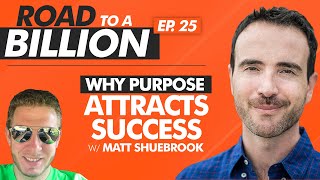
Matt Shuebrook built a seven-figure business in Spanish-market health offers and now partners on multiple ventures. He discusses his path from a difficult childhood through missionary work to marketing, plus answers questions on mindset, copywriting, and scaling direct-response health products.
Questions this video answers
Road to a Billion (host: Stefan Georgi)
Matt Shuebrook
IM Marketing Solutions (described as a seven-figure marketing company)
$7,500 each (total $15,000)
Back Pain Breakthrough and Mind Body Matrix (pain cream)
Chapters
Hey, you're listening to the Road to a Billion podcast. I'm your host, Stepan Georgi, and I'm glad to have you with me here today.
The Road to a Billion is a.
Call and radio show style podcast where you can ask me questions about freelancing, copywriting, entrepreneurship, mindset scaling, funnels, relationships, money and more. And you can also ask my guests those questions, including the awesome guests I have today, who I will introduce in just a moment. The reason for the name the Road to a Billion is because I will have sold a billion dollars worth of products by the end of this year, both for my own businesses and for my clients. And my goal is to make a direct impact in the lives of a billion over the next 10 years, whether that is emotional, mental, financial, spiritual, physical, mental, or all of the above. So we will start taking calls in about 30 minutes from now. And as some of you probably know, and if you don't know a big deal, if you are here live on the zoom call that we are doing, put your questions into the Q and A. And Ed Ray will be going through and reading them off and then feeding them to myself and my guests. And speaking of that, Ed, you want to go ahead and say hello and introduce yourself?
Hey, what's up everybody? My name is Ed Ray. I help people scale fast and furiously on Facebook without getting cucked by Zuck and also really, really enjoy breakdancing. You've been doing that a lot lately. So there you go.
That is awesome. So I used my template here. What does it say? Rob. Oh, that's Rob Weiser's name. Sorry, I was trying to use my template for this map.
Let me update that.
So that was the correct name. That same with what Rob Weiser.
I like Rob. He's a good guy.
But today is the Matt Schubert show, bro.
So speaking of that, my guest today is Matt Shubrook.
And let me tell you a little bit about Matt, if you don't know much about him. Matt is the CEO and founder of IM Marketing Solutions, a seven figure marketing company dedicated to helping people create and market high quality offers in local and international markets. They've had success leveraging the 50 million Spanish speakers in America. Matt is also a strategic partner in over a dozen offers which collectively have generated over eight figures in 2020. And one of his most awesome attributes is his huge heart. Not only does he generate tons of sales, and not only is he a marketing genius, as you're about to find out, but he also is committed to using the power of online marketing to contribute and make a difference in the lives of as many people as possible. He is leading initiatives right now to feed, educate, and provide shelter to kids all over the world, which is amazing. He and I both went together to do a match for donations for Intelli Help, where we each put up $7,500 to match a total of $15,000 to feed hungry children. And just super excited to have you on with us today, Matt. Thanks for being here.
Thanks, Stefan. It's. I'm looking forward to it. As you said, man, I'm motivated about marketing, but I'm passionate about helping people and changing people's lives, so. So being able to blend marketing with that kind of purpose is just so fulfilling. And so I'm thankful to be on the show today.
Dude, that's awesome. So glad to have you.
This Facebook Live thing is driving me crazy.
Cause I've edited twice now, and it keeps showing Rob Weiser. Let me see if it actually updated. Cause I don't. It's not fair to you, dude. Like, the live keep showing Rob Weiser for some reason, and it's super annoying.
But John Caprani says I look like a majestic lion, dude.
And then you have, you know, a lion behind you. So. So it really just all comes together with that. Dude, how many times can I edit this? Well, I'm gonna say this. So I had after the.
Dude, I want to kind of stop.
The Facebook Live and restart it. It's gonna drive me crazy to have not your name on there. I'm gonna do it. I'm gonna stop the live. If you're watching live, I'm sorry, I'm gonna restart it. Gotta deal with it. But Matt, like, when we did the live event for the virtual event in the live event in Vegas in February.
And then we hung out at my.
House, like that last kind of day after the copy starter Mastermind, and we were like breaking down copy and watching it. And it was like, me and Dan Ferrari and Ning and Laura and Pauline and Longdon and all these cool people and Jamie and a ton of people were there. But I just remember, like, as we were looking at this copy, you were like, making these insights. Cause I didn't really know you that well at that point. Like, I knew you. You were my mastermind. And like, you know, we knew a little bit about each other, but I didn't know you a ton. And you were just like, making the most brilliant insights about copy and psychology and selling. And even after that, Laura and I both talked about that shit was really smart.
And then Whenever we have kind of.
Done, even just I've done calls or even during the virtual event and you were chiming in or on road to billion, like you're just like a sage and you're full of wisdom. So I'm so excited for you to be here and to share that stuff. But I'd love to hear, I mean share a little bit about your story. I mean, how did you get to where you are today and where did you start? I'd love to hear a little bit more about that.
Yeah, I like to believe we all have a special purpose in life, right. And we're all born and gifted with special talents. I grew up though rather kind of with a really, what you would say, unconventional way of living. Very family. Life was kind of strange as a kid, right? We, I remember as like an early, just as a little kid, here are my parents constantly arguing about like money when I was like maybe three or four years old and I realized like, wait, if I could find money to help my family, they won't argue. And I like, I would remember as like a three year old walking around the house looking for nickels and dimes so I could then give to my parents and say like, hey, everything's going to be okay. Look here. And what's interesting though is like growing up as a child there was like all these things that kept mountain to come against me. Like my mom was a drug addict. I guess you could say she suffered with like addictions with crack cocaine and alcohol and pills and very like weird childhood is the best way I could say it. But because of that, it gave me insights into life that I probably wouldn't have experienced if I didn't go through those situations. And I guess from an early age I just had this kind of entrepreneurial spirit in me because I remember being like 6, 7, 8 years old, going to the golf course and like diving in the rivers, collecting golf balls to sell back to the golfers because I was trying to make money. I remember when I was like 7 or 8, get it, buying my first, first lawnmower and going around cutting grass. Like I always had this kind of way of seeing opportunities to make money. I never quite understood the concept of money though. So like for I guess the first half of my life I was chasing, chasing, chasing. And it probably isn't until I got out of high school a couple years later I realized like, wait, I just have to be myself and money is going to come to me because it's going to be a byproduct of Being true to myself, I don't have to try to hustle. I just have to be so. Yeah, I guess today I'm expecting that we will see some cool transformations take place with people, especially when we get to the Q and A. But I'm an open book. You could ask me anything you want. Life, business, or everything in between.
Yeah, that's awesome and inspiring and I.
Think have you so silly question, but were you born in the US or were you maybe said this? I was playing the Facebook Live thing. I'm sorry, I'm a shit show today. I'm trying to get the Facebook Live to have your name. But like, did you grow up here or did you grow up like, you know, in Europe?
Yeah, no, it's funny. I was born in America, but I had a speech deficit. So from an early age I was in speech therapy. From, gosh, maybe from like 3 years old to when I was about 14, I went to speech therapy. So I always talked kind of funny. And then when I was about 23 or so, I moved out of the country and went to Trinidad to do missionary work. And I picked up a strong accent when I was there. And now that I'm back in America, I try to talk American, but I probably sound like an Irishman or something. But. But yeah, I'm a Yankee.
Yeah.
So what was it, the speech in that? I'd be. I'm curious about that.
Not really sure. It's the way my brain processes words. So you'll often hear I'll just butcher words and I'll butcher people's names. Like just when I said people, instead of saying people, I said like peeper. It's just something in my brain that just. I don't know if I think too fast, I don't know what it is, but I stumbled on the words.
You might be like just a reincarnated Irish man, though. I mean, it seems to be probable.
That's interesting though.
I actually had. I mean, maybe it's not surprising people, but I had like a kind of. I like a lisp, like a pretty bad lisp, like growing up. And I used speech therapy and I still.
I don't know if I. I don't.
Know how noticeable it is. Maybe it is, maybe it's not. No one brings it up to me now. Maybe because people are nicer. But when I was a kid, not only was I fat, I got teased because of my lisp as well. And I had stuff like keeping my. My tongue at the roof of basically, I guess for me, like your Tongue is supposed to stay at the roof of your mouth. I had th was the other one F and th. Which is funny because I still kind of mess up that sometimes, but mine stays down here. And so it created this, like, lisp and then, yeah, THs and Fs as well. And I still say a couple things. Weird. Like, like, world, world.
Like the whole wide world.
I have a really hard time saying that.
And we're brothers from another mother. Man, I. I screwed that up all the time.
That one is brutal. Like wool. Like wolf or wolf, I guess. And I'll say wolf like a dog. Wolfs. There's just some funny ones that I still just totally screw up. But.
But, you know, I like hearing about.
That stuff because, like, obviously we're both, you know, pretty successful and a lot of different metrics and ways that you would measure success. And so I always like to kind of talk about the stuff like that, whether it's my own substance abuse issues in my early 20s or my LISP or talking about you and overcoming a difficult kind of, I don't know, a challenging childhood, to be sure, and a speech impediment. And I think it's inspiring. So let's talk a little bit about what you're doing today from a business perspective and then we'll talk about a bit more of your deeper purpose and your why. And then we'll go to Q and A's after that. So how are you spending a lot of your time today?
Today is very different than it was a couple years ago, so I think it might make sense to just kind of backtrack and let people know how I got into this online marketing world. Because my introduction to this world was quite bizarre compared to probably most people. It was back in, I guess, 2007. So I've been in the game for quite a while. At the time, I was living in New York and I was doing personal training. I didn't really like getting up at 5 o' clock in the morning, going and training people, and then waited around in the city a couple hours later training another client. I didn't like it. And I remember one day was in the shower, just got out the shower, actually was about to get dressed to go into the city to train somebody, and my phone rings and on the other line it's Mike Geary. And so I met Mike, like maybe a year before that at a personal training convention. I must have been like 19 at the time or something. I was just a kid. And so I knew who he was and I knew he was quite successful online, I think at the time he was making like 30 grand a month. And I was like, oh my God, that's like, how's that possible? And so anyway, he calls me and he's like, hey, Matt, how's life? Good? And then he's like, well, the reason I'm calling is my business has taken off and I need somebody I could trust to help me run things in the business, to deal with customers, to help affiliates, just to help around. And he's like, I can't really pay you much, but I'll teach you everything I know. And I was like, deal, you got it. I quit personal training and started working full time for Mike. And then maybe a couple months later I remember, and this is kind of like, we're gonna get into this more is like the way I'm able to see opportunities, right? It's just like that kind of insight. You were saying. So one day I was walking around the city with my friend, she happened to be a Dominican girl, and I was explaining to her, like, yeah, I work for this guy, he sells this info product, it helps people get six pack abs. And like, he sells thousands of copies of these every day. She's like, oh, wow, like that stuff doesn't exist in my language. I was like, what do you mean? She's like, we don't have anything online like that that teaches us. We don't, we don't have it. And like a light bulb went off in my head. I don't speak Spanish, but I texted Mike, I was like, yo, let's partner and translate your book to Spanish. And he's like, all right, let's do it. And I guess the key takeaway there is when you have an idea. Don't let your, your lack of ability stop you from doing things. I didn't know how to translate because I don't speak Spanish, but I knew it was a great idea and I hired somebody to translate. We got the thing translated and I began making a good bit of money. Shortly after, I moved down to Trinidad, which I mentioned earlier to be a missionary. The crazy part about it, Trinidad at the time had horrible, horrible Internet. Like, worse than dial up speed. In fact, our house didn't have any Internet and I would like be driving around in the hot sun in the Caribbean looking for a WI FI connection. Kind of like just getting roasted, looking like a lobster because, like, I'm white and I get burned easily in the sun. But I'd be out there typing, like wondering if my laptop's gonna Catch fire because of how hot it was. And. But just trying to grow this business of translating books that into a language that I don't even speak, which is like, that kind of says something special about don't let your, again, like your lack of ability stop you from doing something that you believe in. And anyway, that went on for quite a few years. And then when I moved back to America, I realized the Spanish money was good, but it wasn't sufficient for what I wanted to do in life. And I needed to do something that I could apply my thinking to because I would understand it where in Spanish. I didn't quite understand everything going on because it's in a language that I don't speak. So I said I need to get back into English. And so here we are today, and I have a pretty successful digital marketing company. We do consulting and strategy and we partner with product owners that have like, legit products that make a difference in people's life, but they don't quite have all the marketing pieces together. So they need some kind of strategic input and sometimes implementation to put things in place to take their business to the next level. I go in there and just kind of like, like we did that time in Vegas, I just start dropping all these ideas and insight that align with their goals in life and their goals with their business and. And then together we just kind of push towards excellence.
How do you.
And that's an awesome story. I did not know that whole background, so it's really amazing. And actually, I also want to point out I do love that idea of like, not letting you know, a lack of like, knowledge or things like that. Stop.
You.
You see that so often I use the example, I've used this example like a million times. But like, where I've been in an Uber and the Uber driver asks what I do, especially if, like, I'm in another city. I'm saying a nice Airbnb. So they pick me up from like a nice looking house. And then like, you know, like, what.
Do you do, man?
You know, and then like I told them and then, you know, like, did you go to school for that? And it's like, no. And they're like, oh, yeah, I'd love to get into marketing, but I didn't go to college, so, you know, or like, whatever it is, or I didn't get a degree in marketing, so I can't. And you're like, that's like the dumbest. Like every time. It's just, it just. The reason I use that example so often is Because I've heard it like 100 plus times and I try to like, help them shift their belief in like these short Uber rides that we have. And I'm the worst sometimes where Laura just like wants to zone out and I'm like having these motivate. I'm trying to like change my Uber driver's life, you know, and have these like, deep heart to heart conversations. I can't help myself. But, but it's just so frustrating. But, but even, you know, it's like, oh, well, I don't know a lot about affiliate marketing, so I can't work with affiliates. I don't know how to build a funnel, so I can't launch a product. I don't know how to like, it's like, you know, like, I think you should don't have shiny object syndrome and just jump for different things. But at the same time, you know, being willing to take a leap and jump into something I think is such a valuable and important kind of, I don't, I guess, attitude to have or approach to things. And I just think it's really important.
Yeah. There's two things I want to say to that. One, I'm a firm believer in come as you are. Right. Don't wait for everything to be perfect. Yes, there is a perfect timing for everything, but it's often not the same timing that we think it is. So rather than trying to make everything perfect, just allow things to become perfect and they will gradually and eventually. The other thing is this is just a crazy idea for you. Stefan, have you ever thought about taking the road to a billion podcast into an Uber? And like, before you get in the call, in the car, letting a guy know, like, hey, I'm going to pay you 500 bucks for this car ride and I'm going to record it and we're just going to be talking. I'm going to change your life today.
No, but I love it. And that's exactly what I was talking about with you just generating ridiculous ideas. Like, that's such a good idea. So I may try that because I'm always looking for unique content, like ideas.
And so thank you for that.
That's the thing. That's what your mind works. That's what people. I feel like you're, you know, like you're known in our industry, of course. But I feel like you should be even better known because, like, you're seriously one of the smartest marketing minds I've ever met. It's just like not trying to, you know, make you blush, but like, it's true. Like the ideas you come up with are just ridiculous. They're so impressive and. But yeah, that's an awesome idea and it makes perfect sense. So thank you. So today, when you partner with different product owners and business owners today who kind of like need that help, because there's a lot of them, right? A lot of people do start a product or start an offer and the copy's okay, but then they're not sure to get traffic, or maybe they're getting some traffic, but they're not sure how to scale it or their upsells suck and their average order value is not good. There's just a lot of things that go into successfully running an online offer and an online business. This. How are you able to add value? Do you have a large team? Is it just mostly you? Do you leverage their resources? How do you approach that? The fact that there's a lot of things that probably need to happen in order to get the people you come in and partner with to get them where they need to be, how do you divvy up the responsibilities and implement all of those things?
That's a good question. Thankfully, today I have a really solid team that I'm super proud of. I actually, I recently hired a CEO who's just like a total rock star, which is for a long while I wore all the hats, right? And slowly but surely I started hiring people that were better at me or had the ability to be better at me at certain things so then I could focus on like my core strengths. And so now, like, if somebody comes to us and it's not a cookie cutter approach, right? Everybody's resistance to or restriction to why they haven't reached the next level is going to be different. Sometimes, and this might sound a little woo woo, but sometimes the reason someone's not exploding their business is because there's some kind of shaky foundation in the personal life that's preventing them from allowing the business to scale. So sometimes before we do any marketing, I just like to go into someone's like into their heart and into their mind and help them get on the right track and lay a proper foundation. Remove some of the lies and then allow truth to shine. And then when we do that, the business just kind of automatically begins to take better shape. Now when it comes to the actual marketing, again, there's going to be a wide variety of reasons why some people haven't been able to scale. But we have a pretty solid copywriting team, a pretty solid production team.
Pretty.
Decent traffic team, so we're able to provide a lot of the marketing solutions that companies are lacking.
Awesome.
And talking about your deeper why, because again, you're very motivated. Even since we, you know, the first time I met you in person, you've always been this way. So what is your why? You know, you're very. You're charitable, you give, you care, you're trying to make an impact. And you know why. So what are you doing? And then why are you doing that?
Yeah. I feel like I've been blessed beyond measure with an ability to help people. I enjoy making people shine more than I enjoy being in the spotlight. Right. I like working with people, building them up, and seeing people prosperity, both financially, spiritually, physically, relationally. I just like making a difference in people's lives. I'm not quite sure where that started. Right. I think it's like a recipe where there's lots of different things that came into play. But I remember from an early age watching my dad just always helping people, even when we didn't have money. He was a mechanic and friend. People would come over and like, need work on their car and like, he wouldn't charge them any money. I'm like, but we need money. He's like, no, I just want to help them. And like, seeing that kind of principle of wanting to help people even when you have a need yourself, I think it planted a seed in my life that just started growing more and more as I grew up.
Awesome.
That's amazing. And what are you mainly focused on today as far as your kind of philanthropic and giving initiatives go?
Yeah, it's interesting. It's actually a twofold approach. So our immediate five year. There I go again, messing up words. Our immediate five year goal is I want to feed 1 million kids, but not just feed them. Right. Feeding them is just keeping them alive. I actually want to create some kind of curriculum that teaches them about identity, to teach them who they are. Because I grew up not knowing who I was. It wasn't until I became older did I actually realize who I truly am. And I didn't embrace it for many more years after that. Right. So I want to teach kids, A, how to identify who they are, B, how to trust that God has a special purpose for them. Right. And then later on, I want to create some kind of mentorship program to teach these kids how to become entrepreneurs so that they, a, once we transform their heart, right, They're. They're going to be aligned in a better way. But we teach them how to make money and how to get out of Poverty. But because we transform their hearts, hopefully they repeat the process and then reinvest into their local communities and we might feed a million kids in the next five years. But through these efforts we might create a system that goes on to feed hundreds of millions of kids and even maybe end child starvation. So that goal, when I said it's a two prong approach, that goal is a part of a much bigger goal which is I want to change the lives of 400 million people. And that's like through selling products that actually help people, that help them transform their lives. Putting out content that just like opens up people's minds to new ideas and new ways of thinking, or creating systems that help people get breakthroughs in life. I really just want to change people's lives.
Yeah, I love it. Something I think maybe one who knows doing things together on that in the future. Because I've long wanted to create sort of like entrepreneurial like academies or training centers like across to start the US And I want to do them and really underserved like areas, communities of all people of color, like where there's a lot of poverty, just things like that and where. And then create them too to where like we have like weekly, you know, kind of sessions and teaching, like entrepreneurs are teaching stuff and they go for real nice curriculum and where then when anyone who's in town and wherever that is, whether it's in like Vegas or San Diego or Miami or whatever, you know, I mean obviously eventually all over people who are in town can come and like donate their time to teach to the kids. And then I mean we want to have like daycare, right? So it's like okay, like hey, you're like a, like a mom who can't hire a babysitter. Like you can still come and like we'll have like free daycare. There are free like stuff to like watch your kids and have like shuttles or buses or things and come pick people up. So it's like, hey, you don't have a car, you can still come, right? And do like them for younger people and then, but really also people of any age. I just, that's like a long term goal of mine. I think that'd be so neat and transformative. But I love the way you tie that into like yeah, you're showing how to make money. Which is the part I've thought about because it can lift people out of poverty and give them opportunities. But then having that sort of amplified like echo effect where once those people have been lifted up then they can go and help others and, you know, kind of all work towards the goal. I just think that's a really, you know, amazing goal that you have and saying that, you know, over time. I think you and I should both talk more about that.
Yeah, I would love it. Because here's the thing. Making money is easy, right? But if you don't deal with in here, that money is only going to amplify whatever pain and problems you have in your life. It's not going to sweep them under the rug and make them go away. It's going to make them pile up until one day it like, overflows and you like crap. I got to deal with these problems now. So if you deal with that stuff in the process of making money, there's balance going on in your life, and then it creates less restrictions going forward. Something. That's crazy, right? And as we were just talking, the thought came to me. There's a book called the Cultural Code, which basically talks about, like, different cultures. And when we think about just from a. Thanks to the Internet and like the technology age, there's a bigger blend happen happening across the globe in terms of what people have access to. So thought patterns are beginning. Can blend more than they were before. But if you take that aspect away, the way people do marketing and the way people interact from country to country, it's really interesting to note these things because you begin to see humans from different perspectives, right? Not just what you're used to growing up, you begin to see different ways of life. Like when I lived in Trinidad, just observing the way people interacted and the way people responded to things, just. It kind of changed, I guess, my way of thinking about life. So, yeah, I would love to do something with you that's like. Has an international impact.
Yeah, 100%, I do. I think it's interesting, too. And we're gonna go to questions in just a minute. So you have a question for Matt or me? Put in the Q and A. We've got a few in there, but feel free to pop them in there. But yeah, because, you know, I shared, like, the idea that I'm going to do. I'm pretty. I mean, I was 99% sure I'm gonna do this in like, May or June is like, you know, rent, like a big house and basically have five to 10 people who are freelancers come have them come live with me and Laura and Eden for, like, you know, 30 to 60 days and, you know, show them how to, like, I want to take people who have jobs right now, but they Hate and, like, basically have them come. They're ready to burn the boats, and, like, I'll pay for, like, actually pay them a couple thousand dollars a month. I know Justin said they should pay me, but I. I want to pay them not because I want them to be able to come focus on this without having to worry about their mortgage or whatever other expenses there are. And I want basically that by the end of that period, they are making at least $5,000 a month, maybe $10,000 a month. And I was originally thinking it'd be all people who had jobs right now, but I think I might do it more diverse, where it's a few people who have jobs, a few people who are freelancing, but they're struggling, whatever. And I just love that idea. And of course, I'll turn it into content or, like, a reality show or something, so we can increase the belief for people who see that, wow, These people spent 30 or 60 days focused on their goal and achieved it. When I shared that, which I'm totally gonna do this, it was so funny how many people were like, oh, it's a shame. It's only open to people in the US and it was like, no, it's not. I was like, if you're in Pakistan or India or, like, Nigeria, I don't care where you are. If you can make it here, then it's open to you. And I was like, then I'm like, even. What's cooler is if this goes, the first one goes, well, that would love to go do one in, like, India or Nigeria or Kenya or, like, you know, wherever. You name it, right? All over, like, the world, in different places and, like, work with people in, like, countries where maybe, you know, it's. Some of them are more third world and whatever. But I do think. And then you're the same way. I think the international part of it. And I. But I. It's kind of interesting to me that so many people who are international feel like, oh, we're in the U.S. so it's just for people in the U.S. maybe that's because us as entrepreneurs, and maybe that's the way it is all the time. And it is sort of just like there's this, you know, we're so blessed to be in America, like the land of milk and honey. But I think as we become more global and more integrated and, you know, the whole point of Internet marketing is that, like, there's people I'm talking to every day from all over the world and all kinds of socioeconomic backgrounds and all of that. And like, so why would we limit it to just here in the US and so I think thinking more globally, like, that's something that I'm trying to do, but I. There's a really long winded way of also saying that. I really admire that you are thinking more globally and how that's helped to change your perspective. I think that's fascinating.
Yeah, it's. America definitely has a capitalistic way about it. Right. So you naturally are brought up into a culture of capitalism in America, whereas in a lot of these countries that doesn't exist. But because of the Internet, more and more people are getting exposed to streams of capitalism. Right. And the water looks good and they're jumping in. Right. So I, I totally would encourage anyone from any country, like, don't let your place of birth or where you live limit you. Like, I have, I have a mastermind and one of the girls in the mastermind, she lives in Pakistan. Right. And I admire her dearly. Like, the way she's growing as a marketer over the last few months is amazing.
Or is it somebody else? Yeah, Ariba, she's also like one of the best copywriters out there. And she's like, I mean, for like being so. She's so young and she's in medical school and she's just like, she's a copy starter as well.
Right.
So I get to see all of her copy Ben. So Monte has her in a retainer now. She's crushing it.
Sorry.
Just to give Ariba that plug. I mean, she's killing it. It's amazing.
Yeah. But her mindset is, I'm going to learn to this, I'm going to do it. Like, I'm going to figure it out. And because of that, she's going to continue to be successful. I have like, on my staff, we have a guy from India who's turning out to be a really good copywriter. You actually have reviewed some of his copy. When we submit it, like our junior copy work and a copy accelerator and you're like, yo, your junior is on point. Like, and he came from India, right. Like, it doesn't matter where you come from. All that matters is who you are, allow yourself to be. And like, where you came from just helps, like, highlight the beauty of who you are. Um, so. And regarding the, the show or the, like the, the real world of having people live, you should totally split test it. Like, have one group of people who never had a job and have another group of people who like, can't keep a job. And another group of people who, like, have a job, but they hate it.
Yeah.
And like, just observe, like, what the differences are and like, what the roadblocks are for each person.
Yeah, it'll be super interesting. I mean, the last thing I'm gonna say, and then we'll go into Q and A is. I mean, for me, like, I've been thinking about this more lately because it's like, I mean, I've talked about before, but for me, having one of them, having lots of money is like helping people to escape the cave. But it's also the freedom to be able to do really out of the box things that are like, without having to worry about the media ROI on them, you know. So, like, this is one of those things and like, another social experiment I thought about doing was it kind of like, this is kind of what precipitated the idea of this, like, freelancer house type thing is I thought about, like, what if I just found a couple people who want to, like, go like, you know, who have some project or passion that they want to pursue and basically be like, hey, like, you know, tell me what that, what that is. And it could be copyrighted, but it could be like, you know, a charitable thing or starting a new business or anything. And like, basically people apply and they give them, like, genius grants. Like, there's the MacArthur, you know, or whatever it is like the genius grants that they give out, right. To like, poets or writers. And they get paid to just like, here's $200,000. Don't worry about money. Just like, write all year or do whatever all year. And it was so cool to do that for people who are and just create genius grants. But for people who just want to pursue their passions and projects but think they can't, I wouldn't be giving out $200,000 necessarily. But say, what if you took 10 people and gave them $5,000 a month each for 12 months? But you have to pursue your. You have to check in. If you stop pursuing your project or your passion for, you know, at some point, then you lose the money and, like, and we'll be doing it. But not just as a. I mean, just a way to empower people, but it also be so cool as like a social experiment. How many people actually? Where are they in a year? Right. If. If money is the biggest objection, always they're not having enough or being in front. And you take that away from somebody and just give them like that. I think the mindset has to be there too, right. Because if they don't have the mindset and you just suddenly like, it's. If you win the lottery and then you spend it all on dumb shit and then you're broke again. Right. And it's kind of the same idea. So there's. There's a lot of psychology there. But I just like love the idea of like being able to do cool stuff like that. And that's like a huge motivator for me and financially. So I don't know, I just wanted.
To share that with you.
That was awesome.
Why do you think, like, the government pays soldiers to be in the army? In the marines, like even during training. Right. They get a sign on bonus and they get paid training to get disciplined and to learn how to make something of their life. Right. And what you're saying is basically building an army of entrepreneurs. Right. And you're paying them to go through like boot camp training and to do all that. I think it's awesome.
Yeah, I think it'll be cool. I'll keep everyone posted on that. But I'm just looking for more fun ideas. So again, you're someone who is a great generator of those ideas with that being said.
So they can drop value bombs. That's right. Ed, do you have any questions for.
Matt before we turn to the Q and A? I want to give you the opportunity, as always, since you are our wonderful co host.
Yeah, none at the moment, but I will let you know if I do.
All right, well, let's hop in. We only have four ish Q&A so.
Far, but I know more are going to start flooding in, so.
Go ahead, Ed.
You got it.
Alrighty.
So question from Michael. Michael says, hey, Matt, can you talk a little bit more about your. Oh, actually, well, let's summarize it. Question about being yourself and attracting money that way. Oh, I need co host Stefan.
Oh, my God. I'm never gonna remember to give you co hosts. Never happening. There he is.
Don't.
I don't wanna see in the comments. I don't know if Luffy's in here. I don't know if girly's in here. I don't want either of you saying they're gonna roast.
They're gonna light you up, girly.
You knew I was gonna.
She's.
Yeah, she's about to.
Yeah.
What's going on, Michael?
Hey, Matt.
What's going on?
I'm doing good, man. Yeah, Tell me what you want to know.
Yeah, I can just. I'll just reread the question, so. Or paraphrase it. You talked about. You said that when you were younger that you realized that money would just come if you were yourself. So I was curious about, you know, what events led you to believe that and maybe why you think it was at such a young age.
Yeah. Where I am now, being able to look back in hindsight, that's how I can come to that conclusion. At the time, I didn't quite fully grasp that understanding. Right. But just in, like, from a reflective standpoint, I see it. And when we force success prematurely right. Or in the wrong timing, it's not true success. Right. In some way, it's going to rob us of something else in our life. But when we allow success to naturally happen as a byproduct of just being, being authentic, the success that comes is gratifying and fulfilling and it doesn't steal from other areas of your life. And so I guess as a young person, I was constantly trying to force success. I would see things and I would try to force things because I was probably trying to cover up other pain points.
Okay, so I'm gonna let you in.
I'll give you a hug.
Oh, sorry, I thought you were jumping and stuff.
I'm sorry. I thought. I muted myself.
I'm sorry, I'm sorry.
My daughter is about to go. She said she needed a hug.
I. My kids come in all the time and they're like just daddy super hugs and they just jump on my lap and it's. I know how it is.
I want to hug. What the fuck?
But yeah, so I guess, Michael, to answer your question, it was realizing that we're limited in what we could control. Right. What we have the ability to always control is the way we respond to things. So my response to life is, I'm going to win. Right. I don't have to force it. No matter what, I'm going to win. Even if I fail, I'm still going to win. And so I don't need to force success. I just need to allow success to happen and I expect it to happen. I'm not sure if that answers your question directly, but if you want more, let me know.
Yeah, no, that's great. That's great. I really like that perspective.
Thanks for sharing.
My pleasure.
Awesome.
Matt, One thing David Ryan had asked, he's like, what does Matt sell? I kind of missed it. And I mean, you're partnered in a bunch of different types of companies, but it'll probably be good context with some of the different kind of products and.
Things like that that you're involved with.
Yeah, we have Quite a few products. So our first big product in the English market when I transitioned back to the English market a couple years ago, is a program called the Back Pain Breakthrough. And so we partnered with, like, one of the top physical therapists in the country, and we put together a back pain program that helps people, within minutes get out of back pain. Like, people who have been suffering for years be able to get out of back pain. So that was the first. Then we have a really amazing pain cream product called Mind Body Matrix. It's just, like, night and day difference from everything else that I've seen on the market. And I test stuff all the time. Like, I'm always testing different products, and, like, this stuff is just, like, it blows it out of the waters. Then we have things in the golf space, so we sell golf training aids. Actually, my CEO, the way I met him is I partnered with him on his golf business, and we helped take his golf business from, like, mildly successful to, like, really super successful, where he was able to fire his boss or, like, quit his job and go full time in the marketing. And I kind of just grew to admire who he was as a person. And then I asked him to become my CEO, and then I hired him in my business. And in addition to that, we have products, like in the. We help people who sell informational courses to help people overcome, like, blood sugar problems, to overcome hormonal issues, to help with weight loss. We got stuff, like, a wide variety of offers. I like to kind of dip in different waters because I get bored quite easily, and if I'm always focusing on the same thing, I kind of get burnt out. So I like to constantly be, like, playing with different things.
Awesome. Cool.
Yeah. That's fantastic.
Yeah.
You've had the Mind Body Matrix cream for a while now, and I've tried it. It is great. I haven't used it in a while.
But that's really good.
It's a great product.
Cool.
Ed, we got a couple more Q and A's to come in. You want to keep.
Yes, sir. Yeah, let's do it.
All right, we got laddie boy. Andy. Jeff's asking about what it takes to change people's inner world.
What's up, Andy?
Hey, guys.
What's going on? Matt, really appreciate you coming on the podcast, man. You're super smart. It's great listening to you. So I guess my question is I'm just in a particular point in my life right now where I really want to just unleash all the chains, you know, like, anything that's holding me back or weighing me down, like, internally. I just want to, like, I really just want to, like, rip it off and kind of let out the full potential, you know, I think compared to, like, maybe the average person, you know, to be someone who makes big moves and makes some pretty big things happen. But, like, compared to my own vision of, you know, what I think is possible, like, there's just so much more to be unleashed. So I guess I'm just in a particular point in my life where I really want to, you know, go deep and. And, like, rip out anything that is holding me back and just let it all out.
Andy, growing up, did people put labels on you? Labels or expectations of what they wanted from you and of you?
You know, not necessarily. I've got pretty, like, laid back parents that have always let me do pretty much whatever I wanted to do. Like, if I didn't, I didn't want to go to college or university, they were like, okay, cool. I wanted to move halfway across the world. They were like, okay, cool. So, not.
Not really.
Maybe.
Maybe my dad, you know, wanted me to, you know, be a creative, so to speak. But I've kind of dug deep and realized that what I want to do, what I really want to do, like, it's. I'm not just doing it with my parents, you know.
Yeah. Sometimes creative people, and I guess all people, for that matter, we need to allow ourselves and give ourselves permission to be different. Right? Because if we were just carbon copies of other people and we tried to create expectations that we superimpose on ourselves, or if we embrace expectations that other people have put on us, right. It can limit us from actually reaching the fullness of our potential because we're not giving ourselves permission to be different. And so I guess my encouragement to you would be really kind of digging down and spending time searching yourself from within, like, just asking God, like, show me who I am and give me the courage to be who you made me to be. Right? And when you do that, it's not like an instant magical, like everything's perfect in a second, but it begins this process of allowing you to shed thoughts that are, like, limiting you from reaching to the next level. And when that begins to happen and you're able to allow yourself to go to the next level, what you'll find is the very things that are put in your way as a form of resistance. Or they're not roadblocks, they're simply resistance. But right now, they might appear to be roadblocks because you feel like you're Being leashed and, like, held down. In fact, what's happening is the height that you have to go to requires a bump to be there for you to climb over and jump across. Right. So if it was just like, a road and it was quite flat, your life would be pretty boring. Right. But because you have these kind of things that you feel like are pulling you down, it's actually. You could use them as springboards to propel yourself forward, but it starts with the way you think and.
Yeah.
How you allow your heart to manifest.
Yeah, that's a big thing.
I think a big thing for me is just being too hard on myself and like you said, putting those high expectations, you know, like, I'm still moving forward, always been moving forward, probably just being too hard on myself of the bumps. And I need to think of it in a more kind of positive way where it's like, these are actually helping me want to be and kind of trust the process like you talk about. So that makes. That makes a lot of sense, man.
Yeah. Something else I would add. And this might be good for everyone. Sure. Some people are familiar with this concept, but I'm a big believer in kind of, like, vision cast in and create a vision board for your life. And basically, what you would do is take a few hours, few weeks, a few days, however long you feel you need to. There's no right or wrong answer. Just think about what you want your life to be, about what you want to accomplish. Go through magazines or now that we have the Internet, like, go through the Internet, whatever. Find pictures and words and anything that represents of what you want. And then make a collage on a big board and just have it and look at it from time to time and remind yourself, like, this is who you want to be. And what will happen naturally is things will start to align to allow you to be that person. And again, whatever resistance is in the way will begin to be made clear, and you'll recognize, like, which direction you need to go to overcome and get to the next level to get closer to that vision board being fulfilled.
Awesome.
Yeah, I'm gonna get on that for sure. Thanks, man.
Super helpful.
Cool.
Awesome. Good stuff, Matt.
Good question. Good question.
Yeah, I like these. Keep them coming. Somebody asked me earlier. They messaged me. They're like, hey, do you want me to throw some. Some softball or some. Some. Some pitches to you? I was like, listen, I swing at hard balls, fastballs, curveballs. As long as it's in my strike zone, I'm gonna swing. If it's something I can't answer, I'm gonna let you know. But if it's something I could add value to, Man, I love these questions. Just keep them coming.
Beautiful. All right, so a question from Jaz about inner problems and money amplification.
What's up, man? Do you want to explain where that's coming from?
Yeah. So there have been times in my life where I've hit a brick wall and I didn't know what was holding me back. Like, I had guesses of what was holding me back, but I couldn't really pinpoint it, and I eventually found it. But do you have some kind of process to know at what point in time something is holding you back? Do you have some kind of thinking process that lets you know? Okay, like this. This is my. This is my issue. This is what I need to overcome. That just gives you clarity on those mental issues so that you don't have to deal with them and they get amplified before you realize that you have them.
I have a question for you. What matters more? Knowing why or breaking free from it?
Breaking free from it.
All right. Sometimes there's some issues that it probably is better we don't fully understand why. Right. It's. I mean, it's not that. Not beneficial, but the energy it takes to go down the roads to figure out why. Sometimes it's just like, you know what? I'm going to be different and I'm going to change, and I know I will. I know there. I recognize there's these issues, and, yeah, I want to deal with them, but I'm not going to go in this journey for, like, years of going to therapy to figure out why I am the way I am. I'm just going to begin embracing the thoughts that allow me to grow. Now, this isn't always the case, right? There's certain times where there might be, like, an actual need to talk to somebody from a professional standpoint. So, like, I'm not knocking that. There's definitely a need for it. But the reason I'm asking you, like, what's better? Like, knowing why you're breaking free? Because some people just. They just want to figure out why, but they don't really want to change because then they want to, like, explain and use that reason as to why as an excuse to stay where they are. And so if you're thinking it's better to break free, What I'm going to do now is kind of ask you to rephrase your question, because I want to get to the root of it. Right? So can you please rephrase your question again.
Okay. So.
Knowing what I just told you, I want you to rephrase the question. So.
I know that you're like, your inner problems get amplified if you get more money. They don't go away. So how do I get rid of.
Them before that happens? Consistently. Yeah. So first, recognizing us as humans, like, we're. We're never going to be perfect, right? We're never going to have everything perfectly together. And giving yourself permission to be broken allows yourself to be put back together. Right? Because if you. It's much like, you know, if an athlete gets injured and he's trying to cover up that injury and he's pushing forward in the game and he's pretending. The coach is asking him, like, hey, is everything okay? And he's like, no, man, I'm good. I'm good. But, like, he knows there's, like, this twinge in his hamstring, and he's trying to cover it up and lie. That's not healthy. Right. That's gonna end up deterring him from being, like, putting it all on the court. That's very different than someone who says, like, hey, I'm having really good success on the court, but I realize, like, my muscles seem like they're overworked and there's something out of balance. And then that person would take the time to work with a physical therapist and figure out where the imbalance is to try to bring harmony to the situation. So in the case of, like, not wanting money to amplify your problems, like, you've already begun the process of dealing with those problems by acknowledging that you don't want that to happen. Right. What I would encourage you to do is if you could take a step back and look at, like, little Jazz when you were a kid and see if those problems that you're concerned about, try to see, like, were they a result of your family or were they a result of extended family? Was it a result of, like, just what you witnessed and learned growing up? Like, if you just learned to respond to certain situations, well, you just have to retrain yourself, right? But if, like, if people were speaking things over you and attacking you and hurting you, well, that's a different process to deal with, Right? So it's like, does that make sense?
Yeah.
So you're saying if I'm dealing with.
Something, see if it's linked to something that happened when I was younger and returning myself.
I mean, kind of like, we all have different tendencies, right, that are a result of, like, life. Right? So just Kind of trying to take a step back and look at what influenced you to have these tendencies and then figuring out, do these tendencies serve you well? And in the past, did they serve you well? Like, some of us create defense mechanisms because of something going on in her life as a kid. And at the time, the defense mechanism serves us very well because it protects us from whatever harm our inner child is, like, afraid of. But as we grow older, those defense mechanisms might not serve us as well. In fact, they might be detrimental and it might not be a defense mechanism. It might just be like a learned pattern because of, like, the way, like, your family was brought up. And it's not a knock on family. It's just recognizing, like, we're all broken, but we're in the process of becoming better. And I've just identified ways I could become better. And I'm thankful for it. Right. Does that make sense? That makes perfect sense.
You answered my question. Thank you so much.
Cool.
Awesome.
That was amazing. Thank you, Matt and Jaz, thank you for asking that question.
Hey, let's just keep.
Let's keep them coming.
Cool question from Marcus Sortius about how do you get started with paid email drops?
He said in the chat he can't talk, so you gotta actually just read it for him. So that's the gist of it.
How do you get started?
Paid email drops, finding lists, negotiating prices, tracking results, et cetera.
Yeah, buying email drops is actually, it's risky business, but it can be fun. And I guess I'll first talk about the advantage of it and then I'll tell you how you actually do it.
Also explain real quick why what that is for people who may listen or watch and don't really understand what buying.
Email drops are or what it means.
Yeah, so let's say you have a product, you feel like your product is pretty cool, but you want people to test it and you're doing the traditional thing like, hey, you mail for me, I'll mail for you. And you know, that might get you a few drops here and there. And then there's this constant struggle of, like, waiting for them to get back to you, waiting for the affiliate to lock you in, then them saying, well, hey, well, I'll promote you, but first tell me who else has promoted you and how did they, like, how did they back out? Did they make money? And if you don't have any stats, you can't really go to the big guys because they're not going to touch you if there's no proof of concept. So rather than Playing the waiting game and just waiting for free traffic. I think it's. If you have the money to do so, it's much more advantageous to just buy email drops, which is essentially going to a list owner and saying, hey, how much money do you normally make when you promote stuff? If you normally make $1,000 on average, how about I give you $1,000 upfront, which guarantees that you're going to make your average amount. And then I want you to send this swipe for me. But I'm using my own link, so you're not going to get paid as an affiliate, but I'm guaranteeing you the thousand bucks that you normally make. By doing that, you get more data and you get it faster. You don't have to wait because if you're guaranteeing somebody a thousand bucks, they're going to pop you into the schedule pretty quickly, versus having to wait months for them to find an opening. And by having it sent to your own link, if it was on clickbank, you get much more data that way and you're able to see how this is really performing. And it kind of, at least for me, it allows me to shine a light on which areas of the funnel need to be optimized. Whether it's the email swipes, whether it's the conversion rate, if it's the aov. Because I'm seeing the complete picture by getting all the data. Whereas when an affiliate mails, I only see a snippet of the data and I have to play the guessing game. Whereas when I buy traffic, it's still guessing, but it's more educated guessing because I have more clarity on the big picture. And then the question was, how do you find those people? There's list brokers that do this for a living that match you up with different lists and they have tons and tons and tons, like, tons of lists. I have a couple hundred lists that I buy drops from. And then you could also just strike up relationships with list owners. So, like making friends with product owners and just offering them the same deal. Like, hey, I know right now the Internet, like email, is kind of shaky. Like some days you send and you don't make any money. Other days you send and you make a lot of money. I have this proposal for you. Like, I want to make it easier for you just to keep making consistent money. Just tell me how much you normally make and I'm going to match that. And I want you to send this email for me. Most people will probably say yes. I mean, I don't know who would say no? Unless it's like the offer was shady or something. Right. But if the offer is legit and they're getting free guaranteed money, it's going to be hard for them to say no.
Yeah, that's awesome. It's such a good strategy if you have the money.
Of course.
That's the. The challenge.
Cool.
Hey, let's. Let's keep it rocking, bro.
Let's get it, baby. All right, next up, well, we have from Jamila.
Jamila, Sorry, Jamila.
Asking about good copywriting niches.
Let's find her. There we go, Jamila. There you go, Jamila. What's up?
Hey, guys. I didn't know you were going to actually make me speak, but here I am ready now. So. Hi. How's it going? So I was. I wanted to know. I come from a literary background, and I worked with Stefan in the past and had some success in the wellness niche. But I kind of want to leverage more of my literary skill set. So I was wondering if you had any ideas what would be a good niche for a copywriter with, like, you know, who's a published poet and has a lot of skills in the literary world? I don't necessarily want to, like, keep selling snake oil, for lack of a better word. But, you know, I just want to be creative and use my skill set to the max. So I was just looking for some guidance there.
Jamal, real quick. Also share what you're doing actively right now with, like, you know, basically creating, like, a school in Las Vegas and stuff like that going on, because it's kind of cool, and give it a plug, you know? Might as well.
Yeah, might as well. So I'm dean of students at Camp Chose University, which is the first community dedicated to the Las Vegas area that's helping put artists in a place to learn and perfect their craft. And we started our school back in October of this year, and it's been doing really well. We partnered with unlv, we're partnering with Nevada Humanities. We've done a lot of good work, so it's just, like, our way to give back to the community and build the artists here. So that's what I'm doing right now. But obviously, being a copywriter, like, the itch never goes away to write really good copy. So I'm trying to figure out, like, how do I do all of that, plus be a literary artist, plus be a good copywriter? You know, I'm just trying to mix everything that I'm doing right now. So.
Cool. Stefan, I feel like you have Some insight you would be able to share here too. And afterwards, I want to chime in with a couple things.
Yeah, well, I mean, I might say.
This just from knowing Jamila, because I hired Jamyla as a copywriter Back in 2018, I think. Was it 2018, Jamila?
I think it was. I don't know.
Yes, it was 2018.
2018, yeah. Time flies. And Jamaila is an incredibly good writer, Incredible, incredible poet. But also one of those. When I talk about, oh, I can take somebody and teach them RNBC for scratch and they can write like a seven figure offer. Like, you know, Jamila would be one of those cases. She actually did it twice for two different niches and health. So super good. But they're both for clients. And, you know, one was. Well, I mean, I get the understanding of like, wanting to find ways to, like how. Because I think Jamal, kind of part of the question is like, you know, how can you find a niche and make a good living like, you know, creatively as like a poet? Right. Is that what you're thinking? I mean, is that. Because it really, it seems like poetry and copywriting are a little bit separate. But I feel like you could use copywriting to enhance your reach as a poet or to sell, you know, like poetry books or anthologies or things like that. Or to create like interactive, like poetry workshops. Right. You could, you could teach, if you were interested in doing this, you could teach others poetry and you could basically set up like a five day, like write, you know, five poems challenge or something like that. And then you could, you know, have like where it's like a training where people go through and spend an hour each day working on their poem. And then at the end of it, you know, then you can charge like $55 for five days and have, you know, obviously get some help from somebody maybe, but like run some Facebook ads to it. And then, you know, at the end of it or sort of in the middle of the challenge, you then offer people more involved, like, you know, four week or eight week workshop, or you can even do something where they come to Vegas and you can sort of upsell them. You know, you have to be comfortable with that level of selling. But that is a kind of a neat niche you get. I mean, there's so many people who are into poetry. And yes, there's like the starving poets who don't have a ton of money to pay for stuff, but they do have enough $5. But B, there's all the people out there who like, who do like poetry, but Then they, you know, they got a real job and life got in the way, and they're, you know, but they're actually making 5,000 bucks, 10,000 bucks a month, whatever it is, and they actually do have disposable income. And they would like. And this in the back of their mind, like, oh, I should. I really wish I was writing poetry more. I wish I had the time. And then you could even speak to those people and help them to kind of realize that they can still pursue poetry and they can still write poems and workshop them and work on getting published. And that's sort of one of the immediate ideas that comes to my mind. I'm not sure what you think about that idea, Jamila, though.
It actually sounds really cool. What I've run into, even with running Camp Chills, is that because Camp Chills is so community based and community focused, we do run into a lot of kids who are like, we're just broke poets. I don't have the money. Can I just sit in your class? And, you know, I'm trying to figure out how do I reach a different audience who. Who has, like you said, that disposable income, but is missing that creative element in their life? And I never really thought about that. Like, there are people who are closet poets who are. Who've never been on the stage, never been in an open mic, and never did anything like that, but they want to keep there. They want to keep that spark in their life going, that writing spark. So I've never even thought about that. So that is a great idea. And I'm writing everything down as you speak. So thank you, Stefan.
Yeah, of course.
And then, Matt, I'm sure you may have an even more. Way more brilliant idea than me because you're smarter than me. So I'd love to hear what. Matt.
I actually just have a couple questions for you, which then we'll get. We'll get to the idea. In your opinion, what is copyrighted?
In my opinion, what is copywriting? It's writing to sell a specific product, usually by telling a captivating story, having a very strong mechanism, and being able to draw your reader in to the point where they want to buy what it is that you're selling. So does that make sense? Sorry, I don't want to embarrass Stephanie.
I feel all proud. I'm like, yeah, can you tell? I trained Jamila because I.
This is good stuff. So my next question then is, what is it about poetry and creative arts that motivates you? Because obviously the money isn't the motivating factor. There's something much deeper than the money. The money is just something that is somewhat of a necessity, but it's not the motivator. So what is it about poetry and, like, helping artists that you really enjoy?
Well, honestly, it's just. It's one of those things that feeds your soul. Like, you know, when I'm on stage or when I get other people on stage and I see them express themselves the way they've always dreamt to express themselves, and they have the support and the encouragement to keep going. Those are things that just light me up from the inside out. So it's kind of like that's my high. Some people have the things that they crave. I crave the stage. I crave putting people on the stage. I crave putting people in books, getting people published. It's just something that I guess at the root of it is helping people feel accepted, recognized, acknowledged that their word means something. I feel like those are things that, you know, it might be some past trauma of mine, but it's also being able to give back to people in that way and to allow them to know that they can actually do something with their art, that their art does matter. I feel like that's where my love from poetry comes from.
So it's guiding them and creating a framework to present them with an experience that will change their life and essentially. Right, yeah, absolutely. Let's look at copywriting again. What's the shortest form of copywriting and most times the first form of copy that a client will experience and the journey of get into, like, the long form copy. And this isn't a trick question. It could be the email, it's going to be the ad, right? Whether it's, oh, you're right, a text ad, image ad, if it's a video ad, if it's an email, there's thoughts that are being implanted and there's a conversation that start in, right, that is beginning to frame the journey that the customer is about to go down. They don't realize they're about to go down this. Right. Just like with the poetry, you're able to strike people's emotions and take them down an experience revealing truths to them that they might not have been able to recognize. If you just went to it, like, like just bluntly went to it, right. It would be like shining a light bright in someone's face. You kind of slowly have to bring them down this journey to get the desired outcome out of your poetry. Well, copyright in many ways is Similar to that, right? You just can't start off like, hey, buy this product. I mean, if it's a really cool product, maybe, but there's like a much better chance of success when you take them down this journey. So to get to your original question, how do you find a niche that you're able to get into as a published poet? I would ask myself, what would I be comfortable with and what would I consider to be, in terms of finances, a comfort zone that I need, I would like to get to, to allow myself to just go full on into the poetry stuff. And then I would find out, like, okay, is it possible to work in a vertical that will allow me to produce this money and provide me with the time and energy that I need to pursue my true passion? And even better, if I do that along the way, can I figure out, how do I align my core passion with some kind of profit stream? And sometimes you can't force that to happen. It just comes naturally from you putting yourself forward to do the things that you really enjoy doing, right? If. And here's the crazy part, right? And this ties into the question Michael asked earlier. When you love what you do, you're not really working, right? You're getting to practice things that make you happy. And if you're really good at it, you're getting paid to practice things that make you happy. But whether or not you're getting paid or not, if it makes you happy, you do what makes you happy, right? The money, it's not completely insignificant, right? But again, that's not the focus. The money comes as a byproduct of just doing things that make you happy. You could pursue money by doing things that don't make you happy. But as I said earlier, that creates like a false sense of success and it robs you of joy in other areas of your life. So, like, just allowing yourself to pursue the things that you really enjoy automatically will set you on the course to having more fulfillment. Whether you make 100 grand, a million, 50 grand, 200 million. Like, no matter how many sales you make, if you're not aligned with something that makes you happy, the money isn't going to make you happy.
Right, Right. That makes a lot of sense. I really appreciate your feedback, Matt and Stefan. And yeah, I feel like I've got some, some good building blocks to kind of keep working on this idea that I have in mind. And also, just before I get off, I just wanted to say your idea to, like, help kids learn about market, well, first learn about themselves and identify with themselves and then learn skills that can help them make money. I feel like that's something that will catch on fire no matter where you set it off at. And if you need some support in that, let me know. That's something that. It really sparks passion in me too when I hear you guys talk about ideas like that.
It's awesome. And what's crazy is, as I mentioned earlier, right. I like allowing other people to shine. I don't have all the answers. Right. I'm really good at helping people become their best. And as such, to help kids become their best, it's not going to be my content. It's just going to be me helping to shape the content with other content creators. So for instance, and this I see, David asked a question. If I have a podcast, I don't have a podcast, but I have a mastermind called Profit for a Purpose. And basically we teach people how to increase their profits and increase their happiness and to have impact. So like make more profits but for a specific purpose. And I guess what's unique about like the whole journey is a lot of the content that we're creating and Profit for a Purpose. Eventually I'm going to reshape and to some kind of training curriculum that will then help those kids. We might have to like boil it and refine it down so it's like more consumable because some of this stuff might be, you know, too advanced or too deep, but we'll take nuggets from it and then create something for the kids. And so I'm totally open to whoever wants to help provide content. I don't know when we're going to really go like knee deep into that part of the phase or like that phase of the project. But it's coming soon.
Absolutely. Awesome. Thank you guys so much for taking the time to answer my questions.
Yeah, my pleasure.
Thanks, Jamal. It's so good to hear your voice.
As always and those good questions. Yeah.
We have some good questions today.
Yeah, cool.
What's next question here from Max Yuria about haters and criticism.
Nice.
So Max.
Hey guys, how are you?
Good.
Excellent.
Nice, nice. I just wanted to say before I ask my question and specify on that, thank you for doing all this. It's amazing. It's like having a copy family here. So it's really cool to join in every week. Just wanted to drop some gratitude here. So after that it's about hate, right? I'm asking this question because this week you've seen the videos maybe on YouTube about people who hate on or criticize entrepreneurs or other people that are, like, trying to help or impact other people's lives. For example, I remember. Was it. Yeah, Stefan, actually, I think it was you and other entrepreneurs like Dan Lok or Jason Capital. Many, many, many people, Right? But I always ask myself, like, of course you're always gonna have haters, but it's not that what matters, but the way you deal with it and the way you think about it. So I was just wondering, how did you guys take that? And how do you treat the situation? How do you process that?
Yeah, it's a great question. Maybe one of the best questions yet. Not to say that other questions weren't good, but this is actually a very deep question.
Thank you.
There's something I shared on Facebook a couple days ago, or actually yesterday. A pillar of truth, even when mud is thrown on it, is still a pillar of truth. Eventually rain will come and wash the mud away and allow that pillar of truth to shine again. And so, like, the concept there is, if you know what you're doing is correct and true, don't allow the mud from other people's hatred or criticism prevent you from being who you're supposed to be. Because if you start to believe those lies, you enable the liar, right? And many times people are reflecting hatred and lies onto you because there's something in them that needs to be dealt with and they don't recognize it, right? So my response is like, pray for your enemies, right? Do good to those that persecute you. Right? And respond in the opposite spirit. So it doesn't mean you, like, you go and, like, make yourself a target. It just means that when these things come up, you don't retaliate with hate. Hate doesn't defeat hate. Love defeats hate, right? And whether or not that person realizes that or not now is irrelevant. You plant the seeds that of love, right? Eventually, somehow or another, those seeds will take root in that person's life, and they'll change. But by you not allowing their lies to hold you down, you allow your truth or your pillar of truth to actually become stronger and more profound. And I guess my final word there is really and truly just having quiet time where you could just kind of meditate and envision and visualize who God has made you to be, right? And continue to draw closer to that. I know I keep like, referencing, like, allowing who God made you to be. And, you know, by all means, I'm not religious, right? It might appear I am, but I'm really just like, I have a authentic relationship with Jesus, right? And so I reference God, but not in a religious sense. More of it. Like a. An experience. Right. Because it's. It's real. It's authentic. So when I. When I'm saying these things, it. I'm not approaching it from, like, a religious point of view, approaching it from, like, hey, this is a proven thing that's real. And try it, right? Whether you believe it or not, just open yourself up to kind of try it and see. I'm sure you'll begin to see more and more just how special you are. And, like, it doesn't matter what lies come and what hatred comes and what people try to do to pull you down. Use those things as motivators to continue going forward.
I loved it. It's like, if you know yourself, it doesn't matter what other people say, right?
Not really. I mean. I mean, like, it sucks, but in the end, it doesn't really matter, right?
Yeah.
You're still gonna be alive.
Stefan.
How do you think about it?
Yeah, no, I think Matt was very. Put it pretty perfectly. You know, nobody gets to define you but yourself. I mean, people will define you, but, like, you know, it's up to you. Do you want to listen to, like, other people's definitions? And they all have an incomplete picture. You're the only person with a full or whole or complete picture. You know, I think that there has to be congruency because if you define yourself one way personally, but the whole world seems to see you another way, it's like, maybe you're misunderstood and some. Not every now and then someone is, but maybe, you know, there's a reason that that's happening. So I think you have to look in the mirror, you know, like something like, with what? When I got, you know, attacked kind of on, you know, YouTube by the guy, I got so pissed. Yeah, I didn't at first. I mean, I think for me, the bigger thing was the ego part of it, because at first I was like, oh, like, you know, like, I'm gonna, like, leverage this and, like, use it for, like, kind of like, PR type stuff. And then I'm gonna go and, like, argue with the guy, and then I'm gonna do this, I'm gonna do that. And I was like, why am I gonna do any of that? It's like, all just, like, ego. It was like, you know, like, I'm like, I actually makes a couple of good points. Like, I. I emailed because people kept bringing up Frank Kern, and there's this guy, Salty Droid, who basically terrorized Frank Kern back in the day. So I got emailed Frank Kern, because he's like. He was on my email list. I was like, hey, dude. Yeah, I know you had some issues, like, you can give me some advice. And Frank gave me this really nice email, and we actually got on a call, and then we kind of become, like, friends based on that. So. Which is amazing, right? Because you take something that was sort of like a moment being attacked, and it's like, now I'm like, friends of Frank Kern. Which is really cool because Frank's a super smart guy, but, like. But one of the things Frank said was like, you know, and looking, you know, if the guy. If anything he said was true, he's like, and it's probably not, but if it is, like, clean it up. And I was like, well, you know, like, I've been open about how I wrote copy that was like, you know, I wouldn't write today and stuff of that nature. But I was like, yeah, you know, some stuff I can still clean up in my business. So I just sort of used it as an opportunity, and rather than trying to, like, fight the guy, I was like, yeah, how can I take, you know, this and just turn it into, like, a positive and exhibit leadership and be, you know, positive, light and example. And then. And then the other part that went back to the congruency of how I define myself, which is somebody who's really driven to help people and to change people's lives, is like, I mean, I know that's true. I've got, between Copy Accelerator and RNBC method and this show and my email list, and it's like, you know, I just can measure, but I can look out there and just see all the people who I know I've made this really incredible impact on their lives. So it's like I could, like, listen to some random person on, you know, YouTube who said some point out saying, I did, like, seven years ago that was a little bit naughty. And, like, be like, oh, I guess I shouldn't help people anymore, right? Or should I be like, oh, okay, yeah, like, yeah, like, again, we constantly grow. And it's. If you ever get. You know, my pet peeve is, like, if I see somebody from, like, high school or, like, run into them and then they kind of, like, act like I'm the same person or they act like other people are, like, weird dynamics happen there. And this is so bizarre. I'm like, I don't, you know, like, I. I'm not the same person. I mean, I was a good. I like who I was in high school. I was a good person in high school. But, like, the point being, like, it's like, you know, like. Like the people change, evolve, times change. And I just think all that stuff is just so important. So, yeah, I think Matt said it perfectly. That's just what I would add. I think as long as you can look in the mirror and you know that you're being a force for good and positivity in this world and you're making an impact and doing things that are bringing value, then it doesn't matter. I mean, everyone's got haters. Like, Mother Teresa probably had haters back in the day. Sure, there's still people like, oh, Mother Teresa actually wasn't that great. She promoted poverty. But I mean, there's always gonna be people. It doesn't matter. I don't know a single person who doesn't have haters. Like, going back to Matt, like, Jesus had a lot of haters, right? Like, there's just always going to be haters. And it's just not really worth, you know, worrying about that. Worrying about what you can control, what you can impact, what you can do. That's the way I approach it.
What's crazy, just to add to that, in spite of what people do to you, all things always work together for the good. There's always a per. Like something good that comes out of it. Whether or not we choose to recognize that or not, that's on us. But things will always work together for the good. I'll give you a crazy example that just happened this week. Our theory is that there's like a. There. There was a whole bunch of. On ClickBank, there was a whole bunch of the top offers this week got massive DDoS attacks or DOS attacks, right? So, like Sunday, Monday and Tuesday, the top. Like most of the top 10 sites on ClickBank kept crashing because of these attacks. And I probably lost like 20 grand easily during that time. At first I was like, man, this. Like, I was starting to get kind of pissed off. And then I realized, like, whoever's doing this is hurt. And they're trying to hurt people to, like, for either selfish gain or just because they want to attack someone because they're hurt. And I was like, man, I feel sorry for this person. Like, ultimately, I'm going to make the money back. Like, I expect money will come back to me, right? Whatever I lost, I'll make it back like it. And I'll probably make back much more than that. But for that person, like, I feel sorry for them because they just Kind of like everything. Every seed you plant eventually gives life to something, right? So if, like, you plant hatred and you plant attacks against people, the energy you're putting into that is going to come back to you. And, like, I'm not even upset with the person. Like, I forgive the person, and I feel sorry for that the person did this because, like, doesn't make sense, right? So, like, that's a form of hatred. Like, they're. They're hate. They're hating on all these other offers. Right. I don't know why, but, like, I'm not going to respond to that in hatred. Like, no, like, it's going to work out just fine for me.
Awesome.
That's a great point.
That's amazing. Matt, Max, thank you for asking a question. I think we've got two to three more that I want to get to before we got about five minutes, but that was a great question, Max. Thank you so much. Thank you, guys.
Keep the awesome work out.
All right.
Awesome.
One question that Steven Patton put it in the chat, but, I mean, Stephen Patton's my boy, so I wanted to give him the opportunity. I think we're gonna do rapid fires on these since we only have five minutes left, by the way.
I. I'm not paying attention to the chat. Like, I see it's going on. So when this is done, I'll probably go back through and if it's. If necessary, I'll reach out to people with answers.
Okay.
For the most part, they're going to.
The Q and A, but.
All right, I'll read Stephen Patton's question. With so many people needing help in the world presently, how do you choose who to help? I'm currently experiencing that situation. 2020. Love you guys. Thanks.
Yeah, I'm not Superman. I can't fix it. All right? But I could tap into a network of super people, and collectively, we could do a lot of super awesome things. Right. I just like using the word super, by the way. But, yeah, like, I. For me, I choose what I feel drawn to because, like, I grew up with a dysfunctional family and where, like, I wanted to have that time with my mom and, like, where a kid would normally spend time with their mom, my mom was, like, struggling with drug addictions, and so I didn't get to experience what I would have liked to experience as a kid. And as a result, I feel compelled to help kids who are starving because I don't want them growing, going through childhood, constantly suffering. So for me, like, one of the areas that I really want to impact is Feeding kids for that very purpose. So I don't know, Stephen, for you, what that would be, but I would just kind of ask myself, what do I feel drawn to? Like, what change do I want to make? And if there's quite a few of them, which ones do I feel most drawn into? And how can I make a difference there? Do I have the skill sets to make a difference? Or is it just a financial donation? Or is there something I could contribute towards the framework of solving that problem? And it could be a mixture of all of them. Right.
Awesome.
That's great, Matt. So good.
Next question from Christian Dixon. Hi, Matt, did you have any mentoring at any point in your journey?
Definitely, right? Not in the traditional sense. Like, I never really hired anybody to be a mentor. It was just more like rubbing shoulders and experience and things with people. Like Mike Geary I would consider to be a mentor. He was a boss to me when he first hired me, but later on he became a friend and somebody I look up to from the business world, and he became a mentor. But like, even like, just personally and spiritually, I've always had. Can't say always, but there's been key figures in my life that I've been able to observe. Not to mimic them or not to want to, like, become carbon copies of them, but more so to observe why and how they do things and then try to look at it from a contextual standpoint as to like, okay, this is the way this person's life is and this is the way they respond to these situations. What wisdom can I learn from their responses? Because their response to situations might not be a relevant response for me for similar situations, but if I look at the wisdom as to why they respond automatically, that becomes a mentorship for me just by observing people's wisdom. So I guess the answer is, yeah, I've had mentors.
Yes, that is absolutely. Okay.
Marcus had already done one.
So let's end with Scott Goodman's question.
Ed?
Sure.
Scott asked. Hi, Matt. What's the biggest obstacle you see health based direct response marketing businesses having from reaching seven figures in sales monthly?
You gotta read that slower next time. I feel like you read that so fast. Okay.
What is the biggest obstacle you see health based direct response marketing businesses having from reaching seven figures in sales monthly? So what's presenting this? What's preventing the seven figures monthly?
It could be tapping into a unique vein. Right. If you're tapping into a vein that's already been tapped into a hundred times, you might not get the blood flow that you want Right. So it could be that there's something that's not unique enough about your approach, or it could be that it's an unproven market. So there needs to be some kind of proof of concept to give you viability to continue pushing forward. Right. And if you're not getting that, then sometimes you might want to look at it. Well, maybe I need to take a different approach. Maybe I need to make a slight pivot in my messaging. Maybe I need to make a slight pivot in my offer.
And.
And if you've done all of that and you're still having these kind of roadblocks, but you're seeing hints of success and you're seeing some level of fruit, but not like the full harvest that you really want. Sometimes you need to hire people and take a step back. Right. And recognize that are there things I'm doing in the business that are distracting me from my core skill sets, and if there are things that I'm doing that is not the best use of my time, can I hire somebody to do it as good or better than me? Because if I can, that's then going to free me up to see other. It's going to free me up to kind of fly it. Like a 100,000 foot overview to look down on the business and look ahead. Right. And kind of see, like, what are these obstacles that keep appearing and why are they appearing and then be able to navigate the journey ahead of time so that you don't keep encountering those same roadblocks.
Awesome, Matt.
Look at that. Oh, it was 11:30 when I started talking.
Oh, no.
We went over one minute seven. Oh, my gosh. Dude, this was great. Matt, thank you so much for coming on and sharing your wisdom and just dropping so much gold. And what I love about. Well, there's a lot of things I love about you, but one of the many things I love about you is that you do go so deep. And which is important because I think a lot of things aren't surface level and we want to pretend they are, but sometimes you have to get to the deeper reason. Seeing a lot of love in the chat here as well. So, Matt, where can people, if they want to interact with you more, you know, talk with you or hear from you, what's the best way for people to kind of continue to engage with you?
Yeah, if you reach out to me on Facebook and try to friend request me, but you don't send me a message unless if I know you, I'm probably not going to approve the request. Right. Because I just find it, like, really weird. It's like, I don't know who you are. I limit who I allow into my circle. But if you message me and say, like, hey, I saw you on Stefan's podcast and I want to be Facebook friends, like, I'll prove you instantly because you've made an attempt to actually do more than just add a friend, Right? You've reached out. So that would be the quickest and easiest way. And if I don't answer you, it's not that I'm ignoring you. It's just sometimes I get super busy and I get focused on things and then. But I think that would probably be the best way. Yeah.
Awesome. Cool.
Well, everyone go. You're ready to get a whole bunch of friend requests over the next couple days?
Hopefully.
But not even hopefully.
But remember, if you don't message me, I'm not going to add you. I can't tell you how many people, like, try to add me. I look at them like, I don't know who these people are.
Well, at least that works, though. I'm at 4999. I just looked a minute ago because I was checking on the live and I saw the four, so. But then I'm like, it's awful having to pick. I wish it would extend the friend limit. But thank you again so much, man. I appreciate this. Everyone who was on, thank you so much for coming and for hanging out, asking questions, engaging. For everybody who's going to listen on itunes, make sure that you subscribe, leave a review for the podcast if you haven't already. If you're watching the replay on YouTube, make sure you hit the like button. Make sure you leave a comment. Let Matt and myself and Ed know what you liked about the episode. The more of that, you know, the more we engage, the more people get eyeballs on this and the more people we can help and lives we can change. And everyone, just have a wonderful rest of your day, and we'll see you next time.
Thank you.
Awesome, guys. Thank you. Have a good one.
More from Stefan











Why Understanding Product-Market Awareness Is More Important Than Ever in 2025