[RTB:E28] Secrets To Grow Your Business To 8 Figures and How This Can Help Freelancers In 2021 👍
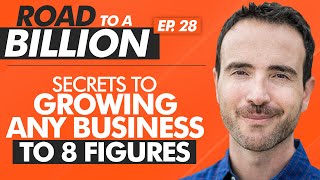
AJ Roberts talks scaling a business from $10M to $30M, covering traffic, conversions, and webinar funnels. He shares how copywriting skills transfer to e-commerce and on-page optimization, plus advice on networking, mental toughness, and why therapy mattered to his growth.
Chapters
Hey, you're listening to the Road to a Billion.
I am your host, Stepan Georgi, and I'm glad to have you with me here today. The Road to a Billion is a call in radio show style podcast where you can ask myself and my guests questions about copywriting, freelancing, entrepreneurship, mindset, scaling, relationships, money, really, anything else. The reason for the name the Road to a Billion is because I will have hit a billion dollars in sales by the end of this year, both for copy of myself and for clients. And it's the last day of the year, so I guess probably I honestly haven't verified that because I haven't just done a full accounting, but I know stuff. This year was actively doing between 20 and 30 million a month and I was already at over 700 million in sales going into this year. So yeah, I don't know how it wouldn't fit a billion.
The other reason for the name is.
Because I want to try and make an impact in the lives of at least a billion people over the next 10 years, whether that is mental, emotional, financial, spiritual, physical, whatever it may be. So we'll start taking calls and realistically about 20, 25 minutes from now, maybe 30 minutes, the way that works is you'll put your questions into the Q and A section in Zoom. For those of you who are on the Zoom, call live with us right now. And then my friend, well, usually Ed Ray would do this and help to review and moderate, but I'm not sure if Ed's going to be joining us or not. So if Ed Ray hops on, then he will help to select questions. If not, I will moderate myself.
But before we get into that and.
Get into the questions, I want to go ahead and introduce my guest today, A.J. roberts. A.J. you have a really incredible bio. And so A.J. for context, for people. I asked A.J. for a bio and it was like two sentences long. Oh, there's Ed Ray. So Ed Ray is here and we'll be moderating. That's great.
Yeah, sorry about that. I was going through the emails with the panelist link and for whatever reason, there was like five of them bunched up in one email. I didn't look at the date and I just clicked on the November January 14th one. So anyway, what's up, AJ? Good to see you, buddy.
Glad you're wearing a shirt and he's wearing a shirt.
Was.
Was it a debate whether I would be today?
Yeah, it was immediately mentioned in the, in the chat whether or not you'd be wearing a shirt.
It was so Funny.
Well, people said maybe you're looking for a shirt, and that's why you and you.
New Year, new me, bro.
Come on, his new. You mean more shirts, maybe?
No, I'm totally kidding.
New Year, new shirts. Well, anyway, Ed, in that case, why don't you go ahead and introduce yourself real quickly? Ed, you came. And just as I was doing this intro, and then from there, I'm going to introduce AJ and we'll kind of dive into it.
Beautiful. Hey, I'm Ed Ray, and I help people who got banned or restricted from Facebook get back on Facebook and stay on Facebook.
Perfect. Succinct man of few words in this case, but very succinct words. And like I said, you put your questions in the Q and A if you've got them, and Ed will help moderate those, and we'll answer questions live as we go. But now I want to introduce my guest, AJ Roberts. So, like I was saying a second ago, I asked AJ for like, a bio, and he gave me, like, two sentences at first, and he was like, I suck at bios. And then I was like, well, I really need a little more than that. And he's like, okay. And then it was like a crazy scroll. It was his entire life, but which was actually incredible because I knew a little bit about AJ But I didn't know a ton. So I don't really want to really steal too much thunder here, but I guess I would just say that from being having a world championship in deadlifting at the age of 17 and other world records, as far as professional and competitive weightlifting goes, to having products and offers in the fitness and health space, partnering with a crazy who's who's list of people like Yannick Silver and Frank Kern and Andy Jenkins, the late Andy Jenkins, Mike Flossaime. And most recently, working to scale his current business from 10 to $30 million in revenue, and just also an awesome guy. And my guest is AJ Roberts. So, aj, thanks for being on with me.
My pleasure, man. Happy to be here now.
Yeah. So, aj, I don't even know where to start. I would love for you to kind of share a little bit of your background story for those who are gonna watch or listen to this and who don't know anything about you, because it's really an incredible sort of origin story and journey, and I love it because as an entrepreneur, there's always such an indirect path to. To ultimate success. It's like there's. It's so many different sort of starts and false starts and such a windy road and So I think people will get a lot of value from that. So can you share a little bit about kind of, you know, like your background and where you come from and how you ended up kind of where you are today, but kind of walk us through that journey.
Yeah, and I'll try to, try to keep it short, the short version. But basically I grew up in England and the, the I always was into not what everybody else was into. So, you know, every, all of my friends played soccer and somehow I ended up playing basketball. I had cousins who lived over here in the United States. They came to England, they were basketball players and I thought, oh, that's a cool sport. Found the local team and started playing for them. And I. But I was obsessed with it. So, you know, I would stay up watching. It was during the Chicago Bulls era. So I'd stay up and the games would be broadcast and we only had four channels at the time, so we were lucky to even get that. Um, but it would be at like midnight and I would have to like sneak and watch it and record it. But that started the obsession with like, you know, wanting to be a professional athlete and, and then watching MTV Cribs that kind of seeded the, okay, you're a professional athlete, make millions. It's going to be a fantastic life. And I made the England squad and play under 14 basketball squad. And I was playing for them and I got cut from the squad. And people would fly in from all over the world to play for the England team. And Louis Dang, who ended up in the NBA was my teammate at the time. He ended up actually playing for Chicago Bulls. So it wasn't, you know, it wasn't like an unrealistic dream, you know, at the time in my mind. And I got cut from the squad. And it was when I asked the coach what do I got to work on, his response was, I can't teach you to grow. I was the same height from 11 to 15. I didn't grow an inch. And so, you know, that was basically why I got cut. It was nothing I could control. So being young and brash and having all the confidence in the world, I said, you know what, I'm going to leave and I'm going to come to America and I'm going to do it that way. I'm going to go to college, I'll get scouted, all that stuff. So at 16, I came over on foreign exchange, played a year of sports, ended up being a three sport athlete and doing really, really well. But it turned out that I was Actually recruited to come over. The basketball coach has seen my profile and then found a home for me. And so that kind of transitioned into powerlifting because it was a non sanctioned sport that I could compete in. And really, once I got into powerlifting, that obsession began again with powerlifting. And at the time, there was no Instagram, There was. Facebook, wasn't around. So the only way you could learn about anything was through magazines. And Bigger, Faster, Stronger was a magazine that we got. And our strength coach had stacks of this magazine from all the years. And I just went through and read every single one. So I came out absolutely obsessed with powerlifting, competing in powerlifting, and it turned out that I was pretty good at it. So for me, all of a sudden, here's a sport that I can be a professional and make millions of dollars. You know, I'd seen it on ESPN and that was the way it was going to be. Just to shortcut the story. Basically, fast forward found out it's a broke sport. And I call these self funded sports. There's a lot of self funded sports out there. Cornhole Frisbee golf, you know, the ones you see on ESPN once a year. And so I. So I thought I'd be a University of Idaho. Then the room.
One second.
The audio seemed to cut out for a second. Did it cut out for anyone else or was that just me?
Yep, yep.
Okay.
Yeah, for some reason the audio cut out for a second.
My back seemed to be. Yeah.
So University, Idaho, still cutting out a little bit.
It's going a little like. I think it was like every other word. It may say, I think of the mic maybe or something.
Yep, I know.
So you're in the studio, you're like the professional setup, killing it and then.
Yet it doesn't work.
I know. Yeah, still doing it.
Can we still.
Give it a second for the technical difficulties? Ed can just kind of strip, like, he's the way to do that anyway, so. I know. I mean, I guess you say that for your only fans page, so. Dude, speaking of OnlyFans, so I'm like, looking at Business Insider. Whoa, whoa.
Stefan, what the fuck?
You started OnlyFans, bro. No, no, no, I didn't start Onlyfans. I've got my Business Insider, like, daily email, like, things or whatever. And it was like, you know, 17, like freelance or. 17 people, like, weigh in on how to make money through side hustle. And I'm like, I bet they repurposed my article and this. So I went and it's like different people giving advice and there's like a girl on Onlyfans who's making, you know, like, Jill makes $250,000 a year on Onlyfans. There's a blurb about her and then right below her, it's me. And it's like, with like, my, like, stuff in Georgia, I made like, you know, whatever amount freelancing. And I was kind of funny that it's like side hustles. And it was like Onlyfans, Stefan's, like, freelancing advice. So I was okay. You know, it's kind of cool. Thanks, Business Insider.
Exactly. Right? But hey, man, I mean, Onlyfans, like, what do you, like, what do you gotta do? Like, post booty pics like a couple times a week, make 100k, 250 grand? Like.
Yeah, her thing. She says that. She says in the article she doesn't think of herself as like, a sex worker. Yeah, she thinks of her as like a. Herself as like an entertainer. And like. Well, that sounds like basically she likes to text. She's like, a lot of it is me just texting with lonely people and making them feel better. Yeah, like, she basically said that for her, she barely ever is, like, doing anything to Risque, but more like just people, you know, she was an attractive seeming lady, and I think people were like, you know, guys. That's the thing with a lot of that stuff. Like, not to go on a tangent as AJ tries to fix his audio.
But it's an important tangent, so. An important tangent.
Very relevant.
Or not.
It is actually. It is actually.
I think what you find is like, you know, it's like, even with guys, and you think about men being, like, really motivated by, like, by sex and thinking with their. Their other head or whatever, you know, and like, there's. There's validity to that sometimes. But I think what's funny is at the end of the day, men also want to be, like, understood, recognized, acknowledged, loved, and like, you know, sort of just feel special, just like women do. And so what you really find is even with, like, businesses like the webcam businesses and things like that, like, where the guys end up buying these girls all these gifts, it's like, like, they end up like, developing these, like, relationships with, like, the woman that they're following. Same with OnlyFans. And I think that's a huge secret when someone thinks we're saying. And I've never been on Only Fans. I know, of course I've got the hot page that, you know, you can follow at ray@onlyfans.com or whatever. I don't really know what his.
Dude. Okay, but if. But if I actually had an only fans. I bet you, like, some people are, like, looking to see, like. Okay, I don't actually, but.
2021.
2021. This is new goal resolution is a dope. Only fans.
My freaking psychic told me I need to start a podcast, so that'll be it. That'll be the equivalent of it, I suppose.
Chad Falman said only funnels. Only funnels.
Oh, shit.
Yeah.
We should do an episode on OnlyFans just to talk about it and, like, break it apart and, like, marketing lessons.
I wouldn't mind getting only fans. Like a woman who's done really want OnlyFans as a guest on Road to Village. I think that'd be interesting about a connection maybe, you know, when next time you guys are. You're talking to one of your only fans people, you know, maybe you can. Dude, there's.
Dude, they're so easy to find. Just go on Tick Tock, scroll for a few minutes like a few cute girls and you're.
You're gonna have all the married man. I'd be very careful how I approach like this. If I'm just like, my search history, you know, coming up on Tick Tock, like, allow.
Allow me to do the dirty work for you. Yeah, allow me.
You could do that for me.
That would be great. It would be interesting to have one too. AJ, is your audio back, do we think.
I think it's. I think it's working good, right?
Yes, sir. Yeah, that was fine. You know, it works out that. That technical difficulty let us on a wonderful, you know, revel, which is great because my mom watches the show every. Every week, so. Sure.
My mom.
Hi, Stefan's mom.
Yeah.
Not sure I can compete with that. Well, I was. Oh, I was always at the university. Volunteered in the weight room. Found out that none of the strength coaches make money. The top strength coach in the country, the most he made was like $200,000. And because of that seating from MTV Cribs, I was like, that's not enough money. And so I try to figure out, how do you make money? And Eric Cressy was a guy who was writing for T Nation. He's a college student, like me, competed in powerlifting. He had DVDs out and seemed to be really, really doing well. So I just reached out to him. Being a fellow powerlifter, I was known in the community, so I assumed he would respond. And he did. And he invited me to the Ryan Lee boot camp. And that was my first Exposure to kind of, you know, online marketing, direct response marketing. But I was so broke that, you know, I slept on his couch, shared a room with him. It was just one of those things that, you know, you're not really sure where you're going, but all the dots seem to connect when you look backwards, you know?
Yeah, 100%. And so where did it go, though? Where did things go from there?
Yeah. So from there I met a bunch of the speakers at the event and figured I would launch my own info product and I would interview them. They all had the list, so I'd interview them, they would promote it, and we'd all make a lot of money. But I didn't know how to do copy, I didn't know how to build a website. I didn't know how to do any of that stuff. And so I had a bunch of credit cards that had been given to get free T shirts when I first got to college and so cost me about 25 grand to hire a copywriter to build all the pages to do all of that stuff. Launched the product, and I thought I was going to be rich, made a bunch of money. But after affiliate payouts and paying off the credit cards, I was left with basically nothing. But I had this list, but I had no idea at the time that that's where the real money was, was in the list. So I sent a weekly newsletter, was just basically a strength and conditioning newsletter with tips. And I had an affiliate offer in there. And each week I'd sell one of the Precision nutrition was the offer. Each week I would sell something and I was like, no, I'm onto this with the affiliate stuff. And that's kind of when I started learning about a lot of black hat affiliate, you know, things. And one of the things was these, you know, way to siphon traffic off of brand search. And so you would go, you'd find a product, you'd go find a URL that essentially matched the product name and you would build a site. And back then you could get sites ranked in seven minutes with Squadoo and YouTube. And so you'd build this link wheel rank and you would start to get traffic and make sales. And so thought, this is a good idea. Why don't I pay someone to create a software for me that scrapes every single name out of clickbank and then go search for the available domain name on GoDaddy and then does bulk purchases. And so I was doing that for a while and, you know, we had a software that then would, you know, deploy a website on every one of these sites. And then we had software that would spin articles and then we, you know, we had software that would build all the link wheels and it was awesome. I was making a couple hundred bucks a day basically doing nothing. And you know, I thought I was going to be a billionaire and. And then the old panda happened and I got slapped so hard that basically every single site disappeared. And I was going through my host monster, getting rid of domain names, it's erectile dysfunction and formula and all these different things that I had no idea I even had. But I was making some money here and there off of it. And that's really when I was like, okay, what can I do now? And I figured I'd open a gym, you know, I was doing well, I'd open a gym and I'd use, you know, kind of what I knew to try to get people in. But I had no idea what I was doing. I tried to hire consultants. They ended up hiring me to come run their health club. And I thought, you know, it's worth it, I learned for free, you know, and then I can go back and do my own thing. And they also, because they had the consultant business, they kept talking about Dan Kennedy. They kept this guy, you know, I've, you know, I was uploading their mastermind calls to the Internet. We use audio Acrobat back then it was very hard to do. And I would listen to them and they always mention in Dan Kennedy and they mentioned, you know, his super conference. I was like, who's this Dan Kennedy guy? And you know, that's entered that, that world, you know, and just became obsessed and signed up for his newsletter. And I was at the diamond level and you know, doing to the events. But that led me to Frank Kern learning about what he was doing. And I just started applying that stuff and giving them suggestions for the business and they would try it, it would work. Funny how that happens. And, and sooner or later they were like, hey, do you want to basically run the marketing for us? And at the time they had the health clubs and they had the consultant business and then one of the consultants wife had an info product business. So that's what it was when we started. And then when we ended we had about a dozen companies, you know, high six figure, seven figure businesses, business to business, selling products, you know, actual physical products to gym owners and consumers. And then we had, you know, coaching programs and just so many different things. And that was allowed me to be a full time athlete and be a pay for the powerlifting. So to me, it was always a way to fund the sport. And so I continued to push on and, you know, become a world record holder. And then once I had broke that world record, you know, I thought there'd be a pot of gold at the end of the rainbow. I still had this dream that, like, somehow I was going to monetize this. I was going to, you know, make me a fortune. And in reality, you know, I broke the record. Nothing in my life changed. And, you know, that's when I started deconstructing my whole life and trying to figure out, okay, what's going to make me happy and things like that. And, you know, around that time, I figured, you know, hey, I'm working for these other guys. They're making all this money, and I'm only getting a small piece of the pie. Like, what if I flipped it? What if I was the one making all the money? Um, and it was. It was a terrible thought process at the time, but it allowed me to, like, you know, think differently. And, you know, I said, oh, what do I know? And I said, I know how to, you know, market and sell online. So I partnered up with other experts in the fitness space and started launching their brands online. And it was going really, really well. You know, I would take a huge percentage of that and, you know, it was paying all my bills and allow me to continue to lift.
And.
And then I was at a Mastermind, met Janik Silver, and out of curiosity, I asked him, hey, dude, I noticed you still have all physical products. And Yannick had this online underground seminar. He was all about online marketing, but yet all of his products were still physical products. So I just said, is that for refunds? I figured there had to be a reason that he was holding onto those physical products. And he basically just said, hey, I have no idea how to get them online. And, like, I don't have time to figure it out. So, wanting to get access to his entire library of products, I said, well, I know how to do it. Why don't you let me do it for you? And then you have it, I'll do it for free. I just need all the products. And so I did that. And then Jeff Walker was launching product launch formula again, and he used a couple of his products as bonuses. It went really, really well. He was super happy. And so we just began talking about what else I could potentially help him with. And turned out that he was supposed to. He had this event underground seminar, and it was coming up. He was way behind on everything, hadn't even Built the website yet. And he was about to go away for a month with Richard Branson, and he was like, I really need this done. And I said, no problem. Just give me everything you got and I'll figure it out. And so I rewrote the copy, launched a sales page, built an entire marketing plan for it, and fast forward to the event. It was the biggest underground event that he had had, and that really solidified that relationship and started to introduce me to everybody else. And so from then, basically, you know, I've been working with different, you know, marketers who most people know. And Andy had reached out to me. He wanted to go off and shoot movies, and people listening. Yeah, yeah, Andy Jenkins. And so he wanted to go off and shoot movies, and it coincided perfectly because I wanted to get out of Columbus, Ohio, where I was living at the time with walk away from powerlifting. And where else better to be than San Diego? So, you know, he went off to shoot movies. I came in, ran the company, but when he came back, it's kind of like, well, what do you do now? You know, like. And so I ended up writing copy, you know, email copy, sales page copy. But it was. It's, you know, it wasn't full time, so to speak. And so I was like, okay, what else can I do? And that's when I, you know, I went back into fitness and started working with gym owners and, you know, fitness entrepreneurs with their businesses. Um, and. And then I was in a mastermind with Kevin nations and, you know, started talking to these other guys in there, and none of them knew how to run traffic. And to me, the traffic piece was the easiest piece of the formula. You turn it on, you turn it off. It's just, how much can you spend? How much do you make? What's the gap? Figure out how to, you know, increase that gap so you make more money. But for them, it was. Seemed to be this really difficult thing. And they were all really the very best at what they do in the world. They just weren't in front of enough people. And so I ended up showing a couple of them, you know, how to run traffic. Very simple formula. And I think we lost feed.
Yeah, lost the video feed.
I hear your voice.
I'll keep going. We'll get the camera back. But anyway, so I showed them, ended up running ads for them. Big ticket. Big ticket formula ads. And, you know, that blew up. And so now I'm running a bunch of ads for people. And it was working, really going really, really well. And then Andy reached out to Me again. He said, hey, I partnered up with Mike Philsain. We have marketing Genesis with going really, really well. Me and Mike don't really like to be at the office. We have this team. We don't really like to manage everything. We don't really want to be in charge of everything. We just want to do our thing, basically show up, shoot, and then leave and everything take care of itself. Do you want to run the marketing team? And so I stepped in, started running that marketing team, and that went well for a good amount of time. But then kind of we had the launch and they decided that, hey, let's shut the office down. We don't need an office. Everyone can work remote and we can cut back a whole bunch of the staff. And I ended up taking on a lot more responsibilities. And I was like, I went from having this team to execute stuff to all of a sudden, like, it was my responsibility. And it just like for me, I wasn't working in my zone of genius, right, as more of that director. And so again, I went back to psych. I learned early on from Dan Kennedy, and it wasn't the doing of the thing, it was the knowing how to do the thing, right. And so I decided it's time for me to go off and consult and do those things. And so I did that. And then fast forward to about three years ago now. Andy called me up again and is like, hey, dude, we just launched this product, Katra. And you know, Frank's involved and I want you involved. I want to blow this up. I want to turn it into a hundred million dollar company. So I was running a mastermind. Actually was living in Vegas at the time. We had this 11,000 square foot home that we were renting. We were running events out of. I had a mastermind, My wife had a mastermind. And, you know, I couldn't turn up that opportunity to work with Andy, to work with Frank to build something like, you know, to the $100 million level. And so I said, okay, I'm in. And been doing that since. And unfortunately, Andy was diagnosed with cancer shortly after I joined and had to take a huge step back. Frank had an opportunity to go to Miami and do some stuff with Grant Cardone. And so I was left to figure out, okay, how do I make this company that doesn't have a face anymore? We don't have a guru. We're not playing that game. We're a software company. We're not an info product company. What's the formula here? And you know, business is business. And luckily I know direct response. And so that's what we've employed since. And we've gone from around 10 million in sales to 30 million in sales and continue to grow. And it's all from applying direct response stuff to the business. And constantly, like I said at your mastermind that I spoke at a little while ago, I plug the holes, I find a problem, I find a place that we're not doing follow up, we're not doing this, and then we go from there. So that's been the journey and I know I missed a bunch there just trying to keep it, keep relevant at the time, but like I said, going forward and none of it ever made sense. How does a guy from England who is a basketball player end up running a $30 million software company? But it's really that I follow my passions. I become obsessed with the things that I'm into and then I apply what I'm learning. And um, and you know, it seems so simple to me, but I guess for a lot of people those are the hangups and the, and the problems, you know, they get stuck and they get in their own way. So it's been a crazy journey and I'm excited to move forward and still want to build, you know, build that a hundred million dollar company like we said and you know, start sharing some of this stuff. So I'm glad to be here and sharing the story.
Yeah, that's an awesome summary, man. I appreciate you. It's been such a wild journey from under 14, basketball star who was unfortunately only 5 foot 6 to where you are today and what you've done and growing the company you have today. When you found out, I mean, after you broke that world record and you were like number one in the world and you felt the fulfillment didn't come, did it? Did you, did you kind of become depressed? Did you struggle at that point or did you sort of look at it from more of like a scientific perspective of like, oh, that's interesting and dissect it because I know you talked about you started tearing things apart. But like, I guess I'm just curious why you think you didn't feel the fulfillment that you'd expected to. You know, was it linked to money or why that, why was it? And then kind of, yeah, I'm curious about your mindset during that period of time.
Well, I didn't really know, but my ego was so out of control world. And yet, you know, like, ah, you're.
Cutting out the audience. Cut out again. Aj. Damn it.
Oh, Jesus.
I know I'm just gonna.
It's the just thing we can talk about.
Only fans again. If you need to do any, you.
Know, is it back or is it still.
It's backup.
It's motor.
All right, yeah. See how it goes. If not, if it breaks up again, I'll call in on my laptop, we'll do it old school.
Okay.
So, yeah, I didn't really. My ego was out of control though, so I was king of the world. But, like, you know, everybody still treated me the same. And. And so it's more of this. Like, okay, like, this means nothing, right? Like, it only meant something to you. It didn't mean something to everybody else. Like, and that was really when I started trying to figure out, like, why wasn't I happy? You know, like, why had I been ignoring all of this stuff in my life? And that kind of led me down that self development path to really figure out, like, you know, why was this even a good thing? You know, and that obsession and really the sacrifices that I made that had affected so many other people, like, what was driving me forward seemed to be destroying me at the same time. And it was fueled on anger. Like, you know, my, my lifting was fueled on anger. I was sexually abused as a teenager and I kind of suppressed that. And then my way of dealing with it was if I become the biggest badass in the world, nobody's ever going to be able to touch me or do anything to me again. And, you know, it was that. And I never dealt with that, that trauma. I never, you know, dealt with that. So I had this underlying anger. So really it's difficult to build anything like on that foundation. And so as I was tearing things apart, it was getting a little better, A little better. But powerlifting was really the thing that I was holding on to. And it wasn't until I realized that until I could let go of that, you know, and heal that anger, really nothing was going to change. And so that kind of was the beginning of that change. And, you know, it's when you, when you're the very. When you're not chasing, when you become the very best in the world, it changes your perspective. Because when you're chasing, you don't know what's on the other side of that. But then when you achieve that, you know, hit that, all of a sudden you're like, well, nothing's different on the other side of that. It's exactly the same. It's actually just a more lonely place because nobody can really relate to it. Nobody's been there you're on your own. Like, there's nobody ahead of you, you know, so all of a sudden there isn't that thought process of, you know, well, if they've done it, I can do it too. You're just out there on your own, and you have to figure it out. And no one can really tell you, like, how to do that because they've never experienced that before themselves. And so it was one of those things where I never thought I was depressed. And then I was. Went to a therapist, and the end of his assessment was that I was a manic depressant. And I, I. Out of a, you know, on a scale of 1 to 10, where, you know, how depressed and unhappy would you say you are? I said three. And he said, if you'd walked in my office and hadn't said anything, I would have scored you a 10 out of 10. And he said, you just have the ability somehow to ignore that. Like, somehow you use that to drive you forward versus it's not destroying you. You're not, you know, in bed. You're not, you know, not getting out, you know, getting on. You're moving forward. Despite the.
Cut out again, depression.
AJ yeah. Cut off for a second.
But we'll see.
It was good before. Then we'll give it a try. We'll see if it just sticks up, the mix up. Because that's really. I mean, there's so much, so many good things here. I mean, I want to advocate for people, you know, who watch or listen to this. The power of, like, therapy in general.
Right.
Like, I mean, I've talked about where being re. Diagnosed with ADHD was after I went to see a therapist and thought I had, like, seasonal depression and, you know, then realized it was ADHD. And there, my guy, Dr. Garcia, just helped tremendously with that stuff. And it sounds like on your naj. It helped a lot with maybe.
Yeah.
Realizing the depressiveness, but also the. I guess, yeah. The patterns. Right. Or even the anger. Because, I mean, I guess with like the sexual abuse when you were a teenager, I mean, did you. You kind of suppressed it. Did you really. Did you realize, like, I guess that that was fueling you until you broke the record? And then kind of when I started, did you kind of know in the back of your mind, or is it really something where then suddenly you were forced to, like, evaluate things in your life? And I guess how much did the therapy. Because in Missouri, it's, It's. It totally makes sense. You're like, okay, like, I was sexually abused as A teenager, I used that anger. It fueled me. But, you know, it also seems like something you get through help of somebody, like. Like taking a step back and looking from a broader perspective. So I guess I'm just curious, is that something that, like a therapist really helped you to kind of put it all together, or did you. We already kind of putting the pieces together before you saw a therapist.
Yeah. So I think it's one of those things, like most of us already know the answers. We already have all the things, but it's putting it together and then actually, you know, doing those things. And it's funny because it's no different. And this is one of the things I think I'm unique. And a lot of people in the direct response world are unique copywriters, especially because we understand humans at a much, you know, greater, most. We understand people better than most people understand themselves. But it's one of those things where it's like, I knew all these things, and actually it was creating a bigger gap because I knew all these things, but somehow I wasn't doing them, you know, and so then that guilt and shame and almost like self punishment comes in because, you know, how can I know this but not do that? And it was like the more I peeled back that onion, the bigger that gap became. Because now all of a sudden I'm saying, okay, well, I know better than this, but I still do this. I still act this way, especially with the anger. For me, that was the big thing, is just reacting my emotions, not having that emotional intelligence and control, and yet having all this knowledge. And so that's something that really helped.
Yeah, that makes sense. And for everyone watching, we'll get to questions in about five more minutes from now. I wanted to switching gears a little bit, A.J. you know, what are the mistakes that you see people making now? Entrepreneurs, as they try to scale businesses? Because you gave that awesome talk at the Free Mastermind I did in San Diego a few months back, back before COVID shut everything down again. And I loved it. It was one of the most inspiring talks and made me think differently. And so it was awesome. But I'm just curious, as someone who's helped a lot of different businesses to scale and grow and who's now doing it, if your current business going from 10 to 30 million and hopefully on the way to 100 million.
What are.
The mistakes that you see people make and what kind of traps should people avoid?
So there's a lot. But what I would say is that everybody thinks the grass is greener on the Other side, right? And we actually see this in the copy accelerator Mastermind, right, is that a freelancer sees a product, an offer owner and says, oh wow, they're making all this money, right? I want to jump over there. And then the offer owner sees the consultant and says, hey, wait a minute. The reality is business is business and it's really hard and complex. And so being able to simplify it is the process, right? And it is a lot of the case figuring out not what to add, but what to remove in business. But it's sticking with it. That's really the key. And actually there was an article that came up from Saster this morning and it was saying about developers that jump from startup to startup and how they never really actually make any money versus if they just stayed with one company. And so they think their resume looks good because they were at WhatsApp, they were at WhatsApp and they moved to Facebook and now they're over here and they're doing this. But the reality is that they never really get any true equity in the company. They never actually really are able to build any long term value and they just go from thing to thing. So for me, that's probably the biggest mistake. I think an entrepreneur or freelancer or someone like that is that there is someone doing your exact business model and making all the money you could ever dream of making. When something else comes along, that's really a distraction and you have to think about it as basically going back to ground zero. You're going through a system right now. You've gone to kindergarten, you went to middle school, you're in high school, you're going to college, you're going to end up with a doctorate degree degree. But then you say, you know what, I'm going to go back to kindergarten and start all over again. And I've made that mistake myself personally. And I think that that is a true. When you look at companies or individuals that are very successful, they've usually been doing what they've been doing a long time and the success all of a sudden appeared overnight. But you look back and it's like, you know, Nobody sees those 10, 20 years that they had put in to get to that point. So for me, I think that's the biggest thing I see is people just think the grass is greener on the other side and there must be an easier way because this is really hard. And life is hard, relationships are hard, health is hard. You know, faith and family is hard. So, you know, the quicker people realize that it ain't probably going to get much easier. And that business is basically having a problem and finding a solution. It makes it easier because you don't get that emotional charge to it. And one of the best analogies or is like when your gas tank gets low, you don't freak out, you just go to the gas. You just go to the gas station and fill it up. And with everything else, we seem to freak out when there's no need to. And I think that really that's something that people can learn from and implement is, hey, it's supposed to be hot. Okay? You know, and Ryan Holiday has that book, the Obstacle is the Way. You don't need to read the book. The title is literally the book. But you know, you, if you don't have obstacles that may be a problem. If you, if everything just seems too easy, you know, that's, at some point you're going to hit a brick wall. There's going to be the storm that comes. I don't know anybody, even my friends who are super spiritual that, you know, truly are able to turn everything over, they still have roadblocks. It's just the way they handle those roadblocks.
Yeah, I love that. I think that's just priceless advice and insight. I love the gas tank analogy as well. And I know it's funny, when I had that stuff of that Coffeezilla guy like a few months back and that video kind of like made me look really bad, which was, it was frustrating. But what's funny is I even told a couple friends at the time, I was like, in a way, this is like, I haven't had a really big challenge in like a while and here I'm trying to grow a personal brand and somebody with like a decent following and viewership does this video that kind of like makes me look bad. And of course, you know, I think he had valid points about the direct response industry, but obviously the video was kind of cherry picked and whatever, you know, so. But the point is I actually even there, my mindset shifted really fast to being like, oh, this is kind of, it's an interesting, like a challenge or something for me to tackle and how do I respond to this? How do I handle it? And I was like thinking about my health supplement businesses. I grew and scaled and other things and how those challenges are kind of what they're almost exciting.
Right?
The whole thing with the entire nature of business, I've said this before, is it's like an ever. It's a constant stream of challenges that become increasingly complex. As you level up and you're basically a professional puzzle solver and problem solver. And that's literally what business is. So if every time there's a problem, you freak out and call it a crisis and get paralyzed, you know, you have to shift your mindset or you shouldn't be in business. Because literally that's what if it was, again, super cliche, but if it was easy, everybody would do it, right? And the whole point is that the best business people, the most successful entrepreneurs and freelancers really are professional problem solvers who are really good at solving problems in unique and innovative ways. And so that's the thing.
If you don't have problems, it's difficult to grow that stress. Stress isn't a bad thing. Stress allows growth, you know, and that's really what people need to understand is that the more problems you have, the more opportunities you have to grow. You know, the problem is if you try to focus on fixing everything right away and not understanding that it is a process. And, you know, you look at somebody, let's, let's say wants to lose 100 pounds. And after I did the power lifting, I lost 100 pounds, stepped on the bodybuilding stage. But you don't lose 100 pounds in 30 days, you know, unless you're Steve Goggins, right? And like he has an insane story. But the majority of people, you know, if they could lose, you know, half a pound a week, and they do that consistently over time they hit the goals. But, you know, society conditions us and as marketers, we play play to that when we're putting offers together. But people want that quick fix. But that quick fix is never a long term solution. And you have to have that long term mentality with business. And I think one thing for everyone listening is if I was going to do what I'm doing right now for the next 60 years, because let's face it, none of us are really going to retire. We don't believe in that. But like, if I was going to do this for the next 50 to 60 years, where could it be in that time? If I gave myself 50 years to get to the numbers I want to get to, what would that look like? And then you just say, okay, just got to take the next step and the next step and the next step. And that's really, I find too many people set that vision, but then they keep revisiting that vision. When I first started powerlifting and I was lucky enough to train with another world record holder, he said, what do you want to do? At the time, my best squat was 550 pounds. He had the world record 1140 pounds. That's a big gap. And I told him, I want to be a world record holder. And he told me what to do. And for the next 10 years I did that and I was able to. I ended up squatting 1205 pounds and being a world record holder. But it was a 10 year journey. But I never changed that goal. I didn't suddenly say, oh, okay, now I want to go and do strongman and now I'm going to go do body. I had one goal, one focus during that time. And with business, I think too many people, they set the target and yes, things will change, the wind will blow, and you may end up in a completely different business. Look at Richard Branson with the Virgin brand. The Virgin brand is a set of principles, core values, and he has his vision for that. But the actual pieces of it continue to change. And I think that that's really what people need to understand is that if you know where you want to be and you commit fully to that, just be okay with the timeline being different and don't compare yourself to someone else with a shorter timeline. In school you have your A plus students who do nothing. They're just geniuses. And then you have your A plus students who work their asses off, hire tutors, put in all the extra work, but it's 10 times harder for them. I don't know where you are on that, you know, scale, but let's be honest, there's people who do that who only get Cs. But it's the willingness to do that and to do everything that it takes and accept that some people are going to have it easier. That's just life. But I'm not going to quit. I'm going to stick to it. I think that entrepreneurs, it's really, it's a stick to itness. Like you said, when the shit hits the fan, you're just calm in the chaos.
Yeah. You know, it's funny too. I can't remember where I read this, but it was in one of the books I was reading. But how like child prodigies, if you actually look at it and when they become adults, they actually have a very like, low, low levels of like success and happiness. Generally it doesn't equate. Even the kids who are like, you know, they're doing calculus when they're five and all this stuff. By the time they become adults, a lot of them live pretty dysfunctional lives and don't have much success monetarily. They're not happy. The relationships aren't great, all these things. And so I don't know why that reminded me of it, because I think even for people who comes easy, and if it doesn't come easy to you, that doesn't mean that that is not your life path. Right. It's like all it is is really finding your unique thing and your thing that you're passionate about, and then, to your point, just sticking with it. You know, we see it in copywriting all the time. Obviously, I see people who start writing copy getting pretty good at it. It's, like, only been six months or a year. They're frustrated that they're not making, like, 30,000, $50,000 a month. And then they, like, quit and go decide to do whatever other thing they're gonna do. And it always breaks my heart because it takes time. One of the hardest things. It's really hard, digital marketing and Internet marketing and stuff like that is because you can scale things really fast, and things can happen really quickly, which I love about our industry. Like, somebody can show up and create some random offer, and suddenly they do 30 million or $50 million, and they become a millionaire, and it happens in, like, a year.
And.
And that really can't happen in industry. But because of that, we have that. It's so hard to take the longer horizon, like, in the perspective of the longer horizon. And yet, if you can look at things that way and think about five years from now, 10 years from now, and then really stay on course and just kind of correct course as you get off and make tweaks and adjustments, you know, it's incredible what you can actually accomplish, but to your point, most people just don't stick with it for long enough, and it's hard. I want to get the questions. Ed, obviously, as our wonderful co host here, I've been enjoying this conversation immensely about the way. And I want to give you first crack if you have any questions or a question for AJ before we go to kind of the Q and A stuff.
You asked all the questions I had, so awesome.
Perfect.
Well, I'm more. But yeah, let's go to the questions first.
Sounds good. So first up, we got Marcus Ortiz asking about tips on networking.
Cool.
So what's up, Marcus?
Hey, Stefan. Hey, Ed. Hey, aj.
Yo.
So my question is just asking Ajay tips on networking and how you've been able to connect with so many heavy hitters. And especially if you feel like you're like you're at the same level as Them too. And you might have insecurity about that. Like, how do you approach them and talk to them?
Yeah. So, I mean, the first thing is everybody's just. Is just a human. Right. Everybody is going through the same thing. So not viewing them for that. Everyone is flawed. If you. If you think that someone isn't flawed, that's. You've created a picture in your mind. And that's why they say you should never meet your heroes, because you meet your heroes and they disappoint you, right? Because you have a picture of who they are and then all of a sudden they lose their temper or they get upset. So that's the first thing. Just understand that, you know, they're really. They're no different than you were. And people above you are never going to suppress you. It's always the people below you that are trying to keep you down. Right? So people above you are trying to pull you up and so they're happy to chat most of the time. Now, of course, I don't know about a celebrity who's getting bugged all the time, but, like, in our world, there's really no celebrities. Everybody can walk down the street and not get mauled by a camera crew, right? So for me, I was going to. I just went to the places these people were at and then just had genuine conversations. And in fact, I remember the first conversation I had with Frank Kern. We were in Baltimore at, I believe, a GKIC event. And we were at the bar and I went up to him on my phone, I said, have you seen this new superstore that's opening up in la, this weed superstore? And he was like, no. And all of a sudden, Eric Roberts was the guy who was opening it with a friend of mine, Scott Mendelsohn. And all of a sudden we're watching this little thing about how they had this idea for this weed shop that essentially was the size of Walmart, never manifested. But I didn't go to him and start asking him questions about marketing. I went to him. At the time, he was Frank the hippie. He was surfing, he was smoking weed. And so I found something I thought he'd be interested in and had that genuine conversation. And because I wasn't looking to take in that first interaction, it opened up just a conversation. Now he's someone I can text when I have questions. So that's really the thing. Just understand people are human and that most of the time, if you can create a real genuine connection, that's what matters. And it's hard to do right. One of my friends, I met an event. He was in a really bad place, and I was introducing him to people, and nobody wanted to talk to him because he was trying to take. He was like, hey, can you promote me? I think this would be great for your list. And it's like the used car salesman. When you go to a car lot and that guy's trying to sell you that car and comes across like, I need this sale, you naturally reject from it. So just find the common ground and build a true relationship again. Go back to thinking long term. I tell people who are like, I need to get affiliates. It's like, okay, well, you need to start now and plan to get them to promote you a year from now, because you need to spend that time building that relationship, giving. If you haven't read the book Go Giver, it's a great book, but I think that's the hardest thing to do when you need clients or when you need help. But it's what sets you apart because most people are getting that all the time, and it's just a natural defense mechanism that goes up.
That's awesome.
Does that.
Does that help Marcus? I'm gonna help him.
Yes, absolutely. Thank you.
Sweet. Awesome, man.
Glad to help. You know, free business idea. For anyone watching, I have one of one idea. The dispensary thing reminded me of it. I want to create a chain called Stony Bear Bakeries, and then I want to put them next to, like, dispensaries and, like, you know, cook, like, the cookies and, like, just delicious treats and just pipe, like, the smell of the cookies and everything out, you know, and then have people stand outside. So people go to the dispensary, you give them, like, the business card, and, like, we deliver. And then, like, basically just, like, strategically locate these, like, delicious, like, stony bakeries, like, you know, next to dispensaries across the country, and with good delivery, with the smell of really dope stuff and, you know, and then longer term, maybe you can partner with the dispensaries where you can actually even take over the weed delivery for them. So now you're, like, doing a smart service for them and you're saving them costs, but you're also delivering your cookies and treats and things like that. So if anybody wants to start Stony Bear Bakeries, I probably don't have time to launch that in 2021, so it's yours.
I wonder if Weedmaps allows you to advertise on their platform.
Yeah, if it does, that would be a really solid way to go about it for sure.
Yeah.
So just a tangent, but, you know, I feel like I have so many business ideas that I'm like, I got to just do. Oh, interesting. Oh, this is a girl Scout cookies. So, yeah. Girls, someone put a link in the chat, Marcus said, about a girl Scout who was selling cookies outside marijuana, like on a dispensary. I think I've ever heard about that.
By the girl Scouts. For that. The girl Scouts scolded her. I was like, everyone thinks she's a genius.
All the marketers are like, this girl's gonna crush it in life. And the girl Scouts are like, yeah, awesome.
Cool.
And who we got? Who we got next?
Next up, we got Santiago asking about powerlifting lessons.
Nice.
So, Santiago.
Hey, Jay and Stefan.
How's it going?
Good.
Great. So Happy New Year. Well, so the question I had, I mean, it's pretty self explanatory, but basically, did you take any lessons from powerlifting and applying them into marketing and if so, which one?
Great question. Yeah, it's funny because you don't notice what you take across until you start, you know, really paying attention. But basics, I mentioned them, you know, throughout. But become obsessed with the craft. Right. For me, when I was powerlifting, I was super obsessed with it. And I studied everyone who was ahead of me. I watched the technique. I watched that thing. I wanted to talk to them at competition, so I networked with them, you know, looked at how they were training. I rejected a lot more than I accepted in terms of, like, when I was learning from them. But I wanted to see what they were doing, right? And I wanted to have the exposure to that. And then I showed. Had to show up every single day. Every single day was I had to train and it was, you know, my main focus. I was obsessed with. It became my main thing, you know, and that was what I focused on and dilute. Like, my training style was powerlifting. I didn't do Olympic lifting, I didn't do bodybuilding. It was powerlifting. So don't dilute what you're doing. You know, keep the main thing, the main thing, long term focus, delayed gratification. You know, that was huge. You know, like I said, it took over 10 years to break that record. But I had that goal and that's what I shot for. I didn't worry along the way. If I missed, you know, I would take those shots. So those are probably three of the biggest things, is the obsession, keeping the main thing, the main thing, and then, you know, delayed gratification and long, you know, long term. Goal setting.
That's awesome.
So.
Well, thank you very much for that. I also have another question.
Quicker.
Go for it.
So how does it feel to have 1200£5 in your bike?
What's your, what's your biggest squat?
Around 300.
Feels just like that. And anyone who makes money could tell you the same thing, right? Like making. And Stefan and I were talking before, he's got a robot behind him and you said you were making nothing and it was like 150 bucks. Right?
Yeah.
And that feeling is the same feeling you get when you hit your first hundred thousand. You have first million, your first ten million. It's exactly the same. And in fact, sometimes that lower feeling, that first time you hit those lower numbers are more exciting than when you hit the bigger ones. So it's kind of, it's an interesting question, but I always tell people, same as your max.
Well, thank you so much, AJ.
Awesome. Thanks, Santiago, for that question. That was great question and great response.
Love it.
Ed, who we got next?
I think the most relevant question we have is from Santiago. Sorry, not Santiago, Marcus, about running webinars.
Okay, do that.
We can do the non relevant ones too, but Marcus, you can do another one if you want.
Let's do it. Bring Marcus back on.
Okay, I'm back.
Welcome back.
Just because. Yeah.
A.J.
Since you run webinar, so I feel like a unique perspective from running the platform. What are some of the best things you see? The top webinar marketers all like best practices.
Yeah.
Ed and I actually we talked about this a while back. There was a post and then Ed and I went back and forth. But it's the follow up. Most people don't understand that, you know, when you're, whatever you're building. Right. It's the follow up is where the money is. And so when you look at the webinar itself, getting people to register, getting people to show up is just half of the equation. You know, you have this list that you now can continue to market to, but around the event itself. And so most of the successful webinar marketers right now are not relying just on email to get people to show up. Right. So they're getting a text message, they're getting text messages involved, they're getting messenger involved. Messenger is huge. And so their, you know, show up rates are going up because they're creating more ways to communicate to get people to come back. For those that aren't doing automated webinars, they are doing live webinars. It's pre selling people on the webinar so remembering that just like when you write a sales letter, every single line has to want someone to read that next line or vso. Every single minute has to get someone to the next minute. It's not, oh, this part can be boring. No, you lose them, right? So knowing that if you've got four days before a webinar, well, you have to promote for four days. What are you going to do to get them to show up to that webinar? Then when they're on the webinar, how do you get them to stick all the way through? And great content is the best thing to get them to stick. But can you create, you know, ethical bribes to essentially get them to the end? You know, hey, don't worry about taking copious notes. I'm going to give you my slides. I'll post the link at the end. You know, I have this bonus for you if you stick to the end. I see people give prizes out. You have to be careful that you're not just getting a ton of people there, you know, because they want free shit. So you always have to be aware of that. But it's thinking along every single step of that funnel that you're building, whether it's a webinar or anything else. And really, how do we maximize conversions at each point? Most people think all they have to worry about is how much does it cost to get a registration and how many people to purchase. And that's good at the beginning, but as you go deeper, you have to figure out, how do we get conversions at every single point along that. Even from the point if someone doesn't register, okay, well, we dropped a cookie and we can retarget. They were interested enough to visit the page. They just didn't want to give us their email. So can we retarget them and show them a replay on Facebook? And that's really. You just got to think like that is once someone has clicked an ad, they've raised their hand that there's some interest, like, don't let that person go so easily. And not to coin the thing you hear a million times, but they say it takes 15 to 20 times someone sees something before they actually move forward. So, you know, bearing that in mind, if you want to maximize your ad spend and roi, you need to look at every step and what happens after the webinar, you know, and one of the things we used to do, we did the webinar, we'd send a full replay out. Then we sent an edited replay out, right? Then we would take it and we turn it into a sales letter. So they didn't. Even if they had not watched any of those, we still could make an offer by sending them to the sales letter. And so how far do you want to go down that path? And you can even look at how you sell your product. And again, you're going to make decisions based on the quality of people you want and whether you want barriers to entry. But if you have a payment plan, okay, great. But do you have a trial? You offer a six pay payment plan. What if you just gave them a trial a dollar and they got access to the first module and then it rebuilds them in seven days unless they cancel. So you got to continue to think where we may be lo people. And essentially, if you have a bucket and leads are pouring in the top, who's coming out of the sides and how do we plug those holes? To me, a webinar is the same as anything else. It's just a great tool because you have an environment that people are fully focused on you for that hour or whatever. Just like if you were from stage. Selling from stage is probably the best, but we can't do it right now. So webinars are the next best thing to the stage.
Thanks, that was super helpful. And since I'm on your email list too, if you did a follow up video of like tools or like text follow up for messenger follow up www Great.
Thanks, Marcus.
Marcus the man. All right, we have a great question here from Chad, actually about how to avoid going back to kindergarten.
Hey, what's up, Chad?
Hey, what's up, studs? How you doing?
Good, good.
Chad the man.
Congrats on your new your new apartment or your new spot. I saw on Facebook you got a new place.
Yeah, thank you. I live in that hot tub now.
Look at you.
Good living a hot tub. That's good. Yeah.
Moving up.
Hey, A.J.
So let me give you a bit of backstory because I understand what you mean by continually going back to kindergarten. Direct response is something I love and I've loved it for the past 10 years. But because I was so naturally good at it, and this is not to brag, this is just me speaking matter of factly. It's something I avoided. And even my non entrepreneurial family said you should do something with writing. So when I finally went all in with it, that's when I had success. And so now I want to start branching out into other things. Like E com, for example. I'm sure you've heard Stefan talk about it. There's Lots of things going on there. It's interesting. But how do I do that without going back to kindergarten?
Yeah, Stefan, I think you probably have some ideas here too. My biggest thing and the reason involved with the company I'm involved with is because I realized I have a unique skill set and that's what's valuable. And I can go into any business. And sometimes I wonder if this is, like, the air of confidence, you know, and bought as cockiness. But I literally, you know, I go to a restaurant and I'm like, oh, my gosh, they're leaving so much money on the table. And when I find a business that's, like, crushing it, like, and they're doing all those things, I get excited. I'm like, okay, they can have all my money because I'm so excited to be a part of this sales process. So if I was going into E Comm, I'm actually working with the E Comm brand right now. I'm not looking to do it all right? I'm looking to come into a company that's already making money, and I want to optimize, tweak, and apply what I already know to make it better. And to me, like, it's easier to push someone downhill than it is to try to roll that ball back uphill. So to avoid going back to kindergarten, insert yourself into a company that is doing well, but isn't doing what you know how to do. The value you bring is so big that you can basically negotiate percentage of increased income for them, profits. And it can be a big percentage because it's found money, it's found revenue, and your value to them is so high and you haven't had to start completely from scratch. And then once you have seed capital, you have extra money. You can go take that risk on your own if you want, or you can just find other businesses to partner up with. So Stefan might have a different opinion, because I know he's been involved with a lot of different businesses.
No, I think that's really, really good. I agree. I think the thing. It's like, the direct response elements still apply to E Comm, I guess. Yeah. Like, even the writing. Because if you go to most E Comm sites, like, their headlines, like, suck. And you can. Like, I've used examples before where I changed the headline for someone with an E Comm site and then increases overall conversions by, like, 10%. Like I did for, like, a dog harness company. They sell dog harnesses. And, like, changing the headline based on a little bit of research, you know, increased Conversion rate by like, it was like 11%. And this is like they did like a thousand sales a day. So it's an extra, like hundred and ten sales per day they're doing now, right? It's like significant.
Like, oh, holy shit.
Right? And that was just a headline. And there's other stuff too. But then the only other thing, I think early on, if you're just learning copy, like, for sure, focus on copy. But once you get at a higher level, you're going to kind of become like a conversion optimization expert anyway. Because you're going to look at the pages that your clients are putting up. You're going to be studying funnels, you're going to be seeing what's working. And because you're studying that and most of these business owners aren't, it just gives you tremendous opportunities there as well. Like when I put a thing up on Facebook that was gonna help some ecom companies and kind of share some stuff with. I think I used copywriting because everyone knows me for copywriting, but most of the changes I gave them were on page conversion stuff. One guy had a bunch of testimonials, but the testimonials he had static on his homepage were all from 2018. And this seems like a really little thing. They're good testimonials, but I was like, hey, man, if someone comes here and they only see testimonials from 2018, they might be like, well, why has nobody given you like a new testimonial? Like, oh, is this. Maybe they're not still selling. Maybe, you know, like, if I'm gonna give them money, but I wanna get my product because this is an old page and even though I saw an ad, people don't know what's happening when they're like, on websites most of the time. So something little like that where it's like. And he had all these brand new, nice testimonials. I'm like, you need to be updating him with fresh testimonials. Super small thing. But basically you want to reduce friction, right? Like, you want to reduce friction and you want to reduce uncertainty and doubt and increase confidence. And that's what leads to conversions. We do that by writing copy. But it's the same thing with like on page elements too. So one of the things I love about E. Comm is you can just spend an hour going over somebody's main landing page and you're going to see all this stuff that they should be doing and that you will know from experience. So again, if they sell a 136. If they sell like a supplement or a jar or something or whatever and they have like the, you know, the one bottle is in the middle instead of the six bottle. Right. If you've got three packages side by side but they're highlighting the one bottle package, you're like, dude, just switch the order, show the six bottle one in the middle and make it a little bit bigger and bold and stuff like that. And you'll increase your average order value by 20%, 30%. There's so many little wins you can get for them that don't take you that long. It's just based on experience and from there you make them a lot of money and you can make a lot. I honestly think E commerce probably one of the lowest hanging fruit, easiest ways to make money for a lot of the best direct response copywriters. Because it's just those, the people who are running e comm businesses are kind of clueless. They like, like copy but they've read like, you know, some like, I don't know what they read like breakthrough advertising one time and like yeah, I know about copywriting. And you're like, yeah, totally. But you don't know anything about on page conversion optimization stuff like that.
So that's a rant.
But I just think it's really cross, you know, they're so cross applicable. I don't think that's shiny object syndrome because you're applying what you know like as a direct response copywriter and optimization expert, conversion expert and you're just doing it both with copy and on page stuff.
Yeah.
That makes sense, Chad.
Right on. Yeah, right, right on. I was going to create a product initially but I think what I'm going to do is approach various E comm brands and have a proof of concept first. Because why would I take that risk when someone else can, you know, deal with the bit, the bullshit.
Yeah, do it with me Chad, because like I know so I'll give comics because Chad, he wrote like an upsell for me I really liked and I think he's a really sharp guy. And then I just talked to Chad about putting them on retainer to help me with some different stuff. But like I have a bunch of e comm companies now that wanted like me to give them optimization ideas and copy ideas and stuff. I have like a whole spreadsheet. So get with me and like let's just go. I'll give you the access to the spreadsheet. We can pick a couple you can go through and provide some like ideas I'll share some. We'll get proof of concept, and then if you want, like, we can kind of partner on that a little bit, because I want to do more of that, too, and I don't have the bandwidth, but I know you're a shark guy, so if you want to, or you go on your own, but if you want to do it with me, I greedily. I would love to have you work.
With me on that.
Yeah, right on. Appreciate it, Stefan. And thank you, aj.
Sweet. Awesome.
Look, it's a radio show. Slash, job opportunities, you know?
Exactly.
Right.
Chad's a smart guy, though. Really is.
Engine lies over here.
Doing what I can.
All right, we have a question here from Jessica.
I want to rant for five seconds before we go to Jessica on the changing lives. Because somebody hit me up yesterday and they're like. And copy started light and. But they're like, hey, you know, I just haven't had success getting clients, blah, blah. So I hate to just. I gotta cancel my thing, my membership. And I immediately was like, hey. Well, I mean, I don't should say this publicly, but whatever. I was like. I was like, well, pause it. I'm like. I'm like, I mean, I'll pause it right now. I was like, coming up on Monday. But seriously, just seeing. Because he was like, I'm going to go back to. I guess I'm going to file for unemployment and go back to get a job. I was just like, nope. I was like. Because I know the guy and he's a smart guy, and I've met him in person and stuff. And I was like, can't have that. So I'm going to catch the guy on Monday, and then I'll just give. I'll put the guy on payroll. I can't do this for everybody. So I don't want to send the message out that if you hit me up, I can put everyone on payroll. But again, I know this person. I know they're smart. And so it was just like. Like the guy just saying he was gonna give up. Like, I just couldn't have that. So, yeah, I'm trying to change lives. Cause I'm like, can't have that guy going back to a job.
Steph, can you put me on payroll?
I mean, I've paid you a good amount of money the last year. We basically just trade money, you know what I mean? At a level of entrepreneurship, at a high level. I was talking to Alex Hormozi, too, and how it's really just a bunch of friends exchanging Money back and forth.
You're really just sending each other quantities.
Of money for stuff all day long. That's, like half of what we're doing here.
I love it.
It's funny. So question here from Jessica about how prioritization.
What's up, Jessica?
Hey, guys. How you guys doing?
Good.
How are you?
Excellent. How are you?
I always get a laugh at everything you guys say.
Yeah.
So, first of all, thank you, A.J. for being here. It's so exciting and wonderful to hear about you and your experience and. And Ed, always a pleasure. And, of course, Stefan, always a pleasure. So thank you. Yeah, Prioritization. So I'm one of these people, too, where I get a little overwhelmed and I'm slow. So I've been trying to do copywriting for a while, and in terms of tasks, like, let's say you wanted to write a Facebook ad, and you wanted to actually be an affiliate with it and maybe sell a product as an experience. But what I realized is, like, you not only should, you know, know the copywriting, but then also, like, have a Facebook account. And then I understand you have to, like, season the page before you can even run ads, maybe. And then you got to learn how to do the ad, you know, like, make the ad. And then, you know, are you going to have any sort of tracking for testing? I mean, like, I hope you can see what I'm trying to get at is that there's, like, so many things. So how do you prioritize? Like, this is a good requirement. This is maybe, like a do later. And then sometimes, like, you don't even know. Like, you also need that time to, like, learn. Learn something, too. That gets built into it. So how's the best way to handle that, is my question.
That's a good question, aj. Do you want. You got ideas or. If you need to think about it, I can always jump in. But.
Well, I mean, in my younger days, I just throw shit against the wall and see what stuck. Right. But as I've gotten older and had smarter people talk to me, I think you have to look at what your priorities are. Right. Do you have the ability to wait to figure all those things out, or do you need money today? And if you need money today, writing that ad for somebody else is huge. And obviously, there's the job boards, but upwork, and there's so many places to just get work for cash flow, because I don't know if you've watched the Undercover Billionaire show, and the guy has $100, and in 90 days, he creates a business worth 750. His goal was to make it a million in 90 days. And he was the former billionaire. But in order to do that, he knew he needed to make money. So he was driving around looking for tires to be able to get cash. So he could. What he said, and I think this is very important is if you're in survival mode, you can never think in abundance. So you have to figure out. So he knew he needed. I can't remember the exact amount, couple thousand dollars for rent and food for the 90 days. So then he could focus on actually the business stuff. So that was the first goal. So you have to kind of chunk your goals. And I thought that was just with the show. Is an interesting show. Some stuff I didn't necessarily thought was that great, but that was something. Early on I was like, you know, for so many people, that's so important if you're in survival or how am I going to pay my bills, how I'm going to pay my rent? It's really difficult to think long term. So get that taken care of first. And maybe that is taking, you know, getting on salary with someone and just having that security while you do the side hustle. But to me, that's really how you prioritize. And, you know, if the goal is to just get a client, like that's the whole focus. Until you get that client, then you can work on that next thing. Might not be the answer most want to hear, but that's normally, you know, he got. He built. I don't know why he chose a restaurant as his business. I thought that was an interesting thing. But he chose to open a restaurant. And it goes. How he got there, I just found it still an interesting thing. But to get there, he sold. He sold tires that he found. Then he flipped two cars, then he flipped the house. And to be able to open a restaurant, he did all of that in 90 days. So none of the stuff he did before the restaurant was related to the restaurant. It was just to get the cash flow for the restaurant. Restaurant. So there's some. Some great lessons in it. But you know that that would be my advice.
Wonderful. Thank you.
That was awesome. Thanks for asking that question, Jessica.
Thank you, guys.
Have a great holiday.
Stefan.
I feel like I want to.
I feel like Grant Cadone's on it this next season, season two. And I was like, how did he. He's not a billionaire. How did that happen?
He is calling himself a billionaire now, so.
Yeah. All right, well.
Yeah, I know, I know. I was thinking about that. I'm like what would I do if 100. I mean, you know, I'm thinking pretty heavily about doing a reality show in 2021. I'm probably going to do that.
There's just so many things I want to do but.
But I won't necessarily do. But it'll be fun to take a hundred dollars. I'm thinking about what I would do. I mean the funny thing is I'm like, do I have like a computer and Internet connection?
Right?
Yeah.
Because if I do then you could.
Just like get a job like Ash.
You know what I mean? Yeah, it's going off work or whatever and you know Fiverr, I mean dude, Ariba Ahmed, who you know Justin just interviewed and she's in Copy Accelerator. Like but she was before even she joined Copy Starter she was doing Fiverr gigs but she was turning them into like thousand dollar like single one off projects with clients from Fiverr. So she was doing these like thousand dollar gigs on Fiverr just by like upselling and doing all this really smart stuff. So you know, it's like you, I don't know man. You don't oversimplify it. I understand it's hard but like it also isn't. It's like you, there are opportunities there. A lot of the times it's just like classic sale is like everything, right? You have to hear 100 no's until you hear the first yes, but all it takes is the one yes, but it's like true. I can't have people who are like, oh, I emailed 20 people and didn't hear back. So I think I'm going to give up. Imagine if you're on a sales floor and you call 20 people and they get a yes and you're like, well I guess, you know this whole thing doesn't work right. And as you sit in this giant building that was like owned by the company that was built by sales and you know, it's really about perseverance sometimes too.
So I don't know not to rant.
Ed what we got. Who's next?
Two more here.
We do have two more. The other person. So Sethish asked a question but they left. So I'll just read out the question. Where do you do research if you couldn't get enough info in forums and Amazon reviews. Let's say you want to research about entrepreneur struggles.
I feel like you should be able to get a lot of information. Yeah, entrepreneurs struggles on forums and stuff like that.
Unless it's like high end digital marketing or something like really niche like that.
Yeah, but I mean, I would go to, like, Facebook groups. I would look at, like, Facebook groups, maybe LinkedIn groups, stuff like that. Go on social media. And there's blogs. I mean, there's so many entrepreneurial blogs that you could go to where people are, like, talking about their struggles and journeys and then, you know, not just looking at that, but if the ones that have comments and people who would be commenting like, oh, I feel the same way. I've experienced this, you know, but yeah, I probably immediately go to Facebook groups for entrepreneurs and things of that nature and see people sharing with their struggling. Yeah, Santiago. I've used that before, too. Santiago shared the fast lane forum, which is good for. For the entrepreneurial niche, too.
Good, good share, Santiago.
Usually going to, like, masterminds and, like, paid groups is. You'll get a lot more qualified information.
Yeah, 100%.
Cool.
I was gonna say the bar at events.
Yeah, the bar.
Yeah.
Clearly that's where everyone.
All the cool people hang out today.
It is, though. And I mean, but I think that advice. Because we have one question left anyway.
I think so when we got 15 minutes.
So I'll rant for a second, which is that.
Not rant, just talk.
But yeah, man, like, it's so transparent when you go to an event and somebody comes up and they're, like, trying to pitch you right away, it's such a big turn off. But when you just start talking to people when you like them, you know, it's like you're way more likely to do business with them after that. Ben Marcoux, who was on this call, I don't know if he still is or not, he did a thing in my Freelancer freedom course about exponential marketing. And essentially his whole thing was when you go to an event, basically making friends with one person and another person, you get like a little crew, and then, like, that's your crew at the event, and you guys stick together and hang out. And then, like, over time, that crew starts going out and, like, they're all meeting people and then, like, they're like, introducing, like, oh, you should talk to Ben, because he does this. And now your friends and your crew are, like, introducing other people to you, and you're introducing people to your crew, you're basically just all kind of helping each other by going out and making intros. Because when you have an intro that comes in, right? If I go to my cell phone, like, hey, I'm Stefan. I'm a copywriter. I mean, today maybe that would work, but early on, it wouldn't but if three people, if AJ and Ed and whoever else go up and they're like, oh, yeah, I was talking to a copywriter, Stefan, you should talk to him. And they go, even though they don't know a ton about me, just by the fact that they're introducing me now, like, that increases the chance of that person looking at me as, like, an expert or an authority compared to me going and doing it. So how that happens is if you have, like, relationships and friendships, it's not about the person you meet. And, like, that shouldn't be. That's not transaction. No one shouldn't be. It's relational. But once you have those relationships there, then again, say people, they're out doing other stuff, and somebody brings up like, oh, I need a copywriter. I need an E comm expert. I need, like, a optimization, whatever it is, people even talking to think about you, and they bring those people to you. So I think that's really good. And yeah, Chad Falman said, pro tip. Get in the habit of introducing people that. I totally agree. I just. The more you start introducing people and connecting people, like, it just. It's better for you. People value it, they remember it. But then also, people want to reciprocate, so then they start trying to introduce people to you as well. And again, you can do that stuff in, like, Facebook groups as well. You don't have to do it offline. You can do that stuff in Facebook groups. Like, Santiago said things like that.
And I would say, like, because we know most of us are, like, truly, like, everyone thinks we're extrovert, but we're not. We're introvert. We like to go in our cave research. Like. Like, I didn't even consider myself a researcher. And I'm like, yeah, I love to read and gain knowledge and then present it, but I don't want to, like, be with people every day and stuff. So, like, I think one of the things, like, when you go to events is like, say, hey, I need a roommate, right? Or like, is there a gut? Is like, does anybody want to get an Airbnb? Because most people, like, there's a group of people who, you know, like, want to save money and want to want. And don't know anybody themselves, so you can instantly have a crew. You don't even have to go introduce yourself to anyone. Just perform before the event saying, does anyone need a roommate? Or something. I've seen that. Like, I think back to the events that, like, were the best. For me, it was like, when I had roommates and Stuff because they usually know other people already. And so if you know nobody, all of a sudden, you're actually adopted into that group right away, and you can't help but build a friendship. So. So force yourself into that uncomfortable situation of sharing a room or a house. Luckily, with Airbnb, you don't necessarily have to be in that room. But, yeah, I think it's like putting yourself in that situation, because I know even now if I have to go introduce myself, it's not my favorite thing.
Yeah, I hate introducing myself. I'm so awkward.
But you're right.
That's awesome. That's a really good call. I can think of two different times I did that that were. Both worked really well. One was, like, Connective did a event in Key west in, like, 2015, and I stayed at a house, and out of that, like, two years later, one of the people from that house hired me for, like, 50 grand for something. And then Matt, who I was in the house with Matt, who was owner of Connective, and they're a sponsor of Copy Accelerator, and, you know, built relationships with people at that event that then had a long tail roi. But at the time, I didn't. I wasn't doing it. You know, it wasn't transactional. It was just, like, there, because that was, like, what the options were and not. And then with Ed o', Keefe, I was in his mastermind for a couple years, and really, that was the first mastermind I was in. I got a ton of value from it. And we went to Traffic and Conversion one year, and he had, I think, before it or something, and a bunch of us, like, shared an Airbnb in downtown San Diego, like the Little Italy. And a bunch of those people I'm still friends with, like, really good friends with to this day. And we've done business together and stuff like that. But I. Yeah, that's great advice, aj.
Awesome.
Cool. I think we have two more, Ed, and we'll get both, but, you know, I got. Can we do.
Kimmy Do's got a question here about developing mental toughness.
What's up, Kimmy Do? Hi, Stefan.
Hi, aj.
Hi, Ed.
What's up, Kimmy?
Yeah, so the question I had is how to develop mental toughness, like, in.
Business and in sports.
Awesome.
So most people, they don't understand that the mind is like the rest of the body, right? Like, so if you want a bigger. If you want bigger biceps, for example, you train your biceps. And most people don't ever think about with that mind. So I would. I Was lucky enough in college because I was good at what I did. The sports psychology department wanted to study me. And what we found was that, like most of them, mental training tools were things I did naturally. So self talk, visualization, goal setting, these were all things that I was doing. So really to be mentally tough, it's that, what's your self dialogue? What are you constantly telling yourself? So what I do now, I do a lot more meditation, a lot more visualization and those kind of things. But it's that training of the mind. You know, if you. If you want to get mentally strong, you have to train the mind to be mentally strong. And there's lots of ways to do that. So just stop looking into that. You'll come up with a bunch of stuff. But for me, meditation daily has been the biggest thing to allow me to control my mental state and to remind myself, be present and not get caught up. Dan Sullivan talks a lot about the gap where you're. As an entrepreneur, you're in two places. You're either looking behind, like, where you used to be and where you are now. Right. Because there's been a fall from grace. And so you're comparing yourself to old self, and you're like, oh, my gosh, like, I'm. I'm nothing like that person anymore and what's wrong with me? Or you're looking forward about where you should be and why am I not there yet? And you're in this constant, like, back and forth of comparison with either who you were or who you think you should be. And so you got to come back to presence. So mental toughness is you just have to start training the brain like you would anything else. And most people don't give any focus to their own thoughts and things like that. So you go more down the Zen path. But it definitely becomes a very powerful tool, even from a breathing standpoint, like being able to control your breath, which can completely control your physical state. So, yeah.
Yeah, that's super helpful. Thank you so much.
All right, and last but not least, we have Santiago with a powerlifting question.
Nice, Santiago. Back to the powerlifting spot.
Hey, again, guys. So, as I promised, I said screw it and say, take advantage of this opportunity to ask another powerlifting question because we have our record holder every day, so. Well, the question I have is anything you have to stay injury free.
Yeah. So in life, there's these warning signs, right? And when you're training, you always have that, like, nagging shoulder pain or like, you know, your hip hurts. But most of us ignore that and like think you have to train through it. And the key is really to take that as early as you can as a warning sign and to figure out, okay, like, for example, a lot of power lifters are really, really stiff in the shoulders. They get like frozen shoulder. And so getting under a certain squat bar is like you like pinning yourself under the bar. So a lot of times you just use that safety squat bar, right? Instead of saying, okay, why am I shoulders so tight and what do I need to do to release them? Okay. And it might need some soft tissue work. I might need that. That is actually the question was asked earlier about one of the lessons I took over in business. It's the same thing. There's a lot of times there's warning signs, right? There's a lot of things you're like, this is making me money. But I'm not really sure if this is like a good thing or you have an employee that you, you know, a team member that you think to yourself, like, like, I probably should let him go. But then you hold on too long. So, like, you gotta look for those warning signs. And the earlier you can like notice them and like trust your gut, right? And get back to that. Like, your gut instinct is normally correct. And what we do as humans is go, oh, I can't. That can't be true. Like, oh, I'm being like, that's like in my mind. And we ignore that. So the more you can kind of like become intuitive and that gets a little woo woo. But the more you can become intuitive and actually like trust your gut and actually pay attention, which comes to knowing yourself, right? Really getting in tune with who you are.
That's amazing. Thank you so much.
Awesome. Cool. Well, this was the one of the most efficient episodes of the road to building we've ever had because we actually got through all of the questions and basically right on time. So, aj, for people who want to interact with you more, what's the best way for them to do that?
Get on my email list@ajroberts.com I don't have a fancy application like you, but I also don't, I like to say almost everyday email because I only mail when I feel like I have something truly of value to share or just follow me on Facebook @ajroberts.
Awesome.
Cool.
The link to your email list in the show notes for YouTube and iTunes and all that too.
Awesome, man.
Well, thank you so much for joining us and sharing. I love this episode. I thought there's so much value here and really glad we were able to do this. Looking forward to hanging out again in person sometime soon once San Diego comes out of the dark ages or whatever. Eventually. And Ed, Ray, thank you too for being our wonderful co host. Appreciate that as always.
You got it.
Cool.
Thanks guys.
Thanks, AJ Happy New Year, everyone.
Happy New Year, everyone. Thank you.
More from Stefan











Why Understanding Product-Market Awareness Is More Important Than Ever in 2025