[RTB:E35] Eric Siu, eSports Gamer To Advertising Mogul With Amazon, Airbnb, Salesforce, and Uber 🚘
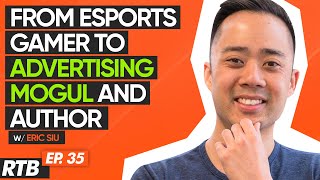
Eric Siu went from competitive gaming and poker to building Single Grain, an agency with clients like Amazon and Airbnb. He bought the agency for $2 upfront with seller financing, and later built Clickflow partly from agency cashflows. His book Leveling Up reframes life as a game with habits as upgrades.
Chapters
Hey, you're listening to the Road to a Billion podcast. I'm your host, Stefan Georgi, and I'm glad to have you with me here today. The Road to a Billion is a call and radio show style podcast where you can ask me questions about freelancing, copywriting, entrepreneurship, mindset scaling, funnels, money, really, anything else. And you can also ask my guests those questions, including my incredible guests I have today, who I'll introduce in just a moment. The reason for the name the Road to a Billion is twofold. One is that I've hit about a billion dollars in sales between my own products and stuff I've done for clients with copy and funnels and things like. And I want to make an impact in the lives of a billion people over the next decade. We'll start taking your calls, aka answering your questions about 30 minutes from now. And the way that works is if you're on the Zoom call, you just put your questions into the Q and A section and then my good friend Ed Ray goes through, reviews those questions and feeds them to myself and my guests and we bring you on live to be able to ask them. Ed, do you want to go ahead and say hello and introduce yourself to everybody?
Hi, everybody, my name is Ed Ray. And what do I do, Stefan? I don't even know. Like, I feel like I have to change every single time. I'm a Facebook copywriter and I really, really enjoy playing mind games with Zuck's algorithm. So you don't get. You don't get Zuck slapped.
Yeah, you don't get cucked by Zuck. That was still one of your best terms. I really appreciated that.
You like that one, eh?
Yeah, I always like that one. And yeah, compliance. But I know you do much more than just compliance, right? You don't want to be in a box here. So awesome, Ed, we're glad to have you. And my guest today is amazing. My guest is Eric Hsu. If you don't know Eric, he's had a really unique entrepreneurial journey. Going from an academic and social failure at a young age and devoting all of his time to video games to becoming a wildly successful entrepreneur and podcaster by applying the mindset and skills he learned as a competitive esports gamer to realize situations. Among his insane accomplishments, Eric is the CEO of the content intelligence software Clickflow. He owns an ad agency, Single Grain, which is like an ad agency doesn't even really do it justice. They worked with everyone from Amazon, Airbnb, Salesforce, Uber. Just a crazy who's who. List and help those different businesses to grow. He has two awesome podcasts, Marketing School with Neil Patel and Leveling up, which combined have over 30 million downloads to date. He is the author of a new book called Leveling how to Master the Game of Life, which we're going to be talking about as well. Eric, thanks for joining us today.
Thanks for having me, man. Super excited to be here.
Yeah, absolutely. So let's go right to Leveling Up. I know you've got that in your background along with the Zelda kind of killer Zelda background. So what's Leveling up all about? And why did you write it? And I'd love to hear more about that.
Yeah, I got the physical copy over here too, so I. It's funny, someone asked me, Anthony Pompliano, who's a popular investor, really popular in the crypto space, he asked me on his podcast, why are you doing a book? Nobody reads books anymore. And at least for me, and I'm pretty sure for you guys too, I love reading books. Physical books force me to focus. And so people say that you shouldn't write a book unless you have a message. And I think it's really important that there's over. There's only 3 billion people in the world that have played games and there's a stigma still tied to it, but we now know that it's inevitable. You look at how esports is growing, I think the United States is lagging a little bit, but everywhere else in the world, it's going to become a top three thing, even in the United States. For me, my whole thing is, look, everything I learned from gaming life is just a game. When you wake up and you play it like a game. When I wake up in the morning today, all the stuff you hear about sleep optimization, meditation training in the morning, all the fasting stuff, those to me are all power ups. That's just me getting stronger in the morning. And then when my day starts so fired up to go, then I just, you know, I start my day. But then when you're doing business, when you're doing marketing, it's just all little puzzles that you're messing around with, little challenges. Let's say, let's say Ed's looking to hire someone, right? Sometimes you might lose that person. Then you go find someone, and then maybe the timing is better, right? And then you. You figure out, okay, now there's a game within. How do you incentivize that person, right? So there's games within games. And the whole thing is fun and the Whole idea here is that it's not a zero something. There's not like a fourth quarter where the Super Bowl's on the line. You can keep playing this thing until it's over. And if you think with that long term mindset, you're just going to want to play long term games with long term people and it's just fun the whole time. Right. So I think it's just a reframe for thinking about life and business in general.
Yeah, that's an awesome reframe actually. I think you're totally right. But I think it's a unique perspective to bring to it. And it's actually. It's two funny things or two thoughts that come to my mind. One is, Ed, you and I were talking about how you used to play this that kind of tried to turn your life into like an rpg. What was that called, Ed, that you used to do?
Oh, Habetica.
Yeah, so I never even heard of that. But like you were essentially like doing this on a. More of like a. I guess it was like an actual video game too. Explain what Hibokay is real quick.
I'd love to hear.
Unfortunately not. So basically it was like you would set goals and habits and stuff. So the whole gist of the game is to gamify your habit setting skills. Like for example, it's like, okay, every day I want to wake up at 7:30. Well, it's like, did you do this? Yes or no? And then every time you do that, you level up your character and you can go on quests and missions with your friends. But unfortunately with this one you couldn't actually play your character. It was more like, oh, you can do this quest now. So it's kind of like it was not bad, but same principle of turning your habits, your skills, your life into something that's fun.
By the way, Ed, you mentioned something really important. You mentioned player character. And so there's player characters and non player characters. So those unfamiliar with gaming just understand that player characters are actually controlled by you or human beings. These are the ones that are actively doing things in the world and they can get stronger and stronger. The non player characters, these are typically the computers. So you might have a character that is helping you, giving you information or telling you things to do, but they're largely static, they don't move around and they stay static throughout life. Most of what you see in real life, most people are. Most people, those are non player characters. For whatever reason, they're stuck. But the player characters, these are the ones that continually improve 1% better every single day. They level up every single day.
Yeah, I think that's a great point. Eric, I'm curious, do you, within the book, do you sort of talk about a system for tracking that just like in a video game, you kind of have your experience bar or you are able to write, you can track how your skills are developing. Do you kind of share a system within the book for doing the same thing in real life?
Yeah, I mean, for me. So the way I track in real life right now is just enterprise value of the companies. It's not like, how much. Sure, yes, you should have profits, you should have, you know, you should figure the business out. But for me, it's just continually building enterprise value. And then my ultimate goal at the end of it, I actually just copied it from the guy, Chuck Feeney. He wrote this book called A Billionaire who wasn't. Or someone wrote it about him. This guy's giving away $8 billion. He's actually pretty much broke now. But like, I'm like, dude, that sounds like a fun game. I just want to do that, right? So I don't know if I'll ever hit the 8 billion. Who knows, right? But this is about the journey to a billion. But. But even if I can do 10% of that, if I can give away $800 billion or, sorry, $800 million by the time I die, that'll be fun, right? So that's how I see it. But in terms of measuring it, I mean, I fill out my journal every day and I have this one thing that reinforce, like, hey, this year I'm going to do this, right? And then the next year hits, you know, the goal gets a little bigger, right? But it's all tied to kind of enterprise value. And then, you know, I got my goals. You know, when I brush my teeth, I got to post it, talking about my annual goals. And I have a post it right here that's the same exact post it. And so I'm just constantly looking to reinforce things because it's so easy to get distracted and also for me to forget things.
Right? Totally. And by the way, for everyone who's live now or who's gonna watch this, whether on YouTube or listen on itunes later, the domain where you can get Eric's book is levelingup.com so very easy, simple to remember domain levelingup.com. eric, who's the book for? Right, like, obviously entrepreneurs. Entrepreneurs are gonna enjoy it. Like our, you know, my audience is about half freelancers, half business owners. I Mean, everyone's pretty much interested in marketing, entrepreneurship. But, you know, who is. Who are the. Who was the core person when you were writing this book? Who were you really thinking about?
I think it's really anybody that has played a game, even Duck Hunt or something like that, even Tetris has played a game in their life, and they're looking to make a bigger impact on the world. Everything that I've learned from gaming, it's just the same thing as sports. You know, you learn collaboration, resilience, communication, teamwork, that type of stuff. Right. That all comes together from gaming. You also learn that in sports as well. So to me, they're very similar. You can overtrain in both. Obviously, you don't want to become too addicted to sports. You might tear your ACL Right now with gaming, you don't want to get too addicted, because when I did, it was really unhealthy habits. The point is, it's really targeting the 3 billion people in the world that have played games, but also the. The parents. Right? Because my parents really never bothered to ask questions like, why are you so interested in this? How is this helping you? Instead, they made kind of blanket decisions on, hey, I'm going to take away your keyboard on your mouse unless you listen to me. Right? So it's very authoritative. There was no, like, hey, let's come to a deal. So, you know, there's these battles going on with parents and their children right now. And this is the book that I wish I had where, you know, kind of both sides could take a look at it. And the parents, by the way, they light up when I talk about this book because I'm on parenting podcast right now, too. I didn't understand this angle until I really started to think about it. I'm like, wow, this is working really well. And then finally, you have the people that are just entrepreneurs looking to reframe, because this entire book is basically on reframing. And what I would say is there's a lot of books out there about habits, about mental models. This book talks about power ups, which to me could be habits, could be mental models. But the intersection really is my gaming experience. Nobody's kind of, you know, taken habits and gaming and put it together. So that's where I think the unique perspective is. But the short answer is it's really for the gamers and the parents, and then, you know, sure, the founders and entrepreneurs, if they're interested.
Totally. That makes sense. Yeah. Ed Rave Edwards, like, dope concept. Eli just said, I'm buying this Book right now. I just said. Just bought it. Yeah. I agree. This is so cool.
Appreciate it, man.
That's sick. Yeah. Can we do just pre order it? I agree. You know, I mean, I was in high school, middle school and high school. I was like a pretty addicted gamer myself. I really.
I played. What'd you play?
I played EverQuest. I don't know if you remember, dude.
Okay. I played all like. What server were you on?
I was on. Was it Brawlis? Was that what it's called? I forget.
Okay. Yeah. I was on Soli Sec Road. Okay. So I. I won a best of the best championship in EverQuest, so I had that title.
Wow.
And I was 12 years old. Yeah. But anyway, keep going.
No, no, dude, that's awesome. Yeah. I can't remember, but I can talk. You want to nerd out on, like, even my friends who I have played with, we still talk about this day. We'll joke about, like getting teleport to like Karanispires or like just. I can get really nerdy on the.
You're a. You're a Druid or a wizard?
My two of my friends were wizards. I was actually a bard, which is funny because a bard. And yes. We're nerding the fuck out everybody.
Yeah.
Like a jack of all trades, Right. Type of character. And that's really who I am in my life as well. So it's kind of funny how that matches and reflects.
Well, let's talk about this. Right? So that's funny because I thought about this before. I used to always pick the jack of all trades characters. So I picked a Druid. And so this is important. So my chapter on thievery is directly tied to me winning that championship because at 12 years old, we were in preliminaries and I got destroyed. I had no strategy and I got lucky with the timing, the pairings where I got to watch our rival guild. So there's a German guild and there's us, right, the two Uber guilds. And we were number one. They're number two. She was crushing everyone. And I just copied because I had this person was strafing around when they're fighting. And that basically means, you know, first person shooter skills, right? And I had that from my Quake days. And so I just copied her. I made it my own. And then after I won the championship, I didn't lose after. I just swept everyone. And I was level 55. Everyone's the max level, level 60. And so I won. And I was like, holy crap. All I have to do is Copy people, right? And what I mean by that is, if you look at this mouse over here from Apple, Xerox. So Apple went to Xerox, they stole the mouse, right? They stole the gui, the graphical user interface, right? But they made it their own, right? Steve Jobs himself has said everything in life is a remix. When you think about SpaceX, the rockets coming back, the way the rocket is designed hasn't changed much, right, from the past. But the big difference is it can come back to Earth, right? And the final thing is Picasso said that great artists steal. So I think we hold this whole, like, we have to be original thing really sacred. But at the end of the day, when you think about copywriting, we're swiping, we have these swipe files, right? We're just iterating. And the 10 to 20% that you iterate, when you make it 10 to 20% yours, it basically is original, right? So that's the whole concept of thievery. And I'm trying to get people to reframe that. It's okay to, you know, when you're learning from people, you actually are quote unquote, stealing, dude.
100%. I love that. There's a book called Steal like an Artist actually even. And my license plate is so swipe on it because, like, just like, I don't know, I had. I was buying the car that we can register it. But I love that application. I mean, and it's cool looking at your mind and how you took that application from winning an EverQuest tournament when you were 12 and apply it to the business world because I think that's absolutely right. Everyone gets so caught up on trying to reinvent the wheel all the time and it's like, just take the wheel that's working and then, you know, modify the wheel, right? You can make modifications and that's awesome. But like, we don't need, we don't need a new steering wheel. We're good. The steering wheel works, right? Yeah, that's. That's amazing. But yeah, back, I mean, to the book. I mean, like, it's so, yeah, I played a bunch of everquests. Like, I, you know, you could do like, you know, backslash, like play date or playtime or whatever, and you'd look at it like, you know, hundreds of days or something like that and. But, you know, I loved it. My parents didn't really understand and yet I actually look back and have these really, like, fond memories, right? There were some of the happiest times of my life. I definitely played a bit Too much and all that. But I think to your point, today, like, gaming is just growing massively, right? Like esports, you look at stuff like Roblox, you look at social gaming, you look at Twitch and the amount of, like, time, right? Like that is like, the reality. And I'm a parent of a young girl. I know Neil, your partner in some ventures, has a young child as well. And so I think for parents, like, even for young toddlers, it's on our minds. Because my daughter loves the tablet and she's playing like, Khan Academy games and other games and, you know, it's only going to get. So it's like, how do you navigate that? Because I think the idea of just completely, like, trying to keep them away from games, like, doesn't make any sense. You solve problems in games, right? You develop critical thinking skills. Plus, we're becoming a society, like, whether you like it or not, unless you want to go live in the woods in Montana, that's more and more connected to, like, you know, consoles and interfaces. And so how do you. How do you navigate that? So what's some of the best advice that you have for parents, maybe in the book about how do they have those conversations or how do they understand, you know, when their kids are going crazy on Fortnite or whatever it is? How do they. How do they kind of have those conversations with their kids?
Yeah, I can't speak to kind of direct advice on this because I don't have children yet. What I would say is I just, I can speak to what I wished at the time. I think deep down what I really wish for my parents to do was to really acknowledge what I was doing and really, like I mentioned earlier, have that sense of curiosity. But we had really big fights because keep in mind, if I'm part of an Uber guild, I would come back from school 6pm the raids start. We end at about 10 or 11, if not more. Like, if we get wiped, we have to go back, right? And so. And you know how those wipes are. They're pain in the butt. And so, you know, when things get really tense, like, I would have a book in front of me, right? Like, acting like I was doing homework. But there was like this deception that I had to do with my parents. And, you know, it would get really tense. Like, I remember there'd be periods of time where I get him a big fight with my dad, wouldn't talk to him, and then a big fight with my mom, wouldn't talk to him. These would go for weeks at a Time. And I also got really. My face got really fat at the time too, because when I wouldn't talk to my mom, she'd stop cooking for me. So my dad would take me to Burger King every day after school and get me two Whoppers with a Diet Coke to keep the fat off. And that's what happened. But my point is just. I think for me, all I can say is I would definitely, whether it's gaming or something else, just being curious about what my child is doing and helping them, understanding. Hey, what are you doing to get better? Because to your point, a lot of critical thinking skills, you learn how to manage your emotions as well. Like poker was. Was big for me for that. You learn how to think in bets too. It's like all this stuff, like some of this stuff I think should be prerequisites, like learning how to play poker or chess in school should be required for sure.
That's why I feel like you and I have somewhat similar backgrounds. But I mean, because. So I don't make this episode about me, it's about you. But just after my senior year of high school, I kind of. When I finally sort of stopped playing EverQuest, I started playing poker because I was in San Diego. Indie casinos were 18 up. I learned in 2003 at a friend's house. 2004 is when poker got really big. So I would just go after. Sometimes during school I'd like ditch. I'd have free lunch, free period, and then astronomy, which I could ditch. Like, so I could have like a three and a half hour, four hour.
You did this in high school?
Oh, yeah. So I drive to Quan, which is one of the indie casinos. I'd go play poker there and come back for the final end of the day and then go home. But then I would come home and I would take a nap, wake up, have a cup of coffee. And then I would go to Barona, which is another indie casino, at about 5, 5:30 and play until about 9 or 9:30 and come home. And my parents at first for that were resistant. But then I was like, what? Stopped asking them for money was like buying my own stuff was like so happy. My grades went up and I had this great structure in my life and I thought I was gonna become a poker performer, professional poker player for a while and ended up not. But I guess this is interesting that. So you. What's your background of poker? I'd love to hear that.
Yeah. By the way, before we go to that, did your parents support what you're. Because it actually seems like they supported you when you were younger.
EverQuest, they were not stoked. I think they tolerated EverQuest. At best, they did not support it. But poker, they weren't, like, super supportive. Like, they weren't, like, you know, coming to watch me play and cheering me on, but they were, like, cool with it, you know, so.
So that. I mean, this is huge, right? Because I've never been on a podcast where there's two different perspectives, right? So the Asian perspective is like, you know, complete, like, you know, shutdown, Right? Like, let's call it a lockdown. Right? That's what it was on your end. It seems like they tolerated it. And then also with poker, they supported you, right? So, I mean, how did that help your psyche? So for me, it was more. So I have a big chip on my shoulder and I'm going to prove you wrong. Right. For blocking me on all this. How are you feeling?
Yeah, that's a great question. I felt lucky. I mean, I just. I remember just being so happy my whole senior year because it was like I was taking classes mostly that I actually wanted to take because I'd gone through all the requisites, you know, so I didn't have to take, like, a math class, which I never, ironically, because of playing poker and doing business. I mean, I was never a great math student. Especially, like, abstract stuff that I just didn't think was, like, at all applicable. Right. Because I got. Later on, I took, like, statistics and I did, like, advanced logic and actually really enjoyed that stuff. But, like, you know, like calculus or like, even, like, like algebra, too. Was, like, not into it, but. But yeah, So I was taking classes. I wanted my social. I just. I had a lot of confidence and I felt like this. This road of possibilities to me, right? I felt like there's so much possibility and openness, which I think has influenced me to this day. Right. So, yeah, I think that had a really positive influence.
Wow. Okay. So that's huge right there, right? So I think those you can just draw from our conversation right here. You can see on one side infinite possibilities. Right? Like, I kind of had to discover that later. For me, I felt like I was blocked and kind of oppressed. Right. For lack of a better word. But going to poker real quick. So I grew up in la. I actually went to college in UC San Diego, so I'm very familiar with Verona. So, you know, when I was 17, 18 years old, this is when the poker boom happened. And I got crushed by all my friends. They would make fun of me Like, Eric's easy money, has no idea what he's going. So coming from my gaming world, oh, okay. You look down on me. Fuck you. Right, sorry, Cussing. But, like, and then, then I have to dominate everyone, right? So it got to the point where it wasn't fun. They didn't like playing with me anymore because I'd have all the chips at the end, right? And these are all. These are cash games, so I would have everyone's money at the end. And so eventually we took that over to the. We had the Morongo casino over here, the Indian casino. And I actually ended up going to that college the first two years. So I went to UC Riverside, and I would go to Morongo every single day. Or I would play World of Warcraft. I would not go to class at all. Pretty unhealthy. And then, you know, at 6:00am I'd go get like a $6 burger from Carl's Jr. The guacamole one with chili cheese fries as well, and a large raspberry iced tea was really bad. So with poker, I was playing. I got to the point where I was playing about 10 to 14 hours a day, but I was. I was winning a lot. I mean, you know, relatively speaking, I was winning like 70 grand a year for college students, pretty good. So I played a lot of tournaments, I played a lot of cash games, and I played a lot at the casino, too. But I don't regret it. And going back to what I was saying earlier, what I learned from poker and why you see some of the top VCs and entrepreneurs playing still on TV as well, I learned, most important thing, you can play, you can bring your a game 3, 6 months, 12 months at a time, but variance will still catch you and you can still lose for 12 months in a row, so. And so it forces you to either learn how to control your emotions or you can completely lose your shit, right? And there were times in the very beginning where I just lose my shit. Sometimes I go home and I'd be like, I might scream, right? And then it learns. It teaches you how to think like an investor, right? How to think and bet. So, you know, those of you that understand poker, if you're playing Texas hold', Em, if you're playing with like five people in a hat and you have a straight flush draw, dude, this is your chance to maybe 5x your money, right? So a lot of these things in business, in the world, in real life, you actually learn from poker. It teaches you, you train to be better in Real life. That's what it is.
Yeah. No, that's. That's a great point.
Yeah.
You know, thinking back to when I was 18, too, I think the other thing that did is it gave me confidence. I don't know if you were considered. If you would have considered yourself a confident kid in, like, you know, middle school and high school, but I feel like I wasn't really. I think I kind of. I mean, I used to be. I was, like, fat when I was, like, younger. And then I. By, you know, middle of high school, I wasn't fat anymore, but I used to kind of carry that shit with you. Right. And. But also, being a jack of all trades, being a bard, I felt like I was kind of like, I was interested in history. I knew I was a decent writer, but, like, I didn't have that thing. And suddenly with poker, it's like, I did. And so, like, I had this identity that, like, oh, I'm good at this. I'm better than my friends, kind of same thing. We would do tournaments. My one friend would have these tournaments with, like, 40 of us, and, like, they would, like. They kind of stopped inviting me because I'd win the tournament every time, you know? But to me, it was, like, so cool that I had this identity finally. I think that's cool for a young person to have that confidence level.
Yeah. I mean, to your point, though, like, it takes time to build it. I think the fact that your parents tolerated and then they supported you, like, your confidence went up. My confidence went up when I actually started to get good. I had no confidence in the very beginning. Right.
I usually.
I'm the one that gets made fun of because I suck in the beginning. But then, like, as I start to get better, then it's like, oh, okay, here I come. So I think it's just, you know, it took time to develop that confidence. That's what it is.
No, totally. I agree with that. And I think that's super applicable to everything as well. So, like, if you look at, you know, with copywriting, which obviously, I'm very immersed in that world as a kind of like a top copywriter and have a mastermind around it and all that stuff. And I think that's one thing I talk about with those copyrights coming up, too. I mean, I think people. Because I literally had someone email me today who joined my list and was like, hey, my number one thing is, how do I get confidence? And really, it's by getting wins, right? As you start to get wins and you get a positive Feedback loop. Whether it's like at the poker table or when you're gaming or you're copywriting or you're running a business and you're selling to customers and customers start buying and your business is growing. I mean, there's just no substitute for that experience of actually winning. It just changes everything. Even if you, you can know in your head, you can know that all these things should happen, but it's all academic until you experience it. And I think that's amazing. So one question as a nice segue I just nailed is when it comes to the business world, what were some of your early wins that started to help you to get feel confident within the road of digital marketing, your agency and really, I guess how did you transition from a poker playing college student into what you're doing today? I'd love to hear that.
Yeah, so there's a lot to unpack there. So I, you know, the reason I like business and marketing in general, it's because it's like really anything, it's a puzzle, right? So like I mentioned earlier, like if you're recruiting someone or doing a deal, there's games within the games over there. And so it's just a complete puzzle to me. And then, you know, the whole idea is you don't deserve to go to the next level until you beat the current one. It's the same thing as games, right? People complain about it, you know, you know, people are like, oh, you know, things aren't fair, blah, blah, blah. And then it's like, but then you look at the people that have made it happen, right? So everyone has different circumstances, but you can largely see that the people that have made it happen have, you know, they have a lot of the same habits and they have a lot of the same interests, right? And so I think the moment for me was when I was about 25 years old, I was leading marketing at this online education startup and the CEO at the time. So I got promoted really quickly. I didn't know how to manage, I didn't know how to do anything but the confidence, right? Being promoted to that level, like, oh, I'm running a marketing team now, you know, managing 10. People have never done that before. A month into it, he says, we're gonna have to fire you. Like if, like if we don't hit numbers this month, we're gonna have to let you go. And it's like, dude, like I've only been here for a month and so I'm taking on the burden of the person before me that Couldn't do it, right? So my poker mindset was like, okay, let's take a look at the ad accounts. Because I shut everything down. I was like, I need to know what the hell is going on. I saw a semblance of traction within YouTube ads, and it was growing, but for whatever reason, it was shut down. So I was like, okay, you're gonna fire me either. I can cry about it. He's like, yeah, 80 people's families are riding on your shoulders. I still respect the guy a lot, but at the time, he's like, that type of pressure on me. I'm like. I was like, whoa. I'm actually not scared or anything. This is great. Okay, you know what? All in. I bet the entire company on YouTube ads. All in. Bet it worked, right? We went from acquiring, like, 300 users a month to about. To about 1,500, then 3,500, and then I think it jumped up to 7,500. So then that helped us get our series B, and then that company's doing well, right? So that moment was like, okay, huge confidence builder. Because, like, I could either crumble, and then I took my poker thing, the all in mentality, and I just bet the company, right? And so that was one of the biggest things. And then, like, a year after that, I came into a single Brady ad Agency. And about six months after that, I actually took over the company and bought it for $2. I'm happy to talk about that, but that was a whole nother ordeal.
So do you think looking back now with that YouTube bet, do you look at that as. Was it like a strategic bet where you solve, you know, did you look at as asymmetrical? Cause you're like, the downside is that if it fails, well, things are failing anyway. And the upside is that, you know, it saves my job, but also saves these other people's jobs. Or do you feel like maybe looking back was a kind of a reckless, like, all in, where you're just like, I hope this works. Like, you know, what was your mindset when you made that bet? I'm curious about that.
I think unconsciously, it was an asymmetrical bet, because when I look at the single grain takeover, that was an asymmetrical bet as well. And I don't think I knew at the time that that was what I was doing. Unconsciously, in the back of my mind, I did very much care about the 80 people, and that did matter to me a lot. And I didn't see any other way out. I was like, if I have to hit numbers this month, this seems to be the only way and the numbers seem to reflect it already. So, you know, again, that comes from like this all in mentality when you think you have an edge and then the poker mindset, understanding that, hey, like, this is a straight flush draw is better than a straight flush draw. It was probably like pocket aces.
So that's awesome, man. Yeah. By the way, again, everyone who's watching now or who's going to watch the replay or listen, you can get Eric's new book, Leveling up how to Master the Game of life@levelingup.com I know several people who are on the live Zoom have already bought it. I'm definitely get myself a copy as well. I'm loving this conversation. It's fascinating. Eric.
Yeah.
Before we move to answering people's questions, which we will get to in a few minutes, I would love to hear, because, I mean, Single Grain today has worked with just, you know, ridiculous who's who list of high level kind of clients. And yet, you know, you bought it for $2 after six months, you said so I would love to hear the story behind that. And how did that come about?
Yeah, so my podcast co host, Neil, was actually a partner in the company. And then there's some other big names that were partners as well. So I came in as a number two, and Neil had actually saw the work that I did with Treehouse, and he's like, hey, okay, come help save this company. So I was like, at the time I started gaining confidence, look at me, I'm a turnaround artist now. Right. The reality was all I did was bet on YouTube ads. And so we had a great product at Treehouse. We had a great, which is the company I was at. Great product, great team, great, great leader, you know, great vision. And the thing here was like, oh, can I save a failing company where the work we were doing was no longer working because Google had changed their algorithm, so it was an SEO agency. And I was like, can I turn something around that's falling around? Can I basically keep the plane going while I change the engine? Right? And so six months into it, you know, the four partners are like, hey, it's probably time to shut it down. Right? And then Neil pulls me aside and he's like, hey, like, you know, as a friend, there's no brand equity here. There's nothing you should do something else. And I was like, hey, let me give it a shot. So I paid $2, so $1 for 10% of Neil's shares another dollar for another 10% and the rest would pay through the profits of the company. So basically, you know, let's call it seller financing. And I put in a contingency that if the company failed, I would owe nothing. So talking about asymmetric bets, this is where my upside is almost unlimited and my downside is capped. And my downside is actually upside to me because I get to learn a lot while not losing anything. And so it's like heads I win, but like tails I also win. So you know, I did it. But I'll tell you, the first year we dropped, I made it go from bad to worse because I had no idea what I was doing. And you know, I read this book called Let My people Go Surfing from the Patagonia co founder. So I was like, yeah, let my people go surfing. Like, yeah, people don't want to be micromanaged. They don't want this. That I was like, okay, I took it so literal that I stopped showing up to the office so that like it just, it just got really bad. Like I made poor hiring. Like this is all my fault by the way. I made all these bad decisions. And then a year goes by. My outside accounting firm calls me. They're like, hey, I think it might be time to shut it down. And that was like the moment right there because I had actually accepted a job offer that was high paying. We're talking like seven figures. And the day after I said yes, I was like, hey, I don't think I can do it right. I can't accept the job offer. I got to keep going on this thing. So that's what happened. Slowly but surely we turned it around. And the entire thesis, by the way, with Single Grain was if I take it over, the cash flows from an agency type of business, which is not as scalable, right? It's a great cash flow business. Can I take those cash flows and use it as my funding mechanism every single year to go fund more exponential sources of revenue? So could be software, could be, you know, E commerce, could, could be buying other stuff, right? And then we can build enterprise value a lot faster. Cause then I don't need to go raise money from people all the time. Cause if I think I'm, you know, if I think I'm good as a marketer or an entrepreneur, I can just keep raising money from customers, right? There's nothing wrong with raising from VCs and all that. I just want to kind of do it on my terms. Cause I've seen the game being in the tech world.
So, and so is that where something like clickflow kind of did it come about? Partly because you're able to finance it through single grain. Is that, is that, was that an outgrowth of single grain?
Yeah. So single. Sorry, so clickflow is the software? Yeah, we did finance a good chunk of it through the single ring cash flows. And then the other stuff that we have going on, when I think about marketing school, the podcast that costs money to do, we have an events business that, that's tied to that, that, you know, we had to pause for a little bit and that you're a part of. And we have other stuff that we're building out as well. So for me as a poker player, thinking long term. So by the way, when you think like a poker player, you're actually thinking like an investor, right? The best ones think like the Warren Buffetts, the Charlie Munger's of the world. So to me, I'm like, okay, you know, Charlie Munger keeps compounding and. Sorry. And Warren. Warren Buffett is worth about $85 billion right now. He didn't make 84 billion of that until after his 65th birthday. He made the billion at about age 58 or so. So it takes a long time to compound. And his secret is he constantly reinvested the profits, right? So sees candies, kicks out a bunch of profits, he goes find other deals and he invests in there. He's not constantly trying to take the profits out though. That's the key thing. And I think that's such a long term mindset where it's like as long as your nut is covered, you just keep reinvesting it, compounding it, and you're not. There's nothing wrong with paying taxes to the government if you want to take the profits. But that's another thing too, right. If you take the taxes out, you live in a state like California, you're paying 50%. It slows the compounding down. Right. So anyway, I did apply that mindset as well, that lens into it at the time, hoping that the acquisition would work. And somehow it worked.
That's amazing. Yeah. And we won't talk too much about the kind of. So you know, Eric has a mass final. Neil Patel, like I joined it. Then Covid hit and their first one was gonna be up in the Bay Area and pretty much every mastermind thing, events got canceled. They've done awesome. There's like trainings, resources, virtual events. I really joined for the in person. So I haven't been hyperactive in it. But Honestly, the group of people that I've seen that Eric and Neil have curated is really cool. You've got like the third generation owners of like Omaha Steaks in there. You've got just like a really eclectic mix of everyone from E Comm. Digital marketers to like people who are running these large legacy brands. So if you're interested in that at all, I would say get ahold of Eric as well. You guys are going to be starting back up in 2021, right? Kind of, yeah.
We're looking at Q3, like September or something.
So yeah, yeah, be super, super cool. I'm excited for that. Awesome. Well, this has been amazing already. We'll move to answering questions. So question pop in the Q and A if you wanted to talk about mindset, successful agencies, SaaS, software, just really anything. And then before we do that, Ed, as my wonderful co host, I'd love to give you the opportunity if you would love to, you know, if you want to ask Eric a question or two before we kick it to our audience.
Dude. Yeah.
Shit.
There's a lot. Eric, I'm like, I'm fascinated by your story and your book. I just sent you a friend request on Facebook, dude, for sure. Because I still gam. I play some League and some Steam games once in a while.
But.
How do you kind of see the future of education and gamification? Like merging?
Yeah. Well, I mean, that's huge. I think the two most important problems are, you know, inequality and climate change. Right. And education goes into that. Like the whole education system is broken right now. I think the way education should go, my opinion, and this is what we're trying to do with marketing school is income share agreements. Right? People can't afford a, People can't afford to go into debt. It just, you know, by the way, this is why college is so expensive, because they, they knew that they can charge more because the government subsidizing a lot of this, right? To a degree. And so I think income share agreements, Lambda School is a perfect example of this where they'll take a percentage of your salary for the first two years and if you don't get a job in five years, that income share agreement goes away. So they'll educate you for free. By the way, when you get educated for free, you're going to be talking about to all the people around you, right? It's natural marketing. The offer is so good. We talk about copywriting right in this, in this podcast. And so it seems to make a lot of sense because in the world of Marketing, I don't think it's particularly hard to learn. I learned my SEO and my paid media foundations in 12 weeks and I think we can do the same thing. And to be able to train people up, sure, they can pay us a flat fee or they can do the income share agreement. It's very enticing because I think there's going to be a big reskilling that's going to happen and I think the vast majority of colleges are going to tank. If you're a brand name college like a Stanford, Harvard or Yale, you'll probably stick around. But I think there's going to be a big shift and I think tying in gamification to it. I would be most fascinated when people talk about the blockchain. But if you think about the blockchain and education, the ability to be able to maybe slowly incentivize people if they're doing certain tasks and they're completing things in asana or whatever for companies and they get these little microtransactions that would be really cool. And maybe you could earn badges while you do it and people can look at your ledger on the blockchain. I think that's going to be the future of education. I think there's a long way to go for it, but, but that's how I see this stuff really. You know, real life application actually working for, for both education and gamification.
Dude, that's, that's so cool. I agree with that. That's awesome.
Yeah, super interesting. Makes it does make perfect sense. Um, cool. Ed, do you have any other questions for Eric here?
Uh, not off the top of my head, but I just want to say like, dude, I love that you're super passionate about re reframing and reworking the education system because something I'm very passionate about too, so. So like, dude, keep on keeping on. I love that.
Appreciate it, man.
Cool. Well, I think so far we just have one question. Although again I'd love to hear from more of you who are live right now. I've got Max. Right.
Max always got good questions.
Cool. You want to set it up and bring it on?
I mean I can always just like, you know, chat for a bit. Stefan, any co host?
Oh, good man. Oh yeah, I'll bring a co host, but yeah, let's start with Max and then we'll see. I imagine what usually happens is like there's one question and then I say that and then coming in.
Thank you. Cool.
So we have a question here from Max, Yuria about uniting video games and self development.
What's up, Max?
What's up, guys?
How you doing? Fine, fine. Everything good here.
I love your story, by the way, Eric. And we all have similar backgrounds, as I see it, in gaming, either betting or gaming anything, you name it. So I was thinking, because as entrepreneurs and people that are really into self development, maybe we've had an idea of video games that is negative in the sense that we waste a lot of time into it and it usually serves as a avoidance mechanism for other pains going on in our lives. For example, you talked about how you were doing bad in school. For me it was the same. And then you go to video games. But I think, do you think there's a way in the future that video games and the game of life could be united to help young people?
Yep. So my take on it is absolutely. I use it as an escape mechanism because this is a world where I was acknowledged, right. And this is where I was seen as quote, unquote, elite. And who doesn't want that type of feeling, right. There's a prestige type of effect to it. When you're 12 years old and you're playing in a Uber guild, right. A top team like the Lakers as an example. Right. I'm from la. And so when you're playing as part of a top team and you're 12 years old and then everyone else is like, they're lawyers, they own planes, and then there's college students, you feel like you're part of something bigger than yourself. And I think everyone wants that feeling of community, which is similar to kind of what we're doing right now. We're kind of interacting with each other. But I think the easiest way to think about this is like I mentioned earlier in this conversation, when you're going into the world of gaming, you're going into a shadow world and just understand that you're going to train. And again, if you over train, you overdo it, you're going to have negative consequences they're going to compound. But if you train for a little bit and you bring it back to real life, eventually you can actually take those skills and make a bigger impact on the world and the world of real life and business. Especially when you're doing things. When you're accomplishing these quests, you're getting stronger and stronger, but you're also helping people along the way. And then you're also getting to upgrade your, your armor, your home, your weapons, all these things. It's very real and it's tangible. Right. I think it's it's tough in the world. There's a lot of work to be done. Right. It can get fairly toxic as well. But let's bring it back to sports too. I mentioned earlier, if you over train, you're going to tear your acl, right? If you over train, like, you know, your muscles might burst, you might get some crazy injury, right?
So.
So there's limits on kind of both. And by the way, a lot of these athletes that come out after they're done with the NFL or the NBA, a lot of them don't know what to do after. Cause all they did was train in that world, right? So I'm not like. And by the way, I think it's important to think about, like, it's like the top 1% of the 1% that become the pros, but a lot of them go broke because they don't know what to do with the money and they don't know what to do afterwards, right? So they also need to kind of think about, hey, how do I get better? How do I train? How do I take those skills and go make a bigger impact on the world?
So. So that's healthy because as you said.
Like, education is broken, right? And so, because maybe in the future, I'm also interested in creating a product or a service, like on a big scale that helps people, young people that feel lost. And I think many of us can relate to it because as you said, education is broken and people don't really have a path to what they want to do. They don't have the right skills to prosper either emotionally, economically, financially, or in any other field in an abundant way. Let's call it like that. So I think there could be a lot done with ideas like yours, Eric, with the book and connecting that world for young people to life and how you can prosper in life, applying those same things that you learned in your world sort of say to real life. I think that's a beautiful thing.
That's well said, Max, and thank you for that. And by the way, the point with the book too, and I'll keep this brief, is, look, I'm not trying to get a New York Times or Wall Street Journal out the gate. I want this to have a Lindy effect type of thing where how to win friends and influence people. If something lasts for 100 years, it's going to last for another hundred years. I probably have to do an update on this because the games I'm talking about are dated now. So I think we'll have to make it a Little more evergreen next time. But the point is, if this can help, if the book can be. If it does well with people, right? You got 3 billion people. If there's even a good chunk of those, they rally around the book that is now a new community. And then we can rally the movement forward. Right? So that's kind of the long term play with this. I'm thinking long term. I'm not just going to say I'm going to spend $500,000 to get on the New York Times or $50,000 to get on the Wall Street Journal bestsellers. Like, I want to do it naturally. And that's the goal.
So, yeah, that's awesome. Max, thanks for that question, man. I appreciate it.
Thank you, Stefan.
Cool. So if you have any questions for Eric, pop them in the Q and A. And so Ry, you can go first then.
Go ahead.
Thank you. I was gonna say. So you're talking about your long term kind of idea with this book. Like, what's your, what's your game plan for the next two, three, five years of where you see this moving and building up this amazing community of people? What do you want to do with it? How do you want to serve them? What do you see yourself doing with that?
Yeah, you know what's interesting? I think it's really good to learn from both the tech world and the Internet marketing world, because if you straddle the line, like, by the way, when I first started learning SEO, I would try the black hat stuff. And then I was like, oh, what if I combine the black hat stuff with the white hat stuff to do it in a white hat way, and then it just looks really good. Right. And so, you know, with the book, talking about thinking long term, I went with the. And I might have to ask you to repeat your question, but I decided to go with a hybrid publishing model. So right in the middle. So you have traditional publishing and you have self publishing, Right? Self publishing, I'm like, okay, I'm too lazy to do all the work, right? And then traditional publishing, I don't get the rights, so I can't do all the interesting marketing stuff I want to do. Plus, I don't, like, I don't really care so much about the money part, but they take most of the money and then they give me advance. I don't care about the advance. And they control the design aspect too. Right. But with hybrid, they do everything from soup to nuts. So this physical copy that I have over here, I got to choose this character over here. I picked a design like all these little elements, these nuances I had control over and now I can do whatever I want from a book funnel perspective. Plus they had a sales team out there pushing and now they're pushing for international as well. So the reason I wanted to do that is because this ties into the long term play. What if I want to have. This book's about habits. Right now we're building a journal that's tied to it, right? So there's an upsell component. But beyond that, if they want to continue to level up with me, at least, sure, I'll train you. The natural progression for me, my superpower is marketing. So you can either come with me or you can go take your habits and go do something else. And then it leads all the way up to this income share agreement with marketing school and the whole long term play here. The reason why I got the domainlevelingup.com and there's a game within getting that domain too, is my mission is to level up the world. And I will never accomplish that mission in my life. But I can wake up every single day saying, oh, that's all I need to do. I'm just going to level up the world. Right? Whether it's teaching, like, you know, doing, even doing this is partly leveling up the world. Right? But that's what it is.
Dude, that is awesome. I want to make a quick note for people watching and listening is the fact that you have such a clear why and you have a clear mission and purpose, but it's something that you can't necessarily fulfill. It's like an outcome, it's a lifelong thing. I think that's like one thing that a lot of people are missing. It's like, why am I doing what I'm doing? Oh, I want to provide for my family. Okay, cool. So then they do that and then they go, okay, well I want to buy a fancy car, buy a fancy house. Okay, now what? And then they feel empty. It's like, well, what's next? Well, what's next is you find something that is of something that you're moving towards that's not necessarily an end game. You can't, you know, necessarily achieve it in this lifetime. But every day you can go to sleep knowing you got just a little bit closer. And for you, that's leveling up the world. And I love that so much.
And by the way, so thank you for that. I got so Howard Marks, who is the founder of Activision, he's the forward in the book. And you know, he said his mission is to help entrepreneurs reach their dreams, right? Accomplish their dreams. I'm like, when I first heard that, I was like, that's so broad. And then immediately after, he told the audience, so this is when we had our first event, Stefan. And he's like, but that's what a mission is. It's supposed to be unattainable and, you know, just keeps you going. So anyway, just wanted to give you some context, dude.
First of all, that is so cool. I checked out your website and you had a testimony from the founder of Activation. I'm like, damn, damn, dude, that's intense. And so, yeah, going back to my original question, because I love hearing what your goal is, your mission. So how do you see yourself really attaining that or at least kind of creating that level of change of helping other people level up over the next three to five years? Especially with this book.
Yeah, I mean, I think for the next three to five years. So I actually need to rewrite my Vivid Vision. So there's this book called Vivid Vision, which is great, and it's a three year plan. And so I wrote mine in 2018 and it's very specific. Here's how I see the company looking, visualizing everything, right? I'm calling my shot and like, here's the revenue we're going to be at, here's the enterprise value, all this stuff, here's what our team's going to look like, right? So that's been defined and we've largely hit, like, we still have a couple more months to go and we just started 2021, so I guess we have more than a couple months, but that's what it is. And what I would say, long term again, is going with the Chuck Feeney goal, right? That's my long term play. That's the big hairy, audacious goal. Can I give away 8 billion? Who knows if I'm going to hit it or not, right? And then every year I just track my enterprise value. Because again, if my enterprise value is 8 billion, okay, there you go. I'll just sell it and just give it all away. And so that's what it is. Like, look, you look at the most successful people in the world, look at what Bill Gates is doing, right? He has a book coming out on climate change, right? And you have some of the top billionaires in the world like, trying to solve that. So they're trying to solve the world's biggest problems and then they're giving away a lot of money in the process. So I think that's great. It's just a fun game to play, to just continue to play.
That makes perfect sense. Yeah, I think one thing too. I mean, there's definitely the whole like, Maslow, like, hierarchy of needs thing, right? So back to your point, Ed, with like, you know, because I get that when you, when you have, you know, income insecurity or food insecurity or whatever it is, then it's understandable that your focus is, I want enough money for my family to be, you know, to have stability and to be taken care of. And then as you level up, right, and you get that nicer place and eventually it's like you've got like fancy cars and the mansion, all that shit. But yeah, it does. You're gonna get to that.
Why?
Anyway, I think a cool piece of advice maybe is like, for anyone who's at least got stability in their lives, like, you know, really thinking about the why now and that mission now. Because even if, like, say, you know, you're in like a two bedroom apartment and you're very comfortable and you pay like $1,000 a month for it, and you're like, this is fucking great. Right? That's awesome. And so even if your goal is like, I want to be in like a 6,000 square foot, like, fuck you, mansion, like, cool, you'll probably get there. But if you start, I wish I had started earlier, trying to make an impact, right? I think it's never too early to start. And to look at like, you keep leveling up your why and your mission, everything like that, that's just a thought I had.
Listening to you talk, Eric, by the way, that's huge, right? Because here's another reframe. I think the way, like, at least when I started learning Internet marketing, it was the people I was learning from. I mean, it seemed to be all about me, me, me, me, me, right? It's like, look at my car, look at my house, look at all these things. But then you realize the biggest hack is just having a mission that's much bigger than yourself. And then like, all those things naturally come because you shoot for the stars and you land on the moon. And so but when you make it, me, me, me, like, all the shit falls apart, right? Like, all the stuff people talk about, culture, you don't think about culture, you don't think about the livelihood of your team. You don't. You just think about you the whole time. What product can I launch next? What affiliate thing can I push next, right? It becomes this really toxic cycle. And that to me is not leveling up, it starts to bring you into kind of a. Let's just call it the dark side.
Totally. Yeah. Cool. If you have a question from Lisa, we'll get to that in a second. One question I'd have for you, Eric, before we get to Lisa's question. Because you are so immersed in the world of digital marketing and everything. I know we talked about education and blockchain and things like that. How do you see the whole world of digital marketing changing over the next 10 years though? Because, I mean, I sort of feel like we're at the precipice of some massive shifts. Right. You talked about a lot of colleges eventually going away, and I can see that happening. What are other changes you see kind of coming up if you were to look into your crystal ball?
That's a great question. I think community is probably the number one thing. So you actually see a lot of VCs like Andreessen Horowitz, they're investing in a lot of community based companies. You know, you hear a lot of these people investing in the passion economy. It starts because the shift for attention is going from kind of the publishers and it's going over kind of into, you know, big influencers. Right. Let's use Mr. Beast as an example from YouTube. He's got like, you know, 60 million subscribers or getting close now. So I think being able to build a community is a moat and it's unfair. So, for example, the mastermind that you have, it's not just you speaking to the crowd, right. It's actually there's networks within that and people are connecting and they're helping each other and so they stay for the community. Community is a form of retention to me. And I think that's what I'm trying to do with leveling up. We're trying to build a community, we're trying to build a movement around it. And by the way, we've seen the success with clickfunnels. A big piece of it. It's not because it's the most sticky product, the most amazing product. It's because he's built an amazing community around it. Whether you like clickfunnels or not, that's a fact. And so a lot of products and services, if you lead with the audience first, you lead with the community first, then you can figure out whatever else that you want to help them with afterwards or serve them with. Right. You're not building in a vacuum anymore, you're just helping people. And that's what life is all about.
Yeah, that's an awesome answer. And it makes perfect sense. Yeah, I think about. I went through a kick a few months back where I'm reading about all these predictions for trends for the next decade and you start reading about like AI, and there's a book called the Future is Faster Than youn Think or whatever. And it's all about how. Right. This is a very futuristic type stuff.
Um, yeah.
Well, what, what are the, the things that aren't gonna get replaced by AI. And I think it's like, I hadn't really thought about community in that context, but community is one of those things. And then it's like experiences too. Right. So even for me, I think actually like, like offline experiences and companies that offer really kind of really curated, unique offline experiences that are built around communities are going to do extremely well in the decades to come. Right. Because that can't be replaced. Eventually copywriters will get replaced by AI. That's just the truth. I don't think it's gonna happen overnight. I think you've got a couple, you know, a couple years, like a decade, but communities of people doing worthwhile goals and probably harnessing the power of AI. Right. Like, I think that is what it looks like. So community fits in really well.
You know, like people, you can either fight what's going to come or you can kind of embrace it. So AI is inevitable. And I think one thing that can't be taken away ever. Sure, AI can iterate on data and they can have their own form of creativity, but the top copywriters in the world or the top marketers in the world, when you think about actually community, that's a piece of creativity. It's human beings coming up with different experiences. I think AI can certainly mimic, but they need data sets to work off of. We're not close to general AI yet, where they can basically act like human beings and think for themselves. We're not there yet. I don't know if we'll ever get there. My bet is we probably will. I don't know, but I think, you know, I remember I was at a TED conference two, three years ago, and one of the world's leading experts on AI, Kai Fu Lee, he was just talking about how, look, you can't replace kind of the love and the creativity that human beings have. Everything else, though is subject to kind of being replaced.
Right.
So we're going to see a big shift in the future for sure.
Okay. Oh, Stefan, are you just muted or.
I'm muted, but Eric's.
I remember I was at a TED conference Two, three years ago. And yeah, I mean, that's my answer. Stefan. I don't know if that helps.
That was great. So I had a little bit of an audio glitch. I thought I could hear Eric fine.
Yeah, everybody stopped for a sec. So maybe it was my side. My bad then.
I don't know why I heard. I think so. No, Eric, I mean, that makes perfect sense. So that's not a mess. By the way, Jamila mentioned in the Facebook Live jam Poet Jamila. Love you, Jamila. She just pre ordered the book as well, which is awesome. She mentioned. I want to read her other comment. Actually, I closed it, but she basically just talked about how she sees this book helping so many people and I totally agree with it. Yeah, that's the hope. Yeah, I think, I think. I think it'll do it, man. I think you know how to reach people. Um, and. And it's an amazing mission and an amazing book. Um, Eric. Well, let's go to Lisa's question. I'd love to hear at least from Lisa.
Uh, so Lisa says that she cannot come on alive because she's on the go, but she wants to hear the answer. So I'll read out for you from Lisa. Eric, have you ever felt like you leveled up in life but then you made a decision that made you level down again? How do you deal with situations like that?
Great question.
Yeah, great question. I mean, I think it happens all the time. There's like. If you're trying to. As an example right now I'm trying to buy different companies. Right. So it could be complimentary agency businesses that will help us with managed services for our software. Right. There's a component where one plus one equals three. Or maybe I can go buy capabilities where they're really good at recruiting people in a European country where the costs are lower. Right. So there's other game within it, but. But there's a lot of scenarios where I'll lose the deal. And that certainly feels like I took a step back or let's say again, I'm trying to recruit someone amazing and then they get another job offer quicker. Right. And this happened recently too. And then we had our team change the hiring process where we just adjusted a couple of things in the game in the process and we sped things up a lot faster. Right. And so that's part of the game. But how I learned to reframe this when there's. When I'm taking a step back or let's say, you know, recently someone I kind of got rejected by this person twice. So this person invited me to speak at a conference a couple years ago, and then he rescinded the invite, and I saw the thing still happened, so I remembered that. And then, you know, I didn't, like, confront him about it or anything. And then recently, for the book, he's like, oh, yeah, get on my podcast. The day of the podcast, he's like, hey, we're not going to do the podcast. Why don't you come speak to my Facebook group? Right? So I got that pulled back from me twice. What I've learned to do with this over the years. And probably this is like a sick, you know, upbringing thing from my Asian parents, but I learned to reframe. I posted this to LinkedIn today as every single setback being fuel. If it's psychological pain, give me more. Poker taught me, oh, I need more pain. It's like, if you're gonna give me it, I'm gonna learn how to reframe it into motivation, and I'm gonna get stronger and stronger. I'm not gonna hold any grudge towards you or anything like that. You're just giving me fuel. Because most of the time when setbacks happen, people get all down, they start to feel bad about it. So for me, I have this weird reframe where I'm just like, yeah, give me more.
That's great, you know, and I think another thing that I think is, as you're saying, answering that is, in poker, related to one of the things I always enjoyed so much of poker is like, you're gathering information, and it's like the game isn't over. You haven't really lost until you get up from the table, right? So, you know, if you run out, run out of money, that's one thing to manage your money, right? Thinking like an investor. But even if you're playing poker and you lose a hand to somebody, but you gather very valuable information, then, like, I kind of love that when you're like, okay, I lost, I folded, or I saw what they had. Even better, right? I called it on the river and I lost. But I know this person's gonna be here for a while. And now I, you know, I have this insight. So it's like, you didn't really lose. I mean, it's the whole like, you know, losing in the battle versus the war type thing. But I think it's so true. It's all these sort of setbacks are just. It just goes back to failure, right? Every failure gets you closer to a win. And so if you look at it that way they're not necessarily leveling down. I mean, if you catch yourself, I think, going through a bunch of negative patterns and things in your life and you have to course correct, you have to be self aware and be like, oh, hey, right, that's one thing. But as far as, like, setbacks go in general, it's like, those are, those aren't failures unless you let them be. Unless you give up. If you give up, then it's a failure. But if you don't give up, then it's not a failure. It's just like data, right? It's a data point. Like you would talk about. You're gathering data and then you can be better moving forward.
I mean, so that's all well said. I think there's certainly. I mean, I was just thinking about downward spirals, right? And so in poker, I remember when I was about 19 years old, I had taken a. A satellite or not a satellite. I basically turned $0 into $50, right? So I had to beat like 500 people or whatever. So I was broke at the time. And that $50, I made it into $15,000. And I'm sure, Stefan, you've seen this happen a couple of times. And then I promptly took that money. I thought I was good enough to play the high stakes. So I lost that 15k in the next 3 days or whatever. I went through a downward spiral where I'm like, oh my God, what am I going to do? And so I started taking out credit cards and I took out like 25k in credit card. Just credit card debt. And I lost that money too, and I couldn't pay it back, so my credit score dropped to 480, right? So it just got worse and worse and worse where debt collectors called me, right? So that's a scenario where I think I kept compounding on the mistake without trying to, like, stop and actually think about, hey, what's going on right now? And what are the second and third order consequences if I do this? I didn't think about that. So I think that's really helpful to have that mental model to understand that, hey, if you're going to do something, what are the ripple effects?
Totally. No, that's. That's an excellent point. And I definitely can relate to a lot of that from the world of poker. And you go sit down at the table you shouldn't be at, but you're like, I think I'm good enough. And you're like, oh, shit, I'm not. Yeah, that's awesome, Ed. You know if we put a question. If not, we'll wrap up here in just a minute. I mean, I've enjoyed it so much. Remember, everyone is leveling up. Levelingup.com, leveling up how to master Game of Life with Eric. This has been awesome. I know. Conrad said looking forward to this book as well. And yeah, I can't wait to order. As soon as we're done here, I'm gonna go order my copy. But, yeah, Max, I saw you had a question kind of about generally getting to like 100k a month and how to break that mark. And we kind of talked about it looks like in the context of copywriting, we can answer that. Let's answer that question and then we'll. We'll wrap up here. So. Sure. I'll say from a copyright perspective. I want to hear Eric's perspective, too. Of course, you're talking like, how do you make 100k a month as a copywriter? It's really just leveling up, right? I mean, that's the thing, is to get better and better and better and then raise your rates correspondingly. So if you look at. He mentioned the guy in our mastermind, Randall Pruitt, who I think made like, I don't know if he did 100k a month, maybe like, you know, 600,000, 700,000, just purely as a copywriter, which is very hard to do. Like, that's like high fees, right? And basically, you know, Randall joined our mastermind, got part of a community, and then he stopped. He actually broke his bad habits going back to that because I would look at his copy, and he was in our mastermind for the first, like, six months, but he kept doing the same stuff that he was doing before, which hadn't been working for him. And I finally had a pretty, like, kind of terse conversation act church, but just like, I kind of like, did it come to Jesus? And I was like, hey, like, you're in this Mastermind, you're paying this money, you want to get better, but you keep going back and doing the same stuff you did before that wasn't working. You have to change or you have to break the pattern or you're going to keep getting the same results. And he finally kind of got that and leveled up. But I think in general, like, it's mastering your craft, getting better. Like we talked about, like, like, before you go to the next level of the game, you have to really master that level, and, you know, that's really it. And then raising your rates correspondingly. It's really the way to make 100,000amonth as a copywriter is if, you know, the best side best is that somebody pays you 100,000, you do one project or they pay you 50,000 you do two projects. And then if you can work in royalties and other stuff like that, amazing. But you only get there by leveling up. Leveling up, leveling up. And like, you know, I used to charge $149 and then $97 sometimes. And you know, it takes time as well. That'd be my answer. Eric, I'd love to hear your thoughts as well.
Yeah. So there's a copywriter that I actually that works with us right now. And so. Excuse me. So we have training and then what he does is he basically takes a cut of the sale, right? So a yes, you have to level up and get pretty good. You have to definitely increase your pricing because pricing is one of the highest levers that you can pull. But you know, he switched over to purely performance, where he takes 20 to 30% of each sale. And I know with one of his clients, they're paying him like 35 to 40 grand a month and that's all commission, right. And he just has like, you know, maybe three, four other clients and he's over a hundred K and so he doesn't need to manage a lot. And he's just. All he's doing is he's kicking out emails to generate sales. And he's done a really good job. I mean, he's done a good job with our stuff. And you know, we love performance copywriters because it's. The incentives are aligned. We don't pay until he performs and then he gets a cut from it. Right. It just seems to make a lot more sense. This is why I hate most marketing agencies. And this is why I really didn't want to take over Single Grain because I hate agencies again. Right. I think the model is broken. I think if you have a stock portfolio where it's like 80%, maybe they're retainers and then you have maybe 10 to 20% are pay for performance, that's safe. But you can. Like this other copywriter, he's completely pay for performance, right? And I'll tell you one more thing. Some of the agencies over here that are doing paid media. One of my friend's company does $25 million a year and he has 10 employees, right? So think about that. The revenue per employee is so high, it's like a tech company almost. And there's another friend, his company does about $500 million a year. He has 333 employees. Right. And so, but when you look at that, you know, $2.5 million per employee versus like 150 to $200,000 for the standard agency. Massive difference. Right. You're looking for efficiencies here, so I'm getting a little kind of more advanced. But I just want you to think ahead, too.
Yeah, great even. Yeah. Just thinking about revenue per employee. Like, those metrics are just so important. Awesome. Well, Eric, thank you so much for joining us, everyone. Again, had Eric sue as my guest today. You can, Eric. I mean, besides levelingup.com where they can get your book, what's the best way for people to follow you, connect with you? Things like that.
Yeah. So levelingup.com is great. We also have a levelingup.com bulk page if you want to buy a bunch. And there's like a bunch of other stuff in there, but you can hit me up on Instagram or Twitter. Rickos.
Fantastic. Cool. Well, thank you so much for joining us, Ed. Ray, thank you for being my co host as always. Did great. I don't even want to talk. Sorry, Ed. I saw you, like, you put your mouth up to the mic, but I wasn't sure.
But yeah, no, no, just thank you. Thank you.
Always good to be here. And thanks for everyone who joined us today and who's going to be watching the replay. If you are watching this on YouTube later, make sure that you leave a comment. Let Eric and myself and Ed know what you got from this episode. Make sure you hit the like button if you're not subscribed. If you subscribe to my channel, same thing for itunes. Make sure you, you know, leave a review. We'd love that. And other than that, we'll see everybody. Not next week because I'll be at my Comicsar event, but the week after that. So thank you, everybody.
More from Stefan











Why Understanding Product-Market Awareness Is More Important Than Ever in 2025