[RTB:E38] Scaling With Payment Processors Like Stripe While Avoiding Shutdowns w/ Chase Harmer 💳
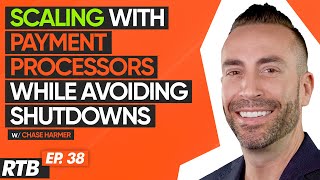
Chase Harmer, CEO of PayCertify, explains how his company issues cards for ad spend with unlimited 2% cash-back for agencies and affiliates. They discuss scaling payment infrastructure without getting shut down by processors like Stripe, plus fundraising and negotiation tactics.
Questions this video answers
$300 million
2014
19
Unlimited 2% back on ad spend (global)
About 45 employees and about 20 contractors (≈65 total)
Chapters
Hey, you're listening to the Road to a Billion podcast. I'm your host, Stefan Georgi, and I'm glad to have you with me here today. The Road to a Billion is a call and radio show style podcast where you can ask myself and my guest questions about copywriting, entrepreneurship, mindset scaling, businesses, relationships, money, and more. The reason for the name the Road to a Billion is twofold. One is because I've sold around a billion dollars worth of stuff between my own products and those for my clients, mostly through my copy, and because I'm trying to make an impact on the lives of a billion people over the next decade. So we'll start taking some of your calls in about half an hour or so from now. And the way that works is you just pop your Q and A into Zoom for those of you who are joining us on Zoom, and then we will review those questions and we'll bring you on and answer them live. Before we do that though, I want to introduce. Oh, there's Ed Ray, who I would normally. I didn't see him when I started reading. Now he's on. So Ed Ray will be the one to do a lot of that. Ed, do you want to go ahead and say hello and introduce yourself to everybody before I introduce my guest? Maybe not. He's muted. There he is. What's up, man?
Can you see me?
I see a black screen.
Okay, well, my camera's not working, so I'll have to reboot, but for sure.
Still shirtless.
I am not shirtless. I have a shirt on. I will introduce myself first. In the meantime. Hi, I'm Ed Ray. I'm the Facebook compliance guy and I help people scale fast and furiously on Facebook without getting shut down or banned.
And if they do, I got the goods to get them back online and.
Up and running again.
Awesome. Perfect. Yes. Ed Ray is the man at that. And it's such a needed thing. And speaking of things that are needed, my guest today is someone who really helps people and entrepreneurs with one of their biggest pain points. And that guest is Chase Harmer, who is the CEO of PayCertify. He is helping to build the payment processing solution of the future. And we'll talk about what that means. Why is it the solution of the future? During today's show, since getting into banking at the age of 19, he's built portfolios that process billions of dollars generally or globally, even created several patents. We were chatting right as we went on, and Chase let me know that they just got evaluation of PayCertify for I'm allowed to say this, right, Chase? Yeah, they just got a valuation of $300 million. So they're on their road to a billion dollar valuation with their company too. But they're currently valued at $300 million, which is no big deal. So it's an amazing deal. So, Chase, man, thanks for coming on and joining me today.
Absolutely, absolutely. I'm happy to be here. Look forward to it.
So let's dive in. I mean, how long have you been doing processing? I mean, I think you've started paycertify in 2014, is that right?
Well, yeah, so I started at 19 because I couldn't get a normal job, set a drop out of college. So the only jobs that I can get that were going to pay me enough money were commission only jobs. And I just happened to find an ad in the paper that was for credit card processing. We started a credit card processor. We're a card issuer today. So we were a virtual card issuer. We issue millions of cards and, you know, process billions of dollars in payments today. But it took a long time to get to where we're at and we started building paycertify in 2014. So technology wise, we started building technology in 2014 and, you know, digital payments and paying each other and getting paid and paying out is the future of commerce between consumers and business. So obviously a lot to talk about, but for marketers too, you know, talking about Facebook accounts getting banned, obviously there's a lot there too with virtual cards and what we can do to change addresses and keep people, you know, changing out people and changing out addresses to make those accounts keep going.
So, yeah, what, I mean, what is the technology you're building? Right, because there's a lot. There's a million merchant processing providers out there and I've got, you know, a few that I really like. I really like Maria Sperages, who, she'll be our guest later on in a couple, a month or two. And I've worked with Cambridge Commerce. You and I have known each other for several years, but I think you wouldn't look at yourself as just a merchant processor. Right. You're like a technology company too. So what is it you guys are doing that makes you so unique?
Well, we're a technology company first and foremost. I think processing is a commodity business. And what I realized real quickly when I was 19 and why we started building technology in 2014 was because it's a commodity. I mean, there's a million Marias out there that do processing and, you know, at the end of the Day pricing is all created equal. We all have the same exact costs, we all can price it at the same exact way. So it's just who you like, who you don't like. What really matters is the value that you add to the technology stack. So you think about acquiring. So which is what, you know, the Marines of the world do, that's been innovated for the last, that's been continually innovated for the last 100 years. But CARD issuing, actually issuing cards has been controlled by the banks for the last 100 years. So really there's, there's nobody in the space that's as good at it as we are in the marketing space. Because there's a lot of nuances when you're buying ads and actually how to keep them alive and how you can actually change out addresses and names in real time to actually talk to the Facebook rep when you have a bunch of ad buyers underneath you. I know that our go to market strategy is if you're selling anything online, you have to buy people to get inside of your funnel. Okay, you're paying for traffic, you're acquiring traffic. So if you're acquiring traffic, that means you're paying for it somewhere. And if you're paying for it, I want to be known as the card issuer for the Internet, right? So we go after ad spend first and we pull down the ad spend and then part of our platform we can issue, we can do payments, we can do fraud protection, we can do all those things that most people other can't do in addition to acquiring. But actually going there with a unique value add of we give you 2% back unlimited globally on all your ad spend and nobody else does that. And if you look at Stripe's model, Stripe actually charges you 1.5% to use cards. So it's complete polar opposite model and why MasterCard and all these big brands are getting behind us to really go compete against the big giant that they call Stripe.
So, so when like for people who are going to watch or watching now or listening or whatever, why, you know, why is it? So just really explain why you being a card issuer is such a big deal. Like why do I need, you know, why do I care as a entrepreneur or a business owner that you guys are a card issuer?
Well, if you think about, okay, just we'll take the example because we're also a mobile wallet, okay. So the power of issuing cards is in the wallet. Now let's just take this example here. If you're buying global ads, if you're using American Express, you actually have to reapply in every single country that you go to to issue cards and buy, buy actually ads and buy whatever it is that you're buying in those areas. We actually do one KYC. You can buy globally and you get 2% attribution on all your ad spend, whereas you don't even get cash back internationally anywhere else. So if you're international and you're buying ads in the U.S. okay, you're actually using your international card. What does that mean? Well, if you're using your international card to buy US traffic, you're paying cross border fees and you're paying foreign exchange fees on every single ad or person that you acquire, right? Any single time that that credit card is done through the ringer, you're actually paying money, you're not getting any money back. So we actually can take an international seller and actually pop up a tax ID for you here and you can actually earn 2% on the traffic that you're buying. Unlimited. There's no one else that does that. You know, if you even look at your American Express, right, If you look at your American Express card, you have caps on it. They don't give you unlimited cash back, you know, unless you're Stephen George maybe. But outside of that, you know, most people are getting unlimited cash back. They have caps of like 100 grand or 50 grand. So if you're spending lots of money, millions of dollars online, you are not making millions of dollars back and cash back. So if you're spending millions of dollars, like we're the best solution on the Internet to get cash back and you can get global attribution on all your ads in real time. Part of the problem for people that are buying ads too is if you are spending internationally, you don't actually get real time attribution on all your ad spend. So you don't really know what ad and how much money was spent on that ad in real time. It's kind of like all lumped up as Facebook. So you really don't know that it was poor this campaign or poor this campaign or for this campaign because you're seeing it on your bank account balance. A big Facebook Bob. So we actually give real attribution. So you can actually really understand which ad sets are winning in real time and where all your money is. So I think those are important things for people that are building brands. But check it this like so the mobile wallet, the power of this is that if I, if I'm a US if I'm a US guy and I have a US card, but I have a wallet with pay certified. I can go on a plane, I can hop out of that plane in Europe and I can start spending money in that local currency without doing anything different. No one can do that because you're basically converting currency or you're getting cross border fees or foreign exchange fees on every transaction, every single time that you cross the border. So whether you're in Canada, whether you're in Australia, whether you're in Europe, you're paying additional fees on your money. If you don't have local currency and nobody has local currency because you, you live here, you don't live there, Right? So there's so many advantages. The power of having issuing as part of your technology stack is incredibly powerful and it's incredibly profitable. And this is something that hasn't been done before in payments. I mean there's a lot, there's a lot to do.
Yeah, yeah, for sure. So, and why are you guys able to do this when others aren't? I guess would be a question. What was the innovation that you're able to, why are you able to bring this innovation to the market?
I think because we, because as a card acquirer, I was a guy that started out on feet on the street, right. So I was knocking on doors, I was signing people up. And I think the power of that is I recognize what merchants want, what merchants need, I think. And then also card issuing and card acquiring, like processing, payment processing and then card issuing, they're two separate businesses. They don't even exist in the same world before. Right. So bringing these all into one technology stack, it's never been done. And it's because it's two separate businesses. It's like the U.S. bank. And I'll use this as an example because they're one of our, one of our issuers. US bank owns a company called Elevon. Elevon is a card issuer or. Yeah, their processor, US bank is a card issuer. They have like no idea what the, what both sides of the business do. Like they're, you know, they really have no idea what they do. They can't work together and they own. US bank owns Elavon. So it's like, it's funny to me. I think at the bank level most people are just trying to save their job. They're not actually trying to innovate anything. So I think that's really what it comes down to in the end.
Got you. That makes sense. So I guess I'm gonna go to some broader questions too. And one of those would be like, where do you, I'm just going to ask you to put on your prognosticator predictor hat right now. Where we're at, people are worried about inflation. You've got markets that are impossible to make sense of for most people. You've got crypto kind of 2.0 or 3.0 or whatever. I mean, crypto sort of really bounced back and obviously the prices on bitcoin have been, they fluctuate a lot, but higher than they've been in quite some time in bitcoin ever Ethereum too. So where do you think we're at as far as, I guess the US Economy and the global economy? Because as somebody who is involved with all of these banks and you're doing card issuing and all that kind of stuff, I'd be curious to just get your take on where you think we're at and what do you think, is there anything to be looking out for over the next year or two, both as far as concerns or threats and also potentially, I guess, opportunities as well?
Yeah, well, it's a great question. And I think in 2020, the total spend in 2020 was 55% of the total spend was check cards, which is interesting because it's always heavy, heavy credit. Which just goes to show you people are more conscious about what they're spending and they're also don't want to create debt for themselves because they realize there's a problem. Right. Also, Walter o', Brien, he's a mentor of mine for the last two years and he thinks, and if nobody knows who. Walter o' Brien is a pretty brilliant guy, but he also works for the government. He's pretty heavily invested into those relationships and understands what's going on. And he thinks this is the biggest, this is going to be the biggest crash ever. So people stop paying their mortgage basically and getting kicked out of their houses now. So because they haven't been paying it for six months, seven months now. And now everybody's, now these guys are going to start to leave and what we're going to see is probably one of the biggest depressions that our US economy has ever had. So it's going to be really interesting to see what happens. What I do know for sure is retail in my mind is completely dead. If you don't have an omnichannel type of plan for whatever business that you're in or whatever business you're growing, digital should be probably flexible, front and center in there. And I think that you're going to see continue to see a lot more spend, but it's going to be less credit card and more people trying to just make ends meet and make sure that they're not acquiring more debt for themselves. So it's going to be interesting to see what happens over the next several months. But what's transpired is there's more people that are losing their homes now than ever before in history. And now that the fact that they haven't paid their mortgage for seven months, the waves of change are going to start happening where you're going to start people seeing people stop spending. And that's going to be obviously detrimental to a lot of businesses, I think. So, yeah, we'll see. I mean, it'll play out, but. Yeah, for sure.
Yeah, I know. And of course, obviously, nobody can predict the future and. But it's good to. It's fun to do it anyway. Yeah. I mean, Walter o', Brien, for those who don't know, he was that TV show Scorpion, right? Was. Was based on him. He basically hacked. Was it NASA he hacked when he was like, 13 or something like that? Or like, younger years old? Yeah, 14 years old.
He said it's pretty dramatic the way that they do the first episode. I don't think they came out of helicopters and like, oh, get in the car.
You know, like.
But they did actually take him out and then he ended up working for the government. Like, it's like 14, 15, 16 years old. So it's a pretty interesting story.
Yeah, he is. He's a really interesting guy. I mean, he talked about the 100 million mastermind that we were both at and, like, even stuff with, like, he helped to catch, like, the Boston Marathon bomber. Like, the guy is like, does crazy shit. Like, the guy, like, literally, like, was one of the main reasons they caught the bomber super fast for the Boston Marathon. Like, the guy's wildly smart. He's one of the highest IQs ever measured. Right. Doesn't he have, like, one of the highest IQs ever measured?
Yeah, fourth. The fourth highest IQ ever measured in, like, the history. So, you know, I feel lucky to be, you know, to have that dialogue with him, you know, and he's a really interesting, but super logical, super hard on me, but it's good. It's good.
That is good. I'm curious. So did you develop that relationship with him through the 100 million mastermind, or did you know him at all before?
I did not, so I was gonna just say that. So my whole entire life I've been a sales guy, 100% commission. So I've always been offense first, offense first, going trying to build business. But when you're building technology, part of that is like, you have to play defense. You know, you have to actually cover all your bases. You have to have the compliance. You got to make sure that the boxes are checked and you're protecting the asset.
Right.
And when he was giving that speech, I felt like he was talking to my soul. I was like, this guy's talking to me. I was like. And so. And he kept. I guess, you know, when people talk on stage, they always like, end up like, looking at some one person. So I think it was. I just happened to be that person. And after I was like, Walter, I was like, my name is Chase Harmer. We need to work together. So that ended up being, you know, they do all of our technology auditing. So those guys are incredible. Three of the great. They have some great engineers, great talent, and a lot of those guys work on our team full time. And, you know, he's really made a huge difference in our technology stack and made it really scalable. It's hard to build technology out here, and if anyone, anyone out there is doing that, I feel sorry for you. It's a challenge, right? So, you know, it's great to have good guys like that in your corner.
So.
So, yeah, that's awesome. And it's a really good example of just for people who watch or listen, you know, Like, I'm a big fan of Masterminds, but like, I always talk about. It's because you just meet that one person who can just change everything for you. Right. And good for you for taking advantage of it though, and doing it right. Because you did. You got in front of him.
Yeah.
And that's the funny. I mean, we won't keep talking about Walter Brine too much, but yeah, I mean, when he talked, he's like, basically like, I don't have the side of my brain that's supposed to have like, empathy or like, care for anybody. He's like, so I can fake it. He's like. He's like, I'm pretending to care for you, but, like, I don't care about you at all. I can't. Like, I physically can't do it. You're like, geez, like, that's a tough guy to have as your mentor. But probably helps, I guess, to make sure you know he's really telling you the truth. Right?
Yeah. You know, super logical all the time. And, you know, it's like sometimes I just Wish it didn't make so much sense, but, you know, it's, like, for creative guys, you know, I see things a certain way, but he has to reel me back, and he's like, no, blah, blah, blah. So it's like, you know, he chin checks me a lot. But that's, you know, that's. It's what mentors are supposed to do.
Right?
They're supposed to be kind of like the opposite. Like, help you that way.
Absolutely. Have you. Because I know you've been interested in blockchain for a long time. I mean, have you been paying attention to what's been going on with the NFTs, or even now? You talked about real estate, and funnily enough, there's been articles coming out in the Wall Street Journal recently about digital real estate and how that's now as hot as physical real estate. Um, it's funny, there's a coin. You and I had a debate about crypto back in, like, 2018. A brief little Facebook debate. I won't bring up the details. It's not here to gloat, because I was right and then I was wrong. Your timing was off. We were both right, basically. Right. I know, but, I mean, I just, like, happened to hit that one. But I tried, like, mana, for example, which is, like, the currency for, like, a. Like a thing called Decentraland, which is basically a whole virtual world. And it's really funny. It went up to, like, I have some. I sold it high in 2018. And then I kept being like, I should buy more, and I didn't. And it went from, like, 12 cents to, like, $1.15. And I think now it's in the 80s or 90 cents, but I'm kind of like, I'm such an idiot. Why didn't I buy more? But have you been following that kind of stuff, like, with the NFTs and other kind of stuff going off the blockchain recently?
Yeah, well, so my core belief is that it is the future of digital payments. It just really is. I mean, MasterCard's been using blockchain to. For all ledgers for a million years, like, 30 years, you know, so it's not like they have all been building technology stacks around it. And if you look at, like, Chase diamond, you know, from Chase bank, he's like, oh, crypto's the worst. And then he goes on stage, and then he's like, yeah, we're launching crypto. But he was just basically, like, setting the stage because he didn't want anyone else to be ahead of him.
Right.
So they all know that this is the future of technology. And I think, you know, it even powers consumers and businesses alike because you can send money faster, but you can also buy and sell things faster too. So ultimately where it's going to go, no idea. Blockchain's impossible to predict. You know, one day it's a gazillion dollars, the next day it's not as much, but just like last year was like three grand. So where the hell is it going? I mean, I think that long term it's going to be. It's going to be worth a considerable amount of money, which is why I don't really touch mine because I just know it's going to be worth it a lot. But it's gonna be interesting to see what plays out and what actually ends up being what's utilized by like consumers all the time. I'm actually really interested to know like, what that's gonna look like. I don't think it's gonna be bitcoin. I think bitcoin is gonna be, you know, it's always gonna be bitcoin, but I don't think it's gonna be the one that's like really dictating how people buy and sell stuff all the time. I think it's gonna be something different. I just don't know what it is. So it's going to be interesting.
Yeah, I agree. I think bitcoin will have relevance as a store of value type thing and kind of digital gold or whatever. I personally buy that I think because of its just because of first mover type advantage. Right Type thing. I think that will last. But to your point, I don't think anybody knows what the actual kind of main. And honestly, it could just be like that the US dollar is just on the blockchain and it's like the dollar. Right. I mean it could just not exist yet. There's so many things. So when people are like, this is the one, there's so many bad arguments, many altcoins especially, that you're like, that's just not. That makes no sense.
It's all speculative anyways. I mean, people have hunches and people know more than other people inside of the space, but it's really just speculation at this point. And what we do know is that we just create money out of thin air and that inflation absolutely will happen. And that's why the depression will be magnified because of the fact that everything costs more. You know, the dollar is like worthless, you know, so what is it I mean, we just created like five gazillion trillion dollars to give out to everybody. You know, I mean, I have no idea how you, how you actually reconcile and try to make that work long term, but short term, it helps everyone out. So, you know, we'll see.
Absolutely. So what do you think? Let me ask one more question on that and the economy. And then we'll transition to a little bit about kind of business ownership, entrepreneurship in general, and then we'll move to taking questions, I guess. What can people knowing that say that Walter is right and that we are going to enter this big depression in the near future and inflation is going to run rampant for a period of time and all of that. What do you think people could be doing now to protect themselves or defend against the downside today if it were to happen?
Well, obviously don't put your money on the mattress because then that's worth a lot less, right? I think anywhere where you can get a decent return and invest your money into things that, not necessarily, obviously things that will be massively affected by the depression. But I feel like, because blockchain is the future, in my opinion, there's a lot of things that you can actually. And there's a lot. So just thinking about the things that actually, the technology that kind of runs those rails, right? The guys that are building those things, the types of materials that are used in some of the most commonly used devices that we have, like phones and things like that. I always do long term play. Dan Fleischman talks about that too, is that I don't really invest in things that I don't believe in long term. So if I don't believe in it long term or I'm just trying to make a quick buck, like, I'm like, bitcoin, let's get in there, man. I'm going to do it. It's like. Well, no, like, you know, if you don't really understand it, you know, and you're really unsure and you have, you're like, you're uncertain about what it is that you understand, you shouldn't actually go and invest in something like that. You should actually just invest in things that you believe in long term. So that way, no matter what, Bitcoin, at the end of the day, if it goes to 3,000 tomorrow, I don't care, right? Because I believe in it long term. So I know that it's coming back up. So I don't stress on it and look at it every day. And I think that's really what you got to keep in mind is that don't look at it every day, make long term investments that'll pay off long term. So that way you're not stressing about it day to day and that you have the peace of mind to know that long term is going to pay off. That would be my advice.
Yeah, that's great advice, I think. How many employees do you guys have with Paycertify?
We have about 45 and then we have about 20 contractors. So something like 65, something like that.
So cool. On the one hand it's all relative, but for a lot of entrepreneurs, especially in the digital marketing space, that's like a good amount of employees, right? Obviously at the same time, for a company that has now been valued at $300 million and you only have 45 employees, it's actually an amazing kind of ratio of earnings to employee or value to employee, whatever the metric is supposed to be. But, but I guess. So as your CEO, what are some of your main functions? How would you describe your role? What are your core responsibilities as CEO of PayCertify?
Well, I think it's funny because I was talking about this with somebody else yesterday. Not necessarily the role, but how I have lots of tattoos. So I'm the opposite of what you would think of a banker. I think the opposite of what people would think about. And you know, there's a lot of trust that goes into keeping people on the bus, right? So when you're building technology specifically, so you guys are used to making money like boom, do some copywriting, you tell some ads, you guys are making money like right away, right? With, with our stuff, we're building technology stack and it's like we're giving money back into the ecosystem constantly. But we have to constantly keep people on the bus because they don't see the vision, the long term vision of what you're trying to build. So like I think that's the most important part is just like a combination of, of like, hey, like we're getting there. This is the vision, this is where we're going, you know, in keeping people like in tune with like that, that vision, right? Because it's really easy for people to not see it the same way. Because when you're building something new, when you're innovating something, I feel like that's the biggest challenge, right, Is that you have to keep people engaged because they, they don't fucking believe like you believe, right? So you have to get them to believe like you believe and then at the same time still build process around that because the Only way that you can massively scale is to build processes. And I think most entrepreneurs, at least in my case, I'm like, oh, yeah, let's go. I want to do that. I'm like, very quick, very quick. And one thing that made me laugh, I said, groceries. Give me the grocery store. I can't buy any groceries. But business decisions, I'm very fast with, but it's processes. Like, I'll go make sales, and I'll go get, like, a lot of clients. But then the back stuff. Oh, wait, you have to set up all these clients. You have to actually get them in a seamless fashion. That whole process and then getting everybody to do their job in a certain way, that's up to your expectations. Because it's really easy to get caught up in the weeds and get stuck on a project and not necessarily know what's going on with everything else in the business when you have that many people. When I thought I had 125 employees at one time, you know, when we were starting to really grow, right, when I. We raised 22 million. We're in the process of closing another $30 million round right now. And I bootstrapped the first 2 million, right? But I was like, oh, 20 million. I was like, dude, let's go, like, million employees. Let's go, like, you know, faster, Faster. No, it's actually slower. Like, if you don't have processes built for that, like, it's just. It's a big, huge Mess. So the CEO's job is really to rein everybody in, keep everybody on the ship, get all the contracts that matter, execute contracts, keep your leaders in check, you know, and have some sort of governance internally. I think one of the biggest things that our organization's done is with the leadership is have governance meetings where, you know, because there's. When you have a lot of different departments, people get siloed in an organization, right? You might not necessarily always include customer growth, right? But you know that this guy should be or this girl should be in that meeting, but they're not for some reason, right? And then because they're not in that meeting, something, the ball gets dropped, right? So I think that's the most important is making sure that all your leaders and then they're actually informing all of their team members so that you guys can all push the sled in the right direction. Because it's really hard to keep the sled going in the right direction, especially when people are siloed in an organization. And I feel like when you're building stuff when you're building technology or you're building a platform or whatever it is that you're doing, it's really easy to have people fall off the wagon, right? And when they fall off the wagon, it's hard to keep things in order. So I think the CEO's job is to somehow maintain all of that and still wear a bunch of different hats too.
No, that's awesome. I totally agree. And yeah, that flies to me about the hiring and the sizing. And then it's so easy to have that bloat really quickly where you over hire because you're flush of cash. And then it's so funny, right? Because it's like, oh, we have more money. Let me see if I can get rid of it as fast as possible. You're like, what am I doing?
Go ahead.
I was gonna say, one of the things that Josh had said, he said it at this conference was the irony of capitalism is that you have to give it all away, but before you can actually get it all back, you know? And it's like, it's so true, you know, you just like, yeah, you have.
To get it up.
You're like, oh, shit, like, okay, how am I gonna. So, yeah, yeah.
That's a great. That's actually an incredible quote. I love that. Um, I know. And then you feel, I mean, it's funny. Cause again, growth is great. Like I just have my own company. On Friday, I made some changes and sort of for my own, my personal brand or whatever, but I scaled back. Cause like, I looked at it and I basically, I made some changes in the last month or two that are saving me like $70,000 a month. And it's like, you know, I love making money, but it's like, turns out also keeping an extra $70,000 a month is like pretty life changing, right? Not life changing, but I don't know, very impactful. It's a lot of money and you're.
Just burning it, you know? And it's easy to not think about it. When you have tons of money, you have tons of bankroll there. You're not thinking about it. But then when you do need it, you're like, man, that's 70,000. Holy. I could have used that money. And it's a little nickel and dimes because you keep signing all these contracts because all these products that you need, and then somebody leaves. You don't use that product anymore, but you're still paying for it. But you have like 20 of those things, you know, so it's the formula.
Yeah, I know, one more question then Adam and I see if you have any questions for Chase, but, and then we'll go to Q&As, but actually one and a half questions, you'll see why. But the first question just. Is there something that, what's something you know today that you wish 19 year old Chase had known when he was first getting into kind of banking and merchant processing?
I think that I wish I would have thought about things bigger, right? So when I first got into this I thought, well, I was going to build this company, we're going to sell for $150 million. And to me that was like, wow, it's big, right? But then when you get into it, you're like, holy shit, what we're building. This could be worth a whole bunch. But because you were thinking about that, you weren't thinking about how big you can scale it, you didn't do things inside of the code, inside of the technology that you needed to to get there, right? So you had to go back and redo shit. And every time that you have to go redo shit, it's time, right? So the greatest enemy that we have is time. And that's, that's, that's for real. Like you know, if everything, all things are created equal, the one thing that you can never get back is the time. And especially when people are breathing down your neck trying to compete with you, right? So you know, if you have first market advantage, think about the bigger picture. Think about really where you want to potentially take it. Because not just oh, what can I do to just make some money, it's like, and I think that's where it all started is I thought about it like making money. Now it's not even about the money, it's about winning really. It's about getting there and it's, and if you're not completely obsessed, like completely obsessed with getting there, you just won't get there. So it's like you got to live, sleep and eat this shit. And that's the truth.
Yeah, I love that man. That's me. It gets me fired up. My half question is just I like to do it earlier in the show. So where can people find you, connect with you? What's the best way for people to, you know, if they're just want to follow you and hear what you have to say or maybe they want to work with you and work with pay certified, what's the best way for them to do that kind of stuff?
Yeah, you can find us on you know, paycertify.com, of course. And then I'm on Facebook at Chase Harmer and then Instagram. Instagram with chase harmer with two Rs. I'm not on social media that much, but if I'm on any social media because I'm a little old school, I'm still on Facebook more than anything else. So that's where you could, you can find me in the old school railroad tracks of Facebook and of course paidcertify.com so cool.
Awesome. And if you have any questions for those who are on the Zoom call, feel free to put them in the Q and A because we're going to get to them in a minute. I know, like, and I have a couple more questions in my head. But Ed, I want to go over to you. Do you have any questions for Chase here?
Yeah, I don't know if this is just because I missed this part because I was rebooting my computer to get the camera working, but. So you mentioned that you give 2% in ad spend back, is that correct?
That's right. Sorry, Unlimited. Right. Yeah. Okay, so that. First of all, that's insane.
So my question is like, so where. I mean, obviously you don't have to answer this if you want to, but I'm just really curious if you're giving 2% back because that's what stripe charges roughly.
Like, well, that's because. All fairness. Right. So you guys know, acquired. You guys know when you guys sell a product it costs you money, right? Yeah. Inside of your wallet is probably five cards, maybe three cards, whatever. But the bank that issued you that card, that interchange, the raw cost of interchange, like the raw cost, not what you're getting charged by, you know, the Maria's, but the actual raw cost, that's what the issuer makes. Right. So then they share that with MasterCard. So basically I'm on both sides of the equation. So I'm an actual real acquirer. So we, we offer rates from a 2.79 to 2.9% flat rate and we could pop up mids in an hour. But on the issuing side, when we issue a card, we issue a card that costs about 2.9%. So I make Facebook eat that and they're like, yeah, I'm going to eat that.
Cool.
And then when they do that, 90 basis points, I can afford to do that. So if you're at the presidential tier and you spend over a million dollars a month, which most agencies and affiliates that are pushing lots of traffic do, you can make over 2% with US Unlimited. There's no limit at all. So every month, I mean, we have some pretty big affiliates like Justin Click from Click Soul Media, guys like that are spending millions a month through our platform that we pay every month, like 45 to 60 thousand dollars a month. You know, so it's, it's real money and there's no caps to it. So that's our, that's our go to market. And because the fact that Stripe is such a big giant now, they're not gonna change their business model because they didn't have any competition and they don't know I exist yet until I eat a bunch of their. Eat a bunch of their clients, take them back onto our platform. Our model is to go out. I know who makes the money for the brands. You guys control the brands. Really? Why did the brands listen to you? Why? Because you guys are making them profit, real profit. You know, back in the day, Stripe, their business model was, yeah, let's go to the developers. And back then that made sense because no one was a developer. There was like they had. They controlled the Internet, right? Now they don't do that anymore. There's a gazillion developers, right? So the guys that control the brands, the guys that are spending real money, are the agencies and affiliates that are making those guys money. And I know that. And so we actually give them the unlimited 2% cash back. And check this out, this is the kicker, right? What if Stephen Georgie could use his American Express because he loves his rewards, right? And now all of a sudden, you just deposit that into our sub account and then we allow you to create a thousand cards in the back end and earn additional 2% on the rewards that he's already making. So Stephen Georgie can take his client's money when they push it over to him, or he can use his own card. He can get his. And this is not just Steven Georgie thing, this is anybody. But you can get your rewards from American Express and then you can create thousands of cards on the back end, use them for all the campaigns that you have, and make an additional 2% on that month with me.
Wow. I can see Ed's mind being blown in real time.
That's good though, right, Stevie? Yeah, that's good, right?
By the way, but like, everybody gets my name wrong. So that's why I didn't correct you. It's okay. Literally everybody on earth gets my name wrong. My business partner, Justin Goff, gets my name wrong, my last name. And I'm like, we've been in business. We were like a multi million dollar Successful business together and he's like, yeah, it's too late, I don't want to change it. So I just sort of, I just go with it. But yeah, yeah, yeah, for sure. Yeah, man, that's crazy. Oh, Chad Falman says Stephen, gorgeous. I'll take it, bro. Thank you. In the chat, Ed, do you have any other follow ups that, or anything?
How did, how did you, I mean again, I might have missed this. How did you decide that you wanted to go with, you know, competing against fricking Stripe, you know, as like your, as your business model, you know, like you want to completely take them out, obviously. I mean, who doesn't?
I don't want to take them out. I just, and I think it's almost impossible. They're a big monster.
Right?
But they are. What I wanted to do was do a stark contrast to their business model because I can't beat them at their game. Right. They're really good at it and they're much bigger than me. Right. But what I can do is I can offer a very unique solution that's a stark contrast to what they're offering. So the ad buyers that are controlling the brands that are controlling the spend, guess what? They're not going to want to pay 1.5% and they want to make unlimited cash back. And guess what? If you're making unlimited cash back with me because I can prop that up in two minutes and I can start making you and your clients money, then I go, hey, you guys want to, you guys need processing by the way. You guys need fraud products, you need all this stuff. It's really easy for me to pull that down and take that from Stripe once I give you what you want.
So.
And because they're so big and because they charge you 1.5%, they literally will not change their model until take a huge chunk out of them and then their probably just end up buying me and then everyone will have to pay 1.5%. It's funny.
So basically you give the unlimited cash back on the front end to get people in the door and then, and then you follow up with base. So basically once you get them in the door, then you can put them into your ecosystem and you can, right?
So if you think about stripes model, they're really good at processing, right? So their model is, hey, get processing. And then hey, now do all these other things because we're stripe and it's easy because we, it's all in one ecosystem, we actually do the exact opposite. We go with the ad spend first, make you guys, money, and then we pull down the rest of the relationships. I think our model actually is way stronger and it's way more relevant for today. And I feel like it's going to put them in a position where they'll. They'll eventually have to buy us or tell us to get lost somehow.
Yeah. I mean, like, if you think about it, like, you literally are guaranteeing, like, a 2% increase in ROI, you know.
Client spend for the agencies and affiliates of the world. You can take your client's spend, actually, they can. They can dump it in the account, or they can even make their rewards and offer their rewards. They can push that into another account where you guys can make 2% on their money.
Or, like, go hire another media buyer.
Go.
Go hire. You know, you want to take this money? Go hire another media buyer.
Go for it.
We'd love to have you do that.
You know, I think one of the most important things, too, that we've realized about ad buying in general is that it's easy for these guys to shut you down on Facebook or even screw up your account where you can't spend. So one of the things is being able to change out names and addresses in real time. We can do that. So no one else can do that. And that's powerful. Right?
Damn, that's a big one.
Yeah, so that's. We know that. So we actually. We know that. So that's. That's where really we're focused on all the nuances of ad buying. That. That'll create a lot of problems for you guys and the brands in general. We understand that. So that's where we focus our time and effort.
That's really dope.
Yeah. So anyone that wants to sign up.
Yeah, well, I know some people will. There's a couple of questions. Some of them going in the. They're going in the chat. We generally put them in the Q and A, but that's okay. I'll just sort of read them off. A couple of these questions you have. I mean, George has a couple who said, when can we invest in pay certify? So I don't know when. You know, do you ever. I mean, because the plan is less to go public and more so to get, like, acquired, probably. Right?
Yeah. So we. We just. We.
We're.
We're in the middle of a $30 round, but we actually. 1.2 million left on the table. So if there. We do have PPMs, and it's all totally legal. So if there are people that are interested in. We actually have about 1.2 million to give, to give away. So there, there, there is that. If you guys are interested, you guys can email me directly and I can give you guys the information. You know chase@paycertified.com.
Nice. And Josh, I'll go and read your question too. And you put in the chat like a, like a naughty boy. But Josh said, does Chase see this as an actual reduction in fees to the merchant? Meaning instead of the merchant paying 2.9%, they're paying 0.9% because they're getting the 2% back 100%.
So also think about this, guys, this is going to blow your mind. So, okay, think about like a, an app on your phone, like a doordash, right? So doordash any merchandise between a consumer and a third party product or service, right? They don't control the ad spend or they don't control the product delivery. They don't control any of that. They actually are just a broker, right? A customer can pay on the acquiring side through us and we can pay the supplier in real time. So the Chinese restaurant store guy that's not getting paid for seven days, that's serving chow main to gazillion people because everyone's buying doordash now. Now he can make payroll because I can pay him every single day at the end of the day and it costs them 3%. But guess what, he loves that, right? So think about doordash. Doordash, we're paying with a consumer card. And I'm just going to use this as an example, right? We're paying with a consumer card. Consumer card cost you less than 1%. We paid the Chinese restaurant store guy with a 2.9% card. He's stoked because he's getting his money same day. And I just made doordash, it just offset his cost entirely because the cost of acquiring the transaction on the front is less than 1% and I have 3% on the back end that I can share with doordash, right? So literally takes away the actual cost to process, right? And if you think about us Shopify in general, they do flat rates, but the raw cost of the transaction is not that. And you guys know what interchange costs. So it's, it's, it's pretty good. I mean because you can actually pay suppliers in real time and completely offset your costs entirely, you know, so yeah, absolutely. You don't have to use it on these certain, you know, use cases that we're talking about. But you absolutely will add value to your P and L. So cool.
We got a couple questions, some of them going to read out loud. Maybe one I'll bring on, but I'll give one more from George, you said, why is Paycertify a nonprofit or not a nonprofit?
So I have a nonprofit called Founder Inc. And I'm a director there too. And basically what we do is we invest, we give grants and scholarships back into founders because what I realize is that there's a lot of great ideas, but it's hard to make great ideas work sometimes because process isn't there. So we help build process and profitable products for founders that are trying to turn a corner. We actually give grants and scholarships to do that, and then we utilize our pay certified rails to give them processing for free until they can actually make money. So we essentially invest back into founders because we want to help. I think that the catapult to change in this world is entrepreneurs building. Cool shit.
Nice, man. That's awesome. Cool. So we have. And I'm gonna do this anonymous one and then we'll bring Jack on, maybe go for it. Cool. So this one's just went around mindset, and it's from anonymous attendee. So that's why I'm not bringing anonymous attendee on. But they're just, you know, they're starting out. Said I want to hit the target of making $10,000 a month, but I cannot imagine myself making that money. How do you change your self image? Even now you want to scale your company even bigger. So it's really a question about mindset. So I'd love to hear your take on mindset, Chase, and then maybe I'll share mine too. But I'd love to hear yours first. Sure.
Well, I mean, you know, when we were building technology, I got to tell you, I had no experience. So everyone said, hey, use India. So I went to India and I wasted nine months of my life and a few hundred thousand dollars and I had to start over. So what I can tell you is that that's really mind. That's mind.
Fuck.
That's what that's called. But what you want to do is you just have to manifest and believe in yourself. And it's. I think the hardest thing to do is continue to believe in yourself. And continue to believe in like, oh, I can make that $10,000 when you've never made that kind of money before, but it's really putting yourself in that driver's seat, you know, imagining yourself in that Lamborghini, you know, like cliche, right? But it's actually true. And because everything that happens with building a company or even, you know, building income, it's challenging. That's why most people can't do it, because, you know, they don't have what it takes to make it. And it's not that I'm any different than anybody that's on the show, is that we're all created the same, but it's being able to take the abuse, I call it. You have to be able to be humble. I started this company, I had a big ego, and I completely. I have. Now all I have is empathy.
And.
I really try to understand where people are coming from, and it just comes from a mindset and really just believing that you can do it and just continually going down that path, no matter what comes in your way.
So, yeah, that's awesome, man. That's a great answer. Yeah. 1. The first person I heard this from was from. From Kham Mirza, who ended up getting a lot of trouble for a variety of reasons. But I thought it was good advice regardless. He talked about, like, like, go, like, rent, like, you know, you want a nice car. Like, go rent a nice car for a day, you know, or, like, rent, like, and rent a really nice house via Airbnb for a day, even if it's a stretch for you. But I just do that stuff because it's one thing to sort of have it as this weird, distant, concrete, like, abstract thing, and it's another to, like, once you are behind that wheel and you're driving all day and you see yourself in the car and, like, not only does it kind of motivate you, but it just becomes more real because you're like, okay, I've actually. I've touched the steering wheel. I've driven around, or I woke up and saw the ocean from, like, this beautiful place. And so I thought, you know, that was actually really good. Like, a good piece of advice. I mean, you know, I like to fly. Like, I fly private a decent amount. Although lately I've kind of like, I'm. To your point of, like, then you're like, man, I spent so much money fly private. I could have invested this and then all these other things. So I'm kind of intentionally cutting back on that. Like, I'll still do it, but I'm not. Like, if it's, like, me going somewhere, I'm like, I can just fly commercial. I don't need to be an idiot until I get to that point where it's. I'm not an idiot because, right, I just made so much money. Who cares? But, like, the point being But I will say when, after I did that for the first time, it was always a dream. It's like my income kept increasing or the first time I was in a really nice house. As you start getting those things, you generally, you start to see yourself as this like successful person. Right. And then that begets more success. And so it doesn't have to mean that you fly on private jets and shit, but it can just be like, again, like go rent out like a nice brand new car, even if your things like, I don't care if it's a luxury car. I just want a nice new car of leather seats. Like go to Enterprise and rent like a nice car of leather seats. I think that kind of stuff really can make a big difference too. So I just add that I would.
Say too, you know, I'm really hard on myself and I compare myself to other people. What I would not do is compare yourself to other people and say, oh my God, look at what they're doing. Oh my God, they're so much better than me. Look at what so but if you continually just concentrate on being a better version of yourself than the day before, then you're always making progress and you're always getting, gaining traction. And I think that's a good way to look at it. So that way you're not, it's not self defeating to try to constantly compare yourself to other people.
Yeah, I think that's really important advice and not measuring your self worth and value with dollars either. Right. For as much as we were entrepreneurs. So I love dollars because it helps me keep score and I love winning and all that. But I mean like it's at the end of the day, if you're just. Because once you start looking at your dollars and there's always someone who's making more than you. Right. And then you start comparing your dollars to somebody else. And so the comparisons are not at all beneficial. They're detrimental. And this is. I remember I was at Edelkee's Mastermind a couple years ago, several years ago now, 2016, maybe 17. And I started to have success with my first offer. But we were having a down period where we were doing 20 to $30,000 a day in this period. And I had days before I was doing 70 to 100,000. And I remember Ed from stage was like, you know, Stefan, like what are you doing? And I was so sheepish and embarrassed because like, I'm like, oh, right now we're just only doing 20,000, 25,000. And then he's like, okay, and like, he moved on not because of the amount, but because of how weird I responded to the question. And like, you know, and then I realized I'm like, man, go back in time, like a year before that. And he told me I would make like, you know, have a business that was doing 20 or 30,000 a day. I would have been like, oh my God, like, you know, like that's impossible or not impossible, but I would have thought it was this. So I realized, why am I just measuring my value based on the revenue my company is doing? It's such bullshit. And so, yeah, just like not comparing and not, you know, your self worth is not tied to like the amount of. Again, we know people who are even people with 100 million. Mastermind. Right. I'll think of a certain pastor. I won't bring him up by name, but the guy, you know, was successful financially and all that, and then things went to shit for him. And there's lots of people making lots of money who are miserable and who hate their lives. And there's lots of people who are, you know, on their way up who aren't making as much as they maybe ultimately will, but who are thrilled with life and love every moment.
So I didn't necessarily hear that story, but I'm curious to know now.
Yeah, if you, if you just Google him, he had a pretty bad fall from grace, but he'll be okay. So, Ed, cool. I think we got two questions for people we could. We could bring on. You want to do that?
Yeah.
Excellent.
Let's do it.
So I'm gonna read the. Basically the gist of the question and then bring the person on so they can. So they can finish it. Awesome. So we have Jack Ainley asking about. Negotiation, essentially.
What about it? Cool.
Jack, what's up, man?
Good morning. Can you guys hear me?
Yeah.
Hey, how are you? Yeah, I just had a quick question. Like, in your industry, it just appears that you're regularly involved in some probably high intense negotiations and presentations. So essentially I just wanted to get your view on negotiation, sales, and some of the methods and tactics that you utilize when you go into these meetings. Well, I always let the other person talk first. Right. So I never actually. I used to feel like I had to fill in the space with the talking. But what I realized is that I talk myself into the deal. Like, I basically set the stage and then I actually close the stage. But if they. A lot of times they'll tell you and the number will be like, you know, their starting point was way better than what you were thinking, Right. So I feel like if you actually let them talk and you ask pointed questions, my whole sales is a conversation. Right. I really want to know what their problems are and how I can help solve their problems. And I focus on those problems, and then the pain becomes so great, and they realize the pain is so great and that they realize that I'm the way that they're going to fix their problem. They're willing to pay the price that I'm offering them, and they're usually telling me what they're willing to pay during that conversation at the same time. So I feel like the more questions you ask and the more information you can gather from that conversation, the more powerful and the more leverage you'll have in that conversation for negotiation. Hopefully. That was helpful. Awesome. Thank you.
Yeah, thanks for the question, Jack. Yeah, Chase. I learned that from one of my best friends who's also an attorney and does a bunch of stuff with me, but was just, like, never putting out the first number. Because it works two different ways. Right. One is if you're negotiating with somebody to hire them, I feel like they will, like, in my head, maybe I'm like, oh, I'll pay this person, like, $10,000 a month. And then you're like, oh, what are you looking for? And they're like, 5,000. Yeah. And you're like, okay, right? Like, it's like. It's like every time, it's like hardly ever that you see they go higher than you expected and vice versa. I don't want to be the person saying 5,000 when they're going to pay me 10,000. So I think it's a really good strategy.
In bank negotiations. They always are trying to screw you some way. So I always feel like they give you what the screw is, and then you can actually negotiate hard back at them. If they really want your business and they realize the opportunity of what you're going to deliver for them, they usually will bend. But, you know, that's obviously a process, but they usually start that, too.
100%.
Cool.
Anyone jump to our additional question?
Awesome.
Last question here from Lyle about if you ever experienced a challenging hurdle.
Come on in, Lyle.
My life is full of challenging hurdles.
Can you hear me?
Yeah, we can hear you, Lyle. Yeah. What's up, man?
Hey, man. Hey, Stefan. Hey, Ed. Hey, I'm Chase.
Hey.
I'm sure you've had plenty of challenging hurdles, but great to hear you guys are doing really well now and that you're, like, disrupting a major industry, which is pretty awesome. So what I wanted to know is, like, was there ever a time where you thought pay certified might not work or where you kind of had to pivot majorly and change the business? And how did you manage that situation?
Well, of course, building what we have. So just to give you some context, I raised $22 million, which is in this space is nothing, by the way. In the next lowest. To me, to build something even remotely similar was 180 million. So I did it for a lot less money. And because of that, because I'm a guy that's trying to capture cash. At the same time, while you're building, you do have challenges. And I think if you're not pivoting, if you're not willing to be flexible in your idea, because I could tell you where we started this business when I thought was going to do 150 million and all that good stuff.
I.
Had a vision for what that looked like. And what we have today, 1 million degrees different. It's not even the same company. I think where you start, just be flexible in your idea because you're going to have to pivot a million times and then there'll be times where shit like, oh, my God, CBD or whatever, it's like you constantly are pivoting, making these adjustments so that way you can capture market share but still actually stay alive and build the technology at the same time. So it's a constant give and take. And flexibility is the most important thing. So if you're willing to be flexible and you're willing to pivot and not necessarily change the whole direction of the company, but, you know, hey, you know, it would be good if we did this. And yes, it's going to require a lot more work. But look at all this. The future, right? And I think just constantly keeping your eyes on the future and what's happening and what's happening, what do you think is going to happen in front of you?
Right.
Is your business, is it sustainable? Are people going to be using credit cards in 20 years? Yeah, probably. Right? So are they going to be doing things differently, using it on mobile wallets, Thinking about all these things, like, if I didn't actually plan for a mobile wallet, that's a pivot, really.
Right.
Because we understand that this is a consumer market that we can't touch, but now we can because we have this device that connects me in this consumer right now. It's not business to business anymore, it's business to consumer. And, you know, pivoting is like part of the deal. So I Think if you talk to any entrepreneur, successful entrepreneur, they'll tell you the same thing, that pivoting really is the juice that kind of keeps you going. Really? That's the thing.
Cool.
I don't know if I answered the question anymore. I think I did.
Wow. Does that help?
Yeah.
Cool. Thank you. Awesome.
Sweet. Chase, one question for you before and then we'll wrap up here. I don't think we have any other questions in the Q and A, so. But how do you just a follow up. I mean, how do you differentiate between pivoting because it's like the intelligent thing to do and having shiny object syndrome and kind of jumping around from thing to thing?
Well, because of the fact that when we built these rails, my. I'm a very creative person and I like immediately saw like a gazillion like opportunities. And, you know, I started chasing, you know, rabbits down holes. And what you find is that you waste time, you waste money, and you're unfocused in the staff. Your team doesn't really know what the fuck you're doing. They're like, what the fuck are we doing? Are we doing this? Are we doing that? I have no idea. So I think you really have to have a key focus, which for us now is clear. It's like, hey, listen, our go to market is we go after the ad dollars and we pull down the rest of the relationship. That's our focus.
Right?
And that's. And getting everybody in line with that gets everybody focused with the process. Because you can't have process if you're constantly changing, chasing new things all the time. There is no process about that. So having a process, having a clear directive for the company, that'll actually help you keep everyone focused in the company and keep you guys on point. Chasing stuff all the time is super easy to do, especially if you have a versatile product that can do different things. Or, you know, if you're in digital commerce and there's a gazillion things you can sell, I think. But you have to stay focused with something core that keeps you guys stabilized because otherwise there is no stabilization and you just a bunch of mad people running around with. Yeah, I mean, it's just. It can end up being real bad and cost you a lot of money and ultimately they just cost you time. So cool.
Yeah, that makes sense. Awesome, man. Cool. So again, for everyone who wants to connect with Chase, you can go to paycertify.com you can reach out to him, Facebook at Chase Harmer or Instagram at chase harmer with two Rs my sneeze and email chasertify.com chasepacertify.com Sweet man chase, thank you so much for for joining us today and sharing some of your wisdom and experience. Really appreciate that.
Absolutely. It was fun guys. Thank you guys so much. Appreciate it.
Cool. Awesome. Ed Ray, thank you as well. Really appreciate you coming on and co hosting as always and helping out. So cool. That'll wrap up sweet. Thanks everyone. Make sure if you watch on YouTube later, make sure that you hit the like button that you leave a comment. Let us know that you enjoyed this. If you listen on itunes, make sure that you're subscribed and you know, leave a review if you haven't. That'd be amazing. Helps me to reach more people. Max Uria said I want to kill myself. I don't know why he put down the chat here at the end, but oh, he joined the wrong time, that's why. All right, well, it's okay Max and Eric, you guys get next time. Anyway, I'm the worst of doing this outro, but basically we're wrapped up like it. Comment, review, share roadblooding with other friends and we'll see everybody next week. Thank you again, Ed and bye everyone.
More from Stefan











Why Understanding Product-Market Awareness Is More Important Than Ever in 2025