[RTB:E39] 3 BIG Things He’s Been Focusing On To Earn MORE While Working Way LESS w/ Rob Tidwell
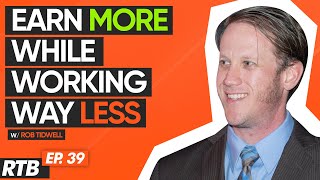
Rob Tidwell left airplane mechanics for freelance copywriting after attending live events and investing in coaching. He focuses on limiting work hours, building relationships through masterminds, and following proven copy structures like RNBC to earn more while working less.
Questions this video answers
April 2, 2021
Copycarter Live (Las Vegas), February 2020 (Rob arrived with an AMEX card and little else)
He attended an initial freelancer event in Nov/Dec 2019, continued working, and quit around February (three months later) after landing a writing gig and joining Copy Accelerator.
Chapters
Hey, you're listening to the Road to a Billion podcast. I'm your host Stefan Georgi and I'm glad to have you with me here today. The Road to a Billion is a call in radio show style podcast where you can ask myself and my guests questions about freelancing, copywriting, entrepreneurship, mindset scaling, funnels, relationships, money, pretty much whatever reason for the name is I've sold around a billion dollars worth of stuff through my copy and words and marketing prowess, whether that is my for my own products or for clients. And I'm trying to make an impact in the lives of a billion people over the next decade. We will start taking your calls in about 30 or so minutes from now and the way that works is you'll just put a question into the Q and A section in Zoom for those who are watching live on Zoom right now. And then my dear friend Ed Ray will go and review those questions and bring you on live to have them answered. Ed, do you want to go ahead and say hello to everybody and tell them what's up?
Yo, yo, what's up everybody? My name is Ed Ray and well, Stefan, this is a bit of an interesting twist. I've been leaning more into more. I don't want to call it heart center copy, but essentially I help people get more sales and clients without sacrificing their voice or their integrity.
Yeah, I love it. I mean, I think there's a huge, huge, huge need for that. And we'll have to do another Ed Ray special show in the near future so we can talk about that as well. Depth, because I love, I've noticed that for your content and what you've been posting and I think it's fantastic. Thank you.
Appreciate it.
Absolutely cool. And speaking of fantastic, my guest today is the incomparable Rob Tidwell. If you don't know Rob, he's gone from doing all sorts of blue collar jobs like digging ditches and pouring concrete for $10 an hour, working on cars at an Acura dealership, and then working as an airplane mechanic to taking the leap into freelance copywriting. He showed up at the Copycarter Live event in Las Vegas last February 2020 with nothing more than an AMEX card and some lint in his pocket and a twinkle in his eye, and basically ultimately has been able to triple his income in less than a year by putting in the work and embracing the road of freelancing, copywriting and offer ownership too, and doing that while working less and actually having freedom in his life, which was a really high value Rob today has an amazing work life balance and is just living the dream overall. So, Rob, thank you so much for joining us.
Stefan, Ed, thanks for having me. It's quite an honor to be on this show given the guests I've seen on here. It's quite an honor. Thanks for having me.
Yeah, man, absolutely. I'm really glad to do it and to have you and yeah, so when I met you, it was Ian Stanley and I did like a freelancer event in Las Vegas and I guess it was November of 2019 or December of 2019 and you were like working as a mechanic and talking about how you hated your job and wanted to quit and then you did, you know, so I guess talk me through that. Where, you know, where were you at when we first met and, and then how did you go from there to, you know, to quitting your job? Like, what was that, that transformation like and that path and what were the challenges you faced?
Yeah, so when I was at that event, I was, yeah, just writing copy on the side, making peanuts, especially for the amount of work I was doing. And I was working with some of the same clients but you know, they weren't high quality clients. So I felt like I was spinning my wheels. I really wanted to get out of this job. So I, at that point I signed up for copy hour. I gotten some coaching from Mike Abramoff actually and Austin Lee. So they kind of gave me like an immediate boost. Just like as soon as I started studying copywriting, I started I pay for coaching because I didn't want to waste time and I don't have time. I'm old, man. I'm turning 40 this year. So I just wanted to go, all right, so I was spinning my wheels with these clients that weren't paying me much. I had no, absolutely no clue where to find clients to pay me what I was worth even at that time. So I showed up to Vegas. I've been following both of you and Ian at the time. So and that was all because of guess how I discovered for you guys from the coaching, getting coaching from Mike and Austin. They're like, follow Justin Goff, follow Stefan Georgi, etc, etc follow Ian Stanley. So I like, they pointed me the direction like I would never have found you guys. Well, maybe eventually, but on my own. So yeah, I showed up in Vegas. I, I'll tell you this, the, that first event. So there's what, 11, 12 people in that room, right? I needed that small event to get my mindset right, to be prepared for the next event because just Being around as high, like everybody in that room was pretty high caliber, very successful, right. And then there was me. And I'm like, yeah, I work on airplanes and you know, trying to get better at copy, but just being in that room made me think, hey, I can do this. No one was an asshole to me, which was kind of weird. I didn't know what to expect. I was like, I'm just, they're gonna be like, why are you here? You're wasting your time. But no one was like that. Yeah. And I was just felt like driving home from Vegas.
It's.
So I drove to Vegas. It's a six hour drive for me. But I like that thinking time I get when I'm driving through the desert. So like I'm driving home from Vegas and I'm like just making notes on my iPhone like and do this, this, this, this, and I'm like all fired up. So yeah, I just kept chugging along and it took until February. So from November to February, I was still working the job. And then I had a chance encounter with someone that gave me a shot to write their copy so they could focus on other things in their business. And from there after that, I joined Coffee Accelerator like two weeks later, because I wasn't going back, right? I'm like, I'm going full steam ahead and the rest is basically history. I just keep doing rep, getting my reps in. More importantly, I'm forming relationships with people in the business. And yeah, that's, that's it.
When you were in the last couple months of, you know, doing your work as a mechanic. Well, let's talk about why. Why did you hate that job.
Boy? I mean, where do I start, first of all? So let me say this. Like in the military, I had reached the highest levels of my field. So you start off as an airplane mechanic. You do kind of smaller jobs. I applied for a special squadron where you fly around the world and repair crash damage aircraft. And I was even like consulting foreign governments on how to fix their like crashed F16s.
Right.
Cool. That was neat. I was very short lived. The military wasn't for me. So I got out and transitioning. Yeah. So my job as a civilian is go to this, go in this factory essentially, which is, it's not a factory, but go, go do monkey work. Don't use your brain. Do repetitive tasks work. Trade time for money. Okay, that's a big one. I don't like that. I don't like having a boss. I could keep going, but so I go here and work on my hands every day. And I'm like, not using my brain, which was driving me insane. It was driving me nuts. I couldn't. So when I discovered copywriting, I literally spent all that pent up energy that I had and frustration. I listen to audiobooks like six, seven hours a day. I would bring my laptop in, have an Ian Stanley video going or whatever. So I took all that time I had not thinking at my job and used it to focus on writing copy and the business side of it and whatnot.
When you did quit your job, I mean, were you. Did you feel. Because, you know, it was a mindset thing to come to that first event and was it scary? Are you at that point not even scared? You were just like, ready and excited, bro.
I've been terrified for the last two years of my life. So if you're not uncomfortable, you're not actually right now. I'm not terrified. Let me take that back. For the first year and a half of my copywriting journey, I was terrified of all of it. I was terrified I wasn't gonna be able to afford Copy accelerator. I say that like I was terrified, but I knew what, like, I'm telling you, I visualize this. I was going to be. I'm going to be a copy. Like from the day I signed up for copy hour, the day I just decided I was going to be a copywriter, I knew I was going to do it. So I was scary as fuck. I was like, yeah, I have to do it.
Yeah.
Yeah. The answer is yes. It was terrifying.
Yeah, it's funny, I just did an interview with Tony Greg Meyer before I doing this, going on his podcast, and he kind of was asking me about when I made the leap into freelancing. And it was like, I was also terrified. I was excited, I hated. I just was unemployable and just could not keep a job to save my life and was miserable in every job I had. So, like, I quit. And it was exciting, but, like, I hadn't really thought about the terror for a while until I was talking with him. And we didn't go that deep into it because it's a pretty short format. But yeah, man, it is terrifying, right? I mean, it's a big leap, but you're like, you're. You're excited. I mean, but again, to your point, you have to grow, right? You have to stretch yourself and. And then you have to be okay with failure. I mean, that was the thing I thought about was like, what's my downside? You know, if I Fail at this. Like, you know, like, sure, failure wasn't an option and all that, but it's like, yeah, but if I fail, I'm like, I'll just get another job I hate. I guess. Like, I don't. But I'm like, I really don't want to do that. So that motivates you to, like, not fail, right?
Yeah, right, Totally. And I could, like, look, I could probably go back to the same company, or if not, I can go to another company. I could go do that job again, you know, next week if I had to. That's not going to happen. So I was on a call with Grant, Grant Paulson yesterday, just to chat with him. I know he's on this call. We were talking about this at this point in my career, because I'm in this Mastermind, because I formed a lot of good relationships with folks, but I lost all my clients tonight. That would suck. I would not be happy. But I guarantee you, by the end of the day tomorrow, I would make. I could either call. I could call Brian Chestnut. I could call three or four other people from the Mastermind, or let's say I have to make 20 phone calls. I guarantee you, I would have a gig by the end of the day tomorrow.
100%.
Like, no question. And I couldn't have said that like, a year ago, but, like, in that sense, I mean, that feels great. That's a great feeling to have. Like, I don't have that fear, to be honest with you, that I have to go back to rent on airplanes. That's not really in my head anymore.
So now that you don't have that fear, what's your focus now? What are your goals now? How do you continue to grow? Right, because you've grown as a freelancer and a copywriter, and you're still growing. But how do you focus on growth now? Or do you. Or, you know, I do.
I do. Right now. I'm literally so. Anyone that knows Ryan Hunter knows that Ryan is a ridiculously fast writer. So he has a offer. It's like 300 bucks or something stupid. So I'm working with Ryan to try and get faster at writing because I want to reclaim some of my time. It's not that I'm working. I'm not like, get me wrong, I'm not working myself to death right now, but I'm not. I'm kind of a slower writer, and I. And I know that I'm like, well, if I could just speed it up, I could add a little bit to my income. And still be working less if I just apply some of these, you know, just be faster. That and I have a. So look, Austin Dixon brought me on. We're partners basically, 5050 on a supplement offer. Now. This is a long term thing that we're trying to scale. I'm not making money off it right now.
Right.
Like freelancing pays my bills, so I'm just focusing on getting faster at writing. I want to take bigger swings with bigger upside. For example, I'll beat the control type thing and scaling our business. That's about it. I'm trying to work. What I'm trying to do is grow without growing the hours that I work. Because I see it happen a lot and as you know, like one of the big reasons a, I like my time for myself. But I also have two three year olds and I always tell them like, dude, they're never gonna be three again. Actually gonna be four next month anyway. You're never gonna get this time back. So I know that there's a lot of 20 somethings in our mastermind that are going like hardcore. I'm gonna work for three years and I'm gonna retire, whatever, right? Not retire, but sell my company and whatever. I'm gonna work for three years so I don't have to work for the rest of my life. And I'm like, well, I have kids, so I'm not gonna skip the next three years. So my view is a little bit different just because of my situation on what going hard means for me. I want to have a lifestyle like Mike Erie or Ian Stanley where I'm making money, but I'm skiing four days a week. So.
Haven't you been skiing pretty much four days a week this whole winter?
I busted my knee, so I was, I was. So two things. It was a bad winter and the snow didn't show up till February. And then I'm in the February. So I was kind of doing that even at my job. I would just leave and come back and be like, I went to lunch or something. But yeah, I wasn't a very good employee, by the way. Wanted to point that out. Yeah, fair enough.
Sorry, what are. Let's talk specifically about the mindset stuff. I mean, like, how did you have to get your mindset right? What was it that you struggled with and how did you address it?
I'd say the first and most important thing and I'd say it was unconscious. But I would never have invested in myself a couple years ago. I would never have bought a course. I would like hire A coach? No, thanks. Buy a $2,000 PDF? Yeah, I don't think so. But the second I started investing in myself, suddenly everything changed. That and I just. I just believe that I was gonna do it. I don't know how to explain that. I just had a belief. I'll tell you what, here's what I. Here's what I used to tell people. I was miserable enough in my current position that I knew that I was going to change because I was like, like I was literally like, not, not as a joke or just like I was suffering from depression because of like a number of things at the time. I felt like I was never gonna leave that dead end job. I was never gonna have time to spend with my family. I was sleep deprived for like, my kids are newborns at the time, so all this stuff. My wife was going to school at night, so all this stuff was stacking up and I was so miserable. And then I felt guilty about being miserable, right? Like, this is kind of a weird thing. I'm like, I have these newborn kids and my wife's trying to improve herself, she finds she wanted to go back to school, get this degree, and I am fucking miserable. I'm like, well, that's. I'm an asshole. So like I said, I. And when I could focus all that frustration and energy into something and that something was copywriting for me, I felt better. Before I made any money, I was like, I'm done with this shit. I'm gonna be a copywriter. And I just did it. Investing in yourself. Investing in yourself is important.
So it is important. I wonder. It is a big block for people, I think, and understandably, I mean, I talk about it all the time with masterminds and things like that. And it's like, you know, my first, like every mastermind I've ever invested, I've gotten a tremendous roi. And it's like, you know, been wildly impactful. And it's not just because of like little tactics and tricks, but it's like the people you're around, you know, the product of your environment and I think almost made the way you see yourself. Because once you invest in yourself and you invest in something, whether it's a mastermind or it's a $97 course or whatever it is, it doesn't matter. Once you invest, you're like, I'm a serious person. You take yourself more seriously. I think that's an interesting kind of point as well. You respect yourself more in a way. And then.
Yeah, no, I agree with that. It's I was just thinking. I was also like, I need to recoup this money I spent, so there's also that side. But, no, you're totally right. You view yourself differently. Like, it was just wild because I went from thinking from the mindset of I'd never invest in a coach or whatever to, yeah, I'm gonna do this because I want. I want what's on the other side. I just invested much, very quickly, and it all paid off. So thank God.
Yeah. And I think there is an argument to be made for making those bigger investments that maybe are the scarier ones, or frankly, because to your point, you are like, man, I really got to recoup this. Right. That's the difference between a $37 course and a $3,000 course, or like, a $5,000 mastermind and a $30,000 mastermind. You know, they all can work. And, you know, there's. There's financial and economic realities and things like that. Of course. But Laura and I have joked about that where it's like. I mean, even the house I'm in now in Vegas, like, we moved into a couple years ago, like, that was this big stretch, and I was kind of, like, freaked out and a little bit scared because it was, like, more than I'd ever paid in a month to live somewhere. You know what I mean? And, like. But then everything has just gotten better and better and better since then. And, like, so, you know, like, upgrading and stretching, it's like there's a fine line. Like, you don't want to. You don't. You know, I'm not saying to stretch yourself to a place where if one thing goes wrong, you're suddenly, like, you know, on the street or anything like that. Like, don't do that. No, but. But, you know, bigger swings, bigger investments tend to have bigger payoffs as well, I guess. Right.
Yeah. So I'll be honest. I feel a little uncomfortable. And I told. I just told Grant. Grant's hearing the same stuff. Sorry, Grant. I feel a little comfortable when I share my story, because what I don't want someone to do is be like, oh, they're just go out. Like, all I have to do is invest in this course or whatever. Go out, mortgage your house to invest in a mastermind or whatever. And then, like, I don't think people should do that, by the way. Yeah. So don't go getting, like, those kind of crazy ideas like, oh, I'm going to risk my. My whole family's house so I can take it. Like, don't do that don't do that. But you have to. Like, like you were saying, Stefan, there's a. There's a fine line between invest being taking risks and just being stupid.
Right?
Yeah. Yeah, there is. And by the way, if anyone who watches, if you hear a vacuum in the background without cleaning, people here. So sorry about that. But reality. But yeah, I mean, gurus who are like, mortgage or how, like, you know, there's a certain guru who I'm not gonna name, but, like, Ed knows who this person is pretty well. I don't. I truly. I don't know the person, so I don't ever say anything negative about the person. And I know people who have done this person's trainings and like, they're like, it really helped me. Right? But this person also has had all these times in their business where they've told people to like, mortgage their house to take out loans to do, and it's like to me, like, I will never. I don't care. I just can't have that moral responsibility. I mean, dude, even in Justin 7 talk copy, I post about how I kind of want to, like, find a way to give my RNBC method for free to anyone under 18, right? And so that they're young, they can have the course for free. It could help them. And I asked for ideas and there's a whole thread about it. And John Caprani was like, oh, maybe, you know, go to their parents and present it as an alternative to college so that they could, you know, get your course instead of going to college. And like, I don't think you need to go to college. I'm very agnostic about college. I'm not anti college, but I'm like, I didn't reply to John yet, but. But John's heart was in the right place for that. But I'm like, I don't want the burden of telling a kid not to go to college. Like, you know, like, that's. That's too much, right? Like, I'm not, I'm not. I don't want to do that. I want. I don't want to tell you, like, I've had people email me. I had someone in Korea email me because I'm about to turn 18 and like, you know, military service is mandatory. So, you know, but I want to be a copywriter. But if I, you know, in order to do that, I need to, like, you know, basically leave my country and I won't be able to come back for several years. I'll leave my family. You know, should I do It. And it's like, I'm not answering that question. What are you? Like, I'm. I. You know, like, who am I? Right. And so just the point being. Yeah.
I don't.
When gurus are telling you to, like, you know, put yourself in financial jeopardy. Even though I believe that if somebody really, truly, you know, like, incorporates my stuff or somebody else's stuff, like, you know, they probably. It probably will work out. But it's like, who wants that burden? Like, I don't want that burden. It's not worth it. So I'm right there with you, Rob, is my point. And Ray, let's bring. I want to bring you on too, you know, like, you know, we've all known each other for a while. Feel free to ask Rob questions. And if, you know, we can free flow on the conversation a bit too. But Ed, go ahead. If you have any. Any questions you want to ask Rob. By the way, for anyone watching, if you have questions for Rob or me or Ed, feel free to pop them in the Q and A. And we'll get to those in just a little bit here.
Sure. What's. Rob, what's something that you wish you had made more time for when you were making the transition from working in a job to freelancing?
Taking care of my mental health and my mindset and not the mindset, like, I believe we've covered the fact that I knew I was going to succeed or I believe that, but it's kind of a grind, dude. Like, you have to take care of yourself. And at the time. So I was getting up at like 3:30 in the morning or whatever to write, do like my copy hour studies before I go to work. And then at night, I'm putting, you know, the kids to bed. So I said school and my. Yeah, so I was tired. Mindset, like, wasn't necessarily. Maybe I didn't love myself is the part that I should point out. And it's like my good friend Scott Mills, who's in the mastermind, identified this, like one day at an event. He's like, yeah, you need to go to therapy. I'm like, okay, what? I'm not gonna argue with you, Scott. But I tell it like, he's right. Everyone needs therapy. Every one of us needs therapy. I wish I had taken more time to address.
Oh, we lost him.
Hey, Robbie froze for a second that.
But I just.
You're back, Rob. You froze for a second there, but you froze that. You know, everybody needs therapy, basically.
All right, guys, that's okay.
You're back. Now? Yeah. You froze up. Basically saying that everybody needs therapy.
Oh, yeah. So everybody needs therapy. Not.
Oh, no. Oh, no. Freezing. Ed, you're still here, right?
Oh, yeah.
Okay. Rob's just freezing. He's frozen in a really good pose for those who are watching.
What a handsome gentleman.
Oh, yeah.
Oh, there he is.
He's back again.
I don't know what's going on.
Yeah, yeah. Froze again. I've got the cleaners vacuuming outside my office. Yours is. You're freezing. You know, what are you gonna do? Just let Ed Ray do a soliloquy? Soliloquy?
Yeah, yeah, yeah. You know, soliloquy.
Yeah, soliloquy.
I'll break dance. I'll break dance.
Yeah, I can hear you.
Rob, can you hear me? Am I back?
Yeah, we can hear you.
Okay. Sorry. I don't really know what happened.
Oh, there. He's moving. He's moving.
Or Rob Tidwell's casa.
Yeah, those green walls. All right, so apologies. I don't know. Anyway, take care of yourself, folks. That's what I wish I had. I wish I had. I have a good wi fi, though. Yeah. Take care of yourself.
What if.
What have you found to be some of the best ways that you took care of yourself?
Forgiving myself, because I'm pretty hard on myself. If I make a mistake, it's. Yeah, it's got to be kinder to myself. Kind of a perfectionist in a way. And that's not good. As a copywriter, you can't be a perfectionist.
Right.
That's not so. Like, I. I mentioned this before to other people, like working on aircraft. You have to be a perfectionist. So I did that for a long time because if you up, someone's gonna die. So now I'm doing copy, and I'm like, well, if I this up, I may die. I mean, not really. But this client's gonna tell so and so that I suck. And so and so is gonna blah, blah, blah. It's like, you gotta. You gotta squash that. And nobody really thinks like that, by the way. So get out of your own. I gotta get out of my own head.
Yeah, I got that. I think that's such an important part of being an entrepreneur, is trying to escape our own mental bullshit. Because literally 80% of the battle is just doing the thing that we know that we're supposed to do. But there's, like, that 20% of this whatever chatter in your head. Perfectionism, like imposter syndrome, not deserving of money. Like fear of failure, performance anxiety. Procrastination, emotional garbage that's stopping us from being who we want to be. And dude, I haven't heard anybody talk about forgiving yourself, but that's something I've really found to be super powerful.
Like.
Like, I. I'm really hard on myself. Like, I'm insanely hard on myself every single day. I, like, thought loop myself into a downward tizzy. Like, it's. It's insane. But I know everyone. A lot of people have that too, especially people who are high performers and hold themselves to high expectations. But a huge part of the battle is for, like you said, forgiving yourself. Like, forgiving yourself for being hard on yourself. Like, forgiving yourself for not doing some of the things that you should have done, or forgiving yourself for making certain mistakes. Because a lot of us have a really, really easy time forgiving others, but we have a very difficult time forgiving ourselves.
That's. Yeah, that's the case for me. I keep. I've always heard, like, the way you treat yourself is the way you treat others. I'm like, well, not really. I treat everyone better than I treat myself. At least I think, yeah, it should be pretty well, Rob. It should be pretty well. No, but like, I would let the littlest thing, like, for months, like, okay, here's an example. I was like, dealing with a bunch of potential clients at one time. So I was emailing people, and there's one I just totally spaced on and I never got back to them. It was someone I actually really wanted to work with. I'm like, I just couldn't believe that I forgot to email this guy back. And now it's been so long. It's like, yeah, I'm idiot. So that like, for months I'd think about that at night, just. And just be like, you are a retard. You. You blew it. Or like one time I was a day late on a sales letter, and that just threw me into a like, yeah, you're that guy. You're a piece of you to do exact thing you're not supposed to do. So, yeah, so I would let like a little thing like that that you could just forgive yourself for, just eat at me for months, which was terrible. I'm actually don't have. Yeah, I've gotten better at forgiving myself. But even just last year, man, it was every single day, I'm just like, call myself names and get down. Just like, you gotta do better. And then Scott Mills comes along and he's like, dude, you gotta get your shit together. And so I Kind of been focusing more on that aspect. Thanks, Scott. If you ever see this.
Yeah, she was gonna say, I had something. I had something.
I moved upstairs. So if anybody sees me in a different setting, I just escaped the vacuum cleaning.
Stefan, you look beautiful either way, buddy.
Don't worry about it.
Thanks, man.
Yeah, you know, I got you. I got you. Yeah. So actually, Rob, I want to touch on what you said about how you're. You treat other people better than you treat yourself. I've actually noticed that we all do that because we've a lot of us especially people who are like, you know, I hate the word heart centered because it's so overwashed. But, like, people who actually give a shit will put others before themselves, unfortunately, and value others, which is why they have a really hard time. Like, they have a really, really easy time saying yes to other people, but a really hard time saying yes to themselves. And why they have a really, really hard time keeping. Like, let's say someone's like, okay, I'm go for a walk at 2 o', clock, right? Well, it's, you know, it's. It's kind of rainy out. But if somebody else was coming for that walk, they would go because they want. They don't want to be a burden to the other person, right? So part of that is learning to value yourself as much, if not more than other people. Not from a selfish point of view, but from a giving point of view, because you can only give what you have.
So my Internet cut out when you're talking. I'm sorry.
Oh, dude, I was dropping fire, man.
You're always dropping fire. You're just.
That's true, that's true.
Thank you. Wise.
Yeah, Grant, actually. So. So Grant says, gotta refill that cup. So I was talking to my friend Sierra. She's doing. She's doing like a lot of coaching consulting, and she said that there's. There's two ways to look at it. There is. There's refilling your cup. So hold on, let's keep.
Make sure.
Okay, you got a cup, right? Water goes in and then you pour it out. But then now it's empty, so you have to refill it again. Then you pour it out. You have to refill it again. That's a really, really draining way to live versus when you are. When you have two pieces of iron, they sharpen each other. And you don't have to give. Like, you don't have to give away a part of yourself to still give. And so when you get to a point where you can become iron and not a cup of water. That's a far more powerful place to be because then you can give abundantly. And you're not taking from your own energy reserves, your own happiness, your own mental. Bank account. Yeah, I don't know. I don't know if any of that.
Makes sense, but that's. I'm telling you, man, you're killing it. I love that. That's. It's so good. I mean, a metaphor I got for, like, with my adhd and why I decided to end up taking, you know, Adderall, which I take now is my. My therapist, whatever guy. Which, by the way, back to. Go back to that real quick. I mean, almost every so many successful people I know have seen somebody like, I just like any kind of stigma around, like, going to see, like a. Like a therapist or something. Like, I just remove that. Like, it's like, you know, it's just a game changer. Like, it's. It's, you know, a good one and, you know, and try them out, too.
Don't.
If you go to one and, you know, you don't like it. Like, that doesn't mean, like, there's no sunk cost principle. It's like, just find a different one. Right? Because there's. Because not all therapists are equal. Some are just way better than others. Um, but anyway, he talked about, with add, the idea of, like, a gas tank. He's like, basically like, say you have a gas tank and, you know, it's. You only get one fill, like, you know, a day or whatever it is. And he's like, basically. So with, like, when you have undiagnosed or unlike medicated adhd and you travel around like, you're basically starting the day for your gas tank, like a quarter full. And so, you know, you're still gonna be able to do stuff, but you're gonna run out of energy way, you know, earlier on and, you know, and basically break down. And then eventually that's like becoming exhausted, being tired, feeling scattered, stressed, all that. He's like. Whereas if you were, you know, treating your adhd, it's like the tank is full. So, like, it doesn't mean you're. You have limitless reserves, but it takes a lot longer. So going back to your. The cup thing and helping people and helping yourself and all that, I mean, even there, to me, it's kind of that idea of like, you're like, if the cup's full, I guess, or the iron is, like, sharpened, like, do stuff that keeps it full. Like, that gives you, worst case, get take SIPs versus, like, if you try and just put everything into something, like, and you just pour out the cup all the time to your point, then you have to fill it all back. That's so exhausting. But if there's like a slow drip, you know, coming in or something like that, it's different. So I don't know. I want to play with the metaphor more, but I feel like I didn't really nail it as hard as I thought I might in my head. But I like the idea of metaphors. I like the iron sharpening iron. I like the idea of, like, your cup and how full it is or how full is your tank. I think they're just good ways to think about how you manage your energy and how you manage your interactions with people too.
Exactly. So you always have to be putting, I guess we'll call it dollars in your emotional and your emotional bank account. Like doing things that you actually enjoy, doing things that you want to do and putting yourself first. Yeah. So anyway, sorry, this is an interview with Rob, so let's go back to that.
Eight questions in the Q and A. It's the most questions we've had a long time. So do you want to feel free to ask him if you have another question? And then let's jump into some of The Q&As too, since we have so many.
Let's. Let's go into Q and A then. I got nothing else off the top of my head.
All right, cool.
I'm going to need co host, though.
Stefan, I made you co host already. Oh, did you?
Oh, man. Oh, we are on it today, bro. Oh, sheesh.
Iron sharpens iron.
Iron sharpens iron, baby. That's how we do it. One second. Let me find the attendees section.
There we go.
All right, all right, all right, all right. So we got Matthew Hutchison asking about getting a job in copywriting to get started.
Cool.
What's up, Matthew?
Matthew.
Oh, hey. What's happening? I didn't surprise be unmuted.
Yeah, for sure, man. Yeah, go ahead and ask your question and then we can. We'll try and tackle it.
Well, actually, a lot of my thoughts around getting a job in copywriting are, I feel like, could potentially slow me down because I'm actually. I'm making progress with freelancing. I do a lot of stuff with Ian Stanley. I'm in his group. I've got one client potentially starting to work with an agency. But the other thing is, my wife is not in a very comfortable position, and we have a eight month old and there's a position that I found with one of the Agora companies that I think I would be ideal for and I think I could get it and I think it would be a really good place to grow and continue learning while I can still do a little, do the freelancing and grow that on the side and potentially down the road get Agora companies as a freelance client. So I'm just kind of curious about your perspectives from a more professional standpoint, somebody who's been doing this a little bit longer. I would be going back to trading time and money, but I feel like maybe it's a step backwards to kind of accelerate things in the future. Sort of just looking for some other opinions on that.
Yeah, that's a good question. And I'd love to hear both Rob and Ed's thoughts and I'll share mine too because I mean Ed, you, you had a job with a company where you did develop skills and then went out on your own. And let's start with you, Ed. And then I want to hear Rob's take as well. But what are your thoughts on that question, Ed?
For sure. Well, I guess my first question is, Matthew, how long have you have you been copywriting for?
I've been freelance writing for like two years, but be going more specifically into copywriting and email copywriting only. Only for like four or five months. Before that it was a lot of content writing which kind of drove me nuts because there was a lot of SEO focus, which I don't, I don't love writing to robots. I prefer writing to people.
I like that. Okay, and is this agency that you might be working with, are they like legit, legit, like, are they like good and you think you can work there for like at least two years and like keep growing and learning the whole time? Maybe not necessarily copywriting wise, but leadership wise, skill wise of marketing fundamentals, being part of a team, being a team player, delegating.
So this the agency I mentioned I might be able to bring on as a client. I've worked with them for a little while and so they, they do. I do a lot of content work for them already which is SEO focused and they understand that email would be a different monster as far as their clients. Like, like, I think there'd be a mixture of some okay clients and some not so great clients, but they have a few that I know I would would be really great to work with the full time job in copy that I'm looking at.
Oh yeah.
Thank you for that one of the Agora companies.
Okay.
And they. It's specifically Oxford Club. And they are fantastic. They are very well known for their pre. Pretty much well known for being like copywriting college. Like that's where you go if you want to learn copywriting in a job.
Yeah, just, just make sure your copy is compliant though, please. And you can follow my Facebook page. I post about that a lot. Sorry, not sorry for the plug stuff. And it's a good resource for people. I am a big proponent of, of people going out there and getting a copywriting job, especially if they get to learn. So. Okay, sorry. So two things. One is getting direct feedback from somebody who's way, way, way, like light years ahead of you. And two, getting market feedback and you get to see the market feedback directly. Those are the two most important things you want to be looking for when it comes to doing any kind of job. And then three, obviously is the ability to grow with them over there. Like over. Over two, one to two years. So there was a post in Justin 7 talk copy, I think a while back, maybe it was, I don't know, one of their groups, but basically someone's like, what's the fastest way to get to. You know, I think this is like 20, 30k a month. And I put in there, the fastest way to 10k a month is to freelance. The fastest way to 30k a month and beyond is to eat shit and learn from the best and then go off and do your own thing after you've grown to your max potential. It's the long way but the short way, if that makes sense. So When I was 17, I joined this company. So before I was freelancing, I was making 4 1/2 k a month, still doing high school full time, still doing like the arts programs. I was part of, like the drama acting program, played the trumpet, the jazz band, I was part of the school play, everything. Right. And I was still doing that copywriting. But then once I joined this company, I worked there for two and a half years, working 60 to 120 hours a week. But I had been copywriting for like a year or two before that. But skill wise, it was absolutely negligible.
Yeah, that's where I would put, I would put my copywriting in those same parentheses. It's good to recognize that towards a higher quality. But I actually just reached out to. I'm not sure if you know Drayton Bird.
Yep.
But yeah, so I reached out to him and had. We had a back and forth and I showed him some of my Copy. And he basically responded to me, it was just like, this is, this is bad. So he did, he did mention one highlight that was like this piece was good. Try to trend towards in this direction that you're working with here. But basically the majority of my stuff is not that. I mean that's upper echelon tier but not up to his standards yet.
Basically, if you don't have somebody who is telling your work, is telling you that your work is bad, you're not going to grow as fast as you should. Whether that's hiring a coach to look over your copy and your marketing and talk with you, talk ideas with you. Because realistically, programs are fantastic, programs are great. But there is nothing in the world like one on one feedback or like group coaching feedback, you can't replace it. And so ideally you get that in the environment of, in a job because then that's like somebody who knows the company, they know the direction and they understand all the nuance. Whereas a coach potentially may not. Not that that's a bad thing sometimes that is needed for the external fresh pair of eyes. But if you're trying to learn, learn from somebody who's found success in the arena that you're trying to go into. So I'm 100% on board for you getting this copywriting job and then just eating shit for a bit and learning and then getting really fucking good and going off and just blasting through 20, 30k months.
Love it. Rob, curious, do you agree? Rob, do you have anything to add?
Yeah, you pretty much nailed it. I think that probably the right move for 90% of copywriters is to go take an in house position. And I feel like there's a lot of resistance against that. Because you want to go be an entrepreneur. I want to be a freelancer, getting wins for a client. You know, go work for somebody for a year, get the feedback, make sure it's somebody good. In this case I would say like, dude, take that job if you can get it. I mean, you're going to learn so much in that year way faster than if you're just off on your own taking one off clients trying to get wins to wherever you're working for the same client for a full year, you're getting all this feedback, you're getting the data, you're getting the wins, you're not jumping around looking for clients. By the way, that takes a fuck ton of time, bro. Just another thing to think about. I think in house gigs are the way to go. And hey, look, I took, I still write all the copy for the guy that gave me my first, first gig, like to quit my job. I still write his copy. I'm just much faster and doesn't take me much time to do what he needs. But I was able to get all these wins for this company in one year. Dude, I got, I was stacking my wins for this client and I'm working, getting feedback from a copy chief. That was good. And yeah, I think it's a great idea to go in house, especially like if you're just starting out. Stefan, what do you think?
Yeah, I agree. I mean, I think like, you know, for example, this is not a plug for Copy Starter. Copy Starter Lite. Right. But if you're like the people who are freelancers and they join copyxarter Light, you know, maybe they can often avoid having to go in house. Sometimes they still should though. But I'm just saying, but because you get feedback. So we get feedback. We have two sessions per week, one with Saba Karimi, one with Mike Abramoff. And so for people in Light, they can take their copies of these calls and have it torn apart by really good writers. And so. But that's the point. We didn't have that component for Light at first and the writers were struggling because they came in and yeah, we have all these trainings and teachings and things like that. That was really valuable. The community was valuable. But not having feedback just stifles. You have to know where you're at and you have to know what you can do to improve and get better. So again, that's not a plug to join our mastermind. I'm just saying that's why feedback is so important for our mastermind. And if you're not in a position to join a mastermind like that and, and again, maybe even if you are being in an environment where you are being pushed, being critiqued and everything. Yeah, I mean, Ed nailed it. Rob, you nailed it. For me, I mean, when I got really good, I started writing for a client. They were a client, I wasn't an employee. But it was basically like their full time writer and these guys in Romania and one guy in particular, and he actually moved from one company to another but brought me with him. And they would like tear apart. Even once I got good, they would tear apart stuff and I would get pissed. And I had to learn to check my ego because like the one guy like Yi was like my mentor, would like leave comments about stuff and my first would be defensive because I'm like, I've had all these hits now, like, I'm crushing it. But even then, for me, then I'd really think about what he was saying and most of the time was like, ah, shit, he's right. And so even, you know, like, it never stops. I mean, Chris Haddad is one of the best copywriters. Like, he like, emailed me when he had one of his last offers and was like, hey, man, can you critique this for me? Right? And like, I did and like, you know, I would do the same thing and have Chris look at it or Dan Ferrari or whoever it is. So it never stops. But, yeah, the feedback is vital. So, yeah, I think somebody like Oxford Club and Agora could be a great opportunity and a great fit. Just make sure that you're getting, you know, you're going to get out of it, whatever you put in. So if you, you know, are doing, taking that position, that they should give you a ton of resources and really help. But, you know, they also, a lot of the Gore companies have a very sink or swim type mentality or attitude. So make sure that you are working, you know, whether they give you the resources or not. Like, you make. Make sure you're taking advantage of everything and really trying to get better and improve.
Hmm. Awesome. Thank you. This is. That's super helpful. Even more helpful than I expected it to be.
That was a master class and a half.
Boom.
Cool. Awesome. Matt, thank you for your question.
Thank you.
Cool. Who do we got next, bud?
Oh, man, we got. Oh, Fede. Nah, dude. Just because you said you're shy to speak in front of us. Nah, bro. Yeah, come on. So Fed is asking social anxiety.
I'm like, don't make him do it. He can.
No, bro, we gotta encourage him away. We got it. Yo, this guy replies to, like, almost all my emails, man. He can, he can. He can do some English on, like, on. On the.
On the. He said no, bro. Like, we're not answering this question. This is a safe place.
This is a safe place, man.
We.
We believe in you, bro. We're not gonna. You know what?
If you ever want to come on, we'd love to have you on, but I'm not. I'm not making you come on again as a gnarly introvert. Like, what was this question?
There we go. So Fede asks, what's the most valuable lesson you'll be glad to learn if you can make a time travel machine.
To meet yourself in the future of the past?
I think probably past. Like, like go back in time.
Yeah, Rob, you can answer that first.
So, like, If I could go back in time and tell myself something, yeah, Never get a job. I'll never get a job. Never get a job. Work for yourself. That's the way to go.
We just told Matt Hutchinson, but.
Yeah, well, I mean, yeah, but.
But Matt. Matt's is. That's a copywriting job.
No, I know. I know. Rob's thinking about, like, normal nine to five.
No, I would have told myself, what direct. I would have just given myself, like, a direct response catalog and like, study this dude. And then just poof. And then I. I'd be like, Russell Brunson was all my. My direct mail. I'd be like, filthy rich right now. That's what I would do.
How about you, Ed?
Definitely. I think, and this is a big thing I'm a proponent of because I truly think is the root of almost all the mental we experience as copywriters, from fear of failure to procrastination. Like, everything to perfectionism is because we identify too much with our work. I would have told Ed way back in the day, you are who you are. You're not what you do. I love that you're an amazing, fantastic person. People love you. You love your. Well, working on loving yourself. And you put your heart and soul into everything that you do.
And.
What you produce does not define you. And yes, vetted. Please prepare yourself to come live in front of us. I will make sure next week you are live. Put a question in.
Yeah, that's awesome. I think that's a great one, too. I think for me, it's kind of what I tell people now. I mean, I think, well, it would have been like, just focus on becoming the best. Like, don't. Like. Like, I just always go back to that. Like, you know, if you want to get paid a ton of money to write copy, get really good at writing copy. Like, if you're really good at writing copy, like people, your opportunities will come. You'll get results from people. They'll tell other people. You'll be able to charge more. Like, you know, if that's what you want to do. If you want to be a copywriter, get really good at writing copy. Whatever it is that you want to do and whatever your craft is. I mean, you can be marketing or like, whatever it is. Just. Just focus on being the best again. The. The process. Trust the process, and the process leads, you know, creates the outcome. The process creates the outcome. So focus on the process and worry less about the outcome. I think that's just the most important. And don't have shiny Object syndrome, you know, I mean, that's like all the detours, you know, of trying dumb shit, throwing money at stupid stuff and. And things were. If I had just because that got me away from focusing on being the best in the road at my process, that then would lead to my outcome, right? When you sort of jump over here and there and here and you're bouncing around like you should, you can try new stuff. Like, it's good to try new things and find out what you like, but once you find that thing, commit to that for at least like a year or two. And then, you know, like. Because I guess the other part too, actually, I would tell myself is, back to your point, Ed. Like, your identity, like, it's very easy to pivot. Like, I've pivoted a bunch of times, right? It was like, from copywriter to offer owner to like, kind of copywriter again, semi guru, but also family man. Like, you know, I'll pivot again in a year or two. I may well create another kind of consumer product company and try to make, you know, create like a hundred million or billion dollar company. And it's like, you know, you don't have to. You were doing compliance, Ed, right? You're the compliance guy. Like, well, now I don't want to be the compliance guy anymore. So. Cool. Now, like, you still talk about compliance, but, like, you're like, you get to pick how you define yourself and how others define you, and nobody. People don't go, but you said that you did this like two years ago. Like, you're not trapped in that forever. It's like, you just. You can switch. So don't worry about it. Commit to something, try it for a year or two, and then if you don't like it, just move on to something else. And you're not a failure. It means that that wasn't the right thing. You have to give it enough time to actually know. But then after that, you know, like, you're free to move on. So you don't. You're never stuck in anything.
Yeah, that's so true. That's a really big mental hurdle I had to overcome a while back when I was starting to, what we'll call it, transition out of doing the Facebook compliance stuff. Like, I still do it, but, like, I identify with it so much that I was like, you know, I was like, oh, I want to talk about a bit more about mindset, self development and like, integrity and just life stuff. And I had this mental resistance inside of me because I was like, but I'm Ed Ray, the compliance guy, people are on my, on my email list or my Facebook because they want to hear about Facebook compliance. And my friends, like, no, dude, they're there because they want you. You are not Facebook compliance. You are not the Facebook compliance. Like, true. Like you do that, but that's not who you are. Yeah, I was like, fuck, that's so true.
It's totally true.
They, they do it so well in freaking in. I think it's, I think it's in like French speaking countries where they are so like anti. Like they have such a hard boundary between like work and life. Like you basically. I'm pretty sure you won't be. And if you guys are French, please correct me. You basically like don't make friends with your, with your like work, work people. Or if you do, you never talk about work ever outside of the actual work. Like you like, you'll go to a party in France apparently, and nobody will ask you what you do for a living. Never. Not once, apparently. It's disrespectful. I'm like, damn, we could learn a thing or two from the French. Not how to surrender, but maybe how to. How to not like be so, so work intensive and focused.
Mean I'm like, fuck, now I have to actually be interesting.
Exactly, right? Oh, you mean I can't talk about, you know, conversion rates and Facebook compliance and long form sales letters to try and pick up girls at bars? You mean I have to have a personality, bro.
Yikes.
Dude, that's awesome, man. Cool, let's do some more questions.
All day, baby.
Yeah.
Oh, Chaka Small. What a dope name. Chaka asked.
Okay.
It's a pretty concise question. I'm just gonna read it. How, how do. And did you find material to practice writing sales letters?
Cool. Yeah, we can just answer that one since it's so concise. Rob, you wanna go first?
So first I started by hand copying, because that's what copy hour does. And then I practiced by getting clients. No, so honestly, I just like started finding stuff on Clickbank that I thought I could write better. This is a true story. So I go Clickbank. I'm like, I bet I could write better than that. And I just write my own version of it. And I always had this intention of like finding the offer owner and emailing them, which I never did. But I mean, that's how I practice writing sales letters before I got real clients that had real sales letters.
Cool. How about you, Ed?
I. I went through Michael Masterson's six figure accelerated Copywriting program. And I hand copied a lot of that stuff. I just hand copied a lot of program proven sales letters online. But in terms of practicing the sales letter, I actually used like, in terms of actually writing it. Before I learned about Stefan's method, I used Todd Brown's E5 method, which is like. It's like basically the agora approach essentially. But I love, I love the way Todd markets. I've always liked his stuff.
Yeah, I mean, yeah, RNBC is. Let's just get it like tattooed on my neck because. Oh God, that's what.
That's what.
That's what I do every day.
You.
You know you started a cult when people are getting the freaking initials of your program tattooed and like engraved on their stuff.
But do you gotta understand how easy it's made my life? Right? Think about that's true. Like, I write a sales letter, someone gives me $10,000. And I've written enough of them now that I'm finally starting to be like, oh, I think I know how this goes. Rnbc.
Exactly. Yo, I remember. I think, I think. Is that like one of the funnel hacking live events, like one of the two comma club winners or something? Like, the dude freaking got a clickfunnels logo tattooed on his wrist.
And I was like, they are silly joking about that, by the way. Like, I'm not. That's crazy.
I appreciate the dedication.
But, bro, I'll tell you what I would get tattooed is that cartoon on Justin Stefan, top copy Facebook group. I will get that like tattooed on my thigh or something.
Bro, you should get that as like a tramp stamp.
Oh, I get. I get like Russell Brunson tattooed on my butt. But I need like, maybe I get a lot of money for charity. Like, I don't know what the.
Like, does he have to sign a consent form or something for that to happen?
I mean, I don't think so. I think I'm just.
Yeah, can't stop me, buddy.
My body, my choice, bro. I'm attached to your name on my ass. There's nothing you can do about it.
Your face is next to my butthole, buddy. Sorry.
Yeah, we get conversation piece.
As it should be, Rob.
Anyway, let's. Let's pivot back to some more. More questions we got here.
Conversations with the boys. All right, so we got Lyle.
Bad joke. This is so immature. But like, it's like I said, like, like click, click buttholes, you know, Sell the click funnels, you know, you see what I did there? You guys? You guys like that? I've Ever made on the road to a billion.
I'm not.
I'm not apologizing for it.
Watch out. Ian, Stanley, Stephen. George. I was coming after you.
This is this. Yeah. Jack says the Tattoo on the Butt episode.
Yeah.
Hey, you're listening to Rotor Building podcast and today we are. This is the Tattoo on the Butt episode. Lyle asks what are. Okay, this is pretty in depth. Lyle asked about the shifts in copy as you've grown, so we're gonna let him go for that.
What up, Lyle? Lyle, Lyle.
Hey, how you all doing?
How you doing?
Good, good, good man. Loving the jokes.
I nearly forgot my question because of that last one.
Stefan was a good one.
So the question I have is like, Rob, during your journey, or anyone that wants to kind of chime in during your journey, what are some of like the major shifts and thinking you've had around the mechanics of writing copy could be something that you're like, wow, I can't believe I've been missing that the whole time. Or it could be something that you change in your writing process before you even start writing. So I'll leave that up to you. Oh, I got some. Yeah, I've definitely had some aha moments. And the funny thing is they're usually like, not that like, they're like kind of obvious. Right. So I'll start with following a structure. So I tried writing a sales letter before I discovered rnbc, a couple of them, and that sucks. So following a structure, huge. Saves a bunch of time. Number two, this is huge. This one changed my life. You don't have to reinvent the wheel. As a new copywriter, I'm like, ah, I gotta come up with this really cool, original, funny, crazy, off the wall ideas.
Really?
No one cares. Like, we want to make sales here. And if you think you're the most creative, like, no one cares about your creativity. They want to make sales. So when I learned that, when I stopped trying to reinvent the wheel, man, that really opened the door for me. Number three, don't edit while you write. So those are like the top three that come to my mind.
Yeah, those are, those are great ones. I like. Yeah, I mean, I think the processing, like that was like with Jim Claire and his like, posts about the lack of creativity and like, you know, innovation. Like, I'm not gonna. I don't, I'm not, I don't. I'm not bringing up Jim Claire to talk about him personally. Cause like, this is whatever. And I think he has some fair points in his post and stuff, but it almost is Kind of like, like not having a process is like, like have a process, like, and then, and then innovate from there. Once you have a process, you've got dialed in, like, you can make within these boundaries or these lines, like, you can innovate within them, but like, as long as you're still following this like, linear progression and then over time, like, if you want to try like weird abstract shit, like, go for it. But like, having a process and not reinventing the wheel is. It's like, do you want to be at the end of the day, like, if you're a freelancer and a copywriter, like, do you want to be creative or do you want to be paid and be able to like, pay all of your bills and have a roof over your head and have more freedom and support your family and like, you know all this kind of stuff, right? It's like, because if you can be creative, there's a lot of really awesome, like, broke ass artists. And if you don't conflate the two, like, you can still be creative, you can still be an artist. And. But there's a fine line between art and being a technician too. And like, you know, do you want to be a starving, like, artist in Paris? That's romantic. You know, when you read about them in a novel, but in reality they're like, you know, hungry, gnawing hunger and poor health, and they die sickly and young, full of bitterness and disappointment. Or do you want to be like, you know, a well fed, very content, you know, more fully realized human being who then has the time and freedom to pursue the things that they truly love and are passionate about. Right. And maybe includes copy. So I don't know. I'm just, I'm just riffing on what you said, Rob. But I, But I agree with you. I think like, not reinventing the wheel is one of the most important lessons that I learned as well here and then I'd love to hear what you have as well.
Me?
Yeah.
Oh, okay. I wasn't sure who you're talking to. Yeah, I'm definitely really, really horrible at not trying to reinvent the wheel, but I do it every time. So I'm a hard learner, man. I'm a hard learner. I've always had to touch the stove to realize how hot it is. Even though my mom would be like, don't touch the stove. And I'm like, eh, touch it anyway.
So I just want to make real clear, don't steal. I'm not saying steal, people, right? Just so if anyone thinks that's what I'm saying, I. I'm talking about structure and think, like, not just, oh, I'm gonna steal the story. Like, that's not cool. Just be clear.
Yeah, agreed, man. There's a lot. There's a lot. I could go into this for, like, a couple hours, but some of the biggest shifts is. It's literally one of the most powerful and most important things you can do is forget about tactics or strategy. Just coming from a place of empathy for the person you're talking to. Because when you do that one, you actually give a shit about them. And you show that through your copy. Like, hey, I understand what you're going through right now. Like, I've. Maybe I've been there or someone I know has been there or I've seen it or. And truly, like, empathizing with them. Because then you also can directly have that conversation to what they're thinking. Like, you can tap into the conversation in their head and meet them where they're at by being empathetic. The biggest mistake that I see is people talking down or at their audience, but that's not.
Like.
That's not beneficial to anybody because they don't feel understood. They don't feel wanted. They don't feel like, you know, what's going on in their world. And especially in today's age. We're so alone, dude. The fucking coronavirus pandemic. People just want to feel understood. People want to feel like somebody fucking gets them. People want to feel like they're not alone. They may be physically isolated, but people don't want to feel alone. They want to feel like they're part of something bigger. And that's a big thing. So if you can in your copy again, forget the strategies, forget the tactics, empathize with them, and then invite them to join you on a bigger mission, a bigger opportunity, a bigger something in this world that's bigger than themselves, and invite them to be a part of that. Even more powerful, to invite them to be an evangelist or a messenger or a carrier of your message by purchasing your product. That's how you really connect with somebody. That's how you really change a fucking life. And that's how you stand up from the competition of people who are just saying stuff to sell stuff, by being real with what you're saying.
I would go as far to say that if you don't love the person that you're selling to, you're gonna have a hard time selling to them. You can do it. But if you want to really do it in the mo, like going back to empathy. Like, I learned this with writing copy and I've talked about from like research and really understanding the prospect. It's not just to understand them to like poke the, you know, pull the levers and the dials, turn the dials and, and whatever. It's like really becoming them and understanding like, who they are and what their hopes and dreams are. And that's the reason for the research questions in RBC about their hopes and dreams or victories and failures, things like that. It's really to like embody them and then to love them. And if you, when you love somebody, you really want to help them, right? And if you're writing copy for a product that you believe will help those people and you love them, you start to feel like you have an obligation to help them. And then to your point, how do you become evangelical about it? And you sell them because. And that's why it's important to. As much as possible, right? For stuff you really believe in. Right? I'm not gonna get a high horse because I wrote for stuff I didn't really believe in when I was young and trying to pay the bills and stuff. So I'm not trying to say like, look, you gotta eat, right? But like as much as you can and especially as soon as you have the chance. Like, really. I mean, today I do that. Only that, like, I don't only pick a project that I. But it's actually easier. It's way easier because then you're excited to share. People should. I used to order when I had all my supplement copy and I was doing unique cool products, I would end up ordering lots of the ingredients I talked about on Amazon. I have a cupboard just full of supplements because I'd fall in love with ingredients and be like, oh, this is so cool. And that's good. You should feel that way. And if you feel that way and you take it yourself, it's a lot easier to be like, now I can recommend you take it too. But anyway, great from both of you, Ed and Rob.
I just made a note that I'm going to have to go back and transcribe this episode and make some Facebook posts.
Yeah, I know this is a lot of good stuff.
Dude, that was amazing. And I'll just say this one last thing about this. And I posted in the group because every sales letter I write I freaking a little bit emotional when I'm doing the research, research portion because I'm doing. I did a chronic pain, one that was freaking Brutal, right? Like, even right now, I'm writing one for insomnia. And yeah, I go insomnia. No, these horror stories are really bad. Like, and every letter I get, like, I get a little bit emotional. And then just what you're saying, like, you have to want to help. Like, you have to have empathy. If you don't have empathy, you're not going to be a good copywriter. I think it's literally like that simple. If you have no empathy, I don't know how you're going to write this emotional copy. I don't know. But super good point.
So the, the funny thing is what I find is the people who can't empathize with their audience are the ones who are fear mongering and twisting arms. You have to sale. So, like, because they, they don't know what else to like, I don't want to call them a psychopath, but I, they're, they're, they're. Their EQ chip is not installed. You know what I mean? So they have to resort to that because people are very aspirational. I mean, look at like, did Martin Luther King Jr. Did he say, oh, you know, like, you guys are all in right now. Your lives are horrible? He's like, no, I have a dream. It's absolutely aspirational. When you can tap into the minds and the hearts of people. You don't have to go that different. You don't have to like, push that hard on the negative side of things. I mean, you can obviously call a spade a spade and like, call it out and address the elephant in the room. Be like, hey, this is what's going on. But you don't have to linger on it and dig deep into the person and make them feel like absolute dog shit. So unless they buy, they walk away feeling terrible. I believe you got to leave people better than you found them.
Yeah.
And I saw your post about that or email, whatever. It was just. Yeah, it was great.
Thank you. You'll be seeing a lot more of that, man. That's. That's gonna be my. I think that's gonna be my, my new branding, actually.
Yeah.
That's awesome.
And that.
Excited for that.
I'm excited for that too.
That ties a lot of what we just talked about.
Me too, man. I love it. Awesome. All right, let's do maybe one more live one, and then we'll rapid fire a bunch of the other ones.
Sounds good. Thank you, Lyle. Appreciate your question, buddy.
Yeah, that's great. I forgot, Lyles, we went for so long and I forgot why. It was.
It was a good question. It was. It was a really, really good question.
By the way, too. Lylo is a new CA member. But, dude, Lyle's a homie.
I love Lionel.
Smart, likable guy. And I told him that when I was talking to him. Sorry, quick tangent. Prior to. During the event, he did, like a. I was like, if anyone is on the fence about joining Copy Starter and you want to, you know, like, ask questions, like, I'll do a little hangout during one of the speakers. Come hang out with me. And he came, and one thing I told him, though, is, like, there's just certain people, when you talk to them for the very first time, and you just, like, like them. Like, it's almost irrational. You're like, I just irrationally like this person. And, like. Like, I want all the good things in life to happen for them. I have no idea why Lyle. I mean, he's. He is a great person. He's, by the way, also very good copywriter. I've been really impressed with his stuff. But Lyles is one of those people for whatever his energy. That's why I believe in shit. Like, energy. Right? His energy was immediately. I'm like, I want, like, I want all the good things in life to happen to Lyle. I'm like, I will. You know, you just feel, like, committed to this person from the moment you talk to them. I don't know what it is, but, Lyle, don't. Don't. Stop that. Keep. Keep being that person, man. It's really awesome.
Absolutely. When I was doing, like, a Facebook compliance training a while back, I think Lyle was on the call, and I was like, I don't know who the fuck this law guy, but I like him.
Yeah. I don't know what it is. He's just super likable dope, dude. And I'm glad he's talented, too, because you don't really like somebody and you look at their copy.
Oh, dude, that'd be shitty. Was like, he's a nice guy.
Yeah.
He's like, he's a very talented writer, very smart person. And so. Yeah, it's good.
It's good.
That's good.
We're feeding Lyle's eagle today, and I'm.
All about, he deserves it, man. Let's build him up.
He's earned it. He's worked hard. Okay, we're doing one more live question, and then we're going to Rapid Fire.
Yeah.
I'm gonna see if we got one that's like, oh, okay. There's an interesting question. Can empathy be learned?
Oh, is it just. That's almost a rapid fire one.
But we'll say that for rapid fire then. Yeah, that's a really good.
That's a really good question for Rob.
See.
You pick, Ed.
Yeah, I'm. I'm trying to choose a bigger one. Ah, okay. Okay. Awesome question from Eric about balancing parenthood with entrepreneurship.
Cool. Balancing what?
Parents, parenthood with entrepreneurship. So he'll ask a question.
Yeah. What's up, Eric?
Hey, Rick.
Oh, hey, guys. How's it going? Good.
How you doing?
Good.
Working on a welcome email flow and just listening in.
Nice.
Yeah, we can distract you from that.
Let me close this stuff.
Oh, man, his ears must have perked up when we were talking about the butt tattoos.
Yeah, always does. Explain that one to your children when you. When they grow up.
Yeah, I mean, what's a.
What's a transfer?
Oh, yeah.
So I got two kids.
I got two young kids, three and a five year old. And Stefan's got a three year old too. Yeah, I don't know how old Rob's kids are. Three, like, yeah, my kids are napping right now, but they, they're just screaming at me all morning while I'm trying to write, copy, and work on stuff. Do you guys. How do you guys balance parenting and work time and your approach of spending quality time with your kids while also trying to grow your business? What are your thoughts on that?
Go ahead, Rob, you can go first.
Wait, can you.
Oh, sorry. Ed's Olive as illegitimate children.
Thank you, thank you, thank you.
How do you stay connected with all of that?
Thank you. Thank you. I was. I'm so glad you got what I was trying to say. Thank you.
I'll start because I think I have probably a more unique answer than most people would. I take on less work than I probably could do and therefore give up some of the income that I could be making. And I'm very, very, very guarded on how much work I take on because when I start to get stressed, the wheels, like, you know, when I owe three different clients three different things at once and it's coming down the deadline, I start to get irritable and cranky and I don't want to be like that. So I literally just don't overbook myself.
And.
Yeah, I'll just close the damn laptop. I don't know, sometimes I won't get shit done and I'll close my laptop anyway. I don't know if that's the right answer, but that's what I. That's what I do. And then the next day I may get up a little bit earlier. Okay, so that's what I do for me.
I may agree with all that. And I, you know, I've said that before on, on this show, but the quote that soft time always gets moved for hard time. So if you're like, oh yeah, I'm gonna do something with my, my daughter or my son or whatever, I have a daughter. But like my daughter. Later. Yeah, later on today. Later on today. But you don't really put on your calendar or schedule it or really make a commitment to it. Then other shit's gonna come up. Fire client messaging you, you know, like, oh, I have a couple hours. Oh, my kid's actually watching tv. So you know, they don't care if I come or not. Like there's always gonna be something. So sometimes like right now I'm in a place in my life where I'm trying to just do less work in general. I mean, I'm still working, but like, not like I'm. But like even if I'm busy, like putting on my calendar, like blocking off time, like, okay, I know that on Friday from 10 to 12 I could take my daughter to the playground and I literally asked my calendar. So then someone tries to book a call and the only time that they can do Fridays from 10 to 12, it's like, ah, fuck, I guess we gotta talk Monday, you know what I mean? Like. Cause that's on my calendar. And then they treat it like you have to treat it like sacred. Just like you would like, you know, I mean, sure, there could be some exception, right? But like generally like it's sacred time that like doesn't get moved because otherwise you're always gonna find you're regret that. And why are you. What's the point of working? It's for the quality of your life and for your family and all that. So you've got to have balance. So that's one of my biggest things. And then. Yeah. How do you work? How do I create a life where everything I'm doing is built around my family? So for me, my daughter gets up at 7:15, 7:30. So that's one of the reasons I like to wake up at 4:30 or 5. I get a bunch of stuff done and I wake my daughter up every single morning, almost every single morning, I'm the one who gets her. And then I don't have anything scheduled for like the next hour to hour and a half because I just spend time with her. And then I Then I like, all right, bye. Daddy's gonna go work. And I go work for a couple hours. But, like. And I have stuff. So if I'm scheduling calls or meetings or whatever, like, it's scheduled for those times, like, I comes back to scheduling. And then if I need to build stuff around that, I do that. So that's my answer.
Yeah, that's essentially what I do. Except the getting up at 4 o' clock part. Still working on that. But, yeah, I don't take on nearly as much as I could. Yeah, I mean, it's kind of taking the long. The longer road to success. Not that, like, I'm doing pretty well now, but I know I could do more. That's how I feel. But if you gave up that time, now your kids. Like, I started this call off with like, yeah, that was the point of me getting into this. Why am I. What's the point if now I've just. So I left my job to what, go work 12 hours a day at this, you know, writing copy? Like, no, let me just. I just want to throw out there, like, there are exceptions, right? Stephanie, anybody's gonna tell you there are exceptions. I'm not like some. I don't even want to think, like, oh, my God, I never work with my kids around. Like, that's not case. But I do make an effort.
My Lord came with the dog. So everyone wants to see my new puppy here. Winston, say hello. No, Robbie. I love that. So awesome. Cool, Eric. Hopefully that was helpful.
Yeah. Thanks, guys.
Cool fade. You should be a dad. It's great, great times. And you know, Ed can talk about all of his illegitimate children. I know Christmas is when he. He travels around to.
Yeah, actually, I actually just travel to Japan.
Because you're pretty much all there.
Yeah. And they come gather at the, you know, the Christmas tree. Like he's Jewish by the menorah. Yeah, it's really. That's nice. What's wrap? Rapid fire.
Rapid fire. How did you find clients in the beginning, before stopping, before starting. Copy accelerator.
Robbie, am I answering Cults of coffee job board. Terrible, dude.
I know, right? But it worked. I don't know if it still works, but it worked back then.
It was a start, but God awful if you're there trying to get out immediately.
Yeah, I. I started. I got clients before ca. By branding myself in a certain way, creating a certain Persona, narrative around myself, as well as having a unique. A perceived unique skill set, we'll call it that. That really separated me from everybody else, which is super, super crucial. I'VE been talking about that to my email list for the past, like, few days. That's super, super crucial.
I agree with that. I just want to add in because I've been talking about it too. For it. What makes you unique? What's your unique selling proposition? Right?
And it could be like, I'm a copywriter.
Right, Right. Like, for Rob, I mean, you didn't have to do this, really, but you're like, oh, I'm like, an airplane mechanic and engineer. So I approached copy for an engineer's mindset. But I'm also creative, so just, like, I fix problems with airplanes. I kind of realized that, like, people make mistakes in their copy and the structure, like, and this helps me really analyze flaws and copy that other people don't see.
You know, that is exactly what I did when I started out. Like, I. I took that angle.
Yeah.
Smart.
That's funny, man. I was smart. Thanks.
Yeah, man. You're a smart guy.
Hey, coaches, I got that.
What are you gonna say? I forgot.
I was gonna say rapid firing, then.
Okay. Take my time.
Oh, okay.
Okay. I remember.
Yeah.
When I first started out, I made my. What do you call it? I made my usp. I called it Primal Conversion Triggers.
Nice.
Yeah. Right? So, like, I remember one time I was at, like, a networking event, and I told him about Primal Conversion Triggers. Everybody stopped and looked at me, was like, keep talking. I was like, oh, there's. Okay, I guess I'll keep talking. I was like, clearly, it works. Yeah, I talk about that. In my new program we just launched, Max asks, what's the biggest thing you've gotten out of Copy Accelerator since you joined when you were in a more intermediate level up until now, where you're already more experienced and have achieved a higher level of copy.
That's for you as well, Rob.
I tell everyone, for the relationships I formed are far and away the most valuable thing about Copy Accelerator. That's a hard question to answer because, like, I've been slowly improving my skill ever since I joined.
Right.
So that has something to do with it. Like, I can't just meet people and be like, hey, I'm Rob. Pay me a bunch of money to write copy. Like, it's a combination. That being said, like, forming these relationships not only with clients, although that. That's important, but also other copywriters and people that have helped me. Like, yeah, there's. Some of the members of this group are just so incredible. They help me out. Like, I should be paying them thousands of dollars a month. Like, I'll tell You that Scott Mills, that's you. There's others, but like, it's incredible, the support that. I sound like I'm a salesman for cop accelerator, but it's the. It's the truth. Like the people in the group make it, really make everything.
So that's awesome.
And they push me. And being around these. Look, I love being around the high performers, in case you couldn't tell. I love that everyone in this group is a go getter, at least the ones that I know. And everyone wants to better themselves. And that pushes you to maybe almost to a point of fault because then you start thinking, oh shit, am I slacking? But keeps you, you know, motivated and going to be around such high performers.
Yeah, strongly agree, Rob. That's awesome.
Cool.
Let's keep rapid firing.
Can empathy be learned? I got a big answer for this one.
I have. I do not have an answer for that.
All right, I'll shoot that.
Yeah.
So empathy can 100 bajillion percent absolutely be learned. I believe I would say exception is if you're like super far on the scale of like autism because it's like biologically it's like a setback in the emotional aspect. Obviously it's still possible. But most like the biggest reason why most people are not as empathetic as they could be to others is because they're not empathetic to themselves. So whatever, however you treat yourself, you treat others in a sense. It's funny enough funny because obviously we oftentimes treat others better than ourselves. Like we talked about earlier. Imagine if we valued ourselves like we valued others, how much better we treat ourselves. But anyway, just that being okay with being vulnerable and honest with yourself is the first step to gaining empathy. And then knowing that it's totally normal, it's totally okay, it's totally human and totally acceptable. And it's right to have emotions, to feel emotions, to sometimes want to cry, sometimes want to dance, sometimes want to play, sometimes want to fist fight. Everybody who makes eye contact with you, they know that's life. So just once you draw awareness to the fact that, hey, maybe I do like a bit of empathy. Start to gain more awareness and draw your attention to your emotions. And if you think you don't feel any, ask yourself, how would it feel to feel XYZ right now? Let's pretend that I feel happy right now. How would that feel? Let's try and embody that. How would that feel right now? How would I feel if I was happy? I'd be. Oh, I'd be smiling I'd be like, you know, all jumpy and stuff. So that's like one of the ways to kind of kickstart your system into getting you to feel more emotions. Because when you feel more emotions, you feel more empathetic. Empathy for others.
Yeah, like that. Yeah. Maybe pick some for any person. Like, think about one. One thing you admire about them or one thing you like about them or love about them, even as a stranger. Like, be like, you know, what's one thing? Because if you think one thing, it's easier to think of another thing and another thing. And. And then, you know, I think, like, even if you want to be really rational and like, what is the upside to being judgmental? Like, and like, not loving people and then like, what. What's the upside to, you know, being more open and accepting of them? Right? Because I think sometimes for me, like, I remember I had a girlfriend in college who was like, pretty crazy. And not just like, girls are crazy, bro. She'll be pretty crazy. But one thing I really appreciate from her is I remember I was just very, like. It was very judgmental and she just was like, like would always be like, why are you being so judgmental? Like, what? Like why? And I didn't have a good reason for why. I'm like, I don't know. So then I noticed that she was, like, very empathetic to everybody. And I was like, well, I'm just gonna. I'll just let me try this. And it was way less exhausting. It's like very exhausting being judgmental and closed off on people all the time. Right? But like, just like being understanding, accepting and loving is like, actually a lot less energy is needed for that. So just my two cents. On top of that, I want to do. I know we're up at the time. I want to. Let's look. Let's. If you got to run, you got to run with us. I want to try and get to run. What do you say?
I got to run.
Okay, that's fine. I'm going to do a couple more. Ed, thank you for co hosting as always, Ed.
I love you.
Love you too, buddy.
Put lotion on that butt.
Do it for me and we'll. We'll talk later.
Thanks.
Later, guys.
Be fast. Of a couple of these here. I want to do Mubashirs because he said, I'm a non native English speaker. I want to start copywriting and reach a level of professional expertise. Guide me from your experience with any non native students. What should be my steps, what kind of milestones or roadmap should I set for myself for the next year? What I'll say to that from Rubashir is like he's writing the question of people watching or listening and you can't see the question necessarily, but it's pretty well written, so that's good. I mean the biggest thing for like non native English speakers who want to write copy in the English market is like you've basically got to trick people into being like, like they've got to think they should not know that you're non native. So speaking like it's not even like a harsh thing. It's not about, it's just like, you know, you're competing against a bunch of native English speakers, right? So you need to just get like a mastery of like the English language and writing it and communicating it and like that's, you know, more important than anything else because if you come across as like sort of pretty good but not good enough unless you're, you're super cheap, maybe there's this cheap ass clients who might hire you and like cool but like you're never going to like grow and you're never going to get better opportunities. So I think that's really one of the most important things. Right. And then beyond that, just study copy. I mean just do everything we talk about just like, you know, like.
Try.
And get like some, I don't know, try and get like a couple clients by the end of the year. Like I don't know if you have clients now but you know, make set of goal. How many clients do you want and how much do you want to be earning and then like what's really realistic?
Right?
Like. But yeah, I think just focus on tricking anybody into, you know, that they wouldn't know that you're not a native English speaker. That's the biggest thing I would focus on. Rob, I'll give this one to you from Juan Porus. Have you ever felt that saying yes to an opportunity, somebody, a relationship is saying yes to your future self?
Yes. Yeah. I mean like when I, when I took over my tax clients copywriting duties, I'm like, all right, well saying yes to my, my new future. I'm a copywriter now and then like it's literally my, yesterday I was airplane mechanic, today I'm a copywriter. So you're saying yes to that. So yeah, I do think so.
Yeah, I would agree. I think that's your take. I agree. But I mean, I think, you know, we say yes too much as well. Because when you say yes to an opportunity or a person or relationship. Today we're also saying no to our future self because we're saying no to some other opportunity, relationship, or person that may come into our life in the future if we take on too many. Not. Not always. But, um, you know, so I think that's where opportunity is good. But, you know, you hear so often from very successful people the power of saying no as well. I like you, Ian Stanley talked about this, Rob, at the thing we did in Vegas. I'm sure you remember kind of like a funnel, right? Where earlier on, like, saying yes to more opportunities, because you're really just trying to, like, get. Create your own luck and things. But then as you start to have more success and get more dialed in, then being less open and receptive and saying no to more things. So it's almost like early on, say yes to everything. But as you move along, start saying no more and more and more until you're really harnessed and focused. I think that's really part of it.
And I can tell you that's exactly what I've done since then. Like, I would, you know, saying yes to all these opportunities, you don't know where they're gonna go nowadays. Like, I just had someone email me yesterday. Like, hey, I need someone that write emails. I'm like, why don't write emails? So, no thanks. Like, I say a lot. I say no a lot these days, or else I'd be looking scattered all over the place. So, yeah, great point, Stefan.
Thanks, man. Two more. Everett asked you, Rob, when you were making the November to February transition, were you writing daily emails, ads, and reaching out to offer owners after working your job? And then he also asked if you'd be able to share how much you made that you felt confident leaving your job. So is there like a dollar amount that made you feel confident to leave your job? That's the second part.
I felt confident to leave my job and I could replace that income, which is basically what I did. So my income didn't change. But I was able to leave without taking a dip for virtually the same. I was making about the same amount. So that made me feel comfortable. Just keep in mind, I'm not a single guy. I can't just be like, oh, balls of the wall, I'm gonna live in a box and do it. Like, unfortunately. So that, yeah, that replacing my income. I actually started an email list right at that time to practice just writing every morning. Like, literally just to practice writing email. Not that I was selling anything, so I don't know. You wouldn't really call it copy. It was just like a daily email just to get used to writing every single morning. Yes. I was reaching out to clients on very unsuccessfully, on LinkedIn and cold outreach like that. And it sucked. But I was. I'm terrible at cold outreach. I'll throw that out there. Like, my buddy's like, make these loom videos. Well, I'm terrible on video. Like, my loom videos were awful. I wouldn't hire me either. I hate cold outreach. And then eventually I struck basically goals with the text tax client. And once I got in the mastermind, well, things change after that, so.
Awesome. Cool. And then last question was just, is Instagram a good place to find clients? And I think the answer for that is just. It can be. I know people who do really well on Instagram. They slide to the DMs, they talk to people who they want to work with. They give them, you know, like a copy critique or a breakdown of their funnel or some kind of valuable insight, and they get hired from it. So I think it can work. It just depends on you and your personality and whatever platform is right for you. Cool. Rob, we did it. We did it.
That was great. This is the most fun I've had, definitely all week, probably in several weeks.
That's awesome. Yeah, I'm so glad. I appreciate you coming on. And, you know, for people who are asking about the replay. Yeah, we'll put up on YouTube. It'll be up on YouTube tomorrow, but we'll wrap up here. So my guest today was. Oh, Rob. I ask everybody this how I'm such a. How can people connect with you more if they want a more Rob in their lives?
Honestly, the best place is to look me up on Facebook. Just look. Rob did well. Yeah. If you see, like, a bunch of mutual copywriter friends, that's me. So cool. I'm probably gonna start email list soon. Yeah, whatever. We'll get there. Cool, guys, thanks.
Thank you so much, man. I appreciate you.
All right, catch you later, brother. All right, bye.
And that wraps it up, everyone. If you're watching the replay on YouTube, make sure to leave a comment. Let us know the value you got. Let Rob know. Let Ed know. Let me know. Hit that, like, button if you listen to the replay. Itunes later, make sure that you leave a review on itunes. If you haven't, whatever. Just support means a lot. Thank you again, everyone, for joining us here for the Road to Billion. And I'll see everybody again very soon, so thank you.
More from Stefan











Why Understanding Product-Market Awareness Is More Important Than Ever in 2025