[RTB:E41] The Publishing Empire of Tony Robbins, Napoleon Hill and Deepak Chopra w/ Gary Chappell 📚
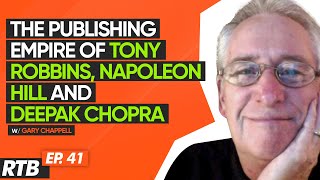
Gary Chappell went from living in a treehouse to running Nightingale Conant, the personal-development publisher behind Tony Robbins and Deepak Chopra. He doubled sales to $97M in three years, then retired to mentor others through a four-corner mindset: love yourself, forgive, don't judge, bring intention.
Questions this video answers
April 23, 2021
2014
From about $46 million to $97 million in three years
greatlifementors.com
$99 for a 45-minute session
Chapters
Hey, you're listening to the Road to A Billion podcast. I'm your host, Stefan Georgi, and I'm glad to have you with me here today. The Road to a Billion is a call and radio show style podcast where you can ask myself and my guest questions about freelancing, entrepreneurship, mindset scaling, businesses, relationships, copywriting, money and more. The reason for the name the Road to a Billion is twofold. One is I will have, well, pretty much have hit a billion dollars in sales, both for my own stuff, but also for my clients through E Comm, digital marketing, and mostly copywriting. And because I want to help to make an impact in the lives of a billion people over the next decade, we'll take your calls, answer some of your questions in about 30ish minutes from now, maybe 40 minutes. And the way that works is you put your questions into the Q and A section for those of you who are in zoom. And then my good friend Ed Ray, who co hosts the show with me, will go through and review those questions and feed them to myself and my guest. And Ed Ray, do you want to go ahead and say hi to everybody?
Hey everybody.
My name is Ed Ray and I help people effectively market themselves without sacrificing their voice or their integrity. Love it. That's perfect. I love that. I love how your why and your mission has evolved over time, Ed. And that's fantastic. Thanks, man. I appreciate that. Yeah, absolutely. Cool. And my guest today, I have an amazing guest. I'm super, super excited for this. My guest is Gary Chappelle. If you don't know who Gary is, he's the former CEO of Nightingale Conant, one of the largest and most respected personal development publishing companies in the world. Throughout his career, he's worked with titans like Earl Nightingale, Bob Proctor, Lloyd Conant, Vic Conant, Tony Robbins, Brian Tracy, Joe Vital, Deepak Chopra, Jay Abraham, Robert Kiyosaki, the Napoleon Hill foundation, and many other of the biggest luminaries and voices in the personal development future. He also has an amazing story that we'll get into throughout this episode. But Gary, thank you so much for joining us today.
Well, it's my absolute pleasure to be here. Thank you for inviting me.
Yeah, absolutely. It's really cool. It's one of those things where I think John Capani is the one who connected us, if I'm not mistaken. And then this last weekend, I was in Miami for an event and Ian Stanley came up to me and I was using the bathroom and Ian Stanley was like, you're doing Gary Chappell is Coming on the road to a billion. And I'm like, yeah. And he's like, gary's one of the five most influential people in my life. He's so amazing. He's so smart. And he just was going on and on about what an impact he's had. So I was already excited. And then hearing from different people that I know what an impact you've had in their lives was really exciting. So, yeah, just thrilled. Thrilled to have you here. So, Gary, I guess, Lester, we know you became CEO of one of the largest personal development companies in the world, but you have a pretty fascinating story from. You didn't set out to do that, right?
No, I did not.
So how. I guess, I know it's a long story, I'm sure, but how did it come about? When you're a young man, you're 21 years old or whatever, where were you in life? What were you doing? And how did that journey sort of progress where you ended up becoming the CEO of this large company?
Well, if you'll give me the opportunity to try to condense the story down. So mine really was a journey from lazy musician and handyman to the CEO of Night, Gil Conant. And as you said before, you know, they're the largest and most respected personal development publishing company in the world. So here I am at 31 years old, I'm a lazy musician, and I do pick up some handyman work. And like a lot of guys my age, I just didn't have any direction. I was literally living in a tree house in Florida and playing. Playing in a rhythm and blues band and, you know, kind of goofing off, not really taking anything too seriously. I have to mention that the treehouse I was living in certainly was not built by the Treehouse Masters. It was a plywood platform about 25, 30ft up in the air. Two by sixes nailed to the tree were, you know, it was an awkward climb, and I had a dome tent pitched up there. So one night I'm sleeping in my downtown, and this big storm comes along, and it starts rocking that tree back and forth, and my tent starts sliding. There's no railing on this thing, and it's literally scared me. And so the next morning when I got up, I realized my life is not fulfilling and I'm ready for change. And I think that that thought, and I was serious about it, the notion that I wanted change, and I recognized I wasn't being fulfilled. I think it sets a chain of events up. So, anyway, not too long after that, a fateful Trip to Chicago really changed my life when I asked my brother to put me to work for one week while I was visiting for a family reunion. And at the time, my brother was running the construction crew for Nightingale Conant. Nightingale was booming under the guidance of Lloyd Conant. And Lloyd's vision was to sell mindset material. You know, like the information Earl Nightingale taught. He had just read, not before I got there, but many years prior. Lloyd had read the Science of Getting Rich by Wallace Wattles. And it, like me, you know, it lit a flame in him. So Lloyd became a miner of life changing gems. And Earl was too. Earl Nightingale was too. So they teamed up and launched Nightingale Coenant with the go, you know, sharing these ideas with people. So anyway, it's Christmas, I'm in Chicago for one week. It's too cold to listen to the blues bands, which were my, you know, which was my mission. So I asked my brother to put me to work remodeling the new Night Yoko headquarters. And back then I was always listening, listening to music on my Walkman while I worked around as a handyman, you know, and the Sony Walkman at the time was really good tech. It was this tiny battery operated cassette player that offered great sound through small headphones. And I think it was honestly my destiny kind of hinged on that little Walkman because here I am at Nightingale Conant pounding nails and I have this Walkman. Nightingale Conant sells cassettes. And I figured, hey, you know, maybe I should listen to what they sell. So I asked if I could listen to their best selling program. And at the time, that was the Psychology of Winning by Dennis Waitman. And when I, when I heard it, it literally exploded my brain. I mean, I was hearing things I had never heard in my life. It was about goal setting, pardon me, it was about goal setting and, and self esteem, self image and you know, all these concepts that to me were so foreign, but were so. It's like they just instantly clicked with me. So, you know, and you know, to me you distill success pretty much down to a matter of determination, focus and follow through. Yet, you know, that's a lot easier said than done. And so I think these products like Nightingale Conan offers and some of the things I've stumbled across, they kind of, they kind of make sense of all this material in a way that people can use them. So here I was working hard, really enthusiastically swinging this hammer. And the department head of the manufacturing division who was working with my brother on the new recording studio for Night Galconant, he Noticed this enthusiasm brewing in me. So he offered me a job in the manufacturing department. And from that point on, I recognized, okay, I'm not satisfied with Florida, where I was living. I'm going to take this job. I literally became a product of the product. It was a completely new experience and feeling for me. I honestly felt like Nightingale was my company. I just went, you know, I mean, in my mind, I was going to do whatever it took to, you know, to help the company. So over the years, I advanced through the ranks. And, you know, and like you said, I had the honor of working with all these great guys. You know, just my story alone with Earl Nightingale was pretty fascinating. And I retired the CEO in 24 in 2014. And today I work with the Napoleon Hill foundation as part of their certified training program. I consult with some organizations. I still play music, but the truth is, I don't work in any form or fashion. Everything I do is play. I do not do anything unless it is really appealing to me. And I love everything I do. And I feel like I've got the most blessed life. I'm a very lucky guy. I'm not a real bright guy, but I am very determined and very passionate, and that passion has pushed me through so many challenges. That is one of the things I learned, by the way, is that, you know, you can be brilliant, you know, if you go. If you chase the money and not something you're passionate about. I think business can be a real struggle because passion provides the gumption you need to overcome challenges, and everybody faces challenges. So that's kind of the nutshell of it all.
Yeah, that's amazing. And I definitely have a variety of questions based off of that. You know, one, I just have to know a little more about the treehouse. I mean, how did you end up in a treehouse? Was it like your friends build it? Was it like a bulletin, like, hey, tree house for rent? How did that come about? I got to know.
Well, so it wasn't as grim as I thought. The platform was real, the treehouse was real. All that was real. But it was on an estate that was right on the water with a swimming pool and Jacuzzi. And it was like a party party central house. And it was a guy who had lived right down the street from my mom. And, you know, I was in my 30s, by God, it was time for me to move out. So I moved into the treehouse. And, you know, I. It was all the musicians hung out there. We constantly had jams over there. So I said, hey, do you mind if I move into your tree house and, you know, I'll pitch in around the house? And that's kind of how that came to pass.
Amazing. I'm imagining, you know, your mom like, gary, you need to grow up. And you're like, I am growing up, Mom. I'm moving out into a tree house.
Yeah, that's exactly the way it went.
Baby steps, right? Cool. So, okay, so when you hear that, that first cassette, I mean, it's really, really cool. And it is. There's a lot of, you know, I guess one question, actually. Do you think of it as serendipity? Do you think of it as, you know, like fate? Like luck, God. Like how the fact that, you know, this sort of chain of events happen that lead you to a warehouse that happens to sell motivational and personal development material that's the best in the world, and then it all kind of lines up in this way. Do you look at that as all just kind of blind chance? Is it like the universe doing you a solid? How do you view that journey?
Well, I certainly am never one to impose my beliefs on anybody, but I certainly believe. Certainly, I remove the certainly. I believe that we're all connected. Everything's connected. There's no getting away from it if you pay attention in life. I think it's hard to deny that, but for me, that's been the case. I shouldn't be alive many times over. So many things have happened to me. You know, I. Even before getting the Nightingale, I had so many remarkable events unfold in my life that I'm very much a believer that, you know, there's something else going on, and there's a. There's a resource available to us that if we just kind of chill out, you know, meditate. I'm a big, big on meditation, connecting, and I believe intention is a very powerful thing. So, you know, I. Like I said earlier, I think when I made the decision to change, that opened the door for change to show up. And so, yeah, I think it was, you know, I don't want to say it was fate. I want to say it was. It was. I set a goal. It was nebulous. You know, I wanted change. But, you know, I think it unfolded because there's some unseen force going on that helped it happen.
Yeah, absolutely. And when you did listen to that cassette and you start hearing about goal setting and things like that, I mean, why do you think that that resonated with you so much? Because goal setting isn't necessarily a really sexy topic. Right. It can Be. It can be. It's a secret weapon for so many people. Right. If you don't know where you're going, you'll never get there. Like talking about intentionality beginning with the end in mind, all those sorts of things. And I think a lot of high achievers understand the power of it. But again, not like the sexiest topic. If I want to write an email about setting goals, a handful of my subscribers will be like, yes. And most of them may not read it. So why did that resonate with you so much? What was it about goal setting that really excited you?
Well, it wasn't, you know, the goal setting was very important. I'd never set a goal in my life other than the one that I had for change. You know, it was really the aggregate of all the ideas. I think that, I think the part of the psychology of winning that struck me the most was learning about self image and self esteem. Because I had dropped out of college, my dad was very upset with me, I moved into a tree house. I wasn't working very hard. I wasn't making in the eyes of my parents and my parents friends, I wasn't making much of myself. And I guess I really didn't care. But, but when I started hearing this stuff about self image and self esteem, that's the part that flipped the switch in me. You know, I recognized, you know what, I've got low self esteem. I see that. And so that's really the part that kind of woke me up when I, those few, you know, that short couple, short years I was in college, I was studying psychology. I've always been interested in psychology, spirituality, you know, it's all been very appealing to me. So really that was the side of it that struck me the most.
Got you. And then to follow up on that, how did you go about then like addressing the challenge of having low self esteem? You know, what actions did you take after that?
You know what? I started listening. Like I said, I became a student of the product. I literally listened to every single program, program Nightingale had ever published. And of course I was there for many years and I listened to everyone they published since. And so, you know, I just started applying what, what I was learning and, and you know, I'll get to a specifics about that question a little bit later if you don't mind, because I think I've learned more valuable information since I retired than I have the entire time I was at Nightingale Conant because I was so busy business focus there. And you know, fortunately I was in a position where I could retire and I could do the things I wanted. And so I'll address that a little bit later. But when I, when I talk about the mentoring that I've been doing, you mentioned a few, few guys that you talked to earlier. And you know that that opportunity to mentor people has taught me more than I've ever learned in terms of real value, particularly value for myself. You know, it's something that I get so much out of because I really feel like I'm helping. So anyway, you know, that's kind of the long answer to your question.
No, that makes perfect sense. And okay, I've got thoughts on mentorship as well, but I will save them for now. Another question. Based on what you shared, the idea of you feel like work has play, right? There's a Cleo Gibran quote that I love that essentially goes, work is love made visible. And the idea being that when you, you know, if you put your love into what you're doing and your work and love can be almost the same thing, an expression of love through your labor, your work or your actions. I'm curious, as CEO of this company, I do want to talk a little bit more about the lessons learned as CEO and all that, but at that time, did you feel like it was also play or because it was such a big responsibility, do you feel like now that you've retired, you maybe are able to enjoy work, the work you do more like now as a quote unquote, retired man than you did as CEO?
It was always play for me. It was play from the get go. It was, you know, there was no, I think that, I don't think I ever experienced too much stress, you know, anything that I even took notice of until I became the CEO. And that was, you know, the end of my career, the last six, six or seven years of my career. And yet I accomplished a lot while in that role and it was very gratifying. But, you know, then, you know, the serious responsibilities, you're the guy that's responsible. You don't, you know, you don't have anybody to defer to. So, you know, you asked earlier about self image and what I learned, what, you know, what did I do to overcome that? I think that because I was instantly so passionate about the content and the product and that I was working for a company that sold this stuff and I just wanted to help. I think all that stuff just disappeared for me. I never really felt like I had an issue with self esteem because my passion washed it all away. I was determined. I Knew we were getting the coolest thing. Right off the bat, I got exposed to the testimonial. So I'm hired in the manufacturing department where, you know, and it was brand new department. And, you know, I really got to play at a really high level very early on. But it was the product, you know, I was always listening to the product. I got quickly transferred over to become a producer. But, you know, I was just so passionate about. About getting the product into the hands. I was getting these testimonials from people that were saying how much the product changed their life. One that really stood out was a doctor who had been a doctor for 20 years. And he said, I was a doctor for 20 years, but I wasn't a successful doctor until I started listening to Nightingale Kona products. And, you know, it's hard not to. It's not. It's hard not to really love what you do when you get that kind of feedback.
Absolutely. Yeah. And I think that's such a translatable kind of sentiment or observation too, for. Yeah, I work with a lot of copywriters and. But I tell this to copyright all the time. Like, I understand when you're starting out and you're kind of Will take any gig you can, it makes sense. But what you'll find is that when the writer. And this has been the same for me, when you really love the product, when you fall in love with the product and you have enthusiasm and especially when, yeah, there's testimonials and stories and you start to feel like evangelical, it just translates into. Into your writing, into your marketing, into your motivation, into your energy, everything you do. I mean, there's just no substitute. Like, money is great. Like, I'm a capitalist, I suppose, but like, you know, I like money, but nothing. It doesn't motivate you. Once you get past a certain. Your Maslow hierarchy of needs are met. Right. Once your baseline needs are met, like, money just will never motivate you as much as, like, purpose and fulfillment and passion will. And it sounds like kind of. It can sound cliche, it can sound like whatever, but it's just the God's honest truth. And it sounds like it was the same thing for you, and it was a very powerful source of almost rocket fuel that then helped to propel you on this trajectory in your career.
Yeah, that's right.
Very cool. So was it kind of a foregone conclusion that you were going to become CEO of Nightingale Conant, or did you have to kind of fight for that position or interview for it? How did that come about? I want to hear about that, and then we'll kind of talk a little bit about the. The time as CEO and some of the lessons learned there as well.
Yeah, you know, it's interesting because I never had the goal of advancing in the company. I never had the goal of, you know, going from one department to the next. I just did things that usually, you know, I like to tell people that it's really good if you can get into a big organization that's disorganized because it is a. There's so much opportunity in when there's problems all around you. I believe that the number one quality of a leader is your ability to solve a problem. And, you know, because you can't lead unless you know how to solve problems. And I. I was a really good problem solver. I just refused to let you know. So often people would come to meetings and they would talk about a problem, and, you know, and then they'd come to the meeting next week and they talk about the same problem. And so many times I would just cross departments. If I saw a problem recurring, I would come up with a solution. I would bring the proposal to the meeting. I'd say, well, maybe if we did this. Very often it was in the form of just a spreadsheet or a form or way of tracking the way we would lay out agendas or details around product reduction. So for me, I never had the goal of being CEO. It just kind of happened because I was tenacious about solving problems my entire career.
Was there a succession as the time comes? I mean, how did it come about that you became CEO? Was it that when someone CEO was stepping down, like, you know, we need someone to replace our CEO?
Yeah. No, no. It. You know, every. Every company and every industry goes through a life cycle. And, you know, Nightingale was launched in the 60s, and, you know, they did real well early on, you know, and then things faltered and, you know, and they had to reinvent themselves. And so that had happened at Nightingale a couple times during my tenure, you know, at Nightingale. And anytime that happened, that was always, okay, here's a problem. How do we solve it? And so I became the CEO after we got involved with a gentleman. I don't want to say his name, but he's in prison now, and he was. He tangled with the ftc, and my boss, the guy that ran the company at the time, was the guy. Now, granted, he was a really brilliant guy and that. And that guy, he really is in prison only because he defied the FTC he was a very big infomercial guy. Everybody knows who he is. I learned a lot from him personally. I kind of drew out the best of everybody and I kind of tried to overlook the bad side. I didn't, I never turned a blind eye to, you know, I'm extremely honest and that's the way you got to be. But anyway, this guy got in trouble and really, I think it was really Y2K that kind of set the course of action. That's back when everybody. Where all computer systems had to be shifted over by the year 2000 and our computer department was really running behind. Once we made that switch, we went for about two years without any reliable financial statements.
And.
Yeah, but by then I was running the marketing department and I was very anal about keeping track of every single detail. I was. So, you know, we had things in place, but I made sure that we ever. We tracked every promotion. We, you know, we knew what we were sent, what the cost of goods were. We had this spreadsheet every time we did a promotion. We filled in the blanks. You know, return rates, bad debt, you know, cost of goods, cost of promotion. I and, and I had been doing this for years. So when we lost track of our financial statements through, through our accounting, I was able to bring that information forward to, you know, so that kind of elevated my, my position in the company right away. And. But, but the bank quit loaning us money because we didn't have any financial statements. So the board of directors fired the boss and put me in charge.
Wow. Yeah, that's fascinating. And I did want to observe that. I think it's interesting in hearing your story, how you were manufacturing and then the product side and then the marketing side, it seems like you kind of wore a lot of different hats. And then when you're solving problems, went to the different departments, you're very cross functional. And I would imagine that kind of experience was, was looked at as an asset as you were becoming CEO because you truly understood the organization from a multifaceted approach. Right. The many different divisions. So that's kind of just. You would agree with that, right? Did that, that helped you to put you in the position to end up becoming CEO?
Oh, yeah, yeah, yeah. It was really the, you know, I mean, it wasn't a goal, it was just, I was getting things done and you know, that that's what happened. You know, it just kind of triggers a couple key things that I did during my career that really helped that path. And number one was learning about time management. Now we didn't sell a time management product at the time. But I was realizing, because I take on everything, it's like, yeah, I'll do it. I'll do it. You know, I was always an I'll do it guy. And. And that overwhelmed me. There were so many projects I was working on that I couldn't get a handle on. So years ago, there was this Franklin planner that was out there, and it was based on Benjamin Franklin's the way that he organized his day. And it was very simple, but it really changed things for me. So learning how to prioritize my task was a really, really. It was a leap for me. The other thing was because I was, you know, because I would bring, you know, ideas across departments. I gotta say that a lot of people didn't like me for that. Department heads, you know, that weren't solving the problem. If that, you know, if problems continued in their department, I would step forward. And I had to make the decision. I had to make the conscious decision that I could if I wanted to help the company. I couldn't allow myself to care what other people thought about me. And that was a huge. That was a huge step. And I think I took it overboard. You know, I went a little overboard on it because, you know, I certainly wasn't a flawless employee. I made a few mistakes, and I think it's just as important to talk about the mistakes. It is, you know, because, you know, I certainly don't want to be bragging. I am just sharing literally what happened. But some of my greatest lessons were learned from big mistakes that I made. And so. But those two things were really big. You know, not caring and learning time management. Those are huge for me.
Yeah, absolutely. No, those are great. So as you become CEO, let's talk about first and foremost. And I love the mistake aspect. And I do want to talk about that because I think you're right. People resonate and learn more from mistakes than they do from success as often. Right. You can model success, but there's a lot of value to seeing someone say, hey, here's what I did wrong. Here's what I learned. Maybe you can avoid this mistake and hope that they do. What are the characteristics that you feel makes a good chief executive? And I'm curious about that. First and foremost, what are maybe the top characteristics?
Sure, sure. Well, I mentioned one earlier, and that was be a problem solver. You know, I think that that's really, really important. I think that you have to respect the numbers. You know, it's all about. It's really, every business is about the numbers. The numbers tell you what to do. One of the really cool things I did when I became CEO is, is I modified our financial statements. We had many divisions in our company. This doesn't apply to most people because they don't have all these channels of income split up. But there's certainly some companies out there that do. You know, we had a distributor division, a radio division, a TV division, a direct mail division, an Internet division. And we had this gna, you know, the administrative costs kind of allocated and we didn't, we weren't reading the true performance. So I made sure that everybody timestamped their activities and were very honest. And we set it up in a way where it wasn't too time consuming. But we made sure that we allocated properly GNA so that general and administrative, you know, things like attorney fees and, you know, and all the things that are kind of company wide, they still need to be allocated fairly to every single division. And so we just, like I had done with the marketing reports, I made sure that our financial statements split out every little line item. Big pain in the accounting. People didn't like me. But, you know, it gave us the numbers that told us what to do. And so that allowed us to forecast, that allowed us to read every channel very cleanly. Understand, you know, because there were certain. There was a period where we thought mail order, for example, was losing money because it was one of the oldest divisions. So over time it was the, it was the repository for all undefined expenses. But once we broke it down, we realized, oh man, mail order's actually making a ton of money. It's these other divisions, these newer divisions that aren't properly carrying their weight. So, you know, being analytical, paying attention to the numbers is also an extremely important part of being a CEO. Understanding how to put the butts in the right seat. I think that's also really important. I have to say my biggest claim to fame was I took Nightingale When I became CEO, we were doing about 46 million in sales. And in three years I had turned that into not, I had. The team had turned that into 97 million. And it's because I had this vision to. I had this vision to get into radio. Now, many years ago, we were in radio through syndication. Earl Nightingale had the largest syndicated radio program in the world called Our Changing World. And yeah, but, but syndication kind of changed. And yet I knew that our market, there were cassette players. I mean, they listened to the content on cassette or CD and they listened in their car. We knew when people were learning the information. That's the great thing I love about self development and audio, is that you can learn while you're on the move. You can sit in your car, you can commute. I mean, it's just the best way in the world, in my opinion, to learn anything is if you can listen. So anyway, you know, I just saw this opportunity. Look, if we just started running radio ads during commuter time for some of our products, you know, that would have to work, right? So I ended up hiring a guy that I respected. Mike was his name. He real smart guy. I hired him, put him in charge of the radio department. And it was that department and that vision that, you know, more than double our sales. So. And while that was my claim to fame, really and truly, I think the things I've learned since I left Nightingale, you know, I feel like I'm contributing more now, maybe even, you know, to individuals at a different level than I was at night Galconant. But the things I've learned are really, really fun and inspiring. And so anyway, that's where we are now.
That's great. And yeah, I agree, it was funny. I mean, my sister, remember, she was, I guess out of college in her first job, but she had like some Brian Tracy. Like, honestly, they might have been cassette still, maybe they were CDs. But I remember listening like Brian Tracy stuff about Celine and ABC and like the one like the Speak to Win, you know, and all that kind of stuff. And just I think that stuff is so powerful because even if you don't recognize at the time, it's like you subconsciously, you pick up on these things that can last with you forever. And it's so powerful. Okay, cool, Gary, so as your CEO, what are some of the mistakes that you've made along the way? Then? It can be as chief executive officer, it can be prior to that, maybe it's a couple of the big mistakes you've made throughout your sort of professional journey. And what were they and what did you learn? What was the lesson learned from those mistakes?
Well, thanks for asking that, because I feel like the rubber meets the road when you talk about what you do wrong many times. So as I advance through the company, I admit my ego got inflated. And that's one of the things that happens, and it's one of the things I'll talk about a little bit later, how big of a role the ego plays in everybody's life and how sabotaging it can be. So anyway, at one point I was kind of the gatekeeper for all JVs, anybody that wanted to approach Nick Galconin, you know, they had to go through me. And we tried a whole bunch of them and like, none of them worked. And so that kind of tainted my view of them. And after a while, I was becoming skeptical of anybody that approached it, you know, so I would kind of judge people. They'd show up and, you know, they would have this pitch and, you know, and I, And I turned. I turned down a few of them and there was a couple of them that went on that the guy took him to another company and they became mega blockbusters for them. They were huge. And so I realized, I learned from that, that, boy, you just. Judgment is. I'll talk about this later. Judgment is the thing that we have to learn to get a handle on, because judgment does not serve us in any way. It is a tool of the ego. It works against us. You know, I learned from that experience that, look, you can just do your due diligence, dig into the opportunity. You know, if they've done some market research, ask them about it. Don't, you know, don't judge anybody. Just explore the option and don't judge the person to determine whether the opportunity is going to be beneficial or not. You know, look at the opportunity itself independent of the picture. Because so many people, people love to be informed, but they hate to be sold. And so, you know, I think I was getting caught up in that. You know, I'm being sold, so, you know, and I'm the guy that can squash this thing. So by God, I'm going to do it. So. So I learned that, you know, that was really my. The beginning of my journey of getting a handle on judgment and, and something that again, I'll talk about a little bit later. Cool.
So I have a question on that, a follow up there, because it makes perfect sense, right? To look at the opportunity and to isolate that from. Someone could have awful presentation skills and yet they've got an amazing idea and drive, determination. So it definitely makes sense. How do you balance that though, versus gut instinct and a gut check on people? Because there's often. I talked about this. I did a bonus episode this week with my friend Craig Clements, who's a really successful direct response marketer and entrepreneur. And we talked about how usually when you. There's JVs where something feels off, right? And then you sort of go forward despite your spidey senses tingling and that often you end up regretting that. So how do you navigate between wanting to look at the opportunity as something like isolated but Also not ignoring your gut or your intuition with certain people, or did you generally feel like, you know, what, like, my gut, I can't trust it, you know, with business deals. I'm curious how you navigated that dynamic.
Well, that's a really fair question, because obviously there's intuition and there's gut. You know, there's gut feelings like. Like with radio for me, you know? You know, But I think there's also a distinction between, you know, you just got to learn to understand when you're being judgmental and when you're being smart. And let me go back to a story that I think will make that illustrates this point really well. So there one point at night, Galcona. Early on in my career, I'd been there for maybe five or five, six years. And my best friend who worked at Nightingale Conant, became my boss. And he was a great guy, but. But the most asshole of a boss you would ever meet. Now, he was never. He was never an asshole to me, but he was just, like, vicious to other people, other departments, and he literally robbed the fun for me. It was no fun being at the company anymore. And I left. I moved back to Sarasota. I've been trying to have a baby with my wife for about four years. And so we decided to move back to Sarasota. And I started a business. Not a handyman, but a home construction business. And so I did a loss leader. I did a mailing to a bunch of people, and on the envelope, it said, stop the struggle. And it was a person trying to. Was struggling. It was an old lady struggling to open a sliding glass door. In Florida, there's sliding glass doors everywhere. And so I would get these. You know, I'd get these. And I promised that I guaranteed I could fix your door for 1995. So I got a phone call from a guy one time, and he said, and he said, so you can fix my door for $19.95? And I said, yes, sir, I can. He said, and you can guarantee that? I said, yes, sir. Yes, sir, I can. And he said, well, bend over. And so, you know, most people would have freaked out at that. But I was very confident, you know, because, hey, you know, I didn't know when I first moved over there, back there, I didn't know that much about sliding glass doors. But I learned, you know, I took, you know, it took two days to learn how they worked and where to get the supplies. And so I said, no, I'll come out and I'll fix your door. So I show up with my helper and, you know, fully expecting to see a real jerk, you know, real asshole. And of course my ego is, you know, I'm going to show this guy that, you know, he's wrong. And, you know, it turned out to be these 10 foot doors that were really wide. But sure enough, you know, in a half hour, I had him up and running. And that guy turned. That guy turned out to be my best lead. He was my best customer. He turned me on to his parents, who became good friends. We'd go visit them, you know, on our way between Chicago and back, you know, so, you know, sometimes gut feelings, you know, my gut was, okay, this guy's a real jerk. But I don't know, maybe my gut was, you know, you know, I could work this through. But I think the point is, is that had I judged that person, you know, I would have lost out on a lot of business. So ultimately, my wife got pregnant. She said, I want to go home to my parents. She's from Chicago. She moved back. She said, gary, I'm moving back. Please come with me. I went back and Nightingale asked me to consult and I started working with Jay Abraham. And that's how I got back into Nightingale. And, you know, so it all kind of unfolded from there. But I think, to answer your question, you know, that's a tough one. I think you just have to really think, you know, like I said earlier, you've got to do your due diligence when a JV shows up. You've got to really look at the opportunity more than the person.
No, that makes perfect sense. One more question and then we're going to move to. I do want to move to the mentoring, coaching, what you're doing now and things like that. The question, because you mentioned Jay Abraham, who, like, I don't know super well, but I've been on some podcast panel things with him and obviously think he's brilliant. My wife, one of the first books she gave me was getting everything you can out of all you've got or got the tailware of that. But he's been kind of notoriously hard to work with. Not that he's a jerk or anything like that, but he's just like a, you know, like a copywriter, marketer, consultant. And he's, you know, like a lot of the brilliant minds of sort of can be right? Like Dan Kennedy, can you give fax you stuff? And that's it. So my question is just when you're working with talent, like Jay or whoever it may be, it doesn't have to be Jay specifically where they're, they're brilliant. They're just bringing so much value to the road. But they're perhaps, you know, not traditional, like hyper responsive, you know, but they may have unique communication styles. You know, how did you manage that? How do you, how do you handle working with kind of talent where perhaps they're not the easiest people to kind of wrestle in sometimes?
Well, it's funny you had mentioned Jay after, because the reason I was brought back to Nightingale is because Jay had pitched to the COO at the time this idea of developing a new division for Night Yo Conant. And nobody could manage Jay. And so he reached out to me shortly after I moved back to Chicago and asked if I would, if I would be a project manager and manage the relationship with Jay. I love Jay. I've been to his house many times and he's all the things you said he was. But he's a dear soul. He's just got one of these brains that's like a, that, that's like an engine that's just like constantly firing and sometimes misfires. But he's really brilliant. He really is. And, you know, I think the real key is focus on the finish. What you're, what you have to do with these people is, look, what we're going to do is we're going to create a product. And with that was what we were doing with Jay. He wanted to create this very high end product. Nightingale didn't sell anything over, I think, $120 at the time. And Jay brought this idea forward of, look, you guys are underselling everything. You know, you need a, you know, let's create a program and, you know, we'll sell it for $3,000 and, you know, let me show you how it's done. And so, you know, that's what I did. I just focused on, okay, we're going to create this high end product. We're going to have to market it in a different way. Jay was really interesting because he.
He.
Had me record every conversation that he never wrote copy. He would just get you on the phone and he had to record it. And then I would have to have all those transcribed and we would end. But from that process, we pulled out the content of the product, the marketing for the product, you know, and my entire focus was always on, okay, how do I, how do I turn this into a great product? So it was never about the communication. It was all about just recording, asking questions, always being respectful. And by then, by the time I'D come back to Nightingale. You know, I'd learned a little humility, and so I just simply focused on the finish. What was the product? You know, what. What was the outcome we were shooting for? That's what we got get to.
Very cool. Really cool. So, Gary, to switch a little bit, then let's. Let's go ahead and talk about the mentorship and what you're doing today. And also, I'd like to not wait till the end. So, two questions. One is people who want, and I think they may be tied together, people who want to interact with you, who want to get more from you, whether it's following you online or maybe it is through mentorship. What are the best ways for people to. To kind of, you know, be in your world and then, you know, from there, assuming they're tied together to. You'll hear more about what you're doing with mentorship and helping people today.
Okay, sure. Well, I appreciate you asking that question. You know, I have a. I have a website called greatlifementors.com and there I sell Napoleon Hill product that I license from them. I sell a lot of. I have a lot of freebies on there. I think Wallace Wattles, the Science of Getting Rich I have there. I have a few others. But I have my mentoring page up there. And so people can get to me through greatlifementors.com. that's probably the best way.
And then for people who do. What does mentorship with you look like? So I think Ian booked some calls with you. And I don't know if he's gone deeper or not, but again, he said the calls are insanely valuable when people do work with you or you work with people in a mentorship capacity. How does that. How does that work? What does that look like?
Well, that's. You know, I just had a conversation with Bob Proctor a couple weeks ago, and he was. He was. He was. He wasn't mad at me, but he thought I was crazy because he wanted to know what I was up to. And I told him I was mentoring. And again, I don't mentor for the money. I did my offers. Really unusual. Nobody's going to like it because, you know, and I don't take. I don't have that many people that I mentor, but maybe after this call, I might get a few. Who knows? My offer is you go to my page, and for $99, I'll spend 45 minutes with you and I'll take notes and we'll talk. And when we're done, I'll Think about what we, you know, we talked about and I'll send you a follow up on what the best advice is. Takes me two and a half or three hours to do it all. I don't care. Because what I care about at this point in my life is helping as many people as I possibly can. And I'm going to share some of the stuff I share in that session because, you know, success always starts with the mind game first. And is this a good time for me to kind of share this?
I would love for you.
Yeah. So I'm not going to tell you anything you don't know, but I think I'm going to frame it in a way that most people have never heard before. And it's very simple, straightforward stuff. But I put this together, you know, so I've been mentoring about three years now. It wasn't anything I intended to do. My daughter just suggested, gary, why don't you become a coach? And I said, I don't want to do a coach. Besides, also the $99, there's no long term commitment. You do it one time and if you want to come back, you go sign up again. You sign up again. And so Bob was telling me, oh, you got to raise your prices. You should be charging $2,000. But I don't want to leave. What I really appreciate doing is helping people that don't have access to this kind of information because they can't afford, afford it. That's really what I'm trying to do. And I genuinely care about every single person I talk to. And so this is really the short, the short, you know, the short breakdown. And that is that like a house or a building. Our lives are built on a psychological foundation. And if that foundation is weak, it causes problems with the entire structure. And our lives are the same way. I have this four corners philosophy of how we can live a happier and more successful and productive life. And here it is. The first corner of the foundation is learn to love yourself. It is the single most important goal anybody could have. And here is why. Because you're only going to be as happy and as successful as you believe you deserve to be. You know, I mentioned earlier the ego. You know, the ego is that very primal side of us. And it is, it's very aggressive. It's the side that, you know, back when man first showed up, you'd grab a club and you'd bop a woman over the head and you'd drag her into the cave and you'd rape her, you know, and that's what we did, you gather up your buddies and you'd go to the next clan and you kill them all just so you could steal their fire. Fundamentally, we have not changed that much. We still have an aggressive ego. It's that very primal side. You know, it's. It's the dog that bites the child because he picks up the food out of its plate because he wants it to feed it directly. You know, we just. It's there when we wake up every morning until we go to bed. You never defeat the ego. The ego is always there, though. The best we can do is control it. And you control it by first and foremost, learning to love yourself. And it is something you have to do every day for the rest of your life. If you don't love yourself, your life does not work. You may get to the certain level, but there's just a bar. You can't, you know, there's a ceiling that you'll never be push beyond if you don't learn how to love yourself. So that's the first. It's not narcissistic. It's practical. So that's the first corner. Learn to love yourself. The second is learn to forgive. Forgiveness is not a spiritual thing or a religious thing to me by any stretch. It is the most powerful psychological tool we have at our disposal. It lets us let go of the burdens of the past. You know, we go through life the ego, because we have this ego that's always working against us. Our tendency. The untrained mind will go through life collecting grievances. You know, somebody. Somebody hurts our feelings or says something or does something, you know, you know, harms us in our mind. And so what we do, it's like we. They're like rocks, boulders, you know, that we pick up and we throw in this bag that we carry around on our shoulder and we go through life. And some people go through life collecting those. They get the next grievance and they put it in that bag. And after a while, we get weighed down by those, and we can ultimately be crushed if we don't learn how to forgive. We're not doing it to let the other person off the hook. We are doing it to free ourselves. Forgiveness is extremely important. It's a psychological tool, not a religious thing. The third and the most practical corner of the foundation is the thing I talked about earlier, and that's, you know, we're groomed to judge. We tell ourselves we're going to do it because it protects us. You know, it helps us differentiate between people that are Going to hurt us and help us. Well, that's just a big lie. You know, that's the ego lying to us. Judgment controls our emotions. It's very straight, it's very fundamental. It's very provable. Many years ago, even before I worked at Nightingale Conant, my sister approached me. She's been kind of like my spiritual soulmate from very young age. And so she approached me and she said, gosh, Gary, I've been reading this book, and it talks about how judgment is a bad thing, not a good thing. And so we started exploring the idea. And so, you know, I proposed. Well, what if we go. Let's try to go through tomorrow without judging anything. We know we're going to catch ourselves, you know, doing it. But let's just say, nope, not today. I'll get pissed off of that guy that pulls out in front of me in traffic and makes me slam on the brake the day after tomorrow. But tomorrow, I'm not going to judge anything. That was the day. That was the first day that I ever understood what real happiness was. Up until that point, I had never been happy throughout an entire day. It taught me that day turned into a week. I was able to go through an entire week with no judgment, and I was blissfully happy. And I learned directly how judgments control our emotions. So if you're sad, you're happy, you're. I mean, you know, it's because you're judging or not judging. You know, you're. All you have to do is pay attention. If you find yourself in a position where you're being. Where you're emotionally drained, it's question yourself. What am I judging? It's either somebody else or yourself. You know, we tend to project. You know, we. As humans, we love to. We love to project blame onto other people rather than take responsibility for ourselves. But that judgment, you know, it is really, really, really important that we get a handle on our judgments, because until we learn to control them, they're going to control our emotions. So the final corner of the foundation of life is bring intention to the other three. Bring intention. Mean it. Make this a real goal. I mean, don't make it. Oh, that's a night. Yeah. Loving myself. I think I'll do that. That's a really great idea. It's too important. It is the most important thing you can do in your life, period. Love yourself, and people will start loving you. People will want to go out of their way to help you. Loving yourself, it allows you, for people, to witness what love really is. A lot of People don't see it. And when you are non judgmental and when you genuinely love yourself, it is easy to love other people. You get along with people better, you make friends easier. It just opens all kinds of doors. So bring intention to that being your number one goal. Bring intention to using forgiveness constantly. Bring intention to learning not to judge. I promise you that there is great power and positivity in doing that. You know, people, people crave to see that type of individual. And hey, while I'm not there yet, I am doing my best to live and practice what I preach and I see it. And the people I talk to, the people that have come across you in large part it's because of that foundation that I've taught them. Of course I've got so many other things, I've got so much business background and my consulting, but that's really the essence of, part of the first session is talking about that foundation of life.
Yeah, that's amazing. And I love that you start there because if you don't have that foundational stuff, right, you can't build upon it. Right. If you're foundational.
That's absolutely correct.
It is fascinating too, you know, and Gary, because I see it, you know, copywriting and entrepreneurship and the people who come into my universe so many times they come and they think that their problem is one thing, but it's such a deeper, it's so much deeper. Right. And it's about your mindset, self worth, to your point, loving yourself, giving yourself permission. The judging one is really powerful. I can think of multiple times where I've been, I've been wronged or something and, or actually the forgiveness one, I mean, but I've been wronged or something and I've just like let it go. And I think of one particular. Somebody just ripped off like a whole thing. I did like verbatim ripped it off and you know, I, you know, when it happens, they're going back to the ego. You feel vindictive for a second, right? You're like, well I'm get the rest of my tribe, we're going to go to your village and slaughter everybody and you know, just stomp on your fire and. But you know, so I think that's never gonna go away to your point, right. But being able to quickly realize what is like when I forgave the person like the same night and my wife thought I was crazy, but it was, I explained to her it wasn't about that person or like I'm a good Christian or anything like that. It Was like the mental energy that will of holding a grudge against this person, of, you know, not liking them, of hating them, of trying to exact revenge upon them. Like all those things, that energy, I'm like, that is so draining, right? To take the time to do all of that versus just seeing, oh yeah, that's unfortunate. And going on with your life and moving from a place of creativity and passion and excitement. And it was, I just remember that time because that was maybe the first time I did it in such a self aware way and it was so powerful and I'm so thankful. So I think for everybody listening that advice, I mean all four of the corners are amazing. I just really resonate with the forgiveness one because it's so hard for us to do, but it's so liberating when we do it.
Yeah, yeah, that's exactly right. And like you say, you know, to me, I teach these because I think they're the critical part of building a successful business, you know. Yeah, it's the foundation, you know, you build your life on top of that foundation and that's why it's so very important. It's funny because, you know, the self love issue wasn't one that I've known, you know, I've heard it and like anybody else. Yeah, yeah, that's, yeah, sure, you know, that's good. But when I first started mentoring, you know, after I talked to, you know, 50 people, I realized, you know, this is a real. Because I ask a series of questions that kind of reveals that and I realized that this is a worldwide epidemic. You know, I think it's just because the ego, the ego, we are so prone to feel guilty or project guilt and I think that's a real big part of it. And so as I'm talking to all these people, I realized, man, the majority of the people I talk to at least 80% have an issue with self love. And it made me realize that, wow, you know, I had no idea. And so I started asking around and I, you know, I really believe it's a worldwide epidemic and I believe it's all guilt related. You know, it's. As a matter of fact, it's so funny because as I try to work on myself and improve myself, you know, I feel like now I'm, you know, I'm a better person now than I've ever been in my life, you know, just because I'm doing what I say I'm going to do. But my ego, my ego, you know, now it says, yeah, but when you were young, remember when you did this thing and that thing. So now it's kind of like taking me way back, you know, to 40, 50 years ago where I did these things. I mean, none of them were terrible. But boy, guilt is, you know, it creeps up that ego. You just got to be really, really cautious about it because it is always there. You know, you got to persevere. So, yes, this is, if you want to be successful, take care of the mindset stuff first.
Yeah, absolutely. So I've got a domestic scene outside, working from home, my daughter running around. So for a second, if you hear in the background, that's okay. Yeah, she's the best. Cool. Bobbi booked a session with you and I see some other people talking about how much this resonates. Rob Tidwell on Facebook live said, this is an amazing show today. Really agree. And Carl quoted you for the untrained ego will go through life collecting grievances because that is just an amazing way of looking at it. So for everyone, again, greatlifementors.com so funnily enough, because Ian, Stanley, he brought up what you charged too. I wasn't going to bring it up on the call because Ian's like, he's like. And he's only charging like $100. He's like, I should tell the guy, like, I don't know, because I mean, I don't. Like, I feel bad not telling him. He should charge way more. But you know, to your point, I understand, right? You're not doing it for like the money. You're doing it to help people make an impact. And. But yeah, it is seriously, for people who are thinking about it, for how many other things can you spend, you know, are you going to quote, unquote, like waste $99 on the next month? Right. Whether it's just some stupid thing. Stupid. But, you know, you may buy something that you don't need. Like you may go get like some clothing that you're gonna end up returning or never wearing or, you know, a dinner out or whatever it is. And you know, you should spend money on yourself and self love and all that. But at the same time, I think, you know, I'll probably book a call at some point because, I mean, for $99, why would you not do it? So I would highly urge everybody to do the same thing. Cool. So if it's cool with you, then let's transition over to a few of the Q&As. We just have a couple in here and I'd love to address those, if that works. With you, Gary?
Yeah, absolutely. It's my pleasure.
Very cool. So the way this works is I will kind of bring people on and let them ask their question. Sort of like radio show format. Right. And then we'll answer it. So the first one is going to be from Pierre, who wants to know about the importance of trust. So, Pierre, I'm going to go ahead and find you. Ed Ray had to hop off. For those who are wondering why I'm doing this, he had. He told me in advance he had another commitment. But, Pierre, I'm allowing you to talk. And let's hear the question. Pierre, how are you doing? Of course, people are sometimes surprised because I don't have, like, a producer, so I just bring them on, like, hey, you're like, we'll see. Peter, come. You know, everyone else, be prepared. So with Ciroc and Tiana, Pierre's still muted. So I'll ask Pierre's question for. For Pierre. Pierre said, you know, it'd be interesting to hear Gary's comments on the importance of trust in his life.
On trust. Wow. You know, I have a quota that I look at every single day in my office here, and. And it says. And it says, today, practice the end of fear. Trust. Have faith. Let Peach Peace show you the way. So trust for me is everything, you know, and what I have trust in is the universe, quite frankly. I have. I have trust in. I have trust in. I have trust that people, Everybody has the capacity to love, you know, because I don't believe there may be people that are off the mark, you know, as a matter of fact, sin, from what I've learned. Sin. Sin is an old word that comes from archery, and it means off the mark. It means I've missed the bullseye by so much. That's a sin. And, you know, we've kind of changed it. But, you know, I think that. I think ultimately there's not a person in the world that you can't get through to. And I think it's, you know, I think it's through unconditional love, to be honest with you. I think that that is something that's so important. So, you know, do you trust people with, you know, your money? You know, I mean, there's the physical things that. The tangible things that, you know, you've got to be responsible for. But when it comes to trust, I think everybody has a role in everybody's education and even the things that people, you know, when, like I say, I learned through mistakes, and I think most of us do, and many of us Turn mistakes into grievances, you know, and put them in a bag and let them weigh us down. But I think trust is essential. Trust yourself, but be willing to live with the mistakes you make. And I don't know if that answers your question, but I think trust is very important and you have to have a strong sense of trust.
Yeah, I think that's a great answer. Perfect. Cool. So we have two from Zorac now. Zorac, I'm going to bring you on, I think, let's go. The second question you asked though, the one about crazy people in the corporate world and if you're able to talk, perfect. If not, I'll end up asking it for you. But let's see. But Zerak, I've got you on here now. Zarak, are you with us? Yeah. Hey man, how you doing? I'm good, how are you? Wait, no, that's weird.
No, we're good.
Yeah, go ahead. Yeah, so my question for Gary was like having worked in quite a high level in the corporate world, did you ever come across people who you thought were psychopaths or just mental or just crazy, and if so, like, what was, what's like the best story you have and what are some signs that you're dealing with someone like that?
Well, I have to be honest, I don't think I ever came across anybody like that in, in, in business. But I certainly have come across people like that, you know, outside of business. And you know, I'm not sure it serves me to tell any of those stories because. Or it serves you because that just kind of inflates the fear side of things. In the end, the way that you, that I, you know, that I dealt with people like that was to be kind and not judge and recognize this person as, you know, this person has a disease and is struggling. And you know, you have to take the precautions you need to, to safeguard yourself and your family and.
You know.
Or the people you care about that may be at risk because of that type of thing. But, but again, like anybody, I think that people like that have gone through life without seeing, you know, they have never seen kindness and they've never seen love. And all you can really do, you know, you can't hope to change people, but you can want to. And in the end, I think kindness goes a long, long way. And you know, I think you really need to focus on not so much the story, but focus on doing your best not to judge a person like that and always be kind because it's just, it's hard to Attack people that are kind. Very easy. You know, a lot of people, you know, one of the things that a psychopath tries to do is they try to manipulate you by acting a certain way because they're looking for, for that reaction from you. And so what that does, that reinforces their power. And you don't really want to buy into that. And you don't really buy into it when you're kind and you, you know, you recognize, okay, this person's a little bit off the mark. The only thing that, that I can possibly do is be kind and be honest and you know, don't say anything that's going to be harmful that they would take. Because people like that are extreme can be very defensive. But you know, my recommendation is don't look for the stories, just look for, you know, how can I react to these people in a way that, that works towards, you know, the best solution and that's being kind and trying your best not to judge.
It's cool. Cool answer. Zarek, I'm curious, I mean, if you want to dig a tiny bit deeper, you know, I'm curious about that question. It's an interesting question. Of all the questions you could have asked, Gary, is it something that, do you feel like you are dealing with that currently or do you feel that there may be, that may be a risk or a threat to you later down the road? Is it just. I'm just curious on the genesis of the question, if you don't mind sharing. Well, I guess like there's that, there's always that stereotype or maybe it's actually true. I don't know if it's true or not, but they say like, like majority, actually maybe not even majority, but like a lot of people in high positions in like just elite level positions, politicians, CEOs, a lot of them are psychopaths. That's. I don't know if that's true, but that's just what like people say and I don't know, it's just like that kind. I don't know why that stuff interests me, but I, I just like, like asking people about it and what kind of signs you should look for because I haven't, I don't think I've ever dealt with one personally, but I'm sure down the line I will like at least once in my life. So. Yeah. Yeah, that makes sense. Gary, do you have any other additional thoughts kind of based on the context or maybe ways for Zerak to think about that?
Yeah, thanks for asking that question of him. That was smart. Of you. And, you know, I think it. It kind of comes back to when you're dealing with people like that. It's just like the same as working with, you know, working with anybody. You shoot for what you're trying to accomplish, keep your eyes on the result you're shooting for, because when you let that, the activity and the judgment and the personality of that individual to disrupt your way of thinking, then you're no longer being productive. And it's exactly the reason it's so important to love yourself, to not judge, to learn to forgive. These are all the tools that you need to work with somebody like that because they're not used to people not being judgmental. They want to exert their control. They want to exert their authority. But if you keep your eye on the result you're trying to achieve, then I think that you can work your way through it.
Cool. That makes sense. So, rak, was that insightful for you? Yeah, definitely. That makes a lot of sense. Thank you so much. Absolutely. Thank you.
Cool.
We just have one more question in here, and it is from Tiana, who wants to know about getting past the stage of caring what people think. So, Tiana, I'm going to bring you on and love to hear your question, if you are ready and if. Yeah, perfect. Hey, how you doing?
So good. How's it going?
Awesome.
Good. Gary, thanks so much. I'm really resonating with your kind of.
Practical approach to these psychological barriers.
And one thing that I've been thinking.
About a lot is this something that.
You mentioned early in your journey, which.
Was like, it sounded like it was.
A pretty critical point in your journey.
Where you kind of learned to stop.
Caring so much about other people's opinions.
And I guess I naturally.
I thought that I would naturally evolve.
Past this in my life by this point, but I seem to still be struggling with it. So I guess do you have any.
Really practical advice for that? You know, that's a really. That's a really tough one because for me, it was an instantaneous decision. It was a decision I recognized that I needed to make only because I was just so passionate about. I was so passionate about what I wanted to accomplish at night. Yokon. I wanted to help, and I realized that I couldn't solve problems if I was going to offend somebody, and if that happened, if I was more worried about offending people than getting the problem solved. So I think really the short answer to how you push your way through it, I think if you don't have the passion for the vision you have, then it's going to be more difficult because to me, that was more important than the relationships. And I don't know if that's going to help you at all, Tiana. But, you know, that's really kind of the way I went about it. I just. For me, it was, you know, I'm not going to be able to help if I can't solve problems, and I can't solve these problems in these other departments if, you know, if I don't offend people. And I didn't ever say anything offensive, but it's just natural. It's people's natural inclination to become defensive when you're suggesting a solution to something they're responsible for. It just happens every single time. And so for me, it really, my solution was, hey, I just cared more. You really got to question what you value. That's a big part of the mindset game, is you got to question the things you value. Because if you're finding a roadblock, whether it's in a relationship or an outcome, sometimes it's. You've got some value that's even tucked away. It's hidden a little bit. You know, you value this one thing. That's why so many people that are looking for a healthy relationship never get them, because they want that other person to be exact, conform to all their rules and regulations. You're never going to have a relationship if you expect somebody to, you know, always conform. So it's kind of the same thing. You just have to be willing to compromise and you really have to have that determination and that passion for what you're trying to get to.
Very, very cool, Tiana. Actually, you have a part two of that question, and we'll do this as the last kind of question. But Tiana, I don't mind. She also asked Gary, where's the balance between trusting yourself and just ignoring really good advice? I think that's a really great question. So I'm curious if you have thoughts on that part as well for Tiana.
Well, I think it's silly to avoid really good advice because, you know, if you know it's really good, then you should probably follow it. I think the distinction is recognizing what's good advice and what's bad advice. And, you know, that's easier said than done. So, you know, the thing about trusting yourself, you're going to be wrong a lot of the time, but you're going to be right along a lot of the time. It's really just kind of a trial and error. I think there's a few rules of thumb that you want to go by, and that is ultimately who's going to benefit from the outcome, who might get hurt from it. You really kind of have to weigh, you really have to follow through, kind of envision, okay, what's going to happen if I go down this path, what dominoes are going to fall. And so, you know, trust in your own gut. I think it's really, it's. To me, it comes back to passion again, because if you're passionate about something, you almost don't care. You know, you think that this is what you want to do and you think that this is going to serve you. I think your gut is more right when you're passionate. That's my personal opinion anyway. And if you're just trying to feel your way along and not sure where you're going, it's probably a little bit different. I was very lucky that I became so passionate so early.
Tiana, is that helpful for you?
Yeah, yeah, it really is. Yeah.
I can definitely appreciate what you're saying.
I think, like, as you were speaking.
Realizing that a lot of that concern.
About what other people think, it really comes back to what you're saying about it just being about the ego at the end of the day.
Right? Like, there's just a little bit of.
You don't want people to think badly of you.
You don't want to disappoint people or whatever that is.
But if your goal is outside of your ego, then you're so right.
It just naturally alleviates. So you just don't worry about that anymore. So, yeah, really well said. I appreciate it.
Thanks.
Fantastic. Thank you for your question, Tiana. Cool. So that is going to take us to the end. So, Gary, again, if you want to check out and interact and learn more from, from gary, go to greatlifementors.com there's all kinds of good stuff on that website, including the opportunity to book a call with Gary for an insane $99, which is, you know, just an amazing opportunity. Gary, really appreciate you for joining us today. Are there any kind of final words of wisdom or anything you'd like to share with the audience before we wrap up here?
Well, I have a shout out I want to give to one of my mentoring students. Elise is a guy that I worked with a while ago, very talented guy, and he was kind of the, the first guy to spread the word. You know, he did a post, a Facebook post, really good copywriter. Because in a few short words, my orders blew up. It's like I Got so many, I got so many. And the momentum was really started because of Elise. So thank you, Elise. I hope you're there listening and you know, he's a great copywriter. So you could turn to Elise. You know, the only wrap up thing I can say is, is just coming back to that fourth corner of the foundation of life. I just, you know, I am absolutely convinced that you've got to get that right and bringing intention to it, being serious about it. I encourage people to put all their other goals on hold. Doesn't mean you can't continue to work on things. But replace your number one goal with the goal for at least the next 30 days of living the foundation of life. Because until you bring that intention to it, until you get serious about it, you're not going to be able to master nonjudgment and self love and use forgiveness. Put all your other goals aside. Because until you get the mindset side right, your success is going to be limited. So make this for 30 days, make this your number one goal and I promise you the emotional rewards and things magical just happen. I mean, really and truly, things just start falling into place. It really is, it's miraculous. And I've seen it so many times. I've heard feedback from so many different people that you know how much it's changed things for them. So that's the last thing. Put things on hold. Be serious about this. Really mean it. Make it your number one goal for 30 days.
Amazing. Great, great advice and something that we can, we can all strive to do and accept that challenge. So, Gary, thank you again so much for joining us. Thank you everybody who tuned in for the live video and the live recording. For those of you who are going to watch the replay on YouTube, make sure that you click the like button that you subscribe to my channel, that you leave comments like, Gary and myself know that, hey, I got value from this. If you listen on itunes later, make sure you're subscribed to itunes and leave me a review if you haven't. I would love that. It helps me to get the word out and spread what we're doing, but other than that we will. And thank you, Ed Ray, of course as well, who had to leave early today. But we love Ed. Other than that. I'll see everybody next week and thanks for joining us.
Thank you very much.
More from Stefan











Why Understanding Product-Market Awareness Is More Important Than Ever in 2025