[RTB:E43] Payment Processing Secrets That Will Scale You To 7 & 8 Figures w/ Maria Sparagis 💵
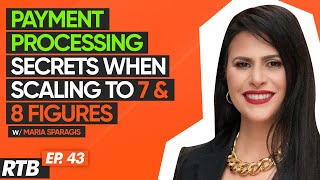
Conversation (podcast/transcript) between Stefan Georgi and Maria Sparagis about payment processing, affiliate monetization, and crypto. Maria recounts her rise at MindGeek/Pornhub, how she built internal payment solutions (cutting fees from ~25% to under 4%), founded DirectPayNet to help high-volume direct-response merchants optimize approvals, declines and scaling, and discusses crypto use-cases and NFTs for payments and digital assets.
Chapters
Hey, you're listening to the Road to a Billion podcast. I'm your host, Stefan Georgi, and I'm glad to have you with me here today. The Road to a Billion is a call in radio show style podcast where you can ask myself and my guest questions about copywriting, entrepreneurship, mindset operations, scaling businesses, relationships, money and more. The reason for the name the Road to a Billion is twofold. One is because I will have. Actually, I will have. I've hit like around a billion dollars in sales. And the other is because I want to make an impact in the lives of a billion people over the 10 years. So later on the show I'll take your calls, which is basically if you're on the live recording right now and you're on Zoom, you put your questions into the Q and A section and I'll go through and sort them out and bring some of you on and let you ask those questions live for myself and my guest. And, you know, probably do that about.
Half an hour from now.
So if you have a question, feel free to put it into the Q and A. But for now, let's go and jump over to that guest I just alluded to. And I just realized, I'm like, I don't know if I ever pronounced your last name right. Hopefully I do. Was Maria Asparagus, is that correct?
It's better than I expected, but it's Sporagus.
Sporagus.
That would have been my second. I should have asked you if I.
Could have said Asparagus and would have made everybody giggle because that's what everybody calls me. But.
Maria Asparagus. Maria Asparagus.
That didn't cross your mind at all? No.
You know Maria. So we have you here. If you don't know Maria, she's a total badass. Many moons ago, she was the VP of monetization for Mindgeek, which is a parent company of pornhub and several of the world's largest adult entertainment websites. During that time, she headed a department that handled payment services for all of their various digital properties, as well as secondary revenue sources for their brands. And one thing I teased in this episode, which we'll get into, is this was a time where adult websites notoriously struggle to collect money and to get paid and stuff. And I believe Maria was tasked with solving that problem. And I want to hear about that. But after her time there, basically Maria realized that helping businesses to be able to actually process payments and collect money would be a really valuable skill to have. So she ultimately started her own payment services firm called DirectPayNet. Since then, she's worked with countless 7, 8, 9 figure entrepreneurs, helping them to solve their processing issues. She's really smart and brilliant when it comes to business and operations. She happens to also speak English, French and Greek fluently. She holds degrees in business and project management. And for good measure, Maria knows more about crypto than the vast majority of people out there. So with all that being said, Maria, we are so stoked. Thank you for joining me on the.
Road to a billion thanks, Stefan.
I'm really happy to be here.
Yeah, absolutely. So, yeah, let's go right into the pornhub days or Mind Geek or whatever, like, because I think you pretty much just fell into that job, right? Wasn't it pretty? Like, how did that all kind of come about?
I mean, it's, you know, sometimes things.
Happen and happen, happen spans. It's just one thing leads to another and people that, you know. So I always say that things happen to me, but I make them happen. So this was one of these opportunities where I'm. I'm. You know, you can't just let the world happen for you. You have to also be networking and talking to people and stuff like that. So this is what happened with. This is. One of my childhood friends, right straight out of university, had decided to start cropping some nudies and putting them online. And then him and a couple of guys were like, hey, like, we're making like a thousand bucks a day or which, you know, at like 22, 23 years old, you're like, hey, what's going on? You know, and they're just making money. And he's. He was like.
He bought a car and I was.
Like, really, really broke. And I was like, why is he making $1,000 a day? I want to make a thousand dollars a day at like 22. So they started kind of formalizing the company, like, getting some things in place, some it and really kind of just, you know, doing some, like, putting together a little website and so forth. Uh, and they approached me. So there were just a couple of guys that were childhood friends, and they're like, hey, do you want to come work for us? I was like, uh, yeah, no, I don't think so. I don't think I'm going to be in like, kind of this, like, basement style office cropping porn pictures and changing colors of female body parts and stuff like that. I don't want to do that with like eight other guys. And no, but then I had a job that I was just not very enthusiastic about. So I said, you know what, let me just try. I'm just going to try. And if it doesn't work out, I was like, you know, in my early 20s, like, I'll just get another job and that'll be it. And then once I started working there, it was just, it was like a university all over again. It was a school. I was learning about paid ads, SEO, affiliate marketing, you know, and I can do anything because they didn't care. So it was just like learning, nonstop learning 24 7.
That's amazing. And did you kind of fall in love with the digital advertising and the marketing side of things?
What part of it early on with.
The learning most excited or intrigued you?
For me, at the beginning it was really the affiliate marketing. It was like such a cool model. I was like, wait a second. So if we don't, if we can't generate our own sales, people are just gonna send us sales? I was like, this is awesome. What's happening? So one anecdotal thing that happened is one of the biggest brands that we had at that point was called Brazzers. So that was B, R, A Z, Z, E R S. Well, some very genius bought browsers with one Z. And he became one of our top affiliates. Like we were sending this guy like $20,000 a month. All he did was a redirect. And it kind of opened my eyes. So I was like, what? Like he bought a domain for 10 bucks and now he's making $20,000 by just redirecting traffic. So the whole affiliate marketing space was like, this is awesome. So I really learned a lot about how to manage affiliates, how to talk to them, how to get them to kind of. It's a lot of like personal relationships. Even though it's like, yeah, they want their splits and stuff, but at the end of the day, if they like you a better, they'll send you more like quality traffic. So that was my favorite part, especially at the beginning.
Yeah, I realized that I'm gonna give.
Off lots of tells on this episode because, you know, you mentioned like there's.
A thing called browsers.
And I'm like, uh huh, yeah, I remember browsers.
And I'm like, no, never heard of it.
Yeah, that is fascinating. And but I think the point on affiliate marketing, like 2, it is true about relationships. I tell people that all the time. And just as a quick point for business owners and aspiring business owners and people who want to do the affiliate model, I generally think you basically need to be as the owner just for people who are Doing offers. You need to be the affiliate manager too to start. And then over time you can hire an affiliate manager. Because thinking about my first self supplement company that I. A million the first year, 23 million the second year, which is crazy, right? Like a 23x increase.
And it was basically all affiliates, but.
It was because I. That was like my main thing I focused on. I had a team that helped with.
Other stuff and then I have other.
People over time where I could hand off their relationship to them. But I think when people try to go out and outsource, nobody's going to care as much as you.
Oh for sure.
And then. So that's one point. And then the other point being again, like once you do it, once you have those relationships, people you may do slightly worse than another person. Not like, obviously if it's a huge difference, then they're going to promote the thing that makes more money. But when it's more marginal, people go with the ones they like, they have a relationship. And so that's a cool lesson that you kind of learned early on too, it sounds like.
Yeah.
And the owner of the company, actually.
There was two main owners. One of them was a good friend of mine for many, many years. We were best friends for. We still are actually friends. We were neighbors. He was, that was his job and he gave that to me. He was like the first affiliate manager and he managed JugCash for a while. Jug Cash was the affiliate program name. And then he only gave it away when he got me because I was so excited about it. He was like, she's going to do a good job. Because I was like, what the hell? It was so exciting to see all the traffic come in because of the affiliates.
Yeah, absolutely.
So you're learning a lot on the job. It's like this company that becomes this behemoth now. But at the time it's cool. I mean from the very beginning, in the early days. And how did you end up as VP of monetization? Was it just because somebody needed to do it and they. How did that all kind of come?
Well, I mean it was, I call it the Wild West. So it was the Wild West. We just, everybody just did stuff. It was like, I'll just do this, I'll just do that. And you know, and we were all like just a lot of friends and people that went to school together and we, we had a good synergy and we were all quite young and you know, we lived with our parents or we didn't really have families or anything to kind of worry about. So it was like, well, if we do this, it doesn't work out, whatever. We all kind of had that attitude. So the company really started with just like we were like about 10 people when we were there. They're, they're over 2,000 people now and manage like 70% of the world's porn right now. But, um, you know how I got to the VP level? I was like, literally there from the beginning. And it was from stage to stage was like, okay, well now I'm gonna do affiliates. And then it was like, oh, now we need to hire a whole bunch of developers. Maria, help us. I was like, I don't know anything about HR, but okay. So I hired 45 developers in one year, which is like, boom, boom, boom, boom. Like, and then I was still managing the affiliates and I was like, okay, well now we need a payroll system, so let me do the payroll system. And then it was like, wait a second, how much are we paying on payment processing fees? And that's where my job came in. And it was like we were paying. We were using like these third party guys like Epoch and CC Bill and stuff like that. And they were charging us 15% plus 10% reserves. So we were getting clipped 25% before we saw anything. So I was like, what the hell? There's got to be a better way, right? So I actually invented that project for myself. I was like, well, we got to do something about this payment stuff because that could be a huge win. We can save like 5%. That was my goal. I took, I took the cost to under, under 4%.
Wow.
Within a year.
And it was just like, because I was making calls, meeting people, I kind of learned the algorithm of, okay, well this person, like the first merchant account that we got was through somebody. And I realized that there was like, we were like six removed from the bank. And I was like, well, if there's six people that have to get paid before I get to the bank, obviously I'm not going to be paying a very great rate. So I just kind of dug further, further, further until I got a direct relationship. And we were at a size at that point. We were, you know, making over seven figures a month that, you know, people were listening to me at that point. And then I just got, because of the knowledge of, you know, the IT and the affiliate marketing and the, the payments had a lot to do with customer support and had a customer support. I just started monetizing the shit out of every website. Like, it was just like, okay, well, let's Add this process, do this. Dah, dah, dah. So I kind of oversaw everything on the monetization side, so they invented that title for me. They're like, you're monetizing shit. All right. So that's how I got that title.
That's amazing.
And I Such a great education. And I think, you know, it's a good lesson for people as well in that, you know, you didn't start out as a. As a little girl or as a teenager of like, I'm going to work for, like, the biggest porn, you know, company in the world one day. Right. It's just like a weird thing you fell into and then. But you develop these incredible skills and then that have since been transferable to so many different areas of your life and types of business. And we will talk about that and direct Paynet and things in just a minute, I guess. Other questions on the pornhub mindgeek stuff. Well, one was at the time, I mean, from a mindset perspective, was there a stigma around being in the adult industry? You know, working for company?
Thousand percent. Like, there was like. This was like, if I give you the timeline, this was like 2005, 2010. Like that. Those years, First Banks didn't want to work with us. It was like, no. Also, being a female in the industry, like, now there's a lot of girls that are doing a lot of stuff and, you know, it's a little bit more okay. But back then, just even in my personal circle, it was very like, what are you doing? What is that? Like, why are you. Like, it's like, are you doing movies? I'm like, no, I'm not doing movies. I'm managing, you know, like. Like, it was just very. It was very taboo. Max would say, it's very taboo. It was very. Just unbecoming of a woman. That's what it felt like. People were like, a bit grossed out about it. And I was. I was just more like in the mindset that I wanted to learn all this stuff about online business. And I was like, well, nobody's going to hire me because I don't know shit about this. But this porn company that nobody wants to work for, they're going to let me do whatever the hell I want. So, fine. I didn't make a lot of money. Like, I think, like, I had accepted like $36,000 or something a year, and I was making them millions the first year. Yes. I scaled quite quickly after that because I was like, wait a second, how much did I make you last month? So I kind of got smart, but the first, like, I accepted like a nothing salary, but it was just opportunity, you know, so there was a huge taboo. And I still think there is, like, for some people, I think it's kind of gotten out of the limelight. But I think it's a little bit harder still for women to say that they work in the industry. On the business side, there's still a bit of, like a weirdness about it.
Yeah, I'm sure. I imagine. I mean, things like OnlyFans and some other things have sort of, I guess.
Changed and shifted some perspectives from people. I mean, because you're right. Well, it's historically, I mean, just like so many things. Like a double standard where when a bunch of men are running a porn company, everyone's just like, oh, sure. And then when a woman helps to run it, it's like. Like, you.
You know, like, how could she.
Right? Like. And it's like, okay, yeah, so like, the man can make all the money off of the woman who are then, like, you know. But then if a woman wants to be involved and yeah, it's a weird double standard. And I imagine, sure, the stigma was pretty high there. I mean, it's crazy. I don't know what their parent company. They're pretty notoriously, like, private, right. As far as, like, ownership and revenue numbers and all that. But, I mean, I know it's companies worth, you know, billions and tens of billions of dollars. I mean, it's insane how big they've got.
I think last. Last one is half a billion.
No, sorry, half a billion dollars. I think that's what their last 500 million is, what they're said to be. But that's what's available online. I don't think it's anecdotal, so I bet.
Yeah. And I bet if they were to ever sell it, they could get significantly more than that. A couple billion dollars. I mean, it's wild, but.
Yeah. Max, in the chat, like you said.
The porn industry is one of the most innovative when it comes to marketing. Right. And I think that's definitely true. Right.
That's 100%. We did. We pushed the envelope for anything. I think we were the first. So, like, I introduced one cool feature that I introduced that I see a lot now, and it kind of cracks me up because I think, like, me and my team invented it at that point was cancel cross sales. So, like. Like when somebody would go. Because we were getting a lot of chargebacks, so it's like, shit, like, we gotta do something about These chargebacks. But we don't wanna let make it too easy for people to cancel. So we decided to do cancel cross sales, which is we had a funnel for people to cancel. And right at the end, we would have an affiliate offer to, like, Vivid or another one. So at least we were losing the customer. We were getting a little side split there. And then a whole bunch of other mainstream companies started doing it, but we were literally the first who did it, so. Because we could try shit like that, because it was like nobody was really watching us at that point. Now it's a lot more regulated, but it's super, super innovative. I find the adult industry and the gaming industry too, like casino stuff like that, they're just trying to capture every dollar, so they just innovate with checkout pages and with upsells and all that. So if you're looking for, like, you know, if you have even a supplements business or any type of business, I would, like, study porn funnels and gaming funnels.
Yeah. And it's a great, great excuse to do that.
So just buy porn.
No, look, I'm. Maria said I need to study. But, yeah, no, I mean, obviously. I mean, they talk about how porn drove, like, mainstream adoption of the Internet. Right. And obviously the VCR before that.
I think that, you know, VR, to.
Me, is still, I think, VR headsets. I've had this thesis for, like, a decade now, ever since Oculus Rift was like a. Like a crowdfunding project, that I think that what will ultimately most drive the mass adoption of VR headsets will probably be, like, porn.
And, like, it exists now.
There's VR porn and stuff. Like. But, like, I don't, you know, I'm not like, a researcher of this. Like, I don't, you know, but, like, I don't think it's like that. You know, not popular. I don't know how good it is or whatever.
But I.
But I think that's, like, where it'll go. And I actually think that'll. So I actually own a bunch of like. Like Oculus porn dot com. I own a bunch of, like, weird.
Like, domains like that. I don't have anything on them, but.
Like, because I'm like. I think that, you know, eventually, like. Like, virtual reality porn dot net. Like, I have all these weird domains like that because I think that eventually that'll drive VR headsets and who knows what else. And so, you know, to people who are watching, who maybe get uncomfortable with the idea of pornography in general or the porn industry or whatever it is, I think to the point we're making here is that it really does drive a shit ton of innovation and a lot of consumer behaviors and patterns. I mean, everything, you know, for better and worse. I think that in some cases there's been negative effects about to like, you know, like relationship dynamics sometimes by people watching like super violent porn or shit that they can see. Right. There's, there's negative, but there's also positives that come from it, from people being more liberated sexually. To me, it's, you know, it's not going away, so I want to rant. You're the, you know, this is about you, not me. I just think it's such an interesting topic. And I do think that the porn industry and the gaming industry kind of both, like casinos like, do tend to stay pretty far under the radar. You know what I mean? Like, it's kind of interesting because like pornhub was in the news a bit in the last year and a bit of like controversy and issues there, but generally, like, it's these massive businesses that exist, but like, nobody wants to talk about them because it's so taboo and yet they're doing all kinds of crazy and innovative things. It's very fascinating.
Yeah, I mean, James just popped in.
Said the Pornhub CEO's house just burned to the ground. Yes, it actually, I don't live far from that, so I actually saw the fire, which was fucking intense. It was like, like this crazy, insane fire. But just to talk on your point, you know, I don't agree or disagree. I'm not the ethics police. You know what I mean? In terms of porn, whatever people want to watch, I'm kind of cool with it. I think there's a lot of good because there are a lot of women who have come out kind of of the woodwork and are able to make a living not, you know, going on the streets and like selling themselves and doing all this stuff. They can do it on OnlyFans, they can do it on Pornhub by monetizing videos. So it's giving some opportunity to people who, you know, would be in danger otherwise. I'm sure like 95ish percent of the content is fine. It's consensual. But there is 5% or less or I don't know what the percentage is of like some questionable stuff. But that's where, you know, like the Internet can be used for good and bad. Bitcoin can be used for good and for bad. It's, you know, I don't think there's, you Know, an absolute, this industry is good. Even supplements. You know, every direct response, you know, niche has its good and bad cbd, you know, for a while it was like vilified but now everybody's on the CBD train. So, you know, it's sad to see what's happening, you know, with pornhub. It makes me sad because, you know, I was there at the beginning. I haven't been there in a long time. But you know, it's, it's still close to my heart. Like, it's where I got a lot of my learning in this industry from. And it's sad to see that like, you know, maybe like a sliver of a couple of things that slipped under the radar. Like I don't think, like, I know a lot of people still in the management team. I don't think any of that is intentional. But you have to also keep in mind they have more uploads than YouTube. I think at some point where not everything's going to, you know, there's going to be things that slip through cracks, you know, and that's, that's the problem. And they have to obviously make better decisions to make sure that doesn't happen. But you know, I guess it's happened now and they're going to have to deal with it for sure.
I mean, I mean any company that gets big enough, I mean it's the same thing with like Facebook and the content and they're trying, you know, and then, and then, but, but they, you know, the bigger you get, the more of a target you become.
Right.
So that's sort of like the challenge. And then there's people who just have an agenda against you. No matter what area. There's people have an agenda against Facebook or Roblox, which is like, you know, kind of kid friendly gaming pornhub. Right. Which is a weird place to go from there to there. But it's like, you know, people agendas about everything. And the bigger you get, the more people are gonna start to want to blame you as the source of all societal problems or look for any wrongdoing to justify their theory about how you are the reason why, you know, things are not the way they should be in this world. It's never that simple. But it's a human trait I think. And you know, I think with the adult stuff it's just, you know, the Protestant kind of heritage of our country and. Yeah, and there's just like, you know, I mean it's. But again, there's always been a double standard of sorts in America where, well, you know, until like the 60s and 70s and like the sexual revolution and things, right, where it was like, you know, nobody could ever talk about sex. And on sitcoms couples had to sleep, married couples had to sleep in separate beds, right. Yet everyone's having sex. Like people are having sex with people who are their wives and they're doing freaky kinky stuff lots of times. Like nobody could ever say that. And so there's a weird sort of repression, current of repression in America. There always has been. Much less so today than any time in history. But of course the very culturally conservative people and it makes sense that there's a tension in the conflict there. And that being said, as you mentioned bitcoin, I want to get to bitcoin, but let's transition first into Direct Paynet.
Because payment processing is one of those things where there's a lot of people who do it. I've always talked about, well, my feeling on it from a business owner perspective who's had millions of dollars a month in payment processing and actually used it. There's a million people offering it. Only a few people actually are worth working with and who actually are good at it.
Right.
So, you know, I had Chase Harmer.
On.
Has some good solutions, Cambridge Commerce. But you know, you're one of the top people and someone who folks work with, I know in my network all the time and they're always really super thrilled and happy to work with you. So, you know, for people who have no idea what payment processing is like, let's, let's explain it in the most basic way we can because I'm, you know, I didn't know until, I really didn't understand it until I started my own company.
Right.
For sure.
And then what makes, you know, Direct Paynet, like what does Direct Paynet do within that realm and what makes, you know, your company unique and special?
Well, I mean payment processing, you know.
It does make a difference and I think it does. You know, if you, because you're in the industry and you're processing so much money and you know, the high level entrepreneurs know that your merchant account, not all merchant accounts are created equal and not all payment processors are created equal, a lot of people are like, well, I'll just get the cheapest one. Yeah, that's a good strategy. And depending on what you're selling, it could be a good way to start. But there is a little bit of lack of education, I think on the fintech side with all the stuff that you can do to monetize your site better to get more approvals and so forth. So where my company comes in, Direct pin is, yeah, our basic services that we get people, merchant accounts. So you have your funnel, you have your checkout page, you have your shopping.
Cart, plug it in, gateway, and we're good to go.
You start taking payments. Visa, MasterCard and so forth. So that's the basic, you know, of what we offer. But then, you know, I like to call Direct payment a boutique payments firm because, you know, we're not for everybody and we're not, you know, just like a mass market kind of payment processor. We work mainly with direct response merchants because we have a special sauce that we like to help our merchants convert better, you know, understand their decline. So they can, you know, you get all these people in your funnel and then if your approval ratio is 80%, that's 20% of people that wanted to buy from you, that are not buying from you. So what most merchants are like, well, it's 80%. Well, those 20% declines, there's a lot of stuff that you can do with that. There's ways that you can capture that payment on the front end. There's ways that you can market to them after that to capture the payment after that. There's ACH that you should be offering. There's Bitcoin payments, there's SEPA in Europe. There's all this stuff. So it's kind of like looking at payments in a global strategy and accepting different currencies and converting them when it's necessary. So payments is just like getting a merchant account is one part, but then payments is a whole global thing. I don't know if I answer that. I don't want to get like super in depth, but it's paying attention to your payment processing is not something I would do until you get probably to about six figures. If you're under six figures, you pop in stripe or you get a merchant account, you just go. Because you got to test all this stuff. You've got to do a lot of stuff. So once you get to like six figures, that's when it's like, well, you know, you're, you're 15 or 20% declines. Let's start looking at that because that's real money that's now starting to, to make a huge difference when you're not able to convert. So that's where I think is, you know, a good point to work with somebody that's, you know, knowledgeable, not just about getting you a merchant account, but the actual funnel process.
Yeah, actually, I think That's a really good and important distinction because it's one.
Thing to be like, hey, here's your account.
You can now accept payments from people when they want to give you their credit card, right? You can run it. It's great. But then it's like, to your point, it's always shocking how many headaches then.
Come, like, whether it's declines or chargebacks.
Where people call their bank, or just balancing the cap, right? Because they're not usually unlimited processing. So for people, again, who don't know kind of a lot about this, which is cool. So say a lot of times if you. There's kind of banks, you'll go to a bank and there's bank of America, Chase, the big ones. But there's lots of these sort of smaller types of banks. And you go to them and they're like, okay, we're going to essentially allow you to capture payments, right? We'll give a credit card. We'll then accept the money, take it once they clear it for you, right? And then we'll give you the money minus our fees to do that. So I'm simplifying this as much as I can explain. Doing my best, right?
But they're like, yeah, but like, look.
We don't know you. And so if we, if we say that you can just, you know, a million dollars a month, right? And you run a million dollars through, and then it's all fraud. Then, you know, now we're paying fees to Visa, MasterCard, the credit card companies. You know, we. If we're. We're basically running our stuff through another bank, like that bank, it could hurt our relationship, relationship with that bank that we're partnered with. All these things have happened so often.
They're like, we'll give you $100,000 to start.
$150,000, especially if you have no experience. $50,000, small amounts.
And then they're like, yeah, run transactions.
For a couple of months and everything's looking good, then maybe we'll increase you from 100 to 250,000. And over time you can build up to that million dollars a month, whatever. So people will often have more than one of those kind of merchant processing banks that they work with, like mids. And then, you know, two, they will have to scale. But that's a challenge, right?
So now I say, I have my new funnel and it's crushing it, and it's great. And I'm like, oh, my gosh, I can. A bunch of affiliates want to send a bunch of traffic to it, and they're like, hey, yeah, like, I can send you like a million dollars worth a month worth of traffic, right? And, well, I can only accept $100,000 a month worth of payments. So can you just run $100,000 and then just switch to promoting something else? And then the affiliates are like, no, a lot of the time, right? They're like, no, go figure that out. So people will start a funnel and offer whatever, and when it actually has legs, they're really excited. But suddenly they're immediately screwed because they have this chicken and egg issue where they kind of, if it works well, then affiliates want to just blow it up, but they can't accept all of that customers, right? And then when they can't accept the customers, then the affiliates don't want to blow it up anymore. And by the time they fix it, it's like three months later, four months later, and the affiliates have moved on to the next shiny thing. So there's just a lot of challenges or how does somebody manage that? Maria, when they're starting out and what are their strategies for how to balance that problem?
Well, I mean, usually it's a good idea.
You know, if you have processing history, it makes things a lot easier. If you don't and you're starting out, it's, you know, you can get a couple of $50,000 a month merchant accounts. And the secret is that a lot of times, like, you can run like 10, 15% over whatever your cap is and nobody's really going to say anything to you. So you always have that little extra in there that you can pull in. And then every 60 days, it's always kind of increasing your cap. And it's a negotiation with banks. It's, you know, if they make more money, they're willing to give you more cap. If they have more security, like more reserves, like if you're really desperate for an extra cap or you're like, hey, you know, all these affiliates are blowing stuff up. If you have, if you have enough cash flow, obviously it's a good problem to have. You can tell the bank, you know what, keep the money for 30 days to make yourself feel warm and fuzzy, that these are not all going to become chargebacks and then pay me in 30 days. A lot of times we do that with like, if I have a merchant that's like, I have like 250,000, I need like in three days now. So we, you know, it's, we negotiate with the bank. The bank always wants two things. They want to make money, they want to feel Secure. They want to feel like these are not going to become chargebacks. You're not scamming people. So if you can find kind of a good negotiator on your corner and you're working with, you know, a trusted partner, they can talk to the banks and be like, hey, you know, take an extra 5% reserve for the next 90 days or keep the money, the settlements for the next 30 days and pay us in the 30 day chunk or, you know, get another merchant account for another product or we'll give you a low risk product that we're doing. So you just have to kind of negotiate and find ways, especially when you're starting out, after a while, you know, you're scaling. Within six months, you can sail quite quickly. It doesn't work like credit, it works faster than credit. Like six months, they kind of know what's up. The banks know, they see a lot of transactional history and they're willing to do a lot more. But those first six months can be painful if you don't have the right things in place.
Yeah, yeah, absolutely. No, that's a great point though on negotiating and I guess, yeah, it's actually.
A really good point because I think so many things are negotiable, right, in business and in life. And I know for me with my company through my merchant account provider, which I know Maria at the time, but someone, you know, I like and they were, you know, great to work with and they basically set up a meeting with me and then Adam, who's like the president of Humboldt, right, which is a processing company and I'm not like, I don't know how things are changed. I don't know if humble so exists or if it's called something else now or whatever, but I remember I met with them and gave him. And then my. Someone like Maria, right, in this case for somebody else, but had like, like pro formas and like spreadsheets, like all this stuff because at this point I already had been doing, you know, some, some good numbers and growing and essentially it was about, you know, my chargebacks and my like decline all my, my data, like everything, right? And then basically made the pitch that like, hey, you know, you can give me like a million dollars a month in processing and they were giving me like 250,000amonth or something like that. And, and basically it was like we gave them the data, the numbers and Adam was like, every time I, somebody comes and pitches me on this and says that their numbers are clean and I give them more processing, you know, Suddenly everything goes to shit. Like, you know, like chargebacks. And I, like, just like, honestly just like looked him in the eyes and I was like, I swear to you, like, that will not happen. Like, these numbers are clean. Like, and it was just like a straight up human moment of like eye to eye contact. And then he was like, all right, fine. And then he gave me, like. And then from there it was like 2 million a month, the next month. And I was able to, you know, do some really good stuff. And it was seriously. But because of having someone like a Maria in my corner and then I guess negotiating. But also. Yeah, the face to face interaction, like, if I just submitted something through a form for them or emailed them, they wouldn't never in a million years would they have done that, right?
No, it's also, it's the human contact. It's also numbers. So, like, you know, a lot of times, you know, we get applications and it takes me, let's say two weeks to get responses back. And I'm like, you know, I'm there, I'm there. Give me a little bit of time. It's because weeks have to sometimes build business cases. Like, what to make the. An underwriter is. Is, you know, at a bank is not a technical person. It's not somebody who knows like direct response very well, doesn't really know. So they need to see, like, facts. So we try to make things really easy for them. Like, this is what he's selling. These are the upsells. This is what we're expecting. This is the risk, this is that. So we build a whole business case and we make it super easy for them. But that takes work and that takes time. So if you just submit a blank application and just look at their. It's like, you know, like they're just gonna say no. You have to really dig in deep. But again, you have to. You have to be at that level. You have to be, you know, a tenured business like yours and so forth to get people to want to do that for you, you know, but there is, there. There is an art behind it. It's not just a matter of like, oh, you know, I'll just apply on my own. I'll just get an application and do that. It doesn't, it doesn't work for a lot of people when they're indirect response. It usually leads to a lot of no's and a lot of frustration.
Yeah, yeah, absolutely. And. Or getting taken advantage of because again, I've seen it where people, you know, there's like there's, you know, like, Chad, like, fuck boy Chad over here who's like, you know, bro, I'll get you uncapped. It's like, literally, like, the used car salesman. And then you go through all this stuff with them, and then it's like, either. All right, well, it's gonna be capped, like, the first, like, three months, six months. It was, like, literally what everyone else would have done. Or it's, like, uncapped, but these crazy IPs. But then there's a bunch of declines, and there's all this shady stuff going on, and then you're not getting your money. And they're like, well, we got to hold your money for, like, six months, bro. You know? And it's seriously, like, I've seen that. I've learned that lesson even. I've had times where you want to scale faster, and you meet the snake oil salesman who's like, I can solve all of your problems. I can give you uncapped, like, tomorrow, right? And it basically never goes well. It's always like, it's. I learned I'd rather work with people I trust. And even if I do have to scale a little bit more slowly, which, by the way, for most people was a good thing, because when you scale fast, other shit breaks, too. We're out of inventory, and we won't get more for three months. Oh, customer service is broken.
Oh, our funnel.
There's so many other mistakes and holes in your funnel that you realize as you're scaling. So I guess that's the other thing is we all want to scale to the moon, but being a little more sustained is actually a blessing in a lot of ways. And. But yeah, basically, the point being, be wary of the people who promise you.
The, like, you know, my favorite is those people.
Like, you know, they're like, we get calls from different people and different merchants and so forth, and it's like, oh, this guy told me he could get me a merchant account in one day. I'm like, well, good luck. I'll see. I'll see. If it's Tuesday, I'll see you on Thursday. Back with that application. Like, we're not. Nobody's getting you a porn merchant account in a day. Nobody's getting you that. Like, if they are, you're not getting your money. Like, it's like, so. I mean, I'm. You know, I've been in the industry for a long time, but I always, you know, advise and best practices, like, if it sounds too good to be true and it has to do With a bank specifically, it's not going to happen. Banks don't work that quickly. They work 9 to 5, Monday to Friday. Nobody's getting your merchant account on Saturday. It's not going to be 24 hours. If it sounds too good to be true, it is. It means either you're getting stiff, like you said, you're not getting your money, or you start and it's like, yeah, that cap, it's going to be 50k. It's not going to be unlimited. Oh, yeah, you can only do $300 a day. You can't do over $200. Transact, like, you know, so it's a lot of in this industry and it's unfortunate because I still see it to this day. People like that. You know, if you're a merchant, you like that kind of stuff because you're like, well, why would I work with Maria if she's telling me it's gonna take one to two weeks and I'm gonna have to send her all these documents and I have to do this and da, da, da, when this guy's telling me I can get an account in 24 hours and I can just sign something.
Right?
You know, so the thing is, you know, like the merchants that we've had, and, you know, I've had quite a few of them on my show and stuff like that, it's like we've had merchants who are in direct response in very, very high risk spaces that have been processing for years. Like, you know, Julian was on my show. So I can say that, like, Julian's been processing, processing with me for like nine years for some pretty aggressive offers at the beginning. And it's like, that's because we manage risk. We, you know, we take the correct measures to make sure that he's up and running. So, yeah, it was annoying him to set it up, but now it's set up and it's been running for like 10 years and he doesn't have to think about it, you know, so it's a little bit of work at the beginning, but then it's, it's, it's well worth it.
Yeah, totally. I remember doing those applications in those forms, and it felt like such a pain, but then having it was such a powerful thing. Cool. So I want to do a few things. Shout out to Julian Reyes. Hey, Julian. Or if you watch this for the replay, you mentioned him being on your show. So, yeah, I like to not wait until the end to kind of talk to let people know how they can interact with you more. You know where they can find you. So you have a, your own podcast.
Share a little about that and also.
Where other places that people can go to get more Maria in their lives.
So, I mean, I'm pretty much everywhere.
I like to say that I'm on.
Like, pretty much every social media platform. So you were part of my inspiration for starting my podcast because I wanted to start a podcast. And then you introduced me actually to Louis and kind of he, you know, kind of put a lot of stuff in place to me. I just wanted a platform that I felt comfortable with. I'm not a great writer. I don't like social media very much. So I was like, I got to find something that kind of I can do. And I like. And talking is my thing. So I was like, podcasting is great. So I have a podcast, it's called Uncensored Direct Marketing, and we kind of visit a lot of stuff. It's, it's like, it's supposed to be about direct response, but then I'm like, doing a couple of crypto episodes, and then I'm going to try to do a couple of, like, mindset episodes for, like, more junior people that are listening. And, you know, obviously we do some copywriting episodes and business owners, so if, you know, if anybody's kind of down for that, you can just go to YouTube or Apple podcasts and either with my name or the name of the show, find us. And it's just I'm pretty much everywhere and I have, you know, obviously I have a team that's responding. So sometimes I might not be super quick on social media because I do get quite a few messages, but, you know, I'm always happy to answer people's questions. I, I, it's, it's a weird thing.
But a lot of, I like to.
Answer a lot of pain and processing questions because I like the strategy of payment processing more than the actual getting, like the application part. So, you know, if anybody has any questions about their merchant accounts, I'm not going to try to sell you. If you just have a question, you want it answered and you just don't know the answer, I'll answer it.
Cool.
Yeah.
Marcus Tortillas, I think you should be reaching out because I've got seven questions in the Q and A. I'm like, oh, wow, cool.
A lot of people have questions, but.
Six of them are from Marcus. And it's like, okay, some good questions, but it's a lot of, like, some of them are kind of technical and like, stuff. But Marcus, we'll probably you know, bring you on to have a question or two answered. But, yeah, and then, yeah, see, I've been on the podcast, Maria's podcast. Really enjoyed it.
That was my best rated episode, by the way. Stefan. But Chris had died getting close. Chris had. Dad's getting close. So, guys, if you. If you want. If you want Stephen to keep number one, go on and listen to the Stefan episode.
I love that we talked really honestly about ethics and copywriting, marketing. We talked about crypto and predictions for the future. We talked about freelancers and how to not be a dummy when you're working with clients, what to do. Right. It was really one of my favorite podcasts that I've been on as a guest. Now, speaking of crypto, because we talked about how some of your episodes have gone to crypto. I just mentioned it. And even within the realm of payment processing and that 20% realm, declines in accepting bitcoin. So I guess the first question as we transition into some crypto talk here would be like, yeah, how do you.
Think is crypto going to change the road of payment processing and what you do? And if so, has it already changed it? Like, you know, what's going on there and what should people be aware of or are on the lookout for?
Well, I mean, so the road of my porn past actually brought me to crypto, because in the adult industry, they're always looking to innovate, and that was the first industry that really started kind of talking about it and adoption and so forth. Also, I have to give a shout out to my husband because he'll get upset. But we met when we first met. This is such a geeky thing. But, like, you know, I'm a geek just by nature. I like talking about technology. I just like talking about, like, stuff like that. So it was a little bit hard for me to date at the beginning because I'm like such a. Not a fun. I'm fun, but I don't know, I just like talking about business all the time. That's the only thing I talk about. I'm passionate. Exactly. Thank you, Max. I'm passionate about work. So it's like, it's just kind of engulfed me. So when I met my husband, we actually started hanging out and just like, kind of like friends. And then he actually started talking about crypto to me. And then I got really into it because it was our thing. We just talk about it all the time. This was like, in 2011 when it was like, I don't know, like, $95 or $75 or something in Bitcoin. And we had this debate, he and I, for a while. He said, it's going to destroy my business. He's like, crypto's taking you down, there's no more credit cards, blah, blah, blah. And I was like, no, no, it's a store of value. And that's where, you know, that debate kind of is still ongoing, I think, you know, yes, like gold max, it's a store of value, is basically an asset, like a stock or whatever. So Bitcoin itself, I don't like that currency, not blockchain, I'm talking about, the actual currency is not going to disrupt payments because it's actually more expensive to process a bitcoin payment than it is to process a credit card payment right now. Because it's such a valuable asset, nobody wants to trade it, nobody wants to use it. So now it's becoming a store of value. And same thing with eth. Like if people are investing in ether and stuff like that, it's like it's balloon so much. You're like, why would I spend my eth, my btc, I'll spend my US Dollars because it's not appreciating at the same value. So I think in terms of the disruptive technologies for payments, I think Fintech is due well overdue for a disruption. But I think that disruption is not going to come from BTC and ETH being used as a payment mechanism. There's a big problem with it being used as a payment mechanism is that it doesn't do recurring payments and subscriptions. So in the porn industry, it was like they were trying to make it be adopted. But hey, guess what? That 2995 that you're charging people, you can't charge that anymore because it's, you know, in credit cards we call push versus pull payments. So you can't, you can't use it for recurring payments. So that kind of takes, you know, the, takes away a lot from it. So I think what's going to happen, at least on this is a crazy prediction. But there's, you know, there's lightning networks and there's kind of like sub blockchains that you can make more efficient for processing payments. And I think there's going to be a lot of development in that. I don't want to get like super geeky geek that we should have a crypto episode and just talk about this like crazy. But like, you know, the lightning and the little kind of sub blockchains are going to be what's going to be Used and I call that, I call that more like opening a tab somewhere. So you like when you go to a store they'll get to know you based on your behavior. They'll kind of open like a little kind of small blockchain tab for you and that data is going to be shared amongst let's say the stores on that street. So other stores on the street are going to be trusting you and then they'll settle like through the regular blockchain through BTC like once it becomes a valuable amount. So like if you buy a cup of coffee and you try to pay with bitcoin, well that $2 cup of coffee is going to cost you $10 to process the payment. Nobody's going to do that. But then once you get maybe to a thousand dollars it's worth it to pay $10 to process the payment. So it's, that's what I see is going to be and that's going to be more on like card presence type environment, a physical environment. I'm kind of waiting to see how that would, I think it would be more on the physical side that we would see that innovation happened first and then on the online side I guess kind of like a social media profile where we're in this like non tracking phase of the Internet where everybody doesn't want to be tracked. But in order for that mechanism to work that I'm talking about you'd have to be tracked because your behaviors would have to be tracked in order to, for a merchant to decide if they want to take the chance on giving you credit, for example. So anyway, I'm getting like super intense. I'm sorry, I don't want to like I could talk about this for like 5 hours on its own. But yeah, I definitely think you know, the short answer is their fintech is up for disruption. Blockchain technology is going to cause that disruption. The currencies that are now on blockchain are not ready for that disruption.
That's what I think.
Yeah, that's super interesting. I think then the sub chain stuff especially because one thing I, when we drove to San Diego and back my family, my wife and daughter last week or two we were listening to Tim Ferriss podcast and a couple of the episodes were on crypto and just like there's one guy who's like a Anderson Horowitz or one of the big VC firms and good tracker of prediction and Tim Ferriss was like if you had someone give you 100,000 or 100 million to invest, what would you do? And the guy was like, I put half in bitcoin, half in Ethereum, basically. And then kind of talked about it. But to your point, just for, I.
Guess, I mean, let's talk crypto a bit more.
Right. But I give you. I'm on team store value.
Right.
With Bitcoin or Yes, like ether as well. The thing I was telling Laura during that drive was like, again, this doesn't make sense currently for payment processing. And it really has to be like a stable coin. But then the challenge is like a stable coin has to be tied to something. Right? And so is it tied to Bitcoin? It can't be because it's flexible. Is it arbitrarily? Because then there's no value. If it has to be pegged to something, you would think. And then I'm like, that seems to be the US dollar, so you need to continue having a US Dollar or something else. There are places that gold, sure, we had the gold standard. US dollar is pegged to that, whatever. But the idea of potentially these sort of sub chains that are sort of staked to bitcoin, but it settles at a certain period of time, I mean, I guess that's a big issue needs to be figured out. And that's why, while I think buying lots of altcoins speculatively is cool, my personal feeling is I'm putting about. I basically committed. I'm going to start putting 15 to $25,000 a month into just Bitcoin and Ethereum. And just like. And I'm still treating it. I'm treating that as an investment, but I consider it more speculative.
Right.
I think I could be super happy about that in a couple of years from now, or it could be that I don't see Bitcoin going to zero or even close to it. I think bitcoin will keep going up. I think people who say that will probably reach half a million dollars a coin are probably. Right now, I don't know. And I want to do the disclaimer, Maria, that I literally pulled one up. I googled it. The content here, and this is for informational purposes only. You should not go through any such information or other material is legal or other advice. Nothing contained during this podcast is a solicitation, recommendation or endorsement. You know, I don't know, probably other stuff I'm supposed to say, but at least have that be said.
Yes, we're not.
We're not telling anybody to spend their money that they don't have or they do have and they don't want to lose. So this is just, we're just screwing around and talking about it. But yeah, I mean, there's also, you know, just like kind of taking it one step further. You know, the world of NFTS is very, very interesting. And to me that's, you know, if you want to, you know, like if you bought Bitcoin when it was like 95 bucks and now it's 60, 70, 80,000, whatever, it's going to get to like, those gains. I don't know how many of those gains are still going to be possible. I do believe that it's going to get to a quarter of a million dollars. There's going to be a correction and then it's going to get back up there. But the gain again, it might go up four times. It's not going to go up 5,000 times like it did in the past. I think NFTS is at the nexus of that now going up. There's a lot of garbage NFT projects. There's some good ones, but every asset that we have, everybody's thinking now how to digitize it. I think of it like when I was a kid, I was obsessed with hockey cards. Like, I'm such a, I'm such a boy. Like, I was really obsessed with hockey cards. I loved collecting hockey cards and putting them in like the, like a dual tang that I had and just, you know, and digitizing that. To me, everybody in my generation was obsessed with hockey cards or baseball cards or something like that. And that making that an NFT is, it's just logical. People like collecting shit, you know, so having, you know, and then people are like, well, you know, I like to have a physical something. Well, you know, if you have a physical painting, it doesn't mean that you own the copyright of that painting, right?
There's still the, the, the, the artist.
That owns that, that copyright. So whether you own it digitally or physically, it brings you the exact same thing. So I'm kind of very like, I'm, you know, I'm still into the crypto world, but like my, my focus has shifted a little bit on like, digital assets. And obviously digital assets work on, you know, with eth, you know, that's how you're, you're going to trade them and stuff like that. So it kind of makes sense on the ether blockchain to buy a couple of NFTs and then, you know, without getting super geeky about it. But, you know, it's your imprint is there, and you can transfer assets through there and stuff like that. So I, you know, If I would, you know, be starting out, it would be, you know, I would be looking at NFTs and possible investments there because those are the ones that are going to go up 10, 20, 30x, you know, but for, because of your disclaimer, I'm going to say there's going to be a lot of duds and a lot of people that are going to lose their shirts. So kind of be careful.
Yeah, absolutely. I mean, it is crazy. And I mean there's, you know, because again, I got really into crypto. I mean, like, Laura was like 2013, 2014, she's like buying bitcoin. I'm like, I don't understand this. And I kick myself for that every day. Got really into it in 2017, 2018, really into it. But you kind of knew there was like a bubble going on. And where we're at today is. It's weird to me because it's like there's a dot com bubble, right?
Sure.
Everyone talks about that 99, 2000 crash and then we didn't have another bubble two years later. And on one hand it feels like we're having another bubble two years later, right. With like the values of some of these altcoins and like dogecoin and all of that. I mean, like, it's hard for me to see any way in my head that most of these altcoins will truly have value in five years from now. I think, like, it's not that I could be wrong. I just can't see it.
Well, there's a million of them, right? And the interesting thing is, like, I get asked this question, like, I get a lot of my family asking questions about this and it gets me annoyed. So I, because I'm like, they're like, should I buy this? Should I buy. I'm like, I don't know. You know, I just like, I don't know what your budget is. You know, if you, to me, if you have, you know, it depends on what your income level is. Like, to me, if somebody says, hey, do you want to buy a thousand bucks of this coin? I'm at an income level right now where if I lose $1,000, I'm not.
Going to cry over.
It'll be like, okay, whatever. If $1,000 is what your rent is and you need it to live, then no, you know, so there's speculative coins. Like, for me, like, when I'm thinking about like what I'm investing in or what, you know, what, what to think about is you have to believe in the project. You Know what I mean? It's not. It's not. Yeah, fuck you money. That's what James said. It's fuck you money. Exactly. It's just like, whatever. If it gets there, it gets there. You have to believe in the project. So, like dogecoin and, you know, all the litecoin and all the secondary kind of altcoins. How do you make a decision first? Who's the developing team behind it? Yeah, have you read their white paper? Does this. How has this asset appreciated over the last, let's say two months, three months or whatever? So you can do a quick pump and dump. If you see an asset went from like a penny to 10 cents to 20 cents, hey, buy that 20, wait till it gets to 40, dump it, and then, you know, you're never going to get the 20 cents that goes to a million dollars. You know, I mean, sometimes people have to understand to cut their losses. If you double your money, that's, that's a great investment. Move on, you know, try something else or take it and now invest it in eth, which is a little bit more secure. So. And also, you know, most of these altcoins have like white papers with like, you know, explaining what, what, what it's about and why and why it should be used and who are the developers behind it. Hey, if that white paper was written six years ago and nobody's written anything about it and there's no development team behind it, I'm going to tell you, that's going to be a failure. So, you know, same thing with Doge. Doge is a funny one. It's just because Elon kind of pumped. If you look at, you know, the past of Doge and, you know, now there's maybe a little bit more movement, but nobody touched that corner and there was no development for it for like four years. I was like, well, yeah, that's okay, you know, so to me, I'm not a huge believer about Doge. I think Elon for some reason is, is trying to pay it forward to the little guy because every time he says it, it just kind of balloons. So he's trying to, I feel like it's goodwill on his part. He's trying to get some people rich. And, you know, he says it and everybody, like the value goes up like 30%. So there's nothing else about dogecoin that makes it valuable. So why would it be used as a specific use case or whatever? So you kind of have to. There's, there's a lot of like, gaming coins that I Find kind of interesting. There's a lot of, you know, specific use case coins that could kind of balloon quite quickly. I'm not going to name it because I'm going to feel like people are going to be like hey Maria, you.
Told me to buy this.
And that happened. And you know, so whatever, do your own research or send me a dm. Maybe I'll, maybe I'll be nice. But yeah, it's, you know, when you're buying crypto and you're buying altcoins, you know, read white papers, go on medium. Medium is actually a place that I like to go on a lot because a lot of people put some kind of cool in depth thoughts about stuff and they really like dig into different, you know, different topics. So before if you're going to spend an amount of money that might be like, hey, you know, this is going to hurt or. But I feel strongly about a project, do some research because there is a lot of stuff about the altcoins when you research. It's just people just all they look is the value and then they put their money and they don't know anything about the project.
Yeah, for sure. I know. I mean it's tempting. You know, at the 100 million master I'm part of in Miami, I was talking to one dude who lives in.
Vegas, hacking out with him, but he's.
Basing like $4 million in the last three months just like trading altcoins and stuff. And you hear that and you're like oh, like James Klein put, you know, 1k of Doge and January 1st is now worth 120k. You hear that stuff. And it's hard not to get greedy. But I think at the same time, again it's highly speculative. Not that crypto again, we both crypto. I'm convinced, I am fully on board that crypto and decentralization and the blockchain are all the future, right? Like things are moving there. There's so many applications. Blockchain is a technology. Like I was musing about this to Laura about how go to fake news, right? Oh, fake news, Where'd that start from? If you literally had a news distribution platform where like any news is then like basically generated on the blockchain and whoever originate. When you originate piece of news as a reporter, a citizen, whatever, right? It basically gets this little like you know, origin block, whatever it is and then that news and spreads. Then you can literally track the veracity of like any story or fact. And we could literally saw fake news like overnight with like the blockchain and that's just like one tiny random example that my mind went to. Of course there's everything from processing and voting. Yeah, voting, same thing. It's so much dumb shit where it's.
Like we should just.
This should already be on the blockchain. Yes, it will be, right? Coins or crypto in general again, same thing. We're moving towards digitized currency. There's no chance of that not happening. The US government's going to try to control it, China's going to try to control it. Probably not going to happen. You know, there's an argument being made that we're going to go to almost like a city state model where there's basically cities throughout the world where like the mayors and it's more localized power and that they sort of are hubs and you know, and basically are using like treating. They're less dependent on the government which will weaken a federal government. So libertarians what dream. But it may actually happen, right? But the individual coins, it's just hard to know. And I guess we'll just leave it at that for now. I'd love to. I do. I'm on team crypto again. But the team is awesome. I mean look at the market cap. There's basic shit people to look at, right? So bitcoin is super valuable, but there's like what, 23 million of them, I think ever, 21, 21 million ever. In Ethereum there's 130 million, 120 million. I don't know the exact amount.
By the way.
Look at the correlation between the price of Bitcoin and Ethereum, right? And that's because there's the scarcity, right?
Really simple.
But beyond that. So I'm getting all fired up about crypto.
I'm loving the energy. I'm like go, go, go talk. I get like this too.
Like some coin that they're like, this one's going to like, it's going to go to $1,000 a coin and there's like you look and there's 500 billion of the coins or like a trillion of the coins or like 100 billion of the coins. And you realize that for that to happen the market cap would have to be greater than the entire US gross domestic product. It's actually basic math, but people don't look at those fundamental things because it's super speculative. And my friend got rich buying dogecoin and it's like. So I look at stuff with a team.
Personally, this is what I like.
I like a team. So I still like iota, which I've had since it was 15 cents. I still have a bunch of iota. I had like 80,000 of it get stolen a couple years ago, which sucks because it's more money, but whatever shit happens. Like iota, I mean, there's a bunch of projects. I'm not even up on all the altcoins. But their team, they have all these interesting people. They were top five in market cap.
For a long time.
They used that to hire all these professors and computer engineers and scientists. They're updating constantly. IOTA doesn't get talked about a ton. I like that. But I also look at the team and then the use case. Ideally, if it's not a store of value, is there a reason that the coin could be inherently valuable? So, for example, one project that I had a bunch of coins in back in 2018 that went to zero, this thing called spank coin, which was for the adult industry and payments. And essentially we're going to use this as a medium for facilitating payment processing transactions. And it didn't work out. But I'm like, oh, if that is the case, then the coin itself could become valuable because basically the coin, if these coin, adult performer, a webcam model is willing to accept this coin, then that could affect the value. So I like to look, because other times they're like, people will tell you about the project and the technology and then be like, so the coin. And what does the coin do?
The coin.
You're like, yeah, but what value does the coin. Why is the coin valuable? But if it's sort of like there's a scarce amount of these coins, these coins provide access to something. These coins enable a process or facilitate something. Right? There's a lot of. Then you're like. That could then therefore increase in value. Or there's an argument. Why is this sort of. Because it's tied to diamonds or gold, but it actually is. Or there's things like, you know, there's no reason.
I mean, there's also, there's that and there's some projects that are interesting where they have, you know, they have a way of. So if the more, the less people trade, especially at the beginning, the more valuable the coin becomes. Because if people are pumping and dumping, that's where, you know, the value is kind of going like this. So there's some coins basically that have these like, protocols where if you, if you store your coins there and you kind of leave them, they'll generate interest or, and, or you cannot sell them for a certain amount of time. Like certain rules that get you to buy into the project and stay there. And the longer you stay there and the more people kind of buy in. Yeah, it could be kind of seen as a pyramid scheme.
Right.
There has to be a use case.
For it as well.
But these types of projects are kind of interesting, you know, at least to me, because I'm like, okay, well, I can generate a little bit of interest. There's. And, you know, I believe in this project because it solves this use case. And people, when they sell, they cannot trade it to. Let's say, usually they get traded for eth. When you want to sell, like, you sell, you trade to eth, and then you can take your cash out or whatever the case is. And that's where the chat's on fire. Sorry, I'm trying to read, but I'm not. So I'm getting a little distracted. Like, this whole conversation going. But. But yeah, so. So having things like that in your protocol and making sure that people are invested in it, not to just pump in and dump it, that could maybe be a good indication of, like, this could be an altcoin. That makes sense. And I definitely think that the porn industry. Yes, there's, to me, the use case. That actually makes a lot of sense when it comes to gaming. Gambling, betting, sports betting, stuff like that. The reason for it is because credit card companies and governments make it very difficult for people to do it. Like, your average conversion rate, I'm going to get, like, geeky payment processing. 7995 is the code that you get assigned if you're a casino or game. That's a merchant category code. So every merchant has a category that's assigned to them. And if you're a 7995, your conversion rates are, if you're lucky, 60%. Because the bank of the customer sees a 7995 transaction for a large amount, they're like, too much risk.
We don't want it.
So they decline a lot of 7,995. And the customer might actually have money and really want to buy or bet on your site. But their bank is like Big Brother saying, yeah, you shouldn't. They're just issuing bank declines. See you later. So solving that problem. And you know, the government cannot control people who want to gamble. They can't control people who want to bet on sports teams. They can't control this stuff.
Did I freeze or did Maria freeze? Am I still here? Oh, no. Okay. She'll be back.
Damn it.
In the Heart. The heart of this crypto deep end.
That we went off of. There you are, Maria.
You froze for a second. Everyone got so upset.
Oh, I'm sorry. Dogecoin froze, Maria. Sorry, guys. I don't know, I was like, babbling about, like, gaming coins and stuff like that. So that, that's.
No, it's a great point, though. I mean, it's a huge part of the value. I mean, one more thing I'll answer and then we'll go to. I think when we have, like, Marcus had several questions and then we had like one or two other. I mean, because Dave Ryan put in the chat, this is a question, but I'll just kind of share my take and you can feel free to add. He was like, stefan, if you are buying coins just to make a profit, what value is that bringing to the road? And I would just say that. I mean, one is. I mean, this is a weird question though, Dave, because I'm not advocating that you should become an altcoin day trader. Literally my entire thing was like, it's a speculative investment and blah, blah, blah, right? And I'm talking about how if I invest in a coin, it's with a team and they're doing things where the coin has function, has utility. There's utility or there's like a store of value, right? So it has to really have one or the other. But, Dave, I mean, at the same time, it's like, are you like a social. Like, I forget the term right now.
Because I'm an idiot.
But, like, you only invest conscious capital. Like, you only invest in, like, stocks that are super aligned. And then, you know, what can you.
Do with the money? Right?
If I invest in the coin that to make money, and I make money, I mean, what value does that bring to the world? I don't know. I mean, I literally last night donated $5,000 to five different nonprofits because I was on BitCloud and I wanted to experiment. So I said, hey, reclout this and comment what? You know, like a cause or a charity or something you like. And I'll donate. I'll pick five and donate a thousand dollars each. I've done that on Facebook multiple times. I've done it to my email list. I'd have probably donated 20 or $30,000 in the last year by doing that to different things. And I did it yo with Big Cloud. So I was able to do that because I have money not just from providing services, but because of investments, right? So I just feel like, you know, the idea of, like, you know, there's nothing wrong with investing in something to, like, want to make money.
Like, that's a good reason.
Well, I mean, everything.
A lot of stuff, like, that's why you.
And everything is like, why do you invest in gold? Why do people invest in gold? Why do people invest in art? Why do people invest in all this stuff? It's just art is so subjective, right? Like, I see, I went to. When I went to Barcelona, there was all this stuff of Picasso, like, on the streets. And I was like, I'm just not a fan. And I was like, I don't get it. You know what I mean? But, like, some people find. Obviously, people find value in his stuff. So I'm, you know, maybe the exception. But I was like, I just would not want. Like, I would want a Picasso so I can sell it, not because of its beauty. I would take it and be like, here, 20 million bucks. But, you know, I have no interest in its beauty or anything like that. So it would be, you know. And to your point, Stefan, like, you know, having these investments helps me hire people. It helps me, you know, renovate my house and hire more people. And it's just kind of the way.
You know, things work.
Yeah, absolutely. I mean, the last thing I'm just.
Going to say, though, I think if you're on the. For the people out there who.
And I think it's fewer and fewer people who are like, crypto is a scam. It's a bubble. Bitcoin. Like, I just.
I think you're wrong. And, like, I pretty strongly. Like, I feel like I wanted to just say, you are wrong, because I pretty much.
You are wrong.
And I've known that for a while, but then I've ignored it, and then I'm not becoming a crypto guru. I'm not going to put all my net worth into this kind of stuff or anything like that. But it's just like, you're ignoring the reality. There is a fundamental shift happening that is not going away. It is going to be accelerated. And you can either be a part of that, even if it's on some very small scale. Right. Again, don't go sell your whole stock portfolio and buy nothing but bitcoin. That'd be a terrible move. It might be brilliant, but that's very risky.
We'll see in a couple of years.
Yeah, but you need to understand that you can't be scared of change. You can't be a Luddite.
Right.
It's the same people who get scared every time there's A new people who are scared of AI, which I'm scared of AI, but at the same time, it's like, this shit's gonna happen anyway, right? Okay. With that being said, we really only have two questions. We have Marcus, who asked a bunch, and then Max, who asked a couple. Marcus, I'm going to bring you on, but, you know, I think, like, let's maybe focus on one of your questions. Maybe I don't even know which one, honestly.
Dude, I'll let you pick.
You can pick one, but maybe one that's a little bit less technical and one that's a little more broad, so that, you know, is valuable to everybody listening.
So, yeah, we got different levels here. Some people need to, I think, like, I can. I can definitely, you know, geek out with you, Marcus, if you want at some point. But. But I think.
Hey there.
Hey, Marcus.
Yeah, okay. So, yeah, I think one of my broader questions was like, what are ways to make your offer more merchant account friendly and related? What are the biggest mistakes you see offer owners making? So. Thanks, Maria.
Oh, okay.
Yeah, sure. I was expecting a bitcoin question, so I was ready. But no, this one's easy. This one's easier. I mean, there's website compliance, and it's similar to Facebook compliance. I think if you can get an ad on Facebook approved, then your website is likely compliant. So that's, you know, that's. That's a. An easy rule. So if you're. If you're using Facebook, they're. They're probably doing everything they can and making your life a living hell. In terms of compliance, the merchant accounts are like, one step below that. But, you know, making claims like you're treating or diagnosing diseases, stuff like that, that's not gonna happen. And obviously that's for the health niche. But, you know, investment advice, like, you know, me and Stefan, if we had recorded this and sold this for 3,995, this would not have been approved. Because we're. We're talking about stuff that, you know, maybe people would take as advice. But just in general, you know, what's important is making sure all that legal stuff is there. Terms and conditions, privacy policy, customer service, refund policy. All that has to be really, really clearly at the bottom of your page. And a lot of people ignore that. And that is like a sticking point for a lot of underwriters. And then other than that, just making sure that you're not making claims that you shouldn't be. Another thing that I think a lot of people in the industry like to do is they like to put logos of stuff like as seen on NBC or da da da. Or this person said that if you can't back that up, then the underwriter is going to say, send me a snippet of you being featured on ABC or that they endorsed your product or whatever. So you can't do that stuff on. On your page or you're going to get. But a lot of times what happens is that we see merchants just get declined and they don't know why, because an underwriter will literally just write decline and send and that's it. So you have to kind of dig a little bit further, but those are the big things. Like don't make false claims, don't put logos you're not allowed to, and make sure all your legal stuff is at the. At the page footer.
That was awesome. Thank you.
You're welcome.
Awesome.
Well, thanks for the question, Markus Sweet. And I think the only other person with Max Uria was in second place with two questions. So, Max, we are going to bring.
You on as well here. Let us allow to talk.
What up, Max?
Hey, Stefan.
Hey, Maria.
Hey there, Max.
So I got two really short questions, really. The first one was what were some key things, some key principles.
For the.
Pornography companies related to marketing, sales and psychology that you think could be pliable to other industries?
Right?
Like some key principles in sales and marketing.
Well, I mean, the number one thing is, you know, like I mentioned before, is convert every sale. So you know that when somebody comes into your funnel, don't give them an opportunity to leave. And that's what we were really, really good at. We were like, fantastic. When I say we was, you know, the team at pornhub, it wasn't just me on the market. I didn't do much of the marketing. I did kind of after that, but once somebody got into my funnel, I didn't give them an opportunity to get out. It was like, you know, make sure you have, you know, your partials. You have an email list for your partials. Make sure that, you know, if somebody gets declined, you tell them why they got declined. This is a really big one for people listening. Like if you're. If you have a decent amount of volume and you know, your declines are over 10% or anything. I mean, at a certain point it just makes sense to spend the time, the money. But you should. You know what I used to do, like really, like just an anecdotal thing, somebody would decline on my cart. And what I would do is my next pop up was, hey, do you want to pay by ach? If they were in the US and in Europe, I would say, hey, do you have a. Do you have a telephone? We can bill it to your telephone. Because they were. Back then, it was like a lot of people in Europe were doing telephone billing. So. So there you go. And we actually increased our sales by 6% by offering ACH on the decline. Like declined.
Boom.
We were converting. People were actually giving me their bank account information to buy porn. It was nuts. I could not believe it. But, you know, people wanted to buy it. So especially if somebody's on your checkout page, they have an intention to buy, so make sure that you convert. And in the adult industry, we had high declines. We had our conversion ratio unique, was like 70 to 70 posts, five on a good day back then because it was harder and offering these alternative payment modes and getting people super engaged or, you know, on our. We had an email list back then. It wasn't as good as, you know, all the email lists that I'm on right now, but the email list really helped target people when they were like, you know, filling out the page and then just. They would leave just to give them a special offer or give them a couple of free videos and stuff like that. So that's, you know, I love the porn industry in the sense that they just don't let a sale go. So I would. Would definitely recommend to follow that example.
Thank you.
And the second question really quick, what would be, since you both are lovers of cryptocurrencies, some, like crypto loves. Yeah, because I mean, I'm starting to learn about crypto and gold. I've read a couple of books and I've seen there's some people in the chat that may be in the same stage. So what would be some good books that you would recommend?
Okay, so there's a guy actually that I really like. So I'm in the Bitcoin era, pre2015. So I still follow the people that I followed in like 2012, 2013, like really early days that are still in the crypto world. So please take this with a grain of salt because some of them are a little bit, I'll call them animated personalities that say really wild stuff and whatever. But they're fun and they've been in the space for like, like 8, 9, 10 years. So they have that longevity. On the kind of nerdier side. I like Andreas Antonopoulos, fellow Greek. But, you know, I just. Because I find the guy really understands them. He's like, really. He gets pretty technical, though. And he has a couple of books that you can buy on Amazon, like physical books or ebooks and stuff like that. And they're. They're really good, but they're a little bit on the technical side. And he talks more like about the mechanics of blockchain and how it works and blah, blah, blah. So to me, if I was a beginner, I'd kind of want to know that, because that's just me. I like to know, like, what is blockchain? How does that actually work versus just like, what is a crypto? So if you want to get kind of in that sense, like technical in that sense, I would go with Andreas Antonopoulos. And if you want to go with just like speculative people and people who kind of talk a lot about the currency, There's a really wild guy that I met at Bitcoin London in like 2012 or 2013. He's a. He's like super, super wealthy now and stuff like that. And he still has a show that's on rt, so, you know, it's on rt, but his name is Max Kaiser. He's on. I would follow him on Twitter. I'm giving him a shout out. He doesn't know me. I don't know him. I just. He's made a lot of predictions and they've always come true. Like 90% of the time. Like, he actually, in July 2020, when Bitcoin was like 3 or 4,000, he said by the end of this year, bitcoin is going to reach 28,000 and literally hit 28,000, like right at the end of the year. So it was like, what? So he's pretty legit guy that he's wild and crazy and he's a big libertarian. So again, take his advice with a grain of salt. But I think he's an interesting fellow to follow.
Thanks a lot.
Welcome.
Awesome.
Sweet.
Cool. That was amazing.
So we're gonna wrap up. Maria, thank you so much for coming on. Be my guest again. The name of your podcast and where people can find you.
Sure.
So the name of the podcast is Uncensored Direct Marketing. And you can find me on Facebook, on LinkedIn, on Twitter, or on Instagram. And the name of my company is right here, Direct Paynet. So if you just go directpaynet.com if you submit a form, somebody, my team is going to get it to me, so you can do that as well.
Awesome.
Amazing.
So huge thank you to Maria. Awesome episode. So much good stuff. We'll have to figure out a way to do an even more in depth crypto conversation at some point.
Yeah, for sure.
But you know, this will wrap it up. Thank you everybody for listening and watching. And for people who are going to watch on YouTube later or you listen on itunes, make sure if you're on YouTube and you watch this as a replay that you leave a comment. Let us know. Share your thoughts about crypto. Are we crazy? Are we not? Whatever it may be, smash the like button. If you're on itunes listening, make sure you leave a review, make sure you're subscribed, share this with other people, all that kind of stuff. But again, huge thanks to Maria and a huge thanks to everybody for joining us. And we'll see everyone next week. Thank you.
That's awesome.
Thanks, Stefan. Thanks, guys.
Bye.
More from Stefan











Why Understanding Product-Market Awareness Is More Important Than Ever in 2025