[RTB:E49] From 4k/mo to 100k/mo Email Marketing For Traffic & Funnels, V-Shred, Snow w/ Troy Ericson
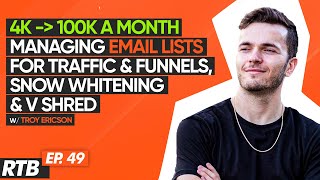
Podcast interview (Road to a Billion, July 2, 2021) featuring host Stefan Georgi and guest Troy Ericson. Troy recounts his path from freelancing ($4–6k/mo) through Copy Accelerator to scaling to $30k/mo then $100k+/mo by offering email list management, deliverability optimization, automation, and copy. He trains other copywriters (Email Secrets mastermind/leadparamedic.com) and offers a deliverability service (gmailpromotab.com) plus resources (faqemail.com). Pricing example given: $5k/month retainer + ~5% of email revenue; mastermind priced at $49/month (with $1 trial) and planned price increase July 4th.
Chapters
Hey, you're listening to the Road to A Billion podcast. I'm your host, Stefan Georgi and I'm glad to have you with me here today. The Road to a Billion is a call and radio show style podcast where you can ask me questions about freelancing, copywriting, entrepreneurship, mindset scaling, relationships, money and more. You can also ask my guests those questions, including my guest today who I'll introduce in a moment. The reason for the name the Road to a Billion is twofold. One is sold around a billion dollars worth of products and services, both my own, for clients and because I want to make an impact in the lives of a billion people over the next 10 years. A bit later on in the show, we'll take your calls. The way that works is if you're on Zoom, you just pop questions into the Q and A section and we'll go through and we'll answer some of those. But before we get to that, I want to introduce and then chat with my guest today, who is Troy Erickson. If you don't know Troy, I first met him back in 2019. He attended a small workshop that Ann Stanley and I did in Las Vegas around freelancing. It ended up becoming part of the freelancing or freelancer Freedom course that Ian and I have. At that point, Troy was 23. He was making four to six thousand dollars per month as a freelance email copywriter and list manager, which was great for 23, way more than I was making at that age. But I knew he had more potential and Troy knew he had more potential and that's why he was there. So in 2020, Troy joined Copy Accelerator and within a few short months, he'd gone from making $6,000 a month on average to $30,000 a month. And he hasn't stopped six. Today he's having $100,000 plus months doing email list management deliverability stuff which we'll get into working with eight and nine figure brands like Traffic and Funnels, V Shred, Snow, T, Pointy, Strategic profits and more. Troy is helping entrepreneurs scale their email list to over six figures per month by improving email deliverability, automation strategy and copy. And he's also a mentor to 250 plus copywriters, train them to become email list managers so they can create more opportunities for themselves and boost their income. So freaking awesome. And Troy, we are so happy to have you here today. Thanks for joining me, man.
Yeah, thank you. I've been looking forward to this for a very, very long time and it's just cool because like you Helped me get started on this whole journey, and it's been awesome, man. So I appreciate it.
Yeah, absolutely. I mean, I'd love to hear, I guess, starting when you first came in to the Freeon supreme event in December of 2019, do you want to kind of share with people just where you. Where you were, how you got to that place and sort of set the scene? And from there, we'll kind of go through to where you are today? So. Yeah. What was Troy's life like in. In 2019, you know?
Oh, yeah. I mean, it. It was. It started a little bit before that, so maybe some people know my story, but growing up, I was an only child, and all I ever did was, like, hang out with my dad and play baseball. That was, like, all I ever wanted to do. All I ever wanted to do in my life was play professionally. And when I say that, it wasn't from just like, oh, it'd be nice. Like, I literally practice every single day with my dad for, like, hours on the batting cage or throwing or whatever. And in high school, I had Tommy John surgery. My elbow just snapped one day during practice at the age of 16. And that's, like, the most serious surgery you can have in baseball. Like, normally you don't have that unless you're 30 something in the big leagues, but I had at 16, so I was out for a whole year, worked my way back, still made it to college baseball at the D3 level. Ended up transferring to a D2 school. And then I had a little run in with something called the Yips, which is very common in, like, throwing athletes as well as golfers, where you kind of just like, lose your ability to do simple things like throw baseball or to, you know, like, put a golf ball. Um, and it was extremely embarrassing. And I basically went from this guy who had probably, like, the most potential on the team that year and did, like, very well at the start, and I was like, nobody even trusted me anymore. And as a senior on my team the next year, I got cut, which, as you can imagine, given that baseball was my identity at the time, it just got stripped away, and I had, like, no clue, like, what to do with myself. I literally hid inside for two weeks. And at that point, like, I had dabbled in, like, looking at online business stuff for a little while. But in those two weeks, I was like, you know what? I have to do something more serious if I want to, like, not have a regular job. So I started looking into it, and I had a couple of different clients that I had was like, sort of working with, but didn't really care that much. And then I had to take it more seriously at that point. So one of my clients, he actually gave me a ticket because his wife was expecting around the time of the first Copy Accelerator event. Because, you know, I've been doing this for a little bit now, and it was like two grand a month while I was still in school. But after I graduated, it was roughly four a month. So he just gave me this ticket to Copy Accelerator. And at first I was like, yeah, I don't. Like, I'm not into events, really. Like, I don't want to go to this thing. And he was like, okay. And at the time, I was more interested in flying out to California and just enjoying this, like, first ever vacation that I had after college. But at the same time, I knew one of my other mentors, Ian Stanley, was out there, and I just DM'd him on Instagram. I was like, hey, man, I'm going to be around in a speech. Is there any way that we could possibly meet up and just, like, talk for a few minutes? And he was like, yeah, sure. I was like, no way. So I showed up and I was talking to Ian. We had a good conversation. Then at the end, I was like, hey, what's your key to success? And he was like, I go to events. So I was like, oh. So I called back my mentor, Greg, who offered me the ticket, and I was like, hey, I'm so sorry for, like, being arrogant earlier, but I'm going to take that ticket. So I took it and I ended up at Copy Accelerator. And I don't even know if you, like, really knew who I was at that point or anything, but it was cool. I was like, oh, there's Justin, Stefan, the two guys that Greg mentioned. It was cool. And I walked into this room just full of people who were crushing it, and I felt like it really belonged. But at that event, and then also the Freelancer Freedom event, which I actually paid for myself because I saw the all the value from Copy Accelerator between those two events at some point in there, you were just like, dude, you have so much potential. Like, you could kill it with this. I know you were doing like. Like Facebook ads and stuff, and now you're, like, kind of diving into email. I think you could really make something with this. And I always believed in myself. So, like, I believe that too, but I didn't even believe it as much as you did. Of people close to me. As much as I love my family and stuff, they Were like, hey, go get a job. Like, you know, $42,000 a year, you'll work your way up all this. So, yeah, you were the first one who said, like, hey, I think you can really make something out of this. And that's kind of the story of how I ended up in the circle. And the next Copy Accelerator event, which was February 2020, you had seen some of my skill and you introduced me to a couple of people. And then about a month or two after that is when I was in the $30,000 a month range, honestly, just from all the copy projects and lists that I was managing. And since then, I've gone on to create my own offers and just it's been really fun and exciting to scale this up. But that's kind of the long version of the story.
No, that's an awesome version. Yeah. Honestly, when I was talking about freelancer Freedom, but I forgot about September of 2019, which was the first time we officially met. But I love it. I mean, live events are. I'm the same way as Ian is in that live events changed my life in so many ways. And some of the reasons why I do a mastermind today is because masterminds sort of changed everything for me, like the connections, the confidence, the network, the doors being open, the mindset, I mean, all those sorts of things. And so it's really neat to see that. And by the way, we do have a copy starter event coming up in Scottsdale, August 31st through September 2nd. This won't be turned into a Copy Accelerator secret webinar, but I'm going to pop a link to the sales letter in the Zoom chat and on Facebook Live. So for those who haven't seen the sales letter and want to apply to attend, you know, you should. Like, as Troy can attest, these are life changing types of events. I actually want to go back real quick to the yips, just out of curiosity, because I'm familiar with that concept as someone who's a big, you know, fan of baseball. And I have golf as well. I golfed yesterday. Like, why do you think have you having more time, having kind of been separated between when it happened, like, what do you think it was? Is it just like, is it mindset? Is it like confidence? Is it like just, you know, being in your own head, like, you know, what do you think causes people to get the yips? Because like Troy said this, when people just can't do basic things like, you know, your picture and you completely lose control, or maybe you're a pitcher and you can't throw over to first base, right? Like, John Lester, pitcher just refuses. He just stopped throwing it. First base. It's like the gnarliest thing ever. It's like, you can pitch 95, 97 miles per hour straight down the middle, no problem. When he tries to throw the ball to first base, if there's a runner on it, just throws it away. So he just stopped doing it because he just freaked out. But, like, you know, I'm curious, Troy, like, is there any. Curious what your thoughts are on that? Why people get the. Get the yips?
Yeah. So it's still a lot of stuff I'm working through, and it still, like, pains me to think about it to this day, but, you know, and time kind of helps a little bit and breaks down some things. But honestly, I think it was twofold. So one, like. And a lot of entrepreneurs have this. But maybe not like in athletics, of course, but, like, you're very hard on yourself. That was the first thing. Cause, like, I always had super high expectations for my baseball career. My dad always had super high expectations, which was great because it got me to D2 college baseball. Not a lot of people make it that far. But at the same time, I had a really difficult time, like, forgiving myself for, like, making any little mistake. And then coupled with the fact that I had, you know, the worst, like, most aggressive surgery at the age of 16, and, like, going through that rehab process, like you're scared shitless the first time you pick up a ball and throw it again, because the last time you threw a ball, you had this pop in your arm and, like, tingling sensation all the way up. And, like, my coach is watching me like, I'm trying to make the varsity team in high school. Like, all these thoughts going through your head, and it just kind of, like those two things combined. You put so much pressure on yourself to be perfect. And when it starts not going that way, you start to, like, really think about it too much. And it's kind of weird because, like, at first I just had problems, like playing catch, and I was, like, very nervous. I get on the mountain, everything was fine. But then as time went on, it, like, flipped a little bit where it's like, catch was a little easier, but then pitching got, like, harder. And then I just, like, lost everything. And at that point, it's like, my coaches are watching, and they knew that, you know, I was a shell of what I used to be. And that got in my head, and it just turned into a massive snowball effect, and everything blew up and it's still hard. It's like even like today when I think about it, like I'll go to the cage like by myself and just like throw because it's therapy for me. But it's like when other people are around or when I feel like there's like I have to like impress somebody, it's just, it's weird. So it's a very applicable lesson to life. You just can't like, you know, as much as like Justin says that you just can't be too hard on yourself and it's a very, very real thing.
Yeah, absolutely. No, I mean, I imagine that's gotta be brutal. I mean, I think what's interesting too though is that you in a way I see a lot of freelancers getting the ifs as well though, right. Suddenly they start overthinking everything. They can't write a basic email, like an email creative. Right. Like it should take you 15 minutes, 20 minutes to write at most, right. Like sometimes like 10 minutes, 8 minutes. And then I'll see writers or freelancers who come in and they like, they start overthinking it to where it's like days to write a single email creative. And it's kind of a similar concept, but I guess so my follow up question there is like going from within your freelancing career and now you're an offer owner and do other stuff too. Do you think maybe the experience of having the IBSON baseball influenced how you operated as a freelancer as well? They helped with mindset and stuff like that?
Yeah, a hundred percent. So there's actually a couple thoughts I have on this, so. And even if you don't like play a sport, like putting yourself through challenging things really helps because for example, when you're out on the mound in a pressure situation, you and you know, you throw a pitch, like something happens, the ball gets hit or you know, ball strike, whatever, you get the ball back and then you know, nothing stops. It's like you have to throw the next pitch at some point in the next like 15, 20 seconds. Like you have no choice or like you throw a pitch, you have to make an adjustment. Think about like, okay, within a few seconds, like what am I going to do next? How do I read the situation? All the things that are going on. But in business things are very slow. Like when you tell me that if you put a timer on me and said, hey, you have 15 minutes to write this email, that feels like an eternity to me. So it's pretty crazy. Additionally, I just feel like, there's a lot less pressure. So Chris Long, he was, he played for, in the NFL for the Patriots and the Eagles for a while. And when he retired, he had this quote that really stuck with me. It said that, you know, when you're on the, like after you retire, the highs aren't as high, but the lows aren't as low. So like there, I can't replicate that feeling of like throwing like seven, like shut out innings. I'll never feel like that good. But at the same time, I'll never feel as low as I did walking up the mound for the last time knowing that I was going to get cut. Like, that was painful. And in business, like, yeah, there's some highs, but they can't get as high. But they can't get as low either. So it's definitely a weird trade off and everything. Like, I truly believe everything happens for a reason. I know it sounds cheesy, but there's only one way that the world can happen and that's the way that it does. There's no like alternate universes or anything. So, like, this was supposed to happen. As much as I didn't want it to, it led to something like, amazing that I never could have seen.
Yeah, that makes perfect sense. And I do love that perspective. And I like talking about responsibility, being that you can't really do anything about stuff that's going to happen to you. Right. The road happens to you. It's an impartial and objective. Right. But what's personal and subjective is the way you respond to stuff. And I think that's just super important because you're going to get curve balls using the baseball pun kind of. But you're getting curveballs thrown at you all the time. Right. And it can be little things, but they could derail your day. I mean, I'm not gonna make this up on me, but like, you know, we had a truck tire blowout on Monday when Laura took her daughter to get her. Our daughter to get ice cream. And, you know, then I had to like, stop what I was doing and not go on this call. And then, but then I was like, wow, cool. I changed a flat tire. I've never done that before. Like, I turned it into like a cool experience. And then yesterday the Internet went out in most webinar and it's like, damn, like, that sucks. But I was like, you know, I wanted to golf and I was torn on whether I'd go or not. You know what, I'm golfing and ended up like, golfing on this beautiful mountain course and seeing turkey and deer and all this stuff. And so it's really about how you respond to stuff. Right. And it sounds like you have that same mentality, which is really powerful. I know the highs aren't as high and the lows aren't as low, but you've been having some pretty good highs lately, I guess, financially, I don't know if you're comfortable sharing what you did in June, but if you are, love for people to hear, but if not, I'm going to say you can give a ballpark on it. But basically the question is, now that you're at that level, which I'll let you kind of say as much or as little about as. As you want to. I mean, how. How has your life changed? I'm curious about that too.
Yeah. So I'm okay with saying that. It's in the six figure a month range. That's fine.
Yeah.
Confident in what I do. So it's been amazing. Oh, and I'm not gonna lie. Like, a lot of people come on shows and stuff, and they're like, oh, I had, like, nothing growing up. Like, I had good parents growing up. I did. And it's like, they did a lot for me. We sacrificed a lot to play baseball and all that stuff. And in general, like, you know, I had a decent life growing up, but I never really had the ability to, like, make big decisions on my own. So as far as, like, what I have, like, I live in a cool place in Florida. I was able to move out of the Midwest, move in to a pretty decent house, like, in Florida with my friends, and it's been amazing so far. I'm able to travel, like, whenever, wherever I want. Bought a Jaguar, F type. I can spend a little more on just, like, things that are cool. I haven't done anything that's, like, too crazy, because it's like, again, my parents instilled, like, you know, being financially responsible is important, but just being able to, like, learn at the next level and, like, really invest in my own education is what's really fun. Um, so being able to do all those things and mainly just, like, have experiences, man. Like, that's what I really, really, really enjoy.
Yeah. That's great. I mean, so I guess what. How. How about do you have more confidence going from where you were, you know, back in 2019 to today? I mean, because that's something that really changed for me when starting to make a lot of money was, like, confidence. But then the. The danger of the trap is, you Start to equate your self worth with the money you're making, right? And you're like, if I'm making lots of money, I'm killing it. I'm a great person. And then if you have a bad month or you're not making a lot of money, you're like, oh, now I suck. Right? And so you have to get rid of that, like, kind of equivalency, because it's a false equivalency, right? Your value comes from inside of you and the person you are and your character and things like that. But, you know, those anxieties and fears, like a lot of those, like knowing as you're succeeding, like, you know, like, wins breed more wins, right? They tend to like, winning breeds winning. So have you felt like your confidence has really shifted or changed, or did you feel like you were always very confident and now just sort of like your earnings and income and growth have caught up with that? I'd be curious to hear.
Yeah, I mean, I'm definitely more confident. There's no doubt. And it's like, as with anybody, there's certain areas of my life where I'm more confident than other areas. Like, I always knew that I was going to succeed in some level with business. I mean, I was sure about that in baseball too, but that didn't work out. But in business, I was like, okay, this game moves a lot slower than that game. And I know that over time I can win. I didn't think I'd win like, this quickly. And what is winning? Nobody really knows, right? But yeah, I'm definitely more confident now. Although I was pretty sure that I was gonna kill it at some point. But, yeah, it's like a lot of that stuff you're saying is true, but I'm more aware of it now. If I make less money this month, that little thing in the back of my head's like, dude, you're failing. Um, and it's like, that's just how it is. Like, every month for the rest of my life is probably going to be that way. Um, but I'm more aware of it now, and I'm still hard on myself. Like, if I don't get results for a certain person, like, I'll feel terrible. If, you know, something bad happens, I'll feel terrible. But then there's a lot of good stuff. So there's a lot more good than bad. But yeah, it's. I'm definitely more confident, but I always had, you know, some level of belief in myself.
Cool. Yeah, that's awesome. And from there I want to shift into some email specific stuff. So I want to talk about kind of like list management, what that is for people who maybe don't really know a lot about it and would be considering if that might be a good opportunity for them. And then the deliverability stuff specifically. So start with kind of the list management side of it and like what you're doing with helping and training others. I'd love to hear about that.
Sure. Yeah. So the main thing that I'm trying to teach, like the big simple idea is that there's a lot of copywriters out there, they do all their work in Google Docs and they just send out emails to people and they get paid one time and it's kind of feast or famine and it's like, maybe that client will be back next month, maybe not. But when you can manage an email list, you basically like, writing gets your foot in the door. Sure. But you can take it to the next level and like have control of your own list that you manage and the client trusts you to manage on a monthly basis. You can get paid more because you're writing just about every day and you know, doing a few other valuable things that I'll get to in a minute. And it's on retainer. So when I started out, I was charging about 3k a month to write a daily, like after I figured this stuff out, to write a daily email to work on automation. So for example, like if the really important automations like abandoned car welcome series, like browser abandonment Sunset series, I do about one per week until they're all done. And then I also make sure all the emails land in the primary inbox. So it's like three pieces to it. And then the fourth one would just be like strategizing with the client. I have some big wins to share with that too, like simple takeaways. But it's like you like, email is such a big part to business these days that when you have like the keys to that, it's really hard to get fired. And if you are a decent writer, you can crush it for a client and they'll happily pay you more. So eventually then I figured out like, hey, you should probably increase my prices, add a bonus on the back end for performance, all of that stuff. So I'm getting money up front as well as after the month. And there's just a lot of positives that go into list management. And the main for me, especially when I didn't have a ton of clients when I first started was that I don't have to worry that this money is going to disappear next month because I'm doing a great job for this client, and they're paying me on retainer.
Awesome. Sorry, I mean myself. Cool. And so how did you get your first kind of clients for doing list management? Was it just people you were writing daily emails and you just pitched them on it, or how did that come about?
Yeah, so it was. Actually, I think I got my first one before I even knew you. But I wasn't really even sure what list management was because I started in Facebook ads. Like, that was the very first thing. I took this course from a guy named Grant Cooper. He had an agency called Social Vantage. I think he's doing well now in something else for gyms. But he taught me so much. And then I went on upwork and got my first few clients. Probably, like, many people here. And eventually I found Greg, one of my first mentors, and we kind of shared this big project together. Gary Vee was a part of it. They had, like, NFL players as sponsors. It was called Burger Box, so, like, mail burgers to you. It was like a meal kit, but it was unhealthy. So, like, I started running ads for that, and I, like, showed them funnels. They'd never seen it, and it was, like, kind of doing okay, and then it failed. And then I was like, oh, man, this kind of sucks. I lost one of my two clients, but Greg was like, hey, I want to start this other project called Hustle island, where we teach people the basics of entrepreneurship. And that thing took off right away. We did, like, a free plus shipping offer with a T shirt that said Hustle on it. It was, like, made up of a bunch of smaller words like persistence, grit, hard work. And then we built up this email list of 147,000 people, and it was after a year, like, 22,000 customers, 147,000 subs. And Greg was like, hey, man, we really haven't been dabbling in email. Have you ever managed in, like, you know, any type of email stuff before? And I was like, no. He's like, okay, you have the job. I was like, all right. So I just, like, hopped in and, like, completely failed at everything. And, you know, like, we were going to spam. Like, I was sending emails that didn't make any sense. I was, like, putting them all in an autoresponder and just, like, saying random things and linking to products and had no clue what I was doing. So that was one way. And then in another way, one of My other, like, I had two clients, so that was one client, and then the other one, they wanted to fire me so I wouldn't run their Facebook ads anymore. I was like, hold up. The stats in Facebook look pretty good. What's the problem here? And they're like, no, you're fired. I'm like, no, you're gonna tell me what's wrong. And they're like, okay, so our emails suck. And I was like, all right, so, like, let me sign in and try to fix this, because I have dabbled in this before. So I went in and, like, basically took everything that failed out with Hustle island and, like, use those lessons to help them, like, get out of spam and write emails that made more sense and write more emails, frankly. So I took that email list, I think, from like, 13k a month to, like, 47 or, like, 52. I can't remember what the peak was, but that was another big win. So I was like, all right, it might as well, like, do this for more people, because there's a lot of Facebook ad people out there in this red ocean. I want to go over here to this blue ocean. Which, at the same time, copywriting was getting more popular from, you know, some of the gurus that were really pushing it in, like, 2017, 18. So by 2019, I kind of had dabbled in writing and sort of new list management. I just didn't know where find a lot of clients until I found your stuff.
Cool. No, that's. Yeah, that's awesome. I do love. I love that they want to fire you, and you're just like, nah. Like, but that is so powerful, man. That. That's like, you know, because most people don't respond that way. They say, right, like, oh, shucks, okay, like, you know, and the fact that you were like, let me get to the root of what it is, and I can fix it. It's powerful. And I love also that when the opportunity was presented to you for the list management stuff, you didn't say, well, I don't know how to do it. I'm not ready. Because so many freelancers, oh, I'm not ready. I've never done it before. I've never, like, it's like, well, when are you ever going to do it? If you keep saying, I'm not ready every time or I've never done this, then you'll never be ready. You'll never do it. You have to just dive in and get experience. So I just love that. I see. I resonate with that a ton. Because I did the same thing early on in my freelancing career with, like, I built WordPress websites, I did SEO for people, you know, just all kinds of things like that I had no idea how to do, but I'd be like, oh, yeah, totally. I can do that.
Right?
And I would learn. Like, you can learn. Nothing's that complicated, right? I mean, that's something, I think, so important. There's no. We're not rocket scientists. We're not building bridges, right? It's like, we're. We're sending emails. We're like in activecampaign or ontraport or whatever. Right? So that's really awesome. And then to transition over to the deliverability side, you have like, a truly, like, irresistible offer, which is like, hey, basically, pay me money and I'll make sure that almost all of your emails land in the primary tab of Gmail and not the promotions tab, which is worth a shit ton of money. Because people, you know, maybe check their promotions tab once a day. Some people never check them, but they check everything in their primary tab, so you don't. You don't have to give away. And it's, like, not hard, and it's like a little code, basically, you put in. But, like, how did you come. I mean, that's. It's so crazy. How did you come about that offer? I'd love to hear a little bit more of the origins of it.
Yeah, sure. So it kind of goes back to what you were saying about just jumping into things and trying them. And I think so many people would be better off if they did that. And I certainly never would have found this, like, strategy if I didn't do that. But at the end of the day, it's like, yeah, those two first clients taught me about, like, how to avoid spam, which, sure. It's like, you know, keep good list hygiene, only send the people I've opened recently, you know, test your emails, make sure they're not going to spam, send good content that's congruent. You know, I could say thousand different things, but. And then I kind of. I'm not going to lie, I stumbled across, like, Ian's product about it, which is, you know, what I call, like, the hard way. It's a great product and Ian's awesome, but it definitely takes a lot of time to, like, kind of guess and check your emails. But again, like, I'm a very hard worker and very diligent in what I do. So, like, I was testing, like, I would not allow a single client's email to go to the promo tab. I just wouldn't do it because I saw the difference in open rates and revenue. So I said, okay, I'm going to sit here and figure out every single email until it goes to the primary tab. Sometimes it took an hour for me to figure out how to do it. And naturally, when it takes that long, you're like, there has to be a better way. So you play around with things, you notice patterns that you're testing, and you're like, this seems to work better. And you kind of like, get a clue and you keep going down that rabbit hole until you find something. So essentially what I have now, it used to be like just HTML code, but then for compliance, I have to change the offer a little bit. Still works in the same man, but honestly, I think it works better. It can create more sales with the way that I do it now. And I've seen, like, Mike Geary do similar things with this as well. But, yeah, what I did is basically studied, like, what the algorithm looks for with my own testing as well as, like, Glock apps and a whole bunch of other tools. And I just modified the email template. Not like just plain text. Like, there's other things to do to it as well. But it basically, like, approves it with Gmail, where it doesn't look as promotional. And you can definitely send emails, get at least 90% or so into the primary tab for some people, it works for all emails. But at the end of the day, there was just a lot of hard work that went into it. And I've really got it bulletproof now where, like I said, 90% plus, it's compliant. I made a lot of changes to it this year and it's getting amazing results for people. And that's my number one offer.
Yeah, I mean, it's a crazy offer. Literally, Warren Phillips was DMing me yesterday on Facebook and he's like, I don't know if he hired me yet or he was about to hire you, but he was like, you know, I'm hiring, hiring your boy Troy. Like, how could I say no to that? Like, I was like, seriously, it's an irresistible offer. And I think, you know, that's so important because, like, right, like, hey, I'll write emails for you. It's a cool. Million people would do that. Like, hey, I'll get 90% of your emails into the primary tab on Gmail. If you're an offer owner again, that's worth six, seven figures a year. You know, like many people, it's worth Seven figures a year and like you frankly don't even charge that much for all things mean, you know, relative to the amount of the roi, do you run into high level potential clients who are resistant to it and then if so, you know, how do you kind of help to get them on board and understand how valuable this is?
Yeah, so the biggest thing I run into, which I totally understand, is they think I'm doing like some black hat, like under the table, hacking Gmail or something. I'm like, no, dude, it's actually way simpler than that. It doesn't even require like code or anything. I literally just tweak your template and you're good to go. And maybe some of those like smarter, like maybe not smarter but like people that have been in email for a long time in here, maybe they get like a hint of what I'm doing. But the thing is like, you're like, I'm going to put in more work than you. Like I have so many, like I have so much data on this computer that I'm using right now based off of everything that I've tested that's going to work. And the main resistance I get is they just assume that it's like Baptist. And I get that, like I'm selling something that seems too good to be true. I get it. But after I do it for people, they're like, wow, that's genius. And I wouldn't even use the word like clever. I would say creative is the best word to describe it. It's got amazing results for people, it's compliant and that's what I can tell people. And I'll jump on the phone and be like, hey, I get it. It sounds weird, but I wouldn't have done this for over 170 people and gotten all the amazing testimonials and results that I've shown you if it didn't work. And plus the fact that Gmail puts it into primary shows that it's good content, people want to see it and if you're helping their users be more satisfied, that's what every software on earth wants right now. So yeah, that's probably the main amount of resistance. And another thing I think too is just human bias. I'm 25, there are people that talk to me who have been doing email for more than 25 years and it's like, I've never seen anything like this. I'm like, yeah, I get it. It's new. It's an exciting new idea. And just because it's new doesn't mean That I just like came up with it last night. Like, I would like to say that I have a lot of credibility and I'm just trying to portray that to people because I just want to be skeptical with them and help them understand what I'm doing.
Yeah, that's awesome. So for people, I could do this in the middle of the episode versus the end. I mean, for people who want to reach out to you about learning stuff around list management, or they want to hire you to make sure that all their email is inboxed, which seriously, if you're a business owner doing over a million dollars a year, like, it would just the most no brainer thing I've ever seen. If you email regularly. And if you don't email regularly, she'll talk to Troy because he can help her hook you up. Or, you know, but just for people in general who want to follow you, like, what are the best ways for people to kind of engage with you?
Yeah, sure. And the funny thing is, like, you don't have to be doing anywhere near a million dollars because I don't charge like that much compared to what I should charge for. This is so simple that like, there's no way I could put it on subscribers subscription. That's the thing that like keeps me up at night is like, I wish I could put this on subscription. But it's too simple that when I show you it, you're like, wow, that's smart. And then you can just like do what I show you. But Gmail promotab.com I got that domain last night specifically for this episode. But if you have any, like, questions, of course you can message me on Facebook or email me. But Gmail promotab.com is gonna have the main, like, information about that offer. As far as like getting on my list in general, what I do is I give people this email, like FAQ sheet. Whereas like literally every question about email, like, how to increase my open rates, how do I come up with content when I have nothing to say, how do I grow my email list organically? All that stuff is@faqemail.com so those are like the main two things. And the FAQ thing is free.
Awesome popping that one in the chat. To your FAQ email, obviously I put F A K because apparently I can spell. Sweet, man. Yeah. I mean, it's so badass. Seriously, for people who want to learn more from Troy, make sure that you get on, you know, his, his list. And that thank you thing is ridiculous. I think it's so smart you did that too. It also saves you having to answer the same questions again and again and again. Because I get that with my email list too, right. Where it's like, how do I get my first client? You know, like, that's like a lot of this client related questions, but it's like, I should probably copy and swipe you and do that because it's super smart.
Yeah, feel free. And that was a lot of the stuff that I shared with Rich Sheffern recently on Steal. Our winner is just basically anytime I have like a reply email at the beginning of an automation. Like, obviously it's great for deliverability. It's great for learning about your audience, knowing what they want to buy. But then I just automate the reply to them with a document that has all the answers to the questions that other people have asked. And a lot of people ask the same question and they click on it, they save it, they share it with their friends, and then I have like little upsells throughout it. So it works incredibly well and people love it.
Yeah, that's really cool. Sweet. I want to go to the questions from the audience. I'm nervous about my wi fi here. It seems to be doing fine, but I figured rather than, you know, let's jump in. I know because Spade asked the first question and maybe we'll both answer. He said he can't talk, so I'll just read it out loud. He said, if you can choose only one of these options, do you prefer to run your own offer or being a freelancer? So I'd love to hear your answer to that, Troy, and then I'll answer as well.
Sure. So, I mean, if I had to answer it like, immediately, I would say run your own offer. But I do want you to keep in mind that being a freelancer is the step to being an offer owner. Right. So, like, a lot of people when they have too many clients are like, oh, no, I can't stand clients. But, like, clients are like, they're amazing. Like, when you start out, like, you need clients to learn and you're learning on somebody else's dime, and you're learning things that frankly, you can't just learn by doing stuff immediately on your own. At least not without spending a lot of extra years and millions of dollars. So clients are a blessing. And if you eventually have the aspiration to own your own offer 100%, do it. But try to get a lot of stuff down with your clients first. And then there's other people too. They just want to, like, freelance. Like Jared Harlan. Like, he makes a lot of money every month just working, like, 10 hours a week so he can spend time with his daughter. He just wants to be a freelancer. There's nothing wrong with that. It's just that I'm wired differently. And I just, like, I don't know why, but I just want to keep going up and up and up and never stop.
Yeah, that's awesome. I'm super aligned with you on that. I agree. I think because people, I really try and have freelancers think about themselves as running a business, right? It's like the business of you and doing, like, the sales, you're doing the fulfillment, you're doing the customer service, you know, you're doing the customer retention. Like, you're doing all these things that you would do with any other business, right? Accounting, bookkeeping, everything. So I think it's a great first step for a lot of people. And then I also agree, some people, if you're really going after, like, lifestyle and it's like, hey, you know, I'm going to work a limited number of hours a week. I like, you know, have it set up good. I'm making this money. It's kind of like, I know what I'm going to make each month, and I'm happy with that. Then I think freelancing can be really solid, and running businesses is risky for all the awesome success stories. There's people out there who put a lot of money into businesses that fail. That being said, one thing I want to throw in there, because I wrote an email to my list today about how some of the accounting people I work with have been slow to respond on stuff, and I was getting pissed off and all that. And I talked about a freelancer who I helped get some opportunities, and he basically dropped the ball at the end. And I talked about how communication is so important, right? Actively and proactively communicating with clients. And then a couple people replied back to the emails, and they're like, yeah, and standing of clients. The client should respond to you right away, too. And I was like, yeah, no, not really. They don't have to. They're the client. So I think one thing like that, I'll probably end up bringing an email about this too. But, like, you know, like, the client has more power ultimately, right? Like, the client has more power. They don't have to respond to you. They don't have to do anything. Like, you know, and as a freelancer, you're ultimately in a customer service position which is, you know, great. You should own it and embrace it. But there is potentially more freedom as the client because you're beholden to less people. Right. Like, if you're selling your products and services like, you're good. Right. As long as everything's kind of operating smoothly versus as a freelancer, it's not. So I think there's more power ultimately in being kind of like a offer owner, business owner, whatever. But I think freelancing is an awesome step. So that's my spin on it. But it's pretty much the same thing you said, just a different way of looking at it here.
Yeah, 100%. There's so many different ways to be successful or be successful in your own mind. So a lot of people will be like, oh, what should I do? Should I do copywriting or, you know, focus on email or Facebook ads? Or, like, should I start my own, like, Shopify store? I'm like, dude, like, there's successful people doing everything. You just got to do something you enjoy.
Yeah, yeah, absolutely. I think that's important too. Actually enjoying what you're doing is really, really crucial. Isaac had asked how you transitioned from writing copy to managing lists, but we kind of talked about that already, so I'm going to mark that one as answered. An anonymous attendee was like, what's the biggest struggle you're facing right now for you as a freelancer? I mean, I guess we can both answer that. I mean, our circles will be different, I think, from other people maybe earlier on, but I'll let you go, Troy, and maybe share anything you have to say about that.
Yeah, so I'd say right now, like, I've gotten really a lot better at time management, and, you know, through all the things that you've taught, and Justin, as well as, like, Alex Becker, Sam Ovens, a lot of really smart people. But I still find myself sometimes, like, trying to manage, like, the crazy number of just, like, things that are flying at me, which then prevent me from doing the number one thing that's gonna make me, like, the most money, have the most impact in the least amount of time. So definitely just, like, being able to handle all these things and, like, finding people that I trust and being able to delegate and not having that thing in the back of my head that's like, oh, this has to be perfect. You have to do it yourself. And there's some people on this call, too, that are on my team now. And, you know, you do an amazing job. And it's like, I pretty much just go off of people in my circle and, like, referrals and, like, they're like All Stars and they do an awesome job and just like being able to trust them is like kind of the answer to my problem. But yes, it's definitely just being able to like understand that I could be like going for a walk and like not thinking about anything and the world isn't going to fall apart.
Yeah, that's, that's awesome. I totally. And I agree. I think, you know, for me, I'm not doing too much freelance stuff at this current moment, but I'm, you know, I'll take on the occasional project, I guess. Yeah, like sometimes it's time like I'm, I'm. Yeah, I taught a lot, taught a lot about time management. I'm pretty good at it at this point. Um, but there's still times where there are challenges. You know, one thing that, that intro, you know this well. Like, Justin, I talk about kind of your magic time or there's like the couple hour block where you get your most kind of important pressing tasks done each day. Um, you know, historically for me that was always in like the morning from maybe like 6:00am to 8:00am and I mean it still is. But one thing I went through the last month or two was where my daughter started waking up earlier. So she started waking up at like 7, 7:15. Then she was like doing like camp and I chose, I didn't have to, but to like to drive her to camp every single day. We got a dog. So then the dog at first wasn't like completely like kind of, I don't know, he did just take forever to go to the bathroom in the morning. I had to like do stuff with him. And you know, I found myself not having this magic morning time that I would usually have and getting very grumpy and irritated about it, but because then that would be my magic time for freelancing. Right. For example. But what I've done, really honestly is a couple of things. I mean, one thing is that I started going to bed earlier again because I was trying to go to bed later, which meant when I go to bed earlier, I wake up earlier. So maybe my magic time has to be from 5 to 7. So I made the adjustment. I cut back my drinking drastically. I've drinking maybe one night of the last two weeks or before that. People know me for a while, know I would drink like, you know, every single day. Not like heavily. I wouldn't get wasted, but you know, I'd have a couple of tequilas in the evening, whatever it is. And you know, but then I'm like, well, If I do that, I'm not. Not going to work. Right. Which is cool. I don't want to work every evening and get burned out. But, like, because I'm not drinking now, it's like, well, if I still got stuff to do after my daughter goes to bed, I want to take an hour or two and, you know, do it. I'll just do it. And I find that I have just more mental energy when I wake up in the morning. Like, I'm. I can dive into work faster. I don't need this, like, time for the fog to burn off. And so I guess, you know, just sharing like that with people because it's sort of, like, annoying that it changed, but it's like, well, going back to response dash ability, it's like, well, I mean, it sort of is what it is. I mean, I could give her the dog. I could be, you know, not as involved as a father to my daughter. I'm like, I don't do that stuff. I'm like, so I just have to find a way to make adjustments. But that was probably my biggest challenge recently, was around, you know, changes in scheduling and things like that.
Yeah, that's interesting, too. And I've talked about this a lot before, but, like, Alex Becker's concept of dopamine detox, like, if you're ever struggling with any of these things, like, whether it's like, drinking or, like, using your phone too much or, like, going out too much, like, whatever it is, it. The first few days are really rough, but the whole, like, 80, 20 of the thing is like, you just have to stop doing that thing cold turkey for, like, three days. And then at the end of those three days, like, the. Your brain's, like, expectation for the dopamine will, like, slowly go down and you won't want to do it anymore. And for, yeah, some things, it's going to take longer than that. But, like, I did that with my phone, and now I have, like, no desire to scroll on Instagram anymore. It's just like, I don't want to. And when you think about it, like, dopamine is a lot different than happiness because, like, dopamine is like, what is the least painful thing I could do right now? And for a lot of people, it's like scrolling my phone now. Do you actually enjoy scrolling on your phone? Probably not. It's just the least painful thing to do in the moment. So that's something that helped me tremendously.
Yeah, I think that's huge. I've talked about that as well, and Huge, huge fan of that. And just like, yeah, not staying on Facebook. I have to go on Facebook for like copying slider stuff or whatever else or creating content. Right. Because I create content but I don't just stick around, I don't start scrolling. Same thing with Instagram. So if I'm in there, I'm talking to people in dms. But like that's about it. Slack, you know, ignoring Slack most of the day, gma, all that stuff. Right. This con, it's like, I mean our lives are like going around just being like, like slot machines basically or just constantly wanting like we're surrounded by slot machines that want us to pull the little, the lever and you know, you gotta say no. But it becomes like a discipline and a habit. So yeah, I think that's super, super important. I will see. Marilee or Marlee wanted to know a little bit more about the email secrets mastermind because she's really considering joining and I'm sure other people would be interested too. So totally happy to have you share a little bit about that here, Troy.
Yeah, sure. So basically what that is, it's a group where I teach people the exact things that I was talking about about earlier. How to go from a copywriter to an email list manager. So we've got beginners in there and we've got people like all the way up as high as like Jay D. Both who you know, runs credit secrets. So we've got everybody in between. And what it is is essentially there is a whole like library of different trainings that I've made in regard to like how to scale an email list, how to get your first client, how to like do very like advanced things that people have questions on. And the reason I know these things help is because like the video library is made from questions that people have asked me. So that's one thing. We do have a job board as well. I do also offer like feedback. A lot of it is copy and a lot of it is also just like strategy in regard to scaling an email list. So those are some of the main things you get. We have bi weekly calls or pick different topics, have different guests and those are like the main perks to it right in the community. Like a lot of people really value community. So it's like it's similar to a lot of other groups with a couple of things but it's just very specific for email and becoming a list manager and it's pretty advanced and the price point is still super low that. It's 49 bucks a month. And it's like a dollar trial, but that is going to start increasing. The first increase happens on July 4th. So@leadparamedic.com you can sign up for that and then you're grandfathered in. But eventually this will be like an actual mastermind. I'm not ready for that yet. I've got a lot of things to focus on before that, but it will be there eventually.
Sweet. Sorry, I was putting the. More putting the links into the chat and on Facebook Live too, so. Cool. Thanks for sharing that. Lead paramedic.com I like it. You're getting more questions than almost any guests have had in a while. I love it. Yeah, man. The next one comes from John Michael Williams, who wants to know about kind of picking and choosing for opportunities. So John, I'm going to bring you on. I'll let John ask a question and then we'll. We'll go from there. So let me find John here. Cool. What's up, John?
Hey, Stefan and Troy. Big fans. I'm on both of your guys list. You guys always bring the content. Quick question. So, like, how do you know when to like, pass on opportunities? Perhaps that may not be so. If you're trying to align, you know, purpose with what you're doing and so opportunities will come. And so how do you know when maybe the pass on something that. That looks like it could be a very perfect fit and go for your gut, which is telling you like, you know, go another direction. And that other direction is not guaranteed though.
So how do you.
How do you balance that and make that. Make that choice?
Yeah, so a couple of things. I mean, let me actually get some clarity on this. Are you like, talking about, like, when you get client opportunities, should you say yes or no or are you saying you're at a fork in the road where you're like eyeing one opportunity or you could just say no to that and take a completely different opportunity.
So I'm at. It's kind of like a fork in the road where I think that I would have some opportunity to go left and build with something possibly that would be really cool or go right and still build that with some people that I trust a little bit more and that. So, yeah, so, yeah, that kind of gives you an idea, I think.
Okay, so if I'm at a fork in the road and this might sound like it just extremely, like tactical and logical and all that, but the thing that helps me the most is just writing down everything that I know about each path because if I can't see it on paper, my mind is just jumbling around so many things and I can't ever think about what the exact thing is because there's too many factors. So I'm writing down everything. As far as, like, finances are concerned, a lot of people forget about the time aspect to this too, right? So, like, there's a few things that go into this. Like money, you can always get that. But time, like, every second that goes by, we have one less. So you really need to factor in that everything we're doing is not just money, but it's also a time trade off. So maybe if you could like, calculate like, okay, well, if I take this job, like, here's what, and I'm realistically going to be paid every hour, factoring in driving or doing this or things I'm not being paid for. And then here's my passion over here where I'm trying to make it work. Here's what I need to invest. Here's the time that I need to put in. Just figuring out what's going to make you really happy and go with your lifestyle or maybe if it's a client. Another thing you need to keep in mind is even though, like, you might be scared to pitch a certain price to a client, keep in mind that that's just like the upper level of the range, right? So, like, maybe there's a maximum amount the client's willing to pay, which you could get up with bonuses and so forth, but there's also a minimum, right? Like, because it's not just the client, it's. There's two people, there's them and there's you. So, like, what is the minimum that you're willing to do it for? So if the price is somewhere like above your minimum and below their maximum, there should be a deal struck. But just make sure that you can factor in time and happiness and finances and just like living out your passion. I don't want to sound cheesy by any means, but that's kind of what I can say just from the limited info that I know.
Sounds perfect. Thank you.
Sure.
Awesome. Cool. Thanks for the question. Sweet. So that one's good. Okay, so Bobby has a question then Bobby changed his question, but said, I want to change my question, but I want to speak and ask Troy. It's about list management stuff. I hope I will be approved. So, yeah, we'll approve you, Bobby. And as long as it's not, you know. Yeah, I'm curious. You got my curiosity. So, Bobby, come on. Come on on, dude, ask. Ask away.
Hey, Guys, can you hear me?
Yes.
Okay, cool, thanks. Thanks Stefan. Without wasting any time. Okay Troy, so you know, I just want to ask you something about your marketing. So briefly. I started setting up flows for clients on Klaviyo, writing the automations and stuff like that, like you know, welcome series and stuff like that. And I want to ask you, did you start from there? I mean doing something similar and about the sales page, I just checked it. So you're teaching stuff like that, I mean how to set up the flows, how not your emails, not to land in the promotion step and stuff like that. Am I going to get all of this? So that's it. Thanks.
Yeah. So to answer the question, I think the first part was like what should you do first? So yeah, like if you get a new client, Klaviyo for example, the most important thing you probably do, it depends on what the business is. But like I'm going to assume it's E Comm because it's Klaviyo. Abandoned card flow is probably most important and setting it up, having like roughly five emails in there instead of like one or two answering people's objections in those emails, that's all really important that you could work on like a welcome series. And obviously the goal with that is to make sure that, you know, people are reaffirmed in their decision, they understand what they just bought and then after that you try to like upsell them into the next thing. Browser abandonment is good too. It's similar to abandoned cart but you know, they don't need to go all the way to checkout because they already have their email. So like if they click to a product and they don't buy, you can hit them with a follow up. So those are probably, you know, really three that are super important and then broadcast of course because like you know, sending more emails is like there's two things that are actually super simple that are going to be like the 80, 20 of things. One is sending more emails and two is making sure people see those emails. So as far as like all the automations and things that you've like mentioned. Yeah, I go over like all that stuff and if you see anything or if you don't see something in the group that you want an answer to, then you just post and you say like hey can somebody help me with this? And then I make a video about it and then your question is answered. As far as deliverability, yes, I do go over a lot of things with that between like spam and promo. Obviously it doesn't include you know, my whole like get out of the promo tab offer, but I do give you like some tips on how to do it, you know, the longer like harder way essentially. But for spam, I do have a full training in there on that.
Awesome.
Thanks man. Thanks a lot.
Sweet. Thanks for the question, Bobby. Next up, Fate asked a question, but he left, so I'm not gonna do that one. For now. Chad Fahlman has a question. I'm gonna bring in Mr. Chad. Always bringing that good energy, that Chad following. Chad, what's up? Hey. Hey.
You know we're doing some good stuff here. I love it. You're two handsome gentlemen and it's good to see you're face on your Troy. Congratulations.
Thank you.
Hey, so here's the question I have now. I've had quite a bit of success recently taking on six clients and I've also amassed a little bit of a following, just naturally. So there's people that come to me and say, hey, I'm looking for gigs and trying to build my skill set. Can you help me out? And I say, sure, whenever I can. I love to help people out. Now that being said for the time invested, when I get these gigs and I'm training people, I still get to revise their content, I still get to correct them and educate them and that's all fine. But I look at the time investment and I said, well, I could probably get to a point where I'm getting on 10k, 20k gigs at a pop and just doing it all myself. Now the problem of course is that there's an obvious ceiling there. So I'm really just looking for either of your perspective where you think I should go. Because both of you know me quite well and I would appreciate any feedback that you had in that realm.
Yeah. So I mean you, you kind of hit the nail on the head to an extent. It's like, yeah, of course there's going to be a limit when you're doing freelance work now. Having a team around you is going to increase that limit at some point. Obviously you're sacrificing a little bit of profitability, but most of the time it's worth it because as long as you're not like breaking even or close to that, like it makes sense to add more members to your team. Even in what I'm doing, there's a limit, like, sure, like six figures a month. It sounds cool and all, but there's still a limit. I like need to bring on more people because like a couple of people on my team are very overworked right now, and I'm working really hard to try and fix these scaling problems, but they are going to happen the only, like, real way. And I mean, there's a limit in everything, but, like, one of the fastest ways. And Stefan probably knows a lot more about this than I do. But just running like a physical product business, like, sounds easier because, like, I don't have to fulfill services and you can probably scale that way further. But then again, you run into your own issues with like, inventory and all that stuff. So, I mean, you can do very, very, very well with services if you have a good team around you. So I wouldn't necessarily shy away from it, but it's like you just have to do something that you enjoy the most and understand, like, hey, if I'm not making like 500 grand a month, it's okay and maybe I'm making enough right now, or I don't know what your goals are, but there's. And what I'm doing, I definitely recognize that there's like some level of scaling limits, but you can mitigate that with other stuff as well, like bonuses and whatnot. But there's other business models that would probably scale further. It's just that I don't really want to put the time investment into that and I probably wouldn't enjoy it as much.
I see. Before you answer, Stefan Troy, to clarify, my goal is seven figures. I'm willing to accept a certain level of dispassion to get there and a certain level of stress. That's what my intention is.
I'm okay with stress. But when you say dispassion, it's like, that makes me think you're going to do something you don't want to do to make seven figures. And I, like, just be aware of that.
Okay, fair enough. Thank you, man.
Because I think, I mean, generally you're going to have an easier time making seven figures or something that you're passionate about. That's just the truth. It doesn't mean there's people who are investment banking or lawyers and they're not that passionate about it and they still find a way to make seven figures. But realistically, if you can be passionate about something, it's just a lot easier because you'll be more motivated to get up and do stuff on the shitty days. You'll keep doing all that stuff too. On that, the kind of question of like, you know, just sort of being a lone wolf versus, you know, building a team and coaching them or even coaching other people and having A coaching offer because they're kind of same thought for that is like it's really just more about building up to that roi. Right. So you are, you're just sacrificing more short term, but you know, the long term upside is potentially much better. And where people get into trouble when they build teams is all that upfront investment, right. It's like. Cause people do and they're like, fuck, this is a lot of work. Like I've got to like, you know, like what you said earlier, like I've got to like, you know, hire them and train them and teach them and correct them and fix stuff and all that. And it can take like months and months and months. You know, on the flip side, once the people are really dialed in and then you can go and scale more. Yeah, you're basically creating like an agency, right. Then you can work significantly less and it can keep growing and scaling and people who have risen up with you and been trained can then be put in charge of training more people so you don't have to do it in the future. They're the ones doing. You can eventually have a full time sort of trainer, you have your SOPs, all that kind of stuff. So you know, ultimately it's great. One of the reasons I don't like the agency model so much is because often people just aren't going to do any of those things and they don't have experience managing people and payroll and HR and all this other stuff and so they sort of get overwhelmed. They end up making way less money. The people they hire don't really succeed and it becomes like a failure for that reason. It doesn't have to be, but it's a lot of work. And then even if you did like a coaching group, right, where you like, if you're following, you coach and teach people and do it like a mastermind or something like that, you know, it's kind of the same thing. Like it has to build up to where it's actually worthwhile because it is a lot of work even, even there. But you know, if you hit scale, it's obviously quite amazing as well. I'm not sure if those thoughts help you Chad, or not, but that's what I got.
Well, here's another thought. If you were to build an agency today, would you, and you're already kind of doing this, would you take it? Would you source people from like RNBC method and what have you. So going back in time a little bit, would you maybe create a program earlier where they're going through this boot camp. And then from there, you're taking them and offering those people gigs because, you know, at least they have a baseline of skill.
Yeah, it would depend. I mean, like, because the supplement JV thing I'm doing. And I wrote like, the first offer, which I'm will probably go live next week, and I think it's going to crush. And then I have Luke Mills writing a second offer, and I'm going to basically split my profit with him on it, which can make him millions of dollars. So he's pretty excited about that. And then. But long term, right? This company is at 60 million a year. The goal is to get to like, you know, half a billion a year, whatever. So, like. And I don't, you know, I'm not very, very clear if the person I'm partnering with where it's like, I don't want to write all the offers, of course. So I'm also going to be building out a whole copy team. Right. So what am I going to do? Yeah, I mean, probably mostly I'll hire people from Copy Accelerator and rnbc. People that I know are good. I mean, that's what I did with Luke Mills. It's like he was in rnbc. I saw like, you know, his letters, like, they were good. Then we did, like, these contests and Copy Accelerator and he kept winning. And, you know, finally. And then I asked him to help me with something to finish, like, a project that was like, you know, I'd done most of the hard work, but I was like, hey, can you try and fill in somebody's blanks for me? Because I'm getting pressed for time. And I was like, we'll see what happened? And he just, like, did it, nailed it. And then finally after like a year plus, I was like, I trust him, but there's other writers.
And.
I mean, to be completely honest with you, I'd probably pick people from Copy Accelerator over rbc because Copy Accelerator is just. Even RBC is amazing for getting your copy to where it needs to be. But Copy Accelerator is like, I'm seeing their copy, I'm really interfacing with them more. I'd probably do that. I could do it the other way, where I hire people from scratch for 50. And frankly, maybe it's a hybrid because maybe I do some of those, the big guns for that stuff. But we want to cultivate new talent, so maybe we want to have people in house or local. At which point what I've done in the past is like, I'll literally put ads on Craigslist like hey, like you know, gonna pay you like $20 an hour, $30 an hour, something like that, you know, and teach you how to like write advertisements and basically train them from scratch. But those people would have a much longer journey and I wouldn't be giving them like long form copy and promos and things, you know, I think if I started an agency today that I would, I think I could do great with an agency today because of all my mistakes I've made. But I still think I would not enjoy it because no matter how much we kill it, there will still be unhappy clients and people complaining and you know, times where we don't fulfill and be having to manage a bunch of pieces. I put the systems in place for that. But ultimately if you're the agency owner and you get a big client, right, like they want, they come to you, they're like, you can be like, this is your account rep, this is your person. But someone's unhappy, they're ultimately going to come to you. And then you're dealing with all these headaches that for me it's just not worthwhile. It's like I'd rather just scale my own stuff and frankly do physical products and if Copy accelerator, it's well established at this point, so.
Yeah, right on. Well, you've both given me some things to think about. I appreciate it and I won't hog the spotlight any longer so the others can ask you some questions there.
Cool man. I want to ask a great question.
Thank you.
Thanks dude. That's a good question. So Ron, Javier, I'll read off the next couple more rapid fire probably, but Ron said, can you speak about people worrying about iOS 15 making open rights irrelevant?
Yeah, so that's a good question. It's like the ESPs haven't even responded to that yet because they don't know. But at the end of the day, what it comes down to is it's actually going to be the opposite of what a lot of people are thinking. So all the emails that are sent out to people in the mail app are going to show up as opened. So your open rates are actually going to look like they're way higher. So you're just going to have to do a really good job before it happens today. Try to set this up where you're tracking engagement. Let's say you have a 90 day period where somebody doesn't open an email, you kick them off the list, which is generally a good principle. You're going to have to really start paying attention to clicks and Replies and other ways of like, knowing that, you know people are engaging with your emails. And the sooner you set that up and the sooner you fix spam problems, promo problems, all that stuff, the easier it's going to be when iOS 15 comes out. If you wait until then, it's going to be a little late because then you have no previous data and you just have a whole bunch of people and you're just like blindly guessing whether or not they've been engaged. But if you set it up right and you have all the stuff done in advance and you can tell when people are like clicking and engaging, then you should be fine. Because it's not like it's going to affect the actual number of people opening your emails. It's only going to be the tracking. But if you don't do it now, then it's just going to be this big mystery. And after a couple months of iOS 15, you could be in the spam folder if you're sending to a whole bunch of people that aren't engaged.
Cool, awesome, awesome answer. Next question is from James, who is asking us this for me. But he said you said clients have more power and they don't have to respond. And you're right. But how do you go about getting them to respond so I can get that high paying client? Well, yeah, James, so I was talking more specifically, once they've already hired you especially, you send them the work and you're like, here it is. And they're like, great. And you're like, can I get updates? Can I get this? Or maybe you need something to finish the job. It takes them a long time and there's not really a ton you can do there besides being persistent. But to your question about how do you get them to respond if they're like a prospective client you're trying to land, you know, like just I did that whole training yesterday. If you didn't watch it, please go watch it. Cause we basically show you the exact blueprint for how to do it. Um, it's in Justin 7 talk copy. There's a replay there. You can go see it or on Justin's YouTube channel. But besides that, like, you just follow up, man. Like, I talk about this so much because it's so crazy. Like, you know, people just will email once or twice or something like that, and then if I don't respond, they give up. Like I always try to say, like, I'm not, like, I. Even today I have people soliciting me. Like people solicit me a lot, but like Like, I'm not a good person to solicit to write copy for because, like, I can write my own copy. Like, people are like, hey, here's some email creatives, right? Which is a cool approach and strategy. Like, I'm like one of the best copiers in the world. I can write email creatives in like 10 minutes. So sending me like three creatives to test for something that if you don't like, little mini tangent, but like somebody you know, it's like, hey, I wrote three emails for Copy Accelerator that you can promote, right? And they sent this to me two days ago. And then. Which they haven't emailed me since, which they should do. Like, they should already have emailed me again. Like, hey, man, did you get it? Like, they should email me like every day for the next five to seven days at least. But beyond that, like, it's like, do you see me? Like, I'm promoting the live event right now, but I don't do emails really promoting copy accelerator to my list. Like, not like, hey, join our mastermind, right? Like, we don't really do that. So I've never, I'm never emailing about it then like, those creatives aren't specific. If you were like, hey, I see you doing this live event. Here's three emails you could do for the live event that would be like more useful and pertinent to me. But also I'm a copywriter. I'm actually not a great market, right? But there's so many business owners out there who are a good fit. So like, you know, just like people constantly try to pitch me on like writing for me, but it's like, I'm not because I teach the strategy. I get it. But I'm like, it's not a good idea. Like I'm, I'm not like a good prospect, you know, I don't think I'm super critical. It's just like, I'm not like an offer. I mean, I am an offer, but like, you know, it's just different, I think.
But yeah, yeah. One thing that helps me do with follow up for like prospective clients, like when I first started out, I would just email people, be like, hey, did you read it? Did you read it? And like keep sending it over and over, which is better than not following up. But then I quickly learned, like, you have to put some kind of new twist on it. Like if you say, did you read it yet? And then, and they don't reply, like three days in a row, you should probably be like, hey, John, I just thought of this like new idea and then maybe like briefly say it in a really curious way within one to do sentences and be like, would you be interested in hearing about that and just like something new and exciting that could help them. Or making loom videos, like pointing out different things on their site that they're not good at. Because like Stefan's really good at copy. He may not need that, but maybe there's something else going on that he hasn't found somebody else to do yet. In the same way, like I can speak to like Sam Oven's mastermind. I joined that one too. And like there's some very high level people in there, but frankly they're not very good at copies. So like when I go in there and I send them samples and like leave feedback on their posts, they're like blown away. It's just two different markets.
Yeah, I think it's a really good point, Troy. Super good point. Yeah, the original, I mean I. Who was it? Was it Parth, I guess who like emailed me like 15, 17 times and then I still didn't hire him because it was like, I'm. Same thing I just said. But he was so persistent. His emails were funny and creative every time that I gave him this big shout out. And Justin seven taught copy and then multiple people hired him to write emails for them after that. And I gave him the shout out because I'm like, damn, I just appreciate that this guy is following up so much. Right? So yeah, just, just. But, but yeah, not the same thing again. Hey, don't. You can't get mad, right? As soon as you get like sort of pissed off or like sort of like feel like acting like you have been slighted or deserved. As soon as you make me feel crappy about it, like you can make me feel crappy like internally if you're like, hey dude, like blah, blah. And like I'm like, oh man, I should really respond to this person's email. That's one thing. If you try to guilt me, like then I'm like, fuck this person. Like now I'm never going to reply. Right. So important to not do that. So yeah. Cool. Michael, I'll put a question in the chat. We can do that real quick. I mean, for an E Comm list, what does a list manager charge? Retainer and performance incentive. And where do you find them? Yeah, go ahead.
Sure. Yeah. So the last question implies that you are an E. Comm list and you're trying to find somebody. So what I charge is 5k a month. Plus roughly 5% of email revenue depending upon the client. I know people who charge more. Frankly, I could be doing a better job of that. But if you want somebody good, it's roughly definitely gonna, you know, you can do the math and figure out how much that would be for you. But as far as where to find them. And the same thing is true, like with finding like team members or copywriters or managers. You usually want to find them inside of a paying group because they've shown that they can invest in themselves. So like, I have a job board, obviously Stefan has a job board. He charges more. So those people are typically going to be more advanced. So, yeah, I would probably recommend one of those two places.
Sweet perfect man. Yeah. 5% of gross sales generated. Yeah. Not, not your total company GROSS, but like 5% of what you're. They're generating for you. And then, yeah, the very simple last one from anonymous attendee said, do you write with music or silence? So I personally write with silence. Everyone's different. But I like, I joke, I always would joke with, with my wife Laura, that if I could go into like a perfect like soundproof chamber, like a vacuum and write and just like that would be my ideal. I wear, I wear noise canceling headphones whenever, whenever I'm writing. It's like at this point, even in that vacuum chamber, if it was like guaranteed there would be zero sound, I would still wear them because it's such a habit. But everybody's different. I'm not sure about you, Troy, what you do.
Yeah, so the only time I listen to music is when I'm doing something that's just very mindless. But I think it goes along with, you know, how a lot of people think that like there's some like, big tool or like, like software, like new like toy that they need to buy that's going to help them be more productive. Music is the same way. So like when I'm writing, I cannot listen to music or like when I'm sleeping, a lot of people are like, oh, listen to like this app on, you know, and they have this like binaural, like whatever that's going to help you fall asleep. I believed that for the longest time and then I like stopped doing that and I was like, I fall asleep so much faster and not listening to things and same thing. Like people are like, oh, like, what music should I listen to? I'm like, nothing. Like, just go ahead and write and like be one in your thoughts. Like, there's no way I can put out Good copy. When there's music playing in my head, I just don't know how people do that. And I think a lot of times I feel pressured because all these apps are like, hey, you need to listen to this. Be more productive. Download this. I'm like, 90% of those apps are trash. And they literally make you work less productive, even though they claim it's more like, simplicity is the key. I do not like to work on projects or with people who have complicated businesses. It's just not, like, conducive for happiness.
Yeah, I love that. I agree so much. And I think, like, yeah, like, so example, I talked about how I got, like, an aura ring, and then I didn't like wearing a ring. Cause, like. Like, you're lifting weights, playing golf, whatever. So I got the whoop band, which I'm wearing right now, which I do. Like, I check it. But one thing I had, like, mentally to be like is because if you. If you open it and it's like, your sleep was shitty last night, right? Then you're like, oh, I'm tired because my sleep. And, like. But, like, I was like, well, I was going through life, like, of the same sleep that I got last night and not feeling that tired. So, like, now this thing is telling me that I'm tired. So now I'm gonna go around and just sort of use that as an excuse to be like, you know, kind of like. And I. I guarantee you, a lot of people do that stuff where now it's like, I only got, you know, five hours and 45 minutes. I didn't get enough REM and deep sleep. So, like, fuck it, I can't do anything today. Right. But if you hadn't actually looked at, like, the app, you never would have. You never think that, right? You'd be like, oh, yeah, I'm a little tired. Gotta get my shit done.
Yeah, I 100% agree on that one. So, like, I have an OURA ring, too, Sam Ovens recommended. And I was like, I guess I have to get one. But I got it, and I don't wear it around anymore because it's just a hassle. I wear it when I sleep, but I don't check it every day. Like, what I'm trying to get out of it is just, like, identify patterns and notice things, but for the exact reason that you mentioned. I do not, like, look at it every day. Because if your brain sees, hey, you're supposed to be tired, you will feel more sluggish.
Totally.
And the same thing like. Like, other companies have done the same. So I used to have that thing when, like, the progressive, like, where it tracks your driving, and I actually found that, like, they were basically bribing me to, like, save $50 by, like, having them track my driving. But, like, what is the, like, the theory with, like, the dog and the ringing bell? You probably know that.
Yeah, yeah, yeah, yeah.
So, like, I was training myself to not want to hear that. So there were a couple of times where, like, I really should have break hard because, like, somebody pulled out in front or whatever. And I didn't do it because I didn't want to hear the beep. I'm like, I could have died right there. I tried to save $50. Like, I just threw that shit out immediately. I was like, it was not worth it.
Yeah, man. Yeah, it's crazy. I mean, going back to, like, I put in the chat for people on the zoom call, but, like, yeah, even just stuff like notifications, like, I. You cannot pay me any amount of money to enable notifications for any app. It's like every single app wants to do it, right? I mean, including our. And whoop. And it's like, you know, get up and move. Run around your sleep. This is like, how's that make me more productive? I'm just being distracted all the time by stupid notifications on my phone. Like, I am the most. I'm wildly anti notifications. Troy. Fucking awesome, dude. Such a good conversation. I'm really glad I had you on. I'm going to take. I'm probably gonna start switching to doing our rotability, like, once a month instead of weekly. Honestly, I'm figuring that out. So, you know, I might take a little. I'm probably gonna take a day, a week or two off after this and. But I'm really glad I got you on before that. This was such an awesome, awesome, awesome conversation. So for everybody, you know, places you can engage with Troy. Gmail promotab.com if you want to learn how to make sure that 90. Well, not learn, but hire Troy to make sure that 90% plus of your emails end up in the primary inbox for gmail faq email.com if you want to, you know, basically find out, have your questions answered around email deliverability, spam, a lot of other stuff, plus, you know, kind of get into Troy's world and, you know, get on his email list and stuff like that. And you can also go to lead paramedic.com to look at joining Troy's mastermind, which I would highly recommend, and a lot of other Stuff like that. Also, if you want hang out, Troy and me come to Scottsdale. Will be there August 31st through September 2nd. Copy starter event. You actually get a. You get to join Copy Starter Light when you are. When you buy a ticket. So you basically can be in our mastermind for two months for free in addition to your ticket. It's a pretty crazy deal. I put the link in the chat and zoom again, and I will also pop it in Facebook Live one more time as well. And for people, watch the replay on YouTube, make sure that you leave a comment, make sure you hit the like button, you're on itunes, make sure that you leave a review, all that. And with that being said, Troy, any final words for anybody? Anything you want to say before we sign off here?
I just want to say thank you because it's been really crazy, like, since 2019. Like, things have happened, like, very, very, very quickly. And just the fact that I see people, like, hopping on here and wanting to ask questions of me is, like, very humbling. So I just want to say thank you. And, like, if you're in a position where, like, you, like, all you have to do is believe in yourself. I know it sounds kind of cheesy, but, like, you're a lot closer than you think. I really like that one meme where it's got, like, two minors who are, like, going, and there's like, a bunch of diamonds on the other side of this wall. And like, one guy is like, oh, I'm so far away. And he didn't realize how close he was to striking diamonds, and the other guy kept going, so he got them. So life is very much like that.
Totally agree, man. 100%. And yeah, man, my pleasure. I'm just, you know, it's been awesome to see your growth, and you are such a. Just an awesome dude. You're so deserving of it. And yeah, hopefully we'll. We'll do another conversation soon. So that being said, we'll wrap up. Everyone. Thank you for joining us again. Huge thank you to Troy erickson. You know, leadparamedic.com, fAQ, email.com, gmailpromotab. Com promo promotions. I sure got the right gmailpromotab. Com, right? Yes. Perfect. Check it all out. And everyone have a great rest of your week. And for those in the US Enjoy fourth of July on Sunday and we'll see everybody soon. Thank you.
Thank you.
More from Stefan











Why Understanding Product-Market Awareness Is More Important Than Ever in 2025