8 Signs Of A TOXIX RELATIONSHIP (That Relationship Won't Last) | Stephen Scoggins
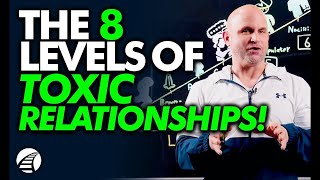
YouTube video transcript (Stephen Scoggins) outlining eight types of toxic people/behaviors to avoid—victim, brown noser, passive-aggressive, gossip, manipulator, narcissist, controller, dominator—and guidance on recognizing escalation, distancing, and recovery steps (distance yourself, find empowering support, persist). Includes warnings about relationship trajectories and safety resources.
Chapters
Hey guys, welcome back to the Journey Principles. In this episode, we're going to take the time to uncover the eight types of toxic people and behaviors you have to avoid so you can keep yourself out of trouble. So stay tuned.
Hey guys, welcome back. So in the last whiteboard lesson we talked about the seven people you must have to win at life. Well, it only makes sense to tell you the eight types of people that you probably should avoid or at least distance from your life. And here's why. Much of my life that I've been through that I've mentioned you guys before, I was surrounded by toxic people, surrounded by people who didn't really know their own value. And toxic people, typically they don't know their own value so they have a hard time valuing you in their life and they'll pull specific stunts and different things to kind of hold you back. And we're going to walk through a couple of those eight people today or those eight behavior systems today. So can you, you can better recognize what's going on and how to make sure that you stay on track with the people in your life. Alright, so here we go.
Step one I like to refer to as the victim. Victim minded people unfortunately are so focused on what happened to them or reasons why they can't move forward that what happens when they intergage with you is they become a big emotional drain. And you could spend a lot of time, especially if you're like me, who want to help, who want to serve, accidentally getting into that savior complex, meaning they feel like their life's a total disaster and all of a sudden you feel the need to jump in and try to rescue. Okay, that's how powerful and how distracting this can be and why it's so intentionally focused to be careful to kind of avoid a victim mentality person. But how do you recognize them? Well, there's three things really that a victim, a victim minded person is going to talk about to you on a regular basis. One, they're only going to tell you stories of how they were harmed, all the different relationships that failed, and how they were affected, all the different employment opportunities that were affected. In other words, they only give you the negative. They seldom tell you the positive about their life. They're intentionally trying to position themselves in front of you, expecting you to jump in and rescue. Alright, step two or number two in the victim minded thinking they are stuck on replay. Right? These stories are repetitive. They never stop. They never stop. They never stop. They're always curious or always concerned that this is always going to Continue going on and on and on. Number three in a victim minded person is they have a, well, let's call it what it is, a paranoia. Right? They're spending all of this time focused on what could happen, going backwards, what's not good, why it doesn't work, why they can't get the help. And meanwhile you're investing, investing, investing, investing. Know you can do this. Here's some resources, here are the tools, but they seldom take the step, they seldom take the step forward. Instead they stay in that paranoia state where everything is always out for them, everyone's always out to get them, everything's always going to fall apart and nothing is going to be healthy. Right? That is a dangerous place to be. Now on the scale of 1 to 8, victim thinking or victim minded person is, I wouldn't say unsalvageable or nothing like that. What I would say is that that person at a low level could suck your energy away. Which is why I put them on the toxic calendar here. Alright? Number two.
These people are referred to as our good old fashioned brown nosers. Think about it. The last time, ask yourself the last time that someone basically kept kissing up to you on a regular basis, what happened shortly after? Did you get taken advantage of? Did you get blindsided with something? The reason brown nosers specifically can be such a powerful influence and a powerful relationship to kind of avoid is because at first it seems like that they're your, they're your greatest fan, they're your greatest supporter. But they don't hold you accountable. They simply just keep showering you with ego, ego, ego, ego, ego, ego. Brown nosers are for one thing influencing you enough to make you believe that they're on your side so they can actually get something from you. Now I will tell you in my current day in life, I have several people that I have to keep at a distance because a lot of these behaviors are subconscious. They're not actually conscious behaviors. So the fact that you'll be conscious about the behaviors will help you recognize it and maybe even help a little bit. But the fact that it's subconscious means they're going to keep doing it by accident without thinking about it. Okay. Brown nosers specifically are the most, what's the best way I can say this?
Happy, Go lucky people who want to spend all their time showering you with affirmation. No friendship is going to give you 100% affirmation all the time. There always has to be a healthy level of affirmation. Empowerment, accountability and relationship building. No relationship is designed to be one sided. Okay, so you want to be careful about the brown nosers. Alright? Number three, passive aggressive.
Passive aggressive people historically have a very, very low self worth. The self worth is so low that the insecurities that they build up make it feel like they're going to not be accepted when they tell you the truth. Passive aggressive people on one thing will actually be the brown noser, but on the other side will also be the very same person to say, hey, you did an amazing job. But then step over here and be like, hey, you know what, if you'd have done it this way, then maybe this person wouldn't have done that or gotten hurt or something. Passive aggressive people are always throwing daggers while they're actually throwing affirmations.
What they're doing is they're not being honest with you and with themselves. Passive aggressive people historically will tell you what you want to hear, but also throw zingers out there so you can actually understand what they're feeling on the inside that they're actually scared to say. Does that make sense? Passive aggressive people unfortunately seldom tell themselves the truth, which means it's very difficult for them to tell you the truth. They spend far too much time trying to sugarcoat a topic, a thing, a word, a sentence, an environment, a situation, another personal relationship. They're spending far too much time trying to shine it up so when it hits, it's accepted. But what they're secretly wanting you to know is how they think and feel on the inside. That's what makes them so dangerous. Because you're never really sure where you stand with them in the process. Alright, next one. The gossip. Gossips are dangerous. The reason gossips are dangerous because they are totally not being honest. When you walk out of the room, they're the people that talk negatively about you. Now we've all had gossips around us. We've all had people. The reason I know that is because we've all been to high school, or at least most of us have at least once, right? We've all got these cliques that are supposedly our friends. And historically there's always one person in the clique that's the gossip. They're the one that's always telling. Well, you remember what Billy did and what Janie did and they're always starting, they're always stirring things. Gossips are dangerous because they destroy relationships. Gossips are dangerous because they're not being honest. Gossips are dangerous because they're not going to help you get where you need to be. Gossips are not going to be one of the seven relationships you have to win, period. Why? Because they're not for you, they're for them. Their whole goal is to down value you, to raise their own self value. So what they'll do is they'll talk negatively about you to other people so you are not seen as somewhat of encouragement. Right. Or someone of value over here. Meanwhile, they're saying those things specifically to raise their value in the eyes of the other people. They're the people that behind the scenes are always trying to get people on their team, so to speak. Okay, that's a gossip on why they're so dangerous. The next one, the manipulator.
Okay, Manipulators, unfortunately, are people who are constantly manipulating things behind the scene. They're like gossips on steroids. They're somehow in between the next phase that we're going to talk about in just a second and the gossip phase. They're so focused on control. They're focused on making sure that they manipulate the situation so they have complete control around the relationships, around the situations and around you. Their whole goal is to manipulate you to a point where at any point in time they get from you what they want, period. Manipulators will show themselves because what will happen is all of a sudden you'll feel drained, you'll feel insecure, and you'll also feel empty. Those three feelings will tell you if you got someone in your circle of influence. Circle of influence that might be more of a considerative manipulator. As we move up the rank, we're going to get into the narcissist. Okay? Now I'm going to be very calm with the narcissist or very intentional with a narcissist. Narcissist people have two things. Well, actually two things in common. First of all, a narcissist person is focused on them alone, period. Right? They're focused on being everybody's savior, everybody's friend. And the other thing that a narcissist struggles with is they have zero empathy or they have a very low level of empathy. It's really hard to crack their emotional shell. Now, historically, narcissists come from an area of background where they were devalued a lot when they were younger, meaning they were put in relationships, they were put in communities, whether it be in school, whether it be in the household, things of that nature. They're put in a situation where they've never had value. They've never had value. They never had value. And what happens is that insecurity comes up and all of a sudden now it's, I have value. One thing you'll notice about a narcissist is they're always bragging about themselves to other people. They're always telling people how awesome they. And if you'll notice one thing, if we go back to the brown noser and then you go all the way to the narcissus over here. Look at this, look at that.
If a brown noser themselves, all right, is going to shower a narcissist with affirmations on a regular basis, then this brown noser will actually get control of the narcissist over time. Why? Because the narcissist is just like, come on, baby. Come on, babe, give me more, give me more. You're awesome, you're wonderful, you're beautiful. You're so smart. No, there's no one in the world like you, right? That narcissist loves being on that pedestal. They also love walking by mirrors and going, hey, baby, how you doing? Right? They're the people that you'll see going.
In the mirror. Narcissists are all about themselves. They're not about people, they're not about relationships, and oftentimes they're not about creating community or an impact. They're about making themselves above other people. And they like to have that level of affirmation, that level of identity. What they don't understand, unfortunately, is that's coming from a very, very deep insecurity. So is it possible for narcissists to heal? Absolutely. Now, I personally believe that I've had friends that I've been around that have had to come up that journey to kind of make sure that that happens. Right? All right, moving on. The controller.
The controller phase is a little bit different. So at any point in time, any of these things are really going after one thing, control.
Specifically, more than anything else. These are all different, varying levels of control. The controller, a lot of times is a hodgepodge of these three items. Here. You're way up the thing. These are people that want to know where you're at, where you've been, who you're talking to. And a lot of times in relationships, what you'll see happen is you'll see a relationship start off with a brown nosing phase, meaning you're awesome, you're beautiful, and everybody likes to hear that. Everybody likes to be affirmed. Everybody likes to feel awesome, right? Everybody likes to know that the person that they're hanging out with is going to make them feel special. There's nothing wrong with that what happens is in an imbalanced relationship, that becomes the lure, if you will, the fishing line to reel you in right now within three to six months. A lot of times this controller will show themselves because all of a sudden this beautiful relationship that you thought was, they're my person, they're my soulmate, they complete me. All of a sudden will start doing things. They'll start doing things like wanting to know where you're at, where you've been, wanting to go through your phone. Now, if you're in a healthy relationship and that's part of your boundaries, hey, look, for example, my wife has complete access to anything that I've got. Why? Because I love my wife. I have nothing to hide from her. She's an amazing woman and I would never want to jeopardize that. What I'm talking about now is different. This, in a lot of respects might be a new relationship where they're literally picking up your phone, trying to hack into your phone, trying to hack into your email, watching you on Find my iPhone or Google my place or whatever the app is. They are basically doing a form of cyber stalking, which is why it's so dangerous. Okay, Keep in mind as you're going up through these different things, these are different levels of hooks. Victim minded people typically will tell you what you need to hear, tell you a story about them that makes them the victim of the story. When it comes down to control, all of a sudden they'll start doing more passive aggressive behaviors, meaning you're awesome and you suck all at the same time, which makes you confused. Okay. They will then begin to weasel their way into certain relationships that you have, start taking identity and credibility away from you with other people, which moves them up the ladder in a form of manipulation. A lot of times when we find this, we find that that person has narcissistic behaviors, meaning it's more important for them to be seen as important rather than you. And then by that time there's a deeper level of a hook or an anchor, if you will, of control. Okay? Relationships, a lot of toxic relationships and a lot of abusive relationships, for example, actually start off with this passion phase, right? What I like to say is early on in the relationship, whether it's a romantic relationship, a family relationship or a workplace relationship, is to give it three months, okay? It's very difficult for people or human beings to hide a specific force of behavior much longer than three months before stuff starts kind of coming to the surface to take it a step further. By the time you get into Six months, almost everybody's got their guard down. You begin to see the real person behind, okay? So when it comes to relationships, the one thing you need to be watching is the fruit of the relationship. Don't get hung up in the memories over here. Memories, nothing but memories. Don't get hung up over here. Pay attention to the fruit of today. Be present in the moment so your relationships are sound, okay? Because if you don't, then unfortunately you'll go to, you'll go to level eight. Level eight is the dominator, okay? Level eight is the person who literally dominates your life by the time you get to that level. That toxic relationship is so strong that historically there could be physical and sexual abuse on a regular basis. There's absolutely mental abuse, there's absolutely emotional abuse. And then now you're adding in the physical. Every form of safety that you have, every form of identity that you have is being stolen from you. So let me say this. If for some reason, if for some reason right now you see this trajectory, you're starting to kind of think about your own relationships or the relationships you have, or maybe a key relationship, and you find yourself over here.
Do me a favor.
Get some help. You're worth more than you can imagine. And you should never, ever, ever lose your identity. You should never ever lose your security or your safety.
You're worth it. You're worth it. You're worth all the things that life has to offer. And all because you've maybe followed this path. Because you'll see this, you'll see your relationship in this, what I just said, this entire trajectory, it's making sense. You're like, this relationship was beautiful, it was awesome. And again, this can happen in a love relationship. It can happen in a family, it can happen in the workplace. It was always beautiful. And over time it got progressively worse and worse and worse. And now you're in a danger zone. Okay? This is danger.
Danger.
Step one in overcoming toxic relationships. Very easy step, distance yourself. But what if, what if I don't have a place to live? What if I have a place to go?
Work with someone to find a shelter, work with another friend to hide you or take care of you. Now again, I'm going to one extreme because this is a trajectory. Most people in the population are in this zone and the reason they're in that zone is because they're all searching for their own self worth and their own self identity, their all personal identity. Does that make sense? So, but when we start getting over here, we have to start being intentional about distancing ourselves from people who are going to hurt us, people who aren't going to take care of us, people who are going to challenge our identity and our security on a regular basis. Toxic relationships don't have to be difficult. So step one Distance yourself. Step two Find a powerful, empowering person to start speaking life into you. And step three don't give up until you've distanced yourself so far that the influences that came with this negative behavior are finally gone. I hope you found this video powerful. We're going to create an entire mini course specifically for free for toxic relationships coming in the near future. So make sure you keep coming back to YouTube and and checking out the videos to make sure you get what you need when you need it, and we can help you win. Until then, I'll see you in the next video. Take care.
Hey guys, if you enjoyed that lesson about toxic relationships, you can click the link in the description to grab our free ebook which will teach you the seven relationships you need to win at life. This is a must read if you want to build better relationships. Also do us a favor like comment subscribe. That way we can stay in touch and see you in the next video.
More from Stephen



He Had Everything…Then A Heart Attack Changed It All | Dan Sachkowsky #Shorts




Paralyzed. Suicidal. Then He Surrendered, And EVERYTHING Shifted | Marcus Aurelius Anderson


Why You Snap At People You Love, The ALIGN Method, & Why ADHD Isn't A Disorder | Sara Hartley

