American Gladiator to the American Dream | Dan 'Nitro' Clark
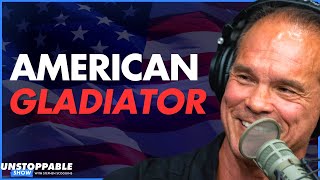
Dan 'Nitro' Clark, the American Gladiator, survived his brother's childhood electrocution and later a heart attack that left him empty despite fame. He built the Gladiator Way, a coaching framework across five arenas, around the idea that meaning comes from brokenness, not success.
Chapters
Broken number one. When I was just broken, man. When I was 10, my older brother was 12. He got electrocuted. We were home alone, and he died in my arms. I was so broken as a little kid. And part of my evolution of being like a fitness freak was to build a meat suit to pack muscle around to protect that little kid, you know, who lost his older brother and didn't know how to weep, didn't know how to grieve, you know, then I was broken, oddly, oddly broken. At the height of my success on American Gladiators, and I was broken in spirit.
Welcome to Stuck to Unstoppable, where we interview the world's foremost thought leaders to break things down in order to help you get past your hurts, habits and hangups and finally level up and move forward. I'm your host, Stephen Scoggins. Now let's go ahead and get into today's guest and our featured conversation. You're not going to want to miss it. Our special guest today is an American athlete, television personality, author, actor, producer, and peak performance strategist. Dan Nitro Clark is also known for his standout role as the gladiator called Nitro on the hit TV show American Gladiators, not to mention as a health and wellness fitness expert and the creator of the hit podcast show the Gladiator Way. Guys, please help me welcome my good friend and ally, Dan Nitro Clark. Dan, how you doing, man? It's good to see you, dude.
Stephen, I am so excited. I'm pumped. I'm ready to be here. And, you know, I loved when you came on my podcast. You were fantastic. The storytelling was fantastic. I only hope that I can serve your audience as well as you serve mine.
Dude, I have zero doubt about that. I mean, one of my favorite things, you know, when right before you invited me on your show was I had to go research all the things that have kind of transformed to change your life. Obviously, you know, well, on tv, playing football, and then the transition, and then now, you know, doing a major podcast and books, and I. Dude, you've been doing so much. And then I stumbled across your TED Talk, the Art of living, right? The art of living a happy life. Man, dude, I was like, okay, so he invited me on his show, but I'm already. I already know that once I get a chance to, I'm going to invite him on mine because I'm telling you what, that touched me because you haven't. You. You yourself haven't had it necessarily easy, right, to get to where you are today. So, like, you know, share a little bit about that, because it's pretty. It's. It's.
So. For the TED Talk, the art of living a happy, fulfilled, meaningful life. I had a heart attack eight years ago or seven years ago. And I was a guy who was a former professional football player who went to college on a football scholarship, who ran around on spandex on TV with the show American Gladiator.
And long hair.
And long hair. Yeah, well, I had hair.
That's funny. So what happened was I was someone who's always identified themselves by what they could do with their body, their physicality. It was my identity. Football player, CrossFit guy, martial artist. That was my identity. And when I had the heart attack eight years ago, it was like, in an instant, my identity vanished. When I was in the back of an ambulance and they were putting oxygen and they were taking my pulse, they wheel me inside the hospital, into the emergency room. The doctor comes and sees me, and I look at the doctor, Steven, and I say, I got one question for you. So I was having terrible chest pain after he did his test. I looked at him, I says, am I going to die? And I did that for reassurance, you know, like, hey, we're not going to lose nitro on our watch. You know, I just wanted to pat in the back. And he was like, you've had a heart attack for the last three hours. We're going to do everything we can. We have to rush you to surgery. Yeah. And in the 20 minutes before I went to surgery, I got to do an evaluation of my life. I got to find out what was important in my life. And so many of the things that I thought were important. You know, the big house, the German cars, the vacation home, all the plaques on the wall, those were the things that, you know, I loved about my life. But in that moment of need, in that moment where I wasn't sure if I was going to live or die, that wasn't what was important. There were two things that were the most important thing to me. The first thing was I wanted the people that I loved to know that I love them. And then I also wanted them near me. So for me, in that moment of being broken, I found my wholeness. I found what was important in my life, and it was the people I loved and having them near me. So when I. When I got healthy again, which I did rapidly, because that's the way my brain works, I go from stuck to unstoppable. As soon as I can, my brain went, what do I got? To do? What do I got to do? I did it safely. I came back. But I said, you know what? I don't want to be like that guy who speeds, you know, you're like, oh, I'm not going to ever speed again. Next week you're going a little faster, A little faster. Six months, three months later, you're like, whoa, you're speeding again. I wanted to remember the lessons I learned. I knew I had to change my life. So that's how the TED talk came about. It came about what I learned from those moments of facing my death. And then I wrote a book out of it because I wanted a way to remember. And as I started talking about and sharing what I learned the life lessons about how to become unstoppable again, about how to find happiness and fulfillment. I had so many people that were moved by the ideas because we live in the society as acquire more, do more, be more, get, get, get, get. And you end on up on this hamster wheel of chasing success without ever being fulfilled.
Yeah.
And I promised myself I wouldn't do that. And so now I've made so many changes to my life that make it so much better. I don't have nearly as much, but I'm so much more happy.
That's incredible. Isn't that the way the strange way things work is like sometimes it takes a major adversity or a major setback just to kind of give you a fresh perspective on what does really matter, you know? I'm curious to know, had the heart attack not happened, where do you think you'd be at right now? What do you think?
Gosh, that's it? No, that's a really, really good question. I hope I would not be that guy. You know what I mean? I hope I would not be that guy that I was who had such a. Such trouble finding satisfaction, who had such trouble with having enough. Because it was never enough. You know what I mean? It's never enough. And look, you know, it's such a dichotomy because I believe in always having one foot moving forward, one foot firmly stuck in the present. I believe that's how we're happy happiest as human beings. As we thrive, as we move forward, as we try to extend our reach beyond our grasp. Yeah, but in the old life, I was always grasping, you know, always grasping. I never looked what was in my hand and was able to hold it. Was able to hold it. And, you know, it's been, you know, I don't know who I would be. I can say this to you, and I said this in the book F Dying that. That having a heart attack was one of the best things that ever happened to me. I guess that's what you call synthesized happiness.
Happiness, right?
Yeah. Well, Dan Gilbert wrote a whole book upon it, you know, and the whole thing is things are never as bad as we think they are. And there's never as good as we think we are because most people think, you know, that about the big things in life that are going to make them happy. Oh, my God, when I get a 6,000 square foot house. Oh my God, when I get that beautiful, beautiful car. But they found that those big moments don't make us nearly as happy as we think they are. It's the little moments of human beauty and truth done over time again and again. The number of them, the multitude, I think, that contributes most to our happiness. What do you think?
I totally agree. I think. I think you just illustrated a beautiful picture, to be honest. In fact, the note that I jotted down is meaning is in the middle. Meaning is in the margin. Your meaning is in the margin. Not too much, not too little, just right, you know, trying to find that sensation of where fulfillment really comes in. Because obviously you can lose it. You can lose it in money, you can lose it in stardom, you can lose it in fame. Especially in this day and age where in theory, people are trying to tell you on a regular basis, you don't matter unless you have a blue check mark by your name or, you know, you don't matter unless you put out this, you know, you can showcase some kind of car, some kind of house or whatever. And one of the things I most appreciated about your story, your backstory is not. Is not the fame. I mean, the fame is impressive. I mean, you did some. You've done some pretty amazing things and had some pretty notable events. I mean, some incredible things. But what I've. What I've learned most about getting to know you is the strength that you have. And not just on the outside, obviously, you still got the big guns, right?
They're little pistolas. Pew, pew, pew, pew, pew, pew. They used to be cannons, like boom, boom. Now it's like, pew, pew, pew, let's have a pistola fight, you know, but.
You'Ve got this vulnerability and this humble confidence now, you know, that I think shines a shining light. I think it draws people to you. I think it encourages people to know that.
There is beautiful in the broken.
Well, you know, there's a couple of things I want to say about that one is. There's a Japanese philosophy called Kintsugi. K I N T S U G I. You can look it up online. And my mother's Japanese. I didn't live with her much of my life. My parents are divorced. I went different places. But I really grew to appreciate her as I grew older. And I remember as a little kid, up on her cupboard, she didn't have much. My mom came from very humble beginnings. Never made more than $40,000 a year. But she died a millionaire. And that's a different story.
Great story.
Yeah. But she. She had a bowl, this bowl that she held in such high regard. She put it on her wall, like, on a little shelf next to my brother's ashes. My older brother died when I was 12, when he was 10, and she had his ashes, and she put it there. And I never understood what that bowl was for. And when she. When I was younger, she'd say, kintsugi. And I'd be like, what, Mom? Bless you. Because she's Japanese.
Yeah.
And then in her later years, before she passed, I finally sat down with her and they understood that story. I said, mom, tell me the story about that bowl. She says, well, in Japan, we have this culture, we have this belief, we have this practice. And this practice is when a craftsman takes something that was broken, like a bowl, and then they put it back together again, using gold to put it back together. And. And they feel like what was broken now becomes more valuable because it has a history. And so the idea is to fill that brokenness with cracks of gold. So she told me that story, and I just goes, wow. And then, you know, that's my Japanese people. That's my mom's side. My dad was Irish, English. But that story sat with me. When you talk about, there's beauty in the middle, there's beauty in the places we're broken. Because if you're alive today, no matter what your circumstances, no matter what your financial worth is, you've been broken somewhere. Yeah, Right. And for me, the times I was broken the most, I grew the most. And all of those times, Stephen, were never as bad as I thought they would be. And they didn't last forever like I thought they would be. Broken number one, when I was just broken, man. When I was 10, my older brother was 12. He got electrocuted. We were home alone, and he died in my arms. I was so broken as a little kid. And part of my evolution of being, like a fitness freak was to build a meat suit to pack muscle around to that little Kid, you know, who lost his older brother and didn't know how to weep, didn't know how to grieve, you know, Then I was broken, oddly, oddly broken. At the height of my success on American Gladiators, and I was broken in spirit. I had money, I had fame, more fame than I ever thought I would have. You know, billboards, action figures selling out, you know, Madison Square Garden, being on the Tonight Shows.
Maybe this isn't the time, but I'll go ahead and say it had an action figure.
It's funny. So at the height of my success, I was broken again because I had what some people would say is everything. I had what and more than I ever thought I would have. But I was empty. And it scared the heck out of me.
Do you think you recognize that emptiness early on, obviously, with it, with all the things. Because it. At least for me, I can't. Obviously, I don't speak for everybody, but at least for me, there was a certain time and season where I felt like that, that those things were distracting me from actually looking at it to see if I had actually had meaning.
Sometimes I think our secrets, our grief, our fears, our pain are too big for us to hold at certain times of our life. And then we put them away. And sometimes we never get to them. You know, my dad never got to his pain. He never got to his grief. He never got to his guilt. Instead, he got to Alcoh drugs, and he died at 58 from an overdose. So he didn't deal with his pain, he didn't deal with that grief because it was too big for him to hold. And what was too big for him to hold was like a cancer, a metaphoric cancer that killed him. And that was the death of my brother. So.
Yeah, it's. I was going down that same path. You know, I loved my dad, but as I got older, I go, something's wrong. It's not right. It's not measuring up. I don't have to be like him. And when I had everything and I was. Would wake up in the morning, high, drunk, out of my mind, laying on the floor with it coming out of my mouth, you know, And I'd be crying, I'd be weeping. I said, this is. Something's wrong. I gotta fix this. So I started a. Or continued a journey, you know, of the last 45 years of lifting up the hood, you know, looking what's wrong? You know, consulting with some of the best people, some of the most smartest people, some of the most knowledgeable people about how to, you know, live that happy, fulfilled life. So it wasn't just the heart attack. The heart attack was kind of like, hey, we're going to give you one more last lesson. I hope so. You can really fly, right? I was like a butterfly. And, you know, I was just coming out of the cocoon and I really didn't know how to fly yet. And the heart attack was the one thing that really helped me fly.
Yeah. You know, again, I think, you know, one of the things that I think we both share is just, you know, being on the other side of some, you know, some major adversities is the importance and the beauty that this stuff brings. I think far too many people remain stuck because they refuse to acknowledge that hard work, you know, those things that have to be looked at.
The.
Looking under the hood, you know, what would you say to someone who maybe has had some of the similar background struggles that we've had with, you know, alcohol, with parents and things of that nature. And, you know, obviously I haven't had. Suffered a heart attack.
Right.
But obviously that's a. That's a major, like, shift and shift to your lifestyle. Right. What would you say to someone who's just, like, kind of thinking about giving up because they don't want to face it? What would you. What would you tell them?
So giving up, that's. That's an interesting concept to me. So when you say giving up, does that mean they're going to take their own life, that they're going to end it, or they're just like, you know what? I've tried and I haven't succeeded?
Yeah. You know, it could be both, but I would say I'm probably gonna lean more on those sides of. I just don't want to try anymore. Like, I think I've tried everything and I'm not getting. I haven't gotten any traction. Like, why am I going to bother doing. Why am I going to bother taking one more chance to see if I can get myself together?
Well, this is something I'm sure you've heard. Back in 1987, the guy who missed the most shots in the NBA was also the guy who made the most. Michael Jordan.
Yep.
And I went out fishing the other day. I went out 16 hours on a boat. I went out looking for big bluefin tuna, which are prized fish, £250. You either catch something or you don't. I went out 15 hours. I spent. We were. Chartered a boat. We spent tons of tons of money, me and a couple friends. We didn't catch a Single damn fish in Southern California. But you know what? You know who I'm going to catch more fish then? The guy who never goes fishing. Yeah, I'm gonna catch more damn fish than that guy. You gotta take your shots. You have to understand that failure is part of the success process. When you start to redefine your definition with failure, instead of, I failed, reframe that towards, I'm taking a step towards the future success. A lot of times what I do is I have the ideal person, who I am in my mind with all the attributes, positive, grace, hard working, focused, kind. And I asked myself all the time, when I take an action, am I doing it with that person in mind or am I doing it fear based? Yeah, I'm going to fail. What are people going to think? Oh, this is so hard. So for me, the ability to get yourself to start is probably the hardest thing for people who are stuck. And I have a couple different ways I do it. One is I have this. You're going to laugh at me here. This is really, really goofy. But it's called a starting ritual. Sometimes you see a baseball player, you know, they chew tobacco, they hit one foot, hit the other foot when they're at their plate. People have all these superstitious things. But I believe more than inspirational talk, which I think is helpful because it lights that fire in us. I believe in techniques and steps, processes that one can, can use to get themselves to start. And this is a launching sequence to launch yourself into action. So after my had my heart attack the first day home from the hospital, the doctor told me not to move. Be careful going up and down stairs, don't take out the trash because all that stuff can give you a heart attack again. So I'm scared. So I'm laying there, I'm afraid. I'm afraid I'm going to die. This isn't about a worried fear. That's not possible, like anxiety. This is a real outcome. Be careful, you can die.
Yeah.
But I also knew there's a part of me, the other voice to me that said, you got to move, Dan. You got to move, Dan. And when I talk to myself in my head, it's not nitro, it's Dan. That voice doesn't say, hey. Oh, once in a while it says, hey, Nitro. Rise up, rise up, gladiator. Yeah, just once in a while. But it's Dan. It's. I got to do something. I was depressed and I was like, oh, my friend sent me all these old videos on YouTube of American gladiators. Which is, I think it's on Pluto TV now too. It runs every day, all day. And as I was watching these things to cheer me up, I was kind of laughing. I was in a better mood. I noticed one simple thing. Before every single event, there was a referee. His name was Larry Thompson. And he would have this call. Gladiator ready, Contender ready?
Yeah.
Three, two, one, go. Yeah. As I watched those videos, Stephen, it struck me, every time he said, three, two, one, go. This countdown sequence, I jumped into action. And I remember, man, there are many times I did I wear my jock. Is my shoe tied? You know, am I going to get blasted? All these things. But whenever I had that launch down countdown sequence, it launched me into action. Then I remembered sports. I ran track through the discus. Whenever it was time to go, you went. When I had a hot dog eating contest. Three, two, one, go. I always went from the countdown, regardless if I wanted to, regardless if I was ready, regardless if I felt like it. So something I did that day in that in my bed to get myself to go up, I said, okay, get out of bed. To walk down the stairs. My goal for the whole day. I said, okay, I'm going to try that. Launched at launch sequence like an idiot, like a jerk. I was laying there in bed going, gladiator ready, Contender ready? Three, two, one, go. Boom. And I popped up to my side of my bed. Gladiator ready, Contender ready? Three, two, one, go. And I walked down the stairs to my refrigerator and didn't die, which was the goal for the day, which is.
The goal of the event.
Yeah. So a launch sequence like that is something that can propel you into action. And that's something you can rely on over and over again. 2. For people who are stuck to me, 99% of it is about fear. Fear. What will they think? Will I look stupid? Right? And the weird, weird thing, when they study kids in school, they realize that that fear doesn't really come in until they get to be about five or six years old. Because before that, you're not worried about what your classmates are going to think. And all of a sudden, kindergarten, you do something stupid and they're like, you're so stupid. Oh, look at him. Then we start to become worried about what other people think. And I think when you can get over that thing and just say, you know what? First of all, I'm gonna give myself a launch sequence. Gladiator ready, whatever yours is, go. And then you tell yourself this thing, you know what? I'm not going to feel like it. That's okay. I'm going to be tired. That's okay. I'm scared. That's okay. I'm going to do it in spite of the fear. And then you realize that half these people don't really care about you. Why are you letting them keep you from your dream?
I don't know if you could say it any better. Man, that was wonderful.
Yeah. That from your book, by the way.
I appreciate that, but I don't know if that was entirely true. No, but, you know, one of the things I appreciate so much about what. What you've been doing, not just from the coaching aspect or the podcast aspect or the books you've been writing. Is this you? Yes. You were an American Gladiator. You still are. American Gladiator. However, you have managed to put a framework or a process around what the gladiator way is. You know, the gladiator way, it's one of the things that we had a lot of fun on when you invited me on. And, you know, there are so many different attributes that come from the gladiator way break down the gladiator way. The process that you kind of walk your clients and stuff through that obviously get so much value from what you do.
Yeah. So the gladiator way is a take on the American Gladiators, but it's a way to live where you're living your best life, not only physically, but spiritually and mentally. I say there's four pillars to a good life, and one is health. Right. So health is broken down into exercise and fitness. The third one is mental. Right. You have to. And the fourth one is you have to have your mind game. And the fourth is spiritually. So the first thing I do is I sit down. Or we go through a process where we identify what the dream is, what the goals are. Then we also identify what the ordinary world is, where you're living now. And to me, I like to break it down into different arenas. So those four pillars are different arenas. Just like on gladiators, we had different arenas. Sometimes we'll go joust. Sometimes we'd shoot you with stupid tennis balls.
Sometimes you throw dodgeballs and knock people off of stuff.
Yeah, there you go. So we'd do it. So, you know, health, mind, body, spirit, relationship, careers, those are each different arenas. And I find it's rare that the man or the woman is doing a 10 plus in all of those areas. A lot of times guys like, I'm making so much damn money, I don't know what to do, but I can't walk up a flight of stairs. Right. So. Or it's like, hey, you know, I've a female CEO I work with. My life is amazing. You know, I crushing it for a woman. I'm a pioneer, but I'm so gosh darn lonely. So it's finding the arena, which a client needs to work in. Then it's looking at the ordinary world where they are now, and it's like almost like a storytelling looking at the extraordinary world where they want to go. And the whole idea is, like, Jedi training is you have to defeat the enemy. You know, the enemy normally is. I think you both know 99% of the time, the enemy is the person themselves. So what I do is, and I give them training and tools and weapons to win that battle. I set them up at frameworks of their ideal self, their superhero self, their gladiator self, and then their lesser self. Yeah, they don't want to be. And then I get them to take action and start to live in a way where their gladiator self, based upon what they tell me their gladiator self is leading the show, helps them overcome challenges so they can connect and win the prize, whatever that is to them.
Yeah, I love it. Give me a little bit about, if you don't mind, because one of the things, I know you and I both share this aspect as well. We love it when the people that we help win, we love watching their transformations.
Right.
Because, you know, one of the things that I've learned a long time ago is once you experience your transformation, you can't not help someone else get theirs. Like, you can try, but you're not gonna feel like you're actually doing what you've been called to do until you do, like, tell us a little bit of story. Maybe a transformational moment for one of your clients that you've kind of helped through the process, kind of like how they came in and kind of where they are now.
Well, let me start with this, though. Let me start to tell you where the idea was born and that feeling was born. To help others. Yeah. I think that's the basis for it for me. I really decided that I wanted to be of service and to coach and to help other people transform. When I couldn't help the two people closest to me that I loved. One. You know, growing up with a father who had alcohol and drug addiction issues, man, Stephen, I wanted more than anything to help him. Yeah. I didn't have the tools, so part of it was my lifelong quest to have those tools so that if I came across someone like my dad who needed the help. I could help them. Taught me an important lesson, which was also echoed. Four or five years ago, my younger brother died of alcoholism. I couldn't help him either. He wasn't ready to get the information. So the first thing I do is when I take on a client or we bring a client in and I charge a premium just because I want people who are so ready to change, who want to completely change their life. Because if people aren't ready to change, which I've learned from my brother, you know, died at 44 years old. Broke my heart. I learned from my dad. Died at 58. Broke my heart. If they're not ready to change, then there's nothing I can do to help them.
Yeah.
But for those, Stephen, who are ready to change, I mean, it's like, rise up. It's nitro up. It's nitro up. And I coach anybody, I feel like I can make a difference in their life that's ready to change. And sometimes, you know, for me, you know, money is not the biggest thing.
Yeah.
For my high put. My high price client. Yes. You know, you're gonna. But I've also coached people for free.
Yeah.
You know, I watched this interesting documentary recently by Bryan Stevenson, and it was on hbo, and he was my girlfriend's law professor. He went in. He went. He was a guy in the movie no Mercy on Warner Brothers who helped death row inmates. And he was a guy who went to nyu, and he was a African American gentleman, a black guy. And first time I'd ever seen a lawyer was he went to law school, went to nyu.
Yeah.
And he had all these other lawyers coming in, deal telling him, like, you know, finance, Wall street, corporate litigation. Nothing. Nothing felt right to him. Nothing felt right to Mr. Stevenson. He finally, in his second. I believe it's his second year, he went to intern in Alabama or somewhere in the south, and he went to intern with a guy who was helping inmates on death row. And he said something to me that stuck with me, and this opened me up to, like, help the people that I sometimes help as well. And he said, my mother told me to help the people who need it the most. And he remembered that. And he's dedicated his life. He's 50, 60 years old. To helping people on death row. So I remember that. So sometimes, you know, if I see somebody, they reach out to me, and I just see that they're struggling, and they're a single mom with six kids.
Yeah.
I just say, you know what? Call Me, I'm going to help you. I'm going to transform your life. So I get a lot of satisfaction from helping people transform because I believe that the way you do create a legacy is through the stories they tell about you. Right. And I'm not Michael Jordan. I'm not, you know, Walter Payton. I'm not one of these guys where they're going to be telling the stories. I knew who I was. I was a guy who wore spandex on TV that a lot of people thought was cool. I thought it was kind of strange, but it was kind of cool. That's who I am. Where my legacy is going to be is the people I help and I transform.
Yeah.
And whenever somebody, you know, just says, oh, my God, you've changed my life. Thank you so much. And a lot of times for guys like us, Steven, it's the tools that we know that we don't think are special because we use them every single day.
Exactly. Yeah. Our good friend Steve actually was trying to pull stuff out of me. I'm like, what are you talking about? It's not unique. He's like, yeah, it is.
Yeah, exactly. And then I think after the heart attack is where everything really transitioned. That is when I started to get as much, if not more joy out of someone else's wins than I did my own.
Yeah.
And I guess I had to face my death. I guess I almost had to die. But now when I. When I see someone have success, I'm like, yes, yes, yes. Because I know this. I know by me helping them, it just doesn't help one person. Right. It's a ripple. It's a. Say it again.
It's a preach. Come on.
Yeah. It's a ripple effect. When you help one person, you help the people closest to them, and the people closest to them go and reverberate that out into the world. You help one. You really help one person transform. You help so many. And that's what the world needs right now. The world needs transformation. The world needs us to come together as people, you know, and come hand in hand and help one another, you know, And I'm. Gosh, I sound like a preacher all of a sudden. Rise up, Nitro.
Love it. You know, it's funny, you know, Do.
I have the longest answers of anybody?
Dude, I'll sit here and listen all.
Day long.
If I know the listeners are going to enjoy it for sure. Talk a little bit about. With a little bit of time we had left, Talk a little bit about the importance of having a coach or mentor or somebody in your corner. Because I think a lot of people are still trying to walk around isolated, not even knowing that the greatest insight they need is by someone that's not too far off from them.
You know, for me, I've always been a really coachable guy.
Yeah.
Because I started off, you know, with strong, what seemed like strong male figures in sports.
Yeah.
And coaches throughout my life. First, sports coaches transformed my life. And then when I was 14 years old, before I ever had any success in my life. This is before I became a good football player. This is when I was too fat to make the Pop Warner team. This is when I quit my freshman year in high school because I wasn't playing at all. I just quit halfway through the season. I was overweight. My belly hung out of my jersey. I was that kid. I met somebody. My dad had an office during the day that he owned. He ran a business. And at night, he had rented it out to a Hypnotherapist. This was 1978, you know, hypno what?
And this gentleman, Roger, told me about the power of the mind, the power of belief. And I'd never heard anything about this. And I've never been successful again. You know, I was this kid who four years earlier, lost his older brother, and I. Drugs and alcohol, all that stuff at a young, young age I'd been subject to. And I'd never, never been successful before anything. He said. You know what he said the mind is strong. He says if you get into a relaxed place where you have a stream of unconscious, a straight stream of consciousness from your consciousness to your subconscious, you can make great changes. He says you can have success first in your mind. Do the work in life, and everything will change. You're taking a vacation towards someplace you want to go, a journey. And so what I did, he had me do is he had me start visualizing myself successful on the football field. And one year, I went from a kid who was too fat to play, who quit his freshman year. I came back my sophomore year, and I worked hard. I visualized every day my success, and I became MVP one year, dropout, to the most valuable player on his football team at Saddleback High School in Santa Ana. So I. That was a mentor, that was a coach. And I've had people come throughout my life who've taught me and who still teach me today.
Yeah, absolutely.
Yeah. I look for mentors all the time. You know, we just talked about people I've had on my podcast, and I find myself. I'm attracted to not that way. But I feel myself a pull towards, you know, dudes that are older than me, almost like a father figure that have had success and then what success can they put back? But also, when you talk about coaching, it's not just about personal coaching, it's about coaching anywhere. I think there's something that gets stuck in people's mind. If you wanted to learn how to shoot a bow and arrow, you would probably get a coach, Right. You know, if you wanted to learn to be a carpenter, you'd probably get a seasoned carpenter to help you. But when it comes to your most valuable asset, personal mastery, to be able to get yourself to do the things that you need to do, that you say that you want to do for some reason, we won't get a coach for that. Yeah. And it's so interesting because one is about an external skill, Right. Archery, singing, pottery. You go to pottery class in a second, you know, I want to learn to pottery, singing, I want to learn. Because those are external things. Yeah. But our most valuable asset, the internal things, we're afraid to get coaching. And if you're afraid to get coaching, that's probably why you're stuck right now. Find someone like Stephen who can help you.
Dude, that's brilliant. I think the. I think the key factor that I think you just said, you used the word afraid. There are two things that I think people are afraid of when it comes to getting that external source. They're afraid of being vulnerable and saying and showing someone they're ugly because they might get joked. I think they're also afraid of the fact that. And I hate. And I don't want to use. I'm going to use this term loosely because I don't know of another way to put it at the moment. I think they're also afraid of the work that it's going to take and the commitment. You know, I think that those things are very different or very instrumental things in someone's overall transformation, success. And it's one of the reasons why I've been so inspired by what you've been doing is because you're able to break down many of those vulnerability walls and many of those fear based walls. You know, you don't have to. You're like, dude, I've. This is where I messed up. This is what's been. This is what happened in my life. Look, I turned out okay. You can too, kind of. You know what I'm saying? I find that the world is craving.
I'd say it this way. I feel like the World is tired of gurus, but is in need of guides.
Ooh, I like that.
That's what I feel like. And I'm proud to say that I have a new friend that I know is a great guide who's interested in helping as many people as he possibly can with processes and frameworks that actually work. Actually work. Right. You're not out being self proclaiming, and it's one of the things I admire about you most. I mean, you've had platforms and you have the availability to have platforms, but yet you're choosing to serve. And if the platform just continues to grow like it has been fantastic. But it's not the platform you're searching for. It's the piece inside of another piece person that seems to give you even more gladiator strength, if you will. You know, that's what I love about you, man. Love it.
Yeah. Nothing but a reflection of the people I help, dude.
All right, that's tweetable. Got to tweet that for sure, man. I love it. Well, look, tell everybody how they can, like, stay connected with you, man, because I love what you're doing. I want to be a part of it. Anything I do to help you just continue to just get out there even more and more and more, I want to help you do that for sure. Because you've been. I've been so inspired by our conversation.
Today as I was by yours. It's definitely a mutual admiration society here. And again, I'm so honored, and thank you for taking the time to sit with me and interview me and hear my story. So thank you so much for that. If anybody wants to look me up, I'm easy to find. Just Dan Nitro Clark. Just go type that in. If you type Dan Clark, and you'll probably. I don't know who you're gonna get. No, because I went to the pharmacy one day, you know, I'm like, oh, my name's Dan Clark. And they're like, okay, what's your middle name? I'm sorry. Come on. How many. How many Dan Clarks can you have? This was at UCLA Medical Center. Like, she looks through, she goes, I have 22 Dan Clarks. And I was like, that's just a pharmacy. So, you know, like Dwayne the Rock Johnson. I kept the nitro in there. Dan Nitro Clark. Just look up Dan Nitro Clark. Facebook, instagram, or dan nitroclark.net and, you know, let me know how I can help you and serve you. And again, I thank you, my brother. I appreciate you I look forward to when we live in a different time and a better time, or not even that so much when this change is enough where I can come out and see you and, you know, I can come support you in your event or whatever you need.
Oh, dude, I'm looking forward to it. I've got to. I've got to put you on the stage. There's no doubt about it. I've got to get you in front of as many people as possible, man.
Nitro up. Nitro.
That's going to be. I'm actually going to play theme music just for fun.
All right, buddy. Thanks for having me on.
Absolutely, dude. I love you, man. I'll talk to you later, buddy. See you.
Bye.
Bye, guys. I hope you enjoyed that interview just as much as I did. And if you really like that one, I know you're going to love this one. So check it out. My mom and dad were not supportive at first. They were like, are you crazy? I mean, you literally just made $140,000 in four months on quota at this company. You're on pace to make 400 grand a year. What are you doing? Just take the money and move on with your.
More from Stephen



He Had Everything…Then A Heart Attack Changed It All | Dan Sachkowsky #Shorts




Paralyzed. Suicidal. Then He Surrendered, And EVERYTHING Shifted | Marcus Aurelius Anderson


Why You Snap At People You Love, The ALIGN Method, & Why ADHD Isn't A Disorder | Sara Hartley

