Archive Journey Principles Radio Show Episode 107 | Own Your Growth
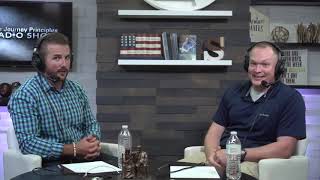
A conversational radio-show interview (Journey Principles Episode 107) featuring hosts Josh Bledsoe and Stephen Scoggins with guest Jeff Stoner. Jeff—an 18-year USAF senior NCO who leads an Airmen Leadership School—shares practical leadership and personal-development insights: take ownership of intellectual growth, surround yourself with the right people, practice self-awareness and humility, build trust through transparency, embrace discomfort/resistance for growth, delegate to develop others, and pursue ongoing learning (audiobooks, events).
Chapters
Foreign.
Guiding you to become the hero of your own story. This is the Journey Principles radio show where you are the warrior and we are your weapon. Now here are your hosts, Josh Bledsoe and master life strategist, Steven Scoggins.
Welcome back, everyone, to the Journey Principles radio show. We are so excited to have you back in the studio with us today. I'm here with my good friend Jeff Stoner. Jeff and I have known each other for quite a while, and I got to tell you, this is one interview that I have been extremely stoked to do because every time I get around this guy, I always learn. We always have this sort of conversation where we're going to sit down and maybe talk for, I don't know, 30 minutes to an hour. It's going to be like a lunch thing. Next thing you know, we're like, oh, crap, we got to go. There's a meeting coming up. We gotta leave. Just because he just exudes the stuff that I'm into. Not, not the, the fun, like athletic stuff or the quirky, like video games, comic books, comic books, nothing like that. He exudes what this show is about, right? Helping grow people, helping develop other people that are around us. Mostly because he's charged to lead them. I'll get to his background in just a second, but trust me, you need something to write with. You need something to capture these notes with. If you don't have it right now, if you're driving, don't write, please. 10 and 2. Drive it right. You got it. You have teenagers.
Oh, yeah.
Driver's license. Ten and two later. Get the recording of this because this show is going to be packed. I told him I hope we have enough time to get through all these points, buddy. Well, we're gonna try our best. So Jeff has an incredible military career, as some of you may know that. I just got off active duty. That's where I met Jeff. I met him while I was on active duty. And I knew this is somebody that I needed to stick around because I grew from him. He was at my launching to civilian life party, if you want to call it that. He supports the beard fully, so we're staying good friends there. But that all comes from his 18 year career as a senior NCO in the United States Air Force. Twelve of that was as an aircraft mechanic. So think about, of course, all the aircraft that the air that the Air Force flies. He was a maintenance guy on, on that for many years. He's going to talk about that a little bit in his story. He's a dad, he's a husband. Say hi to Emma.
Hi, babe.
Yeah, no doubt. Oh, there's a dap.
Never did it. Do it.
He told her that he was gonna adapt for. Because dapping is only cool with some NFL players and dads. Right?
Hashtag dad.
Hashtag dad life. So his. His career has taken him all over the place in the United States Air Force and landed him in North Carolina now, where he has the privilege to lead something called the Airmen Leadership School. This is where they take young airmen mostly. Probably about a year or two out of high school. Not very long.
Oh, yeah, A couple years out of high school.
Couple years out of high school. And then they put them in this, like, machine of Airmen Leadership School, which is a couple weeks long, and then they spit them out. And they're supposed to be men and women that are leading other airmen around their age or someone that's going to come up underneath them in the ranks of the military, if you will. I watch this program, and as an officer, I am blown away by the product of people that they put out from this. And this comes from Jeff and his awesome staff. They go above and beyond to really shape the men and women. They're going to be leading the. The United States Air Force into the future. And he gets to do this every day. Brother, I am jealous of your job.
It's awesome. It is.
So I gave a little bit of your military background, but let's. Let's get into Jeff Stoner so they get to know the Jeff that I know.
Sure. Yeah. So I. I originally from California with the last name of Stoner, so you could imagine the teasing in high school.
Yeah.
It's actually funny. My. My mom had my. Had me go by my. My stepdad's last name when I was in driver's ed, so. So it was Clement. I was in driver's ed sophomore year, and the teacher said, hey, does anybody have a name that's not their legal last name? I said, I do. Said, well, what is it? I said, it's Stoner. And of course, the class erupted in.
Erupted just like I just did.
He pulled me out of the classroom and said, you better not be lying, or I'm going to call your mom. And I said, no, sir. And then from that day forward, I was stoner.
Yeah.
And then joining the military, and we go by our last name.
We do.
It's the Obi Wan. Obi Wan Kenobi meme. You know, I. That's a name I have not heard in a long time.
People use my first When I call you Jeff. Yeah.
What? So, yeah, so I came in as a jet engine mechanic. I. I met the love of my life when I was 16. I was. I was 16, 17. I was really troubled. Like, I said to the last name of Stoner, got into some things and that I shouldn't have ended up getting actually arrested, believe it or not. Right. So I was going down a horrible path. Then I met Emma, the love of my life.
Well, how long did you stay in prison?
Yeah, no, I did not do any prison.
Okay. Because I were friends, buddy. But you could not last very long in prison.
Too pretty for.
Too pretty.
Too pretty. No. So I. I definitely. I met her and definitely changed my outlook. Change. Changed my perception on everything. And I often say to my staff, I'm like, look, you need a good person in your life.
Yeah.
To push you in the right direction. You need a good woman. I tell certain Gross all the time.
He does. He does need a good woman. I hope you're watching, Gross. You need a good woman.
Got one now.
Good, good.
But, yeah, so I met her, joined the Air Force, came in as a jet engine mechanic and just. Just kept. Kept my nose down and worked hard and tried to start climbing that mountain. And it's. It's definitely been a challenge. And if you were to ask me, like we were talking a little bit ago, five years, you know, would I be teaching in the airman leadership School? Would I be here in this environment? I would have told you there's no way.
Yeah. Not a chance.
No way. But since. Since I got out of the maintenance career field and I. I joined the kind of Airmen leadership school program and got to focus on personal development. It's been amazing. It's.
It's changed me. And I love this model you guys have. You see, you say Airman Leadership School picks up where mom and dad left off.
Yes, at times we do. Yeah. It's. It's. It's one of those things where, you know, as you send your kid off to the military, you wish them the best of luck. But we, as supervisors, as the frontline supervisors, it's our job to pick up where mom and dad left off.
True. Yeah. Because you're now the person that's in charge the majority of the hours of the day at their wake time, time.
To go to their dorm room and do an inspection, make sure they're. They don't. Don't have hot pockets everywhere.
They're not just living off ramen noodles, right?
Exactly.
Yeah. So you've learned a lot, man. And Then. And we're talking about the intellectual pillar in this month's specific episodes. And the reason I asked Jeff to come in and be a guest is because every time I'm around him, like I said earlier, I learn something from him. He doesn't give me an academic degree. He's working on your master's right now.
No bachelor's.
Bachelors.
Thank you, though.
See? See, he's working on that. But that, that's just another good testament to how much ownership you've put into your own intellectual pillar.
Right.
You've focused on ways to grow yourself without having to go to school and limiting yourself there.
You don't need a title to be a leader, right?
No, you absolutely do not.
Not at all.
No.
You can be a leader right now.
Yeah. And that's something that they teach at als. I've seen you guys teach this. That no matter what stripes are on your sleeves, no matter what rank you may carry, no matter what position you hold right now in your profession, you can still be a leader. And that starts with self awareness, leading yourself.
Right, Right. It's funny, too. My kids and I were talking a couple of weeks ago, and I brought up, oh, you know, you're a leader. Chris. You know, my 17 year old, and it's like, oh, no, I'm not. I'm like, yes, you are. What is leadership? Leadership's about influencing people's behavior.
Right, Right.
So what did you influence your little sister last week to do? You know, make up her room? You're a leader.
Yeah.
So it's, It's. It's an amazing thing, but it all boils down to surrounding yourself with the right people.
Yeah. Getting around the. Getting around the right folks. The influence Stephen teaches on. The influences that we have really shape us. We inside the school, we call it your all star cast. The people that you put into your movie reel. So when did it really click with you, surrounding yourself with the right people? You already talked about Emma. She was the start.
Yeah. Definitely the star.
But, yeah, it didn't really click for me until I started this new job and I got to focus more on personal development than professional development now. Okay, don't get me wrong, we always focus on professional development because in the Air Force, we have a mission, we knock out that mission. But all too often, and I think in the civilian piece, too, we don't focus enough on personal development.
We really don't. I had a good conversation this morning with a friend that works at a big company here in town, and she kind of said, along the same lines, Right. You got all these folks around here who are engineers, they've got all these degrees like thermometers. They got so many degrees. But if it's built on a foundation of really poor personal development, all that can come crumbling down with the one wrong shift, one wrong move, right?
Yeah, yeah, yeah. And I think with personal development, it all boils down to. You have to seek that out. So personal development. Yes. It happens through job experience and through people you meet. Maybe you go to church groups or whatever, but if you don't constantly seek out personal development, then you're not going to be personally developed.
Yeah, exactly. And it all starts with the word personal. It's your own responsibility. What's something I admire about you, buddy, is that you take ownership of your own growth. Right. I've never had to say, hey, Jeff, I recommend this book. If I do recommend a book, you're writing it down, and I know you're probably going to read it.
Well, what's funny, too, I was thinking on the way up here, too, if you want to be a woodworker, Right.
Yeah.
You don't just go pick up a table saw and start chopping wood.
No.
You read up on it, you look at books, you talk to people, you. You do all the legwork beforehand. Just getting in the garage and start operating the miter saw.
Oh, please don't for anything. Please watch at least a YouTube video on it or something so you don't lose any fingers. So when you talk about surrounding yourself with the right people, what are some examples, some real life examples, you might be able to get folks, a prime.
Thing, you know, in the Air Force, PT is a big thing. Physical fitness, physical training, we call it.
For all my Army Marine buddies out there. It is.
It is.
Stop with the jokes.
Yes. No, it's one of those things that if you know that you're. You're not the fastest runner.
Yeah.
You surround yourself with somebody who pushes.
You to that next level, who can get. Who's been there, done that, and can get you there.
Exactly. And so we do. We do PT sessions three times a week.
Yep.
And I pick out the slow people. I pick them out. And I said, come on, you're going to run with me. And we're not stopping. We're going to finish this as a team. And it's odd to see an airman and they say, you know what? Like, Sergeant Stoner ran with me. He didn't let me quit. And that's what we need. We need to be. We need to Find those individuals in our life and not let them quit.
Yes.
Push them to that next level.
Yeah, yeah. Don't let people give up on themselves. I see it so often in even other physical realms, like folks that may want to achieve a certain physical level. Right. We'll call it whatever it is. Losing weight, gaining weight, whatever it is. I found that it's very uncomfortable for me and for them to hold them accountable. But the payout in the end is much better.
Yes.
A good example. Good friend of mine and I are doing a pretty good sized Spartan race this weekend and he's never done one before.
He's.
I won't give his age, but he's about 14 years older than me. And for the first portion of our training months ago, he. I didn't know if he was going to stick with it, to be honest with you, but I underestimated how he was and he's told me a lot of times he appreciated me holding him accountable. And to be honest with you, he's even held me accountable just by, you know, that, that give and take. Right. So I'm sure you've seen it when you're out there running with your airmen, if they step up a little faster. Does Jeff step up a little faster too?
I pay for it the next day.
Yeah.
Um, yeah. And it doesn't. It could be in finances, it could be in, it can be in anything.
Anything. You're right.
And part of that is, is being self aware. Like you as a leader, need to know your strong areas, you need to.
Know your weak areas, know where you're at. Yeah.
So I, I think, you know, when I first, before I came over to, to lead the school.
Yeah.
My weakest area was, I guess, you know, my, my ability to not know myself.
Right.
And so going through a lot of the schools that we went through and, and when I was over there, I went through the senior NCO academy. And a lot of that, it delves into personality tests and becoming self aware. And I'm. I'm enrolled in a Leadership 370 class right now. And the first week, the first week we're doing reflective thinking assignments and think back and, and all too often we get caught up with life and work and we never look at like, hey, how am I? Like, what are some areas I can improve on? And so I think that that was the biggest thing for me is to sit back and actually think about it, like, what are some areas?
Do you feel like it actually opened up possibilities for you?
I most certainly do. Yeah.
Okay.
There's There's a reason for everything, right?
Yes.
And there's a reason why a crusty chief said, sergeant Stoner, you know what? You are going to go be an Airmen Leadership School commandant. And at that point, I said, no, Chief, that's okay. I don't. I don't. That's not something I'm really interested in.
Yeah.
He's like, certain. So that wasn't a question. You're gonna go do it.
You're gonna go. For anyone that doesn't know a crusty chief, there's really two things to that. A chief is the highest ranking rank you can get for enlisted. Right. So there's an E9. These folks have been around for a while, which is the term crusty chief comes from. They've been around for a long time. They got a lot of experience. That's what he's referring to as a crusty chief. So a crusty chief told you you're gonna go to this school.
Actually, you know what? Not even a crusty. As somebody who cared about my career.
Yeah.
Who actually looked out for me, the term crusty chief is a term of endearment.
Yeah. Cuz you might be there someday soon.
Yeah. You never know. You never know. So. So yeah, like, he. He was looking out for me. He. He knew that, you know, hey, I know that he is strong in these areas.
Yeah.
Yeah. We all have areas we can improve on. And. And he would be a good fit for that. My mind, I wasn't ready to process that. I hated my job for the first six months, but he was the chief. The same chief who also told me, look, Stoner, you need to be comfortable being uncomfortable. I was like, what the heck does that mean?
That's good.
It was like one of those puzzles in your mind.
Yeah.
Inception dropping into a dream.
That doesn't mean go jump into an ice bath, Brian. That's just. That's totally different.
Yeah. But so. So yeah, it really opened me up to, you know, sometimes we have to put ourselves in an uncomfortable situation.
Yeah.
And then through that, we. We get comfort from it.
You're right. So Right.
And we grow because of it.
Yeah. So he pushed you in the direction to get out of your comfort zone.
Yes.
But also be okay with it. Sort of accept. Accept it. Right.
Understand that change happens and change is a good thing.
Change is a very good thing. I think that's such a good even point. We could probably do an entire show about change is a good thing. Because it's very hard to come to terms with change, especially if it's not exactly what we see right in front of us as a good thing, that's about to change. But when we get through that, the smoke clears. We see a brighter future. We see something, a more opportunity.
And it all boils down to that time and experience piece.
Yep.
So, you know, time and experience, although, you know, you want to hurry up, be a leader. Yep. You need. You do need time, you do need experience.
Yeah.
Surround yourself with the right people.
Yeah.
I was telling you a little bit ago, we had. When I was a tech sergeant, way back in the day.
Yeah.
I had a. An NCO who worked with me, and we were on a team, hoisting a giant jet engine up in the air, you know.
Yeah. Picking this thing up with a big lift of some sort.
Yeah. A giant crane. This thing was worth, you know, $1.5 million. Whoa. There were some procedures that once somebody hooked up wrong and he was the team lead and the. The core engine ended up dropping on the floor. Luckily, nobody was hurt, you know, on the floor.
Not on someone.
Yes. All just on the floor.
Thank you.
And it was one of those things. I'm like, we are so screwed. Like, this chief is going to eat us alive.
And so he said, you know what? I'm going to take ownership. I'm going to go upstairs and I'm going to explain to the chief what happened.
Okay.
And we all were like, oh, man.
He'S about to be him. He's gonna chewed up. Yeah.
Yeah. The next day, everybody come in at 1500. We got a roll call.
And you're thinking, man, it's about to go down.
It's over. We're working 12 hour shifts from here on out. Yeah, we're gonna go get drug tested.
Yeah.
You know, so what had happened is he called the, the NCO up and he said, I wanted to commend this individual for having integrity.
Wow.
Right, Right.
Wow.
And so that was one of the eye opening moments for me. It's like, wow. What does integrity mean? What. You know, what is loyalty? That's something that can't be bought. You know, you have to. If you have that integrity, doing what's right when no one's looking, if you have that loyalty.
Yeah.
That is just a huge piece. And so.
So when you talk about time and experience with that, are you. What are you referring to? Obviously, this guy had about the same amount of time in a leadership role as maybe you did.
But.
But the experience of that, how did that shape you moving forward as a leader?
It really seeing that that. That. That time, it really allowed me. It didn't. I don't know if it happened, like, right then and there. As soon as that happened, I was just like, you know what? Wow. You know, I think it. Over the. A couple of years, I looked back on that situation. That scenario was like, wow, that was. That was one of those aha moments. Like, it didn't see it at the time. And I'm sure everyone has that in their life. They can look back on an event and that one small moment, that one small event shaped who you are today.
Hindsight's always 20 20.
Yeah.
Yeah.
It just. It was one of those stories that that same year that individual got step promoted. For those that don't know, step promoted is basically they. They. The next year, they. They give you a stripe. You don't have to test for it.
Wow.
They recognize that individual is a stellar performer.
Yeah. And from. From what I know and remember, that's not exactly an always given thing. And commanders only have so many promotions to give, so for them to watch this individual, he did this. He took ownership of what he was. He made him. Made an accident. We all screw up. He took ownership of it, and it was able to lift up some other people in the process. I'm sure he did some other great things along the way. Right.
And what's funny is we never, as a. As working for him. We never looked at him as a leader. You know, he just didn't have some of the charismatic traits, maybe.
Yeah.
But after that day, you know, after that time and we were allowed. Able to process it.
Yeah.
He followed him anywhere. If he said, hey, go. Go do this, this, and this. Okay. What else do you want us to do, sir?
Right.
So we knew he built that day. He built that trust with us. Credibility and having that trust and credibility.
Yeah.
Painted that whole picture for us. And we would follow him and do whatever he told us.
And that's something that we talk about a lot in the Airmen leadership School. And you and I have conversations with. Along with Sergeant Gordon. Hope he's watching. What's up, Chris? This whole thing about situational leadership, right. We come into a leadership position, or any position at all, and we think that people should just get it exactly what we're thinking. They should understand where we're coming from, why this is important, by just the one little bleh that we might give them. But then we end up always, always, always frustrated because we don't have situational leadership. Right. What is situational leadership to you?
It. To me, it's it's. Everyone leads differently, right?
Yeah.
So if you and I both went in to talk to an individual, if we. You might just use one approach and I might use a completely other approach.
Oh yeah, most likely.
But it's all about the connection with the individual. It means that the way I get led is different from the way you get led.
Yeah.
And as a leader, you really have to know the follower. You have to know the situation and you have to know yourself. Because remember, leadership, the self. The first lesson of self awareness, it.
Always starts with you.
So if you know yourself and you know your follower and you, you're connecting with people and not just communicating.
Yeah.
Can actually connecting with some man. I care about you. How is Nikki doing?
Yeah.
How was the baby? You know, and if you can connect with somebody rather than just communicate, you've got two of the legs of that triangle. So the situation is the next piece. Every situation is different. So you have to.
Different. Yeah.
Through all these situations. So a lot of times, a lot of times people will come in and we'll be like, oh, airman. These days, these kids, you know, but, but it's not about that. It's about knowing how to lead.
Yeah.
Knowing that these, these kids that have, that have never had to deal with dial up. Right. Never had to not have the Internet. They're used to having answers right then in their pocket. So if you ask them to take out the trash. Well, why do I need to take out the trash? It. When I grew up, it was. Well, that's because I said so.
Yeah.
We're in the military. I outrank you. I tell you take out the trash, you just do it.
Right.
They didn't grow up like that.
But it's a different world now.
They grew up with, you know, the cell phone and hey, I can, I can look up why and, and you have to. We talked about trust just a little bit ago. Like to build that trust, you have to say, hey, we got to take out all the trash because there's a DV coming next week or there's something going on in the building.
Yep.
We need to do it because of this reason.
Right.
And if you can build that transparency within the day to day tasks, you're going to build the trust. And then you build the trust, you're able to inspire people.
That's the biggest thing. That to me is one of the most fragile pieces of being not only just a leader, it's if for anyone in a leadership position, trust is like your currency almost. It's almost like your most valuable possession is the trust. And it's like your most. It's almost like I'm holding a group of baby bird eggs, you know, like fragile. Those things are something like that. Like, you have to be very intentional with trust.
Yeah.
And it's something that you need to go after first and something you need to go after often. And then once you have it with people, it can be taken away just like that from a screw up. It can be rebuilt, but it tends to be a little bit harder to rebuild.
It's definitely hard to be rebuilt. Yeah.
Do you have experience with that?
I'll be the first one to tell you. I've broken trust with people. People you know.
Yeah, me too.
And it's. It's one of those things where, you know, if, if a situation happens and you. And you break trust with somebody, it's definitely hard to get that trust back because in the back of their mind.
They'Re wondering, okay, well, always wondering, what.
Are they going to do?
Yeah.
One of the, one of the big aha moments is when we attended the. The transform you event.
Yeah.
Transfer you live. And we talked about trust and we talked about kind of building that up and, and we talked about feedback. Right.
Yep.
Getting. Getting feedback from other people. And one of the things that I was able to do is go back and ask an individual I worked with, hey, can you give me feedback on my leadership style? I'm curious to see how you think about me, because all too often we say, you know what? Hey, it's time for your performance review. You've been doing this, you've been doing this. And we never ask, hey, what do you have for me?
What do you think about me as a leader?
And a lot of times we have this big idea of how we are. I'm a leader, you know, with the whole cape flying and.
Yeah, right.
And. And it's not like that because you see yourself one way and other people see you a different way. So it's good to ask for that feedback. But obviously you have to know the individual. You have to know that the feedback you're going to get is.
Comes back to, like you said earlier, knowing the person, not just knowing that they're there and kind of like who they are, like, yeah, I know that guy. Actually knowing them to a level where they could talk to you on a personal level and even trust you.
Right, right.
That's what opens up so many doors. And you mentioned something earlier about.
Understanding the why behind what you do. Like some airmen may ask you, like why am I taking out the crash? Well, part of building that trust is giving the why. If you. If. One thing I do know, and I do know the old military like you're talking about, well, that's just because I said so and I outrank you. One thing I saw, when the new generation entered into the Air Force, we had so many discussions with commanders and senior NCOs about the new workforce in the military and now they all just needed to know why. And it was like this debate back and forth, like, do you coddle them? Do you call them. They don't need to be coddled.
Right.
They just need to understand what's the big deal, what's the purpose behind stuff. And that helps with trust too, right?
Yeah. I mean, if you think about what we're doing now in the military and the amount of people that we have.
Yeah.
We're doing the old more with less thing.
Yeah.
So if you think about these airmen, these, these, you know, soldiers, sailors, Marines, coast guardsmen, they're doing more with less.
Okay.
And it's because this generation is able to do that because of knowing the why.
Yeah.
And it's so important you look at corporations that have a good why.
Yeah.
And if they understand their why, they're more successful.
Yeah. That's the same thing Simon Sinek teaches on in his book and everything. Right. And it's something that's great for all of us to understand and know that there's a big difference between management and leadership. Right. Management is I need you to work over here and do these things. And now I'm going to make sure that you're doing it and you're doing it correctly. That's management. You may call it micromanagement, but that's management. Right. Leadership is, I need you to go over here and do these things. I trust you. I know you can do it. Therefore, that's why I'm assigning you to do it. You let me know if there's anything that I can do to make sure that that is successful, you let them go do it and then you focus elsewhere. Right. I'm skipping a lot of points now, but this person could have been someone that I already knew and had a good relationship with, good trust with. But what you're talking about is when they understand the why and they have your trust and they trust you now, they're inspired. It goes back to the same point you talked about to your 17 year old son.
Yes.
Yeah. Your old boy there, 17 year old son. You said you inspired someone else to do something.
Yeah.
That's leadership.
Right, Right. It's the age old. You remember those cars that you would pull back and you let go and they just take off.
Yeah. I love those things.
So it's like, it's amazing when you give someone that, you know, a tasker direction, just, hey, we need to get this done. Here's the reason why. And this is why it's important.
Yeah. And here's why I chose you for it.
Yeah.
Yeah, that's.
That's a good point too. Here's why I chose you because I think that you've got the capabilities to get this done and knocked out. And you might have this idea in your head, like, if I was going to do it, I would do it this, this, this and this.
Sure. Yeah.
But when you actually go back and you see what that individual has accomplished, it. It usually in my, in my eyes when I, when I've done this, it always far exceeds my creative capabilities. Like did this. And they did this and they. And they did this.
Wow.
This is. I would only just done this thing, but I gave them a little bit of direction and they went so much further than what I did. And because of that, the product excelled or the.
Yeah. They put their own spin to it.
The distinguished visit went amazing.
Yeah.
So, yeah, it's amazing.
It does take some trust. You got to have some ability to trust someone else that they're actually going to do it correctly and.
Right.
You know, in a new way. Once you have that trust. What I've learned that once that becomes like a part of your routine of delegating or giving someone a task because you know it's going to stretch them, they're going to grow from it, but they also can get it done. And then that last little piece, I'm going to trust them to get it done. I'm going to trust them to do it. Right. That was the hardest part about me being such a young leader and young officer. Really. It was that I trusted that they would get it done right. And it took me a while, but once I fully jumped into that, every once in a while I'll still creep up, but I know how to combat it now.
Yeah.
It's so relieving.
It's. It's the eight. It's the thing where you're. If you're the type of personality, the dominant type of person.
Yeah.
And you like to get in there and get your hands dirty. Let me get in there and do it right.
Yeah.
But as a leader, sometimes it's not as a Leader. It's not about you anymore.
Nope, it is not.
You got to step back and let others do those tasks. You got to step back and make sure that you're allowing them to grow.
Yeah.
Because if you. If you do everything all the time.
Yeah, it's.
It's. I run a boy Scout troop or.
Yeah, Boy scout troop.
And so it's amazing when we. The. The moms come and they drop their boys off, Right. And a little Timmy can't eat. You know, he can't. He can't do this in the woods, and he doesn't like to play with. Learn how to start fires, you know, in the. In the firing and the contained firing.
Yeah, yeah.
And we're like, okay. You know, and then little Timmy on the weekend, he's. He's lighting fires in the firing. He's doing things he never thought he could do.
Right.
But it's. Because, you know, you give them the tools and you give them. Get them inspired, and, yes, you can do this. Yeah, you can do it. And then it's amazing what. What people can accomplish.
So it's a small story from that. I actually met a young lady named Dory. Yes. That's her actual name, Dory. Spelled just like the fish.
Did you find her?
We did find her. I was at the coffee shop going, like, I'm literally trying to find Dory. That's the first time I met her. I was like, I'm trying to find Dory. This is amazing.
Hashtag that Jo.
So we met, and her thing is teaching people how to find their own rhythm using drums. Right. And I said, okay, well, what type of clientele do you have? Do you have, like, kids, adults? She goes, I got everybody, but I really enjoy working with our special needs kids. I was like, okay, cool. What's some experiences you've had with. And we're gonna have her on the show in the future, so stay tuned. She's gonna be a fantastic guest. She said that those kids would come in and they would have this one train of thought that they thought they were this good at anything, or they thought they could only do so much and they couldn't do anything else. Like, don't do anything else.
Right.
But she would say, no, you can play this number. Do it again. I can't. Yeah, you can do it. I believe in you. I've seen what you can do before. Therefore, I believe in you in doing this. Try it again. Try it again. Try it again. And she said by the time they graduate her program, you would think these kids could just conquer cities. Like they have such huge self confidence. Leaving that. And she didn't say it in a way of bragging, she just said it in a way of illustrating that if you hold someone accountable and you believe in them, you believe in them more than they believe in themselves. Which is kind of what we did with you guys at Transform you.
Yeah, I was just thinking about that. The self sabotage.
Yeah. We believe in you more than you believe in yourself. It opens up a whole bunch of possibility and it leads into really the best way to do that is to kind of get out of your own way. Get out of, like move yourself out of the picture as a leader and approach it with a humble heart. Right. The humility thing. And we talked about this earlier. Jeff's probably one of the most humble guys that I know. I actually had to ask him questions before we got started. Like, dude, I realized that we've known each other for a couple years and I don't know a whole lot about Jeff other than I know your wife and your kids have met them. But I don't know like, other than that. Like tell me about Jeff. That's because he's a humble leader and humble people don't talk about themselves all the time. Right. Dale Carnegie says in his wonderful books out there that the best conversation you're going to have with someone is about them. Well, that's what Jeff has done. Has that always been a part of you or did you learn humility as a leader kind of along the way?
I definitely did. The 19 year old version of me is not the almost 37 year old version of me. By no means.
No. Me neither. Dudes.
You guys know.
So it's one of those things. I think it boils down to maturity and again, surrounding yourself with those. Right. People.
Yeah, yeah.
We were talking a little bit, you know, about positive self talk, right?
Yeah.
And I said so I think that was a big thing for me that, you know, I think a lot of times we have this thing in our mind where we have the. We learned at the Transform youm Live, the Self Sabotage piece. And it never really clicked for me until I heard that. And yeah, yeah, I do do that a lot. Like why? Why do I do that?
Yeah.
I went to a leadership school conference and they talked about positive self talk.
Right.
If you are struggling with something internally and if you tell yourself like the little engine that could. Right. I think I can. I think I can. Chances are you can.
Yeah.
So it is amazing tool.
It sounds so simple. Sounds so hokey. Pokey but it really is. So, So, I mean, it clicks with you. Earlier I was going into a meeting and I was nervous about this meeting, but getting out of the car, I did myself positive self talk, kind of hopping out and then like walking up to the building and I noticed it made me stand up a little bit taller. You know, I didn't walk in there all kind of big chested, but it gave me the confidence that I needed to greet the people and go through that meeting really well. It was a fantastic meeting because not, not I prepared for it, but that positive self talk, what it did is it stopped me from self sabotaging.
It's huge.
Which I was almost there on the drive over. I was like, all right, man, this is going to be a tough meeting. Oh, what if they asked me like, about this, this and this? Like, nope, you got this. You got this. You've done this time and time again. You got this.
I see it a lot at the school with testing, you know, oh, test.
That'S such a good one.
They go through and they, they study their butts off and they know the material. They know it so well.
Yeah.
But they go in there with this negative thought like, oh, I'm gonna, I'm gonna fail. It doesn't even matter.
Dude, that was me. That was me early on. Yeah, I did the same thing. I have a funny running joke that I graduated in a top 20 in my high school class with a 1.7 GPA, but I only graduated with 25 people in my class. And then so people think one day, okay, you know, small school, horrible gpa, Josh. But then I followed up with, but you know what I realized? And this kind of goes back to why, you know, what makes Jeff special for this show of personal ownership of you and your intellectual and what you can do and what you're capable of. I also had someone around me in my life at that point who was that positive role model that wouldn't let me give up on myself. My parents were also the same way. They would not let me give up. They would not let me take the easy route. And it pushed me to realize that if anyone's going to do this and make good grades in college, it's me. And then I met my guidance counselor who happens to be an army retired major guy, and he wouldn't let me take the easy route. It's almost like I just kept running into people that wouldn't let me do things easy. I was just frustrated.
That's. Yeah, I mean, that's. That's Life, it's all about surrounding yourself.
Yeah.
People that push you in the right direction. And I think that's the biggest thing for me is. And part of that is if you're humble and if you're a servant leader.
Yeah.
Opportunities come to you, you know?
Yeah. And that's exactly what they said. They said if you're. If you're humble and if you're a servant leader in this, then the doors will open for you after college. But they kept holding me accountable. They kept pushing me, just like you're talking about the good people around your life. And I graduated college with 3.9. Something that I didn't even think was on my radar or possibility. That's.
That's awesome.
But that's because they.
That's 3.9.
That's because they. I mean, I'm not saying it's a bright. I'm saying it goes to your point of good people surrounding yourself with them. They can kind of pick you up when you don't pick yourself up. Right. And they were those humble servant leaders who I've since kept in touch with and since like followed on social media, and they're still doing fantastic things years later.
And I highly encourage. You know, a lot of people talk about social media. If you can get on there and just find surround. There's so much negativity online, Right? Yeah, unfortunately, there's so much positivity too. And people don't look for that.
They look at swarmed with all the negative junk.
Yeah. What generates the comments, which generates the buzz. But surround yourself with those things too. Social media. Like on the way up here, I was listening to an audiobook and. And you, you have to. Like we talked about earlier, you have to push personal development on yourself.
Right. It's not anyone else's responsibility.
Yeah.
But yourself.
Personal.
Yeah, yeah, yeah. So what starts with personal? So what are some things that you do like? So you and I sit down, we have conversations, they say, ah, you know, this and this and this. And you're like, oh, that's a good point.
Yeah.
I read it in this book and then I see you write it down. But what else do you do? What else do you feel that big dumb of yours and personal growth.
Yeah. Big old dinosaur brain. So, yeah, I really, I really look for opportunities and opportunities that it goes back to. Like we talked about the crusty chief who told me. Yeah, Stoner, you got to be comfortable being uncomfortable. So I look for those opportunities that I know are going to make me uncomfortable.
Yeah. Okay. So you seek Them out.
Yeah. I'm not the guy to normally be on a radio show. Right. This is not me, but it. I know.
I did have to talk him into this.
I know. I know that it's going to be good for me. I know that I can push myself, and it'll help me grow. And we give the analogy of, you know, sometimes in life, you have to help your airmen out because they're not going to want to do certain things. Things.
Right.
But you kind of have to push them out of that nest and get them to spread their wings. And as cliche as it might sound, get that baby bird to fly.
That's right. Yeah. Get them out there to fly. Yeah. Now, you find that by doing that yourself, gives you a little bit more confidence in helping other people do that. If you do it yourself, you could help other people with it.
It really does. Because you have that experience, and you have that experience. We all draw from experience, right?
That's true. So true.
You do something, you. Let's say you push yourself outside, and you say, hey, you know what? I'm going to go do xyz. And you do it, and you knock it out for me. Airframe and power plant license. I was nervous. I was scared. I. Because it's. It's a big deal to go get your. For. For those that don't know, it's a. It's a license where you can work on civilian aircraft.
Okay.
And me being a military guy, I work on military aircraft, But I would like to have something relatable.
Sure.
I get out one day, and so I went out and I said, you know what? I'm gonna go get my amp. I made it a goal one year. I said, you know what? I am gonna do this. And I pushed myself. And normally that wasn't me. Right. I made myself uncomfortable. So that way later on in life.
I could be comfortable, you know, that's so good, man.
And so. And now that I have that experience, I can help other airmen out.
Yeah.
When it comes to getting their amp, I've been. I've been down that road. I know how to help people out.
Because you've walked that path.
Yeah, exactly.
Put yourself in an uncomfortable position. That's not easy to do, though, when we talk about getting out of our comfort zone, maybe setting a goal for ourselves, but we know it's going to stretch us. There's going to be some bumps in the roads and some roadblocks that are going to try to slow you down. Right.
Yeah.
What did you do when you came across those.
Well, it all boils down to resistance, Right?
Yeah.
So it's. It's.
I mean, life's full of resistance.
Yes, it is. But it's the resistance that shapes us, right?
That is true. Unfortunately, as painful as it is, it is so true.
We're going back to the manly woodworking thing, right? Wood. You don't. It's. You have to have the sandpaper on it to make it smooth, right?
That is true. Yeah.
We. We talked a little bit ago about the. The whole biodome, Right. So there was a story about these scientists growing trees inside of this biodome. And the trees would get to about 20ft and they just fall over. The scientists. Boom. Just scratching their heads. Why? What's going on? We don't. There's trees on the other side of this bio dome growing to 50 to 70ft tall. They're not falling over.
Same sort of tree. Same sort of root structure. And they weren't falling over.
Right, Right.
Okay.
So what they determined it was the resistance, the wind. The wind on the outside of the dome that was causing the trees roots to grow stronger.
Wow.
So in life, we really need that resistance. And sometimes we have to be as uncomfortable it is. We have to be comfortable with that resistance.
Yeah.
And learn how to navigate that resistance. Because that resistance is going to cause us to grow our roots stronger.
Yeah.
And become a. Not a better tree, but a better person.
Yeah, yeah, yeah. That's. That's so profound, man. Did you get to all that, Brian? Not a better tree, but a better person.
Dropping knowledge bombs.
Boom.
That's so profound. Because I think when you say that, I think about tough times. I think about when something happens to you that was not planned, it throws you either off the course or completely derails.
Time and time again. If you watch the greats, the great people of our history, what did they do during times that completely derailed them? Right. You can look at the history of Abraham Lincoln. You can look at the history of Steve Jobs. You can look at the history of Benjamin Franklin, Theodore Roosevelt. Theodore Roosevelt couldn't even walk when he was a kid.
Well, they say Thomas Edison, Right. He didn't invent the light bulb. He found a thousand ways not to invent the light bulb.
Exactly. Yeah. Yeah. So that kind of goes into this, like, whole thing of the folks who can make. They can look at that situation and look at what they're going through in life and be uncomfortable with it at first, but not let it control them, not get it. Let it consume them. Turn that into an Opportunity are the ones who end up making history are the ones who end up making a big difference. And maybe you don't want to make history. I'm okay with that. I don't want to make history. I just want to make history. I want to make a legacy for my family. I want my son to look up and say, I got this and this and this from my dad because he did this and this and this. Right, Right. That's a great place to start. Just start where you're planted right there. Maybe you've gone through something that wasn't planned and it threw you off. It hit you right in the teeth. But is it a downfall or is it an opportunity? I think what you're getting at there with the trees inside the biodome is that they didn't even have the opportunity for the resistance to grow them. So therefore they never reach their full potential.
Right. And it is amazing when you look out. So a lot of times we. We speak in the auditorium at the schoolhouse and there's 67 seats.
Yeah.
There's airmen in the auditorium. And it is amazing when you actually get to connect with those airmen.
Oh, yeah.
And realize that each one of them have their own story.
And each very unique stories have faced.
Struggles that I couldn't even imagine. Like, how are you still here and still standing?
There was an airman. Remember that young lady that was in one of. I think it was either your class or someone else's class I happen to be in. She hadn't. I mean, she was early 20s. Remember? She lived in a storage unit with her mom.
Yeah, I think so.
Remember she. She's told the story, like we went around. It's like, you know, unique stories. And part of hers was I lived in a storage unit for months with my mom because we were evicted.
Remember that? Yeah, yeah.
And you don't know these stories until you ask people about them. And you pay and you actually care and you pay attention. You go back to the points that Jeff talked about. I wrote them down earlier because I was like, dude, this is good stuff. I'm gonna forget it. Humility. You have the humility to take your ego out of the picture.
Right.
You're already self aware to know that I can listen to people for X amount of time before I start to lose interest. So I need to keep this short or I have a tendency to want to talk over people. So I need to keep my mouth shut and let them talk. And then you sit there and you listen to them, their time and their experience as. As leaders. Of themselves. Right. You can learn so much. That that young lady had a lot of resistance in her life.
And I think all too often when we listen to people, we listen to respond, right? It's like, what are you saying? Okay, now let me say my piece.
We're listening for our chance to speak.
Exactly. So I think really, if we stop and we listen to actually listen to people, we'll get more out of that, that human connection.
That is so true, man. That is so true. So, man, believe it or not, we're out of time.
Yeah.
I told you we'd do fantastic at the time of flying. So what do you think folks should do from here? So if I was out there watching this conversation, listening to you, I would want to know what Jeff knows. What should people do next?
Force yourself to seek out professional growth. Okay. Whether that's picking up an audiobook on the way home, driving home, you got an hour commute, a 30 minute commute. You'd be amazed at how many books you can check out from your local library for free or just your smartphones. Yeah, yeah, Audiobooks.
The audiobook app. I got a ton.
That transformyouonline.com is up and running. To me, it was one of those things. When I went to the leadership event, the transform you live, it was one of those things where all too often we don't stop and reflect on our personal growth. So for me, that was a cool event where I could just stop all the, the professional, the work stuff for. For a brief moment in time and focus on Jeff. Okay, what good is gonna. What's gonna help me out? What do I do and what areas can I improve on? And I think that if you do that and you are honest with yourself, you're gonna realize, hey, there's some areas I can improve on.
Sure, we all can.
And that's going to cause growth.
Yeah, yeah.
Surrounding yourselves with people like we talked about, the right people gonna cause growth. Seeking out the social media, seeking out the audiobooks. Any of that stuff's gonna cause growth.
Yeah, I appreciate that, man. I do appreciate, especially the transfer me live talk there. I'm glad you got something out of it.
It was great.
It's like I told you before the event, man, people's lives are different because you exist in them. And I'm so glad that you're doing what you're doing to make sure that they can walk a different path than you did, a much better path than you did. From your experiences, the time you spent, and you're keeping yourself humble. You're putting them in front of the dude. The Air Force is better to have you. And I know the civilian world is out there. They're gonna eventually have you at some point in a job. But I know your family is much better for you, too. We're better for having you on the show. This has been fantastic.
It's been great.
Appreciate it, brother.
Thank you, sir.
This has been good. Well, folks, that's all we're going to talk about today, because we're flat out of today. This was all about the intellectual pillar, not only being about studying books and academics. Right. Next. Next time, Stephen's going to wrap it all up. But I wanted to share my friend Jeff here and his experience through the military and through being a dad and a family guy and what he gets to do on a regular basis, which I'm so jealous of. It's a sweet job. Just so you can. You can see some good points, I encourage you to go back and listen to this. You can check us out at journeyprinciplesradio. Com or just follow us up on Facebook like you are right now. Hit replay and go back and take notes because, dude, you dropped a lot of knowledge bombs in there. I know some people probably missed some stuff in there. So thank you for joining us this week. We'll see you guys next week on the Journey Principles radio show.
More from Stephen



He Had Everything…Then A Heart Attack Changed It All | Dan Sachkowsky #Shorts




Paralyzed. Suicidal. Then He Surrendered, And EVERYTHING Shifted | Marcus Aurelius Anderson


Why You Snap At People You Love, The ALIGN Method, & Why ADHD Isn't A Disorder | Sara Hartley

