Archive The Journey Principles Radio Show Episode 111 | Quench Your Emotional Thirst
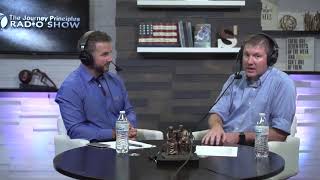
Transcript of a Journey Principles radio show episode featuring hosts Josh Bledsoe and guest Michael Garner (licensed professional counselor). The conversation centers on emotional replenishment framed as “eight ways to recharge” tied to the show’s eight life pillars (relational, physical, professional, financial, contribution, spiritual, emotional, intellectual), includes personal anecdotes, practical tips, and a CTA to receive a PDF resource.
Chapters
Foreign.
Guiding you to become the hero of your own story. This is the Journey Principles radio show where you are the warrior and we are your weapon. Now here are your hosts, Josh Bledsoe and master life strategist Steven Scoggins.
Welcome back, everybody, to the Journey Principles radio show. Man, I'm excited to hang out with you guys today. We are broadcasting to live from that beautiful city of Oaks, Raleigh, North Carolina. I'm your show host Josh Bledsoe today and I have my good friend Michael Garner in the house with me. Man, I've been waiting on this for a long time because Michael and I are actually like the exact ends of the polar spectrum when it comes to personalities. But every single time I get around him, I learn something new. He makes me sort of slow down, calm down long enough to where I can learn something and shut up long enough to where I can learn something. And Michael is a huge friend of ours at jp. He's been around for a long time. He's a licensed professional counselor and a marriage and family therapist where he gets to talk to a bunch of people about things going on with them emotionally. And. And I promise you this, when I tell you that what he does works, we wouldn't bring him here on the show or even anywhere remotely close to the JP audience if it didn't work. I watched him. Not actually been in sessions with him, of course, but I've watched him kind of describe some of the tactics that he uses. And I'm enthralled. Like even I use them in my own marriage just by kind of easing in on the conversation, hearing him talk about it. If you attended our Transform you Live event or if you've checked out any of the transformyouonline.com content, the way a lot of that stuff is organized really came from Michael. We sat down and brainstorming sessions right here in the JP office and we started talking about all the content and where should place it, how it would flow. And his high C brain just went into overdrive.
I get in that zone.
He got into this.
I get in that zone and I'm. I'm locked in.
So. And I learned a long time ago, get out of the way of that zone. Otherwise that train is going to run you over. Welcome to the show, man. How are you?
Good, man. I'm doing great. How are you?
I'm good. Good. Your week worked pretty well so far.
It's been a long week, but I've enjoyed it. Tuesday. It's already been a long week.
Already been a long week. Yes. Probably because you share with me just a while ago that you got up really early this morning, earlier than normal.
An hour earlier than I normally did, and worked right up until I got in the car to come here.
Wow.
So.
So you just literally back to back to back to back car here. The only break you've had is between the car and that seat.
Yes. Basically I've got a little bit of time for lunch, but not a whole lot. And even that's doing notes. But I do that because I want to work four days really hard.
Yeah.
But then I always get my three day weekend. It's amazing. I love it. Three day weekend, Friday, Saturday, Sunday, baby.
There's that cherished three day weekend you're going to hang on to.
Oh, I will hang on to, dear life.
Well, folks, if you're wondering why we keep doing the show in the afternoon too, there's a lot of reasons. One of them is because Michael just shared with me that he sneezes in the mornings three times like every morning. And why is this not relevant at all? I just think it's. I think it's awesome.
Thanks for throwing me under the bus. I appreciate it.
I'll pull you right back up. He says every morning he has to sneeze three times. And he's like, you know, it's a good thing we're not doing this in the morning. So I wouldn't sneeze on air. And I said that would be kind of funny. I mean, Brian, would you like to see it sneeze on air? As long as he cleans the mic up.
Yeah, I gotta hold the mic down out of the way.
Anyway, so what we're gonna talk about today, and you guys know this, we are inside the emotional pillar this month and we're going to talk about something new, something that our creative minds have created here. Really. It's called the eight ways to recharge. And eight is because it goes right hand in hand with the eight pillars of life, which you can find inside transformyouonline.com all eight pillars specifically tailored towards you and what you need to go get stronger at, really right now in your life. And today we're going to talk about the eight ways to recharge inside those pillars. And now Michael is a polished gentleman, right? He looks pretty polished. He's got the. The.
Except for in the mornings when I sneeze. Not polished.
It's not a polished sneeze.
No, it's not.
It's not the queen sneeze. It's not that.
Nope.
That's not that I can imagine. You get the whole body into it.
I'm in the zone, you know?
Yeah, but he's, he's a psychologist or, excuse me, a counselor. He's a therapist.
Right.
He may know a lot of information now and helps a lot of people get through some junk in life, but he was going through some, some junk in life at one point that kind of led you down this path, right?
Yeah. I mean, professionally, this isn't, isn't something I've always thought and dreamed of. I wasn't a kid thinking one day I'd love to be a counselor.
It was an interesting childhood.
Yeah, it was very interesting.
Kids on like the sidewalk, like, let's.
Just sit here, help you out there, buddy. Oh, how's that make you feel? I'm so sorry.
Let's talk about your scrape on your knee.
No, definitely not. Actually.
As far as the emotional awareness and stuff, I was never really good at that. My wife is always better at that than I was.
Yeah.
So if anybody was going to be a counselor, I always thought she would be it way before me.
Because she's your counselor?
She would be my counselor, yes. But she has taught me a lot about this whole piece and obviously with the school piece. But I have to give props to her. She's the one who encouraged me to go to the school in the first place for this. Yeah. But I mean, professionally, I wasn't sure what I was going to do there for a while. Personally, I wasn't sure what I was going to do for a while. And what I love about this topic of the, of the different ways to recharge is a few years ago, as I was finishing up my master's degree, I was in my final year of blood, sweat and tears, writing the home stretch. Big papers, all stuff. I could see the light at the end of the tunnel. Very, very small. But I was almost there. And I had to do an internship site. Well, you know, when you're counseling with people, you can't do that at like 8, 9, 10 o' clock at night.
Yeah. They might get upset.
Yeah. It's normally in the day when people are up and stuff like that. But the issue was I still had to work. The internship's not a paid place. So I'm doing this basically free of charge because I'm still trying to learn how to do this right. Not screw people up.
Yeah. Yeah.
And so anyway, I was transitioning from the church world into the counseling world because I was working as a youth pastor in a couple of different churches and whatnot. And so for a period of about six months it was hard because I was getting up in the morning, probably 1 1:30 in the morning, going off to UPS because I had to work sometime. So that was the best time to work. And everyone else was asleep. I was working from about, probably getting there about 2 o', clock working to about 8, 8:30.
Okay, get this, everyone is waking up.
Yes. By then I'm done with work, that part of work. And I got a membership to a gym. Not because I was going to work out, it's going to get all buffed, but I got a membership to a gym to shower because shoveling boxes you get all hot and sweaty. And I already had my workout for the day, but it was, it was less time to go from where I was working at the UPS all the way home.
Okay.
So instead I got a membership to a gym, 10 bucks a month. Went there, walked in, showered, got ready, presentable. Because when I'm walking with, working with people, I can't be hot and sweaty wearing, you know, UPS boots and all that stuff.
That would be kind of an interesting counseling session.
Yeah, yeah, exactly. So I got the membership to the gym to shower. I was on site at the location for the internship, about nine or so. @ least that was my.
Goal.
Yeah. And working with clients, all kinds of clients between like 9 to about 5ish or so and drive.
Home.
You would work 9 to 5, like a normal 9 to.
5?
Yes. What US normal human beings do. Because you weren't normal human.
Being. No, not at that time. I was a.
Robot. Nine to five, normal. Mm, okay.
Sorry. So plus working, the two working before. Yeah, two to.
Eight. So full time or mostly almost full time.
Job? 30.
Hours. 30 hours, almost a full time.
Job?
Yep. Before people even woke up in the.
Morning.
Yeah. And then you worked a full time job. Yeah, like everybody.
Else. Yeah. So imagine how it was. It's 5:30, 6:00 clock and walking home and I give all my kids a quick little hug and kiss. Kids going through this? Yeah, four.
Kids. Four.
Kids. Four kids now I think at the time we had three. But yeah, it was.
Rough. How old were the, how old are the.
Kids? Oh man. A couple years back, so I could do the math.
There were probably 11.
Counting backwards. Five and two if I remember.
Correctly. What? Yeah, I've got a two year old at home. I don't have a five, don't have.
11. Telling you, my wife, amazing, she helped me through it. But I come home, give them all a quick hug and kiss. And I still was taking another class at the same time. And so somewhere in the midst of there, I was doing some reading. I'm not sure when maybe I read while I was sleeping, but I was in bed by probably seven o' clock and start the clock over again, so sleeping about five, six hours. So you talk about being exhausted. I was emotionally exhausted. I was physically exhausted. I could see the light at the end of the tunnel, but it was still too small to get too excited about it and trying to finish up school. So I was feeling it. I was. It was a rough, rough six months to get through.
That. I mean, six months. What do you think about six months? It's like, yeah, six months flies by. Not like that. No, not when you're awake every hour of the day.
Almost.
Yeah. Holy cow. Yeah. Your wife is an amazing.
Trooper. Yes, she.
Is. Let's give her a round of applause, everyone. That was.
Fantastic. Thank.
You. Oh, my gosh. She put up with that. Your kids put up with that. You worked really hard because you saw something at the end of the tunnel. Yes, dude, I admire that. I love hearing stories like that from people because, you know, we may see the highlighted version on Facebook of someone's life or the polished version they.
Get to share wherever the mask they put.
On.
But. Yeah, the mask.
Yeah. But it's the stuff that they did for a season to get it, you know, to get what they really want to do. That, man, hats off to you. That's incredible. Thank you. So you were emotionally, physically, I mean, everything. You could have been all eight pillars just.
Drained.
Mm. Now let's talk about recharging. What did you do? Let's start with the relational one because that's one's really important. Right when you go home at 5, kids are still.
Up. Oh.
Yeah. They're still wanting to see daddy. They hadn't seen him all day. Your wife is still up. She wants to hand the two year old off. She's done. She's.
Done. She's like, I'm.
Out. And she wants to. Hey, how was your day? She wants to connect. She wants to have a marriage. What did you do to recharge for.
Relational? Honestly, it was rough. I mean, I knew some of the stuff because it's going to school for counseling at the time. So I kind of knew that I need to have a conversation with her just to say, all right, look, are we good? Are we all on the same page for next six months? You're not going to see me a whole lot. Maybe an hour or Two at night. Unless, of course, you want to get up and we can have coffee at one o' clock in the morning. But she wasn't keen on that.
Idea. Smelling the Folgers at 1:00am no, no.
No. And so, yeah, we, we had to make sure that we were on the same page, had the conversation beforehand. And we try to keep short accounts understanding. All right. We're doing this because at the end it's gonna be better. I can get a real job. Not the UPS isn't a real job Sargass, but I can get a job that I actually loved, enjoyed and work a.
Normal.
Yeah. 9 to 5.
Ish.
Yeah.
Job. Yeah, normal. Okay. So you had the conversation with her and what else did, what else did you do? Or what else would you have done, knowing what you know.
Now? Oh, man, looking back, what I would have done different probably would have taken a little bit better care of.
Myself.
Okay. Because I didn't. I. I love my wife and my kids and they were my top priority outside of school. And all the other time was basically spent at.
Work.
Okay. Doing work, internship, shoveling boxes.
Something. So did you have a strong support system and throughout that, obviously your.
Wife. Yeah, my wife was the biggest one. My parents.
Friends at church and the connect group, it was limited because I didn't see them a whole lot. You know, my Saturdays were I want to sleep and do some homework at some point. And Sundays was church and football was a nice way.
To.
Yeah. Escape out for a little bit.
Yeah. So let's talk about folks that aren't superhuman like you were. And they don't work those crazy hours, but they, they're kind of struggling with their relational. Something may have happened to them emotionally that has just drained their relations. Right. On a scale of 1 to 10, they're like a 3 or 2 in the relational.
Pillar.
Yeah. So let's talk about recharging there. Right. You mentioned getting on the same.
Page.
Yes. Right. Having a goal in front of you, having a goal with your spouse in front of you. Keeping your ey on.
That. I love.
That. Yeah, we'll keep that. What about. What would you tell those folks? What are some things that they can do? Like two or three.
Things. Yeah. As far as working with the relationship side of things, people who are married or have family members and stuff, it's. You are going to be at your best when you take care of you first. The strongest and healthiest relationships are when I am at my best, when I'm the best husband I can be, the best father I can Be. When I'm the best man I can be, I'm taking care of.
Me.
Yeah. And my wife is doing the same thing. The relationship's gonna.
Automatically.
Okay.
Improve. So put your air mask on first before you put your buddies. Air.
Mask. Yes. Kind of like. Absolutely. And so what that looks for, like for you? It's, it's any one of these eight themes that we're going to be talking about. But as far as relational, it's, you know, you got to take care of yourself. Find some hobbies that you enjoy with people, with people, without.
People. If don't do a hobby with someone you don't.
Like. No, that'd be kind of probably not good. If you are a people person, try to find hobbies that are engaging with other.
People. Okay. What if you're not a.
People? If you're like me? Not that I'm not a people person because I work with people all day, but I love people, but I'm drained at the end of the day. I'm exhausted. Yeah. And so I need to recharge. But doing something by.
Myself.
Yeah. So it could be any number of ways. If you like to tinker and work in the garage, you know, under the hood, watch some Netflix and zone out, don't do it for too long because then your wife and your.
Kids.
You know.
But it's okay to have some time for you personally to recharge with hobbies that you enjoy that fill you up and, and help.
Out. Okay, Very cool. All right. So you mentioned you were also drained physically. You know, I also think about even in the normal work schedule and the normal life, we can just be go, go, go so long that we don't really pay attention to. But man, we are.
Physically.
Yes. Just.
Flatlined.
Yeah. You know, some people will get to the point where they will literally like fall out. Don't do that. Catch yourself before that. You know, write some notes down about this. Yeah, but what would you tell people how to take care of themselves.
Physically? That's important. Physical is very important. You've got to take care of yourself physically. You've got to make sure that you are in good.
Shape.
Yeah. You've, you know, go to the gym, you're eating.
Right.
Yeah. Because if you don't eat right, that messes up your body and your body's not in good shape. You're not all where you need to.
Be.
No. From the cognitive side of things.
I'm glad you said too, because, you know, we talk about like physical people think, diet.
People.
Yeah. Exercise, it's really not that all that really, you know, me being the. The gym guy, the exercise guy, it's something that's easier for me because I've been an athlete. It's not easier for everyone. Right. Because they haven't been an athlete. But really everything that we put into our bodies, eating wise, goes to one of several places that our body needs. What is one thing we're probably using the most right now? Besides our jaws? We're talking a lot. Our brains, we're thinking a lot. And this thing, this is like the command and control center. Yeah. So if we're chowing down on healthy foods, not vegan, like Brian went complete vegan. He's really in good shape and he's healthy now. He's in really great shape. But I don't think I could do that. But something along the lines of a very healthy, balanced diet. And you got blood circulation. I noticed that my brain was firing on all cylinders, if that makes sense. Right. If I'm not on a good diet, if I'm not on a good sleep schedule, I mean, my eight cylinder car is now like a two.
Cylinder. Oh, yeah. That's.
Rough. Yeah, That's a good point. Right. I mean, that's so. I wanted people just to really understand that it's not just about the bod or, you know, getting ready for the beach. That's got nothing to do with.
It. No, absolutely. I mean, even from the physical standpoint, the power of.
Touch.
Yeah. Is very, very.
Important.
Yeah. I was reading an article not long ago that actually when you touch there' it releases some sort of love.
Hormone. Okay.
Okay.
It actually releases the love hormone oxytocin. And so the more you can touch somebody, please be your spouse.
Or your kids or the bro hug. It actually improves love. It improves the feeling of love connection. Absolutely. The couples who are doing the best have a strong physical.
Connection.
Yeah. They touch each other. They enjoy each.
Other. And hold.
Hands. Yeah. Guys, that's not just sex, you know, it's. It's holding hands, the back rub, the foot.
Rub. It's that we're gonna have to find different.
Ways. It's any of.
Those. Ron's good at that stuff. He helps Brittany out. I'm gonna find different ways in.
That. Yeah. It's just any way that a couple can touch. I've worked with some couples as well, where they're really struggling in the relationship. And when you get down to the physical piece, very little to no touch. And it's hard. That in and of itself is getting in the way of communicating, getting in, the way of dealing with.
Conflict. And they don't even know it.
And they don't even realize it because they just don't touch. Well, I get it. Because they don't like the other.
Person.
Yeah. But there are some safe.
Ways.
Yeah. That you can start. And so part of what I've helped couples with is what are some safe ways that you can.
Touch?
Yeah. What are.
Those?
Yeah. It could be a simple hand holding. It doesn't have to be like hand in hand, walking down the store to the grocery store. Whatever. It could be while you're talking, you know, a hand on the other person's.
Knee.
Okay. It could be a side.
Hug. A side.
Hug. It could be, you know, those sorts of things. Like, hey, man, I'm here for.
You. Like one of those, like, not committed hugs. Yes, one of.
Those. The little side.
Thing.
Yeah. Or the hip hug. You know, someone comes, you got.
To try to slide it with the hip. There you go. Yeah, yeah, yeah. Okay. So what you're saying is that even something as simple as a.
Handshake.
Yes. We call it the bro.
Hug.
Right. For guys, that's a great fist bump. It's a great way to show connection. I actually taught someone the fist pump.
Today.
Really? I had to teach someone the fist.
Bump. How old is this.
Kid? I'm not gonna say how old I think she.
Is. Oh.
Okay. She's older than.
Me.
Okay. And it would have been awesome if my 2 year old was there. Yeah, yeah. Because he does it anyways. So what you're saying is that that releases a.
Hormone.
Yes. Of connection, of love. That may be a great way for people to get rekindled back with someone that they want to. A intimate relationship or just a.
Friendship? Professional relationships. I mean, that's how we greet each.
Other.
Yeah. Are the, you know, the handshakes and those sorts of things. Yeah.
Absolutely. Perfect point. Perfect point. You know, one thing that I've also noticed with the physical and something that's helped me. I'm a high. I personality. Right. I'm just a party looking for a place to happen, as we like to call it here. Also a high. I will dress nice. Right. They like to stand out. And I used to like to stand out. I still do to some point. Right. But it's not like an important piece to me. I like to dress nice like this just because it makes me feel. Me feel.
Yeah.
True. Like on my.
Game.
Yes. Right. If I throw on a T shirt and some shorts and tennis shoes, you can bet that am either just gonna work out today at some point, or I've got some chill things to do and I don't really need to be on my game. Yeah. But that really lifts me up physically as a way for me to recharge, to dress nice, you.
Know?
Yeah. So put on some nice clothes. Even if you're not going anywhere but just to the store, put on some nice.
Clothes. See what does stay at home. Mom's classic. They like to be very.
Comfortable.
Yeah. During the.
Day. Yeah. Like yoga pants. All.
Day. Yes, every day. And it. It can. I. There's, you know, it can be a little depressing at.
Times. I'm gonna pay for that yoga pants comment, aren't.
I? I'm not saying anything. I'm gonna lay that right there. But yeah, for. For the wife or for the.
Husband.
Yeah. When they come.
Home.
Yeah. Say, hey, couple of bucks, Starbucks, go grab yourself a coffee. Yeah. Dress up, have a night out in the town. It just boosts their.
Spirits.
Yeah. Because they feel so much.
Better.
Yeah. It's definitely not the high heels, because that would kill me. So it's got to be the.
Clothes. It's got to be the clothes. Don't want to twist the ankles. All right, so let's step out of the physical pillar into the professional pillar. How can folks recharge themselves.
Professionally? Yeah, that's. That's a rough one. Because a lot of people merge the two together between their professional world and their regular world. You know, when. When professionals come home, they're still on their phone, they're still making phone calls, they're still doing all this stuff, but what they're doing is they're neglecting their.
Family.
Yeah. And they're not able to recharge.
Or they're even neglecting themselves if they're.
Single. They are. Absolutely. And so the next day when they go back to work, they're not going to be as focused as they can because they're going to be.
Exhausted.
Yeah. So one. One thing that I work with, with the busy professionals is managing their time.
Well.
Yeah. Stephen Covey, you know, the whole four quadrants and stuff is important. Find the different times a day that you are most productive and try to get the bigger, more important tasks or projects done at that.
Moment. That's good.
Advice. And managing your schedule well. Now, some people don't really have a lot of control over their schedule. They're just told to clock in at a time, clock out at a.
Time.
Yeah. So with that, it is, even professionally, is make sure that you're taking care of yourself on the outside of work.
Right?
Yeah. So that when you get back to work, you are ready to.
Go. That's kind of like the whole leave at work, at work kind of piece.
Right? Yeah. Yeah. And then you've got those of us who have more control over their schedule. Like I.
Do.
Yeah. I take a day off. Like tomorrow I'm gonna take a day off or whatever. I can do.
That.
Yep. So what I do is I structure my day. Like I said, I work hard four days, but then I've got that ability to manipulate my schedule to enjoy the three days.
Off.
Yeah. You know. Excellent. And I forgot where I was going to go after.
That. I think you're leading into something that, honestly, I didn't even know about until after I had hit. I was, like, at the edge of that wall, and I could just feel it coming. Like, I felt just bogged down, overworked. And I really didn't have, like, a strenuous job like before I went to college and everything. I framed houses, I did landscape. And I consider those strenuous jobs working out in all of the elements. Right. This is when I was in the military and I was working five days a week, normal work schedule. But I would come home just exhausted and, like, what in the world am I doing? Like, yeah, why am I tired? I'm not doing anything. Physically exerting myself. What I was doing is I was mentally and emotionally exerting everything and not recharging my battery. So one thing that helped me was if I needed to, I would take a lunch break. Like, actually take a lunch break.
Right. What is that thing that you call lunch.
Break? Right. I'm about to explain it. Brian's probably going to look at me like, what are you talking about? Because I don't really do it a whole lot here.
Either.
Yeah. Right. But I would take my lunch, I would get in my truck, and I would drive away from the place that I worked, and I found a nice quiet spot still around work, and I just eat my lunch in the truck. I would take a book with me or I listened to an audiobook while I did that. I would kind of get around nature if I could. Right. And just basically unplug for that 30 minutes or an hour, wherever I was going for a little bit. Right. That was in the middle of the day. I would come back, always. Little bit more pep in my step. Yep. Not completely recharged, but the second half of my day was way better than it used to.
Be.
Yes. And then on the drive home, I learned a little thing called leaving work at home, or by the time you pull into the driveway, all the frustrations of the day, all the stuff that's, like, still going through your mind. Pick a tree and mentally hang it up in that.
Tree.
Yep. You know, for the people that, like, do, like, the old school, walking to your front door like, honey, I'm.
Home.
Right. Hello, Shea, I'm home. That kind of thing. Leave it at the.
Doorstep.
Right. Leave. Leave it there. Because my wife and now my son, they didn't do anything to cause any of the pieces of the day that I just had. Yeah.
Right. And if you're in a bad mood because of what happened at.
Work.
Yeah. The people are going to deal with.
It.
Yeah. Your wife and the.
Kids. Exactly. And if you're a single person, man, wearing that all day, every.
Day.
Yeah. You're not going to.
Last. Now it wears. Not at all. Not at.
All. All right, so now we've kind of talked about the professional pillar. Let's talk about how to recharge financially. All right. We're not talking about actually recharge your bank.
Account. Like, oh, we can't do that. I haven't figured that.
Out. You know, we're. We're heavily in the search. We're hunting for it. But let's talk about financially. There's the. The thing that Nicki and I are doing right now is getting out of debt. That is actually recharging us financially, emotionally. Because, you know, let's face it, finances is the number one reason why people get a.
Divorce.
Yes. It's one of the number one reasons. One of the number one reasons. It's not a real thing. One of the top reasons that.
There'S only one number one of the.
Ones. I knew you were going to point that out as my high C friends. Why? I corrected myself real fast.
But it's the. It's one of the top reasons why people are depressed. Right. There's never enough money. There's always more month than there is paycheck kind of.
Thing. And you get.
Stuck. You just get stuck, man. And if you think about it emotionally, not factually, you are always.
Stuck.
Yes. So what we did is when we decided to look at it factually and get on a budget, we're on the Dave Ramsey snowball.
Effect.
Yes. For anyone who doesn't know what that is, just Google Dave Ramsey snowball. Don't look at the images. Kind of funny images, I'm sure. But Dave Ramsey Solutions has a snowball effect that he Teaches in financial peace. And it teaches you how to just snowball your way out of debt. Right. It's a bit of a journey, but when we think about finances, we always go back to that. That's kind of like our light at the end of the day. Right. So that's. That's kind of what we do for getting out of debt. What are you going to tell people for.
Financial. With that? I mean, I think the reason why it's so important to get yourself out of debt is because the people. The reason why people work in jobs I hate because they feel.
Stuck. Mmm. That's a good.
Point. I hate my job, but I can't quit because I can't afford to.
Quit.
Yeah. Or people who are in a.
Career.
Yeah. That they no longer.
Like.
Yeah. Or that they thought they used to like. And there's something else in the horizon that they really like that they've. They're interested in. They're afraid to make that jump because, again, they can't afford to make that.
Job. Safe.
Security.
Yes.
Yeah. So it takes a lot of sacrifice to be able to work yourself out of the debt and stuff. But when you do, oh, my goodness, it's so free. And I mean, imagine going home, opening up your mailbox, you pull out a bill, 900, medical bill, whatever. Then you go to your bank account and you got 2, 300 in there. You're gonna feel it like you.
Just made me feel.
Anxiety. Yes. Just like how long we're gonna be paying on this for the next 30 years, like our mortgage. Or imagine going home, open up the mailbox, you get the Same medical bill, 900 bucks. But then you go check out your bank account. You got a couple thousand in.
There.
Yeah. Yeah. It hurts writing out that.
Check.
Right. But imagine the freedom that you've got whenever it's sent. It's like, yeah, I have to worry about.
That. It's.
Done. You're done.
Yeah. And that's why it's so key to make a budget. Right. Because you can have those situations where if you're not budgeting, you can find yourself with only.
$200.
Yes. If you are budgeting, you can find yourself with a little bit more money because you're spending.
Wisely.
Yes. Right. You're taking it more like incrementally putting it into.
Buckets.
Yeah. Right. There's a lot of things that Dave Ramsey and their awesome organization talk about. There's even the envelope approach, putting cash on envelope. That's the only thing we're going to.
Spend.
Yes. Right. Which I've heard you talk about, too. Like the whole budget for a.
Treat.
Mm. What's that.
About? Yeah, I was gonna say make one of your line items, something fun. Line item for date nights. Really important and your husband, your wife will really appreciate.
It.
Yeah. Line items for things that you need to replenish yourself. Yeah. With like, if it's like, you know what? Some days I would just like to get out and after a long, hard day, go and grab a movie with some. With some buddies. Yeah. Get it in the budget. And now you kind of have given yourself permission. Yeah. To do that.
Yeah. But you're not up against the wall. Like, man, I really could use a movie right.
Now.
Yes. But I don't have any money to go do.
It. And you don't cause an argument with your wife because it's not in the budget. It's not the.
Budget. Yeah. Yeah. Well, yeah, now it.
Is. Now it.
Is.
Yeah. Now, obviously it takes some communication because your wife's like, well, what about me? I want something in there to get nails done or hair, whatever they.
All. That's important. That's important stuff to treat yourself. Budget a treat for.
Yourself.
Yes. So it doesn't feel like work all the time. That's kind of the way I feel like a budget sounds like work. It sounds like something you just need to grind it out for years. That doesn't sound like fun at.
All. No.
Right. Budget some fun in each.
Month.
Yes. So you don't burn yourself out.
And you're planning for your future that.
Way. You know, Nikki and I just did this. We went down to a little getaway. We budgeted for the getaway. Right. And we had just a couple days in Myrtle beach, you know, and part of that was we checked out a.
Timeshare.
Right. We're on one of those, like, quick trips that they send you the mail. Like if you take this two hour tour, your hotel stay is X amount of dollars off. Yeah. Sweet. I'll sit there for two hours. That's.
Fine. I like that. I like the.
Discount. Yeah. So what we did is we sat down, we went through the timeshare. Fantastic. Hilton timeshare. Right. I mean, it was just like, oh, everything's amazing. And the whole time I said, I knew it's going to be way out of our budget. We hadn't budgeted for it anyway. So even if it was like $5, it's out of our budget.
Yeah.
Right. But what we did at that point is we were able to dream, build and plan for the Future. Yes. We realized that, hey, time sharing with the Hilton is something that we would like to do. That would be a fantastic way to go on vacation. Now we have a number, we have a goal, we're planning for the.
Future. And you don't have to go in debt in the.
Process. You do not have to go in debt in the.
Process.
Yes. Like it is okay. Trust me, they walked us out the door, it was fine. We said.
No.
Right. And we know personally that that is down the road for us, but man, it's going to be so much better when we get it down the road. Yeah, yeah. So planning for the future is obviously going. Alright. So now let's talk about like for. From a financial standpoint, contribution. You know, one of the best things that we've done here and Steven's added to the eight pillars of life is the contribution piece. Because it does something to.
You.
Yes. Recharges you when you give.
Back.
Right. So we'll talk about the financial. Since we go from finance, we'll talk about that one.
First.
Right. So what would you advise folks to do in giving.
Financially? Tying it back in with the finances? Budget it.
Yeah.
Okay. Stick it in the budget, whatever that.
Is. Make it a line.
Item. Yeah. And it could be line item for, you know, for the church or for this place or this place. But you can also have a little budget of just, you know, I'm going to have a little extra. So if I run across a single mom and the Lord lays them on heart to help them out, I've got it. Yeah, you can get a budget. You can do it. And it feels so.
Good.
Yeah. When you see a need that's being met and you can.
Help. Yeah. And you never know what type of saving Grace that. $10.
$20. Oh, yeah, yeah.
Yeah. Okay. Let's say that, you know, folks are talking to, they don't have the finances to give, which is totally understandable. Nikki and I have been that.
Way.
Yes. We've even been that way now when the budget has been tight inside of a month. You know, say if we've got to pay for something like a $900 medical bill. $900 medical bill or a car park going out right now we've got to put more of our resources to that. So it's got to pull from something. All right, so how can we contra. How can we give to other people if we don't have the finances for it? What do you think you can.
Give back with your time? Yeah, give back. If there's something that you're really good at and that would enjoy.
Doing. What do you.
Mean? Like, I know of a friend of mine, he loves working with young boys and building them up. So he works with, like, the Boy Scouts or the Cub.
Scouts.
Okay. Or within the church and stuff, working with the. With the boys and helping them develop and become.
Men.
Okay. So he's giving back of his time, but it's also something he's really good at. He's good at mentoring these. These young boys to learn how to become strong.
Men.
Nice.
Yeah. Very cool. You know, something happened to us this past weekend, too. We're sitting in a breakfast diner, and, you know, we're sitting there just kind of hanging out, eating breakfast, just the two of us. And, you know, it's a full diner. There's people at every table. The lady comes up and it's check time. So I go to reach for the check, and she actually says, actually, no, I don't have your check. The couple right next to you actually paid for your.
Check.
Wow. And I was like, no way. We just got racked. Attacked, man. And Nikki knows what that means. Rack attack stands for random acts of kindness. I said, yo, we just got.
Attacked. That's awesome.
Yeah. So I put it out there on social media because I thought it was so cool that someone else is out there doing.
That.
Yeah. You know, and it felt fantastic. Right. You know, that that couple doesn't know us. We didn't know them. We never. I mean, I may have just said hi, you know, walking by them, or. I don't even remember if I did or not, but they had it probably in their budget to do that, and that made us feel amazing, and it led us to pay it.
Back.
Right. It led me to. On our way to the Timeshare tour, stop at a Starbucks and do the same thing. Just pay for someone else's Starbucks, you know, right behind me. Yeah, man. It's funny, I don't even think that people even, like, knew what happened, but the girl that. That did the checking out, Starbucks, you could tell it made an impact on her. And she was like, what's rack attack? So I explained it to her. I said, well, this just happened to us literally, like 30 minutes ago. And I just felt like we needed to pay it forward. This is what we're doing. You could tell, like, it sparked something in her. Yeah, it's like a, you know, a little rippling effect. Yeah. So that's. That's one way to do it. It's a very small way to do it. Yeah. But it feels fantastic. You've done it on a big scale though, right? You've done it on a mission trip before.
Huh? Yeah. Like, one thing I've really come to enjoy over the last few years is giving back. And so there's our church sponsors, kids, children from a very remote island off the coast of Indonesia called.
Mentaway. Okay, got.
It. And so it's a long, long trip.
There.
Yep. But it is a high poverty. A lot of very difficult, basic needs are not being.
Met. Yeah. Basically, you know, works like a third world.
Country. Oh, third world country to the extreme. Like, I should read a statistic when we first got involved. It's changed over the. Over the time that we worked with them, but I think it was like one in five children don't make it to age.
10.
Wow. Imagine I've got four kids. You've got.
One.
Yeah. One of our kids not making it to age 10. Holy cow, dude, that is tough. So my heart was. Was pulled in a thousand different directions with that. So I was like, I want to be part of.
That.
Yeah. And it felt so good now. It was.
Hard.
Yeah. It was a long.
Trip.
Yeah. It was probably three days travel there, three days back. So that's a week of travel.
Yeah. So three days, like travel into.
Mantala.
Yes.
Okay. Yeah. I think the flight itself was probably 30 hours. And then we had some boats.
We had taxis.
Taxis. Taxis, yes.
Uber. Yeah, a couple of those things. But yeah, it was.
Hard to get there. But the time there was just amazing. And to see the people's face now, of course, we don't speak the same language at all. Sure. But it was really cool because they see a white.
Man. Yeah.
Yeah.
There. I mean, you're kind of fair skinned, so I don't think.
You'Ve. I.
Didn'T. You didn't tan very fit.
In. No, no, not at all. And so. And so obviously we speak.
English. Yeah.
Yeah. And they're riding by, everyone's riding by. And on their little.
Mopeds.
Yeah. They go, hello.
Mister. Hello.
Mister. And I go, hello, Vista back. I'm like, they probably don't know what we just.
Said. Yeah.
Yeah. But, yeah, it was, it was great giving back. And what I found is whenever I am giving back to them, I'm actually getting so much more in.
Return.
Okay. It's really cool. Like, I first learned that, the power of that through a T.
Shirt. A T.
Shirt. A T shirt for. For my birthday a couple of years back, many years back now, one of my colleagues got me a shirt from a missions.
Conference.
Okay. And it says, I need Africa more than Africa needs.
Me. That's a good.
Point. And I said, what? Like, how is that true? That's what it read. And she goes, well, flip the shirt inside out and it's got the whole story. And I read the stories, talked about how this person went to Africa with the idea. I'm going to give, I'm going to shape their, their, their, their community, and we're going to make change. And he said, I don't know if any of that stuff was implemented, but, but coming home, he felt so.
Good. He felt like he did.
Something. Like, yeah, he did something. But also they did something for.
Him.
Yeah. He.
Learned. I believe.
It. It's okay to be simple in.
Life. I believe.
It. It's okay to sit back and relax. We don't have to be going 100 miles an hour at all the time. So he learned tremendous.
Lessons. I've learned the same thing by going to third world countries. We come back to our first world problems and.
They'Re not even worth a five second.
Delay.
Yep. They're really not. They're not worth it at all. I know exactly. When you said that I need Africa more than Africa needs.
Me.
Yeah. I knew exactly where you're going with that. Because this guy, he gained so much because of just contributing back to people and giving back. Right. It's just an, It's a basic human need. We want to feel.
Important.
Yes. We want to feel like we're making a difference. We want to feel like we're making an impact. It don't. It doesn't take all of our money to do that. We don't need to donate $10,000 or something to.
Do.
Yeah. Right. If you can obviously go do that. And if you want to do that.
Fantastic. Or help other people to go on those trips. That's how I was able to.
Go.
Exactly. People, other people said, I love the mission that you're doing. Here's a.
Check. I was like, thank.
You. Yes, I could, I could use.
This.
Yeah. All.
Right. So on that trip, you talked about this before, you said that you came across a, a pier.
Right?
Yes. Like a pier in.
Mantawe.
Yep. And Brian, do you got a picture of that pier you can pop up for us? And they're gonna show the folks exactly what this looks like while you kind of describe the analogy behind.
It. Yeah. So at this place we're staying at now, remember, it's a third world country. It was the weirdest feeling in the world because where we're at, we're right there in the water. Tropical. But you talking beautiful is amazing. Like I felt like I was in a five star resort looking into the water with the.
Trees.
Yep. Like this here. But as soon as I turned around, Third world country resort, not there. Trash everywhere. Chickens running.
Everywhere.
Yeah. Rabid dogs everywhere. You know, kids with no shoes and like one of two shirts that they own with holes and stuff in it.
And so, yeah, it was, it was quite the contrast. But where we're staying off the water, there was. Was a little pier. It's a little man made pier. If you could see the image. It's basically made by sticks they found, you know, in the yard or.
Whatever.
Wow. Just picked them, just sewn together the best that they could. It was really cool because I'd never seen a little homemade one.
Yeah.
Yeah. And so the. These people would go up there and they'd kind of fish off a little bit. Wasn't that big or.
Anything.
Yeah. But I was a little nervous kind of stepping out there because you talking rickety. It.
Was. Oh.
Yeah. You could see it wasn't the safest thing in the world. So I'm kind of gingerly stepping out there. And I think I actually sat at the end of the pier. You know, my feet thing. But very careful. But if I would have fallen, it was like a foot into the water. So it wasn't that big of a deal because it's not very. It didn't go very.
Far.
Okay. But around it, I mean, you know, because you've got the ocean there and the waves are speeding up on it, beating up and beating up. And so there's a lot of erosion because of. Because they don't know how to deal with.
Erosion. That's.
True. And it was sad because that was one of my favorite memories. Or at least the things that I could see. Really enjoyed the pier. It's just something neat about that.
Pier.
Yeah. And then.
We had a group that went back this past year and because the erosion. Because of the waves and stuff crashing over it. The pier's.
Gone. Oh.
No. I was, I was almost heartbroken. Like, my goodness. The pier. The pier's.
Gone. Yeah. I had like a symbolic meaning for.
You. Yeah. Because it was so relaxing. Yeah. To sit at the end of the pier. Very.
Shaky.
Yeah. But sit at the end of the pier and it's like, this is nice. Like, I'm not sure if I feel totally safe right this.
Moment.
Sure. But if I can get my mind off of everything else going on around me, Third world country. This is.
Amazing.
Wow. Yeah.
Beautiful. Taken away from the storms. Yeah.
You know, that's something that I mean, hopefully the folks can draw the analogy to now and why we chose to put it in here is, you know, this whole episode is teaching people how to deal with the erosions of their emotional downfall. Really. You know, the stuff that's eroding at their emotional.
Drain in each pillar. Right. It's not just the emotional pillar. It's all eight pillars that are getting eroded right now. And if we're not careful about.
It.
Yeah. One of those things could get out from under.
Us. And you can't stop the wave from.
Coming. No, you really.
Can'T. You cannot control your situation no matter how desperately you try. Yeah, I love my wife, but I can't control her. I can't fix.
Her. Yeah, that's.
True. She loves me. And no matter how hard she's tried, I'm stubborn. She can't fix me. She can't change me. I have to be the one to change.
Myself. That's exactly what we're teaching people here. And, you know, moving into one of the most strongest ones is spiritual. And everybody that watches this show and understands jp, spiritual does not mean a religion. Spiritual means something deeper in the meaning of a spiritual balance and something that really is your anchor. You know, one of the stuff that Steven talks about is really reflection. Yeah. Self awareness and reflection. If you can honestly reflect, you don't have to wait, you know. Well, five years ago, you know, you can do it. Literally five minutes ago. Yeah, this happened to me. Five weeks ago. Five days ago, this happened to me. Reflection in a safe place is a great way to start and build that self awareness. What are some stuff that you've discovered and you help your clients with. With spiritual.
Replenishment. Yeah. As far as that, it's be quiet.
Find some time in the busyness of life. Find a place where it's where you're kind of by yourself. And of course, as an introvert, I really enjoy that I'm in my.
Element. I'm not. I'll end up talking to.
Myself. That's reflection. And you sit there and you can reflect. You can meditate on something that's uplifting, something that's building you up or something that's positive, a goal, those sorts of.
Things. Yeah.
Yeah. And you do it in. In a quiet place where you don't have all these distractions. Please put the phone away and turn TV off. Sometimes music can help get you in the zone. But if it's distracting.
Obviously. You know, turn right kind of.
Music. The right kind of music.
Yes.
Yeah. I love me some hip hop and stuff, but I. I have a hard time reflecting in that moment when Lecrae's going on and stuff in the.
Background. Brian, could you see him bumping out to Jay Z on his way to JP.
Today?
I will on the way.
Home. I will on the way home to get my energy back up. Yeah, yeah, yeah.
Anyway, sorry. Jay Z song going through my head now. Yeah, absolutely. You know, the right type of music. Subliminal. We talk about subliminal influences inside. Transform you online. There's one of our lessons to talk about it. You know, when I was going to the gym every single day of the week, that was kind of my escape. I was listening to the hard music and to get me in the zone. But then I noticed I was really edgy, I was really anxious, and I always had a kind of a on the edge.
Attitude.
Yeah. I wouldn't say bad attitude. Majority of time, it's probably bad attitude. But yeah, that's how everybody else said it. Right, Exactly. Let's just be honest. That's how it was. But it wasn't until someone said, well, what kind of music are you listening to? It clicked for me. You know, I really wasn't listening to the.
Lyrics.
Yeah. I was listening to the beats. I was in the zone. Like you were in your zone. But it was having a big effect on.
Me.
Right. And it was really kind of changing me spiritually. And I was starting to become unbalanced by the subliminal things that I was.
Doing.
Yes. The TV shows I was watching, the music I was listening, to, even the conversations I was participating in, that stuff was draining me physically. And one of the things that I had to do right after that, instead of I'm kind of guilty of this, whenever I find that I'm doing something wrong, I get mad at myself. I get mad at myself really quick, like, you moron. You know, then I start that negative self talk and start calling myself names. Right. And what I really should have done is something that Dr. Newsom talked about on the last show was self.
Forgiveness.
Yeah. You know, forgiveness is a big thing. Right. And I've heard you talk about it too. Do you mind sharing with them some stuff you share with me about self.
Forgiveness? Yeah. I think with self forgiveness is you can recognize what you did in maybe a situation that doesn't. That wasn't good, basically what was your fault. But what I've actually found is people are so willing to take responsibility for what other people have done. Mm. Only take responsibility for what you've.
Done. Well, that's.
Good. If. If my wife and I get into an argument and I raised my voice and I called her some names and slammed the door, that's what I take ownership.
For.
Sure. I stand up and I say, you know what? I'm sorry. I should not have raised my voice. Yeah. I said some very hurtful words, and I did not model for you and the kids the way I should.
Have. Yeah.
Yeah. But do not take responsibility for someone else's. For what the other person does at that.
Point.
Yeah. If she goes off and does something goofy or crazy or whatever, I can't take responsibility for that. Yeah, she does. Right. And when both people can take responsibility for their. For themselves, that's what creates the strongest of.
Relationships.
Sure. And as far as self forgiveness is. Once you can recognize what you've.
Done.
Yep. Then it's the okay, I've got to allow myself to forgive myself. Saying, okay, I had a rough day. Not that you're giving excuses, but you're labeling. These are the things that caused me to be in a rough place. I know now what put me in a rough place, and I want to avoid it or know how to handle those situations differently next.
Time.
Nice. And just be okay because you're not perfect. Nobody. That's.
Okay. Yeah, yeah, yeah. I like that. I love that. You know, Dr. Newsom talked about forgiveness in a way that was. It's not letting the other person off the hook. It's not letting yourself off the hook. It's basically.
Recognizing that that person may have done something to you that they can never repay that debt. There's no way that debt's ever going to be repaid. Right. But I love how you kind of shaped it all around. You said that this is about you giving yourself grace and saying, you know, I'm not perfect. I'm going to make mistakes. I had a rough day. I'm not going to do it again. This is what I learned from it. I love how you just kind of. You kind of like the bookends. Really, Dr. Newsom. And you were really like the bookends on this whole forgiveness piece. I love that. You know, if you talk about getting into arguments or even arguments with yourself. Right. The self forgiveness.
Piece.
Yes. I can be in a pretty emotional time. Oh, yeah. So that leads really well into the emotional pillar that we're talking about. Emotional.
Replenishment.
Yes. See how I got those words out without tying them? You did Practice makes perfect. But emotional. You know, one thing that I was with a group of people here in Raleigh and fantastic group of folks, part of the Society for HR Management, the triangle version. And one of the young ladies that works for them, she actually does what's called laughter.
Yoga.
Okay. Laughter yoga. It's not like the downward dog position while laughing. Although you should probably try that and put on YouTube and then make other people laugh when you do that. Yeah. It's literally just exactly what happened. Right. It's laughing on purpose. One thing she says is that if you're having a bad day or emotionally, you're just kind of drained. Yeah. Make yourself.
Laugh.
Yeah. And it's like an obnoxious, not real laugh. And that's okay. And she said, watch what happens. Watch what happens to yourself. And if you're around other people, it's contagious. It is.
Contagious.
Yeah. Now if you're laughing like a crazed clown that, like a hyena, like Brian likes to show me YouTube videos because I hate clowns. That's creepy. Don't do that. No, actually pretend to laugh. And she even said that if you're like at an airport or something like that, you could just take the phone, act like you're talking on the phone and just barely laugh at someone on the other end of the phone. Says something, makes it look like. And it's contagious. It's exactly. It's contagious. So she said emotionally, you know, you can replenish yourself just by fake laughing. But what else. What else would you might give someone that needs some emotional.
Recharge? Oh, man. That.
Again, build in some distraction, free.
Time.
Okay. Like for me personally, with the work I do and stuff, I'm working with clients like this morning from 7am, typically 8 or so. And sometimes I don't get home till 6:30, 7 o'. Clock, so I'm exhausted all day. I'm hearing people's.
Stuff.
Yeah. And. And whatnot. And so it could be very, very draining. Emotionally draining. Then to go home and to be emotionally present with my wife and my.
Kids. That's hard. All of your.
Kids? All four.
Yeah. It sounds like your kids don't have any.
Energy. No.
It's so hard to do that. And so I have to make sure I am protecting myself, that I, on my drive home especially, I'm doing something that's uplifting. Or sometimes I turn the darn radio.
Off.
Yeah. And I just drive in complete.
Silence.
Yeah. Of course I'm an introvert as well. And People talking all.
Day. I'm.
Like.
And then you get home, four.
Kids, it's like, there it goes again.
Yeah. So those just ways of.
Laughter.
Yeah. Finding something that's uplifting. Obviously you can use any of these other pillars that we were talking.
About.
Yeah. Encouraging.
Yourself.
Yeah. You know. Yeah. Positive affirmation. Self affirmation, where you recognize something that you're actually good.
At.
Yeah. Because a lot of us beat ourselves up over things, you know, I.
Think more times than not, we all do.
That.
Yeah. You know, it's not until you find some really, really wise person that's gone through a lot of emotional trauma. Not even trauma, really. Just kind of. It's just been drained in one of these areas so much, they're finally just fed up with.
It.
Yeah. You know, and they learn positive affirmation.
Somewhere.
Yeah. Right. And we talk about it inside the school. Transform you online, man. That thing is littered with positive affirmation statements. And what are some statements that you would tell other people that they could.
Use? I like to make them custom, so depending on the individual and what it is that they struggle.
With. It's so generic.
Thing. I love my whiteboard. Okay. So in my office, I got a whiteboard, and I help them identify what are some areas that you struggle with the.
Most.
Okay. I'm never good at.
Relationships.
Okay.
I'm the one causing all the troubles. It's always my fault. And so once you're able to identify what those are, you replace that with a positive.
Affirmation. Like the opposite of.
That.
Yes. So like a ying and a yang.
Approach.
Yes.
Okay. And so whatever it is that you're struggling with, not saying that you're going to turn into your weakness is always going to be your strength. Because, yeah, sure, sometimes you can. But honestly, you may always struggle in that.
Area. And sometimes we think our weaknesses are our weaknesses, but they're really not. Yeah, yeah. They can actually not be a weakness. They could just be something that we're not aware that we're actually good at. Yeah. Or we have actually control over. So would you recommend someone at home, you know, not seeing a expert counselor such as yourself? Could they do that with their whiteboard? I mean, could they literally just write down, like.
I always start the fights or yes, I am. I'm late to everything, or blah, blah, blah, could they do that? And then, you know, on the other side of the paper, draw a line, put down everything. That's the exact.
Opposite. That's basically what I do in the.
Office. And.
It'S. They can do that on. Yep. They can do that on their own if they don't want to write on the whiteboard so everyone can see it because your wife may add some things to it. Or the husband.
Maybe. Oh, yeah, what about.
This? Now, that would be self.
Defeating. It was white before I went to bed. Now it's like full of other colors and looks like some on the wall over there. Who did.
This? And there's a piece of paper attached and you unroll like Santa's crystal.
So you could always. You could always do it in a little journal or just get a Word document and type it up. Yeah. And if you're afraid someone's gonna see it, delete it, close.
It. But I would. I would honestly want them to just do the exact opposite right.
Away.
Yes. Like, don't let that. That negative self talk, the untrue talk. Sit there very long. Put that exact opposite over here. Put the truth over here. And then affirm yourself with that. Put it on your. Put on your mirror. Put it on your refrigerator. Put it on your car steering wheel. Tape it right there. Put it at your.
Desk.
If. If you don't mind people seeing like that affirmation. The point is, the longer you keep it in front of you, and the more you say it, the more you tell yourself that the more you believe it, the more you believe it. And the thing is, like, it's the truth. Right. But we have to sometimes beat the truth into.
Ourselves.
Yes. And into our friends here. Beat the truth into them. Yeah. Well, you. I mean, it was a good payback.
Earlier.
Yeah. I mean, we have to do that to really kind of build ourselves up emotionally. Right. I'm glad you share that with us because that's. That's a really big thing, you know, and people tend to not tell themselves good things. They tend to tell themselves.
Lies. Let me give an example real quick. Let's say you've got someone struggling with. Man, I'm just always angry. Okay, well, anger is not always a bad thing. Anger can actually be turned into a very good thing if it's used.
Constructively.
Yeah. Okay.
But you can replace that phrase from I'm angry to I'm passionate. There are some things I'm really excited about, and that's a good thing. We need people out there, the eyes, who are very passionate about something because they're gonna go out there and they're gonna get it.
Done.
Yeah. Now obviously you want to do it. Well.
Sure.
Yeah. You know, planned out and don't have the angry behaviors following.
That. Yeah, yeah. Watch out for the anger being the fuel that takes you.
There. Yes. Like if I get angry because some sort of injustice, but if that anger fuels me to make a change and that injustice, boom. That was phenomenal. That was.
Great. It worked.
Yeah. Versus taking the anger and just, you know, bad mouthing everybody. And these people always doing this and these people always doing that. I'm just. Yeah, I'm just contributing to the.
Problem that does no one any good, including the person saying it. Man, that's a great example. Thank you for sharing that. All right, the last pillar we're going to talk about is intellectual.
One of our good friends, Doug Stewart, talks about mentorship. Right. He's got a fantastic talk out there on mentorship on YouTube. Or you actually can go inside, transform you online, and see his whole talk on mentorship. Really? Because he was one of our speakers that talk about.
Mentorship. Great podcast and all that.
Stuff. Yeah, fantastic podcast. I find that mentors, you know, really, you need a mentor in probably each one of these areas. You know, one person could be a mentor in multiple areas, but just make sure that that person is where you want to be in that area. Right. It'd be like Michael and I, or Michael coming to me for, like, basketball mentorship, not a good idea. Okay.
Good. Now I.
Know. But if he went to Amber, our other team member, used to play collegiate basketball, she could teach you how to ball. Right. She knows that. Right. She's a mentor in that area. She's done it. She's good at it. Right. So that to me, all right, so you got to find someone that's where you want to be in that area. And something that I didn't know early on until almost out of the military completely, was, it's not the mentors job to come seek you out and say, hey there, young man or young lady, I'd like to grow.
You. Let me help you.
Out. Yeah. It is not. That doesn't happen. Right. It is your job as the mentee to go to that person, say, hey, look, here's what you told me last time. Here's what we talked about. Here's what I did about it. I got a couple questions. Did I do this right or what? What's the next thing I could do? You're showing them that you're invested in the relationship. You're showing them that you're invested.
In the advice and you're willing to put in the.
Work. Exactly. And you're using it. Right. So that's just my take on mentorship. It's very small take. It's just something I've learned. Again, check out Doug's talk on mentorship, especially inside the school. But you talk about some other stuff, an intellectual. Right. What are some stuff that you want to really bring to.
Light? I think one of the biggest eye opening point parts of my life growing up is self discovery. You know, growing up I was a little chameleon, basically. I was all things to all.
People. Oh, man, that's hard to.
Be. Yeah, it's very, very exhausting. Actually. A lot of teenagers struggle in this area because they don't know who they want to be. And so they identify with different.
Groups.
Yeah. And they sit in there for a little while and they're like, okay, I kind of like that. Oh, I kind of like this. So become doing this. And I was a chameleon to the. To the T or C because there's no T in command. And so that actually carried over early into my professional.
World. Did it.
Really? Yes. Like, even my first few real jobs and stuff, I would force myself to do things I was not very good at, that wasn't comfortable in and try to become who I thought other people wanted me to become. And I would. My work would always suffer now. I still did great. I was giving it my everything, but I was exhausted at the end of the day because I was trying to be somebody I was not. The problem is I didn't know who I was. So it was a few years into it, I took a series of personality tests. The disc profile, for example. And that was powerful because I understood, okay, this is who I.
Am. This is who I was made to.
Be. This is who I was made to be. These are my.
Strengths. I was like, oh, I do.
Have some things I'm good at, and these are some things I'm not very good.
At.
Yeah. And I was easily able to recognize those. I was like, that's why it's so hard for me to go hang out with people. Like, I enjoy people. I.
Do.
Yeah. I.
Do. Yeah.
Yeah. But sometimes it's draining, exhausting. But I realize I can do it really.
Well.
Yeah. In short, a period of.
Time.
Yeah. You know, like an hour in a casting.
Session. Yeah. The counseling session, you.
Know.
Yeah. Up. The time is done. Just time for me to recharge. See the secretary on the way out. And I'm.
Disappointed.
Yep.
Yeah. And so learning who I.
Was.
Yeah. Gave me the freedom to my job from then on out. I was like, this is who I am. And here's the cool thing is Working in teams. I knew who I was. Yeah, they knew who they were. And we can complement each.
Other.
Yeah. Certain things you're gonna do better, I want you to do.
Those.
Yes. Certain things I would do better. Let me do those.
Things. I love.
It. And at the end of the day, I felt.
Good.
Yeah. I felt like I'm contributing and actually enjoy my job for the first.
Time. I'm having fun.
Yeah.
Nice. That's so good you brought that up. And folks, if you notice, there's kind of a couple of running themes. We're talking about self awareness, self affirmation, we're talking about setting goals for.
Yourself.
Right. This is everything we're talking about here is entirely related to yourself. Right. You know, you may be pretty strong in the physical realm and you don't need some replenishment there, but you may not be right. Someone else out there may be the opposite of that. Whatever, you know, what you just described there is exactly the realization and the discovery that people will have whenever they take the life plan or the grow mentality from transform you online really is when they go through that life plan process. They. They have the disc profile that they're going to get. They know exactly what they're good at. They know exactly what they're not so good at. And that is okay. It's okay to not be good.
At something and learn that and be okay with.
That. Okay with it.
Exactly. Stop forcing themselves to be somebody they're.
Not. Exactly. So that's the who purpose of our life plan inside the.
School.
And. And that's the whole purpose of the school.
Really. That's a powerful tool right.
There. We don't really like to call it personal growth. We call it personal discovery because you're discovering exactly who you are, what you're made of, what your strengths are, what you should be doing, what you can do. Right? And then we help you find things to go do that. Right? We help you find ways to do that. And one of the things, honestly folks, if you want, at the end of this, you can actually have all of this material in front of you to remind yourself of that, right. To kind of get you kick started. And we're going to give it to you for free, right? It's something that our creatives have kind of put out there. Brian, if you don't mind putting that up there for me, buddy. It is the eight ways to recharge. Right? This awesome graphic that our team has put together is really the consolidation of everything that Michael and I just talked about. Mostly Michael I just made it like a funny commentary, kept things.
Going. Teasing me on my.
Sneezing. Teasing you on your sneezing. But if you want that, all you need to do is text the word replenish. R E P L E N I s h to 33444. That's going to ask you for your email. You should pop your email in there. Bam's going to send it to you. In your email, you'll get that awesome PDF that we just showed you, as well as. This is pretty cool. It dissected each one of them by itself to be the wallpaper on your phone and on your computer, wherever you want it to put. If you want to blow it up, put on your wall, that's fine, make some wallpaper out of it. But you can put it up anywhere and it really. You can sit there and hone in on. These are the things that I can focus on to recharge myself in my emotional pillar in my.
Professional. So it takes. Each pillar has a couple of sub points underneath.
It. Yeah. At least three or.
Four. And that allows you to focus in and zero in. Okay. I'm going to really step up my.
Relationship. Here's the thing. Here's the thing. I cannot be good next week. I can be good tomorrow. I can be good right now. Right. You know, but for me to really think that I'm going to be stellar in all of these at the same time. Yeah. That is way too much to bite off on. And you are headed for some depression. So you're headed for some times where you're just, like, really down and getting down yourself. Like, I'm not good at this. I'm not good at this. But it's because think of it like peanut butter. I like peanut butter. I love peanut.
Butter. My dog.
Does. Your dog does. You spread it thin or you spread it thick. Right. Everybody knows a good PB and J has got the thick peanut butter. And they're right. Brian. I wish he had a microphone on. He's grinning ear to ear. That's that big, thick peanut butter. Right? So what we want you to do is take the PDF, put that, you know, to the side for an overall review, and then the wallpaper you can get from the same email. All you got to do is text replenish to 33444, and this will get sent to you. And really just focus on it, you know, focus on one at a time. Michael, man, it's been.
Fun. Very.
Cool. We are, like, definitely out of time, but it's all good. Man. It was jam packed because you're one of the smartest dudes out there. Thanks. Appreciate.
It. All right.
Man.
Thanks. Thank.
You. Hey, folks, we can't wait to see you guys next week on the Journey Principles radio show. Download that today and get your information and put it to use, and we'll see you guys next week on the show. Take care.
More from Stephen



He Had Everything…Then A Heart Attack Changed It All | Dan Sachkowsky #Shorts




Paralyzed. Suicidal. Then He Surrendered, And EVERYTHING Shifted | Marcus Aurelius Anderson


Why You Snap At People You Love, The ALIGN Method, & Why ADHD Isn't A Disorder | Sara Hartley

