David Meltzer on Doing Business With Dicks
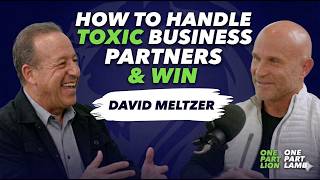
In this conversational podcast episode, host Stephen Scoggins interviews entrepreneur, author, and philanthropist David Meltzer. The dialogue weaves personal stories of failure, bankruptcy, and identity crises with broader leadership principles. Meltzer emphasizes the power of vulnerability, sharing origin stories, and living from an "I am" mindset rather than a "I want to be" identity. He contrasts hustle culture with alignment culture, advocating for devotion—a disciplined, purpose‑driven approach. Practical systems are introduced, including the Overlap Agreement for non‑binding reciprocal deals, the 3‑No Rule for qualifying open‑minded partners, and a structured vetting process (buckets, W‑2 verification, reference calls). They discuss authenticity versus branding, the importance of truth as a frequency filter, and time management concepts such as "non‑time" versus scheduled time, and daily non‑negotiables (sleep, health, family). Meltzer also promotes his upcoming book "Don't Do Business With Dicks" and offers free resources to the audience. Throughout, the tone is conversational, reflective, and motivational, with a sentiment of enthusiastic encouragement toward integrated, authentic leadership.
Chapters
And then I had this epiphany. I was like, I want hustle culture to die because I feel like alignment culture should live.
When I went bankrupt, I remember telling myself, don't tell anyone. Like, if I could have figured out how not at that time, how not to tell my wife or my mom, I would have done it.
Yeah.
At the time, my entire identity was tied to my wealth. You get to a point by baby stepping your way to the truth.
Yeah.
To realize that nothing vibrates faster than the truth. And the truth will always come out. And it's always the best way to find out who's with you and who's against you.
Yeah, why is he so driven for excellence, but why is he also so hard on us? Uh, then I realized I don't have to prove anything to anyone. All I have to do is be me. Hey guys, welcome back to the show. Super excited. Uh, as you guys know, we are all about helping leaders rise, lead, and last. Um, so much of doing that is becoming the integrated leader that we've been talking a lot about recently, uh, where your heart, your heart set, your mindset, and your handset all match, all of which I totally borrowed and ripped from our good friend David Meltzer. For those of you who don't know, he's not only a bestselling author, world-class entrepreneur, world-class philanthropist, but more important, he's a man of faith and honor and health and heart. And I appreciate that most about you, bro.
I appreciate the fact that I've evolved to be some resemblance of that introduction because I always— I wasn't always that person. And even when I intended to be that person, I wasn't doing the things that are necessary to become that person. Yeah. I'm I'm still becoming that person, but I'm farther along in that divine direction. And I think it's important for people to know that may have the same intentions that I did at 25, 35, and 45, that it takes time.
Yeah.
And it's a practice and it requires gratitude. It requires forgiveness and accountability.
Yeah. No, I'm glad you mentioned that because I feel like one of the things— so I share all the time that I feel like entrepreneurial failures or hard lessons you learn really come down to 5 constraints, right? I've shared with you a couple of lives, but arrogance, ignorance, fear, impatience, and insecurity. Yeah, right. And so much of that is having to face yourself, right? And not many leaders talk about the, the transformation required to become a great leader specifically. And so I've always been a big fan of yours specifically for that reason. You talk about your transparent, hey, this is where I messed up, this is where I went bankrupt, this is me losing my mom's house, like all of that openly and honestly. Is there a reason why you do that? Is there a reason why you're so vulnerable with so many?
It's a practice. I wasn't vulnerable when I started. In fact, when I went bankrupt, I remember telling myself, don't tell anyone. Yeah, like if I could have figured out how not at that time, how not to tell my wife or my mom, I would have done it.
Yeah.
Uh, at the time, my entire identity was tied to my wealth, and I wasn't ready. Just like other people, when they hear messages from you, they're not ready to hear it. You know, my 15-year-old son still rolls his eyes at me. Yeah. And I thank him when he does because I tell him, one, you acknowledge that you receive it by rolling your eyes and you planted that seed under a tree I may never sit under, but at least I know you acknowledge and planted it. I was acknowledging, planning things for me, and I think it was a progression of, okay, I'm going to tell people that I lost everything. Yeah. Now I'm going to start telling people the dumb shit I did to lose everything. Yeah. Yeah. Then it got into, you know, being abused and all the other things because pretty much you get to a point by baby stepping your way to the truth.
Yeah.
To realize that nothing vibrates faster than the truth and the truth will always come out and it's always the best way to find out. Who's with you and who's against you. Yeah. And if the people are aware that they're against you, they will keep all the other people that are like them, same frequency, that are against you away from you. Yeah. And you only have the people that are with you.
Yeah.
Only if you speak the truth.
Yeah, that's so good. And that had me thinking. So for the probably the first decade of my business career, obviously coming out public a long time ago about, you know, formally being homeless, but the first group of people I had to kind of have that conversation with was my team. Yeah, they had no idea why I was so driven. They had no idea why, you know, excellence in the ordinary mattered to me. They had no idea why I operated the way I did. Good, bad, or indifferent. And then I went to a conference, much like Aspire. These guys are doing a great job, man.
Yeah, they are.
I went to a conference and then I remember somebody saying, if you don't tell your origin story, from not your open wounds but your scars, then no one can ever actually connect with you. And I remember going back from that event and sitting down with my team at the time— was a small team, was like 20 people at the time— and sharing with them, literally, this is my story. The meeting was 3 hours long. I was a blubbering mess, you know. And what interesting— what happened was, is we actually scaled a lot quicker to the next, probably another $20 million in top line revenue. And I think I attribute that to the fact of authenticity. They finally got to see the real me that was driving both the good, bad, like, you know, just, hey, why is he so driven for excellence? But why is he also so hard on us?
And I prefer the word— I mean, I understand authenticity. And the reason that I use this word to help is that I think it incorporates more authenticity. You can incorporate branding. Yeah, but essence incorporates frequency.
Yeah.
And so when you're at your essence, That is your true authenticity.
Yeah.
Where if in the— and maybe I come from the branding and marketing world, so the word authentic to me is, are you staying authentic to a brand? Yeah. But the brand may not be your essence.
Yeah.
You know, and so maybe authentic to your essence. Like, like I met someone like Howard Stern. His essence is different than the authentic brand of Howard Stern.
Mm. Yeah.
Right.
And yeah, I had a similar experience with Grant Cardone. Yeah.
Right.
Yeah.
Yeah. And so Grant's a friend the same way. I would say that's very true. And so I think you were at your essence with your team. Yeah. You weren't really an authentic brand.
Yeah.
You know, you were just being you. And one of the other aspects, if I can tell a really quick story, because I think it's important for everyone when— because I'm launching my new book, Going to Business with Dix, at Super Bowl. But my very first book was in 2013, and Goodreads was like the Amazon review. Yeah. And they were the biggest. And Amazon was really just in the book business and they were starting to beat Barnes Noble and Walmart and all the other ones out there that were carrying the book. And my very first review was 1 star from the biggest reviewer at Goodreads. And it stated, David Meltzer is an idiot. He thinks that you can talk to water and change the molecular structure of water.
Turns out that's scientifically true.
Well, which is what I referenced with scientific reference in the book. But, you know, doesn't matter. It's early days of the internet and it's a shitty review. One star.
Yeah.
And I cried to my wife going, all that work I poured my soul in, no one's going to ever read it. I didn't care about sales. It wasn't about the money. And anyone that sells a book or writes a book for money is bigger idiot than the lady that said I was an idiot. So anyway, what happened changed my life. In all aspects according to what we're talking about. Because what happened was that that review, people read it, and if they agreed with her, they never read my book. So I never got a bad review because people at that frequency would hate my book. Yeah, because my book's all about—
Yeah, that makes a lot of sense. Yeah.
But what's cooler, talk about promotion protection, is that people who never would have read my book read that review and said, that lady's an idiot. I believe in this guy I've never met before or heard of, David Meltzer, I'm going to buy his book.
Yeah.
Now it became an attraction to the book that she elevated awareness to a force and a counterforce. And people then came in and it became a great bestseller. And every other review was 5 stars. And today there's so many reviews, 4.95 still, because it has one star.
That's so good. So good. I want to—
And that's life for everyone. They need to learn that.
Yeah. That is— it's funny how we can celebrate, or we don't— we choose not to celebrate a lot of the great, but we might hone in on something negative. Like, it's like, you know, you have 1,000 people say it's amazing, one person, you know, at least at the early days of a lower frequency, you're kind of at that level where it's like, this really bothered me. Yeah. Which kind of plays into identity a little bit. So I'll share with you super fast, please. I have a mantra I say 4 times in the morning or 4 times in a row in the morning. I take a breath in between and I do it because I believe the words I am are actually important, right? So I am healthy, I am wealthy, I am wise. I'm a steward of the Most High.
You're right with me, man. Most important, I love you, Stephen. Yeah, yeah. So with you, same, same mantra every day.
Yeah. Before we jump into some of the exciting things with the new book, I'd love for you to just talk a little bit about the importance of I am. I run into entrepreneurs all the time, business leaders all the time And so many times it seems like they're choosing not to lean into their higher version.
It's everything to me. It is the paradigm shift that created all of the options, opportunities, and touches of favor that are in my life. I live my life with an identity tied to my bank account. I was worth over $100 million, and if my bank account went up $100 that day, super happy. Yeah. My wife would ask me, what's the matter? I said, My bank account's down. She'd say, how much? I'm like, $250. So you're worth $100 million and you think you failed? Yeah. What is your problem? I realized this problem was I was living in this is what I want people to think I am world instead of I am. So I was searching all times for something that I could never get.
Yeah.
And so once I realized that it's already here. I am happy. Yeah, I am healthy. I am wealthy. I am worthy. I started to categorize my behaviors into, is this behavior aligned with where I want to be or better, or is this behavior interfering with it? Yeah, yeah, not going to get it. Is it just interfering with what I am?
Yeah.
And your guilt, resentment, offense, separation, inferiority, superiority, anxiety, frustration, worry, that's all interfering with who I am. And if you believe in the commandments, the working with God, the coordinated collaborative movement of all, and a unified, abundant, infinite system, you'll realize if you shift your paradigm to I am, what am I doing to interfere with it? Instead of this is what I want people to think I am, or I will be happy when I am, you're going to save yourself all the power. Yeah. And just live in force, man.
That's so good. I was, um, I'll share with you— I mean, I think I've shared with you privately before.
I love this guy, by the way.
So I love this guy.
This is like a free coaching session for them. I love it.
Um, what was really interesting was, um, our mutual friend that connected us a long time— well, connected us a long time ago. I mean, we had Evan Carmichael connected a long time ago, and then Randy kind of came in the picture.
Randy Garden is the Mormon Meltzer. Yeah, look him up.
He's also— I want to be just like these guys when I grow up, for sure.
So you already appreciate that, bro. I am Randy Yeah, I agree. What do I do to interfere then? That's awesome.
You know, but I went through a pretty radical metamorphosis and it was post-exit. I discovered I'd spent my entire life chasing and striving and grinding and hustling. And then I had this epiphany. I was like, I want hustle culture to die because I feel like alignment culture should live, right? So figuring out why you do what you do, how you do what you do, it is aligned like you were just talking about, but I discovered that I was drawn toward wounded birds, so to speak. So not just relationships.
Puppy dog syndrome.
Yeah. You know, I, you know, especially when you become a person of financial resource, you see this need, you see that need, you see this need, or I can add value here, I can add value there, I can add value there. And it wasn't until this past year, as I was leaving Utah and heading back to the Carolinas, that I realized I don't have to prove anything to anyone. All I have to do is be me. You know, but I got to be honest with you, the scariest thing I had to do was be me.
Look inside. And look outside of you.
Yeah.
Can't see inside of you. And nobody wants to look inside. Yeah. It's dark.
Yeah. Yeah. Well, the other thing too is I realized that the part— I know we'll jam on this because we did this on Instagram Live not long ago, but that's why it's coming to my head. You know, I believe we kind of have life in layers. Like there's pieces of us that are sometimes at odds.
Yeah, right.
There's the confident version of you. There's an insecure version of you, and they're colliding. I discovered that the more I pushed away the insecure or the, the shadow sides that I wasn't really ready to deal with, the more tension I got. But the more I began to love those sides and integrate them fully into my whole self, all of a sudden being present and being like anchored became stronger.
There's an interesting word within the culture, in this grinding culture, and Gary Vaynerchuk and I talk about this. One of the biggest challenges I have is people are very disciplined and they hear about Dave Meltzer consistency. That's how you get to where you are without quitting and being consistent in these behaviors.
Yeah.
And I see so many people so busy working, they forget to make money.
Yeah.
And the word that comes to mind when we're transforming people from a grind culture, you know, in this thing that will create and necessitates great discipline is the word devotion. And the reason I use the word devotion is that devotion incorporates discipline. If you have to be disciplined to be devotional. Yeah, that's in every religion.
Yeah.
Theory, spirituality, philosophy. People that aren't disciplined are not devotional.
Yeah.
But beyond that, you have to pay attention, be present. In that discipline, and you have to have a divine direction of intention. So questioning, am I saying, doing, thinking, feeling, and believing aligned with the divine direction? And am I learning from the past, giving meaning to the inside to align with it as well, like you just suggested? And so now when we talk about grinding, I talk about devotion. Yeah, I'll ask someone, are you devotional? Yeah. About what you want to do or about it?
Yeah.
And in that devotion, what are you paying attention to? What are you getting intent, giving intention to, to equal the coinciding in the universe, which is better known as the coincidences? So if you look at people like Steve or I and you say, oh, those guys are lucky. Yeah, we are, because there's a mathematical equation of luck that says we're devotional. We pay attention to and give intention to what we desire. And the coincidence is the universe coincides with us at all times.
Yeah.
Even when the coinciding isn't evidentiary of where we want to be or better.
Yeah. Yeah.
So when you lose everything or you're homeless. Yeah. This is evidence that you're going to be where you want to be.
Really?
If it doesn't happen, you're not protected and promoted. If you were to just been you know, searching and searching and never get the lessons from being homeless about humility.
Yeah.
You never would be where you are today.
Yeah. Yeah. That's so good. I want to jump into the book content and because I'm really excited about it.
Just keep saying the title. People buy it. They don't care about the content. I've written amazing content. Trust me. Like I said, Connected to Goodness, Capacity to Capitalism, Unstoppable, Creating a Legacy. That's great content. But until you get a good title like Don't Do Business with Dick, people don't care about the content. Yeah.
So you got to give her credit because you're like, you know, don't do business with dicks. You're like, tell me more.
Well, I knew it was a winner because when I was writing it on my laptop, I would have the title on each page in the template because I write my own books. I don't use AI. I do now use AI to edit it, but I write my own. And people would go, where can I buy that? They'd just see the title. And I'm like, oh, this book's going to be good. And even if it's not good, it's going to sell. I think it's going to be both.
I know your heart and your mind, bro. Trust me. Here's what you hear today.
If you're interested in how I see things and how it can help you, then buy the book regardless of the title. Title offends you, buy the book. If you love it like I do, buy the book.
Yeah, we're going to make your book available to our community as soon as it launches.
Anyone in your community that just tells you they bought— you got to prove it. I trust everyone. If they tell you that they bought the book, have them email me.
Okay.
And I will sign, send, pay for shipping in my book Connected to Goodness, which is a great— it's kind of like Think and Grow Rich, Outwitting the Devil. So I will give that And you don't have to send receipts to Steve or whatever, but if they just call you and say, hey, I bought that book, please tell them to email me, david@demeltzer.com or directly, and I will sign, send in, pay for shipping in the book for Connected to Goodness, which I promise will change your life. And it has a really good title if you're offended by the other title.
So you get both.
Nobody's offended by Connected to Goodness or Compassionate Capitalism. Yeah, never. Or Unstoppable.
Yeah. I want to— all right, so let's, let's talk. So I'll tell you where I'm at personally in business, right? So I had an exit. I went through an identity metamorphosis. I've come out the other side of that. I'm now serving at scale. I feel like I'm more aligned, more authentic than ever before. When I step in a room, a magnetic presence precedes me and follows me and surrounds me just like it does you. And, you know, it's something I've heard you talk a lot about. And but the other flip side of that is as I'm looking at things like private equity or, you know, creating a fund or, or being part of a fund or these different vehicles that are now available to me that weren't available to me originally, my biggest concern and risk is actually doing business with a dick, for lack of a better word. Somebody who's out for themselves, who wants to hurt me, who legitimately doesn't want to build relationships. And I want to build long-standing relationships where I add value and receive value, a reciprocal nature. So let's talk a little bit about how do you— what are red flags and green flags to some of this?
Yeah, I think it's difficult to see red flags and green flags at the beginning. You can do due diligence. I tell— I trust everyone.
Yeah.
By vetting the shit out of them.
Yeah.
And so more than a red flag or a green flag, I have processes in place to vet the shit out of you.
Yeah.
To see if you are who you say you are. I'll ask for a W-2 if you claim you've made this much money.
Yeah.
I will ask to talk to somebody and ask for their phone number and ask hard, uncomfortable questions of them and their references. Because I trust you. Yeah. Because it's a form of trust when you make a representation to me.
Yeah.
And you tell me, hey, man, I'm 5'7" and I break out a tape measure.
I'm not 5'7".
I am, baby. I'm an honorary Melvin according to Darren last night. Yeah, you fit right in. Tall, dark, and handsome.
That's right.
Come to my family reunion. You'll love it. I love it. The first time anyone's ever like, you're tall, dark, and handsome.
Hey, I'm familiar with Yiddish. I'm good.
Exactly. You, but you know, I measure everything.
Yeah.
But more importantly, after I measure, I then put people into buckets to start and they can move. So the 3 buckets I put them in, none of the time or almost none of the time, some of the time and almost always. Now I'm going to live and spend my time with the people that are almost always.
Yeah.
And then determinative on your behavior, I'm going to move you.
Yeah. And so it's transitional.
Yeah, very much so. And so I can't guarantee because time and motion and value changes.
Yeah.
One of the other mechanisms which also I'll send to your whole community for free, I created what's called the Overlap Agreement.
Okay.
Probably the smartest thing I've ever created. Yeah. An Overlap Agreement is a non-binding memorialization of how we're trying to help each other and how we can pay each other.
Yeah.
So you and I will have an Overlap Agreement that says, hey, Steve, you bring me a deal I'm going to try according to the circumstances to give you 20% commission on it.
Yeah.
And you say, Dave, you bring me a deal, I'm going to try according to the circumstances, time, value, and emotion to give you 20%.
Yeah.
Now I bring you a deal. Yeah. Circumstances are different. Yeah. You may not even charge the person.
Yeah.
But now there's no resistance. I've ruined relationships because I had a referral agreement and I sent a friend to the person. They tried to help me out by doing it for free. So there was no commission.
Yeah.
And then I didn't know that he helped for free. And then later on found out, oh, well, so-and-so helped them and they're doing all this business, whatever. And he did it for free.
Yeah.
And then I stopped talking to the person or I talk shit behind their back because they screwed me over and didn't pay me a commission that didn't even exist. So I created the overlap agreement. I have a template it for people. It's the best thing. I have thousands of people now that we have technology because when I started, we didn't. Yeah. Now I can say, who's the dentist in North Carolina that promised me free Starbucks cards if I bring a customer to them?
Yeah.
Like something little like that. And then I'm doing Aspire in North Carolina and someone's like, oh dude, I ever— I'm like, oh, I got the best dentist in North Carolina. I went on my phone, searched dentist North Carolina. Found the person's phone number, sent it over to them. And I'll say something like jokingly, don't worry about the Starbucks card.
Yeah.
But invariably they send that or something different just to acknowledge this overlap of memorialized help. I built a community of people that want to help each other and know people that help each other. Yeah. Whether you are some of the time, almost always, or almost never, that's according to your actions, not mine.
Yeah. And to that, to that end, You know, you and your team went out of your way to even make this happen. Of course. You're busy, you're traveling, you're doing all the things.
Man, I hate busy.
Yeah.
People that are busy are high. Productive. People that are busy are usually high, sick, and broke on their mom's couch. You don't have time to do anything. They're busy. I got time to do a whole bunch of shit. I'm active.
See, this is why I got to hang out with you more. One of the things as far as coming on that same frame of reference is, I assume if the overlap agreement gets breached, there's a breach of trust, and that tells you you get to move out a ring or in a ring.
They'll move by that. But it's also maybe not a breach of trust. It actually moves them to the other side because they called you and said, hey, bro, I know we have a memorialization of the 20%. I couldn't do it on this deal because of these circumstances. Yeah, but I want to send you this instead or just let you know. Thank you.
Yeah.
For if anything comes of it differently, I always got you in mind.
Yeah.
Is there anything I can do for you? Yeah. It's now they're in almost all the time, even though that didn't work out the way we thought it would.
It's interesting.
We have a closer relationship, not a broken Well, that you're building a community of people that want to help each other.
You know, I think one of the— our other brother from another mother, Randy, one of the things I've always watched him do, and he's always said from stage when he spoke, and it was like, hey, do as much as you can for as little— or for as much as you can for as many as you can, expecting nothing in return. Yeah. And that's saying to him, right? Yeah, it was. I actually got a blanket for him when his dad passed, and that was kind of funny. So I've been talking to a young man that's hanging out with me, Connor, who's like my son in many respects, mentee, if you will.
Like Nick.
Yeah. Yeah, very much. Yeah. The ride or dies, right?
Yeah.
And one of the things I've been talking to him recently about is like, when you step into environments where you can cultivate relationship, go in with the heart of service. Go in to add value, not to just ask for something. I see a lot of relationships that don't get started as if they could be because everybody's asking and take, or is really taking and asking more than anything else. You know, so is that a good signal that someone may not be in your best interest if it's, that's the dynamic like super early on?
It is an area that you want to start questioning.
Okay.
To figure out what their motivation is. They may just be in a hurry. Or it may be something that's so direct. Yeah. That they may just go right for this is what I need you to do for me type of thing.
Yeah.
My entire concept is very basic and I know billions of dollars are made on sales, but for me, this template will make anyone millions of dollars. One, only deal with open minds. Use the 3 no rule to determine if someone has an open mind because they may just have a closed mind at the time, but after 3 asks, they may have too closed.
Or guards are put when you first meet somebody.
Exactly. So I— it's a thousand times harder to re-engineer a closed mind than an open mind. And because we have such greater accessibility to people today, I only deal with open minds.
Yeah.
Then I ask open-ended questions pertaining to the subject matter, topic, or expertise that I'm interested in. I ask, what do you know? What don't you know? What's working? What's not working? And What do you like and what you don't like? For one reason, I want to figure out, would it help you if I gave you more of what you like, what you know, or what's working, or took away what you don't know, what you don't like, or not work?
Or sometimes that's more valuable.
And then I'm well-rehearsed in articulating the value of giving that true value to you.
Yeah.
To exceed what I'm asking for.
Yeah.
So I'm always asking, but instead of asking without knowing value. I actually figure out the value first at its core, which is like, don't like, work, don't work, know, don't know. And then ask them a question of value. Would it help you if?
Yeah.
Would it help you if?
Yeah.
And if it doesn't, I also will ask them, do you know anyone that can help me to build the neighborhood of people? Because it could just be a matter of time, emotion, and value of it won't help at this time.
Yeah.
In fact, the 3 no rule, which I'll help send for people too, is you tell me, hey, call me Friday. I call you Friday, you don't answer. So I call again on Friday.
Yeah.
Like, I'm not one of those guys. When do I call back? I don't want to offend you. No, you told me to call you.
Yeah.
I'm showing you the respect of doing what you asked. Yeah. So I'm calling you back on Friday at 4:00.
Yeah.
No answer. Lame excuse. I call you Monday morning at 10:00. Notice no You told me to call. So on the third time, if you blow me off or I leave a message, I leave a message saying, hey, this obviously isn't the right time. When it is, let me know. And I never call you again. Now, 50% or so of the time, I never hear again from that person. You realize how much time, money, emotion, and value I saved. But the other 50% or so, I've accelerated the people that actually wanted to do something. But it was circumstantial. Yeah, because it was a very day or or, you know, they had an incident that occurred that was interfering with what they promised. Yeah, but people, they cause all these— I'm too busy trying to make money instead of making money. And they don't allow or trust people to their word. I'm just doing what you said and I'm leaving it at that.
Yeah. Honoring the agreement.
Yeah.
I want to share something super fast with you that loosely piggybacks on what you just shared. So the audience doesn't know, but right before we popped on and started doing this, you were handling coaching calls.
Yes.
Right. Straight off from— straight from stage, straight to coaching calls, straight to doing this. My— just a small window of time in between this and essentially the coaching calls, there was a young business leader sitting here in the room. And being someone of— who's highly esteemed like yourself in the marketplace after living what you are embodying and living what you do. It was beautiful to watch a very humble kind of like, tell me more about you, tell me what you're working on, what's in your way, that kind of concept. And then I also learned just by watching you that you're also very intentional. You had Nick kind of grab his information for follow-up, you know.
And I also gave him a window and respect by saying, Let me finish my coaching call.
Mm-hmm.
Right? I want to get to you. Yeah. Right? And then I was able to have that— and I had 2 minutes before the coaching call, and he said it's going to take more than 2 minutes. But I let him know, I got 2 minutes now. No. Perfect. Okay. When I have a bigger window so I can understand what you like, don't like, what's working, what's not working, what you know and what you don't know about your subject matter, topic, or expertise. And I even explained my distribution model because he ended up asking, how can I be of service to you? What do you need?
Yeah.
And I explained my business model of distribution of opportunities, options, and touches of favor.
Yeah, it's so good. I just— it's funny how you can pick up and you can pick up skill, new skill sets just by being mindful of what's happening around you.
So good. You know, one of the bigger things that I love to teach people is the difference between scheduled time and non-time. This changed my life. So a lot of people want to schedule time. So I'll say, give me a call. When? After Super Bowl. But when? After Super Bowl. When's a good time? Well, nobody really—
So between this Super Bowl and the next Super Bowl?
Yeah, exactly. Nobody knows on Monday after Super Bowl, literally, because I give 5-minute calls to anyone, when they're going to be available. So I use non-time because the minute I tell them 8 o'clock, on Monday, I know what if my son needs me at 8 o'clock on Monday? That's expensive time. Yeah. So for me, I use even my Monday. I have a huge networking group where I do one-on-one coaching and give introductions personally every Monday. I don't give you the time till Sunday. Yeah. Because if I tell you and guarantee 52 weeks a year I'm going to be there on Monday, but it has to be 8 a.m. Pacific time, I'm never going to be able to live up to that. Yeah, but when I say Mondays, I can find the least expensive hour in my Monday, which creates a huge margin in time value and emotion for everybody because it's my non-time.
I just rock my world, man.
It changed my world because like I— and I always tell people, call me because it's the easiest way and leave a message if I don't answer. I actually returned 3 calls while this whole coaching thing happened. Yeah. And talk to 3 people who left me messages.
Yeah.
Wow.
I'm going to put that into practice. I think I shared last night at dinner.
You were exceptional, by the way, on the panels. Thank you.
I was just trying to— I was just— you know what's funny is I realized that all I want to do is serve the person I used to be in the grand scheme of things. That's been said by Rory, myself, Ed Mylett, just a lot of different variations. But at the end of the day, who was the 13-year-old version? Who was the 16-year-old version? Who's the 19-year-old, 25, so on and so forth. And everything that I do centers around removing past pains from current people's problems, right, with whatever the lesson was, right? Um, but one of the things that I shared last night is— and this is— this rocked my world, much like you were just explaining that the, um, the flexibility there. My son Tyler, our oldest son Tyler, came to me shortly after a divorce and he said, hey, you were a great dad. As far as we're concerned, you were a great husband. There's one thing you could do different is to be more present when you're present. Bro, I— it wrecked me because literally I started thinking about all the meals that I missed, all the times that I had my phone in my hand or my computer in my hand or something like that, or the 'I'll get with you in a minute' kind of thing. And then I did a little bit of research after this because this really— this was only like 3, 4 years ago. Like, this is, this is new, still new to me. I did a little research and I discovered that young children that have the "got a minute" parent end up searching for their identity, their worth, the vast majority of the rest of their life until it's dealt with. So when you talk about how you look at time, you're very close to your family. They travel with you. Marissa's obviously with you, you know, so that's a beautiful thing. Like, maybe give us a little, maybe some, a couple of frameworks as we close up, um, on how you see time Because I don't really— I don't know if there's such thing as balance.
No, it's harmony.
Harmony.
So first of all, you have to understand man-made constructive time versus infinite time. And so you have to understand what lives in between the man-made constructive time and the infinite time. And this reconciliation is difficult for people. Yeah, I harmonize the 24 hours a day that I'm guaranteed by God every day of my life, except for the last day, he'll treat me with the infinite time, which is the divine. Yeah, the divine direction. So how do I hedge circumstance? Because circumstance is what causes us to be inefficient with the 24 hours a day aligned with our divine time, because we can't predict the weather, delays, interest rates. Yeah, financial situations and according to anything. So what I have found by studying physics, metaphysics, and quantum physics is that 2 minutes a day, 7 days a week of non-negotiable time. Non-circumstantial time is worth 2 hours on a Saturday. So when we create non-negotiables in our life, as you know, sleep is a non-negotiable. No matter what, no matter what, I'm getting a minimum of 7 hours of sleep. And if there is an exception because the hospital calls me at 2 in the morning and I have to go see my mom, I'm not going to stack 2 else. Yeah, I become a double priority the next day that I'm getting a minimum of 7 hours. Because now I can hedge on the circumstance either. I'm not putting anything else before it.
Yeah.
Money, family, anything before my sleep. Then comes a minimum of an hour on my health.
Yeah.
7 days a week. Then comes a minimum of an hour with my family. Some of my kids get a minimum of 2 minutes a day to make sure they know I love them.
It's an hour. Yeah.
I love them. I'm proud of them. And I always have their back. I need them to know that. And I want to get in a question every day. Hey, Tell me about something you did today. Did you do your best? Did you learn lessons, or what did you learn? And did you have fun? Yeah, that's the game I'm playing. But 2 minutes a day of that non-negotiable behavior. So I categorize about half of my day, including sleep, as non-negotiable. And everything else is just prioritization according to the circumstances of the day, knowing my divine direction and the meaning of the past, learning from the past to enhance my divine direction. That has been the secret sauce. Just like scheduled time, not time, paid for time, unpaid for time, planned time, unplanned time, and then having mentorship for all the criteria of living, which is breathing. If you don't breathe, you die. So you should have a breathing coach. If you don't eat right, you'll die. If you don't drink, you'll die. If you don't move, you'll die. And if you don't sleep, you'll die. So I have coaches for all those.
Wow. So I love hanging out with you, dude. I love absolutely hanging out with you. Before we wrap up, where can I find out more about— where do you want to— where you want to go?
Because I would like everyone in your community to email me directly so I could be of service, to give them a free book or the overlap agreement, the 3 no rule. And if you don't email me, David, which means beloved, @D is my first initial, Meltzer means servant, david@deltzer.com. Let me be your beloved servant. If you don't, just Google me and find the place you want to participate, collaborate, coordinate with the Mindset, Heartset, and Handset. That I hopefully communicate effectively with value to you. We need to do more. All you got to do is ask. I appreciate this opportunity. David@dmeltzer.com.
Bro, love you, man.
Love you too.
Thank you so much. Thank you for everything. Seriously, guys, that's going to do it for this episode. Always remember, rise, lead, and last. If you know someone who needs this episode, and let's be honest, we do, go ahead and share this with a friend. As always, like, subscribe, do all the things. We love you. We'll see you in the next one. God bless. Peace out.
Bless you.
More from Stephen



He Had Everything…Then A Heart Attack Changed It All | Dan Sachkowsky #Shorts




Paralyzed. Suicidal. Then He Surrendered, And EVERYTHING Shifted | Marcus Aurelius Anderson


Why You Snap At People You Love, The ALIGN Method, & Why ADHD Isn't A Disorder | Sara Hartley

