Do This To Achieve MASSIVE Success feat. Amy Porterfield
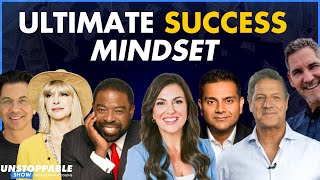
Stephen Scoggins hosts Amy Porterfield, Grant Cardone, Les Brown, and others on leaving your job, pricing your work, and building a business. They cover runway costs, the startup-to-scaling phases, and mindset rituals that actually stick.
Chapters
The thing I learned early on, and again, it was from my friend Stu McLaren, so I've got to get him credit. But what he taught me early on is the more money I make, the bigger impact I can make in the world. I don't have the money there. I'm very limited in terms of the impact I can make. So when he said that, I thought, holy cow, I have to charge what I'm worth. Because when I'm making that money, I can give to charity, sponsor people through scholarships, through my programs, and I can create the life that I want. And if I'm living the life that I want, I. I am a better version of myself and I am adding even more impact into the world. I really do think it's important. The more money, the more impact when you use your money wisely, of course, and with full integrity. But another thing is there's something about self worth here, and I talk to more women about this than men. If you're not charging for it and you're saying, I just want to give it all away for free, because you do have a big heart and you do want to help people. But what does that say about how you value what you are bringing to the table? You deserve to get paid for that. You wouldn't work for free for somebody else, so why should you work for free for yourself? And I think there's like, you have to ask yourself, how much do I value what I'm doing? And then you charge for it because you're going to show up as a better version of yourself when you're getting paid what you're worth.
So one thing we don't want to do is burn bridges. And the way that you can easily burn a bridge is if you decide to leave and now you're just sick and tired of your job and you're like one foot out and just annoyed. And I've seen it so many times. So you don't want to burn yourself out, meaning don't say, don't give your two weeks notice, but actually give six weeks, or I mean, six months. Don't like, say, I'm quitting, but I'll stay for the next six months to help you guys out. Do not do that. You will feel resentful. So get really clear on how long you're willing to stay when you want to give your notice. Some people give a month's notice just to help the other person kind of usher into their role. But be careful how much time you give yourself and how much time you communicate. Make sure you are good with it. Another don't is is we're not gonna fiddle with business cards and silly things like that that you do not need. I tell this story in the book about my first business card. It turned out it looked like a condom wrapper at the end when it was designed. And I spent hours and tons of money on this dang business card that I hardly gave out to anyone. It's just we preoccupy our stuff with stuff that feels safe. So don't stay comfortable on this Runway. You have to start doing things that you are not necessarily comfortable with. But it's so. And I think another thing that you don't want to do is don't turn a blind eye to your finances. Money anxiety is a real thing when you leave your 9 to 5 job. So if you're thinking about leaving your 9 to 5 job, one thing I want you to do is sit down and think, what do I need to make in order to get by? You're not living in the lap of luxury your first year as an entrepreneur. You're not going on the vacations, you're not driving the nice cars. You are definitely sacrificing because you want to give yourself a little time and space to make the mistakes you need to make and figure it out. And so how much money do you absolutely need to make to get by and then back out? Okay, here's how I'm going to do that my first year. You won't have all the answers. You also do not need a business plan. I've never even seen a full fledged business plan. I don't know any of my peers who had one when they first started out. So an elaborate business plan you do not need.
It's busy work. It's busy work. Yeah. So what you need to do to get started is figure out what value you can bring to the world and then start charging for it. Yeah, I mean, that's about it.
About your idea. Yeah, exact starter idea. Just to make money in the. On the short term till you figure out how you want to do it in the long term.
Yeah. I mean, one of the programs that we do called Unstoppable Startup, I try to take people through the framework, the five frameworks, which is, you know, obviously there's a startup phase, which is hustle and grind. It's just, you're going out, you're making stuff happen, you're knocking stuff over, you're making lots of mistakes. Then there's the testing phase. Hey, I got something that's working how do I make it better? How do I, how do I maximize this thing? You know, then you got the scaling stage, which is now you got systems and processes and people. Right? And then you got this basically the, the next step, which is selling or operating. So you have all these different, different phases. And I feel like people get really confused at what phase journey they're in. They're in the startup phase and they're thinking, no, I need to have all these different systems, all these different processes. And I'm like, no, you just need to knock something over.
Yes, it's so true.
Yeah, I'm curious to know. So we've talked about some do's and some don'ts and maybe we've got people sold, right? You and I both started businesses from nothing and, and grew them to something and now we're trying to help people do, to basically learn from those, those experiences. What are some other chapters that would come out of the, the, the, the. There were chapters in the Bible that I don't think ever made it in there. One is called second hesitations. Right. So what are some other hesitations that might, would keep you from taking the leap now versus having to wait a year or 10 years?
One of the things is that when your job is okay, when you're in a situation where like at Tony Robbins, I was making good money, traveling the world, going to his events, like on paper, all of that looked really good. And when you're in a job that it's good, it's okay, it gets by, it's very easy to then justify. I'm going to stay here and maybe I'm just going to dabble on a little side hustle. Or maybe I'm going to go to the court, get the courses, listen to the podcast. I'm doing all that. But you are doing nothing to move forward in your business. So what I always talk about is the fact that you have to get uncomfortable on a regular basis. So if you are comfortable and cozy in your 9 to 5 job, but you know you are not happy, why would you ever live your life that way? Yeah, but it's very easy to do so. You can make every excuse in the book why you should leave there. A recession's coming. I should never quit my job. Let me tell you a story. I had a student, I tell this in my book, where she always thought about being an entrepreneur. She did the dabbling, she bought the courses, she listened to the podcast, the books, went to the events, all of that, but did nothing to get started because she Always used the excuse, it's not the right time. And she was making a lot of money in her 9 to 5 job.
I don't have X, Y, and Z. Yeah, yeah.
And then what happened? She was laid off. She didn't have a choice anymore. They made the choice for her that you don't get to work here anymore. You don't get that paycheck anymore, which could happen to every single one of us in a 9 to 5 job. And so her livelihood was taken away, and she scrambled. She knew she wanted to start something but had started nothing. So now she's scrambling last minute to try to get it together. Imagine if while she's still in her 9 to 5 job, she gave her 6 months to work on her Runway, to leave, and then she got laid off. She'd be ready to go.
Yeah.
People are getting laid off left and right right now in some of the biggest companies. It's going to trickle down to the smaller companies. Do not let them decide for you that you're not going to work there anymore. If you're ready to move, put a plan together. Get your Runway. I explained the whole Runway inside the book.
Think about at the end of your life, if you had the chance to meet your maker. For me, I believe that's God. And if I had the opportunity to talk to him, I don't think God would ever do this because he's not mean. But could you imagine if he just settled? Imagine if he said, well, I wasn't born in the right area. My husb. My wife never supported me. My friends didn't believe in me. I didn't have the money. I was too old. I was too young. Wrong area, wrong time. Just these beliefs. Right. And could you imagine meeting with God and he's sweet and loves you and says, you know, how was your life, Steven? I was good. How was your relationship? I was good. How did you do with your economics? How did you do with giving back to other people? You know, I tried. I gave some things away. And could you imagine God saying, you know what? I'm sorry to show you this, but this is who you are. I want to show you a quick little video of who you could have been.
Oh, wow.
And somebody shared that once. Every time I say it, I get goosebumps. Like, don't go to the end of your life thinking of the man or the woman you could have been. When we have the desire, we can rewind right now and make a difference. So you were asking me about being an underdog. It takes whatever it takes to get you to push forward, to realize this. Please hear this. All of us have been programmed to think that we need resources. I could scale that business. If I had the money. I could start that business. If my spouse believed in me. If my friends thought so. If someone would give me the time of day. If someone would believe in my dreams. We think about all these things that are through the lens. If I had this, if someone would give me this, if someone would partner with me. We think of resources as this outside thing that if they were available to you, which they weren't available to you, Steven. And they weren't sure, they weren't available to me. But it is actually the biggest lie you've ever been told. And you were programmed that way. Think about this. In America. Did you ever see how the percentage of people who hit lotto and go broke, most of them had all the resources. They had a bank full of money. How the hell did all of it go away? It's because if you do the research, the most successful, the most happiest people in the world didn't have the resources. Yeah, they were resourceful as hell. They took what they had. Listen. We have the ability to focus on what we want at any time. And our focus determines our lives. If you get in a car accident, you focus. My insurance going to go up. I can't believe this idiot did it. My car will never be the same. I hate life. That's how you feel. If you get in a car accident and no one's hurt and you get out and goes, who cares? Cares about a damn car? It's metal and a fender. I have insurance. You okay? Want to go grab a cup of coffee before the tow truck comes? Right. We have the opportunity to focus on anything we want. And our focus determines our life. It determines our daily emotions. It determines how far we go or how far we don't. It determines if we have an anchor tied to our asses. Excuse my language. Or if we have a wind behind our sail. Right? So today, you could focus on resourcefulness. You could focus on what you do have. You can focus on opportunities that Covid created, or you could focus on what you because of COVID And how no one supports you and how you don't have the money. As crazy as this sounds, I'm not trying to make it sound simple or easy because none of it is. But life's going to be brutal no matter what. For the next 10 years, you might as well focus on what you do have. Focus on where you can go and be resourceful as hell, because that's where real success comes from.
Absolutely. You know, it's funny, as I look back at my journey, one of the things that I quickly remember was, you know, the reason I'm even in this position now, even having this great conversation with you, and you're someone who I deeply admire, your work and everything else you put forth is because one person gave me an opportunity, even though I didn't have the. One of the companies that I own.
Is a construction company.
I didn't have the tools. I didn't have the equipment. I didn't have the. I didn't have the fancy trucks. I didn't have the. I didn't have team members. Like, it was just me.
Wow.
But I had an opportunity, and my father showed up for the first time in my life on a job site and said, hey, look, you do realize we used to make our scaffolding out of wood when you were a kid. I'm like, well, yeah. He said, start pulling wood out of the trash piles. And we literally built my scaffolding that I needed to start Monday out of the trash piles. So many times I get frustrated with. With some of the folks that I've worked with in the past because they don't grasp it. They don't understand that what they. They could literally look around them and see the kind of assets and resources that are there that may not be financial, but that doesn't make them any less valuable. And that's one of the things that I. That I love about the resourcefulness piece, because it's absolutely true. I mean, that company went on to employ hundreds of team members across, you know, but it all started in the humble beginnings. And I've learned not to despise the small beginnings. And I see that people are always in a rush to get to the end destination, not understanding that the process leads them to the destination.
And then the other thing. And I know you guys have all heard this, but I want to tell you, one of my favorite books is Shoe Dog. Did you ever read Shoe Dog?
I haven't, not yet, but I'm going.
Great. Put it on your list. Everybody, put it on your list. It's about the founder of Nike story and, you know, started with nothing. Started in a garage. Just hustling one sneaker pair of sneakers at a time. Like the quintessential entrepreneurial journey failed miserably. Bank took their money. You know, government shut down imports from Japan. Everything you could possibly imagine go wrong went wrong. But they're Nike and They're here today. And he tells the stories. He tells it so good. I listened to Books Not Read. It tells a story. This time when the bank called his loan and he was late on paying people, and there were so many people he owed money to, he asked them to come to the building at one time, and he was making sure they didn't pass each other, because if they passed each other, they might see that two different people he owed money to. So he put them in different offices and all these different parts of the company and how they were stressed. And just when they thought they had it figured out, the merchant company said they could stop, like a million times. And he's like, all he kept thinking about is, when we get to a million, when we get to 100 million, when we get to a billion, when we become a household name, when we sponsor Olympic athletes, when we sponsor people in the NBA. And he said he didn't realize. He kept saying, when, when, when, when. And towards the end of the book, he said, you know, I look back now, and he said, I'm going to give all the money away to charity. We're already giving 100 million a year away. When I die, it all goes to charity. And he said, I realized that. I kept thinking when, when, when and if. They asked him about his bucket list, and he said, stephen, he said, if I could have one thing, I realized I checked off all the things on my bucket list, and they really didn't move the needle. He said, I wish I could go back and realized that when we were sitting at the conference table trying to figure out how to get the money or how to get the shipment from Japan, or how to get a merchant account back, or how to solve the problem, how to pay the bills. He goes, that's when I was alive. That's when I was expanding. That's when I was taking uncomfortable action. I was moving forward. He's like, my bucket list would be go back and realize they were the times I was alive. Now I'm supposedly at the end destination, and I want to go back. And it just. I might have paraphrased that, but I felt that emotion. And it puts me back in this space, that this is part of it, all the things that went wrong in your life. My partner and dear friend Tony Robbins said something once to me that changed my life. And he said a lot of things that changed my life. He said, life happens for us, not to us. How would your life be if you realize that the divorce, the change, the bankruptcy, the person letting you down the spouse cheating on you and leaving you all the things that you think are your anchor. What if it happened for. For you to sharpen the axe, to sharpen the tool, to put you on a journey to listening right now, to have opportunity to be a part of a world when it shifts. That knowledge is the new currency. And you have assets that live inside your brain that are the resources that other people want. You don't even realize it. Like, there's so many things available if you can shift and say, okay, I'm sorry if things bad for you. I'm sorry if people let you down. But what if that was your plan? What if God designed that for you to say, are you worthy of what you really want by overcoming the crap that you went through? And when I look through that lens, Steven, then I realized I'm glad I was broke. I'm glad I went to school and didn't have lunch money. I'm glad my father had a crazy temper and was a maniac. And I had to learn to emotionally connect with him through empathy and calm him down from not doing crazy stuff. All that stuff that seemed bad, that was my gift from God that allowed me to be the man I am, to start 13 companies and impact people and be married to the woman of my dreams.
First, it was my relationship with money and my relationship to happiness. So for me, I grew up with a happiness gene and a happiness culture. At five years old, even though my father left, my mom was an extraordinary individual who raised six kids with two jobs and would pack our dinners in a station wagon and never complain about anything. Although I catch her crying over financial stress. And I know the reason she was financially stressed is she just wanted more for us, not for herself. But that drove me to this understanding that I was going to buy her a house and a car. And in order to do so, I needed to make a lot of money. And so money was then the guide to me to buy the final piece of happiness, the final piece of love. To be the favorite child to distinguish myself with hyper competitive, academic, intelligent siblings, all who went to the Ivy Leagues and graduated summa cum laude. I was going to show them. And although it's more genetically from my father, the entrepreneurial side who was absent, I took that journey on. And the interesting thing is I did make a million dollars nine months out of law school. I was a multimillionaire in my 20s. All those things just reaffirmed. Money buys love and happiness. And maybe you can see the thing behind me. It says money doesn't buy love or happiness.
It's a hard lesson to work.
Yeah. It cost me over $100 million and almost my health, my family and everything to learn that unbelievably valuable lesson that has put us both on a journey to put faith in front of the other currency, money, the object of energy that we put into the flow to get things. But I have a different relationship to money now than I ever have.
You have to realize your value. See, you know, I see a lot of people. For instance, very classic, very sad analogy, A kid whose parents hurt them, hit them, shout at them, diminish them, as I wish I'd never had you. You ruined my life. Nobody will ever want you. And one of the very vexing things about the mind is our mind is hardwired to go back to what's familiar while running away from what is unfamiliar. So if you have a parent who criticizes you a lot and someone comes along and praises you, it feels so unfamiliar that your mind wants to go back to what it knows. And so we see many people who pick destructive relations go, I don't know what happened, but I met this person and we just cl and I felt I'd known them all my life. What you're saying is their behavior was so familiar, I accepted it as normal. When a nice person came along that was so unfamiliar, I wanted to run away from it. So people who have never had praise, when you praise them and go, gosh, you know, you were really good this week. I love what you wear or I hear you're great. They say, no, actually, no, that was a fluke. The person who's a better than they were sick or yeah, I've had this top for five years got a hole in it. They actually reject praise and add in criticism because of our wiring that says, go back towards why any two year old says, I don't want to eat that yogurt, it's the wrong color, I don't eat that. What they're saying is, I don't know that food and because I don't know it, I won't have it. Because of course, years ago, the minute a kid could go out on the prairie and pick their own berries, they only wanted to eat stuff they already knew. So familiar used to keep us alive. I live in a. I'm not going to climb the walls and go off and find some strange natives down, they're probably going to kill me. And so years ago, familiar made us safe, but now we don't need to. And you have to understand all That's a fact that you are wired to return to what is familiar while resisting what is unfamiliar. Which is why by the way, 70% of lottery winners are dead broke in three years. Because if you've never had money and you get it, you get rid of all of it straight away. But here's another fact. You can make anything you like familiar. And if you want to grow your self esteem, and why wouldn't you? The fastest way is by praising yourself. I'm good, I'm worthy, I matter. I'm significant. I was put on this planet for a reason. I have something to offer the world. And of course, as you so rightly said, when you began to recognize your own value and say, hey, I'm a worthy person, I deserve love. I deserve good respect for love. I deserve success. When you really recognize you are worth it, you begin to radiate that out. But no one else can do that for you. You have to do it yourself. And one of the best things you can do for yourself by far is to wake up every day and to say these four things. I am significant, I matter. I'm lovable just the way I am and I'm enough. You go, yeah, but I'm not lovable. I need to lose 30 pound. It doesn't matter. You must say it. I matter. I'm significant, I'm enough and I'm lovable. Repeat those over and over again. Because first of all, the mind learns by repetition. Certainly the mind doesn't really care what you tell it. Whatever you tell it, it goes. You must be right. I'm a big loser, I'm an idiot, I've got rocks for brains. I look at a cake and I gain a pound. Well, you know, the mind doesn't differentiate. You can choose to be positive or negative, but what you can't choose is what you do to your when you say negative things like, I'm just an idiot, I'm just a big loser. So just start to say those four little statements of truth. They're not affirmations, they are statements of truth. And as you repeat them, they'll start to sink in. They'll start to make a difference and they really can change your life. And their strength is very much in their simplicity, but also in their honesty. Because you know what? It's true. You do matter. You are significant. You are lovable. You are enough. And you need to know it. And when you know it, the world will join you in knowing it too.
They said to me, they said, hey, what's the what's the first three things you're going to do when you get to town. I said, first thing, you gave me a hundred dollars. I'm going to take the hundred dollars and bring it to the bank. That's exactly what I did. First thing, went straight to the bank and dropped off the hundred. Second thing I did was went to a gym to work out. And the reason was I was broke. Now officially zero. Rather than. Rather than spending my way to zero. I just went and got rid of the money.
Yeah.
So that I didn't have money to manage. I didn't want to be a money manager. I didn't want to manage 100 bucks. I didn't want to try to spend. You know, I'm like, just go to zero as fast as you can, dude.
Yeah.
Now, the reason I did that on this momentum topic is because when you go to zero on your own determination, not because you just leak out.
Yep.
I could go get my momentum. I was no longer like, oh, I'm trying to manage 100 bucks. I didn't have any money.
Yeah.
So that's why I had to start working angles and I had to start hustling. Being broke is actually an asset, not a. Not a detriment for sure. And so when you don't have money, what do you have? Hey, I got to go talk to people that have money. And that's why my battle cry was, who's got my money? Who's got my money in the show? So I went to a gym and they're like, why are you going to a gym? You're broke. You're trying to build a million dollar business, and you're going to make time for a workout. Like, are you that dedicated to your health? I said, no, it's got nothing to do with my health. People are easy to meet in gyms.
Yeah, it's true.
You know, you and I go to a gym, man, I can pick up a barbell for you. I can say, hey, can I get this for you? Could you give me a spot? It's easy to talk to people. So people need to understand the way to get momentum is through people.
Yeah.
It's not in your head. Momentum is not a mindset. It's actually something that happens in a physical universe. So I started meeting people. I started adding contacts to my phone. I need contacts.
Right.
The third thing I did was I went and looked at a business for sale. So I pulled up businesses for sale in Pueblo. They don't show this in the show.
Yeah.
Because, look, you can only produce A show, as much as you can think about one.
Right.
Like, they're thinking about, let's make Grant look like he's suffering rather than look at the angles. And they're not entrepreneurs. They're camera guys and audio people and producers. So the third thing I did was look for. That's how I ended up at the RV park. I ended up at the RV park because it was a far sale business and, oh, RV park. I'm going to go to RV park. I was actually going to that park to buy business on the first day I was there. Tang. So it just so happened when I got there, I'm like, hey, there's 200 beds here. They're all empty. Yeah, this is a. This is a warm place to sleep tonight. And I ended up in that conversation with Ryan Zabukovic about, like, dude, I don't even have a place to sleep tonight. Yeah, I just got to town. This is where you got to start working your story out. Yeah. And, you know, the hardest part of the entrepreneur game really is one, working your story out and then getting momentum with that story.
Yeah.
So the most difficult thing for me in this whole thing was, like, I spent 35 years working my story out about Grant Cardone and not Louis. And then, dude, Grant Cardone. I can't use Grant Cardone anymore. So, like, it was. That was very, very difficult that I could not be who I am and who I've spent a career and a bunch getting a bunch of momentum about who I was. So the 10 days was all about, hey, I need some traction. I need a little momentum. I need a victory. A little tiny victory. And I didn't get any until the 10th day. And on the same damn day that I finally got a victory. Wham. Hey, we're stopping. I said stopping.
Yeah.
And, like, they don't show it. They show a little bit of it on me getting upset with the guy. That turned into a huge, huge fight.
Well, yeah, because they were, you know, in some ways, they were actually taking. You're bringing your family out away from you. I mean, you'd been out there.
You were doing it.
They're stopping production now.
What do you do?
You have to fly back, you know, like.
Like, I'm like, guys, you don't stop production. We shoot this through Covid.
Yeah.
And they're like, no, we can't do that. I'm like, wow. I thought you guys wanted to shoot a real TV show. I thought you wanted to shoot a TV show about the bullshit that people go through every day. And the people, you know, America can't stop right now just because of the virus. And at that time, look, it wasn't a big deal yet. Nobody had really died. Not massive numbers of people hadn't died. 40 million people weren't let go yet. And I'm like, guys, time out. Shoot the show the way it is right now as it is. Let me continue going through this. And they're like, no, we can't do that. Liability insurance. I'm like, you guys are full of shit. I thought you guys wanted to do a real show about real entrepreneurs in America. And this is what happened. And so it became this huge, huge thing that you don't see on camera. But even. Even the execs at Discovery called me. I said, I'm staying. I'm shooting, I'm continuing.
Right?
Like, I was freaking insane. And the executives at Discovery called me and say, hey, we're.
We're.
We're done. We are over, bro. We may never come back. I said, oh, fuck you guys. I ain't coming back. So, like, I was so upset, man. And. Because I'd finally gotten a little traction. So when I finally realized I wasn't, you know, that they. They weren't going to be there, I didn't cash the check. This guy just gave me a check for 10 grand. I didn't cash it. Now I'm like, he's gonna. He's gonna cancel it.
Yeah. So not to mention the relationship piece.
Exactly. The relationship's an issue. I can't talk to him anymore. I can't tell him what's going on. So I can't tell him, hey, by the way, Discovery Channel's cutting the show because he doesn't know there is a Discovery Channel. I'm in this trick bag.
And, you know, when I left, I did not know that I was coming back. That's why there's two women in the show now, by the way.
Yeah.
The reason there's two women in the show. If you watch the two women that are cut in Monique and Elaine, their shows pick up way after Covid.
Wow.
Their mask. In the first episode of their shows, there was no mask in my show until, like, the third or fourth show. So the reason they added the two women is because they truly did not know if I would come back or not. That's why they. Those were backup shows.
We cannot control the thoughts that come in our minds, but we can control the thoughts that we dwell on. That's what we can control. Those negative thoughts, they're going to be There, and they will show up. And so we have to discipline ourselves to create a ritual to crowd our mind with the things that can serve us, the things that will strengthen us, and understand and know that you're going to have challenges.
Why?
Because faith, not tested, can't be trusted.
Yep. Absolutely.
And so life is going to test you. It's only a test. It doesn't want to destroy you. Life is on your side. Even the things that are thrown at us that we find to be depressing or create a level of anxiety, be anxious for nothing. The things that. That we find very painful, that there's a reason that Paul said, count it all, joy. That in all things, give thanks. Because what we have to do in the midst of adversities is find a way to make it work for us. This is an incredible time. Yeah. Let me tell you something, man, unlike anything I've ever seen. You know, they said, okay, we got the coronavirus, right? So we're looking at building our lives in and out of the virus. Then they have the mutation that. The Delta virus, okay? Now they got another one called llama. What?
What?
Come on.
I'm just done living in fear, man. I'm just gonna live my life.
Look here, look here. I just said, okay, all right, Let me tell you something, you know, Lord, I feel like Mother Teresa. She said, lord, I know you know how much I can bear. I just wish you didn't have so much confidence.
Oh, I hadn't heard that one before.
All right, that got me. That got me a little bit. Oh, my God.
You said that one got you a little bit.
That one got me a little.
Heard that one before.
Yeah.
I just knew all the lessisms.
I thought I knew all the lessisms. Oh, well, so much for that.
Yeah. So let me share something that happened to me.
Come on.
I was at the cancer Centers of America last week, and they said three weeks ago, they said, Mr. Brown, are you aware that you have four stage cancers? And I said, yes. And it reminded me the first time that I was diagnosed with it, Dr. Alfred Golson, who very much had a personality like you. He said, Mr. Brown, you have four stage cancer. I said, I do. He said, yeah. I said, is there anything else? He said, it's metastasized to seven areas of your body. I started smiling. He said, why are you smiling? I said, man, I'm one of seven children. I was born February 17th. Joshua marched around the walls of Jericho seven times. Naaman dipped himself in the River Jordan seven times. I said, is there anything else he said, yes, and you're ugly, too.
I said, you.
Come on.
That's a matter of opinion.
Come on.
Yeah.
I said, you didn't just call me ugly. He said, yes, I did it. But you got this.
Yeah.
I never tell my patients they're terminally ill. He said, what I say is that my knowledge, my abilities, my skills have terminated. Yeah. Now I determine the diagnosis.
You.
And God determines the prognosis. Come on, now. Yeah.
Amen.
And I left there as a result of that. Most people in a fearful situation because. But cancer is the most feared word in seven different languages. I left there with a mindset of.
Facing everything and rise as opposed to facing things and run scared. And so what he did, when we were laughing and said, you got this, man. Yeah. Your PSA is 2,400. You got this. Had I judged according to appearances, I would not be here to experience that. My PSA is now 1.0 minus 0. You're going to have to experience that.
You're going to have to explain that to me. I'm not sure what those numbers mean. What does that mean?
Your PSA, which stands for prostate specific antigen 1 to 4, is normal.
When it goes above 4, that means that cancer is active to create prostrate cancer. My PSA was 2,400. That one, that number. There ain't no sense of going home. They just drive you out.
Wait here a minute while they dig a fresh grave for you, okay?
You're not allowed to go nowhere yet, my friend.
You got that right. But now is 0.5.
That's what it is now. And so what? Life is a fight for territory. And once you stop fighting for what you want, what you don't want will automatically take over. And so it has been a fight. And it's okay because we're going to always be faced with stuff. And as a result of that, that we will have to know that it's going to be a fight. That Viktor Frankl calls it unavoidable suffering. That think it not strange that you're going to go through some stuff, that you're going to have to deal with stuff, and that we have to fortify ourselves with our faith, perseverance, persistence and understanding that we were created on purpose, with a purpose, to achieve a purpose. And as a result of that, we can be focused on igniting the healing process by working on our mind, by changing our habits in terms of taking care of our health. Iyan Lavon Sant said, give to yourself until your cup runneth over, and then Give to others from the overflow. And so I learned to discipline myself, to take better care of myself, to exercise, to do what I know, not what I feel. At 76, I don't feel like getting up, going for a walk in the morning, but I know that it keeps me here, younger and stronger. And so I never regret going. You know, I might be upset to go, but every time when I come back I say, boy, I'm glad I did that.
This thing called life is so fascinating.
Fundamentally, if we just think through this for just a moment, we have this brain, I always have one on my desk, right, just to remind me. We have this organism that's been evolving for millions of years and it's consistently learning and updating its networks and, and it's circuitry and it's understanding, but we really don't have a user's manual for our day to day lives. And like, what really causes us to do what we do? What causes us to not do the things we know we should do? What causes us to believe certain things that we later find out are not true? Or how do we develop habits? And some are constructive and some are destructive and it's hard to change them. And so I've been fascinated by this biocomputer and this organism that's in my opinion, you know, worth a hundred billion or a trillion dollars. And we all own it, there's no mortgage on it, and yet we don't have the user's manual for it. So for the last 40 years, I have been an explorer, a psychonaut, you know, in some regards of understanding a little bit more about my own brain, the brain of other human beings. Because every brain works the same. And so fundamental aspects of every human brain is that it operates the same way. And I just want to be a better driver, a better pilot.
Yeah, I know, it's, it's funny, when I was talking to some friends of mine recently, you know, about kind of my own journey and so much of where I've been able to get through in my own life has come down to the way in which I think. How do thoughts ultimately shape or change forces of habits, whether they're good for you or bad for you? What are you seeing in your research?
Great.
Well, the first thing I'll share with you is I just noticed two different words that you used. You know, the way I think versus thoughts. So thinking would mean I just noticed that I have some thoughts or that I had some thoughts. I wonder why I had this thought of blank, blank, blank, which caused me to feel a certain way, which caused me to procrastinate. I wonder why that's happened. Let me actually go deeper into this to understand that that's thinking. Thoughts are just random percolating ideas that are percolating from our subconscious memory bank. And we have 35 to 50,000 of those. I don't remember who said this, Stephen, but one of the great philosophers many years ago said if most people said what they were thinking, they would be speechless.
Yeah, that's true.
So when we contemplate, when we reflect, when we are not afraid of going deeper than the surface.
And we're able to seek to understand the nature of thoughts, beliefs, perspectives, paradigms, habits, behaviors, results, and we come at it from an inquisitive perspective. That's thinking.
Yeah, right.
And so I'm fascinated with.
This organism which really is, you know, creating our entire experience. You know, as I am speaking right now, right, this, this energetic being that I'm 100 trillion cells that are vibrating packets of energy called quanta is sending a light beam of me through this camera across the Internet to your camera, so that the light from your camera is coming in through your eyes, creating cells of recognition in the back of your head through electrical and chemical activities. And we're communicating through this language, you know, that we learned when we were children called English.
Holy shit. That's unbelievable that you, you're sitting in North Carolina somewhere, I'm in San Diego, and you are actually beaming ins back of my head in my skull, in this dark little chamber as a function of electrical activity, creating this image of you now. Holy shit. That's being.
That's.
Without thinking about it. That's, that's the magic of what's happening that we don't give a lot of thought to. So I'm just fascinated with.
What else is it that our brain can do that if we just learned how to use it better, we can achieve, whether it's financial or health or relationship success, faster and easier than ever before.
So we do these labs and these studies in my work. And I've literally taken, I take clients and I take their mind body work. And I've just started doing this more and more where I have them do the neurotransmitters tests and their hormones and their blood work and, and everything, their gene testing, and I lay the whole thing out. And I can, I can pretty much from their blood testing tell you someone's personality. I can tell you what their psychology is. And from their psychology I can almost reverse engineer and tell you what Their blood work's going to be. And it's wild. It's like Neo, when he sees the Matrix, it's honestly like that.
Let me get this right. So personality is actually controlled by biology 100%. All right?
Personality is controlled by neurotransmitters.
That is like associations. Yeah, yeah. All right, well, walk me through it, because this is. This is to me.
So your brain, every single thing that you're doing inside of your brain is a based on neurotransmitters. You have basically five basic neurotransmitters. If you want me to go into it, I can a little bit, but just. You've heard of these, so I'll just drop the names and they'll bother. We won't make it too crazy about it. But it's dopamine, serotonin.
Glutamate, glycine, gabapentin, epinephrine, norepinephrine. These are the neurotransmitters, the basic one. There's hundreds of neurotransmitters, but these are the big boys, as they call them, right? Some will say five to seven of these. Now, these things are constantly interacting inside of your brain and creating you to actually follow paths and patterns. So if you think that you like this. I don't drink coffee anymore, but this is like a mushroom tea that I drink, right? Okay. So in my brain, when I drink this mushroom tea, I get a dopamine response, okay. And that dopamine response creates in my brain, says, oh, this is good. And it elicits a response from me to say, I want more of that. Because I call that good. Now, if this was bitter and really, like, didn't taste well, I wouldn't get a dopamine response response. I would probably get a cortisol response or I'd probably get a norepinephrine response inside of it, which would say it's bad and cause stress to the system. And so it's like, I don't want more of that. So our entire psychology of what we think we like and we don't like is really based on the neurochemicals that are going on inside of our brains asking us to look for these things. For example, like, for more sugars, the foods that we eat, the foods that we crave, all this stuff is basically neurotransmitters in the brain.
Huh, Interesting. So basically, it's. There's an element of truth and says you, for what you search for, you find. Because your brain is literally trying to search for the Things that makes it feel a specific way.
It does. It's looking for it. It's looking for it to make it feel a certain way. But the problem is this, is that. That what we want necessarily is not what we need.
What we want is not what we need. And I'll just use cupcakes, for example. Sure. Cupcakes are good. The first one's real good. The second one's really good. The third one's not so great. The fourth one, it's like, I don't know, someone says, you got to eat a fifth one or it's worth 100 bucks. Fine, I'll give you your why, I'll do it. But by the time you have the sixth one, the body says, enough of this. Sugar, hunger, throw up, vomit, get rid of that. Right?
Yeah.
So whatever we think is good eventually turns into something that's too much. And our body and our neurotransmitters, our intuition gets us back to a state where we go back to balance. It's always looking for that state. In our system, we call it homeostasis. In the world, we call it balance. In the Eastern, they called it ying or yang, whatever you want to call it. But physiologically, we call it homeostasis. And our body's always trying to get us back to that. Here's the interesting thing that for my entrepreneurs who are listening into this, why this is important is because if it's going on in your body, it's also going on in your thinking.
Yeah.
It's going on in your business, it's going on in your family, it's going on in your relationships. It's going on in your bank account. But if we're not attuned to seeing this thing, this is the universal principle that we need to pay attention to, because our mind and body are working together to become more and more congruent. And the more congruent we become with it, the more opportunities of abundance we create.
I hope you liked that video.
And if you did, make sure you.
Check out this next video right here.
If you're not growing, it can feel like you're dying.
And this is why I'm such a big advocate.
If you always need mentors in your.
Life, you need coaches who challenge and push you to be bigger.
You need mentors who've done what you've done so they can show you the way.
More from Stephen







Paralyzed. Suicidal. Then He Surrendered, And EVERYTHING Shifted | Marcus Aurelius Anderson


Why You Snap At People You Love, The ALIGN Method, & Why ADHD Isn't A Disorder | Sara Hartley

