Finding Purpose, Bravery, and Connection through Faith: A Conversation with Bishop Marian Budde
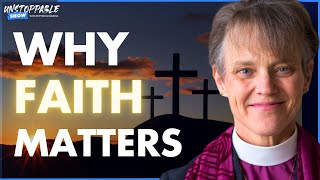
Bishop Marian Budde talks about her conversion as a teenager, 25 years as a parish priest, and what she learned about courage. She's releasing a book called How We Learn to Be Brave in May.
Questions this video answers
May 5, 2023.
25 years.
About 12 years ago.
How We Learn to Be Brave.
In May (released in May).
Chapters
Part of the path of faith and part of the path of just being human is to find your way in this life and find a way to some kind of greater contribution or purpose or calling and that, you know, I am grateful for a worldview and a savior that gives us a framework and a way of living.
Hey, guys, you're in for a special treat on learning more about what it means to be brave and how to incorporate that, especially with the, with the lane of faith with Bishop Marianne. Buddy, hope you enjoy it. You know, you don't meet. You don't meet too many folks that have, well, climbed the climb, the journey that you did in faith. I mean, becoming one of the first female bishops, if I'm not mistaken, and, like, in history and which, which is pretty amazing. So tell me a little bit about, about your faith journey, because I, I just think it's. I always love hearing more about faith journeys.
Right. Well, first of all, thank you and thanks for allowing me to come on and talk about something so dear to both of our hearts, which is our walk with Jesus. I, I grew up raised in a, in a broken home in the sense that my parents divorced when I was quite young, when I was an infant mother, a Swedish immigrant had came over from this, from her homeland. My dad was an adopted son into a family that I think always felt like a foreign place for him. He never really felt like he belonged. So he kind of ran from most things, most of his life. But a good man, a loving man in his own way. But I, so I, I, There was a lot of, There was a lot of survival in my family, and faith was not.
Faith was.
I had to navigate it on my own for a big chunk of time. My mom took us to church, and there was a church in my childhood, and I have vague memories of it. Then I went to go live with my dad, and my dad was pretty angry at the church and didn't seem to speak about God in any way. That made God a personal presence. So I wound up as a teenager falling in with some friends who invited me to church. That church was a confessing church and a church that invited people to altar calls to accept Christ. And, and so as a teenager, I, I had no idea what following Jesus or inviting Jesus, the language in that day was inviting him into your heart, you know, But I, I thought, wow, Jesus would like to come into my heart and that I just, I was like, yeah, come on in. I, My heart was a pretty lonely place, and there's a lot of, a lot about that experience I didn't understand, nor did I think I felt things that I or those around me were hoping I felt. But I did know something shifted and I was in. You know, I was. I was in. And, and I stayed active in high school through groups like Young Life and another touring church choir, did all of that and, and would have. I'm not quite sure how my faith journey would have evolved, Stephen, if I stayed with. In. In that I was living with my dad in Colorado and cut me off, by the way, if I go on forever here.
This is, this is an important part because at my, my father's family, father's household, which was never great, was never always rocky, totally fell apart when I was a junior in high school and I had, I had some significant crises to deal with and decisions to make and I, I realized that I. There was no place for me in Colorado. My dad, I didn't know what alcoholism was, I didn't know what clinical depression was, but it was everywhere. And looking back, my stepmother and I didn't have a great relationship and I knew that I had to go back and live with my mom and. But everything in my world, my church, my high school, the religious leaders of my life were the authorities in my life, were encouraging me to stay in Colorado because they were. They were really concerned that I was going to. The language then was like backslide into, you know, fall away. And they didn't let. My mother was attending an Episcopal church and, and they didn't have any confidence that that was a real. An auth. Jesus following church and that they didn't trust that. And I didn't argue with them. I had no, no need to try to prove anything. But I also had this sense in my heart that whatever it was that they were afraid of in my mom and that church, I wasn't afraid of. And I didn't see the world, I didn't see Jesus in, In such. Such a confined path. Like this is the path we were on. No one else was on it that in couldn't reconcile. And so. And again, I didn't argue it. I just, I just, I also knew that whatever being saved meant that it wasn't. It wasn't a one and done thing. Like I was still needing salvation. And I didn't know how to talk about that because I was among the saved. And so there were some crises in my, in my head and in my family life and they all collided. So at 17 and a half, I moved back to New Jersey and went to my mom's church, which was An Episcopal Church. And the minister there and the community there helped me heal and also helped me find a faith that was generous enough to allow God to be God in the world, to allow Jesus to be present in ways that didn't conform to one set of expectations and set me on a path that I, you know, in some ways, I'm pretty much just straight and narrow. I didn't stray far from the journey of vocation. And on another level, I bounced all over the place. I attended just about every denomination you could think of and. And kept on coming back to the Episcopal Church. Sort of like I always say, it's like middle C on the piano. I just felt like that was my home and my base and my lane and even. And with all its craziness and certainly its weakness, it just feels like, okay, this is where I'm meant to be. And parish priest for 25 years. And then, as you said, elected to this post about 12 years ago, which.
I got a couple things I want to share with you. So, first of all, I always enjoy preparing to have my guest on. And I'm always very interested in their journey. I'm always interested in kind of what has shaped them, because what has shaped them normally comes out of them when we talk. Right. You know, different principles and things that are kind of in there. And one of the. There are. There are three main qualities that when I watch you speak, teach, preach, that I've seen in your sermons online is humility. Christ. Christ is incredibly humble, empathetic. So Christ very empathetic to the body, as well as boldness. There's boldness in. In the words that you've shared. And, and I was as. I was. One of the reasons I wanted to ask that kind of about your journey ahead of time is because a lot of times I find that those things kind of illustrate themselves through our JO journey. So, for example, right, I had. My father was an alcoholic as well and struggled a lot, bounced around a little bit. I was probably in some cases, like my father, my dad was really angry with God.
Because his. His father was a deacon at a church and his father wasn't, you know, had been, I guess, had been sober for a number of years, like a decade or more. And then on a deacon's trip, they go out to go fishing somewhere, and he ends up having a drink with all the other deacons that had already also had claimed sobriety and some other things. He comes back, stands up in front of the church and says, I messed up. The other deacons are completely quiet. And for my dad, who was a young man, that told him something about God, in theory, that he, it took him three decades to reconcile, which I thought was pretty profound. And then in my life, a lot of the suffering that I went to early on, I used to believe, well, if God was real, then I wouldn't be going through all this, that or the other thing. And I say all that to say in both of those cases. One of the things that I see people as a whole struggle with is judging God based on the outcomes of man, not realizing man is the man is the struggle point. Like mankind is the struggle point, not the God who created us, the God that loves us, the God that actually has the best intentions for us. It also taught me to, it took me a while to also understand that God allows certain things to happen, to crush us and put us in a specific place to do the things that you and I are both doing now. Right. We wouldn't be where we are today without many of those trials, tribulations and whatnot.
That's true. That's true. Yeah. Yeah. I have, you know, it's interesting. I have often lost faith in Christianity and I've lost faith in other Christians, and I've certainly lost faith in myself. But for some reason, I've never wavered in my faith in Jesus. Now my understanding of Jesus has really changed and evolved and grown and certainly my capacity, of course, my very limited, limited capacity to understand God. Right. I mean, like, how humbling. I mean, like even just to say.
Day one of being a disciple versus day 25.
Right, right. Well, or just, you know, I think it was Martin Luther who said, you know, you just don't get too chummy with the Almighty. And I think what he meant by with that is just remember there's, what God may choose to reveal to us about his being is. And then what we, of that revelation, what we can even perceive. Right. So just recognition that, you know, we can be wrong. But there is something. And I, you know, I have my doubts. Like, I mean, not, I'm not immune to doubt, but it is an interesting difference, I think. So you were describing being angry at God. And I just have spent most of my life stunned at all the times when the message from God was, I'm not angry at you because I would, I would have if I were God, I'd be mad at Marianne. Right. You know, I mean, like that. And so.
So that to me is a gift that I've been given. I don't take credit for it, but I, I, I Hang on to it, you know, and, and then try my best to. As you said, I mean, the combination of humility and courage.
Is, I think the, the, the common denominator to make to live a fruitful life is self awareness. So that you are constantly asking yourself.
Is this in service to what am I being. Is. Is to what is my humility or my courage in service of? Right. Because there is such a thing as false humility and there is something as, as hubris, right. Or as, you know, self promoting courage.
And everything in moderation.
Well, that's very Anglican.
That's very episode.
I said it like that, you know, if we are nothing, if we're not the middle way.
So yeah, the other thing I was thinking of too is like I, I think there's no, there's no shortage of people who are saying that people are leaving churches in different denominations of all kinds. And the one thing that I agree with you on, that I heard you say earlier, is like in your search of, you know, going to, you know, different denominations and things of that nature, one of the things that I've seen recently is I found presence in Christ in every denominations. I've also found.
The presence of.
Man, mankind in every like. In other words, Jesus is wherever you allow him to be. He said, come to me who are weak and weary and heavy laden. I will give you rest. Right? And I think a lot of times we get confused about who Jesus is and who God is as it relates to our lives. And as a result that tends to bring up self righteousness in some that then ends up, that ends up harming others, preventing them from coming to Jesus. And Jesus said, suffer me, the little children, do not keep them from me.
Well, yeah, and we, I mean, we are so predictably human, right? There is just. And one of my professors in seminary said, which I thought was just fascinating as we were kind of marching through the centuries of church history and all of its scandal and, and glory. And he said, you know, all centuries are equidistant to God. And I think what he meant was, you know, there's just, even looking back, you could say, you know.
Just pick your century and the things that were going on in those years and where Christians, you know, at least in the Western world, kind of where they fell out on all that and, and even maybe to look at across the spectrum and say, you know, there may be more, certainly there are people who are more effective and more fruitful and more fill in the blank, but I don't think any of us have a corner on sin. And I don't think any of us have.
A corner on grace.
Or at least God's capacity to.
To work through or to shine or to be present in an earthen vessel, as Paul would say. So, yeah, yeah, it's, it's one of the things that I get criticized a lot for, actually, because I do, I, I, I work really hard to learn from people who don't, who are different from my, from, from me and, and who have strengths where I am weak and that sometime.
At cross purposes with people who are. Because we're kind of, we're, we're kind of lined up in pretty, pretty clear camps these days and, and, and, and sometimes for good reason. So I'm not, I'm not discounting the, the genuine disagreements, but I, I just feel like if I, if I don't lean into where others are finding truth, I'm missing something really important.
Well, and I think that's an important thing because again.
Before any, before there were any denominations, there was only Jesus. Right, Right. To, to be a Christian then was to simply be a disciple, you know, sheep here, his voice and, and do as he says. And, you know.
Well, although, keep in mind, you know, some were Jews and some were non Jews. And so they were working out all those, you know, if you go to the.
That's very true too.
They were working out all those differences and too. So, I mean, it didn't take long. Right. But, but I hear you, I hear what you're saying, and, and again, I'm not, You know, this is part of the path of, of faith and part of the path of just being human is to find your way in this life and find a way to.
Some kind of greater.
Contribution or purpose or calling.
Yeah.
And, and that, you know, I am grateful for a world view and a, and a, and a savior that gives us a, a framework, you know, and a way of living.
Yeah. So, yeah, no, I love it. And then I see Jesus all over you, so it's clear that you walk with Him. It's, there's a certain radiance that comes off of people that walk with him, like truly walk with them and search him, and search his heart and search his love. You said something interesting that I thought was pretty powerful, and it actually brought me back to my own journey. Before we hop on air, you know, I mentioned that, you know, I had a spiritual encounter of sorts that was my, my direct catalyst from being, for spending almost five years as a devout atheist again, because I was angry at God and I was like, well, I don't. You know, there's monkeys and there's dinosaurs and all this other stuff. And long story short is in that you made a comment. Even though I was angry, and I'm using myself as the example, even though I was angry with God, God was not angry with me. And I think that's more profound than we. Than we might realize. Because when I had my. My spiritual encounter, there's a section in the Bible where Jacob is at war, fighting and wrestling with an angel. Or some say God or some say the Holy Spirit, right? Depending on which. Which right transcript you're reading. I had that experience. It was this whole scenario of like, if you're so real, why don't you prove it? There's a whole long story above. Above that. And it was my emotion, my. My spiritual soul, my emotional being and my mental acuity were all fighting this divine entity that I was saying that I didn't believe in all at the same time. And it was funny. It was like watching a Rocky movie. It was like. Like I'm like throwing all these. These punches and these jabs and this whatever, right? This, this being, this. This essence, this love, this grace, this mercy they all encapsulated all at one time was like, all right, come on, keep it. Keep it coming. Let's get that out of you. Come on, let's get it going. Just throw another punch. Throw another kick. Just. Just keep coming. All right, all right, you're almost there. Keep going. You're almost there. Keep going. You're almost there. All right, come on. All right, all right. You good? I love you. You know what I'm saying? Then it. It wrecked me. I. I was telling a friend I had this moment where I was kind of. In that moment. I was. My knees, my legs were taken out from when. I mean, I was basically pinned to the floor. And when I finally got to the moment when I finally said, I surrender, I surrender all, it was like someone took a hot vat of oil and poured it on the top of my head. That covered from the top of my head all the way to my toes. And I don't know if I was sitting there 5 minutes, 10 minutes, 15 minutes, 20 minutes. But in the time since then when there's been a conversation, is Jesus real? Is God real? I'm like, you don't have an experience like I had and think anything but he's real. Not to mention all the divine encounters along the way that have kept me out of harm's way. Even when I put myself in Harm's way. Like, there's this, There's a relationship that I've. That I don't know that people fully understand, which is where I want to kind of bring up the topic of bravery, because I feel like the first level of bravery is being brave enough to realize there's a God and talk to a God kind of thing or kind of like at least get it engaged. There's so many people that are wounded and hurting for a variety of different reasons. And to your point, they don't know that God doesn't change. Jesus loves, right? Jesus loves. He loves you, he accepts you, he wants to work with you, and whatever your stick is, whatever your thing is, and he wants to produce, you know, good fruit out of you.
Right?
Talk to me about bravery and the importance of bravery and how we really find it, because I don't, I don't know that we've ever fully understood really what it means to be brave.
Right. Well, first of all, thank you for sharing that experience. And I.
So what I, the, the book that you mentioned that I worked on was, was really a reflection on how we learn to be brave, right? That it is a learning process. And it, and it has, it shows up in an, in a lot of different ways in life. But the thing that I, I want to pick up on, Esther or mentioned is when we, when we're facing into a moment of, in what you describe as encounter of mystery or of fear.
Or both, of possibility of.
And. Or grief, it could be anything. But when we open ourselves to that moment and it summons, because I think it's summon. I think there's something in my spiritual life. What I often feel is that there's something that is summoning me either to do something or not to do something. Like, stay put. No, seriously, like, there's like just stay where you are kind of a thing. I, I can't remember the preacher who said, if it's not Jesus calling you out on the water, better stay and best to stay in the boat. You know, and so there are times when you, times when needs causes on the water, you just stay in your boat. But the idea of, like, in that moment.
Taking the step, right, physically or, or emotionally and, and saying yes to it. And, and I think Eleanor, it was Eleanor Roosevelt who said, you know, it's doing the thing that you are, you are just sure that you cannot do, right? Doing the very thing that you think you cannot do. And it's not because. And on some level, we're right, we can't do it. You Know, Peter couldn't walk on water. There are things that we cannot do until we step out and we're grace or the capacity to do it or to fail at it, and then given the encouragement to try again. Right. So there's this continual stepping out into thin air or, or water. Whatever your metaphor that is of God as a person of faith. It is. You can, you can describe this experience without using faith language. And I'm fine with that because it doesn't take it away from me. You don't need to use faith language. I don't. I, I do because it helps me go deeper with it, helps me to trust it even more. But it's real no matter what you call it. And it is, and it is that. And when you do that, when you have a moment like that or you have an experience like the one you described, it does mark you, it does change you. And then the question becomes, and maybe this is the second part of your story, or third, how do you live afterwards? As if that really did happen. Right?
Yeah.
Because there's all kinds of plausible deniability. Right. Well, I was really tired. I, you know, maybe it wasn't as powerful as I thought or bad tacos. Maybe I was just, you know, I mean. Right, right, right, right. So there is. Maybe your brain doesn't go there. My brain goes there was that, you know, I have a sense. So just that sense of, okay, I'm now going to live as if that moment were true and I'm going to reorient my life as if God can be trusted.
Right? Yeah.
And that requires courage. That requires, for me, I don't know about other people, but for me that requires daily courage and to be honest, daily reminders or regular reminders.
Yeah. It also seems like it also requires a greater perspective because one of the things that at least early days, you know, you go in, you go into an experience like that with one mindset, you come out changed. I was very different, like personality wise, like immediately different. But the on the other side of that coin is when given the opportunity to re engage with things that I knew were harming me, I still have a choice in that moment. To your point, operating as if it were true. If it were true, then I'm not going to engage with the very thing that was hurting me because I, you know, I realized a long time ago that I feel like.
God doesn't hate sin in us. He hates sin because it hurts us. Like every sin that I can think of in the long run ends up harming other People. Yeah. Or a combination of both in many respects. And I feel like, that's why, you know, God hates. You know, I'd say I use the word. I know the word hate is pretty strong, but use the word hates like he does. It's not, it's not his first, his first choice for us kind of thing. But I also love the fact that he accepts us where we're at to help us get ultimately where we're going. Like to that early part about, you know, God being angry with us or God, you know, not wanting to forget. I think God is always ready to engage with us at whatever level. Willing to engage with Him, I guess is the best way to say it.
That's certainly been my experience. And also to work with whatever raw materials.
The raw materials of our lives. Right. Which include, and in my experience include to my amazement my, my.
My weaknesses. Right. Or, and, and my failures. So that, not, not that, not to spare. Like, I don't, I, I don't, I mean the consequences are real and, and, and, and sometimes other people bear the brunt of them. So I'm not making light of them. But I, I, if the resurrection means anything, it does mean that, that out of the worst we can do, God is still capable of.
Bringing life. And, and I am so grateful because it's. Otherwise, it's a really hard way to live. As if it all depends on you.
So, so yeah, yeah, I've always believed that outside of your consequences is a byproduct of a choice or that becomes a result. But it doesn't, it doesn't change the redemptive work. It doesn't change the power, the power the, that I could have at any point in time said I'm gonna be this poverty stricken guy, this homeless guy or whatever, any point in time or I could choose to believe that, hey, that's one chapter of a larger book of my life and I'm. Let's, let's move on to the next chapter. What did I learn from the first chapter? How can I apply it to the second chapter and then just keep doing that over and over again? To live a life well lived in the service of others that ultimately by the time I leave this earth, I told somebody my greatest joy would be to create a legacy that outlives me. And I realized that that's not necessarily going to be done with.
It might be done with some books, it might be done with some resources, but I think it's going to be done more importantly with the people that I've empowered or left behind. Just as Jesus changed me from the inside out kind of thing. So I think that that of the core, a lot of ways is, is a, is a tangent or piece of being brave. I'm curious to know, how do you see someone becoming brave who maybe is not operating in courage, not operating in that, in that zone, so to speak. Maybe they're more focused on the limitations rather than taking that step out of the boat.
Well.
Most of my experience and most of the people that I admire who learn to be brave fall into that latter category. So it is a, it's as much a revelation to, to them or to me as it is to anyone else. Like, oh my gosh, it is, but it's, there's no magic to it. It's. It in many times. It's a. You had your, your experience was one of kind of a Road to Damascus. Dramatic.
It was definitely. I was knocked off my ass, that was for sure. Yeah.
So. But you know, and so that, and that's really powerful. You know, for a lot of people that just doesn't ever happen. It's a much slower.
Incremental and painstaking process. And so it's constant fits and starts and relapses and, and there's also generational implications for all of that. So I, so I find it equally encouraging to. So, so finding, like for example, finding courage in accepting the things that you would never choose to be true about you or about this world and, and maybe even spending the rest of your life trying to change them. But first by starting by accepting them. Right. Accepting them for what they are.
Yeah.
Or dealing with the inevitable letdowns that happen in life and disappointments and failures and looking at them square in the eye and not, not sugarcoating them and not, not leapfrogging over to the redemptive side. But like walking with Jesus through the days leading up to his death, it's just lingering there long enough for each piece to teach you something. Right. So you don't.
So.
And also that keeps you from being arrogant with people who are going through something that you're not going through. Right. Because so you're just allowing them to have their experience. So I find that I, I am. I'm constantly surprised in a, in a grateful way for what we can. What can emerge from the human spirit through God given capacities, natural resilience and perseverance and then the workings of grace. Yeah. Just. We can all learn that. And I also think we can be tempted to think that the only moments that count are the really Big and dramatic ones, when actually it can be equally courageous to just step into your day. Equally courageous to. To take the time.
Not to blow up. Right. Not to. Not to say the thing, you know, all the things to. To love someone even when you aren't feeling very loving. Right?
Yeah.
To choose to stay somewhere, even where you'. All of those things, like each of those moments can lead to courage and make a difference, like you were saying, in a person's life. And have you had this experience, I'm sure you have, where people tell you something that you really did for them and you don't even remember doing it or saying it. Right. Many times, remember, you know, because it's. In part, it wasn't. You weren't, like, you weren't on the. On the cosmic stage of your life at that moment. You were just being Steven, you know, and you're going about in your life and it happened to have that kind of impact on another person.
Well, the man that changed my life, that gave me my. My audience has heard me talk about him. We refer to him as Old Man Myrick, but he has no idea he passed away in 2003. He never got to see me build the business to the size it is. He never got to see me travel and speak or create live events or create curriculums or whatever. And, you know, all he wanted was for Stephen to have as much opportunity and possibility as possible. That's all he wanted. He didn't ask me for anything in return. And someone asked me recently on a show I was invited on, you know, what do you think your legacy is going to be? I said, in short, be as be Steve Meyer to as many people as I possibly can. Like, that's, you know, I didn't. I don't. You know, Jesus didn't ask us to do anything for him outside of just trust him, Right?
He did.
He did all the heavy lifts, and he's the one that was encouraging. Blessed are those, you know, the Beatitudes, Sermon on the Mount.
Coming to, you know, being the illustration of how to show grace in a moment when you're not supposed to or the world says, don't show grace. Right. Even when I had my spiritual encounter, like, I was changed as the human. Like, I was changed, but I was still very immature. Like, I still had to mature over time. I didn't, you know, come out of that moment like, okay, I know everything about anything about everything. It was more like, yeah, okay, like, you finally made this decision. This is the first step after leaving the road that this Is this is Paul sitting there trying to get the shackles off his eyeballs. Right. And knowing that even, even when you watch Paul throughout the Scriptures, you see Paul continue his maturity, his conversion, if you will, all the way. And I feel like that that is life. I feel like that, that that is bringing heaven to earth. In many respects, heaven comes to earth through our ability to connect, refine and model Jesus in my perspective.
Perspective.
Amen. Yeah.
See we have a good time.
Lovely.
Well, help me understand, like, let's say.
Maybe they're in that circumstance where, you know, their life doesn't really feel put together, which is most of humanity.
They've got questions on faith, they're open minded to faith. Maybe they've had some church hurt along the way, or maybe they grew up like we did with difficult parents, parentals, you know, kind of given some bad illustrations of what parenting should be or how do we encourage them to just take that first step out of the boat in the proverbial towards faith.
It's a really great question and I don't know that there is. If there were be one answer, it would be, it would start in love, right. It would start in a genuine.
Love or the other human being and curiosity about where, where God is already present in their lives. Right. And to be a source of encouragement. And you know, the people like the, the man you mentioned, the people who I want to, you know, I want to be especially as I get older, I want to be the kind of person that people were for me, that I just could relax in their presence and I didn't feel judged and I felt, I felt, I felt not only I felt prized, like they, you know, even. And they saw things in me. Isn't that. Yeah. Just like really prized? And, and so I think it starts there.
I've been walking with a few people in my life just asking that very question. How might I encourage them to lean toward, to consciously walk toward Christ? And, and so what, what, what that's done for me is it's just given me the opportunity to pray for, you know, Lord, just give me, if there's ever anything I can do, just let me know there's anything I could say, just let me know. And, and so sometimes it's as, it's as conscious as describing, you know, an incident of faith in my life or just listening to their story and then trying to lift up the, the spiritual truth of it in that moment. Right.
And using the metaphors of scripture, wilderness, stepping out on the water, you know, some of those just because it Helps a person say, yeah, that's exactly what it feels like. It feels like I felt like I was wrestling with somebo all night long. Right. Or it sounds like you've been wrestling with something for a really long time. Right. And one thing you know about wrestling with big truths is that you don't come out of it unmarked.
Yeah.
You know, Jacob had a wound for the rest of his life. You know, there are, there are things about those experiences that are universal, even if people don't have the language to describe it. Right. And so just to. So what I think it does is it allows their story to come up alongside the stories that point us toward Jesus or to the presence of God. God, and, and sometimes, you know, and sometimes I just say to God, and if, if they don't, if it never happens for them, Lord, that, that let that be okay for me. And let me be the one to just carry that for them. Right. Let me be the one to carry it for them and, and help me to light. So I'm not sure why I'm answering your question, but that's. No, of course I, I feel like that's part of my, my curiosity now, especially with the people coming up behind me, like, what. And what of our repository of faith traditions? And I asked this as a leader of a mainline tradition. Right. So we have a lot of traditions that aren't crossing over well into this current reality. All they're being, or they're being used in a really creative way by sort of this open source world. Well, they'll just sort of take something out of our context and put it over here. And it works really great. And I'm like, I'm fine with that. So Lord, help me in this tradition that I've been called to serve and uphold and to make available what's. What's useful and what's not.
Yeah.
And help me lean into what's useful. And maybe the things that aren't useful to me or to our generation might be useful later on. I have no idea. I'm not necessarily going to jettison them all, but, you know, let's. So that's kind of how I do that, you know?
Yeah.
How do you do it? Like, how do you help people?
I think in, in the roundabout way. Like, like similar in that I've never used the word prized before, but yeah, I really like that word. Like to make someone feel prized. And when I'm in those moments where I've worked one on one with somebody and maybe they've shared their story or maybe they're so used to being judged by their story that I'm like, you're good here. Like, I know what I. All this dumb stuff that I have done, and I refuse to judge you based on whatever dumb stuff you have done because it's a journey and we're all going to learn from it. But I've. My epiphany that I think I've come up with since we've been chatting. In order to make someone feel prized, we must be present.
Yes.
Right. So that. That presentness what you described is I'm intentionally present in the moment. And then when we're intentionally present in the moment, it seems to be. That's when revelation comes. Comes, like whatever revelation that heart. The heart on the other side of the table needs. That seems to be when it shows up, is in. Is in that moment. But if we're so busy, hey, you know, I heard there's a thought leader, Jenna Kutcher, I love to death. She had put out a social post recently about, hey, when somebody says, how are you doing? Do you just tell them, hey, I'm good. Or do you stop and go, no, how are you really doing? Right. Just that one extra lever sometimes that can open a heart. The other thing that I. That I've utilized, and it's a. It's something that has I've said for a while now, is questions, open hearts and statements, close them. And so anytime I'm talking at someone, I can anticipate that God is not reaching them. Anytime I'm inquiring of someone, I can assume that God is reaching. And I told. I took that specifically from Jesus with the woman at the well. Specifically him sitting with her, asking her all kinds of questions that he already had answers to that he already knew about. And he did that out of one thing. He wanted her to know that she was prized in that moment. I'm going to use that word, prized. This is the greatest outcast on the planet. That is in scriptures that we know of, in that moment, in that specific area, he's in a place he's not supposed to be, talking to someone he's not supposed to talk to. And yet that's exactly where he's at. So when you. When someone says Jesus is not for so and so, I'm like, the heck he's not for so and so. He illustrated the fact he's for everybody that will receive him like a thousand percent over and over and over again. You know, so questions, open hearts and statements, close them. And I think if you combine that with being present in the moment, I think pretty powerful things can happen.
Really, really powerful. There's a great book, by the way, called Jesus is the Question. And it's a study of all the questions that Jesus asks in his ministry.
Really?
And the number is, like, in the four hundreds. Right. Like he is. And he almost always answered a question with a question, and he was good about that, you know, and so he was just constantly asking questions. And then there's one chapter where he talked with the. Where the, where the, the author focuses on, well, what. What are the questions that he did answer? You know, like what. You know, like, there's some interesting things.
But.
But I just love that, you know, that. That idea of questions, because questions are really.
Based in curiosity or of openness to help another person enter more deeply into their reality.
Yeah.
As opposed to being, you know.
I don't want to say bombarded, but confront. I don't know, whatever the word is. But we're sort of imposing ours on them.
Yeah. I was just thinking, too. Even one time, even. There's one time I remember Jesus making a statement, but it was technically in the frame of a question because when he said the statement, it caused the other brain to have a question. He who is without sin cast the first stone. All of a sudden that person's like, let's see, what have I done? Kind of thing.
Right, right. You know, who's going to go first? Right. Yeah, that's very true. Yeah.
Yeah, he is so. Jesus is so unique. I don't know how people. I don't know how anyone cannot at least have an interest in wanting, you know, more about Him. I got in human history. I don't know anybody like him.
Yeah.
I'm with you there, probably because the caricatures of him and the misrepresentations of him are pretty terrible. So, you know, it's. So it's. I think we have a lot. We have a lot to answer for as Christians about that. So that's sort of the humility part too.
But, yeah, absolutely. Well, I've absolutely loved chitting, chit chatting, chatting with you, Bishop Mary.
This has been.
This has been super fun. How can everybody learn more about you and also about the book and then. Yeah, stay engaged.
Well. Well, thank you. Yeah, you can. I'm not a huge. I have a, you know, Marianne Buddy on. On most social platforms and. And also the book will be released on. In May. How We Learn to Be Brave. And it's. You can order it now. But I. I'm just grateful to have an opportunity to talk with a another pilgrim on the road. And I wish you every blessing in. In your work and ministry. And thank you for giving me the opportunity to. To talk with you.
Likewise. It was. Pleasure's all mine. We had a blast. So. All right, then. Will you take care and we'll chat with you soon. Take care.
Okay, bye. Bye. Now.
I hope you liked that video. And if you did, make sure you check out this next video right here.
We've got more experts, more knowledge, more voices, more research, more tools, more technology than ever before in the health and wellness space. Yet we are sicker from a mental, physical, spiritual, emotional side than ever before. We are seeing an average age of death decline in both males and females for the first time.
More from Stephen







Paralyzed. Suicidal. Then He Surrendered, And EVERYTHING Shifted | Marcus Aurelius Anderson


Why You Snap At People You Love, The ALIGN Method, & Why ADHD Isn't A Disorder | Sara Hartley

