From Homeless to 9-Figure Success: Secrets to Building a Thriving Business | Stephen Scoggins
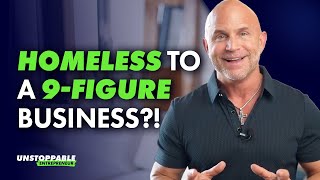
Stephen Scoggins narrates his journey from homelessness to building a high‑value business empire and distills practical, experience‑driven principles for entrepreneurs. Key takeaways: accept small beginnings and build momentum; grow "as fast as cash allows" to avoid debt; hire for cultural/role fit rather than to merely fill seats (hire slow, fire fast, mentor often); plan with a long‑game strategy (5–15 year vision); prioritize fundamentals and repeatable processes; convert desperation into sustained determination; study yourself, the marketplace, and customers; and learn quickly from failures. He closes by promoting an "Eight Figure Mindset Makeover" video series.
Questions this video answers
Winter 1998 (first full year of business in 1999).
Almost $2 million.
Chapters
You know, businesses get started every single day, but most of them are going to fail in the first five years. Here's what I did differently to turn my business into a massive success before I exited. Here's a vital question you need to understand. What does it take to start a thriving and profitable business? Well, I want to give you some insight into how I went from literally the homelessness, starting my first business in a trash piles, to building a upwards almost nine figure organization with that one business, not including these six other businesses I owned. When you look at the holistic approach, one of the things you're going to see is you're going to see a desire to create a relentless effort forward and more importantly, the willingness to learn along the way. These key fundamentals and principles I want to share with you today are, well, they become literally tools in my tool belt to use the proverbial message. Since my first business was a large construction company. So here's how I went ahead and built that large company. I think the first thing you've got to understand is you need to understand you cannot despise small beginnings. One of my biggest triggers and tendencies early in business was trying to keep up with my competitors. The reality is that sometimes your competitors are further ahead because they started a little bit earlier. The cool thing you could do instead is you can actually take the time to learn from them, see what they do really well, see what you do better, and actually create your own value proposition. But if you're spending so much time trying to compete with them on the surface, you're probably going to spend a lot more money trying to market yourself in equipment and tools and trades and all this kind of stuff. This ultimately going to prevent you from actually exercising your unique ability in the marketplace. So instead of trying to fight uphill and try to be something you're not, why not be authentic to your core and simply despise not small beginnings? Know that your business is going to grow in time, with consistency, with diligence, with focus. If you do the right thing at the right time, in the right way, you are going to win. Nothing can stop you. What can stop you is this comparison syndrome or this imposter syndrome. You don't want to have either comparison or imposterism actually prevent you from actually maintaining a level of success because you feel insecure, inadequate based on your competitors overall success. Instead what you want to do is you want to build your own momentum, step by step, brick by brick, piece by piece, and not focus on what they're doing in the Marketplace outside of learning lessons like focus on what you could be doing better to grow and scale your business. The second thing I want you to focus on is learn how to build your business as fast as cash allows. This is a phrase that I hear used more and more, thank God, because less people are borrowing money to start their businesses. Because they realize that when you borrow money, there's interest, there's investors, there's all these different people that have more control over your business than you do. I built all of my companies to date based on cash. Meaning as I earned money, I took every bit of extra dollar that I didn't need for my maximum living wage for myself. I dumped it into an account and I squirreled that money away over time and over time and over time. And then every time I needed a new tool, a computer, a process, a person, every single time, I just went over my little mini bank account and pulled out some money and then bought the thing. In other words, I had became my own bank, which means I also avoided paying interest on things. Now it's a slower process for most folks. It has less immediate gratification. Bouldermore has more consistent gratification long term. Because when you get 5, 6, 7, 8, 10 years down the road, you're gonna have a stash of cash sitting there ready to be used, ready to utilize for your business. More importantly, you're not going to have to owe that money to anybody else. That money is yours to reinvest in your business accordingly. And as a result, you are more stable and you're more focused and you're going to be more successful as a result of that. Step number three in building an organization from really nothing to a. Well, let's just say a sizable organization is hire for fit, not to fill a void. One of the biggest mistakes I made in building my businesses ahead of time is every time I needed to hire, somebody would just go hire the person that said they were looking for a job. I didn't determine what the role they needed to play. I didn't think through the responsibilities they may have. I didn't think about the metrics I needed to measure up to. I didn't think about anything other than trying to get that person in a seat to fill a void. And Neville, what happened is that person that I brought in on more times than not came in and actually made a worse mess than had I not even hired them to begin with. Which is why I'm telling you right now, it may be quick to hire somebody on the fly, but it's Going to cost you money, it's going to cost you time, it's going to cost you frustration, it's going to cost you joy and fulfillment. It's going to cost you so much more because you rushed into it. Instead, use my methodology that I've been using and teaching here for a while. I want you to hire slow, fire, fast and mentor often. That theology works time and time and time again when it comes to building valuable teams that ultimately create a winning team to conquer the world, if you will. Right. You're going to take the time to understand the role, the responsibility, what this personality style needs to be right. How are they going to integrate with a team? Your key performance indicators, what do you need them to measure up to? How are you going to measure their success? How are you going to lead them? Can they take leadership from you? Can they teach you about your own leadership? That is a portion of hiring slow. You want to see that role and that position from as many different angles as you possibly can before you pull the trigger on the hire. Because if you don't know what you're hiring for, you are by definition going to hire wrong. Think about that. I don't know what I'm hiring for. I'm just hiring. And you're going to cause yourself all kinds of problems and issues. So make sure you're hiring for fit. Not to fill a void or fill a seat or fill an emptiness in your heart, so to speak. Hire for the right thing at the right time, in the right way and it will always pay off. All right, here's the next principle. Let the long game determine your overall strategy. So many times we as entrepreneurs, we want to get so far so fast that we will try to shortcut the process any way we possibly can. When we do that, we cause ourselves problems because we are not taking the time to plan accordingly. A lot of times when I go to hire staff, choose a process or system, an erp, a sales solution, a CRM. Anytime I go to choose any of these different items, I try to slow things down to figure out what the actual fit is I need for the platform. The reason I do that is because I want to let my long term strategy be developed on my right infrastructure, right team and right leadership skills. That long term strategy has to be laid out in advance. So all of my systems, my processes and my teams are all geared towards the five year vision, the 10 year vision, the 15 year vision. And the only way you can do that is if you focus on the long game. What do you want your company to be when it grows up? What do you want? What do you want to be as an entrepreneur when you grow up? What do you admire? What do you respect? What do you trust? What do you want to invest in? You see, these are types of things that most entrepreneurs do not ask themselves. I'm telling you, I've made so many mistakes by not asking myself these questions in advance that it ultimately causes me problems and waste a lot of time, a lot of energy and a lot of money. And you can save yourself all of that. You can actually build a fulfilling company that's joyful, that actually brings profitability and feed you as a leader and then feed your family and feeds the community, feed your team. But only if you'll take the time to plan for the long game. Don't be in a rush, do not be impatient. Take your time, Think through things. Now, for you guys who are analysis paralysis. I'm not telling you not to take action. Let's be very clear. Instead, what I'm saying is, is before you make a decision, have a predetermined time frame. You're going to allow yourself to do all the research you want, get all the information you want, get all the consulting you want, and then make the freaking decision. Okay, so maybe I want to plan to launch a new CRM, a customer management system to kind of track my sales, my info and outgo of leads. Maybe that's what I'm going to do. Okay, great. I'm going to spend two solid weeks talking anybody and everybody, reviewing platforms, looking at tools, looking at tips, looking at strategies, looking, talking to mentors. I'm going to look at all of that holistically. I'm going to gather all that data to the best of my ability. I'm going to filter that data into my most important priorities. I'm going to take that priority list and I'm going to look at the platform that meets my priority needs. That's an example of playing the long game and not being impatient, but also not getting lost in analysis paralysis. Alright, next up on our list is this. Avoid borrowing money for as long as possible or not at all. Yes, I just said it. I know that it scares the crap out of you. You think you need to have 10,000 from over here and 5,000 from over here and 100,000 from over here. I'm telling you right now. When I built Che Custom Home Exteriors Incorporated, largely based in Rodney North Konit, I started the company in the winter of 1998, had my first full year of business. In 1999, I was largely a one man operation who was desperately trying to build something that would feed me. Now, my business journey was probably different than yours. My business journey was based on necessity. I didn't have a choice. Like I either needed to work and grind and hustle or I wasn't going to eat and have shelter. Now, I don't recommend that approach for everybody. Obviously, for obvious reasons, I do recommend the same strategy. I wasn't in the position to borrow money, which turned out to be a blessing. My credit was shot, right? I owed money to all kinds of things due to a prior relationship as other things that got me in trouble, right? Digging out of that hole took time. But the fact that I couldn't borrow money forced me to be resourceful. For example, I built all of my equipment that I would need to start my company the following Monday from the trash piles of construction site with my father. And I had to spend my first $178 check that I had had in probably, I don't know, probably three weeks. I hadn't had actually any reasonable pay. I invested all of that into my dream and all of that into the initiative. And I did it based on cash, I did it based on hustle, I did it based on resourcefulness. So rather than trying to think of different ways to get money in your pocket to start your business, why don't you look at what's around you to figure out how you can start your business right? It doesn't have to be a trash pile per se, like mine. But I'm sure if you really put your mind to it and you think super creatively, you can create an initiative that you can take action on right now to raise, either raise money for your initiative or to do with what you've got now to just get started. So much of building a business is all about getting started and getting started. Well, one of the things I like to tell entrepreneurs do all the time is if you want to start a business and you need to raise capital, because I don't believe in borrowing money. I want you to look at some skill set that you already have. Maybe you're a great photographer, maybe you could take pictures on the weekend, maybe you can actually mow some lawns, maybe you can rake some leaves, like maybe you can start a mini daycare, be a nanny of sorts, like so many different things you can do to raise money to then feed your dream. So why not spend 90 days during the planning session and really strategize what it is you want to build and really go through that. But in the same 90 day time frame, why not do a bunch of side hustle work that you know is not going to be your long term thing, but it's just there to raise cash and then you become your own bank. Those are clear examples of ways in which I and you can very easily build a business with little to no money. And not to mention, as you do it more and more and more, you're going to see that you need less and less lending. Like you legitimately just raise your risk when you borrow money. Now you may be in a different thing, maybe you're in the AI space and it's an expensive space and maybe you need venture capital and stuff like that. But for the rest of us, for the rest of us, we can start our companies based on willpower, initiative and resourceful behavior. Right? So don't let that sneak away from you. Don't get lost in the lie that you have to borrow money because you don't. Not in every case. Right? Get some outside mentorship. Other people's money still costs money. I know people like to say, well, I'll just use some other people's money. You're still paying interest, dude. Like you're still paying interest. That money still costing you more money than if it was in your bank account. So why not do things and put money in your bank account and then you get to get the money cheaper at 0%. Hmm. Just a thought. I want to invite you to consider that for your next option. Alright, Our next principle and fundamental is turning desperation into determination. Now I learned this the hard way, obviously when I went to go start the company from the trash piles. One of the things I had, I had no shortage of was desperation. I literally didn't know where my next check was coming from. I didn't know where my milk, my next meal was coming from. And I didn't know I was gonna get reliable shelter anytime soon. So that desperation actually lit a fire under me. That became a level of diligence that has carried me now for 30 years and building businesses. One of the things that you cannot say about me is I don't work, I grind, I hustle, I continue to do the thing that made me successful to begin with. Because I know that with that level of determination, you can do pretty much anything. With that level of determination, it's going to determine whether you want to learn, whether you want, you want to grow with the strategies you might look at to actually build your own organization. These types of things are going to shape you in such a way that you may not fully appreciate. I want you to learn to appreciate this process. Stop looking for the end goal, understand the journey. You see, the thing is, all because you own a company does not make you an entrepreneur. What makes you an entrepreneur is the process of building a company. That's what makes you an entrepreneur. That's where you learn the lessons that that's where you hit your head against the wall, that's where you fall on your face, that's where you skin your knees. That's when you battle in the marketplace. That's when you hire better, fire better, become a better leader. That process of doing comes from a level of determination. So rather than letting desperation, which is founded on insecurity, lead you, which I have done, which is why I'm telling you not to do it, I want you to be resourceful and lean into determination, which is all about the greater why. It's not about the pain, it's not about where you are, it's all about the potential and what could be. And I want you to lean into that. Because when you do, you're going to win more often, you're going to lose. It's not saying you're not going to learn some lessons along the way, but you're going to learn far more by the process than anything else. And you're going to need that determination to carry you through day after day after day. Alright, here's our next fundamental I want you to study yourself, your marketplace and your customers. The greatest thing you can be a student of is yourself, the marketplace and your customers. When you study yourself, the Bible says you know thyself. When you know thyself, you choose better things for yourself. Especially when you officially love yourself. I'm not talking about ego here, I'm talking about authentic worthiness. I'm talking about understanding that you have been called to the very thing you're trying to do. And whether or not this thing is your thing for the next one year, five years, 10 years, 15 years, and so on and so forth, this thing is going to continue to build and compound on itself to ultimate success long term. You're going to learn that a business builds another business and a business builds another business. Right? I'm now in my fourth iteration in building businesses and I learned something unique and special about each and every iteration, each and every time. And you can do the same thing. I want you to study yourself, I want you to know yourself and then I want you to move to the marketplace. One of the ways you can Raise your profitability and raise your efficiency and raise your market status. Understanding is by understanding what the marketplace consists of, right? What are the, what's the competitive landscape? What's the market landscape? What's the sales process that might fit the landscape? When you understand these core principles, these core fundamentals, you're able to actually shape a vision, a strategy that is actually executable, right? It's not a pie in the sky thing. It's not analysis paralysis. It's not a what if scenario. It's not one day when this is one day now. One day now starts with day one on today's day. Does that make sense? I know it sounds a little wordy, but if you think about it, let's do that one day. One day. When is going to screw you up? One day Now. Now. Now's the freaking time. Not tomorrow, not next week, not when you have it all figured out, not when you have all the money you need. Not. Not when everything is the perfectly aligned. Because I got news for you, it's never perfectly aligned. Never. Like I'm telling you this, after 30 years of building companies, you can build yourself, build your marketplace by understanding your marketplace and leveraging that for today's efforts. And when you do that now, you can study your clients, study your customers. What are their wants? What are their needs? What are their desires? What are the things that they're hoping to achieve? What is this thing in their heart? If you provide a good enough service and a product and a solution, what is the problem that they solve or you solve? What is the problem that you solve? Seriously, think about that. Because when I go to write website copy, when I go to send the email, when I go to send a text, when I go to pick up the phone, I'm going to constantly reminding my customers and clients I'm here to solve this problem, Right? Right now, for example, here's my big vision for this 8 out of 10 businesses fail stat that has not really changed much in, gosh, 25 years. My big vision, my big hairy, audacious goal, as they like to say in the personal development world, is I want to cut that number in half. That means another 30% of businesses will succeed as a result of our efforts together. Because we're going to help them eliminate isolation, we're going to help them eliminate ignorance, we're going to help them eliminate impatience, arrogance, insecurity, and provide stability and confidence, humility, heart for the marketplace, a heart to serve. These are types of things that every business that is uber successful gets to be successful on because it's focused on a better endeavor than just the service of your heart. Instead, what happens is as you serve others, your heart gets bigger and the desires of your heart get fulfilled quicker. You can do this. You can do this. Just like I did it. I'm nothing special. I really don't see myself that way whatsoever. I just have a 30 years of experience that you don't currently have yet. And I'm happy to share my experience with you in hopes of helping you be more and more and more successful. Because again, I believe in you. I trust you. I know the desires in your heart can be fulfilled. I know the house that you want. I know the family that you want. I understand what it's like to want and not have. But what if we turn the desire of wanting stuff into the need of deserving stuff? What if you deserve those things? It's a subtle shift in the mind, but it makes the things come quicker. And you get there by studying yourself, studying your marketplace, and studying your customers. Okay, next up. This one's like, super important. Okay. This is going to sound a little bit like a word salad, but I think you're going to appreciate it. I've discovered out of all the ninja hacks, all the ninja strategies, all the secret things, all the five secrets to do this, the 10 secrets to do that, the 10 strategies to do this, I've learned. Here's what I've learned. All of that is super sexy, but rarely effective. Instead, what is effective is the fortunes are found in the fundamentals.
I know.
Not super exciting, but I'm telling you right now, the fortunes are found in the fundamentals. When you have a repeatable process that is efficient, that is not time consuming, that you love doing, your business will automate itself and literally turn into an ATM machine if you do the work now, again, so much as doing the hard work first, so everything else gets easier. This is where this place comes into play. What are your foundational principles of how you handle money? What are your foundational principles of how you handle clients? What are your foundational principles about how you handle operations? What are your foundational principles of how you handle leadership? What are your foundational principles? What do you stand for? What do you stand against? And everything else in the middle is gray matter. It's things that you get to add your own special sauce to make your own little, I don't know, concoction, so to speak. Like, you get to think through this stuff. But if you want consistent fortunes, meaning consistent profitability, consistent revenue, consistent Ways of conducting business require fundamental activities, fundamental strategies, and fundamental teams.
Lay fundamental on top of fundamental, on top of fundamental, on top of fundamental, on top of fundamental. And you will have a structure. And just like a house, just like a building like you has to be founded and rooted and grounded in a actual structure. There's not a single house on the planet that doesn't have some form of a foundation. There's not a single skyscraper that goes stories, stories, stories deep before you can build the skyscraper. The fundamentals always hold the structure. The structure always holds the empire. The empire always scales with the fastest cash approach and your level of ability to become a better and better leader.
You got this again, so much of stuff on YouTube and these other places. Like, there's so much content everywhere, and most of it honestly is.
Not that effective. Some is. There are some great thought leaders, don't get me wrong. But what I want to share with you is, like, literally, the fundamentals is where the money's at. Like, you can take any thought leader and actually pin them down and, like, sit down with them and they'll tell you repeatedly, well, I do these four or five things over and over and over and over and over and over and over. It's no different than having a gym routine or a workout routine. You wake up, maybe you pray and meditate for a half hour, maybe you give some affirmations, maybe, you know, do your bathroom business. And then you throw in your gym clothes and you head to the gym and you work out. And as a result, you get, you know, buff and shredded and all this kind of stuff. It's no different. Fundamentals. You want to build your body, you have to eat right. You got to work out often. You got to be very active, and you got to stretch, get some rest, get some hydration. Fundamentals, you can have any physique you want. The same applies to business. Like, I want to build businesses as fast as cash. I want to build businesses that are highly profitable. I want to build business with reoccurring revenue and margin makers so I have high profitability. I want to build businesses where financial stewardship is taken seriously, where I might have a CFO that even pushes back on me if I want to make an investment that he doesn't think is wise or she doesn't think is wise. I want to have that information from them and that dialogue with them. Why? Because I want financial stewardship. That is a fundamental for my businesses. Okay, that's enough of fundamentals. Let's go ahead and talk about our last Topic for today. I believe it creates massive success and it's actually called massive lesson learning. You are going to make mistakes. You're not going to get it right 100% of the time. You may not even get it right 6% of the time. The good news is most of the money you make is gonna be on the first 5 or 6% or you do get it right. I want you to understand that failure, if we want to call it failure, is a tool that helps you build. It's not a tool that helps you destroy. It's like a lot, a lot like a saw, you know, when you go to cut a piece of wood, you're cutting it to fit a specific shape, right? It did not fit the specific shape until you cut the wood. So the failure of cutting turns into the exact piece that you need to build from because it's cut to fit.
Life, business, all that is the same exact way. You're going to have things that overwhelm you from time to time. You're going to have moments where you want to throw in the towel. You're going to have moments where you're not getting along with everybody at work or getting along with your team. You're going to have moments where profitability is tough. You're going to have moments when the economy is tough. You're going to have moments when you're, I don't know, not even feeling great with your partner and your spouse. These times are going to come and go. The difference is, is what are you learning from each of the experiences that set you up for greater success long term? Okay? Case in point, one of my biggest examples of one of my biggest failures. I trusted a former management team because they had been with me for a long time, okay? Now they didn't think they were getting their fair end of the deal and they try to take the company from out from under me. And as a result, that created this situation. Significant betrayal. Here are the two things I learned from that one, experience number one, inspect what you expect. So constantly be looking at the things and the performance metrics of each of the key leaders that they're responsible for not micromanaging, but the key performance indicators. And two, make sure you're always building unity with your team. Had I built unity with the management team consistently and had great working relationships with with them routinely, and I was actually the oversight that I was supposed to be as the owner, founder and CEO, none of that stuff would have happened. It wasn't until I took my eye off the ball that I actually Got burned. But that taught me something about management teams. It taught me something about financial stewardship. It taught me something about myself.
Those are major failures. That one failure cost me almost $2 million.
And it didn't happen again because I took what I learned from that experience. I removed as much of the betrayal piece as I possibly could through some healing work. And then I took that experience and I built a new machine. A new way to stay connected to my leadership team. A new way to actually have financial stewardship. New dashboards and things that I could look at to make sure I always had my hand on the pulse, or finger on the pulse, as they say. That's a perfect example of what it means to learn from your failures. And guess what? I've had a lot of them and I have zero problem telling you that. And the reason I have a problem telling you that is because it's real.
Business is tough from time to time. Being an entrepreneur is tough from being time to time. 90% of the time, most of us, unless we're actually connected to a healthy mentor and a network community like we have with unstoppable, like, unless we're connected, like we make boneheaded decisions because we don't know any better. Not because we have ill intent, we're trying to self sabotage our company or hurt our team or not perform well in the marketplace because we legitimately don't know any better.
You can solve all that by just having an open mind. Okay, this event happened. What can I learn from it? How many different levels of perspective can I garner from this? And I take all of that learning. Then I say, okay, how do I revise my machine to make sure this never happens again? And how can I test that it will never happen again? I do that, I move forward and you can too. Okay, so those are my secrets into basically building a business from scratch. They are principles and fundamentals. Again, fundamentals are where the fortunes at. So we have to start there. In the meantime, if you have more questions on how to build your own enterprise, I'm excited to share with you about our new resource called the eight figure Mindset Makeover. It's a set of video series that covers the ground of what it takes to build an eight figure mindset and get you out of seven and six figure thinking. Because if you can't change your mind, you can't change your business. So I'll put all the information in the show notes below. But I hope you take the time to actually engage with us, learn from us. You're a blessing. We want to serve you. And, yeah, I'll see you in the next video. Take care. Peace.
More from Stephen



He Had Everything…Then A Heart Attack Changed It All | Dan Sachkowsky #Shorts




Paralyzed. Suicidal. Then He Surrendered, And EVERYTHING Shifted | Marcus Aurelius Anderson


Why You Snap At People You Love, The ALIGN Method, & Why ADHD Isn't A Disorder | Sara Hartley

