He Built a 7-Figure Business While Battling Stage 4 Cancer | Buddy Clay
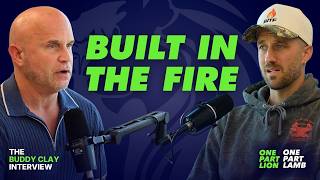
In this interview, host Stephen Scoggins talks with Buddy Clay, founder of the New Hope Institute, about how Buddy built a multi‑seven‑figure organization while fighting stage‑4 melanoma. The conversation weaves together Buddy’s personal health journey—choosing holistic, non‑pharmaceutical treatments, extensive detoxes, diet changes, and personalized testing (gene panels, RGCC test)—with his leadership philosophy. Buddy emphasizes that leadership is discipleship, teaching, and mentorship, and introduces his "Five Constraints" framework (arrogance, ignorance, impatience, fear, insecurity) that hinder mature leadership. Both guests discuss humility, the importance of focusing on effort and attitude rather than outcomes, and the role of faith and prayer in making critical decisions. They also share practical crisis‑leadership steps: authenticity, setting boundaries, building a solid foundation, and preparing for future economic storms by reducing debt and staying spiritually grounded. The episode concludes with resources for listeners to learn more about Buddy’s work and his book.
Chapters
We're going to talk a lot about what it means to not only battle cancer, but also build a multi-seven-figure business along the way.
33, I had one little girl at home. I was living in California, and I'm a healthy person. I, I played basketball my whole life, college basketball. I was running often. I was working, enjoying life, and I don't think anyone ever prepares themselves to have a cancer diagnosis. Not something you ever would assume. You hear about it and you know it's real, but it's not something that actually is real. And that was the toughest dynamic for me to figure out. It was like, this is real. It feels like I'm dreaming. What does it mean? Looking back, there's so many things I would have changed because fast forward 4 years after that, I came back as stage 4. An hour before starting immunotherapy, I was meeting with the oncologist and I looked at her and I was like, I think I'm going to put this off. My wife and I have been praying for months, give us peace. Fast forward 2 months, I had surgery and I was doing a diet for 2 months strict. The biopsy came back and a little over a quarter of the tumor was dead. I was like, thank you, Jesus. There's a fire that's coming for everyone. If you're aware there's a fire coming, you can prepare for that fire. And if you prepare, chances of success are a lot higher.
Hey guys, welcome back to One Part Lion, One Part Lamb. So glad you're here. We are steady on this mission to help you encourage your mind, grow your heart, and keep you moving forward. As we like to say, helping leaders rise and last long-term. Today, we've got a special guest. And today, we're gonna talk about what it means to have leadership through crisis. In other words, how can you take your crisis, the thing that you're facing right now, and not use it to destroy you, but use it to propel you? How can you look at the forge that you're being asked to walk into and not let it completely empty you, but instead long-term fulfill you? That's going to be the conversation today. Our good friend Buddy Clay is here from New Hope Institute. We're going to talk a lot about what it means to not only battle cancer, battle young children, but also build a multi-seven-figure business along the way. So go ahead and buckle up, about to get started. Buddy, what's going on, man? How you doing?
I'm doing wonderful. Thank you for having me in your, your beautiful home. I can't get over how quiet it is. Like I mentioned earlier, having 3 little ones at home right now, this is something that does not happen often.
Yeah, yeah, yeah, I can imagine that. Uh, I, I, I was able to skip some of that season. Most of the children that have been— I've been blessed with, I got to meet around 10 or 11, so yeah, the earlier days, right, is chaotic.
It's a different type of—
yeah, I had one relationship one time that had a 3-year-old, and that was fun and special all at the same time.
That's the best way. And special.
Well, look, man, I want to, um, you know, there's a— one of the things I've been adamant about is a lot of times in these world of podcasting, thought leadership, books, speakers, and stuff like that, people get to celebrate all the shiny, right? Yeah, they can— they, they spend a lot of time looking at, you know, well, he built a multi-million dollar company, or like this kind of things. But there's not a lot of emphasis is ever put on what it takes to really do these types of things. So what I, what I feel like is happening in the marketplace is there's, there's a glorification of a result without understanding how the result was created.
For sure. Yeah, the entrepreneur world.
Exactly. So one of the things I'm trying to be more aware and bring more awareness to with the, with the audience in general is it's okay to own your story. It's okay to step into your story and it's okay to use your story to build your future.
Yep.
So I want to walk back, first of all, 33 years old.
Yeah.
And being diagnosed with cancer, I can't even imagine like what went through your head even in that moment, let alone trying to do it while scaling a company.
Yeah. So the first time around, there wasn't— New Hope didn't exist. It wasn't even a thought in my mind, to be honest. Now it was all just a gun god's plan for setting it up. But yeah, 33, I had, um, one little girl at home. I was living in California, and I'm a healthy person. I, I played basketball my whole life, college basketball. I was running often. I was working, enjoying life, and I don't think anyone ever prepares themselves to have a cancer diagnosis. Not something you ever would assume. You hear about it and you know it's real, but it's not something that actually is real. And that was the toughest dynamic for me to figure out. It was like, this is real. It feels like I'm dreaming. What does it mean? Cancer is something that's very scary. I've heard it was scary, but I don't actually know, like, exactly what it is. But hearing the news that it was a— it was stage 3 cancer the first time around, it was a simple mole in the middle of my back I've had my whole life. Um, living out in New York on the beach, getting sunshine, getting sunburns, this mole I guess grew over time and yeah, mutated or whatever. And I finally got checked out by God's grace. Some of my best friends told me I had to get this mole checked out, and I did, and they came back stage 3. And from there it's like you get overwhelmed with like, what do I do next? I got to go to a doctor, I got to listen to this doctor, I got to figure out what this one's saying, what this means, what do I— surgery. And there's just so many gets thrown at you, and then the fear sets in. You think about You go online and Google, you know, stage 3 melanoma, and it says one of the most aggressive forms of cancer. And you're thinking, what's that look like? And it says your survival rate is this, you know, low percentage of getting past 5 years. And it's— you have a baby in your home and you're thinking like, all this stuff together is like, it's, it's overwhelming and it's hard to really pause. And that first time around, I don't know that I did pause effectively enough where I actually was able to experience fully what the reality was, and I didn't. I kind of minimized it. And looking back, there's so many things I would have changed because fast forward, uh, 4 years after that, I came back at stage 4. So I mean, we'll talk about that more too, but let's go back to just—
I just kind of want to gloss over it. One of the things, again, I want to be really cognizant of is respecting the journey that you've already lived, but also digesting and taking as much away as we possibly can to help people, um, with their own diagnosis. It may not be cancer, but maybe it's something else. Yeah, it could be they just being diagnosed with a divorce.
Like, they—
there may be a lot of different things, right, that come up for them. What are some of the things you said there? There are things that I would have done differently. Like, yeah, what are some of those things?
Well, for me, mine, mine is very specific because this time around I've done just— I took my health a lot more seriously. I mentioned I played basketball and I was, you know, healthy as far as an American goes, which isn't the best standard of being healthier than the average American. Yeah, but I would have, you know, I didn't cut out things like alcohol after this first diagnosis. I figured I would do the traditional medicine. I did immunotherapy for a year. That was what they recommended to do. And I was like, that'll be good enough. I don't know.
What is immunotherapy for those that don't know?
Immunotherapy is— it's not chemo. It's not as harsh. It basically boosts your T cells in your body. And it's an IV treatment I did once a month for a year. So it's not as— there's minor symptoms. I'll get like a stomachache, feel sleepy sometimes, but it's not chemo in the sense of hair loss and a lot of damage. So it's pretty safe and it's pretty mild as far as it goes. But it really helps for melanoma. It's what they recommend specifically. There's no other options. They don't— chemo doesn't do anything for it. So you need to build your T cells and kind of kill it off that way.
Yeah.
So I did that and I thought that would be— that's all I need. I'll do surgery, I'll do immunotherapy, and that's it. I'll keep it. I'll keep on going. I'm not changing anything. And I did that and it came back. So, I mean, looking back, I would have worked on my health tremendously. I would have worked on my stress levels tremendously. I would have been focused on my environment, what, like, toxic things I was bringing in as far as just everyday life, not getting out and taking advantage of nature and the things I ate out of, like even as silly as, um, you know, I'm going to turn into one of those tinfoil hat type people, but just like plastic in the house and not drinking poorly filtered water and those types of things. It was a huge, huge health shift for me this time around that looking back, I wish I would have said, I wish I would have done it then. I had a little bit of knowledge on it, but I didn't implement it because I was just, I was focused on like, I don't want to, I don't want to think about it too much. I don't, if I think about it, it becomes even more real. And I've historically been more of a person like a peacemaker. I could— if I could sweep it under the rug, it doesn't exist type deal. And that's kind of what I did with the stage 3 diagnosis. Like, if I spend too much time thinking about it, it becomes too real. And if it becomes too real, it might really just mess my life up.
Yeah. No, that's— I can only imagine, like, one of the things that— so I've been through my own versions of different types of reversals in my own life and One of the things that I've always come back to repeatedly, uh, when these moments happen is somehow, some way, this is going to build me, right?
Yep.
When it's an actual illness, especially if it's an illness that has a track record of being life-threatening from time to time, like, it's— I can only imagine that, that that's an even different, like, perspective. Now, you went on to create a very successful mental health, um, organization specialized in addiction and, and people that really need help. Did you find yourself using your own material to battle your own battle?
Not right away, no. And it's a funny dynamic of when you know something, it's a lot easier to coach someone and teach them and not actually live it out fully. I'm grateful that I had somewhat of a foundation and I was aware of certain, you know, grounding techniques and ways to kind of level out my, just my nervous system to some extent. But I didn't— I wasn't able to really— it was hard to balance. You're running a business and you have a team and a lot of times you put your health on the back burner. I'm sure you're aware of that early on in your career. It's—
you live off adrenaline.
You do. And with cancer, it's a scary thing because cancer feeds off that adrenaline and the stress. And if you have high cortisol levels, all those things are just negatively impacting cancer, which is the toughest battle to try to figure out because it's like, I need to do this, this, and this, and if I don't do it, something will happen and that causes stress. But if I have stress, the cancer could potentially come back stronger. And it's like it's this constant through your head, like going back and forth of what can I do to limit the stress? And also what can I do to get what I need to get done? And I know stress does play a positive role and it has to be there for motivation. If I was just walking through with my head in the clouds, like I wouldn't be able to build something meaningful. Yeah. So it's hard and I struggled to implement the things like your question, but it's— I'm better, much better at this point right now in my life. Now that I'm 5 years into New Hope Institute, my company, I've done a lot better with my my boundaries. Um, I've done a lot better with just my personal care and the amount of time I spend on work. That's not, you know, always the first thing I look at my phone. I don't— I'm not doing that as much anymore. I cut it off at a certain time at night because I have a great leadership team now where I don't have to be as involved. But early on, I didn't— I didn't have that, and I know it played a role in just something negative, side effects of what I was going through.
Yeah, well, it's funny, I want to go to like so many different directions. I think part of me wants to maybe— all right, so when you're going to build an organization, right, just in and of itself, right, not, not excluding or any other additional challenges that like help or anything like that, one of the things that I see that happens a lot is because you're so accustomed, you're accustomed to operating on adrenaline, you think it all is up to you, all these kinds of things, it actually prevents you from hiring the right people, taking the time to do these types of things. And, uh, I would call it put the structure in place, right? So the vast majority of most businesses never break 7 figures in top-line revenue, annual revenue. They might have a blip once and then it goes, sinks back down. Yeah. I'm a big believer that a huge part of that is the development of the team, right? Yeah. And the infrastructure and structure. Is it possible that the diagnosis, uh, both the first and even the second time helped you like really focus on putting the structures?
Oh my goodness, for sure. I mean, the second time around, um, it was fully the thing that helped my team grow and for me to stop being the bottleneck where I was. I was doing so many things, had so many hats, because I had a fear of obviously things not getting done the way it needed to get done. And I don't want to say I didn't trust my team because I truly did. At that point when I had the stage 4 diagnosis, I had a good team. Like, I knew they were good, but there wasn't the full trust there where I was able to like say, you could do this and run without thinking about it. Exactly. But this time around, when the cancer diagnosis came back, my wife and I, we ended up going to Mexico for 2 weeks to a clinic. And when I was there, I unplugged and I was like, I need to focus on my health fully. I got 2 little girls at home at the time. I have a third now. But I was like, I'm not, you know, I'll talk to them on the phone occasionally. My parents watch them, but we're going to go to Mexico. I'm going to focus on my health, do everything I need to do. And the team will be fine. I kept telling myself that and they were fine. There was minor things obviously that popped up, but nothing burned down.
Yeah.
And after that point it was like, this is awesome. Like, I can see what you can do that I don't have to do and what can I focus on to grow the company that doesn't require this bandwidth? That's just not something I can maintain for a long period of time. So that was 1,000% the thing that made me do it. I wouldn't have done it without that diagnosis. I mean, I would have probably still been doing as much as I can and not taken off the gas on certain areas. So I'm so grateful in that sense that that brought that part of, um, New Hope into fruition.
Yeah, no, well, the reason I wanted to bring that up is because I, I too, in my own business journey, um, used to live by the 'if it's to be, it's up to me,' right? Yeah, kind of like thing. And then you can't scale that.
No.
Um, that's another way of— normal form of scaling dysfunction, which I've been adamant— it's like my battle cry is like, stop scaling dysfunction. Yeah, from a person who tried and, and lost time, energy, millions of dollars along the way. And inevitably what I'm seeing more and more and more and more and more is the reason that leaders don't delegate well or don't trust well is because they don't even know how to.
Yep.
Like, they haven't been trained how to delegate. They haven't been trained how to create infrastructure.
No.
I was helping a, a large franchise recently, um, get ready to expand, right? They've got multiple locations already. They want to have multiple locations. But they're already seeing stress tests of these different locations, right? So there's already bottlenecks that continue to appear. And they're like, well, we're hiring better. I'm like, okay, great. They're like, well, we have it mapped out better. Okay, great. I'm like, how are you testing competency? How are you testing competency before you release them? Like, in other words, so you hire, you work your butt off, maybe you hire a firm to help you fire or hire this master technician for whatever you're doing like this. You know, you can use recruiting firms for like your higher level positions, stuff like that. And they finally find this person, and you're thinking as an entrepreneur that because you hired this person, they're going to come in, they're already going to know what, what to do, and you finally take your hands off the wheel.
Yeah.
Um, I've never seen that work out, not one time. Instead, what I've seen work out is that person comes in, there's an actual training process to bring them up to speed with that specific business.
Yeah.
As well as testing the competency that that learning has occurred.
Mm-hmm.
Right. Followed by a staged release. And then you get the insights and the innovation from the team member you hired. Like, it might be 6 months where you're like, okay, now you've done it our way for all this time. If you were to do it better, how do we do it?
Yeah, I mean, yeah, that's, that's it. You feel like you said you could hire someone on paper, it looks fantastic and wonderful, but if you don't pressure test them and figure out what they're actually able to do, then you're not going to be able to grow. Like you said, scale. And that's, that's, that's what I saw as far as my leadership team and able to see them also train who is working below them and like figuring out what these people's competencies are. Like you said, it's, it's— you need that. If you don't and you can't, and you— and that doesn't happen if I'm there every single day saying like, oh, they're not doing it the way they need to, I'm just going to fix it, or I'm just going to step in and do it for them. Like, that doesn't build long-term success.
Well, it doesn't. It also builds— it also doesn't free the, the leader, right? So it's funny how the very thing that frees us is the very thing we want to maintain control over.
Yeah. Which again, the only way I learned that was from being forced to really— I mean obviously I didn't have to go to Mexico, but it was something that my wife and I prayed a lot about and got peace about. We're like, we're going to do this the way we need to do it, and we're going to go all in. I'm not going to do only one foot in and take care of my health. So what that looks like is doing 100%, and that means I might have to step back from certain things from the business for a very short season. Obviously it's not long-term, but a short season step away, and then we'll see what the business looks like without me there.
Yeah, I tell people all the time, the leaders all the time, 6 months of structure will give you 3 months of relief, or 3 years of relief.
Yeah.
So you spend 6 months of intense focus, intense structure on focus on structure, getting the parts and pieces in place, right? Key team members, strategy, SOP, all the things that have to be laid out. If you will just do that one thing, then you'll get 3— they'll get, you know, 3 years of peace. Yeah. Like that one. So instead, but what instead happens a lot of times, especially— and we're— and right now we're just talking about just a normal business. We're not talking about a business with all external factors. Yeah. Right? Because I want to bring that back into the conversation as well. Um, but what we have happening right now is the leader is so busy firefighting that they're telling themselves, I don't have time to put the structure in place. So what they're really telling themselves is, because I don't have the time to put the structure in place, I really don't ever want to be free, rather than putting in the 2 extra hours that day to get to work on structure while firefighting, right? Um, I know one of the things that I did early on in a relationship was I went to my family, I was like, hey, this is what the next 24 months looks like.
That's smart, right? Clear expectations.
Yeah. So it's like no one feels like they're abandoned or that they're not loved or whatever. And as a family, we all agree to it, which doesn't—
it makes it a little easier. I mean, I did a similar thing. My wife and I, we said when we started the business, I was like, I'm probably going to be, you know, 2 to 3 years of— it's going to be a grind for sure. And we knew it, you know, tangibly. We're like, this is what's going to be. But obviously it doesn't make it easy at all. It's tough, you know, being gone for whatever, 14 hours a day trying to do stuff. It wasn't making it easier, but having some sort of, you know, idea of what to look for and expect, it definitely eased it a little bit. But yeah, it's not still the easiest process.
I think the other thing too, and this goes back to connection places, but when you're— especially when you got to— when you're navigating as much as you were, yeah, um, on top of building a normal business, um, even my girlfriend that I have now, uh, one of the things we talk about all the time is like, uh, last— and maybe having it happen last night, we were talking and we both— we're both entrepreneurs, we both love businesses and opening entrepreneurs and our own rights, and Um, she asked me a question about a business strategy, like something I'm, uh, a company I'm looking at investing in. And, uh, I was like, she was, babe, marshmallow mode, which means in our world, in our world, enough of that, just soft and easy connection.
Okay, right.
And, um, what that's done is that helps give an indicator to the partner, to the spouse, if you will, that Okay, that's all well and good. We can come back to that later, but right now this is more of an intentional time. Did you guys discover an intentional time along the way that helped you guys? Because you guys have— I mean, part of building a great business while navigating health stuff is also building a great marriage and also being a great dad and all the things.
Like, that's a lot, to say the least. I mean, it's funny looking back on some of it. So to back up 2 weeks before opening New Hope, I delivered my second daughter on my kitchen floor. 2 weeks before we opened. Like, and that's not a planned home birth. It's not. We had midwives.
There was, there was, there was no tank.
There was nothing there. My wife in the middle of the night, it was around, I think, close to midnight. I was sleeping and I hear her yelling downstairs. I'm upstairs sleeping. I'm like, what's happening right now? I go down there and she's like, I'm having strong contractions. Like, maybe they'll pass. I'm walking like, okay, nothing. And then all of a sudden my water broke. I'm like, I'm like, what? And then, yeah, I pushed kitchen table out of the way, we throw some blankets on the floor, and within— I forget, it's all blur, but it was a very quick delivery. I deliver a baby on a kitchen floor, ambulance comes, everything, we're good, everyone's healthy. But 2 weeks later, I gotta open up this business. Our doors open, like, we have everything set up. But all that happened around the same time while I was finishing up my first round of immunotherapy. So there's these 3 things that are very tough life situations in general, you know. Having a kid is tough, newborns are tough, a business starting is very tough, but then having a cancer diagnosis and doing treatment, that's, that's equally And I had all three of those at the same time. So looking back, it's like, I try to see it as a blessing as best I can.
Yeah.
I remind myself of that. The theme that I've tried to just really encompass my life with is that if I truly believe that God is sovereign, and if I believe that God is in control of everything, that has to believe the bad things as well. It's not fair or safe. It's kind of a, you know, a weak faith if I say God is sovereign when things are going well, when I have this paycheck come in. I need to say he's sovereign when I'm just not working. Yeah, exactly. And that's the truth I got to cling on to. And there's, you know, there's a few Bible verses that I've anchored into just who I am. One of them is Corinthians 10:31. It's like, whatever you do, whether you eat or drink, you got to do it all for God's glory. And that's something that, like, going through cancer treatment, I got to do it for his glory. I got to do— I can't be a victim. I can't be, why this happened to me. I look back on, you know, the Book of Job. Like, he had it way worse than anyone. And his thing was, he— I came in naked to the world, I'll go out naked as well. Like, I don't need anything as long as God's here with me. And I need to believe that truth. And yeah, It's easy for many Christians or anyone to believe that truth when life is good. Yeah, it's easy to believe it when things are going well, and you don't have your faith tested until things are going bad, and then that's when it actually means something. So having that testimony, and a big reason why I wanted to chat with you too, is just because like there's, there's power in that as Christians, because people could say things on a pedestal and it could be beautiful and easy, and that's good. It serves a purpose for some people. Motivational speaking, you know, has, has its place for sure, but motivational speaking with being through the furnace, being, you know, tested under severe pressure is relatable. And for my demographic, for sure, I deal with people who've been homeless for a long time, struggling with drugs, mental health, and like having to talk to them and they could see that my life isn't just, you know, the CEO image. Yeah, they see who I am. And I try to make it a point where I'm in the office still and I'm, you know, have my doors open. So if someone wants to talk to me, they could talk to me and I'll be real with them. And that's been so freeing for me in this journey just to have that. That openness. And that's been the biggest shift where I don't feel I need to be as polished. I don't need to hide like the bad parts of my life. And even the way I dress now, I'm wearing, you know, wearing a hoodie and a hat. Like early on as a, as a business owner, I was like, man, I got to look like a business owner. I don't want people to think I'm this, like, no, who is Buddy? Buddy is— what's my identity? And I've been able to really fall into my identity much better over the last, I would say, 2 years through this last stage 4 diagnosis, which has been so freeing.
Yeah, I always tell people all the time, identity is not something you find, something you surrender to.
Yeah, I mean, yeah, you know, I mean, really, because, um, yeah, it's funny.
The other thing that I took away from Built in the Fire, um, the book, was this importance of understanding that your family is actually doing it with you no matter what you're walking through. I've worked with a lot of business leaders at different levels, um, even, even pastors at different levels, um, and it's always surprising to me. And, and it's only surprising to me because I had a realization, but it wasn't surprising to me before my own realization. In other words, I was operating the same program.
Yeah.
Okay, which is, if it's to be, it's up to me, so it's all on me.
But yeah, that's my kids don't—
my kids aren't feeling it, my, my spouse isn't feeling it, my friends aren't feeling it, my, my family at large isn't feeling it. And, um, one of the things, one of the thoughts that I had is you coming home to your wife for the first time and saying, hey, I just got diagnosed with this, and then having to come back home to her and say that again. Yeah, like, not only were you battling all the things inside of you, but she— I can just imagine she immediately went into battling all the things inside of her.
Oh, for sure. I think the, the, you know, the ego definitely plays a role in there too. Like you touched on, if you're running a business, we want to believe it's only affecting us because we feel we're putting all this work and we— and there's a sense of this validation you want to have of like, there's no way they could be feeling any of it because I'm putting in the work, like they're not doing it. But it's a different, different levels too. But they're definitely feeling— like my wife, the mental load she took on and the amount of stuff she did for me that I can't even fathom what it took on, like just emotionally. I knew it drained her and like I still won't know the extent of it, but She took on the burden of doing a lot of the research and figuring everything out because running the business, I physically and mentally would not have been able to research and figure everything out because it would just eat away at me and I wouldn't be able to show up at the office. I wouldn't be able to be there as a leader and I wouldn't be able to— I wouldn't be able to function, to be honest. I mean, it's scary trying to research and figure that all out. And with that being said, she's the one who took that on. And that's, that's a burden that like no one should have to bear. Yeah. Thinking about, is my husband going to be here in the next year or two years and am I going to raise these kids alone? And what do I need to do if we make this wrong decision? Is that decision gonna cut his life shorter? I mean, we're still dealing with it. I'm early on in it. I've been, um, no evidence of disease now for almost 2 years. So it's— we're further along than most people would ever expect from a stage 4 melanoma diagnosis with no traditional medicine. Um, but the fears are there, and she carries that. My kids, they're young, but they still carry it too. I've talked to my 7-year-old about, like, you know, there's kids that don't grow up with their daddy. And, like, that's a conversation that no one— you can't ever prepare for that, to have, like, a talk with your your daughter and saying like, you know, your dad might not be around. And even now, like, I get— it's just an emotional thing to like just talk out loud. And that's been a part of my story too, to let people know like, it's not— I'm not nowhere near perfect. I'm not emotionally sound. And it's okay to be, you know, someone who openly shares those things.
Yeah, it's— I'm so glad you said that because one of the things that I'm not— again, sure, I'm trying to share with leaders all the time is it's okay to not be okay. Like, you don't Um, you mentioned motivational speaking, and to me motivational speaking is, is all lying, right? Where's the lamb in the— where's the lamb in the conversation? The lamb comes in in authenticity and truth and trust, right? So if I, if I'm on stage now and I'm speaking— and this wasn't the case 2 or 3 years ago. Yeah, I was all lying, right? All performance. Um, now, now it's definitely like, what can I share with them that I know is true Yeah, right. And I see so much of that in your story because even, even in how you position the battling cancer off and on, right, it's positioned from a place of humility. It's positioned from a place of what truths have I— can I extrapolate with now that I can give the audience that they can apply today? Yeah. That will add ultimate value to their life. You know, and I know you're working on a second book now. I still want the audience to go pick up Built in the Fire for sure. But I would, I feel like I would be doing you a disservice if I didn't just have you like really riff on what does it mean to really be built in the fire? And imagine somebody right now who's, 'cause you're currently on the other side of one of the larger challenging journeys. God willing, you're done with that one, right? Yes. What would you tell someone right now who is a high capacity faith-aligned leader right now that's walking through something very difficult and wants to carry it well because they know they have to carry it? Like, how— what does it mean for them to be built in the fire? What can we share with them that is ultimate truth?
Yeah, that's good. Um, I think for me personally, it was that, like, the— like you touched on, the, the lamb part of it is really the vulnerability just builds so much trust with your team and your client, whoever it is you're dealing with, whether it's like my clients in my care or my team, just having the vulnerability to have someone see you for who you truly are. I mean, everyone has struggles. No one is immune to struggles. It's not going to be stage 4 cancer for everyone, but there's something going on there where you don't get to talk about it. And going to workplace where you spend majority of your life, it's, it's, you know, I clock in, I clock out. But where's that real human interaction? And for someone who's going through the fire, if you're— for me, what I learned was if I'm going to go through something tough, it's such an injustice not to share. Can you imagine some of the, you know, the greatest thought leaders? Like, I love Viktor Frankl. It's been just a huge part of like— I love Viktor Frankl.
Like what?
I've just seen, because he, he's, he says, you know, in any situation we could have everything taken from us, but the one thing we hold on to is our ability to choose, like, the outcome, choose how we respond to something. And if he didn't share that, could you imagine how many people would have just been, over the course of their lifetime, not heard that message? Injustice to everyone, because I'm sure so many lives were changed through just his story. So for me, on a lower scale, just talking to either just my employees or you and I hopping on this podcast today, it's there's, there's no nothing good that would come from me taking credit for something and acting like everything was good and trying to just, like you said, the lion part of it. There's no sense of me saying like, I built this, I did this, I made through this, and it was, it was easy, and I'm tough, and I'm strong, and I did it. Like, that's not it. There's panic attacks I've had in my closet. There's been car rides where I have to pull over because I start to get emotional thinking about my girls. A song will come on the radio or something I'll hear, and it'll just trigger this emotional overwhelming feeling. And it's I need to share that. Why, why would I keep it to myself? And if you keep it to yourself too, it just builds up, builds up to a point where you, you truly do break.
Well, and those things, those things aren't saying you're broken. Yeah, they're actually saying you're human. And I would say you're actually getting in touch with your lamb. Yeah, you really are. Because especially for men, it's really easy for us to stay in lion mode. Like, really easy.
Yeah.
Um, we are told from a very young age we have to be the knight in shining armor. We've got to be this, we got to be that. And, um, one of the things that I'm hoping to bring to the marketplace right now, um, with One Part Lion, One Part Lamb, not just the podcast but the future book next year, is I want men to step into authentic— true authenticity, which means you're going to embody both your lion and your lamb simultaneously. Yeah, strength and surrender, right? One of the things that has come up for me while we've been sitting here and just listening to you share and watching your humility come out, um, it's a beautiful thing on my side. —to get that with us. Um, but I, I'd love to touch on what did you learn about yourself? Like, what did that season teach you about you that you didn't know about you? The biggest takeaway—
I mean, there's no way that I would have learned it, but understanding mortality and time is a concept you hear always. Everyone is in the recovery world, we say we take it one day at a time. And most people say, you know, I can't control tomorrow. And it's a beautiful concept and an idea that sounds great. And it's like, yeah, I understand that, but You don't really fully understand that until you actually are face to face with the idea that I don't have tomorrow. Like, my outcome truly, even to this day, I'm, you know, clear of cancer, but still, likelihood of me living to 90 is pretty slim.
And having— I rebuke that in Jesus' name.
I appreciate that. And I try to too, but I gotta be, you know, it goes back to the sovereign piece too. Like, if God's here, I'm gonna do what I can in this time. And if God calls me to have 5 years on this earth, I'm gonna have an amazing 5 years. So, The lesson that I learned from it is truly like being present. Like, I— you push off things because you, you think you're guaranteed— because you think you have more time. Yeah. And like with my relationship with my girls, like they are young and I could easily write off saying like, you know what, some stuff they won't even remember. Or I'll say I'll make up for it when they're in their teens and everything's beautiful. But that's not the truth. And I was faced with that because I have this diagnosis. So for me, my just being a little more present and intentional was a huge shift that I learned from this experience of saying, I'll take a little more time and wake up in the morning. And if I'm late to a meeting because I wanted— well, someone wanted pancakes in the house, I'll make my daughter pancakes because like that's more important than the grand scheme of things. I can shift my schedule obviously to some extent. I'm not—
you know, wild how that— how that the perspective shifts. It's crazy. And it's because it— I would assume that prior to that, prior to going through these struggles, be like, I got— babe, I gotta get to work. I love you. I'll be home tonight. We'll color when I get home.
100%, right? And you don't think anything of it. That's just what you're taught is what needs to get done and what needs to happen. But it's not— even if it's not a cancer diagnosis, I could walk out and get hit by a bus. Like, that's the reality. Like, that— yeah, in a car accident, whatever it is, something could happen where you don't want to look back and say, I missed an opportunity because I thought I had tomorrow. Like, yeah, that's just not anything. You know, it's all—
it's really interesting to me is, um, and you and I both had this experience, and which is why I think it's— which is why I think there's a hidden truth there, is when we're building our lives, businesses, all the things our focus is on building. But when we're challenged with our— I'll call it— I would call it— it could be physical mortality or spiritual mortality. Like, I've been through many spiritual mortality deaths and rebirths, right? Um, but when challenged with those things, all the things that didn't used to matter are the most important thing that matters, right? Uh, my audience has heard me talk about Tyler before and how he literally changed my life. He said, Dad, if you just be more present when you're present like, and rocked me. Like, I've told her from stages, I've done podcasts, I've been media appearances, like all the things. And, you know, I'm— I want to be a truth teller, right? And it wasn't until he said— it's not like they didn't try to get my attention. Yeah, it's not like they didn't try already, but for some reason it landed that one day, right? So, um, it's forced me to reframe. And then, um, you don't— you may or may not know this, but part of my journey was, um, selling a company. In theory, having everything on paper you think you'd want, right? Yeah, all the things that we changed, right? And it was on— if I'm gonna say this, guys, for you guys who just be okay with it, it was all bullshit. Yeah, it was all bullshit. It was completely irrelevant. Uh, this— the, the safe haven is a beautiful home, right?
Absolutely beautiful. Yes, I, I'll sign off on that. Thank you.
Well, I did, but I didn't buy the house for me. I bought the house for everyone. Yeah. Like the people that— yourself coming here and sitting down and having serenics. Like, like everything that I do now, I try to have a meaning and a weight behind it that is larger than the thing itself, right? How many— um, I was talking to Josh downstairs who'll be doing a show later today, and one of the things that I mentioned to him was like, I think I just want to be old man Myrick to as many people as humanly possible. Like, how can I do that? Like, these podcasts are evergreen. Yeah, right. Long after we're gone, right? They'll be hopefully after 90, right? Um, you know, somebody may stumble across this show and they might be walking through their own storm because I haven't seen a single human in history ever not have a storm.
Yeah, exactly. And that's why, you know, I talked earlier before getting on camera, it's like I'd be doing injustice to God who got me through this whole thing to not share it, the good news, because he brought me through this. And if I would not share it, that takes away from his story. And if I'm going to be a believer of, you know, Jesus and who he is, I need to make sure that I share that part because it's the biggest part of my story. And through my workplace, that's been huge too, just to have open conversations and being able to talk to my team about their struggles has just been something that I never would have expected. It's been such an amazing thing for their growth and for my growth, and just having this space where we have trust, you know, we have—
I have a team that trust and safety are the two most underrated skills in building a business. I—
it's something I never knew, and I would— it's not really on paper anywhere either. You get— you have some sort of a blueprint of what makes success, and the grinding side of it is what always people talk about, and the and that plays a role in it for sure. But my team is awesome, and I don't think I would've ever got to know them on the level I had and them trust me at the level that I have if I didn't open up about my story. And I know I'm in a position obviously that not everyone can do that. You know, if you're an employee, sometimes there's stuff that's taboo. You can't really always talk about your faith openly. You can't talk about certain things, but I'm in a place where I can and I need to because that's like, that's, God gave me that platform.
And I wanna touch on something real fast, 'cause you, you said something that, that spurred me. And so I'm feeling led to talk about something. I wanna mention it. Um, something you did seemed that you seemingly did organic and organically for you was a challenge for me. And that was when I was in the storm seeking God like crazy. The moment I was out of the storm, it's like, thank you, appreciate you. Yeah, back at it, right? Until the next storm. Then like, God, I need you. Where'd you go? I'm so sorry. Like, how did you remain anchored in that? Because I, I struggled with that all the way up for probably up until the last 10 years. Yeah. And God used to be the second place I would run to, not the first place. Now he's always the first place. Yeah. Like, and being grateful for the— I guess the being grateful for the, the grace that's in the in-between the storms, I guess, maybe it's the best way to say it. Like, because I feel like— and I've, I've, I've done this, I've witnessed this, I've seen it recently with friends and family and people that I've been working with where they're in chaos or they're in crisis and they're like, I'm just looking for God to show up, a way to get saved, a way to like whatever. They always grow in the process if they're willing. I call it walking into the forge willingly. But on top of that, the other thing that they do very specifically is as soon as the storm is gone, it's like back to status quo. —But you organically moved away from that.
And I know it's going to be a work in progress. It's just human nature to forget where you came from over time. And that's why I anchored it in with that Corinthians 10:31. It's like, if I could remind myself daily that no matter what I'm doing, whether times are good, if I'm just doing— if I'm out playing pickleball somewhere, whatever it is, like, I need to bring honor to God. If I can remind myself of that, I'm going to be reminded of the season that he got me through. And I know— I mean, it would be naïve to say I know there'll be seasons where I'll forget that, and God's going to probably shake me again and say, hey, get back over here. Like, why do you wander off? You forget that I got you? Get you through this. But for now, it's a constant reminder. And I do have literal scars that help me remember it because I got, you know, I got cut open in these surgeries and stuff. So there's, there's reminders for me that most people don't have because a lot of storms you get through, there's nothing physically there, more of that emotional stuff. I, I got a physical side of it too, and there's stuff there that reminds me. But yeah, I know it's going to be a lifelong process, but if I could wake up and remind myself like, today, what can I control? What can I do today? I'll be able to stay anchored a little bit better of like, I'm not only going to run to you, God, when things are scary. Like, I— that's— I mean, that's who he is though. If you, if you think about it as God as a father and we're kids, like kids run to us when things are bad. This is the way it goes. They go back to play when they're not.
Exactly.
So I mean, that's true. That's the dynamic in nature, and that's just the way it's set up. But it is important to stay, stay grounded for sure and saying like, you know what, times are good now. And I love— I don't know which one you spoke about it on, but there's a principle that you, you said you practice which really stuck out with me. I told, uh, my wife Tasha earlier about that, and It was that like when you get something, you said you want to make sure you get— if you, if you feel like you're going to buy yourself something, you want to give it away to someone that you can value, which is so cool because that's a way to be reminded too, because getting it, doing that, I mean, it's a great concept when you have a lot, but imagine doing that also when there's a little too. And that's where you can stay anchored as well.
So I'll tell you, I'll tell you, this just came up. And because of Josh, you got the chance to meet. Yeah. Kosnik, who will be on a little bit later today, he and I did a workout this morning, and it came up. And this, this is triggering this moment, and I haven't shared this many times publicly. Um, one of the reasons that I believe that God has allowed me to steward any level of wealth of any kind, okay, because it's all his anyway. Like, I don't own nothing. Yeah, I don't even own the air in my lungs. Nope, right? Um, is, uh, when I just had gotten broken free from homelessness, I was officially couch surfing. Steadily, right? I just started the company. I think I might have gotten a handful of different paychecks, right? Small checks, and they weren't even a lot because I was finishing this and finishing that, right? Yeah, trying to get myself out of enormous amounts of debt that took, you know, a couple more— several years after this moment. But I remember I had $4.86 to my name, and I went to a church service. A church was called Faith Community Church in Clayton, North Carolina, right? Small church. They had brought in a guest evangelist. And, um, you know, Josh and I were talking specifically about tithing. Yeah, right, today, this morning. He's like, well, tithing is mentioned in the Old Testament, was also how Israel ended up building their, their base infrastructure to then, you know. And then, um, you know, but then Jesus goes and tells a parable in the Gospels about the comparison. I like contrast. I say contrast. I like to see what doesn't work and and use its opposite to make it work, right? Well, in contrast, Jesus is talking about the Sadducees and the Pharisees, and the Sadducees and the Pharisees in this moment, actually not Sadducees and Pharisees, I wanna say it was a Sadducee for this particular gospel or this particular element, goes up to give a tithe and he's 10%, it's a 10% tithe. And his heart posture was very proud. Yeah, they did it well, but— Yeah, here's the thing. But it's funny how God doesn't care about the thing, he wants the heart posture behind it. Oh yeah. Meanwhile, go, uh, an old elderly lady, according to the scriptures, she goes up against a single denarii. And Jesus says, which one do you think the Father enjoyed most? Right? And it was very clear. And he basically says, what was the, the older lady? She, because she gave him all she had. Yeah. And so that brought what you just said, brought that back up, because that $4.86, I had the opportunity to put in an offer plate or not putting an offer plate. And everything in my being, my soul said do it. Everything in my fear said absolutely not. Yeah, right.
That's literally all you had.
Um, that was my first major financial act of faith.
So you ended up doing it?
So I ended up doing it. The next day, um, I was given work to do, um, for— that paid me $486 the next day. Are you kidding me? Okay, no, I'm not kidding. Oh, that's crazy. So I believe like this— what I've discovered about God is he only gives you the— he only gives you what your character and your capacity can hold. He loves you so much, he's not going to give you a bazillion dollars if you can't steward it. Yeah, he doesn't want to see you go through financial turmoil, right? We think we— we, again, we think we want the thing, but we don't really want the thing. We want how the thing makes us feel, or how we—
yeah, we think it makes us feel, right?
And only to find out that how we thought we were going to feel, like being on the mountaintop, is not how you're going to feel at all, right?
Yeah, the furthest thing from it. So I guess this—
the stewardship message to that contrast was, uh, I shared with, you know, Josh a couple times, like, hey man, I've— if God says give it, I give it. I'm also the kind of person, it's like, I began giving most of my financial resources in the terms of giving to people actually in need, right? Not necessarily directly to an institutional power. Yeah, necessarily. I'll give that.
I mean, I still give that lots of different— I'm with you on that. And that's the way I think. I mean, everyone has their own ideology and theology. I think giving, like you said, is the heart posture. Like, giving 10% to a church is meaningless if you're doing it just because you're doing it. But if you see a real need out there and you're trying to bless the hands and feet of Christ and giving 10% in a different manner of, you know, covering someone's rent for a month or something along those lines, that's That's like, in my eyes, that God sees that is like, that's, that's way better. I don't need you to give that just to the church because someone says you gotta do it. Like, do what you feel called to as long as you're giving away and you understand that, like you touched on, it's God's money. This is God's house, you know, this is God's lake over here. Everything's his. Like, you do—
even the osprey that keep flying by, they haven't managed not to poop on the windows, which is a miracle.
Like, all those things he has here, and, and you've got to be a good steward of it. But being a steward is important too, though. Um, it's not just— and that's been a lesson learning through business, to just back up a little bit, is that was a hard lesson to learn too. Like, knowing that God gave me something and I still, I need to be smart with it too. And I've made some bad decisions by keeping certain staff on or paying different that and doing sort of things where it's like every, every, all of us have.
Yeah.
And it's like, it's, that's a hard one because you, we want to, we work for me and for you, it's like we're called to honor God and there's this this struggle of saying, do I honor him by doing something where I think I'm showing love to someone, or am I honoring him by being a good steward? And my business primarily is for my family. Obviously, I gotta take care and provide for my family. So I'm doing injustice to God and my family if I put someone else who's not pulling their weight. And, you know, there's so much that goes into that. Like, I'm holding them back for one thing, and then also I'm holding the business back. And I need to be a good steward. And that stewardship looks like, you know, letting people go or raising them up when they need to, and yeah, making cuts here when I need to. And it might look on paper to someone on the outside like, oh, he's selfish, he's trying to, you know, I need to be a good steward. And that looks very different.
But that's the thing is that I think that's, that's a brilliant point, because stewardship by definition only raises with capacity. Um, the Bible very clearly says, if you'll be faithful with the little, I'll make you master over much. Most of us are never faithful with the little. Yeah. And because we're never faithful with the little, we never get to master much, right? Um, even with team members, like, you brought up the fact of like hiring, firing, when the— when timing. And like, many of us will hold on to team members way too long because we're scared of looking bad, or— and then if we let someone go, we'll beat our— we'll beat ourselves up. Yep. Right. What I've discovered is this is one of the things that we teach in our founder— in our accelerators is we give you the structure for that. Like, this is, this is all the way from hiring them all the way to releasing them. Oh wow. And all the steps in the middle. So you know that you know that you know that you've— I call it extending grace twice.
Okay, so you get to break that.
3 plus 2 is 5. Okay, for the same infraction, there's a process around it, right? These types of— I think, I guess what I'm getting at is people don't fully appreciate that the, the greatest growth curves obviously are normally come from structure. Yes. Uh, Steve Maric used to tell me that the fortunes are always in the fundamentals. Every time we start overcomplicating things, every time we start creating things that don't need to be there, not looking at our leadership— because there's some people that are really good at firing. Yeah, to me that's another heart posture needs to be looked at for sure, because if people are expendable, that means you didn't do your due diligence to make sure that, you know, I'll give you the training example earlier, right? So anyway, that had to just throw that out there because that's what came up my spirit. So Um, how have you been able to— I know what I'm trying to do with this particular episode and show is I'm trying to give leaders that are going through an active crisis right now one part hope and one part truth, right? We've been all over truth. Um, this is how it affects your family. This is how it could affect you. These are things to be mindful of. These are potential structures that may be missing. On the hope side, how have you seen being built in the fire yourself come back to honor Tasha and the girls, come back to honor your family by being faithful in the season when it would have been much easier not to be faithful?
I would say in the gist of the first book, which is more of a playbook, and I'm really excited for the second one because it goes into the more the emotional side and really seeing like what went into it, but The piece is that most people think you rise to the occasion and like, you'll— if a storm comes, you'll just all of a sudden be ready. Like if this house was built on whatever, you know, sticks, the storm rolls through, it's not going to last. And having that foundation, like, you know, the house is going to all of a sudden get stronger when a storm comes. Like it's not going to just pop up and have the infrastructure. It has to be there. So having that foundation and preparing ahead of a storm is like the most— would I would say the most important piece. And that's for business, for your marriage, for being a father, a parent, a boss, whatever it may be, you gotta have that foundation. And the foundation takes some foresight. You can't, like you mentioned earlier, like, you know, we could pray during hard times and run to God when things get tough, but that's a shaky foundation. It's a lot easier to have that foundation set up. And when that storm comes, the storm's still tough, it's gonna be difficult, it's not gonna make it easier, but the foundation will, you'll be standing at the end of it. And that's the biggest takeaway is like, what can I do to have this foundation? And for me, I said the first time around when the cancer came, I didn't make a lot of lifestyle choices, like changes. Um, there wasn't a lot that I was proactively doing. And this time around, it looks a lot different. So if for some reason cancer comes back or a health scare comes back, I've got a much firmer foundation right now. I, I've implemented things in my house that will, I know with complete certainty, set me up for a much higher level of success than it would have been if I didn't prepare for it, to have that foundation. And, you know, you do it for your, your relationships too. If I could bulletproof my marriage best I can and schedule certain things or do certain things— date nights. Yeah, so anything that's the— protect what's valuable. And you like with my kids, like I said, if I know certain situations they need me for something extra, I could push off, I could reschedule a meeting if I know, like, I'm going to make sure, like, if there's a need or someone's having whatever it is, a breakdown or something, like, I'll be there for an extra few minutes. And yeah, if I build this foundation, it's going to definitely safeguard and strengthen the foundation of whatever relationship. Yeah.
There's something else just coming up, uh, for me, um, based on that. One of the things I've discovered is, um, your business, the business that you're trying to build, remains in fight or flight or chaos because the boundary's not there. One of the things that I've seen happen, you just mentioned, um, you know, trying to be more there for your children or more there for your spouse at given times when normally the work life, the, the hustle culture I would call it, tells you no, you gotta—
the work, the work is how you protect them.
Right? I'm here to tell you that I've shared with you off air and on air that like your family doesn't care. They want you. Yep. Right? They don't— they legitimately don't care. They do— they want to have financial peace, meaning like, yeah, of course bills are being made, we can have some fun. Of course that they, they want those things, but they need the you, right? Yes. One of the things that I began doing a few years ago, um, before I exited the company was when someone would call me and I was trying so hard to incorporate boundaries and put— do work-life balance that happened during that moment. Was when someone would call me after quote unquote hours. I gave myself a 30-day window to answer those calls, but the calls went like this: Hey James, you and I both know family is like super important. Like, we both will get to spend enough time with our family. We miss them, we love them, all this kind of stuff. Um, just giving you a quick heads up, like, I can't fix it for you tonight anyway, so I'm gonna— from now on, my phone is going off at 7 o'clock. It's awesome, right? And at 7 o'clock, if you can't reach me, I will call you back first thing in the morning. Because you and I both deserve to spend more time with our families. Yeah. Because what I discovered was, is every single person who's out there doing it, doing it, doing it, doing it, doing it, doing it, doing it, ultimately they're only doing it because they feel like they have to. Yeah. They're not doing it because they choose to. They'd much rather, after a certain moment of the day, hey, I've been super productive, I've been on my A-game or whatever, I'd really like to go hang out with my, my spouse, my partner, my, my kids. Heck, even have time to myself. Yeah. Right. And what I discovered by handling it that specific way— and I don't know why this came up now, I just feel like sharing it, so I'm sharing. I love it. Right. What I've discovered is, is that we all want that thing. And as a result, we're giving— not only do we give ourselves permission to take back our boundary, we also give everyone else the permission to create their own.
Yeah. So you're helping two people.
So yeah. So basically, so that's— you start bringing in, you start bringing in boundaries. Exactly. By, by vernacular language. Yeah. Right. And the crazy customer, like, I'm like, I'm not carrying that to sleep. I'm sorry. Uh-huh.
They don't need it and you definitely don't need it.
Yeah. You just, you just try to give me your, your crap that you don't want to carry. Right. Yep. We can both put it off to tomorrow. Yeah. Because your business is not going to fall apart in 30 minutes.
No, it's not. There's usually not a, not a fire that extreme. And you talk about, maybe think of something else as far as like what to give to my team was this— the fear that I had was I didn't want to show up if I didn't think it was the best version of Buddy either. And that was a lie that I was believing. And my team just needed me because I'd be lying if I said there was, there was no lapse in a season where I was, I was, you know, perfect and showing up. And there's definitely a season, and they tell me now, and they could be open and tell me that too, like they needed me at the office, whether it was just my physical presence or not. They didn't need me to have all the answers, they just needed me to show up. And I had this fear of like, if my life is— if I'm stressed and I'm worried about, you know, potentially dying, and I have all the stuff I'm trying to navigate, like my My daily schedule was ridiculous. And I don't— majority— and that's not to like toot my own horn or try to brag, but most humans would not be able to do what I was doing for the last year. Like, I mean, I was scheduled from like 6 AM to bedtime of just very vigorous health protocols, and I still need to show up too. Like, that was something I needed to do. Um, would everything been kind of fine? Possibly. But they just needed me to show up, and showing up didn't have to look perfect. I could have been— again, I don't have to be dressed a certain way. I could show up in shorts and just be there and talk to people, have a leadership meeting, and have conversations, and I might not even have Angels. I might just sit there. Yeah, just be present. And that was huge for my team to see, like, I was there, I didn't abandon them. Like, they knew I had some health stuff going on, they didn't know the extent of it until I opened up about it, but being present and just giving whatever version of me was available was, was huge.
How did you— all right, so I love this because it's bringing more, more awareness to things that I've experienced. Most teams won't speak to the leader because they don't feel safe enough to do so. Yes. How did you invite them into open dialogue and conversation to start getting insights into what they needed, wanted, etc., to build— to, to continue to build trust? Trust and safety are the two most difficult things to build inside an organization, and it doesn't take much to destroy it.
Yeah, I think there was— I don't remember the exact timing of the conversation, but I do remember there was a specific leadership meeting I had. I try to do them every single week and it's pretty— as consistent as possible. I had one where I was, you know, praying about thinking I was I tell everyone what's going on? Do I explain? And then eventually I was prompted to, yes, I will. And I remember I had that conversation where I let them know, like, I just want to be transparent with you all. This is what I'm going through right now. It's very scary. It's a stage 4 cancer diagnosis. That's not something I'm taking lightly. I don't know what the future is going to look like. I might be here and I might be spaced out because I'm thinking about a million things. And I want you guys to know that. And it doesn't mean that I don't care about you or the team here, but I'm going through a lot. And if anyone has any questions about it, you could feel free to answer me. But I think them seeing the vulnerability, and I'm sure I teared up because there's a lot of, a lot of tears that happened over the last few years, um, just talking about my health. And I think that was something that allowed them to feel comfortable. It made me more human. A lot of times the, the owner, CEO almost seems untouchable, like, dear leader, show them the lamb. Exactly, that's exactly what it was. I think they saw the lamb and they still see it now where they could come to me with stuff. And I've had some staff that had their own cancer scares and I know me being able to open up about that allowed them to feel comfortable to say, hey, what did you do? Or what are you going through? And just having human conversations. Yeah. Are huge. And it took intentionality to say it. I had to go in and say like, I am going to be vulnerable. I'm gonna let them know that I don't have it all together, that I'm scared. Yeah. And there's a fear in my life right now and I might not be the CEO version, lion version of Buddy that people might be used to seeing. Yeah. And that was, I think, the turning point. Man, that's so good. Yeah, it's crazy what just a little ounce of vulnerability can do in just really any relationship. You don't know who will feel inclined to open up after that. Like we, we talked about earlier, just people going through these silent struggles and putting a mask on. And how many missed opportunities do we have if we didn't open up about our own struggles where someone wouldn't feel open to say, man, I'm going through a storm right now. Yeah, you had no idea about. Yeah. So it's just crazy that the vulnerability piece— I'm so glad you focus so much on that because it's, it's, it's It's huge.
It's, it's been the only thing that's been, um, relationally true. So I have this theology that it's one thing to call yourself a Christian, it's another thing to be a disciple, right? Disciples embody their leader. Like, they, you know, they— and so I've made a conscious effort, you know, all my life, but really like the, like hardcore the last 24 months, to like do as— operate, think set intentions as close to what Jesus illustrated.
Yeah, I'm on that journey too. It's been taking way too long. I'd say probably the last 12 months for me, just being intentional about relationships and mentor and just— yeah, and, and like you said, discipleship is huge. I didn't mean to cut you off, but it's just, it's discipleship pieces.
Well, to me, leadership is discipleship. Yeah. So it goes all the way back to the hiring and firing and all the things. Like, we— you can't hire someone, expect them to just take over a problem for you and not train them how to take over the problem. Like, great leadership teaches, educates, mentors, empowers, helps. Like, it helps them do those things. Yep. Right. Most— I know you mentioned this in the very beginning of the show— it's like most leaders are their own bottleneck. Yep. In fact, um, one of the— I got two really— I think two more directions I want to hit. The first one is this: one of the things I've been adamant about, uh, with the audience is something I've been referring to as the Five Constraints. So I teach it and I unpack it and I teach people how to apply it on a lot of our free masterclasses and some of our accelerators. And what's interesting about that is as soon as I say the constraints, people are like, I get it, right? I believe every behavior pattern comes from one of or a combination of these constraints: arrogance, ignorance, impatience, fear, and insecurity. Okay. Yeah. These are the things that keep you from being a mature lion and a mature lamb integrated simultaneously, right? Um, arrogance is thinking that you got it all figured out. You don't know. It's not me. I was joking around with somebody, says sometimes arrogance is just saying, I'll do it myself. Yeah, right. Um, so to that end, In your journey, have any of those crept in, popped up, and had to be dealt with? And if so, how have you tackled them?
Imagine I told you no, they never popped up. Um, obviously all the time. And one of the things I wanted to touch on, and I'm glad you brought up because it aligns with it, there's, uh, this really small book that I'd say it was probably close to 10 years ago that rocked my world. It was by Timothy Keller, is The Freedom of Self-Forgetfulness. And the concept is, like we touched on, the arrogance piece is there, and true gospel humility, he touches on, is not trying to think of yourself less or not having that false humility, but just spending less time thinking about yourself. Arrogance is, you know, constantly putting yourself in, in this chair of, you know, it's about me. I could handle this bit, I could handle that, I could do this and that. But being free of that, like, I could appreciate someone else's success. I don't have to get my ego in the way. I could— he, in the book, he talks about appreciating someone winning first place in a race and you get second place. Like, it's the same as acknowledging a beautiful sunrise or sunset. It's there. Exist. They did great. They worked hard. They did well. Stop thinking about yourself. Like, having that humility definitely helps out when the arrogance pops in. And early on in, in opening the business, I've had— this is my first business and first one that's doing, doing well and having big numbers. The arrogance and ego definitely pops up because you want to be compared to everyone else. Like, I'd want to say, like, I don't want to be looked at as a business owner that didn't hit X amount of dollars. And it's just like, there's so much ego that goes— it's so weird how we measure ourselves by like dollars and dollars and stuff you don't even know either. Like, like you don't— majority of businesses aren't doing what people obviously think they're doing. And it doesn't matter either way. The reality is like, what am I doing day to day? Who am I reaching? Who am I touching? And what am I doing? As you touched on, Stewart, of like, what resources do I have? What do I— what am I doing with them? That's all that matters.
Yeah. I mean, I'll even say, like, you know, I get a lot of credit for— and this is something I actually squash, like, early on. Like, I'll even put up slides. Like, this is what I get known— this is what I'm known for. But this is the truth.
Yeah, that's awesome.
Like, so yes, okay, he, he went from homeless to building, you know, upwards of a 9— close to a 9-figure organization, blah blah blah, multiple states, blah blah blah. It's true and it's not important.
It's awesome.
It's true and it's not important.
I mean, that's the gospel of humility, right? Part of your story.
Yeah, it's true and it's not important. But the flip side of that is— the flip side is it was freaking hard. It was freaking hard. Hard on myself, hard on my team, hard on my— hard on my family. Um, I didn't do it with excellence. I didn't do it well a lot of the times. I've survived most of my mistakes, thank God. Like, I learned a ton. I have experience and wisdom I wouldn't have gotten any other way. It's one of the reasons I can— I can take a business owner and pull their business apart in 15 minutes or less and give them a 1-hour— in 1 hour, give them a roadmap to make it work. Yeah, right. That's— that comes from that place. Yeah. Right. It's the only reason why I'm trying to get the business leaders to start celebrating the effort. Screw the outcome. Yep. You don't have any control. All you can— all you can control is the effort. Yeah, screw it, just go at it.
That's, uh, that's like the mantra for my daughter right now for sports. She's, she's like this— she's only 7, she's about to be 8, but she's so driven and like she's such a hard worker, it's insane to see. But we tell her every single game, like, there's only 2 things you control. It's like, this is going to be your, your effort and your attitude. Like, yeah, the output is what you put out. Like, you can only control what you do. You can't control if you're going to win the game. It's a team sport. And like, all these things, it applies to every area of life. You can only control your effort. And for me, attitude. Like, I'll show up and give my best, and also I'll do it with a posture that brings glory to God. Like, I keep saying that verse, like, whatever I do, I'm gonna bring glory to God. So if I'm gonna go through cancer, I got to be not fake and laugh and have all this joy, but I got to be an example of my effort. I got to show up. And whatever it is, like, that effort and output—
or yeah, I think sometimes just being truthful is like is, is just acknowledging publicly that this is scary. Yeah, that's it. I don't have it figured out. I got concerns, right? And again, that's humility. That's just— that's, that's being there. It's funny, I was also thinking that the number one thing that solves team member issues and business growth issues is moving from like trying to prove like, I need to have a nice life for myself, and being of service. Yeah. The moment you start showing up as a leader with your team to be of service, there's a gravitational pull shift. Huge shift. The moment you start looking— stop looking at your product or your service as being the the thing and start looking at, okay, what is the problem that I'm trying to solve for the client? Yeah. And how can I solve it with excellence? Like, how can I be of service? It's funny how that becomes like the number one thing that actually, um, creates growth. Uh, one of the final areas I'd love to touch on, um, if you're okay, we got about 10 or 15 minutes, is you chose not to do a traditional pharmaceutical path. Yeah, right. And I'm, I'm all for it, by the way. It's my belief. I could be wrong. I am not a— I am not a doctor or a medical professional, to make it clear.
To make it clear, right?
I'm not a lawyer. I'm not any of those things. I'm a guy with experiences. That's it. Okay. I'm sharing my opinions from my experiences. There's poison in our food. Yes. So they sell us a problem to then sell us a solution. Oh yeah. And the solution is 10 times more expensive than the problem that they created in the first place. Okay. Okay, so that is my personal opinion, my personal belief. I'm not hating on Big Pharma, maybe a little, but just, just a wee bit, right? Um, there's a reason, there's a reason why the American national, American infrastructure does less or does more poorly than anywhere else in the world. Yeah, right. You go to Ireland, the food's fantastic. Scotland, food's fantastic.
No, all organic sides not involved in it.
Everybody's lean, mean fighting machines. They're they're not there. And the rates of depression, anxiety, all these types of things are like drastically decreased. Clear as day. I mean, it's— they're doing better. Exactly, exactly right. Lower rates of cancer, right? Talk to me about your specific journey, why you decided not to go the traditional pharmaceutical route, what benefits, what are things that you discovered, in case some of our audience right now is either also battling cancer or love someone that is.
Yeah, I mean, you could probably copy and paste that same disclaimer that you gave. I'm not, I'm not a lawyer. That's not Advice is personal experience. Um, there's this guy Chris Wark. He has a protocol, it's called Chris Beats Cancer. He's, he's one of the big front runners of holistic health, and he has this idea that says if my body created this, it could also create the way out of it. And Gary Brecker believes the same thing. Yeah. So if, if your body ends up doing this, there's a reason it happened. It wasn't just, you know, by chance. Our body is amazing. God created it. It's, it's phenomenal. The toxins, everything we put in there, um whatever it may be, it's, it's leading to something. And what I found in my study, and which is really funny, and I'll try to touch on it quick so we only have, you know, a little bit of time left, but I love steak, I love meat, I love all this. I would have loved to say— and again, this is my personal experience, I'm not knocking any diet— I wanted to do a carnivore diet to like really clean my body out. For me, the science pointed in a different direction, and I was pissed. Like, I, I was, uh, filet mignon for the next week. That's what I was hoping. It was— it's funny, and there's, there's some good science for it too. But for me, maybe it's God's way of just like having fun with me too. But it was— I went down this route of being basically a raw vegan, which is insane because I love meat and all that. But the principle is inflammation in the body, whether it comes from raised cortisol levels, the stuff we're eating, the toxins, all that— the inflammation is what creates, you know, cancer, disease. Yes, exactly. So anything, whether it's arthritis and all these different things, it's inflammation. So for me, the protocol that I went down And again, thanks to my wife and all the research she did too, is just we were going to get my body as alkaline as possible and rid of as much inflammation as possible. So we did a deep cleanse. Um, does that include heavy metals and stuff as well? Exactly. Yep, heavy metals, everything. So we did, um, parasite cleanse as well because most Americans have some sort of parasite, whether they—
is it true that these different cleanses are actually really easy to get access to?
Yes and no. Um, there's, there's certain— there's some good cleanses out there as far as the parasite ones you get here in the States, but like you touched on, a lot of stuff is just not like available here in the States. So I go to a holistic place in Knoxville, and he gets, um, part of my protocol is IV mistletoe. It's used like all over in Europe as a way to— it's like an antimalarial drug, but it also gets rid of some of the inflammation in your body and parasites and stuff like that. So there's stuff that we import that we do. But the big gist was, if I could get my body— I knew I wasn't healthy, so I could write that off. I could say, if I was living a life that was very healthy and I still had cancer, then I'd be like, okay, now let me look at it. But there's a lot of things that I wasn't doing. So we got rid of a whole house water system, we got the red light therapy, we got, um, the sauna, we got rid of all plastic, we had stainless steel everything. We detoxified our complete house, like flipped it upside down. And I didn't do anything, um, treatment-wise, and I was supposed to. I wasn't opposed to it. I was going to do diet and immunotherapy again. And there is this crazy turning point moment, which is such an amazing— like one of the only few in my life that was a tangible God moment for me, was I was at MD Anderson. I was flying out there because they're the best hospital in the world for cancer. I flew out there alone for a final trip. I was supposed to start immunotherapy. My wife stayed back. I had, uh, a PET scan that they want to do first to check to make sure it didn't spread to my brain. Everything checked out. I met with the doctor and I was scheduled for immunotherapy. The plan was 2 rounds of immunotherapy, surgery, immunotherapy again. And I was already starting a diet at that point. And for me, I was like, how am I going to really test to see if this diet's working if I do immunotherapy and diet? The doctor's going to say it was immunotherapy. They're going to say it was traditional medicine that really healed it. So for me, an hour before starting immunotherapy, I was meeting with the oncologist, and I looked at her and I was like, I think I'm gonna put this off. Like, I just— in my— my wife and I have been praying for months, give us peace, give us peace about a decision. We had no peace about decisions. We were doing both. We were weighing the options. There was no peace. And there was this moment, a lot of release control. Yeah, it basically— and it was, it a consistent prayer over time. And then I got to the hospital ready to start immunotherapy, and I said, let's push it off to after surgery, um, because I want to see if any of this tumor died that was in my stomach. And fast forward 2 months, I had surgery, and I was doing a diet for 2 months strict. The biopsy came back, and, um, a little over a quarter of the tumor was dead. And I was like, you know, thank you, Jesus. Like, I would have never known if this diet was something that was working. From there, it was like, okay, now we're pushing on the gas, and we're gonna— we're gonna do everything. So for me, holistically, it made sense. I felt better. I knew I wasn't healthy, but also I had that evidence of this tumor died and there's nothing that could try to steal it and nothing that could say like, oh no, it was, it was the immunotherapy. So I had a very clear, tangible answer of like, this is working. And there's lots of science behind— there's so many amazing stories out there. Like I said, Chris Wark, he has amazing testimony too, um, stage 3 cancer, all holistically healing it. Because if your body creates it, it could probably get rid of it, but it takes a lot of work.
Yeah. What one of the things that people don't realize is most of us, I think all of us. I think every time they tested it, all of us have Teflon in our system. Yeah, DuPont Teflon.
Uh-huh. Yeah, for sure.
Like, it's like, it literally, it's in everybody's blood, right? Um, it's a foreign— it's a foreign body. It's not supposed to be there. Products, goods, and services put it there long term, right? Um, there's not a really good way. I think there's— was it Resinol? Resinol? Oh yeah, it's a, it's a, it's a herb-based product that assists detox. It helps detox it, right? Right. Um, and then all the— just even in corn, and people don't understand how much, how much corn has been manufactured. Yes. And then how much corn is in stuff.
The highly modified, the most modified, right?
And so what I'm getting at is like, it's virtually impossible to eat 100% clean unless you know exactly where things are coming from. Um, and for some reason they strategically made it more expensive to get good stuff than cheap Yeah, it's—
they make it like you said. I mean, they're there because they're, you know, someone's going to lose money and the doctors and all them, they can't be losing their money. But it is nearly impossible to switch to holistic health.
They'll be fine.
Yeah, there we go. Everyone in there learns how to work. But no, I mean, it was, it was tough going out to dinner. Like, a lifestyle change is tough, but when life's on the line and I had a family and a business and all that, like, the stakes were high for me. So I needed to make these changes. But it was not easy whatsoever.
One of the things that I'd stumbled on— so historically, there's heart issues related in my family, my father's side specifically. And, um, I got to know Gary Brecker pretty well and hung out with him a little bit and text him a few times back and forth. And, um, he convinced me to go get one of the gene assessments, the gene kits, the cellular assessment. And I, like everybody else, have one of 5 gene mutations that was actually caused by stuff being put in our foods long ago. Okay, so basically my, my my gut biome cannot digest certain things without this little $14 a month freaking enzyme. That's crazy, right? Dude, it changed my entire blood panel. Isn't that wild? It's, it's crazy. I mean, I drink an amino acid drink, um, for my pre-workout now. It's like I mix pre-workout with— I think it's called Perfect Aminos, another Gary Brecka-ism. I went back recently, my— because, you know, I also do TRT, so they like, they take my blood on a regular basis because I'm, you know, 50 plus. Well, 50.
Yeah, they don't—
not 50. Um, feel like I feel and look pretty good for 50, so I'll keep doing it. But, um, when they ran my last blood work, they were like, what'd you do different? I said, well, I stopped drinking 5-Hour Energies. Yeah, here you go. And then I started drinking the Perfect Aminos, and I had this enzyme.
And just a small— that's it. I mean, in the majority of America, blood work was—
yeah, I have the blood work of a 30-year-old now.
Yeah. So I mean, there's a lot of times it is just a little shift for most people. And then for me, obviously I did a huge shift, but just the little things— if you get rid of one toxic thing in your life, you could change your whole, your whole I guess what I'm getting at is like, but you went on a journey to understand yourself.
Yes. Right. Most of us will never do that. Most of us won't stop long enough to pay $400 or $500 for a, for, for the various assessments to figure out like what's really— and so what we're doing is we're putting off killing ourselves. Yeah.
And the tough thing is because we, we're around doctors and you trust them too, and, and you're in a fight-or-flight mode, it's hard to make good decisions. You talk about it all the time, the emotional regulation. Like when you're in front of an oncologist who says you have stage 3, stage 4 cancer, it's very hard to make decisions.
Well, you want to fix it now.
Yeah. And you, you you're not thinking of anything but what they tell you to fix it. But pausing for a second, doing some research can be very beneficial. And for me, that was it. And then the other huge piece, which was— I hope they bring it to the States eventually. There's this test, it's called the RGCC test. It's done in Greece. It's a lab in Greece where they test— RGCC— and they call it the Greek test. They take a huge blood sample, they go to a lab, and they test your circulating tumor cells against against all sorts of immunotherapies, chemotherapies, vitamins, supplements, and they see what your tumor cells respond to instead of just shooting in the dark. Because a lot of traditional medicine will say, let's try this chemo and see if it works, and it destroys your body, and it might not even work at the same time. So this test actually shows like what works. So this first time around with cancer, there's two forms of immunotherapy that they offer to, um, for melanoma. The first time around I had one, and after getting this test back, it showed that that didn't respond well to it. If I'd have known that prior, I would have— I wouldn't have wasted that whole year, and I could have used the other immunotherapy that actually works. This test sheds so much light on actually what works. So I had a whole supplement protocol where I was taking like 70 different supplements a day. It was insane. But it was because they tested all these different supplements, and I was attacking it with everything. So there was an exact protocol set up based off of what my cancer responded to, and there was no guesswork. But they don't have that test here, and it's expensive, and, you know, most Americans can't afford it. Unfortunately, it's a few thousand. But I was blessed enough to have that, and it's like, it's life-saving. And it's just crazy. Like you said, shifting one thing from— I shifted like 80 vitamins, but yeah, it changed my whole trajectory.
That's the thing is though, you started, you started eating and performing and aligning with how you, how you are made. Yes. And everyone's made different. We had— bring Josh up. We were joking around, blood. He's got O negative, I'm O positive. We're talking about, you know, who can, who can drink each other's blood. Um, that is a fan favorite conversation. Yeah. Well, we were talking about— because I go and get my blood drawn every 3 months. Yeah, right. Smart. Yeah. So, uh, and, uh, it was just— it was just interesting. Yeah, right. And then, you know, you— I bump into Gary Brecka a few years ago before, before he really kind of took off, and he's like, yeah, just take this one cellular— this one test, this one test. I'll tell you exactly in your, in your, in your genome where it's, where it's busted. Yep. And exactly what supplement to get. Because everyone's different.
You can't treat everyone. And normal medicine unfortunately has— that's what they do.
They have a short pill to cover a million people.
They have a very small playbook and they hope that it'll help every single person out. But everyone is so unique.
Sorry, sorry. The American commercials are coming back. It's like, we want to fix your itchy, watery eyes. Yeah. So here's your pill for that. Yeah. But be on the lookout for an itchy, watery butt. Like, you know, and all these different things. Yeah. Suicidal ideation.
I'm like, what in the world? Yeah. I have an itchy eye, please. Yeah, exactly.
Can I just have some Visine? Anyway. Well, dude, I can't thank you enough for coming on, man. I appreciate it. I hope today we gave the audience some real insight into leadership through the crisis. And maybe we'll wrap it up with this. What are the 3 major steps that you would do again today to help manage leadership through crisis?
Yeah, and thank you for having me. This conversation has been awesome. I've really been excited and it's been great. But I would say that the 3 things for me are, Being authentic, like you touch on often, being authentic goes such a long way. Working on my boundaries with family and friends and all of that and having that, that time where I could focus on myself, because if I'm not focusing on myself, I'm not going to be able to show up for my team. And a third, I don't know what a good third would be offhand right now for working through being built in the fire. It's just, I'll say the foundation piece. So taking those two elements I just touched on and just really building a firm foundation before the storm hits. Hits. No one, no one expects a storm prep. It is storm prep. I mean, there's a fire that's coming for everyone. It's not going to be stage 4, stage whatever, it's going to be something. And if you're aware there's a fire coming, you can prepare for that fire. And if you prepare, chances of success are a lot higher.
Yeah, based on all the data that I've got and some intuitive hits, prayer time, stuff like that, I believe that right now is the time to start storing up plenty. Yeah, I believe by the time we get to 2030, it's gonna be very lean. It's gonna be a 2008. Okay. I believe that I'm seeing it. I don't necessarily mean it's going to be hitting the real estate sector per se. Yeah, but it's going to hit the global economy. Yeah. So like, this is your—
get your, get your house in order for the storm. Yeah. Yeah.
Before 2000, when 2008 hit, 9 months before the bottom dropped off, my business at the time was growing like crazy. Okay. 2007 was a great year. Right? And on the surface, I'm like, well, it's gonna always be great. We're finally, we're finally on our way up, right? And then had a very, um, very eye-opening spiritual encounter, and God told me, said, get out of debt now, right? I had, I don't know, a few company trucks and some other— I was trying to grow my company. Yeah, right. Um, and that was gonna be the extent of the debt, right? And what was interesting was, is I, I took that warning at face value I paid all the debt off, sold— I sold one or two of the trucks we weren't even using, paid it all off. 2008 happens, I weather a 90-day storm, all my competitors run out of business. Man, that's being faithful right there, right? You know what I'm saying? And then from 2008 to 2012, my company sequential in size.
Crazy, because you were faithful, you heard it, and then you— yeah.
So this is through, which is why I'm saying, like, you talk about getting prepared for the storm, there is another storm coming. There is. It's not going to kill you and destroy you and all the things your overwhelm will tell you that's going to happen. Yep. Your, your ego's like, oh my God, there's a tiger coming, right? Not realizing it's, it's actually just a pet tiger, like a toy tiger, like a stuffed animal, right? So I believe that people should be just like, start really getting really structured with this.
Never a bad time in any situation. Your relationships with whatever it is, prepare for whatever season it might Yeah, dude.
Buddy, where can everybody find out more about you and pick up a copy of the book? And yeah, because they have to stay involved to find out what the next book—
for sure. I tried to make it simple. My name is Buddy Clay, so you can go to buddyclay.com and there's stuff about New Hope Institute on there. If you have anyone that's struggling and you want help, we're there for that. The book is linked to it and the next steps and everything else are all linked on that website.
Awesome. Love it, dude. Thank you. Like, man, likewise. Very good. All right, guys, that's gonna do it for today's show. As always, like, share, subscribe, do all the fun stuff. I gotta be honest with you, I hate even asking you to do it, but it actually does help. It helps us reach a bigger audience. It helps us reach more people with content that can actually really help them. As hopefully you've learned by now, this show is all about service to you. Every guest we bring on, every concept we touch on, every tip, practical strategy, all of it, you name it, we do it for you. We could be doing a lot of other things and wouldn't want to do anything else but to serve you with the content we've been giving you. So again, please like, share, subscribe. Pretty please. Put the chicken on top. If you know someone right now who's battling leadership in a storm, there's a crisis moment. Maybe they're battling cancer, maybe they're not. Maybe they're battling their own thing. Share this specific episode with them and just say, hey, I saw this episode and I thought of you. I think it could really help you. That one act of obedience sometimes can change, be literally the pivot point that person ultimately needs to move the needle for themselves. And you get to be a conduit of that transformation, that change. So as always, we thank you, we love you, and we'll see you in the next episode. God bless.
More from Stephen



He Had Everything…Then A Heart Attack Changed It All | Dan Sachkowsky #Shorts




Paralyzed. Suicidal. Then He Surrendered, And EVERYTHING Shifted | Marcus Aurelius Anderson


Why You Snap At People You Love, The ALIGN Method, & Why ADHD Isn't A Disorder | Sara Hartley

