He Built a 9-Figure Business & Almost Lost His Family | George Rivera
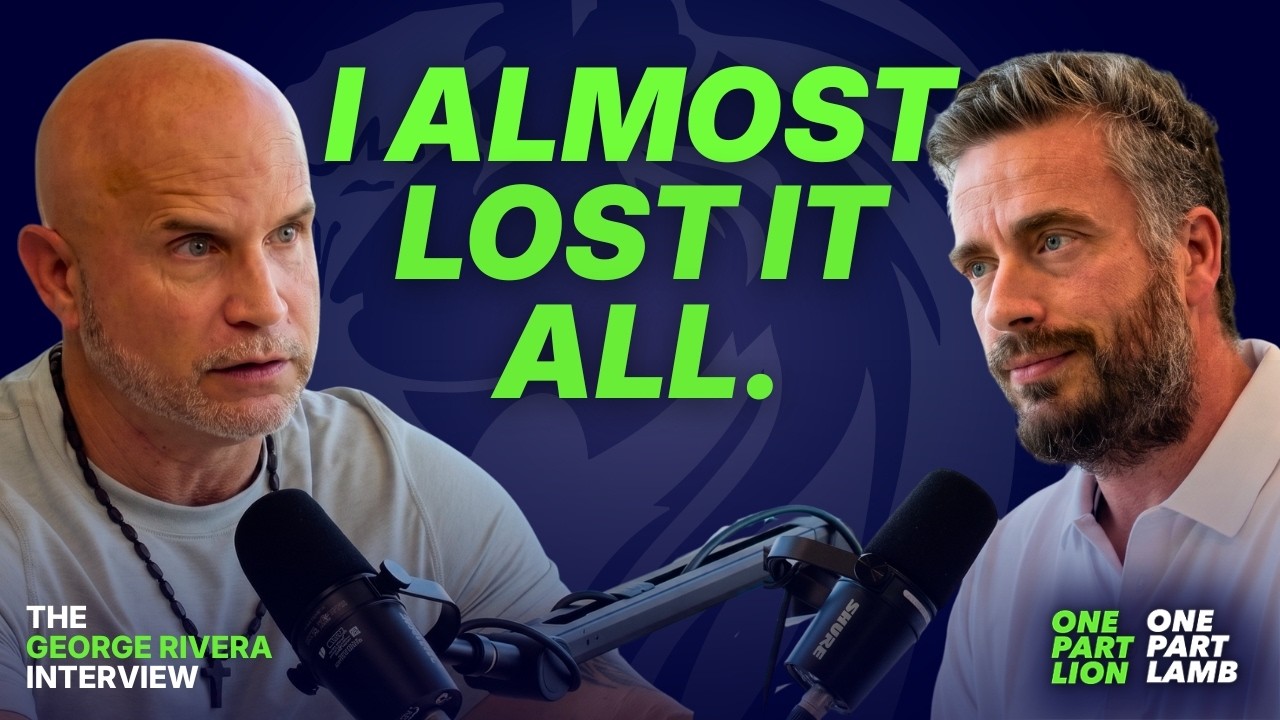
George Rivera built a nine-figure business while nearly destroying his family, then rebuilt both. He shares the Buy Back Your Time Formula: audit your hours, calculate your value per hour, then eliminate, automate, or delegate everything below that number.
Chapters
I don't think at my funeral anybody's going to be talking about George's 2026 P&L.
He is the founder of Founder Dads Dinners. Guys, please help me welcome the one and only George Riviera.
My dad was diagnosed with cancer early in 2015, and it came out of the blue. I mean, he was 67 years old, not a spring chicken, but not ancient history either. And 2 weeks before he passed away, like a deathbed confession, deathbed statement, he says, don't miss Leo's games, I missed too many of yours. When Leo was 3, I was actually training him to ignore me. It's like, I go to Dad, I get nothing, so I'm just gonna go over here and, and get something from somewhere else. And I think a lot of people will see that as, oh, my kid's just going through a phase, and just kind of like let it go, let it be. But in reality, it's like we train them to ignore us, that they can't depend on us when they need us, you know. And I have this saying that you're either scaling freedom or you're scaling chaos. And for far too long, I scaled chaos. And I, I mean, I almost lost my family in the process of building a multiple 9-figure business. Just thinking about that, it's like, yeah, there's a lot of, uh, design flaws in, in my business that I've survived, uh, to be able to tell others.
Hey guys, welcome back to One Part Lion, One Part Lamb, where we help leaders rise, lead, and last, stand the test of time, become integrated, aligned leaders where you can actually build a business you love, uh, one that is prosperous, one that is purposeful, but more importantly, one that is meaningful without losing your soul along the way. One of the things that you guys have seen over the last several weeks as we've been bringing on new thought leaders and new guests is we're trying to bring on people that have actually done the work and not just sell it to you online. People that have actually built the organizations, scaled the companies, dealt with the family stress, dealt with the business stress, dealt with the finance stress, and actually came away with it not necessarily unscathed, but came away with it from wholeness, which is why I actually wanted to make sure we brought today's guest on. Today's guest has not just generated hundreds of million dollars in revenue, has not just like spent time building organizations, but also had a radical awakening just like I did on the importance of how you can actually lose the thing you value most chasing the thing that you think will validate you the most. He is the founder of Buy Back Your Time Formula. He is the founder of Founder Dads Dinners. Guys, please help me welcome the one and only George Riviera. Dude, what's going on, man?
Awesome, Stephen. Excited to be here and looking forward to this conversation.
Yeah, me too. Well, I'll just go ahead and— I'll go ahead. It's funny, we get the special guest pleasure, and maybe we'll do this later on, of having your son Leo in the room with us. He's off camera right now.
Yeah.
Yep, he's— yep, we'll have to get him walking on camera, um, in here shortly. But, um, one of the things that I think is really beautiful about that is the intentionality behind that. And as I was studying more about you, um, there you— you're, you're like many, right? And there's a lot of quote-unquote paper success. I call it paper success. It's not that this wasn't— it's not that it's not meaningful, um, but it shouldn't create our meaning, right? And I find that that's a big, um transition. And as I was learning more about your story, one of the things that I saw in your story was my story. Now, I was mentioning off camera, my son was the one that awakened me, uh, to part of this journey of what was really important. I'm curious, would you mind helping people understand why you even took the time to create the Buy Back Your Time Formula? And then more importantly, how you began to host the Founder Dads Dinners?
Awesome. Yeah, um, it was an amazing journey leading to Buy Back Your Time Formula. Um, it started at this point 11 years ago. My My dad was diagnosed with cancer early in 2015 and it came out of the blue. I mean, he was 67 years old, not a spring chicken, but not ancient history either. And seemingly fit guy, but cancer doesn't care about that. And yeah, he was diagnosed early in the year, given a few months to live. And 2 weeks before he passed away, like a deathbed confession, deathbed statement, he says, "Don't miss Leo's games. I missed too many of yours." And that was the line in the sand.
Yeah. All right, so don't miss Leo's games. I miss too many of yours.
Too many of yours.
So not only was he trying to give you a healthy warning as a son, he was also trying to anchor you as a father. Beautiful.
That's it.
Yeah.
And I, you know, it hit me like a ton of bricks when he said that. As you can imagine, I was transported instantly back into my old high school gym where I played in about 40 basketball games and he only went to one of them. And I was raised with a dad who was, you know, hustler, hardworking. So by high school, you like, you already know who your dad is. No big deal, or should have been. But I'd see other kids, you know, my teammates, with their dads there at every game, cheering them on after they score every basket like they won the championship. And, you know, I do my thing, and, uh, yeah, there's no dad cheering in the stands for me. And I remember looking at another dad, uh, just loving on his kid, and I was like, I wish that was my dad. And that would have crushed my dad because he was a good man, um, hard worker, you know, textbook check writer provider, um, you know, doing it for the family. But, um, having that success in exchange for presence at home. And so, yeah, that was beautiful closure to whatever that was. I'm not a therapist, I don't know how to put language on that. But coming back to the current day of 2015, I'm like, wow, yeah, I'm already missing my son Leo, who's 9 months old at the time. I'm missing him learning how to walk and talk. And the sad thing is I can't even tell you what I missed it for. I wish I at least had an excuse, but I don't. And yeah, so that was my line in the sand. Like, okay, got it, message received. I'm not gonna— perpetuate this generational pattern. And that's where it started.
Yeah, I'm glad you're— it's funny, some of the most painful things are some of the most profound things, right? Some of us, we are walking through our journey. I don't even call it sleepwalking. Like, we're just modeling what we, what we saw. Yeah, right. Um, my father wasn't a huge part of my life early on. About the time of 12, 13, came back in my life and was very— that's when I got to see how he operated, right? Very hardworking, very focused on providing well. Not necessarily at that time a good steward of finance, right? So it's funny, as hard as he worked, it was never enough, right, to kind of like— so that just made him want to work harder. And, you know, I remember going through different seasons of kind of just becoming my own man, not because my dad didn't want to be there necessarily, because I don't think he knew how to be there. Like, I don't know that he had the skill sets. I didn't know that someone really pulled him aside and talked to him. I mean, his— my, my first mentor was his main employer, on top of the fact I actually think he was a bit of a father figure to my dad, which is really interesting just because the way we kind of followed him and stuff like that. Uh, I've said, you know, publicly on this show many times, so I'm not going to go deeply into the story, but, um, my son Tyler, uh, at 23 years old came to me, and after a divorce, I'd already kind of began to lose the things that quote unquote had mattered. Now, there were different circumstances around that event specifically outside of just business, but, um, I'll never forget this. He sat me down over some tacos at a little Mexican joint by his then-college, Campbell University, and said, there's, you know, really two things. The second one was the most profound, so I'll kind of anchor there, which is, there's only one thing as far as we're concerned you can do better, and that's just to be more present when you're present. And when he said that to me, I had this, I had this remembrance of all the times that basically they would come to me I would be in the middle of doing an email, or I mean, like, I call it a disruption to the day. Like, I might be working from home that day and stuff, and they might, you might come into the room, and, you know, I'm just, I'm like, and they would say, I got a question, can I check in? And I would look, and I would have this look like, can't you see I'm working, right? And what, what was really interesting about that is that it took me at that moment, after those events that already happened, to realize that every time I did that, I was telling him that this was more important than he was. Yeah, right. So this— and then I connected it deeper than that. I, I discovered that, um, I was perpetuating what I'd seen. Yeah, right. I was perpetuating— so my sense of worth, significance, and meaning, my self-worth, which largely is defined— I know now, I didn't know then— by how we're parented, the involvement of the parent. Right? I discovered that I was setting my children up to chase worth and significance, 'cause they had to feel like they had to compete with whatever I was working on.
Yeah.
Right? So to have your dad say that to you in that moment literally saved already a decade, if not more, right?
Yeah.
Of key moments. One of the most beautiful things to witness as you and Leah were coming in the house today at Safe Haven was just how connected you guys already are. Right? And I think a lot of parents strive for that. Um, and I know you focus a lot on father founders because obviously that's your story. You went from father to father, right? And now you're calling us to serve fathers who father, right? Um, I think I'm going to touch on leadership, leaders, high capacity leaders. And the one reason is because about 60% of our audience many times are high-performing female leaders on top of male. So while I absolutely love and resonate with dads, I also love and resonate with moms. And interestingly enough, his— just traditionally, mothers are in the home, um, not just doing their business but also raising a family. Yeah, like they have the long day, then they come home, then they make the dinners, then they do the things. And, um, after, you know, being with several, um, amazing women in my lifetime— not like all at once or nothing like crazy, like, don't be silly— but, um, and then being with a high-performing— my girlfriend's high-performing, owns her own company, all the things— and I get to watch her, and I have a unique perspective now watching that. I think the conversation— I guess what I'm going at is I think this conversation runs across the board.
Yeah.
Um, because at the end of the day, one of the things that I was doing— I'd love to get your thoughts on this— that I, that I did was I kept telling myself I was doing it for them. I realized I was actually doing it for me. I wanted significance and validation. For you, before that conversation, When you looked at how you were pursuing things, as successful as you were, what did you discover along your way?
Yeah, no, it's all great stuff, and I totally resonate with the, um, you know, when you explain how you looked at your son like, hey, can't you tell that I'm working? I have a similar experience to that where when Leo was 3, I was actually training him to ignore me, which is kind of what we're doing with that. Um, used to have this, uh, kind of glass wall in my office that looks out to the living room, but it's like soundproof. Um, and he'd come up and you have a little picture and knock on the glass and kind of, "Hey, Dad, I got something cool to show you." And I'm like on a call. "Oh, hey, just give me a couple minutes." And I meant it. "Yeah, give me 5 minutes." And 5 minutes is never 5 minutes. Sometimes it's never, sometimes it's hours. And after a while he quit doing that. And I remember going up to him and just being, "Hey, son, what did you wanna show dad?" And he's just kind of like, "I don't know, moment's gone. It was a squirrel. You missed it." And not mad, but just like, it's almost like a survival instinct. It's like, I go to dad, I get nothing. So I'm just gonna go over here and get something from somewhere else. And I think a lot of people will see that as, oh, my kid's just going through a phase and just kind of like let it go, let it be. But in reality, it's like we train them to ignore us, that they can't depend on us when they need us. And the sad thing is, like I said, they think it's a phase and they don't do anything to attempt to restore that bond. And I was very thankful that I essentially remembered my dad's words, which it didn't mean, you know, miss, don't miss Leo's games, obviously literal games, but it also means don't miss the moments important in life. And so I was able to restore that bond. But yeah, and I resonate a lot with the whole kind of the identity of, you know, I'm a provider, this is what I was born to do, I'm doing it for the family, even though the family never asked for that. And, you know, it can come to a situation where you're doing all this stuff, you're providing for the family, and they kind of used to it. So they're kind of used to the lifestyle. It's kind of, it's hard to unwind the lifestyle. So that's another pressure point for, for the high performers to keep doing it for the family. But at some point it's like, okay, when's enough enough? You're missing these moments. And one thing that I often say is I don't think at my funeral anybody's going to be talking about George's 2026 P&L. And so that's what I— my message I hope to inspire people is that you can always go out there and make more money, but you can never redo a childhood. And yeah, and insert childhood for marriage, relationship, or whatever it is for you.
Things that really matter, yeah. No, that's why one of the, one of the reasons I want to have this conversation is because I feel like high capacity leaders don't realize they're making trades.
Yeah.
I also don't think they realize that they have a choice not to trade the things that matter. I mean, that was the lie that I've, I believed for the longest time. Like, the lie that I believed honestly was really, um, predicated on thinking I had to do these things because if I didn't, the whole world was going to come crashing down. And if the whole world came crashing down, then I would somehow lose my family and all the things. It was like I was living a lie. Yeah. And after chasing the things that matter— well, take that back. After chasing things I later discovered didn't matter. And I had my own epiphany. My audience has heard it before. I'm actually going to hear yours today. But chasing things and then realizing after, quote unquote, having it all, right, whatever that even means, I was more empty. Now, I know you've built several companies in several different verticals, and I know you've done very well— 8, 9-figure results in multiple verticals. Was there ever a point in time at any of those verticals where you felt like enough was enough?
Yeah, I mean, I, I'd say not generally. I, I'd probably say the only time that I got close to it was in 2018 when, you know, scaling my company, um, you know, first year approaching $20 million for the year. And, um, but hating life. And I know hate is a strong word, but I don't know how else to explain feeling like your family's getting ripped away from you and a little piece of your soul going along with it.
Mm-hmm.
And I came to the conclusion, I'm either gonna burn this thing down or I'm gonna sell it. Um, you can't sell a business overnight of, of, of the revenue numbers I was doing, or any, anyone. I mean, that's a multi-year process and LOIs fail at an 80% rate.
It's also highly focused on EBITDA, which most people aren't building their businesses for.
Yeah, yeah, exactly.
Businesses for high overhead.
Yeah, exactly.
Yeah.
And that's why it takes multiple years because you, you know, you connect with people who know how to sell businesses and are, oh yeah, we need to do this and that and then give it some time to build up that EBITDA. And so that wasn't going to solve my problem tomorrow, but burning it down was— could. I was well financed. I could live with the breakage and I could rebuild a business that truly supported what I thought I wanted, you know, doing it for the family for real. But not a good idea because it was already successful and just had a massive design flaw. And I had a, a coach and a mentor who's today a dear friend of mine, basically tell me, stop doing what you don't like doing and just keep doing what you're good at. And I'm just like, oh my gosh, 23 years in business. And that finally clicked.
Yeah, yeah.
Late bloomer here. And I had a team of 40 people working for me. So Eddie said, hey, you just got to delegate more. I said, bro, I'm the king of delegation. Look at my team. But in reality, I was, I was the firefighter for my company. You know, problem comes up, hey, George will put it out. And then there's a bit of a dopamine hit that comes along with, you know, putting that out. And the thing is, at work, you know, there's a P&L, you can see when you're winning, or you can even see when you're losing. But we get an instant response of we need to take action.
At home, we know we're—
no P&L, we know we're needed. Yeah, exactly. It's like the— they're ringing the alarm bell. At home, there's no P&L. You sort of have to slow down and like, all right, how are things going? And I don't know about most men, so I'll speak for myself, but I like the instant response.
Yeah.
And then I can bury my head in work because I know that I'm valued and I'm needed there because that's That's, that's how I've designed the company. And there's childhood wounds and trauma that could be tied to why I would respond to that.
That's one of the things that I, that I am adamant about is most behavior is subconscious, and it's not until you go to the subconscious places that you realize how you're making conscious decisions and then to change them. So I'm a firm believer that yes, there's reasons why we go out of our way to prove worth, to feel needed, to like all these types of things. I'm a big, big believer in that for sure.
Absolutely. And, and I just discovered this a few years ago that I was still seeking my dad's approval even after he passed away. I'm like, how bizarre is that? But once you realize that there's something freeing about that, 'cause maybe you still have those habits and patterns that still does that, but at least now you have a decision. Am I gonna continue to do this or am I gonna change and do something about it? And so yeah, knowing that was a big freeing moment.
Yeah. You know what's really interesting is I've had, you know, in doing these, the shows and the podcast now for a little while, 'cause we've been filming live at Safe Haven for almost a year now. We used to be a lot of virtual, and we've just realized that people appreciate the energy exchange with live. And when we're getting comments now, one of the things that comes up a lot is somebody will say quietly, "Hey, I realized I'm that person." Right, they don't wanna say it publicly. They barely say it to us. And one of the things I'm always trying to be cognizant of is who's watching and who's listening. Who can identify themselves in the discussion, but more importantly, who can— who has the desire to want to get out of that awareness. Um, what was your biggest moment of grace where you really accepted that, hey, this, this is part of my leadership style, my fatherhood style, my family lifestyle? Um, where you allowed yourself— because I feel like grace is needed just to accept that to even want to change.
Yeah, no, absolutely. Yeah. And one thing too, like, I'm— I feel like I'm pretty good at forgiving everybody else, but I'm tough to forgive myself. And, um, yeah, there was a great sense of freedom once I realized, okay, I need to forgive myself for, for just anything in the past specifically. And that feels like it just took weight off my shoulders. And, and, um, yeah, again, pointing to that word freedom, like a sense of freedom there. And so, um, yeah, it— I realized that my my leadership style was actually poor leadership because like, you know, people change careers and jobs all the time. So if I'm being the firefighter for my people, for my team, what are they going to say on their resume when they work for me for a few years? Oh, I, I just sent everything up to George and he put out the fire. Oh wow. Yeah. I want to hire that person.
Well, that's easier for me.
Yeah. So I wasn't empowering my team to think for themselves and, and, and be leaders themselves. So it took a while because once you have this habit in the system going, chaotic system, I might call it. You know, it takes a process for your team to get used to a new way of doing things. And most stuck around and some, you know, couldn't deal with it. But those that did stick around, I empowered them to be leaders in control of their roles. And now they have some— they have an experience with me that they could take anywhere else to, you know, improve their own, you know, working situations. Yeah. Yeah.
You know, what's really interesting to me is We as high capacity leaders, okay, and I'm saying high capacity for anyone who wants to build something, call it large, right? It's, it's, it's, it's designed to have something more than a job and just be a highly paid job, right? So at least for me, I set out on that journey to have to create freedom. And in my language, I would say it actually created prison and bars, which I know something we both agree upon. Um, I'm also a big believer in the, the content called, or the the idea of contrast. Like, you can't know one thing without— no, you can't know something else without knowing the first thing, right? So in that, I guess, I guess this next, next question or discussion point is twofold. One, what was life like prior to having this new awareness? And what is life like now being on the other side? Because I know you get to do a lot of fun stuff. Your teams are running, they're running, they're doing the things that we're talking about doing, which tells me and you guys out there that it is possible to build something meaningful and not to have it cost you your soul. Okay. So the contrast between the two lives and then maybe your idea on a few of the prison bars that are actually in the way.
Absolutely.
Yeah.
Before, yeah, feeling like a prisoner to my own business. I call it the founder prison because I built it that way. I didn't know any better. Yeah, and just the nervous system always watching and reacting, waiting for the shoe to drop, whatever that means. I don't know, it could be a merchant account going out or some lawsuit or customer complaint. We gotta clean it up on the internet or something. Even though there wasn't really any immediate threat of that, the nervous system's like, something's gotta be wrong here. And then just always on call, always answering the phone, not setting any boundaries in my calendar. Or even in my personal space. I'm getting the 3:00 AM emergency call that the server's down and we gotta fix it now cuz it impacts cash flow. And then affiliates who are promoting and have a low conversion rate and then they stop promoting and, and this domino effect of having to clean it up. And so, um, that always kept me, uh, on call, the nervous system going. And so, so that's before, and, and even like when we would travel, we'd go on lots of vacations, but you'd see in the pictures, you know, I'm, I'm here putting out fires or I'm on a call. Um, or up to—
sorry, I have a funny statement.
You feel that one?
Well, I do. And here's the crazy part. So, you know, in theory, it's the image on the— so if you look at social media right now, right, uh, personal brands, and I'm— and I, because I have one, so I, I can pick on myself for a minute. When they go to actually put together the, the, uh, the pictures, like they want to, you know, take new pictures, headshots, so on and so forth, for whatever the use is, almost in every case they want to take pictures of you on your phone or on a computer. I had this interesting realization just this week. I'm like, that is not the signal that I want to send to people. Yeah. I mean, and I'm just— I'm dumped on it because it's culturistic. It's like, you know, I literally— I was— I was— I looked at an image of a friend of mine, and, you know, he's like on his phone like this, and there's like some meaningful caption over here, and I'm like, What I'm seeing is distraction.
Yeah.
I'm not seeing focused or presence.
Yeah.
Yeah. So anyway, I don't know, I didn't jump off track. I just had this realization when you were saying that.
No, no, that, that hits home. Yeah. That helps me as I'm building my own personal brand. Mental note, no phones or computers in my action shots. Yeah. I'd like to be in front of a lake and, uh, look, looking at the water or hanging out with my son. That's the shot that I want.
Yeah, absolutely. Well, so the— so, all right, so we talked about what life was like prior. Like, what is life like now?
Yeah, life like now is awesome. Very fully present with my family. You know, our son Leo— my wife and I have a son named Leo that you'll talk to here in a bit. He's homeschooled. And so we get to travel all over the country. We also do real estate investing. So he gets to kind of ride along and see how we do that. We own a few properties. One of the ones we're most proud of is up in northern Michigan on a lake as well. Beautiful like this. And so he got to see us, you know, buy the house. And, you know, fix it up and essentially get it from kind of like the old-looking cottage that it was to this beautiful, you know, million-dollar-plus property on the lake. And he got to see all of it. And then a few months later, there was another home that came on the lake. So if this is the lake, it's like, this is the house, like right over there, another home came on the market who's going to be our competition because we, you know, Airbnb them out. And, you know, we go look at it and I know the numbers that it does. So I'm like, we're just going to buy this thing unless it's a pile of sticks. The pictures look great. We got to validate it. So we go in the house, realtor shows us around, and then he gives us a few minutes as a family to talk amongst ourselves. This is like 3-ish years ago, maybe 4 now. And, you know, we're as a family talking and I'm like, oh, got an idea. So the old me, the before me would have said, son, here's an iPad, there's a couch over there, knock your socks off and play until the big people are done talking. And I'm sure he would have had a blast doing that. But nope, this is the new me, son. Son, you're going to make the offer to the realtor. And I coached him a little bit. I said, tell him we're going to close in 30 days. Here's the price we're going to pay. Leave the furniture, leave the dock, because this is a lake house Airbnb. We're going to turn it around fast. Now go tell the realtor. And he looks at me like, why am I doing this? I'm like, just go. Time is of the essence. So he goes in the house and into the kitchen. Realtor's a really tall guy. And, you know, my son's even smaller than he is now. And he looks up and he's like, hey, we're going to close in 30 days, leave the dock. And the realtor like looks at me and is just He's like, what the heck am I hearing? Doesn't say a word, but his eyes are asking me, is that the offer? And I'm like, hey, whippersnapper spoke, that's the offer. And we got the house. And I love thinking about that from a legacy perspective. 'Cause one day he's going to be like, you know, with his kids like, hey, grandpa used to take me to make deals. You kids are going to do it too. And yeah, so yeah, life today is doing stuff like that. And yeah, and fast forward even more to current day. I know we've talked about a little bit that he's got a podcast and that started out as a fun, you know, father-son project. He'd been wanting to start a YouTube channel for a few years, and we've done a couple of things, but nothing really, you know, stuck. And, um, I was like, hey, how about this? Let's do a podcast. And he looks at me like, oh cool, well, what's a podcast? Because he's 10, you know, kids don't consume podcast format stuff.
Yeah.
And then I'm like, I got an idea, get your mom's computer, go to your room, I'm gonna get my computer, go to my office, and then let's get on a Zoom call and you just ask me questions. And ended up being like a 12 8-10 minute video. And then I sent it to my VA and I, hey, chop this up, clean it up, take out the little coaching and the ums and the, and make it a nice tight interview. It was like, I don't know, 4 or 5 minutes. And that was episode 1. I launched it to the world. I don't want to say sarcastically, but kind of like, hey, let's just see what happens. And then I'm like, hey, Facebook friends, I've got a podcast or my son's got a podcast. And, you know, I got overwhelmed with like, oh my gosh, congrats, amazing what you're doing. Can he interview me? And then I'm like, I'm like, yeah, I can interview you. I had no plan to like get people. And, uh, so what started out with, you know, me, 2 or 3, 4 has turned into like over 150 at this point, maybe, uh, 151 today. And, uh, yeah, he's, he's interviewing, you know, billionaires, um, these people, like, I don't know, like they're getting into my network now as a result of this. And so, um, anyway, yeah, that's what life's like today.
Yeah. Well, that's amazing. You know, so the— there's a verse in the Bible that comes up, says, "Train them in the way they should go," right? I love that because I feel like the intelligence of a child is far superior than we as adults give it credit for. It's kind of like God looking at us, it's like, "I created you. You actually have a lot more inside of you than you know you're allowed to do." And you got the world culture kind of crushing that out of you. And God's like, "No, I gave it to you, really," right? So it's a great reminder of that. On top of that, um, just the inspirational encouragement and the things that are happening. And how cool is it to have to be 11 years old, like, and talking to 7, 8, 9-figure, 10-figure entrepreneurs? Like, yeah, yeah, I mean, that's wild, right? Um, and the mentorship that can come out of that.
Absolutely. The wisdom he's getting poured out. He was talking to a CFO, uh, you know, like, of a huge company, I don't know, maybe a month ago or so, and, and my son's telling him that, hey, yeah, you can have a $10 million top line, but if there's nothing at bottom, that's like, that's nothing to be proud of. And the CFO's like, holy cow. Like, you know, like even at this, even at my age, people are bragging about the $10 million top line. And so yeah, cool. But what's left at the end, that's the one to sort of be proud of.
Yeah.
So anyway, I'm just glad he's getting stuff like that now versus later.
Yeah, no, I love it. I think there's another piece to the pie of the lifestyle that I know you get to lead now versus before. And it's one that we share, which is vacation used to feel like a punishment.
100%.
I mean, literally, I would, I would step away from the company, um, I would try to go on a vacation, even if it was a week, a weekend, a couple of weeks, whatever. And the entire time I'm putting— I'm still putting out fires. It's like I tell my team, hey guys, I'm going on vacation, this stuff from here to here, don't worry, I'll have my phone with me, don't worry, I have my computer, don't worry, I'll check in, don't worry, don't— like all this kind of stuff. And I began to think about the entire structure of the company And I know we talk about this and share about this, um, that essentially we don't have a business issue, we have a structural issue, a design issue, right? And then as I thought through more about that, I'm like, well, if I fix the structure, I design it right, I train them right, I test competency, I delegate it by releasing outcomes to the people to empower them to own them.
Yep.
I wonder what that would be like. And I know on the other side of that, like, You and I both now get to take vacations that we get to enjoy. Yeah. Without fearing that the whole world's going to fall apart. And again, I guess you and I are being so vulnerable about the subject because so many high-capacity leaders struggle with it.
Yeah.
Male and female, doesn't matter if you're a C-suite professional, if you're the founder, the CEO, the owner, so many struggle with this.
It's a human condition.
It is a human condition. It is a human condition. But, you know, I wanted people to be aware of that because again, we start these businesses, we envision this life we want, right? It's mocktails on the beach somewhere, whatever. And even after I exited, I was like, I was done with that in a month. Like, it was like boring. Like, this is— I need to be doing and creating something, right? So there's— I know there's a human element there, right? The core difference is, is the design structure. So I kind of want to jump into the Buy Back Your Time formula a little bit.
It.
I know elements of it just because I've been, you know, following your content now for a little while. And a lot of it's genius, by the way. Simple, structural, foundational, easy to implement.
Yeah.
Right. Which is kind of crazy because Steve Meyer, my first mentor, used to tell me all the time, he said, the fortunes are in the fundamentals, not the shiny stuff.
Yeah.
Yeah. So talk to me a little about the buyback your time for me a little bit.
Yeah.
No, it's the process that—
where do you start?
Yeah, absolutely. Yeah. And it's the same process that took me from working as many as 90 hours in a week down to like zero, like off the grid., for weeks on end while my business continued to grow and scale. And that, that's like the ultimate, like, that is freedom when you can walk away and the business continues to grow and scale because you've got the systems in place and you have, you know, like escalation rules in there, but you empower them to make decisions so that any escalation really should, should be almost never to extremely rare.
Well, when you were designing, when you're designing the structure of the company, we call it the 5 drivers: ideation, acquisition, Fulfillment, finance, raving fan retention. So that's what our, our 5, our 5-wheel spoke, right? Ideation is mainly the visionary strategist, right? The other 4 are structural. So one of the things I feel like I've heard you talk about before is the importance of actually creating guardrails for individual roles and escalation paths, which most entrepreneurs don't put into place.
Yeah, yeah, absolutely.
But I don't want to slow— I don't have time for that. Slow down to do that.
Yeah, I know, it's crazy because, you know, you're just robbing from the future when you have that kind of attitude.
Robbing robbing from the future.
Yeah. Because the mindset is, okay, well it's quicker if I just do it myself and probably true in that one isolated moment. But again, robbing from the future and we're trying to prevent that. Um, yeah. Uh, guardrails, decision rights. Those are two big needle movers that help get my freedom back. And I just started with some small things. And once you get a little bit of taste of that, it's like, holy cow. Like I want to do this with everything.
Mm-hmm.
And, uh, even, even stuff outside of, of business, uh, even on some personal items. So yeah, absolutely. Um, and how it started was first I had to audit my time. I know audit's isn't a super, you know, amazingly sexy word, but, um, you have to get an inventory of where your time's going. And you do that for a couple of weeks, cause that'll, you know, shine a light on what it is that you're doing. Then you have that huge list and then you give yourself what I call the 10K per hour filter or determine what your time is worth. For me and my zone of genius, my prime time is $10,000 an hour. For, for your listener, it might be $100,000 or you might be getting started, could be $200 an hour, but whatever that is, determine that number. Then take all the stuff you do and run it through that filter, and then you're gonna have a handful of things you should keep doing, and then a probably a larger number of things that you shouldn't do. Now you take those things you shouldn't do and you run it through the, the, the Time Liberation Trifecta, which are the 3 only things you can do with something that you aren't gonna do, which is eliminate anything that doesn't move the needle, automate anything that repeats, and then delegating outcomes instead of tasks, which I know you understand well.. Yeah. And so, um, yeah, that was the process that, that I did to, uh, to get my freedom back.
No, I love it. You just— so you went through that really fast, which is great, right? So, um, I want to go back to the audit.
Yep.
Okay, so when they're, when they're doing the audit, is the audit, uh, nothing more than basically journaling all kind of every day, all day for a couple of weeks?
Yeah, that's it. And there's different ways to do it, but yeah, the best way to do is journal it and then have a calendar where you're filling in like, you know, time blocks of, of your activities. Um, and you know, some people stress that, oh, you know, it doesn't have to be like to the minute. It doesn't have to be to the minute, but we, we need to shine a light on the activities that you're doing because that's the only way we're gonna be able to get that off your plate.
Yeah. Yeah. I read a book, I can't remember the name of the book, so I'm gonna do the audience a disservice. I'm gonna talk about a principle that I can't tie back to a book, but the principle of the book was bucket your professional time in 15-minute increments. Everything's a 15-minute burst.
Yeah.
And then you don't go any longer than about 2.5 hours of burst before you have a 15-minute break, another 2.5 hours, 15-minute break to reduce the cognitive load. So whatever you're focused on is doing that. One of the things also about doing the audit that I found really interesting was when you do the audit, you realize oftentimes that you're not doing the thing that actually moves the needle. You're doing all the other things to avoid the thing that moves the needle because something inside of you doesn't want to do that thing. Yeah, like maybe it's having a difficult conversation with an underperforming team member, etc. Um, I'm gonna throw a lot of out you because I have all these thoughts when you're sharing. And so I want to take that nugget and set that to the side. When it comes to training leaders to be outcome-focused versus task-focused, I think we need to go deep there because I feel like that is something specific that everyone really struggles with because they're leading based on the tasks that are in front of them. And they're thinking, well, if the tasks go away, I'm going to get the outcome. What's the difference between leading by outcome versus task?
Yeah, so task is essentially like, here's, here's what you're supposed to do. And, you know, it doesn't matter how this thing performs or if it meets our objectives. It's just like, you know, I don't know, write an article or set up an SOP or something, for example. But, you know, the outcome is like, this is what it should do for us. This is what it should produce. And so by showing them what the outcome is, and then you give them the liberty to reach that outcome however possible. Maybe it's different from your method, maybe it's more efficient, but I still provide a path to get there. And one of the easiest ways to do it is, you know, now with AI, I mean, you could do this in minutes, but what I'll do is like a, like a Loom recording, a screen recording of the process, and then show them this is where I want to get to. And then I'll take the transcript of that Loom and put it in ChatGPT or Claude, your favorite AI tool, and say, make me a beautiful SOP from this transcript. And then you'll get this beautiful SOP. You'll want to review it because, you know, get it 95% right. And there's the—
to make sure it's not hallucinating.
Exactly. Yeah. You missed a comma here or this important point that the transcript fumbled up or whatever, since you just recorded it, it should be fresh. Then I take that, um, that SOP, I put it in a, in a Google Doc that'll be constantly updated when, when things change along with a link to that Loom video. And, and then I get the person I'm assigning that to and I say, look, I got 20 minutes. Review this and let me know if it's clear. They review it. Maybe there's a question. Oh yeah, good, good catch. Clear the SLP. How about now? Okay, I got it.
Cool.
You own this. I should never, ever see this ever, ever again. Say it nicer than that. But yeah, this is yours. Unless, you know, we change a vendor or there's a process or we change directions, but we'll let you know when that happens. So yeah, this is— then I'm telling myself, yeah, this is out of my, out of my sight, out of my mind for now. And, and there are escalation rules, like, so you're not to, like, again, say it nicer, but you're not to, like, interrupt me randomly during the day because that causes context switching, which is a killer of productivity. There's studies out there that it says it takes as much as 30 minutes if you get interrupted to kind of get back in the zone of what you were working on. And then, you know, I'm a, you know, marketer, copywriting, creative, funnels, and that's its own expertise. If I'm getting interrupted about a merchant account issue, Whole different, like brain is switching over here.
Mm-hmm.
And, and adds to that cognitive load that you just talked about.
Yeah.
And you get 3, 4, 5 of those a day. That's like half a day wasted on just switching context right there. Yeah. Um, so that's why I was working as many as 90 hours cuz I'm context switching all day long. When I got all that stuff off my plate, I reduced it down.
And you went home and you couldn't remember what you did that day.
Yeah, exactly. It's like, was, did I even eat today? I, I don't even know. I didn't work out.
I missed everything. You miss many, many meals as an entrepreneur.
Yeah, exactly. So, um, but anyway, yeah, going back to the delegating the outcomes part, um, I just make sure that it's clear they understand. And if they do need to reach out, it's through a structured process. Like it could be a weekly cadence of a 15-minute call where we're not talking about the weather. We're just like, hey, what's the question? Yes, no. Okay, bye. Hey, that only took 2 minutes. Good. But like we schedule 15 minutes to put out any fires or that could be, um, you you know, quarterly, whatever routine that, that task, uh, task slash thing you delegated needs.
Yeah, no, I— it's funny how similar that is to a bit of a framework that I've been, um, you know, teaching entrepreneurs, which is very similar.
Nice.
Because I had this quick story. I had this interesting time where I had a leader who had burned through a handful of team members in the same position inside of like less than a year, like 6 different people in less than and I'm like, the leader comes to me, hey, look, I think we're gonna have to let go of so-and-so. I'm like, why? Like, well, I just don't think they're going to work. We're seeing this underperformance over here and over there. Here's, here's the data behind that. I'm like, this doesn't seem right. Do me a favor, let's, let's do a quick huddle with me, you, and that team member. Um, and I sat down with that team member. I said, I'm just curious, what is it you think you're supposed to do?
You.
Like, walk me through how— what you think your role is and what it's supposed to look like. Now keep in mind, we have SOPs, and for Dave Ramsey we had KRAs, and which is a, you know, variation of a job description. And went through it, and the person was like, well, I didn't know I was supposed to do that. I didn't know I was supposed to do that. I do really well at that. And I'm like, well, how did you not know? Well, I've never seen SOP or KRA before, huh? I said, you know, because the methodology is you train, right? So anyway, so long story short, I go back, I say, well, look, thank you for the feedback, appreciate you. You can go ahead and head back over to what you're working on. Follow— I'm going to follow up with you more in the more future. So I sat down with them, the leader, and I was like, what's going on? He's like, what do you mean? It's like, they haven't been trained. Like they just described a completely different role than what we actually hired them to do. You helped develop the KRA, you helped develop the SOP. Why do they not know how to operate the tech, operate the communication path? Why do they not know? And the leader's like, he goes, man, I just, I'm busy, dude. Like, I'm, I've got my thing. I said, I said, what we're doing is we're creating chaos. Yeah, you're going to terminate this person because they're underperforming. But the reality is, is we're underleading. Yep, we're really— we're underleading. We are not clearly defining. We are not taking the time to teach them what it is they need to know to be successful. So for the next 30 days, you were— you were personally going to table everything else you're working on, and you were going to walk them through and train them appropriately. And I'm going to see the competency We're gonna— I'm gonna test competency at the end. Sure enough, leader goes, does exactly as asked, begrudgingly. They were mad at me. I don't care, whatever. And they go and train this— that person being a 13-year rock star for the company just with the right training. And it makes me think sometimes that because we're all high-capacity leaders and we're trying to get so much done in a day, um, that we are really costing ourselves just because we won't slow down just for a few minutes.
Yeah.
Right. So my methodology is very similar. It's like, okay, at least for every entrepreneur out there, you can do this today, tomorrow, Loom, Zoom, whatever. Screen record what the training is. So that's a big similarity. Take the transcript, big similarity. So yes, that creates the SOP, then turns into training modules. So break this into module 1, module 2, module 3, module 4. And at the end of each module you're testing competency. Is the content actually retained by the person? Right. And the bigger the position, the longer it takes. So I might do module 1 for 30 days, I might do module 2 for 30 days, module 3 for 30 days.
Yeah.
If that makes any sense. So just for that, because I've also discovered that once I was able to test competency, I would know, did the team member actually retain the information? And if they call it a scale of 1 to 10, right, let's say it's a 6, let's say it's a 10, let's say whatever the number is, I know where they fall in the, in the process. Yeah, you see what I'm saying? So what changed the game for me was a book by a guy named Lee Benson, and the book's called The Most Important Number. And essentially what it does is it ties every single role directly to one number on the P&L statement and the three drivers that activate that one one thing on the P&L statement. I love systems. Like systems freed me, not having them handcuffed me.
Yeah.
Right. So do you, in your, in your operating model, what is your way of testing competency before you delegate it? Yeah.
That's a good question. Yeah. I just make sure that I hire right. I don't know that I have a super bulletproof system for that, but as, as I'm getting people in through my system, I have them, uh, do small projects to make sure that they're, you know, understanding what the role is. Um, one of my favorite places to hire since, you know, virtual company, I love using Upwork and then putting them through like, you know, make sure, you know, you read the application, you know, respond with this certain word. And I, I know AI sort of like, you know, everybody's using AI, so they're probably like, and realizing that AI doesn't, doesn't fix all things as well.
Yeah.
Yeah, exactly. So it's one of those, uh, yeah, good and bad or what have you. But yeah, I think just hiring right. Also, like, you know, I've been building this massive network over the last couple of years and just asking people that I know for certain roles, getting good referrals. You know, there's a lot of, you know, with AI, there's a lot of, you know, good talent out there now because, you know, there's, you know, for better or for worse, it's causing some roles to be reduced within some companies, which could be an opportunity for another company like me, for example. And yeah, so just getting good referrals. So good referrals and then making sure that you're qualifying them them hard before you officially bring them on, giving them projects. So I don't know if that's anything super like magical, but it's worked for me.
Yeah. So I mean, I love the process. I think maybe then, um, at least for our audience, one of the things I would just recommend is like, hey, take, turn the transcript into training modules, take that, and then you could have actually timestamps back to the video and then figure out how do you test to make sure what. And like one of the ways we would do it is we would restart another Zoom with me and or the leader on the call and just say, okay, you do it. I'm just gonna sit here and watch. Yeah, I'm not going to say a word until we're done, right? And then you can go back and say, hey, well, you know, really, right here, this is where you got stuck here. This is why this was frustrating. This is where— this is where you actually go for that. And then we just do it all over again. Yeah, yeah. I'm a big believer that system frees you. It's— again, structure is the only solution for dysfunction and chaos.
Absolutely.
For some reason, as high-capacity leaders structure is the one thing we don't want to take time to do.
Yeah. Cuz it feels like it takes too much time and it doesn't feel like it, it, it, it's like instantly, you know, doesn't monetize instantly that action. Um, you know, and I have this saying that you're either scaling freedom or you're scaling chaos.
Mm-hmm.
And for far too long I scaled chaos and that led to burnout and, and kind of that moment I talked about earlier. But yeah, systems freed me as well. So, yeah.
Well, chaos, chaos creates creates expenses. Yeah, right. It, it erodes margin. Yeah, right.
A waste.
It takes— it takes away entirely from what you could or should be building. You know, one of the things that I, um, that I kind of like realize is, you know, you go to the grocery store or some store and you, you go buy a bunch of stuff and, you know, you check out and then you get a receipt. Yeah, right. Time is its own version of a receipt, right? It goes back to your, your kind of your itemization process or audit process, taking inventory. So I guess conversely, when you look at the receipt, what are you actually buying back? Yeah, like how are you buying back margin? I think, I think too many of us founders and entrepreneurs, um, look at margin only, only in the P&L. They don't look at margin in energy expense, like how much energy is this costing me?
Yeah.
They don't look at the expense on time, right? They don't look at the expense on what really matters. And one of the things that we're trying to do with the Integrated Alignment Method as a whole, becoming one part lion, one part lamb, carrying strength and surrender simultaneously, is we're trying to help them understand that there is a better path and a better way.
Yeah.
You know, and because of that, you know, I, because of that, I feel like entrepreneurs all day long are burned out and feel like they're in like in a struggle mode and all the things. What's another level of the buy back your time formula after you've kind of gone through the delegation process? I know we teach a principle called eliminate, automate, delegate, consolidate.
Yeah.
So those are the kind of the frames of reference that we use.
Yeah.
What's another level for you guys?
Yeah. And I might have touched on it earlier too, but I love taking people through what I call the 2-week vacation test because that's when you truly— I know that's when you've truly arrived to freedom, when you can take 2 weeks off and the business scales. And we don't just jump into that cold turkey. We do what's called a rehearsal test. And, you know, like, so what I love to do, like, say I'm taking on a new client and on an onboarding call, I might say, hey, look at your calendar 6 months from now. And give me a 2-week block because you're gonna take a vacation during that time. And usually they freak out like, holy cow, like, I can't even take an hour off, how am I gonna take 2 weeks off? And inside I'm like, yes, I love that response because you need this more than you know if that's your initial reaction.
Yeah.
And I say, yeah, that's because the work starts right now and we're gonna build into that. And yeah, we don't just cold turkey, you know, rip the Band-Aid. You know, you were freaking out about an hour off, so, you know, we're gonna start with like an afternoon off. Yeah. You're gonna come back the next day and realize the big business didn't fall apart. So we're training your nervous system to relax. Um, and you know, what's the worst that can happen? Maybe, uh, uh, an email didn't go out that it should have gone out. It's not gonna like break the business apart. It might cause something and just go out a day late. It doesn't hurt. Um, now for our, you know, next rehearsal test, which might be a full day or 2 days in the middle of the week, we're gonna have that email that should have gone out. We're gonna figure out a way to automate that. And the only way to figure out what things are gonna break in your business is to step away from it. Cuz we'll get 90% there on just, you know, on the audit and then the, you know, eliminating the things you shouldn't be doing. Yeah, 90% there, but there'll always be those little things that maybe you didn't do them during your audit or something. And so the only way to, to identify that is to step away from the business for a period of time.
Mm-hmm. That's so good. Hey there, I hope you're enjoying the episode. Look, I love making great content for you, but more importantly, we like creating great resources. So before we get you back in the episode, I want to make you aware of the Aligned Leader Index, which you can find at stephenscoggins.com/leadership. This is a one-of-a-kind tool that I wish I had when I was actually building and scaling my own organizations. Why? Because a lot of times the bottlenecks that we think are actually in our way are not really the bottlenecks that are actually in our way. And what the cool thing about this specific thing is, it's gonna let you know what the number one constraint is internally, the number one driver that's actually in your way or being disrupted, where chaos and dysfunction are showing up. And number three, probably most important, where your leadership blind spot likely is. So if you're tired of your business actually running you and you want to take operational control over your organization, make sure you take complete advantage of the Aligned Leader Index. It takes 5 to 7 minutes and it'll give you instant clarification on the thing that's holding you back right now. Let's get back to the show. You know, one of the things I was just thinking of too is, um, with that whole situation is, again, I think it comes back to slowing down. Down. Yeah, just slow down. And honestly, if you slow down, you can catapult forward, not even just speed up. Um, because so much of this can be like seen through the lens of growth. One of the things I've discovered is there's a huge understanding difference between going from a founder to a CEO. They operate differently. Yeah, right. They see the world differently and What I've discovered is the path goes from founder to builder, builder to architect, architect to owner, right? The quicker you can understand that your business requires architecting and like thinking through if this then that, if that then this, and actually doing that— just, I tell leaders, I said, just spend 30 days on it.
Yeah.
If your margin and your time don't already improve, just 30 days with just a 30-day investment, like I'd be incredibly surprised. I haven't seen one person yet that didn't get more margin in their day, in their finances, and with their family. Yeah, not one time.
What do you—
what have you to say? What, what have you seen as obviously both being a founder and now an owner, right? Literally being able to step away from your business for weeks on end without the business like suffering. Like, and I say suffering, mean the revenue didn't drop, profit center didn't drop. Um, you know, what, what has been like the biggest hurdle that you've seen?
Yeah, the biggest hurdle is like once I get my freedom back, or once I buy back time, it's like I give that time back by not sticking to, uh, to the guardrails I put in place. I mean, the guardrails are only as good as, as you will respect them. And I think a lot of people, or I'll just speak for myself, uh, develop this habit of, okay, this is it. But then you slowly, you start letting it, you know, the guardrails kind of like fall apart a little bit and you're taking on new things. And then it's like, wait, we're, we're getting back into the old habits. And so I think that's the biggest thing that I see most founders and even myself is we'll slip back into the old habits. Habits. And so you just need to have a way to be called out on that. So, you know, because we're all gonna, you know, we'll all fail to some degree on something. We're not perfect, but we need to be able to recognize when that's happening to correct course.
I love so much of this. I do.
It's—
this is my jam.
Yeah.
Um, I want to go ahead and jump into the Founder, uh, Founder Father dinners.
Yeah.
What was the genesis behind that? How do they work?
Yeah, so it's interesting. I'll give you the super high level. So, you know, I'm a 31-year entrepreneur, started my first business when I was 17 years old in high school. And, you know, direct response nutritional supplements, the business model at a super high level is, you know, put in a dollar, $2 comes back, and that difference is the profit. That's how I feed myself, feed my family. And you just do that as many times as you can in a day, a week, or a month. And so it was very much direct response, you know, advertising. This new path that I'm on, I, and I feel like it's the Lord walking me down this because he's like, you've done well here, now I need you to talk to the you of 10 years ago. And that person, to speak marketing speak, or customer avatar, is cash rich, time poor. We talked about some of that successful on paper stuff. Cash rich because you're successful on paper, but, uh, time poor because business gets all the time and the family gets the burned-out leftovers.
Yeah.
And so So that, uh, that led me to, you know, having to, uh, create, you know, what's called, you know, personal brand because, you know, I first came out from behind the scenes of scaling my own companies and I'm, hey, I'm George. I got a great message to share with you. And the world reflected back like, who the heck are you? And why should we believe you? Ah, you don't know me yet. So that's what I've been getting on the podcast circuit, like this amazing one here. And, um, you know, small group masterminds and whatnot. Not. And then I thought, what about if I host dinners at my home? Because I've been all these networking events and they're so superficial. Here's my card and call me. And it might, it might work out, but it's, uh, it's very superficial and you don't really get to know the person. Um, so I created this event that I host at my home, again called Founder Dad Dinners. And these are for those cash-rich, time-poor founder dads who are successful on paper. And the first time I meet them is like at my front door, you know, you know, shake their hand, they come in, you know, nice and proud. I've exited 9-figure companies. This one I, uh, you know, was on pace for $90 million for the year. I mean, they're coming in proud and I know that look, cuz that was me too. I, I'd walk in like I own the room. Mm-hmm. And then we sit down and there's a structured format and that's where the mask comes off. And, uh, you know, it's, um, just to give it at a high level, it's like, what's going good in your life right now? Uh, what opportunities are you excited about? And then what keeps you up at night? And, you know, give them 20 minutes to, to share that, uh, information so that the men. And it's literally a round table like this. And it's cool. And so that the men can reflect back. Yeah, exactly. Literal round table. There's no head of the table. We're all, you know, in the same, on the same team here. And, um, yeah, one of the guys, yeah, 9-figure company, proud, blah, blah, blah. And then what keeps you up at night? Oh yeah. My wife doesn't like me. I have no relationship with my kids. I have zero friends. Um, a few other things that I'm just like, holy cow. Like, uh, I mean, I can resonate with that so much. I mean, everybody's got their level of, of detail, but It's like you could look so successful on paper. He's got no debt, paid off homes, the nicest cars. He pulled up in some multiple six-figure car. I'm like, oh wow, that's kind of cool. But yeah, I wouldn't trade the love and the peace that I have at home for any of that. But the outside world looks at that and idolizes him. So anyway, it's just, it's nice to see behind the scenes.
Meanwhile, I'm probably coaching him behind the scenes and telling, hey bro, bro, this is not life.
Well, yeah, yeah, it's—
I've been around a lot of people that are super high net worth individuals, of course, um, at different times, and I, and I see the same struggle you do of this awareness of what's really important. And you should see when the light comes on, most of them get wrecked. Yeah, male, female, doesn't matter. It's just like, I've been doing all of this to acquire all of this to impress all of them. Yeah, just so they know that I have, I have worth.
Absolutely.
So yeah.
Yeah. And this one in particular said something like, "Man, I'm so surprised my wife lets me do this stuff. She's so like supportive." And I'm like, "Oh, that's called the drift." That's where, okay, they'll accept it at first. 'Cause like, yeah, you know, women want that comfort of a man providing, like that's just natural. So that's good. Like keep providing, don't stop doing that. But eventually it's gonna be to like, they start planning a life without you.
—yeah.
And that's what happened in my case. Wasn't like my family was standing at the door about to walk out, but they're just like, we just know Dad's not available for all the day-to-day stuff that we do. So we're not going to let Dad know. And so there's that. You have to restore the bond with your family, not through one massive vacation at Disney World or some luxury, you know, vacation. It's going to be through daily involvement, daily activities. And it can start small, but you got to kind of baby step your way back into it. And another thing that he said that broke my heart too, and, you know, he's got a child and I don't want to get too specific because it'll be easy to identify for somebody who's listening. But there was an activity that the child loves and the child would go up to the father and say, hey, hey, Dad, will you do this with me? And the dad was just like, I just don't enjoy doing that activity. And I was like, oh, it just broke my heart. I was like, you know, like, even if you don't enjoy it, your love for the child should be like, I'm here and I'm present for you. And maybe you will love that activity. Bro. Yeah, exactly. It's not, it's not about you. And again, this is going back to I'm doing it for the family, but when your family's asking for you, you're, you're putting up these barriers. Yeah. And so, so that totally broke my heart. And, and I, I just call them out specifically, directly, saying, look, I know you don't like this, and so good, you're being honest, if, if we can give credit for that. But like, engage, because there's going to be a point when, you know, 30, 40, 50 years down from now, you're going to look back and you're going to say, I wish that I would have done that. I don't care how I feel. I'll tell you like one example people. And, you know, um, you know, Leo and I will, will do this thing at night called, you know, brawling, wrestling in the bed. And usually just ends up with me just tickling him and he's, okay, stop. Um, and, you know, sometimes, you know, I'll already have gone to sleep and, and he'll wake me up, and then for a second I'm like, oh, I'm asleep. Like, you know, it's like 20 seconds of grouchiness, and then I snap out of it. Like, once I'm 80, I'm gonna be like, son, I wish you would have woken me up every single night to do this. I don't care if I was asleep.
When you're 80 and he's like, you know, 30 or 40 or something like that, it'd be kind watching Tick, with you at 80.
Yeah, exactly. I just got the old man, my dentures are falling out, stop. But, uh, I'm gonna pee in my diaper. Yeah, oops, too late. Yeah. And so, um, yeah, so yeah, I, you know, when I'm that older age, I, I, I would pay anything to get woken up at any time to go through that just one more time. And but there's no more one more times. That's so good. And so that's what I want to like impart to that fellow and, and hopefully other other, other parents listening right now that, you know, one day there's going to be a time that you wish you had one more time. And but if you're in it now, then cherish all of those moments, if that, if that makes sense.
Well, one of the things I've been thinking about a lot was, um, I know if I've got this correct, your, your father also said, "Let it breathe." Like, what does it mean to really let, let it breathe? Or what do you, what have you come to realize? Because maybe he went deep on that, maybe he didn't, I don't know.
What does it mean to you? Yeah, it's interesting. He never went super, super deep with, um, just concepts and things that he said. So, um, I, I believe it's a lot of it's left to my own interpretation. And what I take away from that statement is just to, to be present in the moment. And even more so than proximity, because, you know, I think a lot of high performers can relate, like, hey, I'm at the game, uh, but, you know, they're still on the phone, uh, and then you miss the touchdown. Exactly. And, and, you know, like, it's almost the same thing as being absent from the game is when the child looks up for validation and they see, you know, mom or dad on the phone. It's kind of like, "Hey, you missed it." And so I don't really see much of a difference of not being there. So yeah, I believe that's what it means. Also, you know, they're competing for our attention when, you know, when our phone is out, even if it's like just sitting there, they're like, "Hey, I only got you until that thing lights up," you know? So getting it out. And of course, like, you know, my dad passed away in 2015. I mean, 11 years ago at this point, which our society has greatly changed in terms of, you know, dependency on devices. Um, you know, people didn't used to use mobile as much, you know. I mean, laptops and stuff.
Yeah, I mean, these were— they're designed to be addictive.
Yeah, exactly. They've only gotten increasingly so. Um, I believe with his version of that statement was just more of, yeah, make it to the games, events, recitals, whatever that might be for your family, and just be present and intentional. So that's what I take away from it.
Yeah, no, I think that that's, uh, very similar to how kind of how I see it. I— personal example, this last Fourth of July, okay, first full year inside of Safe Haven. I've been traveling a ton, like I've barely been home. And, um, so Fourth of July this year, for the first time, all of my kids and my grandkids came to Safe Haven all at the same time. Now I'm thinking about the experience. I want to have a beautiful experience. And, and some stork had made a hot mess on the just everywhere, right? I'm thinking, I don't want them to walk through this. I don't want them to really see this. So everybody, we all— like, I had just landed from a flight, 10 minutes. Uh, Katie had just gotten here. The kids were starting to arrive. And because the kids all know each other, and you know, because they grew up together in many respects, I just figured they'd all congregate. I'd go take 30 minutes, wash the dock off, right? Then, you know, we'd start the fun family activities. And that was exactly how I thought about the moment. My family sat me down again later that evening. We're sitting at this table actually playing some cards. Of course, my kids are a little older, and one of them is a bit of— he loves me, like he's a bourbon taster person. So we had a little tiny sip of bourbon for— and they said, hey, just want to let you know, you said you wanted us to speak up because, uh, we realized you didn't come into the house. You went straight down to the dock and started doing the and I'm like, again, my immediate— like, I didn't say it out loud— my immediate response was, I was, I was cleaning the dock for you guys. Huh. So what I'm hearing you say is, is all you want me to do is to come in and say hi, do all the, like, catch up for 10 or 15 minutes, and then go down the dock, do my thing, and then we just jump into our, our day, right? And it's just, it's a constant reminder, right? Right? Constant reminder of like what life really is and what is really valuable to it. You know, um, before I get to the next question, if a father is resonating with the conversation we're having, they know they're super successful on paper, or they're pursuing as if they're super successful on paper, and they know they're missing time with what really matters, like they're, they're feeling that tug on the heart. And by the way, we're here to tell you that's both of us. You're not alone. Alone. Um, and our, our job by having this conversation is to love you back into truth, and so you can have it all— the people that you love, the things you love to do— and also build an amazing company. Um, where can everybody find out more about you and how to look into what you're working on?
Yeah, uh, the best place to start is founderdaddinners.com. Um, and I extend an invite to any of your listeners. I've had men fly in from all over the country, and I have a couple women coming in internationally, one from Portugal, one in Toronto. So, wow. Um, yeah, by all means, I mean, if you're in the Austin area, great, but by all means, uh, it's open to any man who resonates with the message.
Yeah, I have a new dinner idea for you. Yeah, what if one of those dinners was to bring a man from every 50— from all 50 states over the course of a year, and they become your apprentice to discipleship of having that dinner mechanism in every single state?
Oh my gosh, I love that. I love that vision. Some scale.
Let's go, let's go. Some scale. Do it. All Right. Um, I think the, the one question I want to ask, and I, and I'd like you to take a couple deep breaths and really sit into it before you answer it, um, is, you know, 31 years, hundreds of million dollars in revenue and sales created, um, what was the cost that no one saw?
Yeah, I, I mean, I almost lost my family in the process of building a multiple 9-figure business. So, uh, just thinking about that, it's I'm like, yeah, there's a lot of design flaws in my business that I've survived to be able to tell others. And like I mentioned earlier, I believe like God's literally telling me, don't go back to building supplement companies even though you know how to print money in that space. I want you to impact the me of 10 years ago, other fellow founder dads, so that you can alter their trajectory for the better. Not just to impact their immediate family, but the, the, uh, you know, exponential impact that can happen generationally. Yeah. And it all starts by, uh, having that awareness. I love it.
It's funny, you're not even changing the generation to the father you're talking to, you're also changing the generation to the son you have. Um, I'd love to invite, uh, Leo on, on the show real fast if you're, if you're— Absolutely.
Leo, yeah, join us for a couple minutes. This is a proof of it in action right here.
That's right. Hello, camera. We're still rolling. The guys, welcome Leo to One Part Lion, One Part Welcome, Leo. Welcome. I love it. You know, um, we actually touched on this at the beginning of the show, right, about, uh, Leo's journey and how watching his dad transform is simultaneously transforming Leo and how Leo operates in the world, right? And you've already touched on the, the, the fact that collectively you guys, uh, created Leo's own podcast journey, right? So Leo, I got a couple questions for you. You okay with it? Yeah. All right, so we're gonna try to get that mic a little bit closer to you. All right, my first question is, is what's the coolest thing that you've seen out of your dad and done with your dad that your dad may not be aware of?
I would say, gosh, that's a tough question. Um, I feel like, um, he, um, he came to my soccer game and you know, usually he's like always, you know, busy and like— and I get that, but kind of like seeing him there at the soccer game kind of like, I don't know, just like meant something to me.
So what does it mean as a son to see your dad on the sidelines? Oh, I really see him and see he's not in his phone or on a computer or whatever. What does it mean to you?
It means that like, you know, he's there, he's watching me. Mm-hmm. He's present. Uh, he's actually looking at the ball instead of his phone.
Um, but yeah. Oh, that's awesome. All right. So I know you guys have been on a journey, right? You started your own little micro business of sorts, cause that's what you're, that's what essentially what you're working on. Uh, what was the idea behind, uh, showing up for people at your age with what you got, you and your dad are doing with Leo's Academy?
Yeah, I mean, um, you want to say something?
Well, I'll start off, but I know you have thoughts on it. Um, it's the, the goal is to have empower other kids to have confidence. Um, interviewing is just sort of the vehicle, and I know you know as good as anybody the, uh, the skills that it takes to run an interview means you know how to ask good questions, you know how to listen, reflect, process, and, uh, and do all those things. And so So did that give you enough? And how do you want to help other kids?
You're a smart guy. I know you got some stuff to share.
Yeah, so our goal, um, before 2026 comes to an end, our goal is to at least help like 50 kids, uh, this, uh, this year, uh, while we got some time, because time flies by. It's, uh, I keep losing track of time, um, but that's our goal really, is to change 50 kids and kind of like make their trajectory go from here to here. Uh-huh. I love it.
All right, so I'm gonna give you an idea just for fun to give your dad one, right? So we got, we got scaling the dinners. Um, so you know the show is called One Part Lion, One Part Lamb, right? We help leaders rise, lead, and last, okay, in their most fullest form. Okay, what if to help you get to that goal, what if you held 10 dinners of your own little meetups for people your age right now. It requires you to get up and, and teach and speak a little bit on these. So you may have to sit and think about what would I want them to know, what's important, right? And, uh, and I'll just give you a title for it for fun, for— and this can go part of your Leo's Academy, right? Yes. All right, we call them Leo's Lions.
Why not? Perfect. Yeah, I mean, I love that.
Yeah, there you go. All right, so that's— there's an idea for you guys to talk about on the way home. For sure. Okay. On, on podcasting. Okay. You've had 150 conversations so far, plus, which is a lot of podcasts, bro. Just putting that out there.
Yeah. And, uh, just a quick reminder, we're booked until like October. There is no November at this point. Yeah. There is no stopping. I'm like, so wait, how long are we booked out again? Oh, that's right. Yeah. 10 bajillion months.
Yeah. 10 bajillion. All right. Well, that's a little extreme. Um, but yeah, you know, You know, there's nothing wrong with being stretched a little bit. Okay, so 150 shows plus, no, no end in sight. Fantastic. Um, what has been the most transformative conversations you've had to date that meant the most to you, and who was it with? You can't use your dad. We already know your dad was your first client or first guest.
Um, I mean, that's tough. I mean, they're all equally good, I would say. Picking one's really tough.
Uh, you know Sean Slaughter?
Oh yeah, he's a good buddy of mine. Oh really? Yeah, I love Sean.
You already know where this is. Yeah, yeah, yeah, yeah.
I mean, Mount Everest, the one long— one long cancer survivor twice. They were like, bro, you're going to die within 24 hours. Now I got, you know, 48-hour protection deodorant, I'm fine. Like And it somehow worked. Like, this guy, he survived cancer twice. They're like, again, you're also going to die this time. 38-hour protection deodorant, survives it again. Um, and he's climbed the highest peak of every continent, and he's still around, by the way. Yeah, yeah, yeah, yeah.
And what I like I like to say, because I love that story as well, is like, if all he talked about was I survived cancer twice and now I'm still living with one functional lung, it's like, wow, the mindset that it takes to do that. What did you believe when you were told no? Like, how did you pull yourself out of that? And then, oh, by the way, after all that, climbing Mount Everest, then that's like the cherry on top.
Yeah. Yeah. So, wow, that's awesome. No, I love it. All right, so we talked about the best guests. We talked about the why behind creating the podcast to begin with, um, I don't know if you fully appreciate this. Maybe you do, maybe you don't, maybe you already know, maybe you guys talk about it, okay? But to sit down with 7, 8, 9, 10-figure entrepreneurs and have honest conversations about whatever's on your heart and mind that benefit the audience is incredibly rare, okay? And I'm going to say this loosely, y'all don't get mad at me out there in the world, okay? Y'all get mad at me. Um, you're probably getting time that they haven't even given their own people they love. Let that sink in. So what is your heart and hope that this show will continue to do?
I hope, you know, that we will still have a platform where people can, uh, you know, talk freely about, oh, you know, maybe helping their business grow, or maybe, you know, they just want to share incredible story or whatever it may be. I just, you know, hope we still have that platform for them. And, um, yeah, I would say that. And, you know, also helping the 50 kids this year.
Love it, love it. You know, if I'm your dad right now, I'm so proud I don't know what to do with myself. Uh, I did a 3-day event called Transform Your Life one year, and Evan Carmichael is a good friend of mine. He has a large YouTube presence, like multi-millions and, um, he helped me connect to put the technology in this property that I— we hosted a bunch of book launches and stuff. We did this event, um, and Evan was a guest speaker. Evan refused to come on stage unless my son Justin was on stage with me on a panel discussion. And your dad's probably having something that happened to me. I was a wreck. I was crying like a baby, right? But one of the things I heard my son talk about was all these conversations that I thought were going in one ear and out the apparently got stuck somewhere in the middle. 'Cause my son opens up like this. He says, gets a really good question from the audience. He said, "Well, it's kind of like your first kiss." It's da-da-da-da-da-da-da-da. Now he's older, right? But it's just really interesting to see at 11 years old, you're already very articulate. You're already very intelligent, right? You already have an element of confidence. You're already very encouraging and empowering. Like, I love, I love seeing you in this space and I'm excited to see how you're able to touch lives and scale. Where can anybody find out more about your podcast? Yes.
So for all you viewers out there on this guy's channel, yeah, so you can find us on Instagram, Spotify, YouTube. Mainly we're most focused on YouTube right now. Just Leo Interviews, one word, maybe put a space in there. Um, or the website.
What's the website?
Oh yeah, or you can find, um, this hat coming soon whenever this video comes out. We, we're trying to figure out how to clone these. We're currently stuck at one and this is the only one in the world, so we're trying to figure out how to get multiple of these. But, uh, yeah, you can find these hats when they come out. And, uh, mainly, you know, just more about me at, uh, leointerviews.com. And then, um, for any parents who want to help my goal of reaching 50 kids, uh, you can help your child grow more confident through leointerviewsacademy.com, because why not? That's right.
And then to make you develop Leo's Lions. Yes, pro pride lions.
That's awesome. That domain will be registered next.
That's right. We start walking all on camera. Well, look, I, I've loved having you guys on. Um, George, I'm proud of the work that you're doing because it's, um, it's— I tell you all the time, the greatest purpose in life you'll ever have is serving the person you used to be. Which now I have to rethink that whole thing because the greatest purpose in life you may have now is the person you already are. Yeah. So maybe there's a, maybe there's a bridge in the middle. But I can't thank you guys enough for coming on the show. I really appreciate you guys. I want to encourage the audience to go and collaborate, find out more, you know, if it resonates and fits. I'd love for them to check out.
Awesome. Thank you, Stephen. It's an honor to be here. Thank you for having us in your lovely home, and, and looking forward to the continued friendship. Likewise, likewise.
Okay guys, that's gonna do it for this episode of One Part Lion, One Part Lamb. Look, I don't know about you, um, but this is one of my favorite interviews. Um, not often you get to see a father and a son in tandem, uh, taking the stage together. And as she just shared a few minutes ago, that was the experience I got to have with my son Justin Austin a number of years ago, and those times are very special. So I wish that to be true for you. If you're a high-capacity leader, male or female, doesn't matter, I would love for you to have that kind of experience. So maybe be brainstorming how you can create that experience for yourself, right? Maybe it is becoming part of the Founder— the Founders Fathers dinners, right? Maybe it is letting your child learn more about Leo's Academy. Maybe it is creating your own version of just an intentional connection with your own. Like, these are like really powerful things that I think we undervalue at all times. And I think these are the types of things at the end of the day that really matter. So would you do us a favor? If you know someone needs to watch this interview or hear this interview, would you do me a favor? Just go to the settings, click share, copy the link, and text it right to them. Share it with them, allow them to see it, allow them to take advantage of it, allow them to know what you now know. And if for some reason you struggle with technology like I used to, and that's difficult, just send them a quick text message and say, hey, look, I just watched this interview on this channel, One Part Lion, One Part Lamb with Stephen Scoggins. And just say, hey, go check out this interview with Leo and George. I'm telling you right now, it's going to be amazing. And we just want to wish you just like all the blessings, all the things. You are becoming a high capacity leader like nobody's business. Super grateful for you. So please like, share, comment. If you're on the audio channels listening, 5-star ratings and comments really, really, really help. And I know, again, you probably hear this all the time for all the other content you probably digest and other, you know, veins that you enjoy, but it really does help. The channel's been going rapidly, especially in the audio version, like really rapidly. And that's because of you and your support. And we're super grateful for that. So until then, I'll see you in the next One Part Lion, One Part Lamb. God bless. Take care. Peace.
More from Stephen



He Had Everything…Then A Heart Attack Changed It All | Dan Sachkowsky #Shorts




Paralyzed. Suicidal. Then He Surrendered, And EVERYTHING Shifted | Marcus Aurelius Anderson


Why You Snap At People You Love, The ALIGN Method, & Why ADHD Isn't A Disorder | Sara Hartley

