He Built It From Nothing, Got Betrayed at the Top, and Lost Everything in One Morning | Josh Kosnick
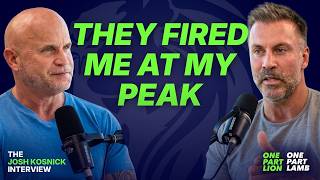
In this candid, long‑form interview, host Stephen Scoggins talks with entrepreneur and coach Josh Kosnick about the painful betrayal and loss he experienced after building a successful business, and how that crisis reshaped his understanding of leadership. They explore the difference between acquaintances and true friends, the power of vulnerability and authenticity, and how modeling real openness in mastermind groups and Vistage chairs can foster deeper connections. Josh shares stories of ego‑driven failures—such as a superstar salesperson leaving a company due to jealousy—and explains his "never arrive" mindset that drives continuous improvement. The conversation delves into spiritual self‑love, using agape love as a non‑selfish foundation, and a journaling practice called "What I Hear You Say Is" that helps him listen before acting. Central to the episode is the LQ Blueprint, a five‑bridge framework (Purpose, Health, Relationships, Professional/Financial, Legacy) that grades life‑quotient and guides intentional growth. Finally, they discuss balancing the "lion" (assertiveness) and "lamb" (compassion) in healthy masculinity and leadership, concluding with reflections on legacy as present‑day impact.
Chapters
They slide two pieces of paper across the table and say, you can sign this one or this one. And I had just enough wits about me to say, I've trusted you my entire career, I'm not signing shit until I speak to my attorney. So I walk out and I make it about 2 minutes down the road and I have to pull off. I couldn't see because I was bawling. My whole world just fell apart. So I sat there for a half hour crying. And immediately after I walked out of the Marriott, my email shut down. I couldn't go back to the office that I own 30,000 square feet of those. My name was on it. I couldn't even go in there. So I make my way home finally. I get home at 9:00 AM and my wife meets me at the door. Very unlike me to be home at 9:00 AM. She looks at me and she just sees it written all over my face. I'm like, I'm done. My whole world fell apart in an instant and in a very difficult way because not only did the person that I recruited and mentored and helped him grow into who he was stab me in the back, but then the company that I loved my entire life put a second knife in. Yeah. Of it.
Hey guys, welcome back to the show. Look, I'm super stoked today. We have an amazing guest for you guys. Not often do you get to be around people that when you feel their energy signature, like, you just can't get enough of it. So our special guest today met at an event a number of years ago, been trying to get him on the show now for better part of 2 years, and lo and behold, we got him. Not only is he a best-selling author, He is also an EOS implementer. He's also the founder of Kairos Coaching, and he's also one hell of a man and a great, great friend. Guys, please help me welcome the one, the only, Josh Kosnick. What's up, buddy?
Appreciate it, man. I'm so excited to be here with you and your beautiful home on this podcast. Let's have an impact.
Let's do it. Let's do it. Well, look, yeah, I'm fortunate. I get to know— I get to know a little bit about your story and a lot of folks may or may not, depending. I mean, you have a very large podcast. People are loving that as well. So there may be some overlap. I wouldn't be surprised if there is. Yeah. Yeah. I tell you what, before we even get into that, since you and Ed and Andy are all really good at the cigars, what makes a great cigar?
Well, so it's much like wine, bourbon, or whatever your thing is. You're gonna have a different palate than everyone else. But it first starts with the master rollers. If you've ever been to Dominican, most people haven't been to Cuba at this point, but like Dominican's a real hotspot. It's like, if you can see these people actually roll this, it's an art form.
Yeah.
It's an art form. So everyone's gonna have a different palate, but really it's about the flavor to you and the how well it was rolled. So certain brands are gonna have master rollers like Cohiba, their rollers get used by other companies. And it's amazing to watch these people do their thing, but then to experience the smoke, I think what's great about cigar culture is, You and I sit at a table and we have a cigar. We're not leaving for an hour, an hour and a half. And so one of the episodes I do each month on my podcast started with an idea in the cigar lounge. It was, hey, we're all socioeconomic differences here, different races, different religions, different genders. And we get into these deep conversations in the cigar lounge, like what's different about this setting that doesn't happen in the public forum. And it was like, well, we're enjoying something that we have in common. We're enjoying a cigar. We're not leaving for an hour, an hour and a half till this cigar is smoked. And we end up getting these deep conversations. So I brought the cigar shop owner and a friend of mine who I've known for 20-plus years that have different backgrounds. Emmanuel's Black, Jason also a white guy, but he also was a constitutional attorney in his past. And we have these different perspectives. We smoke a cigar and have a conversation about political leadership or lack thereof nowadays.
That's a broad topic.
And it's just fun. And a lot of people disagree with what we have to say and a lot of people agree and we don't care because what we're showing people is how to have a great conversation over a great cigar that has depth from different perspectives and disagreements and agreements and we walk out friends.
Yeah.
How it should be.
What's wrong with a conversation? Go figure.
So my favorite cigars are Cubans. But not, but not Cohiba. Cohiba would fall down on the list of my top 10 Cubans, but they're the most popular. And then if I'm smoking a Dominican, it's usually an Opus X.
All right, so we got to get people in the comments telling us what, what they, what they, what they approve. And yeah, they can either agree with you or disagree with you.
Yeah, there we go.
That's awesome. I love it. Well, look, dude, you've, you've done a lot of really amazing stuff, um, and being your friend, I know you're a really amazing human. Like, you're a great dad, you're a great husband. You care deeply about all things that I think make life meaningful. Right. But long before you're a bestselling author, nationally recognized EOS implementer, all the things that you're doing, Kairos Coaching, all of it. Like, if we strip away all the titles, we just strip it all away. Who is Josh?
Hmm. First, I always say child of God. Like, Jesus is my Lord and Savior. That is number one to me. And if I had nothing else, that would be everything I needed. Right? That's the thing I think. And I always say this, that— and you and I had this discussion, like, I don't care if you believe what I believe, but you have to have a spiritual grounding. Because why are we here?
Yeah.
What's our purpose? So that's number one. But being a great husband to Jenna, being a great father to my four kids, like, that's part of it, part of my identity. And what we get into is like, I think identity is a puzzle. And we have all these pieces. Now, beyond that, I'm a great friend. Yeah, I'm a great listener. I'm a great leader, and I'm a great athlete. Or at least I used to be. And all these pieces form me. And I love just expanding my being in each of these areas. I recently was talking about being competitive, like I played college football, but I can't do that anymore. I'm 45, my body's beat up, but I can compete on the golf course. Yeah, I can compete on the next door on the pickleball court.
On the shooting range. I got— we can do that too, or we can go to the shooting range.
I love to compete there too.
Yeah.
So it's finding those little pieces of you that form the puzzle and make the puzzle complete. And those are the things I lean into and just try and embody all day, every day.
Yeah. I want to add to— I want to add to that. Uh, Josh is uniquely authentic. You are not trying to be anybody else. Um, you and I have been in some very, um, what most people call important rooms around important people. Um, we had all fair discussions about how many of those people we love, and we love how they're completely authentic and congruent. And also maybe some others that are not as congruent as we would hope that we would be, and we wish them well and wish them their development.
But everyone's on their own journey. They are.
They're on the journey, right? And part of being a good friend is allowing people to be on their own journey.
Yeah, and not holding space.
Holding space. Yep, exactly. Um, There's a lot of different directions I want to go, um, but one of those is I want to understand leadership through identity and not leadership through title. Yeah. And I've watched you walk this out, uh, knowing part of your backstory, watched you like just be the embodiment of what somebody I would consider a fantastic leader. Like, I like being around you. Like, I don't, you know, I, I— and when you've— when you are a leader and you've had a chance to lead, you recognize great leadership when you see it.
Right?
But I also know there's a cost to that, that the Josh that's sitting here now was not Josh 10 years ago, 20 years ago, 30 years ago. Like, help me unpack leadership through healthy identity versus title alone.
Yeah, it's an important distinction because I appreciate the compliment. I've worked really hard on the authenticity piece because I just realized that I can't be, uh, a great version of Ed Mylett. I can't be a great version of Stephen Scoggins, but I can be an amazing version of Josh Kosnick.
Yeah.
And God wired us uniquely different and gave us all uniquely different gifts. And our job is to identify what those gifts are, but then furthermore, give them back to the world in the service of others. And so my journey, like I learned early on, is I used to avoid confrontation like the plague. So we have this problem in the Midwest called Midwest nice.
Okay.
And like around, around the country, people actually recognize it, like, oh, you must be from the Midwest, you're really nice.
Because we're not mean.
You're not mean. Well, East Coast can have that brash, you know.
Well, we have it here and in the South, but we just talk a little more funny.
Yeah, just a little slower. Yeah, sure. No, the South is very nice as well, cordial. But I think there's an important distinction to be kind more than nice. There is a difference in that because a lot of times in the— why I say Midwest nice is a problem is you avoid confrontation and it becomes passive-aggressive. And so I did that early on. I was pretty, uh, avoidant, and I realized how much— or how many problems it created later. Sweeping things under the rug. Well, the problem is you sweep enough things under the rug, you start to trip over that rug, and then oftentimes you end up lashing out on the people you care about the most instead of directing it towards the, the problem.
Yeah.
And so I worked on that, and then I overswung the pendulum.
Me too.
And I became too blunt. And I had to swing that pendulum back to the middle to realize, hey, my words have impact, especially me as a leader. And so, but what's beautiful in that learning process is if I screw up and I lash out at you, or I say something that I realize affected your being or hurt your feelings, I have a beautiful opportunity to circle back and go, hey, I realize I missed the mark. And sometimes those are the most powerful conversations. I don't care if it's with an employee or especially your children. It's like, hey, Dad missed the mark here. This is what I meant, and I love you, and I meant to correct you in this manner, but I actually went a little overboard.
Yeah.
And I want to apologize for that.
Yeah.
And those become beautiful moments. And so there's been a whole evolution of just me learning lessons as I screw up and learning those lessons and becoming a better version of me and better leader so that I can lead others more appropriately.
It seems like the entry point there is going to be self-awareness, though. You're radically self-aware, and I don't— a lot of leaders, including myself, I was one. I was also the pendulum, right? So on the show we call it one part lion, one part lamb.
Yeah, right.
There's a mature version, immature version. We want to move leaders from the immature versions of those archetypes into a cohesive, integrated version of the mature version of those archetypes. Right. So I used to be overly dominant, right? I would even say aggressive, not even meaning to like my sheer presence for some reason, even though I'm 5-foot-nothing, aggression throughout the wavelengths, right? And so, and I became uniquely aware of that. And then I turned right around later on. And to your point, I was like, I know I don't want to be that. So let me go to the other side. And I went the opposite direction. I went all the way to the lambs, like, whatever you guys think. I kind of, I call it abdicating your throne, so to speak, right? As a leader, you're abdicating your responsibility, your assignment, right? And as I've traveled and worked with leaders, and I know you do as well, One of the things that I see that is at the root cause of many of the behavior issues outside of the constraints that I normally share is lack of or no desire for true self-awareness. How have you found true, authentic self-awareness? And then how can we help leaders do the same thing?
So if you haven't read the book Emotional Intelligence 2.0, uh, for any leader listening to this, that's a foundational starting point. Because it actually, if you buy the physical copy of the book, it'll give you a code in there to take the assessment for free. And self-awareness is the foundation. And I think for me, what has been most helpful— so I read that close to 20 years ago. So that was a huge step as I've always been an avid reader. Now, let me, let me preface, actually, when I was in school, I was a terrible student. When I started to read because I was choosing to read, when it was my choice, something I was striving to get better at, I became an avid reader. A good reader.
Yeah.
And, uh, emotional intelligence came across my plate early on in my journey, and it became a foundational piece to go, okay, I need to be more self-aware, I need to have social awareness, I need to see others, how they are and how they're acting. And we had a conversation on the way to the gym this morning, or on the way back, one of the two.
Well, we got to go twice. Yeah, Josh forgot his ID, we had to go back.
Didn't know I needed my wallet to go to the gym, so We, uh, so we were talking about though is, is I'm keenly observant of people. I've always enjoyed people watching and just observing of other people. But the number one person you gotta be observant of is yourself. And that stems from a value of curiosity. And I think being curious is one of the traits that people don't hear. I think early on in our lives we might have heard curiosity killed the cat. Yeah, I think that's a false premise. I think curiosity is a very strong character trait to have or value to hold. And being curious allows you to understand, like, hey, I, I had some emotion around that, that event or that conversation. Where's that stemming from? Hey, I lashed out in a really weird way and shouldn't have been a confrontational instance. Why did that happen?
Yeah.
And then being observant of people and how they show up, just like We were talking about people in the green room that aren't showing up their authentic self and are putting on a show on stage. It's being observant of that and being like, oh, that's interesting. And you're just kind of checking things off in your mind as you continue to grow down this process. But curiosity is one of the things I hold very, very true because I want to make sure that— and I'm teaching this to my kids. And I was working with a neuroscientist, and I'll bring this as an example up. So my parents' lake house in Wisconsin, like I was telling you, we have 15,000 lakes. We don't have to—
You're not impressed by my One, you're man-made.
Like, it's a beautiful lake though.
Hey, it's like, it's like watching the ocean. You walk outside, you get the water crashing.
It is. They did a good job with this man-made lake. But anyhow, my parents have a lake house in Wisconsin, and we've been going there since the late '90s. And, uh, this, this floating high dive has been in the lake for decades. Some family built it way back when, and it's a tradition every summer. There's a low dive and a high dive, and it's just floating out there. And I took my— we're on a pontoon cruise and my kids wanted to go off it. And my oldest was pretty young at that point. I want to say like 6 years old. And she'd always loved going off the low dive. But this time I'm back in the pontoon boat and I observe her climbing up the ladder to go off the high dive. Now, this thing's rocking.
Yeah, right.
And yeah, I'm like, is she going to go on? Like, is she going to hold on? Is she going to turn back?
Yeah.
And she decided— and my wife being mama bear, it's like, Ella's at the top. She's free.
I was like, water's at the bottom.
I was like, hold on, let's see, let's see, let's observe. And she jumps and she gets back to the boat. And I'm like, honey, that was really brave.
Yeah.
Like, you jumped. Like, I'm so proud of you. And I was talking to this neuroscientist friend of mine. He's like, that's good. And I could tell I was like, there was more he wanted to say. He goes, did you ask her how she felt? Did you ask her what made her jump? Did you ask her, like, did she have any feelings about being scared and why she chose to be brave? And I was like, no, I didn't. He goes, that's what I would do. It's like you want to teach your kids to be curious, not rely on your affirmation or you being proud of them. Yeah, but rather them self-assessing and being curious of why they chose to do something or why they chose not to do something. And just becoming that scientist of yourself. And I've ever since then, I've been becoming more and more a scientist of myself, but also teaching my kids to be scientists of why they're choosing things, doing things or not.
You know what the interesting thing about curiosity is after hearing you share, which I thought was genius, by the way, because I'm looking back at my own life, literally, as you're talking and all the interactions with the kids and all the things. Curiosity is absolutely the key to true self-awareness. Like it's the conduit. But more importantly, curiosity removes guilt, shame, condemnation. Like, it removes all the things that you would normally— like, if you make a choice or whatever, an outburst. I've had several outbursts, obviously, in my, in my career where I wish I'd have done it differently.
Yeah.
And when I first would do it, um, I can— I knew, I knew as soon as it was done that I did something I shouldn't have done. Right. But I wasn't curious to ask why, nor was I curious enough to, hey, maybe I should circle back. Like, that took time for me, right? And what I would end up doing is I would end up beating myself up the rest of the day for that one thing that I knew I did wrong, that I didn't take accountability for, like, that I didn't really sit with. So I love the curiosity approach because Curiosity is what I've used the last two decades, right? You and I know the last really two solid years of really getting clear on why a specific pattern kept showing up in and around me.
Yeah, right.
And the only way I got there with— in a safe capacity to face the things that I maybe I needed to work on or wanted to change or whatever was curiosity, right? Um, which kind of leads me to a bit of another topping point that we, we chatted about in the car today. And whether, whether it was to or from the first or second time, but, um, uh, you and I were having a very interesting conversation. I think the— I wish the audience was listening into, and it was about, in many respects, healthy masculinity, right? In a lot of respects. And I know that's something you're passionate about. Like, a lot of the people you work with are men. Um, you're making better fathers, better husbands, better business leaders. Like, that's core focus of yours. And you and I were chatting about, um, an acquaintance that we've, we've met along the way, right? And friend. And that we realize that maybe they're stepping into areas in their life that they just— they're on, they're on their own journey, right? But we really— we can see patterns.
Yeah, right.
We see the, the request for validation, affirmation. Like, I would call it father wound. Like, how are you helping men, especially with your own story? Because I think this is where this— because this is where the dichotomy came up. You handled things very differently as a young man.
Yeah.
Than most men I have met, including myself, about being radically self-aware. Or it— I mean, I'm just turned 50. Like, I, I literally just died to proving myself to the world not even a year ago. 2 years ago where I felt like I had to prove like that I, you know, I built a company, I had done this, and I had done social media and all stages. And I'm like, no one gives a rip anyway. Yeah, like they care if I can impact their lives in a positive way, right? So, um, but that dying to performance led me to ultimate authenticity. But I'm seeing men, leaders, good men. Yeah, great qualities, great leaders. continue to be their own bottleneck.
Yeah.
So I'd like to maybe unpack your, your story a little bit there. I think around the age of 14 and stuff, as a friend that I know.
Yeah, that story.
And then help people understand and contrast that for the man who's watching right now, or the woman who's married or dating the man who's going to need this episode.
Yeah. I hope as I share this story that, that people can think through their own childhood, because there's going to be a moment that hopefully there's an epiphany that goes, ah, it's interesting when people tell stories. I feel like we can connect to our own stories in a way, and they hopefully have an aha here. So I grew up with a great father. However, he wasn't one that would show love or affirmation, and I can count on one hand how many times he told me I loved you by the time I was 18. Now, I always caveat this because he's done a much better job in his older years.
You tell me you have a great relationship.
He's a bigger teddy bear than ever. Will cry. Like, I never saw him cry, but now will cry in a sad commercial. So there's that lamb. Yeah, there's the lamb. And it's one of those interesting pieces where I— I'm the oldest of 4, 2 younger brothers, younger sister. And I was just my hero. I wanted to hear, "I love you." I wanted to be affirmed. So I would perform, you know, through sports, not so much in school, but definitely through sports.
I can do sports.
I can do sports. I was pretty good at that. And I remember this soccer game. I was on this U-12 team, travel team, really good team. I, you know, I made the team and I had this really good game, really good game. And I get back in the car and he told me that one of the parents at the— getting emotional just thinking about it.
It's good. Safe Haven, baby.
Yeah. Said, said, man, I wish we had a kid like that on our team.
Mm-hmm.
And I just, I just looked out the window and I was like, why can't you? Why can't you say that about your son?
Mm-hmm.
And it was around that time, I think I told you, 14, but I started to realize, like, I may never get this.
That's a hell of a realization as an adolescent.
Yeah. And that's why we were talking about— I was like, I don't know what it was about me, but at 14 years old, the crux of the story was that I just decided that I'm only going to need affirmation from myself and God, and that's all I'm going to rely on. And so that's all I've ever relied on. And so I just made that pivot and that choice that I'm not going to chase his affirmation. It's not that I'm not going to try to be great at sports or anything else in life, but I may never get it from him, but at the same point, I started to question, like, why do I? Like, I get for most of us sons, our fathers are our first heroes. But like, if he can't give it to me, I don't— I don't know why I need it either. And so I have God, I have myself. I'm just going to be relying on myself. So fast forward, I told you the story about my wife, and this is a really big impression. So I always use the yin-yang as an example.
I'd love you to tell that story because I think it plays beautifully in what you're saying.
So the yin-yang symbol, everyone knows there's the dark black side with the white spot and the white spot with the dark black circle. And what I believe about that is that for every major strength we have, there's a corresponding weakness, and every major weakness, there's a corresponding strength. So this, this not needing affirmation thing from anyone else, meaning like I didn't need society to tell me, uh, anything. I didn't need my dad. I didn't need anyone to tell me anything about me.
Me.
I was good with me. And that became a major strength because a lot of people struggle with that and they need this validation to the point where it— like you complimenting me earlier, like I've gotten much better at this. But if someone publicly praised me in the past, I became very uncomfortable. And that was actually a weakness.
So it's really wild, as I did too, but then I would crave the validation. It's wild.
But I did— like, it would make my skin crawl.
Yeah.
It was, it was odd. Whereas most people love that, like, I got very uncomfortable. Like, people could notice my uncomfortableness as they're speaking well about me, whether it was introducing me on stage or a compliment in the office or whatever it may be. So fast forward, I'm on this drive back to Indiana where my wife's family lives. It's about a 6-hour drive and my wife and I are up front and my kids in the back. And she had tried to compliment me on something and I said, I probably gave her my classic response of, "I know." Like, just an example, like she would tell me, you know, I look good today. I'd be like, "I know." I brushed my teeth.
I'm good.
Yeah. And you did your hair today. Yeah, I didn't put a hat on yet. And so we're driving back and she looks at me and she goes, "You don't need affirmation from anyone, do you?" I was like, "No." She pauses and sits quiet for a minute. You can feel something else is coming. And she goes, but do you think I do? Do you think our kids do? Do you think your employees do? And it was just like a gut shot. Mm-hmm. It was just a gut shot because I wasn't giving her, my kids, or my employees the very thing I craved from my dad.
Mm-hmm.
And so I was turning into him inadvertently.
Yeah.
And it wasn't like—
ever, out of curiosity, do you ever go back? The reason I ask is because I've told you I've got a, I've got a couple boys that aren't biologically mine, and I've watched them chase validation, affirmation from their bio dad, right? And one of the, one of the things I've tried to help them see is when I got to know their bio dad, he's a good dude, he loves his sons, but it was never modeled for him.
Yeah.
Well, he wasn't even sure it was supposed to be done. Do you have— do you know any— have any insight in your dad's—
Yeah, it was the same thing. We were up hunting, uh, they own a lot of acreage next to the lake house, and we were up hunting and we were smoking a cigar after the hunt and had a good conversation about this. And he goes, well, where do you think I got it from? I was like, probably your dad. He's like, yeah. I looked him dead in the eyes and I go, you were smart enough to change though. He's a great entrepreneur, great leader, great dad. And I know he was smart enough. He was the one that taught me the phrase and learning that literally was drilled into my head. You're either green or growing or ripe and rotting. I still use that today in my coaching.
Yeah.
And that was taught from him. And so I was like, you were smart enough to change. And I don't hold this against you. I just want to know where this impacted me.
Yeah.
And so again, very— but that's been modeled generation after generation, right? Most of us men were like, don't cry, don't show emotion, rub dirt on it. All those things. It's a complete bullshit statement. And the fact is that we are emotional beings and how we show emotion may be different than women. Yeah, but that like the bottling up emotions has never worked out well for anyone. Yeah. And for us to just pass that down. So we got to be generational curse breakers. In a lot of different ways. My dad was a generational curse breaker in being lower class poor. He chose to change that. So like Ed Mylett said, like my dad was the one that showed up and changed that poverty curse in the Kosnick family. And that effort, and that's how he showed he loved us, right? Because he didn't—
If I provide well, I'm loving well.
Yes.
I used to tell myself the same thing.
Yep. That's how he showed it. And he did a great job of that. He modeled success and he taught us boys how to be really successful and provide. And we've all gone on to do very well. But that being said, there was, there's that lack. So what my brothers and I have decided is like, we're going to change that generational curse of not showing love, not showing affirmation for our kids. And we all have girls. We all have girls and two of us have a boy as well. But just like my son hears from me every day that I love him.
Mm-hmm.
Every day, at least once a day. Yeah, right. My, my girls obviously as well. But like, that's the— like, we all have a choice. Like, no matter what you grew up with, great parent, shitty parent, whatever it is, you don't have to be them. And you have the choice to break whatever curse. And it's like the question we like to ask is, okay, I like to ask, and this is going to sting for some people. If you're not going to be the one to change or break this curse, tell me which one of your kids is.
Mm.
You tell me right now. So you got 3. Like, I'm just going to say this person over here. You have 3 kids. Which one of your kids are you putting that on? Answer the question.
Radical accountability right there.
They got it. They got to realize it's upon them and they can be the ones. They just got to choose it.
Yeah. Yeah.
Mm.
Have you ever heard the— there's a story. I'll paraphrase it. It's called With a Father Like That. Have you ever heard that little story? So I'll give you its synopsis version because I used it when I was growing up. My dad would say, I love you. He just wasn't around much because he was dealing with his own things. He's like your dad. He's a fantastic grandfather, fantastic dad. He's like a super mushball now. Like, I get I love you, son, in capital letters. I'm 50 years old and I get it, you know, a few times a week. And, um, yeah, I just saw him not that long ago and he said, I just want to let you know, that was the most— like, when you get— when we get the time to— because he knows how much I travel, it's like, when I get time to spend with you, like, share with you, like, it means everything to me, right? Which is a good reminder for me because that was one of those generational things through our lives that the men just went out and worked and provided.
Yeah.
And did the best they could, right? Hard, hardworking class. My dad said once, he says, "Scoggins don't get ahead, they get by," right? So limiting beliefs, lots of, lots of things. But when I met old man Myrick, one of the stories he told me, he called out a father like that. And I remember how old I was when I heard it because I can't— from like, I'm sitting here right now, I'm like, when did I— when did I hear him say that? Was I already in business? Was I not in business? Was I a teenager? And I don't recall. I just remember being inside of his Jeep Grand Cherokee like I had done so many times before with other powerful conversations. And he said, Stephen, I'm gonna tell you a story of two young men. They had the same father. They were a happy family. The mother passes away early, and the father is, you know, forced to basically raise two kids on his own, two boys, matter of fact, and also deal with the loss of his wife. Who he was deeply in love with, right? So their mother, the whole family dynamic was full of immense love. Okay. And over time, the father begins to struggle, gets involved in alcohol. Maybe this is where the alcohol thing came from, gets involved in alcohol, numbing, numbing pain, working as hard as he can, ends up passing away fairly early in life himself. About the time he passes away, the, the boys go their separate ways, right? And, um, a reporter sometime a decade later is doing a story on, um, success. So the reporter says, well, I'm going to go and look at both extremes of success— radical poverty, radical affluence, right? So he goes, he starts first, and the story says that he's in New York, okay? And he goes to radical poverty, goes to one of those little tent cities, right, where they got the fire cans with the fire coming up and stuff. You see him a lot in Spider-Man movies, right? And stumbles across a man. He said, I'm so-and-so, I'm a reporter. I'm doing a story on success. Homeless man says, well, what are you doing here? Right? He said, well, look, I'm just trying to understand. Would you mind sharing your story with me? He goes, and the guy's like, well, for $5 or $6, yeah, I'll tell you my story. Right? Guy's got alcohol sitting in the corner of his little tent area and whatever and proceeds to tell him a story about how he came from a loving family. His mother passed away. His dad started to really struggle and, you know, that he hadn't seen his twin brother in decades or a decade. And the guy stuck out the guy's head like, twin brother? Interesting. Okay, well, keep going. So he's like, well, and he gets to the end of the story and he's like, well, you know, now that you understand our story, how my dad went for alcoholism, became abusive, all the things, and then dying early with a father like that, now, now you know how I turned out the way I turned out. The guy doesn't think much of it in the moment. He said, what's your brother's name? So guy gives him the brother's name. Guy goes back, does some extensive research, finds 2 or 3 different people it could be, ends up landing at a high-rise in New York, goes inside and says, hey, look, I'd like to see, um, so-and-so. The security guard's like, I'm sorry, Mr. So-and-so is not available. You have to have an appointment, blah, blah, blah. Well, it just so happens Mr. So-and-so is coming down the elevator and overhears the reporter say his brother's name. And so he immediately goes over, where's my brother? I haven't seen him in a decade. Where is he? I need to find him. Right. Well, I've just found him. I'll take you right to him, blah, blah, blah. Um, he says, but on the way there, will you tell me, will you tell me more about your story? How did you end up in this this beautiful high-rise. I see you're, you're one of four names on the building. And he goes, well, it's, it's actually not that hard to understand. I grew up in a very loving family. My mother was amazing. She died early. My dad took it really hard. He worked his butt off. Unfortunately, got involved in alcoholism, which later led into like abusive behaviors. He ended up dying early. My brother and I split our separate ways, and I haven't seen— I really haven't seen him since. And so with a father like that, what do you expect? Right.
I've heard that told a different way. Yeah.
So, but the story in and of itself has to do a lot with perspective and shifting of perspective.
Yeah.
You know, I'm working with and coaching leaders. I think I said this to you earlier today, that the two most difficult wounds that people will ever overcome is a father wound and a mother wound.
Yeah.
And some of us have to overcome both, right? And, and to go on to break that generational curse, curse and stuff. And what I've discovered is with the people that I've been working with, most of their bottlenecks in their business and their relationships have to do more with that relationship than anything else, you know. And to have the awareness at 14 years old to say, I'm not gonna seek a gift that does not exist I'm going to create it from the inside out, I just think is powerful. It took me 50 years to do it. Something you did at 14. I'm a little jelly.
Oh, I still don't know what it was about me or what that decision was. I'll have to do some more prayer and kind of reflection on it, but it just— yeah, it's always stuck out.
Yeah. Yeah. Well, as you've— as you've been leading, or you've been leading for a while now, you've been very successful as an entrepreneur. Um, you're obviously one of the top-rated EOS implementers very successful book. Your philosophies around coaching, mentoring, leading are very strong. Um, but I also know for a fact that you've had everything stripped away from you in an instant. And I'd like to maybe lean in there a little bit because as amazing as the work that you've done and the things that you even do now and how you are so very intentional with the people you surround yourself with not just coaches, but like the family and how you show up and like the intentionality you put behind everything. Like, I don't know anything that Josh doesn't— that he doesn't do it intentionally. Like, even at the gym, you intentionally were doing sets to their max. Like, you know what I'm saying? Everything's intentional. Like, on the surface, you would think that every, every attribute you already bring to the table would virtually guarantee success without extreme adversity, but that's not what happened.
Well, that's not what happens for, I don't think, anyone that's successful. And so for my story, I was— to give a backstory, I actually was able to succeed my father. I started as an entrepreneur when I was 24, got into the financial advisory world, and my dad was in that world, and I was trying to avoid him like the plague. And I got told no for a raise at Best Buy as a sales manager. I was running a top 3 store. And they told me no. And that was my inclination to go, yeah, I don't want anyone determining my worth. End up tucking my tail and calling my dad and said, yeah, I want to do that. But to sum that up, I had this kind of meteoric rise into leadership within that ecosystem, and not because of who my dad was, but because of how I was performing and who I was. But at 35, I was asked by the Fortune 100 company to succeed him. It wasn't his choice, not that he wouldn't have chosen me, but they had to make that decision. And so I was appointed one of the youngest managing partners in the company history and was able to send my dad off into an amazing retirement, buy him out. And that was awesome. And it was like I was on top of the world. Mm-hmm. You know, at that time, though, that was 2016. It's interesting, as people see my physique now, I was never out of shape. I called myself skinny fat at that time. Skinny fat.
It was—
You look good except for this one little area. Yeah, yeah. It's kind of formless is what I would say. So that was out of alignment for me at that point. I was, like many entrepreneurs, sacrificing one thing for another, and health happened to be that thing. And I had young kids at that time, and I had all the excuses. But in 2016, as I hit that peak, I was actually at one of Ben Newman's things.
And yeah, his accountability is extreme.
Well, I've done his workout several times. This was before he got really extreme. He and I have helped each other on that journey.
Oh wow.
And, uh, he asked us a visioning question, and we're there with Jerry Rice and Tyron Woodley, who just won the UFC, uh, welterweight championship, some Navy SEALs, like, and I'm looking at them all peak performance. Like, Jerry was 50 at that time and still looked like he could go out on the field, uh, and I'm like, I look at myself and I'm I'm like, this is not my standard. I'm at the peak of my career and I've kind of let my— one of my standards go. I need to change that. Uh, but fast forward 5 years into, uh, owning this firm, we go through COVID in 2020. I send 250 people home during lockdown. Now, but what I want people to realize, we were a 99% face-to-face business.
Wow.
We were like usually across the table across the desk with our clients. And we have to learn this new technology and new way of being with clients. So there's a lot of trepidation, how this year was going to go, how finances were going to go. And it ended up being a huge blessing in disguise. We were up 30% that year, and we weathered the storm. Now, there was a lot of bad things in that time, like everyone. It I was working, you know, 8 to 5 on normal meetings, and from 5 to 8, uh, playing part-time psychologist for 250 people. Yeah, because people were going— we're a people business. Like, yeah, not being around people was a big mindfuck for everyone. And, uh, so that was leaving very little time for my family, uh, very little, uh, self-care.
And what time was there was probably leftover time. Like, yeah, leftovers, love, lover band with you?
Well, I mean, my, uh, my energy, everything was really off, uh, because I was just caring about everyone else and theirs. I wasn't caring about myself or those that mattered most to me as much as I should have been. So we get through that, we're up 30%. I'm like, 2021 hits, the world's starting to open up a little bit. We're not through COVID yet, but starting to. So I'm like, all right, let's go gangbusters this year. We got big goals to hit. We start going after that, and all of a sudden I get hit with a ton of brick One of my leaders decides that they're— I'll describe them, that they're a narcissist through and through. 18 months before that, they tried to give me an ultimatum. By the way, really bad negotiating tactic for anyone. Don't ever give anyone an ultimatum, especially as someone you employ giving you an ultimatum is a bad negotiation tactic. Because of his immaturity and because of my care for him, I chose to not terminate him in that moment and continue to work with him. This was me learning more and more about narcissists. When you try and back a narcissist into a corner and correct behaviors, it's like trying to back a tiger into a cage. It doesn't work. So as I'm trying to correct these behaviors, he sees it as a personal attack.
Mm-hmm.
Really, I was trying to protect him from himself and also give him the future that he wanted to have. To have. And, uh, so early 2021, instead of working with me and working through that, he decides to sue me for discrimination. And not because I did anything wrong, not because he was discriminated against. In fact, he was the youngest appointed African-American managing director in the company history, 160-year-old company. But he decides that's going to be his path. The Fortune 100 company says they're going to fight this with me because they already did their internal audit of me, investigation, knew I did nothing wrong. This guy had spliced private audios, was recording our private conversations that I had no idea of. In Wisconsin, it's a one-party consent state, but he was splicing these audios together to make me look like a bad guy. And anyone with any quest would have pulled He would have figured that out in a split-hot second.
How come the microphones sound different?
And it— so he forwards that, tries to get me in trouble, doesn't work. So he ends up suing me for discrimination. And because he didn't get his way. A month after that, the company, instead of helping me, comes into town, sits me down at the Marriott and says, No easy way to say this, we're going in a different direction. You're no longer managing partner.
Hmm. How do you excuse a managing partner exactly?
Well, so I kind of told you this earlier, it was like the way I always described to the outside world how our contracts work is I would describe it as like a hybrid between a regional vice president and a franchise owner, because if I wasn't doing the job, they could remove me, but they would have to buy me out. I never for once thought that I could be doing the job extremely well and be removed. So that's— that was the bigger shock to the system. So as I'm sitting in this lobby of this Marriott, the two gentlemen sitting across from me that I've had a relationship with for over a decade, uh, like, your mind just goes— like, it slows down. It's like a movie scene. I see two people that I know from the home office who are part of the security detail across the lobby. They're there in case I became a problem. Now, I was a much bigger man than this, this person sitting across from me, literally and figuratively. But it was just— it was surreal. I didn't have much to say. They slide two pieces of paper across the table and say, you can sign this one or this one. And I had just enough wits about me to say, I've trusted you my entire career. I'm not signing shit until I speak to my attorney.
Mm-hmm.
So I walk out and I make it about 2 minutes down the road and I have to pull off and I pull into a park-and-ride. And for those of you from not from the Midwest, a park-and-ride is just a spot. You— it's a parking lot where you may meet up to pool, carpool, or in this instance, it was people going down the bike trail, getting their cycles off their cars. But I couldn't see because I was bawling.
Mm-hmm.
Like my whole world just fell apart. And it was so out of left field that I just couldn't even process. So I sat there for a half hour crying and figuring out what's next. And immediately after I walked out of the Marriott, little did I know that my email shut down. I couldn't go back to the office that I own 30,000 square feet of. That was— my name was on it. I couldn't even go in there. And they had sent out an email and they did a they had my replacement in my office doing an emergency webinar the moment I walked out of the Marriott. I had no— but texts and calls start flooding in.
They've been planning it for a while.
They had been planning it probably as soon as that lawsuit came through. They started planning, would be my guess. And like, being 5 years removed now, I understand the business decision of it. But there's also the human element. So I make my way home finally. I get home at 9:00 AM and my wife meets me at the door. Very unlike me to be home at 9:00 AM. And she looks at me and she just sees it written all over my face. I'm like, I'm done. And her immediate thought is, what are we going to do? Because she didn't handle any of the finances either. And we were— I was in the financial planning world, so I better be set up very well. And we were, and they were going to have to buy me out. But little did I know that that was going to take 6 months. Months because you get the attorneys involved and always takes longer. Uh, but my whole world fell apart in an instant and in a very difficult way, because not only did the person that I recruited and mentored and helped him grow into who he was stab me in the back, but then the company that I loved my entire life, uh, put a second knife in. Yeah, on top of it. So I'll stop there and we can continue on about—
yeah, I just, um, I have— I'm always naturally curious, as you— as we said earlier. Um, the people— so I went through my own level of betrayal, pretty extreme. Uh, I would say in my, in my version, it was, it was malicious and intentional. Um, there's lots of, like, tremendous amount of evidence to support that. Um, I've also had to let people go before, or play a role in letting people go before, that I love the person. Like, and I've— when I'm— I'm more tactful now than I've ever been because obviously you're, you're upsetting a family, a household. Yeah. Um, it's never supposed to be an easy decision. You should be able to factually back your way into that decision. Do— did you ever have a chance to go to maybe meet back up with the people you were closest to and find out what pressures or anything like that were put on them as part of that decision?
So no one internally was— had any pressures because they couldn't let anyone know because they would have— they would have gotten back to like a HIPAA law or something. Well, not only that, uh, everyone was so— they knew everyone was so loyal Well, to me, it would've gotten back to me if there was any pressures placed on them beforehand. Ton of pressure placed on them after, and their leader just gets removed. The culture gets completely blown up, and the whole thing's falling apart. And if you look at, you know, my wife gets joy out of this. I don't because it was part of my legacy. But we had 115 advisors the day I was terminated. There's 60 now. Wow. The culture, everything is just completely ruined. And now they have replaced the person they replaced me with, with a new person to try and build it back up after they ruined it and threw a bomb in a place that didn't need to have that thrown into. So I don't find any joy in that because that actually hurts because I didn't get to finish building what you started, what I started, right? And it was, it was, it's hard to hear that to this day, how bad it's gotten. But my, my brother's still there, uh, and he had an immense amount of pressure placed on him to try and save everything. But it wasn't— that shouldn't have been his— that shouldn't have been on him. Yeah, to begin with.
Yeah. What— all right, so I bet if people are honest with themselves, if they haven't been through something that, that feels at a deep betrayal, they probably will at some point in life.
Yeah. And I always tell entrepreneurs as well as like like, if it's not a matter of if you get sued, it's when. And it's, it's always going to be painful. Like, I look back at that ultimatum that I was given by him. I should have terminated him then. The writing was on the wall. What was I scared of? Getting sued. What ended up happening anyhow? Got sued.
Yeah. Did the lawsuit ever come to any fruition?
So that went for 2 years. So that was like a dark cloud hanging over me. So I had, uh, the 6 months months to figure out the, uh, exit with the attorneys. So I always say I was like in two legal battles at the same time. And then the other one went for two years. Every— it was all bullshit. Every witness that, uh, he was going to call, I would have called. And, um, his attorney, he hired an ambulance-chasing one, uh, saw the writing on the wall real quick and they moved to settlement, uh, very quickly. They started the lawsuit of $4.4 million There's no— like, he made up sheets for the— that were supposedly from the corporate office. That was his projections of what he was supposed to make had he been in this position, and they were fabricated. And then by the end of it, they—
full of integrity.
Oh yeah. Oh yeah. That would not be a core value of his. Then it gets down to at the end where it becomes a calculation and a weighted thing. If anyone's been in a lawsuit. So my attorney gets the call, says, hey, we're willing to settle right before we were supposed to go to trial. I was fully willing to go to trial because I knew I would be exonerated. And the attorney, my attorney, calls me and said, hey, they're willing to settle for $400,000. I was like, nope, not— I was like, in fact, if we look at any six-figure number in this, I was like, first of all, Bill, who's my attorney, I was like, I'm not really willing to settle because I didn't do anything wrong. And he goes, yeah, Josh, I get and how long and how much do you want to play this out? And that was a great question because I go, well, you tell me, Bill, what is going to be if we go to trial? How much more am I going to put into this? And he gave me a number in between $250,000 and $500,000. I go, all right, if it's anything over $75,000, we're going to trial. And so he went back to the ambulance chaser and that's what we settled at was, you know, a number that we could agree with. But like, that was, that was my standard to him. I was like, I'm not willing because what I started to think about was like, all the time I've been, it's been 2 years of this dark cloud over my head. What are we going to do? Like my family's emotional toll, all the people that all my my former employees that I cared about that would have been called into this, taking time out of their day to be on the stand. Like, I started thinking through all that, and because I have such a deep care for people and their time, it wasn't about me. I was like, let's just get this done with and I'll move on.
One of the most important questions I feel like I can ask, um, right now is— because I want, I want leaders to be asking themselves the same question as they watch or listen right now, when they're— and whatever this event is for them, right? Could be nowhere near the level in which it accumulated with you. Could be, could be beyond it. What did you learn about you during this season that added a tremendous value, or maybe challenged some of your own belief patterns? And, and what did you learn about you?
Lots. Now, let me try and, uh, quantify it. So during that 6 months of— I'm going to call those my pits of despair because not only is, you know, we talked about identity earlier. One of my bigger mistakes was my identity was wrapped in that title, that position, owning that company, being a part of that Fortune 100 company, part of like I placed my identity in that and that was wrong. So I learned that real quickly and that's where I formed the Five Bridges changes and, and started to have more of an identity shift to being the puzzle pieces. So that was a big thing. About a year into it, my coach asked me a really powerful question. He goes, we were talking about the person and the— how the lawsuit and everything was going. He says, you seem to be having a lot of empathy already for this person. How are you doing for you?
Mm-hmm.
How's Josh having empathy for Josh? And it was one of those knife in the stomach questions. I was like, not good.
Mm-hmm.
Still carrying a lot of shame and guilt and, and, and all those, those feelings that are just not productive towards myself because of how radically life had changed so quickly. And the other thing that I want to put out there is like the perseverance and strength. So I started journaling in this time and I started to write down things that I'd never been against journaling. I just never took the time to do it. My coach, very aptly says, I want you to start journaling. I was like, what do you just want me to write down all my shitty thoughts right now? And he's like, he laughs and he's like, well, kind of. Let me put it to you this way. You're never going to have these exact emotions ever again. Capture them. And a lot of those journal entries ended up in my book because they're powerful. But some of the things I wrote down were extremely emotional, and some of them were like kids or quotes from my kids that like struck such a chord where I'd start bawling. Like, Daddy, why aren't you in your work clothes? My work clothes at that time were expensive suits, custom-made suits. Daddy, aren't you going to work today? Daddy, why are your eyes wet? And then the quote, the two words that was the most powerful that I wrote down that whole time was, they're watching. I always taught our kids what happens when we fall down, get back up. So who would I have been to not get myself back up and be that example in this instance? And I want to put more perspective on that. It's like I got a very large buyout.
Out.
Like, I could have hid for a while. And I had multi-seven-figure offers to go do exactly what I was doing with other firms. And I chose to not take them. I could have done a lot of different things. And I chose to rebuild from the ground up. Yeah, because everything God kept telling me in that timeframe was like, these lessons aren't just for you. And that's why I wrote the book. Because I never intended on being an author. Like, I even joke, like, if my English teachers are still alive, they'll be shocked if they ever ever picked that up, but like I never intended on it. But God kept telling me these lessons aren't just for you. So I didn't— when I wrote the book, I wasn't trying to be an expert in one certain area to carve a niche like a lot of self-development authors are. I'm just sharing from the journey.
Yeah.
And if you can learn something from the journey, from our conversation today, from the book that I wrote, The Kairos Code, like that's all I want to do is like give game from the journey and help people have an easier time or easier path than I've had.
Yeah, or encourage him, at least encourage in those dark moments.
Yeah.
Um, thank you for answering that vulnerably and honestly. Um, I want to ask you one more, and this is gonna— in the same kind of vein, um, because one of the things I'm trying to help leaders appreciate more than not is the person who's standing with them in the storm. How did— how and what did this teach you about your marriage?
Mm-hmm. That woman's everything, man. Think about how many women would have left, how many women wouldn't have stood by. I was broken. I got tore down and she didn't— she didn't waver once. That's a real relationship. Someone that stands with you at the top and someone that crawls down to the bottom with you. And it wasn't just her. I think a lot of people mistake God being above us and being somewhere up here in heaven.
Mm-hmm.
And not necessarily feeling like they have access, or that He's not present. And I will tell you that in those pits of despair, even though you may not always feel it, He's right there.
He's in the furnace.
He's right there with you. He's not reaching down to pull you up. He's oftentimes carrying you like the footprints in the sand poem. Like the guy— if anyone's ever not heard that poem, I'll just sum it up quick— is a guy's walking in the sand thinking he's walking without God and blaming God. And God turns to him and says, it was then that I was carrying you. Those footprints were mine. And he was.
I've been there too myself, brother.
Yeah.
And again, I wanted to— it's funny, a lot of, a lot of— if they, if they watch you on social media or they watch you on other shows, um, you get to carry your Spartan energy a lot. Yeah, we both have a Spartan vibe. I got a Spartan chest plate on my body and everything like this else. And then, you know, I'm also reminded about David, um, And when I look at King David, one of the things that I see, it's not like he wasn't without faults. He didn't make mistakes, but he did own them quickly, as quickly as humanly possible. One of the things he's— that is seldom forgotten is there's a side of him that's playing the harp and there's a side of him that goes to war. And both are David. Yeah, right. It's, it's the strength and the surrender simultaneously. It's the— it's being the warrior and the worshiper simultaneously. It's like being all of that. And as your friend, I just want to say thanks for going there with me.
Yeah.
Because that's the side of yourself that I want the world to see more of, because I actually think that is the side that drives you.
Well, that's— so that's, that's what's interesting too, as you learn this, is like people were very attracted to my success. Mm-hmm.
Mine too. And one of them was all bullshit.
And one— but, but one of the blessings in disguise, and it's a painful lesson, but also a blessing. When I got knocked down, I got to find out who was real in my life and who wasn't. And not everyone gets that blessing. Like, like you find out real quick who was with you just because of what you could do for them versus who wanted to be in your life.
Yeah.
And that's, that's, it's a painful one, but it's such a good one. Like, I know who's real and I will always remember who was there and I will always remember who wasn't.
So my girlfriend recently challenged me, right? She's like, babe, I love you. I think you're amazing. Like, you do a lot of really things well. Clearly you've been doing work for a long time and you've done a lot of really cool, amazing things. She goes, but, um, she said, who, who are your friends? Like, who legitimately are your friends? I'm like, what do you mean? I got, I got, I got lots of friends. She goes, you have, you have lots of acquaintance friends. You know a lot of people and they know of you and you all speak well of each other. But who knows you? Like, who can you pick up the phone and say, bro, I'm struggling?
Or— and she—
and, you know, and then I, I, at least in that time, I was, I was thinking through that a little because— and this is where I'm gonna be a little real, um— for me, the vast majority of my life, I've been surrounded by people who could get something from me. Like at a deep level, right? I'm the guy that— I'm the, I'm the, I'm the coach in the storm. Their marriage just imploded, I'm calling Stephen. Um, my business just imploded, I'm calling Stephen. Or, well, Stephen was just on this really big platform, maybe he can introduce me to so-and-so, right? Or like, you know, we've got mutual friends and like Ed Mylett and a few other people. I don't call and ask for Ed for anything, Yeah, like, I'm trying to— I'm friend. If he wants to pick up the phone or we want— he wants to chat and be open about something, I want to be there, right? But she's like, who's that for you? You know? And when I— if I'm honest with myself, I've got a handful. I got Henriette Maher. He's a friend. Like, he showed up for me on a time he didn't have to. He put my present pain over his current priority in the moment and helped me out in a big way. I got Randy Garn, right? And after that, there's a symbiotic relationship with pretty much everybody else. And that's just being honest, right? It's, it's, you know, so she's really challenged because she's got— she's heard her dynamic is different. Okay. So her— she grew up in an environment where having a close 1 or 2 friends is really important. She has, I want to say, 2 that I know of that are really close. And I think a third, right? Ride or die. She's known her entire life. Looking back at my life, everybody that I thought I could trust ended up betraying me. There was a time even my own mother stole my inheritance. Right. There was a time that I had to bail my dad out. Right. There was a time I had to show up for my siblings. There was a time I had to show up for their spouses. Like, it's always been— this is one of the patterns I just broke in the last 24, 40 months. It was always been Stephen to show up and save it. And then I realized something that God shared with me during that journey after my New Zealand trip, which you and I talked about ad nauseam this morning, last night, a little bit. Was every time that I, I stepped in front of the lesson that they were learning and took weight off of it that wasn't mine to carry. First of all, I'm carrying weight that's not mine. Second of all, I'm actually impeding God's progress for them.
Yeah, 100%, right?
So now I'm sitting across the table with my brother and I'm, I'm hearing my girlfriend say, well, who's your friend? I'm like, I'll be damned if Josh isn't one of them.
Yeah, I was literally saying you can call me anytime. Yeah, I want to, I want to finish that thought that I— so people were very attracted to my success. And I want to say this to all the entrepreneurs listening: people will always be attracted to your success, but they connect to you through your vulnerability. And that's where I've learned to lead better over the last few years, is not hiding from this shameful, guilty, embarrassing traumatic experience.
Yeah.
But literally telling the world about it.
Yeah.
Because like, you're, you're going to— your pain or your trial may not be exactly like mine, but you're going to have them.
Yeah.
No one gets through life unscathed. So if, if everyone's going to go through life and have these trials and tribulations, why are we not sharing them? What— because someone may be able to learn. Like Ed's always taught us, you're best equipped to help the previous version of yourself. Like, I don't know if he's the first person to say it. You might have said it first.
I've said a version. Rory said a version. Yeah, who cares? The truth is a truth.
It's a truth. And it's true because that's why I want to share from the journey is like, that was really painful.
Yeah.
And you can learn from my pain and I can learn from your pain. And so why are we hiding from the pain? Just share the pain and we're going to connect through our vulnerability, not each other's platform.
Yeah. When you look at leaders today, and I know you do major installations with major organizations with the EOS, so you get around to be around a lot of leaders at different levels, right? Executive level, operational level, so on and so forth. But just a part of that journey, plus the Kairos coaching you're doing, which has been done very, very well. How are you using these lessons of vulnerability and authenticity to bring awareness to them? Because one of the things that when I used to hear— when I hear the words authentic, authenticity and vulnerability, I'm like, okay, sounds good. How do I do that?
I model it. I model it immediately. So I've started, you know, a localized mastermind. I got asked to be a Vistage chair a couple of years ago. I was like, man, no offense to that. I just thought I could do it better. Yeah. And start a localized mastermind. First meeting, laying it all out there. Not in a like, woe is me way, but like, this is how we're going to operate in this group. Because for us to have maximum impact in each other's lives, we're going to share. And in this room is a safe space. And in this room, we're going to keep what's said in this room, in this room, and we're going to get real. We're not going to be afraid of the real stuff. And same way with podcast, same thing with the book, like literally modeling what vulnerability looks like because there's a lot of fake vulnerability out there nowadays too.
Yeah.
People looking for likes and clicks by claiming victim status on Facebook and just looking for likes, looking for fake sympathy, essentially. Like, there's a lot of like, no, it's modeling a true healthy vulnerability from a spot of this is what I've overcome or am overcoming and just being— or this is the weight that's on my shoulders right now and I'm working through it. But at the same point, like, I want to share that with you guys. So you have—
it feels heavy today.
Yeah, it feels heavy. And those are the one of those friends that you need to be able to call and say, hey, Hey, this feels heavy for today. I don't need to do anything. I just need to talk about it.
Yeah. Yeah. What's the most under— of all the things we talked about, what's a layer that I'm— there's a, there's a question within me that I can't seem to find the way to frame it around words. And it has to do with healthy leadership. Like, I don't know that I've ever heard anybody fully articulate what healthy, embodied leadership feels, because I feel like it starts with self. Until you can lead yourself, you should not be leading other people.
Well, it goes to the point where we were talking about earlier is you can't truly love others until you fully and truly love yourself, or you can only love others to the extent that you love yourself. So you can only lead others to the extent that you can lead yourself.
Yeah.
So it has to be modeled. You have to lead by example. You also have to have an immense amount of love of others. Immense. So the hardest thing for me—
Yeah, but see, the love of others also gets miscommunicated as self-abandonment. Like, you love others so much that you're doing all this extra stuff you should not be doing. It's impeding their progress.
Correct.
So how do you balance that?
So the balance is this, is like, you actually put it pretty well, is you were impeding others' growth, is you have to let people have their experience while still guiding them.
Mm-hmm.
Right. It's a healthy experience. Like, you're not taking the monkey off their back. And carrying it as your own, but also being able to guide them from a spot of I've been there and done that. And so there are certain experiences that people have to go through in order to fully learn the lesson. And then there's some simple operational mistakes that you're just like, hey, don't do that.
Yeah, that's a bad idea.
Yeah, but we've tried that and this is how it went.
Yeah.
So it's, it's a couple of different things in that regard. The reason I bring up love is because I've seen leaders have jealousy and envy when people outperform them. I was— when I was a financial—
I call suppressing your superstars. Never suppress your superstars.
Oh my gosh, dude. I had this client when I was a financial advisor, ran a great company, had a superstar salesperson. The way that it was compensated though, the superstar salesperson started making more on an annual basis than the owner. Owner still got very jealous and envious of this. To the point where the superstar salesperson left. Now, keep in mind, the superstar salesperson had no equity in the company. This salesperson is building the equity and building this company up for a very large exit, but he couldn't get his own ego out of his way. The superstar salesperson left. Like when I was running it, their EBITDA and what they would have been able to sell for was $50 million when I was working with them. 3 years later, that superstar is gone. And they sold for 5.
Wow.
Talk about an epic failure.
Wow.
But it was all ego-driven, not seeing the long game, not seeing the— so this is where it's reducing your ego so much as a leader that you don't forget who you are, but you don't care. It's, it's we over me at that point. And yet at the same— so maybe it's a balance of the we over me and the love that you have with also being so authentically in growth in your own leadership and never, never thinking that you've arrived. And maybe there's a balance or a calculation that we could come up with between those two. Because my first— the first year that I took over from my father, I always had a motto per year that we were just going to— that was going to be our charge, our motto. And the first one I chose was strive to never arrive. Because I had seen other managing partners get installed and like, oh, I reached the mountaintop. I can let off the gas, I can buy the big house, I can do these things and just kind of try to coast. I've made it. Yeah, I've made it. And I was like, I stayed in the house that I had built a few years earlier. I continued to push myself and continue to grow and wanted to continue to do like things like because the moment you think you arrive or our friend Ben Newman talks about the seduction of success. It's insidious. Yeah, it's insidious. You cannot— you're like my dad taught me, you're either green or growing or ripe and rotting. There is no staying the same. So I just said that mantra of striving to never arrive. And I think there's a key component there. Like I call it the kanai mindset. That's not original to me, but constant and never-ending improvement. It's like, but I want to improve and I want to see others improve and win so big.
Mm-hmm. Yeah. Hmm. You're such a great leader, bro.
I love you.
I love your heart. There's again, there's a thousand different directions we start talking about leadership and ownership and validation and stuff like that. It's, it's like the content trail is endless, right? I think what's coming up for me right now is when you're leading other people and you're trying to embody it, I feel like there's an element of— there's still an element of uncertainty. And the way I navigated that uncertainty of, am I leading well, am I not leading well, is I just lead anyway. I just lead anyway. And if I get it wrong, um, I'm more mature now than I have been in decades past, right? I'm a lot more mature. Like, I try to recognize it I try to own it, I try to rectify it, and then I restart. Right. When you're looking at leadership and organizations, and I would say, I would say you're— it's, you know, what's really interesting and just knowing you and knowing the work you do, you're, you're, you're a— we share a common trait. Um, I don't want to say it as a way to carry something, but more along the lines of, uh, of awareness, which is we, we father a lot of men. We father a lot of men. A lot of the men that I've worked with, um, didn't have a— if they didn't have the influence, they didn't have a quality influence of it.
Yeah.
And like you, I went out and in some ways outside of God began trying to father myself. Now, it took me a lot longer than it took you. Um, it took me a long time for I could even look at myself in my own eyes and tell me— tell myself I love I love you because I always equated loving myself with being full of myself. Right. So being able to lock eyes. Well, if you're telling yourself you love yourself, you must be narcissistic. You must be like that. And I still to this day can't put words around what it means to love yourself without somehow bounding yourself or loving yourself more than you love others. I don't know what— I don't even know how to word it. Like, but you embody it. So I'm curious to know if you can put a frame around it.
I encourage people to go through a little exercise where— now I've already put the cheat code in my book, but I used to have people go through the Bible and have them point out phrases, quotes, verses that pointed to what God said about us. Mm-hmm.
What does God think of mankind?
Of you as a person. And if you read on it, it's how much you are loved, how much you are meant to serve a purpose. And all that. So if you can get the crux of what God thinks about you, I start to ask the question of them is like, can you believe that about yourself? And if you can get to a point of agape love, which is the true love of God, for yourself, it's not a selfish endeavor.
Yeah.
It's a belief enough in yourself that I guess if we take the cup analogy, which everyone's heard, is like you want to be able to pour from a full cup, not an empty cup. Well, the only way to have a full cup is to know God's love for you. And if you can model the love God has for you, you can model the love.
Yeah.
God has into others.
Yeah. I kind of look at it as almost like a picture is— a picture is that Scott is pouring into the cup and out of that cup is the overflow into everybody else.
And that's what you want the overflow to be.
Yeah.
Because when you're spilling over all your gifts, all your love, that's the true love that you can give others. And they feel that versus a fake attaboy or fake, you know, like it's— or pouring from an empty cup out of obligation.
Yeah.
So many people are doing things out of obligation nowadays, or they feel they have to, or they feel— and they should be doing this, should be doing that. And you end up shooting all over yourself. Yeah. And instead of actually just being— yeah, you're doing instead of being. And then you want to get to that being spot.
Yeah, it's interesting you say that because I've recently— I've— so I do a journaling practice most every morning. The last one that I did, I did before an event. Because I think it was gone the whole month of April. But I sit right over here on the couch behind us, pull my written journal out. And, um, it's funny, I started this process. My audience heard it before. It's called What I Hear You Say Is.
Hmm.
So top of the page, what I hear you say is— I was even doing it when you and I met back in Minnesota. We were at that event together. Um, and what's really interesting about that whole thing is many of the things that have come up during that time have been instrumental and like already come to pass. And like, you know, Stephen, I want you to focus on this, or you can believe this about that. That the last time that I sat there, he only gave me one phrase. And sometimes I'll sit there and write a whole paragraph or two paragraphs or pages. Like sometimes it's just flowing. And I just decided to show up with the intention of I'm just here to listen because I find that when we— when it comes to faith in God, a lot of times We act like children because we are children. Like, Daddy, I want more ice cream. Daddy, I want more cheesecake. Daddy, I want— Daddy, can you make him stop touching me? That, you know, it's— and, and, you know, like a father being— both being fathers, it's like, you know, you're like, well, yeah, just, just— and the child's just like steady over-talking the parent.
Yeah, right.
You know, I want what I want. I want it right now, and now is not even fast enough. I'd like it to happen yesterday, please.
Right?
And I realized I was doing that with my own walk with God for a long time. I would go to him, rub the genie lamp, say, God, can you please help my leadership? Honest request, real request. God, can you help my financial stewardship? Honest request, real request. But I would never stop to pause to hear what he had to say. I would just ask. So this process started during that big radical identity shift that I had a couple of years ago. I started doing it every day. And this last phrase, this is, this is what he said. And I think this goes to that journaling practice and it goes to exactly what you said. Listening always precedes being. Being should always precede doing, and doing will always lead to becoming. Instead, we like to try to become before we ever listen in the first place, or we think by doing we become. Right? He gave me that. And it's— and I've been sitting with that. Like, I've shared on a couple live events, virtual live events. We've done some free stuff that we've done. And I've been sitting with that. Listening always precedes being. So what you're saying, God, is I can't really be my full version of myself without listening to you, which means I have to create time, space, and intention to listen to you. And then you're going to give me clear instructions on who I'm being now and who ultimately who I'm meant to be. Then I get to take action. So it's almost like you're listening becomes the fire, the ember, the charcoal or whatever that merges being and doing, because being and doing together are becoming.
Yeah. You know, this is exactly how you prevent yourself from running enthusiastically in the wrong direction. That's the antidote. So many times without definite purpose, without that clear focus, you end up running enthusiastically in the wrong direction. I don't care if it's about your goals.
Yeah.
Or about anything else in life. Like oftentimes, especially as hard-charging entrepreneurs, can get enthusiastically running in the wrong direction because we're just doing—
second by every 10 seconds. Yeah. Jeez. Oh man. Well, before we get into couple questions. Um, I want everybody to be able to find out where they can find the book and find you.
Book's easy. Amazon, Barnes Noble, Audible. Thank you. Uh, the next 30 days Audible will be available. Uh, but Amazon, Barnes Noble, The Kairos Code. Would love to hear everyone's feedback on it. Again, I'm not trying to be an expert or anything. I'm just sharing from the journey and trying to impact.
Yeah, dude, thank you. You're awesome. Um, Before we head out, you know, there's— you, you have a couple of formulas that you use. One of them is the LQ Blueprint. Yeah, maybe walk us through a summary of that. I know some elements of it in the book and things of that nature, but why, why that methodology and why does it work?
So this all came to— see, the LQ— let me briefly explain LQ. So we all work on IQ, EQ, intelligence, emotional intelligence. I was like, how are we working on our lives? How are we grading our lives? So LQ is a life quotient. It's a play on that. And so when I go back to that 6 months, I get terminated. I couldn't go back to the office. They send my boxes and all my belongings to me. I couldn't open them for a month. It was just too painful. Finally get the courage to go down the basement, open up all those boxes. As I'm doing it, trophies, accolades, designations that were behind my name, stuff of that nature, all the stuff that made me, you know, seem or feel important when people walked—
important. I love that.
Walked into my office, a lot of books as well, which I still have. But I had this big epiphany. I was like, if I died today, none of this matters. Just be stuff my wife would either have to deal with. Maybe the kids would look at it and be like, yeah, Dad was successful, or find some sort of pride in it. But it's just stuff because none of us can take stuff with us to heaven. I was like, I thought I lost everything. Still had my health, still had my marriage, still had my kids, still had God.
You had everything.
I had everything.
Yeah.
None of this stuff mattered. Yeah. And so that's where the LQ Blueprint came from. I formed the LQ assessment, which people can take for free because I want them to know like where they, where they actually stand on these 5 bridges. So I realized I got things wrong. I realized that, you know, I asked myself some really important questions. I was like, was I pursuing God like I was positional power, money, all that stuff? No. Was I chasing my wife the way I was chasing my goals? No.
Some man just got stabbed in his heart right now in a good way.
Was I Was my calendar reflective of what I wanted with my time with my kids as it was other stuff? So the answer was no to all three of those very important questions. And I was— I got stabbed in the heart.
Yeah.
And I realized I screwed a lot of things up. And no one outside looking in, even my closest family, would say Josh was a bad husband or a bad father or anything.
This is awareness of what's true.
It's what's true. And so I go and I was like, all right. So I started to formulate priorities. And this is where the LQ Blueprint comes from. I was like, if I'm not right with God, nothing else matters. And again, you don't have to believe what I believe, but you have to have that spiritual grounding. It is your foundation. What is your purpose here on this planet at this very juncture in time? So that's bridge one. Bridge two is internal, mental, emotional, and physical health. If I'm not at peak performance in those three things, my cup cannot spill over into others. It's very much like when we get on an airplane, like I'll be on in a couple hours, they're going to give me the instruction to put my oxygen mask on first before assisting others. Because if I'm passed out or dead, I can't assist others. Yeah.
So we just sit in their way.
We got to be. So, but a lot of people think that's selfish.
Yeah.
And you have to be selfish to be selfless in that regard. That's Bridge 2. Bridge 3 then is relationships. This is the fruit of life, right? So these 3 things that I screwed up, like I have to put those first. Relationships. For me, it's God, myself, my spouse, my kids, and then everyone else.
Yeah.
Reverse the order from that I screwed up in COVID.
Mm-hmm.
Then if we get those 3 things right, then we can move to the bridge that we all skip to, which is Bridge 4, which is our professional or financial environment. But this is where us, especially us men, get in our way of being provider and protectors. Like, we just skipped a Bridge 4. 4, and if we nail that, everything else will fall into place. It doesn't. No, you have to be intentional about each step. And that's why you see so much intentionality in me now, is I got the order right. So then Bridge 4, our professional— and oh, by the way, joy and creative should be in that bucket. Yeah, we ought to have time for other passions as well. So if we get those first 4 bridges right, then we move to legacy, which is Bridge 5. And legacy is not 30 years from now. It's today. So this is two things everyone gets wrong about legacy. And you and I talked about this. They think it's about the things they leave behind or the money or the inheritance or whatever. It's not. It's not what you leave behind. It's what you leave in others. And it's not 30 years from today. It's today. Every action you take or every action you don't take, every conversation or interaction you have, you are leaving a piece of your legacy behind. So that's the framework. Then on the LQ assessment, you'll be able to to grade yourself on all 5 bridges, and it'll give you a totality score. So it'll tell you where you're possibly lacking on each, in individual bridges, and then the totality score.
Yeah.
And so I just, I made it free because I want people to take it multiple times because we should be growing in each of those areas.
Dude, that's awesome. That's awesome. Final question. First of all, I love our conversation.
It's been great.
Yeah, I think everybody's gonna eat it up and enjoy it. I've been on a mission now for the better part of 6 months. My battle cry is you can't scale dysfunction. My solution is you have to become one part lion, one part lamb, which is traditional Stephen. It's a little philosophical on the latter, but essentially means I need you to be bold, courageous, but I also need you to carry compassion and empathy simultaneously. Right. It's the, it's the duality, the importance part. Knowing, um, kind of how I look at it, I'd love to hear your frame of reference of what you, what you believe it means to be one part lion and one part lamb, and where in either lamb or lion you might still be, um, succeeding or struggling.
I think of the warrior in the garden when you say that. And for those that don't know that reference, you'd rather be a warrior in a garden than a gardener in a war. And for me, it's being capable to be that lion, to be tough, to be that protector, to be assertive when I need to be assertive, to be compassionate when I need to be compassionate, and understanding the duality between the two. You're not a weak man if you cry. You saw me do it twice today. You are not a weak man if you show compassion for others. But we get told this. I read a great book and I can't— it's escaping me right now— 2 years ago. And he talked about societal rules. He called them brules, bullshit rules that get passed down. I love it. I'll never forget it out of that book because we get passed down a lot of brules. But what we got to do is stop and go, is that true for me? Because there's a lot of platitudes, a lot of quotes that go around. We got to think, is that true for me? But so being the lamb piece of it is how much of my heart can I give? And I want it to be all. Like when I get to heaven's door, I want to leave it all out on the field.
Yeah.
Not only my effort, the lion piece, the assertiveness, but like, I want to win big and I want to help others win even bigger.
Yeah.
But on the same point, I want all of my heart, all of my passion to be out on the field. Like, I think of like an orange getting squeezed in life. I want every drop squeezed. And when I get to heaven, like, I left it all out on the field.
I love it, dude. Dude, thank you so much for coming on the show, man.
It's been awesome.
I really appreciate you doing it.
I appreciate having you— you having me this time.
That's right. That's right. If you guys haven't seen it, we had— we did an— I did an episode on his podcast as well that you guys would probably enjoy. But yeah, Josh, man, love you to death, bro.
Thank you, bro. Thank you.
All right, guys, that's going to do this episode of One Part Lion, One Part Lamb. Again, And what I've been trying to do now for months is bring you guys real people with real hearts, real stories, and real help. Not every time does it need to be the latest, greatest, most trendy thing in the world. I'm discovering that truth and authenticity are the most powerful tools to help you shape your destiny, really, truthfully. And One Part Lion and One Part Lamb is doing that for you. That's our hope. That's our desire. So we create these episodes for you. We'd love to know in the comments what you think, what you feel, how we could be more of service, even better, even like more guests and better guests that maybe you have in mind that we'd love to interview on the show. With all that in mind, please do me a favor. Please share this episode with a friend. This conversation with Josh, it touched me, so I know it touched you. And I'd love for you to share it with somebody in need because I guarantee you, you know someone who's being super successful but sacrificing everything they hold dear at the same time. And this conversation was hopefully designed to shift that needle, if you will. Right. So please like, share, subscribe, do all the things. We love you and we'll see you in the next episode. God bless. Peace.
More from Stephen



He Had Everything…Then A Heart Attack Changed It All | Dan Sachkowsky #Shorts




Paralyzed. Suicidal. Then He Surrendered, And EVERYTHING Shifted | Marcus Aurelius Anderson


Why You Snap At People You Love, The ALIGN Method, & Why ADHD Isn't A Disorder | Sara Hartley

