He Flunked Out, Lost Everything & Built a $2.8M Practice | Dr. Bobby Grossi
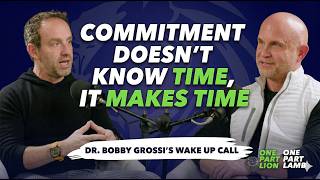
Dr. Bobby Grossi went from nearly flunking out of dental school to building a $2.8 million practice. He spent $200k on team training and saw revenue jump $1.6 million. He credits commitment, faith, and asking his team how he's failing them.
Chapters
Commitment doesn't know time, it makes time. Write down the characteristics of who you are. Like, this is who exactly I am today. And then if you have a dream, who is it that you must become? And then put the attributes that your characteristics that you have to become, and then you just work daily on becoming that.
Yeah.
Kinetic energy says energy in motion stays in motion. Trust me, your body won't quit. Your mind will. Your mind will convince you. That you need to stop. You learn so much about yourself when you got to stay committed to something for so long. Why am I getting this resistance in my company? Why is this part not going? Oh, that's— you'll blame your staff member. No, no, no. What is it that I'm failing as a leader to not get them to get this result? Right? Quit blaming. Your results are a direct reflection of you.
Hey there. Welcome back. So happy to have you here. As you guys know, we have been transitioning the show to be a lot more detailed focus on integrated leadership. Our goal here is to help you rise, lead, and last more than anything else. And as we've been doing that, I've been trying to put real-world amazing human beings that are actually implementing what it means to become an integrated leader, not just in their business, but also in their relationships, more importantly, in their health. Today, I have a wonderful good friend with me. I am super excited to introduce you to him. He built one of the largest dental practices in the state of Michigan, currently literally strategizes and helps other dentistry build amazing organizations, helps them even get set up to scale and sell even if they want to. But more importantly, he's a man of God and just an awesome man in general. Guys, please help me welcome to the show the one and only Dr. Bobby Grossi.
Thanks, brother. Thank you, Stephen. What's up, dude?
It's funny, I was thinking about—
We color coordinated today.
I know, we sure did. I had to put on the white vest just so people could see it for parties. Even though you have better hair than I do.
No, not much.
Well, look, man, I want to dive in. There is a lot of confusion a lot of times around building organizations, scaling organizations. Most of us, if we're honest, until we're trained better, we don't take care of ourselves as part of the process. People, I always tell people, you can't scale dysfunction, and I really mean that on all the different levels. And I know a big part of that is commitment. And I want to talk about commitment, 'cause you're one of the most committed human beings I've met. Like, once you're in, you're in.
Yes, that's fact.
Right, but you're very strategic about when you get in. Correct. Like, I wanna kind of jump into there and maybe give a little feedback on kind of the, a little bit of the backstory as well.
I think commitment has driven me from probably some of my pains in life. My dad left when I was really young. My dad was a drug addict. My mom was a single mom. My last name was actually Loomis. It's changed, my mom's made me name Grassi when I was 18 to honor her and my grandfather. But I realized people around me growing up, I was riding a Big Wheel, which is funny. I was 8 years old. I'll never forget this. And I was riding a Big Wheel. I'm really old, guys. I'm 53. So if you don't know what a Big Wheel is, go ahead and Google it, figure it out. But tricycle but plastic with a giant wheel in front called the Big Wheel. And I heard this voice in my head said, you're meant for greatness. You were meant for something different. And it was just this voice. And I didn't know what it was at 8 until I realized now it probably is the Holy Spirit guiding me, right? Being something different from my family. But the word commitment, my family lacked it. Right, they didn't lack commitment or discipline. My mom did a great job raising 3 kids on her own, but my dad obviously lacked commitment. And so I knew growing up, I wrote a book called "Destiny's Not Hereditary" because I don't believe you come from, your family's your family, but the decisions you make are really what design your life, not your genetic line. You know what I'm saying? So a lot of people will say, well, you know, I'm addicted to alcohol or this because my dad was. No, you're addicted to alcohol 'cause you chose to be, not because your dad or your family member, but I knew they were, the commitment was a failure in my generation and my family. And I knew for me to plant a new seed, I gotta become obsessed or committed to certain things. And that's where I think commitment really started. And then as you get older and as a man and, you know, trying to be the best father, best husband, best business owner, I mean, it all starts with you. And if you can't be committed to yourself or your own self-growth, how do you expect other people to, rally to you. So that's where the commitment started. It kind of became a little bit obsessive, but that's where it started.
That's good. I mean, one of the things that it kind of reminds me of is the term stories. I know on my own healing journey, and I say healing 'cause that's what it was, like I was healing my soul from the inside out, right? The story I was telling myself, the story that I put truth in, was actually the story that was holding me back. The story that I began to listen to or structure around my life about the, to your point, I kind of had a similar experience, right? It's like, you are the one I have called to break this, some people call it bondage, family chain, whatever you wanna call it, right? At what point did you become aware of your story than choosing not to identify with a story that a lot of people get lost in?
Uh, I think I'm a little— I was so naive, and I beat to my own drum. Like, I was probably the black sheep in my family, which is crazy. I was always happy, just always happy, man. Like, like, I was 4'11" as a junior in high school, and I remember people tell me you couldn't do things. I'm like, watch this. And I would just set my mind to something, and, and I would outwork them, and I would outdo it. I just, I just didn't get— I didn't get caught up in what the surroundings around me, seeing people sad, seeing people depressed. My brother and I had very similar upbringings. I got a twin sister, and how we saw our upbringing is totally different. If you asked him, it was like miserable. If you asked me, it was like, oh my God, this was great. And we're the same people, do you know what I mean? Like, I just took, I took all the setbacks and pain as rocket fuel, where other people would take it as like, oh my God, this is the worst thing. I was like, thank God my dad never was around because I probably wouldn't be who I am today. Where other people like, oh my God, I got daddy issues. I don't got no daddy issues. I just know It's so funny, man, because it was like, you know, the old, uh, uh, we talked about Jesus, so you know the old bracelet said, what would Jesus do? I mean, dude, it was so simple. Like, how did you make the decisions you made? I, I said, it was really simple. I'd sit back. My dad knows the story. I work on him now as a patient. I still take care of my dad. But, uh, my dad knows the story, and I would say, what would my dad do? And I did the opposite. Like, it really worked out for me. Like, if you follow a pattern, like, you know, success finds company. So, like, success finds company. It does, man. Like, like, and I always look at it like Follow those people, or follow those people who are where you want to go, right? Not the ones that are never accomplished. Another way of saying it, don't take constructive criticism from somebody who's never constructed a thing in their life. But we do this a lot, and so we take advice from these people who are never really where we want to go. So I say, well, if my dad is what I don't want to be, well, how do I act in a different way? And I just started making decisions differently, and It kind of worked out in a way, right? Because I'm seeking something else, not a product of where we become, I'm seeking something else. It's kind of like I did this, you write in books a lot, I know this, and this is awesome, you write on your page, and a little exercise people can do is really be honest with yourself, go be still as we talk about, but write down the characteristics of who you are. Like, this is who exactly I am today. And then if you have a dream, who is it that you must become? And then put the attributes that you're characteristics that you have to become And then you just work daily on becoming that. So like, to me, I still to this day fight scarcity of finances. Like, I do. It's, it's, it's in me, dude. I can't— like, you, you want to give me anxiety, start, start saying my money's going to leave me.
Yeah.
And it's not because I'm obsessed with money, it's because I don't want to— I remember what it was like not to have it. And so I just want to give so much to people, give to my family, give to communities, give to charities, that I know I need this tool to get it. And that's the only— you'll start seeing me get hot flashes. But who do you want to become? And every one of us, every single day— I'm 53— like, who do I want to be at 54, right down that— I mean, just keep working on it. And you work that way. So yeah, I think that's how you start breaking some family things too. You just start working on becoming something different.
That's— it's funny, it's funny how, how complex we want to make transformation and how simple it really is. Um, it's choosing a direction and being committed to it, right? Committed One of the things I wanna kind of maybe touch on a little bit is one of the things that I see, at least when I was facing my story, 'cause you have to, in order to even write that on the page, you have to be probably more self-aware than you've probably ever been in your life. If you're gonna be honest.
Correct.
Right, and you're not casting out victimhood, I'm a victim 'cause this happened. Like that's where that story is. It's like you have to overcome the story just to get awareness to even plot a course. And somewhere in the middle there is a word I like to call fear. Fear of really like knowing yourself. In your transition, as you were kind of walking this journey out and choosing, did you have to deal with fear? And if so, 'cause I feel like maybe people watching right now, one of the things they're gonna have a hard time with is making that first list. There's an egoic or a fear side that wants to say, well, don't put that down.
Correct.
Even though it might be true.
Yeah, my lowest moment ever, and I don't know if anybody knows this in the world, but you're gonna find out. I'll just tell you 'cause you must pull it outta me. I almost flunked outta dental school big time. And dental school was not my first path. I wanted to be a music, baseball player. I had a full ride to go to Central. Didn't take it 'cause my grandfather was just got diagnosed with throat cancer. I was alone. It's kind of spiraling outta control. Didn't have that, didn't really, nobody said, hey, it's gonna be okay. Yeah. Right? And then I worked on music for 3 years. Opened up for Shiree R. Kelly and Tupac, which is kind of cool.
That is pretty cool.
That's kind of cool. That's pretty cool. So I worked on something in music and, Thought that was gonna be my route.
I didn't know that was gonna follow you.
Yeah, I know, it's a true story. And then February 3rd, 1994, 9 days before my 21st birthday, I wasn't even in college at the time, I dropped out and everyone thought I was gonna be a loser. Even all my friends were like, oh, this guy, what is he gonna do?
I got the same nerves after high school.
I laughed and I was probably least likely to succeed, but I always beat to my own drum. It was February 3rd, 1994, 9 days before my 21st birthday, my grandfather got diagnosed or died of throat cancer. And it was at that moment where life changed for me, and I said, okay, what are you going to do now, right? So I just stopped music altogether, uh, looked at my, my girlfriend at the time, who's my wife now, and, and she knew I wanted to be a father. Like, she knew. And I said, I'm gonna go to medicine world.
I'm just a hell of a father.
Thank you, man.
You are amazing.
Thank you. Uh, yeah, I failed many times at that job, but I can't tell you.
But, uh, yeah, yeah, but your heart's in it.
Thank you. So She said to me, are you sure you wanna be a medicine doctor? And I said, yeah. She goes, but you'll be married to your pager your whole life. I thought you wanted to be at home. I said, man, that's fair point. And so I said, what about dentistry? That's a way I can help and never let somebody go through this pain. Well, anyway, I picked dentistry. I go through dental school. Life became very egotistical on my end. It was like, look what I'm doing. I'm sacrificing everything and my wife's hiding bills from me. And I became very, very narcissistic in this whole journey thinking I'm the only one suffering. And I almost lost everything, man. I mean, everything from my house to, to, to dental school. Um, and a lot of it was, wasn't sleeping, was working third shift at GM trying to put myself through school. And, but it doesn't matter. I became— I lost everything. I mean, I was literally losing everything right in front of me. Who saved my life, and my daughter knows it, is Andalina. But that's a different conversation. But, um, I only had one option. And I remember Tony Robbins said something. It says, I am the voice. I lead, not follow. Believe, not doubt. Create, not destroy. I'm a force for good. I By the odds, I set new standards and I step up. And he goes, just say this, say this, you know, 6 feet from the mirror and you'll never see your flaws. I'm like, okay, I'm gonna do this Tony Robbins thing. And I started saying it and all of a sudden I'm like, whoa. And then I started picking up the Bible and I'm like, everything that was chaotic in my life, you talked about being still, just became, all I can do today is read the Bible and I'm gonna say those affirmations. I'm gonna read the Bible and I'm gonna say these affirmations. And it wasn't easy. It did turn around. Life did turn around, and it started going in a different direction. I think there's an old study that says people that read the word 4 times a day, or 4 times in a week, is like 100 or 80% more successful than the average human, or things open up. I mean, I'm paraphrasing the data, but those that do it less than that don't really see a result. So I always tell people, and this goes back to commitment, I don't know what people's faith journey is when they listen to this thing. I don't know what it is. Maybe it's just that I am great, I am healthy. I don't know what they want to believe in. But when you start putting your mind into something that's outside view and you just start proclaiming what you wanna be, doors will open and you will become that version.
Yeah. Oh, that's so good. I was also thinking too, it's, you mentioned kind of the shift and the shift being like focus, where you were putting your focus. And it's really easy to focus on a problem or problems or the problems you have. But if you only focus on the problems that you have, you end up experiencing those problems over and over and over again versus what you're talking about, chart a course, and just focus on my school.
Get it?
Yeah, yeah, I love that. When in this business scaling journey, right, you know, I, um, I've been sharing with the audience now this concept that I came about by just acknowledging all that mess-ups that I did building people and businesses. Like, I, I would love to say that I'm like super special and whatever, but I just— it's— I think what I think Dave Ramsey says, I just, I survived most of my failures or something like that.
Yeah.
But I talk about these concepts called the 5 constraints, right? Arrogance, ignorance, impatience, fear, and insecurity. And I've been unpacking it more and more and more as the days and weeks and months have gone on. And when you look at your business journey, your development journey, 'cause one of the things that you do now is you're obviously helping other people in your profession get to a place of meaning and significance while building and scaling an organization, right? Which I think is beautiful.
Correct.
Um, I think it was a stat not long ago I saw that, uh, I guess dentistry actually has a high suicide rate, or at least it was number one for a long time.
It's number two now, but yes.
Yeah, you know, so I think there's definitely a massive message field right there. Yeah. Um, but when I think about the constraints, what are some of the constraints that you have faced and now face with, uh, some of the folks you're working with?
The biggest constraint a business owner in any business has is they don't face the truth about who they really are. They really think they're leaders, but they're not. They are a bunch of dictators. And so when my business was just an average business, I was the doctor. Don't you know? I'm the doctor. You're supposed to do as I say. Yeah. And, and like, I can't believe they're not listening to me. And it wasn't until, uh, I, I'll never forget this, my practice was doing $1.2 million and I had this choice. I'm like, man, this is not what I thought I was going to be, barely making payroll. Um, and I heard this once again, here comes my intuition, a voice in my head says you have to invest in your team. I'm like, invest in my team? You've lost your ever-loving mind, dude. I don't have this money. And I remember looking up, uh, this coach and, uh, um, and it was like $200,000. Wow. For 2 years of training. To go all in. Wow. You want to talk about commitment. So like, I'd only have $20,000 to take home to my family. Yeah, yeah. So it was like, man, this is like the greatest guru of all gurus. And, and I, you know, you get all these courses and you're going to build your team and they're going to come in here. And I'm like, man, I'm just gonna do it. Well, I, I got a loan. I don't know how, but I did. And I invested $200,000 in my team. And all I did is try to become something. As I was learning, I started passing on the information, what I'm learning. And I tried to just become that version that I had to be. Now I'm not there yet. So people always say, well, how did you do it? Well, you faked it, right? You fake it, Stephen, until you can actually keep going there, right? And so it took— and I grew in that one year of that $200,000 investment, I grew $1.6 million additional. Additional.
Oh wow. So you're at 2.8?
I'm at 2.8 now. In one year I made a $200,000 investment. So where am I going with that? Okay, it's biblically speaking, if you have faith and you I guess tithe or do whatever you're supposed to get back tenfold. Now I got way back, almost tenfold exactly. Like, make that make sense. Like, invested $200,000 in my team, and somehow, some way— I didn't do anything magical. Yeah, I started serving them instead of serving me. I started thinking about their needs and wants versus my wants. I started putting my patients first versus me first. So, right, well, what a concept, right? I started servicing them No different than when you go to hotels of the Ritz-Carlton versus other ones. There's a different service and people don't lack money. They don't. They pay for value.
Yes.
Right. So, so it's not about— I mean, we know this. A bottle of water is a different price in many different modalities. Wherever you're at, you still buy the water. Yeah. It's perceived, though. This water must be— it's the same water.
Yeah.
It's whatever the perceived value is.
Yeah.
Right. It's the company you're around. And so I wanted to treat my patients and my team so important, way more important than me. So the old narcissistic self— well, I have a little bit of narcissism in us, but the old version of yourself that was holding you back, you got to like die. And it's got to be about service, dude. And there's no different in the family. Yeah, you look at it as a father. I mean, I don't always want to get up at 2 in the morning, my baby's sick, I got to get up and do it.
Yeah, yeah, I know it's true.
Yeah.
Well, all right, so let's talk about the transition because I feel like— so my transition, I went through a similar experience. Like, I, I've said, I've said publicly, but, um, I don't think I've said it. I don't think I've said it on the show before, but, uh, around 2014, uh, the company was doing really well on the surface, um, as far as we had a great reputation. We were already in the 8-figure top-line category, um, but if I'm honest, I was in my closet crying a lot Like, I have no idea what I'm doing, and I don't want everybody else to find out, right? Like, I felt like— we're talking about being a fraud, you know. I, I had people that were reporting to me with far more scholastic education than I had, um, and that created a certain level of insecurity, which then created a certain level of ego, which then— it's like everything like snowballs, right? When this transition is happening, at least for me, I went to an event, ironically an event. It wasn't Tony Robbins, it was Ramsey. And proceeded to get my teeth kind of kicked in emotionally for about 3 days on leadership. Like what leadership was and what leadership was not. And it was funny as he's describing what leadership was and what leadership wasn't, I was in the wasn't category more than I was in the was category. What have you learned about leadership as far as that needs to be in the leader category and what needs to be let go in the other category?
I think first of all, as a leader, you're gonna— you gotta understand that it's— you gotta, you gotta lead them but also follow at times. And I think that you're going to fail more times. I think there's a lot of times— you mentioned just a minute ago, they used to thought you're a fraud. I couldn't even count. My kids will probably tell you how many times I came home crying because I just didn't feel worthy to lead people. And because it goes back to when we're younger, we don't want to dive into that whole thing. Yeah, but everybody has their scars and their old baggage that they just, they believe they're not enough. And I think that to, you know, always working on, if you know the character, like follow the characteristics of true leadership. Like literally if you say, I mean, God, you could ask Chad now. I mean, who we can, you can ask anybody, what are the 10 qualities of leadership? Right. And just keep, keep checking yourself. Have a, you know, we talk about KPIs in business all the time. Yeah. For you all to know what key performance indicators, I mean, what is a KPI?
What we're measuring.
Yeah. What we're measuring people, accountability charts, whatever it is. Is we don't do that to ourselves enough. We don't do it enough to ourselves. We don't have our own KPIs built in, right? So it's like, okay, well, if I'm— why am I getting this resistance in my company? Why is this part not going? Oh, that's— you'll blame your staff member. You'll— no, no, no. What is it that I'm failing as a leader to not get them to get this result, right? You quit blaming. Your results are a direct reflection of you.
Yeah.
Like, you got to look yourself in the mirror. This is what the truth is about life. Like, your marriage suffers at home, I promise you it's your fault. Like, I know it's going to sound stupid, like, you know, they just don't understand my needs. No, no, hold on, hold on. Are you portraying love for them that you're wanting back? If the answer is no, then you're part of the blame. Yeah. Do you understand what I'm saying? Like, if you're— we're not communicating properly, are you learning how to communicate better? Yeah, right. I mean, so even— it's, it's, it's your mirror. And, and your team's the exact same way. It's actually more detrimental because we spend more time, a lot of us, in our business than we do even at home. So those relationships, if you can't intermingle and know Everybody has a different heartbeat, different personality, different way of communicating. Like, you have to know that as a leader, and you got to say, am I talking to person X the right way? Am I, you know, self-reflecting? KPIs is what I would challenge anybody as a leadership. Yeah, always check yourself. Hmm.
It's funny, that brings up something that happened to me. I was at a similar conference with a guy named, a friend of mine named Chris LaCorto. He was one of my paid mentors for a long time. He was worth every penny. And then obviously, grew and whatnot. But when I was working with him, one of the things he taught me is, are you willing to go to your team and sit down with your key leadership one-on-one and ask them one question? This one question was terrifying. He said, how am I failing you as a leader? But it's the most transformational question you can ever ask. And I did it, and I heard some stuff I wasn't happy with. I was like, well, that wasn't— here's the cool thing is I, I thought— I was like, that's not what I intended. And I learned that people don't judge you by your intentions, they judge you by your actions.
Thanks.
Right? So what are significant action changes that you've made as a leader that are like polar opposite of prior characteristics? Like, what, what are you like intentional about now more than something than prior?
I think a lot of us think that people go to work for a paycheck, and it's not really true. They go to work to feel value, significance, or growth. And so I would, I would challenge every leader, every business owner to get to know every employee. I'm not saying you got to go hang out with them, guys. That's what I'm talking about. Get to know them.
It's impossible when you get to scale, right? Right.
But get to know them on a personal level and just say, you know, let's just say it's a— I'll use dentistry, you know, I'll talk to an office manager, say, you know, if I could give you one, if you had one dream, what would it be? And I know one of them was like, hey, I want to take my kids to Disney World. So in the back of my mind, I'm like, I'm like, that's it? Like, like stuff I take for granted, like that's it?
Yeah.
So I, I made it a mission of how do I pay for this person's trip to Disney World?
Oh wow.
So that was my goal. Another girl says, I want to get married and I don't have enough money and, um, I need to save X amount of dollars. So we literally, like I'm coaching a dentist, we sat down and I would spend 30 minutes a day, hey, have we done blah, blah, blah, blah, blah, on her personal level?
Yeah.
So I started going into them and helping them accomplish their own personal goals. And now they all still work with me, ironically, right? But, but the reality of it is, is when you do that, you watch— you watch them light up. When you can produce results in other people's lives that they never thought they could do on their own, they will follow you through anything.
Yeah.
So leadership really is— if you want to do something, what changed my life is I got to know them in their dreams. And it all starts with one simple question: hey, what makes you tick? What makes you excited? If you could do one thing in life, what would it be? Just ask them those 3 questions. Watch the stuff you get. And I love when you said the question, you said, you know, how am I feeling you as a leader? Most people that are so afraid to tell you the truth, but the ones that tell you the truth, those are the ones you go to war with because they're telling you the truth and you're still there. It's like, let's go.
They're telling you the truth because they want you not to be there. Correct. Because they're still in the office.
Correct.
Despite the dysfunction, as I call it.
Correct.
Right. And chaos. Yeah, that's good.
That's, that's the leadership quality I would— I developed.
So good. That's so good. You know, it's funny, I know, I know that— so I, I know that you've had outside ventures.
Yes.
Right. So invest— things you want to invest in. What has owning other outside ventures taught you about business in general? Like that you wouldn't have found any other way than, than the, you know, kind of the dental practice and things that you've already mastered?
Uh, I, I think, I think every business is pretty similar, right? I really do. I think there's the, the nuances of things that you got to learn, but when you're committed to something and you take— you, one, you got to take risk. I mean, anybody that doesn't take risk, I'm sorry, you're just— sorry. But you also got to have grace to know that you're probably— you might fail. But other businesses, whether it's my Crumble franchises, medical labs, Dental labs, dentistry films, coaching. It's really just about how do you provide the best service for the customer that you have? Like, literally break it down simple. Like, how do you meet their needs? What are their needs? You know, a lot of us now growing up, time's a barrier. So time is the biggest asset we all have, right?
Yeah.
And I— we joke about it, but it's like, all right, well, if I could give them a service which will— you know, in dentistry, when I scaled, it was was, how can I become the super GP? Meaning, I get so irritated going to dental offices. They would say, you need an extraction, now you got to go over here. But you need a, you know, implant, you got to go over here. And you need perio, you got to go away. But, but I came to you, you're the expert. So I'm like, well, if I could meet all their needs in one place, get them efficiently, I'm going to win, right? Well, that was how I started dentistry. Crumble cookie, a little bit different. People have their own take on crumbles. But when I got into crumbles, like, how can I create The greatest experience for a person ever wants to buy a cookie. Oh, you're a dentist that owns Crumble. I get it. Cookies and cavities. Hashtag. But, but, but, but that actually formed a business. But the reality of it is, is how can I create an experience for them that, that is irreplaceable, right?
And so, bro, say that again. How can I—
how can I create an experience for them that's irreplaceable?
I love that. I teach a concept called the 5 drivers. The last driver is what's called raving fan retention. Yeah. Most people, uh, that I see in the pre-7-figure category and maybe just over the 7-figure category, one of the things that they struggle with is recurring revenue, recurring transactions.
Yes.
And it's far more expensive to get a new customer or a client than it is to serve one and refer one.
Mm-hmm.
What are you, I mean, in that, in that, in that experience, what are subtle nuances, whether it be in the dental practice or the, or the cookie business for that matter, that, that are, that, you know, that, that you found had a lot of lift? Because I, I, the one thing that I, that I, that I see you doing that I, with excellence is one of the reasons I, I, you're definitely an integrated leader in my book. Is you make both the team, your family, and these businesses, these client bases, all feel seen, valued, heard, and appreciated.
Correct.
And that is one of the most underrated skill sets. I know you and I, you and I both vibe on that. So what are you like, what are some ideas that you could give some of the entrepreneurs and leaders out there that are just easy, like easy to implement but high impact?
Well, one, you said, uh, reason why I think it's important everyone to see, seen, heard, and you know, felt good is because I didn't have that growing up. So I made it a priority to make sure everyone feels what I lacked. Yeah, right. But, um, think outside of yourself. Like, in dentistry, I do so many things for free for my patients. And so, like, whether it's health and wellness or vibrant wellness testing or just sleep studies, like, uh, educating them about how, you know, supplements versus drugs, like, it just You're referring them to chiropractors when I can't manipulate a spine. Like, how do you know about C1 to C2? Well, because I just do, because I care, right? So it's like when you, when you can do things and make things simple and make people feel valued and you're not always chasing them for their money, you will have a client that will come and refer people to droves because they're not trying to be sold. You're not selling anything. You're selling your service. Yes, you are. Dentistry is sales, but I call it— it's a, it's a different way of sales. You know, find a need, fill a need. Like, they're going to come to me, but if I can make them feel valued, I can make them own their own modalities or own their own treatments, it's easy. But like, when you find that client that you click, click with— like, there's many people, like, sometimes I'm their therapist, man. I'll be sitting there and I started talking about Christ, and they're like, aren't you gonna look at my teeth? I'm like, yeah, but I wasn't called to do that today, so I'm going to tell you what it is. Or, or somebody just might need a hug, or somebody might need me to book my daughter did. Like, I'm always thinking of a way outside of teeth. How do I serve this person?
Dude, that's so good. Because it's funny, we, we as entrepreneurs, as business leaders, we get so focused on the widget, we forget the what. Yeah. Or the why.
Yeah.
And when you solve the what and the why, it's funny, the widget kind of takes care of itself. It really does. I was, I was just thinking that one of the things that we want to do when we're considering, like, again, it's a raving fan retention. It could be a little bit different for every business, but the general philosophy is how do you make that person feel so loved?
Yes.
And accepted in a world that doesn't love and accept easily, that they honestly don't want to buy from anybody else. Correct. And the second part is realizing that people are paying for solutions, right? What— there's a big, uh, especially in this thought leadership world, call it thought leadership problem. I'm going to stop using that term because I I'm seeing a serious trust breakdown.
Yes.
Right. So people— you and I have talked off camera before about different things we've invested in that worked or didn't work. And I'm seeing this, this awareness now coming to people's mindset. It's like I've bought and sold so many different programs or I've purchased so many different programs, so many, so much coaching that was not effective. It wasn't aligned. I wasn't being served. They weren't listening. I wasn't feeling seen. I wasn't feeling valued, but yet I spent all this money, and now here comes another guru down the pipeline that says they have the answer, that says they can do the XYZ, and I'm terrified of taking that stance again. As someone who invests heavily in their own personal development like yourself, and obviously you're doing amazing work with the people you're working with, what are you using as a barometer to, to see who's trustworthy and who's not trustworthy in a in a broken economy of trust?
I think I'd go in there with different expectations than what I did. I used to think somebody else had all the answers for me to get this rich and make all this money. I look at income differently than a lot of people. I heard somebody say this, I can't remember who said it, but it just, it resonated with me. So I'm gonna kind of share this. We think of income as money received. I'm gonna flip it on its head. The income is the internal work you put in yourself to get the outcome that you're wanting.
That's good.
Okay, that's good. So when somebody says, I want to have a great income, okay, what you're really saying to me, ready, I'm going to tell you is what outcome do you want to be? What person do you have to become internally to get the outcome you want? So I want to make $100,000 a year. Cool. What income internally do you have to do to change who you are to get the outcome you want?
Yeah.
Now I'm going to relate it to something that people will really relate to. I wanted to be an Ironman. The outcome was I had to be an Ironman. Bible says iron sharpens iron. That's, that's, that's, that's—
makes you a super—
that is why I had to become an Ironman. On top of my wife calling out.
It's a fun story. I don't want to go there, but I tried like hell to buy you the 6-foot-tall Ironman.
Yeah, I would have loved it.
Yeah, I got a small cake version that I can afford to ship to Michigan.
I got a small cake one. So the Ironman journey, the reason why I did it, the outcome I wanted was I had to become an Ironman, literally the Ironman, the 2.4-mile swim, 112-mile bike, marathon run, same day, because I wanted to become iron. Iron sharpens iron in the Bible, and I couldn't call myself iron to bless somebody else. On top of that, my wife said I had said in 2004 I wasn't gonna I, I said I was going to do it. I didn't do it. She goes, I thought you said you always finish what you start. So she challenged me. Talk about accountability. So she called me out. Like, I was more of a—
called you out or called you higher?
Yeah, either way. I was more of a tin man instead of an Ironman. So now everything I do, I'm the Iron Dentist. I'm the— we joke him— I'm the Iron Dad. Like, I, I use it as my badge of honor. But, um, what I'm getting at with that is the outcome is I wanted to be an Ironman. The income was all the days I had to train to become internally something different than I started with to get the outcome. So when you, when want somebody to return, when you, when you invest in this coaching, when you invest in these people that you think are going to help you, I want you to ask yourself this question: is this platform helping me internally? So if it helps you internally to become a better version of yourself, then make the investment. If it does not, then don't do it. That should be the barometer going forward.
Shortcuts.
Don't buy shortcuts. Don't buy false experts. They don't exist, dude. You know it and I know it. Hundreds of thousands of dollars you and I've spent, I promise you I promise you. Yes, guys, gulp. Hundreds of thousands and it didn't do anything. It didn't do anything. Now, there's some that like, yeah, you could fake it, but are you going to get something internally out of this thing?
Yeah.
So that if you didn't get the outcome you're looking for, that's what I'd ask.
Yeah, dude, that's good. I love that as a gauge block because again, I mean, one of the things that I think I've shared with you before that has been of an— it started off being a pretty significant kind of uphill climb. Honestly, is when you're relatively unknown as you're getting started.
Yeah.
But you have the heart of service, you have proven track record for results for yourself, you got proven track records for results for other people and, and whatnot. And then you're, you're meeting people who you know you can help them.
Yes.
Like, you know you can help them. Like, you know, I was talking to somebody not that long ago and they were— they've been stuck around $600,000 a year for a while and like, how do I get to the next level? And, and so we chatted a little bit, and then, um, I gave them 3 pieces of information. They broke through that. They broke through the 7 figures literally that year, you know. And you see people who, who, who knew that, but you also have to understand that they've been jilted and hurt and broken. And like, like, and your barometer of not expecting a quick fix or a solution to a problem they're not really willing to work on is Genius.
Thanks.
All right, no, it's genius. I hadn't thought— I mean, that's like— I, I, yeah, I love anything that can actually be attainable and attractable. Yeah. All right, so let's talk about the Ironman a little bit.
Okay, so favorite conversation.
Yeah, I know. Well, I watched you like work on it. I mean, I was there at the tail end before, like, as you and I were getting to know each other as you were training, um, and you were talking about the wild, the wild nights of training in the morning, training in the evening, training in between, like family breaks and all this kind of stuff. What did training for the Ironman teach you about yourself?
That anything I set my mind to, I can crush. I mean, I'll get emotional because that journey was so spiritual, man. I mean, that, that, that— it's almost now it's my drug. Like, I don't drink, I don't do anything. I might have had a sip of bourbon last night, whatever, but I mean, I don't do anything crazy. But I mean, I don't do anything crazy, right? Um, um, but it became, it became You know, I was never the greatest athlete. I was never the strongest person. I didn't come from money. And none of this is a competition between anybody else besides between your two ears. It's your brain and you. Your body won't quit. Yeah. Kinetic energy says energy in motion stays in motion. Your body's like, dude, I gotta just keep going. How many people, how many mothers, how many fathers, how many people just on their half dead, but they can still go and take care of their kids? Trust me, your body won't quit.
It.
Your mind will. Your mind will convince you that you need to stop. And so, um, you learn so much about yourself when you got to stay committed to something for so long. It's so hard. It's easy for somebody to set a resolution, right? And, and most of them make it like 20 days. I mean, that's why most people aren't 1%ers in the world. But when I say to you, yeah, I'm going to start this journey and I'm not going to get the outcome until 9, 10 months down the road, But you got to stay true to it, right? But you still got to be a father. You still got to be a husband. You still got to run your businesses. You still got to go to travel with your kids. You cannot— you also got to make time. Yeah. Commitment doesn't know time, it makes time. That's the phrase I've always called it.
Say it all slow down.
Commitment doesn't know time, it makes time. So when you're truly committed, there is nothing that will ever be in your way. And you got to make that switch in your brain. But it goes back to what I've always done in my life. It works for me. I'm just going that way. When I got into dental school, I had a 3.2 GPA. I should have never gotten into dental school. I just said, I'm going to dental school. I'm like, you can't get into— I'm like, watch this. I did. It's just, it's just whatever I set my mind to. So like, that journey was so cool though. I remember being on the bike or being in the swim the night before, did the practice swim. Uh, all my coaches— yes, I have coaches and everything— nutrition coach, fitness coach, Ironman coach, like business coach. Like, I have coaches in everything, dude. I, I believe— I'm sorry if you don't have a coach, then you're not serious enough. LeBron James has coaches, dude. I mean, you find a coach, find somebody you connect with. And ready, find somebody that's already done where you want to go. My Ironman coach was— gee, I wonder, I'm 53, who should I hire? I hired a 57-year-old man who did 7 Ironmans.
Wow.
Well, why wouldn't I hire a coach? Am I right? Not the 20-year-old. Yeah, but I hear the 50-year-old, right? And, um, I can remember my pulse going up to like 160 beats. I got goggles that tells me my pulse and it tells me my straight-line path. I told my daughter, I cried the night before, I said, "Do not come down here. I can't do it. I quit. This is the night before the Ironman." And I just remember saying, "You gotta do it anyway, dude. Even if you die, you have to do it because your kids will never look at you the same. Your wife will never— You have to finish what you start. I don't care if you drown. You have to go all in." I remember praying to God. I got in the water, it was my worst swim, but my pulse never got up to over 100 beats a minute.
Wow.
Took me an hour and 40 minutes. Got on the bike. I'm like, "God, just get me through this bike journey." He did. I had many conversations. "Hey, did God just get me through the marathon?" time. But the cool part when I finished was hearing my daughter. And I don't know if you guys ever follow me on Instagram, it's @bobbygrassidds if you want to know.
You say that stuff way too fast.
I'm sorry, @bobbygrassidds, but it will, it'll be other thing if you don't know. My greatest, uh, thing ever is my wife couldn't medal me, but my daughter Angelina got to medal me. And for her to say, you did it, you're an Ironman, I The greatest feeling in your life as a father and even as a husband to have your kids look up to you. Like, I didn't have that dad, right? I had the dad that would do the opposite of my dad. To have your daughter be so proud of you and for you to go through that living hell, but to see that smiling face, it was the greatest gift anybody ever gave me, dude. It was one of the greatest accomplishments of my life. It was more for proving myself that when I set my mind to it, I can do it. You can see I'm proud of her.
It was one of my favorite group texts we got. 'Cause you and I are just some of those guys several group texts together, and, uh, I got to see that video, and I got to, I got to see and meet you at the finish line, bro. It was special.
It was special.
And I assume that, I assume they can find that on Instagram.
Oh yeah, yeah, it's that. I'll, I'll probably post right here. Yeah, I post it every other day. I'm sorry.
Well, look, I know we're about to, we're going to wrap up here, but, uh, where can I find more about you real fast before we get to the last question?
Let's try to go slower. So, I mean, obviously there's the dentistco.com is coaching business. Uh, The Iron Dentist is a podcast. It's exactly what it sounds like— the Iron Dentist, Ironman slash dentistry. And also, at— I'm always on Instagram, so if you really want to reach out to me, it's @bobbygrossidds, B-O-B-B-Y G-R-O-S-S-I DDS.
Awesome. Final question.
Yes, sir.
Round robin, real quick.
All right.
What has been one thing on your heart that you've been wanting to share with the world that you have yet to share?
Oh man, that's pretty deep. Um, whether you have a coach, whether you have a person in the background telling you you're good, you're good enough, you mean you're loved. There are people out there, man. If you don't, if you don't have a church— I know we're calling it a church, meaning a group of people together, okay? When I say church, I'm not saying you got to go on a Sunday. I'm talking about if you have a group of people, a church, find yours that you're not feeling energy from. Surround yourself with people that want a better outcome than you even can dream of, right? And I think that in my life growing up in Flint, you're always around your community. People always say, don't forget where you come from. Look, and I love that phrase, except I'm going to twist it. You don't ever forget where you came from, but you don't have to be stuck there. Yeah, you know what I mean? Yeah. And so you're enough. I, I think, I think you should look at yourself in the mirror, man. You know, every one of us have this— I'm not the smartest guy, Stephen's not the smartest guy, we're not the tallest guy, fastest guy. Um, you probably won't outwork us a lot. I'm sure we'll, I'm sure we'll hold you to that standard. But if that's all you have in life is your, your integrity and your word and your work ethic, then you're enough. Go get it.
Yeah. Love it, dude. Yeah, dude, thank you so much for joining me today.
Thanks for having me, brother.
I love it, man. Thank you. See you again.
Thanks, Awesome. See you. All right.
Hey guys, that's going to do this for a wrap. I hope you really enjoyed that show. One of the things that I really want you to take away from this moment in time is where are you at in your worth journey? Where are you at in your own battle? Where are you at in the thing that you want to create? Where are you at with yourself? I invite you, as we listen to Dr. Bobby's whole, like, story and testimony of how just facing himself, learning more about himself, investing in himself, ultimately became the massive shift that got you going. So I want to invite you to do that. And if you enjoyed this episode, would you do me a favor? Would you share it with no less than 5 people that you know, love, and trust who need this message right now? I promise you, sometimes we get so wrapped up in our own lives, we forget to share this type of things, this type of content, if you will, these stories, these truths with people that it can actually really help. And you never know, you might just be the conduit of their life change. So share this with a friend, like, subscribe, do all the things. We love you, and we'll see you in the next episode. God bless.
More from Stephen







Paralyzed. Suicidal. Then He Surrendered, And EVERYTHING Shifted | Marcus Aurelius Anderson


Why You Snap At People You Love, The ALIGN Method, & Why ADHD Isn't A Disorder | Sara Hartley

