How Do I Move Forward When Life Throws Curve Balls? | Life-Mastery Q&A
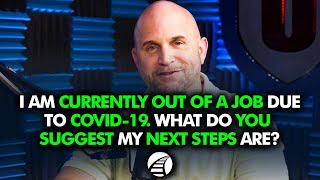
Stephen Scoggins advises people hit by COVID setbacks to invest in personal development, take gig work like DoorDash to stay active, and save aggressively with 20-40% down payments to build financial freedom and eliminate debt.
Questions this video answers
September 21, 2020
"Low 600s"
Grubhub, DoorDash, pizza delivery (courier/delivery work)
20%–40% (he also cites having put almost 50% down on his first house)
Chapters
This is one that I've been getting a lot from a lot of different people as it relates to Covid. I'm currently out of a job because of COVID 19. I didn't finish college and I've been working as a bartender for three years. I love it and feel it's my passion. What do you suggest my next steps would be? I'm going to handle this in two pieces. Piece number one or step number one is you need to get a better understanding how to increase your value while you're sitting still. What I mean by that is we get paid for the value that we bring to the world. So in the environment that you're in now, if you're sitting at home, I would spend a lot of time, a lot of time on personal development, self awareness, getting clear on how you can maybe do, even do this bartending role. Even better, maybe even look into possibly opening up your own place one day. Basically, don't spend all your time watching Netflix. Some of these other things. Sorry, Netflix. You guys are awesome. I enjoy your channel as well, but don't spend your time there. Let that be 10% of your day. Spend the other 90% of your day that you're not sleeping or eating on, growing yourself, bringing your value upward. Okay. The next thing I would do during COVID specifically is I would take on as much, potentially a potential profession, temporary profession, as anything from a grubhub driver to a door dash person to a pizza delivery person. Something that's going to keep you active, keep you motivated, and keep you earning some level of income. Why is that important? That way you don't have to start from scratch all over again. Because the reality is this market, this disease and everything, this, at some point in time is going to fade into the background and become not as necessarily as important as it is, but not as difficult as it is to kind of manage right now. At some point in time, we'll have to get back to work. We're going to have to open the economy back up in general. And as a result, you want to be ready. Now the good news is because you spent time developing yourself and becoming more self aware and you've gone through all these different things to raise your value. When you go back to enter the market, you'll be ready to actually earn a higher value, a higher wage, a higher income in order to help you kind of make up for lost time and keep you moving forward. That's my advice in today's environment. So step one, raise your value. Step two, do something that's going to keep you busy and keep you earning. Don't sit at home and sit still. If you don't have to mow a lawn, rake a yard, drive, deliver some materials, deliver some food, do something that's going to keep you moving, keep you active. Don't sit at home, don't waste time watching tv. Spend time growing yourself and that'll help. My car broke down last week. I have no alternative form of transportation. With a 40 minute commute to work and a poor credit score, how do you move forward from a situation like this? Man, let me see here. The car broke down. Alternative transportation. It's. You're in a difficult spot, I'm not gonna lie. Here's some of the things that I would do.
I would potentially barter my time with someone if they would offer to take me from work for a little while, maybe I'll clean their house or do something fun for them. If I'll rake their yard, I'll actually. In other words, be creative. Far too many times we get locked in seeing just the problem and not being creative. I would look for creative problem solutions. I, back in the day when I ran into a very similar situation, what I did was I actually got a part time gig near closer to me to raise a little bit of income. So I couldn't then buy a car. Now as you can imagine, by the time that I bought the car I had lost employment with the place I was at. So I'm not trying to suggest that. What I am suggesting is that maybe there's a friend, a family member or someone else that can help you lauter your time. Maybe like I said, you go clean their house, you come up with something you can do for them, add value to them and they'll in turn add value to you. That would give you over the hump and the hurdle. And part of that process is as you're going through the hump and the hurdle, make sure you're taking the time to save as much as you can. So you then you can either get the car fixed or replace the car entirely. I think that's going to be your best shot to kind of keep going. The important thing is when you're trying to reclaim your hope and stuff like in situations like this is not to give up. Not to give up, right. You want to take the time to be creative, think outside the box. Again, I think you're probably in a strategic path where you're probably going to have to trade off some time and talent for somebody else's valuable Resource in this case, which would be transportation. So maybe you can't directly pay for their gas or pay for the time, but maybe you can do something on their behalf that they used to do or they need around their house that you can help with. Right. That's how they did it back in the 1900s and the 1800s. Everything was built for bartering. Less on money, more on trading horses and donkeys and all kinds of stuff like that. I know it sounds silly, but I think in your case, I think it'll work. Give it a shot. Love to hear about your feedback and see how it works out for you.
Hey, Steven, how do I build my credit score? That is the low 600s. I'm currently debt free as of last month. But now I have no idea, how about, have no idea how to go about raising my score. All right, step one. What is your long term goal? What is your ultimate long term goal? Are you trying to buy a house, a car, etc. Okay, now this is going to sound a little bit radical and crazy. However, I can promise you it worked for me. All right? The very first house that I ever had of my own was one that I actually built a lot with my own personal two hands. There's some sweat equity that kind of went into it. That being said, one of the things that I had working for me at the time is the amount of money that I saved up to put down. Why is that important? When you save up money to put down on something, then many times you don't have to worry about your Beacon score because you're giving the bank or whoever else is financing this in a roundabout way. You're giving them so much equity that if a deal turns bad, they're stupid not to take it and run. Okay? So if you can save up 20, 30, 40% of your first house, which may not be a very big huge house, that's okay. That still turns into equity once you move in. Okay. If you're trying to do that for a car, I would save up for a car, pay cash for it, and then keep building it up. Because you can just spend 300 bucks a month or 400 bucks a month or 500 bucks a month and giving that to the bank. Or you can take that money for a temporary season, a couple years, put it in a way and go pay cash for a car. Right? Debt is dangerous. My friend or our friends at Ramsey Solutions would say, debt is dumb. Cash is king. And cash is king can keep you out of a lot of challenges. Okay? So save, save Save. Don't focus so much on your debt score. Yes, it's a debt score. That's the only way you get a Beacon score is by going into debt. Don't focus so much on that. Focus more on saving. Getting the ratios in line, reducing the risk that a bank or somebody would give you for having to take on a mortgage or something like that by saving enough cash to put down. Because in my case, my very first house, I was able to put almost 50% down. Now I can promise you it took me two and a half years, but it was the best two and a half years I've worked. Why? Why? Because very simply that two and a half years has laid the foundation for me to have equity in every single property that I've owned. Have my home that's now paid off and the home that I'm now building also be paid off from the time of inception. So don't focus on the score, focus on saving. Putting the money away. That'll help you a long way.
I have a minimum wage paying job and debt from my previous marriage. To be able to pay this down on my current salary seems near impossible. Where do I start to tackle the issue? All right, so here's an important one. This is, I think one of the linchpins in breaking free financially. It comes down to two pieces. Sacrifice and delayed gratification. Let me say that again. Sacrifice and delayed gratification. Ultimately for a specified duration, what I did to break free financially was I had a full time job. I then got a part time gig on the side of that full time job. I used money that I made on the part time gig to begin to pay down the debt until I was able to get my debt snowball built up that Ramsey talks about where I was able to take the money that I was paying on this debt and then put that on the next debt and start the ball rolling. Okay. Now I intentionally did this myself personally for about three years total. Time in time out. Right. I was in my, I was in my early 20s. I spent three years paying off all my debt with the part time gig and my biggest time, I actually had two part time jobs and I was working all the time. Did I have a social life? No. Did I need a social life in that particular season of life? No. What I needed to do was stabilize my financial situation, have some delayed gratification and set my foundation in order. Okay. Contrastly, five years later, many of my friends that I went to school with, many of them were highly in debt and having to work crazy long hours and do things that they didn't love, doing all this kind of stuff. Where I had began to have the foundation built that allowed me to step out and have some freedom. In other words, I was able to travel and do things that they weren't able to do. My first mentor, Steve, that you've heard me talk about before, Steve Myrick, used to say, be willing to do today what others won't and you will have tomorrow what others don't. There is a great principle in sacrifice and delayed gratification for a specified duration. Give yourself one to three years where you go all out. You'd be surprised at how quickly life moves and that three years will go by like that. Especially the older you get. It seems like every day gets shorter, right? Spend that time laying the foundation, doing the extra work, doing the extra, the extra earning potential and stuff like that. Use your youth as your best wealth building tool. Pay off your debt, save a bunch of cash and then begin to see how you can make that money work for you rather than you work for it. Not only will you be debt free, not only will you have cash, but now you have opportunity. Why? Because you decided to take three years sacrifice. You paid a price. You delayed gratification. You didn't go off and spend a bunch of money and buy the car that so you can show off to your friends or whatever the, the nicest Louis Vuitton bag or whatever, whatever your, whatever your shtick might be. Okay? You didn't do those things. And because of that you're debt free. You have cash now, you got opportunities. And now you can kick butt.
Hey guys, I hope you enjoyed this week's Life Mastery Q and A video. We're doing a new Q and A video every single Monday and if you have questions you'd like answered, simply leave a comment with your question below this video or email us at questionsjourneyprinciples.com and if we use your question, we'll send you a free gift just to say thank you.
More from Stephen







Paralyzed. Suicidal. Then He Surrendered, And EVERYTHING Shifted | Marcus Aurelius Anderson


Why You Snap At People You Love, The ALIGN Method, & Why ADHD Isn't A Disorder | Sara Hartley

