How He Built Wealth Starting With $250 (And Why Rich People Aren't Who You Think) | Chris Sain
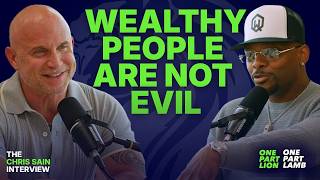
Chris Sain went from $250 to multimillion-dollar wealth by shifting his mindset from scarcity to abundance. He invests in AI, semiconductors, crypto, and ETFs, and serves athletes and entertainers. The conversation covers practical habits for emotional regulation, starting small and staying consistent, and using wealth to serve others.
Chapters
Today's guest, I'm telling you right now, he is a world-class leader, especially wealth creation. He's known all over the internet.
I was a guy that was an underdog and may have been somebody that was overlooked, but I often say in order to be promoted, you must first pass the test of being overlooked. Now, I went from an underdog to a top dog today, but most people see the end result. Very few consider the journey. I waited on his perfect timing. So there's people who may be known as the top guy in finance when I'm really the top guy in finance, but they got the opportunity because they were chasing and I was just waiting on God's timing. God was saying, I'll let you know when it's time. If we can normalize being wealthy without feeling the need to prove it, I think that will take us so far.
Hey guys, welcome back to One Part Lion, One Part Lamb, here to help you rise, lead, and last. Guys, I told you 2026 was going to be the year. 2026 was going to be your year. Because the people we continue to bring on the show can help you do a lot. Not just build better relationships, not just get a deeper love for God, but also help you actually generate wealth and wealth with intention. And take it from someone who spent a number of years doing it wrong many, many times over and having to go back and redo it many, many times over. I'm hoping to save you that pain and frustration. Today's guest, I'm telling you right now, he is a world-class leader, especially wealth creation. He's known all over the internet. As soon as you hear his name, you'll be like, "That's him, yeah!" I'm gonna be really excited. Guys, please tell me we're gonna show Chris saying what's going on, dude.
Stephen, thanks so much for having me, man. Happy to be here. Oh bro, safe haven, man. This place, if y'all was here that's watching me and him today, if you guys are here in real life, this place is immaculate. Yeah, the view, the water, the house, the studio, the whole night. You gotta be here, you gotta be here, I'm gonna tell you that.
Finally, yeah, yeah, yeah. I was, I was joking around, guys, I was joking around with Chris a little bit off air about, uh having some folks that said, well, it's a far— it's in North Carolina.
I'm like, it's worth it. It's worth the drive. Yeah, it's worth it.
So yeah, I knew you were just in Michigan, right?
Yes. Yeah.
Michigan, New Jersey, New York. You got Dallas, you got your Wealth Summit coming up in Dallas. Like, you're all over the place too.
We've been moving, man. We've been moving. And that's what momentum and real motion kind of, kind of looks like, man. You have— you build these audiences in pockets of the world where, you know, you might have a huge fan base in New York, a huge fan base in Dallas. And our job becomes making sure we touch the people in real life.
Yeah.
Beyond just behind a camera. But I'm big on showing up and making sure that they know I'm accessible. They know I'm real. We can hug, we can high-five, we can talk about our wins, we can talk about our losses. More importantly, we can talk about the journey. And so that's what, when I make all these moves around the globe, is really about. I want the people to see me showing up in their homes, in their cities, in their places of work, knowing like, hey, I'm a real person, but I stand on walking along alongside you.
Yeah, dude, that's so good, which is really beautiful to hear you say because I've, I've been saying now for a while the trust economy is destroyed.
Absolutely right.
There's been a lot of, uh, false— I'll call it, I'm gonna call it false prophets, false teaching, right? I mean, it's like when I say that, I mean these are people who are sharing ideas that may or may not be true, one. And if it is true, they didn't learn it, they didn't learn it by experience, they learned it by some other, someone else that did learn it by experience, right? And which makes it a bit more like an echo chamber, which I'm not If a great message needs to be heard, I'm never going to be the one to say like, don't share the message. But I am going to be the one to say, hey, if you, if, if you hear the message from a friend, say, just like my good buddy says, right, right. Actually qualify it to share that. And another thing that dawns on me is, is how authentic you guys really are. Because I mean, people will look at you, pay— like, I'll call it paper success, right? You've been very successful, got a million plus subscribers just on YouTube alone, right? But you're like, I love all of them.
Yeah.
Like, I want them to be in my ecosystem. I want them to come see me. I want them to feel like they can come meet me and ask me questions. How intentional were you about that early on? Was that like, like, this is like a core value that we're going to stand on?
Absolutely. Trust, transparency, and consistency is the hallmark of what we do. I believe, like, when you can transparently, like you said earlier, the person that actually did it We're not speaking from a book. We have built, we have done the work, we have showed up and got the result. And so when you can establish the transparency and they went on the journey with you, they seen the highs, they seen the lows of lows, but they seen you stand tall. And so I think those things is how you build your audience. Those things is how we have over 50,000 people in our Patreon.
Which is just incredible, by the way.
Absolutely, absolutely.
It's so hard to build a community.
But it's so hard to build a community.
It's a trust.
Because of trust. But when it's— but when you have done it, now the job becomes to maintain their trust. It's one thing to obtain it. It's another thing to maintain it, then sustain it. And so that's one thing we've been able to do by just being consistent. And that's why those are the three pillars: the trust, the transparency, and the consistency. Because when people can see you show up every day, yeah, whether the market is good, whether the market is bad, they know you're not ducking no smoke. They know Chris gonna stand in the fire with us. He's not going to go missing.
Yeah.
When times are tough and just only come around when the market is good. He's holding our hand and or walking alongside many of us, making sure we get the desired result we're looking for.
Dude, it's so good. So good. Um, I want to know, who was Chris Sane before he was on Mission? Like, what's early days Chris Sane?
Early days Chris Sane, I feel like I was a guy that was an underdog and may have been somebody that was overlooked. But I often say, in order to be promoted, you must first pass the test of being overlooked. Now I went from—
My Davids.
Now I went from a, you know, yeah, from an underdog to a top dog today. But most people see the end result. Very few consider the journey. They didn't see the grind, the dark days, the losses, the failures to arrive here today. And so I'm just I'm a guy that's anchored in humility. I'm grounded. I think the people— we always say you can't fake energy. And although favor ain't fair, when you meet me, you know that it's on me. And so it represents why, like, man, he has success in these different areas because he's built for it. He's called to it. He's not chasing it. You said this offline. We was talking about our good friend Dave and how success and money chases him. Me, you, him, I'm just naming us three, triangle offense. I'm gonna put us in a triangle. We are guys that attract that. We're not necessarily out here chasing it down in the same way somebody else might. And so that's the beauty when it's organic, when it comes naturally, when it comes through doing good deeds at that. I'm talking about meaning you're helping people, you're changing lives. And so that's a little bit about what I would say who I am at my core.
I always want to do that. I always want to kind of find a way to have that be part of the conversation because I am trying to overcome the trust economy, right? Um, we've had situations in times past where we're trying desperately to help the community, and because the community has been hurt by other people—
yeah—
before they even get to know us, they automatically assume they're one in the same with the other community. Absolutely. What are things that you do differently, that you feel like you do differently, that set you apart, set you guys apart to help your community know that they are just of the utmost importance?
I think one thing with me, so I've never abandoned my calling card, which was coaching calls. So what I noticed is, you know, we don't oftentimes want to trade time for money. We know that time is our greatest asset, but there's something about Stephen picking up the phone, talking to that person. You showed me, for example, and I'm gonna make it about, bring it back home in a second, but you showed me your fun room. And you said, Chris, I can talk to 8,000 people, but I can pull one person up on this screen and talk to them. When you pull that one person up, they're going to feel such a powerful connection. That's what I never lost sight of. I have over 1 million followers. I have some of the biggest communities on Patreon. I've never not dealt with them as individual humans. I still call them, and they always say this, Coach, you're one of the one huge influencers in the world that still calls us directly. It's not a team member. It's not a staff member.
It's you.
And for their kids, so we have this mantra. We say, "What's up, YouTube?" All the little kids in the world, when I call these families, they got their kids on speaker. "Hey, Coach." That's what this is for. "Hey, Coach, Johnny and Cam, they wanna say hi." And the kids yell, "What's up, YouTube?" And from the kids to the family, to the husband or the wife, whoever I'm speaking to, it has become something that they feel a part of, but they feel feel a connectivity to in a way that they can say, you know what, this guy is taking time out of his busy schedule to talk to us directly. And I think that level of trust don't go unnoticed by the people.
I love you, brother, already. I do. You know, all right, let's jump into wealth.
Let's go ahead and—
All right, so I'm gonna give you a couple of things that I dealt with growing up. All right, so I come from— call it impoverished, different at different times, different season, right? Scarcity mindset, right? I've all— I literally, I would tell you that I've been battling scarcity all the way to my— I'm 50 now— all the way to my late 40s.
Yeah.
Okay, being almost even triggered by it, right? And on paper I've done okay, right? On top of that, I realized that I was battling a limiting belief that I heard when I was a child.
Yeah.
Okay, and this, this limiting belief was, is wealth is evil, wealthy people are evil, right? So what I would do is, as I was starting to build and, and scale at different times and whatever, I would always feel like grateful that I was building and scaling, but then feel guilty that I was building and scaling, right? When I look at the world at large, right, and I look at scarcity mindset at large, I see scarcity tends to own people rather than people owning their abundance. Facts, right? What have you done with your own community to even set them— because we can teach some strategies for days on where to put money, how to invest money, moving over here. We'll get into some of that today as well. But first of all, we have to get— we have to get the head right. Absolutely right. So what have you done with your community first and foremost to get them in the right mindset to start start the arduous program of building wealth? Because it's not a one-stop shop. It's not a silver bullet.
Absolutely. How you show up is who you attract. Is your glass half full or half empty? I have a saying, and I teach financial literacy through the lens of sports. That's who I am at my core, an athlete. I view the life through the lens of athlete, through the lens of sports. You can't run in the victim Olympics and be on my team. So if your mindset is blaming the next man, blaming the white man, blaming the system, you won't even make it through being in my presence because you're going to notice, oh, he shoots that down. He don't entertain that kind of talk. And so limiting beliefs, scarcity mindsets, anything of that nature, which we call wrapped in a nice bow, you ain't running in the victim Olympics over here. And so long as we make sure people know up Talk like, we're gonna hold your hand and walk alongside you. But you can held accountable. Those that want that, stay. Those that don't, flee. And so it's just like setting our prices. We're not setting our prices at $1 because we're not trying to attract that particular person. We're going to do some offerings for free. We're going to bring you in and then we're going to hit you with an offer. But it's going to be commensurate with what our value is, what you and me bring to the table. And so that too.
So our value is defined in your value plus their value together.
Absolutely. And it brings and attracts the right person.
Yeah.
I'm talking about the mindset, not just the person that wants to— the result. They come with the right mindset. So back to what I told you earlier, I do a lot of coaching, but I notice when I'm screening through everybody that has done a coaching call, they all have the same temperament, the same mindset, the same avatar, the same makeup. And one thing you talked about this that I'ma steal from you, and I'm letting you know up front, you talked about doing a mastermind.
I can't remember everything I shared.
No, you talked about doing a mastermind at your house and why you built the house the way you did. And guys, if you were here, you would see. But I always say, if I was to bring all of my followers together, they would get along so well because they would see, oh, he has cultivated a whole army of people.
Yeah.
Who are trying to go in the same direction.
Yeah. Yeah. I do. That's so good. Oh man, where do I want to go? So there's so many different directions. I want to talk about— all right, so you and I have both worked with professional athletes, entertainers in different, different layers.
Yeah.
Reasons I obviously work in soul set, mindset, handset, right?
Right.
Um, I didn't mean— I didn't even mean to steal that from you, Dave, but I accidentally did. I love you, brother. Um, and specifically as it relates to helping them understand their authenticity.
Absolutely right.
Because until you understand your authenticity, there is no magnetism, right? So one of the things that I've seen, even with the most successful people on the planet, is they still operate from limiting beliefs and subconscious programs, right? What is one recurring subconscious thing that you've seen over and over again, um, with many of the athletes and entertainers you work with? And the reason I ask that is because I, again, I see a, I see a pattern, right? People who didn't have a lot all of a sudden have a lot and don't know what to do.
Football players think that football is who they are as opposed to what they do. Basketball players think playing basketball is who they are versus that is what you do. And many have a very, very hard time separating the two, understanding the difference. And so their identity gets wrapped up in, "I play basketball." But God said he has plans for your life, plural. He called you to be more than an athlete, more than a basketball player. You can do, matter of fact, he has more in you to do than just play basketball. You got a whole life waiting for you after your career is over. Many of them never tap into their purpose or who they really are. So that's why, although 100% of athletes have financial advisors, 80% go broke 3 to 5 years after their playing career is over. One of the reasons for that is because they don't know what to do and who they are once the lights turn off. And so where we kind of come in at is trying to help them reprogram and understand, God, you got many gifts. You were the captain of this team. Most captains has a leadership a company, a Fortune 500 company would love to employ or implement into their company. You can do more. I've been loving the analyst route that a lot of athletes been able to parlay into post-playing career. But what about everybody that don't get one of those few analyst jobs?
Yeah.
What are you guys gonna do? And so my thing is getting them to think bigger and larger about theirselves. Their brand has already been built through them making it to the highest of highs and understanding how to leverage that that and parlay that into other opportunities. And so when they can overcome that mindset of they understand that basketball or football or your respective sport is not who you are, it's just what you did, then they can begin to explore all of who they called to be.
Yeah, so good. I was actually just with Nick Lowery. He's a, um, Hall of Famer New York Jets player, um, ironically down in Vegas, and, um, one of the most beautiful things I saw in him was the humility of heart and generosity.
Yeah.
And so what I've— one of the things I've discovered is, and especially some of the folks that I've worked with, is— and I did this, and I did this myself, which is why I probably could see it so clearly, right— is chasing significance and validation.
Oh, that's deep.
So you chase significance and validation. So you do things that aren't really authentically you. You make decisions with your finances aren't authentically you. You be— you go into relationships relationships with people that aren't authentically you because you want to be seen, heard, valued, respected, all the things. And I had this interesting epiphany of watching just Nick operate, right? Humility doesn't require validation.
Facts.
It just requires being, right? How are you seeing people either handle their finances or not handle their finances as it relates to chasing validation over stewardship?
I'm gonna take myself for that one. Because I often tell people, I told you at the beginning, I'm an underdog and I've been an underdog my whole life. And I've been overlooked. Now, some may see me and view me as a top dog. However, my whole rise has been organic. And one reason I have let God do all the advancing in my life, I waited on his perfect timing. So there's people that beat me to the punch. There's people who may be known as the top guy in finance, when I'm really the top guy in finance, but they got on the main stage before I did. They got the opportunity 'cause they were chasing, they were chasing the relationships. Like the apostles. Yeah, they were doing that. And I was just waiting on God's time. And God was saying, "Nope, I'll let you know when it's time. I'll let you know when it's ready." And what I noticed is waiting on the Lord to do the advance in your life, Everything I touch turns to gold, and I never miss. And I don't miss because it's me. It's him. He already equipped me. He already opened the door. He already prepared the table. I'm just walking in, and everything feels natural for my wife and I. Everything flows for the two of us without feeling forced, without feeling stretched, or without feeling like we're coming and doing something that's not true to who who we are. And so those were— those— that's what brought that to, to mind when you said that.
Yeah. By the way, your wife's amazing. She's in the background. We try to get on the camera, guys, and she didn't want to come sit down, so we even got to get her microphone. But, um, she's amazing. Um, I can see why you guys align so well. You know, I'm looking at, um, the work that you're doing and the strategies. I'm— and now I'm hearing more and more biblical communication, which is my jam. Um, I'm one of those people that I don't use biblical vernacular to speak Christianese. When, when I speak biblical truth, yeah, it's because truth needs to be spoken. Absolutely. That makes any sense? And I can sense you're kind of the same way.
Same, William.
Um, so I want to tell— I want to maybe come, come at it from a biblical lens for a second, uh, because I believe that the greatest book on the planet that can give you relationship advice. Yep.
Financial advice is the Bible. Yeah.
Spiritual advice. Um, I mean, even the, the entire One Part Lamb, uh, One Part Lion— One Part Lion, One Part Lamb framework is built off of understanding the dichotomy between Saul and David. And, you know, not saying either one of them are right or all wrong because they both had their, their hiccups, and— but how they handled those hiccups were determined posture and all these different things. What is, what is one major wealth-building principle that comes straight from the Bible that's often overlooked in today's marketplace?
Luke 12:48 for me, to whom much is given, much is required. To that, that is a hallmark. My prayer every day before I arrived at the multimillionaire level, Stephen, was, Lord, bless me so I can bless your people. Don't bless me for me. It ain't for me. But I'm one of your soldiers that's going to be a good steward of whatever it is you bestow upon me. Yeah, that's just my character. That's just the integrity that I walk with. And so I used to say, Lord, bless me so I can bless your people. 'Cause I trust me and I know I'mma do right with the monetary reward that you have given me. I'm going to go seek them out to sow a seed, to be philanthropic in my efforts, to bless communities, to change communities. And so I remember this, Stephen, I had a nonprofit, Grand City Sports, for, Nearly 20 years. Did immaculate work. And I'm from the trenches. I did immaculate work in the inner city and in my community. I kid you not, we never got funding the entire time. And I never complained, but I used to always say, why do we always get overlooked for funding opportunities? I went to Kid Food Basket, United Way. I saw the same people getting money. Every year I was out there serving the youth, doing all of this stuff with youth sports in the community. And fast forward to 20— I want to say 2018. The Lord blew my YouTube up in such a way. It blew up a hundredfold, meaning it made up for all the years we didn't get no funding for all that work I did in the community without complaining. And that just showed me God don't play about me. He doesn't play about what he's trying to do in my life, where he's trying to take me. And so for me, Luke 12:48, "To whom much is given, much is required," is what I stand on. Another one is in Genesis, and it talked— this was what helped me because we all have naysayers and doubters along the way. And Genesis 50:20 talk about, It talks about what the devil meant for bad, God meant for good. Meaning, like, I remember having— I worked in higher education before I retired. My wife and I retired when we were 37 years old. And she's a healthcare professional. I worked in higher education. And I remember having these little, we call them Karens type people in the workplace. "He's on his phone. He's posting YouTube videos while he's at work." I just remember people just doing doing too much, and I wasn't. They didn't know about— I scheduled my post, but they would always do little things. And I remember they intended that for bad, but God intended it for good. And I just watched the way he elevated me, not only through the corporate ranks but in my personal endeavors. Yeah, as well.
Yeah. Oh man, it's good. I, you know, also I was also thinking, sitting here thinking, is like, again, that some shared client bases and stuff like that, right?
Yeah.
One of the things that I, that I've been working a lot with everybody on is how to actually become emotionally regulated before you make any decision of any kind. So true, right? How's that taken shape recently with, with when it comes into terms of investing and wealth creation and stuff like that? Because I feel like that, that's— I know that every dumb decision I've ever made has come from a moment of dysregulation.
Yeah, emotional intelligence and emotional maturity are, are huge in terms of not only in life, but definitely it's a transferable skill when it come to investing and building wealth. And so, for example, not making impulsive buying decisions, having the emotional discipline to know, you know what, let me sleep on this for 48 hours and still see if I feel that convicted about that purchase. I think not keeping up and, Trying to compare yourself to others is another key factor in all of this. Sometimes you have the keeping up with the Joneses.
Wasn't comparison another form of seeking validation?
Absolutely, it is. And so that makes you make irrational decisions as opposed to staying grounded and understanding what's for you is for you. What you have been called to do, nobody else can do because you were called. God qualified you. And so It's these types of things, Stephen, that makes these decisions around emotional intelligence, emotional maturity, so, so key in how you emotionally regulate yourself. I think all of it ties into each other. And those that— say you find a person that's emotionally intelligent in this area of life, typically that transfers to other areas of their life. And I just see that play out time and time again.
Yeah. What are— so what are like 1 to 3, well, probably 3 or 4, 3 or 5 things that you do specifically to get yourself in a healthy enough state to make wisdom-based financial decisions?
Absolutely.
Like tactical.
Number 1, I would say every morning I've been waking up at 4 now. I used to be 5, but since my father died, I've been waking up at 4.
I'm sorry to hear that, bro. I didn't know that.
And no worry. Thanks for the condolences. But getting up and having that early morning meditation devotion. Me and my wife, we both into health and fitness. So then I'll do a 60-minute walk. She does a 60-minute walk, 12 incline. Then we walk outside, get the fresh air for 60 minutes. We got this nice little park by our house. And then from there, I'm making sure I'm centered and grounded. So whatever decisions, whether it's investing, whether it's running our business, whether it's our grandkids or whatever the case may be, it's coming from a place in a place of a sound mind. I think staying centered, staying grounded, staying anchored in humility, those things also help give us clarity in the decisions we make. We eat right. My wife is a registered dietitian. She cooks— one, she can throw down in the kitchen, that's first and foremost. So she's fine and she can get busy in the kitchen. But she cooks the right type of meals with the right type of macros that fosters clarity in the brain, clarity of the mind, so that you're making— you're fueling yourself through food. You're getting the results you want from your physique, but you're also able to make great decisions for your community, for others, and your whole family. And so these are little tactical things that get overlooked in the process, but are huge in the grand scheme of things. And then sometimes our philanthropic efforts, our philanthropy, we give away $1 million a year. And one of the things that we do, we learned that although we give the money away, we see how it make us feel. I think when you can be a blessing to others at the rate that we bless people, that does something to the soul too. Like we didn't make it and forget about the little guy. We didn't make it and forget about the trenches. We didn't make it and we Hollywood now. As a matter of fact, you wouldn't even know we made it. Back to being overlooked. We can sit in rooms and people don't even know they're sitting next to two young multimillionaires that retired at 35. We're unassuming. We don't attract no attention to ourself. And I think there's something to be said about that. The humble person that you meet that's not clamoring for the attention, they're just being. And if you know, you know.
Yeah, so one of things I'm trying to help leaders fully appreciate— understand is when they're actually in a regulated grounded state, right? Because at least for me—I can't speak for you—but for me it took a while to even realize what that felt like in my own body. Mm-hmm. So used to operating on adrenaline, getting stuff done, knocking stuff down, get there just go-go-go-right-that-when-I-actually-slow-down-to-sit-down-to-be-still, feel, right? When I actually did that, it felt really foreign. It felt really weird. I actually felt a little— I actually felt— I felt more anxious getting into healthy grounded state than I did and not being like grounded, which is probably why it operated as a background pattern for so long, right? Yeah. So how do you notice it in your own body? Like, how do you know when you're in a really good state to, to make healthy decisions and to take next steps?
For me, it's— I would say the clarity of the mind gives me way of knowing. I would also say my ability to, you know, feel like, you know what, I feel good about this, meaning it's done with a clear mind and a clear, clear spirit, meaning I felt good about this. This was the right thing. Because sometimes, Stephen, to your point, you can be operating from a place of just making a move for the sake of making a move, because we're so used to grinding all the time. And Okay, just because you're busy doesn't mean you're productive. Yeah. Never confuse the two. They're two different things. And so you can be confusing busyness for productivity and making a decision off of thinking you doing something and it's the wrong decision. And so my thing is, do I have a sound mind? Does this serve me? Like, not a what's in it for me type of thing, but does this serve me?
Yeah, does it prevent you from self-abandoning? Exactly. Is it equal?
Is it, is it equilibrium? Absolutely. And so that's the kind of place I try to arrive at when making such decisions that you alluded to for me to know that I'm on the right track.
Yeah, dude, that's so good. So, so the audience doesn't know this, but I've been taking us on a journey. We've already done mindset, emotion set, spiritual set, right? I wanna go tactical now. Okay. What is probably the number one thing, thing people don't know about wealth and wealth creation they can take advantage of right now?
Great question. The number one thing that the everyday person don't know about wealth— I'mma steal this from you too— wealthy people are not evil people. We are, matter of fact, are some of the most generous people you will ever meet. The narrative that's been pushed may tell you otherwise. That's one. Number two would be It doesn't take a lot to get started. You just have to get started. I built my wealth $250 at a time. I didn't get no inheritance. I didn't start off with a silver spoon. I ran all 3 bases and then slid to home plate to build the wealth. Meaning, I tell and teach this every single day. We often think when they see you or Warren Buffett or anybody that has made great strides in life, they believe, oh, they got so much money, that's how they was able to do it. If y'all heard Stephen's story, you would see he's been through more than you have probably. But you wouldn't know that because you were past natural judgment thinking he just had it made his whole life. We do that when it comes to wealth. No, $250 at a time. $250 was a number that I could afford out of my budget, Steve. That's how I got that number. So after I paid all my bills, before I was debt-free, before we retired, $250 is what I had left to put aside for my investments. Yeah. I just was consistent with the behavior. It wasn't a lot of money. Yeah. Yeah, it grows over time. It compounds over time. It does its thing, but over time, like 10-plus years type of time. But $250 isn't, man, and— Where we from, let me just talk to your audience in case they not from the trenches. We buy Jordans. Our Tims and our Jordans could set your financial foundation up the right way. Mm-hmm. Another thing, we talk about trust fund babies. You can build a trust for your kids too. Right now. Right now. Mm-hmm. And we don't look at it at the amount of money the culture spends on alcohol, Jordans, Timberlands, Pellys, these glasses. Now they part of my brand, but some people wear these as a badge of honor. It's one thing, it's—
there's— see, I don't have a problem with— I have nice things, as you know, we both do, but they came at a later stage in life when it was such a small percentage of what I was—
abs— there you go. I'm saying, so yeah, so, so these are the— these are some misnomers about wealth that we have. You think it takes a lot when it don't. A lot of times it's just get started, take what you have, whatever it is you have. $250 was my number, and I use that number openly and transparently so that you know Coach didn't start out with a lot. I wasn't coming out dropping bands or thousands on stuff. It was $250. Now, when I paid off my Bank of America card, I freed up $50. So that number might have went to $300. That I was setting aside. Now when I paid off the Chase credit card or the JCPenney credit card or Macy's credit card, now that number went to, you get what I'm saying? Now I could put $400 away. And it was just being consistent in my behaviors that led to that over time.
Yeah, dude, that's so good. That's a really good point because I, even with my, one of my sons, he wants to be, he's expressed interest to become an entrepreneur. I'm like, I love it. Well, just get started. Get started.
What if I do the wrong thing?
He said, you're gonna do the wrong thing.
Yeah, you can't— when you already losing, you can't be afraid to fail. You might as well get started.
Yeah, you know what I'm saying?
Matter of fact, getting started is going to help you fail faster so that you can know what works, so that you know what don't work, so you know what to do and what not to do. Yeah, we did— Steve, they need to know, man, we didn't, we didn't just hit home runs to the top. We struck out. There's no such thing. We struck out. We had it. We got, we got the first base and had to go back. Like, things happen along the way. And I don't think people see that and know that in this game when they're watching from afar. You know what I'm saying? Like, like, you go through things. You can't be afraid to fail when you already losing.
Get started. That's good. That's real good. When we're looking at the investment world right now, right? What are asset classes that you're that you and your community are excited about that you kind of really believe in? I try to run a diversified portfolio as much as I can, but what do you like right now? What do you see a 5-year horizon on?
For me, I'm heavy tech. I'm definitely all in on the AI as well as what's coming next after AI, which is the quantum computing. And so we are already, when you run an audience as big as mine, I position them for things to come. So we're heavy in AI, we're heavy in semiconductors. But we're also heavy in quantum computing because we know after the AI hype dies down, they got to have something else that rises up. That's going to be the quantum computing. And so from our standpoint, we're positioned in that way. Of course, from a diversification standpoint, there's Bitcoin and Ethereum, and then we make sure that we have some gold and/or silver, precious metals. Yep. Some precious metals as a part of the overall mix. A foundational piece though, Steve, is the making sure you have your ETFs or index funds, however you guys want to look at them, that makes you not have to have a singular focus on picking an individual stock, but getting— it's almost impossible to pick a winning horse. Absolutely right.
You got to kind of own all the horses.
That's the best way to do it.
That way, whichever one wins, you're still winning.
You're still winning.
Yeah, love it. No, I always get curious about that because obviously there's, there's a there's a— even in the AI space, there's, I don't know, hundreds, a thousand micro funds of something.
Exactly.
All of them are like, well, I'm building the next sales AI tool, and I'm building the next marketing one, and I'm building the next fulfillment tool. I'm building— it's like, it's a lot, right?
It's a lot. We focus primarily on AMD, Nvidia, and then SMH. SMH is a semiconductor.
I thought I was shaking my head.
And nope. And so what it does is it gives you exposure to all the ones I just named, but the ones that, like you alluded to, are part of the whole mix. We don't know which one gonna survive or which one don't, but while they're all getting the juice, we're all being able to benefit. And then as they fall off, we'll be, we'll be left with the ones that remain.
Dude, there's like a thousand different directions I can go. I don't get, I don't get stuck much, you know. I Um, no, I, I feel like right now people have less because they won't get on the journey, right? So we've talked a little bit about that. The ones that do get on the journey will have a crisis moment pop up, right? And they'll need to satisfy the crisis moment, and then they'll stop the journey altogether. Yeah. Like, what is maybe some tips or advice we can give people who are— who know they need to be doing this? They're— maybe they're not part of your community yet, but maybe they know now they're listening, they make— I need to be part of the community. right, to get the insights. Like, I'll give you, I'll give you a personal example. I'm aware of a young woman, uh, recently, um, I would call it my everyday life, right? She, she's out in the world, um, come across her, she runs a business, uh, she had just recently had a significant, um, health issue. She's currently in the hospital, okay? She's most likely going to be in the hospital for a couple of months, okay? Right. She's be sole breadwinner for her entire family.
She's probably the breadwinner. She is. She's got, I think, 3 children, right?
If I'm in her shoes right now, I'm freaking out. Absolutely. Because I know I'm going to be in the hospital and I'm the active— I'm the person making active income. Like, I'm the person out going and doing things to earn the income, right? But the medical expenses, the medical expenses will be coming down the pipe, coming down the pipeline later, right? But just— I can imagine how that could feel insurmountable, right? And obviously my backstory is coming through a lot of insurmountable stuff, so I know it's not true, right? But like, how would we— what would we coach her on right now?
How would we coach her to— like, sometimes when you're in that kind of predicament, you have to tell them to let things run its course. You can't do anything about what you have no control over. Control the things that you can control. One thing with the Serenity I'm prepared. God, grant me the serenity to control the things I can control and the wisdom to know the difference. She's in one of those spots. If she's in— like, she gonna get medical bills, that's gonna be overwhelming. Her active income is being hampered, that's gonna be overwhelming. That can do a lot to the nervous system. So my thing would be, man, just sit in a moment. You can't do nothing about those things until you until you are well, until you get let out of this discharge from this hospital, then you can start trying to piece things back together. So that kind of thing, I just give real life advice in those moments. Like, hey, ain't no investment you need to be looking at right now. See how what these— And it's okay to say that. And it's okay to say that. Somebody called me yesterday, Steve, on a coaching call and they was like, coach, I'm so sorry. You helped me make so much money in the market, but I had to liquidate my portfolio because I had to pay for my dad's funeral. I said, ma'am, don't ever apologize for taking care of your family. I said, we can make the money back. But you putting your dad away and sending him off the right way is more important. I told her, I do this all the time. There's women that call me, I just divorced my husband, I'm downsizing. I want to now get my own place. Yeah, I say absolutely. Absolutely. You made all this— if you with me, I know you made 1,000% or more in Nvidia. Liquidate that. Get your apartment furnished, get your bed set and your bedroom set situated, and then call me 6 months from now when you are ready to enter the market. And we're going to slowly go back to business. You got to have real conversations because you're dealing with real people. Yeah. And they need somebody to keep it real with them. That's why I say with me, we don't run in the victim Olympics. I'm going to tell you what you need to hear. I'm going to hold you accountable, but at the same time, I'm going to love on you with compassion to help you get through. Yeah, period.
Yeah, I think one of the things I was flirting with in this particular situation to add to that was, um, the person I'm referring to is a good human, right? And they have been. One thing I— one thing I really respect is really solid, really strong work ethic. Me too, right? Me too. Not someone who's just placing blame and victimhood and just like, you know, being the victim. If I see that— if I, if I don't see that and I see them doing all they can do— oh, you can—
for extended period of time, I'm with you.
Like, I'm already— so I went to a mutual friend of ours and I was like, hey, what would it look like, or can you do me a favor, can you go out and find out what their total monthly expenses are for the next 2 months, right? Total monthly expenses. Yep. Just, just so it's breaky Stephen, right? And, uh, I know some people, um, that can solve that. Yeah, for a couple of months and take that pressure off. Um, I like that because I also feel like some people that have been working— I mean, I just remember growing up and just wishing, like, I mean, not being in victimhood, but just wishing I could get a break. Absolutely. Yep. Just a moment to breathe.
Just a moment to breathe.
And then, you know, and And obviously in today's time, I can facilitate some of those moments. And I try to do that as often as I can when the time is right. Not for everybody under the sun, right? Because I grew up in an environment that if you had resource, you were the first person people went to for the resource, right? And then having to learn how to say no. No. Yeah, right. I remember I was sharing on another podcast not long ago, hearing this comment about, well, family helps family. And then I realized helping family isn't always giving them money. Sometimes it's giving them education. You give them an education, right? That whole— was it teach a man to fish or fish for it? Yeah, fish for it. Absolutely. So what I'd like to do is I'd like to see— I also stumbled across this other stat. It's about $37 trillion of wealth in the hands of believers. Okay. And there's about a $7 trillion need to solve or substantially balance out major events in life. Yeah, foster care, homelessness, trafficking, um, health and wellness from a standpoint of people that just like— like, I, I support a hospital out in Kenya, for example, um, and this particular hospital serves kids that even Kenya, uh, says is unservable, or they shouldn't serve. Yeah, they're gonna pass, or they're gonna be, you know, you know, non-working legs or any number of reasons, right? To me, one of the byproducts of being able to generate wealth is to generate the, the ability to be God's hand on the earth. I love that. And one of the things that really, that really strikes me and frustrates me, uh, a lot is there's— there is a tremendous amount of wealth already in the hands of believers. And then— and I'm— and I'll say this from this perspective: I have been this person, right? Right, where I've got the resource but I want what I want, right? I want what I want. Yeah. And then come across somebody in need, right? You're like, I want what I want, and you miss an opportunity. Yeah. And those are what I call, uh, angel unaware moments, right? That's good. And it wasn't until, um, and my audience has heard this before, I'll share it with you because I don't know if you've heard this before, but when I sold my company, I was living in Utah for about a year and a half. Um, I got to the end of that, that time frame, that year and a half time frame. On paper, I had everything that everybody— I'll say everybody— a tremendous amount of Americans strive for. Yeah, right. Financial independence, quality relationships. Um, and I say quality, I mean people that are very successful. You did the real American dream.
Yeah.
Okay, so I go through that journey, and then I realized— I, I I realized at one point in time I was more unhappy having all that stuff than I was when I was homeless. Wow. And it wasn't until I started using my resources and to better the lives of others, whether I'm investing in technology, whether I'm investing in situations like the one I just described. Like, how do you, how do you shape— how do you, how do you teach your leaders that wealth is not, not just for wealth, right? It's like, how do you teach them that the greatest purpose of wealth is being able to facilitate a need. Absolutely. Without like overdoing it.
Without overdoing it. Exactly. You're going to notice when you do for others, the feeling you get. Yes, they're happy. They're on cloud nine. They're jumping up and down. They're thanking you. They're crying. But the feeling you get is not to be ignored. And that's what I— when I talked to you about my philanthropic efforts, a lot of times Even though it's for them, it might be for me too in some regards because I see how it makes me feel. I'm thankful to the Most High for putting me in position, first off, to be able to do it. I try to be mindful and aware, like, okay, we have this thing we call see a need, meet a need. Between me and you, Steve, there's not a person that's in our circle that have a need that shouldn't be met. Just between me and you alone. If they're in our circle, between the two of us, we should better say, You know what, Quest, Quest, Quest could— we— before he even get a chance to struggle, we gonna take care of that, period. Yeah, ain't no discussion.
He don't need us though. He's pretty—
he don't need us, but that's the point of a network. That's the— when you talked about the angel, we have to be more— we have to be those beacons of light here on Earth. You— everything ain't money. Some stuff is opportunity. Some stuff is connectivity. Some stuff, like you taught me this morning, earlier when I got here, relationships. You said, Chris, sit in the room with the person I'm gonna meet with next. Just be present. Because you'll be mind— you'll be blown away with who you might meet. Relationships take you further than money. When you can operate from a place of abundance, it don't become about money. Abundance is not just money. Yeah, it's your mindset. It's your heart. It's all those other things. Yeah, sometimes money included, but all those other things. And so no, I think you're, I think you're spot, I think you're spot on. But what I love about you, your ability to reflect, Steve, is what I love most about you. Like, you have some of the most deep introspective thoughts about like, if somebody heard your journey, about where you started to where you came, the highs and the lows, and then to hear you, how you break it down. Even for me sitting here, I'm looking like, man, your ability to reflect, I think, is one of your superpowers. Thank you. A lot of people don't take the time to reflect on like, damn, I sold my company, I made hundreds of millions of dollars, and I was more happy when I was homeless. Do you know people don't take the time? They might just be like, man, money don't solve all problems. They won't even think about the correlation between what you alluded to. They would just think, man, money solve all problems. Whatever it is, I'll spend my way through it and figure it out. No, you now know what you value. Yeah. And sometimes it's some of the things that when you were at your lowest, you saw what true meaning was. Yeah. So I salute you for that, man, because to me, The ability for one to reflect and hold himself accountable for the thoughts he has is what's most important. Dude, thank you for that.
Yeah, I just, I have this firm belief, so I have, I have zero problem with people becoming wealthy. I'm all for it, right? I want to, I want them to be wealthy. Um, I want them to have stuff if they want some stuff, but I don't want the stuff to have them. And I remember like like in this moment of becoming more hyper attuned and aware, like I wanted to crumble the mask, right? Because, all right, so I've worked— you and I both work with some very successful people. We continue to work with successful people, okay? Um, I told you when I bought this, when I bought this property, absolutely, um, that one of the, one of the, uh, events I want to do a year is going to be called Safe Haven Retreat on the Lake, right?
That's gonna be sweet.
3 and a half days here at Safe Haven, um, excursions, special things, all this kind of stuff specifically for people who have made money but lost meaning. And the reason is, is I've seen a recurring theme that until you have wealth of soul, you'll never have wealth in a pocket. Absolutely right. That's dope. And pursuing wealth of the soul is different than pursuing what we would, we would determine as cultural wealth, right? I've also realized that the kingdom is the inverse of cultural. Yeah, right. So kingdom is always stewarding, it's always planting, it's always service, service. And, and culture is always taking, grinding, promoting, look at me, this kind of thing, right? And what I've seen here is I've heard— I've actually heard— there's actually been a couple of, um, they're thought leaders, um, in their genre and their stuff, who have publicly said before, nah, man, wait, I like my wealth, wealth makes me good, right? I'll tell you behind the scenes that I've, I've worked with, spoken to these people behind the scenes, and I politely challenged them, nice, to really look inside. Because I actually challenged one of them, I said, you do realize that what I, what I'm seeing— and I love you, like, I love you as a human, this is like brother to brother, sister to brother kind of thing— um, I see you chasing validation, and I can see you chasing it because I did I did too. I can see you chasing significance because I did too, right?
But you reflect. Don't lose your thought. But that's what I'm— that's your superpower. Yeah. So you see when others do it because you took the time to do the work.
Yeah. I don't know if I took the time or God forced me to do it. Yeah, it was just, you know, it's just— I just had these, you know, because I— look, I want everybody watching, listen, again, I want them to be uber wealthy and I want them to be uber generous. And I know you and your community, you guys like hold it down. You can help people like be super successful here. But I also want to make sure the heart is right, right? Absolutely. My audience has heard me talk about this a few times and it'll be in the new book next year. But the dichotomy between Saul and David, I like that, right? So King Saul is what I refer to as the immature lion and the immature lamb, right? He operated both. He operated from fear and insecurity, right? On the lion side, he was over— I mean, he's throwing spears at David. Right? Aggressive, controlling, egotistical, all about self. Yeah. Which is really funny because he didn't start out that way. Yeah. And I want people to really understand, he didn't start out that way. He started out with pure intent. Yeah. Like, he really started with pure intent. Over time, because he wasn't cold as heart posture, he wasn't paying attention. Yeah, right. He found him— in fact, let me finish up here and I'll go back for that. But on the immature lamb side, yep. Right? Self-seeking, self-value, like he wanted validation. He goes to Samuel in the Bible. He says, essentially, tell about me in front of the people. Validate me in front of the people. And Samuel's like, I'm not doing that. I realized that Saul doesn't realize he already lost the battle. The fact that he even feels like he needs to be validated by someone else of authority, right? He's already lost the battle, right? Meanwhile, a shepherd boy, right, whose heart posture is pure, pursuing God, all the things, even, even if you go all the way to the fact where they're, where they're having their problems, right? Yeah. So obviously it's not like neither one of them— that David was perfect and he didn't sin. The difference is, is when Saul sinned or went against God, we disobeyed.
Yeah. He went and hid. Yeah.
He, he tried to cover it up. Yep. David, as soon as he realized he was in error, which took a bold person to coach, a mentor, right? Coach is a mentor. See us clear, we see ourselves, right? Yep, wink wink, guys, coaches, mentors, just saying. You know, when he, when he did that, his, his first response was to surrender, right? And we would call it repentance. Repentance actually translates to return, right? Return to truth, right? And I look at this, I look at this scenario, and it's like, what does wealth look like in the hands of a Saul? And what does wealth look like in the hands of a David? Yeah, right? Yeah, both were extremely wealthy for their time, right? Yeah. Solomon went on— David, one of David's children, went on to be one of the, quote unquote, one of the wealthiest people in history. Yeah, right. If not the wealthiest person in history, right? And where I even will look at Solomon, when he was following the structure of his father David, he was very blessed. He starts following the structure of a Saul. So I think there's a Saul and a David inside of each one of us.
Absolutely, absolutely.
So how do you see— I mean, we, I know we started a conversation on humility, and I just I feel like there's a good place there because being highly successful— was it Spider-Man? It's actually, I guess it's technically in the Bible too. It's like, what does Peter hear from his uncle? It's escaped me at the moment. Basically, the greater, much more is required of those that serve. But it's there somewhere. Yeah, I've been traveling a lot. You know, how do you see— I mean, how do you hold your heart posture strong? Because I think there's a lesson there too.
Absolutely. I think we all fall victim to that dichotomy you mentioned between Saul and David. But the need to overcompensate is in all of us at times. I think the ability to reel yourself back in center and ground yourself to be like, and ask yourself the real question, why am I doing that? Am I seeking validation in this moment? Or do I just need to wait on my time? It might be your time, but not your turn. And the minute we can accept that it's your time, but not your turn, it keeps you from seeking external validation. It keeps you from trying to move before it's your time to move. It keeps you from from chasing versus allowing things to come to you naturally. And I think that's how I try to, in my, in my respective space and mind, try to keep myself rooted and anchored in that way. Like, you know what, like, for instance, I've been overlooked. And when I tell you that, I mean that. And hopefully me and you spend a lot more time together beyond today. And you're gonna see like, Man, you said it to me when you met me, Chris, but I seen it firsthand. And you're gonna see, like, they don't have no idea who you are, what you do. And you're gonna see, but then you're gonna see, but Chris is comfortable in his skin. He didn't try to hunt nobody down and say, hey, hey, hey, call this boy.
In your skin, dude, that is, that is a teaching within itself. Absolutely, it really is. Is. Yeah, I, I'll tell public, like, so I'm, I'm gonna have some, some additional liquidity soon, okay, for some different things, some real estate purchases and some other things. To hear that, um, and in my liquid— in many cases, some liquidity has been tied up for a while, right? So it's like, yeah, timing, time. And I'm gonna have, uh, as my good friend Tory Roberts would say, I'm gonna have all my needs met and most of my wants, okay? That's his phrase. I love that phrase. Love that phrase. Um, and there's a, there's a toy that I want, okay, that you deserve.
I— that you deserve, right?
Yeah, yes. However, I'm also training myself not to be impulsive. So what I've decided to do is, because I know my predisposition is, oh, liquidity, there's plenty for— there's plenty here. This is the only small sliver for my little, my little thing that, you know, I told you about some of the improvements I'm doing on the property, right? Yeah. So first of all, I'm going to give them out— my goal is to give away equal amount of money to the whatever of the, the investment of the toy. So I live on a 50/50 principle. I like that. If I can afford to buy the toy, I can afford to give away an equal amount of money away to charity or whatever. Okay, so there's a piece there. And then I'm also deploying most— I'm gonna, I'm gonna deploy all all the, all the capital, with the exception of the toy stuff, into vehicles that are going to increase the investment portfolio. Perfect.
Okay, some of that is here, right? You making me proud right now.
I went, I went through a conversation, you know, I shared with you and your wife as we were walking around Safe Haven. I was like, you know, this is, this is going to be this and this will be that, and this is going over here and that's going over there, and we're going to start working on this probably this coming month and all this kind of stuff, right? All of that raises the asset value of Safe Haven, okay? And there's different ways to turn Safe Haven into a passive income stream, right? So once all that's set and deployed, then I feel like— and we're probably 4 to 5 months away, right, from being able to deploy on the— deploy on the toy, right? So maybe— so maybe that's the new— that's the new theme, right? That's a bar. Before you do anything, before you deploy on the toy, right, you should, you know, have 5 or 6 months of like to train the nervous system. I like that. That we steward first first, right? We sacrifice now for the little bit and we get to move forward. Because if not, if old Stephen gets— if old Stephen gets a hold of that, some of those dollars, I'm buying the toy first, which is a depreciating asset. I know that. Like, I know it's an appreciating asset. Yeah, right. But if I invest in the portfolio and the— but then the portfolio can pay for the toy.
It certainly can. You making my day, Steve. Absolutely, man. The toy is not the problem. It's about the order in which we acquire the toy. And so, like you said, if the— if your earned interest can pay for the toy, if the cash flow, like this immaculate place we're at— thank you, bro— can pay for the toy, you're fine. But what I love about you, man, you made a commitment to whatever the toy costs, you're going to give that equal amount. Let me tell you this, I don't buy toys per se, but this is what I do. So if you told me— don't tell me— but if you was like, Coach, this is how much the toy costs, what I do is go invest that same amount. I'll sit back and do stuff like this. I'll see people flexing online, and I'll say, man, he spent $150,000 on that Cadillac truck. I'm about to go buy $150,000 of Netflix. His gonna depreciate. Mine gone appreciate. And I just do little things like that. All of it. There's no right or wrong whether a person like a toy or not. Do what you need to do in order for you to feel fulfilled. Yeah. Because guys, I'm gonna look at the camera. If you was here and you seen how hard he work, not what y'all see online, if you were here where I'm sitting right here, he deserves a toy. He might deserve 3 of them. My point being, though, reward yourself. We can't take the money with us. It's only so much giving you can do before it's not advantageous from a tax standpoint. So you might as well enjoy it. And if you can't enjoy it, at least do something that you do enjoy so that it makes it all worth the grind that you put in every single day. Steve, I think, man, that the toy is just going to be representation of your hard work. And sometimes we need those reminders. I did this. I had that mastermind group. I wanted 3,000 people to come, but 4,000 people came. I hit the goal. I served somebody. I blessed a life. I changed a life. That right there is the reward. I like that. I'm okay with that.
Yeah, I mean, I'll just be honest with everybody else too. When I'm, when I'm looking at depreciating assets, really what it is. First of all, the asset must pay for the depreciation. Absolutely. So another asset, another asset class, passive income. It also has to be a very small percentage of total in— of total inflow.
You doing it right, right? I told you, you made me proud, you know.
So that's, that's too— and then the other thing that, that was, uh, recent, um, was I have to, I have to check my heart, right? Right. Do I want that specific toy to enjoy the toy, or do you want to show that I have the toy, or do you want to impress somebody?
Exactly. By showing that you have that? Exactly. Yeah. But that's what I— that's just— you see that? Everybody, he just did it again. His superpower is his ability to reflect in real time. He's did it several times since I've been sitting on this podcast. But that's what I love about, yeah, sitting across from you, Steve. It's people that don't do that. It's people that don't go through that emotional gymnastic exercise to even— why are you doing it? Yeah. And I at least like that you got the heart check. No matter what you choose to do, the fact that you did that, I'm like, Steve is my kind of guy. Appreciate that. He's keeping himself in tune with why he's doing it. And long as you know the day you go make that purchase, if you know it ain't to stunt, to show off, or impress somebody else, get the toy.
And another thing to kind of test that theology, here's how I play this back in my head. I go buy the toy, okay? Do I feel comfortable tending the windows super dark so you can't see who's driving? One. Two, oh, I just told you what kind of toy it was. Uh, actually, technically, I can drive a boat too. But anyway, um, the other flip side is, is would I be okay parking it hidden away from everybody else? Or do I feel like I have to pull up to the front door?
I love, but see, one more time, look at this checklist, replay this twice and listen to his checklist for how he's checking his heart. I love that. I love the mindset run through that you go through to come at your decision, man. I want to live in stewardship.
I like it, man. Stewardship precedes abundance.
It always does. It certainly does. Let me tell you this though. I like toys, guys, don't— audience, don't get this twisted. I like all— I'm naturally fly. I'm— I got all of this stuff, but I don't have toys simply because my wife and I, we have location freedom, financial freedom, and financial independence. We travel for a living. We was just in Miami for 4 months. We, we probably about to— we, I think we're on our way here for a while. I drive for 6— like, the toy doesn't make sense for me. I'm not gonna even see it.
Well, yeah, it's a different type of experience.
Do you get what I'm saying? Nobody ain't gonna see no car I drive. You know what I'm saying? I'm here doing a podcast at Safe Haven. You're, you're not seeing my YouTube studio. So I'm never in one place long enough for it to— for that kind of stuff to make sense for my life. Does it? But if y'all came here and seen what I'm you would see why Stephen is even contemplating this, 'cause it makes sense with the whole ambiance of what he got going on. So I get it, but that's one of the reasons I don't want somebody to think, man, Coach don't buy exotic cars or whatever, you know what I'm saying? My thing is, no, I like 'em, you know what I'm saying?
Well, they also, audience also wouldn't see the times that I've sold those toys 'cause it was what was best for my financial future. I've done it. Again, my belief is, I never want an asset to own me.
Yeah, that's real. I never want—
so anything that I buy, I have to be able to sell, even if it was the next month.
That's real. One thing I want to talk to you about, Steve, was I want to talk to you about the downside of my philanthropy. Mm-hmm. I give away $1 million minimum, so it could be way over that, but at minimum, that's what I commit to every single year. I've been doing this for a long time. The downside of philanthropy is you can be blessing somebody who God is taking through a storm or a season in their life, and you're coming through with a monetary blessing. It ends up being an enablement. And it turns into enablement. And I had to learn— that's one of the greatest lessons that I learned. We give big, we give a lot. We We give in silence most times, but I can tell you firsthand, I seen, like, man, I think I just interrupted what God was trying— God was taking them through a storm for a reason, and they were going to come out on the other side better for it. But he needed them to go through that. Like me and you been through the valleys, he needed them to go through their valley But here I come, not knowing, not doing no due diligence, not great enough, not deep enough. I might have did surface level, but not deep enough to know like, ooh. And so I've— I done swooped in on situations, family included, people I know and don't know included. But I've seen like, man, in my desire to help, I interrupted what God was trying to do with them in this season of their life. And I don't know if people talk about that enough on the giving side or the philanthropy side of this. That was one of my greatest lessons that I had to learn. So now I'm more, I'm more calculated and I'm more intentional about like, you know what, instead of, instead of trying to, give to so many people, you know what I'm saying? The heart to give hasn't changed. But instead of trying to get to so many people, I'm going to make sure this is a 501(c)(3). I'm going to make sure this comes out of my donor advised fund. I'm going to make sure these things happen in this order versus me just— Yeah, because you like me in this sense. I think me and you our people, we can sense the good in people from afar. Meaning, like you said, for me and you both, if you don't run in the victim Olympics and you take accountability, you might be good in Christian Stevens' book. But I'm the type that might say, "You know what? I'mma sow into that just because I saw that attribute." But that don't mean it covered up something else that I didn't see. And then here I'm coming and I'm messing up something. And so, So that was one of the greatest lessons I would say thus far on the philanthropy side. 'Cause sometimes you just think giving, giving, giving is feel-good stories. And although it do feel good, you could be—
Well, I feel like God still wants us to give wisely.
He wants us to give wisely. He wants us to give with intentionality. And I think that's one of the things I learned. And the ungratefulness of people, not letting ungrateful people deter you from giving was the other lesson.
Oh, that's really— that's both, dude. Both of those are amazing lessons, by the way. And you're right, I don't— I think it's the first time we've ever talked about that on the show. Um, and we— and it's definitely something that I've experienced. I— my framework is, again, if I see a family in need and I see them, they're not asking for a dime from anybody, you know, and they're— and they're working as hard as they can at some life event, smacks them upside the head that they weren't expecting, knowing that they didn't have the knowledge to do better before they— they had to do better right, then somebody might help out. Yeah, right. Outside of that, um, if I commit to donating to a different fund or a 501(c)(3) or a DAF or whatever, I'm committing for that year. Yeah. And I'm gonna see what they do with it. And if— because I've had, I've had, um, different 501(c)(3)s before come to me like, we're so grateful for your donation, we're going to hire these 3 people, or we're going to give these 6 people raises, or we're going to serve this many more people.
You ain't seen this.
I do it and I see it, I'm like, you didn't, you didn't, you didn't keep your word. Why is it that your salary went up and these other team members are still making the same thing they made 2 years ago? That's not okay. That's not what you told me. Yeah, right. Um, I was also, um, I forgot his name. He's with— he's like, I think he's the chairman of the board of Alphabet, right? Google. Yeah. Um, I had a chance to ask him a couple of questions while I was in Vegas. I was was on a committee and he happened to be a virtual, like, a podcast guest, you would call it that. And I kind of actually raised him the same question you just did. It's like, how do you give with wisdom? Like, how do you know? And the guy's like, well, first of all, you're never truly gonna know, right, other than watching the fruit. He goes, but there's a, there's a, there's a very specific test. And I'll have to ask Nick to, like, to send me back the replay because It's, it's, it's— it begins with an R, but it's a very specific test that not all 501(c)(3)s will go through. It's a, it's a rigorous, like, testing that they do annually. Yep. That, uh, I think allows the— somehow the public or public entity to review the books in detail, right? That says the money went here, the money went there, the money went here, it's all been stewarded properly. I don't have any problem stewarding, to point, an organization or family or something like that, that legitimately is in need, will respect the blessing and not see it as entitlement for the future.
Absolutely. Yeah, I'm with you. I'm with you 100% on that. So yeah, the ungratefulness thing I had to deal with, because you said this in the beginning of the podcast, sometimes people run to the person with resources. That's how you said it. Said another way ungratefulness could make somebody smug at the gift you give them.
Dude, I've given a lot of money away. There's— and the people themselves were like, what's the best way to explain it? Ungrateful is not even the word. Like, it's the— it's like an elevated version of ungrateful.
Yeah, it's like you gave them 30— say you gave them $50,000 and they looked at you like you should have gave them $100,000. Like, you never had $50,000 at one time ever in your life. What are we talking Yeah. So the level of— and I'll say this, I'll say this about, about what I want to see better for my culture is once we get past ungratefulness, it's how to show your appreciation for the gift. Guys, a handwritten letter goes a long way. Out of the ordinary or out of the box way to say thank you goes a long way. Like, I almost feel like we need a class or seminar on how to show gratitude. Not that you're ungrateful. I'm talking— this is a person that is saying thank you, but they don't know how to fully show gratitude to keep the gift recurring.
Thing. Yeah, dude, it's funny. There's a blanket over here, you'll see it on the set, that I got. Um, it probably cost $15, but they took the time to put my logo on it and it was a thank you gift. Yeah, for something generous that I had done. And I was like, I wasn't expecting it.
You wasn't expecting it because I—
because I— when I give, I give and let go. Me too. I just let it go. Same, right? To your point though, it was really, really awesome just to receive a little bit of a—
it meant— it meant a little bit more. They, they did something out of the box. They, they went the extra mile. It was something that you didn't expect, you may double back, you may circle back, you may spin the block on them again just because of that alone.
Yeah. Can I share one more quick story with— I know we're running up on time, um, I just, I just, it just popped in my head. So when I was coming out of homelessness, okay, just as I was starting the company, like, I might have done a couple different properties as I was getting going, um, I had made made, call it $600 that week, right, which is a lot of money in the late '90s, especially for me at that time. Um, I got to where I had $4.82 left, okay. I went to a church service, and in this church service, you know, they just— it's not like you don't know they're gonna pass an offering plate or go take up an offering, right? Um, but in this, in this specific church service, they had— there was an evangelist they brought in from somewhere. Yep. Right. And what was really interesting about this particular moment was the $4.82 that I had to my name was what I was going to stop at Wendy's and get some dollar stuff on the dollar menu to eat that night. Okay. Knowing I was supposed to get paid a few days later, I figured I'm going to go and— it's not like I haven't been days without food before, so it wasn't going to like kill me, right? Okay. Yeah. Right. Follow me. And I felt like God literally told me, he said, I want you to put the $4.82 in the offering plate. Okay. And it was layered in with a story that the evangelist told a little bit, which was the woman. So there are two people that are giving. Jesus tells a parable about two people giving. One is a Pharisee. He's giving his 10%. Yeah. And he feels very proud and happy that he gave his 10%, right? Meanwhile, an elderly woman gives a denarii, which was all she had, right? Which was minimal compared to the 10%. And Jesus makes a big point to say, say, who gave the greater gift?
Yeah, obedience is better than sacrifice, right?
So this, this woman gives the money, and, and Jesus says she gave the greater gift because she gave of all she had, right? So that story wrapped up in with this experience, and I remember the offering plate coming, and I'm like, like, I was like, I was getting like almost like want to sit on my hands and like, uh, right? And of course I, I end up putting the $4.82 in the plate. It passes by bye. And I'm like, I don't know how I'm gonna eat tonight, right? Church service is over. Pastor says, hey guys, the special guest evangelist, he's going to be here for a little while later. Uh, we went ahead and we have sandwiches in the other room and chips and stuff and drinks. Look at God. If you guys want to go and just— right? So I go and, you know, sandwich and stuff. I'm like, okay, thank you, thank you, thank you. And then I'm like still like, okay, well Well, I guess I got to make it 2 or 3 days, right? Yeah. The next morning, uh, one of my clients and customers calls me and they need a favor. They're like, hey, can you come over here? I've got this event at my house. I got to get this thing wrapped up for me. Um, we just— can you come over with your tool belt and just do it for me? I'm like, sure, um, I'll be happy to be there. He goes, okay, cool. Um, when you get there, my wife will have a check for you. I'm like, okay, cool. So I go over and do the work, um, and I go up to the woman and, okay, you you know, he— without getting the guy's name, he said, yeah, you know, I'm so-and-so. He told me when it's all done, you can see it, you know, it's done. Yeah. Well, I did, I did— I tried to do everything with excellence, right? Excellence in the ordinary, right? Um, so she hands me a check, $482. Wow, 10x, right? So I share that story because there are— there, at least in my journey, there have been times where God says give and I didn't, and I lost it. Like, I lost a blessing. There's been other times I gave, and he's always done something really good. Absolutely. Always done something. And it's not always money. Sometimes it's a new, a new relationship.
Yep. Right. New opportunity. I've given cars away.
I've given Rolexes away. Like, I've done all kinds of new opportunity. Yeah. So I say that to say that in, in benoist to this generosity component, right, and this discernment, the only thing that trumps using a framework for generosity to make sure you, you don't overgive and you don't get in God's way, um, is if he says give, you give. Yeah, right. And your ego's gonna try to talk— here's how you know it's God: your ego's gonna try to talk you out of it, right? And the Spirit's gonna say, do it anyway, do it anyway. Yeah, right. So I said that— there's the only caveat on the give, on the give conversation.
Love that. That was good.
Oh dude, I know we got a couple minutes left, but I, I want everybody to know more about Dallas. What's coming up in Dallas, like, tell me more about the event, who needs to be there, all the things.
Absolutely, guys. We're having a, our, our Quiet Wealth Summit. You guys know we have the Quiet Wealth Club, aka our Patreon, but you guys know how important it is for me to see you, meet you, touch you, and feel you in real life. And so that's all this is, is a culmination of us coming together in real life. And so we'll be in Dallas May 22nd, May 23rd, um, for a 2-day Summit experience, man. We got a lot of good things in store for you guys. And so if you haven't got your tickets already, please do so. It's on our Eventbrite page, Quiet Wealth Summit 2026 at the Eventbrite. Tickets are almost sold out. So by the time you see this, you know what I'm saying? Hope to see you there. Hopefully you got your ticket. We also will be live on the New York Stock Exchange. Oh, dude, I totally didn't talk about that.
It's good.
But we're going to be live on the New York Stock Exchange. So if you guys watch CNBC, if you watch any of the stocks channels, look for Coach in the background. I'm going to be interviewing your favorite CEOs from your top 500 companies in the stock market, talking to CEOs and founders and all the questions that you guys want to know about your favorite companies. And so I'll be doing that every morning at 11 AM. Okay. And then I'm going to post it to my YouTube as well. Wall Street will post it to theirs, but I'm going to post it to mine. So just in case you don't I'll see it. You'll see it on my YouTube. And so stay tuned for that, participate in that. But more importantly, let me know what CEO you want in the hot seat so Coach can ask them the right questions.
Feel free to recommend the bald guy sitting right here. I'd love to go do a show with him.
And then guys, don't be surprised if you see Steve up there, man. 'Cause I told Wall Street reached out and I told them, I said, man, we can really make this something special. And if you guys, which they have, given me the autonomy to, to do something in the finance space that has never been done, we can have guests like Steve come. We can have awesome people with awesome stories come share with this audience and hear some different perspectives than they'll get from the CEO that's running a publicly traded company. Okay, so Steve, don't be surprised if you get that call. Like, man, I need you up here, man. I'm always going to be up here.
With you guys even more, man. It's gonna be awesome. Uh, all right. So Eventbrite, Quiet Summit 2026. Yeah. Hit it up there. Couple tickets left. Make sure you're gonna go. Yes. Yes. And then where can folks find out more about you?
ChrisSain.com. I always say real name, no gimmick. So everything you will see about me online is at Chris Sain. That's my handle on all social media. That's my handle of my website. And so if you go there, you can figure out how to get involved in my ecosystem. And get a part of what it is that we do on a daily basis. And so chrissain.com is where all of that starts.
Let's go, dude. Thanks for coming on the show, bro. Thanks so much for having me. And I thank you so much for going on a different journey with me. We could have talked about financial tactics the entire time, but I just, I feel like if we, if, if we can't influence the heart and the mindset of the, of, of the entrepreneurs, the leaders, the stuff like that, and then all the investing may go to vain. Absolutely.
I want to say one thing before you close it out. If we can normalize being wealthy without feeling the need to prove it, I think that will take us so far. And I just want to leave a crowd with that, bro.
Thank you so much, man.
Appreciate you. Love you, dude. Absolutely love you more. Appreciate it.
All right, guys, that's gonna do it for this episode of One Part Lion, One Part Lamb. As always, please do us a favor, like, share, subscribe. Uh, and I guarantee you know somebody else who probably needs to hear part of this message today, if not all the message. Share with them. Sometimes the simplest thing we can do in life is simply share what we know with someone we love, and this show could be part of that. So thank you for joining us on One Part Lion, One Part Lamb. We'll see you in the next one. God bless.
More from Stephen







Paralyzed. Suicidal. Then He Surrendered, And EVERYTHING Shifted | Marcus Aurelius Anderson


Why You Snap At People You Love, The ALIGN Method, & Why ADHD Isn't A Disorder | Sara Hartley

