Is Success Evil? | Life-Mastery Q&A
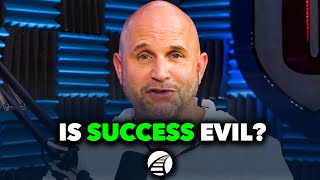
Stephen Scoggins answers viewer questions about success and personal development. He argues success itself is not evil — its morality depends on whether one is a giver or a taker and how one uses success (impact vs. selfishness). He advises against perfectionism, recommends trusting and delegating to collaborators (using a "rope" metaphor), and explains how to learn new skills by identifying outcomes, working backwards, and choosing appropriate learning modalities. He emphasizes persistence and faith — that continued effort and collaboration make goals possible.
Chapters
Welcome back to Q and A. I love the next question because it's one that I think we don't ask enough. But it's an important question. And that is, is success evil? Right? Is success evil? There's a whole lot going on in the world today, right? And we've got people that are financially successful that people that are in areas of lack typically deem as being evil or somehow not worthy of their success, okay? And flip side, we got people who are striving to be successful who don't want to have the baggage of saying, well, working really hard. I'm sacrificing, right? I'm like myself, you know, I'm trying to get off this couch. I've been surfing for all this time, I'm trying to get a steady meal, right? And then, you know, 10 years later, 20 years later, I'm an overnight success, right? That's just. That's foolishness, right? Success. The. The pursuit of success is actually the pursuit of excellence and impact, right? I like to believe that as long as you're pursuing impact, meaning you're adding value, then it's okay to be rewarded for that value with income. There's nothing wrong with that, okay? The one challenge that I would potentially do, and this is my own opinion, okay? Some other folks might feel completely different than I do, is in the event. Not in the event, but along the way on your climb to your success, you're going to develop the behavior pattern of whether or not you're going to be a giver or a taker. Okay? Takers are greedy. Takers are only interested in themselves. And that's what gives success a bad name a lot of times. Okay? Now, what you may not understand about a taker is many times they grew up in very difficult environments and their identity is tied to how much stuff that they accumulate, okay? Which allows us to show them a little grace. On the flip side, there are just as many entrepreneurs and business owners and athletes and other people who earn so they can give and they begin giving along the way, right? The tricky part is when you begin on this journey, you begin to have levels of success. One of the things that's going to happen is you are going to decide, you are going to personally decide if you are going to be a giver or a taker. If you are going to deal with let your self worth drive your purchases and your acquisitions, or you are going to let your confidence drive your impact, okay? That will determine whether or not your personal level of success, right. Adds value or steals value, okay? I do not believe that success in and of itself is evil. I think what you do with that success can determine whether or not if it's for the good or if it's for an evil purpose. Okay? There are lots of wealthy people that got wealthy by stealing, killing, and destroying. There's also wealthy people who got out there and got wealthy because they were serving and serving and serving and serving and serving. Okay? One of my personal goals is I actually want to feed 5 million people. I legitimately want to provide meals on an annual basis for 5 million people. It is something that is so left out and left field, right? But it's going to require a certain level of income to get to that point. Right? But I've been giving the entire time along the way. Giving is not foreign to me. I like to help people. It's precisely the reason why we have boundaries and we have specific areas in how we give and what we give and when we give. You see what I'm saying? That's what's going to determine whether or not your success is evil or good, is whether or not your heart is either impact or selfishness. You see what I'm saying? That determines it. So success of itself is not evil. What you do with that success could be evil. So why not learn to give now? Why not give what you can? And why not enjoy the journey?
Okay, the next question is, and this is an important one, why do I feel like it's all up to me? The question I would ask is, why do you feel that way? When it comes down to it, one of the reasons you've, like, you feel like it's all up to you is because you lack two things. You lack trust. Trusting people to help, trusting people to take ownership, okay? And the next thing is, as you have too much control, you need to surrender more. You need to let go more. Right here. Here's the thing. There's no such thing as perfection. And if you're pursuing perfection, you're pursuing a lie. However, it is possible to pursue excellence, okay? Excellence is your best effort you can give in the moment, at the time that day, okay? Period. The problem with most of us who struggle, right, with thinking, like, it's all up to us and everything's on our shoulders, and if we don't do it, it's not gonna happen. And all this kind of stuff is we're actually setting ourselves up for failure. Because you can't do everything. It's impossible. You can't be everyone's savior, okay? What you can do is you can be the best you can be. And then surround yourself with people who are very talented at what they do. Okay. And then trust them to do it. Are there going to be mistakes? Yes. Are they going to do it the way you do it? Probably not. Will it have a similar result? Probably so. Okay. It takes time. And if you are controlling every aspect and you're the one pursuing all the perfection, if you're spending all that time doing that, then you're missing one of the most valuable things life has to offer, which is collaboration. Okay. People that collaborate tend to go much further, much faster. Why? Because maturity takes time. And even though someone may drop a ball, that may be something that you naturally pick up easily. Right. They are actually learning as well. Right. And when you trust them with the element, okay. They're able to find self confidence in what they're doing along the way and then they take that same trust and then place it someone else and. Alright. I've talked about Dave Ramsey a few times. Dave Ramsey has this thing that he refers to as delegation by the rope. Okay. Delegation by the rope was essentially something that he did within entree leadership that talks about a rope that he had made for his daughter. Okay? The rope that he had made for his daughter had little string, one for purity, one for perseverance, one for overcoming adversity and things of that nature. And every time he would give his daughter a little rope to see how she did with it. If she did really well, even if she made a mistake and learned from it, he would give her more rope, okay? Now if he all of a sudden gave her a little rope and she completely dropped the ball and needed more education, more training, then he would pull the rope back, okay? It's a principle that I've personally adopted with my kids, with my business teams and stuff like that. If I feel like they're making a good job and I feel like they're making progress and I feel like they're giving me their best, then I will typically let them have a little more rope. I'll typically give them a little more pace. At the same time, if I feel like they're getting too far off track, okay, I'll pull the rope back. Okay? You need to be this very similar way in trying to control all aspects, okay? Because only about 80% really, of honestly, 80% of your effort is going to determine whether or not you're successful or not, okay? The other 20% is going to come down to faith. Every time, every single time I've ever had a successful boost in Business, in life, in relationships, every, every single time, there's always the undiscovered thing that ends up setting the tone and completing the thing. What I mean by that is I can lay out all the steps. I can lay out the complete strategy. I can know where I'm going and when. I can think about all the different widgets and how they interconnect and all this kind of stuff, which is exhausting, by the way. Okay, I can do all of that. But at the end of the day, you can't predict every single outcome. What you can predict right now is, is how much excellence you bring to the table on the way to the outcome. See what I'm saying? The other 20% is going to come down to faith. It's going to come out, it's going to work out. If I just keep going, it's going to work out. And here's the reality. If you just keep going, it's going to work out. Now what I'm saying is bring some people along the way that you have a level of trust with, and then trust them and then let them drop their balls, let them make their mistakes and. And let them actually be part of the journey. That way, when you do get to the end of your journey and you do hit your level of success, you're not staying on a mountaintop by yourself. That's my two cents. I hope that helps.
All right, our next question is, what if I don't know how? What if I don't know how? I love this one. You just learn into the question what else we have. No, seriously, what if you don't know how? Here's the thing. We all have innate skill sets, impacts and stuff built inside of us. We got a general skill set, talent gifting, if you will, that every single person on the planet has. Okay? They all have a unique one. Now they almost. They all have also shared talents and gifts that they can partner with different things. You think about musicians, for example, right? A guitar player is really awesome at shredding guitar. A drummer's really good at beating the drums. A bass player is really good at, like, popping down a good beat, right? However, the band can't be its thing without a commonality of actually everybody using their strengths and talents all the same time. Okay? Now what we take for granted is the fact that that guitar player had to learn to be a guitar player. That bass player had to learn to be a bass player. The person beating the drums had to learn to beat the drums. The person playing with the tambourine had to learn to play the tambourine, the harmonica, and the list goes on, right? The trick is discovering and maybe trying a few different things, right? That actually. So you can figure out what comes natural to you. And then you put emphasis and focus and diligence on what comes natural to you. Right? Can you imagine if the. The lead guitarist was trying to all of a sudden become a drummer? Right? Most times. Not every time, but most times, right? The guitar player is not going to be the drummer. They're different skill set. Now, there are some savants, don't get me wrong, but most times they're not gonna be the same person. You're the same way. Okay? What I think and what I do, what my process is, is I determine the outcome that I want. What do I want to take place in 12 months, in 24 months and 36 months and 60 months? What do I want to take place? What do I want to see happen? What is my end result? What it will look like, what it will feel like, what will it smell like, even what will it taste like? The first time I went to Hawaii was the first time I ever had real pineapple. There's nothing like real pineapple. And it's changed me. By determining what the outcome that you want most is, then it's nothing more than laying out the steps to go backwards from the outcome that you want. You go backwards. Okay? Once you learn these steps that you need to take, all you have to do is say, what do I need to learn to make that step a reality? That's it. That is it. You don't have to worry about whether or not you have the knowledge right now, because you're not. Ten years ago, I would not have been able to manage my wealth or the wealth in general. I would not have met managed wealth in general a certain way. I would have probably blown it, to be honest. I probably would have spent every penny of it. Okay? These are lessons that happen over time and things that I had to learn along the way. Okay? You're the same way. You're the same way. No matter what you're going after, right? You are going to have to learn new things to get there. The trick is learning the right questions to ask in order to understand what you need to learn and how you need to learn it. I did an entire face to face lesson and a whiteboard lesson not long ago on the methods in which you learn and the modality in which you learn. Okay? Some people are really good at learning visually. Some people are really good at learning with Their hands. Right? Some people are really good about learning on their own. Some people are really good about learning in school. Some people are really learning, really good at learning about mentorship. All of those, those, all of those different things create your learning environment, okay? So identify where you want to go. Determine some steps to get there. Look at that step and say, what do I need to know? Who can I learn it from? And then what action do I need to take? And you're gonna get there. Hope that helps.
Alright, our final question for today is what do I do if I feel like it's not possible?
My experience has been that anything is possible.
It's a simple answer, but it's a simple truth. Anything is possible as long as you're willing to do three things. Learn. Okay? Mature. Okay? Learn, mature and persevere. Learn, mature, persevere. There is nothing, and I do mean absolutely nothing, that if you're willing to do those three things that you cannot achieve. Maybe you grew up in a difficult place like I did. Maybe you grew up fine. Maybe you're in college right now, trying to decide it's college for me, is college not for me. Maybe it's you're trying to get a doctorate in something and you feel like this workload's too heavy. Whatever, okay? Check your life for distractions. Check your life for things that, that are holding you back. What we refer to as roadblocks, okay? But if you learn, mature and persevere, there's nothing you can't do. Absolutely nothing. I mean, absolutely nothing you can't do, right? You can master your money, you can master your relationships, you can master your. You can master your professional career. You can master the level in which you actually seek personal development. You can master your impact, okay? That's why we refer to everything as life mastery. Life mastery. All mastery is, is making possibilities a reality, okay? That's the deepest dream, the deepest yearning, the deepest thing in your heart and making it a reality. And you do that by learning what you need to learn. Okay? Maturing as a person. Okay, Respond which all is responding differently to yourself and other people. And then never, ever quitting. Never, ever quit. And you'll get there. Hope that helped. All right, I hope you enjoyed the question and answer session for today. If you want your question answered on a future episode or here or on Instagram, go ahead and email me at questionsuneyprinciples.com and I'll be happy to take the time to answer the best way possible so you can begin to win in your life. Thanks again. For watching.
More from Stephen



He Had Everything…Then A Heart Attack Changed It All | Dan Sachkowsky #Shorts




Paralyzed. Suicidal. Then He Surrendered, And EVERYTHING Shifted | Marcus Aurelius Anderson


Why You Snap At People You Love, The ALIGN Method, & Why ADHD Isn't A Disorder | Sara Hartley

