Millionaire Mentor REVEALS Secrets to Sell Your Business for MILLIONS! 💰
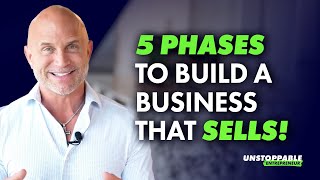
Speaker (Stephen Scoggins) draws on four exits and ~25+ years in business to teach entrepreneurs how to build companies for maximum sale value. He presents five "seasons" of business (Startup; Testing; Investing; Scaling; Operate or Sell), explains why the best time to sell is when you don't need to, and emphasizes preparing for sale via tight financials, a quality-of-earnings report, documented value-story/pitch deck, legal/compliance cleanup, and an experienced M&A advisor. Valuation hinges on EBITDA and industry multiples (examples given range ~5x–20x); buyers assess 3-year historical performance and a 5-year growth/resale story (roll-ups and multiple expansion explained). He also warns about transaction-stage pitfalls (late-stage liabilities can destroy value) and the emotional transition after exit (12–24 month adjustment). Includes a CTA to a free "Eight Figure Mindset Makeover" video series.
Chapters
Businesses are only as good as what they can be sold for. And in this video I want to help you understand the basics I learned from actually exiting four companies. When it comes down to it and you're actually developing your business, one of the things you oftentimes don't think about is the potential you may one day sell that company. At least that was my story. I went to go actually sell my first company and began a process that took about three and a half years to actually come to its conclusion. With a successful exit, so many times people look at businesses as having little to no value. What I've discovered is the determination between what value you get for the business comes directly down to how you built the business. Which means I want to go ahead and give you some insights into the things that I have found that actually maximize the business value, gives you the greatest opportunity for return, but more importantly allows you to exit with a peace of mind. So if you haven't considered selling your business, I still think you should watch this because honestly, that's where the money is. So let's go jump in. Alright, so the first thing I want to jump into real fast is I want you to understand there's five specific seasons of building a business. The reason this is important is because this is directly going to determine how we build the business long term, to whether or not we're going to build it for maximum value or to what we call own and operate. Okay. The top five seasons of building a business are as followed. The startup phase. Hustle and grind. It's where you're going, getting after. You're trying to get everything going. You're like really working your butt off. You don't really have a lot of systems and sophistication. You may not even have team members. Then you have the testing phase. This testing phase is all about like just really testing things out, seeing what works, seeing what team members work, seeing what product that works, testing the marketplace. Then you got the investing phase, which is where you're now investing in sophisticated services and processes and systems, hiring team members, hiring leaders, and actually growing with a methodical approach towards building a scalable company. Which then takes you to step four, scaling. Scaling company is about duplicating and compounding efforts. It's about making sure that machine is humming and firing on all cylinders. It's where the machine now needs less of you and simple oversight from you. It's functioning more on a team, more as a business unit, more as a machine. And then, and only then, you get to go to Season five, which is actually either operating the company long term or selling the company long term. There's different approaches that do different things. Had I known what I know now, I would have built it differently over here than having to go back and rebuild parts of it to make sure it could be sold. Now, what are some reasons you might want to sell your company? Well, for me, I had spent over 25 years in the industry and I was ready to do something different. For lack of a better word. I put my 25 years and I was ready, right? I want to go do something fun. I wanted to start making videos and content and teaching other entrepreneurs all the lessons that I learned over the last 25 plus years, almost 30 years of being in business about what it takes to be an eight figure or nine figure entrepreneur. Because it's a different theology, it's a different mindset, it's a different way of strategies and tactics and secrets, if you will. Like, there's just different ways of doing things right. These types of things are what we're going to dive into. So maybe look at what are some of the reasons that you would like to sell a company. More freedom, more financial freedom. Maybe you put your time in like I did. Family needs, maybe there's an illness in the family. Just want to spend more time with your spouse who maybe is going through a struggle. There's lots of different reasons to sell a company, but the best time to sell a company is when you don't need to sell it. In other words, it's so profitable, it's running so well. You're like, why would I ever give up my cash cow, ever? And then you realize that money is now ebitda and that EBITDA can get a multiple. And now you can actually achieve financial independence and financial freedom and also achieve a dream. Go build the next thing, go do the next thing, build the next business. Whatever that dream is. You've worked your butt off, you built a great company. It's worth something. So now we're going to the marketplace and see what the market will do for us. One of the things I highly recommend you do is I would do due diligence and research something called an M and a professional or an investment banker. A lot of times M and A investment bankers are professionals that come alongside of you to help you sell your business. And yes, they will get a piece of the action. Right now what you give them as a piece of the action is actually negotiable. One of the things that I did in my specific unique situation Is I actually rewarded my investment banker for getting me a higher and higher value. So the higher the value raised, higher money I was going to get off the deal itself, the more of a percentage I gave him as a cut. And the reason I did that is because I wanted him to be incentivized to give me the highest value possible and not just bring me just the random deal that comes across the table. Okay. Another thing an investment banker is going to do for you is they're going to take the time to look at your business. They're going to go under the hood and they're going to look all under the covers. If you will look at your financial performance, they're going to make sure you can pass what's called a quality of earnings report. Okay. Which is where your financial stuff has been so audited that they can guarantee that your financial performance is the stated financial performance. If it's not, it will kill the valuation of your deal literally as just before you're going to close it, after you're already emotionally invested in it. That's a tactic that strategic investors, P and D firms and family office money do all the time to devalue the company just before they acquire it. So we want to make sure that we are tight. Our financial performance is guaranteed. We know exactly where everything's at. Your investment bankers are going to do that. Your investment banker is also going to come alongside of you and help you understand what a true value of your business is. Certain businesses have different ebitdas as it relates to a multiple. Some businesses get a multiple of 5, some get a multiple of 10, some get a multiple of 12, 20. Like some businesses get crazy multiples, your industry is going to dictate what that multiple is alongside of how you differentiate yourself against that multiple. In other words, if you built a one of a kind of machine, even though it's operating a similar segment, but you have unheard of profitability in a competitive landscape. When you look at other companies in your field that do what you do and they see that you are performing up here, they all perform consistently here. They're like, what the heck is they doing? Well, you will get a higher multiple for this business than you would for any of these. Does that make sense? Well, M and a professional investment maker is going to help you do that. They're going to help you understand the marketplace and what it actually is. One of the things I look for in an investment banker more than anything else is I want to understand the types of deals they've done, the values of the deals they've done and how many deals that they do a year, that's going to determine how professional and how long they've been doing this thing. Because I want an experienced player at the table. I do not want an investment banker negotiating on my behalf without my best interest at heart. So you want to actually do your due diligence to make sure that you're hiring the right person in the right time, in the right way. Because that's how you get compounding of multiples. Okay. The next thing you got to really think about as you're hiring this professional is actually going to take you through a process of preparing your company to be sold. Believe it or not, there's lots of different things that need to take place ahead of you actually putting your company on the market. There's the cleaning up of financials, There's a documenting of the story of how the company became the company, the company, the value proposition. The marketplace ends up becoming a bit of a deck, a pitch deck, if you will, to help people who might be interested in the business. Get a quick overview of what your business should be and how it should operate and what kind of guaranteed returns they could look at in if they acquire the company. That's just one thing. They're going to look at compliance issues. Making sure you don't have any legal actions or tax actions or anything by the federal government or something that's going to cause them a problem. To make sure you don't have anything that's going to cause them a problem post acquisition that will also decrease your value. Let's say you get all, let's say you get a crazy multiple. You've done all this work, your finances look tight, everything looks great. Customer reputation. All your customers are like, man, this company kills it. They're awesome. And you get all the way to the closing table and then all of a sudden major tax liability pops up out of somewhere, or a sexual harassment suit pops out of somewhere, or, or, or there's all these different areas that can impact the legal and tax functionality of your deal. And as a result, especially before close, if that stuff is not addressed, documented and like proven out, they will destroy your valuation at closing. You may get as little as half as much as you were supposed to get. I think it's worth putting some time energy into. Again, that's preparing your company for acquisition, preparing your company for that. Again, an investment bank or qualified professional is going to be able to help you walk through that journey really well. The other thing they're going to be looking for is a five year horizon. They're going to look at three years in the back to make sure your profitability is consistent, to make sure that profitability is guaranteed, to make sure there's no compliance issues all the way to that three year mark from today backwards. Three years and they're going to look and see what the professional success story might look like five years from now. In other words, if they buy your company for $10 million tomorrow, how are they going to make that company worth $50 million when they want to resell it five years from now? They want to know the story. They want to be able to see the path of making sure that this company is an ATM machine that's just printing cash. A lot of times companies will buy other companies all at one time. They might buy six different construction companies and do what's called a roll up and roll them all up together to then resell them. Because the multiple goes up as the EBITDA goes up. So if the EBITDA times five companies is $100 million, so if the EBITDA collectively is $100 million and they're going to get a 7x return when they only paid four to you, they're going to make a three point gain on the deal. Okay? And at $100 million times three, they're selling the company for $300 million. So if they're going to buy your company for 10 million and buy other companies for 10 million, they're going to have about $100 million invested in the business. Okay. When they go to resell it, they're going to get a higher multiple, the ebitda, because the EBITDA collectively is higher. When the EBITDA is collectively higher, that multiple raises for them and they get to get points or money on the spread, they're going to make $200 million on something they only paid $100 million for, even though the total transaction value might be $300 million. They just picked up big money, right? But they're only going to buy businesses that have a proven path of profitability and a proven path of scalability. So you got to be focused on more than just revenue. You got to focus on profit and you got to focus on ebitda and you got to focus on efficiency, customer retention and growth of the overall organization. If you can do that with excellence, you're going to be setting yourself up really, really well. So this is the ways that we maximize the value overall and making sure that we have and maintain standard of excellence. Okay, I can't say this enough, but my next point here is super important. EBITDA. EBITDA. EBITda, EBITDA, EBITDA, EBITda. Why did I say that so many times? Because an EBITDA is going to force you to cut costs. You don't need leverage things to increase revenues. You do need and have more cost control to have more profit control. So if you buy a business, let's say right now for $15 million. Okay, right now, and you see a path to increase the value of that business by adding $3 million to the bottom line, by making subtle cuts and shifts, and that don't cause problems with the business. Now you could literally resell that business in a few months from now or a year from now, or two years from now for 18 million. That's just a small example of how compounding EBITDA works. Most businesses and entrepreneurs are not focused on ebitda. They're focused on revenue, maybe cash flow. I want you to focus on revenue, cash flow, profitability, gross profit specifically. And EBITDA let that control the decisions you make at the financial level to determine what you invest in and what cost you cut. If you do that, you're going to do really, really well. Especially if they can validate that your EBITDA is your ebitda. That's that quality of earnings report I mentioned before. Now another thing that I want to touch on is actually something that's not talked about a lot, but I think it's very important. Let's say that you have done all this work. Your company is now ready to be sold. Like your management team knows it's coming. There's no hidden agenda. You've been talking about it. They know that they're secure. The outside acquiring party absolutely needs the management team. The business can operate without you. Like all of those things are in place the last 30 days before an exit. There's all kinds of documents being flying back and forth. You need to read every word. You need to read every single word. And the reason you need every single word is because subtle changes change the vernacular and the meaning of the contract. So I want you to make sure you go to your attorney and hire a professional attorney that does M and A deals to help you review these documents and to represent you as part of the transaction. On most cases, it's about a six figure investment. It can come out of the transaction value at the time of closing. There's lots of different ways to cut up the deal, but for the most part, you need to have your investment banker present, you need to have your legal representative present. And you need everybody to be reviewing the documents to make sure nothing's been missed, to make sure there's no shenanigans and nothing can happen that's going to cost you heartburn and problems later down the road. Once you've done that and you go to what's called the closing table and you sit down, you're going to close on the deal, you're going to sign the paperwork and you say, okay, company's yours, hand me my check. Whatever deal that structure is, which could be a variety of things, everything from earn outs to capital raises to equity positions to actual cash value and so on and so forth. Deals are structured different ways at different times. But once all that's done and you're assigned your name on the dotted line, you're going to have an emotional response within about, I don't know, probably six hours. The thing that you spent your entire life building is now the possession of somebody else. And yes, you got money. But if you haven't taken the time to plan your next move, you're going to feel an emptiness that you've never felt before. And that adjustment period takes anywhere from 12 to 24 months. So while all this is going on, I want you to be considering your next move, what you're going to do next. Even if it's not right away, even if you want to go on a vacation for a month post transaction, I want you to have something to cut your teeth on as soon as you get back. Because if you don't, your sense of significance, meaning and purpose is going to be challenged. Because likely after however many years you spent building your business, you have developed a relationship with your business, that your business is you and you are your business. Now you've cut half of yourself off and once you do that, you go through that transition, things get really, really challenging unless you've taken the time to do that. I also am telling you that now because if you want to sell your business, you're going to go through that season. It's a real thing. It's a real thing to go through. It's a bit of a transaction hangover. So yes, you're going to have all kinds of financial resources, your family life is going to change a little bit. Your spouse is like, why the heck are you home all the time? Like there's all these different things are going to like come out of nowhere that you're not going to see coming. I want you to be paired for that I want to spend time with your spouse talking about what the transaction can be, what your day to day life would look like post transaction, how soon you're going to be back at the game. One of my significant other people that I had in my life for a long time, you know, one of the things that she told me a long time ago, she's like, you need to get back to work, you need to go do something. Like you have builder energy, like you've got to be building or you're not going to be happy. You know what, she was right. And it took me a good six to eight months, almost 10 months post transaction to really get my stuff together. So those are all the valuable insights I got for this particular video of understanding what it takes to sell a company and maximize your value. I'm sure we can create more content around this. If you've got questions, drop it down in the comments below and we'll come back and review it and I'll create more content just for you based on the subject matter. In the meantime, if you're not quite there yet and you're still trying to build the eight figure mindset, I want to go ahead and invite you to a free resource we have called the Eight Figure Mindset Makeover that we created just for you. It's a free video series. There's no harm, no foul, no real commitment there as our way of loving you into the differences between how a seven figure entrepreneur thinks, how an eight figure entrepreneur thinks, and you'd be surprised at the differences in the value it brings. So until then, I'll see you guys in the next video. Much love. Take care. Peace.
More from Stephen



He Had Everything…Then A Heart Attack Changed It All | Dan Sachkowsky #Shorts




Paralyzed. Suicidal. Then He Surrendered, And EVERYTHING Shifted | Marcus Aurelius Anderson


Why You Snap At People You Love, The ALIGN Method, & Why ADHD Isn't A Disorder | Sara Hartley

