Money Habits Keeping You Poor
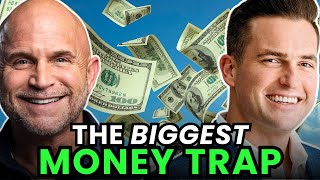
A recorded conversation (host Stephen Scoggins with guest Jedediah Collins) about practical personal-finance habits and strategy. Collins frames money as a "vehicle" to achieve defined goals rather than an end in itself, emphasizes being teachable, long-term building (decades), and shifting from active to passive income. He identifies common "money traps" (credit/minimum payment trap; moving goalposts), recommends a five-bucket cash-flow framework (Society/taxes; Past; Present; Future (savings/investing); Compassion/giving), and explains stages: cash-flow management, net-worth building (assets vs liabilities; leverage), then estate planning (trusts, tax exposure, beneficiaries). Practical guidance includes building a 3–6 month (or up to 2-year for major transitions) liquidity cushion, investing only after establishing that cushion, favoring index/average investing for most people, and matching tools to life-stage (cash tools vs estate tools). Closing directs listeners to yourmoneyvehicle.com, book, courses, and LinkedIn for Collins.
Chapters
One of the money traps we fall into is this idea that if we never tell our money vehicle where we want to go, we're never going to get there. But you really have to identify what is enough for you. It's really having that understanding of what do I see as success. If I've never set success up in my financial life, whether that's a one year goal or a ten year goal, then I'm never going to truly feel like I've achieved because I'm going to continue to compare to the bigger yacht or the bigger this or the bigger that.
Guys, welcome to my good friend, Jedediah Collins. Dude, what's going on, man?
Oh, everything. The world is spinning. It is summertime and honestly, I just, I look at why you write down your dreams, why you chase them, and why you kind of wake up and get energy is when things that you set into motion start to come to fruition. And I'm in that beautiful place right now and enjoying it.
That's awesome, man. Well, look, I actually want to jump straight in. So I'm all about building stuff like building businesses, building careers, building life, building finances, all that good stuff. And look, you had an extensive, beautiful career with the NFL and a bunch of other cool stuff, if you're cool with it. I want to start a conversation on money. I find that's the one thing that people say they never have enough of, or they don't know what to do with it when they do get it.
Or it doesn't bring them what they thought it was going to bring.
Which was, which was actually my original example when I, you know, kind of first got into the multimillion doll category myself. So I totally get that.
Yeah.
In what way or what perspective should we actually look at money? Because I find that the lens in which we look at money controls kind of how we believe about it.
I, I love that. It's a, it's a perfect introduction. 1. I, I am a big fan of building things. I'm a big fan of not taking the shortcut. We look at our world today, students are being told, instantaneous, overnight success. Yeah, there is no such thing. You know, and the reality is, a friend of ours, Ben Newman, we were talking, anything you're going to build is going to take a decade. And I set out on this journey accepting that and know that most of that decade is going to be in the dark. So when I looked at money as walking into the NFL, getting really humbled in how little I spoke the language, I really started to question, like what was my relationship with money and how do I approach it? And so today why we built the company money vehicle is we're truly challenging people to see money not as the destination. Money is not the noun or subject of the sentence. Money is a vehicle, it is a tool. Money vehicles, an analogy to tell you to just see money as the verb, as the thing that is going to take you somewhere. You really have to decide where it is that you're going, how you're going to get there, and then you get to see how money can play into your strategy and your plan. So I really like this frame of money vehicle because it takes me from my first paycheck, money is a vehicle to maybe buy an actual car, maybe get an apartment, maybe it's just get a cool pair of shoes. But then as I elevate well then I have a family. Money is a vehicle to paying for my kids college, to going on a family vacation. When you get into that multimillion dollar lane and you say, well what is a money vehicle to now? Money's a vehicle to my impact, to my legacy. I get to work with a lot of professional athletes today who are making an exorbitant amount of money, more than even when I was playing. And I'm sure the guys from the 90s and 80s look at me and go, well you made more than us. But now when you do make $15 million in a year, money is no longer a vehicle to pay for groceries. Money's a vehicle to make a massive impact. And so keeping that frame of money vehicle is really how we're challenging people to see this lens and truly to see it as again, I control a vehicle. A vehicle does not control me.
Yeah, no, that's so good. You know, I'm thinking too, there's, there's a certain belief, a belief set, a prince, a set of principles.
Strategies and tactics that I have seen that shape a six figure owner to earn to a seven figure earner, a seven figure to an eight figure and eight figure to a nine figure. In my entire journey going from basically homelessness upwards of close to nine figures in top line. My belief about money change so many times, you know, so I want to talk to maybe two different audience types at the moment because we have, we have them both watching and listening. One is the, the, they're, you know, they're high achievers, are successful, they're, you know, they're making six, seven figures on an annual basis. And we also got our, our, our early startup folks, right? They're, they're they're the folks that are like, okay, I might be making 60, 75,000 a year in my full time job that I don't really care for that much. I want to go do something else, you know, but I don't know how to make the jump from, you know, making 60 or $70,000 a year into a million plus. Or you got the other guy who's like, all right, so I make a couple, 3 million bucks a year. I'm in. I'm, you know, I feel pretty good. I'm able to do some nice things. What is the belief set that you see between the two of them that might be something they both have to overcome in order to get to the higher eight figures and nine figures and investments and all kinds of stuff.
I think one, I want to ask you a question as you made this journey is that everybody says that first million is the hardest. Is it just as hard from 1 million to 10 million and 10 million to 100 million is, or is it once you have this belief system that you've been able to portray, does the journey get easier as you kind of proceed?
Yeah, well, it depends. And it depends on this. It's very important. Are you teachable?
If you're teachable, yes, you can. You can. You can what I call leapfrog a few, a few steps going. Getting to the first million was very difficult. Going from 1 to 10 was reasonably difficult. Going from 10 to 50 was very difficult. And going from 50 and beyond was a whole nother set of investment strategies and asset protection and all kinds of stuff you're really not really thinking about because you don't know. You just don't know what you don't know, right? I went, you know, for me it was like, okay, how do I get food? How do I get shelter? How do I get rid of all this debt that I acquired because I was an idiot. And then once I got that, okay, now I have liquidity, like I'm starting to have some extra cash flow. How much of it should I reinvest in my business to keep my business growing? How much can I take off the table and maybe actually get my first car? And I'm big. I'm a big believer in I'm a big day Ramsey kind of ish kind of mentality, like I'm a debt free guy. But I also understand the investment strategy, like employing stuff like that. So, you know, so. And there's all these different voices at different levels, right? So you've got, hey, be debt free, take all the Liquidity, continue to compound it, which is beautiful. It works. It's a long game, which is fantastic. You got the other folks that are like, well, no, you know, money's cheap. Use somebody else's money. And I'm like, every time I've even that I've even thought about using somebody else's money, quote, unquote, the banks, it's caused me problems, you know, so I'm, you know, so there's, there's been different levels of the journey, but it came down to when I was my most arrogant versus when I was my most teachable. Those that are teachable are able to actually compound at a quicker fashion and learn quicker because they're hungry for learning. And when they surround themselves around great people like yourself, they can actually get there faster because they're now learning from someone who's actually done it right. And you can avoid a lot of the pitfalls, mistakes, and capitalize on a lot of the successes. So that's kind of my feedback on kind of where my journey was from those different levels. But I don't know if it's. It's kind of seeing what you've seen with your clients and whatnot, because I know you've dealt with a lot of high profile folks as well. So I'm curious to hear your feedback now.
I love it. Well, that's why I love, I love conversations. So I always love kind of hearing from experts. And you just said, stay teachable. I learned. And I will say this, Stephen, I steal from everybody. I want to take as much value away from you as I possibly can. And good artists borrow, great artists steal. So that's why I like to use that term. As I look at this, you know, I don't work with clients, I work with students. And that is that mindset, that teachable mindset. I love Dave, grew up on Dave. I actually battle with Ramsey a lot in the high school realm. I will say, for the typical average student today, debt free is not a choice. It's not an option for the vast majority. So that's why we flipped that mindset on, well, how can we use this tool again? Debt is just a tool. Debt isn't the objective or good or bad. Yeah, that's just how I use it. And so to answer your question of, like, what are the beliefs, how do people start to make this shift? I think the biggest one, the most powerful one that I have seen in students, athletes, you know, professionals, is really what do they prioritize more? When we begin, we look at it and Say money, money is the priority. I need to go make this paycheck. And so everything else is going to go to the wayside in the hopes that more money is coming in. And I think that's where you need to start. I think that's where that, you know, first million gets created is I need to go earn it. I need to earn my first, maybe not million. It's very hard or impossible to save your way to wealth, but you do, you do earn it at the start and you value your, your, your money and your paycheck. The shift becomes when you can start to value your time. This is the biggest kind of concept and change. One of the questions we ask in money vehicle at a very elementary level is what type of. Or are you, are you a spendor, a save or, or an investor? And it all has to do with how long you see money. If I'm on a day to day basis, I'm a spender. If I look in the months or a year now, I become a saver. When I look at money through a decade time frame, 10 years, that's when I start to become this investor mindset. And so as we look at the biggest shift of how do I go from that startup mindset to now, I'm kind of experiencing this growth. It's, I need to start valuing my time and I need to start valuing my money's time. And that money time is where I go from earning a paycheck to creating a paycheck. Because when my paycheck is out working for me, that's not me or my time, that's the creation of money. And so as they start to shift into this lane, you really do begin to progress. And see, and I love what you said is, you know, you start to look at, you know, asset management, some removing, mitigating some liabilities. You do cross a precipice where you say, I'm willing to take on any and all risks. I'm shooting for, you know, a long shot, I'm taking the home run. But then you get into a place where you're like, all right, I have some, I kind of want to protect what I have. And then you begin that healthy balance of I don't want to take as much risk, how do I remove and transfer some hazards to my wealth and now how do I make time work for me? But I make it on my own schedule and with that comfortability of risk tolerance as well as risk capacity.
100%, 100%. It's all about going from Active to passive all day long. I was thinking, one of the things you and I are able to do is, you know, have a great conversation to, to help the world here with money management and, you know, compounding all good stuff. And it's because we both had, we over time put ourselves in a position to value our time in such a way that allows passive income. You and I are both making income as we're sitting here talking.
Yes, sir. You know, and that's, and I. So that, that's the dream. Go ahead. Yeah, that is the dream.
Yeah.
But that is not. And that's where a lot of people say, I want passive. I talked to NFL players. Well, I'm just going to invest in real estate to get that mailbox money. Pause. It doesn't just happen like that. You need to set that structure up. You need to go build your own business, you have to go build your team, then you got to go build your portfolio. There's a lot. Once you get that time in place, you can then leverage it. But you need to build it before that time kind of kicks in. I was asked, you know, probably seven years ago now, Jed, you're great at speaking to audiences. You can go into a room full of high school students, professional athletes, 60 year old Microsoft, Amazonians. I've delivered to them all. People go, this is amazing, but how are you going to reach a million people? And I remember very vividly sitting in this, this office and the, the gentleman is giving me these praises. But then he asked me that question and I thought about it and I said, I'll never be able to teach a million standing in front of people.
Yeah.
And it was that day, the next day that I started looking and go, well, how do I scale myself? How do I leverage myself? It's been six years and I'm now able to go, you have a thousand students in Georgia. Click the button. There's everything we're going to be able to teach you. But it wasn't an overnight thing. It was years of building that to where now you can sit where you are and say, how are things working for me? Well, I'm doing something that I'm passionate about and I love because I did the time, I did the dirty work. Nobody saw it, nobody patted me on the back. Hardest part about leaving professional sports is nobody claps for you anymore. I, I do great things all day and not single person claps for me. But as you look at it, it's, what are you willing to do in the dark to be able to stand in the light and say, yep, now I control my time.
Dude, that's a brilliant distinction. You know, I was, I was reflecting. Everything that I'm able to enjoy now.
Happened years ago when I'm in an office by myself or on a job site or a, in looking at a property or the, the relationships I was cultivating along the way that led to certain opportunities and certain deals. That is such a good distinction because I feel like a lot of us, when we're looking at money, we look at what we have, what we want, and then kind of like, okay, what are the steps in between those two bridges?
Yeah.
You know, and when you think about it, the grand scheme of things is so much of the work is done behind closed doors.
Absolutely.
You know, even, even in challenging your mind and reading your amazing book, like there's, there's so many things that come as a distillation of learning by people who have been there, done that, and got the T shirt. There really is. You know, one of the things you talk about your book a lot is the money trap. Right. You talk about having a trap. And I think there's a bunch of traps. I'd like you to break down your, your, your perspective on money traps. What it might be a trap versus what might be an opportunity.
And so I look at this one directly from our curriculum is the credit trap, one of the examples that we utilize. And it goes back to that idea of debt. Debt is a toxic, perhaps risky tool when used the wrong way. And so we look at the credit trap as any time you end up paying for something and paying more than you originally purchased it for. So if I buy a thousand dollar computer, put it on credit, and a year later that computer cost me $1200 with that 20% interest rate. Now I have fallen into the credit trap when, if I understood the language of money and was speaking it and knew if I only had paid it that month, I would receive no interest, get all the rewards, the credit, building all the positives. But it becomes a trap when people don't understand what is happening. The minimum amount due MAD is one of the biggest fallacies the credit system has ever created. Yeah, they send you a letter and tell you how nice and friendly they are that they don't want you to pay the ousand, they'll take sixty dollars and see you next month. Yeah, the minimum amount due makes me mad. Mad. And it should make everybody in America mad. And I know some people are listening and Jed, some people can't afford to pay off their entirety of their credit cards. Well, those are the situations where we need to challenge how are you using your tools, how are you using credit and your money? But as I look at these traps, it really continues to grow in what we were just saying. What do I originally want when I start? I want the million dollars. Well, when I get to a million dollars, what do I want beyond a million dollars? I want $10 million. And you fall into this trap of what, you know, the financial industry calls the moving goalpost or the moving end zone. And I would challenge you even sitting where you are today, having come from where you are, the people you compare yourself to are the three people in front of you, not the 103 people behind you.
Yeah.
And so one of the money traps we fall into is this idea that if we never tell our money vehicle where we want to go, we're never going to get there. That's a Yoki Berra kind of quote. But you really have to identify what is enough for you. The Psychology of Money. Great book, highly recommend. It tells this analogy in the story and the gentleman in the story says, I'll have something he'll never have, which is enough. And so the money trap is believing the million dollars is going to make me happy. The 10 million is going to make you really need to look at money and set your own goals. Because the one thing the NFL teaches me is the guy in the lockers next to me have very different financial plans and very different paychecks. I can't build Jed's journey on what they're doing. I set my own world, I set my own standards and then I set my own destinations. Once I have those, the money trap begins to fade. Because now again, I am controlling the money. I am telling the money what it is going to do for me when more comes in. We can solve that problem, problem as it comes. But it's really having that understanding of what do I see as success. If I've never set success up in my financial life, whether that's a one year goal or a ten year goal, then I'm never going to truly feel like I've achieved because I'm going to continue to compare to the bigger yacht or the bigger this or the bigger that.
Yeah, dude, a thousand percent. I was just also thinking too.
What you just laid out is the fact that you had it, that you created, took the time to do some deep work, really get clear, then create a freaking plan. You would think as valuable as money is and how instrumental it is to the pretty much everyone that earth's you Know, with exception, maybe like, you know, like some I hired, like outlying areas. Like it's so important, but yet so few of us actually operate in a plan. And I think that's one of the number one things that I did differently, going from the homeless environment to where I'm at today is I did. I started getting with mentors and teachers like yourself to develop the plan.
Right.
So what are some, maybe some key aspects of a, of a solid plan? Listen, we'll use the person making 70, $85,000 a year or something like that to kind of start. Because obviously the, the higher your net worth goes, the. The, Your plan differs to diversify quite a bit. So.
And it goes from cash flow to net worth to estate. And those are kind of the three variations. And so when I look at the cash flow, I'm in that $75,000 up to $300,000. Yeah. I have five choices with every paycheck. It doesn't matter if it's my first paycheck or my last paycheck. You have the same five choices. And this is one of the tools that I stand in front of real estate groups, I stand in front of students. Doesn't matter. If you understand these five, your entire plan begins to develop. We call it society, which is taxes. Your past, your present, your future, and then your compassion choice. And as you look at $75,000 paycheck, I know about 25% is going to go to society. That's my choice to live in the country. We do. My past choices are anything due before the month begins. Let's say it's July 1st. What have I already spent in July? My rent, my bills, my subscriptions, all of those things. Those are not choices. I'm gonna. July 6, doesn't matter. July 1, all those are due. My present choices are those wants and needs of today. So what am I going to go out and spend money buying clothes, getting dinner, things like that on? My future is going to be saving, which is protecting money, and investing, which is putting money at risk. A lot of people misconstrue. Oh, well, investing's, you know, risk free and savings riskless. No, no, no, no. Saving again, you cannot save your way to wealth. Saving is protecting your money for a certain event. Investing is when I say I'm comfortable putting my money at risk to create more money.
Yeah.
And then there's that fifth and final choice that a lot of players, people, and everybody says, well, I'm not going to give much of my money away. If you have religious ties tithing, 10% church, all those donations. You have charitable allocations, you have your sister's birthday, you have Christmas coming up. Anytime you are spending money outside of yourself, you are starting to play into that compassion choice. So the first thing to do to create a plan is, I don't want to make these decisions. As that 8, $75,000 comes to me. I want to already have a framework that says 25% is going to society, 10%, possibly more, but 10% is going to my future. I have about 30, 35% to my past. I get to live on 30%, maybe. And then my compassion choice might be 10, might be 1%. I always say, give me a penny for your thoughts. Start out at that 1% and you'll be able to grow from there. And then as you look at all right now, I've done that for a few years and now I. Now you look at a net worth statement. What are my assets? Things that are putting money in my pocket. What are my liabilities? Things that are taking money out. Thank you, rich dad, poor dad, who is an old whole controversy and story of himself. But how do I start to balance these tools? Things that are working for me are positive unless it's depreciating. And that's when I have an asset that's losing value. A car is a great example. But I look at the other side of the coin. I see my liabilities as a negative unless it's leverage. And I'm using those dollars to go and create more money. And so one of the things I really want people to understand is money vehicle. I look at my assets, my liabilities, they're not what they are, it's how I'm using them. Is my house an asset? Possibly. Am I making money on it? Not really. So how am I using it? And then when we get into that third level, now I am a million dollar income or I have, you know, million dollars of net worth. Now I get into that estate strategy and I start to look at myself and say, do I have beneficiaries? Do I have people I want to impact? Do I have places I want to impact? What do I want to. Or what do I want my ultimate legacy to be? I was just with a gentleman yesterday, played football at Dartmouth in the, in the 80s. And he said, our coach just passed away and there were hundreds of football players that came back to his funeral. Wow. And you walk away from that. And I go, sadly, that's all I want. I want to pass away and have hundreds of people go, this was a good guy who impacted my life.
Yeah.
That has nothing to do with my paycheck. Doesn't have anything to do with how cool my house is, anything like that. Yeah, that's a different measurement. And so you start to see how we were saying what your belief system. But then what your plans are. But you have to set the destination. A plan is nothing without a destination. So you gotta begin with that end in mind.
Dude, that's so good. I'm also thinking in terms of relationship to risk. One of the ways in which I limit my risk is bringing people into my worldview that are masters at that specific thing I'm considering investing in. I've recently been. Obviously I had, I sold a business last year. So I've been obviously getting ready to go through my estate again and replan everything. And then, then you start looking. I was literally talking to the attorneys the other day and I was just like. They were like, yeah, so just FYI, your estate taxes on this amount of money is X. I'm like, huh, pretty high. Are you freaking kidding me?
Like to generate this, this stuff. And then he's like, well, there's, there's ideas and there's concepts, strategies, there's a strategy and, and it's all legal and it's no funny business and stuff like that. But I think it goes down to you can take somebody with a high net worth. So we take a high net worth individual number A and high net under B and A goes and takes the time to do a formal estate plan and starts really thinking through, you know, charitable giving. You know, I'm looking at possibly setting a foundation and all kinds. These are different things as part of the strategy. And B person goes and makes. Works their butt off. Whether it's in professional sports, entertainment, you know, service business or what. It doesn't matter how they, how they earn it, but they work their butt off to get there. Right. It's all the, the stuff that's again, behind closed doors that people don't see. Right. The extra reps like Ben would, Ben would tell us. Right. So his, the un. The unrequired. Right. We do it every day kind of thing. Right. So this person doesn't do that and their, their wealth evaporates as soon as their death happens.
Yep.
You know, so how do we. And I've actually discovered that there's a lot of high net worth individuals that never do they mean to. They, they're going to, they're. They've got the phone call out. They got it.
They just don't want to talk to the attorney.
They're so busy. I'm doing whatever. And then the event happens and then their family's left out. How to dry.
Yes.
You know, so let's, let's talk about the relationship, the risk a little bit, maybe, maybe some concepts on how to kind of limit it as much as we can.
And that's what, again, people look at saving and go, ooh, this is risk free. No, your money is not going to grow to the point of inflation. So if you're not working money to grow with it, you're losing money.
Especially last two years.
Especially the last two years. And let's look at the next 30 and just say, we printed a lot of money.
Yeah.
There's only one way that that equation kind of normalizes. And so as you do look at this risk measurement of, well, I am now worth something. And that's where I was talking about. Now that you have assets, you want to start protecting them. That's when insurance. Every young person in America goes, why do I need health insurance? I'm healthy. Why do I need auto insurance? I know how to drive one. Insurance is not necessarily for you, it's for the other people. But it's also looking at risks. And how can I mitigate or remove estate tax? There are states with estate tax of $2 million. There's state estate on top of the federal estate. And you say 2 million. Well, I don't have 2 million. Are you going to buy a home? Most homes, and I live outside of Seattle, in the Seattle Bellevue area, are now worth 2 million. So without having a dollar to my name, outside of just a home, I'm already at that. That tax. Yeah. That's why you have to start to have these strategies and plans of what do I need to live on. This is my lifestyle portfolio. And then what is my legacy portfolio? These are the things that I'm going to pass through. Different resources and different structures. You look at trusts. Trusts is a amazing tool to start removing things from your name. Everybody says, why doesn't the wealthy own anything? Because they're all sitting in trust. They're all sitting outside of their name, outside of their estate, and are able to then pass through generations without getting hit. The one caveat I will. And we don't. I don't want to go digress into this, but the Rockefellers become famous now on social media because of the waterfall method and how Rockefeller was the first one to say, I'm going to get a whole life insurance policy with cash value and start to pass my wealth beyond generations through this tool. And everybody now comes up to me and goes, jed, I'm going to go get this universal whole life insurance policy and cash value. I get to take loans from it and do it all these things tax free and nobody has to worry about it. What they don't understand is one, Rockefeller was extremely wealthy, so paying 10,000 or $100,000 premiums a month didn't bother him at all.
He wasn't earning that much in interest.
He was doing that without blinking an eye. But the biggest piece is what you said is what is the purpose of this? Is it to pass money to my family? Well, death benefit is big consideration there and those do not have big death benefits. But it's also a generational wealth tool. Universal whole life insurance. Amazing. For estate planning, when I hear a 23 year old tell me that they're going to go take out these whole life policies to use it as their own bank, they just don't understand the concepts behind it. So again, stage one, let's get cash management that money buckets. Stage two, let's build up your net worth. Stage three, let's talk about your estate. But the tools change for each. And a tool used in estate planning is not a tool that should be used in cash management.
Dude.
Oh man, there's so many different directions you can go with.
So many. Good, right?
I love it. Let's see here, let's. All right, so we talked a little about estate planning. We dabbled in taxes. Taxes. It relates to state planning. And that's one of the things I'm looking at now is I'm, I don't want to have the vast majority of what I work so hard to create, even to this point, evaporate in estate taxes. So I'm obviously looking at all kinds of tax strategies.
Yeah.
When is the right time and, or the time to start considering investing in other vehicles? Like at what point does a human being, doesn't matter what, what level they're at, does it make sense for them to start investing in some vehicle? And I'm always of the, of the opinion that you invest in the vehicle that you understand. So if you don't understand it, you get to a place you understand it before you invest in it. But I love that. Out of your curio, out of curiosity, where, where do you kind of see that tipping point happen?
One, I love that methodology and mindset. Greatest example is Warren Buffett. Why that dude bought Coca Cola. He loves cherry Coke. Like that's the best Example to me ever. Like, yeah, I love this thing. I'll just go buy. Buy the business. And so that is, I really do look at investing through that lane. When do you begin to invest? If we could, and why I'm working with thousands of high school students through our curriculum. I want you to start doing it with your first paycheck if you are in trouble. Now, I'm 25. I got student loans. I got credit card debt. Okay. So those are different variations. And wor. Starting on step four, not on step one. If you're starting on step one, start with your first paycheck. Maybe it's 2% or 10%, but what can I put to save and then become an investor? Where I see that shift is once I have a savings. We call it the corona cushion because the coronavirus spread the world. Nobody anticipated it. And we saw very quickly what people and what companies. Companies, more importantly, didn't have a cushion and a buffer to be able to get through a few months.
Yeah.
Two months after the world shut down, companies were folding. You didn't have two months of your run rate. That's a scary thought.
Yeah.
So this cushion, formerly known as the emergency fund, can be three to six months of your expenses. When I look at people who are going to make a transition. You said I sold a business. I'm a professional athlete that's going to retire. Yeah. I just got a big stack equity stack stock equity, you know, to come to fruition. I look at years now, can I have two years of my cash need in a liquid account now, in high yield savings account stuff, you can earn 5%. Yeah, but I begin with that three to six months of like, I just need this for emergencies. And then I look at it from a liquidity investment perspective, because anytime I put my money in a true investment, I need to give it this word again. Time to actually return what I think it's going to return in the stock market. That's about 10 years a decade. Which is why I say investors in real estate, some people are like, I'm going to buy this thing. It's going to cash flow tomorrow. How did you get a hold of that? All of these people?
Only if you. Only if you pay cash, is it cash flow tomorrow. And even then, you got to think about the maintenance. You got to think about the insurance. You got to think about and the.
Capital expenditures that are coming.
Yeah, I just got through this brand. Side note, I own a commercial property. It's worth a few million bucks in North Carolina. Okay.
Okay.
And I'M gonna, I'm in the pro. I'm gonna sell the Property and then 1031 to. To Utah, where I'm at now, which is fine. Okay, that's awesome. But.
Is prepared as I think I am, I still had to sign a check for $30,000 to repair a roof.
Right. And it's not like I could say no because I had tenant.
No.
Yeah. Hey, if my stuff gets destroyed, guess what? I'm going to come after more.
Yep.
So you have to, you know, and had I not been prepared in a cash position wise, that would have created a nightmare. You know, as someone who actually invests in real estate and stuff like that, you've got to have a certain. A capital capex fund. Really?
Yeah, exactly. Capex. So when they, when we look at investments and things like real estate, those same five money buckets change titles, but it's the same sequence, same plan, same strategy. And you bring up another great point of estate. And how do I protect myself? You tell a person who's investing in real estate the term personal guarantee. Well, are you going to personally guarantee this loan? 30,000, 100,000. Some people go, yeah, yeah, I got that. Don't worry about it. When you get into the 2 to 5 million dollars category, people start scratching their head and go, no, I should not. Should not. And there's a big headline. I'm not going to share his name. But NFL player turned coach who's going through a huge lawsuit around personal guarantees. Why we need to speak this language and why more people need to just have a familiarity with it is community property, personal guarantees, estate planning. These are not things for the wealthy anymore. I love love and you can steal this. I stand in front of a room and I say, raise your hand if you have an estate plan. A third, you know, half of the room will kind of maybe. And here's the joke, it's a trick question. Every one of you have an estate plan. Either you decided or the government decides it. Yeah, that's the reality. So when we start talking about estate plan, people go, I don't have enough money. Do you got $10,000 that you want to pass? Do you want it to go through this thing called probate court? No. Then you need an estate plan. You need to figure out how to start to remove those things. So I look at your question and say, when is it appropriate for someone to start investing? Is when they have that first layer of savings secure. You got to start taking on risk. That cushion, that buffer. Is to say, I am understanding this could go down 10, 20, 30% tomorrow. But I don't make money and I don't lose money until I sell. Biggest misconception in the investment world is, oh, the market's down 40%. I lost. Yeah. Did you sell? No. You haven't lost anything. Taxing, you know, unrealized capital gains, whole nother story, whole nother political party. But as we look at the environment today, we build up that cushion to allow our investments the time to go and grow. And the One thing every 70, 80 year old billionaire would change with a 20 year old is that they have the time to grow. Investors need to start today. So when is it best? Yesterday? When's the next best? Today. Start making your money work for you. And if you remember nothing about investments, the money vehicle investment philosophy, be average, index.
Yeah.
The only time in your life I will challenge you to be average because every other way I want you to outwork out, hustle and become great in investing. Watch paint dry, take the boring, take the slow approach. If you are in your teens or 20s or 30s, you got 50 years of investment time horizon ahead of you. You don't need the home run. Tomorrow start setting yourself up with singles and the home run will come when you're a better battery.
I have to be honest with you, like we've had a lot of financial professionals on the show because you know, we're all about trying to equip our list, our listeners of viewers with the best strategies and techniques possible to help them win.
Such a broad. Thanks, man. Money is such a broad subject. You have by far been the most prepared and ready to go, which I appreciate than anybody else. I knew that was going to be the case when I brought you on. After going through the books, where does everybody find out more about not just the book but also the, the, the basically take, take advantage of these courses and do you recommend they start with the book to kind of get introduced to the concepts or do you have them jump straight into the content?
So our curriculum is text and video. We also have a workbook associated to it. So you start wherever you want to begin. If you're a reader, we got it reading for you. If you want it read to you, we got an audible for you. If you want to watch it on video, we got that. We want to address different types of learners and be able to meet you where you are. Yourmoneyvehicle.com will get you access to pretty much everything that we have. Through there you'll be able to buy, buy the book, buy the course we have one hour courses for $20 that cover. I need a introduction to taxes. I want my kids to have an introduction to credit or banking or investing or what is a Roth ira. One hour course is going to give them the information and get them a certification. Where I would challenge your listeners is if you have heard this message and you do see the, the neutrality. We have no political agenda. We have no any type of outcome other than empower students to learn and speak this language. Yeah, this is what we're trying to bring to high schools across the country. Many states are now requiring a financial literacy class. However, schools don't have the educator prepared. They don't have the curriculum. They typically don't have the budget either. So if you want to support and pay for it, we welcome that. But how do we get this message? How do we get this program and curriculum into high schools throughout the nation? That's coming through. Stephen, your support, your network and being able to share this message. But this is not a conversation I take lightly. And again, why can I pivot, adjust free flow and talk? It's because this has been A passion for 15 years. A subject I've started as a student, became an expert, went into the teacher mindset, and now as a founder, I've taken on my biggest challenge. And as you know, I you very, very few challenges in the world. Very few challenges in the world. Harder than being an entrepreneur. And again, social media glorifies it, magnifies it. I talk to students all day long. Somebody says, well, I want to start my own business and be an entrepreneur. I ask them, you stand up, what's your business, Blah, blah, blah, blah. I don't think you should do that.
And just hold it and see what their reaction is and tell them if some random guy is going to discourage you from chasing this, I just saved you a whole lot of heartache. If you do have the tenacity and the grit to withstand a hundred people in a row telling you no, this is possibly something you should do.
Yeah.
But it is a amazing challenge. Something I never ever realized how hard building a business was going to be. And if you would have told me eight years ago, Jed, high schools is maybe not the, the plan you want to go down. Yeah, I'd maybe listen to you a little bit harder.
You, me both, man. Goodness gracious. I can't think enough for coming on the show. We're going to find out more about you.
Reach out to me on LinkedIn. I love the connections there. That has become such a cool professional network and as we look at growing our audience and people that is just an easy meeting ground. We're there for one reason and that is to see how we can improve and grow as professionals. I would also say check us out@yourmoneyvehicle.com check out our podcast, check out the books and courses but truly just share the message. This is a movement happening across the country and Money Vehicle is just trying to be a new encouraging voice of an old language and teaching people young and old this language of money.
Love it dude. Thank you so much. Catch soon.
Appreciate it.
I hope you liked that video and if you did, make sure you check out this next video right here. If you're facing a problem and you're.
Anxious about it, Jesus said who by.
Worrying is added an hour to their life. If you're worrying about it, if you're stressed about something, whether it's finances, relationship printing, you name it, that is exactly.
Where you're lacking faith.
More from Stephen



He Had Everything…Then A Heart Attack Changed It All | Dan Sachkowsky #Shorts




Paralyzed. Suicidal. Then He Surrendered, And EVERYTHING Shifted | Marcus Aurelius Anderson


Why You Snap At People You Love, The ALIGN Method, & Why ADHD Isn't A Disorder | Sara Hartley

