Overcome Your STRUGGLES To Unleash Your Inner STRENGTH | Tyler Ransom
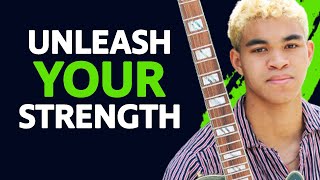
This YouTube interview (Stephen Scoggins with guest Tyler Ransom) explores living with chronic illness, creative resilience, and personal growth. Tyler describes having nephrotic syndrome since about 18 months old (relapses cause 15–30 lb fluid weight gain and require immunosuppressants), and explains how music (guitar), jiu-jitsu, and a supportive network helped him reclaim identity and purpose. The conversation covers his practice ethos (“in the shed”), COVID-era projects (screenplays, an album paired with a film), a documentary titled In the Shed (available on Vimeo), and practical advice for others: reach out to family/friends, find a passion, set a game plan, and apply patience and perseverance.
Questions this video answers
Nephrotic syndrome
About 18 months old
About 15 to 30 pounds
In the Shed
Vimeo
Chapters
In the beginning, we were all beginners. You know, it's an. No one should dog you for trying. Trying is literally like the best thing you can do. If anything. Like, I love people that try. Just go out of your comfort zone. That's how you grow.
What is the most important thing we should learn from people who are struggling with a chronic illness or a life threatening circumstances, but do it with positivity.
Wow, that's a, that's a heavy one.
Give me a second. I want to give a good answer to this.
Yeah, man. Take your time.
Don't let your obstacles define you. You know, many people, many people focus on the destination rather than the journey to try and make it simple. But, you know, no one really sees the struggle behind the curtains. And everyone focuses on the end product. And I think it's the struggle behind the curtains that really make you who you are. So when you see someone with a chronic illness, don't really look for them. Don't look at them for like, what they are, but like, really try and hone in on all the, all the exercises they're doing, things they're overcoming, and yeah, it'll give you some, some insight into their life, something.
No, I love that. No, I love that. And I think that's so important because, you know, people, I think I, uh. So my wife has a chronic illness. It's actually. I got to know DDPY so well, or DDP so well. Um, you know, him. My, my wife and I are actually doing his program for fun. Right. And she's doing it stretching and she's, you know, lost like eight or nine pounds already. And she's, you know, all that's going great. Um, but one of the things that we talked about is this, this element of resilience, like the this I'm not giving up mentality. Right. And we also talked about the importance of not letting things become our identity. Like, you can become your, you know, whatever you're struggling with. I can become the fact that I was a divorced person one day or the fact that I used to be homeless. Like, I could, I could stay in that state or I could say, nah, I think I got a better life ahead of me. Right. So that's kind of the goal behind everything that I see you doing. One of the things that I think you did automatically that was so inspiring to me and so many other people is the fact that you kind of, for lack of a better word, you went in the shed. Right, right. You went into yourself and discovered that you have incredible. And guys, when I say, incredible. All you've got to do is Google search this guy and watch him play, like, at a very young age. We're talking savant level guitar playing and musician. Yeah, you should check it out for sure. How did you discover that for yourself? I mean, how did you. How did you discover that, that healing portion of music and whatnot?
It was pretty crazy because I was in middle school, I was in jazz band playing saxophone, and I didn't really have a way to properly communicate how I felt, things like that. I was already doing healing, Tyler. I had my kidney illness. I already felt alienated. And then I always grew my hair out in middle school. Then one day someone was like, yo, it's Jimi Hendrix. I was like, what is that? I went home, I searched up a video of Jimi Hendrix. First thing I saw was him setting his guitar on fire. And I was like, oh, my God. And the rest is sort of history, you know. Ever since then, guitar has been with me. It's how I express myself universally. And it's. I'm just honored when people listen and they're like, wow, this really helped me, this situation, just listening to your tunes. And I'm like, wow, that's. That's what I was trying to do. It's beautiful, man.
Yeah, no, it's totally beautiful. And for those of you who don't know, I'll make the comparison because you made it first right now, not because of the Afro, but because the guitar playing is incredible. I mean, I can only assume that you put thousands of hours into learning that instrument, but also getting lost in that instrument. I mean, I get lost in making content. I just enjoy it so much and using it to help people. Is it safe to assume that that's what you're doing as well? You're getting lost.
Yeah, you get it.
Cool beans. Well, now, as if being an amazing musician isn't enough, I stumbled across an older video of you doing some jujitsu with Ronda Rousey.
Yes.
So, number one, that's one heck of an opportunity to get to spar with her. Number two, what did that experience teach you?
It was an eye opener for me, I think mainly because at the time, I was doing jiu jitsu for about five years, and I was always doing adult classes and was marrying just like sweaty old men. So I was only used to that. And then my dad's like, hey, we're going to roll with Ronda Rousey today. And this is like the first girl I've ever seen in a kimono. And I didn't really know how to react. My sister's right there and just really threw me off. And the first thing she did was hip throw me. And just like that, she was. She was part of the gang. She was like that. But it was. It was a really crazy eye opener. She's insane. She got me in an arm bar, of course, naturally, ye. And it was just crazy. My sister videotaped it all and showed all her friends and was like, yeah, that's right, Tyler. Yeah, it was crazy.
No, I love those experiences because, you know, it's crazy to think that experiences that challenge you also can create you. And for those who don't know, I actually wanted to dig into the kidney disorder, if we can, and have you articulate what it is, why it's threatened your life a few times, and then maybe some of the most pivotal things on the optimistic side. Right. That you've learned from the experience.
I can definitely do that. So. I have a kidney illness called nephrotic syndrome. I've had it since I was about 18 months. And basically, let's put it really short. My body pees out the good stuff and keeps in the bad stuff. So my kidney filtering system shuts on and off. So sometimes it results in my body swelling up in excess fluid. I gained 15 to 30 pounds and my face blows up like a blowfish. I can't fit my jeans. I have to go to the hospital. They have to pump me up with a bunch of medications and things like that. Nature, we call that a relapse. It's one of the side effects of nephrotic syndrome. I have to take a lot of immunosuppressant medicine. I just have to take a lot of just medicine in general. And it's like I said, I think for my guitar answer. I spend a lot of time as a young adult in middle school, elementary school, just in the hospital, you know, with 15 to 30 pounds of excess fluid, just wondering, how am I going to get out of this? Is this going to define me? What do I. How do I tell my friends, you know, and, yeah, that's when finding a passion really came. That was one of the most pivotal things for me, not having my chronic illness define me. Having something to do and just being able to be honest with myself so I can express that outwards and, you know, be something for someone who's maybe in a similar position, hasn't found something yet. Yeah, that's one of the things that keep me going.
No, I love that. You know, it's. It's interesting to me, you know, but my audience has heard me say this literally a thousand times. They probably don't want me to say this again, but I've discovered the greatest purpose in life you'll ever have is serving the person. Used to be. But in order to do that, you go through a situation where you're in the process of becoming. And the process of becoming is often painful.
It's often without answers. Right. It's often with searching. Is it safe to assume that when you discovered your personal outlet of Jiu jitsu and music as a whole, is it safe to say that you didn't know at the time that you would one day be using that to change the world?
Yeah, I had no idea.
I still am in awe of when people message me like, yo, Tyler, I just started Jiu Jitsu. I love it. And I'm like, wow, this is crazy. This is really crazy.
Now. What now? So let's think about this. What do you think it is that is taking that aspect and creating an inspirational path for people to follow in your footsteps and do some of the similar things that you do because you have such a humble spirit about you, you know, And a lot of times those that fall into jitsu early on or more on the I've got to prove myself mentality, you know, But I've had a couple people on that are very high level in the jiu jitsu, martial arts specifically. And it's interesting to me that all, all three of them so far, including yourself, are just very humble people. What, what creates that. What is it about Jiu jitsu that forces humility?
Well, yeah, in the beginning, we're all beginners, you know, it's an. No one should dog you for trying. Trying is literally like the best thing you can do. If anything. I like, I love people that try. Just go out of your comfort zone. That's how you grow, you know, you're not going to grow. Staying comfortable. But yeah, I think Jiu jitsu in general, like, it connects people and we all, like, resonate with one another because we were all in a similar position. And it's also. I don't know if any of you guys have said this, but Jiu jitsu is like the chess of martial arts as well. Not saying other martial arts aren't chess, but. But Jiu jitsu is like a lot of chest.
It's a lot of chest.
So, like, you have like, respect for the other person if they catch for the similar thing. And, you know, it's just all love. It's all love, man.
Yeah, no, it's good stuff. Well, I want people to hear that because, you know, a lot of times going from stuck to unstoppable literally requires finding your sphere of genius. But oftentimes you find your sphere of genius in your moments of pain. Right. You know what I'm saying? That's when we find it, that's when we discover it. And I want the audience to hear that because I think it's so important for them to understand that if they're experiencing pain, they're probably in the process of discovering genius.
Exactly.
Whether it's martial arts or music or gosh, computer, any number of things can become your particular sphere. One of the other most important things I've discovered is the network around you is incredibly important. Now struggling with the kidney disorder itself and then obviously now your life is taking a different turn where it's definitely your, you know, you're, you're constantly growing, you're constantly helping others, you're constantly building a. What I think is going to be a very beautiful platform out Right as we're doing all of this. Right. How important? How important, if you don't mind me asking, is the network and how important has it been in your life? Like the kind of people that have poured into you, maybe. Would you like pouring into yourself?
It's, it's like my lifeline. It's probably top of the food chain. Not food chain, but it's tough. It's. Yeah, it's really there. You're, you're essentially the people you surround yourself with. I don't know if that's the saying, but something like that, you know, I've been, I'm very grateful. I have a great family. My dad helps me out all the time. My sister supports me. My mom's pretty cool as well.
Pretty dumb.
She's all right. She's alright.
But this is being recorded, by the way, so she sees it. She's gonna know you said, all right.
So I love you, mom. But yeah, the people you surround yourself with really make an impact. And you know, if it wasn't for them telling me to go out and try stuff, I probably wouldn't be where I am today. So I feel like your network is essentially your lifeline. And you know, for those that maybe don't have a strong network, that's when like self drive and the Internet comes in. It's crazy. A lot of kids, you know, they don't, they haven't had someone. Look. Sorry. A lot of kids with chronic illnesses sometimes look up to me, because they had. They don't have, like, an older brother or siblings. Yeah, that's beautiful as well, because, you know, when they become stronger, I get some love. I love them.
And some.
It's incredible. Networking is very important. And again, all love. I don't mean to end every answer with all love.
No, I actually think it's a good thing. I was actually going to ask you. I mean, the reality is, I think one of the biggest reasons why the world struggles on a daily basis.
To.
Be compassionate, empathetic, and whatever is there is there in that selfish zone, and they're not looking for the selfless side. It's funny how people who struggle with chronic illnesses and have been challenged with their mortality more than once have a greater perspective of what the world should be like and how unobservant or oblivious many of other people are, including myself. I'm speaking to myself. I used to be a complete knucklehead. Right. As far as appreciating life for what it is and the beauty it brings and all that stuff. If I was to ask you to define love as it relates to impact. Right. How would you. How would you define love?
Goodness, Stefan, with the heavy questions. How would I define love?
You know, I guess. Well, it's. I guess it's subjective to everyone. Yeah. But. But love is like a. It's like a driving force. It's not necessarily, like, romantic all the time. It's more so like.
Connection. If you, like, have a strong connection with someone, that could be a form of love. Yeah, like.
Like, I'm pretty sure we have love going on, man.
Yeah, yeah. No, we got. We got much love, family, but, yeah, for sure.
Yeah. I think it's just overall connection with someone. Somebody, something. Mm. Yeah, it's all connections.
I mean, I wanted to ask that because.
You know, we love. The word love is thrown around like little. Like you're playing tennis. Right?
Back and forth. Right. And I've. I've just. I've discovered myself that love is nothing more than the selfishness you apply or don't apply. Right. It's. It's. You know, we're. You and I are vibing, for sure. Right. We're having a great conversation. We're going to inspire some folks that need to hear what they need to hear. And I know that's always going to shake out as long as we have an authentic, like, heartfelt, honest conversation. Right. And, you know, when you mentioned young men and young women who are struggling with chronic illnesses and they're. And they're seeing you as a source of inspiration, they're seeing you as a source of hope. You know what it is, you know, what is it about you or about what you're facing or how you're working through your stuff that you think inspires them? And to me, that's an element of love. So what, what do you think that, what do you think they see or what did you see in someone else, for example, that caused you to fight that little forward ahead?
Yeah. So I think when I was growing up, YouTube was just starting to become a thing, but I didn't actually really have anyone. I think I'm going to go back to what you said earlier.
Oh, no, what did he say? I didn't have any.
The person used to be.
Yes, exactly. I. So that's one of my driving elements. Whenever I, I put something out there, I'm like, okay, I want to be someone that maybe younger me would have loved to look up to.
Yeah.
So. Oh, my God. Yeah, I thought I was thinking of that. So what was the other part of the question?
I was just, Yeah, I was just saying, you know, the, when it comes down to it, you know, you're, you're, you're, you're basically what you're saying is it is in fact serving the person used to be, or serving the person you wish you had had, you know, serving the person that, you know, becoming the person you wish you had had. Some would say, you know, being the leader you want to follow. Right. All of those are different elements to say that, you know, that personal growth at the end of the day is, is very important, you know, and, and in your age group right now, I see a lot of people who are, now that I'm older, of course, I saw this the same exact way they did when I was their age. So just for the record.
They, they, they are not paying close enough attention to what they could be doing to set themselves up for a brighter future. You know, maybe they could be spending more time or less time off social media or playing, playing video games and more time learning an instrument or making a doc awesome documentary like in the Shed on Amazon, which is like top rated, like well done. Right. You know, all of these types of things if they just had a little focused intention.
Right.
You know, I think in a roundabout way, you struggling with the kidney disorder has uniquely set you up to focus on what's really important and focus on what really matters, which means you get to live out your purpose earlier. Would you say that? Would you say that? True.
That was beautifully Said that was incredible. Exactly. That's sort of like Picture Perfect. What I was about to say.
I'm not trying to steal your words. I'm just trying. I'm just trying to make sure that audience gets it. Like, I want them to get it. Because, you know, our audience recently has actually been trending, has been opening up to younger and younger audiences. Like, the youngest person that I've been able to track has been about 13. Our normal audience is, you know, like 20 to, like, 48. Like, that kind of the sweet spot where we've had some shows like this one. I'm sure that will kind of blow up because we're talking to the per. We're actually talking to people in that age group. Right. Where, you know, your story is going to inspire people because you are in that age group. You know what I'm saying? So that's what I wanted to kind of pivot on, you know, because some people like myself, didn't grow up with a. With a. In a great environment from a family perspective. Now, that changed as I got older, but, you know, and they may not have that.
Right.
They may not have that network. And I can. I remember when I was searching for.
Mentorship, which I didn't know it was called mentorship at the time. I didn't. The Internet had not even been invented yet. Is crazy. We're talking. We're talking late 90s is when the Internet kind of came about. Right. It's crazy to even think about.
But nowadays, if I'm. If I'm struggling with a chronic illness, I don't have a high sense of hope. I don't necessarily know who I am. I keep finding myself sinking back into fear or sinking back into depression. How can I find someone or what can I do to kind of kickstart myself out of that hole?
Yeah. So this is perfect. I know, like, it's a very heavy question and heavy circumstances, but maybe the first thing is just reach out to family and friends, you know, make sure you. You have someone to lean on. Make sure you. You. You're feeling and reciprocating love. You know, you don't want to be alone on this journey.
Yeah.
And, you know, sticking it back to find a passion, find something that. That will make you happy, you know, so you're gonna have your friends, your family, and maybe you love painting. Maybe you paint on the side, and that'll put things into perspective.
Yeah.
But it's a very. I. At least from what. When people call and tell me that, you know, they were just Diagnosed with something. It's a. It really puts stuff into perspective for them. And naturally, like, that's maybe the first thing they do. They reach out to family, and they're always like, tyler, I don't really know what to do now. Yeah, how do I. How do I stop myself from sinking? And I'm like, okay, maybe just try and do something you love. Try and try and search for that. That's always the first thing I tell people to do after they reach out to their family and friends. So I feel like that's a. That's the proper direction to take.
Yeah. Well, I guess I'm going to dig in a little bit here. Cause I know we can pull this out for sure. What if I'm not really sure what that is? Like, what do I do then? Like, if I'm not sure what my. My passion is? Maybe, you know, maybe I've been kind of, for lack of a better word, sinking into the darkness. And I. I know that sounds like not good, but, I mean, I've. I've. I've watched people that I've loved that struggle with chronic illness sink in and out of dark darkness and come in and out of it. Right. You know, they sink in. The world's getting bleak. Bleak, bleak, bleak. And then something brings them out and they're happy and they're excited and they try something, and vice versa. So if one of the major points is to try to find something you love and express yourself, what would be your advice to someone who says, well, I don't really know what that is.
Yeah, it's a very unfortunate situation. And something that also happens a lot.
I got a. I got an email, I think, like, two months ago from someone that was diagnosed with something, and they were pretty lost, and they were sinking. They were like. And they were like, I don't know what I love. I already reached out to my family. You know, they love me. It's fine. But I don't know what to do. And I just told them to write. Just. Just write how they feel. Find a therapist. Find someone to talk to. That's very important. I feel like just being able to. To express yourself in some degree, whether that be writing or talking.
Yeah.
Is at least a step in the door. I know that's not necessarily still like. Like answering your question.
Well, no, I mean, it is. I mean, essentially so. So one of the things that I'm trying to do that I do just instinctively or naturally is I. I'm a person of faith, and I've been given the Ability to dissect and break things down, like trying to find the common denominators. So step one, if I. If I'm someone who's struggling with chronic illness in order not to lose hope and not to fall into the, quote, proverbial darkness, is to lean on my family and friends, okay? And if I don't have the right family and friends, maybe I'm going to follow someone like yourself on YouTube or, you know, through Instagram or any of the number of channels that you're on, right? So I can have someone who. Who I feel like understands me or has an essence of understanding. And as I grow there, you know, step number two that I heard you mentioned is like, you know, begin to, like, search, like, look for something you love, maybe maybe try something, maybe try to pick up the guitar, maybe try to pick up a saxophone, maybe try to pick up a paintbrush, maybe try to do extra pushups, you know, depending, you know, whatever you feel, you know. Cause I know people that are bodybuilders that have, you know, diabetes issues that challenge their life just because of severity, right? And, you know, number three is, that was the one I was trying to kind of like, really kind of like, help people understand. And number three is, is if you're not sure, just continue to search. Like, continue to try and search. And I've seen that so powerfully in and around yourself. You know, I've. Your. Your way of connecting with the world, I think is very unique and very needed. I really believe that. And the more and more I study, and the more and more I study thought leaders like yourself, no matter the age, like, I learned from everybody, like I am. I don't. I have never claimed to be the guru, but I do want to make sure that I'm converting myself to a guide long term. Like, I want to. I want to become someone who's worthy of the character and worthy of having people follow, knowing that I'm leading them to a better place kind of thing. And I see that all over you. Like, I see that all over your. Your content, what you do, what you're trying to do.
Thank you.
Now, you know, Covid has been crazy hard and difficult for people all over the world, right? It's first time that in my lifetime that I've seen a worldwide event that affects the entire world, right? This little blue plan planet, not a little of nowhere right now. I know Covid has affected you. Let's talk a little about COVID what you've learned from it, not just from COVID itself, but Also, like, the whole experience as a whole. What have you learned?
That was a very crazy time. I mean, it's still a crazy time. I did a lot of self reflection and I found out I really like Shakespeare. I picked up reading. Well, I mean, I, you know, you always read, like for school and stuff, right? I, like, started reading, like, for fun. Yeah, I started reading Shakespeare for fun and I found another outlet. I got super into Shakespeare and I started writing my own screenplays.
That's so cool.
Yeah, that was all during COVID During. During quarantine. I just locked myself in my room and I was like, okay, I know, like, I have all this free time. I know I can easily waste it, like binge watching 10 Netflix shows, but, like, wouldn't it be. I was thinking, like, when. When coronavirus is over and maybe I'm with a group of friends just like being like, yo, you heard. You heard of Todd? Todd picked up karate during. During Corona. And I was like, that'd be so cool if someone was like, tyler picked up screenwriting during Corona. Yeah, I was like, I gotta. I gotta apply myself. I have so much free time. I've never had this much free time. Let me do something. And I just picked up a book and then sparked flu.
No, I. I think that's great because, you know, I. I did a. I do a. Either through Instagram or through YouTube, depending on how people connect with me. I'll do a Q A session, you know, from time to time. And, you know, I've been very fortunate. Many of my businesses have not been drastically affected by Covid. I mean, they've been affected. Like, I'm dealing. I. I'm actually dealing with more Covid stuff now that was related to last year just from products and all this kind of stuff I can't get my hands on. But one of the questions that came in from the audience was like, I feel so alone. I feel so isolated. I can't go anywhere. I can't do anything. I can't see my friends. I can't, you know, outside of like doing like a zoom call or some kind of media. Right. What do I do? And you just expressed exactly what I.
Told them to do.
I said, increase your value.
Increase your value. Make yourself more valuable. Right? You know, if learning to write, learning to, number one, fall in love with. With Shakespeare, and then falling in love with screenwriting, that has an A, A level, that has a direct level of increase in value, you have now have a new talent and new skill that now you can position to again, do what you do best, which is help people.
It was, it's already come, like, it's already helped me help more people come this year. So it was crazy being like, wow. I learned that during COVID and now I'm applying it. It was beautiful.
Well, let's talk, let's talk about how you applied it because it's easy for us to say, well, learn a new skill, do a new thing, fall in love with something new. Like, how did you apply it? Once you learned it, how did you start applying it?
So things are still in the process now, but I wrote a couple of screenplays and I guess this is what I'm going to say it now. I have another album done and I just finished writing a screenplay that goes with the album and I'm in the middle of filming it right now with friends.
Oh, that's so cool.
It's a crazy thing like them, like asking me about the script that I wrote and I'm like, oh, my goodness.
This is me coming to life right now. This is crazy. Yeah, it's crazy. I love it, dude.
Are you familiar with Kevin Davenport by any chance?
I'm not. I'll write name down.
So Kevin Davenport is an award winning, award winning screenwriter. Screenplay. He functions or works on Broadway. He's done. His works, have done enormous things. I'm going to do my best to connect you guys together.
That'd be incredible. I wrote down his name. I'm sorry, Kevin. If you're watching.
You'Re his people. Like, I had him on the show not too long ago and he was, he was very much. He's like, my people are screenwriters. They, screenplays.
They're.
They're in Broadway, they're in theater. They. And he talked about, he gave me a brand new perspective on theater and media as a whole. Right? And so much so that I was like, I was taken back. I was like, I honestly haven't given theater enough of a shot to see if I'd really enjoy it. Normally. I was the macho guy that the wife would kind of say, let's go, let's go watch Wiccan. And I'm like, it's a movie. People just sing too much. And. And then we went to watch Wicked. I was like, that was really awesome kind of thing. I'm that guy. I'm that guy. But no, I love that, you know, I want to touch base a little bit, you know, in a roundabout way.
You've.
You've been able to live out some childhood dreams of people that would love to be in your circumstances, based on your relationships, maybe not based on some of the trials that you faced.
Right.
You know, we're work. We connected and I was excited to do so through DDP and the team. Like the whole. What's it been like to grow. Grow up around the pro wrestling industry? What. What have you seen from that that has actually really inspired you and encouraged you along the way?
It was insane. And it was one of those things where growing up, I didn't really realize I had it. I had it good per se. Until maybe I was in high school and I saw kids were being like, they were looking at nwo.
Yeah.
Old footage. And I'd be like, oh, my. That's. That's ddp. They're like, of course that's ddp. Tyler. Yeah.
Like, no, he's uncle ddp.
I'd be like, yeah, he's. He's my uncle. And they'd be like, what? And then like, that's when things started. I was like, wow. Like, I'm very fortunate about this network they've growing up with. With ddp. One of the things he implemented, I mean, you know, we all had to do yoga. It was very.
Yeah, very.
It was a very chill environment.
But you're connected to me.
You will do.
Patience. Patience and perseverance were two really big aspects that I gained from him. I remember a lot. We'd go to the park, I'd be like 12, and I just dreaded the yoga positions that I dreaded. Like, I forgot we did like 10 second push ups. I don't know if he still does that.
Oh, yeah, no, he still does that. Count him back with me. Nine.
Exactly. Slowly decrease. I'd fall each time and he'd always be like, get back up. And I just like. It took the whole day. But eventually when I did finally get the 10 second push up, down, it was like, there you go, buddy. Let's go get yogurt. And I was like, wow. If I just work hard enough, I see the goal. And I think even now I still implement that tool.
Yeah. I love patience of perseverance. Let's break those down for just a second.
How is being more patient with the process or with your progress help shape and define you and improve you?
There are a lot of different ways I can go with that, like creatively. Sometimes, you know, I write a song, I feel like it's killer. And sometimes I just want to release it on the spot. But then the next day I'm like, I got to let this marinade. And then next Thing I know that song becomes an album, and then that album takes up five months. And every year I finally get it done. And that all started because I was like, let's fold the brakes on this. What do I like about this? And how can I make this become something bigger? So patience is always something that I do creatively with music. And even in Jiu Jitsu, it's patience. Sometimes you want to go out and you want to do the craziest move that you just learned because someone's watching and you're like.
Let me show them how awesome I am.
But other times, you know, you gotta. It's much better to just wait and play the patient game and wait for your opponent to get tired and then do the crazy trick so, you know, a higher percentage of nailing it. Patience is also such a huge thing because I feel like a lot of people jump the gun too fast. Sometimes people pick up guitar and they tell me, they're like, yeah, I tried to learn this Jimi Hendrix solo. And I was like, that's the first thing you tried to do.
Let's try. Let's try Jingle Bells.
And then a week later, they're like, yeah, I sold the guitar. It was too much. And, yeah, patience is. It's an important thing that I feel like a lot of people still gotta. Still gotta learn. I'm still learning it. Sorry, I'm not trying to. I'm impatient. I hate lines. But yeah, it's important.
No, I think it's good. And I don't mean this in a negative way at all. Cause I, like, again, I remember when I was your age, I'm already naturally impatient. Even now. Like, I'm crazy impatient. I'm like, everybody's like, when? When. When should it be done? I'm like, now. Like, when can I do it now? Like, that's like my go to answer. Now I know better. More or less, kind of, sort of, you know, but, you know, but I. But I think it's important because, you know, I see a lot of people in your age, your age bracket. My son's. My sons are just a little bit younger than you are and. Or actually, one's about your age and one's a little bit younger. And both of them want to live their amazing life now. And I'm like, guys, to shape and build an amazing life, it takes time. It takes time. It is not easy, right? I know what you're seeing on Instagram. I know what you're seeing on TikTok. I know everybody's got it figured Out. Your buddy, who's 19, lives in some other state on the west coast or something, is driving a Lamborghini, and he's telling you he's made a bazillion dollars on YouTube or made a bazillion dollars playing video games. And maybe that's true, or maybe he's just borrowing his buddy's car who happens to be his neighbor. Like, you know what I'm saying? It's like we want to celebrate the success, but we don't want to celebrate the sacrifice. And one thing I get by studying your career so far, which is still got a long way to go, is this element of celebrating the sacrifice. And I feel like that. That actually falls directly into what you were saying a minute ago, which is the perseverance side.
Right.
If you persevere long enough, is it not true that you get to celebrate the sacrifice? You get to look behind you? It's like that journey wasn't as hard as I thought it was, even though I thought it was gonna kill me.
Exactly. Too many people. The first question. Too many people focus on the end game. They don't really take time to resonate with everything they have done. Yeah, it's crazy. It builds character, and it's crazy important.
Well, I know you're like a savant on the guitar, but to be sure, you didn't. You didn't just pick it up and start playing Hendrix, right? Like.
Yes.
All right. Just making sure. Well, I wanted to say that because, you know, to pick up a guitar, pick up any instrument, I think, and play it well, it takes both perseverance and patience. And I like how you single those out, because I think that those are valuable things. I also like the fact that you pick those up from a mutual mentor of ours. Right. A mutual person we both admire and respect and care a lot about. To see that actually turn into something special.
Right. It's crazy.
Now. Now I'm just curious. Now, you released a documentary not long ago called in the Shed. Now, I know in the Shed actually has a hidden meaning, which is how you kind of titled it, which I want you to talk about. But I also want you to talk about what possessed you to go and create a documentary and then release it nationally.
So, yeah, my. I'm really honored. My father and I made a documentary called in the Shed. And basically, it's my story on how I grew up with a kidney illness and how I persevere, and hopefully it inspires others. That's one of the main driving reasons we did it, because we Wanted to tell my story in the hopes that it would inspire someone else in similar shoes. And it has, at least from the people that I've heard from. It's beautiful. It's crazy knowing that something that you put out is being received in a positive light. Like I think like the day it came out, like I cried a bit because it was, it was a pretty emotional thing.
Yeah.
But yeah, that's what's in the shed is it's my story. Talking about nephrotic syndrome, things I do to overcome it and. Yeah, just a good vibe overall. A good vibe.
Yeah, good vibes for sure. Well, what is, what is now in the shed has a, has a hidden meeting. What does in the shed mean?
So I picked this up. I. One of the high schools I went to was a music high school. And one thing I learned being in jazz band and we text friends like, hey, do you want to hang out? And they'd be like, no, sorry, I'm in the shed. And I was like, what, what does it mean? And then took some time. In the shed means, no, I'm in my room practicing right now. So in the shed is like the. Wow, this is sort of ties in perfectly with what we've been saying. It's all the time you spend behind the curtain just working on your craft. That's what in the shed is. You know, it's the, it's the things that people don't see. Yeah. And the end product is it's what they see and they don't know that it all happened in the shed. Yeah.
Well, I'm grateful that you brought that, you bring that out because again, a lot of people, especially nowadays want to show you the end result or you, you know, they only show the end result. They don't show the, the extra push ups. They don't show that your guitar, your fingers bleeding on the guitar, getting calluses everywhere or, or you're, you're in the middle of jamming and a string snaps right smack dab in the middle of like playing something amazing or you're recording something. They don't. They don't see your reading. They don't, they don't see your writing. They don't, they don't. They don't see you struggling and having to make the hospital trips and, and do all that kind of stuff. And I, if nothing else from today's show, I hope people understand by following your story. And if you guys, if you have not checked out in the shed, I'm telling you right now, there's A reason it's an Amazon bestseller or best viewer kind of. You know what I mean? Check it out. It's worth, it's worth seeing for sure. But on top of that, it's to give yourself permission to be in the shed. Because most people, I don't, I don't feel like actually give themselves permission.
Right.
That they're just like, well, I got. I'm gonna go hang out my friends. Why? Well, because my friends want to hang out when you were smack dab in the middle of doing something beautiful or creating something beautiful.
Exactly.
So if we think about that, and we know that that could potentially be a struggle. Talk about the importance, if you don't mind, of giving yourself the time and permission to be in the shed.
It's. It takes a lot of vulnerability with yourself. I don't know if. Yeah, that's the right word. It also takes a lot of discipline. There we go. Vulnerability and discipline, those are two main things that, that at least for me, it's a. To allow myself to be in the shed and to hear myself play guitar poorly and to stick through it. You know, you have to be vulnerable with yourself and be like, okay, let me really dig down and devote an hour to this. I'm going to turn off my phone. And then it's, then it's just patience from there. You know, you, you set a game plan, you get rid of all distractions and you just hone in on it. It's sort of like a meditative state as well. Too productive. Super Zen. But being in the shed is a very important thing and I feel like a lot of people should apply that to their life because it's, it pays off in the end and there are a lot of distractions, that's for sure. True that especially with the world opening up again. But it's. Even if in the shed means just time for yourself, like you don't have to do anything but like maybe just like do a self checkup. Maybe I journal. But it's very important that you're very honed in on yourself. I feel like self love is also important. There we go. Self, love, love again.
See, it's all back to love. It's all back to love, baby. Well, you know, it's. I'm glad you said that because I think it's important for people to understand, only give themselves permission, but to also try to overcome the anxiousness. And I, from my perspective, it seems like it's if it's not a. If it's not dealt with and kind of Faced. When you're younger, it goes all the way through your life, which is the sense of, I can't be alone by myself with my own thoughts, with my own stuff, my own reflections and stuff like that. Why do you think that's so scary for people to be by themselves?
Well, there's so much noise in the world, especially with our phones now. It's easy to get lost in TikTok, just growing and seeing, like a bunch of people your age bracket doing so great. I think in some, like, weird way, then you also feel connected to them. Then when that gets taken away, you have yourself and like, you just feel empty because you've attached. You've given so much of yourself to, like, this online presence that you don't really know what to do without it. And it's scary. I mean, people, many people don't want to face that because they don't. They haven't taken the time to find who they are. So that nothingness is very intimidating. And that's probably one of the bigger reasons why people don't really spend a lot of time reflecting.
Now, did you, did you yourself face that uncertainty when you first started kind of going into the shed, so to speak, was that something, or is that something you naturally gravitated towards?
I didn't really face it. I had friends that, that faced it. I know, like, because they. They attached themselves to, like, Internet personalities. So.
It was definitely a weird thing.
Basically coaching them to be vulnerable with themselves. But.
It'S paid off and I feel it's very important and I'm very grateful that I haven't been in that position. But it's a position that maybe sometimes you have to be put in. Because with uncomfortable situations comes growth.
Absolutely. In fact, I can't think of anything that's ever grown without becoming uncomfortable or creating or having to go through a transformation to get there. Not one thing. Not a caterpillar, not a butterfly, like, not a baby bird, not a. Not a puppy. Like, seriously, like, not an adult. Like, it's. It's all tied together. I think there's this. There's this interesting concept we're talking. You know, I think when I hear the term in the shed, as I've studied it from your career so far, one of the things that I've. I've kind of fallen in love with is the fact that it is you going to be more connected to you, which is kind of odd because some people, they hear a concept like, go be alone with yourself or whatever, and people will end up into more the opposite, which is more the isolation thing. Like they're. They're just isolated. Like they isolate. They pull themselves back from their family, from their friends, people that genuinely love them, and they kind of bleed off into the darkness. Meanwhile, polar opposite, same person going into a quiet place to kind of sit.
Right.
The other person is going into a quiet place and they're. And they're using that time to become more of who they're designed to be, where other ones becoming less of who they were designed to be. I'm curious to know, and you may not have an off the top answer. You totally take your time to think about this. So.
Do you have any idea why one would go in and become. And one would go in and, well, start to lack.
There we go.
I should have seen this coming. Stefan with the hard questions again.
It's definitely the situation I, I've thought about because some people don't necessarily have that discipline to, to sit down and actually get stuff done. They're just. I don't want to say they wallow, but, you know, it's, it's. They lack for. For better or for worse. And I think that sort of goes into them not necessarily going into it with a game plan or them not necessarily knowing who they are yet. So they don't really know what to do with that time, you know, so it's like, okay, I turned my phone off, I'm going to sit here now. But what am I supposed to do? I don't necessarily want to apply myself. So then they just end up killing an hour and just being sad. And then the hour is done, they go back on their phone and yeah, so I think a game plan, having a game plan and really, wow. Going in on finding. Finding something you love, really digging, really, really adding value. And it all starts from there. I wouldn't tell people to go in the shed if they don't necessarily have a game plan yet. I feel like once you, you know a bit of who you are and then once you find a game plan, you should go in the shed. I'm not saying I know who I am. I have a. I know who I am to a degree, and that's guided me this far.
Yeah, well, from, from studying you, I think. I think you may not know who you are, but you know you want to be.
There we go.
I love that you know who you want to be, so. And I feel like that that's the starting point. You know, my. One of my sons is. He's 19 and we were having a conversation literally over this last weekend and we're talking, he said, how do you know I'm. Because he's doing some graphic design for, you know, this particular business of mine, which is the Journey Principles Institute. And he's doing a great job at it. He's like, I just. I want more. He goes, I want to be, like, in this. Made me feel good. He's like, I want to be more like you. Like, I want to be the entrepreneur. I want to do this thing. I said, well, that's the first time I've ever heard you tell me that. I was like, well, I do. I said, well, okay, well, shadow me. You're gonna have to come start sending in meetings that I'm in and seeing how sometimes those aren't very fun, to be honest. Right. And, you know, but you. You have your shadowing me, which means the shadow doesn't speak, and there's meetings until you've been invited to the table to speak and some other things like that.
And.
And then maybe you and I could spend an hour on a Saturday and we. I'll teach you about a budget, which is not fun, but necessary. Necessary kind of scenario. And, you know, I feel like, you know, when I was talking to him, I was like. And he goes, like, I also think that you need to do one more thing. He's like, what's that? He goes, I think you need to turn the video game machine off. I think. I think you do that to numb yourself. I think you do that to numb yourself. And if you're numbing yourself, you can't be growing yourself.
To me, it comes back to focus. And that's one of the things that I think that you've naturally gift, you know, been gifted towards or been guided towards is this element of focus. Focus towards guitar, focus towards jiu jitsu, focus towards screenwriting. And I'm going to give you a new one that I think you should do. And I'll. I'll totally share the actual raw files of this entire conversation, because I. I could see you doing something really amazing with a free mini course of some kind, breaking down, you know, one to five steps that someone could take advantage of if they're, in fact struggling to go into the shed or struggling to go that direction and stuff like that. I could totally see you doing that. And I could see it changing lives. I really could. I totally could. So, man, I have loved hanging out with you. I hope you enjoyed hanging out with me today. Dude, it's been. It's been phenomenal.
This was incredible. And Beautiful. You asked perfect questions at a beautiful time.
Thanks, man. I appreciate that. Well, where can the audience find you? Because I know a bunch of them are going to watch the documentary. I know a bunch want to go download the albums that you got. Like, the guys, he's got a full suite of stuff. And it's all out of love, as you guys probably have guessed. But, you know, where can everybody find more about you?
Yeah, so sorry. Sorry. I was in awe again. In the shed. You could check it out on Vimeo now. Actually, we wanted to go worldwide so you could check it out in the shed. Tyler Ransom. You find me on Instagram playing guitar. Soulful playing tylerranson.com and you know, Tyler Ransom on all music stuff or I have my plethora of vibes. Yeah. All love, man.
Oh, my gosh, dude. That's amazing, dude. Well, man, thank you so much again. I can't wait to have you back on the show. And every time you get a little new release coming on and I can't wait to see again, my friend, I.
Would be honored and. Yes, exactly.
All right, take care, bud. See you. If you love that interview, go ahead and check out this next one right here. Whenever I feel those moments of shame, and I feel them multiple times a day, there are times I just got to step back and I got to go.
Wait, wait, who said that?
More from Stephen



He Had Everything…Then A Heart Attack Changed It All | Dan Sachkowsky #Shorts




Paralyzed. Suicidal. Then He Surrendered, And EVERYTHING Shifted | Marcus Aurelius Anderson


Why You Snap At People You Love, The ALIGN Method, & Why ADHD Isn't A Disorder | Sara Hartley

