Rented Jets, Fake Gurus & the Trust Recession: Why Real Mentors Are Hard to Find
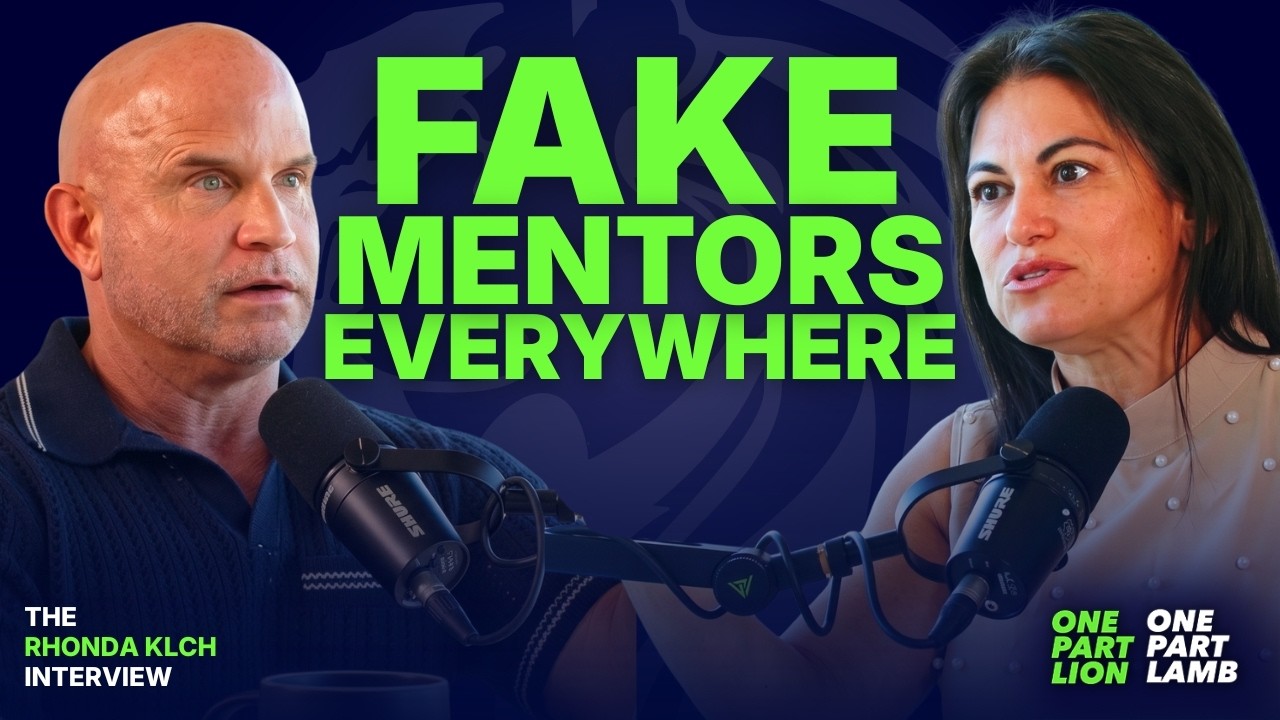
In this episode of Stephen Scoggins' podcast, host Stephen talks with Rhonda Kitch, president of MentorBox, about the challenges of finding authentic mentors in a "trust recession" era. They explore the tension between lion‑like, go‑get‑it leadership and lamb‑like, reflective humility, emphasizing that true leadership requires integrating both energies. Rhonda shares personal anecdotes about the risk of showing up authentically, the mistake of oversharing ideas, and her reaction to inauthentic influencers who fail publicly. A rapid‑fire segment reveals her preference for hard mentors, the primacy of information over mere access, and the critical lesson she ignored about always securing a contract. She also reflects on wanting to return to her early career rooms to mentor newcomers, admits a personal weakness in managing her own finances despite strong credit, and concludes that trust is built through authenticity. Throughout, the conversation underscores the need for vetted, genuine mentorship platforms like MentorBox to counteract fake gurus and restore trust in mentorship relationships.
Chapters
You're standing in front of a sports car, you're standing in front of a jet, you are standing in front of a beautiful home that's not yours. You're an imposter. Why is it so difficult to just say, I'm doing okay?
Our special guest today spent 2 decades closing tables in capital rooms, teaching founders that visibility plus credibility equals fundability. Rhonda Kitch is the president of MentorBox, a strategic advisor, and the host of the Unfiltered podcast.
Whoever's listening, please do your due diligence. Mm-hmm. People are afraid to ask They think because they're a leader or they have followers, they're defining success wrong. Nobody can say you're successful because you've made a certain amount of money. Maybe my success, my personal success and growth is not about money. It's about being a good wife or a good mother. Yeah. One of my biggest mistakes was sharing too much and then thinking that other people would not take my information or my ideas. If she can do it, I can do it better. When there is a level of failure by somebody who did something inauthentic, To their brand. You deserve that. Think about all the times I have to end a conversation very quickly because the first question they say is, this sounds nice, Rhonda, but what's in it for me? Oh, I'm sorry, we're done.
Hey guys, welcome back to One Part Lion, One Part Lamb. So glad you're here. Uh, first of all, quick shout out to you guys. Uh, and I say you guys, cuz you guys has been growing, uh, upwards of 200,000+ downloads a month. since we went live and since we started talking about faith-centric related matters as it relates to integrated leadership, building companies. And as you know, we like to help you rise, lead, and last. And one of the things I just wanted to share with you in this whole longevity period that we've been discussing is how important you guys are to what we're doing and this channel and these different sources. Obviously, we're all over the place. We're on every major, gosh, audio platform you can think of, as well as YouTube. Now, we like YouTube a lot of times with these shows because you get to see the guest expressions and kind of their analogies and Watching them drawing with their fingers in the air and all the cool stuff. So make sure you don't miss an episode. And also, as a quick reminder, as we jump into today's episode, I'm going to invite you to consider paying a special keen ear to essentially, maybe there's someone that you will think of during these episodes. I've discovered that that is the right moment to pause the episode, hit the little share button, and send them the episode. So many times we get so wrapped up in our days, we forget to just stop, And take care of those that we love and these people that pop in our mind. I was at dinner last night with a lot of close friends, and yet we were all discussing one of our mutual close friends, and they're like, you know what? When was the last time, Stephen, that you reached out to that person? I'm like, you know what? You're right. And I literally sat up for a good hour extra last night thinking about how I would reach out to this person and check in. So this show is no different. But anyway, I digress. Welcome back to One Part Lion, One Part Lamb. As you know, Risley and Last. Today is gonna be a special one. You know, there's a lot of things in the world. Connor from our team, we talk about the trust economy all the time. and how broken trust continues to be broken repeatedly, and that nobody's been willing to stand in the gap to put that in place to get this trust recession to stop and finally let the guides lead and let the gurus maybe try some different things with their life. Now, I'm not going to go too much detail there, but my special guest today is going to help us with that specifically, and I'm super excited. Not only has she been incredibly successful in her career, but in recent months, I've watched her heart shape up around that very same cause that I just mentioned to you today. So our guest today is rebuilding platform that once sold information in a constructive way, if you will, platform intended to deliver trust. Now, this platform, what's changing and being molded is how do we deliver trust at scale? Our special guest today spent 2 decades in credit, closing tables in capital rooms, teaching founders that visibility plus credibility equals fundability. And sharing that this at scale has been so important. At the same time, She's also realized that the scarcest asset is no longer access to knowledge, but instead access to human beings that are worthy of being trusted with your listening ears and your eyesight. Rhonda Kitch is the president of MentorBox, a strategic advisor, and the host of the Unfiltered podcast. She started her first business at 18, was house flipping by 23, and then founded Equity First in 2020— or in 2004. For those 2 decades, she spent and helped founders, fund managers, athletes, entertainers get funded, get visible, and get in the right rooms. Today she is rebuilding MentorBox, and it is a trust platform, as I mentioned to you before, so you can finally trust the people that you're listening to, that they are there for service and not a quick buck. This is why I had to bring on Rhonda Kitch. What is going on?
Thank you so much. That was amazing.
Oh gosh, you know what? I thank you for your prayers and your insights because, well, I was really excited. Today's gonna be a fantastic day. We have a lot of really good friends we've been communicating with and getting going. You know, one of the things that I— you spend a lot of times Even declining rooms that you were going to be in.
Yeah,
right. We talked a lot about that. You know, you realize there's not alignment, you realize there's no integration, you realize something's off, right? And then you quickly say, well, okay, well, this is probably not my tribe. And you politely and professionally exit the tribe, right? I'm curious. Now, this is going to spin around on you a little bit. Has it ever been a need for someone to actually exit your tribe?
Sometimes, unfortunately, and I say it that way for full transparency, those that know me, I have no filter. So sometimes there are people that enter my tribe that then exit the tribe because they have recognized that they don't belong in one capacity or another. So it's not where I've dismissed them. It's that they've understood that the alignment is no longer there and the purpose is no longer there. We're in just different directions. And also there's a level of authenticity. So if you want to walk with me, and walk with the people that I am growing with. You need to be right there by our side. And as soon as there's any level of— again, I use the word authenticity. If there's just not that alignment and you don't see the vision or you're so self-serving that you cannot be heart-centered and help the other people in our tribe, in our community, they just naturally usually walk away.
Yeah, for sure. Well, I think that's one of the interesting things because I think every time that At least I go into rooms. This is something I think we were sharing a little bit about dinner, at dinner last night with our friends. One of the things I see a lot of times is I went from wanting to be in the room to be in the room to literally starting to ask myself, should I be in this room?
I just want the invite. Yeah, I want to be able to decline.
So you got the invite. Yeah, but, you know, we were talking about this a little bit about dinner. So obviously I speak a ton. You do as well. Correct. You've had me on your platform, which I'm very grateful for. I'm super excited to be part of MentorBox, by the way. And be one of the kind of the founding—
Yeah, founding 50.
Yeah, founding 50.
You need 100 to get your founding 50.
That's right, which we're fast approaching. I think one of the things that sticks out to me specifically as it relates to people, right, is for years, and I call it maybe, let's say, better part of a decade, I've been at this type of work off and on for the last 10 years. 3 years, last 3 years, super hardcore after, you know, finally could exit the company and give me a lot more freedom, right? But one of the things that I did was I used to enter these rooms, green rooms, all the kinds of things, And they say never meet your heroes, right? And I walked in, I meet some of my heroes and then befriend some of my heroes in many cases. And then I would watch these rooms not be the same room that is being projected in the public eye. And, you know, for the longest time I was like, well, maybe I need to become more like this person, or maybe I need to shift like this, or I need to do content like this, or I need to pull this apart this way. But what's been setting the— what's set me free the last 3 years is just being me. Yeah. Right? So I guess there's kind of a double-sided question in that, what should someone do when they realize the room that they're in is not the right room for them to be in? And 2, how does that person become acutely aware of whether or not they're in performance mode or authenticity?
I've been in rooms.
You've been in a lot of rooms.
I've been in a lot of rooms. I've been in a lot of green rooms.
Raised a lot of money, y'all.
And to your point, There are times that I walk into a room and I've met my hero. And you have this sense of fulfillment in the moment where you feel like you've really leveled up. I say it like that, right? If you're not constantly thinking about the next person and the next group of people, right, you'll just dwiddle.
Yeah.
So we're always like, hey, next year I want to be in these rooms with these people. And then you meet them. And a lot of times, again, it's what is reality? You know, what are you seeing that attracted you to those people?
Yeah.
And then all of a sudden, you're in this opportunity room, the green room, to meet them. And a lot of times I leave not feeling fulfilled and feeling a little violated. I hate to even use that word, feeling a little violated that what I thought or whom I thought I knew was not in fact that person at all.
Yeah.
So sometimes when I'm in those in those rooms, to your point, how do you know whether or not to exit? You know, like any good entrepreneur, you make every opportunity available to see who else is in the room. And a lot of times instead of speaking up, which you and I both have seen this, the person who walks into the green room for the first time, or they want all the eyeballs and all the attention, I'll just sit back and observe.
Yeah.
And usually it's the ones that are the quietest, that have nothing to say, that are to themselves, end up being my best Allies.
Yeah.
Because they're sitting there like I would be sitting there and you're like, are you watching this? And then I think we all work at a certain level at a certain point in our career. And so I walk in and I'm authentically me. And if that doesn't work for you, that's okay. I'll just stay to myself. I was invited to the point I was invited, but it doesn't mean I have to have alignment and respect everybody in the room.
Yeah. Well, one of the things I see that you do really well, and this is something I'm cognizant of the last year and a half, 2 years, 3 years, because Because I'll be honest, I mean, I've told my audience before, it's like I've absolutely operated in performance. I've absolutely tried to be something more than I was in that moment. And which is really interesting because I had already been through and done a good bit.
But look at how fast that rises and falls.
Oh, super fast. Yeah, yeah, super fast. Well, I think this goes back to the other skill. Like when you and I first met, it was not even a year ago at this point. It was like, um, was it— was about wintertime of this past year, I think it was. Uh, we met briefly at Aspire. We just— and we were just chit-chatting a little bit, right? We weren't. And, um, but one of the things that you do really well, that I see you do really well, and one of the, one of those things that I'm cognizant of, in order to, to make sure I am in the right room, I have to pay attention, which means I have to listen first.
Yeah.
And I've discovered that part of being authentic is having the ability to listen and quote unquote read the room. Not read the room in like, hey, that per— I can get something from that person. I can get something from that person. I can get something from that person. But like, okay, what is this room really about? What does it really stand for? Right? What is it about this potential mentor, if you will, that I can learn something, whether it's for a season, a reason, or a lifetime? You know, talk to me a little about the attunement of listening and why it's so important and kind of how you discovered that. Because I watch you, you always listen first, even though you have a very bold personality.
I do.
Yeah, but you listen first. Like, even when I met you, you were— you spent most of your time asking me questions. Yeah.
Yeah.
Tell me about you. What are you up to? Like, what do you sell?
Well, I think what happens is that naturally for myself, I wanna learn about you because my natural instinct is to determine whether or not we have alignment. And then we go into this automatic, oh my God, but do you know this person? And you know who you need to connect with?
Yeah.
So once that's been established and I can understand exactly who you are, it makes our relationship real. Right? You walk into these rooms and you meet people and they shake your hands and you have to figure out, are, you know, we keep using the word tribe and community, But yeah, it's true.
Yeah.
Can I grow with you?
Mm-hmm.
Can we do things together? What does that look like?
Mm-hmm.
Who do you know that I can feel comfortable asking you for that relationship?
Yeah.
Right. You know, Paul Cook, who is part of MentorBox, mm-hmm, um, has a quote, probably not his quote, but it's a quote that he says, which is, every time I make a referral, it is a loan on my reputation.
Mm-hmm.
And sometimes when you hear how things come out and you have to position it, you and I have been in rooms where there are takers. Mm-hmm. walk in like a steamroller. Let me tell you what I could do for you. Let me tell— you don't know me. You don't know me. And now you're— you are— it's actually almost disrespectful. So I find that for me, when I'm walking into a room, it doesn't matter who it is. I want to know who you are. Tell me about you. And it doesn't need to be about your level of success because that's defined by everybody differently.
Yeah.
So what matters to you may not matter to me. I want to know authentically You know, who's Stephen?
Yeah.
Tell me a little bit about yourself. How'd you get here? Who are you looking to meet? What opportunities lay ahead?
What projects do you work on? Those questions are questions you asked me in that first meeting, which is really interesting. She was evaluating me. I didn't even know it.
Because, you know, what happens is, you know, again, I've met, and you and I have spoken about this, you know, there are people that I have relationships with where I always want to give them the benefit of the doubt. But how is your posture? Are you a poacher? Are you a taker? Are you self-serving? The people that I work with, we're heart-centered. We want to see and cheer for each other, and then we want to be each other's support. I know on a bad day I can call you, and I've done it, and I've said, oh my God, I'm having a day. What am I missing? Yeah. I can't put my finger on it, but I know you've been there.
Yeah.
So can we talk through this? Because I know I can trust you. And in today's market with so much fake, and I hate to use that word, but—
I mean, it's fake anytime somebody's renting stuff or—
Yeah, there's a lot of imposters, right? You know, the imposter syndrome. You know, there are times you and I have gone through it. Am I really worthy? Am I the imposter and I'm not aware? But at the end of the day, when we leave that room, did you go home feeling confident and fulfilled?
Yeah.
And there's the answer to your question.
Yeah. No, it's so good. Oh, man. Yeah. It's funny. I've been at— like I said before, I've been doing this a while. And there was a certain point where I just refused to compromise. There was early days, more like I was sharing at dinner last night, there were some episodes of telling my friend D, no, no, honey. Right. My audience has heard that story before, so I won't restate it. But one of the things that struck out to me, it was always a point I wouldn't go across. Like, there was— there were lots of early days shortcuts, a way for me to move, you know, try to get to a certain place, to be in a certain room, to appear a certain way. And if I'm being honest, in those days I struggled with that, right? Because what was getting clicks then was standing in front of an airplane or standing in front of a sports car. Mm-hmm. I say your, your rented sports car or your friend's, whatever. And, you know, and I think that was almost like the birth of the hustle culture.
It is. But here's the thing, and I think you and I would agree, and even when I'm coaching with my clients, it's okay to be in front of the luxury items that you think represent success if you identify at that time that that is what you are striving to have, that that is your end goal, not that you've already successfully accumulated it. Yeah. And that's That's the differentiator. When I'm talking to people, and we had the conversation last night, you're standing in front of a sports car, you're standing in front of a jet, you are standing in front of a beautiful home that's not yours. You're an imposter. Why is it so difficult to just say, I'm doing okay, but what I really want is this? Right. I'm not fancy. What you see is what you get.
Yeah.
But there are things that I like. I happen to have a nice car.
Yeah.
I happen to have 2 nice cars, but those— I don't need everybody to know it.
Yeah.
The people that are important to me know what I have and they know who I am. Who am I impressing? You know, and to our point in conversation last night, when I'm working with clients, especially those that are in, um, that are in the fund space, right, fund managers, They try to figure out how to position themselves. Now, I am not a social media expert. I have a team that works for me in that space. We know some. We know some. But as somebody from the outside looking in, you have to understand who are you doing your content for. So when you are positioning yourself in front of luxury vehicles and in front of yachts, who's your audience? And are— is it really important to them?
Yeah.
Because the people who could actually invest in you Those are the ones you should be doing it for. And once they see that, they're not interested.
Yeah. It's interesting. God had to shake me a little bit. So my audience knows this, and you know this as my friend, but one of my most difficult moments outside of being homeless early days, right? In fact, I would say this moment was probably harder than that, was sitting in that house in Utah overlooking the city of Lehi. I called it my Kingdom View house because I could see multiple fireworks shows and all kinds of stuff during the holidays. And And, um, having everything that someone said they would ever want on paper, including being— including having access to rooms that people pay a lot of money just to access. Yeah, right. The only difference, I could pick up the phone and say, hey, I, I see you're in this city, I'll be there. And they're like, yeah, come on by, right? And yet I was probably my most emptiest.
It's lonely.
Yeah. And, you know, and what I discovered was— and this is something I've been trying to teach some of the folks that are close to me. It's like, it's one thing to have things, but it's a whole other thing is if things have you.
Mm-hmm.
And the reason I wanna bring this back to mentorship specifically is I am sitting where I'm sitting at today ultimately because one man took a second chance on me I did not deserve. I had betrayed him a year earlier. I legitimately betrayed his trust. Um, now I was a hot mess. I wouldn't— I didn't kind of do it intuitively. You know, but the, the company I built from the trash piles came from that chance, right? And so I'm very adamant about mentorship. I'm adamant about— you, you don't see your blind spots.
Mm-hmm.
You know, one of the methodologies that, that I, that I teach, and we did a little bit in New York, is what I call the 5 constraints, right? So you can look at cash, you can look at all these different things that aren't working, but the 5 constraints for me are arrogance, ignorance, impatience, fear, and insecurity. They drive all high achiever Human behavior.
I love that.
Right? And we start to break these apart. I'm like, yeah, not only have I dealt with one or more of them, I dealt— sometimes I dealt with all of them at the same time. Right? And what I've seen is, is this wake up and grind, 4 AM, get up, have a, you know, hit the gym, you run 17 miles, and then answer your emails. And you know what's crazy is none of that worked. It created anxious energy in me on a regular basis, if I'm keeping it real. But yet every influencer on the planet at that time was talking about, you know, setting your alarm for some crazy weird number.
Cold plunging.
Cold. Yeah. Yeah. I mean, and look, some of those things have benefits, but in the right order, in the right way. You know, my team at one time on social media, like, we want to see you making your shakes. I'm like, you want to see me make a protein shake? That's just dumb. Like, they're like, well, it's your lifestyle. I'm like, yeah, but that's my, that's my one-on-one time, right? Yeah. Anyway, I'm joking. I'm joking around a little bit, but But I've learned that presence is like a huge piece of it. So hopefully when you met me, you hopefully encountered someone you thought was real and grounded and like not full of his own crap. Because God has had to crush that out of me in full transparency many times. Which kind of takes me back a little bit to MentorBox. So MentorBox, obviously, first of all, why in the world would you leave a— or would you leave or even focus? Like, you've been incredibly successful in the P&E world.
Yeah.
You're known as the person that makes the relationships that make the deal happen.
Yeah,
right.
I still do.
Oh, I know you do.
I still do.
That's what I'm saying.
Why?
Why?
I know you're not the only one that said that. What is going on?
You're like, that's an asset. I can do something with that. Okay, so we don't have to call people out.
Okay, we don't have to call people out. So we'll just say, for full transparency, MentorBox is owned by a parent company, Omni. Omni acquired multiple assets by an individual that you and I know. It was done in an acquisition. He was an investor into the company.
I believe it was.
Yes. And so along comes my client, who I'm introduced to by being in one of these rooms.
Cool guy, by the way.
Super cool guy.
Got to meet him briefly.
Yeah. And so we sit down and he's like, Rhonda, this is my deal. This is what's going on. I was like, hold on.
Transparency.
Yeah, there's me. Who do you need to talk to? Let me make that happen for you. So again, when you realize the biggest thing is it starts, I think, when people acknowledge their failure first, right? When you want to come in on top and show me that you're fast tracking, you haven't made enough mistakes.
Yeah.
Right? So I'm sitting with this gentleman, and with that in mind, we're speaking about bringing some new, you know, capital to the table, all of his growth plans, all these visions that he has to bring life back to some very dormant brands.
They were very big brands.
They're iconic brands, and I'll just say them. So great news, everybody. Pier 1 is still in business.
There you go.
Stein Mart, Linens and Things, Franklin Mint. You know, all of these iconic brands, Modells, right? You know, that's an East Coast brand, but they're still alive, right? But we haven't given them much love and attention. So people forget because there's no longer a brick and mortar. So I joined the leadership team for Omni and I'm helping them strategically through some growth and development. And in this box is this little, you know, you have this whole platform of all these e-com brands and then there's this little item over here. Mm-hmm. It's like, oh, Tell me more. You know, so like that piques it. We don't touch that because it's not, it's not an e-com brand. So it doesn't work with our roll-up and what we're doing. Tell me more. So I come to find out that when MentorBox was originally created in 2016, it had amazing traction. It was run by 2 very powerful thought leaders in their industry, but it went dormant.
Mm-hmm.
And it came at a time where, because of the relationships and because of the diversity of clientele that I work with, I was looking to put— I was looking at the time to really create my own platform.
Mm-hmm.
And I could have created my own platform, or I can go big.
Mm-hmm.
And present to my client an updated opportunity that I felt was missing in the marketplace because he walked in a very different room than I walked in.
Sure.
Right? So I think fair statement. So I asked him if we can reposition MentorBox and I created, you know, an updated business plan, right? You know, we don't skip those things. I think people think that there's a point in time in your career where you don't do the basics,
you
know, and I still—
The fundamentals.
Just for fun, you know, I'll send it to you. I saved, I went to the store and I bought, you know, traditional oak tag, right? Like big pieces of paper with big thick markers. And I have them to this day. They're, they're hanging in my office, all different. This is what I wanted. This is when it looks at this point, A equals B. This will trigger this. And I put them in. I just took photos and I said, this is my business plan. He's like, you didn't want to write it out? I said, no, I need to, I need to speak. We need to speak about it because it becomes such a passion project. And the idea of MentorBox, or what we're now calling MentorBox 2.0,
Mm-hmm.
is bringing together real mentors is in a trust recession to that point with you and Connor and other people.
You can see it everywhere.
Oh my God, it's really bad. People, whoever's listening, please do your due diligence. People are afraid to ask questions. They think because they're a leader or they have followers or because they are in— again, they're defining success Wrong.
Mm-hmm.
Right? Nobody can say you're successful because you've made a certain amount of money. Maybe my success, my personal success and growth is not about money. It's about being a good wife or a good mother. The fact that I was able to bear children when I watched how many people I know that can't. Things that are successful to me may mean nothing to the next. So you need to be really aware of who you're having conversation with. And so many people are attracted to this temporary fix. Right? I will be successful when this happens. And as I'm sitting with clients and I'm meeting with people and I'm in and out of rooms like the ones that you and I go into, it is very apparent how many people are not actually speaking truth. And so with MentorBox, what I wanted to do is create this trust platform of fully vetted industry professionals. And it does not mean that it needs to be in than just business.
Yeah.
Health, wellness, lifestyle, architecture, relationships.
Yeah, major domains.
Anything that you're thinking about, you're searching for information. Where are you going to find it?
Yeah.
Those are the people I want on platform, the people that are doing it. You don't have to be popular.
Yeah.
You just need to be real.
Yeah.
I want my, I want my subscribers to get on platform and say, I met the most amazing person who has given me such light and who has really helped to clarify or add value in a way that I could never have gotten from somebody else. And then the mentors turn around and they say, I've met the most amazing people through your platform who have really shown me what it's like to be heart-centered.
Yeah.
To think about and to remind myself why I do what I do. And it's usually not— you and I, we talk about this. It is not the money. Money is not the driver. When you get to a certain point in your career, we need certain things to survive, but it is not the driver. And the people who are on platform as a mentor, we all really have that same— we are our own tribe.
Yeah.
Right? I'm building the most amazing network. And the more
people
that get involved with MentorBox from the mentor side, they're like, wow. And I'm interviewing people to come on platform that I never thought I would have had access to. So I'm enjoying it. Right. So when people are like, why? I was like, I am having the time of my life.
Yeah.
Meeting the most amazing people that are adding value, who are interested in helping the next generation or provide clarity to somebody that is stuck. What is a better feeling than that?
Yeah.
No, I'm doing it.
Yeah, you are. No, no. You know, I'm always, you know, there's, you've had such a distinguished career. We can go a lot of different directions. Yeah. A lot of things. But, you know, I think what I wanted to touch on, and you've been hitting all over it, is the heart behind why you do what you're doing now.
Yeah.
Because it's very much a passion project. Obviously it'll be, you know, successful. Um, and it's already doing that, you know, it's great, but it's like, why, why? Right. And I think one of the questions that, that I think kind of came up at dinner. So I'm going to bring it up again now because I think the audience needs to hear, because this is like, some of this is they're getting behind the scenes of how we all talk at dinner.
Yeah. This feels like dinner. This feels like dinner.
You've been invited to our table, to the room. Right. Is this concept of how do you distinguish an actual mentor from, let's just say, a modern-day influencer?
Okay. And I love that. And we did speak about this last night, and I do the best. So number one, When the platform was first really creating shape.
I remember having a call together before you even had a platform.
Yeah. You start with your core and then you build out. The beauty is that even though I may have an amazing conversation with you and think you are great, inside of Omni, we have an alpha team who goes and vets Does your social media align with what you are on platform to do? If we needed you to document your successes, can you? If we wanted you to document your failures, can you?
I got a long list of those.
But to that point, somebody who's always posturing about professionalism and success, if you did not have failures, you're probably not who we're looking for because then you don't have stories. to share about mistakes.
More empathy to go with the stories.
Absolutely. So we do have an alpha team inside Omni. Separate than that, we have a peer review team. So as I was building and I recognized that as much as I may have a very one-sided opinion about somebody, what is somebody else's opinion who I respect?
Yeah.
So we then built separately a peer review. Most people don't know that they're being peer reviewed.
I actually like it better that way, truthfully. Yeah.
And so what's happening right now is, you know, we are about to go live, and there are a few people that we are thoroughly checking into. The people that I've met who are on platform are all referrals from successful people that I trust.
Yeah.
But it doesn't mean that they were not looking for the same information or outcomes that I am. So we may think they're a great fit, but to that point, those are the ones that make it to platform. Think about all the times I have to end a conversation very quickly because the first question they say is, this sounds nice, Rhonda, but what's in it for me? Oh, I'm sorry, we're done.
Yeah.
And what do you mean we're done? Well, we're done because I'm looking for heart-centered people who are interested in giving back because you've been so good and you've You've been blessed. Why would you not want to share that?
Yeah.
No alignment.
Yeah. No, that's good. Hey there. I hope you're enjoying the episode. Look, I love making great content for you, but more importantly, we like creating great resources.
So before we get you back into the episode, I want to make you aware of the Aligned Leader Index, which you can find at stephenscoggins.com/leadership. This is a one-of-a-kind tool that I wish I had when I was actually building and scaling my own organizations. Why? Because a lot of times the bottlenecks that we think are actually in our way are not really the bottlenecks. that are actually in our way. And what the cool thing about this specific thing is, it's going to let you know what the number one constraint is internally, the number one driver that's actually in your way or being disrupted, where chaos and dysfunction are showing up. And number 3, probably most important, where your leadership blind spot likely is. So if you're tired of your business actually running you and you want to take operational control over your organization, make sure you take complete advantage of the Aligned Leader Index. It takes 5 to 7 minutes and it'll give you instant clarification on the thing that's holding you back right now. Let's get back to the show.
Yeah, I, I, you know, again, my, my first mentor, old man Myrick, um, when he helped me, he had nothing to gain from it.
Yeah,
like nothing to gain other than he— I later got to ask his widow when he passed away in 2003, why me? He said he just saw more of us. He saw of himself, like, in you. Like, and, you know, it was really interesting is that dinner last night, one of The Connor from, you know, obviously he's—
Yeah.
Super connected to me. So I could, I could talk about Connor all day long. Definitely a savant in pretty much every major area that he loves and is passionate about. But, um, I almost started like crying at the table last night because he basically said, well, you're my old man Myrick, you know? And I was like, uh, and he's actually said that before and I have cried before in public. Um, because that's what essentially what I, what I got into this work for, right? I don't, um, need to be doing what we're doing. Um, but I love helping people. I, I told him my— I think my subconscious mission is to be Steve Marks to as many people as humanly possible, um, while my short time on Earth is here. And it drives me. Um, but what I think is also interesting is this concept of the vetting process, because I'll also admit publicly that I've seen a lot of, uh, I think they call it, um, I think they call it covert narcissism. So people are fantastic in person, fantastic in making, you know, things. But when they're, when they're not on camera, not in public, hanging out with their family, right? One of the things I'm looking for is, are you kind to your people you say you love?
Oh, God.
Are you kind? I mean, I mean, and what I say was, so I'm just now like in this stage of the journey, right? I'm just now getting recognized occasionally publicly. publicly, right? Someone sees a podcast, someone saw me speak, someone, whatever. And I swore to myself, if that ever became a reality for me, that I would hold space for that person because something, something that they saw, something they resonated with, made them want to stop me and say, hey, I think I know you. I'm like, first of all, I look like a lot of people. So bald guy with a beard, right? Um, you know, so But I swore to myself that one or none, I was going to show up. And that's the best between me and my creator, right? Um, now if I'm at a family dinner or whatever, I may say, can I— I'm with family, I'd love to chat with you, can we do it after dinner, right? Or something like that. Take a quick photo or something like that. That's an ask on your family
boundaries.
Yeah, well, that— but it's an ask for your family. But I'm not going to be an ass, you know? There's no reason to be an ass. This person— and this goes back to meeting your, your heroes, right? I'm hoping that by the time I leave this world, I've inspired countless people, millions even, in some way, shape, or form. Right.
Well, it's all about the impact.
Yeah, it really is.
At the end of the day, we speak about this a lot, and a lot of the mentors and a lot of the people that I find that I lean in with, we are all on the same mission of seeing how many people we can impact.
Yeah,
because that's the most fulfilling part of everything we do.
Yeah, well, and to me, like, even, even, even organizations— I don't care what kind of company it is, right? Um, I always say that, um, alignment has to precede acceleration because it's true. You have to be an aligned leader to build an aligned company to have an aligned impact, my opinion. Okay, and I tell my audience all the time that our— my framework of that, um, if I, if I just summarize the Integrated Alignment Method into 4, just 4 steps, Align it, integrate it, embody it, expand it. Okay. And it's the simplest format, right? And a lot of us want to expand before we've integrated or aligned, right? So we're trying to embody things that aren't actually truth for us as part of that. I think one of the things that— all right, so I think I want to go here. I think this would be fun. Okay. All right. So clearly you're like me. You started your first company, teenager, right? Right. Or classified as a teenager. We were still teen at the age of 18.
Yeah, there was still a teen. I was 18 when I opened up my first business.
Yeah. So let's talk to 18 Rhonda and how MentorBox could have served her. What could have MentorBox given her that she didn't have then or even know to ask for then?
So for what we're building with MentorBox, Easily, 18-year-old business Rhonda, who's a senior in high school opening up her own, her first company, really could have used more business advice. The problem becomes people don't know where to go and/or the people that they are looking at. So imagine being the person, 18-year-old Rhonda, who is still in high school, who wants to be an adulting Right. I'm adulting in high school. I'm in 12th grade and I'm adulting and having a conversation with somebody that takes me seriously enough to want to spend time to answer those questions. So where do you learn? Well, 18-year-old Rhonda, I guess this was— I'm 53 now, so it was back in like 1991-ish.
Ish.
We'll do the math. 1990, 1991-ish. And access to information was very different then. So having the ability to pick up the phone or to be part of a network or a platform where people saw me for me, not as an age. Even my kids, my kids are all entrepreneurs, and I support wholeheartedly them following their journey and their dreams.
Amazing.
And finding people when you're— we're a little different. I'm a unicorn, right? You don't see that very often. Even when I got into business and they were like, what are you I was like, watch this.
Watch me work, y'all.
But 18-year-old me compared to where we are today, obviously technologies are different, but access to information should never stop. And I want MentorBox to be that access to information where somebody feels safe and protected and not judged, and they can reach out and have access to somebody that they never would have had access to. And getting the opportunity to lean in and say, Mr. Scoggins, I see here that you're part of the network, and I would love it if you would just help me to identify this. You'd be like, of course, because you're inspired by the fact that they respect you enough that they're asking for your time.
Yeah. Yeah. No, that's really good. I think one of the other things too is, this is something I was going to be cognizant of with our own communities and things we're trying to build. Because, you know, I'll put out a lot of free content for people who are just getting started and trying to find their way. And I'll stop all day long in the street and answer some questions. And I love doing it. Like, I legitimately love serving. But then there's the essence of the high-capacity leaders who have already built something meaningful, maybe. And they may be like me. They may have struggled their way all the way to that point, and they're trying to figure out what to do and where to go next. But one of the things that dawned on me all the time was there was a season where I was constantly learning but seldom applying.
Yeah.
Right? So how do we take a fantastic mentor? We put them in front of a fantastic client, if you will, someone to serve, right? And then get the client to actually take the action.
Yeah. To do the engagement.
Yeah.
It's funny because even in my world where we are, usually there's a fear or an anxiety that is attached to that with that client. They're paralyzed by what happens next because they've positioned themselves, they've manifested what it might look like, but they are afraid to take the journey. And that's really where mentorship comes into play. Somebody that is willing to say, let me hold your hand and we're going to do this together. Now, really, that's also in the coaching world, as you know. So when clients come to me, I can clearly sometimes see what they cannot. And we've identified where they will fail in implementation.
Yeah. Okay.
And so what happens is if you think, yeah, if you think about that, you know, you can't be strong in every part of your business. This is why you build a team. team. And this is what I call the power team. This is why you're building your power team. But young companies may not have the financial sustainability to build that team right now.
Yeah.
So how do you find those people? And one of the pieces of advice that I often give to my clients when they're in that journey is to go out and build an advisory board. Because people who are in an advisory position are there to share their, their nuggets. They understand that it is a non-paid compensation, and we will draft out the value-add and the benefit back to the person that is willing to donate their time.
Yeah.
So instead of bringing on somebody, even in a fractional position, start with the basics. You want to learn how to do, you know, wholesale real estate, but you really need an attorney and a title company and all of these people, but you can't put them on staff. Go build an advisory board.
Or you can't really pay
Yeah,
you can. You might be too early stage. That's,
that's what I am. So what we teach is I teach them how to build an advisory board of the people. And they go, but why would they want to do that for me? I said, well, maybe it's good for them.
Mm-hmm.
Love that. It's not about you. Everybody's so focused on why, you know, they wouldn't want that for me. I'm not experienced enough. I'm not here. But you have vision and you, you know, so if you have vision and you know that you need the those pieces, just go build it. And if you can't, my team does. That's one of our superpowers is creating the alignment and building those advisory boards so that clients can go from step A all the way through and know that they are protected and that they have the right people in place because people are just too afraid to fail.
Yeah, that's so good. It makes me think of— I've got a friend of mine, you may or may not know. If you don't know, I'll definitely connect you. Rory Rory Vaden of Brand Builders Forum.
Follow Rory.
I love Rory.
Don't know him personally, but I do follow him.
He and AJ are fantastic humans. Um, and they've, they've done a wonder in this personal brand space because they're all about authenticity and that they have a framework to help people get there. Um, but they're masterful in the book space. Masterful. Um, but he has this quote that I absolutely love, and he said, the best time to build a relationship is before you need it.
Best time to get money is before you need it.
You know, but it had me thinking, it's like, you know, Going back to the constraints a little bit, I see impatience a lot. Like, I should be further ahead. Well, you saw me do this actually at the event. I was like, we should go with hands. How many of you guys think you should be further ahead than you actually are? And you look around the room and everybody's hand's basically up. And it's because none of us want to be present in the moment, but we want to be fully present in the moment, be where our feet are, be in whatever the thing is that you need to tackle. We like to push off the most important thing and take care of a bunch of thousands of little things. Rather than things that move the needle. And, you know, it had me thinking a little bit about this relationship tug-of-war a little bit, because one of the most frustrating things as someone who wants to be a mentor to highly successful people— in fact, um, I'll tell you, before I invest in a company of any kind, of any size, whether it's a micro, micro dose, if you want, a micro loan, if you will, or if it's going to be significant— is I'm going to walk with you for a year. I want to see how you operate.
Bedros does that. I don't know if you know Bedros. He does the same thing. He says, look, I have this amazing coaching program, but I won't invest into any of my students that I'm mentoring until I could date them. In essence, I need to see who they are all the time, how they show up all the time. What does that look like so that I know how to position Yeah.
Well, I think that goes back to consistency, right?
Yeah.
And what I've discovered is only about 15 to 20% of the people, um, will actually put forth a consistent effort, right? Because the, the first month or two, they're trying to impress you. They're trying to look, I'll follow you, I'll follow your lead, I'll follow your lead. Uh, Connor brought a, a past client up one time. He said, well, so-and-so is like— I said, Connor, we'll see what they look like in 6, 8 months. Like, they're great people, they have a lot of potential, but are they willing to put in the sacrifice and, and the, the frameworks and the fundamentals? You know, I teach a process called the 5 Drivers: ideation, sales, fulfillment, right, finance, raving fan retention. I mean, optimize those drivers in your business year over year, you'll be just fine, right? It's, it's when you only focus on sales or you only focus on fulfillment or you only focus on how much money you're going make, right? Um, you know, that you kind of— I was gonna— that's a slang— screw the pooch. Um, it's not the slang I wanted to use. Anyway, it's on camera. Um, but no, I mean, but it had me thinking a little about this relationship piece and kind of these things. It's like the applic— the ability to take action consistently is the most difficult thing I see in learning from gurus, and it's because of shiny object syndrome, right? So how do we help a— How does a mentee hyperfocus correctly with a mentor?
I think it starts with the plan. And then again, goes back to what I deal with, with my clients, bringing in somebody as their accountability partner. If they— some people grow alone, right? I would think you would agree with that. We, we like to do things and we like to grow alone. And then we come out and be like, surprise, like, I've been working on MentorBox. Surprise, you know, I've been working on MentorBox. Box for a year. When I started posting, hey guys, you know, I'm the new president of MentorBox, people are like, oh my God. So they expected that that just happened. I go, no, no, I've been behind the scenes with this for a year. You just didn't know because I'm building in silence.
Yeah.
So as people are building, they need to have a trusted advisor that becomes their accountability partner that they respect and trust.
Yeah.
So that as they are deviating from the plan or as they are falling out of an alignment. And sometimes it even is falling in and out of love with the project because people don't like—
Falling in and out of love. I love that.
Yeah,
I love that. Because every major initiative, you love it, and other times you can't stand it, and other times, you know, I know I really love what I'm doing. Yeah.
Look, I mean, true story, you know, we have, you know, Tyler and Remy, who you— yeah, you've met. Sometimes giving everything you have to people all the time can become so overwhelming. It's the part that we love the most.
Yeah.
To be able to say, how can I help you? How can I fast-track?
Right.
And I use that word. How can I help you fast-track? And that's the whole concept of mentoring. But on the flip side of that, you know, there are times where I just need to process and be left alone.
Yeah.
And have me time because I need to grow also.
Yeah.
And we have those conversations and you have to walk away. And there are times that I have to find my own people, and they will come in and out of your life for different reasons. We saw reasons and seasons, right? And it's okay if you outgrow somebody for a specific season. It doesn't mean that you don't wish them well. It just means that you're continuing on your journey. And, and they need to, you know, you're, you're moving on.
Yeah,
right. That's a big thing about growth is people are uncomfortable with how that feels.
Yeah. And then for them, for our fellow mentors and teachers and educators and, and connectors, um, one of the things that's really began to help me is completely detaching from the outcome. That person can tell me, hey, I want to do X, Y, and Z. I'm like, great, this is the strategy to get there. This is the work required to get there. Um, these, these items are your responsibility. My responsibility is to advise you what I think the best strategy is going to be. I could be wrong, but I have, you know, 30 years of experience scaling companies and whatever, blah, blah, blah, you know. But that way I don't get so upset when they don't apply what they've been instructed or taught to do.
We do this all the time.
You know, and I had to do that, you know, kind of, um, because I was getting pretty disenchanted with like, you, you, you came, you're a 7-figure entrepreneur. You want to go to 8, right? But you won't look in the mirror.
You won't take care of things that are right in your own backyard that need to— that you need to do to move the needle. You know, one of the things that we do to that point is when I'm doing coaching sessions with clients and we're doing the advisory work, the beauty of AI taking your note-taker, your note-taker kind of recaps everything for you. And then I go back and say, this is your— and personally for me, Which people find, you know, it's the way that it works for me. Doesn't mean it will work for you. But every one of my clients gets a 30-day action plan at the beginning of the month. Everybody, yeah. We do 30-day intervals. Did you do what you needed to do? Where did you fall? Where did I fall? Maybe it was my mistake.
Yeah.
You know, I think one of the things you and I have spoken about in the past, and this should hopefully also help, is take accountability. If you did not do something, don't make an excuse. Take accountability. I'll be the first one to say I dropped the ball.
Yeah.
I got busy. I'm sorry. It happens, right? Or if I did something, I'm taking accountability, whether it's good or bad. If it was a great idea, great, that was me. But if it's a bad idea, great, that was still me.
Yeah.
I was trying something new. And things don't grow out of being the same thing all the time. You need to go out of the box and figure things out. So we may have been on that journey together. Either way, You need to take accountability for your actions. And that's really where the basis of a lot of business respect and admiration comes from, right? Were you willing to risk it?
Yeah. Yeah. That's so good. It also has me thinking a little bit. So this is gonna be a loaded question.
Oh God. Okay, let's do it.
Yeah, I have no problem thinking you're gonna navigate it just fine. All right. So you work with a lot of athletes, entertainers, and folks like that. And taking their proceeds and reinvesting it appropriately and things of that nature. How many of them have ongoing mentors and coaches helping them with their life, business, and career?
Almost none.
Really?
Almost none. Yeah. Most of the people that I work with have either built their own communities or the athletes specifically use that. The athletes that I work with are all retired. And the biggest thing is that they're now trying to redefine who they are in their next phase of life.
Yeah, I do.
So I was playing in the NFL, but now I am doing this. I was, you know, an MMA fighter, and now I'm doing this. I was a, you know, baseball player, and now I'm doing this. And they are still trying to, which is fine, build their brand around the person that they were versus the person they are now. So very few of them actually even understand bringing it— the value of bringing in a mentor because they are afraid to share share what they're doing next until they are publicly profitable and accepted by community.
Right.
So again, it goes back to building.
And authenticity.
And the authenticity. There's a handful of people that are lacking, I'll say, mentors, but they are the first to say, this is something new and I know what I need to do. So one of the things with the athletes specifically is they know what it takes to be a high performer because they've been one. They were just one in a different career.
Yeah.
So now when we give them guidance, I have a client right now. Don't kill me, Griff. I have a client right now I've been working with for a while, Robert Griffith. He played in the NFL 13 seasons for the Minnesota Vikings, went to school, has his master's in business. I mean, he is like the best.
Yeah.
Why? Because he's like, I know what it took for me to be a master in my first career and nobody's going to stop me.
Yeah.
So just tell me what I need to know. I will follow the direction. I have the relationships I can leverage, which we didn't even speak about that. I can leverage the relationships that I've made along the way, but I need somebody to tell me when I need to get back in alignment or when I'm so far out. Oftentimes when one opportunity comes, isn't it amazing that 5 opportunities come? And then all of a sudden, that first opportunity that you were like, yeah, I've made it, this is fantastic. But now you have to pick. You can't be doing all 5. So now, how did you commit? How did you show up? What were the lessons that you've learned? So sometimes when you're so in the thick of it, you can't, you can't see what other people can see.
Yeah.
And I think a mentor in those capacities really can add value to somebody's
Yeah.
So
yeah, to me, leadership is discipleship, and you can't be discipled if you can't be taught.
Yeah.
Um, and you know, you really shouldn't be teaching something that you haven't learned for yourself, right? I'm a big believer in that, right? That's one of the things that, um, you know, I'm an organic content creator. I create content like, so I don't style, like, I just, my brain thinks in systems and frameworks and vision, and I'm weird like that. Um, but one of the things that I, that I see continually is Not asking for help.
Yeah.
Like, I, to this day, I've been reasonably successful in paper terms, right? Um, and I had recently had a, you know, like almost 2 years ago, I was having like a major identity shift.
Yeah.
Right. That really wasn't related to the exit as much as it was to who Stephen needed to be to be authentic.
Mm-hmm.
Um, and I needed coaches. I needed mentors. But I first had to raise my hand. I had a guest on recently. He says, you really have 2 hands. You got, you got the hand. Bernard, raise the hands again. You got the hand that asks for help and you got the hand that gives help. Right. And I just, it just, it touched my heart. One, because I had to open myself up going back to the 5 constraints. Arrogance. Arrogance won't ask for help. Arrogance says, I'll just do it myself.
Mm-hmm.
Right. Same with ignorance. Right. Sometimes the, the, with ignorance, it's a situation of, you know, what needs to change, but You're scared of the discomfort the change will require. Right. And as I look at these different scenarios, I'm thinking to myself, this is where MentorBox fits.
Yeah.
Right. It's a safe place for trusted advice to elevate whatever you're working on because you're not focused in just one domain. It's not just one mastermind. Probably not. Yeah. Yeah. So, um, what do you hope MentorBox is 3 years from now?
A household name. Honestly, I am so passionate about bringing the awareness into every home because the avatar that we are going after is every single person. There should be nothing off limits.
That's a very broad niche.
It's super broad. I will do—
That's why you have to take all these mentors.
They
all specialize in different niches.
Yeah, but the idea is, honestly, the idea is that it's a household name, that it becomes significant with people understanding the value of real relationships and trust, and that they understand that access is closer than they think. Because I think oftentimes people go, again, I'm not worthy, or I would really love to connect with this person. And it could be as simple as living in Smithtown. I use Smithtown or Jonestown or any town. Yeah. town, or just any town USA, and saying, I really wanted to connect with the president of the Chamber of Commerce. There's always somebody in leadership, no matter where you are. It could be in your school, it could be in your community, it could be, you know, in your church. It does not matter.
Yeah.
But when you're recognizing that you want acceptance from somebody, oftentimes we are afraid to go out and just ask, to your point, when you need help. I want MentorBox to be that place that it doesn't matter where you come from, that you find your person that helps get you there.
Yeah, it's so good. Yeah, I want to see lives change. And one of the things I've become acutely aware is it requires an open heart to change a mind, right? If I look back, I've had a variety of different mentors, but they all I always had a limiting belief issue going into meeting that mentor for the first time and starting that work. And without exception, every single one of those mentors believed in me more than I believed in myself in that moment. And then they helped me achieve the very thing that I had been working on. Sometimes it took a year, sometimes it took 5, sometimes it took longer. But when I would finally, quote unquote, get to that goal, if you will, Right. It was, it was, it was by the time that happened, I believe that I could do it because I had been built over time, different layers, different seasons, different reasons, all the things, you know. And it's one of the reasons I love what you're doing. I love the fact that you're so passionate about it because, uh, you know, quietly the last few years I've watched marketers win and teachers lose.
Uh-huh.
Like people that have actually been there, like been there and done that. Like I've got scars. I have a lot of scars inside and outside from getting to this place, right? Yeah. Most of those scars I could have avoided with a high-quality mentor, right? Most of these pains, I tell, well, we joke around with Connor recently, there's only 2 ways to learn. You can either learn from your own experiences, which in many cases is very painful, or you can learn from the experience of other people who've already paid the price of that pain.
Hence the word mentorship.
That's right. That's right. That's right. Um, as we begin to wrap things up, where can anybody find out more about MentorBox and, and like maybe become a subscriber and start checking us out?
I love it. So we are getting ready to go live. So you could follow us right now on every social media platform is MentorBox 2.0, not the regular MentorBox. That was the original. So MentorBox 2.0 on every social media platform. And even more importantly, if you think you have what it takes to be a mentor, reach out. Right.
The vetting process.
rhonda@mentorbox.com. That's my email. You'll get me or you'll get somebody from my team that would schedule an appointment We're looking for heart-centered people looking to give back. And again, I think they have an understanding after listening to today's episode what we are about. And I won't sacrifice the integrity of the brand for a few dollars.
Yeah.
Right. I'm looking for great people. So—
Which means they have to have the evidence of the experience they're claiming to have.
Correct.
Wow. I love it. I love it. I got a handful more questions. We call this rapid fire round. So, you know, the show's called One Part Lion, One Part Lamb. Mm-hmm. It's my Integrated Alignment Method, kind of like general frame of reference, right? I mean, be more like Davids, less like Sauls. Okay. I believe being one part lion and one part lamb integrated in its fullness and its most mature fashion is the ability to carry strength and surrender simultaneously. Okay. So with that being said, all of your journey that you've had so Okay. Yeah. Would you say you're most like lion energy or most like lamb energy? I already know the answer, but I figured I'd ask.
Where I am today, I'm going to go with I am definitely more lion.
Okay.
I don't know what you thought, but I—
I'd say more lion. You're definitely a go-getter for sure. Yeah. So which one has cost you more?
Being a lamb. And it's because when you are sitting back and you are not showing up for your best self. And, and we don't advocate, I think, enough for ourselves.
Yeah.
So being in leadership definitely feels different, right? So being in that take-action, go-getter mindset comes with risk.
Yeah.
But I could not have built myself into that person without first learning, right? So I think for me, it was definitely more on the lamb side is it cost me more.
Yeah.
Because anytime I came out to show up authentically as me, as whatever version I was presenting in the moment, I already knew I was taking a risk and I accepted that.
Yeah.
Good or bad, I accepted it.
Yeah. I like it. You know, I always tell people all the time, you're not designed to be one or more in any category. It's about integration, about pulling those energies together. You know, I would say that there were times I vacillated, like I was all lion or I was all lamb in their most immature fashion.
Listen, I've been told on multiple occasions to dial it down because clearly we're sitting in a staged environment right now.
It's safe. But
those that know me, they're like, oh my God, bring it down. I was like, I can't. I can't.
Yeah, I'm excited.
I'm excited. I have this coming out. And then again, also, I think what happens is that as you're growing and maturing within your craft, it's how much you share.
Yeah.
Right? So one of my biggest mistakes was sharing too much and then thinking that other people would not take my information or my ideas.
Yeah.
Right?
Yeah.
If she can do it, I can do it better.
Well, and that normally turns into a train wreck because if you're called to carry something specific, I think you've been called to carry something specific.
Somebody tries to take something that did not authentically belong to them, when they crash and burn publicly, I will say I giggle, right? I am happy for the failure. I hate to say it. I mean, I'm still human, right? You know, at the end of the day, we all still have our emotions. And when there is a level of failure by somebody who did something inauthentic to their brand, I'm like, you deserve that.
Yeah.
But let it be a learning lesson that you don't do it again.
Amen to that, for sure. All right, rapid fire. Here we go. Less than 60-second answers. Ready? 3, 2, 1. Information or access?
Information.
Why?
Because the information will guide you to the access points that you need.
That's good. Okay. A hard mentor or a kind one?
Hard.
Really? Yeah. Okay. Why?
Because I don't need a softie on my side. I'm already tough, so I need somebody that can handle
Hold me accountable. All right. Oh, this was a good one. This is one of my favorites. Oh, God.
All right.
The best advice you ignored.
The best advice.
This is where you have to show humility.
Yeah. That I ignored. Not getting a contract signed. Get that contract. Don't forget to get that contract signed.
That is a major piece of advice. I used to have salespeople work for me all the time. They're like, I got this closing. It's going to— I'm like, where's the contract? Where's the deposit? They're like, but you don't understand, they're great people.
And
never materialized more times than not. All right. One room you'd walk back into? Dinner last night, I'm sure. But
yeah. Dinner last night was great. God, I've been in so many rooms. The one I think where I would like to go back to is where I started so that I could share my experiences and what the foundation looked like and how I
Yeah, I love it. I love it. Coffee meeting, face-to-face or phone call?
Coffee meeting.
I figured as much. Yeah. All right. All right. So another humility one. Here we go.
Okay.
All right. What is a— what are you still bad at?
Managing my own finances.
She just goes out. I
have great credit. I have great credit. But I hate— I have a bookkeeper. I have all the things that we need. But I'm like, I got that. I got that. So I have great credit, all those things. But I am not great at putting my pulse on exactly what's happening in my business all the time.
Yeah. Oh, that's good too.
All
right, finish this sentence. Trust is built by—
I want to say authenticity. Just like that. Right? Trust has many things that are associated to it, but for me, trust comes in the most authentic form of you.
Yeah, agreed.
Right.
Thank you so much for coming on the show.
This is
great. You're welcome anytime you are. Excited about MentorBox, excited about being part of it and helping you kind of shape it. And
I love it.
And, you know, helping vet some of these other folks, make sure there's no shysters coming in.
So I appreciate it. Appreciate you.
Awesome. Back at you. Okay, guys, that's gonna do it for this episode of One Part Lion, One Part Lamb. Look, I told you before we even got started to be keeping a mind open for someone that you think needs to hear this. Mentorship is one of those subjects that gets grossly underused or grossly overused. It's a term that can either mean something or it's a term that can mean absolutely nothing. So hopefully today showed you what we believe mentorship actually is. It's this— in the day and time, it's all about authenticity. Authenticity. It's be who you were created to be and don't try to be something other than you'll be created to be. Why? Because 9 times out of 10, if you're trying to be something you're not, you're going to do what I did for a couple of years and you'll end up being a counterfeit by accident rather than owning who you are, developing who you are, and accelerating who you are. So with all that being said, we love you to death. We can't thank you enough. If you want more podcast information with these fantastic guests, do me a favor, click right here. And if you would prefer to have some more one-on-one instruction from me, you can click right here. Until then, we'll see you in the next one. God bless. Take care. Peace.
More from Stephen


The $3 Million Mistake Most CEOs Make, And It's NOT What You Think | Rick Jordan




You Can't Scale Dysfunction (Why Most Founders Aren't Ready to Go Viral) | Remy Davenport