She Asked His Credit Score on the First Date, Now They Run a Multi-Million Dollar Business
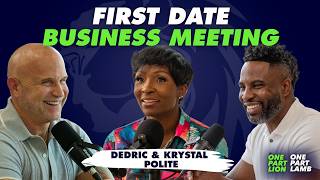
In this interview, host Stephen Scoggins talks with husband‑and‑wife entrepreneurs Dedrick and Krystal Polite about the evolution of their partnership from a first‑date credit‑score conversation to a multi‑million‑dollar real‑estate empire, a national TV flipping show, and a growing mentorship platform. They discuss their wealth‑building mindset focused on stewardship and legacy, how documenting their deals on social media unintentionally landed them a deal with A&E, the grueling realities of filming a series (the "can't scale dysfunction" lesson), and the transition from free coaching to the Polite Wealth program. The Polites share how they intentionally blend business with marriage, defining clear roles and boundaries, and how they use real‑estate cash flow to fund other ventures like Family Entertainment Centers. Personal development themes surface through references to books like Die with Zero, continuous learning, and inner work. They also reveal their family life, parenting philosophy, travel preferences, and hobbies, emphasizing the importance of presence, downtime, and intentional leisure. The conversation ends with calls to action for the audience to follow their brand across social platforms and join their coaching portal.
Chapters
I want people to hear this. What do you think your long-term return on that $16,000 investment was?
Probably 1,000x plus. 1,000x?
1,000x plus.
1,000x?
That investment was.
On a one-time investment? We sat down and, you know, she started grilling me. Her questions were, what's your 3-year plan? What's your 5-year plan? Are you an entrepreneur? And most men would have been like taken aback and maybe offended, but I was actually, it was refreshing to me. I'm in my late 20s, I'm living my best life. But once we got past the looks and the superficial thing, I'm like, I wanted somebody I could build an empire with. We had just closed our first deal a year prior, then 2 years later we're filming a TV show. I'm like, that's just amazing how God works. Like, closing your first deal and then 24 to 36 months later filming a national TV show.
It's about building something that outlives you, period. It's just that simple. It's not as complex as most people want to make it. Our sons will be able to take over when we're gone. You can't take a W-2 with you. You can't pass that on. To your children. We both came from generational poverty. And once you've seen it, you kind of don't want to go back.
Hey guys, welcome back. One part lion, one part lamb. As you know, we have been on a roll recently bringing you guys world-class guests who can teach you more about just shaping a business, shaping leadership, but also shaping yourself. I've got a very special surprise for you guys. Husband and wife combo, host of 50/50 Flip, top A&E channel, I'm telling you right now, amazing. Got Dedrick and Crystal Polite. What's going on, guys?
What's up, Stephen? Thanks for having us, man.
We've been trying to do this for a while, right?
I know, I know. But, uh, just want to say you have a beautiful home, so thank you for having us.
Well, thank you. You guys are more than welcome to hang out anytime you want. You know, I told you I travel a lot. You can use it as an Airbnb.
We will be back.
And it's recorded.
Yeah, yeah, that's right. Well, look, I'm excited. Um, there's a lot of— there's a lot of different ways we could go, right? We could talk about the amazing work you guys have done with 50/50 Flip. We can talk about business strategy. Obviously you guys are very successful in real estate as well. You guys have your hands in a few other things that I don't know if we're ready to talk about just yet. So I'll, I'll, if that pops up, that'll be on y'all's, you guys can share about that. But what I think I want to maybe lean into first, if it's okay with you guys, is you guys are an amazing husband and wife combo. Both, if I understand correctly, corporate background and all the things like, How did you move from corporate background to working together, TV shows, flipping real estate, all the things? Like, I'd love to get some background.
Great question.
You want to— you want me to—
You can start.
I mean, we both always wanted to be entrepreneurs. I grew up wanting to own my own business, looking at buildings, wanting to be in real estate. But I didn't have a rich uncle or someone to kind of show me the way. Crystal, you know, when you were a little girl, you told your mom— what'd you tell your mom when she asked you what you wanted to be? I've always said I was going to be an entrepreneur.
She said since 4 years old, I would tell people I'm going to be an attorney, but I'm going to own my own law firm. And I was going to hire homeless people and train them to work for me. So I've been saying that my whole life. And so entrepreneurship was like a non-negotiable for me. So when I met Dedrick in 2009, 2009, time goes by so fast. Look, when you have the kids, like I tell people, when you have kids, The dates now become the husband's job, you know. 2009, and we sat down for our first date.
Yeah.
Slash business meeting.
A date was a bit—
all right. Okay.
It was a straight-up interview.
It wasn't a lovey-dovey. It was, it was an interview. She— we sat down and, you know, she started grilling me. Her questions were, what's your 3-year plan? What's your 5-year plan? Are you an entrepreneur? Do you plan on staying here in Boston?
Sounds like me and my girlfriend.
And I was like, whoa, you know? And most men would've been like taken aback and maybe offended, but I was actually, it was refreshing to me. I'm in my late 20s, I'm living my best life. But once we got past the looks and the superficial thing, I'm like, I wanted somebody I could build an empire with. And I knew her mental, when she started asking me all these questions, I knew her mental was where I needed it to be.
Yeah.
So yeah, he thought he was about to come and sit down with someone he's about to hit. That's what it was.
So you hit back first.
You came with the gloves on.
Hit soon. Like, that's what he thought.
Yeah.
And when we sat down, I was at a point where I think I might have been 28.
We were in our late 20s.
And I was at that point building. And I was When he met me, I was working 3 jobs, no kids, but I was taking care of and helping a lot of people and family members. And so when I met him, I said, look, uh, what's your credit score? First date slash business meeting, we got all of that out of the way.
Yeah, she's like, I don't have time to waste on just random stuff. If you're real good, if you're real good, we're gonna find out tonight.
Yeah, that's what it was.
And that's really what it was. I told people, I don't like finding— wasting my time. And I tell people, that's the precious gift I can give anyone is a moment of my time, because it's a moment of my life I'm never going to get back. So did I find him attractive? Absolutely. Um, but at that point I was like, look, if we're not going to be compatible, we're going to know at Joe's, because that's where our first date was.
All American Grill.
All American Grill. Now here, and we ain't even gonna go no further.
They're not, they're not, they're not, uh, supporting the show, but we could probably get Joe's to support the show now, right?
So it was really just finding out if this is someone that I can— we can just be friends, or if it's something— someone that I feel we can build together. And that was my goal, is what I knew. Any man that I was going to be with seriously was one, gonna have to be an entrepreneur. It was not— it was a non-negotiable. And it's not that that's everyone, that's for everyone. It's not. For me, I knew it was extremely important to be able to understand my mindset and why I am the way I am. And that's kind of what—
and not ask you to change it.
There you go.
Accept it and roll with it and be part of the journey.
There you go. So for us, that was a lot of questions. Like, are you an entrepreneur? He was like, yeah, tell me what you've done in the entrepreneurship field. Okay, do you— what about this? Are you open to this? Hey, I'm, I'm planning on opening up and owning some family entertainment centers. What do you think about that? Like, We got into— I said, hey, do you plan on living in Boston forever? He was like, I mean, no, I don't have to.
I'm flexible.
I don't have to. I can move wherever. I said, okay, anyone planning to be with me has to be willing to move in the next year because I'm not going to be here. And he was like, well, I mean, my mom's here, so I can, you know, I can talk to her. That's the only one I care, you know, I'll see her all the time. And I said, okay. And that's really what started us as far as entrepreneurship.
And we started our first business together within 2 months of dating.
Oh, wow.
We went into business together. Yeah.
See, I might even slow that down a little bit. I'm like, I don't know if I— it's only been 2 months. Like, already going to get married in a different capacity.
And what happened was, I, you know, I went to school, got good grades, was working a job, worked for HubSpot, right? Doing sales. And I got laid off. And I was all depressed. I'm moping around the house. We had just started dating. And she came by my house one day and she was like, dude, what's wrong with you? Like, all right, I'll let you wallow in this misery for a little while. Then she like gave me a pep talk. You want to tell them what you told me?
Yeah, I told him after seeing him in that bathrobe for like 2 weeks, I said, listen, the job lost you. You did not lose that job.
That's good.
I said, eff that job. What you're going to do now is you're going to take time to truly find out what God has truly ordained you to really do. I said, and this is not it. This was a season. Let's move past this season into— and for you to be able to really truly walk in your greatness.
Yeah.
I said, don't worry about your bills. Don't worry about the mortgage.
I had just bought a house. I just bought a new car. I had all these bills. I was stressed.
Don't worry about any of that. I said, I will take care of those. You go out there, ride your motorcycle, clear your head for you to be able to really get out there and figure out what it is you want to do. Not what you have to do, but what you want to do. So that from this day forward, every day going, that you're doing something that you're passionate about, that you love doing.
Yeah, that conversation just gave me like a whole new outlook on life, right? It kind of freed me up like, man, I know she has my back. Yeah, that's what I knew. I was like, I'm definitely gonna marry this woman, right?
Yeah, dude, it sounds— it's, it's really beautiful because it was one part being called up and one part being challenged.
Mm-hmm.
Going out.
Yep.
Yeah, yeah, yeah. It's like you—
which I needed at the time.
Well, yeah, but the other flip side of that is like even the fact that that even happened just showcased the belief that she already had in you.
Yeah.
And you guys—
because some women would be like, hey, you, you broke, you laid off, I'm out of here.
Yeah, yeah. Well, I mean, and I'll just give you a little You guys can know this now, my audience knows it, but pretty much everybody until I was like in my late 40s, like 48, 49, every time I was in a relationship, I would end up becoming like the financial savior of the relationship. And it was always draining and dragging, not because I was apprehensive about providing, but because I didn't feel like I had a partner I could roll with.
Yep.
That just really understood what I was going through. Yeah. The woman I was sharing downstairs I don't share her name on camera for her request. Not that we're not proud of seeing each other, but she's— she likes a private life. I have no problem.
Sounds like me.
Yeah, I have no problem being more in the public. But she told me one time she was— I remember we were on our first date and it was a— we met online. And I remember one of the first things she asked me in the little messenger, she's like, well, she was very first thing. She's like, because you ping somebody, right? And she says, well, but what was the last book you read?
And I was like, that's different.
I like this. These are the last 3 books I read. She replied back, well, I've read, I've read these 2. Have you thought about this one?
I was like, challenging you.
I like this. I like, I like, I like— she's, she's brilliant. I mean, and she's gritty and tenacious.
And so you knew you were equally yoked, right?
Well, I knew, I knew I was on— I, I knew it was different than I'd ever experienced before already out of the gate, right? And then we go to have our first date and it was I would say there was some mutual interviewing going, going back and forth, right? Which was really, which was a beautiful thing. But one of the things that, um, I remember her saying, and she didn't know my, my background at the time fully, right? She didn't know I'd sold a company and built businesses and blah, blah, blah, right? And, uh, because I was trying to keep that like last, right? Yeah, like I want you to know me, like, get to know me, right? And, uh, two things happened. So first, the first thing that happened was when we were communicating, she goes, uh, she goes, just so you know, I'm an entrepreneur. I started my company by myself. I've been through, you know, this— she's been, she's been building business now for about 8 years, right? Before she started, um, started with her own money, her own time, her own energy, raising 2 boys at the same time, like doing it right, really doing it. And, um, and she goes, I just want to let you know, you know, I, I have about 30 team members collectively across the different companies. And, um, I just want to, you know, if my phone goes off sometimes, I'm gonna have to take a phone call. And she goes, and then she said she was like explaining what a hectic day could look like. And I just looked at her, said, well, I said, I got you.
I understand.
I've been there, done that.
Fully understand.
Yeah. And then we'd probably been dating, but it was about 2 months in and she knew more. She knew that I'd already sold a company and built a company. And then she became aware of it. I'm Googleable like you guys are, like, you know, Right. And then, uh, by that time, normally people are doing the Google, who is this person really, right? And I remember, I remember saying, well, I said something, I said something about business. I said, yeah, I was like, I did this thing on this thing over here, it's online. She goes, I don't want to look for you online, I wonder if the man's in front of me.
Yep.
I was like, where have you been? Yeah, because, you know, I've never had to prove myself. Yeah, like I can just be Yeah, right. So you guys just dropped a beautiful story of what I would, I would say to the audience, like, if you're looking for, um, a, a, you know, a mutual helpmate, like somebody that you can ride or die with and build something with, like, what's the purpose of just rolling through?
Absolutely.
You know, that's powerful.
Yeah, that's amazing.
Yeah. So I just kind of looked at it like that, as you guys just gave a beautiful, um, crash course on what it means to, like, really, like, choose your— like, choose a mate. Like, be selective.
There you go.
Yeah.
In the beginning, before you are a year in, and then you want to disclose and say, hey, you know, I'm really passionate about entrepreneurship. And then you have someone who's like, well, they're not really risk-averse. So it's not like, um, I thought you were a nurse.
I didn't know you wanted to be a business owner, right?
Why would you want to quit that job and now open up a bakery? And now you're going— we know this because we have so many people who come up to us with the same story whenever we're doing conferences.
Yeah.
And we've gotten questions as much as a doctor who came up to us and said, hey, I'm a physician. I just really want to know, I flew here really to meet you guys. I want to know, do you think I should divorce my wife?
This is at a live event after we had spoken.
Right. What?
Heavy question.
Yeah.
And just a lot more detail.
And I'm not sure I'm qualified to answer.
Right. We're like, excuse me. And it was for the same reason. He physician, but he wanted to get into real estate. And his wife didn't understand that. She wanted to be very safe.
She wanted security.
And I told him, you can't blame that, right? But so many people find that out later.
Yeah. Yeah.
And for me, it was not an option. I needed— I need to know upfront ahead of time. So neither one of us waste our time. And for him, it was kind of the same because when I came in, I— by the time I met Dedrick, it was me recognizing that he didn't recognize his own true potential. So he was good looking, he had the new motorcycle, the brand new car.
Like, don't forget educated.
Educated.
Because I did go to school too.
Come on, man. But it was—
you guys look beautiful together.
And single. So to him, he was the full package. And when he met me, I was like, you all right?
I got my own package.
Yeah, I told her, I was like, you all right? Yeah, we literally sat and I was like, you were sought after. I was like, babe, you're right.
Yeah.
And he was like, what? I was like, you're okay. Once we get together, I said, you're gonna take off. And that's because no one challenges him. No one reveals to him his true potential. And from day one meeting me, I was challenging him. Yeah, I was making him rise to the occasion, showing him and just revealing to him little things that, um, he was not seeing before. Because the people around you— which is true, you know how when people tell you, you know, your network is your network, and it is true. So he had a ton of friends that were super educated. All of them come from great backgrounds, great schools, private schools, major top universities. But where he was trying to go and what he was doing was kind of—
wasn't the traditional path. A lot of my friends, they went to Ivy League schools, they're attorneys, they're investment bankers, those type of paths. Yeah, very few people did the entrepreneurial path. Yeah, right, right. So she was the first one to kind of reveal to me like, hey, you have something in you, but you need someone to kind of bring that out of you. And she's the one who saw the potential and wanted the best for me.
Yeah, which is why he was so devastated that he lost the W-2 job. I told him, babe, go and sign up for that unemployment.
I didn't know you can get unemployed. I didn't know. I didn't know. I'm like, so you mean to tell me all this money they've taken out of my paycheck, I can get a few hundred dollars a week?
Technically, you're just loaning it back to the government.
Okay, I said go sign up for that unemployment. Yeah, get that little check. And in the process, figure out what you wanna do. I said, but you—
And that's where we started Airbnb. Like she was always at my house, right? Couldn't get enough of your boy. Her apartment in Boston was always vacant.
We just got that eye roll on camera, by the way.
Yeah, she was always at my place. So her apartment was vacant. This is in 2012, Airbnb had just came out. So I was like, I heard about this Airbnb thing. Like since you're always at my house, why don't we rent out your place? 'Cause it's always sitting vacant. And I thought she would be like, oh, well, I don't know. She was like, well, then I was like, oh, well your brother's staying there. 'Cause her brother was crashing at her crib. And she was like, hold on, he was staying there. So she calls him up like, hey, Kevin, you got like—
full price, baby.
You got about 2 weeks to figure out where you're gonna go.
Yeah.
He was like, no, no, no, I'm gonna start paying rent. No, you know.
Yeah.
And she was like, you got 2 weeks. And we furnished it and put it on Airbnb. And that was our first business together.
Within 2 months of dating, but it was because he had time to breathe and figure out.
Yeah.
What he wanted to do now. He had time. And I tell people, a lot of that comes from a man understanding and knowing that he has a woman that he wants to take care of but not has to take care of. So when he met me, he knew he didn't have to take care of me, right?
Got her own money. Yeah, I mean, I don't mind taking care of—
I'm gonna set her name online here, no trouble. She's very much the same way. She can take care of herself.
Right.
And does. She doesn't mean that we don't, like, come together when needed.
But she doesn't need you financially.
She doesn't. And she was the— she was the only woman I've ever been with that didn't need me financially.
Yeah. And it's—
I always felt like I could let my guard down.
Let your guard down. And also relieve some pressure off of men knowing that, God forbid, if something happens to me, do I have a woman who can take the reins from here on out? Or is this someone who we're going to go under because everything is dependent upon me.
Yeah, yeah. I got so many other questions, so many ways to go. All right, so it's very clear that, um, Christa, you made an immense, um, or played an immense role in Dedrick and him just being the fullness of himself. Sorry, my— let me turn this thing on real fast. I, I also forgot to put it on Do Not Disturb, so all right, um, So my, I guess my flip side question is, is in what ways has Dedrick called you higher?
That's a good one.
Good one. I would say, I would definitely say Dedrick opened my eyes to a lot of stuff that I wasn't seeing. So, and I'm not getting choked up over him.
There's water right in her pee.
The water went down the wrong pipe.
Oh.
But when I met Dedrick, like I said, I was working 3 jobs. I was taking care of a lot of family members and taking care of my nephew, who was my sister's son, but I was taking care of him. I was in my 20s. And I was the only one of my friends who really had no kids. So you know, when you're the one with no kids, you the one everybody coming to.
Yeah. Right?
For money. Yeah.
For money.
You especially, they know you have a little bit of it.
Yeah, exactly.
Oh yeah, I've been there.
50 godkids pop up.
Yeah, you know, you're always the godparent.
I got 5 dads, you know that.
Like, and so when I met Dedrick, Dedrick's total opposite. So I am a giver by nature. I get joy in giving.
Yeah.
Um, and when I met Dedrick He showed me really how that can go differently, I'll say. It was— that's what would be like, um, who asked you for what? And when I met him, it was just like, yeah, no, you can't be doing that. And it wasn't until he kind of revealed to me that I can't trade places with these people by giving so much, nor can you pull them with you.
They have to choose it for themselves. Yeah. Yes.
And I had to learn that too. He kind of revealed to me like, look, I know you have a big heart.
Mm-hmm.
But because you have such a big heart, that's why you are a magnet to people. So when people came to Dedrick for stuff, you got to have a whole business plan, have your credit profile. You got to have— I mean, every— and this could be for $100.
Yeah.
But he set the tone where no one came to borrow anything. From him.
But it's a vetting process.
I got bills too.
He'd be quick to tell you, I got bills, like mortgage, I got a mortgage, I got a car note, like, and for me, it was—
Well, people were taking advantage of your kindness.
Exactly.
Well, when I was growing up, I heard especially like, so first of all, no one— when I set out to be an entrepreneur, it was out of necessity. We talked about a little bit of that when he and I had a chance to speak one-on-one before. But when I went through that process, all of a sudden I began to think, okay, I'm going to make a go of this. I'm really going to— I'm never going to let old man Myrick down because he gave me a second chance and it deserved it. I was like, I will not let this guy down ever again. Right? And about 3 to 5 years later, I began making some decent money.
Right?
I want to say I'm covering my expenses. As Torrey Roberts, a good friend of mine, says, he says, I have all my needs and most of my wants.
Love it, love it.
And, um, when I was listening to talk about that, um, that, that jumped out at me because during this season I was like, okay, well, I have resource, I have the ability to help, but I kept finding the same people coming back for the same help repeatedly. And I realized that I wasn't— so we had this slogan, let me know if this resonates, family helps family. Yeah, which is basically like saying I get to help myself into your wallet.
Yeah.
And some of them were like super close to me, so much so that I had to at one point in time, I was just like, I'm not, I'm not helping you. This is not helping you.
It's enabling.
You need to learn how to handle money.
Like, yes.
Like, I'm not bailing you out every time.
You never learn.
Yeah. Yeah. I mean, I could go down a laundry list, but that was the, that was the lie that I was taught as being part of an ecosystem. And that, and also that being wealthy was evil.
Yep.
Hmm.
I heard that a lot.
And it'll make you feel bad if you didn't give, you didn't help somebody out.
Exactly.
But that's kind of what it was with Dedrick. When I met him, he was financially very secure in his family. And everyone knew that. So if he didn't give something, he would be made to feel like—
It's the guilt trip.
Yeah, total guilt trip. Well, you got it. And the Lord has blessed you. And you should not be so, uh, stingy, and you just should not be this way where you cannot help someone else. And, and I had to come in and be like, because it's funny, when I first met Dedrick, everyone loved me.
Yeah.
Then when we started dating heavy and they started to see a change in him, oh, I went to being the worst in the world.
Oh yeah, yeah. Who is this woman? She changed you.
What is that? You're not the same. I don't want to be the same.
Exactly. And I just told Dedrick, when he first told me, he was like, yeah, well, my aunt and him is talking about how I done changed. And I said, did you tell him thank you? And he was like, well, what? I said, well, did you tell him thank you? And tell him that's the best compliment anyone could ever give me. Yeah, because if I don't want to stay alive, I should be changing every day. And he was like, well, yeah. I said, don't ever look at that as a slight just because it's coming from family. Yeah, that you should be changing.
Yeah.
And then they went from loving me to hating me to seeing where he's at now to loving me.
Yeah, right.
Full cycle.
Yeah, full cycle.
Well, the Bible I read actually says, uh, it says, be faithful with the little and I'll make you masterful with much.
And I'll make you masterful, yes.
And I, so what I did to kind of like the same kind of, this is kind of a fun conversation. I think every business leader needs to hear because a lot of us are probably giving, giving without, uh, any kind of like healthy boundary system or whatever. When people began coming to me, I was like, um, one of them was very important to me, let's put it that way. Um, played a role in my adolescent raising, so to speak. Um, so when they came to me for— I don't know, that's probably 2 years into saying yes all the time, right? So they came to me the, the— on the— we'll call it the 18th time. We'll just say the 18th, right? Comes to me and he says, um, I used to call it the money dance. Like he would put his hands in his pockets, he's just like, and it would tell me he's about to ask for money.
You already knew it was coming.
Yeah, I mean, I watched him do it with other people. I mean, I watched that happen with other people, right? People that were important in my life. And I look, the reality is, is I don't fault anybody, right? Because you, yeah, in many cases, if you, if you really know, like you really know better, not you that you just know, yeah, right, but you know better, you'll do better, right?
There you go.
And, um, in the grand scheme of things, uh, I remember this I said, well, I tell you what, I said, I don't have it to give, but if you want to do this, this, and this for me, when you're done, I'll pay. I'll just, I'll essentially pay you a wage for doing it. So now when people came to me, it was more like, okay, and a little bit, even, even the kids when they were growing up, they were like, what do I need to do to earn enough money for the next?
You started training them. Yes. This, this not just give, give, give. This is not a give to get. There's an exchange here. I love that.
Yeah, because at least there's a value exchange, because the kingdom economy focuses on value exchange, right? Even the way Jesus operates. Nothing is free.
Exactly. That's what our sons do now.
And they'll think twice now when they know they got to do something or give something. Do I really want this? I want to ask him for this, or maybe not.
Yeah, it was really interesting. Um, one of my girlfriend's boys, um, she's done a fantastic job as a mother, by the way. She is an incredible entrepreneur, incredible woman, incredible mother. I don't— I honestly don't know how she does it all. I legitimately don't. Um, but the oldest one's recently— he's in— he's into Robux or Roblox or whatever. Our kids are too. Yeah, Roblox. Anyway, so he's always like, hey, there's a new skin package coming out, I want it.
Yes, right?
$19.99.
Yeah, exactly. It's like he— and at first he's like, can I have some? Because he got Roblox for Christmas and his birthday or whatever. Can I have some Robux? I said no, but you can earn some Robux.
Yeah, I know that.
Last night, and last night we were talking, it's like, okay, well All right, now he's on that. Now he knows he has to— he's all— he's— so he's been helping around the house.
He's working now.
He is. He is. And she was like, yeah, he's doing great. He's like, he did this, he entered dishwasher, he did all this.
I'm like, that's awesome. That's our 12-year-old. Whenever he wants something, hey, I want those new $200 Balenciagas. Okay, well, you need to work for it, or what are you going to sell? So now he's actually looking up— he's—
now he's looking for value.
His plan now is to go on the AI AI and build websites and sell them to local businesses.
Oh, that's strong.
He's doing— he put together a website for us as a prototype, and he's looking to earn money. Yeah, to get the things that he wants.
Yeah, dude, it's wild to me how many people are not adopting AI.
Yeah, it's crazy.
Oh, which is huge. It's just—
it's wild. Um, but on that same point, last night we were also talking about like, okay, well, now he's got that under control, or I got— he's got that working for him. So now, now, like I said, when I was raising my two boys, we had a framework so they could earn it but then out of earning it, they had to bucket in buckets.
Yes.
So a certain amount for give, certain amount for reinvestment, as we called it, right?
Yes.
A certain amount for savings and a certain amount for spending.
Yep.
So if they earned $100, they didn't get to spend $100. They got to spend like $25.
Yes.
Right? Yep. Same thing we do with our kids. And it's just ironic that what they do have to spend, they don't want to spend it.
Mm-hmm. When it's their money, they don't want to spend it.
Now all of a sudden, that's like—
That's human nature, period.
Yeah. Like, it's just sitting there and they just—
Like, never mind. I don't think I want it again.
No, it's— Just, I know.
When it's mommy and daddy's money. Yeah, let's spend it.
Yes.
Oh my gosh. Well, let's pivot for a second. We can talk, there's so much we could talk about. We're definitely like kin for sure. But, um, how did you guys make the conscious decision to jump from corporate straight into, I mean, was it just necessity like in your case? Or I mean, like I know you said you started your first business like 2 months into relationship. Like how has this taken shape?
Yeah, it's really because, uh, Dedrick has always dreamed of getting into real estate. That was his dream. So when I met him and went to his apartment, he had books in my house that I owned.
Yes, basement apartment.
He had his basement apartment and he had, um, books on real estate, uh, CDs, because, you know, back then it was CDs were huge and DVDs. He had VHS tapes, I was going to live events, seminars.
I was always looking for a way out of the rat race, right? When I read Rich Dad Poor Dad in 2021, I was like, that's what I want to do. I need cash flow, I need properties. But I didn't know the how, and I didn't have a mentor to show me. So I just navigated back into my safe, secure job, you know, had a corporate job, corporate credit card.
I'll try next year. Yeah.
And then I grew up on Section 8. I grew up with a single-parent household. So I didn't have a lot growing up. So I was risk averse. I was like, I want to do entrepreneurship. But what if I step out there and fail? What if I fall on my face? I don't want to go back to being on food stamps, right? So I was like, let me just keep doing what I'm doing. When I met Krystal, she was totally the opposite. She's like, risk?
I'm getting after it.
Who cares? You know, we can go bankrupt in the process. Don't worry, we'll get it back. So she had a totally different mindset. So she gave me the motivation to be like, you know what, let me give this a try. If we fail, we just try something else. And just keep iterating. So I was always looking for a way. I had side hustles. I did all these different MLMs that failed, made like $3 in them. We sold stuff on eBay, Amazon. It was just whatever we can do to— I can do to get out of the rat race. I tried, right? So we failed at dozens of businesses. So people are like, how are you guys so successful? Because we failed way more times than we've actually succeeded.
I survived my— I was gonna say, I survived my failures.
Absolutely. And I had to tell Dedrick, like, in the beginning, we're going to fail.
Yeah.
So let's—
that's okay.
Let's just get that out in the open. Yeah, going to fail and understand that it's okay. I believe in jumping and growing wings on the way down. So I call that faith, by the way. Faith. Absolutely. And I told him, let's not worry about that. Let's worry— only worry if we don't learn from them.
Yeah. Yeah.
So from there, Dedrick was like, hey, he did some research in real estate and came up with wholesaling.
Yeah, wholesaling. I actually bought my first house in 2007, right? House hacked it. So I read a book called How to Buy Houses with No Money Down and Get Cash Back at Closing. That's what I did. I got $1,200 back when I bought my first 3-family in Boston. So I was like, I know this stuff works. But then it wasn't until I found out about wholesaling, I was trying to figure that out. And driving down here, we're looking at our phone and we're seeing pictures from 2016 where we were going to these live events and these seminars trying to figure out how do you make money in real estate. I'm like, man, that's not even a decade ago.
Yeah.
And look where we are now, 10 short years later. And she started the LLC. And when she started doing research, she was like, alright, we doing this wholesaling thing.
Like, he helped.
You've been talking about it. We're taking action now.
Yeah, that dude will talk you to death about something. Like, yeah, you know, I want to do this.
And yeah, don't tell me unless you're gonna do it.
Which I need.
I'm not gonna talk about it. Like, if we talk about it, you best believe I've already gotten the LLC created. I'm really just informing you. She doesn't window shop. I don't window shop. Don't take me to the store. It was like, hey, let's go look at cars. If we're not buying, come back to me when we're buying.
Oh, it was so funny because you guys showed up today. And then, uh, I remember we were having a conversation on a Zoom call. This is probably 6 months ago, probably.
Yeah.
And, uh, he said, yeah, my wife is interested in this next space. I'm like, oh, that's cool, that's awesome, sounds good. I would just, you know, do your due diligence, whatever. You walk in there, yeah, we were already under LOI. All right, let's freaking go.
It is like, and when my mind is set on something, it's set. So, and he knows that, like, I don't— I— it's weird, but which is also why I think we really work so well together. Because of that, like, he knows how to reel me in. And I'll bring a business to him and be like, hey, I want you to look at this. Da da da. And he'll say, okay. And then he'll go through it. With me on why and without just shooting it down. Yeah, but it'll help me see why it may not be what I think it is.
Or it's going to be like, well, if it's going to work, it needs to look more like this.
Absolutely.
Balance. Yeah.
So when he kept talking about the real estate, I said, you know what, look, you know, on top, you're not, you're not going to talk me to death. So I went out and created the LLC. I went out and started signing us up for seminars, webinars, 3-day trainings, 2-day trainings, accelerators, accelerators, like we're going all over place.
Yeah. And that's traveling around the country.
Yeah.
To get the information.
Yeah.
And that's really just because I said, like, look, if we're gonna do it, and it's your dream, then we're going to have to make these sacrifices. We had two— one small kid at the time, before we had my second one, because the moment we had the second child, the June 6, 7— what day were they born? 6, 7, 17. So 6, 7, 18, I was able to quit my job. That's awesome. So that's how hard we were going.
Money loves speed. And that's what I love about my wife is that she's always executing and pushing the envelope. And that's what success— success doesn't come from reading books, listening to— it comes from taking action on the information that you learn. So that's the powerful part as well.
It makes me think about— there's two things I want to mention. I just want to get your thoughts on it. We're talking all around it, right? But I'm going to try to phrase it where I feel like, um, a business leader, entrepreneur can like really see themselves in it. Um, complacency.
Comfortable, complacent, golden handcuffs.
Exactly, exactly. Let's, let's, um, I don't want people to jump out and do something dumb, but I also don't want them not to get started.
Absolutely right.
So how do we balance complacency with effort and like figuring out what the sweet spot is?
Yeah, I call it golden handcuffs, right? You're making $80,000, $100,000, $150,000 a year, maybe even a quarter million. But you work 80 hours a week.
Yep.
You barely see your spouse, your kids, you're missing games, right? So it's golden handcuffs. If you leave, what about health insurance? It's all these things that kind of sink their hooks into you and make you say, do I really want to step out there and try this entrepreneurship thing? And again, you know, you— or you— is your mindset is totally like, what handcuffs?
Hers is more like mine.
I just quit and figure I'm not saying don't quit your day job tomorrow, right? But what we did is after getting into real estate, within 6 months, we were able to fire her boss. And we fired her boss first strategically because I had a higher salary. So we were like, all right, well, we need to ramp this up. We're not just going to quit our jobs willy-nilly. We need to have our side income, first of all, replace your, your income. We did that within a few months. Then a year and a half later, once we were making 6 figures a month consistently, then I was able to hit quit my 6-figure-a-year job comfortably.
But that was also after—
I love how intentional you guys are. Super intentional.
And that was after joining a mastermind where we were around— we were the only ones still with W-2s in this mastermind.
2017, we joined a real estate investor mastermind. You had to be full-time in the business and you had to be making over 7 figures a year, or you had to have $16,000 to buy into the group.
We met the third.
I think the third is the cheapest option.
We met the third criteria.
Because we definitely weren't. And we didn't have— we didn't even have the $16,000 when we made that investment to join this group. We didn't have the money. Luckily, I had a business credit card at American Express with like a $20,000 limit. And when they made the pitch at the end of the 3-day boot camp, I was sitting on my hands, right? Because that's just my disposition.
She's carrying me under the table.
I'm not— I'm trying not to make eye contact with you.
No, I didn't. We I literally sat there at the table. And you know, when they make the pitch, and we're sitting there, we're just looking. And Dedrick's sitting there, he's just looking at the guy, you know, but I know this is what we need. And so I slowly turned, I'm like, and I look at him, I'm like, is there a reason why you're still sitting here?
And I know the majority of people are like me, they're like, do I really want to take this risk?
I want to hit that for just a second because I can't tell me times I've sat in front of people, whether it be on a, like, a virtual thing where we have something that would help them, or it's a one-on-one thing. I've sat with them like, I'm like, you're at X, I can help you get to X in like 6 months. You're in your own stinking way.
Yeah.
Why are you letting this stop?
You know they need it, they know they need it, but there's a block. I think it's people don't— the block is people don't trust themselves. It's not like they don't trust you, they don't trust the program, like, am I really gonna do it? Am I gonna do it? What it takes? Oftentimes we let ourselves down so much. It's a lack of belief in yourself.
And that, that's what it was with Dedrick. And I knew that coming into it. So I know I have to pour into him where he understands that this is something you can do. This is something that you were meant to do. Yeah, you just have to get out of your own way. So when he sat there and I turned out, I was like, is there a reason why you're still sitting here? And he was like, oh babe, we don't have the $16,000. I said, yes we do. I said, put it on the credit card. He was like, but I said, uh, get up.
And now I'm like, I got an 800 credit score. If I put this on a credit card, now I'm really gonna have to get to work. I'm gonna have to stop BSing.
It's like, maybe it's like actual— because you put— once you put dollars on the line, the accountability level goes way—
when you pay, you pay attention.
That was my intention.
Fun story, fun story, fun question. That $16,000 investment, what do you think your, what do you think your long-term return on that $16,000 investment was? You don't give me an exact number because I'm, you know, but I'm just curious.
I want people to hear this. It's probably 1,000x plus, 1,000x, 1,000x that investment, one-time investment.
16,000, and that's really what did it for us. That and then going to the quarterly meetups for this mastermind and the flying out of state to go to these— with 2 kids, where we had to get all 4 of us there. Then we would fly Dedrick's mom from Boston to meet us there because she was watching the kids.
She was still breastfeeding our youngest kid. Like, we were sacrificing.
Yeah, she would watch those kids, the 2 boys, for us while we're in the conferences all day. I would be running back and forth upstairs to breastfeed, come right back down. What'd I miss? What'd I miss? Okay. He's like, oh, I got the notes. I got the notes. Okay. This was 2 quarters we did this. And we're having to sit there. This was the wake-up call for me.
Mind you, we had not closed the real estate deal yet. Yeah, we've been trying, but we had not closed our first deal yet.
We're shelling out tens of thousands of dollars to learn and funding this through our W-2 job, right? That was our first investor to making sure we're going to get back and forth to these mastermind meetings. And but what woke me up was sitting there hearing people like, ah, yeah, well, I know last quarter, I I was going to try to add another 50 doors. I only got 30. I only brought in $2.1 million this quarter. So I definitely felt short.
It's really strange to even say that out loud. But it's true.
And we cracked our head.
Like, you only made what? Yeah. And we're sitting here like, barely.
We're just trying to get our first door.
We're trying to get to the mastermind, right? And we're hearing people like, yeah, I only, you know, I I added 40 doors this quarter. And I bought this apartment complex. And we're sitting here like, well, we made some cold calls. And we sent out some letters, sent out some letters. And I mean, we text a couple people. After the second one, I told Dedrick, I said, look, we're not coming back next quarter unless we've actually done some deals.
Unless we've moved the needle.
I said, if we have not moved the needle, we're not coming back.
All right. So I'm going to pause you there because I think there's another hidden story here. Comparison. Comparison kills deals and entrepreneurs every day, all day. Talk to me about like how you guys made that shift, because I feel like when I look at entrepreneurship and I look at entrepreneurs right now, I mean, like people that have it, right? Because you guys know this because you guys are entrepreneurs. We look at each other's eyes before we even— we just— we even just meet each other for the first time. Like, oh yeah, they're entrepreneurs.
Yep.
Like it takes seconds, right?
Yep.
But I know that we all had to go through like this imposter syndrome, threshold, comparison, like, how can we help more of our fellow entrepreneurs out there break through that ceiling?
I think comparison can be like anything else. It can be positive or negative. It could be good or bad. It could be negative in a way of if you're constantly comparing, that could discourage you. But the reason we joined the mastermind and we talk about the association and the power of people that you spend the most time with is we needed to get around people who were doing things at a higher level because we thought we were good, right? We're making a couple hundred thousand a year. We got good jobs. We got a nice house. But we got around these people who are making 7 and multiple 7 figures. We're like, we're not doing anything. We're not nowhere near where we need to be financially. So that caused us to raise our game because we had to go and be accountable to that group, or we wouldn't fit in. Right. So that type of comparison was actually healthy, is being around those high-level, high-achievers.
Yeah. But then when you go on the Gram, And you're looking at people who renting cars and airplanes and the fake lifestyle and wonder why you are where you are. And it's because of that. Like I did when people ask us, I say, you know, the difference between us is because we weren't doing anything for the gram. We were doing it for our last name and our kids. Like, that's what we were doing it for. We put our heads down and we worked. We didn't compare our journey with anyone else's. What we did was we ran our own race. And anyone along the way who we knew could pour into us and help us get to where we were were the people that we pulled from. So like, I tell people, when I met Dedrick, Dedrick didn't believe in paying anyone for—
I didn't see the value.
He didn't. Like, and when I remember the first time I said, look, I didn't understand that we're gonna have to pay someone to mentor us. That was like, Uh, no, we don't.
I was like, YouTube and podcast. We'll figure it out. That's what I thought.
You can get benefit from YouTube and podcast, but it's not the same as somebody sitting down with you talking about your specific business, your specific niche, your specific roadblocks.
There you go.
Yeah.
There you go.
Not the same. Surface level.
And then I still spend 10 to 15% of my net income every year in training, ongoing development training.
And you have to, and I told that guy, I said, look, um, we have to shorten our learning curve. What we want to learn, we don't want it to take us 2 years. Or 10 years, or 10 years, or never figure it out. Pay someone to teach us this specialized knowledge, and we be where we need to be in 6 months. So then he was like, clicked. He was like, okay, all right, let's do it. And I always like to press upon people, especially when money is always the root of why you don't feel like you should do something. And everyone, you know, everyone hits you with it.
Oh, Well, if I only had the money.
If people would—
people always say money. No, what gets me is when people say people always charging for their—
why do people charge for information?
And you want to help someone, you should just be telling people. What?
I will answer that one. I tell people all the time, they still don't do the work.
There you go.
They don't do the work unless they— unless they invest in it.
There you go.
Here's the other thing that I realized about this too, is the one place people should invest in most is themselves. And it's always the last place people want to invest. They want to do everything else but invest in who— in becoming the person that can carry a mantle that is actually worthy of being carried.
There you go. There you go.
You know, best investment you can ever make is in yourself.
And it hit— and we're living proof of that. And I tell people, and any other entrepreneur, nope. And I— me and Deja was just talking about this 2 days ago. I said, because we got that question. Mm-hmm. To send us a long email, like, you know, I've been at this for a year now. And I've been trying and people say they want to help you, but they never do. And I told Dedrick, I said, you're not going to meet an entrepreneur, no one successful, who's going to say, I owe my— all of my success to this one person, because they did all the work for me. And they got me to exactly where I needed to be because they did this, they went out and did this, they went out and did that for me. No one.
Yeah, you still have to earn it.
We had to put the work in.
Yeah, I got this. So my audience has heard this story before a little bit, but, um, I had a young man I was coaching for a while, a while, a long while.
He did a long while.
And, um, I remember this one, this one of these conversations, he was— he, he wanted to shadow me, so he shadowed me at a lot of different events and stuff like that, which is 'Cause if I'm in the car already riding somewhere, like we can have a conversation. I'll share whatever I got going on or whatever, right? On this one specific ride, it wasn't even focused on business. He's like, you're in good shape. I'm just curious, how do I build a bigger chest? I'm like, well, you know, the easiest thing to do is probably just start doing, you know, to get started, just start doing some pushups, right? Just, you know, get on the ground, bang them out. Yeah, right. I said, if you can only get one out the first time, that's great. Get two the next time and work your way up.
Up.
So he's like, oh, okay, okay, okay, right? And then 30, 45 minutes goes by, he goes, well, what if I want to like chisel the bottom half right here? I was like, do the damn push-ups, right? So on and on, like, this conversation went on for probably another 4 hours, like, what different areas of the chest? And I'm like— and the answer was always the same, do the push-ups, right? So the reason I share that story is because Couple years goes by and I've been mentoring this guy for a while, right? I was like, he said, well, how do I make my business successful? How do I do this? I'm like, do this, this, and this.
There you go.
The answer did not change for 3 years.
There you go.
Okay. He went from $0 to $500,000 in top line revenue in 1 year because he did the same 3 things that I told him to do 3 years earlier.
3 years ago.
Yeah. So now we have this, we have this running joke when, when, when we have, when this comes up, I was like, He's like, I said, what you gotta do? Do the damn push-ups. Do the push-ups. Like, I can show you, like, I can show you all, but I can't, I can't do your push-ups for you.
We have mentees like that as well.
Yeah, it's crazy.
The good news is they'll get it eventually.
Exactly. But it's kind of like, at what cost? Yeah, right. Like, what? And I'm one of the people who I'm a firm believer in it, I guess, because I started entrepreneurship early. Like, I had my first company at 18. And for all the way through college, I had a business. So I learned the wrong way to do it.
Yeah.
So early that by the time I got with Dedrick, I knew there are the right way and the wrong way to do things. And I learned the power of really paying for someone's time and their expertise.
They can see it. They're not inside the jar looking out.
Exactly.
Yeah. Paying for the expertise of someone who is where you want to be. And the power of that. So when we got together, it was like, look, I'm not trying to do this in 2 years. I'm trying to do it in 2 months. And if this is someone who can get us there, put the check, cut the check.
And when you look at the investment, $10,000, $15,000, we've spent $52,000 on one mentorship. But you look at what the ROI is.
I mean, that's the thing, though, is that this is where I think people get stuck because people aren't looking at it from an ROI perspective. If I invest X, I'm, you know, I can turn this into— and I say I can turn this into, because again, it's knowledge, the principles, the strategies. Dude, I've built in the last 24 months, I've helped 7 different entrepreneurs build 7-figure businesses basically from scratch, right? And they weren't paying me, right? This is me like, yeah, coaching them all the way and all this kind of stuff. And my team finally comes in, so why are you still funding our entire operation? Why aren't you like putting up— you need to be doing—
they should be paying you.
Yeah, I'm paying, I'm paying to help them build businesses. Like, it's like it was kind of a bizarre kind of like look at it. But what I've discovered is, is people are coming at it from fear and lack of— I don't— because I don't have, or I'm scared of putting in something and not getting return. I mean, the trust economy is broken, right?
Yes.
Because there has been a lot of people out there selling a bunch of stuff, a lot of scams. You were talking about downstairs in the studio.
It's like, yeah.
And, but there's also people that really know their stuff. Like, you guys have been through the fires, therefore you're worth the mint in paying you guys to be mentored in these different categories.
Yeah, and understanding that, learning who those people are, right? And understanding, for me, it is receipts, right? When we, all of our mentors and coaches are people who are still actively—
and we would go and meet them, and we would spend time with them, and we would shadow them, and we'd pay them to shadow them. Because again, if you're going to be mentored, how do you— you the trust economy is broken. It is. That's why there's so much fear and hesitation, because there's so many people out there saying that they're doing things, but they're not. They're just selling lifestyle. So that drowns out people like us who are actually doing what we say we're doing. And now the audience is like, who do I trust? Which is a valid feeling.
Yeah. And I remember my son had just said to me, um, I think it was last week, he was showing me an ad on Instagram. And he was— it was a Lambo. Okay. And it was a guy with a Lambo. And he said to me, he was like, that's probably not even his car, Mommy. It's probably—
we've taught them well.
Yeah, it's probably a rental, right? Yeah, it's probably a rental. And I just smiled at him because I was so proud.
Yeah, that's awesome.
Okay, I see where you're going with this. But I didn't even say anything. He was like, yeah, I've seen this before.
But yeah, the mentor you choose should be able to show you a document that they've done what they're telling you they can help you do. If they can't, I wouldn't.
Well, and you also can't— you can't— you can't look at a potential mentor and look at their stuff and decide on their substance.
Like, you—
you— we would— we as a group would do it differently. So let's say we had a liquidity event of a million bucks, right? We get a million dollars, right? And we have that event. We're not gonna go out and buy a $300,000 car, right?
No, right?
We're gonna go buy the pieces that can pay for those things. There you go.
On a passive level.
Piece of real estate that's going to kick off $10,000 a month or $15,000 a month and you buy a few more and then, and now the toys are paying for themselves rather than just subtracting your cash.
It's a different mindset, right? Some people go out and buy the Lambos and the jewelry and again, nothing wrong with that. But my mindset is different. Like I said, if I got $10 million tomorrow, I'm already got, I already got investments that I had already planned that that's going to go with the majority of that will go into that. Yeah, I'll have some fun and play a little bit. But yeah, the mindset is different. Sometimes I'm like, man, is that a bad thing? Is that a curse?
I think, I think it's stewardship, right? Because I believe in, I believe in creating legacies that outlive you. I was talking to Quest about this earlier before you guys got here. Um, I said there are different type of business owners. There are different, but there are business owners that want to create a legacy that outlives them, meaning whatever they build stands the test of time. They're gone and dead and all the things, and they've got their great parents and all the stuff. And you know, for me, I want to leave stuff inside of people, like the outside the heart of somebody, right? There's other people who are like just as happy you know, just kind of, they, they have a business, but it's really a job that they enjoy. They're, you know, they just enjoy doing what they do. So they're like, I make money doing this. But when they pass, there's no entity, no business left, you know.
So I'm glad you said that because that's what I say to, um, all of our students, anyone who come into contact with us who ask us about why we do what we do. And I tell them it's about building something that outlives you. Period. It's just that simple. It's not as complex as most people want to make it. It is building something that outlives you. Our sons will be able to take over when we're gone because we have been able to teach their kids to do the same thing. There you go. Because we built something that would outlive us.
Yeah.
And when we're done— and we're not even done yet— but when it's something that we can now pass on our own kids, it'll outlive them. So that's really why we do what we want to do. And that's what we kind of try to press upon people is you can't take a W-2 with you, right? You can't pass that on to your children. And for me, it's about— we both came from generational poverty.
Me too.
And once you've seen it, you kind of don't want to go back. You know, it ain't something you want to even visit too often.
I'm gonna be honest with you, that was where my scarcity used to come from. That would be like, well, my hesitation is like, if I do this, I might have a little reserve, right? To like fall back on.
And I was like, that was Dedrick's. He was like, he was very fearful of going back. And for me, I came single parent, my mother, 4 kids. I tell people, by the time I think I got to the 4th grade, I was, I'd already been in like 8 schools. And so I was like, look, I lived through that.
Like, I can survive that type of upbringing.
Look, if I fail, it won't be the worst thing that's happened to me. If I lose it all, we'll get it back. It won't be the worst thing. So for me, that's what entrepreneurship is.
That's so good. I'm having such a good time. I want to maybe pivot to 50/50. So one, Obviously, you guys have been building businesses, you guys have been growing and things. How'd you guys walk? How'd you guys work your way into a TV show, then start teaching people how to do that? Yeah, walk me through the journey a little bit.
On the ride up here again, we got iPhones, and we got like 50,000 photos and videos. And we were just going through pictures from 2016, 2017, 2018, and reminiscing on the drive up here, the beautiful drive. And I was like, that's 2019. We were like, we had just closed our first deal a year prior. Then 2 years later, we're filming a TV show. I'm like, that's just amazing how God works. Like, from closing your first deal, and yeah, 24 to 36 months later, filming a national TV show. So I just say it's God. I mean, we're blessed.
And absolutely. And for us, it was not something that we sought out to do.
Like, not something that was planned.
Definitely not me, because I am super private. Like, your girlfriend, like, and people like, well, how is that possible? You're on a TV show.
Okay, handling That's what I'm doing.
Like, I am. And if you see me outside of the TV show, then you know I'm still private. Like, Dedrick likes to tell people, if the CIA and the FBI had a baby, had birthed a baby, it would be me. Because I am, I'm, I am a very private person. You go to my social media, you're never going to see anything about me. I post maybe once a year, like, yeah, somebody's birthday, my kid's birthday type thing. But, um, it was really us from that mastermind, again, we were trying to drum up money, private investors to attract for our real estate projects. That's it.
Like, and that's why we went on social media.
The founder of the mastermind was like, look, you guys are a great-looking couple. You guys need to get on social media. Diana, super smart.
Both of you guys are incredibly intelligent.
And he said it, he was like, look, get on social media, start showing people that you're doing what you say you're doing. And the investors will come because you now have documented proof. And Dedrick was like, well, I mean, I can, but she's not gonna post anything. I know my wife ain't gonna do that. I said, and I told him, I said, well, you can, you can do it. Like, he was like, okay. And that's really what it was, just us documenting the process.
And we walk through, walking through a property, taking selfie videos, meeting the contractor, meeting the roofer. So we've documented our whole business over the past 10 years, buying rentals, and we were rehabbing our rentals.
And it just so happened that the TV networks were seeing that. It turned out A&E had been emailing, had DM'd us for like over a year.
You were looking at your DMs.
And well, we got a lot of spam, right? Like, I'm sure you get a lot of spam.
So I was not interested in it. And so many, uh, casting agencies would DM us also, and I wasn't there. We had small kids. I wasn't even interested. So A&E had actually ended up getting our 1-800 number, called our secretary, made our secretary promise to pass the message along and to have me call them back.
Made her pass it along.
Yes, she promised. Made her promise that she would have them call me back. So when I walked in her office, she was like, hey, um, this lady, I think it was Kathleen, um, from A&E Network had called me. And I was like, oh, okay. And she was like, she wanted you to give her a call. And I was like, okay. So I just walked into the, um, office and she came and followed me. She was like, could you please give her a call? Because she made promise.
I had a pinky promise.
And I'm like, well, why would you promise? She was like, it made me feel so comfortable and safe. She said she's been trying to get in contact with you guys for a while and she can't get a hold of you. And I was like, okay, but for future reference, let's not promise anybody else.
CEO mode.
And she's like, okay, I won't, I promise. So I gave her a call and she asked if we can do a Zoom call.
This is right after COVID. Like, like early 2021.
Okay.
Yeah, and it might have been still during COVID because when we still— that first season. Okay, so I told her, uh, we hopped on a Zoom call with two of them and she was like, look, I want to start off by saying this: I am not a casting company. I am the in-house casting agent for A&E strictly. She was like, so I will not be getting a tape, trying to shoot anything of you guys, and then shop it around. She was like, I worked exclusively with A&E. I'm house. And she was like, we're looking to— gave us a whole spiel of they're looking to greenlight 3 flipping shows. They're getting back into the flipping space. They came across us, absolutely loved our presence and what we're doing, and da da da. And they're interviewing a lot of people. So we're just like, oh, okay. When we started, we was like, well, let's just see how far we get. We was like, we ain't really gonna do it. Because, you know, I'm definitely not doing a TV show. And I was like, well, let's just see how far we go. And he was like, yeah, cool. And then you're like, well, it would be kind of cool. He was more for it, of course. And I was against it.
I didn't think they were going to pick us. Let's just see, see how far neither one of us did.
We was just like, yeah, it'd be cool to tell people like, yeah, you know, we got to the final round. And then after what, 6 months of back and forth, Zoom after Zoom, every Zoom call had more people on it. They contacted us, got on another Zoom, and it was like, hey, we'd love to offer you guys one of the TV shows. And me and Dejik looked looked at each other like— and still trying to smile on camera, like, oh, oh, okay, okay. And it was like, we are super excited. Like, she's like, we're super excited. We've been— oh my God, we love you guys. And we're like, oh, okay, awesome. He's like, we're gonna send over all the paperwork and then we'll get that over to you, the attorneys. And we're just like—
then we got off the call and we were like, are we really doing this? And at this point I'm like Ooh, shoot. Like now my fear—
behind the scenes story.
My personality kicks in and I'm like, uh, I don't think we want to do this. Like we're opening up our whole lives to national TV. And then she's like, well, we kind of have to do it.
Like we had already waited through this whole long process.
Exactly. And he's like, uh, no, we don't. I was like, babe, we do. Like they've let go of so many other candidates. They interviewed like hundreds of people and it came down to us. We kind of can't like back out now. And he was like, look, we didn't say we were doing anything.
And I was like, "Yeah, but—" We just sat there and smiled 'cause we were frozen. Right.
I said, "But, well, we kind of have to do it at this point." I said, "Let's just see. It's an experience, right? Where it's something new." Mm-hmm.
And with us, usually they were like, even when you get a TV show, they'll have you shoot like a sizzle or a pilot. Yeah, yeah. And with us, they went straight to series, meaning like they flew out like 15 guys like Quest from LA and New York, and we just started filming the first episode. So it was— And then their producers were like, "That almost never happens." They were like, like there's something about you guys.
I call that an open door. Yeah. Yeah. So it was amazing.
Um, that's really how it started. Like, it was just from us documenting our journey on social media. And I like to tell people we weren't doing it for the gram, or to get on TV, or to get on TV, trying to find that money.
Right? It works. Where's Stephen? We need, we need someone.
And guess what? It worked. Because with the TV show, a lot of people see these flipping shows and they think, oh, well, the network is paying for the house. So they're giving you construction budget.
No, no, it's all you.
And the reason we did it is because, you know, A&E shoots documentary style. It's not scripted like some of the other TV flipping shows. So we're like, hey, look, we don't— we're not actors. As long as we can be ourselves, you know, we're not even house flippers. We explained to them, like, you sure you want us? Because we're not house flippers. We're buy-and-hold investors.
They had no idea that all the houses they were looking at were our rentals.
We weren't flipping, we weren't flipping any of them.
So our first flip was on national TV.
Literally, literally, you know, it's a little different when you're renovating to flip versus as a buy and hold, right? But the difference with us is that we put, you know, luxury quality finishes into our buy and holds. Beautiful properties. Yeah.
So that's why they thought they were flips. So we made it very clear to them, like, look, we're not flippers. We, we don't flip. We buy and hold. And it was like, we don't care.
We don't care. We just want to document.
They was like, well, can you incorporate flipping into some of them that you hold? And we was like, I mean, yeah, we could do that. How hard could it be to sell something we already renovated? Famous last words, right? Well, yeah, we can do that. How hard could it be?
The first season almost killed us because we had a team of about 3 people with no project manager doing the work of like 15 people, like, with TV cameras in your face on a time limit, like, which is totally different than if you're just flipping a house on your time limit.
Like, TV is everything is compressed timelines. Like, it's crazy. That's where the name came from.
And then at the same time, I had to raise the private money, right? We had to do 10 episodes, each house we're buying for about $100,000 to $200,000, had to put $50,000 to $100,000 into it. So I had to raise $2 or $3 million in private money to make that happen, which I did successfully. That was part of the nervousness. Like, I've never raised this much money. And I got it. Now I have to do it to pull off this TV show.
Next TV show is going to be Stephen and Dedrick created a private equity fund, right?
Because I guess not.
It was— but when my back was against the wall, I did it, right? Look at that.
It was, it was an experience. First season was A&E, second season Hulu bought the rights to our show, um, which blew up even more. Yeah, right. So we went from, what, 4 million? How many A&E did they say had Well, Hulu has about 45 million subscribers. Yeah, from like 9 million subscribers or something from A&E to like 45 million subscribers with Hulu. And so—
And that was the birth of y'all's coaching business, mentorship business.
And we have been doing mentorship before then, but it wasn't as formalized. We had a few small courses and accelerators. We were doing a lot of free coaching, like you said, teaching people.
Tons of free coaching.
Some of them who didn't take action, which was frustrating.
And I think a lot of that was—
It drives me more nuts than I'd like to admit.
And a lot of that came from me, like, I just feel— I've always felt like, let's just give the people the information. And DeAndre was like, look, this is our time. And it just became more and more and more DMs and emails and people from the first season popping up at the office.
We had to move. And they would find our office. They would show up. Like, I drove all the way from Philadelphia to learn from you guys. Well, so much for me wanting a TV show.
I just— It is. I like my little solitude here at Safe Haven.
And I'm telling you, like, when people want to get what they want from— they're going to find you. And people still to this day, they show up at our mailbox. So it's not our office, they think it's our office, our actual mailbox. And they'll call, call me, and they'll be like, hey, Miss Polite, there is such and such here, and he came down to expect— we tried to tell him that this is your mailbox, it's not your physical office, and they're asking if they can meet you guys. And I'm I'm like, uh, it's a no, and please don't call me again in regards to this. Tell them to just shoot us an email. Like, we have events and things of that nature. We're not in town right now. But after that second season, it definitely stretched us, right? The first one killed us. The second one, we came back, we came back smarter with the bigger team. So now we didn't listen to the people people who did it before us. When they told us, it's going to be hard for you to do something else. While TV is going to become your job, become your job. And we was like, yeah, we can do all— run all of our companies and still do this little TV show in the process.
Well, they told us it was only film a couple hours a day for 2 or 3 days a week. It ended up being 5 days a week, 12, 14 hours a day on set is what the actual reality was.
For what, 8 Because they could press—
take all that content, compress it in a 1-hour show.
There you go. Yeah, yeah. And it killed it. I know our last day of filming, we sat back in the bed, both of our heads are on the headboard, like, yeah, we're not doing it. This is—
was that where you guys were going? Like, you just finished filming, like, I wrapped up a season when you came up— when you and I met at Sean's place, because you guys were heading out of town.
We were going on, uh, spring break with the kids. Yeah, yeah.
So It was— season 2 was, yeah, it was hectic, but it was a lot more calm for us because we had a lot more systems, processes, people involved, the bigger team, much bigger team. Everyone was kind of pulling their weight. They knew what they were doing. We had an amazing, uh, cast and crew that was on the ground, showrunner. Everything was just, um, phenomenal. Yeah, come season 2, it was a lot better. It was still, you know, stressful, but not as much. But that's also because of that coaching and mentorship. Yeah, from people in the TV industry. Yeah. And that's why I like to press upon people, it's not just real estate, whatever you want to do in life, find a mentor, find a mentor, someone who's done that already, who can help you navigate what you're about to go through.
Because otherwise, you're gonna pay the stupid tax. That's it. All the way through the whole thing.
That's it. Like, stupid tax. Season 1.
Choose your heart. It's gonna be hard if you pay the stupid tax. It's gonna be mentor, but you're going to get better results with a guide or mentor.
Not only that, with a mentor, even if, I mean, we all believe in paying our mentors, right? Yes. Because they're, they're telling— I did this, um, I said, I might, you and I might have talked about this, um, we were in Greensboro that time, but, um, a long time ago I was trying to figure out what, what should I charge, right? For whatever's in my noodle, right? Whatever's up here, all the experience that I've been through. There's a lot, right? There's been a lot of different things I've been through and circumstances, building large teams from nothing and building my, rebuild myself. And, you know, we've already talked about various stories, just kind of walking around the house. And, and then I had a mentor of mine said, take your net worth for last year and divide it by 2080. And I was like, okay, why? He goes, that's what an hour of your time is worth.
Hmm. That's a good one.
And I was like, I can't do this for free anymore.
You realize the value of your time?
I mean, because, you know, I'm sure you guys are like this, like, we, we're so close to what we're doing. We, we, we, even as mentors to other mentees, if you will, who also— we have our own other mentors, right? We as a group, we're too close to it. Like, something that feels like super, like, natural to us is like supernatural to somebody else. Right. It's one of the things I love about speaking and doing immersive events and stuff like that is because I was at a— I've been all over the place in the month of April, but I was just in, I think it was Vegas last. And I met someone who's been very successful with a lot of celebrities and doing a lot of different things. And we were just having a quick chat. I was, in fact, I was being interviewed in one of the settings and they overheard the conversation. Came to find me after the fact and he's like, can you tell me more about this, this, and this? And he goes, can you keep this private? I said, of course I can. Like, this conversation, like, like the substance of the conversation stays between us, right? Um, but when we were talking, you could just, at different times, you saw like things welling up right in the eyes, right? So it's like, I think, I think we can be so close to information and transformation that we underestimate the value of it. Yep. Absolutely. Because some, some of these problems that we've collectively solved for other— I hope could solve for other people has been life-changing. Yep. Generational change. Yes, absolutely.
Yeah. Same thing with our mentors. Like you said, when you— we, we still have mentor, even though we mentor thousands of people, we still have mentors. Yeah.
So I was telling my CPA recently who's been with me for a long time, I have to, I have to learn how to think like a billionaire. I have to learn to think how they think. I may not necessarily agree with everything they do, or because I know, I know, I think I know about 7 collectively. The 7 that I know are really good humans. Like they've done really well in business, but they're also really good people. Yeah. And then I've been acquainted with others that are, that are not as favorable, right? As far as how I would do life differently. Let's put it, let's leave it at get there. Um, but all of them taught me something, even the ones that I disagree with. Like, I've learned something. And I think Hemingway said, uh, every person's superior to you in some way. There's always something to be learned, no matter who it is. Yeah, absolutely. What was— been— what's been the, um, the most recent thing that you guys have learned that's unlocked a new level for you guys?
That's a good question.
Most recent thing we've learned that has unlocked a new level for you By the way, I haven't even asked a single question. This is all just part one.
We're gonna have another conversation. We can.
It's unlocked a new level. Hmm.
I think it's just working. For me, it's working on yourself. What do they say? The inner me is the enemy, right? That little voice in your head. So constant personal development, reading the books, listening to the tapes. If you're spiritual, connected to that, that higher power, that, that's what, what constantly unlocks new, new levels for me is when I focus on those type of things, the inner, the inner mind, the inner workings that unlocks the outer.
Yeah, yeah, that's good.
Yeah, I think for me, it's more being able to transition into other areas of business. So us transitioning also into— from, uh, real estate into now other entrepreneurship areas like, uh, the Sky Zone that we purchased. Just going now into actual businesses, um, is like my thing now. So it's literally unlocking a ton of different doors and avenues where now I'm learning something completely different on franchises. Yeah. Which has been my dream my whole life. So when DeAndre and I got together, his dream was real estate. Mine was— is— mine is FECs, Family Entertainment Centers. So when we met, I told him, you know, my dream and goal is to own a chain of them. And he was like, okay. He was like, look, if we this real estate, we can take the money from real estate and roll that into the vehicle. Use that to finance your dream. And I was like, okay, say less. Yeah. And I tell people the seriousness of that was it was written in our vows, in our wedding vows. I will own FECs. I played zero games with him. We gonna, we gonna do the little real estate thing because you know, that's your dream. Me your goal. This is awesome. But we definitely gonna pivot and come back to this. Don't think we gonna forget my boy. And he was like, listen, let's use this to fund that. And that's exactly what we did. We utilized the real estate that we were owning to be that vehicle to purchase like our first franchise. Yeah, yeah.
So good. I love— again, I love how intentional you are because I feel like— all right, so one of the things I've been saying recently that's been like a battle cry of mine for like the last 6 months— it's funny how a battle cry of yours becomes— it starts to have ripple effects where you start seeing other people. Yeah, you use different phrasing and stuff, which is always— it's not mine anyway, it is. So it's like, you know, use it, have fun with it. But, um, I've been—
my battle cry is you can't scale dysfunction. Say that twice.
Can't scale dysfunction. We've learned, we've learned that. Me too. Yes, Lord. And one of the ways that I think dysfunction shows up is I call it shooting from the hip. So as an entrepreneur, there's no shortage of problems that you're like, and you think in the moment, bang, got that one, bang, got that, got that pigeon, got that, like, got whatever. And then you realize that shooting that one thing turned into 5 other problems. Yes. And that turned into 5 other problems, and that turned into 5 other problems. And one of the things I admire about you guys so much is how intentional and deliberate you guys are. I just, I hope that's like a major takeaway for the audience today because I just feel like that's a super, super, super strong takeaway for me. Like, from the very beginning, yeah, like, we're, we're, we're, we're going to build something like this. Yes, we're going to. It seems like you guys hold it with open hands a little bit, like, you know, this is the vision. Yes. How we get there may be a little bit different, right? Or maybe like we planned.
Most times it's not like we planned. Maybe circuitous, circuitous route. Yeah, but yeah, as long as we get there. Yeah. So, all right.
So I guess I have another— this is more of a— this is more of a fun question. This is— this, by the way, I'm a naturally curious person. Um, oh, here's what I'm curious about. Who are the Polites when there's no cameras and no business?
Who are we? Okay, so who are we together or individually? Yeah, both. Okay. Um, me individually, I step away from all of it. When I step away from it all, I am a mother and wife. Like, I am— that's what I absolutely love. Like, I love— I am the Uber driver to the kids. I'm the chef. I'm the— like, I am ripping and running to practices, trainings. All day, every day. I'm cooking, like, and people are like, well, how do you have time to do all of this? I've asked my girlfriend the same question. And super mom, that's what actually gives me joy, right? That's what I want to do. And so doing that actually gives me great pleasure. And yes, people ask, yes, I could hire someone to get my kids kids from here and there. I can have my parents do it, like, but I want to do it. Like, Dejigal say, like, hey babe, you want me to go get the kids and you could just— no. Like, he knows, like, ask to do something that you know I don't want to do. Yeah, you know I want to go get my kids, even though as soon as they get in the car, they're about to give me a headache from that point forward. But I love doing that. So I love— every weekend we're at tournaments. Some— now we're having to divide and Soccer.
So what are the sports tournaments that you guys are into?
AAU basketball, travel soccer.
Uh, uh, girlfriend and kids are in some serious soccer. One is, uh, being looked at as a goalie for, uh, um, the, uh, USA version of the younger—
our kids in the same— yeah, we might need to create a little super team. We might have to do something like that.
Yeah, he is— we were actually just in Burlington last weekend.
Oh, hit us up next time you're Uh, playing, huh?
Her oldest son was playing Springwood, Springwood Park, or a goalkeeper, or what was the term for soccer?
Goalie. Goalie, right? Because it's really good. We're learning that too. Like, I'll be out there yelling like I know what I'm talking about, knowing I didn't play any soccer and didn't want my youngest to play. He'd been asking me for like 4 years before I actually put him on a team, and I would conveniently forget everything. Oh, Mommy missed the registration. Travel soccer's legit. And that— it really took a parent saying to me, like, does Keenan play soccer? And I was like, no, no, he played basketball, you know, football, flag football. And it was— he was like, no, can you play soccer? I was like— he was like, yeah, he's really good. I was like, Keenan does not play soccer. So I signed him up for like a little league, a little church league. Yeah. I said, well, first day, Dedrick was with our son at a basketball tournament. Minute. And I was like, yeah, once he— this, this might be one and done. He realized you got to run up and down this field. I said, yeah, we won't be back here. Yeah. By the time I got in the car, I called Dedrick and I said, did you know Keenan can play soccer? He was like, what? He had scored like 10 goals. Oh wow. By the first—
by halftime. They have to put him on defense in the second half.
It was crazy. And it just so happened to turn out he's really good at it. Like, really good. And our oldest son, both of them do travel basketball. So our youngest plays up, he's 8, um, in the 3rd grade. He plays with a 4th grade travel team who plays against only 5th grade teams. Oh, wow. So he plays, uh, on a travel team. Our son plays on, uh, Ja Morant's 12-time team. And he's been playing travel basketball forever and a day. Like, and it's coming from a kid who, when we first got him into basketball, he could play but he didn't want to because he don't like attention. So he didn't like people staring at him at all. Like, he had that phobia. Like, he didn't want people looking at him. Sounds like he's one of his parents. Uh, yes. And so for us, that's every weekend. So even when we were filming It was— I remember the first season, they was like, hey, what are you guys doing on the weekend? Not this. Monday through Friday. What you guys have? Yeah. And when I tell you, it would be a hard stop if I said my kids have something to do. Yeah. And they learned during season 1 the hard way. It was something we were filming, and I said, hey, we got a hard stop at 5:00. I have to be here for my son by this time. And it was like, okay, not a problem. It's like, yep. And it was like 5:01.
You know these producers, oh, she can stay a little bit.
I was already taking mics off and stuff.
They were like, oh, she really meant that. Yeah.
Oh, you gonna learn today.
They should have known that when they were interviewing her to begin with.
They should have known. They learned that too.
It's not like she puts off like an impartial vibe. At all whatsoever.
And I'm literally grabbing the pack and I'm like, OK, so Dedric, I'll meet you at the field. OK, I'll meet you there. I'm going to grab him. And they're looking like, what? Oh, we just wanted to finish this.
We'll finish it tomorrow.
Yeah, you're not going to finish it today. I set a hard stop at 5:00. All right, baby, I'll see you later. Mwah. OK. I was out the door. That was a one and done for them. They knew from that point on. So that's me. I am that person who, when we're at tournaments and people come up to us and they're talking to us, I have no problem with that, right? Yeah. If you see me watching my son's game, this is not the best time because I'm the mom who is like— that you see videos about, right? Yeah. Pop up on social media. I am very loud. Dedrick and I don't even sit together at the game, right? She embarrasses me. He was like, babe, babe.
Opposite ends of the court.
He'll be like, babe, babe, I don't want you to get kicked out. I'm getting kicked out.
She's intense. She's intense.
I do. Like, I mean, but all the refs know me now. Like, great refs. Relationships with all the refs. They be like, how we going to do today? Are we going to be—
Here she comes. We're going to be OK.
We going to be OK today. I said, it depends on how you call this game. OK? It depends on how you call this game. Are we connected? They be like, yes, we are. We're going to be good. We're going to be good.
So she's intimidated the refs.
Yes. I am— like, I'm super intense when it comes to sports and my sons. And then that's where I find joy. That's what I love to do. But that's also why— like, it goes back to being intentional. I tell people, when Dedrick and I met, I wasn't having kids before I was 30. I made that very clear to all guys. I'm not having kids before I'm 30. Why? Because when I have them, I wanted to be able to enjoy them. I didn't want to have to feel like I'm pulling them along. I didn't want to feel like I'm missing out on anything in life because I'm having to take care of these children. I said, when I have them, I have to be in a position and a point in my life where I can take care of them financially, not just their wants, their needs, but their wants, and then get to enjoy every moment with them. And that's what happened. I waited. And so I think my first one was what, 32, 33? Yeah, we're in our early 30s. And from that point on, I've enjoyed them. I love every moment with them. It's never felt like it was a burden where like, oh my God, I gotta go do this. Okay, but I got kids, I gotta do that. And then I got I got this worry and I gotta do this.
And being an entrepreneur, it allows you the flexibility. It allows you the time freedom, right? I remember growing up with a single parent. My mom couldn't make almost any of my games. Why? Because she's working her 9 to 5 to provide for 3 kids, right? And I always be like, man, my friend's dad's always at the games. Why are my parents not there? And I wanted to be the opposite when we have kids. And that's exactly how it is. Like, we don't miss anything. We're at every game, at every practice because we put in the work to buy our freedom. Everything is school.
Our kids can have a little play that'll last 10 10 minutes, we're there, and we will— we're stopping production because we got to go to the school play, and I'm gonna see my baby say this one line for 10 minutes. But we're—
you guys, we are so much— we're so aligned. I, I was the opposite. I missed a lot of time. My oldest son comes to me, 20— well, he was 22 at the time, I think it was, and he, he said, if there's one thing you could do better, as far as I'm— just one thing, it was like, if you could be more present when present. And I had all these Rolodex moments where I was there, body. Yeah. But I wasn't there. I was a stupid computer on an iPhone. And yep, like, I remember thinking to myself after, as soon as he said it, I had like a Rolodex of all these moments, right? I don't like— I told myself, I told my son, it's in the new book that comes out like next year. Um, I told my son, I said, you, you legitimately changed my with that one statement. And he was the— and he was the, the one that doesn't speak up. He's the one that goes with the flow, doesn't like to rock the boat. So the amount of courage that he had— yeah, have that conversation with us, it's super special to me. So, well, who are you? Who are you when the cameras aren't filming and the deals aren't flowing? Um, you get to walk away for a few minutes.
Yeah, I mean, like you said, it's, it's the purpose is more important for me. It's the, the freedom, um, the lifestyle. Because again, I just read this book, it's called, uh, Die with Zero. And it's like, what good is all money, all these toys. Yeah, that's nice. You can enjoy it. I like toys and having fun. But it's the memories, right? So I was just thinking as you were speaking about your son, nights and weekends, I don't work right now. Early in our career, I would work nights and weekends. But now that's for my wife, that's my kids. People want to book meetings on the weekend. It's like, no, that's, that's family time. Because again, those are the moments you can't get back. Like, what is all— what is it if you gain the world and you lose yourself in the process? Yeah. So that's, that's what I'm about.
And he likes shooting guns, going to the gun range. Oh yeah, I got a couple of those.
Oh yeah, yeah, I love, uh, firearms. And a couple of ranges nearby too.
Yeah, I recently got into golf.
Uh, of course the point's right here, so—
Oh, you can watch me throw clubs. Hey, as long as you don't judge.
Hey, I'm in the same level, learning the game, learning the game. But it's fun, it's fun being out there.
All right. Yeah, traveling is definitely both of us. Like, we love—
but we have two different travel personas. When I travel, I want to sit on the beach, sit on the dock, hang out, have a couple drinks.
I want to go on an adventure.
She has a whole itinerary. Yeah, it's like we get up at 8 AM and we're hitting this spot, this spot, this spot. It's different.
I'm the explorer.
I, I get lucky there because I like to go with the flow and just kind of, hey, let's— yeah, she's like, no, but you like structured explorer. I like, like, let's just figure out—
well, so here's, so here's what, here's what we did because my girlfriend, she, she likes both, which is really good for me because I'm like, I want to explore. How often are we in Greece? I mean, you know, like, you know, see everything. And, uh, so the, the, the thing is, is when we go to lay out a, a little vacation, right, um, it's like, okay, let's do some stuff, but also all make sure we actually carve in downtime.
Oh, no.
So yeah, we carve in actual downtime in the whole thing, so everybody gets their little replenishment thing going on.
Yeah, 2-3 hour Lots of downtime. It's usually the last day.
The last day she's getting ready to take a vacation from her vacation.
That's literally what it feels like. Like, by the time we get back, I'm like, ooh, child, I need a vacation.
But we have the experiences and we have the incredible memories.
And our kids, that's what they're used to now. Like, if we're not doing something— because I've been like that since they were born with all of our vacations— it's kind of like, what are we doing Next? Yeah, where are we going next? What's on the schedule for tomorrow, Mommy? And the memories. What's on our itinerary for tomorrow? And then like, we go to places everywhere we go. And you know, when you go to somewhere and they'll be like, hey, do you want me to take you guys' picture? And DeAndre gonna be like, yeah, nah, we good.
We used to be like, I got a phone.
He'll show you quick.
You should see all these pictures. We good.
We got the phone right here. And I'm like, yes, we need the picture.
Now I'm just like, we take it. So we get that souvenir picture everywhere we go. Yeah. And we've got about 100 of them, probably. Like, literally, like, I And then they'll be—
Desi go like, do we need another picture?
I don't even ask now. Yes, we do.
But they get to look at these memories and be like, oh my God.
Well, there's pictures of them getting older and older and older and all kinds of stuff. Yeah. Exactly.
Because even now, just from our recent vacation, Desi be like, nah, we good, my boy. Like, we got— yeah, no, we good. And I come right behind him. I be like, yeah, we need that picture. That's funny. Yeah. And he look at me just like— Is it really worth $100?
I said, no, but it is. Yes, it is.
Exactly. It is. That's exactly what he says too. Is it really worth it? It's $25, go ahead. Take the pictures. Because you know me, I got to get the picture in the frame.
She gets the top package.
Whatever the top package is. I do the same thing.
I ain't going to lie. But that's us as a family. And our kids are the same way. But it's also because when I was a kid, I never took a vacation with my mother. Like, I never— I don't know what a spring break— spring break for us, we were outside playing.
Ours, if it happened, it was camping. Camping somewhere because the tent and the fire doesn't cost much. Inexpensive trip. We—
I never took a vacation growing up. Like, a vacation, never heard of it. Like, a vacation, what? What? Nothing past what I saw on TV. Yeah, people on television, you watch the show and they're going on a vacation. But growing up, we had never took one. Yeah. And Dedrick's was like to go down south to see family. Like, that's what his— they take a vacation and come back to South Carolina. China from Boston. So for me, I like giving my children those experiences where they know a true vacation and what they're supposed to do. And I mean, yeah, you are supposed to relax. I'm just— I just— you're not wired like that. Yeah, I'm not wired like that. So they'll find that downtime.
Yeah. So I know we only have a couple minutes left, but, um, I have, I have a, I have a question. I don't know where we're gonna go with this answer, so I don't know if this is something you guys are really strong in, something you're still walking through, working true, but a lot, um, it's becoming more increasing that, um, great partners are going into business with each other, right? They're, they're, they're work— they're building businesses, doing life, they're doing things. Um, how do you guys navigate business time versus marriage time? Like, how do you, how do you guys dance that? Is it, is it everybody still— it's okay to like be making a meal like, hey babe, I just closed this deal, I got, I got the LOI, or like, do you— I mean, are you guys— do you just separate it as soon as like you know, like you do with the time. Yeah, there's no— something—
it's not easy. It's definitely not easy being in business with your spouse. But we were kind of intentional about this as well.
Yep.
The reason being is because you see so many couples— again, not a bad thing— where the husband is working, or the husband runs a business, and the wife is doing her thing. And they, they only see each other at night, 6 PM, when they're getting home, or weekends. Yeah, everybody's fried. They don't get the best of you. So what I want— I was like, when I get married, I want to build something with my wife, right? I don't want her working for someone else, and I barely see her. Right. So we were intentional about that as well. Now it does have its challenges, right? It's not all unicorns and rainbows where you're married to the person, you're in business with them, you're parents, you know, you're doing all this stuff. But that's how we wanted it.
So yeah, and for us, for me, it was a non-negotiable. I told people I had partners, and I told Dedrick before, that robbed me blind. So my only next partner in business will be my partner in life.
Yeah, that's what you said. My next partner will be my husband. That's it.
And for us, there is no separation. And people will say it is. But if you are truly in business, and you're a true entrepreneur, and married, it's impossible for something not to come up when you're on a vacation or something, some business or something not to be discussed. But one of the things that helps us even early on was we learned to stay out of each other's way, which means we learned our roles and responsibilities within the business. So that he was over X, Y, and Z, I'm over X, Y, and Z, and we did not cross. We came to each other as if we were partners. If it was something that had to do with sales, or acquisitions, I came to him and I said, hey, look, I was over marketing when we first got started. If leads were slowing up, then you could come to me and say, hey, look, I'm not getting enough leads, X, Y, and Z. And we never stepped on each other's toes. Yeah. And when it comes to the marriage, it's the same way.
Autonomous respect. I love it. Absolutely. I love it. It had me thinking too, um, so, uh, Rory and AJ Vaden, you guys familiar with them? Okay, you guys should know them. They're, they're amazing people out of Nashville. They built a company called Brand Builders group. They, I think, co-founded at one time Southwestern Consulting, which was a massive sales firm in Nashville. They're behind a lot of the New York Times bestsellers of all the major thought leaders, you know, E.T. and Ed Mylett and Amy and all these, all the different folks. They're amazing humans. One of my biggest takeaways are from them because they co-founded their company together as well. AJ is the CEO and Rory is a bit more like the chief visionary officer or marketing officer in many respects. Right. One of the things that I love about them is they're, they're also very intentional. They even have a frame, a framework. In fact, when I was first starting to date my girlfriend, I was like, this is their framework. I really like to model this framework. And the framework is date night every week. Okay. Quarterly getaway, like, like a weekend, and then an annual vacation where one week is with the kids and them and the one week just, just for them.
I love that. Yeah, we're already going to copy that. We have some components of it, but we're going to copy that.
Well, just because, you know, it's— I think it is a beautiful quality to be in relationship with someone you love and do business with someone you love. And like, because there's a trust level there. Yeah, absolutely. There's a safety level there. The other, the flip side of the challenges is like you get to certain aspects, you're like, hey, we're in all business. We need to play. Yeah, exactly. Play some, you know, turn it off.
And it was a point where like he would work from the office and I would work from home. So when you needed that separation, there you go. He was like, Okay, you get on my nerves. Okay. He would be in the office and I would work from the home office. So people would be like, even if we were together so much, all day, every day, you can still have that little separation. Or you can go in the home office. And I can go somewhere else in the house. Like, it's big enough, we got to see each other. If we get on each other's nerves, which happens because I can tend to do that. Yeah, no, but you got to know yourself. Right? And know when to walk away. Yeah.
Again, we have our date nights and stuff. And on date nights, we're like, alright, no business, put the cell phone comes away, you know. But we got to remind ourselves of that.
Yeah, no, I just want to mention that because, yeah, I mean, you guys— well, I want to— when you come into my— in like what I call my energy, right? We're around each other like in the person. So like, you guys have beautiful energy together. You clearly are very, very gifted at what you guys have been building, but you also are very, very connected. You're also very, very intentional with kids. Yes. So I just love the— I love the well-rounded— well-roundedness of it, right? Because if I was going to design a relationship and have partner I was doing business with and stuff like that. I'm like, okay, this is the kind of energy that would be like beneficial. I'm not saying there's not challenges. We all know there's challenges like dirty socks, you know, whatever.
All day, every day. Well, I put it right beside the dirty clothes hamper and I just put it right in. Guilty, guilty.
And that's the way it goes sometimes. Look, I know you guys are doing a ton. If you wanted our audience to engage with you, where would you want them to go and get to know you That's better.
Um, any and everything, Be Polite. Okay, right. So you can find us on all social media platforms under Be Polite. Um, Instagram, YouTube, Facebook, uh, everything. Our website is, uh, dedrickandkrystal.com. And then our coaching platform, by the way, yes, please, Krystal with a K. Um, and then our coaching platforms. Yeah, yeah.
So we have a coaching program called Polite Wealth where we teach people how to invest in real estate, whether they have experience or they're brand new. They want to own properties. Um, so just go to politewealthportal.com and we'd love to connect. Love it. We appreciate you having us, man. I know, this is a great conversation. Long time coming too.
That's right, it took us a while, but we got it. We got it dialed in the right day. They call it divine timing.
And this is just the first of many because that means amazing Conversation.
That's right, that's right. All right guys, you know what to do. Like, share, subscribe, do all the things. One part lion, one part lamb. What are you gonna do? Rising and last, you just, you just heard from Polite. So you guys are interested in real estate, you're interested in learning from a married couple who's actually doing business well, life well, and all the things. I advise you and highly recommend you guys check them out on every single area you can find with Be Polite. In the meantime, we love you. We can't wait to see in the next episode. God bless. Peace.
More from Stephen



He Had Everything…Then A Heart Attack Changed It All | Dan Sachkowsky #Shorts




Paralyzed. Suicidal. Then He Surrendered, And EVERYTHING Shifted | Marcus Aurelius Anderson


Why You Snap At People You Love, The ALIGN Method, & Why ADHD Isn't A Disorder | Sara Hartley

