Success Is Blocking You, Here’s the Truth No One Tells You
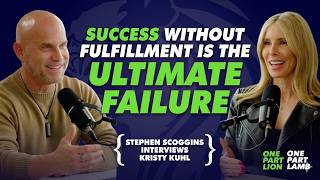
Executive coach Christy Kuhl identifies five constraints that block leaders: arrogance, ignorance, impatience, fear, and insecurity. She argues that authentic leadership embraces failure and vulnerability, and shares systems for scaling organizations through personal scorecards, data-driven actions, and reproducible processes.
Chapters
Success without fulfillment is your ultimate failure.
She's a world-class business leader, has a lot of experience. How she overcame the burnout and the overwhelm that comes with being such a high achiever, only to go back and actually find her meaning in the marketplace rather than making money and losing meaning in the process.
And I wasn't physically burnt out by definition, right? By a doctor's diagnosis. But, but my soul was burnt out and I couldn't keep doing it. Nobody talks about how frustrating that is for people like you and I that are wired that way.
At what point does performance become self-betrayal? How do you now identify misalignment earlier and how do you coach your executives?
It's easier to understand is when it's time for you to rise and grow to the next level, your nervous system is going to want to keep you right where you are.
So when it comes to scaling an organization, how do you scale peace instead of pressure? Guys, welcome back to the show. Super excited to be hanging out with you guys again today. As you know, we help leaders rise, lead, and last. But more importantly than anything else is we want to make sure you get tangible insights day in and day out every time you tune in. Why? Because we know that if we help you, you help others. That's the end of the story. End of the day, that's exactly what we're looking for. Now, today's interesting guest is phenomenal. I met her about a year and a half ago. We just happened to be at a mutual friend's house in the thought leadership world who was actually teaching us how to become better speakers with a whole different frame of reference. A guy by the name of Rene Rodriguez, phenomenal human me. We're very, very, very fortunate to be friends with him as well. And in doing so, we had, we had a chance to ride out to this dinner. What the dinner was at Renee's house. And then I tell you what, right now you're never going to have the type of toasting that we went through scenario. So if you're not having done some stuff with Renee, might be kind of fun to check that out. But anywho, we became fast friends. She is a world-class business leader, has a lot of experience, but more importantly, what I'm actually hoping to get on the show today is how she overcame the burnout and the overwhelm that comes with being such a high achiever, only to go back and actually find her meaning in the marketplace rather than making money and losing meaning in the process. Guys, she has been a world-class, literally world-class salesperson, world-class business leader. She now coaches elite performance, uh, she now coaches elite— well, you go lead coach everybody. She now coaches elite performance experts as well as executives. And guys, please help me welcome the one and only Christy Kuhl. What is going on?
Oh my gosh, thank you so What a wonderful introduction. Thank you for having me here. And this view.
Welcome to Safe Haven.
I don't know if I'm gonna leave.
You're gonna have to, 'cause I'm leaving after the show myself.
But you can be a house sitter, right?
Yeah, yeah. You know what? From time to time. I mean, I am on the road quite a bit.
Yes. We'll take care of the place.
That's right. That's right.
Thanks for having me. I'm really looking forward to this.
I'm looking forward to it too. You know, I think one of the mistakes that I made for 25 years is I was striving, striving, striving, striving, striving, achievement, achievement, achievement. I, for some reason, for me, I felt like, you know, if I could only achieve enough, somehow I'd have enough value.
Yeah.
Like I would be valuable enough.
Yeah.
And I know that resonates with you. How are, how have you made the shift in achievement to feeling enough rather than just chasing achievement for achievement's sake?
Yeah, over time, uh, pain helps, getting tired helps. Yeah, you know, I, I feel like when I was in corporate America, I just kind of kept coming back to the same place again. And what I always did beforehand was look inside and go, okay, where do you need to get better? You need to sell better. You need to be able to deal with different personalities. You need to be able to deal with people that conflict your core values. If she can do it, I can do it. And it was always comparison and you gotta get better, Christy. Like you're too sensitive, you're too— And then, you know, that just, I could never get over that hump. I could never, I just could never do it. And then I realized it was, I know you're gonna understand this, but it was outside of me. Like the message just came and it was outside of me. I couldn't go anymore. And I wasn't physically burnt out by definition, right? By a doctor's diagnosis. But my soul was burnt out and I couldn't keep doing it. And I knew that I needed to take a break from that world to be able to reconnect to who I am. And like for the first time ever, right? Because growing up in a scarcity environment, whether it was scarcity or not, it was the story that I told myself. I wanted more things. I wanted those shoes, right? And so I grew up grew up in a one-stoplight town and my mom stayed home with us, which was amazing. And my dad was a carpenter and he did so well for us in comparison to wherever he had come from. And I just, there was a pull for me to have more and never want to have conversations about money. And I heard a few conversations late at night about money and I'm like, I'm never, I'm never going to worry about how much is there. Like if I want it, I'm gonna buy it and not be reckless with my money, but just to have an abundance enough to be able to do so. And so I quickly, yeah, freedom. I quickly became, focused on a career that was very lucrative. And so you start chasing this thing and I got to a point where I'm like, well, who am I really? Because then this thing builds so much and then there's ego around that and there's reputation around that. And then there's a paycheck and there's these platinum handcuffs. And so I went to a Tony Robbins event and it was like the third time I'd been in the rooms. Say aye. Make your moves. Say aye. And he said, success without fulfillment is the ultimate failure. And he said, write down what makes you feel fulfilled. And so I have a pre-med undergrad and an MBA, and I'm like under the table, literally Googling fulfillment. I didn't even know what the word was because I was just so wired similarly for attention and recognition. If I did it, and the harder it was, the better I thought I was in terms of I was going to get more acceptance, more love, more achievement. So that was just, that was it. Achievement, achievement. And so when I, when I looked And I looked at it and I sat there with my piece of paper and I was like, well, I like dogs. That makes, like, I wanna save dogs. That makes me feel fulfilled. I love being in nature and I love being exactly where my feet are and being present for the person that's in front of me. I wanna help a lot of people. And then Tony's like, well, you need to find a way to do that for your job or make money somewhere else. And I was like, there's no money in this. How could I be in nature with saving dogs and being exactly where my feet are and not focused on a number? And it's kind of funny, that's the life that I've created for myself is being, you know, intentionally choosing the people that I work with and pouring into them and helping them.
Yeah, yeah.
No, that was the journey.
Yeah, that's so good. It makes me think of this. I have this interesting dichotomy just kind of popped up. It's kind of layered in. And I'm gonna ask you first and then I can share a little bit more if it's, but What's it like to have drive but loss of meaning?
Oh.
Like to be so driven and so gung-ho, ready to get it going, like I can tackle anything, and then all of a sudden like—
I don't think there's a more frustrating place for me to be in this world than to have all of this energy that's inside and all of this ambition. And I'm like, I'm ready to pull the lever. I just have no idea which direction the lever's gonna go. It really, it was awful. And I, and that's something that I speak about very openly, that if you're in this season where the plane has not landed, because there'd be days that I get up, I'm like, no, I got it. I got it right. And I got the messaging. I got my, my client. I know what I'm going to do. And I'd work all day. And then the next day I'd wake up and I'm like, I don't got it.
I had it yesterday.
I don't got it. This, I don't think this is it. And, and I'm like, nobody talks about how how frustrating that is for people like you and I that are wired that way. But if, if you're listening to this and you feel that, like, it's, it's a normal part of the process, and you just have to continue to show up and try those things on and discard— spend the money, discard them, and keep on going until you finally land with the thing.
That's really, really good. Yeah, I was just thinking too, as you were saying that last little bit, the— there was a time I was very frustrated. I think I've shared with the audience before Um, there's a couple other guests that have been on. I'm like, one of the most expensive businesses you'll ever invest in is a personal branding— or a business that has a personal brand attached to it.
1,000%.
It's not that— and we have lots of friends that have huge brands and, and whatnot, and it's great, right? But it's one of the most expensive, almost to the point where you're, you're paying to serve people until, until it—
for a long time.
Yeah, for a long time, until it reverts itself. And all of a sudden now, you know, um, people people are attracted to the value you bring and then begin to invest in it.
Yeah.
Which had me thinking a little bit about the journey that you've been on, right? So obviously you were an elite sales performer with medical device sales.
Med device. Yeah. Disruptive med device. So things like the iPhone that completely revolutionized the way that that procedure was done.
Yeah.
That surgical procedure. Yeah.
How did you find your way into working with the most elite executives in the world?
Yeah. So I say by accident, but really I feel like, you know, I was not in tune to who I was. I was at this, like, there, there was elements of self-trust that were built through repetition in this one little category that I had, which was sales and med device and influence. Mm-hmm. But in terms of like, who's Christy Kuhl trusting my gut, knowing this is for me. Yeah. The, like, none of that was, I mean, it, if I were to say percentages, 10% when I left corporate 8 years ago to where it is now.
Yeah.
Where now it's just like, no, like I, you know, I'm like, I, I don't like the way that person walks. Right. And I know I'm right. And I could probably tell you all the reasons why, but I didn't know myself and I didn't trust myself. Mm-hmm. And so So when I first left corporate, I was like, okay, I need to figure out who Christie is. But my ego's over here, my identity is over here. I don't think I can do it here. So I left and then I was flying around like, I'm gonna go to Fiji, I'm gonna go to Mexico, I'm gonna figure out who Christie is.
And you pray love?
Pretty much.
Bali, Jamaica to Bali?
Pretty much, you know, not a lot of pasta in there. There's a lot of protein shakes, but pretty much the same thing. But flying at the front of the plane and then just, you know, striking up a conversation with somebody, before you know it, they're a business owner. And I, and, you know, it's naturally things come up in my presence. And so before you know it, people are telling me things, you know, problems personally, problems professionally. And I threw out a solution and then I had a gig and I'm like, I talk about branding. I didn't know what to call myself. I had like 47 names pretty much. And then that And then that person handed me off to another business owner, and then that one handed me off. And so I had like all these gigs and I was like, wait a second, I was supposed to be trying to figure out this time right now. But it was a beautiful thing to start trying other things on. And, and I didn't realize how important it was to pay attention to how other people saw you. It does not mean— it does not mean that you have to do all those things. Yeah, but the fact that all these people saw me as a problem solver and they're like, oh, can you come in? I just told you about one that happened today from, you know, a panel that I was on that I didn't even know what the panel was going to be about. And I wasn't even talking about any of the things that I talk about, but they saw something. And, and, um, and so I started— I, I got to test things out and get paid, which I wasn't really looking to do. And then I really started to morph it into, okay, well, I'm not like the workshop girl. Like, I'm not the one that's like, okay, well, come in, I'm going to teach your sales team, and it's a 12-step process. And I can do like 2 of those, and then I'm bored out of my mind. And then I just realized that what really lit me up— and, um, I use Human Design in my own coaching, and for me I'm a generator and I generate energy wherever I go. If I get excited, I'm like, oh, there's something here.
I'm in.
Yeah. If I start contracting, I'm like, not, not so much. And so, um, that's really like, I wish I had that. I didn't ever, I didn't have a grand plan. I didn't have a like, okay, as soon as I get this commission check. In fact, I left a lot on the table.
Yeah.
Um, cuz oftentimes those things are paid out quarterly or annually, but I got to start to test things out. And, and for the first time in my life, I didn't have any answers as to who I was and my identity, which was, um, it drove a lot of anxiety. Yeah. Because the answer to the question is like, what are you going to do? Or what are— what do you do? And it— I had no idea. And I didn't even know if what I was doing was what I wanted to do. And that's another thing I talk about. Like, if you're in that season, like, just, just tell people you're okay and you're figuring it out. Give yourself that flexibility to be like, I don't really know where this is going to land, but I always land.
Yeah, it's just crazy. That pulls the pressure off of it.
Oh my gosh, so much. So much so. And then, then when the pressure's off, then it could be me. And then I'm like, you know, I think I'm a pretty funny person. And I like, I'm pretty laid back and I'm pretty open and honest, and I'm pretty like, I'm not afraid to show the middle of it, or like, oh, I just messed up, or oh, I just missed an opportunity, or yeah, whatever. But I can do that when the pressure's off and I haven't fit myself into this one piece of identity, if that makes sense.
Oh, absolutely.
Then I was like, oh, okay, now I can kind of figure out. And I still don't really like being put in a box. Yeah, yeah.
Well, you and me both. I mean, we're having a conversation off camera. I was like, I've got some professionals who are like, we really would like you to niche down with this one segment. I was like, I want to do that segment and Yeah, like, it's— I don't want to turn anybody away because my experience level for, you know, building and scaling companies, um, using our, you know, 5 Driver Framework, um, works for at least 95% of industries. Yeah, because it's, it's just vague enough to allow for intuition, collaboration, connectivity, roles, like building out an actual machine, but just crisp enough to give a framework. I love that because there's no, there's no carbon copy on business to business. I mean, every bit, there's industries.
Yeah, but to your point, the framework is there and that's where, that's what they want. Yeah.
Yeah. So I had something that hit me not that long ago, um, and I just want to get your take on it. At what point does performance become self-betrayal?
Explain.
So for me, when I look at performing, I used to— and you can see this online, like if you go back just 2 years, um, you'll see, you'll— I think it's quality content, but you'll, you'll, you'll see instead of this grounded, energetic Stephen that's here now, he was— you'll get, hey guys, well, the best way to come to— right? And I discovered that I was self-betraying my authenticity because I was so focused on trying to be someone that I thought everybody wanted me to be.
Yeah.
Rather than just being me.
Yeah.
Ironically, like you just described there, when I'm, when I'm me, I don't have a problem connecting to people. Oh, at all. Yeah, like it, it seems almost magnetic.
It is.
Yeah. So are there— have there been times where maybe you leaned in yourself into like being a little extra performative?
Yeah.
To get appreciated? And like, how did that feel?
Yeah, I remember the first time I, I was on a really big stage and I had no preparation for it, and I was just the person that was up up there before me. I revved the crowd the same. I mean, it felt awful. The reaction was probably not as strong. But I really think any time that I've ever done that, it really truly is, it's self-betrayal if you know better. I think that to your point, if you can take the time, and this is all the underpinnings of the work that we do. And I would never say like, well, you don't know yourself, right? Or just be yourself. Or, you know, you haven't stepped into your true identity. I mean, what business owner, high performer, like, like I would never get good anything back, right? So if you can kind of solve problems, but I really do think that, uh, it, 1,000%, yes, it is all, it is all self-betrayal. And I, I will also say like one of the biggest shifts for me too was because of, I grew up and I created all these stories of things that happen. There was a time was, so again, Tony Robbins was my entry point into personal development.
I got to see the softer side of you too.
Yeah, yeah. So there's, um, so there's, uh, I reference a couple of like pivotal things oftentimes that happen in Tony's rooms, but we were talking about masculine-feminine energy and I was like, whoa, I don't know what this is, but like, I, okay, there's something here for me. And he said, whose love did you crave the most as a child, your father's or your mother's? And immediately I went to, okay, my dad. That. And then he said, who did— in your child's mind, who did you think you needed to become in order to get more love and affection from your father? And immediately, I'd never thought about this moment in my entire life, Stephen, and immediately I flashed to this moment in time. And again, this is my child mind interpretation. Doesn't— could be true, could not be true, but it's what— and so my, my dad worked all day, like let's say 12 hours. We lived in the country next to a mate. We like a big ditch. And my mom was home with us all day, didn't have any adults to talk to, didn't have anybody telling her she's doing a great job. She meets him at the back door and he comes in tired and she was like downloading the whole day. And then she said, "And I mowed the ditch." So usually she'd have to save that part 'cause it was like a 12-foot ditch and you could flip the tractor. And he just walked right by her. No love, no attention, no good job, no anything. And so when Tony's walking me through this, the room through this, uh, he said, well, who did you think you needed to be in order to get more of that love and affection? I was like, strong and tough. Strong and tough. And so that was— I was probably like 32. I'm 45 now.
Yeah.
And I was like, holy shit, I have been completely in my masculine energy. And not only so, I created a life that I can only be that, right? Male-dominated, cutthroat medical device companies, was the only female in there. Because I could do it. And then I was like, okay, no, I can be that when I need to be. But there's this— the beautiful side of me is the feminine side. And a lot of that is being the loose and the funny and being me, but the caring and whatever. But I can go there if I need to. And I want to go there if I need to as well. And so that was like a huge pivotal shift to be able to be like, okay, I think that's a piece of performing and abandoning myself from a very young age to the point where like, I mean, it wasn't until like I was 30 42 and beyond that I started to make relationships and have really good girlfriends. Because I was like, oh my gosh, all they do is like talk about things and they need support and whatever. I had wired myself from this age to not need any support. And it's the story I told myself. I need it. And I need that community. I don't, I'm very much a solutions-oriented person. So no matter who I'm around, we're not just talking about stuff all the time. But to infuse this feminine energy and the love and the warmth from the— and, and, uh, yeah, it was— I was performing all the way up until that point.
Yeah. Wow. You know, it's interesting when I think about life in general, there's all these— I wouldn't even call them defining moments as much as they are shaping moments.
Yeah.
So I'm kind of curious, before you discovered this side of yourself, like really discovered it, yeah, what do you feel like maybe hardening may have cost you during that early days?
Hmm.
The reason— and the reason I ask why you're—
it's a good question—
is because we work with a lot of really amazing female leaders.
Yeah.
And many of them, at least during the day, are in their masculine.
Yeah.
And a lot of them haven't figured out a way out of it when they're out of their day.
Yeah.
Right. And so they're trying to kill something, but they say kill it, drag it home, eat it for dinner. Right. So they're doing all of that. You know, and then there's a side of them that I've always felt like when I, when I work with them, I'm like, there's a side of you screaming to be set free.
Yeah.
Like screaming to be set free.
Yeah.
You know, and so it makes me think about some of the things I see that they're walking through. It's like the cost of not really knowing yourself or like, you know, always feeling like you have to show up in a specific way to your point of getting, you know, getting validation or surrender? Did you have— I mean, I clearly— I know you just, you just told me about some of it, but I'm curious, is there like a, like a something you can put your finger on that we can talk to the female leaders out there with now to encourage them to embrace the other side of themselves, even if they're in an industry that has historically super dominative and the whole deal?
Yeah, yeah. So, um, to answer your question, really, it's, uh, you know, what I lost through that was, was I just, I delayed getting to know myself. And there's, and, you know, I was also picked on from a very young age of being so too sensitive. But like the people that picked on me for being too sensitive, there was darkness there. And, you know, some of it from Rene that I picked up on, but nobody else could pick up on. And it took years to expose and still nobody really cared. But like I knew, I knew. So I suppressed all these beautiful things that are my superpowers now. And even being able to, like, I can fly flip from the masculine to the feminine in the same sentence.
Yeah.
And, and I love that. And people, a lot of people that have done the work, that will be the big, biggest surprise with them. They're like, wow, you'll go right, you'll go back and forth. And they said, how do you do that? And I say, I, I'm just me.
Yeah.
I'm just, I'm not giving it any thought. But what helped me, once I was aware of it in that room with Tony, what helped me was the use of alter egos. And I wasn't, you know, I, um, I met Tad long, like, like probably 10 years after all that. And he created Black Mama with Kobe, and he's got a very specific process. My process wasn't specific, but it worked. And I thought, okay, I'm married at the time, like, how do I— you know, I was dating, I was divorced— how do I come home and leave that stuff? And the first thing that popped into my head, I was like, you know what, when I have a long, beautiful dress on, I— in heels, I can't even— I mean, I can't even.
Yeah.
So it was the first thing that I would do is I was, I would come home and just say, give me a second. I'd go in the closet, put a beautiful dress on, and I would tell myself, you're a sexy salsa dancer, which I don't know how to salsa dance.
I think I've introduced you to that with Mark Michael. He owns a studio.
Oh my gosh. Okay. I need like the beginner, beginner, beginner, beginner. And that would be, that would be really fun.
Gosh, you can also self-develop a YouTube channel.
You can just like regular. I don't even know how to like regular dance. But that— and then speaking to the women that are watching this or those that coach women that are in this, there's other places in your life where you can have that expression.
Yeah.
So it's like, you know, you're a father, you're a grandfather, right? You're a— sorry.
Just kidding. Everybody knows.
I will edit that part.
You don't even have to. We were joking around.
You could be a son. You could be a daughter. So it's like, I'm not— I'm Christy, I just may have a certain part of Christy leading depending on the person that I'm talking to and the role in which I'm playing, like the field of play at that moment. Am I, you know, am I the advisor that you're paying a lot of money for? Do I need to be tough because we need to fire people right now? Do I need to be that person? Do I need to be loving? Do I, like, what, you know, am I an aunt? Yeah, what does the moment call for? And so that allows me, and like, so when I, the other thing that I did that really helped me connect 'cause you know, I always wanted children and I went through a divorce at that time and I was like, okay, then I really wanna give back. And so I started fostering these little puppies and they were sick and they needed a mommy, story I told myself. But I was up all night nursing them back to health and loving on them. And so that naturally like puts you back.
Yeah, you got to exercise the nurture side, yeah.
Yeah, yeah. So I would just say that you don't deny those parts of yourself, but be smart where you pull them out them all because you, you can't be all the things and all the roles. Yeah, yeah. Especially at work.
A lot of the female leaders that I've seen, the ones that are exceptional, I have the ability— so women, you're gonna love this part, by the way. Um, men, you're not. Um, and it's okay because you're not supposed to. Um, women have, if they're operating with what I know is what I know or refer to as the divine feminine, they can tap into an extra source of intuitive wisdom them. Yeah, that men historically push away. So there's, in many ways, um, there's an old adage, uh, in fact, my girlfriend Katie, um, we were talking one time and I said, you know, there's a, there's a Bible verse that says, you know, um, Proverbs 31 woman, or her worth is far above rubies who can find, and she's like, I've never really liked that scripture. I'm like, really, why? And she was like, it just, it sounds very patriarchal to me.
What is it? What's the scripture again?
So it's Proverbs 31. It's referred to as the Proverbs 31 woman.
Okay.
So in the Proverbs 31 woman in the early, I'm trying to recite this. I don't really know it by heart, but a Proverbs 31 woman is virtuous who, let's see.
Or what does it mean? Like what's the summary?
Long story short.
Because a lot of times I don't get the scripture anyway. So if you could just tell it in terms of like.
Yeah, so I'll share it this way. So in this scripture, it's talking about this really incredible woman. Okay. In the earlier, the very early verses, it's all about kind of the value that she's adding to her husband.
Okay.
Right. So she's virtuous. Her worth is far above rubies. Like, she's such an amazing woman. She's— but then I got to break it down to her and say, babe, you do realize that if you just read you down a little further, you realize that very quickly she's a, she's a very successful entrepreneur. She's very good at stewarding her money. She's very good at running her life. She's very good at running her household. She's like, she's like, though, she is a superstar, right? And her husband just gets lucky because she's so amazing, right? That he, he has no lack of game, meaning they have no lack of game because she's so freaking amazing. And I guess the reason I felt compelled to share that story is because Some of the most successful female leaders I know can tap into the divine feminine even in the boardroom.
Yeah.
And really absorb it and this will communicate it very directly.
Yeah, yeah, yeah, yeah. I think it comes down to not denying, not denying those parts of you because you don't have to express them in the moment like maybe you would in a place where you could be softer. But I don't think that you can be in touch with something I haven't found for myself or anybody that I've worked with or even my my friends if you're denying, you know, what you deny really kind of just dies off, right?
Yeah.
Yeah.
Well, I know the other bit, the benefit, or not the benefit, the other, um, thing that historically is that it put a, it put an unfair stigma on, uh, women leaders in my, in my perspective, which is like emotion, or they're showing emotion, right? I'm like, well, the most successful leaders I know use their emotion for good. Like, they can, again, they can tap into it. So they don't have emotional outbursts. They're not explosive, but they get grounded, they get regulated, and they communicate.
Yeah.
And they communicate from a steady place of emotion.
Yeah.
So I talk about the— all the time about the mature lion, immature lion, immature lamb, mature lamb. And so the immature lamb is the one that gets bowled over and pushed over. People pleasing, self-abandoning, all the things. A mature lamb is compassionate, connected, and loving.
Yeah.
And can lean into that and still— I was— I had a conversation, so I've been going through some stuff.
That's the masculine energy to me.
Yeah.
To me, that's the masculine because they're tough, but they have that other side and that brings— yeah.
Well, yeah. So that's my point where we all as humans, we carry both archetypes.
Yeah. Yeah.
Like there's a time and a place for each of the archetypes. It just comes down to, are you doing it in maturity or immaturity? Like, are you bold and courageous? Or are you domineering and controlling?
Yeah. Well said.
You know, well said. You. So you made a career pivot.
Yeah.
What, about 10 years ago?
I guess it was 8 years ago.
Years ago. Yeah. What is it about this particular career path that you love so much more than your prior?
I get to be 100% me. I get to be a— I get to be 100% me. I get to choose who it is that I want to work with. I don't ever self-abandon my values or who I am. I didn't know any of that stuff when I was in corporate. I knew that there was friction, a lot of friction. And I get to design my life and my days in a way that works best for me. I mean, I'm a high achiever, so I'm always gonna be pushing myself anyway, right? But in terms of like, okay, I like to work out, I like hydration, I like a certain climate, I like to, When I, part of, you know, I feel like all these things happen on purpose when you don't make the move that you're supposed to. I just feel like whatever you believe in, God, the universe, man, they just keep like, you just keep taking it on the chin. And I was in a relationship with somebody and we went to Australia and he could have stayed there forever. I mean, he had children and he also owned a business, but in terms of like, you know, he didn't have to run back. I just burned through 3 weeks of vacation, which was all that I had. And I was so jealous that, like, he, he just sat there with a computer and a phone, and he could have— and I was like, I want that too. Like, why can't I make a huge impact on people but do it in a way where I can look at something pretty or experience something tonight with somebody that, um, that's meaningful to me? I don't have to go into a place and work with people that I really don't enjoy. Yeah, in a certain climate So that was, you know, if you're thinking about a career pivot or what may, you may want to change and you haven't quite got the plane landed. There was just a couple of things at the very end that I was like, okay, I want to make a massive impact on people. I want to, like, living is giving to me. I have to be able to give back. And I want to live and work wherever.
Yeah.
So like, how am I going to get there? Oh, good Lord. I had 75 versions.
Iterations, we like to call them iterations.
Iterations, iterations. Iterations. Yeah, by the way, don't change your website until you got it right.
I'm like, this is the thought. I was like, don't, uh, don't judge your iterations.
Don't judge your iterations. Yeah, they're all part of you. Yeah, they're all part of it.
They're all teaching you.
Yeah, it's all part of it. But holy gosh, you can understand from being in it. I'm like, no, this is my brand. Yeah, no, this is my brand. No, this is my brand. Like 5,000, 5,000. Don't do the Well, we're not—
that was your brain at 21. This is your brain at 30. This is your brain at 35.
Yeah. What a beautiful thing, though, to be able to evolve.
Even— it's— I think that's the human existence.
Yeah.
The human existence, if it's— if it's looked at through the lens of love, is discovery and exploration.
Yes. I love that.
You know, not shame, not condemnation, not beating yourself up. We all could— we all could have done better with certain mistakes. And we've all— many of us, including myself, and you know this, you met me when I I was going through a massive shake of my personal life that I didn't expect.
Yeah.
But if I'm honest, that's a pattern I had ran for 40 years.
Yeah.
Like, we all have time to jump in and rescue and all these— I mean, I had done it over and over and over again. It was time to break the pattern.
Yeah.
You know, and it took radical self-awareness for that, or the ability to define radical misalignment. How do you now identify misalignment earlier? And how do you coach your, your executives?
Yeah, well, you know, most people understand where there's— well, patterns are everything. So I think that, um, I wish— there's a few things that I wish that they taught in school, and pattern recognition, both in yourself. Like, if, if you would have just sat down earlier and looked at every single relationship—
scared to.
Yeah, but if, if you could have, if you were taught at a young age to always look at life as data And to be like, okay, what's, what's the— like, I do this now. I'm like, okay, well, tell me about— like, I want you to pull up— I had a real estate agent who, top producer in Charlotte, top 1%, and she wants to double that. So she'll go from making $1 million to $2 million. And I was like, it'd be interesting to know where your clients come from, what their clients look like. She's like, what do you mean? I'm like, where'd you get them?
Yeah.
You know, we just like— so there's data there to be like, oh my gosh, I found like 8 of them at a charity event. Like, do we even know that? And so I think that the faster that we can detach from emotion and just look at this almost as if we're coaching somebody else and just let's look at all the data points. And you don't have to do this even in my presence. We don't even have to talk about this. They always want to anyway. But if you can—
You gotta have a guide to kind of help them in many cases. I know I did.
Yeah.
I tried to do it by myself.
But sometimes just to even open the door, right? Like I'll, you know, my whole thing thing is like, how, how do I get them to even just do this? And, and then they always want to— most people want to understand the magic because they want to teach it to their teams, or they want to understand what I'm seeing and whatever. Um, so, but, but if you could look at everything as data and take the emotion out and just be like, okay, there's no good or bad or wrong or right, I want a different outcome, let's kind of see what's going on here, I think that that's the first— that, that's a, a, a wonderful exercise to do. A lot of people understand where the friction is.
Yeah, yeah.
They understand, you know, like if I were to say to you, like, okay, if I would have bring up a girlfriend or a mom or a neighbor or whatever, and it's like, is that expanding energy or is that like— yeah, whose number comes up on your phone and you're like, yeah, right? So what are the zone of genius activities? Like, what are you good at? No matter— like the best at, like nobody else could do it. If you said, okay, this company takes, you know, 47 things that need to be done What's the thing that nobody could ever do as good as you, right? So then, how do we free you up so that you're spending— because if that thing's probably the thing you love, yeah, you probably love it. Like me, it's coaching, it's speaking, it's being, it's being, um, on my feet. So if I can get ready for the day and I suck—
good podcast standing up, I should be— I should—
yes, exactly, I should be standing up. That was a good catch, I like that. Um, so I think that those are, those are some of the things. Um, I, I take somebody, uh, everybody starts off with a values exercise. If I to say it's a values exercise, everybody would be like, that's— I'm not doing that, I've done that 100 times. But I call it lighting the way. And if you can operationalize your values into— if you can operationalize your values into a reflection of, of when you were aligned and when you were misaligned, then you can identify the warning signals of when you're misaligned. So an example for me is if I'm, if I have to be, I can be in proximity with people that I don't trust, but if I have to do business with somebody, like intimate business over a long period, not like speak on their stage one time, but like I gotta sell them one thing, uh, be in a relationship that I, you know, my pattern as well, uh, being like, I don't really quite try. I'm like, maybe this is, is this still like Tony Robbins? If you heal the boy, the man, stop lying. You know, I had to go through—
what we used to call that missionary dating.
Yes, when I was doing the missionary dating. Um, uh, but, but if I were to look at that, it's like, okay, well, integrity and trust are my core values. If I were to operationalize that out, well, who, who are the people in my life that, um, support me in that? So if I were to call you and be like, I don't know, Stephen, like, this, this thing just— I'm not sure about this deal. And if you knew that integrity and trust were my core values, you'd probably ask me some questions and be like, well, I don't know, Christy, you may be— what do you think about your core? And I'd be like, oh yeah, no, you're right. Or, but to take that even further, if I'm doing business with somebody that I don't trust, or they're in there, I'm in a relationship with them, that's going to operationalize into not sleeping. So now, now I have the warning indicator. So I may not know where it's coming from, so I'm not sleeping. I always get a pain in my shoulder. Now I can identify that. So I get a pain in my hip too.
That's a really good note that you can identify in the body because— oh yeah, most of us like, oh, I just feel sore today.
I went— before I left corporate America, I got dry needling every other week for 8 years. And then when I quit, I saw my physical therapist at church and he's like, I haven't seen you in 6 months. I said, I quit my job. He goes, I knew it. And I'm like, why didn't you tell me, man? That was like 120 a pop and I was there. Um, so if you can operationalize, and I think that this is the cool thing about life, like in coaching and the work we do, we don't have to go back and figure out all the stuff from childhood. We can identify the warning indicators. And so if I'm not sleeping and my body hurts, then I'm probably gonna make, you know, that's gonna reinforce me making bad decisions on the judgment of people. And I'm probably gonna reinforce doing more things with people that lack integrity.
Yeah. Yeah.
So, so for me then, then it's like, okay, well how do I design my life? In life so that I make sure that they're in alignment with my core values? Who's somebody that I trust from the outside that I could call, that I could tell everything to without judgment, and they could be like, hey, hon, I think you're, you know, what about— and I'm like, oh yeah, you're right. If I don't have that person, I can watch my warning indicators and be like, okay, something's off here.
Yeah, I love the fact that you mentioned, um, actually paying attention to where you, where you feel stuff in your body. Yeah, I was a— this is before I, I I guess, dude, you can call me— dude, you can call me Foo Foo if you want to, but shit works.
So are you calling me dude?
No, no, I'm talking— I'm talking to dudes watching this live.
Just kidding, I'm just trying to figure out what role I should play.
No, you're most certainly not a dude. Um, no, I think, um, one of the things that, uh, that you've said that's really rest— because I think it's true for everybody and they've proven it scientifically— is that your body traps energy, traps trauma, traps 100%.
Yeah.
Yeah, right. In order to release that trauma or those different responses, to get your, your, um, your subconscious out of a looping, you have to become aware of it.
Yeah.
You know, would you say— I mean, because obviously you work with some amazing human beings doing some amazing work, right? The elite of the elite, right? Would you say that a common, most common denominator is just getting out of alignment with living your values, or is there something stronger?
That's a big one. Yeah, that's a big one. Environment is, but that usually goes right back to values. Yeah, I think that that's the foundation for sure.
Do you think that, you know, 'cause again, elite performers and elite leaders, business leaders is like who we've both been called to serve in different capacities. One of the things that I see is a lot is leaders that either they're overly aggressive because they actually don't know it, and I've been this person.
Yeah.
Or they've, they've become radical pushovers, which I've been that person too. In fact, I was one and completely vacillated to the other.
Yeah, until I found—
until I found—
that's what happens, then you kind of come back.
Yeah, yeah, yeah. So what would you say to the leader that's maybe not quite as self-aware and is maybe acting from I'd call it more controlling, ego-based behavior. What is their— what is the thing that— the number one thing that— because if I'm saying this and people are picking up, they get a little tingle in their heart, this means it's probably for you. Like, again, I'm saying I've been this person.
Yeah.
What would you— what would you say to help them kind of like start their journey out?
Yeah, well, I think, I think the first question is, uh, you know, um, is that something that you want? Like, do you like that feeling? Do you like being that person? If you could identify and write down the type of leader that you would want to be and how would you want people to talk about you in your presence or your absence? What does that person look like? And I think it's really great to have a vision for who it is that you want to be. A lot of people don't think like me, I didn't think I could do the feminine thing. But if I understood who I wanted to be, then I could see that, well, now I have a target. I just have to figure out who could help me get to that. To get that target. I don't think that most people want to be taken advantage of, nor do I think that most people want to rule with an iron fist. I think that most people just don't know how to do it another way, and they're so freaking scared. Even if they're not getting the results that they, um, that, that they want to get, it's the familiar misery. And at least, and their system knows it.
Yeah.
And I think one thing that most us, um, it's easier to understand is when it's time for you to rise and grow to the next level, your nervous system is going to want to keep you right where you are. And those people—
about that, because that's so true—
those behaviors are this, are, um, and so, uh, I always say, like, when I do, I talk on the Secrets of the Highest Performers, and I talk about the rise reflex. So we all have a thermostat that's set in child— childhood that determines how much good we allow into our life and the length length of time that we allow ourselves to feel good. And so when you think about success and sabotaging yourself for success, guilty, if you're going to the next level, uh, well, your nervous system doesn't know how to protect you there, so it's going to pull your ass back down— excuse me— to where it knows how to protect you, even though you want to go over here. So again, I like to just tell people everything that I— the things that I know and the watchouts, because then we can go, okay, well, this is going to happen. And I'll say oftentimes from stage or whoever, like, if you want to go You have to understand that we have to go through this and we have to raise your thermostat up to a point where your nervous system is comfortable with you having more success and you having— you being happier for a longer period of time.
Yeah, right.
So how— so how do we do that? Well, we have to identify how you self-sabotage. And I identified how I self-sabotage the third time that I was on that stage that I told you, the worry stage. First time got COVID. Well, should have. It was— it was the beginning of COVID Second time got COVID. I'm like, okay, Okay, makes sense because that, like, if the first version of COVID didn't get you and the second version, the third one was getting everybody and it was during the third one and we went into Vegas and put on a big event. Okay, got that. Well, then I was on a podcast and I started to go from like the person behind all the people to like having a name. And the person that I interviewed is a really big name and I thought they're gonna try to sell me something 'cause this person sells everybody and we got finished. That person asked me to come on as an advisor and I thought, oh shit, I'm being seen as who I am, right? This, like, I have a seat at the table. I came home and guess what? I started to get sick. And I was like, oh my gosh, this is myself set. This is what I do. Because on all those stages too, if things were ramping up, but then I tamped them all back down. There's a lot of, there's a lot of literature and studies around this. And so a lot of times it happens in a different area. So I would do, like sometimes I would do it like I would get the verbal yes and I would take 2 days to send the contract. That procrastination was like the imposter syndrome. Imposter syndrome's another great way. When I was doing some of the research on this topic, there was a gentleman that was a trader. Wouldn't be uncommon for him to be up $10 million in a day or down $10 million. And this particular day he was up $100 million. And he went home and he picked a fight with his wife on how much she spent on toilet paper.
Wow.
That day. And so, you know, it's when you have an outsider looking in, coaches, you can't see the picture frame when you're the pitcher. So we can see, tell me 2 or 3 stories.
There's still no reason why we all have to have coaches. Well, you and I both still have coaches. We all have to.
Yeah, I'll be like, Stephen, what do you think about like, what, you know, now that you know me better, you'll be one of those people that I'd be like, Hey, we have—
we ping pong all the time. Yeah.
It's like, hey, what do you think? What do you think about this? You can see that it's going to come up oftentimes in a different area of your life. And so you're like, oh gosh, you know, it's the relationship or my child, or I can't get a hold of her at school. Maybe it's worry. So to understand that, for— to get from here to here, we have to raise this thermostat. And to— and to get through that, we have to see how you self-sabotage, and we got to we just, we got to get through it. We gotta hang on, right? We gotta hang on. And you need somebody close to be able to see that. But once you raise the thermostat, then you're like, all right, now I have a different bar, and now it's time to go to the next level.
That's so good. I was actually thinking about my own, my own version of self-sabotage. So I think, you know, you know a good bit about this, but I essentially grew up in a tumultuous environment. Very— a lot of chaos, a lot of— just not a lot of certainty, right? So You know, father struggled with alcoholism, mother struggled with some, um, I wouldn't call it mental illness, but she definitely went through some in and out of pretty deep depressions and stuff. And of course their marriage didn't work out, and to go live with my grandmother, raised by my grandmother. She passes away at 11, but before that, at 9 years old, she comes to me and basically says, you be the man of the house. 9 years old, GI Joe in one hand, transforming the other.
Wow.
Um, Lily Bumblebee was kicking Snake Eyes' butt. Like it was a battle royale. And I just— something about looking in her eyes in that moment, I just knew it was bigger than me, and I just wanted to show up for my grandmother.
Wow.
That one moment became an anchor moment of where every time I saw someone else in need became a moment where I was trying to save my grandmother. Yeah, from even passing away, right?
Yeah.
And I just unpacked this like a little in the last 2 years, which is kind of nuts. And I've been doing work for a long time.
No, it just comes to you sometimes. Yeah.
So what I discovered was, is as strong as a leader as I can be, and as intelligent as I can be, there were times where things were going really well, right? I was telling my girlfriend this not long ago. Oh, it's actually been a while. We've been dating almost a year now. That when we were dating, she's so steady. Like, there's no— there's no chaos. Talk about a problem. She handles her home. Yeah, she's a kick-ass business owner. Like, she doesn't really want or need from anything, you know. I'm there if she wants to ask me questions because obviously I've done things that could benefit her business if she wants it. If she doesn't, I'm like, I'm right here, right? Um, but she was so steady that early on, just because of the prior condition and patterns my nervous system was freaking the hell out.
Oh, I bet.
It was like, this is not normal. This is, this is not normal. This is not normal. And it took about 6 to 9 weeks before I was like, not only this is normal, this is freeing.
Yeah.
Like, this is— she's got her, I got me. I don't have to—
yeah, you know.
And then I looked at that, how that, how that kind of like manifested in business. And, you know, I was— I built a business on all hustle. Yeah. All drive, all ambition, all striving. And at first it was so I could have shelter. And eat, right? Then it was like, oh, there's a competitor telling me I'm not, I'm not good enough, I'm not worthy enough. I'm gonna watch me. I would tell you the day that the company I sold still exists and still consumes massive market share. Those guys are long gone.
Yeah. Oh yeah, right.
So, you know, and but then I realized about, I don't know, probably 6, 8 years ago, I was getting— I was, you know, literally somebody used to refer to me as the guy who was full of piss and vinegar. That was like their— yeah, their old adage. It's like, this guy is on fire, you know? But then I realized I wasn't leading the way I wanted— that I wanted to lead. I was accidentally hurting people, like, like not paying attention. I'm just— I mean, I had completely oblivious. And inevitably, you know, I'm one— I always joke around and say I used to be one of God's more stubborn children. Like, it used to, like, take a 4x4 to get my attention, um, which I've had a few of those to the head. So, hey, but they forced change, which is good.
But any way to get it done.
Anyway, but I realized like, so the company, you know, the company's— this is at this, at this time the company is getting to 65, early $70 million in top line revenue.
Wow.
I never scaled, I never built a company. I mean, I'm a high school dropout.
Amazing.
You know, and what I realized was is I didn't want to change systems. I didn't want to invest in systems because I was terrified they wouldn't work.
Yep.
So my scarcity mindset kept me— prevented me.
Yeah.
From scaling the company past like $70 million top-line revenue for a while. For a long while.
Yeah.
Um, I, I wouldn't say I betrayed my leadership team, but I definitely could have been a better leader. I definitely could have listened to more of their advice. I definitely could have not had to have my idea win, right? And I think that humility is developed through pain, unfortunately, especially if you're more stubborn like me. But that was my, that was my self-sabotage. Like, I would throttle the company. I really believe that one of the most common denominators of most any organization is the founder.
Yeah.
And there's a— I was, I was telling somebody this recently— there's a very, there's a massive difference between being a founder, which is awesome, it's great. You took a vision, you started it, you worked your ass off, you got it from here, you know, from $1 to, you know, $100,000 or a million dollars or whatever the number is, right? And you bust your ass to get there. Like, you take all the risk, you, you go for broke, and you get to a point where it's like, why isn't this working anymore? And then I really, like, for me, I was like, Oh shit, a founder is not a CEO. A CEO is very different than a founder. Very different skill sets. Yeah, you know, founder is all grit and hustle and emotion and fire and brimstone and all the things.
And somebody else is doing— is making something of it, right?
Well, 9 times out of 10, they're cleaning up behind you. Oh yeah, 9 times. And I am— and I am— I will publicly say that I have 1,000%, no matter what my intent of my heart was.
But everybody kind of has a role though.
Yeah, yeah, yeah. But for founders and leaders, they have to, they have to get to this point where they decide they want to become the CEO or want to become like as successful as the, the successful as the company that I sold became. Like, I already told my team now, I was like, look, we will, we'll build this business, we're gonna help a lot of people, we're going to charge them hardly anything in comparison to the value that they it.
Yeah.
And we'll still be at nice 8-figure company, and I'm gonna have like 15 people.
Yeah.
I didn't— I never want to grow so large again. I've got hundreds of team members, hundreds of lies, you know, because on average you look at— I think it's 2 points, which I don't know how they come up with this math. It's like either 2.7, 2.17, or 2.76 people per household. I guess they're counting infants. I don't know.
It's a lot of myself, right?
So long— but my brain is up there. I used to put this pressure on myself.
Yeah.
Yeah, right, exactly.
I mean, when you—
There's always somebody doing it.
When—
A fertile bunch.
When you, yeah, when you have payroll and the pressure, and I feel like maybe part of what you're getting to too is that you know how to keep the lights on and the checks coming by being this one way. And you also know that you're a saver too. So it's like, how can you do both with limited time when you know this way works? It's easy to close your mind off to anything else or like, oh, let me listen with the leadership team, or let me try something new. Because the respon— and I think this is kind of like the responsibility of a man too, right? It's like, it's my job to take care of all of you. And maybe that was the definition of taking care at that time for you with your capacity. I don't think there's anything wrong with that.
Yeah, no, I just, I think one of the things I'm trying to, I wanna make sure people understand is that real leadership is discipleship and it takes time.
Yeah.
And it's okay to fail.
Yeah.
It's okay to admit you failed. In fact, it's actually better that you go to your team and you say, hey, I screwed screw that up.
Yeah, I was just having lunch, as I was telling you, about somebody who's, uh, you know, he's, he's grown a lot of companies, he's raised a lot of money, he's exited a lot of companies. And just— and we had a very quick, like, lightning round lunch. And— but I love that because he knows what he wants, and, and, and, uh, and he's moving at the speed of lightning. And those are the people I like to move at the speed of lightning too. And if we're in lockstep, we can do that. But a couple of things that he said was like, well, yeah, I mean, you You get better with each one. You get better with each one. And it's just like, that's just when all you have is one, that's one thing. But when you're like doing them all the time, then it's like, why? It's easier, I think, to give yourself a little bit more grace.
Yeah.
Because you're like, okay, now I'm in the middle of another one and I've learned something.
Well, I think the mature thing to do is to try to figure out what you need to know next. Like, so I teach this framework, if you will. It's life-changing, especially when I break it down like in detail. But called the 5 constraints: arrogance, ignorance, impatience, fear, and insecurity. Those things drive behaviors at amplified levels with leaders, right? And, um, so I was, uh, we were doing our one of our live, you know, we do it, we do them monthly. I'll, you know, I'll let people come on for free, 90 minutes. I'll share as much as I can in 90 minutes with a very clarified path. And, um, I had this epiphany one night, so I went ahead and tossed the slide in because I'm not a big— I don't like to use a lot of Yeah. But I tossed a slide in. This big epiphany that sometimes arrogance just means I'll do it myself.
Oh, yeah. Yeah.
Like it literally says, or another one that, and keep in mind, I'm saying this from personal experience. Oh, yeah. Or if it wasn't for me, then.
Yeah.
And I find that leaders handcuff themselves from their ultimate potential because they don't want to know what they don't know.
Yeah. Don't you think it's all fear-based? Like, it's all fear, right? Like what you said before, is they're afraid. They're afraid that going over here is gonna— either it's gonna open a door that they don't want to address within themselves, or they're going to have to try something that they're not certain is going to work. And then— but so this way, even though I don't like it, yeah, it's keeping the lights on and it's working, probably doing more than keeping the lights on.
Yeah, well, you and I did something unique that I, that I think that there's a, there's a hidden principle here, which was we walked into the forge willingly. Yeah, right. Because I find that what you— it's a Tony Robbins quote, actually— what you resist persists. Yeah, Tony, you should, you should maybe have a chair and just hang out with us right here. Um, you know, I would look like a little mannequin in his lab.
Figure it out. We could, we could put him lower.
Yeah. We can get the camera angles right. Just put me super close to the camera.
Um, that's awesome.
But no, it's— but no, in seriousness, I mean, the transformation takes intention if it's going to be transformation. Like, if it's avoided and resistant, it's not going to happen. And I think one of the things that you do so well— and by the way, you're phenomenal commanding a stage.
Oh, thank you.
Yeah, you have— thank you. Yeah. And you're— you It's clear you know who you are.
Yeah.
And it's clear you know why you want to serve. And it's rare to see that in, I would call the speaking industry, because obviously there's a lot of speakers. I am one, so I know how much work goes into it to even just cut through the muster just to get on a stage.
Yeah.
And I hear you've already obviously done really well. You've been on some of the largest stages in the world already, and that's just going to keep growing for you, which is great. Um, but when we're looking at leaders, I think, I think you're— I think one of your superpowers is sharing from your vulnerability.
Yeah.
The things that, the things that like transformed you, that have a proven trans— a proven track record for success.
Yeah.
In, in the grand scheme of things.
Thank you, thank you. Yeah. And, and, um, in a way where it's like it, um, as I talked before about bouncing between masculine and feminine that does not make me weak because I can come right back and be 10 times stronger. But I can do all of that. And you've seen it in the same sentence and the same conversation. But to be able to be like, because I feel like people need to be able to see that you can be, you can go through things and that does not define you. That was a moment in time and you grew from that. And I think that in this speaker and coaching space, you and I were very open and willing You have to be to be successful at it. But you also have to like understand who's giving the feedback. And there's some people that say things and I'm like, I could give two shits what you just thought or what you just said or, right? And it's very rare that I'm around those. But there's a lot of people that I find that will just impose themselves on you and be like, oh, you know, well.
Yeah, yeah.
And I'm like, yeah, I really don't give a shit. 'Cause I, you know, and I think that that's maybe part of it.
See, that's authenticity though. If you know yourself so well, you know what's true and not true.
And I think that's what you get from stage from me is that I don't have anything to prove. Anything that I either say I don't know or everything that I'm teaching, I've earned the stripes.
Yeah.
I've gone through the fire. I've done the research and I feel confident that I can share and I can help you out of whatever the situation is. So that you can compress time. And that's the whole point of coaching. But I do think the space is sacred in the sense of finding those people. You always gotta go, okay, like, what did this person say? And is it true? And you typically, you know. You know if you're like, okay, you know.
It'll sting your spirit if it's true.
Something I'm like, okay. I didn't wanna hear that, but I needed to hear that. Yeah. Or like, no, you have absolutely, absolutely no clue what you're talking about, or you saw me in this one little sliver. And like, I don't judge people off of one little time piece in time. I'm like, that was a moment in time.
You have no idea. They could be having like a bad day that day.
You have no idea what, what just happened before they walked in. Yeah, like what? Yeah.
So before we get in the last couple questions, I'm very curious, where can anybody find out more about working with you and getting you on more stages?
Yeah. Oh, well, thank you so much. I appreciate that. I appreciate this opportunity. Uh, Christy christycool.com.
All right, so spell that because I, I, when I first heard Christy Cool, I was like C-O-O-L.
She's cool, but you know, a lot easier. K-R-I-S-T-Y-K-U-H-L. christycool.com. You can reach out. I do manage my own social media DMs. I don't know if I'd ever give that up. You can reach out to me on social.
I don't know, I, I can't keep— I, I'm still in mine, but I can't keep up all the way.
Yeah, yeah. Uh, You can reach out to me on social media, my website. I will get back to you.
Love it. Love it. Well, my last couple of questions are I want to— I'm going to— I'm going to ask one personal.
Okay.
And then one more business.
Okay.
Would you like the personal first or the business first?
Personal.
All right. Personal one is this. You're a dynamic female.
Yeah.
Has it been hard for you to find someone who can stand in their own identity that's strong enough to walk alongside of you.
Yes. Yes.
What does that look like? Like, what does that look like for someone?
Flexing up. A lot of flexing up. A lot of proving. A lot of— yeah, yeah, yeah. A lot of— and I'm like, yeah, people say like, how was your day? And I'll be like, good. And then, you know, if I already told you part of my day, I mean, it's pretty kick-ass day, but like, it doesn't define me. I'm like, you No, I just want— I had a great day, right? So yeah, it's hard. I think that I would love your opinion of it as well. And what you, you know, being a man, if you were, if a man like you or any man were to want to date me, how would they feel? And I feel again, like I put the roles, I think way back in the day it was all achievement, achievement, achievement. I thought that I would, now I kind of put that, I put that over here, but It is very rare. I do find them, but there's always a component that's not aligned either. But it is hard to find somebody that's very confident in who they are that allows me to be the full expression of myself as I am today. And that's not— I want to be taken care of.
Yeah, yeah.
You know, like, I don't want to be the per— like, I'm not ever paying dinner for my, you know, for— 'Cause that makes me feel like less of a—
So you enjoy the more traditional relationships?
Oh my gosh, yes. But I also want the ability to, but I don't wanna be home cooking and like, that's my job to take care. I wanna be able to have the, and I want to, you know, I'd be happy to contribute too. But you know, the times that I was in a relationship, again, there were components that weren't right, values. But to have, to see these men that had a desire, like it was a magnet. Masculine, like they would never be able to be themselves if they could not take care of everything. They loved it. They loved it. And I was like, I think I love it too.
Yeah, that's good. All right, so I'll give you my feedback. So I think I've shared already on the show that, um, the relationship I'm in now is probably the healthiest one I've ever had, right? And, um, she's— she, like you, is very dynamic. She's very strong. She's brilliant. Um, and she's— there's also a soft side to her that she doesn't get to show the world a lot. That's amazing, right? And what she told me recently, because we, we date long distance, so we'll go spend a couple weeks together, a week off, like that kind of thing, just because of the location. A lot like you do, right?
And I, I can house sit, just in case you forgot.
Hey, you know what? You know, again, Safe Haven is for everybody. It's not just for Stephen. That's why we use it as an event center for everybody.
Yes.
But so we'll make sure you're there. But one of the things she told me was that she appreciated about me that she hadn't experienced before is I was very happy with who I was. Yeah, I didn't, I didn't need her to complete me.
Yeah.
And as a result, she can go kick ass in the marketplace and then come home and cuddle up to me.
Yeah.
And be simultaneously like in that kind of thing. And I like to pay for dinner. That was actually funny for a while. She didn't she doesn't like me doing it because she's independent, strong woman.
Yeah, I know, she'll start to like it.
Yeah, we— she's giving me grief about opening the car door for all kinds of stuff. I'm like, this is me. Yeah, take me or leave me. I don't care.
But yeah, she'll settle in.
Oh, she has, she has. We have a— we have a very beautiful dynamic. Um, but to that end, what she told me is that she appreciated that I did the work. Yeah, but I really went— I, I, as a man, because most of us men are raised to be protectors and providers, and there's an element of that is still true, but there's also an element that we don't need to let it overshadow the softer sides of ourselves that invite safety and invite security and invite relationship in. So, um, yeah, I just, I think the, the— that's funny. This is— all right, so now we're, now we're in the friend zone. We'll cut it if you want me to. Um, but the, um, I feel like the, the, the right partner for you is gonna be very grounded. Yeah, very grounded, because you're, you're very ambitious and very outgoing. They're gonna be super grounded. Yeah, steady, just—
yeah, yeah. So yeah, yeah, I think so too. I feel like, uh, again, it's like data. Everyone that I date, or everyone that I'm like, oh, I'm almost there, that's almost there, you know? And then I'm like, wow, okay, like if there's 8 boxes, I got 7 that Italian.
Yeah, I'll introduce you to Henry. Do you know Henry and Tara anymore?
Yeah, yeah.
All right, yeah, they're awesome. They, um, they help me. Henry helped me tremendously, a ton.
Love, love that. Yeah, great people.
Yeah, fantastic people. Um, all right, now business question. Yep, final one, final one, right? Because we have to— I apparently have to talk to the pool people. I'm just kidding. Pool party.
That's right.
Uh, final question. All right, so when it comes to scaling an organization How do you scale peace instead of pressure?
Hmm. Well, I think that if, if there's a lot of businesses out there that don't fully understand how they got to success, so I don't know how you could ever be peaceful because, you know, listen, being a business owner, there's all these things that— there's missiles that are launched that aren't your fault, that— and the markets change and COVID happened and you may be, there's all these things that happen that like you have to deal with anyway that need attention. But if you don't understand how you got to success, then wouldn't you be, how could you have any peace that you're like, okay, well, let me just see how we get the sales this next year. Versus, and there's a lot of companies that run that way where they're just like the phone rings or, you know, somebody knows somebody or I ran into to somebody and they really don't understand. And so one of the things that I help everybody, it's a non-negotiable. We have both a personal and a professional scorecard. I've always had that. So like, as an example, let's say I wanna speak on more stages. Well, how do I speak on more stages? Let's roll that back to what I need to do every single day. Well, I probably need to make sure the stages that I speak in, I have good footage and I'm posting on a regular basis. I could be reaching out to people that I know you know, just spoke on big stages, 'cause oftentimes they don't have the same person back. I could be reaching out to people that are event planners and coordinators. I could hire an agency if I wanted to, to be able to. So what are all the things that go into landing that stage? Well, okay, if I, if that's my, okay, okay, could I make that a weekly or a daily scorecard where I have to do 5 reachouts here and this and this, right?
So genius.
These are the categories. So, and this is helpful for like a brand new entrepreneur too, but I'm telling you, like I've seen it at $100 million companies, $250 million companies where I'm like, okay, well, how do we get there? I'm like, we don't know how we got there.
And I'm like, I don't know if I can tell you how I got there.
People don't have like autoimmune because it's just, but then you're like, I'm really tired.
Yeah, I was exhausted.
I'm really tired and my life is one dimensional or I'm I don't drink it a lot, or I don't sleep, or whatever it is. And so it's— so if you can— it's the same thing. Like, let's say this pool that you're building, we're having a big pool party. I just said we now because I'm gonna come, I'm gonna, I'm gonna come, uh, house sit when you're gone and throw a pool party. And I'm just kidding.
Wait for the pool to get put in first.
But if I'm like, okay, well, you know what, I'm not ready for a bathing suit, and I like, gosh, that's going to make me feel really— I don't know if— I don't know, let's just see my body looks when, when June comes around, well, oh my gosh. Yeah, that's going to be a terrible way to live from now until then. But if I'm like, no, I've been here before, you know what, I have to lift weights heavy 4 days a week, I'm gonna run 1 day a week, and I'm gonna track my macros, and I'm gonna do it this way, 1, 1 gram of protein per body, you know, blah, blah, blah, blah, I got my macros. And you know what, I'm gonna check in every 2, 3 weeks, take my measurements, take pictures, and see how I'm doing. Yeah, well, now I have a system and I can calibrate that. And So a lot of people don't know their numbers. They don't know like, okay, for every 6 pitches I get 1 yes to a stage. Most people don't. So I'm like, okay, that's fine. Let's just get data where every 12 pitches I get 1, 1 sale of the roof for whatever it may be. That's okay. So if we can scale it back to a personal and a professional scorecard, now when you're a business owner and you get up and you have, you're full of anxiety and you wanna do something, but you don't know what to do. Now you know what to do.
Yeah.
And I feel like the minute that we get into action and we start doing things that we know we probably don't have the numbers right, we probably— maybe we need to get better at closing or reaching out, or there's a lot of work to be done within that. But I have focus and I can start moving. And then once we have that scorecard, now this is— I always ask myself, is this scalable and is it reproducible? Of course it is. If I hire the right people with the values and skills and attributes, then I can train them. Them to do the scorecard really freaking good, and I got 100 people doing that. Well, we just hit our number. Well, now I can sleep at night. Now I have peace.
You're awesome, my friend. Thank you for joining me today, man. I really appreciate it. This is awesome.
This is amazing. We can't do it. Thank you so much. I know, I can't wait to come back. Thank you for having me.
My pleasure. Hey guys, thanks for joining us. I hope you enjoyed this episode. If you did, I'm sure you know 1 or 2 or 3 people that probably need to hear this episode. Maybe they're high achievers, maybe they're getting burned out. Maybe you're an amazing female entrepreneur and you yourself are trying to navigate how you win without sacrificing yourself. Well, Christy can help you with that. So until then, we'll see on the next episode. Make sure you like, share, do all the things, subscribe. I, I trust you. I— look, I know, I know, I know you hate when I ask. I don't want to ask to begin with, but it really helps. So would you share this with a family member, a friend, somebody that needs this episode? All right, see you on the next one. God bless, take care, peace.
More from Stephen







Paralyzed. Suicidal. Then He Surrendered, And EVERYTHING Shifted | Marcus Aurelius Anderson


Why You Snap At People You Love, The ALIGN Method, & Why ADHD Isn't A Disorder | Sara Hartley

