Tech Expert Warns of AI's Potentially Dangerous Capabilities
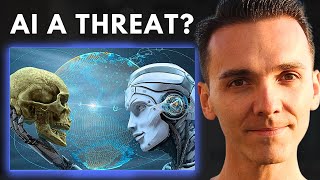
A recorded interview (YouTube) between host Stephen Scoggins and guest Joe Stolte discussing the impact of AI on marketing and business. Stolte recounts his path into AI, explains Daily AI (an automated, personalized email-newsletter product), argues for first‑party data and personalization, outlines multimodal AI trends (text→voice→video), warns about adoption risks and job disruption, and announces a 12‑week course (MasterGame AI) to teach applied AI. The conversation emphasizes outcomes over outputs, consistency-to-trust, and practical adoption steps for organizations.
Chapters
It's pretty clear to me that AI is going to be one of the most transformative technologies that our species has ever encountered. That's a double edged sword, right? AI is a tool. Very, very, very intelligent tool. Any tool can be used for good or can be used for bad. Fire can warm your house, cook your meals, keep you fed, or it can burn you to death. Our mantra in our company with how easy it is to use AI today is outcomes over outputs. We got to get our customers outcomes, not just outputs from AI. Outputs are great and they're, they're fascinating and they're fun. It's almost like a really cool novel toy. And if you use it right, can be very powerful. But man, if it didn't move the needle in your business, if it didn't get the click, the open, the demo, the lead, the call, the sale, then what's the point?
Guys, help me. Welcome to one and only Joel Stolti. How you doing, man?
I'm doing amazing, man. It's been, it's been a good start to the day.
Oh, man. Dude, I'm super excited to talk to you. You guys are leading the way with a brand new AI technology. And I know AI is like a buzzword and some people are scared of it, some people love it, some people hate it, some people don't know what they what to think about it. You know, before we kind of break down kind of what you guys are doing, I'd love to know a little bit about kind of how you got into the AI world and why, why you think it's, you know, going to change things.
Yeah, absolutely, man. So it's interesting, like, I didn't realize this at first, but we've all been in the AI world for the last couple decades. Everything from the way that Netflix recommends movies to us, or that Amazon recommends products, or even, you know, if you have a iPhone or an Android device, you take a photo, you're not actually taking a photo, you're taking like 10 photos. And then AI stitches it together. And I'm like a nature guy. I love like sunrises and sunsets and nature and God's creation and all that stuff. And I like full moons. And one night I was out with a friend and he had a Android device, I had a iPhone and we both took pictures of the moon. My picture came out like crap and his picture came out amazing because. Because Google came out with an AI algorithm to make the moon look better when you take a picture of it. So in some ways, like I've always been in and I think many of us have been in a certain form of AI which we call machine learning. But you know where I really went down the rabbit hole is in 2021 I was on my fifth company and we were getting ready to sell it and we'd done tremendously well during the pandemic and had another kid on the way. I was like, hey, from a season of life perspective, I probably got one more zero to one tech company in me, so I want to do it again. So at that, the backstory there is that company was actually a compliance B2B software, selling compliance software to the legal cannabis market. And even though we were software and we never touched the plant, we couldn't buy ads and we couldn't really post on social media. So we had to find a way to reach our customers. And so what we did is use direct mail, email, and a really great, like customer centered sales team. And I got to really rediscover the power of email. So my gateway down the AI rabbit hole, ironically was through one of the oldest technologies that we've had on the Internet, which was email. And so when I sold that company, I was telling my coach, who's amazing, this guy named Brian Franklin, he's coached like Reid Hoffman and a bunch of other Silicon Valley founders. And he said, I said, hey man, I'm looking for my next thing. Maybe something with AI and marketing, if I could be so bold to put that into the universe. And he's like, hey man, be careful what you wish for. And he introduced me to my business partners now Dr. Peter Diamandez and Evan Pa, who had this like prototype for an, an email news feed. I'll just call it a thing. It wasn't quite a product. Have customers, it wasn't in the market. I met them, I fell in love with the product. And then that was kind of the beginning of my journey, you know, way back in 2021, of getting to know all things AI, especially as it intersects with like marketing and influence and being able to influence your marketplace.
Yeah, dude, I love that. You know, it's interesting, I was just thinking, people are always talking, they put a lot of, I'll give you, I'll give you an example. I've got a client of ours. So we, we began about six months ago helping thought leaders basically monetize their business. We didn't realize at the time that thought leaders, most thought leaders never really truly monetize and they, you know, they burn through cash for four or five years and then basically throw in the towel. Assume it's not for them. And meanwhile a great message goes to the wayside, unfortunately. So we stumbled into this and then we realized that a lot of folks when we were working with them, they were like, really into social media, like, how do I get more organic followers? How do I get the likes and the comments and my engagement up and all this kind of stuff. And I was like, you do realize that your email database is far more worth your time and energy to develop than it is for your social media stuff. They're like, what are you talking about? It's brand, it's recognition. I'm like, yeah. And if you say one thing that the algorithm or the organizations like, disagree with, you lose the platform overnight or you get chatter. Like there's a lot of different ways in which you can lose out on what you think is an asset. However, your email list, on the other hand, is always an asset. Now obviously you're scrubbing it and you want. The other thing I was trying to get them convinced to is you actually want unsubscribes. You don't want people on your email list because you're paying for each of those, typically paying with most of the providers, each of those, those folks for the different things. And as we're walking through this, I stumbled my way into kind of like, okay, what are the ideal metrics? You know, what is the open rate? What's the click through rate, what's the conversion rate? Like, what are you trying to get to? And so when I, when I began to study and kind of what you guys are doing, I was blown away just by the open rate percentage, which obviously trick trickles down into conversions. Right? So you guys literally doubled based on, based, based, you know, I think you guys are full between 40 and 60% depending on kind of where you're at. 40% is double what I'm currently getting an email open rate. Yeah, I want to know how you're doing it because I want to work with you myself. Just put it out there.
Great. Yeah. Look, I think big picture, like us aside, I think it's really like my friend and mentor, Jay Abraham, you know, famous marketer, he, he said something that has always stuck with me. He's like, hey man, you got to get everything you can from everything you've got. So if your gift is like social media and you love putting in the hours and hours and hours of time to make content and test the algorithm and figure out what will resonate and what won't, then amazing, like that's your lane. Do it, the, the reality of our world from a technology meets business meets marketing perspective is you have two kinds of data. You have third party data, you have first party data.
Yeah.
Third party data is going away. Right. Google is getting rid of cookies this year. You know, iOS14 completely changed the way people do third party advertising on Facebook. The targeting is completely different now. Is it effective still? Yeah. Can you still reach people through social media? Yes. The trend though, for the future, for the next like 12 to 36 months is going to be first party data. It's going to be people that have said, hey, I want to have a relationship with you, I want to communicate with you. Let's do that. And so that looks like collecting emails and collecting SMS, getting people into your WhatsApp groups, your, you know, your, your whatever, your, your slack, your discord, whatever it is. It's that direct marketing, communication and relationship. That's what's going to become more and more popular, you know, as these algorithms push people towards first party. Um, and to your point, yeah, like you, the sad part about social media or building kind of a party, building your party at someone else's house, is they can kick you out anytime they want.
Right?
Yeah. They change the rules. It's their place, Right. It's their dome. They built the dome. They're the king or queen of that dome and you have to play by their rules. And so what I love about email and SMS is I, it's, I have a little bit more freedom and control over my own destiny. If I want to communicate with my marketplace, I can do that. If the platform doesn't like me, I get to take my list with me and go to another platform.
Yeah, exactly. So, yeah, and that's why we love email, you know, And I'll tell you a little bit about us, but I'll tell you why we really love email. Email still has more daily active users than any single social media platform. 4.65 billion people are doing stuff with email every single day. Why? Because, you know, it's the oldest tech, it's one of the oldest communication technologies on the Internet.
Yeah.
And I like to give these keynotes all over the country. And I'll say, hey, you know, I'm talking to business owners, entrepreneurs, executives, I'll say, raise your hand. If you use email in your business, every hand goes up and I'll say, keep your hand in the air. If you use TikTok, like 95% of hands go down. And I'm definitely picking on TikTok, but it's just the fact of our reality is that everybody still uses email in their business and so do everything that you can to get any edge that you can. But to your point about thought leaders speaking specifically to the people that you work with, the game is leverage. Where can we get leverage? Where can we use tools and technology and automation and more, more importantly, where can we change our business model so that we can get leverage for the time expended for the dollars returned? You know, and I've, we work with a lot of thought leaders on the plan, daily AI, you know, everybody from Chris Foss to Dan Sullivan, Joe Polish. I mean, we even work. This is not an endorsement for or an indictment of, but we work with Robert Kennedy Jr. The presidential candidate. He's, he's a customer. We work with, you know, lots of different thought leaders. Tony Robbins, Peter D. My business partner. And so we get to see into their businesses. And I'll tell you what, a lot of the best ones have figured out that if they're going to go do something that's crazy time intensive from a leverage perspective, that's going to cost a lot of money in person, keynote, anything like that. Because like the old model was like, hey, I'm going to become a thought leader. And the way you make your money, it's kind of like a band going on tour. You know, the old Tony Robbins model where he's basically on, on tour all day, every day until he loses his voice pretty much completely, right? And so, but the new model is, you know, like coaching or creating group trainings and these kinds of things. Those are much higher leverage. The same principle applies in your marketing, right? Like you could go out and do a bunch of things in your marketing and I encourage that. But what we love is like, what just works, what can you invest in, where it's either someone else doing it for you or your team member doing it for you and it actually moves the needle in your business. Our mantra in our company with how easy it is to use AI today is outcomes over outputs. We got to get our customers outcomes, not just outputs from AI. Outputs are great and they're fascinating and they're fun. It's almost like a really cool novel toy. And if you use it right, can be very powerful. But man, if it didn't move the needle in your business, if it didn't get the click, the open, the demo, the lead, the call, the sale, then what's the point, right? But what we do and the secret sauce of daily AI is at a basic level, we help entrepreneurs and business Owners build AI automated email newsletters. And what's special about them is every time one of your subscribers goes in and opens the email, it's actually learning what they're doing. And it's adapting the subject line, the time that the email is sent, and the content in the newsletter to make it better and better and better. The reason why that's important is because I like to say there's three forms of truth, right? There's what the company thinks the market wants, there's what the market says that they want, and then there's what they actually click on. So we pay attention to all three. But the third one is the one that's the most important if you want to get them to come back for more. In order to do that on your own, you'd have to pay like a data scientist or a data person to go literally watch what they're doing and use sophisticated machine learning or data science to sort of figure this out. So we built an awesome algorithm that just goes and scrapes the world's information, grabs the best thought leaders, the best content. Content, the stuff that resonates with your audience the most. And then we've put that in the form of a newsfeed and a newsletter and we send that to your audience and we make it better the more they click and engage it. And yeah, the best part about it is, like, it's literally a done for you experience. Like, you don't even have to look at the software if you don't want to. You just get an email that's like, hey, here's this week's edition. Do you have any changes you want to add? Any more new ads or anything? Okay, our new content. And then it just gets done, and then it gets sent and you get clicks and opens. But that's how we get great open rates. We get great open rates because of two reasons. One, we're very good at getting email into the inbox. Yeah, that's like there's a whole. With all these new algorithm change, just getting it delivered in the primary inbox is like science and an art. And the second thing is once they, once it's in there and they open it, we make sure that we give your people more of what they want. Right. Like, what's in it for them is more important than what's in it for you. Right?
For sure. Yeah. No, that's. I think that's awesome. In fact, I was. You know, one of the things that's really difficult to do, I think, with any business doesn't have to be personal development or thought leadership. It could be anywhere from technology companies to construction companies. Is developing trust.
Yeah.
And Guy Kawasaki says all the time that Steve Jobs told him specifically that the customer doesn't always know really what they want, because if you ask the customer what they want, they're going to say, I want it faster, quicker, cheaper, essentially. And then a true innovator goes and figures out what the behavior patterns are and then solves another grander or larger problem within that behavior pattern. And that's one of the reasons I like what you guys are doing, because I'm, and I'm very intrigued by it. As someone who's been in the thought leadership world for almost 10 years now, trying to develop, you know, develop my own brand and all kinds of things that come with it. Right. Developing trust is always the most difficult part, I think, in coming out of the journey, because you're even. I can, I can pop on social media, can pop on Instagram or, you know, Facebook or wherever and say, hey, okay guys, tell me, tell me what your greatest problem is, right? Thinking I'm going to try to come up with a great solution for them in the form of a free gift or some, some, some kind of, some kind of resource that they can digest and make their lives better. Most people can't even articulate it. What I think sets you guys apart is that basically with the AI and the algorithms that they're built into everything, when you go out and scrub all the content, you're finding out from the masses kind of what the pain points are, what the pivot points are, you're going out and basically coming up with various solutions that then can be translated through that brand's voice or that company's voice in a way that helps, you know, basically move the needle, which I think in turn helps someone like myself or other business leaders develop content or develop products and resources and stuff like that that are actually valuable, you know. And I think, I think, I think in the grand scheme of things, one of the things that we believe here at our organization is serving at scale. Like, we believe we legitimately want to serve at scale. We don't believe in selling. We believe in servanthood. And we believe if you serve well, income always follows. Right? Because you're to your point. It's outcome generated. How can I get that person to result? How can I get them the, that pain point to go away? How can I elevate kind of their life, their business or career? And that's one of the things I love about the process to help me understand a little bit about the natural evolution of maybe AI in general and then AI also as it wraps up into the newsletter functionality. Because I'm again, I'm truly very interested in the functionality. I was very excited to hear about it.
Absolutely. I'll just comment quickly on something you just said. Right. If Henry Ford would have asked his customers what they wanted, they would have asked for a faster horse. They never would have got the car right. And I think that's because you can't read the label from inside the bottle. You don't know what you don't know. You don't know what's possible. If you don't spend your time thinking about the future and recruiting people to build the future, then you know, you just don't know what you don't know. You also said something about trust that we find is consistently at the core of what we do as well. We like to say that consistency creates trust and trust creates transactions. It's that simple. We know that if we, if our customers could wave a magic wand that they wouldn't need a newsletter, they certainly wouldn't need an AI newsletter. They just would go right to trust. So what, what we want to try to do is be the most frictionless vehicle, better, faster, cheaper than a human team to create a mechanism for them to, to, to create trust.
Yeah.
Just from showing up over and over and over, monthly, weekly, daily, if you want to, with your newsfeed to your marketplace, it's like giving them a big hug and saying, hey, I want to give you cutting edge information in an area that I know is important to you and important to my relationship with you. And I'm going to do that for you all the time. You don't have to do anything for me. I'm just going to do that for you. That's the kind of consistency that creates trust. Because at the end of the day, like no matter how good your product or service is, you know, we live in a very busy world. Back in the late 80s, Al Reece and Jack Trout wrote a book called Positioning which I recommend everybody read. It's a timeless book. And they said that at that time that they thought that we were living in the most over communicated society in the planet, like in the history of the world. Yeah, that was 1989, man. It's 2024. Like where are we now?
You got two seconds to get the attention.
Yeah, no, maybe even less. And so you miss 100 of the shots you don't take. So just showing up every day and Say, I'm here to help. I'm here to help. I'm here to help. I'm here to help. I'm here to help. I'm here to help. That's not going to hurt your trust, that's going to increase your trust. That's what I mean by the consistency. But you had asked about where is AI going and how does that sort of evolve into this newsletter space? I think there's two things that there's two main benefits that the overarching technology that we call AI is going to bring to us as business owners, as entrepreneurs. The first one is personalization and the second one is automation. So we're going into a world where the cost of content is going to zero. It's very easy to generate content with AI and we're also very quickly going into a world where a form of AI called machine learning. The cost to be able to operate a machine learning model has come down. The sophistication required to run a machine learning model is coming down. And what machine learning allows you to do is look at data and find patterns. So what does that mean for your business? That means that marketing is going to go from one to many to the perfect segment of one to one. I'm going to give someone the right content over the right channel with the right message and the right offer right when they need it, so that I can actually engage them where they want to be engaged. I think that a stat that I like to share often that most people don't know is that 40% of the content that you put into the marketplace actually pushes a prospect away from the sale because it's the wrong channel, the wrong time, the wrong message or the wrong offer. Well, three of those four. Everything but the offer is mostly solvable with math. We just. Machine learning is a form of computational math to help you figure these things out. So that's the future. Everything is going to get personalized and everything's going to get sub segmented down to 1. From a marketing perspective, that's one set of trends. The next trend I think everybody should be aware of is we're going to be going up the curve of the multimodal experience curve. What does that mean today? You know, for the last about year and change since OpenAI came out with ChatGPT, which was the, you know, the fastest, most adopted product in the history of our, well, at least our recorded history, they got a hundred million users in record time, right? But it was text. You type text in, you get text out. That's the bottom of the multimodal curve. The next one is voice. Right. So you can use tools like 11 Labs, you can clone your voice that darn near perfect per like five nines of perfection.
Yeah.
And you can go my voice to your voice, your voice to my voice or text to my voice. Right. And then the next evolution that's going to be video. So we're going to go text, audio, video. So if you've seen tools like Sora from OpenAI, they're generating like 4K realistic movies just from a text prompt, you know, 10 or 15 seconds of it, that that product's not available to the marketplace. But there's a handful of these tools that are extraordinary where you can go in and do like just create videos from thin air from text. And so what's going to happen, I think with this is for a practical marketing perspective is will like right now you can duct tape these things together, but there'll be products and services and hopefully we're one of them because this is on our roadmap where you can send some, let's say someone just signs up for your coaching practice, your course, right. You can send them a video message that's like, you know, hey Dave, thank you so much for joining the course. You know, I saw that this was your biggest challenge. Challenges with xyz. Well, look, in our course we have a module that covers that. Exactly. I just wanted to tell you you're in the right place at the right time and I'm so thankful that you're here. I'm excited to learn from you. I'm excited for you to learn from us and ultimately transform yourself and your business. Welcome to the course. Here's what I'd love you to do to get started. And that's like a text message, really short video. But that's all AI. It's not even you. Yeah, right. You will collaborate in creating that message, you or your team. But it's, you know, personalized, real time, automagically, that kind of stuff. Right. Sms, voice notes, videos, all that kind of stuff. So that, that's where I think this stuff is going is we're going to have highly personalized C3PO style videos reaching out to our customers for us. And as usual, dude, I love that.
You know, it's interesting you brought up a couple of friends. Tony and Tony and Dean and Brendan all have are all working on AI tools that allow you to have direct access to them without having access to them. Like being able to have the ability to ask them on a Question on the fly, on the demand. And I don't want to steal their thunder because I know they're in the process of rolling it out. But you know, it's interesting to me that the technology exists to be able to scrub data in large quantities, terabytes and terabytes and terabytes of data in seconds, and pull together and stitch together the right kind of materials and content, you know, to kind of like really kind of shift the needle or move the needle. What do you think the maybe the greatest hurdles that stand in front of not just your organization but in AI in general, in adoption? Because obviously, you know, I was literally hearing a video yesterday about, you know, how the CIA has got a program they're creating basically Skynet from the Terminator 2 and all this kind of stuff, you know. So you've got like both voices like no AI is awesome. It's super helpful, you know. And then you know, we as the, we as the humans, we can keep it under control and we can, you know, we can take care of things. And the other side, no AI is completely out of control. It's going to crush the world, you know. So I'm curious to know your thoughts on kind of where, where do you think the roadblocks are.
Yeah, well, I think first of all, AI is a tool. Very, very, very intelligent tool. And any tool has sharp side. That's double edged sword. Right. Any tool can be used for good or can be used for bad. Fire can warm your house, cook your meals, keep you fed, or it can burn you to death. Right. The wheel can get you from place to place or it can run you over.
Yeah.
Let's use a more extreme example. The atomic bomb can literally destroy our species and our planet. It's like mass suicide on a global scale. Or it can keep the amount of wars that we've had, the serious wars that we've had to an all time low for over a hundred years.
Yeah.
Depending on your perspective. And that's the main thing is it's your perspective. I was talking to a friend and you know, of course one of our customers, Dan Sullivan, who runs Strategic Coach and we were in a mastermind group together that Joe Polish runs called Genius Network. And he, he said something really fascinating is last year, 2023, beginning of the year, everybody's talking about AI ChatGPT had just come out.
Yeah.
And everybody kind of had these really strong opinions and high conviction rate of exactly what the future is going to look like. And here's what it is. It's good or it's bad. And Dan said something that I'll never forget. He basically said that as a species, as humans, like, we're really, really, really bad at predicting the future. A very small percentage of us are okay at it, and we make a fortune off of it. But for the rest of us, the 99.9% of us are just bad at predicting the future. But what we're great at is we're meaning making beings. We're great at creating meaning and attaching that meaning. So anytime someone has a really high conviction about the future and they're basically telling you it's going to be exactly like this, that's just a meaning they've attached to what's happening today. And they're basically selling you or marketing to you on the meaning they've attached to something. I think the most important thing inside of this is, like, man, think for yourself. Have the courage to think for yourself. Do the research, draw your own conclusions, and don't listen to what the talking heads say. Even what I say about what's coming in the future, man, it's just the best guess. I live and breathe this stuff, but it is. I'm wise enough to know that, man, it's a best guess. Like, anything could happen tomorrow. And I've been wrong more times than I've been right. It's part of my job as CEO of an AI company to guess where the puck is going so that we can get there faster. And I don't know. The short answer is, I don't know. And if I had to make my best guess, I would say that AI it's pretty clear to me that AI is going to be one of the most transformative technologies that our species has ever encountered.
Yeah.
Not dissimilar to electricity. If you think about back in the day, how much electricity changed everything. It created tremendous new business models, tremendous opportunities, completely changed our species. And the way that we do everything from how we communicate, how we travel, how we interact with each other, all of that. The wonderful, crazy amount of technology that we've been able to build is mostly born out of electricity. AI will be similar, right? And there'll be an early innings season where it's going to create tremendous amounts of value. It's certainly going to put people's jobs out of the way, but the same way that electricity put people's jobs out of the way. Like, you know, we think about it like back in the day, there was cameras without electricity. Then we got the digital camera, then we got the phone. Do you Think there's more photographers or less photographers now, though. There's probably more because everybody's got a phone and everybody's kind of a photographer, right?
Yeah.
So I think it'll create value and it will destroy value. And I think whether you are on the side of destroyed or created value is going to be directly proportionate to your willingness to adopt new things, to embrace new tools. So. And fundamentally, I'm an optimist. I'm more of like in the camp of, let's say, Kevin Kelly, the editor in chief of Wired magazine. He's a futurist. He's just very optimistic about it because he's a very optimistic person. I'm an entrepreneur, man. I run around the world seeing opportunity all day.
So for me, AI just every 15 seconds. So yeah, it's interesting. You know, I was just thinking that a couple different things. So first of all.
AI is a wave that's coming. So there's nothing at this point that's going to stop it from being integrated or integrated into the marketplace and a lot of aspects of life. You mentioned people losing jobs.
I would say for those that don't get prepared in the AI space, there's a potential of losing a job. What I mean by that is I actually heard you say on, on another podcast.
That essentially companies are going to have, are going to have to have AI specialists. So why not take whatever job you're working at now, study up and become the AI specialist that gets hired on. And I assume that AI specialist will not, will not be a low income, low income job. You know, somebody has to, to your point, has to know where the puck's going. Somebody's got to be in the game to kind of say, okay, well, this is new technology. This is, this is where this technology stands. This is where this technology stands after testing. This is where this technology stands after further testing. This is where I think we should, we should have an early adoption program. You know, I was hoping you could speak on that for a little bit because I find that that is a major shift in the marketplace and that's a mental shift for people in the marketplace. So you can either surf the wave or you can drown under the water.
From my perspective, yeah, that's it, man. It's all about adaptability. I think our species didn't get here without adapting a lot to a lot of things. So. Yeah, at the end of the day though, you're right. Bit My business partner, Dr. Peter Diamandez, likes to say that in 10 years there'll be two kinds of companies, those that are using AI and those that are going out of business. I think that number is probably more like five years if you ask me.
Probably three.
He might have said that a few years back too. So. But it's true. And it's not just having an AI evangelist in your company to tell you where the puck is going. That's very important. There needs to be an AI evangelist in your company to tell you where the puck is today. Where's the low hanging fruit? Where from the executive team to management team to individual contributors, where can we all be saving one to two days a week of work so that we can reinvest that time into high leverage activities? High leverage meaning things that are generating revenue, serving the customer, advancing the product or service, getting a little bit better, doing market research and then spending more time in our zone of genius. And so right now, today we've looked at this a ton and I'll tell you why. Depending on what study you look at, you know, MIT did a study last year that showed that up to 40% of knowledge workers work can be enhanced or eliminated based on tools that are available today, right now. Right. And depending on the study you look at, you know, McKinsey said that up to 60% of certain roles and activities from a knowledge work perspective can be augmented, accelerated, automated or replaced by AI.
Yeah.
And so we know that that's the trend and that's where it's going, but you don't really need to wait for anything to come. It's already, it's already changing so fast and it's already here. So for a long time we've helped hundreds of organizations now adopt AI into their marketing through our AI email newsletters. And pretty much every day we were getting the request, hey, where can I go to learn about other AI tools and how else can I use AI in my business? We love the way you guys think about this. And I honestly did not have a trusted resource to send them to to actually take them and their staff to go from, hey, I'm an absolute beginner to I want to not just understand these tools, but I want to become an evangelist inside of my organization to help other people with these tools with the express goal again, outcomes over outputs of saving one to two days of time per week. And so literally last week we launched a course called MasterGame AI. And that's the exact, exact purpose of that course. It's just, it's a 12 weeks of live training where we take you through the most basics of the basics. We help you baseline where you're at, how are you spending your time in your role. Which of those activities are most likely to be automatable with AI, Then we take you through a journey where it's literally everything chat Bard Gemini, how to clone your voice, how to clone your video, how to make chatbots to accelerate customer service and sales. Bunch of stuff. So we'll go from the beginning to the more advanced. Not because there are other. I just couldn't find somebody out in the world that was teaching this stuff that I trusted, that I knew. So we just, you know what they say, you know, as entrepreneur, if you can't find it, build it. So, yeah, so we just launched that in the marketplace, and it's not. That's not our core business model. It's literally just because we want to be of service to the. To our market because they're. They're starving for the. Like, things are changing so fast that they. They don't have anywhere to go to keep up or even, like, catch up. And so we wanted this to be like the home to learning applied AI in your business. Not theoretical AI, not Ivory tower AI, not watching, you know, Matt Wolf or one of these guys on YouTube. And those guys are all amazing. They make amazing content, God bless them. We wanted to create a tool or set a training experience where you can actually learn how to apply it in your business today, in all aspects of your business, depending on where you're at. So, yeah, we just launched that. That's how serious we think this is.
Where we find that again.
You can go to www.mastergame AI mastergame AI. And yeah, and check it out. It's. It's. It's a year's worth of training.
For, you know, a very, very inexpensive cost compared to the time you'll save going through it.
So. Well, I'll be honest with you. So hist.
If you look at a bell curve on early adoption versus lagger, right? So, you know, got people kind of all over the space, but I. Historically, with technology, I'm an early adopter. I'm somewhere in the middle of the bell curve with AI because I didn't know where to start. I just legitimately didn't know where to start. You know, you. It started when. When the. When this became more and more public. It was, you know, okay, well, just type something to chat. Chat GBT for fun, see what pops out. And then next thing you know, I'm hearing we've got this AI tool that will build website copy that. You know, has a conversion rate Of X. You know, we've got this over here, we've got this, you know, digital video version of yourself, right. That doesn't look like it's just your face with the deal with just the, just the lips talking, you know, they overlay back in the day, you know, so there's, there's for me, I'm just speaking for me. And I would assume there's more people in my camp than not. I don't know where to start. So I love the fact you got the master the game at AI because I, I'm, I'm gonna, I need to know more. I know that's where, I know that's where the puck is going. And I know if we, to your point, if we don't start adopting more AI tools consistently in our business, you know, will we be substantially, far further behind than a lot of folks in this industry, specifically thought leadership, personal development, business development, than a lot of folks that are adopting AI, you know. So I first of all thank you for creating that, honestly. Because for someone like myself, I didn't have any clue where to go. No clue. I am curious.
And the math is simple. I mean like if you pay, if you just pay a dollar per hour figure to your time, let's say you, you, you value your time at a hundred thousand dollars a year and it's friendly. Hopefully you value your time much more than that. That's $50 an hour. If you can save one day a week, eight hours a day, that's 20 grand a year, you know, over a 50 week work year. Yeah, you know, that's, that's, that's $20,000. And it's not just in the hard savings and time. It's imagine like the, the priceless opportunity to put yourself one day a week squarely in your zone of genius. How much joy does that bring you? How much more, how much more of service can you be to the world? And how much more can you enjoy your life and your work? Right. Unfortunately for most of us, our work is our life. And I don't want to be the guy that tries to change your mind on that. But maybe we can give you some tools to be able to put you more and make that more enjoyable so the time you have on this planet can be more in service and more enjoyable. So that's kind of our mission with this course I'm teaching myself and our CTO, Morgan McDermott, who's been building AI tools for very long time for Dr. Peter Diamandez, myself and a bunch of other people. Will be teaching the course for the first couple cohorts. Eventually we're going to clone our video and our voice, just like we teach in the course. But for now, it's us, it's live. You jump in, fill out a survey. If you have questions, we have live Q&As, forums. I mean, it's going to be a very hands on experience. Yeah. Because we want to figure out that right. Strike zone of what do people want and how do we serve them the best? So, yeah, we're excited about it. Again, it's not our core business, but it, it really lights us up to be helpful. So.
Yeah, no, dude, I love it. You know, it's interesting. You had a lot of really successful businesses that you exited. Right.
I'm curious to know what experience you have there that you brought in the marketplace. I know, I know that I've heard you talk about briefly before just how you go to market. You know, there's a traditional way to go to market and then obviously in the tech tech space, there's a different way of going to market. I'm curious to know what, what types of tools and insights and resources you brought from, you know, kind of your previous experience into this new business model.
Yeah, absolutely. And I'll just say, man, I've, I've failed more times than I've succeeded and I've definitely learned way more from my failures. As cliche as that sounds like, I'm proud of it because I've done the work to stop and go, okay, that one didn't work. What do we need to do to make it better? Yeah, and I'll say that and I'll talk a little bit about the differences of how we've learned to grow companies. But the underlying principle is that I got detached from my business and the emotions to it. And I started looking at it more like a detached scientist running experiments. More like that. Less like, this is my baby and if it fails, the world is over. Yeah, because at the end of the day, things are changing so fast. It's about speed and iteration and figuring out what's working and tinkering. Because what worked even like three months ago may not be working right now in a variety of different contexts. So you constantly need to test and look at the data and what's working, what's not. Okay, double down on that. Like, okay, that one's not working anymore. What can we change? So it's this constant cycle of, you know, create, deploy, assess, repeat, you know, and so that to me is the, is the Underlying mechanism. But to answer your question, the things that I identified some differences. What I love to do is look across industries and say, oh, this is working in that industry. I wonder if it will work over here. And so, you know, I started, I started looking at the differences. You know, I always, I love direct response marketing. You know, since like the early 2000s, I've been studying copywriters and copy, you know, you can see in the background here I've got the boron letters. And you know, next to that is a book called, you know, it's, it's a, basically it's a bill burn box. I think it's called the History of Advertising that changed the history of advertising. I just love studying marketing because like I love being a student to what works, you know, and like so many great minds have come before me. But also I, you know, kind of started my entrepreneurial career in Silicon Valley. And so I studied like the, like they call it growth hacking or go to market. We call it sales and marketing. They call it growth hacking. Go to market. Yeah. And what was, what I found was in Silicon Valley is they, they were basically for years and in some respects are still the same. Like they, they care deeply about the product. Right. Like it's called product led growth. So the product is so good, it grows itself. You remember when you came on Facebook, it was like, you know, add 12 friends in seven days. And that's how they knew they got you. If you use Slack, they know if you send 2,000 messages, that's kind of the aha moment. And you won't leave and you'll invite all your team members. And so the product kind of grows itself. Yeah, you don't have to go out and buy ads or do sales and marketing. Whereas when I looked into my direct response marketing friends, they thought about it very differently. They were very much about marketing and finding ways to grab your attention and convert that into money. And so, you know, on one side it was, but on the flip side, a lot of the direct response guys, they weren't giving out products that were great. The product or service was okay, but it was just good enough to not violate the promise they made in the marketing where the inverse was true in Silicon Valley. So I said, well, what happens if we combine both? What if we have phenomenal sales and marketing and great products that promote themselves because they're so good and our customers want to refer them to other people. But when you combine those two things, man, then you've got. It goes back to that first principle that Jay Abraham, you get everything you can from everything you've got, and all those things are really high leverage. So if I learn how to effectively figure out the message, the message market, match the words that sell, that grab people's attention, and get them to take money out of their bank account and put it into yours, and then I follow up with the best possible, most innovative, thoughtful, iterative product that I can put into the marketplace, that feels like a much better place from a scientific perspective, to architect my own success. And so, you know, even doing that, though, and knowing that we haven't always succeeded, but that's been my big takeaway. You know, I'm on my sixth company. We've had three exits, and some were fantastic, and some were a little bit smaller. And like I said, I failed more times than I have succeeded. But the point is, is I was able to keep going. Like, I never stopped. I kept that process of iterating, deploying, assessing, and repeating and just trying to figure out, hey, man, what's working? Like, I meet guys all the time. You know, I'm 41 years old at the time of this recording, and I meet guys there in their early 20s, like. Like my new friend Michael Humphries, who just. He's just the king of fricking viral, organic, social. You know, he can take anybody, and he's hacked everything, like the whole. All the codes. He knows exactly how to take your message and stick it into the slipstream of virality, across TikTok and Instagram Reels and YouTube shorts, you know, he recently, for example. But my point is, I'll work with guys like that because I'm like, hey, what can I learn from you? I don't. I've not gone down that rabbit hole. And he has. So I've learned a lot from him on that. He took another friend of ours named Peter Thomas, who's a wonderful, wonderful man. Pretty sure he's in his late 70s or 80s at this point, and just started. Just took over Peter's Instagram. I think it's called the One minute Mentor, if you can find him on Instagram. And, man, every time I go back and look at Peter's account, it's like. It's like. I think he had, like 2,000 followers. Now he's at, like, 80 or 100. He's got multiple reels that have multiple millions of views. And that's just a world that. I mean, I just don't understand that world. But Michael allows me to make it understandable, and I am humble enough to go, man, as the detached scientist that just wants to reach people and be of service and get everything I can from everything I've got, I'm gonna go, I'm gonna go humble myself and just, just sit at the, at the altar of Michael and be like, bro, tell me what, tell me what to do, man. Like, what, what, what's the, what's the magic? And he's been so giving and helpful to me, but now his business is crushing. He's got a huge wait list and he's just blowing up. And I'm so proud of him. But like, that's the point is like, I'm not afraid to go and learn new things and dive in and find the expert. Regardless of where they're at in their journey, if they know more than me and they're 10 yards up the football field, man, like, I want to figure out how they got there and model them and rewind it and see what applies to my situation.
Yeah, no, I think it's, I think one of the, one of the outside, the AI tools and stuff like that. And I'm, and I'm, I'm seriously, when I say this, I'm very interested in what you're doing for our business.
One of the things that I've picked up from this conversation specifically is the principle of detachment. I've built an exited company last year, over the course of 25 years, founded it from a trash pile, drove the first nail and this kind of thing, and built it to a good sized company and exited. And I can tell you, I was definitely the entrepreneur at least the first decade of that business, where it was very, very much like, don't touch it, it's mine. Don't break it. Don't, don't mess this thing up. Right? And it took me some time to actually learn the principle of detachment. The principle of detachment does. It allows you to tap the shoulders of the experts in the room. It also allows you to be a voice at the table surrounding other experts. Right. So if, if you're like, you're, you're the expert in, in this new field, I'm sure he can tap you on the shoulder. I'd say I got all these, I'm doing all this great content. I'm changing lives this way. How do I serve them using what you do, right? The spirit of collaboration and compounding, or some would say leverage. Dude, I just think it's amazing.
Yeah, man. I mean, and I think it's important because most things you do don't work, right? If every marketing piece you Put out, convert at 51% or greater. Like, I think the scientific word for that is a freaking miracle. Yeah. You know, but like, most, like, if you get like a 15 or 20 conversion, like, that's amazing. That's. But that still means 80 or 85% of the people couldn't be bothered.
Right?
So, like, so, yeah, most things just don't work. So, you know, the. But, but, you know, look, there's so many routes to success in the game of business. You know, like, you look at a guy like Grant Cardone or Andy Elliott, if you've heard of these guys, and man, like, they're just like the opposite of what I'm saying. They're so attached and so passionate, and they're just like, all in. Come hell or high water, we're gonna make it work. And, and I love and appreciate that, and I love that there's so many ways to do this dance. But for me, or, and for me, I just, I, I love this. I, I, I'm curious, man. Like, I, I'm curious and I know what it's like. You know, I used to be an artist. I know what it's like to be attached to your work and have it be ripped from you or have it not go the way you want, and it's devastating. And I've learned a lot from that. I've also just learned that, like, there's a time to fall in love, you know, at this point with daily that I, like, I'm fully in love. You know, we were fortunate to pass. We went from roughly 0 to 1.1 million in annual recurring revenue in about a year. And we've got a few things working, like, okay, this is, this is a thing now. But up until that point, at any given time, if it wasn't going to work, I was like, okay, I'm ready for this thing to, to be done if, if it doesn't need to exist in the world. And I just found that, that for me personally, like, that's been a very, that detachment has been a useful way to keep my brain, my thinking sober. But, man, everything in its excess becomes its opposite. So you have to balance it out with the passion and the, and the attachment at the appropriate time. So I just wanted to put that nuance out there. It's. Nothing is ever as simple as, like, one right way thinking. There's always lots of perspectives and ways to attack a problem.
Well, dude, I can't thank you enough for coming on the show, man. I really appreciated it. There was so much we could have gotten out of today's conversation and I'd love to have you back on and talk about some other things in the future because I, I do love your work. I also love your approach to business.
Thanks, man. Happy to come back.
And like, seriously. No, I mean, there's I, I totally resonate with, with your direction of, you know, kind of how what you think a business should be built on. That's how I build my businesses. And I'm sure that's why our teams kind of referred us together to kind of get to know each other some. And that's. This is really exciting, honestly.
Yeah.
And I wish you nothing but success. Again. We talk offline about learning more about stuff. In the meantime, where can the audience go to find more about. We've got masterthegame.com AI and we've got obviously, where do we find the solution for the newsletter piece?
Yeah, if you want to, if you're interested in exploring an AI newsletter for your business, you can go to Daily AI. If you're interested in having you or your team learn how to use AI to save one to two days of work a week in your business, you can go to MasterGame AI. And either one of those, I'll stop there. One of the rules of marketing is a confused mind doesn't buy. So I don't want to see too many places to go. If you Google me, Joe Stulte, I'm not hard to find. But yeah, MasterGame AI. If you want to learn AI tools and daily AI, if you want to learn more about our email product, that's awesome.
Of course. Put all the, all the notes in the, all the links in the show notes. Joe, thank you again, man. Brother, seriously, thank you so much for on the show, man.
Yeah, it's my pleasure to be here. Thanks so much.
All right, take care.
I hope you liked that video.
And if you did, make sure you check out this next video right here.
To me, as long as you're diversified with your mutual funds and index funds, you're not in single stocks or any kind of risky, super volatile investments, over time that's gonna go up and if you keep watching it day after day, you're going to freak out. And so it's sort of the set it and forget it, only pull from it when you need it mentality.
More from Stephen



He Had Everything…Then A Heart Attack Changed It All | Dan Sachkowsky #Shorts




Paralyzed. Suicidal. Then He Surrendered, And EVERYTHING Shifted | Marcus Aurelius Anderson


Why You Snap At People You Love, The ALIGN Method, & Why ADHD Isn't A Disorder | Sara Hartley

