The BIGGEST LIES You've Been Told About Money That KEEP YOU POOR!
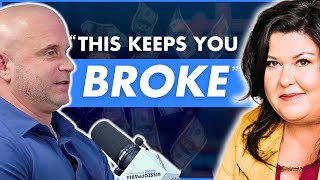
This is a recorded interview with CPA Melissa Houston covering how entrepreneurs misunderstand money—especially the difference between profit and cash, inventory's impact on liquidity, pricing/margin drivers, and the need for regular P&L and cash monitoring. Houston outlines a five-step 'Cash Confident' framework (money mindset, financial statements, business financial plan, monitor results, cash management) and gives practical advice on hiring accounting staff, using GAAP, protecting against fraud, and building cash reserves (3–6 months). The conversation also emphasizes mindset barriers for women (self-worth, guilt) and the entrepreneur's responsibility to read their numbers.
Chapters
What do you think the core mindset traps entrepreneurs face in their financial behavior?
Wow, that is a really good question, and it's a very loaded question. Just because you're profitable does not mean that that's what's in the bank. Profit is not the same as cash management. You have to keep your business expenses and your business bank account separate from your personal bank account. Mindset encompasses so much. It encompasses our money story that we've learned from when we were young. It encompasses our current attitude towards money, our relationship with money, and how we feel about ourselves. For me, I work primarily with women, and for women, I see a lot of.
You know, I tell entrepreneurs all the stinking time there are really five drivers in building a business. There's the ideation phase, the sales phase, the fulfillment phase, and one of the most important, which is the finance phase.
And so important.
As someone who has built many businesses at this stage in the game and lost a lot of money because I wasn't watching my numbers or I didn't know what numbers to watch. I'm. It's, it's a miracle I still exist and learn my lessons the hard way without going out of business talk.
You're one of the lucky ones then.
I know, right? Goodness gracious, I know. I know that like 82% of businesses really struggle with this and this is a problem that you are absolutely committed to solving. So tell me a little bit how you got into this, this genre and then why it's so important for us to know what numbers to watch and then maybe what formula we should be watching them.
Yeah, it's such a great question. So I have been a CPA for over two decades now, but it actually wasn't my first career. My first career was in social work. But, you know, for a whole bunch of reasons, I switched to, to accounting and I was serving a lot of small business owners. And what I noticed was through such a huge gap between them fulfilling their passion of, you know, starting their business, doing their offers, the whole bit. But there was a knowledge gap between what accountants were telling them, really good advice we were giving them, and they were just like deer in a headlight, couldn't understand it. And I also noticed that the way they were being spoken to business owners from accountants that were higher level than I was when I first started was, it was a very condescending nature. Right. It was like you were expected to understand your finances when you went into business. And that's just not the way it works. So combining my social work skills with my accounting Skills. I decided to go out on my own and help entrepreneurs, teach them how to understand their finances so they can build profit in their business and reinvest that profit into growing their business and just being successful business owners.
No, I love that. In fact, I. You know, from personal experience again, I. My first business I built from sleeping in a car. So it's learning the lessons the hard way. I had a GED that was extended by my education. I spent so much time gaining the customer and serving the customer to keep the customer that I barely. I barely remember to Bill 1, which is obviously revenue. And then the track the costs that were coming in associated with each project, you know, because the. The first business I did was more of a construction related company. So it was a lot of, a lot of cost, a lot of revenue, a little bit of income at the end kind of thing.
Yeah.
And I remember this one time, I was probably. I might have been in business 10 years before my seat. My longtime CPA came to me and he's like, why aren't you watching your P L? And I remember going him like, what's a P L? And you would think I was about.
10 years without knowing that.
I. I know, right? Because I was. For me, math was cash. Yeah, it was cash. I had X amount of cash in the bank. I had X amount of cash coming in, and I had bills. And whatever I had left over technically was my. You know, we would call it net income or cash flow or whatever. But I w. I wasn't watching it from a profit standpoint. I wasn't watching it from a. You know, we went from not watching profit at all to watching profit per project. And we had thousands of them through the course of the year. And it became really important for me because about a third of my jobs were either breaking even or losing money. So we were able to go. Then once we could actually break down the profit per project, we were able to go in and actually go into that one thing, figure out what was going on, why it was busted, fix it, and lo and behold, we were able to add 6, 7% to the bottom line just by fixing problems that were already there. So talk to me a little about the importance of kind of like, you know, I'm trying to make it broad enough for a lot of different businesses, But I think a lot of businesses deal with. With a cost.
Absolutely.
Ratio issue.
Yeah. So whatever you're offering, whether it's a product, a service, various products, what have you, you really need to understand where that profit is lying. Right. You need to understand. First of all, I always say that there's three profit drivers in a business. The first one is your pricing, your second one is your sales volume. Your third one is your expenses. So this is how you can create profit in your business. But when you are selling, you know, various products and you don't know which one is the most profitable, a lot of business owners make the mistake, think that their, their best seller has to be the most profitable because that's the one that's selling.
But if you're actually also known as a loss leader.
Exactly. If you're selling at a loss, this is going to be a problem. Right. So you need to really break down the profit of like what you were saying, each project or each product or service that you're offering. Now if you're offering hundreds of different products, because some product based businesses do that.
Yeah.
You don't necessarily have to break down each of them at the beginning. Look at your five best sellers and really understand which one is most profitable. And first of all, if you're pricing it profitably because you know, especially in this time of high inflationary period right now, so many small business owners are neglecting to look at their pricing.
Correct me if I'm wrong, I mean interrupt. But they're also not. Most business owners don't know to put escalation clauses in their contracts with their clients.
Yeah, that's true too.
Yeah.
Typically what I, what I always encourage is, you know, once you've done your pricing models and you're sure that you're pricing compatibly and profitably and the whole bit in your contracts, have them running for a year so that at renewal time you can indeed increase your prices because that's life price prices are increasing constantly. What?
Now one of the things that I ran into, especially in the construction genre, and obviously that's one genre of seven I was involved in before exiting. In that one, there was a lot of pricing pressure from the national, you know, builders and general contractors that my company's working for. Yeah. And it was, it seemed like there was always constant. We would, we would get two, we would gain two points and they would press us down three and a half. Okay, so over, so over, you know, the course of four or five years, you know, we had profit or we'll call it margin compression, repeatedly. So talk to me a little about maybe some strategic exam, strategic idea of in a condition like that where there's a, maybe a process that we can use to incrementally increase the price or the front end price and still maintain the customer. Because at least for me, I know a lot of times I would hold my pricing where it was because I was terrified of losing that client.
Yes. And that's the psychology of pricing too. Right. And I see this often where, you know, people are terrified of losing their clients. And yeah, there is going to be some client attrition, but you will bring in new clients, right?
Yeah.
Now, when it comes to construction, I'm definitely not an expert in construction. Construction is a completely different job. And you know, it really requires an expert in construction, I mean, especially if you're dealing with larger projects. But the thing is when you are constantly watching and constantly. That sounds cumbersome, but you know, regularly checking in with your projects, watching your numbers and seeing, you know, what's inflating right now and where you should be increasing your price versus where you can maybe maneuver and use those three profit drivers. Right. To ensure one of them is definitely cutting costs. You know, if you're, if you're on a project and you're seeing that, you know, your expenses are just eating out the entire profit of a project, you may want to have a look at that and see if there's anywhere that you can cut. If you can't cut your cost, you're going to have to look at your pricing. You're going to have to look at your sales volume and stuff. Right. It all works together.
Yeah. No, I love, I want to switch a little bit to kind of a brick and mortar retail. And the reason I want to do that is because I have, I work with a handful of coaching clients a year. I only take on 10 or 12 people total, tops a year. Mainly because I want to do it because I love it. And two, I want to only work with people that are serious. One of these entrepreneurs was incredibly serious. They built a retail business that services a Christian community. So it's a kind of a Christian retail store. And one of the things that surprised me and we were, as we were kind of talking through, watching your numbers and stuff like that, is they weren't even aware of the fact that they were supposed to do a daily close, let alone a weekly close, let alone a monthly close, you know, So I was coaching them, said, well, at the end of every day you should be able to go on your register mechanism, you know, whatever platform you're using and pull out today's cells can, you know, and then match that against, you know, current inventory levels to make sure you got the correct type of inventory revolvement or so you don't have, you don't have inventory, burner inventory sitting on the, on the sidelines. Talk to me a little about the opportunity cost as it relates to product sitting versus products moving. And kind of like the ratio, what the, what the rule of thumb is.
Yeah, I mean, there's a whole bunch of different. Well, there's three, I believe it's three main inventory calculators. Right. You've got your just in time inventory, you've got your, you know, you've got inventory going out and it automatically replenishes your inventory. There's all sorts of different things that are going on with inventory and what I always recommend to brick and mortar businesses that are relying on their sales every day, like they've got a lot of foot traffic and things are coming in and out. Point of sale software for your business is super helpful. It's going to help you keep your inventory count and your daily sales inventory that you can, you know, reconcile at the end of each day, each week, however often you do it. But it's an automated system that's going to show you how much you're selling and replenish that inventory as it's being sold. Not, you know, having heavy, heavy levels of inventory that's sitting in the back. You've got cash wrapped up in your inventory and you're not being, you're not able to sell. It makes a big difference for your cash flow. Right?
Yeah.
So kind of sell what you need depending on your suppliers and how quickly they, you know, can, can get that new inventory to you. It just depends. Like it's really going to depend on the kind of business that you're running. If it's E Commerce versus brick and mortar versus the type of traffic you have and your inventory, like, ability to replenish that inventory very quickly.
Yeah, no, I think that's, I think that's really powerful because again, it comes back down to maybe why you wrote the book, right. It's, it's like understanding how that, how all this kind of ties together. And yeah, it's funny, you can look profitable on paper because you have assets sitting in the balance sheet, but those assets aren't cash. So you have cash poor, which means then you can't reinvest the cash into the business or another software or whatever. So give me a little insight about why you wrote the book, kind of what was at the heart of it. What are you seeing that entrepreneurs and business owners are really struggling with and why they can't get a handle on.
Their cash A lot of E commerce and brick and mortar businesses that are, that are focusing on retail.
They'Re inventory heavy, so that's eating up their cash. And a big reminder to business owners is that just because you're profitable, if you actually, if you know you're profitable, just because you're profitable does not mean that that's what's in the bank, the cash balance. Right. Like you make, you bring up a really good point. And what happens is if you invest too much in your inventory, then it's going to eat up your cash and you're waiting for those sales to happen so that you can replenish your cash. So it gets complicated. Right. Like that's the thing, that's the premise of the book, is trying to simplify how things work together to create the profit in your business, but understanding that profit is not the same as cash management. So in the cash confident framework, that's why I broke it down to five different steps. First step being money mindset. But the second step, you know, understand your financial statements. So look at your P and L, see what's going on. Third step is create that business financial plan. Fourth step is, you know, you have your plan, but now you need to monitor your results. It's so important. Once you make a plan, there's no point in having a plan if you're not monitoring your results every month. Right. So you understand if you're meeting your objectives or not. And then the fifth one is the cash management. That's why it's separate from, you know, it's got its own separate step because it's very different from what's going on on the profit side. So I always recommend to business owners to have that cash management forecasting system in place where you've got, you know, you're, you're, you're looking out four to six weeks ahead of time to ensure that you are not going to have any cash shortages so that you understand that if there are cash shortages coming your way, you're prepared for it and you've got plan B, C or D in place to help you.
Yeah.
You know, get through that, that leaner time for cash.
Well, one of the things that I've always counseled, especially early stage entrepreneurs to do is the first three to five years only take out for yourself what I call a living wage. It's what you need to kind of survive. And always I do this because it worked for me. It kept me out of debt, it kept me from having to get investors and allowed me to kind of really Run my business on cash. One of the things I see a lot of entrepreneurs do is it's, it's, it's kind of a. It's kind of a blessing in disguise, kind of a curse and a blessing in disguise, which is you. You start out, you work really stinking hard, you build up your customer base, you build up revenue, you start making money, you know, and then all of a sudden, the temptation is to go inside the business, take a bass of distribution and go on a vacation or buy the new truck or buy the new computer or, or do this or do that or the other thing. And inevitably what happens, it's like my first mentor told me a long time ago, you know, and he used the terms of the stock market, which is the bull in the bear market. Right. You know, the bull is always chasing the bear and the bear is always trying to bite the bull. And one of the things I'm working and I know that you're. I feel like you're passionate about as well, is an entrepreneur needs to understand that it's not always going to be great and it's not always going to be bad, and to figure out some way to operate the middle. And the only way I know to do that, to protect that cash, because you need retained earnings, you need cash for those months that things don't go as planned, or there's an unexpected expense, or, you know, there's an insurance claim or any number of things that could happen in a business. Is there a ratio, a philosophy or something like that that you ascribe to for when it's right to take a good size distribution out of the business versus when it's not, and when to kind of operate from that living wage calculation.
Yeah. I love your example of using the living wage. Right. And what I teach business owners is, you know, once you get over that, you know, startup hump, you can start paying yourself a salary that you feel comfortable with, but you're relying on that salary each and every month. You don't go over it. You. Because, because like what you were saying, there's going to be rainy days in the business. Your business is up and down, up and down, up and down. It's never straight.
Yeah.
So when you've got that extra cash in the bank, first of all, you want to make sure that you've got a reserve, which, you know, in layman's terms is an emergency fund like we have for our houses or.
Yeah. You toss it in a money market or a sweep account or something like that.
Yeah, yeah. Somewhere where it's pretty liquid, you can Access it, have 3 to 6 months of your business expenses covered in your.
Cash reservation, which includes payroll.
Yes, exactly. And payroll for yourself and payroll if you have any other employees. Absolutely. So all your expenses, your rent, your.
Utilities, whatever, whatever the case may be, and inventory replenishment, but you don't necessarily have to worry about that if you're not selling. But anyways, getting back on track. Yeah. So you're paying yourself a regular salary. You've got those cash reserves built up. You've got your contingency plans, you have your business financial plan laid out, at least for the next year. And if you're smart, you're going to have an idea of what you're working towards in the next five years so you really understand where you want to be putting your cash. So when that's all in alignment and you still have that extra money, you can then responsibly pull that extra money out because you want that family vacation or that, you know, truck or whatever.
Yeah.
But you know that you can afford it.
But again, it's a portion of, it's a, It's a portion of the money sitting there. It's not all the money sitting there.
Oh, exactly. Yeah. That's definitely key. Like you want to keep your, your emergency funds and your, your cash balances, you know, operating well. But yeah, you don't want to take all your money out, blow it at once just because you think you can afford it. Because life, excuse me, life also has.
Unexpected every now and something will come up. Right. You know, the, the interesting thing about it is another thing that I see. Entrepreneurs make huge mistakes. I think this goes to the mindset I want to go there next is entrepreneurs a lot of times will use their business like a piggy bank. They will literally do personal expenses from the business account without taking a draw or distribution, which in the United States, of course, is a huge. No no. Because that's how you pierce the corporate veil. Do you see that a lot in your own practice and own coaching and business and.
Absolutely.
How do you protect entrepreneurs against that bad behavior?
Yeah. So you definitely. First step, you have to keep your business expenses and your business bank account separate from your personal bank account. So if you're not doing that yet, you absolutely should be doing it not only to protect yourself, but to leave an audit. Tr should you ever be audited by the irs, which is a very real thing. Now, what I try to show business owners, or essentially what I do is like you're operating your personal Finances separately from your business. And when you are creating your personal budget, you have an understanding of how much you need your business to pay you in order to meet your personal financial obligations. So it goes back to that salary you're paying yourself. That salary. If you're starting out, it's going to be, you know, bare minimum. If you've been in business for a while, making money, you're going to pat it up a little bit. Not too much, but live comfortably and never overpay or underpay yourself. Just try to keep it consistent each and every month. Your business knows that it's relying on that salary. You're an employee just like any other employee in your business, and you started your business to get that financial freedom. If you can't afford to pay yourself, that's a huge red flag right there. So you want to make sure that you're keeping everything separate, that when your business does pay yourself, it just gets moved to your personal finances.
Yeah, no. And that will keep you out of the 82% category of not being liquid enough to kind of run your business. You know, one of the things I always tell people, that living wage calculation, I always did cost plus 20%. So if to live comfortably, to live well, this is early stage, so 20% of your cost is not comfortable.
It's.
It's reasonable. I would call it reasonable, you know, so the first one, I think the first one to probably one to four years, specifically myself, I think I paid. I think, you know, I did my internal budget, okay, so my lights, my telephone, my. My rent or home stuff. I had at the time, my insurance and my food and even had a little in there for clothing and, you know, so on and so forth. It's a pretty detailed budget I think that came up to. This is obviously like 20 years ago, like three grand a month. Okay, so I did three glam plus 20%. So I would have 10% to kind of save for the rainy day personally and another 10% to either spend or give or whatever.
As the business began to develop, I was able to incremental, incrementally raise my salary. But I always use the prior year success to determine my current year salary. So if in year three I had a net income of a hundred thousand dollars, then I would look at that and make a calculation, okay, how much of that hundred thousand dollars could I tack onto my salary without suffocating my company?
Okay.
Kind of thing.
I'm at, obviously I'm at the point in life now where it's like I kind of like live on like 10 or 15% of my income and the rest is invested in different places and whatnot. But the reason I say that is because I am trying to help entrepreneurs understand and you're helping me kind of really drive the point home of the importance of watching not just your business numbers, but also your personal numbers. Because I have seen and I have done, I've made, I've made dumb decisions with big zeros. Just being completely transparent over 25 years of business. And a lot of those, A lot of those mistakes could have been head off at the pass. And a lot of that comes. And this is where I want to go to mindset next, because I know your mindset is super passionate, powerful. A lot of entrepreneurs start businesses and a lot of them start with a mentality of lack, meaning they're. Because it's not there. It's not there. It's not there. Now you're creating it to make it there. And you know, I know that this, the statistic shows 80, you know, plus percent for liquidity, but I would also say that what got me mostly in trouble was impatience, ignorance, and arrogance. So not being patient enough to play this, play the game, make the strategic plan happen. You know, being ignorant of not knowing what I didn't know. For example, you know, ways to pierce the corporate veil if you got into a pinch with the IRS or with a. Getting sued or something by because you're spending money out of the business account. Arrogance and thinking it's always going to be amazing. And, you know, I can ride on life and be, you know, kind of that kind of thing.
Yeah.
What do you think the core mindset traps entrepreneurs face in their financial behavior?
Wow, that is a really good question and it's a very loaded question because mindset encompasses so much, Right. It encompasses our money story that we've learned from when we were young. It encompasses our current attitude towards money, our relationship with money, and how we feel about ourselves. Right. And for me, I work primarily with women, and for women, I see a lot of a lack of self worth when it comes to building their businesses, in increasing their finances. Right. Because women traditionally have been told that, you know, they're not smart enough to make money, not good at math. They, women, you know, women to make money is greedy. There's all sorts of messaging out there.
I was taught money was evil.
Exactly, exactly. And money is not evil. That's, that's definitely a hurdle that people need to get over because that's not. Not an uncommon story for people to have and when you are able to accumulate and create wealth for yourself, what that allows you to do is share that wealth.
Yeah.
Right. So if you have nothing, you have nothing to share. When you have wealth, you've generated wealth for yourself, you can do the things that you've always wanted to do. Money buys opportunity. It doesn't buy happiness. Money will not make you a greedy person. If you're a greedy person by nature, you're going to be greedy if you're rich or you're poor.
Yep. Hundred percent.
If you're generous, you're rich or poor, you're still going to be generous. So money is a tool to help you get what it is that you want in life. And whether you're looking at it as a negative or a positive. But money is the currency that we use to trade things. Right. So my attitude is always like, look at your self worth and feel that you're worthy. Like, what's, what's stopping you from creating that wealth for yourself through your business? Because you don't. It's. It's not about numbers.
Yeah.
You know, whether you want to make a hundred thousand dollars or a million dollars a year, if you don't feel worthy enough, you're not going to make it happen.
Yeah. Yeah. Well, I was also thinking too, some of my really successful female clients that we coached or work with, another thing outside of self worth that they really struggle with is guilt. Guilt of not being able to pay enough attention at home, guilt of not being pendant. Attention at work. Or literally they're thinking about one or the other while they're there. And then what they'll do is they'll, on a financial front is they will go and take a distribution of their business to make themselves feel better about something at home or some, some other, some other outside influence they feel guilty about.
Yeah.
Do you see that in your own practice and, and things like that when you're working with your clients as well? Does guilt play a role in it in some of the mindset traps as well?
I mean, you know, Yeah, I, I think that we're, we're definitely trained as women to feel guilty. Like we have to give ourselves everywhere and we end up spreading ourselves and then we end up in burnout and it's a whole cycle. But it's funny that you mentioned that because just this morning I got a pitch in my inbox for Forbes article and the person was telling me that women are two times more likely to put their business ahead of romance than men are, which I thought was really interesting.
Yeah.
Because I'm like, I need to go back and I need to.
That's a little scary because I was pretty driven.
Yeah, I know. Right, so. So it's definitely an interesting to see statistic. I don't know a whole lot about it, but it just brought, brought that to, to the surface. Right. So I think it also depends on personality.
Yeah, yeah, yeah. No, I think that's important too. I, you know, it's, it's also interesting to me. I want to switch over to one of the other drivers that you have, which is the, the importance of watching the numbers. Because at least for me. All right, so I'm just being super transparent with the audience. I taught learn most of what. In fact, everything that I know about business, I learned on the fly, meaning I learned it by doing it. I was a practitioner before I was a strategic advisor and in the practicing phase, obviously you make a lot of errors, and thank God I survived most of them. One of the things that I used to get confused about way back in the day is obviously, you got an income statement, you got a P and L, you got a balance sheet, you got a cash flow, poor class. If I was going to focus on one, just to learn and master before moving to the others. Is there one specific financial metric tool that you would have your clients focus on as they're learning that? Because it took me a little while to learn how all of them, what each one of them were, what they did, and how they all tied together.
This is a fabulous question. I love this question. And I always say that your P, L, your, Your profit and loss statement, income statement, whatever you want to call it, same thing. Is likely the most used financial statement in your business. Right. Because your P and L is going to measure how profitable your business is. And when you're creating forecasts for your business, like your, your forecast, it's based on the P and L. So. And when you're, when you're looking at your numbers to see how you perform the previous month, it's based on the P and L. So a lot of stuff is based on the P and L. Get to know that. Because if you are, if your net profit margin, which is in the P and L, that's your revenue, less expenses, that leaves you your profit. If your net profit margin is not at par or better than your industry standard. So just depending on what industry you're in, let's just use 30% as an example.
Sure.
Yeah. So if your, your net profit margin is coming in at 20% and don't forget you're paying yourself before you calculate your net profit margin.
Yep.
And if it's not measuring up, you have to look at your profit drivers and start playing around with the numbers and see how you can plan to get to that 30% or higher. It's such an important financial statement to look at. The second one will be your balance sheet, because that'll give you your cash balances and stuff like that. But the most important one at the beginning is the profit and loss, because you need that profit so that you can fatten up your bank balance and.
Grow your business 100,000%. I'm so glad you said that. You know, I always, I always say the P and L is the is is the string right. It's going to give you the string to pull to back your way. Is this is a sales problem? Is this a cost problem? Is this a management problem? You know, I. I had this one year where I had all the sales I could possibly handle. Okay. Meaning the business was exploding. We were gaining customers like it was going out of style. We had a fantastic reputation in the marketplace. And then as the year went on, we very quickly discovered that some of my estimating team had made errors in their quotes. Yeah. And jobs that were supposed to form at a 30% gross margin were performing at a 10, which means I was losing money continually. And sometimes I think. And one of the mindsets that I see that can get entrepreneurs in trouble as well is they're so focused on the growth of the sales, they're not focused on the holes in the bucket. Yeah, right. And that P L statement, just as you mentioned with is, allows you to pull that string and kind of like really get to the nuts and bolts of where those holes are and how to fix them. Right. So I absolutely love that.
Yeah, I love that. And you know, if you start looking at your numbers and monitoring your progress right at the outset of your business, you catch those mistakes earlier and you can fix them and ultimately save yourself thousands of dollars just by looking at your financial statements. So many going back to mindset. So many business owners fear looking at the numbers because they don't want to know. Exactly. It's often interpreted.
I don't want him to say something bad. Please still say something.
Yeah, exactly. It's like, if the result is bad, that means I'm a bad business owner and I shouldn't be in business and stuff like that. That's all mindset, because every year you can be 10 years into your business and still pick up on errors that are Happening in your business. Business is just evolving error, error, error after error. It's all about catching them and fixing them.
Now, one of the things that I did during the startup phase is now I focused on the tea leaves that access to. Right. So the. I didn't, you know, because, because I didn't fully understand the P and L statement early on, you know, I focused on basically what happened that week as a trend. And then I would allow my accounting staff at the time to then do a month and close. So, okay, I kind of look at it as I check things out weekly for trends and then check things monthly for results. And those two categories allow you to, from my perspective, allow you to make decisions week to week that you need to make, but ultimately you make defined decisions by the month and close.
Okay.
I'm curious your thoughts of, of kind of like looking at the business, especially the startup phase or the early stage, like the first one to three years, if you think that's a good practice or if you would recommend something a little different.
I mean, obviously I would recommend, you know, getting right into the, to the understanding of the P and L. But I mean, it's totally understandable how, you know, especially in the startup phase, you don't have time for that. You are just going, going, going constantly and whatever system works for you as long as it's effective, I'm totally all for it. Right. If you're checking your numbers every week and you're seeing what's trending, what's looking good and what you should keep doing, that's fantastic. But when you get to that point where you can start looking at your P and L as a whole and looking at each, well, pretty much each project as a whole. Like any ongoing project, significant projects you have, you know, that is the ideal place to be in because as a business owner, you don't need to get in the weeds, but you need to have a really high level and understanding of what's going on in your business. That's the important thing. You know, it's not like, oh, well, you know, I don't ask people to get in there and, you know, be an accountant and understand their bookkeeping and, you know, find the mistakes and then the whole bit. Right?
Yeah.
So looking at your financial statements every week. Excellent.
Yeah.
Picking up on those trends. Excellent. You know, making sure that you're not operating at a loss. Fantastic.
Yeah.
You know, those are the things that, you know, meet the bare minimums and, you know, it should make a big difference in your business. Business. Yeah.
Going out of business is never a good thing. I don't believe so, no.
Make sure you're looking at your profit numbers and make sure you're looking at your cash balances. That's. Those are the huge things.
Yeah. Well, and it's entirely possible too. And this is. I mean, this is kind of. I would also work with your banking institution. Wire fraud and fraud in general are more prevalent than ever. I'll give you an example we actually have. Just before I exited, probably a year ago, one of the things that came across our desk was somebody actually cashed the same check twice. I'm not sure how they did it with, you know, the right vendor, cash the check. Somehow somebody else got a hold of the check or an image of the check, was able to replace the payee amount. And because I. With my bank, there was a protection mechanism with the bank, there was a. It kind of a. It was kind of a quasi insurance policy as well as a scan policies where they check everything kind of line by line at. Somehow at the AI level, they were able to catch it and not pay it and actually find that person and then obviously handle for fraud and whatever. Do you. What types of things are you seeing that are working for entrepreneurs to protect against things like that?
Okay. I'm pretty nerdy when it comes to money, so I literally check my bank balances in my personal account and my business account every day.
Okay.
Because I know these things happen and I want to be on top of it. I don't need to know exactly, you know, what my bank balances are or anything like that. I'm more concerned about the activity.
Yeah.
And if something, you know, if I'm expecting a big, you know, payment to go out or come in or whatever, I monitor that so that I do pick up on fraud. Now, I understand that there's businesses out there who are probably a lot larger than mine. They got a lot more going on. But just looking at that, you know, even if you're looking at your financial statement, not your financial statement, but your bank statement every month and just scanning, looking for anything irregular. Because it's not just fraud in that sense. There's a ton of. Of ways that your employees can unfortunately act.
I've had 1.7 stolen from me before. I get it. Yeah.
Yeah. So if you have the controls in place, and I highly recommend if you're a business that is dealing with employees and you've got a lot of transactions going through your business and stuff, get an internal control audit and get those internal controls in place. To protect you.
Yeah. And the other thing you just described is something that when after I went through the embezzlement thing a number of years ago.
That I realized my senior accountant, I. E. You know, I'd say controller and training wasn't doing. Is. They weren't doing the daily bank wrecks. And what you subscribe is a personal daily bank wreck and the business daily bank wreck. And I would say to every entrepreneur listening or watching right now, I would go to your. Your. Whoever your accounting person is, whether it's. Whether it's still your wife or your spouse or your husband or it's a close friend or it's a, you know, it's a formal senior accountant or a controller, even a cfo. And I would backtrack and say, yeah, bookkeeper, and just say, all right, show me today's daily bank wreck. Yep, show me that. It's to the penny.
And it's such a good point that you're making. If you're a business owner who's getting their bookkeeping done monthly, whatever, and you think that your bookkeeper is being professional because they, you know, they've got their fancy websites and they seem to know what they're doing and they give you financial reports, you'd be amazed at how many bookkeepers are not doing those reconciliations.
Yes.
I see so much crap out there.
Yeah. And here's the thing. All right, so as an entre. You mentioned this earlier in that as entrepreneurs, we can feel. We can feel, like, bad. We can feel bad about ourselves or bad about a business. It's our financial performance, isn't there? I would say you open yourself up to worst risk. If you're not doing your due diligence, checking behind your financial folks and that embezzlement financial mind.
I just.
Yeah, Yeah. I mean, it's. It's real, too, because, you know, it's interesting because, like, and just going back to memory and that. That embezzlement scenario, it was four people. It took four people to move the money in such a way that looked like it was being done through normal business operations. Okay. There was a financial person involved, there was a vice president involved, a vice president of operations involved, and an operations person involved. And.
The only reason I didn't catch it earlier, the only reason is because I didn't know what I was looking at. Yeah, I was getting this really robust management dashboard report. I wasn't. I was. I personally wasn't taking the time to take the dashboard and tie it back directly to the internal statements. So the Just for the audience listening. If you're brand new in business, the internal statements are the statements that your accounting system itself generates that tracks your revenue and your cost and what you paid out and balance sheet and all that kind of stuff. As your business expands, a lot of times a lot of the CFOs and things that you work with will create custom dashboards that have all the data from the internal, along with cash flow forecast and some other things.
The point I'm trying to drive home here is it is the entrepreneur's responsibility to double check their financial performance. To hold.
Absolutely.
To hold their CFOs or controllers, their senior accountants accountable.
Yep.
But you're not going to be able to do that if you can't read your numbers.
Yeah, yeah. It's so true. Unfortunately, there are dishonest people in the world and you have to protect yourself from it. I'm not saying that you have to look at every person as though they're, excuse me, dishonest, but you have to protect yourself from those kind of things.
And there's so many sophisticated ways now, especially with AI, to be pulling money out of businesses. I read an article not too long ago about AI generated stuff and like the, the voice generated and the, the AI images generated.
Yeah.
And a scammer managed to swindle $1.7 million out of a bank.
Geez.
And it all looked like it was on the up and up.
Wow.
Until it went to that fraudulent account. Right. Yeah. So you have to be very careful. You gotta know what's going on in your business.
Yeah. You know, it's funny, I just, I just had a memory. A good friend of mine, Rory Vaden and AJ Vaden, who in Brown Builders Group, they're good friends of mine, do a fantastic job of helping people build out personal brands and whatnot. But he did a social post about.
We're, we're kind of filming this right now. In February, he did this, and I think it was November, where someone actually sent a email from what looked like Rory's actual email account asking for them to wire $40,000 to pay for something that was related to branding or a brand deal or an affiliate deal or something like that. There in the email it says, like, Rory's out. I'm out of pocket right now. I can't get to it. This is way overdue. We got to pay this.
And obviously, you know, they're a good company who, who's analytical about paying their bills like I am. So the accounting staff paid the bill and then they Then they very quickly realized that it was a fraudulent AI driven kind of cyber kind of deal. And one of the things I recommended to Rory that I recommended every. Everybody here. And I had to put. I put this in place. When we started seeing symptoms of this, we actually had an IT company that would actually test our team with. With emails all the time to kind of test to see what buttons they click and this kind of thing. And then they help fishing things.
Okay.
Yeah, exactly. It's like a fish fishing protection. But what happened was, is, you know, the standard was, is if I ever ask you to wire money ever, if I ever need you to do anything, you. You need to pick up the phone and physically talk to me. And if you can't physically talk to me, you do not send the money. I don't care if I'm in jail, you do not send the money. Yeah. Kind of thing. And those are. That's an example of one specific scam that I've seen with. With people that actually so unfortunate that.
It'S so crazy out there now.
Yeah, it's. It gets pretty whack. I want to maybe get your insights because I know one of the other problems and I'm trying to use problems that I personally dealt with and utilize your wisdom and experience to bring. To shed as much light to potential financial risk and problems and things of that nature that come up, come up. We've already talked about the importance of watching your, you know, your financials. The important. Watching your cash flow management. A little bit about the mindset. I want to switch to a little bit about selecting a financial professional because, you know, obviously you start off, you're probably subcontracting out to a bookkeeper, then you have a person in house. And then over time you're gonna, you know, as your business grows, you'll need a higher level accounting staff. You know, we had coordinators and, you know, payroll people and all kinds of stuff on hand. But when it comes to selecting the first one, I mistakenly. And this really doesn't really cause me any serious harm other than just frustration. You know, I just. But I kind of hired the first person that kind of breathed the mirror like, you know, kind of fogged up a mirror that said they were a financial professional.
Yeah.
What are some types of things that we should be utilizing to be a good steward of who we're hiring as a financial professional? Whether it's a subcontractor or whether it's our first team member.
Yeah. Such a good question. So one of the quickest ways to Screen your candidates for accounting, whether it's a bookkeeper or you know, getting a junior accountant in your office or what have you ask them about their knowledge of Gap.
Okay. Yep.
Have you ever heard of gap?
Absolutely.
Okay, if they haven't, that's a, that's a red flag, right?
Big one.
Yep. Yeah, yeah. And, and that is, is literally how people get screened out. Because if they know Gap, then you know, obviously they're qualified for a bookkeeper position and stuff. Right. Not all bookkeepers and juniors are created the same. So remember that now when you're like expanding roles and you're like, okay, maybe I'm ready for a senior accountant type person. There is the ability to hire fractional CFOs, not full time CFOs, but these are great for businesses that are still in startup mode. You know, cost effective solution to get that, that high level accounting and financial guidance that you need.
Yep.
Make sure that they are accredited, make sure that they have years of experience, make sure they have experience in your industry and make sure you can communicate with them. Yeah. If you cannot communicate with the person that you're hiring, provided that they've ticked all the other boxes off and you're right down to the last candidates and you're like, okay, I can really see myself having a rapport with this person. This person I cannot talk with.
Yeah.
It makes a big difference because that fractional CFO or cfo, depending on where you are in your business, is your right hand person. This person is there to guide you and to challenge you.
Yeah.
So you want to make sure you've got that rapport.
Yeah. So I would say like, you know, the beginning phases, you're going to have definitely bookkeeping. As your team grows, you're going to maybe have like a full time accounting position. Get that fractional CFO in. When you get into like having a team of accountants that are doing, you know, separating like AR and AP and all that stuff, get that controller or fractional or full time CFO person in there to look at things at the high level. They're going to do the.
Error checks and like all the checking, like the internal control checking everything for you, they're going to be your second set of eyes. But even if you have that high level person working with you, do like never use as an excuse to check out your finances.
Yeah.
You need to always check in with your finances.
Yeah. Well, again, the person that got past me was actually a very successful cfo.
I'm not surprised.
You know, it's, it's sad. Well, and you know, a very qualified CFO is going to be brilliant with numbers. And again, if you don't have a working knowledge of accounting, as an owner, as an entrepreneur, you're gonna get yourself in trouble. Which is another reason why I think it's vital that everybody watching and listening right now. Go and grab Melissa's book. Go and grab Melissa's book. It's gonna, it could save you. I'm not, I'm not kidding you. The things inside that book could have saved me millions of dollars of mistakes. Yeah, okay. Millions. So this is where that lack of knowledge can really get your in, get you in trouble. And that what I mentioned earlier in the show, which is the ignorance piece, like, we don't want you to be ignorant. We want you to be well qualified, well informed, so you don't make mistakes, you don't get yourself in trouble. So you actually build an amazing business. I want to go back to Gap for just a second as we're wrapping up here, because I'm sure there are people listening. They're like, okay, why they got to know Gap? What's Gap? Like, you and I know what Gap is, but like, what's Gap? So break that down just a second, if you don't mind.
Yeah. So those are generally accounting accepted principles. And GAAP basically is the framework of how all your financial data gets entered into your accounting system. I mean, that's the simplest way I can explain it.
Right.
Like there's categories. Your, your bookkeeper and your accountant have to understand how GAAP works so that they can categorize your transactions correctly so that everything shows up in its place in your financial reports.
Yep. Is the, I, I would also say it's the boundary markers, like it's accounting happen within these boundaries. Right.
Like the laws, the laws of accounting.
The laws of accounting.
These are things that you need to follow and if you're not following them and you get audited, you're going to get in trouble for like.
Yeah, yeah. When there's another thing too is, you know, not every entrepreneur will do this. You know, I always say there's a startup phase, a testing phase, an investing phase, a scaling phase, and a what I call operator. Sell.
When you go to potentially sell your business, you know, you've spent number of years building it, getting profitability up, building your machine. When you, when you build a substantial business with guaranteed revenue, guaranteed profits, you're going to be start being solicited all the stinking time from different outside entities that want to buy your business. Okay. Because they, they do what's called roll ups a lot. They'll buy 10 different businesses, they'll join all the cash flows together, they'll go to higher multiple and resell the business. All that being said, if you're not using gap principles, you will not make it through the what's called the due diligence phase. Now this is pretty far out for a lot of entrepreneurs, but if you start now, you making sure you're using gap and that becomes the standard, then when you do get to that phase, you already have a very well oiled machine to keep yourself out of a lot of stinking trouble and probably help you get a higher multiple because they won't see holes in your account exactly like you are.
Bang on. Right. I could have said it better myself.
Yeah. So yeah, I just want to kind of encourage the audience, you know, before we check out where can I find out more about you? Because obviously you're doing a lot of amazing work. You have, you have a wonderful podcast for us to check out as well. Like what's the best place to catch.
Yeah. So I have a blog called she means profit.com and that is where so much of my material is. I have a podcast she means profit. I am a regular contributor@forbes.com, so you can catch my columns there. And my main website is melissahoustoncpa.com so I got lots of things going on.
So if you guys want insights, you guys want information to prepare yourself for building a successful company, please check out everything Melissa's doing. I promise you. Be glad you did. She's an amazing human being. She has the right heart. She has a servant's heart of trying to help entrepreneurs win. And let's face it, with eight, with only two out of ten businesses surviving after the first years, our first first five years, I should say it's vitally important you have all the insights you can get if you want to win a business. Correct.
We want to reduce that statistic.
Yeah, I want to cut, I want to cut it in half in two years and I want to turn flip it on its head in seven. That's my goal.
Be so awesome.
That's my goal. Awesome. Melissa. Well, you've been a just an awesome guest and I can't wait to get to know you even better. Love what you're doing, love how you serve and thank you so much.
Well, thank you so much for having me. This has just been such a great talk.
Awesome. All right, well, take care.
Bye.
I hope you liked that video. And if you did, make sure you check out this next video right here.
Whenever couples come to me, you know, or anybody, individuals, and they say, oh, I'm struggling. And they always say it's communication. Every time, they're like, oh, we're not communicating. We need to work on communication.
More from Stephen



He Had Everything…Then A Heart Attack Changed It All | Dan Sachkowsky #Shorts




Paralyzed. Suicidal. Then He Surrendered, And EVERYTHING Shifted | Marcus Aurelius Anderson


Why You Snap At People You Love, The ALIGN Method, & Why ADHD Isn't A Disorder | Sara Hartley

