The Brutal Truth About Happiness No One Tells You
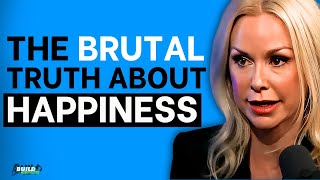
A recorded conversation between Stephen Scoggins and Amberly Lago about choosing joy amid trauma, recovery, and burnout. Amberly recounts surviving a traumatic car/motorcycle accident, chronic pain and surgeries, struggles with alcohol and recovery, and how acceptance, daily practices (sobriety, prayer, gratitude, routines) and reflection helped her reclaim joy; the interview also promotes her forthcoming book (Joy/Joy through the Journey) and related resources (playbook, book club).
Questions this video answers
February 12, 2025
1% chance
two black eyes and nine stitches in her forehead
go.amberlylago.com/joy
stevenscoggins.com/8figure
Chapters
I think that acceptance and awareness is where any transformation truly begins, and it's how you can start to discover more joy. But it's getting radically honest with yourself, taking the blinders off, taking a good, hard look at your life and accepting who you are and where you are and where you want to go. And I think that joy is not waiting for the right circumstances. It's just choosing gratitude and purpose in. In the moment.
Guys, I am so stoked. You guys don't have any idea how special this treat's going to be. Not only is she an amazing author, speaker, entrepreneur, gosh, mother, wife, she has survived a traumatic car accident and then went on to create an entire global brand from what I can tell after that. So Amberly Lago is my sister, Mrs. Unstoppable Man. I can't wait. Thank you so much for coming on the show. I'm super stoked to talk to you.
Oh, my goodness. I love you, Stephen. Thank you so much for having me on again. And, you know, this is how we became, like, fast friends.
Yes.
I got to be on your show, and I was like, oh, my gosh, I love this guy. He's my brother from another mother. Yeah. So this is how we met. And now, gosh, what Was that in 2019?
It was. I think it was. It was during COVID So it was 2019 or 2020. It was a while back.
Yeah, it's been a while. Yeah. And I can't believe how fast time goes.
It's.
I'm like, it's 2025.
Yeah. We've. And we. Obviously, we got a chance to spend the show, the stage together multiple times or mutual events, and I don't know. I can't. I can't. Like, you're such a beacon of light and hope for so many people. Like, you know, I had a chance to spend a lot of. A lot of time with your mastermind group during one of your events behind the scenes, behind the stage. And they absolutely love you. They. Because. And I think. I think the secret to your sauce is the fact that you're not showboat. You're. You're Amberly Lago every day, every minute of every day. Like, you. You don't fake it. You are who you are, and people absolutely gravitate towards that. And it's one of the things that I think just it. It makes you special.
Well, thank you. You know, I just got back. I was in Arizona speaking at an event, and sometimes I think, oh, maybe I said too much, because I do tell it like, it is. And I don't try to pretend that I have it all figured out or that, you know, by any means. I do things perfectly. I am like, I mess up, fall down. I. I mean, this past year, I don't know if you saw on social media when Ruby and I wrestle quite a bit, and she's gotten really strong, and she's the same type as me now, and we were wrestling, and I'm a little unsteady on my feet sometimes, especially when I have a lot of pain in my right leg. And. And she took me down and I did a face plant into the coffee table, and I had two black eyes and nine stitches in my forehead. And. And I showed up the next. The very next day. I went to the Dallas Market center to help my friend Leah Valencia Key set up for the Market Center. I said, I'm going to. I call. I called her from the er and I was like, hey, just want to let you know that I'm. I'm in the er. I'm going to be fine. I just got to get my head stitched up, but I might look kind of scary when you see me tomorrow. And I interviewed Jamie Kern Lima for my podcast.
That's awesome.
I think I need some IT cosmetics. What do you think? Because I show up with two black eyes in my head, stitched up. But it's like, I just show. Keep showing up, because we're all human. We're all just trying to do the best that we can. And it's like, I learned from my mistakes, and I try to teach others. Hey, learn from my mistake. You don't have to make that mistake that I made.
Yeah, yeah, yeah. A thousand percent. You know, it's one reason why I'm super excited about this new book you got coming out, Joy to the Journey. Like, I'm some. I'm telling you. I'm telling you this as a brother, right? So, you know, behind the scenes, some of the things that I've had challenges with recently because I'm. We're close friends. And, you know, one of the things that I. That I heard you say. I remember. I remember I was at the. I was. It was over the holidays, I sent you a voice text. For some reason, we just connected, literally, over the holidays, and I sent you a voice text. Hey, you know, I'm. I'm. I'm growing again. I'm learning this new method. I'm learning this new Stephen, this, you know, trying this grounded kind of concept that, you know, that I'm kind of really working through. Right now. And I remember you. I remember you actually saying the words, well, Steven, you got to have joy in the journey. Join the journey. And it was such a profound moment and a simple voice text between two friends who always show up for one another whenever. Whenever the chips are down or whatever. Well, actually, it's not even just tips are down. Sometimes we're just excited about what's happening. Right. Talk to me a little bit about the joy and the journey, because I feel like most of us are apprehensive to feel any joy in our journey at all. We constantly feel like we're pushing, we're grinding, we're trying to make things happen. I know joy in the journey doesn't come natural to me, and this is a thing that I am now learning in this new state of Steven. So talk to us a little about that.
Well, you know, honestly, I.
I think when I discovered joy, and I didn't even really know what that was, but I now, looking back, it was joy was. I was a little girl, and, you know, things weren't the easiest growing up in my household. My parents got divorced, and my mom remarried my stepfather, who ended up sexually abusing me and so.
Intentionally sought after things. And I don't know how. I don't know how I learned this or why. Maybe it was God, but I intentionally sought after things that brought me joy. And to me, that was dance. And I remember.
Going, okay, well, what can I do to make. Do things that make me feel good, that. That, you know, light up my spirit, even though there is this heaviness and this darkness, and I didn't feel safe over here? What can I do to joy? And I remember Friday nights, you know, football is huge in Texas, and I don't know why, but my parents would let me go after the football game to the Dairy Queen and the band members and cheerleaders and some of the football players and just people that had watched the game would be in Dairy Queen, and they'd put money in the jukebox, and music would come on, and I would just start dancing. And they would see me dancing, and here's this little girl. So they would put me up on the. One of the tables, and I would just start dancing on the tables. And I remember the joy, that feeling of joy that just. It just came over me. And it was looking at other people and their smiles and the sparkle in their eye and the laughter. And then they would start clapping along with me and dancing along with me. And I thought, we can experience this. We can create this And I've always been, you know, a pretty joyful person. I remember after my motorcycle accident, being in physical therapy, and my physical therapist was like, hey, there's this guy. And he has had an accident accident similar to yours. And I was telling him about you, and I'd really like for him to meet you. And I remember going into physical therapy, and people were like. A lot of them were kind of that victim mentality, and it was very depressing. And I was like, well, I'm gonna go in there and smile and say hi to everybody and do the best I can. And I looked like I had come out of a war. I mean.
From the hip down, from muscle flaps to skin grafts to staples in my leg, I looked pretty rough. And I was still joyful because I chose joy. And I think that joy is not waiting for the right circumstances. It's choosing gratitude and purpose in. In the moment. And my purpose was, I'm going to go into physical therapy and smile and spread joy. And so he brought this guy in, and I said, watch this. And I do, like, this really proud kind of hobble. I can barely walk, but I was so happy that I could do. I was off crutches, and I could walk, and I was walking, and I had this big smile on my face while I was kind of limping along. And he looks at my physical therapist, and he goes, what's wrong with her? She is way too happy. Like, does she not know how bad this is?
Yeah.
And I was focused on the good. I was focused on look at what I can do, not how bad I looked, but it's a miracle that I can stand. It's a miracle that I have my leg when I had a 1% chance of saving it.
Yeah.
And that 1% chance was my glimmer of hope. That was my joy that I was going to get through it. And then I started writing my book. I have to. This is a long answer for you, but I just have to be really honest with you. I started writing this book. I got the book deal, and I'd had this sticky note on my computer to write a book called Joy through the Journey. So it was an idea, pitched it, they said yes, and started to write it. And life was good. Like, I checked a bunch of boxes, Done this, done this, done this. Things were good. And I was like, I'm about to write a book about joy, and I'm not feeling very joyful right now. I was on the brink of burnout, struggling with my health.
I had let a lot of My non negotiables go out the window. And I had to.
Get radically honest with myself. I had stopped going to a lot of 12 step recovery meetings. I had stopped praying in the morning. I had stopped my gratitude practice. Little by little, I was letting my workout slide. I had lost, like, 10 pounds of muscle. I was like. And I was like, whoa, whoa, whoa. Something's got to stop.
Yeah.
If I'm going to write a book about joy, it's time for me to spark more joy into my life. And so writing this book has been very cathartic for me, and it has really allowed me to tap into joy. And this last year was, as I've shared with you, like, you know, through our conversations.
It was a big challenge for me. There was a lot of resistance, and it was a lot of learning, and it was a good opportunity. And I say this, if you're out there and you're listening to this and you're going, yeah, I'm feeling the resistance, or, yeah, I'm on the brink of burnout, or, yeah, the resistance is coming at me hard and heavy right now. It is such a good opportunity for you to either quit, you got two choices. You can quit, or it's an opportunity for you to believe in your message even more and to keep moving forward. And for me, I was like, oh, yeah. I've practiced every single one of these things that I share in the book, and it has allowed me to spark joy through a death. You know, my stepfather passed away. I lost my dog, my. My therapy dog. That was very unexpected. And these things that I share and I get raw and real, and there's a part of me that was, like, really nervous, like, oh, my gosh, I am sharing. Stephen, you're gonna learn some things when you read this book and you're like, amberly, what did you do? You know, I can't. I mean, I'm sharing some hard truths, but I'm sharing it because I want people to know that, man, I was at a low place and I was able to climb out. I did make some mistakes, and I was able to still, you know, do some joy spotting and be a joy sparker. And if I can do it, then it's possible for anyone else to do it as well.
Yeah, no, I see. That's so good. You know, one of the things I've always appreciated about you is, and I think. I think the world needs more of this. Again, I think I've shared with you not long ago that I'm gonna. I want a truth journey. I'm trying to find truth wherever I can find it and whatever genre I could find it. And one of the biggest truths that I've seen, and you live this out on a regular basis, is this truth through transparency. Like, there's a lot of us will, and I say a lot of us because I dealt with this for a number of years before. I was a lot more outspoken myself about the things that I'd been through, right, the various quote unquote traumas. The trick, like all these different things that we think for some reason we assign a certain level of guilt or shame to it, so it prevents us from speaking up, or maybe we just don't think we're ready. And one of the things I actually think is a byproduct of from just watching you work all these years, like on stage, in the podcast realm, in the mastermind rooms.
Literally on our one on one conversations, is this gift of truth. Like, you have no problem sharing where you've been, what you've been through. And it always comes through this lens of it takes you back to joy. And the reason I think that's so important is because ironically, I feel like you just mentioned this kind of at the beginning where you're like, well, I stopped doing these other things. I stopped doing all these things. So to me, it seems like if you're going to live a joyful life, and I'm learning from you right now, by the way, I'm. I'm trying to adopt the principles of choosing joy in any given moment, any given circumstance, at any given time. That's new for me. It's something I, I've been, I've witnessed recently, in the last year or so, and something I've seen you live out on a regular basis. But it seems to me that one of the reasons we slip out of joy is because it is a slippery slope. We get busy, we get, we got this going on, we get in burnout. Like, talk to me a little about how you're catching yourself out to prevent. You can kind of like re. Establish this joyful process on a regular basis.
Well, you know, I don't get to do any of this unless I stay sober. And I get to have joy as long as I stay sober. And so it goes down to, like, when I break it down, if I don't take care of myself. And you talk a lot about being in alignment. And I had a friend of mine tell me, she's like, you know, what if your impact is only as strong as you are healthy? Well, to me Being healthy is being sober. And when I get to stay sober, I can get through any hard things, you know, and I might not achieve what I thought I was going to achieve, but at least if I can say I did my best and I did have, you know, some joy along that journey, then. Then that's. That's. That's enough, you know? But I. When I say I had to get back to basics, and I also. I had to get back to, you know, I had to halt, which means don't ever get too hungry, angry, lonely, tired, because when you do any of those things, it's like, it's easy to pick up old habits. It's easy to. Just to start to get burnout. It's. It's. Your joy is definitely gone. Like, my husband knows I need food. Yeah.
Yeah.
Pretty joyful. As long as you're angry, you're angry.
I love that. I love that.
Yeah. You know, but little things like that that I've had to remember and. And let me tell you, it was a slippery slope of gradually starting to let these things that I was doing to. To, you know, be in alignment to have joy. It was. It kind of snuck up on me, and I've had to get really intentional. And in recovery, we say, be where your feet are and also to have smart feet. And so without even thinking about it, honestly, actually, my husband. I didn't know. He was sitting in the chair in the L room. He was real quiet. He's not usually awake that early. And I'm up in the kitchen, and the first thing I do is I grab my gut health drink, and I just down this water with my gut health stuff. And he goes, damn, man, you just drank the whole thing. I'm like, oh, yeah, I do this every morning. Like, I don't even think about it, you know, But I. I take care that I have these things that I do that now they're. They're such a habit that it's like I don't even think about it. I go, you know, do that. I go and drop down to my knees and I pray and ask God to walk through me or walk with me and speak through me and help me be a vessel of love and joy for others and do my best, and. And then I do my gratitude, practice, and you know what? They're. And I do my prayer. Like, I have a certain prayer I read every day. Sometimes throughout the day, I'll say the serenity prayer, you know, whenever I need it.
Yeah. Yeah.
And it's not that I don't have those thoughts of, I gotta get that email. Oh, this was due. Oh, my goodness. The publisher is calling me. Oh, the publicist is calling me. Oh, that. You know, I've just gotten to a place where actually, like, my publicist messaged me and said, fox wants you on the news in 10 minutes. I was on the way to the gym. I had no makeup on and my hair in a bun. And I was like. At first I was like, oh, I got to do that. And I was like, I was like, you know what? Actually, I can't do that. I'm going to the gym.
If it's meant to be, then it'll come around. At the time that it's supposed to come. Well, guess what? They rescheduled me for two days later.
You know, when you could do your.
Hair and I could do my hair, I was like, yeah, I don't think I want to go on the news with no makeup and my hair in a bunch. Just saying. I'm all about being transparent and truthful, but I don't think the world wants to see me right now. Yeah.
Yeah. Oh, my gosh, that's so funny. You know, it's one of the reasons I, I love how your, your take on joy and your take on living a joyful life is because of how authentic it is, right? You radiate joy constantly. Like it just oozes out of you, you know. But I was kind of going through, you know, I was fortunate enough to get a, you know, early released copy of the book, you know, obviously. So I got, I got, I've got some stuff here. And in doing so, you have this really cool way of contrasting, of helping people understand contrast. So, you know, if you, if you know what one anchor point is, you can all of a sudden figure out what the opposing opposite of the anchor point is. Right? And in the book, you talk about the cure the cause. Is it the cure the cause? You talk about the kind of the reflection period. How important is it to really sit down and reflect about where you're at, where you're heading, just to get centered? I mean, how. I mean, because it seems like joy is a daily, hour by hour choice.
In some cases, it, it really is. And I mean.
I talk a lot about. There was a moment I remember when.
I had. It was on my bucket list. I thought, oh, I'd love to do a TED Talk. And I actually got asked to do a TED Talk and it was a big one. It was at Berkeley. It was their 10th year anniversary. There were like 3,000 people in the audience. And I remember I was so laser focused on my talk that the whole ride from la, in the car from LA to Berkeley, I don't think I looked out the window once. I was just like, I don't think I heard my husband or my daughter who was in the backseat. I don't remember anything except for going over my talk over and over and over and. And. And wishing that car ride was longer so I'd have more time to practice, you know? And here I did it. I did my best. I mean, it was the first talk that I'd ever given on stage. And I didn't really have any, like, formal training, which I don't recommend.
I can help you with that. If you want to call me. I can give you some tips on. Yeah, things that I would have done a little differently. But I got in the car and I didn't even acknowledge that I did it. I just did a freaking TED Talk.
Yeah.
Oh, my God, I got a standing ovation. I didn't acknowledge any of that. You know what I did? I got in the car. We drove all the way back in. The whole way in the car, I had another talk I was actually doing in Salt Lake City. And that was. I was already working on my next talk. I didn't even acknowledge or celebrate these small victories along the way. And I think that's something that we all need to kind of pause and reflect and think about. My goodness, celebrate how far you've come. And sometimes it just shifts your whole perspective. Like, there are days when I get up and I do have to shift my perspective. Even last night, I was getting ready for bed and I looked at my husband. I was like, oh, my gosh. I was frustrated. I was like, oh, my gosh, my leg. The swelling still has not come down from this last trip. It's still so swollen, and it's so swollen that my foot's bruised and. And I was getting frustrated. And he's like, well, Amberly, I just saw the videos that you were doing. Look at all you did. It was like you were there for three days, jumping up and down and dancing on stage. And I was like, oh, yeah, that was a lot of fun. I did have a good time. I got to connect with a lot of people, and it just started to instantly shift. And then I had that trust and that knowing that, you know what.
It'S been swollen before and the swellings come down. And guess what? I woke up today and the swelling is down. I feel a little bit better. And so I Think it's really reflecting on sometimes even being grateful for the pain that I have, that it's maybe.
A 5 instead of a 10, or even if it's an 8, that I know that it's been a 5 before and that it'll come back down again. And so I think it's when you can kind of pause and reflect and celebrate those small victories along the way, and that's going to allow you to, you know, enjoy the journey. And I remember when I was so excited, I was doing, I think it was when I was going to be on the Doctor's tv. It was either that or the Today show. And I was telling my dad, I was so excited. And, you know, there was a part of me that just wanted him to go, oh, my gosh, that's so cool. Congratulations. And this was years ago. And he just goes, don't forget to just enjoy the journey. And I was like, oh, that really hit home. Like, yeah, it's. That's what life is about.
Yeah.
And I, I try to do that and not it let anybody. I think that, you know, you brought the, the word up, you know, being authentic. I think that when you are authentic, you're not trying to be like anybody else, pretend like you're something that you aren't. And you're doing what really sparks more joy to keep doing that. You know, we have somebody that you, you know as well.
That told me, don't, Amberly, don't dance on stage. It's not professional. And I was like, well, I can't help myself. I just.
Have you met me?
I was like, it just comes out. I can't, I can't help myself. And it's not like I'm doing some pretty dancing. I'm like dancing silly or funky or who knows? I just do it. It just, it just happens.
It's. And it's joyful.
Well, it's fun. And, you know, my dad saw a video, I posted a video, and I'm dancing up on stage doing silly stuff and high fiving people. And afterwards, there's a video my friend took and it's me, Patrice Washington and Brooke Hemingway. And I'm like, oh, yeah. Oh, yeah. And we're doing this. And then they joined in and started doing it. And my dad saw the video and he said, I can't help it. This made me laugh so hard. And I said, good, because I was laughing too, because it's fun. And, yeah, let's have a little more fun in life.
Yeah. Oh, my gosh. That's so true. You know, it's really. I was having this, I was having this thought here as I'm sitting here.
You know, I've had a, in many ways I've had a very hard life, like many of our friends that have gone out to do service scale and obviously the adversity you face. But I'm sitting here asking myself how many times. And this is something I've been, I've been kind of really, kind of bouncing back and forth for different reasons over the last year and a half.
Because I've had lots of reminders about different. I've had different people in my life and yourself that. And it just reminded me just, just now, which is why I'm bringing it up.
I can't think of many times where I stopped to actually have the joy. Like I just, I've done some really cool stuff. Like, I've been very blessed. I've been very fortunate. I've had to work very hard. I know a lot of really cool people like you do as well. A lot of, you know, really high impact people that are doing a lot of great things. I've been able to travel, I've been able to speak, I've been able to do these, these things. And honestly, I think I've always. And until this last year and I mean, I mean like the tail end of 2024 and in the beginning of 2025, I think this is the first time that I'm really trying to, I'm starting to try to pay attention to the, the joy and trying to bring that joy into my life and actually experience the laughter and the cutting up and you know, just the. It's contagious. And when I'm around you, it's, it's always contagious. It's around your mastermind folks that you have, it's around every event that you do. It's around our mutual friends.
And I had you thinking and this is, this is one of them. I think this is one of the. You have so many fantastic principles in the book, by the way. Guys, if you do yourself a favor, grab this book as soon as it's out. We'll make sure we put this everything in the link, of course, in the show notes, all that good stuff. But make sure you do your fail because there's powerful principles here.
And these. Sometimes the principles are so simple that they're so powerful. And one of the things that I'm having to do is I'm having to accept myself for who I am now and also divine, not devise, a plan, but also accept the person that I want to be or the next elevation. And the reason I say that is because it seems like after reading some of the manuscript, that there is a genuine power in a certain level of acceptance. So I want to maybe kind of. Maybe really kind of hone in for a couple minutes on acceptance. How you discovered how. How it works, why it's so important, why I was like, a. Like, this has to be in the bl. Like, people have to know how important this is.
Well, thank you. You know, I think that acceptance and awareness is where any transformation truly begins, and it's how you can start to discover more joy. But it's getting radically honest with yourself, taking the blinders off, taking a good, hard look at your life and accepting, like, who you are and where you are and where you want to go. And I only share this because I. In denial about a lot of stuff. I mean, I was in denial about sexual abuse. And I was like, oh, yeah, I've healed that. I've dealt with that. I've done that. And I remember going into.
A therapist, and I was talking to her about some relationship that I was in. This is years ago, before I was married. And she stopped me, and she goes, have you been sexually abused? And I was like, oh, yeah, yeah, but I've dealt with that. She goes, no, you haven't at all. She goes, you need to read this book, Codependent no More and do this homework and read this book and this book. And I was like, oh, she sounds like Henry.
Yeah, yeah. I was like, oh, okay. But it wasn't until I could really accept that and shine a light on that shame that I could talk about it and I could forgive and I could heal. And when I say forgive, I don't mean forget. I mean. But I could forgive and move on. That was a gift I gave myself. Yeah. When I could accept the scars on my leg and the fact that I mean something. This seems so silly, but one of my mastermind members, Amy P. Kelly, and I were. I was. We were. She goes, oh, you. We were doing a Mastermind birthday dinner at this last event. A bunch of my Mastermind members came to, and she. We got on the topic of dance, and I said, oh, you did ballet? I said, could you bust out in a tombay pot of ragliss? And she goes, I sure could. And I said, we got up in the restaurant and did that. And people were like, have y' all been practicing that? I'm like. Because we were on point.
We were like, yeah.
And I said, you know, it still kind of bugs me that I can't point my right foot as a dancer. My ankle's fused, so it's stuck in a flexion. And people wonder why I wear boots to the gym. Well, I'm. My ankle's fused and that's what I can wear. And so I'm going to work out, however. But it wasn't until I got in acceptance for all these scars and looked at my leg and even my fused ankle and my deformed leg, that scares people when I go through TSA and they have to pat my leg down full of metal. I'm like, I can look at it now, finally. And it took a long time with acceptance for and love and go, wow. Instead of looking at it and hating it and being disgusted, go, wow, look at how amazing the human body is and how powerful the human spirit is and how we heal and how we can adapt and still move forward. Even it looks a little bit different, you know, so that acceptance for, you know, being having a problem with alcohol and having to admit that I went from being in the fitness industry that I never drank, I never was, you know, I was always working. My. My friends were bar hopping, I was, you know, bartending. I was like making money, building my, you know, business on the side. And to admit that I had a problem, boy, that took a lot of courage. That was one of the scariest things I did, was scarier than any surgery that I ever went into, was admitting that I had a problem, that I needed help, and walking into a room of 12 step recovery and getting help. But that is probably one of the things I'm most grateful for because it's brought me closer to God. It's given me the life that I have now. And I wouldn't have you as a friend if I hadn't taken that step and just accepted where I was, you know.
Hey, guys, I hope you're enjoying the show. Steven Scoggins here. I've got something that I think is. I'm just going to blow your mind. Imagine taking your life and your business to the whole nother level. I'm talking about an eight figure level and beyond. You see, you've been working your butt off to build your business where it is now. But what if you could work smarter, free up more time, make more money and impact along the way? How much would that be worth to you? You see, I can prove that basic steps, basic mindset shifts and subtle changes can make the biggest difference. I want to introduce you to the eight figure mindset makeover. It's absolutely free and it's here for you. It's a powerful summary of my top strategies that help propel me from the streets, if you will, to upwards of nine figures in quote unquote success as we like to chase it. This is more than just tips though. It's a complete mindset overhaul with simple hacks that you can apply today to begin working on your unprecedented heights in your own business. I would like the honor to share these types of things with you that turn my dreams into reality so you could experience, experience the same type of joy and freedom that I now get to live out in my own day. In other words, it's time for you to build your own unstoppable enterprise. And if you're really ready to take it to the next level and elevate your life and your business, this is an absolute game changer for you. So if you want to take advantage of this free resource, simply go to the show. Notes can click the link or you can go to steven scoggins.com backslash8 figure, that's steven scoggins.com Backslash8 figure. Until then, much love, God bless. Let's get back to the show. Take care. I've shared with you recently and my audience is getting, is getting more and more of this through social media content and other shows and stuff like that. But I'm on this, I'm on this journey again, searching for truth, searching for this concept, what I'm, I'm now calling the integrated entrepreneur. This, like being fully aligned, fully aligned in your mind, your body, your soul and your energy.
Right?
And one of my biggest stumbling blocks, which is why it's so important that I think that I think I share kind of this, this aspect of the book is that I've had to struggle with is this ability to accept all of my emotions or be able, like to be able to kind of own my emotions or acknowledge them in the moment in which I'm acknowledging them rather than what I think a lot of men do. And I, I assume women do this as well, but in their own way. But I repress. Repressed. Repressed. Very, very, very. I don't want that emotion. Don't let that come up. Let the joy come out. Don't let the, don't let the shame come. Like all this kind of stuff. How did you navigate that? How did you navigate the, you know, the ability to get the emotions where you could get them out so you could work with them and you could Kind of mold them and shape them to serve you rather than work against you.
Well, thank you. That's a very important question. Because for a long time, I didn't. I stuffed everything down, in fact.
Especially with the sexual abuse. And then when the sexual abuse finally stopped, it was still the emotional, that psychological, like, horrible. And I remember my stepdad would look at me and would say terrible things like he was going to kill my mother. Horrible things. And. And to the point where I would cry. And then when I would cry, he would say, see, I knew I could get you. I knew I could make you cry for. So for years. Wow. That was my defense. And I didn't cry. And I showed no emotion. And I learned to just suck it up, up and suck it up works until it doesn't. And I stuffed down. I stuffed down. And I remember my oldest daughter was little. She was probably.
Five maybe. And we were in an air port, and I had missed my flight, and I. I missed our flight. I saw the doors closing as we were running to get on the plane, and I dropped all the bags and just started crying. And I'll never forget, she looked up at me and she said, I. Mommy, I didn't know you knew how to cry. And I thought, wow. This way of life that I've come to learn is not just about me. It's a way of life that I'm showing my daughter that it's okay to live like this, suppressed and locked down and stuffing things down. I was like, something's got to change. And I always say pain demands to be heard. It will come out in everything we do eventually. It'll come out in our health. It'll come out in our relationships and the way that we lead and the way that we love. And so I think that it's important to let these feelings and emotions, let them rise to the surface and deal with them. And one of the most healing things that I did, actually, because I'd done a lot of work, and I'd talk to therapists and I'd talk to friends, and I journaled and I'd read books. It was when I wrote my first book, True Grit and Grace, that the editor called me and said, I need to come over and see you just to make sure you're okay. And I was like, yeah, I'm fine. And he's like, no, we've. You've taken the lid off of this, like, off of a lot of trauma. And I just need to see your face to make sure you're okay. And he drove 30 minutes to the house, stood at the front door, was like, okay, I just needed to see your face, make sure. Because it was heavy, it was hard, it was cathartic. It took me two years to write that book because it was so hard. There's something about when you were writing things out, and that's one of the reasons I love that you're doing so much journaling now, Stephen. And you've inspired me to get back to actually.
Thank you.
Handwriting instead of typing. Journaling. I think it comes out differently, but there's something very cathartic in that. And there are days when I was working on my new book that, you know, I remember coming out of my office and telling my husband, honey, guess what? I just got a book deal. And he goes, oh, man, Winner have time for that. And so I had to make time for it. And I was getting up at 4 o' clock in the morning to write. And then I would meet with an editor and we would go over things and there were days where I would get physically, like, sick. Like, I would not feel good because I was writing down my truth, which some of it was an ugly truth, but it's how I got through some very, like, shameful situations or embarrassing situations. But what I learned from that, and I share those things so that others know that, man, we heal what we reveal. You know, we. Then we don't have to just deal with those feelings. We get to heal those feelings. And so I would say, start by, you know, writing and then start by sharing with somebody that you really trust. And I say, you know, my friend Brian Boger doesn't agree with this. He says, oh, you hear the saying scare share. And I've said this, and I don't know if he heard it from there, where he heard it, but. But I say share from a scar, not an open wound. And I only mean that for social media because if I hadn't done the work on myself and accepted the scars, my deformed leg and the way that I Looked, that first TikTok video that I shared where I had people, man, they can be brutal on TikTok. And they were coming after me. One guy said, don't ever show your leg again. I was eating and almost threw up.
Up.
If I would have read that and I hadn't, if I hadn't shared where I'd done some healing, I probably would have never shared again, you know, so that's why I say that.
Yeah, man.
Girlfriend, there's always so many different directions I want to go when we have conversations like this.
I mean, well, it's always just so awesome to get to talk with you. Like, I swear, I know you're about to see Henry and Taryn and go to dinner, and I'm like, I'm having major fomo. I just want to almost have y' all set up your phone and do a zoom, and I'll have a virtual dinner with you or something.
But that'd be funny. That'd be awesome.
When I get together with y', all, it's just like, we could just literally talk for. For hours because there's so much that we're in alignment with and so much that we learn from each other. And I just appreciate you're the kind of friend that I can tell you anything, and I can be raw and real and. And share my insecurities or. Or any fear or anything like that. And I always feel better after talking with you, you know?
Yeah, ditto. Ditto. A thousand percent. You know, it's the other. So, first of all, thank you again. You keep saying all these. These wonderful, beautiful things, and they're. They're. They're such a good reminder of the friendship and relationship we have. I want to go back to the book for just a second, because one of the things that I think is a little bit unique to me compared to the first book is there's a lot more tactical takeaways and key ways and action items and steps to take. What was it about this book that made you want to literally, at the end of every chapter, kind of like, really say, okay, now it's time. Okay, you've learned the information. Now it's time to apply the information. What was it about this that you wanted to kind of really make it really hit that home with?
Well, honestly, thank you for asking that. Honestly.
When I wrote my first book, I talk a little bit about CRPs, the chronic nerve condition I was diagnosed with. That's why I'm having this other surgery. It's called complex regional pain syndrome. And I did not realize. I mean, I wrote a little bit about it. I'm no expert. I was just diagnosed with it, and I've tried just about every treatment there is out there for it. You know, I've been a good guinea pig or for a lot of different treatments, some that have gone radically wrong.
But that book, I became known as the person the go to for CRPs. And I had people that bought that book, and they're like, you don't hardly talk about. You don't give the answers to how to cure CRPs. Well, I don't know how to cure CRPs. I'm still searching. Apparently those. No, there's no known cure yet. But I never claimed to be a doctor or an expert. It was a memoir meant to inspire. So I thought, I don't want this next book to be a memoir. I do storytell because I think people learn from stories and they are relatable and you can connect and go, oh, yeah, me too. I've experienced that. Or, oh, wow, she feels that way too, or that happened to her, but I wanted it to be. And it was so different for me. And I. I claim, I'm like, hey, look, I'm not a psychologist. This is just what worked for me. This is what, through severe trauma, pain, adversity, challenges, on the brink of burnout, like hitting rock bottom. These are the things that I've done. And you can, too, to still have joy in your life. It's your choice. You can be a joy sparker and you can go out there and do some joy sparking. And so I wanted this book to really have. Have some actionable steps that people could go, oh, okay. If I just do these things, these are going to help me practice gratitude and be more joyful. If I just do these things, it's going to help me create better boundaries in my life and protect my peace. And then, you know, I'd finished writing the book and. And, you know, my husband's like, oh, good, you're done. And I think he was getting a little worried because I told the publisher, I was like, well, I won't be able to start writing until after my annual event. And so the day after my event, they were like, do you have the first chapters for us? And I'm like, the event was yesterday. I'm working on it. Don't worry. And then my husband was like, have you been working on your book? Are you. Did you finish your book? Are you working on the book or did you meet your debt? And I'm like, it's gonna be fine. I've never missed a deadline yet. I will not miss these deadlines. But then I finished writing it, and he was like, like, what are you doing? I said, oh, I'm writing a companion playbook. And he goes, I thought you were done with all that, you know? And I'm like, well, no, come on, Johnny.
Come on, Johnny.
Playbook. So if people pre order it, they get a little playbook beforehand that helps them prepare, you know, and it's been awesome. I just spoke at an event in Minneapolis and. And they bought 400 books for all their attendees. And I said, thank you for buying the. I will give all of your attendees the playbook, and we'll do a Zoom after. Because it was. The theme of the event was momentum. I said, let's keep the momentum going. So that's, like, super exciting to have mortgage brokers buy my book.
Yeah. Yeah. Well, if. I mean, again, I would dare say that you are stepping into solving a global problem. Most of. Most of us are not. I don't. I mean, there's a. There's a select few that. That know how to try to operate in joy and try to really lean into that. And, you know, I'm able to do it for moments, but this. This book is for me just as much as it is for the mass public because I'm. I'm now in this new season of learning what joy looks like. And keep in mind I've exited businesses and I've been able to travel and I've been able to have nice things. And I just. And it's. It's. For me, like, it's. It's. It's. It's. It's a reminder to me to step into joy and really kind of lean into it. And before I go to. About the last question for the show, I. To kind of make sure that everybody has access to it. So where can everybody get. Get access to the book? Even though.
Even.
Even the blueprint, everything.
Okay, well, if you want to get the. The free resources beforehand, you can go to go.amberly lago.com forward sl. Joy, you can also join the book club. I am so excited, Stephen, I have to say. So I started this book club. It starts in February, and it's really a. It's a community. It's a community to come together, to lean in on each other, to spark joy together and real live Q A. It's on Zoom. And I am so excited. From that first event, it was mostly men. There was 400.
Wow. Yeah.
And it was mostly men. And I still had over 100 people sign up for the book club. And I'm like, I got to upgrade my Zoom, because I want to get.
Everybody on, because that's awesome.
Excited about the good. The book club, because I think community is key. Relationships are key. It's one of the things that you could do is be around people who are joyful to spark more joy in your life. And so if you want to do that or the easiest thing is, you know, you want to just grab the book, go to Amazon it's one click away. Go to Amazon. But yeah, you can find the book at go.amberly lago.com forward/joy. And I hope to see you in the book club too, too.
Oh, man, it's so good. And guys, I'm telling you right now, like, I've again, I was very fortunate. I got. I got an advanced copy. And it's. It's terrific. It's a highlighter book. You're getting a pen, a pad and a highlighter, as well as a companion guide, it seems like now too, as well as book club. So you gotta, like you. I got. Throw it in, everybody. That's awesome. My question is this my final question for the show because I don't get the hell y' all to myself.
Is, is there a concept, a principle or some other, I don't know, some other piece of material that didn't make the cut of the book that you wish that had?
Well, you know what? I actually.
Honestly, no one's ever asked me this, but I.
It was different this time around. When I wrote my first book, I didn't have a publisher yet, so I had time. And I was in between. I was in and out of surgeries. And I mean, even writing this book, even though I was in and out of the hospital a few times and in and back out of a wheelchair again, I wasn't in and out of major surgeries like I was with my first book. And. But I didn't have that. The pressure of a deadline, like, it has to be turned in by this day. The edits have to be done by this. And so I really had this, like, oh, I wish I would have done, like, I had this idea where I wanted to do in the book, do like one page with just a quote, like our friend Trent Shelton, his book protect your peace, that I loved that book. But one of the things that I really liked about it is I have a short attention span and I need to see things that are easy to read. And so I like that he put one page was just a big quote in big, bold letters.
Yeah.
And I wanted to add that in. And I also had people say, well, did you add some pictures? I hope you added this picture to the book or that. And it's like, like, no, I didn't. And oops, I didn't get to add those quotes. So that's the only thing I kind of wish that I would have. I would have I. If I could. If I could go back. And I always say I don't like to really say that much. But if I could, I would have added that. And then I also would have added an affirmation at the end of each chapter. And then I had. I was telling a good friend of mine about that and they said, said, well, that's okay. Then you just do an extra like.
You know, like a Daily Reflections book where you do some of the affirmations and then that can be a free download that people have. And I was like, you know what? You're right.
Yeah.
So that's my next thing. I'm like, okay, well, I'm just going to do like a Daily Reflections and it's going to be a free download and every day you'll get, you know, because I read out of those spiritual books every single day. It doesn't take long. And I have a whole stack of books to choose from. And so I thought, yeah, that's something. So that's kind of next thing that I want to do. So that's probably the only thing.
All the more reason that you got to join the book club and get. Get all access to it because my guess is I'll probably get first dibs on that, so.
Oh, heck, yeah. Yeah. Yeah.
I'm so happy you spent some time with me. I'm super excited about the book. Super excited about just the. That you are. Like, there is. There is only one ambly logger walking this planet. And.
Oh, man, good thing, because.
Yeah.
Well, you. And I must see you and I must see that differently. But no, I love you to death. And I. I can't thank you enough for coming on the show. I'm always here to. To make sure that the world gets more of you. For sure.
Well, thank you. I love you. I appreciate you. Thank you for having me on the show and thanks for taking the time to read the manuscript. You were one of the. The first people that I ever even sent the manuscript. And it's always. I don't know, maybe there's some people out there, they're like, yeah, read it, read. But when it's like, it's the manuscript, it hasn't been edited. But here you go. Here you can, you know, so thank you and thank you for having me on. And I just love you. I wish I was going to dinner with you and Henry and Karen right now.
Oh, good. We'll do that again in the next. The next round. I'm sure. Sure.
Yeah, we'll go to the safe Haven soon.
I love it. I love it. All right, sis, I'll talk to you later. Take care.
Thank you.
I hope you liked that video. And if you did, make sure you check out this next video right here.
How long do people give themselves to just focus on one thing that they're working on before they toggle to something else and then jump onto something else? You want to take a guess how long?
I'm going to say five seconds. Just knowing my normal day.
Yeah, I mean, that probably resonates with what it feels like. The answer is three minutes.
More from Stephen



He Had Everything…Then A Heart Attack Changed It All | Dan Sachkowsky #Shorts




Paralyzed. Suicidal. Then He Surrendered, And EVERYTHING Shifted | Marcus Aurelius Anderson


Why You Snap At People You Love, The ALIGN Method, & Why ADHD Isn't A Disorder | Sara Hartley

