The Framework for Transformation | G R O W
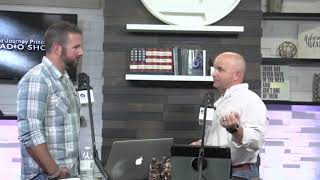
Stephen Scoggins and Josh Bledsoe present the GROW framework for personal growth: Gain perspective by asking questions, Recognize roadblocks, Organize a plan with measurable steps, and Work the plan through execution. Scoggins credits mentor Steve Meyrick and the principle: be willing to do today what others won't so you can have tomorrow what others don't.
Chapters
Foreign.
Guiding you to become the hero of your own story.
This is the Journey Principles radio show.
Where you are the warrior and we are your weapon.
Now, here are your hosts, Josh Bledsoe.
And Master Life strategist, Steven Scoggins.
Welcome back, everyone, to the Journey Principles radio show. We are broadcasting to you live from that beautiful city of Oaks, Raleigh, North Carolina. I'm your host, Josh Bledsoe, and today I am guest hosting with the Master Life strategist, the seaplane himself, Stephen. Welcome back.
What's up, buddy?
Two weeks in a row.
Two weeks in a row.
It's my birthday.
It is hot as blazing heat outside.
It is. It is, yes.
Very, very hot here in the great state of North Carolina.
There were two hobbits that walked up to my backyard today and threw a ring into the backyard. It was so hot out there.
It was so hot, I quit sweating.
That's gross. All right, so, folks, this is the last Tuesday of the month. I can't believe that July is almost gone, and we're about to step into August. Back to school time. And just before we get ready to go back to school, I want to talk about the issue or the topic of personal growth. It depends on how you look at it, really, if it's going to be an issue or not. It can be a challenge. And I've had friends ask me, josh, why is personal growth so important to you? Why are you spending money on the books? Why are you going to the conferences? I mean, you listen to the radio every once in a while, but you're listening to podcasts so much. And I like to think that the example that I'm setting is kind of coming out, making these questions come out, or they're just kind of curious. But, you know, I think back to the version of Josh before personal growth, or as we like to call it, personal enhancement here at jp And I'm a totally different person, but so I could. I could speak to that. And that's kind of what I talk about. But the version prior to that didn't have a clue why personal enhancement was so important. So maybe we can start there, maybe when we start the conversation with why is personal enhancement so important, Stephen?
Well, the first thing I'd like to do is we have a birthday guest out there.
It's a birthday. Birthday.
Yeah. Well, I'm sitting. So I'm sitting here typing up here, Mr. Castello. I know I said his name wrong, please forgive me in advance, but happy birthday, brother.
Happy birthday.
It was, like, two days ago.
Yeah.
So we had Shot him. Happy birthday. One of our transform you attendants, our attendees.
Yeah.
That said, he had a rocking, awesome time while he was there, for sure. So happy, happy birthday. I know, I know we have to be all serious and stuff like that. Hopefully it's not in a serious mood today. Hopefully. Should have heard the baby voices before we went on air.
I'm glad, I'm glad they stopped because I could not sit here.
All right, so back on the personal growth thing. Why is personal growth or personal enhancement so important? What's a mindset someone should start out with?
Well, so, you know, the world talks, talks about personal growth and you have, you know how I am about like, what do you call it? Overused words, overused words, overused synonyms. Things that are said so much they actually lose their value. It's kind of like saying I love you to someone a thousand times and not meaning it. Yeah. Eventually it just loses its flavor, unfortunately, you know, so we like to coin the phrase personal enhancement because honestly, really what you're. What you're trying to do is just simply enhance your current state of being, whether it's mentally, spiritually, physically, any one of the eight pillars.
That's right.
You know, and for me, a lot of times you can, yeah, you can get that from a book, you can get that from a podcast. You can from a lot of different sources. But I find that most people who are staying stuck on a regular basis are staying stuck or feeling overwhelmed on a regular basis simply because they're really deciding not to move forward.
Something going on with them.
Exactly. It's something. It's choosing not to work on you for just even any given time. And for those, and there are several that do nothing but work on themselves so much that they inherently begin believing that they need to do it so much because they're so attack their self esteem the other way. Which is why I like to kind of think of it as personal growth is more personal enhancement. It is simply trying to make each day better than the day before.
That's it.
Simple.
Just be the better version today than.
You were yesterday, you know, And I also find that the brain needs clarity. Our good friend Donald Miller talks about that a lot.
Yep.
He's like, man, clarity. Clarity is the key. Clarity is the key. And you think about it, when's the last time we try to teach something, whether it be on the show or whether it be a transfer me live event or any live event for that matter?
Yeah.
And I've gotten up on stage and I'm just like doing my Thing, and I'm like. And I'm looking around, I'm like, looking out there, and everybody's like, how's this? Like, oh my gosh, what just happened? I don't even know where he went with that. My wife does that to me all the time. She's like, I have no idea what.
You'Re talking about planet you just landed on.
You know, in my brain, it makes complete sense. It's like, hey, it's yours. Just connect the dots and kind of line that up. And you know, and then she, she as well as a few others have said that clarity and making something simple, you know, was it a whole keep kiss, keep it simple, stupid, you know, is incredibly important. So, you know, I think that we've done a really good job of creating a framework that allows people to digest information at their own speed, at their own pace, and really they can even do it in the comfort of their own home nowadays.
So that actually brings up a good point. So in the world of personal growth or personal enhancement, is there such thing as a one size fits all approach? No, there's no such thing as like a Jenny Craig approach this thing.
Okay. No, no. I think that everybody's journey is different. You know, that's why we, we, we coined the phrase the journey principles.
Yeah.
Right. Because the journey is yours. You're going to come from a different background. You're going to have a different set of skill sets, gifts, talents, things of that nature. You're going to have a different set of giftings, or not giftings of traumas and tragedies and things that you've overcome in your life and things of that nature that kind of come along the.
Way, that's you specifically.
Exactly. That's part of your journey. However, we do find that if you can align yourself with specific principles, you know, that govern your life. Yeah. It allows you to grow in such a way that enhances your life in such a way that is done so based on who you are at your core and how to amplify who you need to be at your core.
Very good. I like that. So it sort of starts off in a way that it lays the framework and the groundwork for everything else that's yet to come.
Yep.
After that.
Yeah. I mean, we dig into it pretty, pretty hardcore within the. Within the framework itself. Whether it be transfer me online or transfer me live, it doesn't matter. Yep. Both of those scenarios put you in an environment where.
Taught, getting into who you are first. You know, a lot of people try to be everybody else, unless just face it, being everybody else is exhausting.
It don't work. So, so we mentioned Transform you Live, which is our live event that happens a couple times throughout the year. And then we have an online learning platform that's coming out at the beginning of August, which is next Tuesday, believe it or not, next Tuesday, you guys will have access to this. And the, the things we're talking about now will be mentioned so much in there in the online learning platform that you can actually. You'll actually get to be where you're just using it, second nature. But get into that stuff. Stephen, I want to share with the audience something that you used. I mean, you've told me this before. It's something that you've. You've learned that took you from literally this.
Homeless.
Basically, like my way or the highway kind of person and stubborn, single, single working kind of guy to the man you are today. This is something that Steve Meyrick taught you what, 20, 30 years?
Well, if you think about it. So in school, I was not a great student, right? Not because I really didn't possess intelligence, but because I had some learning struggles of my own. Mild touches of dyslexia, adhd. I had this nature of getting things done quicker than anybody else. Even in a school day, I would get bored, incredibly bored. And I remember going to school a lot and having the teachers teach, try to teach me behavioral, I guess, theology, I guess, is how this is. You're supposed to fit inside of this box, inside of this system. You're supposed to go to high school, go to college, get a good job, get married, have some kids, basically die. Right.
It's kind of like round peg into a square hole.
Exactly. And, you know, for me, that just doesn't fit, you know, and long before I actually dropped out of high school to help take care of the family, long before that happened, I remember bumping into Steve Meyrick for not the first or second time, but maybe a year or so in. You know, I've known. I had known him since I was maybe 11, 12, 13 years old, right? And I remember him having this conversation. And Steve had a unique way of breaking down life, you know, in an easier way. And I want you some of the country bumpkin slang he used to use where, you know, it's like a toadstool on a grasshopper or something like that, because he had those, too. But for the most part, it was very. It was. For the most part, it was just. It was real. Just common, common information. And I've learned that people digest common far More than they digest. Like some kind of weird theology. Yeah, right. And I remember this one time I was sitting, I tell the story a lot of times when I'm. When we do our speaking events. But I remember talking one time and telling a story about the first time I kind of got introduced to the whole GROW theology. Okay, now grow, the grow framework is what we're going to talk about and share with you guys today. It's incredibly simple, incredibly practical, incredibly easy to use and it actually gives results. Right? So, yeah, and they can, you can watch this today, but you'll be able to get, begin using it today and actually change your life with it. So. And I'll never forget this, I've been working construction, you know, off and on during the summertime for what seemed like months on end. And right now it's like flashback central because it's like 90,000 degrees outside and it was 90,000 degrees outside then. The only difference is I walked around without a shirt on a lot, had a tool belt cut off, jeans. I was the epitome of the construction guy. Right. High top boots, you know, with, you know, and shorts. Right. So I had some weird, just some bizarre tan lines. Again, more information than anybody needs. But hey, but rings color to the story, you know. But I remember, I remember doing that stuff over and over again and I remember thinking my dad would tell me, a lot of times he goes, well, if you can make 12, $13 an hour, that's a good job. And you work for someone like Steve, you know, he's. It wasn't. He was trying to teach me to be subservient. He was just teaching me what he knew.
Yeah.
But something inside of me, it always had always taught me there was something more. I just really wasn't sure what it was. I wasn't sure what it was going to turn into. I wasn't sure how to talk about it, ask for it, search for it, gain every information. I just didn't know.
Right, right, right.
Until this one thing happened. Steve had asked me a question. We said it before. He said, what's the rich man and a poor man? Yeah, well, duh, money. He's like, absolutely not.
It's the way he thinks, he says.
It's the way he thinks. Yeah. He said, a rich man will invest, a poor man spends. Right. So he taught me the, a basic principle of only investing in things that actually make you more. Right, right. Simple process, you know, but if you're giving it, if you're given that choice to go buy, you make a Windfall. Go. Go and Wheel of fortune and win 20 grand or something or whatever.
Yeah.
Do I go and do something with the money that can make me more money as a seed, as an investment, or do I go buy a new car?
Right.
You see what I'm saying?
Yeah.
So he was trying to change my mindset because, you know, we had always. I had grown up in this, this environment where it was you. There was always more month than money. There was always a bill that was behind. There was always a reason for the lights to be shut off. Right. There was always a reason for these little critters to be walking across the floor, you know, and those kind of environments. When you're in those environments on a regular basis, you know, you stay conditioned to that.
Right.
And you don't really. You kind of learn not to really look outside of it. You know, my dad and for at the time was a, was a borrower. It was, it was something that he used to struggle with. He would go and borrow money and then, you know, probably no intentions of paying it back and go borrow money again from the same people. And eventually obviously those bridges burn.
Ruined relationships and similar situations kind of, you know, you only know what you know.
Yeah. So, you know, so this, I'm giving you just a little background. Take you all the way back to the beginning because in this one, one episode, sitting in his white Grand Cherokee with his gray bottom with a big dent in their left hand bumper with his. He used to wear this neck brace too. Like, it was just funny because I guess he jacked his neck up and backing in and stuff so much. But it was kind of funny. But anyway, I remember him turning to me and he. And he was at, he was telling me the story and then he said, he goes, stephen, I always want you to remember something. And I'm like, tell me now, Obi Wan. I remember sitting there like, yeah, what's coming next? Am I in trouble or what's going on? Only to find out. He goes, he goes, stephen, you have to be willing to do today what others won't. So you can have tomorrow what others don't. I heard that for the very first time in 1993. I went home and jotted it down on a note, just a piece of note, like a notebook paper.
Yeah.
Stuck it inside of my drawer in one of our single wide trailers. Yeah. And it kind of just sat there. Lo and behold, 1996, 1990, 1997 rolls around. We had been relocated. We'd already, we had gone from that single wide trailer to a nice house. And then my, my, unfortunately my father lost the house because, you know, business went down and, you know, so it was always this. And we were back in a single Y trailer. I remember opening that drawer for the first time and I read that, and for the first time it actually stuck out.
That's when it resonated with it.
That's when it resonated with me. And then.
Which is important note because even though we think that we shouldn't take notes on something.
Yeah.
It may not hit us right then, but it always comes back some way in a bigger way.
Well, if you think about it, that one principle has radically altered the course of everything that I do. Yeah. It's actually been the root principle with the root seed, if you will, of everything that I've desired to grow towards and enhance from. Right. So, you know, in his mindset, you know, I will do today what others won't. So I can have tomorrow, others don't.
Yeah.
As early as this week, I'm using that same thing, you know, and as I'm stepping back into my larger business on the, for the most part, full time right now, trying to get my organizational structure in a better place for growth and a better place to do some things, systems and process to make it better, I find myself still living that one principle. I'm still living it. Last week we had a struggle with a customer, right. And I had a choice to make as an owner, as an operational officer, as a husband, as a father. Either I can let this take us out, meaning I can lose this customer because we're unwilling to do what they're requiring, what they're asking for, or we can be willing to do today what others won't, so we can have tomorrow, others don't. I find myself living that one principle over and over and over again. And I'll never Forget this. In 1990s, 1998, after losing everything for over well over a year, after becoming cocky and arrogant, after making a bunch of money in 96 night and Torsitel into 97, I proceeded to lose everything because I thought the grass was greener on the other side and because I was dating someone that I thought was my world and I forgot that I had to provide for myself and what would be become my family. I remember going through all that and I remember being inside of Steve's Jeep for the second time. He told me the same exact stories. This time he said something else he pointed over on his dashboard. This is before they had navigation. This is when CD players were Kind of a cool thing, Right. Long before they'd be like, that's outdated.
Yeah.
He had the sticky note off to the side, and I didn't know it at the time, but that sticky note, I'd seen two or three, five, six, seven, eight, ten times. And it would have different acronyms all over his car. Right, right. Well, this one actually said grow. Huh. And he pointed at. He goes, that's what you need right there. Okay. That's what you need. You know, we used to have this theology called He'll Grow Go. Yep. Right. The still cut. We still kind of use that framework. However, the grow is probably the most powerful part of actual life enhancement and changing your life.
And now, let's be honest, at the time, did you think that's humanly impossible? I'm never going to be taller than I am right now.
Well, that's humanly impossible. Well, except for the one I wear these nice boots that have these, like, elevated lifts. Yeah, yeah. Then I can get a little taller.
But did you think that he was actually talking about your anatomy, like, grow taller?
Well, you know, it. No, I. I kind of instinctively knew there was something else coming. And before he began to elaborate it to me and telling him what was going on, I. I just. He's, you know, get around some people in life where it's just like, I just want to sit at their feet and learn and listen, because you know.
What he's about to tell you, he's going to be epic.
You just know that whatever's going to drip on you is going to. Is going to do something powerful. Right. My granddad was like that. Steve Meyrick was like that. Susan Batts was like that. Dave Ramsey was like that. Chris Licardo was like that. I've had so many people in my life that have just, for lack of better word, dripped on me and shared their valuable experience.
Good. So he said grow.
What did he say next that was most important? Now, you've told me this story, but this is kind of where I was talking about earlier, folks, that your own personal enhancement, your personal growth. It starts with the word personal, because you got to do it yourself. But when I asked Stephen the question, is there one size fits all to personal enhancement? I knew the answer was no to that. But I wanted his explanation to really kind of enlighten us and kind of give us that full description of, there is no one size fits all because you fit you, I fit me, Steven fits him. But what he's about to share is the framework, which you can use specifically for you in all areas of your life. Now, you can do this across the big, broad spectrum, or you can get down narrow, which we recommend, and each of the eight pillars of life. So what is. What does grow stand for?
Well, think about it this way. So before even jumping to that, we keep going back to this word personal. Personal, personal. What it means is accountability. I personally believe that only you can change you.
That's right.
Okay, now, I'm not talking about, obviously, that. That's you digging in with your time with. In my opinion, God, spending time with him. I mean, the greatest changes inside of me have come from him, 100%. Now he's allowed other people like Steve and stuff like that drip on me.
He's used them.
Yeah, but the word personal was personal because it's personal.
That's right.
You see what I'm saying? It's far too many times we spend so much time looking outside of other people. You know, it's this person's fault. I didn't get this. It's that person's fault. I didn't do that. I didn't. He didn't do this, and it was their fault.
Blame game.
Exactly. Blame holds more people back than anything else. It's easier to say. It's easier to say, I understand that happened. I understand that maybe I got to heal from that, but enough's enough. I'm gonna make a difference.
Right.
I'm choosing to be more intentional and have more accountability on my personal basis. Right. Yeah. You know, so when Steve began to elaborate it with me.
I read. I've realized at this point, point in my life that there are certain themes that you'll hear over and over and over again. It's almost like they come from the divine man himself. Over at first time, I hear it Steve Meyer. Second time I hear it here. Second time, third time, fourth time. By the time I got to my buddy CeeLo, he used to harp on this word. Harp on it. Oh, my gosh. I'm like, dude, shut up. I'm sick of hearing that word. Right. And it was the word perspective. Yeah, right. I love CeeLo to death. And I think he was the one that helped really seat the word perspective in my heart to really help me understand that it was incredibly important to really anchor that. So when Steve's. So when I'm able to connect the dots from.
Conversation I had with CeeLo and Steve Meyrick, I'm like, all right, I hear you. Yeah, right. So the first one, the G is gain perspective. How much time are you wasting? Right? Now in your life, focused on the problem. Mm. Not focused on potential solutions or focused on what caused the problem to begin with. Right.
Kind of just sitting in the muck versus looking.
Exactly.
Outside looking.
My buddy CeeLo would tell you that the most thing about. The most important thing about gaining perspective has 1. 1. One particular trait, and that is to look at things from so many different angles as possible. The more important the decision, the more important the change. The more important the starting point, the more perspective, the more different angles you should be looking at it from.
That's good. I've got a friend.
He's going through the same thing I went through last year, and that's job transitioning. So you're saying basically what he should be doing right now while he's transitioning from one very secure job to taking control of his career and doing something he's more in line with, more passionate about, he needs to be gathering all sorts of different angles and perspectives.
Yeah. And think about it this way. We do this. We do one of the things. One of the cool things we do during live events is we use this. This trick of the eye, Will. And what we find is it's funny because we throw it up on the screen and people are like, well, it's this, it's that. It's this, is that. And then you show them what. You show them the same object from a different angle, and they're like, oh.
My gosh, Totally different.
I had no idea. You know, we are trained to look inside out, not outside in.
That's right.
Right. That's how we're trained. That's how we're custom. All of our problems start in our gut or in our head or our heart.
We're emotional beings, and that's where.
And they come out. Right. So what we try to do is we try to. We try to dig in and help gain perspective from different angles. Okay, can I get some. Can I get a little perspective from understanding that maybe going to watch this like it's a movie. Like, I'm going to take. I'm going to physically take myself mentally out of the situation and replay what just happened as it's watching in a movie.
Okay.
Or I'm going to go to a trusted friend and say, hey, look, I'm trying to make sure I make a great decision here from your point of view here. Here are the facts and the truth as I see it and as I know it. What should I do? And you don't make a decision just based on what that one person says.
You're just getting more information.
You're getting more information because inevitably we've had this happen here. Even. Even working with some of the team members from time to time, where the team member in the past might be more intimidated because I am a very driven, very dominant personality style, might think that they're going to get one response and they actually get a completely different one.
Right. They let their emotions.
They haven't gone out and sought other.
Counsel and their experiences, not. They haven't seen you in a different way before that. Right. We always bring our past experiences into things, and I think that's part of why our perspectives are always sort of jaded, because we only know what we know. So we only grab from a previous experience in the past and then apply that today. That shapes our perspective at the time. Is that right?
Absolutely. I mean, I can even take personal because I'm still. I'm still using grow to this day, and I'll be using it for the rest of my life.
I find that it's more difficult to gain healthy perspectives or the proper perspective when times of stress.
Oh, absolutely.
Okay. The more stressed out, the more overwhelmed you feel. The more you feel like the world's crashing in, the less likely you are to stop, which is exactly what you need to do. And look at things from a different angle.
So look at it in a way of kind of like a movie. Ask a trusted friend or family member their own perspective of what they say. Is there any other way they can do?
You can also seek information. Books, ipods, books, podcasts, videos, things of that nature that can help you answer questions. But I only advise getting information from sources that have been there before and have overcome it in a healthy manner. Yeah. How many times do you see people go get marriage advice from someone who's.
Been divorced four times, or financial advice from someone who's in bankruptcy, real estate advice from their. From their neighborhood that exactly in the neighborhood they're trying to leave.
So be very careful about where you get the perspective from.
Sure.
Right. Okay. Bring a. Grab a yellow pad and a pencil and sit in a quiet moment and just talk. And I hate to. It sounds kind of crazy, but talk to yourself. Ask yourself, what do I want from life?
Yeah.
All right. Well, if I know what I want, if I can get really clear on what I want, I'll be begin to putting things in place to get there.
Or in a specific situation. You could take like say, let's go back to this. This. This friend of mine, he has this job transition that he's Doing now he could take that, that could be the actual topic. Then he can ask himself the five questions that you like to ask a lot. What's right, what's missing, what's confusing, what's wrong. And he moves on from there. Right. That gives him that better perspective.
So, and here's what I want people to understand. So even those four questions, those four questions.
Four questions. My bad. I said five. We should add another one.
We actually did. We actually do have a couple more. And inside of transform you that are really helpful but you have to get there first.
But those four just made up one.
Those four questions I learned from someone else who learned those from someone else. Yeah, you see what I'm saying?
But I've heard you say this over and over again. It gives you better.
They're legit.
It's more like a factual thing. Kind of takes you outside the emotion and it gives you a different perspective. If you answer them honestly. Right, right.
Or again you're going to hear the same principles over and over and over again. New perspectives on a different, on the same principle. We've talked about this before. If you, whatever you ask, the quality of your question is just as important as the quality of the answer or will drive you towards a quality answer.
That's true.
Again, asking why do I always suck or why do I always make mistakes or why do I always have these problems?
Yeah.
Versus what's wrong, what's right, what's missing, what's confusing. Those are completely different questions. Takes the blame out of the picture, Takes the self hatred out of the picture. Takes the blame that others have put out, maybe put up. Pulled you out of, out of the picture. Yeah. It puts you in a better place to in my opinion, hear from the holy Spirit and actually dig in and actually get great responses to great questions. And all they're designed to do is to help you get gain perspective, understand where you're at so you can get really clear on where you're going.
All right, so now we're in the position of where we're going. I've got my perspective. I've done what you said, Steven. I've wrote, I've written it down. What's the next step I need to take from there?
When was the last time you went on, you went on a trip anywhere. Flying trip, car trip, walking trip, running trip, Spartan race.
How many times have you any of those trips ever been without anything in the way?
Well, I know for sure the Spartan races. That's kind of the thing that put things in your Way.
Right.
But everything, everywhere you go, there's always something in the way.
Always a baggage, delayed. There's always a way. Someone who wakes up crazy GPS is.
Always saying, there's a faster way.
Would you like to accept? Yeah. Which is never faster, by the way.
But that's because something's always in our way.
That's my point. So life is a journey. Okay. Life is a journey. Life is a journey. Life is a journey. Life is a journey. It's not an ending place. It's not a beginning place. It's a journey. Each day can be better or worse than the day before based on how you plan for the next day. Okay.
That right there is worth the whole radio show.
That's what happens when he gets involved.
But as you can see, one of the things that we try to teach you how to do and we are really, really, really good at is teach you how to recognize the roadblock.
Yeah.
We teach you how to recognize why. What's in your way. For example, if you're gonna board an airplane and you know that the airport requires you to be there two hours ahead of time to get the security to check in. All kinds of stuff. Right. You know that security is a roadblock. You know they're in the way. You know you've got to take off your shoes and take off your belt and take out your computer, pull out your iPad. Right. What if. Because you know it's a roadblock. What if you could show up to the airport prepared? Maybe you take your belt off and put it in your bag before you even get up to the thing. Maybe you already unzip your computer bag and have your computer just sitting out to the corner so you can toss it over here and put in the thing.
Yeah.
What if you just grab. You went ahead and grabbed the three tubs. You're gonna need rat rather than the one and doing one at a time, which slows everybody down, and you. And you toss your gear in there, Right?
Yeah.
Sometimes the quickest way around a roadblock is simply knowing existence exist and preparing for it.
Well, that makes sense for the airport. Sure.
That. Gain perspective. Yeah. Work on recognizing the roadblocks. Right. And depending on what you're gaining perspective on, whether it's relationship or finance or your life or business or work or kids or. It doesn't matter. Whatever you're trying to gain perspective on, get it from as many angles as possible. Consider the roadblocks ahead of time. Ask yourself what could potentially be a threat or a hindrance. And making this the next Thing a reality.
All right, so I like that piece there. What's that question they didn't ask themselves.
Again, what are things that are possibly threats or hindrances and making sure that the next thing can become a reality?
All right, so let's go back to my friend, for example. He's in a job transition, and he's already gained perspective. He's asked himself his questions, the four questions, and now he's trying to list out the potential roadblocks in a job transition.
What are.
What are a couple ways he could discover those? And how many should he even write down? Because I feel like we could spend days writing down the roadblocks.
I think you're gonna. I think what will happen is you'll end up finding five or six really key roadblocks that are in your way.
Okay. So we're not talking stumbling blocks, and there's roadblocks. We're not talking about every little bitty thing out there. Right. Like this.
I. I like to think of this. I like to think of it this way. Again, I'm a person of faith, so everything that I do, everything that I am, everything that comes through me comes from him. That's how I look at it. Okay. I like to think that he will tell me what those roadblocks are if I ask him what they are.
Yeah.
Okay. In times, in past, when I'm studying, when I'm doing things, it's five, six, maybe seven things, tops. Yeah. You know, I use it all the time in business. I'll give you an perfect example. So at Che, Okay, There's. There's no secret here. I'm having to overhaul, estimating, purchasing, and the field all at the same time. Right. Okay. Why? Because there are problems. There are things that keep coming up in front of my customer, prevent us from serving them with excellence. Okay. Now, are they. Does that make my people inherently bad? No. Does that make their. Their. Their heart inherently bad or desire to serve the customer inherently bad? No. These are things that keep coming up simply because we keep putting out the fire but not fixing what caused the fire to begin with.
Because they didn't recognize the roadblocks before.
Exactly. Okay. So the first thing that I did when I. When I had to step back into the car company a couple months ago as I began looking to see what roadblocks were causing this stuff.
Yeah.
You know what was causing my customer heartache? What were causing them to want to email or be upset? What's causing our installers to not be happy in whatever with the role that they've been happy at for 10 years.
Yeah.
Right. Yeah. What's causing that?
Yeah.
And as I began to look for the roadblocks, I began to uncover 10, 15, even 20 things. Right. Right. So then it becomes prioritizing how you're gonna attack the roadblocks, but at least.
Now you know what they are.
Exactly. Which was the gaining perspective. Right. I knew that I couldn't just step back in and all of a sudden just start changing stuff left and right without having any clue.
Right.
About what was actually driving any of the inconsistencies, any of the problems. Okay. The first step was to discover, explore what's going on. How is it happening? Why is it keep happening? What's causing anyone to be upset or discouraged or anything like that.
That helped me get to the roadblocks.
Okay. So you saw the roadblocks. What I like about what you did as well, too, because we've had a conversation about this, is you stayed out of the blame game.
Right.
Where it's very easy for us to blame because it obviously was a human. So which human was that? That I need to go blame? That doesn't help anything.
Right.
That doesn't. Doesn't fix anything.
Yeah. A lot of times you. If you. If you will be honest with yourself, a lot of times it's not the person that caused the problem. It's a. Either a belief system or a process that caused the problem.
That's good.
Okay. So it's. It may be. It may be something inside of one of your team members, or it could be in your home. It doesn't matter. Maybe something inherently inside of that person. That. A belief system that changes the way in which they handle themselves or become part of the team. Yeah. Or it could be a process thing. Right.
So when I step back in, about two months ago, we had a. We had a brand new team in a lot of different places, a lot of key areas.
Right.
I began to see very quickly the heart of those that had stepped up to the new roles. And I brought in from the new roles was different. It was more of a servant heart. It was more of a teacher's heart, a mentor's heart. Right.
Okay.
Which is something I naturally gravitate towards because I like to teach and mentor other people. I believe that our main goal in life is to make the human race better.
That's right.
Okay. Sometimes it's in your house, sometimes it's in your business, sometimes it's elsewhere.
That's right.
All the same day, all the same time. It's still part of the same deal. So. However, some of the previous team members that are no longer with the company, for example, had a different belief or appear to have a different belief system. Only one man knows his heart, right? Only hit between. That's between him and God. I can't guess that. But you can watch actions and results to kind of see. Right. And what I, what, what that gave me was, it gave me a foundation in which to begin to build other people. Because if it's not just me that cares about other people in the building and cares about their well being and how they're being taught and what their opportunities are, and so keep not suppressing people that have opportunity ahead of them. If it's not just me, then it's going to change things, it's going to change the culture. Right. But even that is a roadblock. Not, not having to the right team, right. People in place for key roles is an incredible roadblock. Yeah. Okay. I know we've kind of rambled on about the G and the R, but I wanted to hit it from a lot of different angles.
Well, those are, those are the biggest ones because the last two go hand in hand. The very last one, the W, it's as simple as put boots to the ground and do it. But you're talking about the biggest pieces of it, right?
The biggest two pieces. The, the, the two areas that I would put be. I would be.
I would not be afraid to spend the most time on our gain perspective, recognized roadblocks.
Right.
Okay. The third thing is a byproduct of the first two. Okay. Once you gain perspective from all kinds of different angles, once you recognize the roadblocks, which is nothing more than threats and hindrances, what's going to prevent you from making something a reality or what's going to potentially harm you? Okay. Then it comes down to simply organizing a plan.
And I can imagine just by doing those first two things with diligence, patience, just really diving into them, getting different perspectives, different angles, you almost kind of feel that that plan sort of working up in you during that process. Right. I mean, you may not have everything from A to Z figured out, but you can at least feel the direction it's going. And I can imagine it makes you feel just, Just energized doing that.
Yeah. So I'll give you, I'll give you. I'm gonna try to give you a summary example as quick as I possibly can of how GR&O went really well together in a current situation. I just got through working through or in the process of working through now.
Okay, cool.
Our customer, one of our customers, one of our really large customers that has been a customer for ours for years and been a good customer, been good to us, began to be very frustrated because one of the communities that they had was having a hard time getting work completed. Not. Not the 90% or 95%. That's. That's awesome. And the quick install and all this kind of stuff. The last 5%, the setting of columns or putting up decorative accents and things. Just the nuisance, what I consider nuisance items.
Right. Last leg of the race.
The last leg of the race. All right. And obviously, if you're going to own a business, if you're going to perform, you need to finish strong. You don't need to finish last. Right, Right. It's okay to finish the second and third as long as you're constantly moving. Right, Right. So in this given situation, the end, the end result, the symptom was my customer is not happy because we can't seem to get this thing finished. Okay. Okay. I want you to know that I traced it all the way back after trying to gain perspective. Right. And try to recognize specific word, like all the way back to when the customer first received a bid from us.
How far back was that?
Oh, gosh, two years.
Wow.
Two years ago. History wise, somehow about two years and a half, three years ago, we changed how we. We changed how we began doing bids in the marketplace. Che, as a whole, has always been very itemized, very. This is what you get. This is everything we're going to do for you to make sure your service level is on point. This is everything it includes. This is all the supervision you're going to get. This is. This is the scope. This is the spec. This is everything that goes with it. Somehow came to a summary document. Here are the top things, things we're gonna. We're gonna do for you, and here are the top things we're gonna bid for you. And some of those items were not clarified. So what happens is where the previous system was, we could create a material assembly or a material PO and then a labor po. And I know I'm using construction terms, please forgive me, but it illustrates the point. Okay.
What happened was, is our purchasing team could not actually order the product. That actually is what the house needed to actually finish the job. It was a guesstimate at best, which means now my field team has to waste time, get in a car, drive out to the community, pull a tape measure out, measure something, get back in the car. Or send an email back to the office to clarify what needs to be changed. On top of that, once they did that work the first time, our system was so broken that they had to do it the second, third, fourth, 10th time on the same exact product.
Wow. If you got to do that for multiple things, you can definitely get lost in the details.
Incredible waste of time. Wow. An incredible trust destroyer of when it comes to customers. So what we did initially was we went out and put out the fires, or we went out and worked hard to put out some of these fires. On top of that, while the customer. We're working with the customer here. We're behind the scenes correcting the problem that created the problem to begin with. Right.
All the same time.
Yeah. So what happens is gain perspective, recognize the roadblocks. What are the roadblocks along the way? Okay. And then we've got the. Organize a plan. So I can't tell me a couple of key customers I went to and said, here is our plan. Here is your. Here's what's. Here's what you're dealing with, and we don't want you to deal with that. It's not fair to you. It's not fair to us. It's bad for you. It's bad for your customer. It means something to us. We're going to change it.
Right?
Okay. And here's how. Okay, here's how we're going to change it. Here's how we're going to measure it, and here's how you know what's going to happen. Yeah. Okay. After that, it comes down to w. Execution.
Right. Just getting it done.
You got to work the plan. Right. And it has to follow the same system in the process. Now, some things are subtle changes. Some things are monumental changes. And I'm using a business endeavor because it's the easiest one to use and illustrate right now. But work the plan right now requires.
Responsibility. I can't just say, all right, we gain perspective. We recognize the roadblocks, we organize the plan. Here's the plan. And then be like, well, okay, that's it.
Right. Or get timid and not let it. And not actually take the first step.
Right, exactly. So that the next step is work the plan. It's actually hold yourself accountable to the plan that you created, and that's a.
Good thing, a good way to end the show today. How can they hold themselves accountable? Accountable with all this stuff going on? We're not talking about something as simple as, I'm going to organize a plan of cutting the grass this weekend, you know, I'm just going to sit down, gain perspective of how my neighbors think my grass look, how my wife thinks my grass look, and then I'm going to recognize the roadblocks. Well, I got to move that hair water hose. We're talking about some serious stuff, right? We're talking about people that can actually apply this right now in their finances. They can apply it in their physical fitness world.
People, and get them past that first little roadblock.
So here's the thing. One, start where you're at and start small. Okay? Don't start with, I'm gonna make a million dollars. Start with managing your checkbook. Yeah. Okay.
Yeah.
Start with nuts. With spending less than you make. Right. Start with your debt. Snowball that our good friend Dave would teach everybody. Yeah. Little.
Little victory first little victories.
Little victories always lead to big victories. You never have. You will never, ever, never, never, ever have a huge victory without a bunch of little victories. Stair step in the way there Will not happen.
Got to get some first downs before you get a touchdown.
That's right. And it could be the right hockey play. We could use sports analogy out the wazoo all day. We can even talk about the hobbits and Gandalf. Right. Each little battle took them to the next leg of the journey. Your life is exactly the same way. So. So in some respects, it's okay to start small. Yeah. If, you know, you want to change your relational life and you know, you want to have a deeper, meaningful connection with someone you love or someone that you would like to invite to love. Meaning you haven't found that person yet.
Yeah. You may be seeking out that boyfriend, girlfriend.
You need to understand what's holding you back from being the best catch out there. Okay. And I don't mean, like, looks and all kinds of stuff. I mean, like, character. I mean, like, like, do I get angry easy? Am I easily offended? Do I constantly blame people? Do I get unbelievably, like, grouchy when I'm tired? Right. I'm a big believer. I can tell you this. In fact, I can tell you this from personal experience. My wife does not love me for who I am. She loves me in spite of who I am. Jesus does not love me for who I am. Yeah. Jesus loves me in spite of who I am.
Yeah, it's true.
All of that is the greatest, foremost love. All of that is the greatest form of encouragement. All of that is the greatest form of enhancement and growth.
That's good. I think we need to end it with that. So folks. Hope you got a lot of good nuggets off of that. The whole growth can't even talk grow framework can literally be applied across the spectrum. It's not a one size fits all because the growth framework for your financial desired outcomes or your physical desired outcomes or your relational whatever that may be, it's all going to be different. But you can still use the framework. This is why we call it a framework, not an actual plan itself. The plan is what you work for at the end. And if you want more on this, you can access the Transform you online learning platform that's going to go live next Tuesday. Just be watching.
We're doing some free stuff, aren't we?
We're doing a lot of free stuff with that. So just be on the lookout of that. You can dive into this subject and a whole lot more there. Thanks, guys. We'll see you next Tuesday, I guess inside of August. We'll see you in August.
That's right. See you in August. Take care.
More from Stephen



He Had Everything…Then A Heart Attack Changed It All | Dan Sachkowsky #Shorts




Paralyzed. Suicidal. Then He Surrendered, And EVERYTHING Shifted | Marcus Aurelius Anderson


Why You Snap At People You Love, The ALIGN Method, & Why ADHD Isn't A Disorder | Sara Hartley

