The Laughter Factor - Supercharge Your Success | Adam Christing
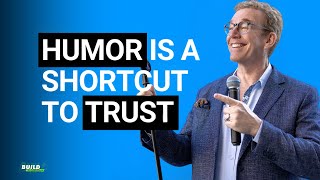
Adam Christing, a comedian and keynote speaker, breaks down five laugh languages leaders can use: wordplay, exaggeration, inside jokes, surprise, and self-effacing humor. He explains how pauses, vulnerability, and in-person connection amplify trust and team resonance through laughter.
Chapters
Your life is a joke. And here's what I mean. A joke always has a setup and a punchline. So we're walking around wanting to change our lives, wanting to get a new punchline, but we haven't changed the setup.
Jesus actually had humor.
Yes.
It turns out Jesus had humor.
Yes. I think sometimes we feel this pressure. Like as a leader, I have to be funny. I have to be inspiring. I have to cast the vision and. But you can be the orchestrator of fun without necessarily being the funniest person in the room. I cast myself, myself in the film. And when we got to the editing room, it was like my acting was so bad I got cut out of my own movie. As leaders again, the Temptations is just to say, I have it all together. I'm leading you. But what your people really want is to know you and to see themselves in you.
Hey guys. Welcome back to Build where we help you rise leading last. Guys, I'm super excited. As always, we're very specific about who we partner with and bring on the show because our goal is to feed you the very information inspiration you need to become successful with you and your team, your family, all of it. Today I'm very excited. We got Adam Christinks. Now, Adam is amazing. He's not just a world class keynote speaker. He's done over 4,000 humor based teachings keynotes. He has actually created organizations that actually put together humor with clean comedy at the forefront rather than some of the stuff that makes us feel icky, even though we giggle at it. So with that being said, I want to introduce you guys to Mr. Adam Christing. What's up, man?
Hey, Good to see you. This is amazing.
Oh, bro. And look, I'm excited to talk to you. So, you know, it's funny. I. Well, as I told the audience before, we're pretty particular now.
Yeah.
On who we partner with on the show. And anytime I find myself reviewing information ahead of time and then getting really inspired, I know it's a good fit.
That's great. I'm glad I passed the audition.
Well, I wouldn't call it the audition. I just, you know.
No, I really respect that because you're like any good leader. You're caring about your listeners, your viewers. It's a community. And so you want to, like you said, feed them and look out for them. But I wish I could interview you. Your. Your story has truly inspired me.
Thank you very much. I. If I'm being honest, one of the things I realized early on is in order for me to become A healthy whole person or discover my actual authentic identity, which is a lot of, a lot of folks really struggle with. I had to be willing to laugh at myself a little bit and actually have communications and humor. So I know it's a little bit different than maybe what you've probably been asked for before. But I'm curious from your perspective, since you're basically the master of all humor. Right. How can we use humor to better kind of like become more aware of self and, and you know, and uncover who we really are, you know, and set the stage for that.
I want to answer by telling you I'm rereading a classic book, Dale Carnegie.
I love Dale.
How to Win Friends and Interest People. And he said something that really stuck with me. It's not in the book, but I found this. They asked him, I think that book has sold like 30 million copies now. And they said, Mr. Carnegie, how do you sell so much? And he said, because I'm sold. So when it comes to humor, I think the very first thing before we, you know, before I share with people about techniques and finding your laugh languages, you have to believe that you have a sense of humor. And it doesn't mean you have to be a standup comedian or professional entertainer. But I think, I think we're created with the ability to connect with other people and humor is like a shortcut to connecting with people.
Yeah.
We have a fairly brand new grandson and.
Congratulations.
Thank you. He's not talking. Oh, that's great.
Make sure we'll do that off camera.
Yeah, yeah, we'll bond about that. That. So he's not speaking yet, of course, but he's already laughing with his mom and his dad. So it's. So part of being human is your sense of humor. And so you ever meet someone who says, you know, Steven, I'm not just. I'm just not good at memorizing people's names. Well, probably they messed up and then they have this block in their head that says, I'm not going to learn someone's name, but you can learn people's names and it makes a big difference. In the same way, when you become comfortable with your unique sense of humor, you can use it and to deepen relationships, to go deeper with your staff, with your, with your customers. But it's kind of risky. Yeah. You know. Yeah. And so we, we avoid. You know, my philosophy is, if in doubt, leave it out. If I think this is going to offend someone, I mean, there's a time and place to talk with your pals. In a certain way. But there are times when, let's say I'm. Am seeing an event and I'm walking up to the platform and all these jokes and thoughts shoot through my mind and I have to say, that's not going to build up this audience.
Yeah.
You know, but I've messed. I've messed up so many times.
I think we all have. You know, I guess a couple of thoughts on that that come up for me is so I'm. I'm. I've now somehow I went from being super cool to being super dad jokey. I don't know how that happened or when that happened. Exactly.
That's a sign of maturity.
Is that what it is? Yes. I'm finally getting mature. No, it's, you know, but it's. I just. I discovered that sometimes it's worth just putting it out there like, so that, you know. So I'll use dad jokes as an example. Right. So. Because I'm now becoming very proficient in them about, I don't know, 20% of them land. Yeah, right. And the others get the eye roll, like.
Yeah, but see, even, even that's a reaction, Right. Like, dad jokes are often so bad they're good. But I, I find it fascinating we don't call them weird uncle jokes.
Yeah.
Because I think something dad joke says, hey, this is family. This is corny, this is silly, but we can share it together. So sometimes, believe it or not, I'll be keynote speaking or emceeing event, it might be a Fortune 1000 company, and I'll hand out like four really lame dad jokes. And we have a little contest and I'll have the audio visual person do the rim shot, you know, and they get the biggest kick out of that. So I think sometimes we feel this pressure. Like as a leader, I have to be funny, I have to be inspiring. I have to cast the vision. And all those things are important. But you can be the orchestrator of fun without necessarily being the funniest person in the room.
How so?
Well, like, you could. You can. The other day I asked a question, maybe 150 people, and I said, what's the first or worst job you ever had? That's not a funny question, but the answers were funny. So somebody talks about this crazy job they had and how they hated it. Someone else talks about they were 13 and they were not even legally eligible to work, but they secretly got this job. And so when you get paid, people sharing. And I call this Stephen Hathenticity. When we get real about our failures as leaders again, the temptations just to say, I have it all together, I'm leading you. But what your people really want is to know you and to see themselves in you. And so I'll give you an example. In my own life, it's kind of embarrassing, but I lived in Los Angeles most of my life and I raised the money to make a movie and I thought, hey, I'm the producer, I'm the co director, I'm the main writer. I'm going to cast myself in the film. And it's a pretty funny film. It makes fun of how people can sometimes abuse multi level marketing.
Sometimes abuse it. Okay, yeah, sometimes.
And yeah, we had some great. One of the scenes is a woman is giving a eulogy at a funeral and she just stops midway and starts pitching her product to all the mourners. So I cast myself in the film and when we got to the editing room, it was like my acting was so bad I got cut out of my own movie. When I share that with people, you know, it's kind of embarrassing, but they're like, okay, this guy's real. Yeah, we want to follow people who learn from their failures, but admit them.
Yeah. Well, all right. So that's got me going down a different rabbit hole. And I like to chase rabbits.
I love them.
So one of my friends who I desperately want to interview or introduce you to, Rory Vaden, which I will after post show, but has this when he's training keynote speakers to speak. Right. It's one of the things that they do at Brand Builder's Group. They teach them this policy about making sure that the keynotes have elements of humor in them. And at least one of those items is what he would call self deprecating humor.
Yeah.
Okay, so I have, so I have a contrast question on that. How can one have self deprecating humor without being separate self deprecating to self?
That's a great question. Do you have any other questions? No. I make a distinction. You don't want self defeating humor because people that we're leading or managing or even our customers, they want to know that we're competent, that we're good leaders. I call it self effacing humor. And so the key is to share a flop. And you know, there's that classic story or a classic sequence called the Hero's Journey.
Yeah.
And you know about it, right?
Yeah, yeah.
Almost every great movie, every great book has this thing where there's some kind of failure, then there's a guide, then there's a moment of Success. A joke kind of follows a similar pattern.
Okay.
There's a setup. Yeah. Then there's some kind of twist, and there's a punchline. Right. And Rodney Dangerfield was the master at this. Right. He would. He would set himself up as, like, this egotistical guy. You know, he would be like, you know, my wife and I were happy for 20 years, and then we met.
Right.
So it sounds positive, and people crave that. I don't know what it is. I think we're so relational that, I mean, you imagine, like, say, caveman days. We're sitting around the fire, we're telling stories about trying to win this hunt, but it's the obstacles along the way that make us connect with each other.
Yeah, yeah. No, it makes a lot of sense. In fact, I was even thinking. And I've heard you speak on this, by the way. Guys, if you haven't seen Adam online, visit YouTube. Just search his name. A lot of really great content there, by the way. It had me thinking a little bit about something that you talked about on a different show, which is that Jesus actually had humor. Yes. It turns out Jesus had humor.
Yes.
And he used it as a point of connection.
Yeah. I was talking to my pastor about this not long ago, and I said, how come we miss that? And he said, because we're looking at the scripture through stained glass lenses. Yes. Yeah. But you think about, like, when he says things like, why do you try to take a speck of dust out of your friend's eye when you got a log jutting out of your own eye? So he's using exaggeration and sarcasm. One of the laugh languages I've identified is Amplify. He's amplifying the story. And so if you believe that he became fully human, of course he had a sense of humor. And obviously God has a sense of humor. I mean, look at his sons and daughters. Right? Right.
I'm one of his more stubborn kids. Or have been, historically.
Yeah, yeah, yeah.
Well, you know, it's funny. I. One of the reasons I love the show the Chosen, and I'm not the only one. Right. There's millions of people that love the show is because they do a fantastic job of illustrating humanity.
Yes. 1.
You know, my theology is one part line, one part lamb, which I love that. Thank you.
MAN In. By the way, I have to interrupt you and show you my other grandson. His middle name is Aslan.
Oh, that's awesome.
Micah Aslan.
So I've got three kings tattooed on my left arm after my trip to New Zealand. And Aslan is one of them. I finished this as a side note, I did a sabbatical with a pretty huge shift in 2024. As I told you downstairs, we were looking at the studio and stuff. I have this new theology that I help entrepreneurs who have made money but lost meaning. Right. Which is definitely something I went through as a byproduct, going through an exit and life shift and a lot of different changes and moving and all this kind of stuff. But as part of that healing journey of sorts, I did a 30. Well, almost a 30 days, about three weeks in February of beginning of this year actually. And I had 36 synchronicities happen in a six minute window two days before I left. And one of them actually gave me the names of three different kings.
Wow.
One is called the Kinji, I'm probably pronouncing, but it's. It's Maori for their king, Aslan, or Aslan again, from the book of Narnia. Right. And then Mufasa. Right. So what's the Swahili for king? Right.
Yeah.
And the other thing that came up when I was going through this experience is like, all three of these kings were never given their crowns. They earned their crowns through service. So it's so like slowly tattooed on my arm just for that reason. So funny story.
Brilliant. That's brilliant. You know, you just reminded me one of the great talking about theology, one of the great children's authors of all time, Madeleine Lingell, she was describing Jesus to someone and she said, he wasn't a theologian, he was God telling stories. So one of the ways we can kind of relax as leaders, as communicators is like, you don't. You don't even have to do jokes to use humor. You can tell stories about your own life or use metaphors, and we are just drawn into stories. I mean, if I had to choose between, if I'm doing a keynote event, I would rather tell a story or have an audience member tell a story than all the graphics and imag and all that kind of stuff.
Yeah, well, this, I mean, the reality is a story is the only way people can see themselves in your journey or actually see themselves in their own journey.
Yeah.
One of the musicians I mentioned down to you downstairs, that was part of an event we just did and even done the show before. Chris Hendricks says he wants to be and he wants to impact 1 million lives, to help people see the better version of themselves.
So good.
You know, and I find that I mentioned downstairs, I feel like there's a death of a guru and the raising of a guide. And that's what the guide has at heart, is the fact that they actually want to see other people succeed, which is one of the things I love about you, actually. Everything that I've seen that you've put out, whether it be in written form or video form or podcast, like podcast audio form, even some of the keynote snippets I was able to see is you're generally out to serve people, with the exception of putting up a slide, asking to get tipped on stage. But that's okay. Yeah.
Yeah. That gets a big. I go into the audience and I say, hey, do you think I'm doing a good job? And the guy usually says, yes. And then we have the big gratuities.
Can you answer a couple of these questions for me? Which, by which is. It's. It's funny. It's additionally funny because nowadays, when you go to a restaurant, they'll, you know, you could pay at the table and they'll say, well, you know, they'll just say, well, if you could. If you could answer a couple of these questions for me.
Right. Like it's some kind of a survey, when really it's just like, they never.
10, 20, 30.
No, it's so true.
It's.
It's really funny. That's another factor with humor is. I've noticed the word comedy and community have the same root. So my favorite flavor of humor is inside jokes. Like, now that I've been in your beautiful estate and I've seen your love for music and books and things, my mind's already working. Like, okay, if I were to give Stephen a gift, it might call back to an experience that we shared. And so it's crazy. Like, this would never work at a nightclub, but if you're in a small group and something funny happens, if you remember that and a month later refer back to it, everybody just starts laughing.
Yeah.
Because it's about this shared experience together.
Yeah. It's funny. The woman I've been dating now for seven or eight months now, we have all kinds of inside jokes.
Yeah. Yeah.
All kinds of inside jokes that just make us giggle.
Yeah. I have some friends where it's one word. It's a crazy word. The word is genre, which is not a funny. But if I go up to my friend Sam, and I just go genre, because we have a backstory about it, you know? Yeah. And so I like this phrase more than being a keynote speaker. I want to be a keynote listener. I want to hear what's happening in the room. I'm noticing everyone loves her or they're poking some fun at him. And if I can weave that into my presentation, whether I'm doing a sales presentation or I'm giving a guest sermon at a church or something, it all goes back to really speech one on one, which is know your audience. Yeah.
That's so good. In fact, I just realized I've been kind of doing that by osmosis. I always arrive at an event a day early. I always participate in the event, regardless if people know that I'm speaking or not.
So good. That's rare. That's rare.
Thank you. Because I see.
I see. I introduce a lot of speakers, and some of them. I've seen them literally walk on the platform going, what's the name of this group again? And you're like, are you kidding me? Yeah, that's.
Yeah, I. It's something I've always wanted. It's always something that's been important to me because if I'm generally there to impact the audience in a positive way way, I have to understand the audience.
Yeah.
I have to understand their frustrations. I have to understand their problems, their. Their fears, their aspirations, their. Their hopes, their dreams. And look at my story. I'm like, where did I share the same fear? Where did I share the same insecurity? Where did I share the same excitement?
Yeah.
And that things.
And. And so by the time you're about to speak, you don't have.
I reference different audience elements throughout the whole thing.
It's golden.
Yeah.
So it's not like you're trying to use a story or a slide or a joke or whatever to. To hook them. You're already connected. Yeah. Yeah.
I want to know them. I want to know them so I can serve them. Which had me kind of thinking a little bit. So one of the people that I. So I've been like, you have been in lots of green rooms, been part of several stages or MC at one stage, or just serving behind the scenes. Like, you know, we. We've hosted some events for some folks, and one of my favorite speakers on the planet by the name of Eric Thomas, ET he and I became good friends when we hosted Ed Mylett's event. And what I respected about him was I'd seen him on Speak Online many, many times, but he gets to the event, and he intentionally, like, doesn't do the. What I call the green room circuit. And you know what I'm talking about more than not. Instead, he immediately says, hey, I'm Gonna go sit in the back of the room. Yeah. And he sat in the back of the room. And why. We probably watched four and a half. Probably like four and a half different presentations because he was the last one. And I remember walking down the hallway with him and, you know, going from the green room to the. To the auditorium area, and he got saying, I'm just. He goes, I gotta feel the room. I gotta feel the energy. I gotta. I gotta. I gotta feel it.
I like that word that he used, feel. Because a lot of people talk about, read the room, and often what that means is like, oh, she's into real estate, or he's a sales manager. But no, feel the room.
Yeah.
Like there's an energy. And then what I try to do is feel it, experience it, and then take it to another place. Maybe the. Maybe the feeling is low, maybe it's high, and we need to bring it down for a time of reflection. But you can't really lead us somewhere until you first feel where we are. Where we're sitting is not terribly far from the Billy Graham Library, about an hour and a half, and obviously impacted the whole world. But before Billy Graham, there was an evangelist, D.L. moody, and he said something Stephen stuck in my head. He said, I listened more people into the kingdom of God than I talked into the kingdom.
Oh, wow.
Yeah. Wow. Yeah.
I was just sitting with that for a second. It's funny, the older I've gotten, and I would like to think the more mature I've gotten, especially as I call it the embodiment, when I'm teaching about the one part line, one part line. LAMP. Philosophy and structure at this stage. AMB Integrated Alignment Method. One of the things that I'm doing now is I'm recognizing the importance of presence. And you can only be present in the pause. Right. And as a speaker, you get in the flow. And you, you, you, you. You can pause on stage and things like that at the same time. When I look at humor, sometimes the most humorous moments are actually formed in the pause.
Totally. Yeah. And a big mistake that people make with humor is they step on that pause. Right. So if I mentioned the Rodney Dangerfield joke. So if he didn't do it this way, but if he had said, my wife and I were happy for 20 years and then we met, you don't get that delicious pause before the punchline. So whether you're telling a story, revealing something like, say, a product launch or whatever, it's like, that pause is powerful. And this is a crazy example, but I think we Can I believe that all truth is God's truth? So we. We can learn from anybody. So it was a crazy example.
Yeah. If you. Truth. Truth requires no evidence. It just is.
Yeah, yeah. If you were to. I think when we think of World War II, for example, maybe the two top two or three most important leaders, of course, Winston Churchill, Hitler, they were both great orators, great speakers. Adolf Hitler would sometimes pause for, like, three to five minutes, and you could hear people just drawn in. Churchill gave a speech one time to graduates, and he stood up there a bunch. I think there were a bunch of, like, young cadets, and no one knew what he was going to say. Here's one of the most eloquent men in, you know, world history.
Yeah.
And he just paused. And then he said, never, never, never give in. But I think it was. And then he. And then he stopped. Another pause. He was done. So he basically opened with this powerful pause and closed with this powerful pause. But I understand what it's like to want to fill that, to look smart or to try to be funny.
That's performance.
Yeah.
And I find that a lot of leaders, and me included, like, you go through a season where you don't know how to perform because you don't know who you are. Right. The moment you know who you are, you feel you no longer feel the need to perform, and now you're actually showing up in presence. You can actually sense and feel the energy from the audience, from the people you're. Whether it's a small little, like you're meeting with your executive team around a roundtable, or it's a. An audience of a thousand or more. Like, that is the kind of the genesis of that.
Yeah.
In this. In this element of intuitive feeling and pausing, you develop these laugh languages.
Yeah.
Right. So I. I'm curious to know how. How, one, how you saw the patterns. Two, how you see them benefit people when they understand them. And three, how can people lean into them?
Well, first, you know, you've heard of Dr. Gary Chapman. He wrote the Five Love Languages. So my wife and I bought our son James the book the Five Love Languages. And we get. He's in college. So, buddy, what is your love language? And he said, venmo. So that was fascinating.
My kids do.
It works. What I noticed is, I mean, I've worked with over 100 comedians, from comedians you've never heard of to, like, legends like Martin Short. And I noticed that there's certain patterns that consistently make people laugh. So I started toying with this idea of, like, well, just like, we have love languages that we gravitate toward. Like, I. I love giving gifts. Yeah. You know, words of affirmation. My wife. It's definitely gifts of service. Right. Well, same way with humor. You mentioned dad jokes earlier. One of the laugh languages is wordplay. Some people just love poems and puns and phrases.
My team tells me I talk in fortune cookie.
I love that.
I love that maybe I have to create my own little business model around fortune cookies.
Yeah. You know, I work with a lot of magicians, and some of them do amaz. Like, there's a guy where he predicts your thoughts. You crack open a fortune cookie and it's inside there. But part of that's the mystery of, like, what's inside of that. But I love that phrase that you speak in fortune cookie. So another laugh language is amplify. And this is the. The person who. They go to the grocery store, but they can make it sound like they just, you know, hiked the Himalayas because of some frustration. So it's, it's their ability to exaggerate, you know, Transit.
Transit of the gap of the ice cream aisle.
Yeah, exactly. And then oftentimes, you know, they're embellishing the stories, and the stories grow. I mean, if you've ever been with a speaker or a leader and you go, I was there. And I don't, I don't remember all these things that you added to the story.
They're probably more along the lines of Seinfeld, but.
Yeah. And I'll give you the other. The other three. One I mentioned earlier is my favorite, and that's inside humor in. I call it in jokes. And this is where you, like. I was in Asheville, North Carolina, one day and I forgot I was wearing a shirt of one of my favorite rock bands, King's X. Yeah. With your love of that metaphor, you might really like them, but it's kind of an obscure band, right. So, you know, Taylor Hughes has what, millions of Spotify followers? I think King's x has like 50,000 still. Cool. But anyway, this guy came up to me like. Like I was his long lost brother. I didn't know who this guy was, and it was because I was wearing this shirt. And he goes, what's your favorite King's X album? We just like, bonded and our. Our wives are kind of like going, what's going?
They're geeking out over there.
And so when you find a common. Maybe it's a film or a song or a story, you can create this depth of connection. And we just Love that.
Yeah.
So that. So inside jokes. So that's the key to that is listening what's happening in the room. And it could be done in writing. I mean, it might be through email or if you're into sales copywriting, where you're calling back to a customer's prior experience in a fun way. And let me remember the other two. Oh, this is one of my laugh languages. Probably my core laugh language is surprise. And so, for example, after I do an event or our company, Clean Comedians provides entertainment, you know, it's nice to send a thank you card or something. We go to Walmart and buy like a $3 bouncy ball.
It already sounds funny. Yeah, yeah, yeah, you should, you should.
Yeah, yeah. I have, I have photos of buying these bouncy balls at Walmart where like I got two. Two carts. In fact, one time I was in our small little town of Brevard, North Carolina, and this woman goes, what in the world are you doing? And I explained it. I said, we take these balls, we write a note like, hey, Steven, I had a ball being on your podcast. And the mail carrier brings it. And people are like, what? And so, you know, it cost you six bucks with postage, and it surprises them. But the quick story with this friend, she said, what are you doing? And I said, oh, this is so fun. I told her about it and she said, could I have one of the balls? So I gave her the ball. She helps me get all these balls in my car and we start talking and she says, where do you live? And I named the street. She goes, what's your address? I named the address. She goes, you're my next door neighbor.
Are you serious?
Yeah. And so. But now that's become like this inside joke where we. And so one time I did a theatrical event and she went around the whole neighborhood and had everybody sign a big ball from Walmart and put it on my porch. So that's not hilarious to most people, but that's the kind of combination of friendship and surprise. Like sending somebody a birthday on their half birthday. That's just like half of a birthday card, you know, so you don't have to be. That's great.
I like that one.
Yeah. You don't have to be a stand up to tap into these. And I'm blanking out on the other laugh language. I should know these. But we're. We're very real on this. Yeah, yeah. On this podcast.
Well, the reality is we can't give it to Alti. I want people to pick up the book Honestly.
Oh, good. It's a nice teaser. Yeah, yeah, no, it's great.
And look, and one of the things I've been telling the audience for a while now, but I had this epiphany probably about three years ago. So three years ago, people were coming to me all the time, say, how did you go from homelessness to building? Blah, blah, blah, blah.
Right.
So much so that it was like, you know, it started off, I would tell my. I would tell the story and then I would later try to find commonalities. And then I discovered statistically that business. Businesses fail for lack of. You know, they say the last. The five reasons are lack of leadership, lack of sales, lack of market penetration for product fit. And I got to thinking, none of those were my story. My story was arrogance, ignorance, impatience, fear and insecurity. Yeah, right. So I call them the five constraints.
Love your honesty.
It's like. And you know, and it's, it was like constricting the neck, which led me to, which led me to have a complete awareness overhaul of. You can't scale dysfunction. Okay? You just can't scale it. If you're dysfunctional, your team's not going to be. Your team's going to be dysfunctional and then your clients are going to see as dysfunctional, then your process, your process and systems. So basically the entrepreneur is the embodiment of who they are. So if they want their business to change, they change themselves. Which had me thinking just while we've been talking on some of the most challenging moments where we were including myself, in some cases, scaling dysfunction real time or attempting to. It was laughter that pulled us out of the hole.
Yes.
So I'd like to maybe talk a little bit about Team Resonance.
And by the way, you just reminded me of the other laugh language because you just illustrated it's poke. And so this is poking fun at yourself, gently teasing, roasting other people. But what you just did is such a great example of being real again, authenticity. You, you didn't make your story about being homeless, about being a victim or what happened. I'm sure there are elements where you got some rough cards dealt to you.
They were all self induced.
They were all self induced. Yeah. And you know where we see this a lot? My grandfather told me, he said I was a drunk for 40 years and then I got sober for the next 45 years. And as a young man, he took me to 12 steps meetings. And I felt like, is this a comedy club? Because they're all, they're all laughing and joking about their own Flops and, and their disease and roasting other people. And I noticed that the spirit of community and camaraderie and humor was part of their recovery. Yeah, yeah.
No, I love that because I, you know, again, I was, I discovered that if I was going to, like Mara told you, the constraint was insecurity, like one of the constraints.
Right.
And I, and I embodied all five of them independently. Sometimes a handful, sometimes all of them. It's the same. You're like the poster child for constraints. Yeah, I mean, I had a. My. I used to be really insecure about the fact that the extent of my education was a GED, but meanwhile generating 45, you know, this is like a decade plus ago. You're at 45 million top line revenue annually. And I've got people that had four, eight, six year degrees based on their skill set. Right. CPA became a cfo. Right. Coo. Right. You know, and then, you know, so I would go in and I would step in and, and Grant, I obviously founded the company, you know, so it's all grit and hustle and tenacity and all those things. But, you know, I would get in these conversations where I'm like, I just. They would have great ideas and I would just suppress them and shut them down, you know, and I did that as a byproduct, trying to make myself feel like I should be sitting at the table with them.
Right.
And I say I share that because one of the things that I discovered is once I became more authentic with them and willing to poke a little fun at myself, I'll give you an example. You probably noticed when we were exchanging a handful of emails that my emails are not really well worded.
Right.
Which by definition would surprise folks, except for my little disclaimer at the bottom of the email that says, and I stole this from a good friend of mine, by the way. I wish I'd invented it, but I didn't. His name was Doug Stewart. He actually did this mentorship I think called your top four and a half mentors, which is a fantastic talk. Doug Stewart, TEDx. Check it out. Yeah, but it says compliments. Was it creative? Creative spelling and grammar. Compliments of dyslexia.
Oh, I love it. I love it.
Funny story. Yeah, the woman that sold me this house, she saw that email. She used to work with people with dyslexia and learning disabilities. So I go to close on the house. They had had a different offer on the house that was more money than I had offered with a whole different deal set. She could have like taken kind of like just taking a large proceeds and ran, so to speak. And she says, no, I chose you.
I love that.
And she said one of the elements was how I communicated. Yeah, like I was always honorable and authentic and stuff like that. And she says, and she goes, plus, I used to work kids just like you. And to see you, see you reach this level of quote, unquote success just warms my heart. This house deserves you. Plus, I'll know you would do good things with it.
I'm sure you've heard this saying. I don't know who originated, but I just love it. And the idea is intimacy means into me, see, So I thought it was icy.
It was Austin Powers. So the guy played Austin Powers, the guru movie, actually into me. I see.
Yeah. But you know, when we're, when we're open like that, like. I'll tell you a story that I rarely shared, but this struck me. I was emceeing an event and a lot of high capacity donors at a five star resort. I'm about to introduce a big time keynote speaker and a kind of famous group of musicians. I go up there, but when I was hearing them talk about the founder of this nonprofit, his story about addiction, his story about wrestling with God. This has never happened to me before, but I burst into tears before I even got up there. I'm the emcee, so I'm supposed to, you know, be the orchestrator. I get up there and I can't. I can't speak. I'm about to introduce the band and they had to put their arms around me and kind of help me talk through it.
Were you just emotional at the time or.
Yeah, it just did something inside me thinking about my, my grandfather, thinking about my own struggles with addiction over the years. And I thought I just wrecked this opening, but had the opposite effect. People came up to me and they said, we're so glad you're here. Now you know what we're all about. And so I think sometimes we believe that we're primarily thinkers when really we're. We're linkers.
Yeah.
We link our hearts, we link our stories, our, our experiences, our, our failures, our, our physical challenges.
You know, I love, I absolutely love that, by the way. Love that. It's a fortune cookie moment. I love it. It is drinkers or linkers. I like that. It also reminds me of these. One of the reasons that I don't overdo the intros of my guest at the beginning of the show is because I don't want their credibility to Outshine their vulnerability or authenticity. Right. I want my. I want the viewers and the listeners to get to know the guest. Right? Because I can't think of a single guest that I've had on in probably the last two years that hasn't been authentic and vulnerable and wanting to be of service. Right. Which then had me thinking about, you know, let me do it this way. On the surface, okay? You would think the laugh factor, or laughter factor would be more about a book to help comedians become more funny or connect or whatever. However, what I've discovered is, is it's really for everyone to just build a better connection.
Exactly. One of the phrases in the book, the laughter factor, is humor is a shortcut to trust. And as you know, so true. Our culture, maybe the whole world is in a. A crisis of trust. And so it's not a gimmick. It's not just a hook. It's like a way to connect. And part of why I structured it with the five different laugh languages. You got to do it in a way that's true to you. Right? So. So if you're not a storyteller, don't. I mean, we all are to some degree, but if that's not your forte, maybe you're good with. With poking fun at yourself and teasing other people. Use that one. And by the way, what makes you laugh is probably an indication of how you can. Right. Like, by the way, I'm already. I'm already thinking about some. Some pranks I'm going to play on you later based on things that you've been telling me.
Yeah, Yeah.
I got. I got to tell you. I got to tell you one.
So prank already.
Okay, well, this. This was. This was, like, the ultimate prank played on me. So my friend Steve, sadly, we. We lost Steve. He. You probably saw him. He was on the Tonight show with jay Leno, like, 40 times. He would impersonate George W. Bush.
Okay.
He was so good that he became friends with the Bush family. There's a great clip on YouTube of him doing a. A press interview side by side with Bush. He had. He had a, like a $6,000 toupee, an artificial nose. He looked just like George W. Bush. And so they would ask Bush a question, and George Bush would answer, and then Steve would say what he was really thinking. So keep that in mind. So this guy's a master impressionist. So I'm on stage in Newport Beach, California, Big insurance company. I'm doing some comedy, and I was doing a magical trick with tissue paper, like toilet paper that would disappear. What I didn't realize is, as I'm throwing it over this woman's head, it's landing in the spotlight, catching on fire. And the air conditioning is blowing fireballs on the stage. So the whole stage starts to catch on fire. Oh, wow. And the fire alarm goes off. And I'm going. And the audience is yelling, and I'm thinking, they're really into me, but they're yelling like, hey, the stage is off. So Steve grabs a bucket of water and douses the flames. And I'm thinking, oh, man, this is bad. I don't know if we're going to get paid this. We ruined their event. Next morning, I get a call from the fire chief of the city of Newport beach, and he's just grilling me. He goes, were you at this event? Yes. Was fire involved? Yes. And he says, who else was in this presentation with you? And I said, steve. My friend Steve Bridges. And the fire chief goes, he's a lot funnier than you, isn't he? I go, what? So Steve is impersonating the fire chief, right?
Yeah.
So an event like that that was a disaster in many ways, became this, like, cherished memory for me and Steve. And so it's almost like being army buddies, right? Where we go through something together. You might say we can laugh our way through difficult days.
It reminds me a lot of just movies in life in general, where you are literally weeping at your feet, and your best person on the planet just happens to say something that only you two know.
That's right.
And then the next thing you know, laughter is now it's laughter with tears still coming out. But it's like, it's. It's lightened that moment, you know, so.
Because I. I just did an event where I do this bit where I go into the audience, and I find usually it's men who look like certain celebrities and so be like, oh, my gosh, Jeff Bezos is here.
Yeah.
And this one guy, he looked like Mr. Clean. And I knew he was a good sport. And I said, I can't believe it. Mr. Clean is here. And he stands up. But so a week later, I just got a message from this guy. I don't really know him, and he goes, his name's Stan. He goes, hey, Adam, it's Mr. Clean. It's like he embraced that. So now if I see him a year from now, you know, I'll do a Mr. Clean bit.
Oh, I love it. That's awesome. Yeah. I was also thinking, too.
When it.
Comes to leadership in general, I think one of the most difficult things to do is to let your guard down and, And. And. And be authentic with your team. You know, one of the things that I changed dynamically how I did things was, again, I would originally suppress their ideas and whatever because I didn't want to look like I was an idiot and whatever. But then I realized the greatest. The greatest wisdom you can do or the greatest element of wisdom you can express is to listen to every idea and stuff at the table, and then, if needed, express a thought or an action. And a couple of times, I would listen to it around the table, and then I would do something goofy or something at the end, and everybody would crack up and laugh. Right? So it's got me really rethinking, like, how leadership actually gets done and how it gets expressed, you know? And, you know, in the book, you're talking about lifting and leading. I understand it more and more and more as I've dug further in. What are you hoping to see out of this book and how it. Like, how.
What.
What's the impact you're hoping to see?
Well, I mentioned in the book, you know, I'm. I'm not a celebrity. I'm. I'm totally cool with that. I've worked with a lot of celebrities, and part of it is I want to put other people in the spotlight. So I'll give you an example. The other day, I was embassing an event that was a fundraiser for a nonprofit group, and this particular woman was a little nervous about. She was the one going to do the ask, basically ask to invest in this work. And I have a line that I love to use. Prior to the ask, I'll say something like, I've been invited to deliver the sermon on the amount. Right.
See, I already like it.
See, I pulled her aside and Stephen, I gave her that line. I said. I said, if you say this at the opening. And I was so proud of her. She. Because she's not a comedian, she did the line. Everybody laughed and just kind of relaxed. And so I see my role really, as empowering other people. We have a group we call Laugh Launchers. And it's like, take humor into your work. Take it into your church. Take it into your family. Right? First time I ever met my wife, I was doing a card trick for someone in Mexico. I didn't know her at all, and I thought I was being really cool making a card disappear, whatever. And she walks up and she says, hi. I hate magic. And we've been married, like, 26 years. It was the, the honesty and the humor. And so it is. I mean, science, medical science is showing over and over that it's good for us physically. It's, it's, it's funny to me. Like, you'll read like a Harvard study and it'll say, medical science breakthrough, laughter releases endorphins, reduces stress, helps your heart. I'm like, wait, didn't King Solomon say that? Like, I don't know what it was 3,000 years ago. A merry heart does good like medicine. So we're just recognizing these, these ancient truths. But you know what really surprised me about the book and researching it was not only is it so great for our health, like, just talking to you right now, I feel we're laughing together, we're having a conversation. It just feels good physically, too, but also the unbelievable ability that humor gives you to connect with people. It's like instant. If you can laugh with someone, you're not going to be mad at each other. Yeah, right. You're going to, you're going to feel like I can talk to this person. And so I'm hoping to answer your question about my. My mission really is to empower other people to connect. And humor is just a great way of doing it.
No, I totally agree with you. And then the cool thing is that being able to give real, real world, real life examples because it's, it's one thing to communicate a thought like an idea, right. It's another thing to embody it based on evidence of past experiences.
And I'm glad you said that, because if you noticed that we feel faster than we think soon, soon as I met you in person today, you. You transferred this feeling of, of hospitality. Wasn't a thought, was. Wasn't a fortune cookie quotation.
But I'm going to get fortune cookies for sales. I think it'll be awesome.
Awesome. But it was. And I think this really helps us as leaders and even in selling ideas or products is it's a transfer of trust. Right. And it can be vulnerable. Like the other day I did a joke that just totally flopped. But guess what? If I'm willing to sit with that pause, even that becomes funny. Even that becomes a shared moment.
That actually gives me another idea for one of our last topics, I think. But before we do that, where can I find out more about you and about the book? Grab a copy of the book, get to know you better.
Well, here's a cool thing for your viewers is you can discover your laugh language. It just takes four minutes. It's a free quiz that we have. And you just go to the.
I was hoping you had something like that.
Yeah, yeah.
We're talking about, well, you got one of these two or like, multiple.
And I'm so proud of my daughter Katie, because she picked my brain and she said, okay, describe these laugh languages in a way where people could really apply them. And that's in the book. But in the quiz. So people go to the laughter factor.com takes four minutes and it emails you like, here's which one is your strong suit. So if you discover your. Your word play is your. Your humor tactic, then it's like, embrace it. Yeah. Go for the dad jokes. One of my friends in Houston is a dad joke addict. So because surprise is my laugh language, I sent him this, you know, dad joke button. So, like, anytime he needs that fix that dopamine hit, boom, he hits it and there's a terrible dad joke. I love it.
I love it. Thank you for that. I think that I, I want to encourage everybody to do that, mainly because I've. These are tools that are. And so I, obviously, I come from a construction. My audience knows that my first company was a construction company that's started with a hammer and a nail and then, you know, did all the things we already talked about. So it doesn't need mentioning again. But one of the things that sticks in my mind is laughter is like something I would have in a tool belt.
Yes.
Right. So there's diligence on one side, there's laughter in another. There's what I call intuitive connection or empathy in another. Like, all of these are tools that the wiser and more mature you get, you can pull out at just the right time.
Well, exactly. And in comedy, you know, Steve Martin had a joke many years ago where he would. He would pause and he would go, the secret to comedy is timing.
Right? Yeah.
And so it's timing as a leader. Are you going to pull out the empathy tool? Are you going to pull out. Are you going to pull out a joke? You're going to pull out being quiet. You're going to pull out of your tool bet tool belt. Time for yourself to withdraw and think and meditate and pray about what you're going to do next. So I, I've been blown away to see people. I worked with one sales manager who's not a super funny guy, but he learned to juggle. So I taught him how to juggle with handkerchiefs. And when his people. I think he was in front of 600 salespeople when they saw him being willing to look silly and have some fun. It was like, yeah, you know?
Yeah, that's awesome. No, I love it. I guess the. The last one I want to spend a little time on because obviously we've talked about how humor can affect the room, how it can affect your team members, how it can affect your relationships. The one place that I don't think we've talked about where humor can really affect change is being able to look at yourself through the lens of humor.
Yeah.
I had the. Of all the things, my audience knows this, so you'll. They've heard this, but hopefully it's sticking. That's saying a lot. Is I have a mantra that I say every morning. Four times. I breathe in between each step. I'm healthy, I am wealthy, I am wise, I'm a steward of the most high, and I love you, Stephen.
Wow.
And the reason I say that is because I want to see myself with clear eyes. And if I'm honest, this is something I've only been begin to really implement. And even I would say not quite master, but, like, become really proficient in is the ability to laugh at myself when I do something dumb rather than convict myself with guilt and shame that I did something dumb. You know, it's like I'm. I'm respecting my humanity. So I'd love to hear your thoughts on how to.
I want to tell you a little secret that I've not shared on a prior podcast.
Well, there we go.
Here we get the goal here.
We.
Let's get into.
Towards the end, we got the gold.
Steven, your life is a joke. And here's what I mean. A joke always has a setup and a punchline. And when I say your life is a joke, I'm encouraging people to go from. You've used the word epiphany a few times. I love that word. But we can go from haha to aha. What humor does is. It's like this twist, right? So we're going one way, you know, like, I'll give you a really lame dad joke, right? Like, I lost my job at the orange juice factory. I couldn't concentrate, right? So terrible. But what happened?
I'm a dad, I guess.
There you go. But there's a setup and then a punch. So we're walking around wanting to change our lives, wanting to get a new punchline, but we haven't changed the setup. So if you. If you walk around thinking, whatever, I'm a loser, or I'm not good at sales or I'm not good with people, you're Going to keep getting the same punchline, the same results. I love this saying, here's another one for one of your fortune cookie collections, is we don't see things as they are. We see things as we are. So for something to change, first I must change. And so, yeah, you have a great source of laughter by just looking at the mirror. Right. Like, I was once interviewed by Success magazine as the. This young entrepreneurial on the rise guy. And the night before, my car got towed away for lack of payment. Right. And so I just had to laugh at myself. Now, at that time in my career, I didn't share that with the interviewer. I was too embarrassed. But I've learned to just. Just open up. And here's. Here's someone you would never think a clean comedian would reference. But I was struck by something. Howard Stern, believe it or not.
Okay.
He said, if you want to get to the next level, you need to open up a whole lot more.
It's so true. I was actually just thinking that some of my most humorous moments are a byproduct of my most embarrassing moments.
Totally.
And because the embarrassment, if it's. If it's communicated in a authentic way, so from us, what they call from a scar, not a wound. Right.
Nice.
Right. So if you can. If you can communicate it in, you know, from a healed place rather than a healing place, and what happens is not only can you laugh, but you can actually bring. That's that connection piece. Right?
Yeah.
Because the embarrassment that you felt in one moment, probably embarrassed, will relate to an embarrassment I felt in a different moment or a similar moment and so on and so forth.
I feel like I'm speaking to you in all these little fortune cookie. You got me thinking about that.
I told you, I talk in fortune cookies, though.
Except for, let's say, Christ, I can't even think of a great messenger who didn't have a mess. You know, an overcoming story, like your story is so compelling to me and your vulnerability and your honesty. But I'll be really open with you about this. Some of the saddest people I know are comedians. Like, why is that from.
From a comedic background.
Yeah, yeah.
Because I. I miss Robin Williams. Like, it's going out of stock.
Oh, yeah, yeah. Truly genius. But people are surprised. Like, I've gotten to know. Well, this was even the case one time. I met one of the all time great motivators, Zig Ziglar. And he was not a depressed man. He's very, very humble, very genuine. But he was not the same guy on stage. He was Mr. Electricity on stage. And when I met him, pretty sergeant back on stage. Oh, yeah, this guy was margin. He's the ever ready battery, you know? But when I meet comedians, I think. I think many comedians, they think more deeply and then they. They have this moment of performance where they share it. And so a positive word to those watching, listening, who might be introverted is you don't. You can reach people. You can be a compelling storyteller. You can tap into humor, even if you're not like the outgoing life of the party person. But I think each of us is. Is, you might say, a wounded healer. And so as I'm sitting here talking to you in my head, that inner critic can say, well, Adam, you weren't funny enough. Adam, you weren't inspiring enough. Right. But that's not my job. My job is to. Is to be present, to be a good listener.
She is a very key word.
Yeah.
Because I. I've discovered through my own efforts, writing books, being on stage, doing podcasting, putting myself out there more and more, that the early, early portion of those days was all rooted in performance, which every time I was rooted in performance, it actually created anxiety. It created anxiety because it was all about, will they accept me now that I'm a little more mature?
Just a little.
Yeah. I'm just saying I'm a baby in this. So maybe this is like the last year. Even Quest, who's been helping us behind the scenes, has seen this transition. In fact, a lot of the folks, the keynote that I just did at Founder Con that I shared with you, I actually got a sticky note from someone who had watched me two years earlier at the same event, and they said that you were electric before, electric before. Now you're electric with presence, and it's powerful.
Oh, I love that. Right? I love it. That's frameable, man.
That's. Oh, I've got the sticky. Actually, I take that back. My girlfriend sent me a picture that. She has the sticky note, so she said she is saving it for me. What I've discovered is, and this is where I think the.
The.
The book and. And a lot of things that you share in the book can come into really, really good practice. And that is. It can become a presence practice.
Yes. Right.
Presence is magnetic. Performance is repellent.
Oh, that's good.
Right? So even in there, I was just. I was just thinking to myself, like Chris Farley, Robin Williams, all these. All these beautiful souls that were incredibly funny, who behind this, who behind the scenes, because they were not the same as you kind of use the zig ziglar contrast from, you know, behind the scenes to in front of the scenes or backstage, front stage, whatever you call. Just makes me wish I could talk to him about the importance of presence.
Yes.
And not having. And not feeling the need to perform. Well.
And I. You touch on this in your mantra, which is very inspiring. Sometimes, as leaders, we need to receive what we give. So I have to remind myself. I mean, I run a comedy company, make my living on stage making people laugh. Sometimes I forget to laugh. And so there might be people who are great at, let's say, selling, who need to sell themselves on their value. Right. So we get caught up in external conversations. But, I mean, I've thought of this. Imagine if there was a microphone that actually played, what, the soundtrack in your brain. People would be shocked at how you're criticizing yourself or saying you're not.
Oh. Most of the stuff we say to ourselves, we'd never say to another. Another person.
Oh, yeah.
Which is incredible to me.
Yeah.
And. And I say that as someone who's done it.
Yeah.
Right.
Yeah.
Adam, dude, you're awesome.
Oh, I've really enjoyed this.
Yeah. Likewise. I can't thank you enough for coming on. I am.
I'm hungry for fortune cookies.
Yeah. I'm gonna have to figure that part out for sure. Let's get the. What's the URL one more time. So people can pick up the book and take the quiz.
Yeah. If they go to the laughter factor.com, they can take the quiz and discover their laugh language. And I want to thank you for your hospitality, and I love that we're meeting in person. I think that's a great constraint is one of your words used earlier. But some of those things of saying, I want to be closer to people. I'll give you one last thing I've learned. I'll do the same comedy set, but when the audience is seated closer to each other and closer to me, it's like, I feel like I'm Robin Williams. If there's a dance floor, a separation, people all sit in the back. The same material doesn't connect. And so try to get physically with people, have lunch with them, spend time with them. It's hard to do that just virtually, but I recommend that leaders go out of their way to be in person, and it makes a lot of difference.
I appreciate that. That's awesome. In fact, I'll just piggyback on that for one quick thing. The reason we go in person is because, one, it helps the audience better they can feel the signature energy, the frequency, even through the video and the audio. And we have people. It also tells me how committed the leader is to serving.
Yes.
People won't commit to something that's inconvenient unless they're passionate about what they're doing. Yes, because it's inconvenient to travel across the country or travel to a different state to go appear live in person when invited. I do it every time. And better energy exchange. Better, better everything all the way around. But it also tells me who's serious and who just wants to be seen.
I wasn't planning to share this, but I, I, you're going to have to build me for therapy after this time. You know, this year I lost my dad.
Sorry to hear that.
And I was trying to think, how do I describe he, he was, he was a good joke teller, but he was not really an extra extrovert. And when I was doing a tribute.
To my dad in the book, it was a dedication.
Yeah, yeah. I, I just two words. Show up. So he'd come to every game he could. He, I would do a terrible comedy magic show as a kid. He'd be there. It wasn't what he said it was. It was just him showing up. Showing up.
It is.
Yeah, yeah, yeah.
That's awesome, brother. Well, thanks for doing that. Thanks for being, like, super open, super vulnerable, obviously, traveling here, being so committed to your craft and the service to others that you had to be here in person. I really appreciate that.
This place is as beautiful as your spirit in, in hosting. Thank you.
Thank you. All right, guys, that's gonna do it. This episode of Build, as always, rise, lead, and last, we will see you on the next episode. And before you do, like, share, comment, do all the things I wish it did not matter, but it actually does really matter. It's super helpful. So make sure you're subscribed. All the good stuff. Share this with a friend. Nine times out of ten, these episodes, we consume them ourselves and then we forget that there are other people in our ecosystem, our sphere of influence, that can benefit from the same material and the conversation. I bet right now you're probably thinking of three people right now that need to hear this conversation. Pick up the book, learn more about it, and yeah, be a blessing. So if you want to be blessed, be a blessing. Until then, we'll see on the next one. Much love. Take care. God bless. Peace. Hey, guys. I hope you enjoyed that amazing conversation. And if you want more just like that to help you level up your life, and your business, you're not going to miss this next one. Check it out.
Let's just say you were, you know, you were going to do a million dollars this year. So do you honestly, you want to do 10 million next year?
I've done that before.
And.
No, you don't want to do it.
That's what I'm saying.
Too much growth in a year.
Right. So let's, let's. I mean, that would be crazy.
I had a five year stretch for my company, doubled in size every year.
But wouldn't people just be thrilled if you went from a million to 1.25? One point.
Man, I would.
More from Stephen



He Had Everything…Then A Heart Attack Changed It All | Dan Sachkowsky #Shorts




Paralyzed. Suicidal. Then He Surrendered, And EVERYTHING Shifted | Marcus Aurelius Anderson


Why You Snap At People You Love, The ALIGN Method, & Why ADHD Isn't A Disorder | Sara Hartley

