Toughest Woman On Earth Shares Her Mindset Hacks For Peak Performance | Leah Goldstein
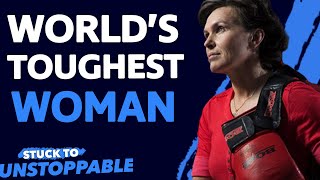
This is a recorded interview with Leah Goldstein about her life and performance mindset. Goldstein recounts overcoming childhood challenges, a martial-arts and elite-military background (IDF instructor training commandos), a late transition to professional cycling at age 31, and later ultra-endurance success, including winning Race Across America at 52. The conversation emphasizes themes of confronting fear, learning from failure, extreme ownership, self-driven motivation, and pursuing a "limitless" life.
Questions this video answers
17
She was the first female instructor to train the commando (instructor at Wingate/elite training).
31
She won Race Across America at 52
Women do two years, men do three years.
Chapters
Sometimes you have to be a one man or a one woman team and really show people who you are. And when people see, wow, you know, you mean business, you're going to have a whole army come to you rather than you going to them.
I don't get to meet fellow warriors that have been through a tremendous amount of adversity. And for some reason, and I don't think, I can't even explain why, we just decided to push through it and figure it all out. But, you know, straight out the gate, what does it mean to be truly limitless?
I just think it's just, you know, not to let fear dictate your path. You know, is this. Do the things that you love and, and don't let those, those feelings that are, you know, putting you back or, or stopping you, you know, from delaying things. You know, when we're faced with fear, we have this instinct of fight or flight, but a lot of us, we just freeze, you know, and we just stay in that mode. Right. And I think part of it is just placing all these limitations on us. And that's when we talk about having a limitless life lifestyle. Right. Is just again, is not letting your fear dictate your life.
Yeah, I think it's that and I think probably the both, the fact that we both love Bruce Lee to death, so, you know, he wasn't scared of.
Much of anything to do with it.
Yeah, right, exactly. Well, you know, speaking of Bruce Lee, one of the things I loved about him is, you know, not only was he limitless in his own respects, he was also a deep thinker. You know, have you, have you found that the adversity and the things that you've had to push through have given you the ability to see life at a different perspective that allows you to help other people?
I, for sure. I mean, you learn from your own mistakes and stuff. Right. You know, because I'm pretty spontaneous person. Like, I like to do things yesterday. Right. You know, so I think I'm just learning from the mistakes I've made younger. I, I'm, I'm putting more thought, for sure into it as you get older. You have to. Because you have to be, you know, more realistic of where you're at in your life. Right. So more deep thinking just makes more sense. Right. For, for the things that you want to do. Because when you're younger, you know, you know, you just kind of just do it. You don'. Care what happens. Right. But as life progresses, you get smarter, so you start thinking.
Yeah, for sure. Not right. Yeah. Totally. You know, the audience doesn't really know much. They may already know much about your backstory. They may not. Like, hopefully, hopefully, I'm introducing you to a brand new audience that needs to know who you are and what you're about, what you've been working on. Because again, you've thought through so much, right, to kind of not only get to where you are, but also kind of live out the very thing that you've been. You've been teaching the people and sharing with people, which is to say yes to life. Right. So what does it mean to truly say yes to life?
Well, I mean, like I said, it's like, you know, you don't want to be sitting on your deathbed, you know, saying the words I wish or what if? And those were actually my grandmother's last words to me before she passed away. Right. You know, so it meant something. I was in the military. And I remember, you know, she was this big babushka lady, whatever, Russian, you know, and she really only started living her life and she was in her 60s, right. She came, you know, not from a great background. They escaped, you know, Communist China and relationship with my grandfather wasn't the greatest, Right. You know, the old kind of primitive way of lifestyle, you know, make babies, clean the house. Right. So, you know, so, you know, she so badly didn't want to die, right. So she just said, you know, learn from my mistakes, that there were so many things that she still wanted to do. And that stuck with me when I was in my early 20s. Right. That, yeah, this is a one time deal, man. You don't get second chances. It's now or never. So you live life to the fullest like it's your last day, you know, so that's kind of my motto now. So.
All right, so now we have, now we have to get into the commando stories.
Okay.
All right, so you're the first, you're the first commando, like female commando in the Israeli, the Israeli army, correct?
No, let me correct that. No, no.
Okay.
I'm actually the first female instructor to train the commando.
There we go. Okay. Sorry. Yeah, yeah, that's my dyslexia when I'm reading. So my, my.
Everyone has the same, you know, it's been written and twisted and whatever, all. But that's the. Yeah, I think they just, I mean, I was basically put in a base called base eight when I was, when I joined the idf because my, you know, my dream from when I was, you know, seven is I was going to work for some branch of Intelligence. And I knew that, you know, because members of my family were involved in that kind of work. And as I was growing up, everything was always a secret. You know, my parents told us not to talk on the phone. Be careful who you trust. Careful. Yeah, yeah. Like, we were getting groomed into this. You know, they would. They. My parents speak, like, five different languages, so they would swap languages if they didn't want my sister and I to learn, you know, So I started learning a little bit of Russian, a little bit of Polish. So, yeah, I mean, just something that I was. Just felt like I was. Was meant for me, you know, and I just stuck with it. And, you know, when I joined the idf, I was. Because of my kickboxing background, too, because at 17, I was a world kickboxing champion. But I prepared myself. Like, my uncle helped me into what would be involved, and I was, you know, a very good soldier. Like, you know, even through the obstacle course of being able to climb the ropes with the use of my legs, you know, I could climb walls, jump things. My physical tests were equivalent to that of male soldiers. You know, so from there, they put me into a selection base where 300 of us, and we're cut down to three soldiers. And with the three only, I made it to a base called Wingate. And that's where you have the most elite instructors, training units from all over the world, not just from Israel. And that was my job in the military.
Wow. Well, you know what I'm about to say, I mean, in love and support. Right. Straight up. But you are, I think, the real deal, G.I. jane.
Okay. What I call it.
Yeah. I mean, because, you know, I just think. I just think, you know, you know, movies speak a lot to us and stuff like that, as we're, you know, we're kind of making our way through life. And the resilience and the drive and the grit to not necessarily go out and necessarily prove someone else wrong, but to prove yourself. Right, Right. How did you find that drive, that grit, that determination, so early? Because, I mean, it's obviously carried through your entire life, so it seems like it's an intangible. Or was it something that was, like, more developed along the way?
I think it was basically more developed because when I was a little kid, I mean, I had challenges. You know, I spoke with a list, but had a little bit of a learning dis. Put in a special class on the physical side. My left leg was going at a faster rate than my right leg. It's longer, it's stronger. The foot is bigger. And I got. Don't have great mobility where my ankles are, you know, so doctors told my parents that I'd never excel in sports or athleticism, which is confusing because it was only subject that got an A. Yeah, I knew I had challenges, that whatever I had to do, I needed to work twice as hard, you know, But I found something that I was good at. Right. You know, the taekwondo, you know, because of course, you know, when you're different, you get bullied.
And then, see, I did the same thing. That's the whole reason I got into Bruce Lee, because I was getting my butt kicked off.
I saw Bruce, I go, damn it, I got to learn whatever that guy's doing. Right? You know, and so, yeah, I mean, I learned what I was good at, but I also learned that for someone like myself, I. Like I said, I had to work twice as hard, but, you know, with me, I think when I just put my mind to it, that's it. Everything else is on a shelf and I just laser in and I stick with it till I get it done.
Yeah. Well, it sounds like the focus is ultimately a defining characteristic and outcome. Like if you can focus long enough and hard enough, you can bring it to pass.
No, well, exactly. I mean, I think too, is, you know, a lot of us, we have that fear of failure as well. I'm not afraid to fail. You know, this failure. Failure is part of success, is how you learn. It's how you get stronger. Right. You know, you know, I may fail multiple times, but it doesn't matter. It just makes me stronger and makes me even more determined to succeed. And I think that's, you know, a big obstacle with many people is once, you know, once you throw in that white towel, it's easy to repeat. You know, patterns are often repeated. Right? Yeah, for sure. But for me, I think that's part of success. When you, you know, when you really look at deep inside of people who are successful, you don't hear their real backstory of how they got there and how many times failed. Right. You only hear the good stuff. That's all we want to hear. Right. But the important thing is, you know, do research from where they started, where they came from, and what they had to do and sacrifice to get to where they're at. Right. And that's with most people who've really succeeded and not getting the hand me downs from mama and papa. I mean, really working from the core. Right. And that's what makes an individual really strong, starting at a young age. And that basically you know, how we GRE because my father, he didn't give us, you know, even as, you know, my parents came to Canada. You know, I was made in Israel, was born in Canada. My mom, My sister was 4, you know, and they had 100 bucks and they had nobody in Canada. Right. So you kind of see what my father went through, right? You know, not knowing the language and damn if he can succeed, I can.
Principles of a strong, independent, you know, for both my sister and I. So I'm glad that he gave us those, you know, qualities because it helped us navigate, you know, through the tough times that life will bring you.
Yeah, well, the reality is life is going to bring everyone tough times in some way, shape or form, over and over again, for sure it's going to suck. Yeah. And I know what my experience is the same as yours in that it's that experience that actually takes you to whatever your next level is, Right. Whether it's an emotional next level, a mental or a physical or some combination of all the above. You know, I am interested in not just the resilience piece, but also in this conquering fear piece or facing fear or leaning into it, or even the failure piece of learning from it. You know, one of the things that I would not have anticipated when I was studying more about you and about the amazing work you've done is Krav Maga. Of all the martial arts on the planet, you lean into Krav Maga, right? So, and that is like not straight up full contact, but it's also full contact. And if you can find something on the ground and beat somebody's head in with it, you do it. Like, how did you land in the Krav Maga?
Well, actually, if you listen, you're just saying a Hebrew word, Krav Maga. Krav is fight Maga means hand, so lethal hand combat. And it's a system of fight fighting designed for soldiers. Let's say if your ammunition jams, you know how to use a rock, a stick, a stone in the most lethal way. So actually developed by a Czechoslovakian that Israel kind of stole and they called it.
I always thought it was developed in Israel. That's crazy.
It's not exactly developed.
It's refined in Israel. How about that?
Yeah, exactly, exactly. But, but, but that's the real. I mean, it's every soldier, like every soldier, man, woman, whatever, you have to learn that form of self defense, right? So that's a big part of the basic training. And it even, it's escalated when we train you know, troops, the units such as the commando or the pilots or paratroopers or even, you know, branches of intelligence. Krav Maga is very, very important, Right, because it teaches you, like I said, to use anything as a weapon. Right. And then, you know, you don't have to be £360 to be very deadly and dangerous. Right. It's based on skill opposed to strength.
Yeah, no, it's funny, I, when I was, I trained to be a Navy SEAL for a little while, very short time, and really, really wanted to be a seal. And I got kind of cocky and arrogant along the way. So I went, got a tattoo on my arm, my, my right arm, that was a scorpion that was going to say small but deadly because I'm like five foot nothing and you know, whatever. So I totally understand that. Well, what did, what did, what did learning Krav Magod differ emotionally, internally, mentally from like studying kickboxing? How were the. What, what, what different? What else did you learn from a life perspective out of, out of that martial arts?
Well, I mean, Krav Maga, it's a, it's a form of self defense if your life is at risk, right? Like, you know, with kickboxing, I'm up against somebody, you know, the same weight as me, whatever. I'm not up against some guy, 6 foot 4, 20 pounds. Right. But Krav Maga teaches you in those perspectives is how do you fight somebody twice your size? You know, because there's certain areas of the body that you can't train. I don't care how, you know, how big you are, right. You know, so you aim at those areas, you know, certain areas where you fight and punch. But of course, you still have to have the skill. It's not like everybody can do it. And you can't be fearless too, because, you know, when you're like is on the line, that's it. You got to do what you got to do, or else you're dead meat. Right? So it's a mindset as well. Almost going like a pit bull, Right? So it's the same thing in frame of mind. Mental training was a big part of our training in Krav Maga and also another form too is like, you know, you put two people together and they'd fight to one of them, you know, they have to tap the ground saying they're, they're done, they're turning blue. Right? So it teaches you, what does it feel when you're at that last, you know, your last breath? Like, what can you do and it sounds kind of extreme, but that's the reality in war. And soldiers, you know, being captured or whatnot. Sometimes you're gonna have to fight for your life and you have to do whatever you can to survive. So it teaches you it's beyond the physical, it's really deep into the mental. With Krav Maga or any form of self defense in the military.
Well, it seems like if you're going to push yourself past your limits and have no limits, like obviously that you're so passionate about, it seems to me that one of the things you've got to master is the ability to keep going even when you're turning blue.
Yes.
Right. So, yeah, talk to me a little bit about that because I feel like one of the things that I see struggle, people struggle with from our platform, our audience, you know, when they, when they message us in or whatever, one of the things they're always talking about is I've got this thing in front of me, it seems so much bigger than me. I'm scared to tackle it. And no matter if it's in a relationship or finance or physical or it's, that's the one thing that keeps coming up. But when I, when I hear your story, your inspirational story, and I see people like you and I kind of remember some of the things that even I went through, it seems to me that the biggest part of that is just pushing, like you just keeping going. Is that right?
Yeah, I mean, I think too, it's, it's a lot with personality too. You know, I'm going to say that we're sometimes a little bit spoiled here. I think of the way we raise our kids too. Like we're always coddling them and encourage them and whatnot. You know, Let me just go back a bit. When I was kickboxing, you know, you know, I was the world champion at 17 and not one time, not one time did Alan Chang ever tell me that I was good at anything I did because I knew the things that I good at. We just focus on the things that I was bad at. And he was a hard ask. You know, because you want to be the best at whatever you choose. Let's focus on the things that you're not good at and stay there. I don't need to be patted on the back. And I think we kind of coddle that a little bit too much and we're afraid to scream or, you know, be tough with people. But when you have a hard ass coach or a mentor, whatnot, when they're being Hard with you, it just means that they believe in you and they know you can do better. Right. You know, so I think that mentality is something that works with me. And I think it just, it just encourages and makes us ang to succeed. Not angry to say, oh, screw you, I'm out of here, I quit, and whatever, right? You have to use that anger in a positive way, saying, damn it, I'm going to show you, you know, because a lot of times what I say is the best revenge you can have when somebody wants you to fail is to succeed is really show them who you are. It's the best thing you can do. What we do is we make noise coming out of our mouth, but we don't say anything. We just make a noise. Right? So that, like that saying, I'll bark and no bite, right? And that's the thing, is by succeeding and doing the things that you love, no matter what it takes. I mean, if you look into my story, I mean, I mean, my story is huge, right? Of some, of even in pro cycling, it took me eight years to succeed. And I got, you know, shunned right from the beginning, from the Federation saying I was too old, I was too small, I was too big. I basically missed the boat, you know, that they weren't going to support me. So I ended up doing it myself at the age of 39, nine years later. But it took me that long.
I felt like we were. I feel like you and I lived a similar life in different and different aspects, let's put it that way.
Right, exactly. Because. Exactly. Because failure is never an option, no matter, you know, unless of course, it's life threatening. Right. But, you know, sometimes you got to dig deep and you got to find that fire and you got to make it to your finish line no matter what it is, even if it's not the outcome that you want. Because like I said, patterns of quitting are often repeated. And it's too easy to throw in that white towel once you do it one time, go, okay, next, next, next. That's not what life is.
I want to dig into what you just said because you said it so quick, but it's so deep, right? Which is the power of failure actually becomes repeated. Dig into that. Because that was phenomenal.
Well, I mean, a good example for, you know, when you look at this, I don't know if it's a good example. It's gonna make sense. Like a pro racing, for example, right? You know, when the pack, you know, the group of 180 cyclists, right? Then the pack can get disconnected, you know what I mean? Like, the pack will start to fizzle and the back riders will just pull out because they won't finish with the front riders. You know, it's called getting dropped. Right. You know what I mean? Oh, it doesn't matter. They're going to pull out because they're not going to finish with the front riders. So those same riders, if you look at kind of in their, will always be the ones that they getting dropped. Right. You know how many times I was dropped as a pro racer in the beginning, but I always finished the race even coming dead last. Even coming dead last. But you know what? Eventually I finished with the pack and then eventually I would win the. Win the whole thing. I'd ride away from the pack. And that's what I'm saying. And sometimes it's embarrassing and it was humiliating for sure. Right. You know what I mean? It's kind of. But you still fight it and you still, you know, you take it. Right. You take those punches. It's just like, you know, when you break an arm, you know, when it heals, it's almost stronger than it was before it was broken. Right. You know what I mean? So it's the same thing with failing and same thing with succeeding. Right. Like when you quit again, it's that comfort, oh, I'm not going to do it again. It's too much, can't be bothered. But that, you know what? To me, when you do that, it means that you really don't really have a passion for it, Right?
Yeah.
Because you have to have that hunger. And when you do it once, when you struggle once, believe you me, you'll never quit again.
Yeah.
Because you know what it takes to get there.
That is so true. It's funny. I'm, you know, I've, you know, in my career, I've gone on to build a handful of businesses. Some of them successful, some of them complete absolute failure, some of them somewhere in between, some of them, you know, still in a startup phase. And it never.
It never shocks me that when I start a new initiative that people automatically, one, doubt it can be done.
And two, believe that they can predict the success of what that thing will be based on their own personal experiences. Not my experiences, that develop my character along the way.
To be sure. And you already kind of mentioned some of it. How do we, how do we chase that which is important to us or pursue that when we're not getting support from the people around us? Or how do we, how do we. Because I Find that a lot of people, they get lost in the, in the tribe that they're in. And because the tribe doesn't think something's possible, you know, they get stuck there. How do we shake them out of that? How do we get them to the next level and fight that battle?
Well, I think a lot of times you want validation, right? You know what I mean? We want encouragement from other people, right? But you're not always going to get that, right. Like my father always said to me, my sister and I, you know, when you're faced with an issue where you're. Like when I was bullied, for example, I couldn't go to my parents because my father said to me, you know, you can't always run to people because one day you're to run, there's going to be no one to run run to. You have to figure things out for yourself. Sometimes you're gonna have to be a one man or a one woman team and really show people who you are. And when people see, wow, you know, you mean business, you're going to have a whole army come to you rather than you going to them, right? So it's up to you. It's your responsibility to show people who you are. And believe you me, when you do and people see how hard you work and that you don't give up and you mean business, you're going to have a whole support system with you, right? But don't rely on others to come and help you. You don't wait for others to motivate you. Like, you know how they kind of say, oh, you know, you're motivational speaker and whatnot. You know, it's easy for me to motivate you right now, but I want you motivated in six months, in eight.
Months, when nobody else is around.
Exactly. You know what I mean? So this whole motivation business is all crap, right? Anybody is motivated, it is seriously, like I'll motivate you for. But what happens when things get tough? I want you to remember things that I've said and then I want that motivation to, you know, to light up again. And that's the issue, that's the key, right? Is keeping that motivation. And believe you me, like, like sometimes you're going to go through a valley, you're going to hit these highs, you're going to hit these lows, right? But you know, when you hit those lows, there's always a way out and you find the way out, right? But then again, when you start getting into that pattern of success, it's Going to be easy because those lows won't feel so bad and you won't feel so defeated because, you know, you went through it once before, right? You know, I failed multiple times, but I never let it define me. You know what I mean? And I never said, you know what? This is my outcome. I'm going to make it happen. I'll find a different way. And that's the thing. We have to have that fighter instinct. And a lot of us, we don't have habit, but I think it's just from failure and mistakes of the past and not again, not relying on other people to push you. It's your responsibility to push yourself and go out there, you know what I mean? Said be a one man, one woman, team people. You really are for sure, dude.
I love that. I love that so much. Oh, man. Let me. I guess. Let me pivot off of that a second ago, right? So we got. Let's say we had two camps. Camp number one is that coach that knows better than we do, what we actually have in the tank that's going to push us. And then camp number two is people who also are pointing at our things that we're constantly doing wrong. Right. They're both pointing at things we could do better in some cases, maybe very deliberately and very aggressively. How do we know who's a coach and who's somebody who's just like baggage that we've got to release? How do we see. How do we define who's really for us and against us?
Well, I mean, only, you know what's best for you. Right? I mean, it's good to take advice. I take advice from everybody, all types of coaches, you know, even people who they're, you know, they're not qualified. Right. Because you know who you are. Because everybody is so individual and certain systems work for different people. Right? And eventually you'll learn it. Right? But I think you want the coach that pushes you, you know, stays with you, and even at your lowest point is still there and telling you, you know what, you can still do it. And I think that's really hard to find because, I mean, in all honesty, I think coach is more for advice. Right, right. To listen. But learn from many different individuals, learn from different people. Don't just listen to one person because that's a mistake. Right. You can get so much more by just listening to other people, listen to other advice. These are other athletes, other business people, other artists, other musicians or whatnot. Right? And you bring that all together and you'll find that recipe that works for you. Because one coach, you know, you and I could be a cyclist and have the same coach, but, you know, his system or her system of coaching may not work for me. Works for you. Right. You know, so you find that where you'll gravitate to it and you'll see that kind of the escalation and you'll feel the rise too. Right. With that person, you know, so again, it's so individual and, you know, it may take you multiple times before you find that right person. But again, you can't have one system or one coach saying, you know what? I made this great athlete, I'm going to make you this great athlete. It all depends. If you've got the same qualities, you might not have those same qualities. You might have to find a different approach. So you have to kind of do your research and, you know, and be careful with those promises, too, that you hear. Well, I can make you this or I can, you know, I promise you this or whatnot, whatever. No one's going to make anything. It's up to you to, you know, to make those goals or outcomes or whatnot. Right. Nobody's going to do it for you. No one's going to do it for you. I don't care what they say, you know, the more money you give, the more they're going to promise you.
So true.
Remember, it's on you. It's on you. Right. It's not on anyone else. You're just taking advice, you're absorbing it and you're taking other advice and you find what works for you. And I found over the years that's exactly how I did. Like, I take consultation kind of even now, today, you know, from different coaches of what works, what doesn't work. You know, we'll kind of, you know, collaborate of what I've done in the past, you know, the present, what I can do to improve. But again, it's not just a one, one route. It's. It's multiple different channels that you have to take in and take as much as you can. Take as much as you can from everybody.
That's so good. That is so good. Yeah. I feel like people get stuck all the time and trying to figure out who, who they should listen to, not. Not realizing they could actually listen to themselves for sure.
You know, your biggest support system, your biggest fan is you, and your biggest.
Critic, if you're not careful. And I think it comes down to, like, the type of question you're obviously answering yourself around that. Well, help me understand. So you Know, you go from a martial arts, an amazing martial arts career into a military career that was also just as, just as amazing. All right, and then, and then, and now you end up in the cycling or like, how did, how did the transition end up in the world class cycling world.
Well, actually I, I joined the IDF cause I wanted to work for, as, as you know, for some form of intelligence. And now in Israel it is mandatory to do the service. Women do two years, men do three years. Whether you like it or not, not. Right. You know, so I didn't necessarily have to go into the military because I was born in Canada, but I needed the military, the skills the military would teach me in order to do the things that I really wanted to do. So after the military, I actually transitioned. I was picked up by a spying agency called the Belush. So I worked there for 10 years. Now during my transition, kind of in the military is I met a lieutenant who is a national champion in the sport of triathlon. And he always saw me training. So when I wasn't training soldiers, you know, you had to train yourself because you're like, you stand there with a clipboard. So, you know, he just asked me if I wanted to go because he saw that I commuted to the base on my bike, right? So he just asked me to go for a bike ride. And I had.
Overachiever. I'm just kidding.
Yeah, exactly, exactly. So I just had this piece of junk, you know, 50 pound, you know, bike, and he basically just pimped it up for me, went for a ride and I just kind of fell in love with the sporting. That's kind of how it evolved, right? And I got into duathlons and within a year I was a national champion. Um, and then as the years progressed, I just, you know, I said, this is what I want to do. I want to be a pro cyclist. Because I, you know, I was delusional A little bit of, you know, go, this is what I was meant to do. This is my calling. And so I made that transition at the age of 31.
Yeah, no, I love, I mean, look, the reality is, is you are a world class cyclist, you're a world class martial artist, you're world class a lot of things, right? And the number one thing that I think has gotten you there from outside looking in is the willingness to try to just go out there and at least put forth an effort that you can't really, really necessarily put into words because it's an intangible. It's something you feel on the inside.
Right, Correct.
What are some words of advice to help people find that internal tenacity within to they can become world class whatever they, they set out to aspire to?
Well, I mean, you know, I think, you know, you gravitate to something that you feel this fire inside of you, you know what I mean? And it just stays in your mind and just, it doesn't, doesn't get coming out of your head, right? I mean, I think it's, it's those feelings that you get, right? But a lot of times, you know, you talk with people that are in their, you know, 70s or 80s saying oh, I wish I would have done this or I wish I would have done that, right? And you know, I think too like a lot of times you can be delusional. See, you know, I thought I was going to work for intelligence till I retired. I thought that's what I wanted to do, you know, But I was, you know, it was, I was delusional. It wasn't what I really wanted to do. And sometimes you're going to learn by doing one thing and go, you know what? This isn't what I am. This is not who I am. And I wasn't afraid to make that transition, you know, And I know sometimes in life situation you say, well, I can't leave my job because of money or family or children or whatnot, right? But to me, I mean, life is, like I said earlier, it's a one time deal, man. It's now or never. And whatever you choose to do when you wake up in the morning, that you have to love it or at least like it, right? Because so many people do jobs that they just can't send and they can't wait for their retirement. So you're going to waste your life till you're 50 or 60 and then what all you're the prime of your life, whatever, doing something that you really wanted to do. And now you're 70 years old, right? Not that you can't do it, but you could have done it, you know, 20 years ago and why didn't you? You know, so that's what I'm saying. Like I don't care what it is. If you have a passion and you love it and there's a fire, you'll find a way to make it work. You'll make enough money and you'll do what you love and you won't regret. Because you know what we're going to, what we're going to regret are not the things that we've done, but the things that we haven't done done. And I think that's. That's the most most important thing is you don't want to wait. You don't want to sit there and wait, because before you know it, life is too fast. You're going to be 90 years old saying, shit, yeah.
Oh, man, that is good. You know, when it. When I was just thinking, you know, at least on my journey, there were lots of opportunities where I was focused on a goal and aspiration, something that I was trying to bring into fruition, manifest, if you will, or whatever. And as I was going through that, that. That set of adversity, that trial, all of that, I was constantly tempted with various levels of distraction to get me off of that thing. Did you have to battle with distraction along the way? And if so, how were you able to kind of remove that as a hurdle in front of you?
You know, I think for me, I mean, I realized too, for the things that I wanted to do, that it was. I don't know if you would call it selfish, but I couldn't share it with. That's why I didn't have. I was married, but I divorced because I didn't want to compromise my life for the things that I wanted to do. And I know that might. May sound selfish, but that's just who I was. And that's. I said, you know what? It's very, you know, back there traditional to, you know, to get married and have, you know, 22 kids and stay.
At home and 22 is a lot.
By the way, you know. Well, you know what I mean. And I just said, I'm not. No, my. Like I said, my grandmother was a big influence to me. She goes, you know, you don't have to be like everybody else, else, because you are not like everybody else. You be who you are and who you want and what you want to do. And I think that's what kind of, you know, made me do the things that I wanted to do, is I didn't want to, like I said, compromise. So it was easier for me to be single, definitely not to have children, because it's a whole different, you know, I wouldn't have done half the things I've done because that would have been my priority. But I knew even at a young age where I was, what I wanted to do and the direction my life was going to lead me. And so I just lasered in on that. Despite what other people had said or the comments or the criticism or whatnot, it didn't matter. It's not Their life. It was my life, and I have to feel good about it. And I didn't care what other. What other people thought. And I think that's the biggest deal, especially way back when. Right. You know what I mean? Where you were looked upon and judged a lot more than you are now. But like I said, you know, there's that saying, sending your business what other people think of you. Well, that's how I led my life.
Yeah. No, that's. And that's good. I mean, I think that's good advice to a lot of people because I think I find that about 70% of the people that we work with, the reason they're unhappy, the reason they're stuck, the reason they're not making progress is because they're trying to live somebody else's life. Life, totally, parents, spouse, brother, mother, uncle, whatever, is saying you need to do X, Y and Z, or you do X, Y and Z or you'll be a failure if you don't X, Y and Z. Not realizing that person has unique talents in a different direction, in a different area. Right. So, no, I think that. I think that's. I think that's fantastic. I think that it's nice to hear someone like yourself give people the permission to do that for themselves.
Oh, for sure. I mean, you know, my dad said, you know, I come from a Jewish family, said I have to be a lawyer, a doctor, a dentist or whatever. I said, if I be any one of those, I'll be a depressed lawyer, doctor, dentist, whatever, you know what I mean? And I'll hate. I hate my job, I hate everybody else. I'll be miserable, whatever. I'll probably die when I'm 50, you know, so I said, that's. That's maybe your calling, but it's not mine. Right? So it's hard, you know, when you kind of. You want to go one direction, but you're having pressure to go on the other the other way. Right. You know, and I. And I get that. And it's even. Even as, you know, as you get older, too. Right? People are these. There's these expectations, Right. You know, even when I came back into ultra endurance race racing, people say, God damn it, Leah, you're 50 years old. What the hell are you going to do? I'll show you what I'm going to do at 50, right. You know, I won Race Across America at 52. You know, so, I mean, like I said, I've never been afraid to do the things that I love. And I don't care what age I am. I'll always do it, you know, and you learn from trying new things. You discover things about yourself and what you're good at, you know, and that's what life is. Discovering opportunities and making the best of it and just having those great memories rather than sitting there and watching other people live their own life or watching other people's dreams. Right? You make your dreams your reality, and that's what's really important. Because at some point, you know, like you said, a lot of people, you know, they live their life for others. Right. You know, they're always watching others or supporting others. But at some point, you have to say, you know what? It's got to be about me now. Right. And I think that's really important, too.
No, it absolutely is. You know, I was just thinking, you know, you've. You've taken the uncommon path. Right? The uncommon path. You lived on your own terms. Terms. I'm curious to know. Right. We know that the. When you take a traditional path, that most of us at some point in time will have some level of regret or we'll live with some level of regret because we didn't do something or say something or whatever. Living the uncommon path, living on your own terms. Have you had any regrets along the way yourself?
No, because I've never done anything that somebody else wanted me to do or the pressures from somebody else. I did the things that I wanted to do. Right. You know, I may not have, you know, know, chosen the best things, but it was my choice. It came for me. It was my decision is my direction without influence of others. You know, if you wanted to support me, great. And if you didn't, then I don't want to hear about it. And I think that's another unconventional path that I've taken that a lot of people haven't taken. Right. Is I wasn't influenced by others, even when they're saying, you know, you shouldn't do that because A, B or C. Right. I didn't care. Let me learn those mistakes myself. This is what I want to do. I need to learn that. That can't be coming from anybody else. And I was fortunate enough. I mean, I had a tough father, but my mother was like my rock. She said, whatever you want to do, I'm behind you. I don't care what it is. So having that support system was huge for the stuff that I've done and the success that I've done. Right? And this is the way I am, you know, And I'm really fortunate to have that my Mother still to this day, right? She goes, you do everything that you want to do because she didn't have that opportunity, you know, when she was younger, you know, she's just kind of the situations and back then and whatnot, you know. But she says, you did everything because like I said, you don't want to be sitting on that deathbed saying, I wish or what if this is it, man, this is what we got right now.
Yeah, for sure. Well, you know, there's so much to admire about how you pursue life and not just the things that you've done, but how you pursue life. I think one of the most admirable qualities that I hadn't had a chance to pick up until we got a chance to spend some time together is this level of extreme ownership. Like right, wrong or indifferent. You own your choices, you own your steps. And I think that's a very. Not only an admiral quality, it's one I would like to see play out in the world more and more because I see people who struggle consistently because in business life, all of it, because they refuse to say, that was my choice, that was my decision, this is the lesson I've learned and move on. Most of them will say, well, my Uncle Joe did this, my grandmother did this, my parents did this to me when I was young. I grew up over here. Like, how did you develop the extreme ownership? Because it, you know, it's so rare to see.
Well, you know, it's funny because I talk to a lot of high risk youth groups here in Vernon in my area, and I always say that your past does not predict or dictate your future, you know, and you can't hold on to those things that happened in your past as an excuse because a lot of us do. Saying, well, I can't do this because AB and CD happened to me when I was, you know, this age or this, you know, we can't hold on to those things because it's going to bury, you know, it's going to kill you before you're, you know, before you reach the end of your life. Right. You know, and I think that's a big thing is, you know, hardships that we've gone through. Use it as strength and as mentorship for other people that may have gone through hard times. But don't let it control you. Don't let it dictate your path. Don't let it, you know, make decisions for you. At some point you have to put it aside and use it as a tool. But I think a lot of us Kids saying, well, you know, I come from, you know, underprivileged. I'm not smart enough, I'm not good enough. I live in projects or whatnot. It doesn't matter. It doesn't matter where you came from. Right. It matters where you're going to get to.
Yeah.
Again, you look at those success for people, most of them have not come in with the silver spoon on their hand. Right. You know, they've come from the bottom of the pit and they've worked their way up. Right. And those are the real heroes, not people that get there. Whatever, you know, from mom and dad to eat or Mercedes or Porsche, whatever. When you're 16, right. It's people that struggled, you know, and that's what I'm saying. And that's what's going to make you a real fighter. Because when you can do that, think about how strong of an individual you're going to be, how strong as an adult you're going to be when you've done things on your own. And that's what my dad said to me. You know, when you get a job and you make your first paycheck, you're going feel so powerful and so independent. And I did. I used to deliver like three different newspaper routes. One in the morning and two and after school. And I remember getting my first 20 bucks, and I did it myself, and I was 12 years old. And I can't tell you how powerful and successful and independent that made me feel. And I'm going, now I'm going to make 40 bucks. Now I'm going to make. Because I did it on my own. Right. You know what I mean? So I think that's really important is teaching us to be individuals and not always looking for handouts. Right. That's what's going to make you strong. And with anything, anything you choose to do, it's going to be that much easier because you know you can do it. Right. You just have that confidence already.
You're so infectious, in a good way.
I love it. I love it. You and I are in the same energy plane. So this is good. I know you've got some. Some really cool stuff coming up. I'm super excited. I know I can't give away everything just yet, but talk to me about this new docu series documentary coming out. What's it about? What, like, give us a little. Just a preview of what's going to be be. Because as soon as it comes out, I'm gonna throw the link right in the notes, make sure it's There.
Well, when I came back into like I, at 50, I said to myself, you know, I'm going to come back into ultra endurance racing because I wanted to do Race Across America one more time. But I said, you know what, I want it documented, I want it filmed. So we found a film crew, but when they found my backstory, they said no, no, no, we're going to do everything because they thought it was really interesting. So they did. I mean that's why this is taking so long. It's not just Race Across America. It goes way back when, from when I was a little kid, kid in taekwondo, the kickboxing, the military, the, you know, the Belush cycling, ultra endurance racing, my parents background. So it just became something more than just Race Across America. And, and it's almost done and we're super excited. We've had, you know, people who've seen it, they absolutely love it. So hopefully in the next month, month and a half, it should be coming out.
Yeah, no, that's, that's exciting stuff. Yeah, like I don't know how they're gonna go back and get all that backstory all in one, one docu series. You almost need like a, like a, like four or five season series I think. Like what do you think?
Well, man, actually there is a writer in, she's, she's working on a miniseries right now and she's talking with the different companies, you know, different, like Netflix for one, you know, UK Netflix. So we'll see. I mean that's kind of in the back burner as well. But the documentary, I mean we're super excited because I mean it started like 2019 and because of COVID it was delayed a little bit and yeah, it just got bigger and bigger and bigger and then it's just exploded and we're like I said, we're all really looking, looking forward, for its release.
Well, based on the trailer that I saw, it's going to be really impactful for a lot of people for sure. You know, these, these, these warrior based stories, these, these stories of tenacity, these stories of overcoming that, you know, you know that that's, I feel like that's how most of the cultures used to be built on and you know, it's somewhere along, along the ways we started kind of like putting more emphasis on, on just who, like what entity looks better, like influencer kind of status, like the guru side of the world. And I've always wondered, I was like, I wonder if people will still like pay attention to people who have actually done the Work and been through the blood, the sweat, the tears. I mean, I can tell you there was nights I was crying, there was like, there's like, it's a real thing, but it is what it really takes to win at anything.
Right? Right, Absolutely. But I think too another thing is, you know, no one is. We're all human. Right? I'm not special. I don't have a special gift. Right. You know, I mean, another thing is too is you don't need a special gift in order to succeed in anything you choose to do. Because there's a gift we all have. It's called the gift of work. Right. It doesn't matter if you want to use it or not. Right. You know, so when you see ordinary people, I mean, like myself or whatnot, doing the things that I've done, I really am not special. It's just I do the things that I really want to do. That's all I. It is. And I'm willing to work no matter what. And 110%, that's all I've done to succeed. That's all you need. You don't need a special pill or my books or whatever or, you know what I mean, monthly phone calls. All you need is that willingness and that gift. You have to work like a hard ass, right. And do whatever you can for resources. That's all you need. You know, you don't need something special or pay a monthly fee of, you know, 995 or whatever if 99.95, you know, or go to seminars or whatnot. It's great for a little boost, but ultimately it's you that's going to make, make it. Nobody else. It's all on you.
Yeah. And it's crazy you said that because my most successful students that we've had have been one that took it upon themselves to provide their own weekly accountability report. And they email it to me.
Right.
Even ask them to, because I just want to let you know that I'm taking what you've taught and I'm putting it in practice. And because of that, they are rapidly growing quicker than the other students.
Totally. Yeah.
Because they're applying it. Right. So that's, that's that. That's been awesome. Well, look, I've enjoyed the conversation. We could do this all day, I'm sure, like if we were sitting down with a cup of coff. We totally messed up.
Right?
In a good way. Where can everybody find out more about you? Obviously the trailers on your website tell us more about where everybody can connect with you at?
Yeah, I mean, I think the layer.com is the best. On my website, you'll find all the information there. Facebook, yeah, that's, you know, Instagram. That's where you'll find all the information. What's doing what we're doing, what's coming up.
Awesome. Well, cool beans. Well, I can't wait to see you again.
Yeah. Thank you so much for having me. This was awesome.
All right, take care. Peace.
Yeah, Take out. Bye.
If you love that interview, go ahead and check out this next one right here. I'm not saying this idea of love is just this Hallmark unicorns and confetti thing. There's no love without justice, and there's no justice without love. And they go together. Love and justice are linked.
More from Stephen



He Had Everything…Then A Heart Attack Changed It All | Dan Sachkowsky #Shorts




Paralyzed. Suicidal. Then He Surrendered, And EVERYTHING Shifted | Marcus Aurelius Anderson


Why You Snap At People You Love, The ALIGN Method, & Why ADHD Isn't A Disorder | Sara Hartley

